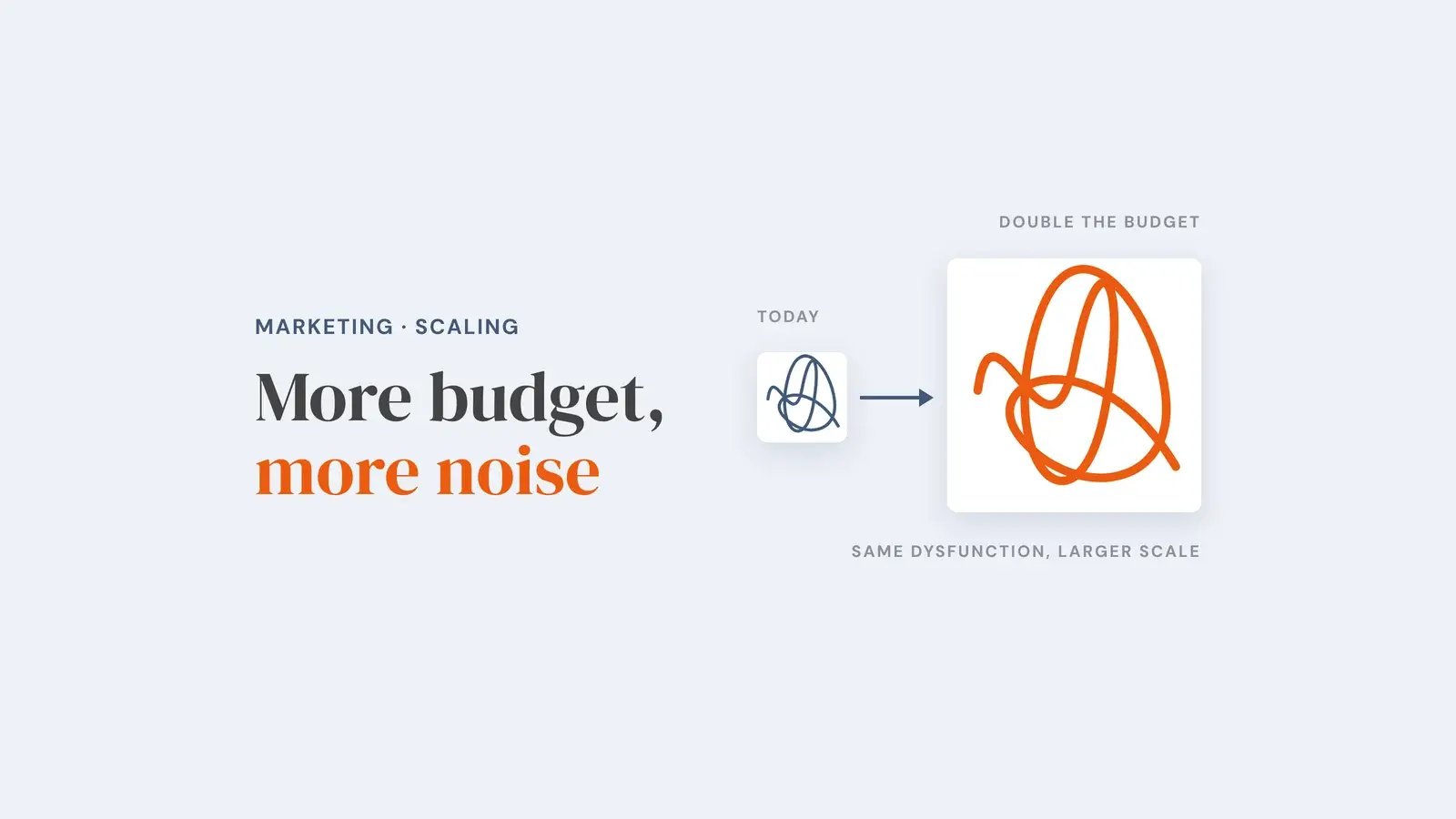


Most agency founders do not have a motivation problem. They have a structural one. Delivery quality changes depending on who picks up the work, margin moves without warning, and the founder is still the final quality check at 9pm on a Thursday.
I install operating structure inside digital marketing agencies, usually once growth has started producing chaos instead of capacity. Across those engagements the same five structural failures repeat, almost without variation.
This article covers what an agency operating system includes, how it compares to frameworks you have already heard of, what it costs in 2026, and whether your agency is ready for one.
Key takeaways
- An agency operating system is the documented commercial, delivery and leadership architecture making output consistent regardless of who does the work.
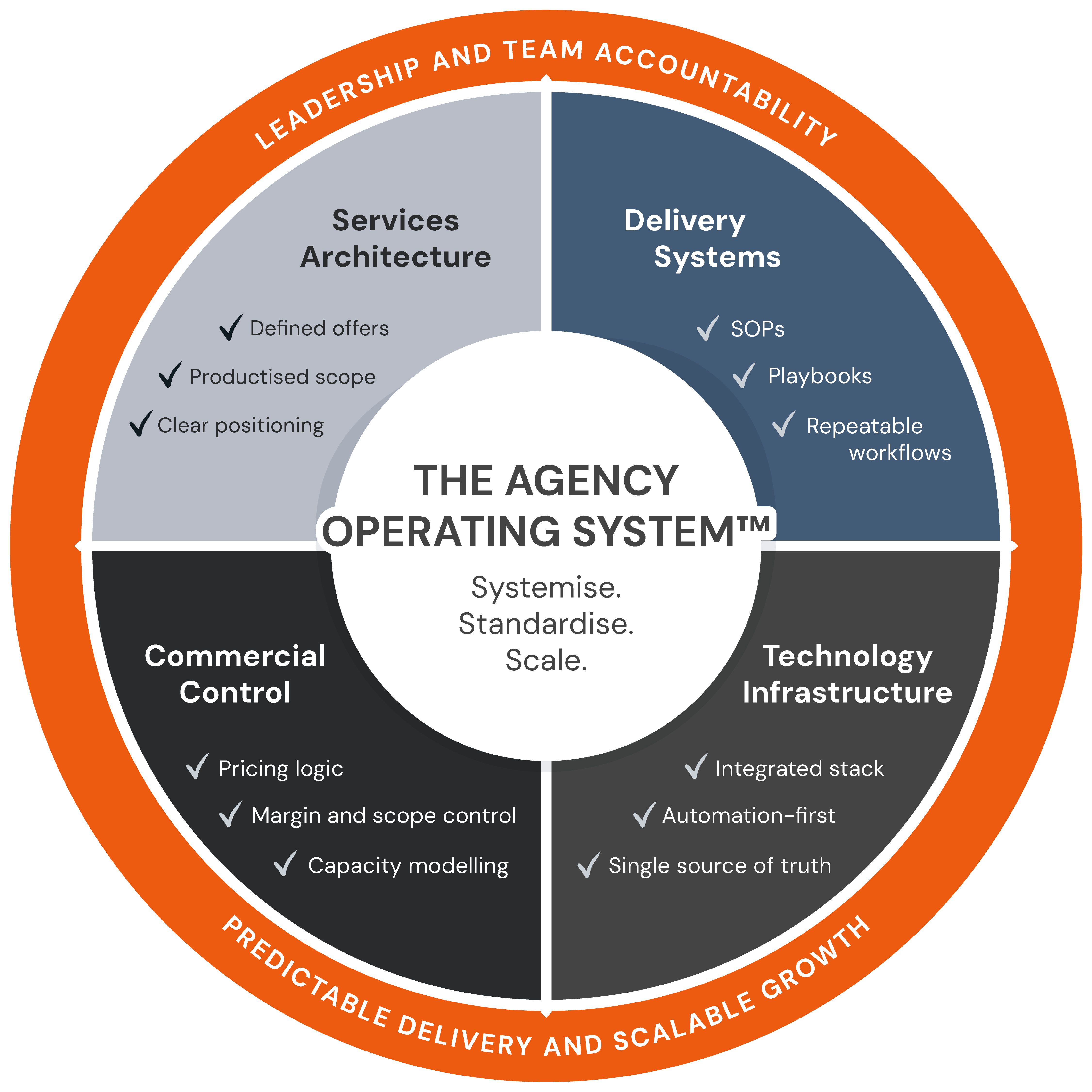
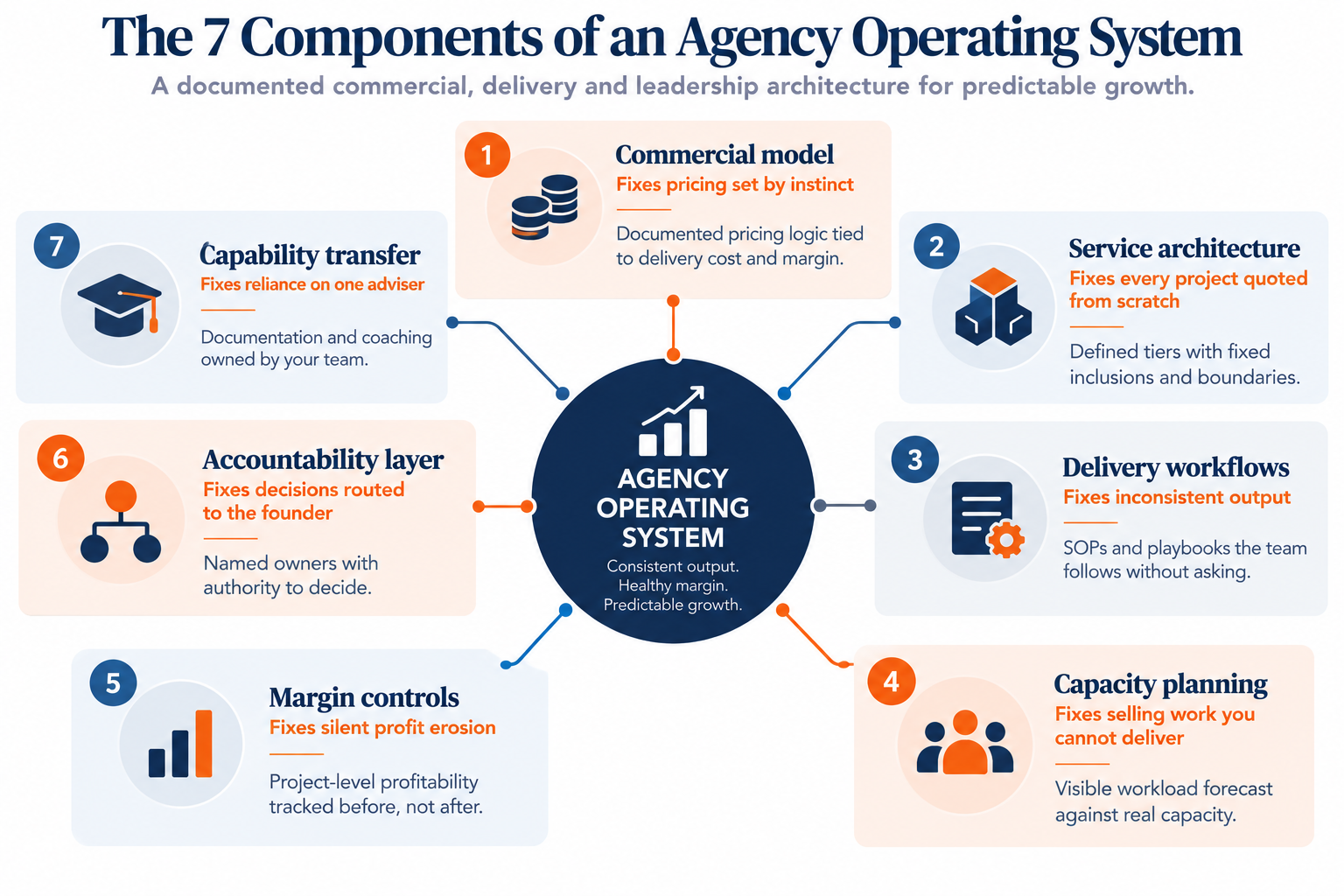
- The best ones include 7 components: commercial model, service architecture, delivery workflows, capacity planning, margin controls, accountability layer and capability transfer.
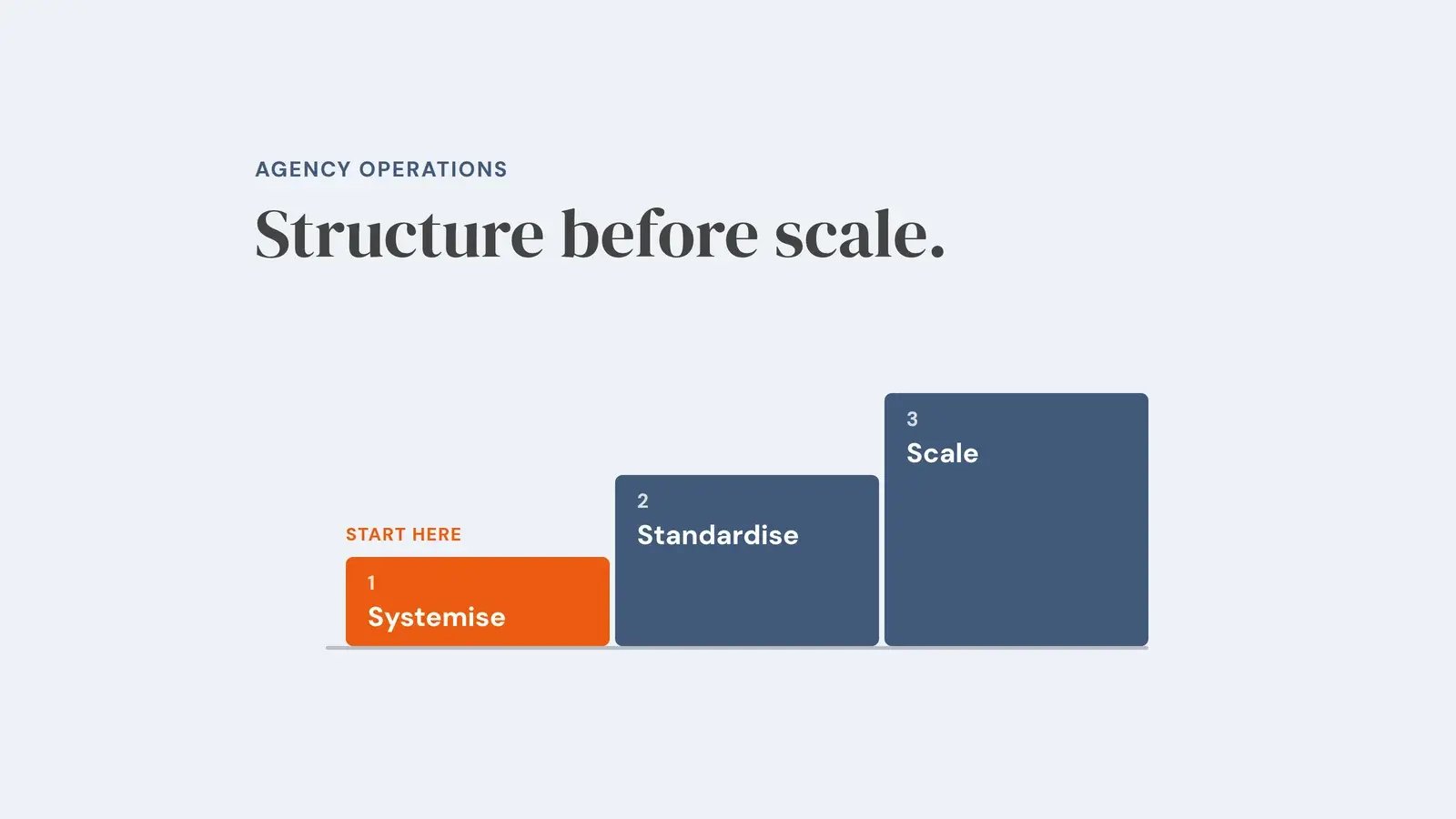
- Installation runs in 3 stages, systemise, standardise, scale, and skipping the sequence is the most expensive mistake I see founders make.
- Costs run from £2,500 ($3,200) for a systems audit to £5,000–£9,000 ($6,400–$11,500) for full implementation, with embedded leadership from £4,200 ($5,400) per month.
- Hiring adds capacity to a system, but it does not create one.
What is an agency operating system?
An agency operating system is the documented set of commercial, delivery and leadership structures that make an agency's output consistent regardless of who is doing the work.
It is not a project management tool, and not a folder of templates nobody opens. It is the architecture deciding how work is priced, scoped, delivered, reviewed and owned.
The test is simple: if two people in your agency would deliver the same service differently, you do not have an operating system. You have habits that happen to be working, for now.
Why do agencies need an operating system to grow predictably?
Agencies need an operating system because growth exposes structural weakness faster than it creates capacity.
Every new client is absorbed by the same undocumented process. Scope is negotiated on goodwill. Pricing was set by instinct three years ago. The agency gets busier, and the founder gets poorer per hour worked. The 5 structural failure points behind most agency chaos:
- Pricing built on guesswork rather than a documented commercial model.
- Delivery knowledge held in people's heads, not in written process.
- Scope controlled by relationships, so margin erodes quietly.
- The founder acting as quality control, capping how much work passes through the business.
- No capacity visibility, so the agency sells work it cannot profitably deliver.
Related Reading: Why Agency Growth Stalls at Founder Capacity (Even With a Team)
What does the best agency operating system include?
The best agency operating system includes 7 components, and each solves a specific failure mode. Skipping one usually explains why a previous attempt at getting organised did not hold.
| Component | What it fixes | What it looks like installed |
|---|---|---|
| Commercial model | Pricing set by instinct | Documented pricing logic tied to delivery cost and margin |
| Service architecture | Every project quoted from scratch | Defined tiers with fixed inclusions and boundaries |
| Delivery workflows | Inconsistent output | SOPs and playbooks the team follows without asking |
| Capacity planning | Selling work you cannot deliver | Visible workload forecast against real capacity |
| Margin controls | Silent profit erosion | Project-level profitability tracked before, not after |
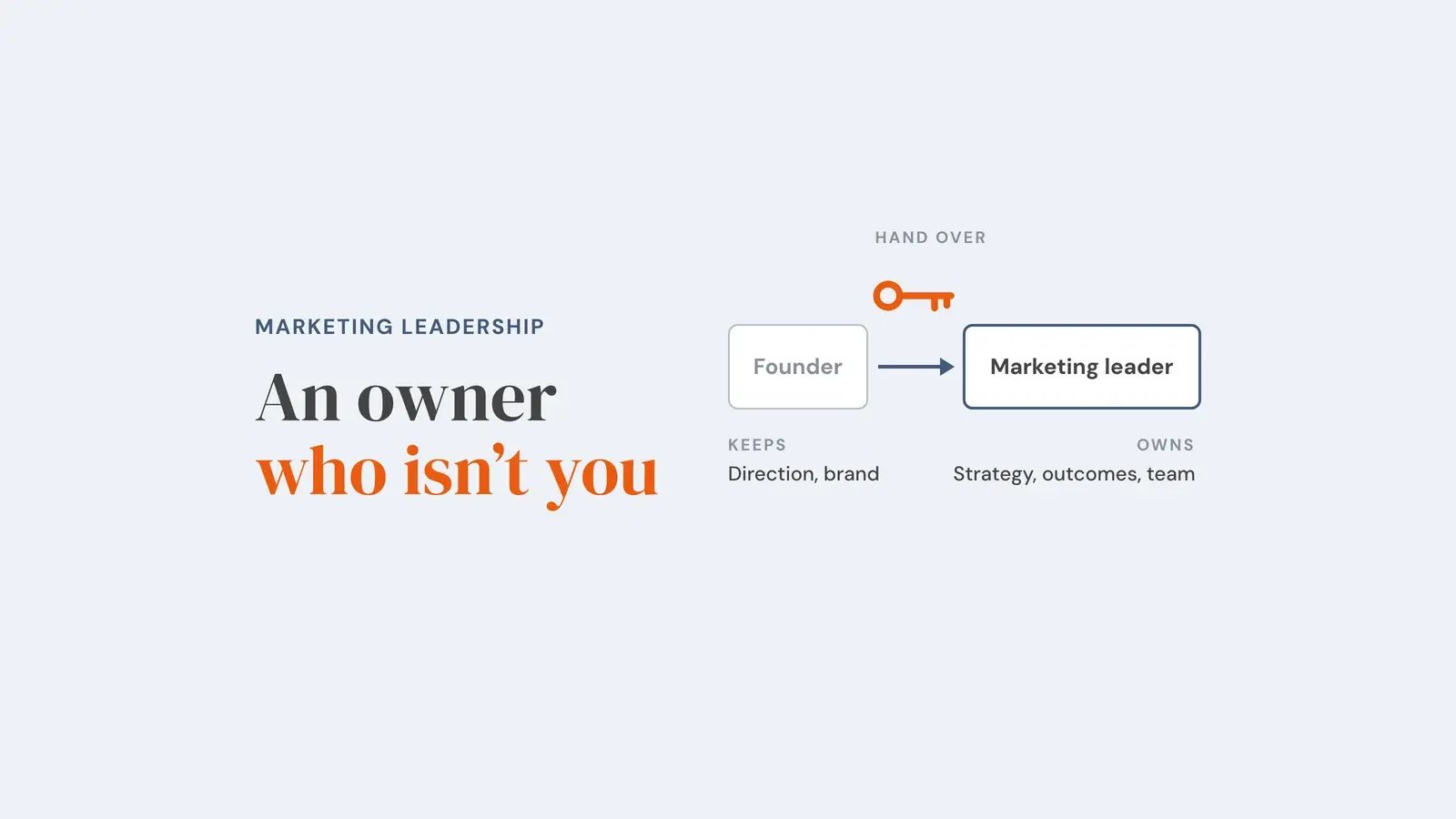
| Accountability layer | Decisions routed to the founder | Named owners with authority to decide |
| Capability transfer | Reliance on one adviser | Documentation and coaching owned by your team |
The commercial layer comes first. Tidying workflows while leaving broken pricing in place fixes the symptom and preserves the cause. That is the work covered by [Systems & Pricing Consultancy].
How does this compare to EOS, Scaling Up and other frameworks?
EOS and Scaling Up are general business operating systems, and both handle leadership rhythm better than most agency-specific programmes do. For meeting cadence, quarterly priorities and accountability charts, they work.
| Framework | Strongest at | Where it falls short for agencies |
|---|---|---|
| EOS / Traction | Leadership rhythm, accountability charts, quarterly priorities | Silent on pricing, scope control and project-level margin |
| Scaling Up | Strategy, cash management, growth planning | Strongest above 50 people, and light on client delivery mechanics |
| Agency-specific programmes | Sales, positioning and lead generation | Many focus on demand generation without addressing delivery capacity |
| The Agency Operating System™ | Pricing, delivery and capacity as one connected system | Narrow by design — agencies only |
The distinction is scope, not quality. A general framework tells you how to run meetings about your problems. An agency operating system changes the commercial mechanics causing them. Agencies running EOS well still lose margin, because scope creep and mispriced work are not meeting problems. See The Agency Operating System™.
How is an agency operating system structured in stages?
An agency operating system installs in 3 stages, systemise, standardise, scale, because each depends on the one beneath it holding.
- Systemise. Map the current state, redesign pricing and service structure, document delivery. You are here if delivery lives in people's heads and pricing was set by instinct. Most agencies should start here.
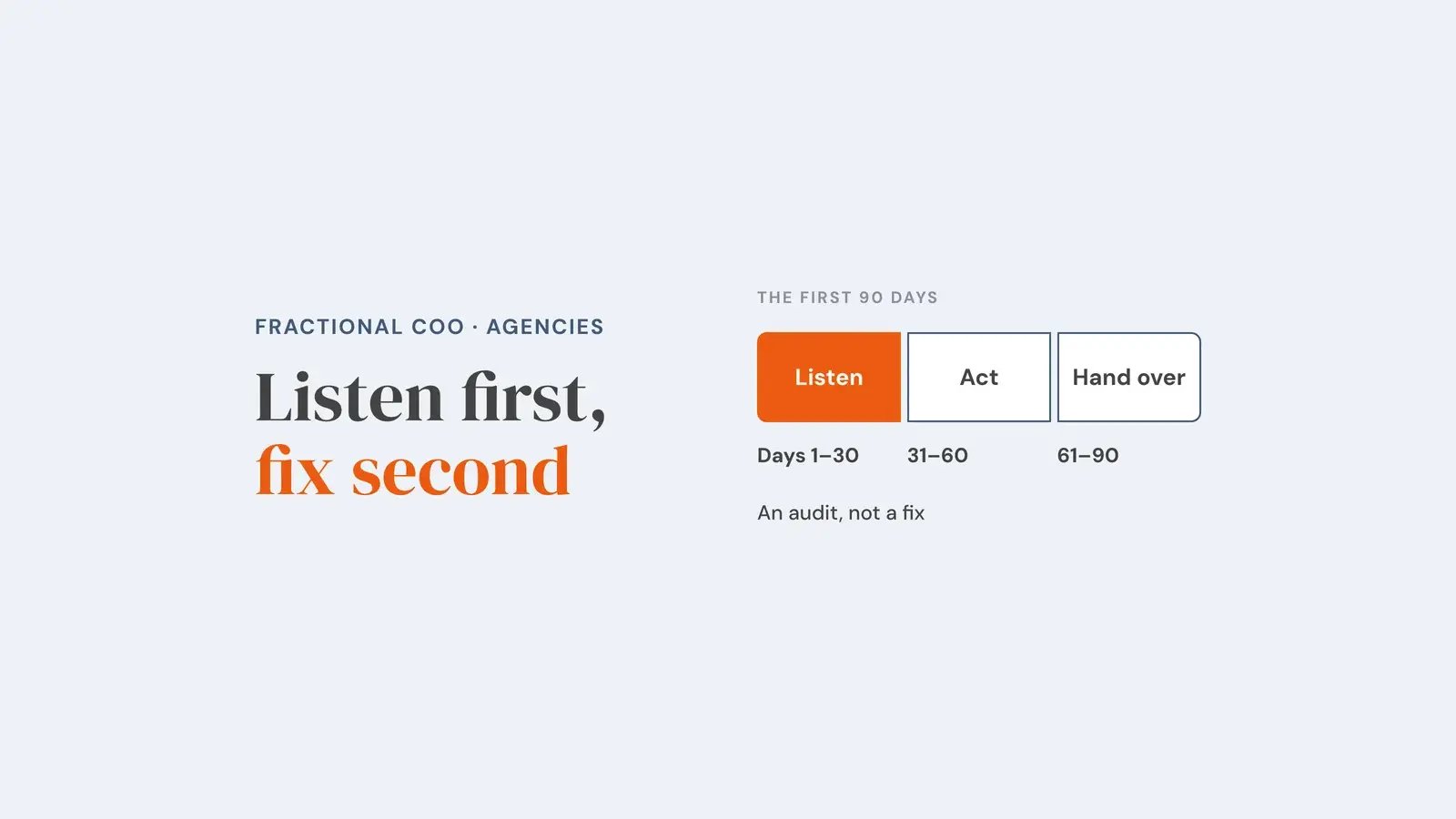
- Standardise. Make delivery consistent, install accountability, remove the founder from daily operations. You are here if the process exists on paper but still routes through you. This is the stage covered by a Fractional COO for Agencies.
- Scale. Build growth architecture on top of delivery that already holds. You are here if delivery is consistent and margin is predictable without your involvement. This is the remit of a Fractional CGO for Agencies.
Jumping to stage 3 before stage 2 holds is the sequencing error I see most often. Selling more work into an unstable delivery system does not grow an agency. It accelerates the failure.
What does an agency operating system cost to install?
Installing an agency operating system costs from a few hundred pounds for a self-directed course to £9,000 ($11,500) or more for full implementation, with embedded operational leadership from £4,200 ($5,400) per month.
At the low end, EOS and Scaling Up books and courses cost under £1,000 ($1,300) and work if you have the discipline to apply them. What I charge for agency-specific work:
| Option | Investment | Typical timeline | Outcome |
|---|---|---|---|
| Systems audit | From £2,500 ($3,200) | 3 weeks | Roadmap you implement yourself |
| Pricing audit | From £3,500 ($4,500) | 3–4 weeks | Redesigned commercial model |
| Full systems implementation | £5,000–£9,000 ($6,400–$11,500) | 2–3 months | Installed structure and documentation |
| Fractional COO | £4,200–£6,900 ($5,400–$8,800) per month | 6 months minimum | Embedded operational leadership |
| Fractional CGO | £8,100–£13,600 ($10,400–$17,400) per month | 6 months minimum | Operations and growth leadership combined |
Current figures are published in full on [Agency Services Pricing].
The number that matters is not the fee. It is the margin you are already losing. A rough estimate:
(monthly rework hours × blended hourly cost) + (founder hours in delivery × your target hourly value) = monthly cost of no system
If you do not track rework, ask three delivery leads what percentage of last month was spent redoing work, then average their answers.
Across every agency audit I have run, that figure usually exceeds the cost of fixing it within a quarter. That is my own engagement data, not an industry benchmark, so your numbers will differ.
Related Reading: Agency Systems Cost: What Founders Almost Always Underestimate
Agency operating system vs hiring more people: which fixes delivery?
Hire when you are under-resourced. Install a system when you are under-structured.
If your team is at capacity, delivery is consistent and margin holds, you have a resourcing problem and hiring is correct. If quality varies by person and profitability is unpredictable, a hire adds another interpretation of an undefined process.
| Hire first | Systems first | |
|---|---|---|
| Right when | Consistent delivery, full capacity | Variable delivery, unpredictable margin |
| Time to impact | 3–6 months including ramp-up | 4–12 weeks |
| Recurring cost | Permanent salary | One-off or fixed-term |
| Risk | More people doing undocumented work | Slower initial capacity increase |
A new hire inherits whatever process exists. If it lives in your head, you have not delegated the work. You have delegated the confusion.
Related Reading: Why Hiring Won't Fix Your Agency's Delivery Problems, and What Will
Should you build your agency operating system yourself?
Build it internally if someone other than the founder owns the project, has protected time, and will redesign pricing rather than only document delivery. Agencies with an operations manager in post frequently succeed alone.
Most self-built systems fail because they document the current process rather than redesigning it, preserving every bottleneck in writing. The 4 patterns I see repeatedly:
- Documentation without decisions. Written process, unchanged behaviour.
- Workflows fixed, pricing untouched. Scope creep continues.
- Tooling mistaken for structure. New software, same chaos.
- No named owner. The project stalls part-finished.
How do you know your agency is ready for an operating system?
Your agency is ready when delivery quality varies between team members, margin is unpredictable month to month, or you are still the final quality check. A 5-point readiness check:
- Delivery differs depending on who runs the project.
- You cannot say today which week your team is overloaded.
- Profitability is only visible after a project ends.
- Your team asks you the same questions repeatedly.
- Revenue is growing and your take-home pay is not.
The more you recognise, the more likely the constraint is structural rather than effort-related. Readiness is about symptoms, not headcount, though in my own client base the strain usually becomes undeniable between 6 and 20 people.
FAQs about agency operating systems
How long does installation take?
A systems audit takes around 3 weeks, full implementation 2–3 months. Embedded leadership runs 6 months minimum, because structure installed faster rarely holds.
Do we need new software?
Usually not. Most agencies already own project management, time tracking and resourcing tools they use at a fraction of capacity. The problem is undefined process, not missing features.
What if the team resists?
Two common causes. Either the system was designed without the people running it, or it introduces accountability that did not previously exist. The first is a design fault. The second is the system working.
What if we tried this before and it did not stick?
Almost always, the previous attempt documented delivery without changing pricing or naming an owner. Structure without commercial change reverts within a quarter.
What happens when the engagement ends?
The documentation, training and structure stay with your team. That is the point.
From chaos to control
You started with an agency where growth created pressure rather than capacity. You now know what an operating system includes, how it differs from EOS and Scaling Up, what it costs, and which stage you sit in. The next step is not more effort. It is structure before scale.
How to take action now
- Run the 5-point readiness check this week.
- Calculate your monthly cost of no system using the formula above.
- Identify which of the 3 stages describes your position.
- Book a scoping call. Free, 45 minutes, ending with a recommendation of which stage to start with, including building it yourself, where that is the honest answer.
Related Reading: Fractional COO For Agencies: Do You Actually Need One?

About the author
Tom Wardman installs commercial and operational structure inside digital marketing agencies. He designed The Agency Operating System™ after watching the same problems repeat: pricing built on hope, delivery built on tribal knowledge, growth that produced chaos rather than capacity. Every engagement ends with the system owned by the agency, not the adviser.
Pricing disclaimer: All GBP–USD price conversions are rounded estimates and correct at the time of publishing. Exchange rates fluctuate and figures should be treated as indicative only.
Topics: