

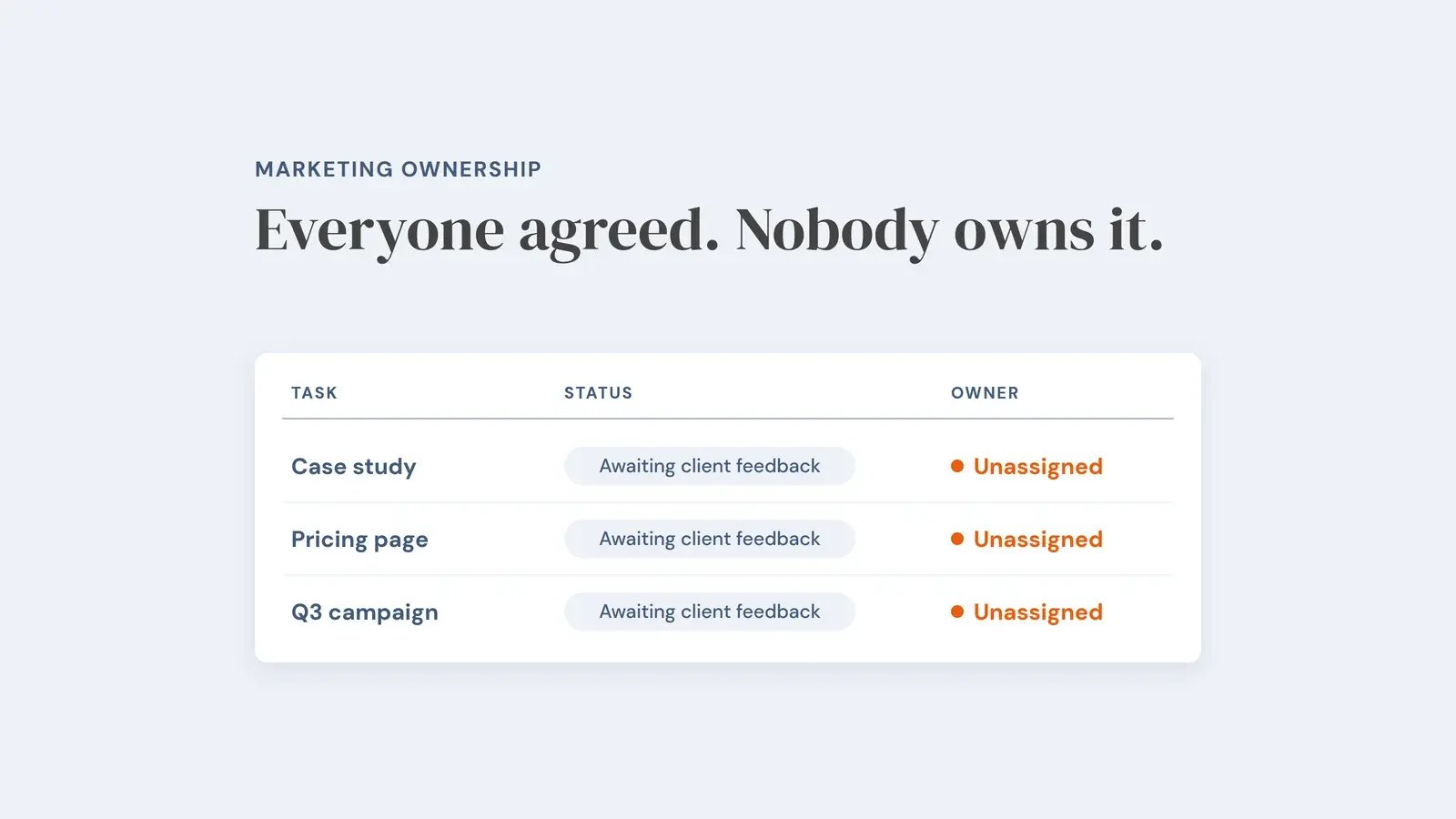
Your marketing strategy is signed off. Your agency or fractional marketing director is engaged and ready to go. Six months later, maybe a third of the plan has shipped, and nobody can point to the week it stalled.
Nothing failed. Everything just took far longer than planned.
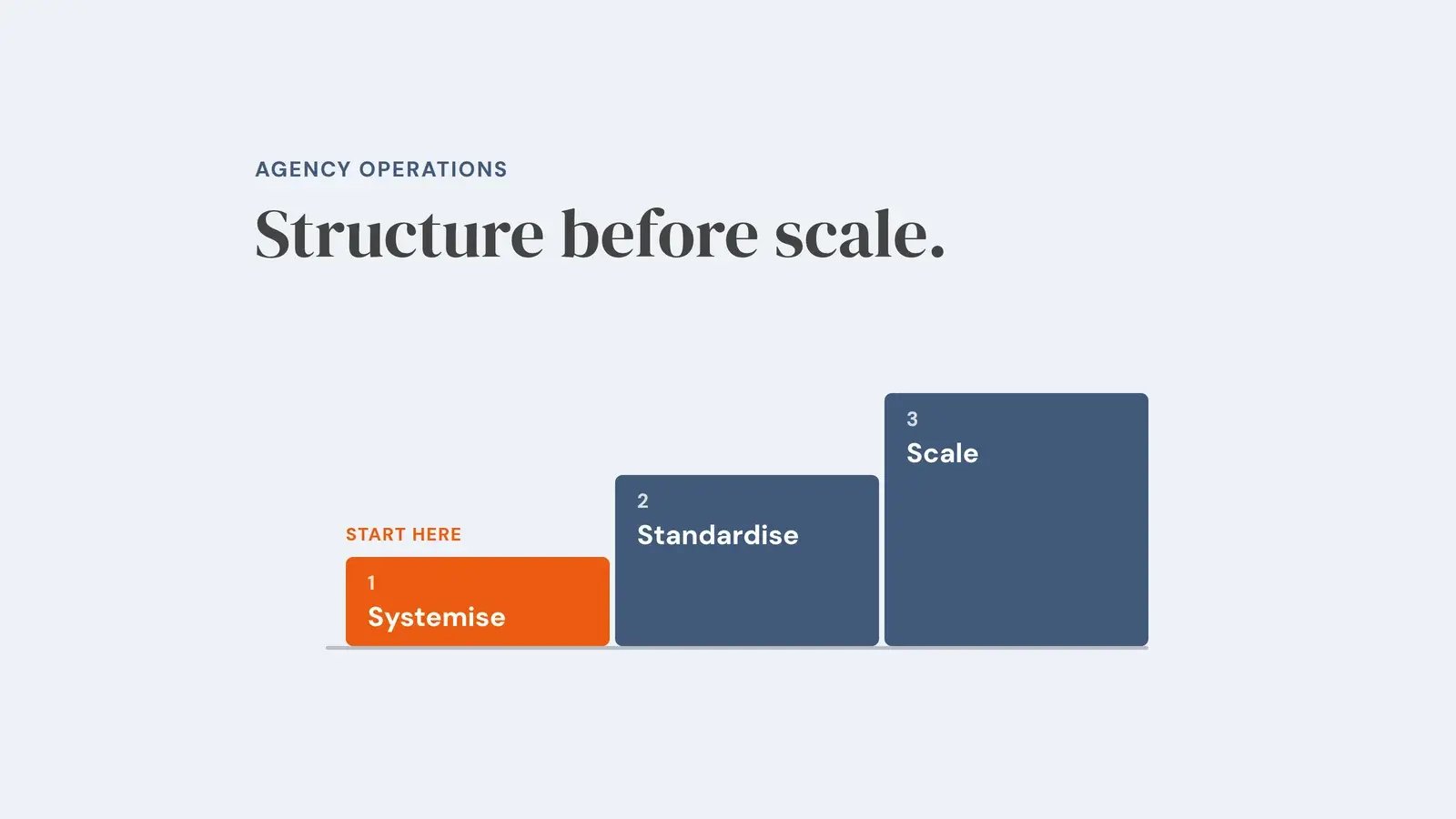
Most founder-led B2B companies read that as a delivery problem and go shopping for a better partner. Usually it isn't. The work slows because nobody inside the business owns marketing execution: there is no internal champion.
This article is for founders, MDs and leadership teams paying for marketing support that isn't turning into output. If you're under roughly 20 people and the founder still makes every marketing call inside a day, you probably don't have this problem yet. Everyone else: you'll learn what an internal marketing champion does, how to spot the gap, what it costs you, and how to close it.
Key takeaways
- An internal marketing champion is the named person inside your business who holds decision authority over marketing execution, supplies internal context, and holds partners to account.
- Marketing execution stalls without a champion because almost every task eventually needs an internal decision, approval or piece of context no partner can supply.
- No agency, consultant or fractional marketing director can fill the role for you. They can own strategy and delivery, but cannot grant themselves decision rights inside your business.
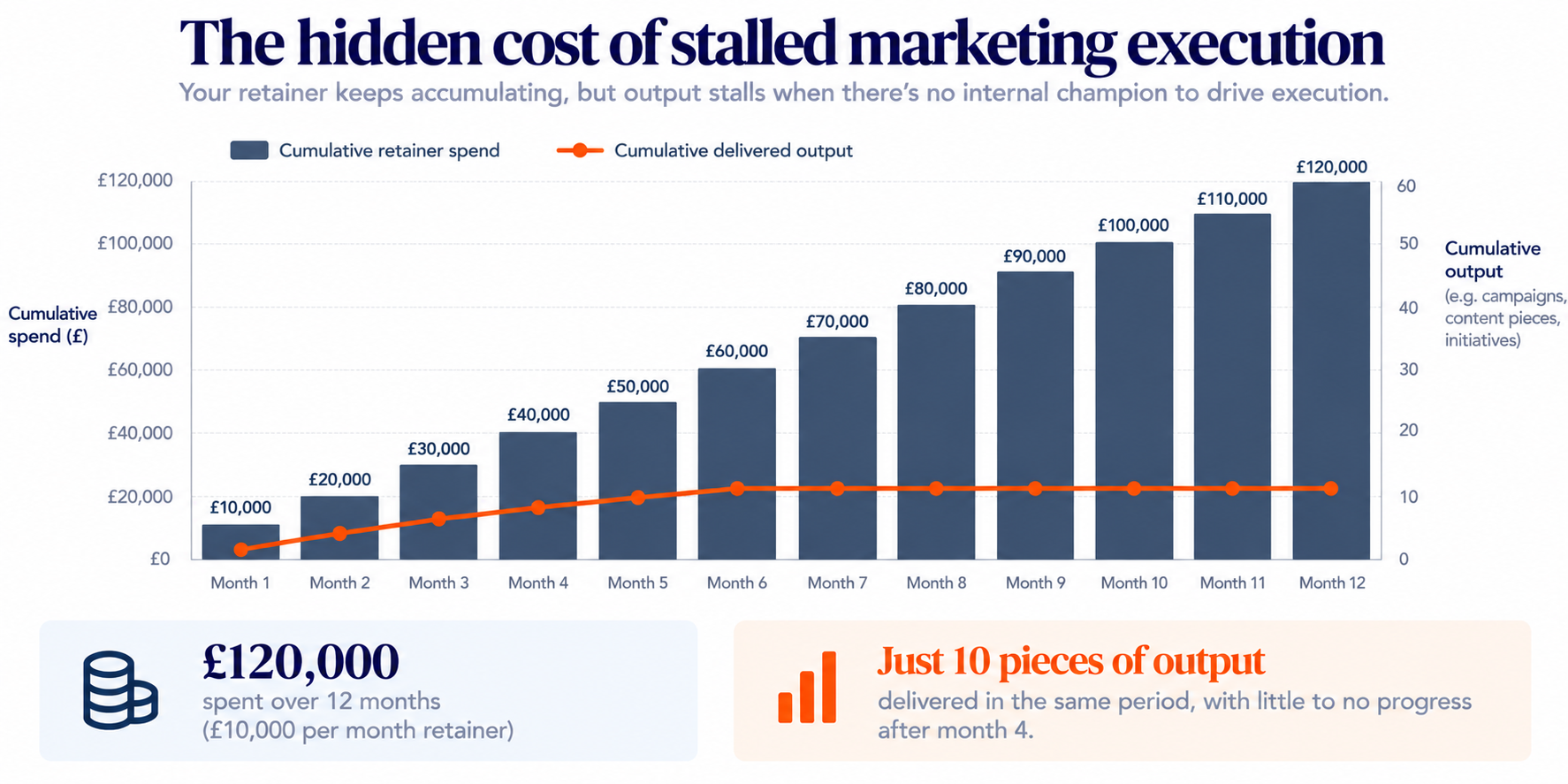
- The cost appears as retainer spend producing less each month, campaigns launching late, and strategy work redone before it can be used.
- Appointing a champion needs three things at once: one named person, explicit decision authority, and protected weekly time.
What is an internal marketing champion?
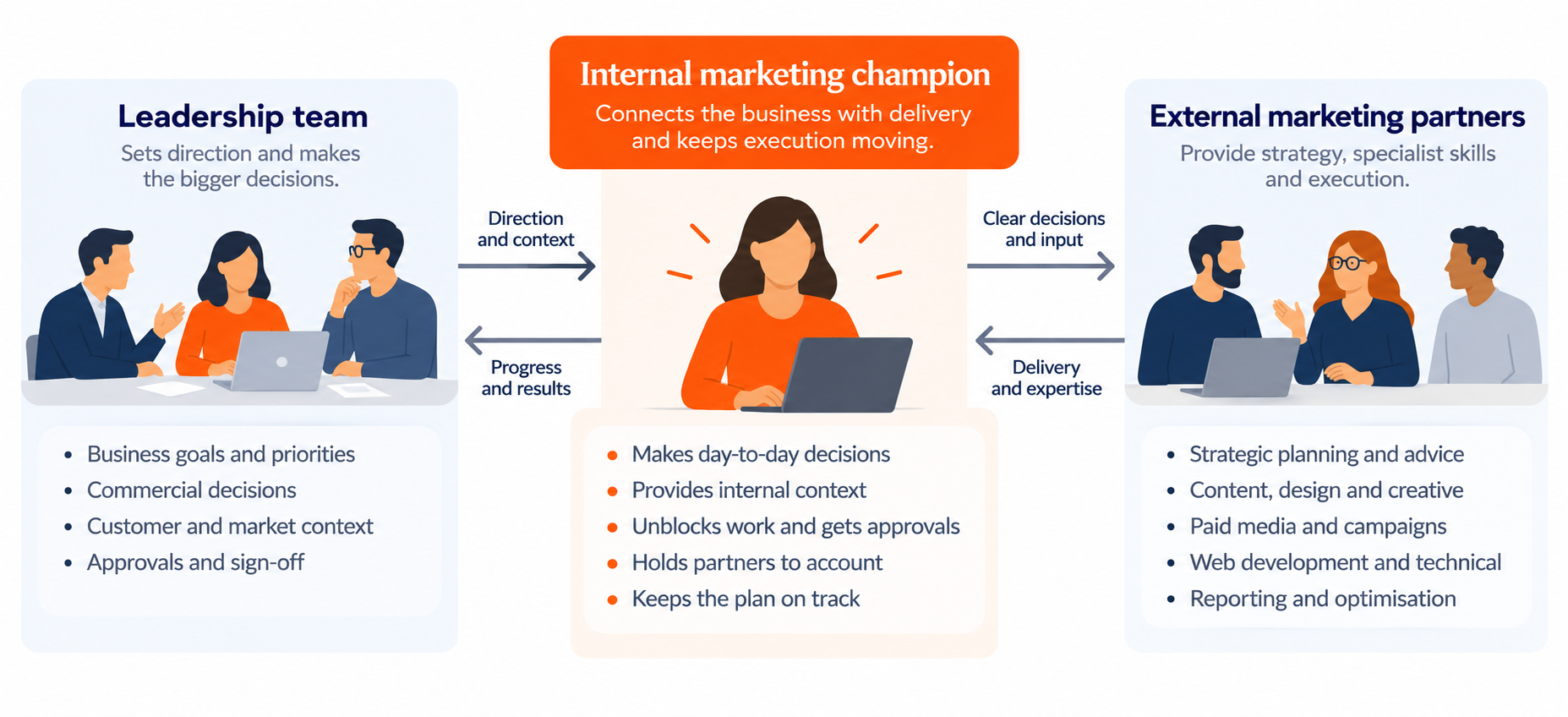
An internal marketing champion is the person inside your business who owns marketing execution end to end: making day-to-day decisions, unblocking work, feeding context to partners, and holding delivery to account.
They are often not a marketer by job title, and rarely the most senior person in the room. What defines the champion is decision authority, plus the time and proximity to use it.
| The champion owns | The champion does not own |
|---|---|
| Day-to-day approvals and sign-off | Writing every piece of content |
| Internal context: sales feedback, product detail, customer stories | Campaign strategy and planning |
| Chasing and unblocking internal input | Specialist delivery (design, paid media, development) |
| Holding partners to agreed deadlines | Being the marketing expert |
Why does marketing execution stall without an internal champion?
Marketing execution stalls without an internal champion because every piece of work eventually reaches a decision, approval or piece of internal knowledge only somebody inside your business can provide.
A case study needs a customer introduction. A pricing page needs a commercial decision. A campaign needs somebody to say which segment matters most this quarter. None can be answered from outside.
Here is the shape it usually takes: A £6m (7.5m) engineering firm signs off a four-pillar plan. The agency drafts a case study in week two, then waits eleven weeks for a customer introduction only the sales director can make. The pricing page sits unbuilt because nobody will confirm whether installation is included. By month six, two pillars have shipped and leadership blames the agency. The agency was never the constraint. (Note: This is a composite, not a real client.)
When no one holds the role, the work doesn't stop dramatically. It slows, queues, and waits for whoever has a spare hour that week. That is why the stall is so hard to see from the inside.
What are the 7 warning signs your business has no marketing champion?
The clearest warning signs are approvals measured in weeks, partner questions left unanswered, and a strategy everybody agreed with that nobody has started.
- Your agency's status updates repeatedly show items "awaiting client feedback".
- Simple approvals take longer than two weeks.
- Marketing decisions only get made when the founder is in the room.
- Nobody can tell you this quarter's priority without checking the strategy document.
- Content dries up because no internal expert has been made available for interviews.
- Reporting arrives, gets read, and changes nothing.
- Everyone says marketing is "a team effort", which usually means nobody owns it.
Signals 1, 2 and 5 are the most diagnostic, because each points at a missing internal decision rather than poor external work. Treat the list as a prompt for an honest conversation, not a score. These symptoms look identical to partner underperformance, which is why the cause often goes undiagnosed for a year.
For a structured view of where the drag sits, the Marketing Diagnostic & Priorities (fixed £1,500 + VAT, £500 deposit, 2–4 weeks, money-back if it doesn't say what to fix first) is built for this diagnosis.
What is the cost of nobody owning marketing execution?
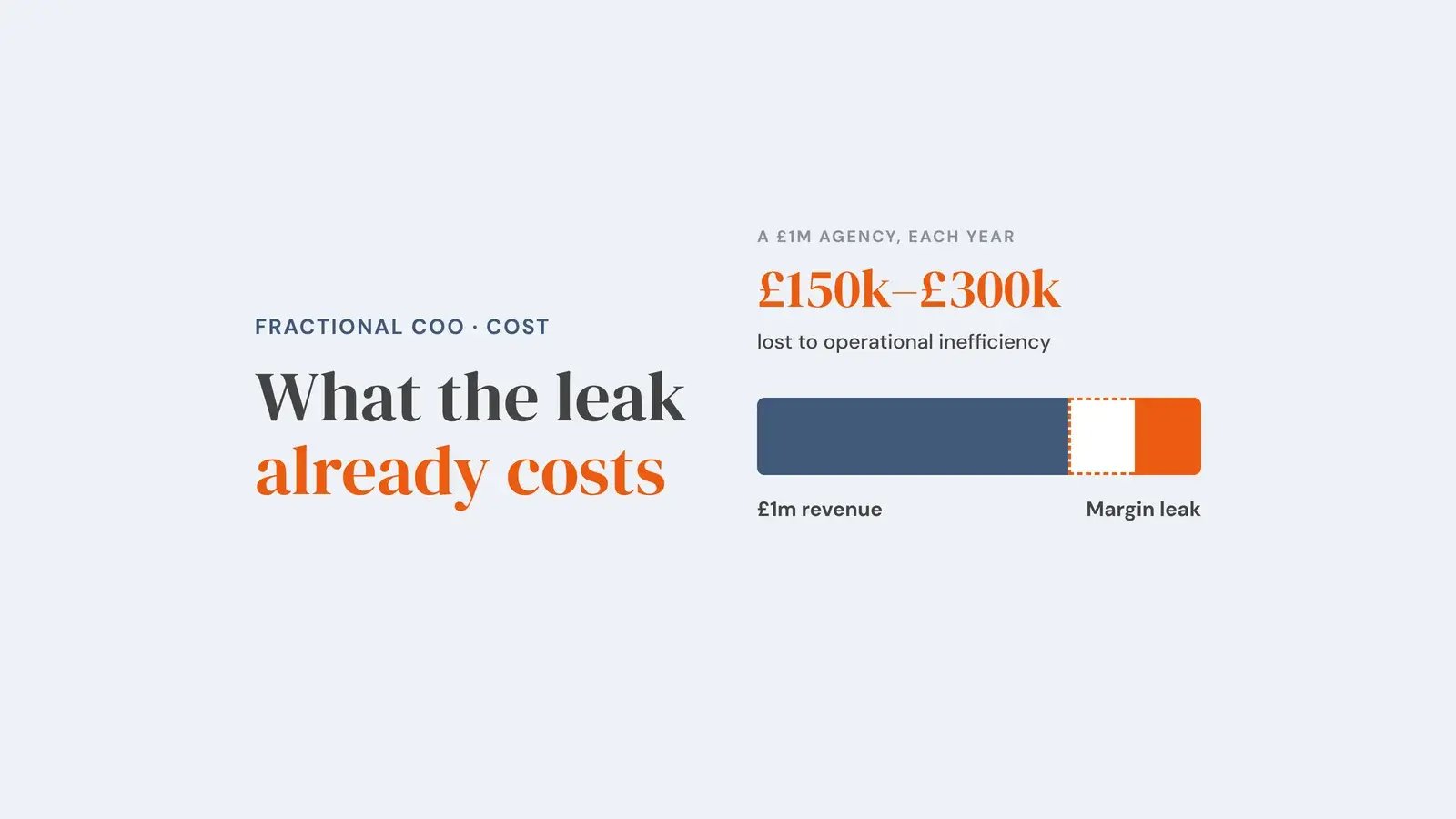
The cost of nobody owning marketing execution is rarely a visible line item. It shows up as retainer spend producing less each month, campaigns launching after their window closes, and strategy rewritten before it can be used.
| Where the money goes | What it looks like in practice |
|---|---|
| Idle retained capacity | Paying for days your partner cannot use because inputs never arrive |
| Rework | Strategy and briefs going stale and needing rewriting before delivery |
| Missed timing | Launches slipping past the quarter, event or buying season they were built for |
| Restart costs | Re-briefing a new partner after wrongly concluding the last one failed |
You can estimate your own exposure with one calculation: monthly external spend × months stalled × the share of the plan still undelivered.
For a business paying £4,000–£8,000 ($5,100–$10,200) per month, six stalled months at 60% undelivered comes to roughly £14,000–£29,000 ($18,000–$37,000) of spend that bought unusable capacity. These are illustrative estimates based on typical UK B2B retainer ranges, not published benchmarks. Run the calculation with your own numbers.
Why can't your agency or fractional marketing director fill the gap for you?
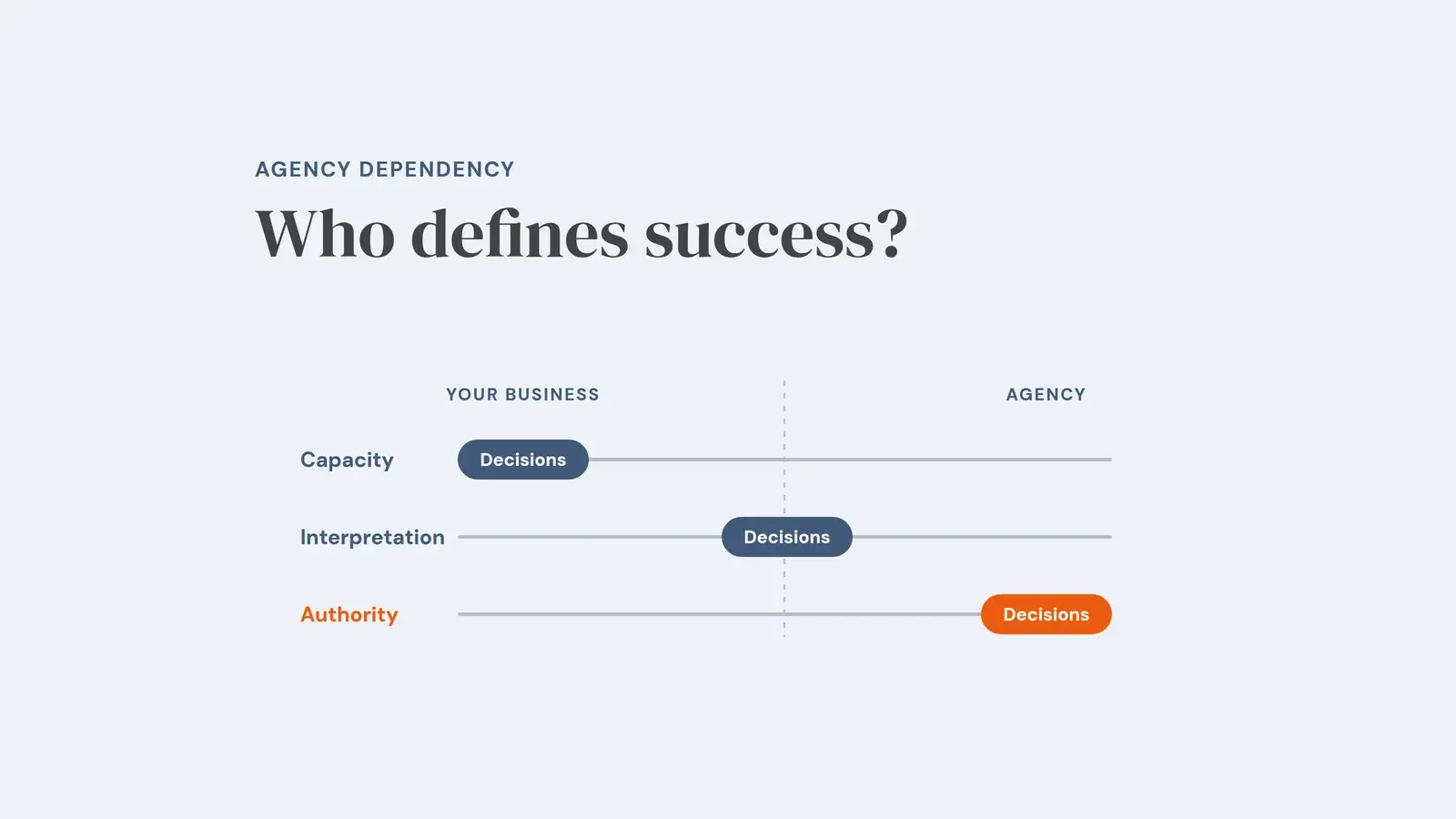
An agency or fractional marketing director can own strategy, direction and delivery, but cannot grant themselves decision rights, attend conversations they aren't invited to, or represent marketing when budgets are argued internally.
Businesses assume the champion role was outsourced along with the work, then find partners can only move as fast as internal decisions allow. Here is how the three roles divide:
| Internal champion | Marketing manager | External partner | |
|---|---|---|---|
| Primary role | Decides and unblocks | Executes day to day | Strategy and specialist delivery |
| Decision rights | Yes, up to an agreed threshold | Limited | None internally |
| Time needed | 4–8 hours per week | Full time | Contracted days |
| Typical UK cost | Usually reallocated time, not new salary | £35,000–£55,000 [$45,000–$70,000] per year, an indicative range rather than a sourced benchmark | Monthly retainer |
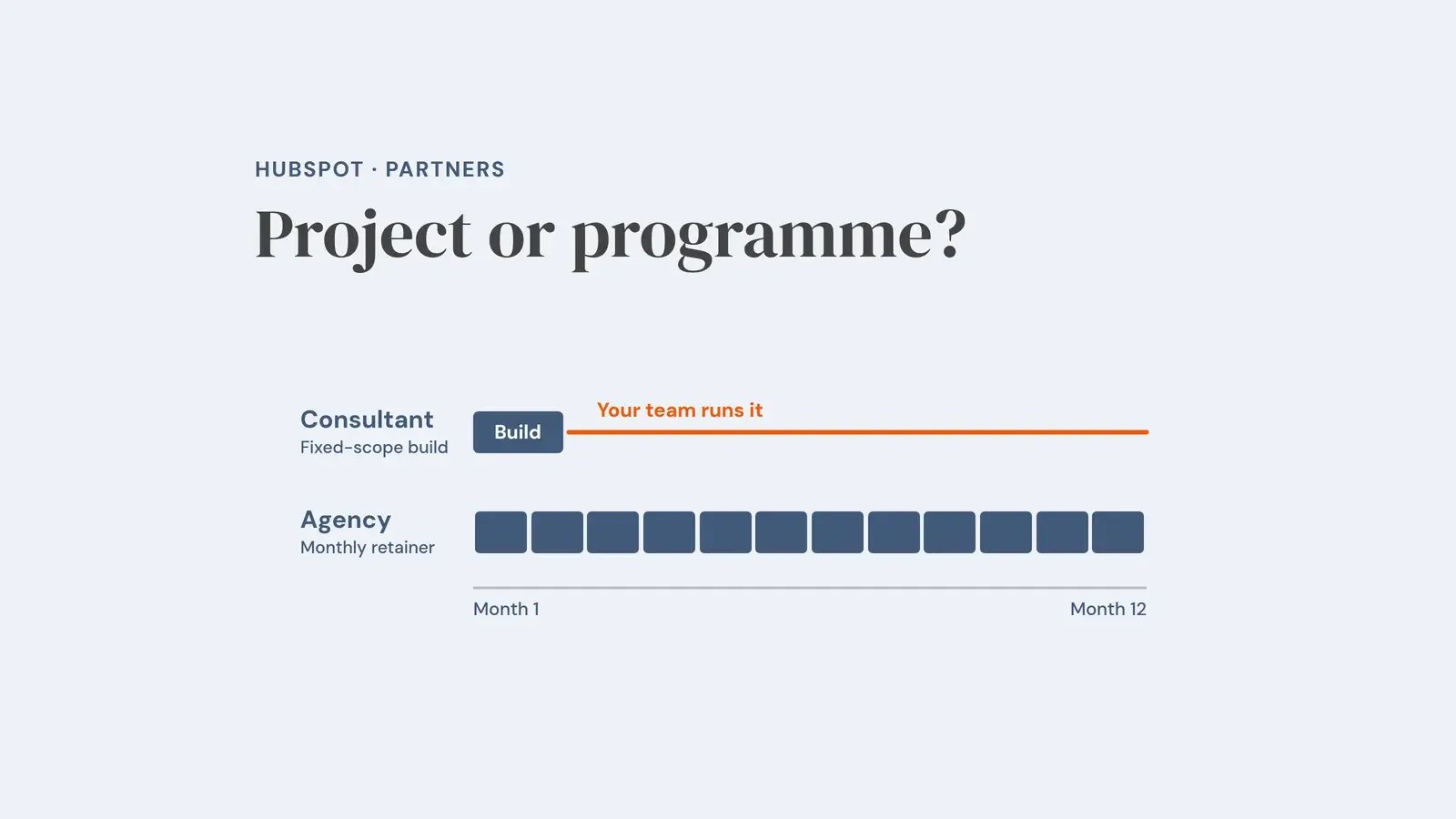
In fairness to agencies, a good one does plenty to work around this gap: running standing decision meetings, and drafting decisions for approval rather than asking open questions. And for some businesses, outsourcing more is the right answer: if marketing isn't a core growth lever this year, a fully managed service with one monthly approval call beats manufacturing an internal role nobody wants.
The gap only becomes a problem when it is structural and nobody names it. Marketing Agency Not Delivering ROI: Root Causes, Diagnostic Steps, and How to Fix It covers how to tell the difference before changing supplier, and Poor Marketing Hire Costs: Real Numbers & How to Avoid Them covers what hiring the wrong role runs to.
How do you appoint an internal marketing champion?
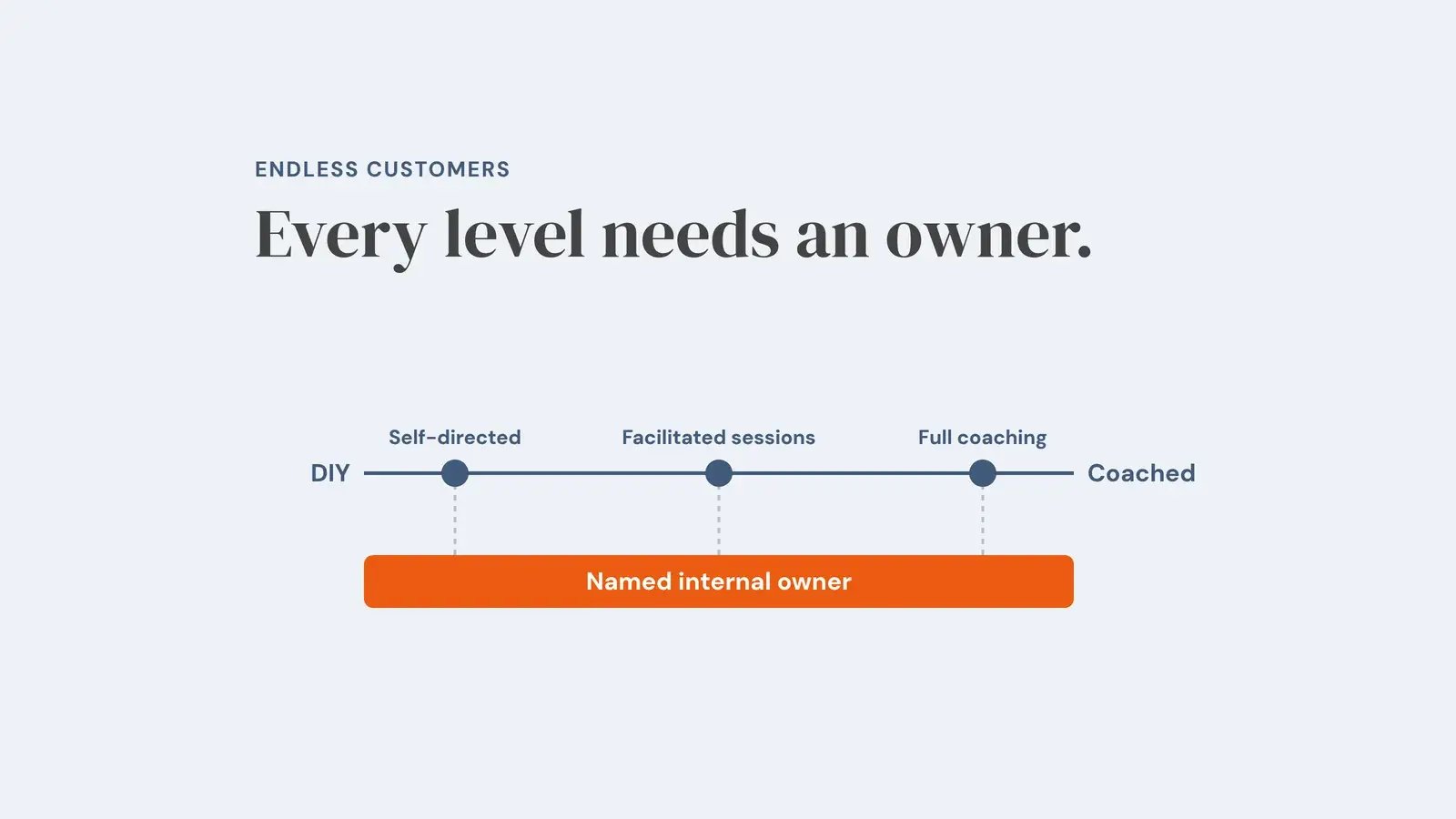
You appoint an internal marketing champion by naming one person, giving them written decision authority up to an agreed threshold, and protecting a realistic block of time each week.
- Name one person. Not a committee, not a job share. One name on the org chart.
- Write down their decision rights. Which choices they make alone, and which need you.
- Set a spend threshold. Anything below it goes ahead without a board conversation.
- Protect the time. Four to eight hours a week, ring-fenced and defended.
- Put them in the room. They join partner calls, leadership updates and sales meetings.
The appointment fails when any one of those five is missing. A named person without authority is a messenger. One with authority but no time becomes the bottleneck they were meant to remove. See Harvard Business Review’s “Help Your Team Choose Accountability.” for more detail.
What if nobody internally can take the role?
If nobody internally can take the role, your options are to hire for it, borrow it through an embedded fractional arrangement, or narrow your marketing scope until it fits the capacity you genuinely have.
Narrowing scope is a legitimate answer, not a failure. Far more budget is wasted running an ambitious plan with no owner than running a modest plan properly. Pick one channel, one offer and one quarter, and finish it.
Frequently asked questions
Does the champion need to be a marketer?
No. Decision authority and internal knowledge matter more than marketing expertise. Operations managers and commercial leads often make excellent champions, because they already know how decisions get made.
Can the founder or MD be the internal champion?
Yes, in businesses under roughly 20 people. Beyond that, founders rarely protect the weekly time the role needs, and it quietly reverts to nobody.
How quickly does execution improve after appointing a champion?
Approval times move first, usually within a month, with delivery volume following over a quarter. This is a pattern observed across client engagements, not a measured or published figure, so treat it as a direction of travel.
What is the difference between a champion and a project manager?
A project manager tracks work. A champion decides. Tracking a stalled decision does not move it.
So what should you do next?
You started with marketing that looked like a delivery problem. You can now see it may be an ownership problem: strategy stalling between approval and action because nobody inside the business has authority to move it forward.
The fix is rarely a bigger budget or a better agency. It is one named person, with real authority and protected time, sitting between your leadership team and your partners.
How to take action now
- Count how many items on your plan are waiting on an internal decision.
- Name a single owner for marketing execution this week.
- Write down their decision rights and spend threshold.
- Ring-fence four to eight hours of their week and defend it.
- Review delivery volume after a quarter, not a month.
If several of the seven signals sounded familiar, start by scoring where the drag actually sits.
Related Reading: Agency Dependency: The True 3-Year Cost to Your Business

Pricing disclaimer: All GBP–USD price conversions are rounded estimates and correct at the time of publishing. Exchange rates fluctuate and figures should be treated as indicative only.