

Most agency founders do not decide one morning that their operations are broken. They notice it slowly: a date that slips, a project that needs redoing, a week where every decision routes back through them. Then they carry on, because clients need serving.
I have spent the past six years installing operational architecture inside digital and creative agencies, across engagements with teams of 6 to 25 people. The founders who eventually fix it almost all say the same thing afterwards. They waited too long.
This article is for agency founders running eight people or more, roughly £25k MRR ($32k) and up. Below that, you do not have enough moving parts for a documented system to pay for itself, and founder-held knowledge still works. Below: what the delay costs, the signals that the decision has already been made for you, and when waiting is genuinely the right call.
Key takeaways
- Agency founders who fix their operations typically say they should have started 12–24 months earlier.
- Waiting costs an agency in four places: rework, unbilled founder hours, delivery-driven churn, and the higher price of restructuring a larger business later.
- The clearest early signal is that delivery quality depends on who is staffed, not on a documented process.
- Hiring into an unclear system usually increases founder workload instead of reducing it.
- Waiting is the right call in three specific situations, and the wrong one everywhere else.
What do agency founders actually regret about waiting?
The regret is rarely about the money spent fixing operations. It is about the margin, the client relationships, and the personal time lost while waiting for things to settle down on their own.
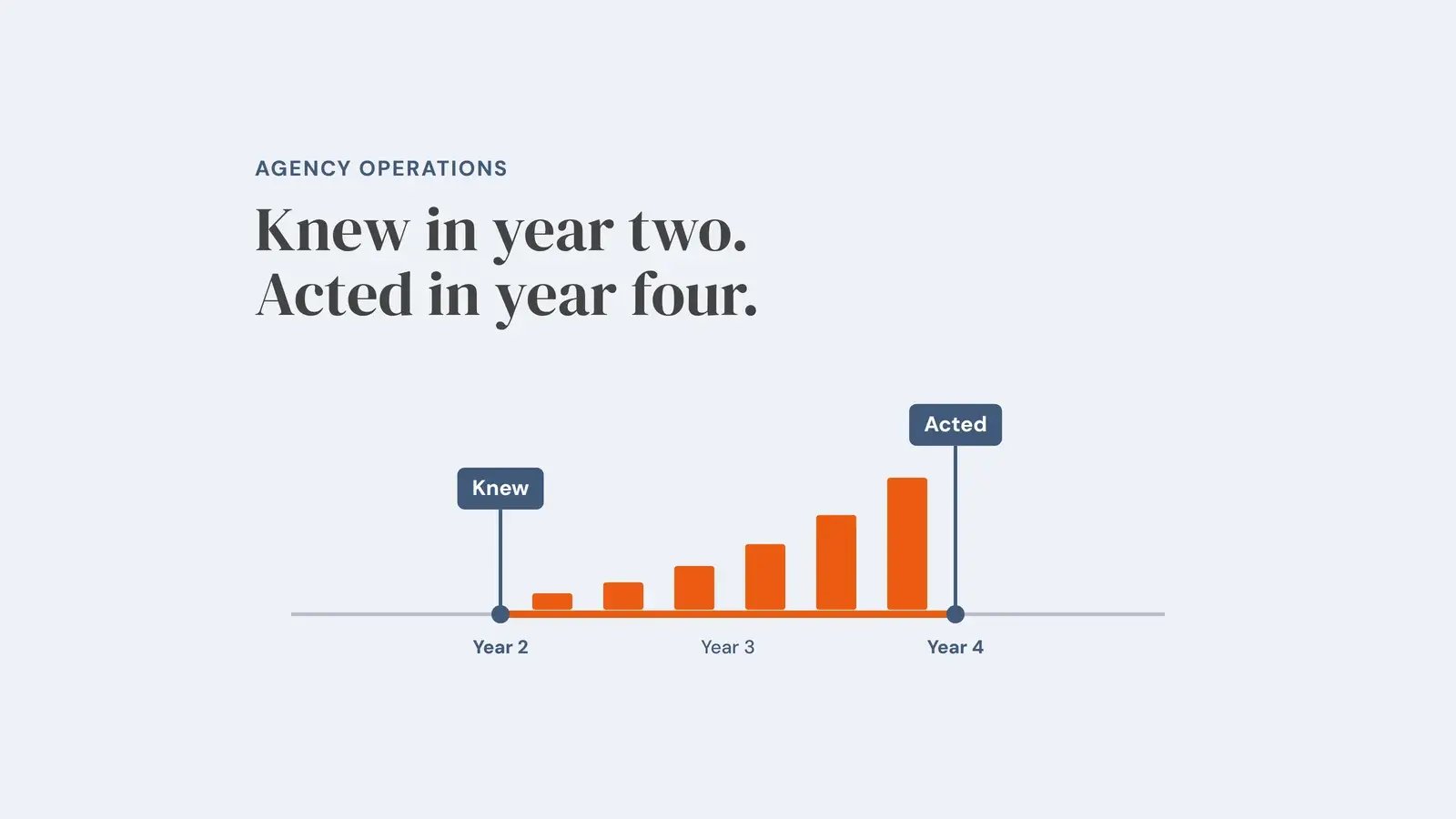
In the agencies I have worked with, the pattern repeats. Founders knew by year two that delivery was held together by memory and goodwill. They acted in year four, usually after losing a client or a senior team member.
One 12-person agency lost a £6,000/month ($7,700) retainer after two projects ran late, both because one account lead was the only person who knew how that service ran. Documenting that service afterwards took nine days of a delivery lead's time, not the founder's.
What they regret is not the decision. It is the interval. Everything installed in year four would have been simpler in year two, with half the team.

Why do agency founders delay fixing operations?
Agency founders delay because operational problems disguise themselves as temporary — a busy quarter, a difficult client, one hire away from solved. No week arrives where fixing the system feels more urgent than serving clients, so it never reaches the top of the list.
Five justifications recur:
- "We'll fix it after this busy period." The busy period becomes the operating condition.
- "We just need one more person." The problem is how work flows, not how many hands are on it.
- "Our work is too bespoke to standardise." Agencies standardise the process, not the creative output.
- "The team would resist process." Teams resist unclear process. They rarely resist clarity.
- "We can't afford it right now." The current system's cost is already being paid, just not on an invoice.
The second is the most expensive, because a new hire entering an undocumented system has to learn it from the founder, raising founder workload before it lowers it, and adding another person whose knowledge lives in their head.
Related Reading: Why Hiring Won't Fix Your Agency's Delivery Problems, and What Will
What does waiting actually cost an agency?
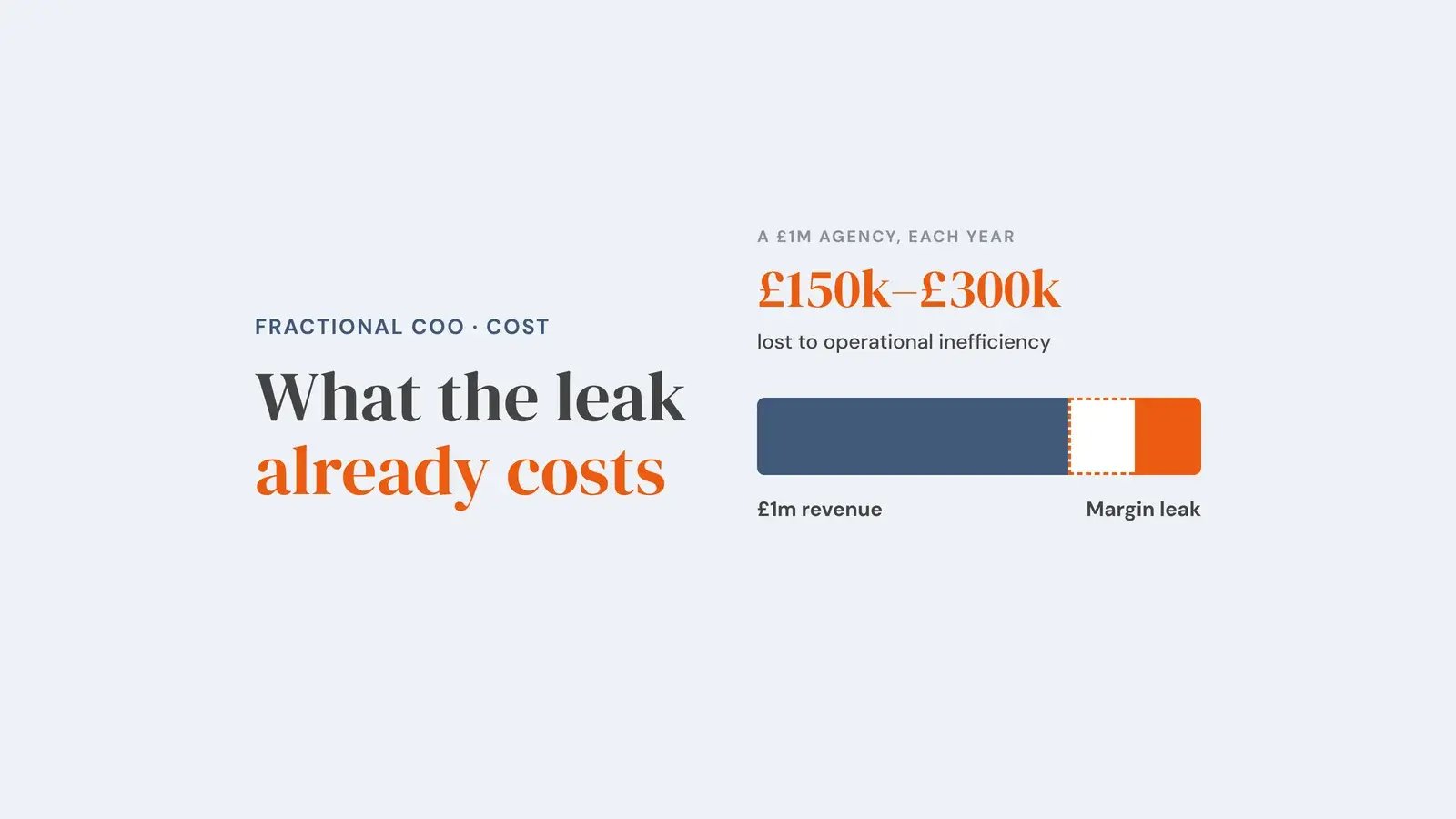
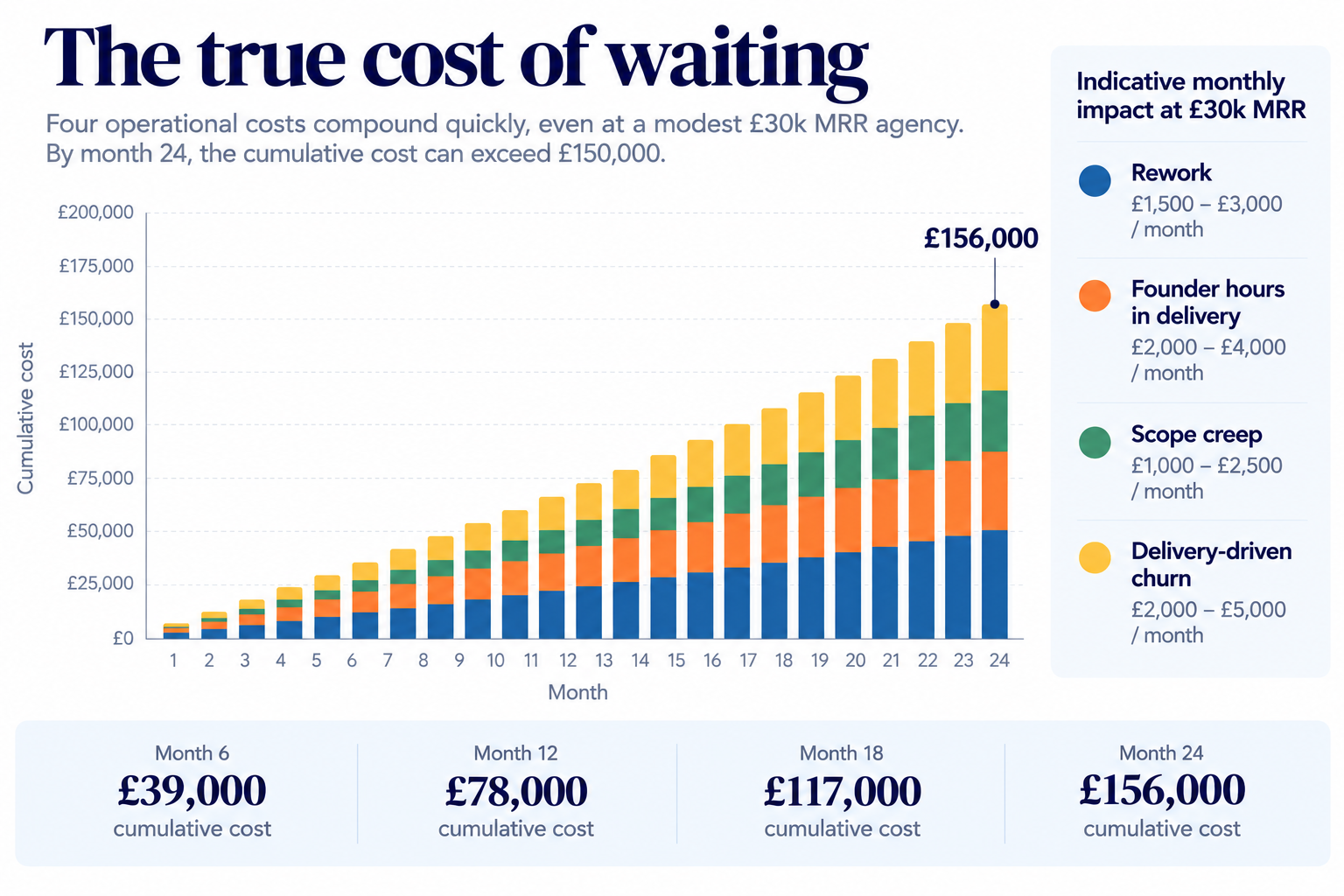
Waiting costs an agency in four measurable places: rework, unbilled founder hours, delivery-driven client churn, and the higher price of restructuring a bigger business later. None appear as a line on a profit and loss statement, which is why founders underestimate the total.
Published benchmarks place healthy agency net margin around 15–20%. At that margin, a few thousand pounds of monthly leakage is most of the profit.
| Cost area | How it shows up | Indicative monthly impact at £30k MRR |
|---|---|---|
| Rework | Work redone because the brief or standard was unclear | £1,500–£3,000 ($1,900–$3,800) |
| Founder hours in delivery | 10–15 hours a week not spent on growth or leadership | £2,000–£4,000 ($2,600–$5,100) in opportunity cost |
| Scope creep | Unbilled additions absorbed to protect the relationship | £1,000–£2,500 ($1,300–$3,200) |
| Delivery-driven churn | One client lost per year on consistency, not quality | £2,000–£5,000 ($2,600–$6,400) |
These ranges are my estimates from client engagements, not benchmark data. Run your own: (rework hours × blended hourly cost) + (founder delivery hours × your target hourly value) + unbilled scope, multiplied by 12.
What are the early warning signs that operations need fixing now?
The clearest early signal is that delivery quality depends on who is staffed, rather than on the process itself. Others follow. Any one can be a bad month; three or more at once means the pattern is structural rather than circumstantial:
- You are the final quality check on client work.
- Nobody can forecast next month's workload with confidence.
- Two clients on the same service receive noticeably different experiences.
- Revenue has grown but your take-home pay or free time has not.
- Process documents exist, but nobody opens them.
Related Reading: Why Agency Revenue Growth Can Cut Your Founder Take-Home Pay
Why does fixing operations get harder the longer you wait?
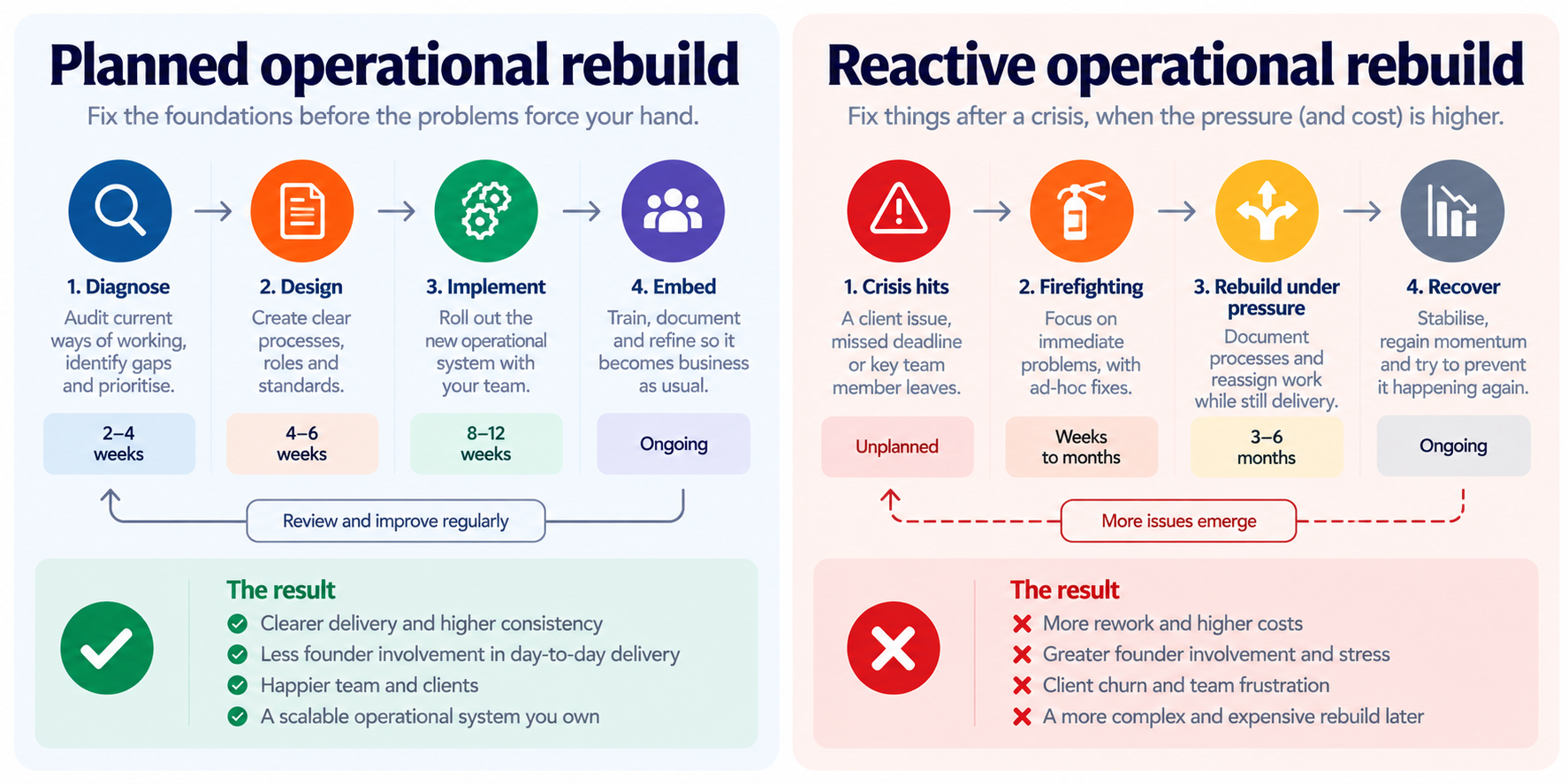
Operational debt compounds because every new client, hire, and service variation is built on top of the unstable process rather than beside it. A 6-person agency can change how work flows in a few weeks. A 15-person agency with the same habits is changing behaviour across three teams and a live client base at once.
Fixing operations early is a design exercise. Fixing them under pressure is damage control.
| Fixed early | Fixed under pressure | |
|---|---|---|
| What triggers it | A decision | A lost client, a resignation, or a cash squeeze |
| Scope | One service at a time, chosen deliberately | Every service at once, because everything is affected |
| Team reaction | Scepticism that fades as the pressure lifts | Scepticism sharpened by worry about job security |
| Result | A structure the agency grows into | A structure the agency is forced to accept |
The honest claim is not that a more expensive service becomes necessary. It is that the same work expands. Documenting one delivery process is much the same task in year two or year four, but by year four there are four processes, nine people who do it differently, and no quiet fortnight in which to change it. Figures for both routes sit on the Agency Services Pricing page.
When is waiting the right decision for an agency?
Waiting is the right call in three situations, and I would rather say so than pretend the answer is always "act now".
- You are in a live acquisition or sale process: Changing how the business operates during due diligence adds risk without moving the valuation. Finish the transaction first.
- You intend to close or step away within 12 months: Systems pay back over years, not months. If there is no year three, there is no return.
- You are below eight people: At that size, documented process can add more administrative overhead than it removes.
A cash crunch is a fourth case, but it is a deferral rather than a decision. Set a date to revisit it.
Everything else is a preference for avoiding disruption now in exchange for paying more later. The test is whether your problems come from not having enough people, or from not having agreed ways of working. Only the first is solved by hiring.
Frequently asked questions
At what size should an agency fix its operations?
Eight people is the usual inflection point, because that is where the founder can no longer hold every project in their head. Headcount matters more than revenue here, though most agencies reach it somewhere above £25k MRR ($32k). The signal is consistent: growth stops feeling like progress.
What if we already tried to fix our operations and it did not stick?
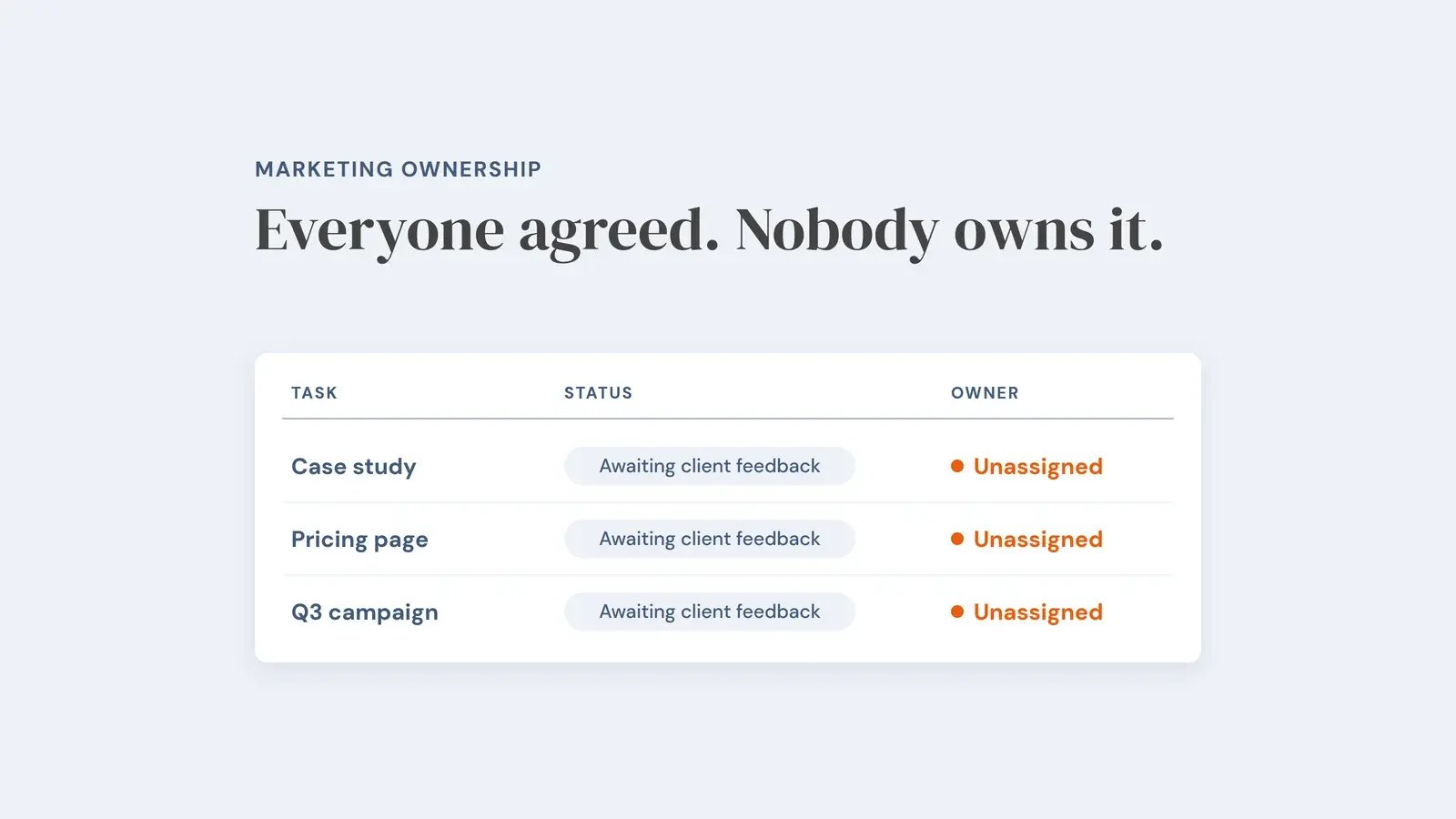
It usually fails for one of two reasons: the system was designed by someone who did not have to run it, or nobody was accountable for keeping it current. Documentation without an owner reverts within a quarter. Work out which one caused the last attempt to fail before rebuilding.
How long does fixing agency operations take?
One to two quarters. A few weeks to diagnose and design, then a full delivery cycle for new habits to hold under real client pressure.
Can an agency fix its own operations without outside help?
Yes, and some do. The common failure is that the person best placed to design the system is the founder, who also has the least time to do it.
The structural fix
For a while, your own attention was enough. It held delivery together, caught the errors, made the decisions.
Where you are now is where that stops working. The thing keeping the agency running is also the thing capping it, and every month of delay adds another client and another habit to the eventual rebuild. That is not a failure of effort. It is what happens when growth outpaces the structure beneath it.
Where you go next is architecture, in this order:
- See capacity: Make current and forecast workload visible to whoever sells the work.
- Set the standard: Document how one service is delivered, end to end, before the others.
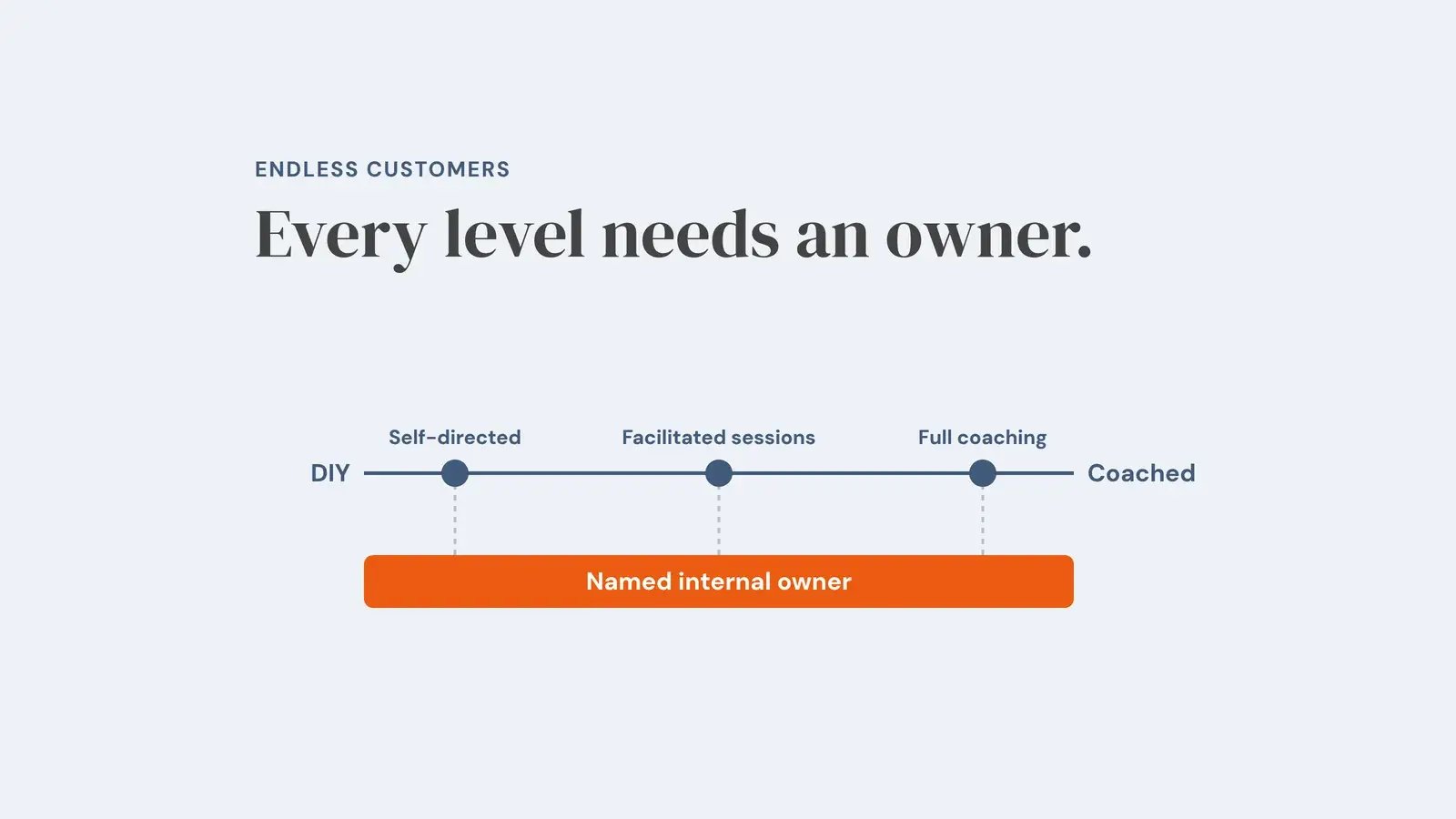
- Assign the owner: Name who is accountable for each stage, and stop being the escalation point.
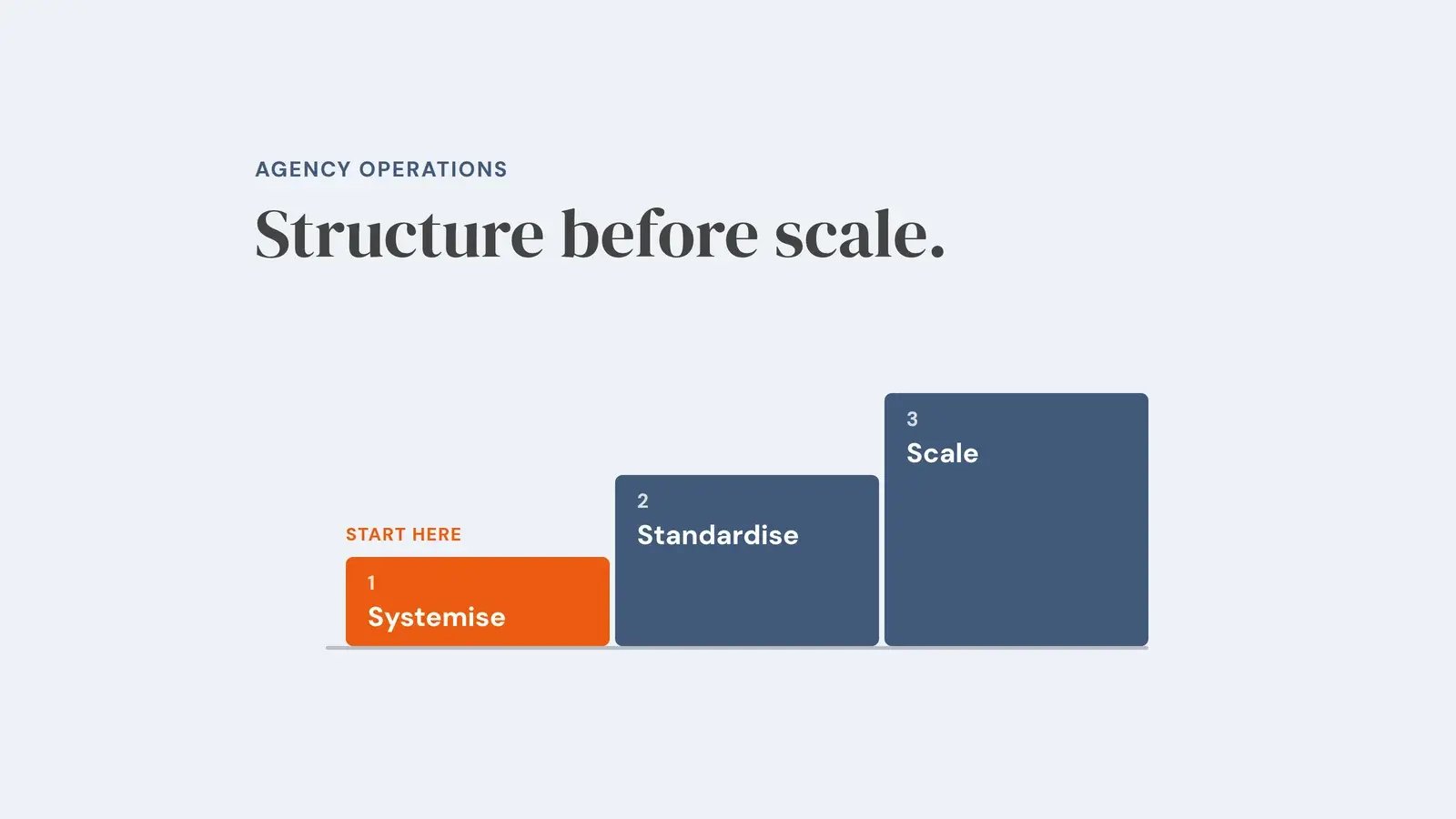
That sequence is the foundation of the Agency Operating System™: systemise, then standardise, then scale. Skipping to the third stage is why most attempts fail. Structure before scale.
How to take action now
- Count the hours you personally spent inside client delivery last week.
- Run the cost calculation above against your own numbers.
- Decide on a date, not a condition, for when this gets addressed.
Related Reading: How to Diagnose Broken Agency Operations (and Fix the Right Things)

Pricing disclaimer: All GBP–USD price conversions are rounded estimates and correct at the time of publishing. Exchange rates fluctuate and figures should be treated as indicative only.