

Are your margins thinner than they should be, despite your team growing? Is most of your day still spent inside the business rather than working on it?
These are not revenue problems. They are structural ones, and they will not fix themselves as you grow.
I work exclusively as a fractional COO for digital marketing, creative, and professional services agencies, and the pattern above is the most common structural gap I see once an agency passes roughly £750K in annual revenue.
This article is for agency owners running digital marketing, creative, or professional services businesses who are weighing up a fractional COO. You will get concrete pricing ranges, a simple ROI framework, and a clear decision process for working out whether now is the right time to hire one.
Key takeaways
- A fractional COO for a digital marketing or creative agency typically costs between £2,500 and £12,000 per month ($3,125–$15,000), depending on seniority, scope, and engagement model.
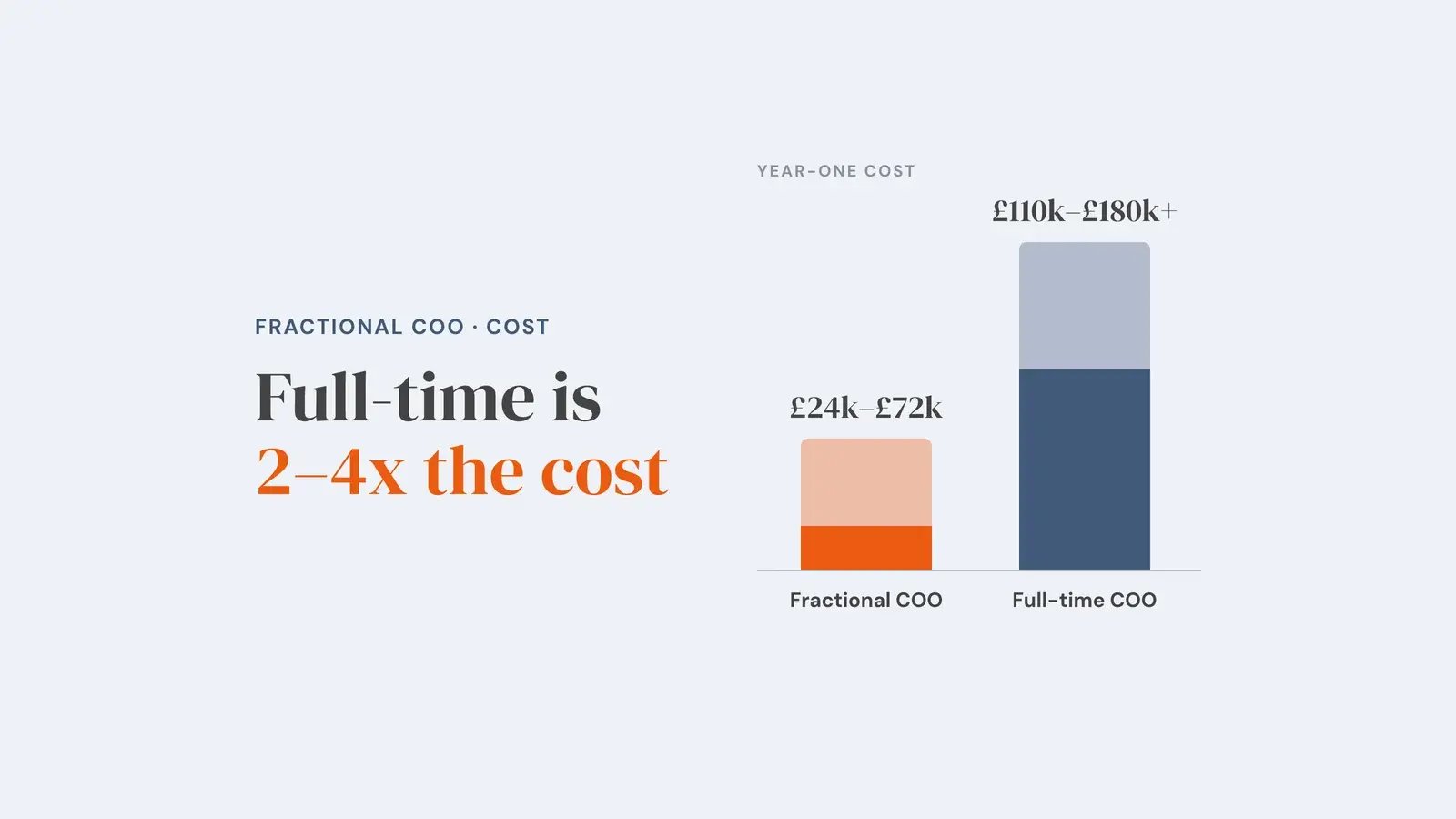
- A fractional COO costs 60–80% less than a full-time COO hire and is most cost-effective for agencies generating between £500K and £5M in annual revenue ($625K–$6.25M).
- Most agencies are ready for a fractional COO when they are generating at least £750K–£1M in annual revenue ($937,500–$1.25M) and growth is constrained by operational gaps, not a shortage of clients.
- Well-scoped engagements typically deliver measurable gains within 60–90 days, including improved delivery margins and reduced founder dependency.
- The most important hiring criterion is direct agency experience, general COO or business leadership background does not reliably transfer to delivery-led, client-service businesses.
What is a fractional COO for an agency?
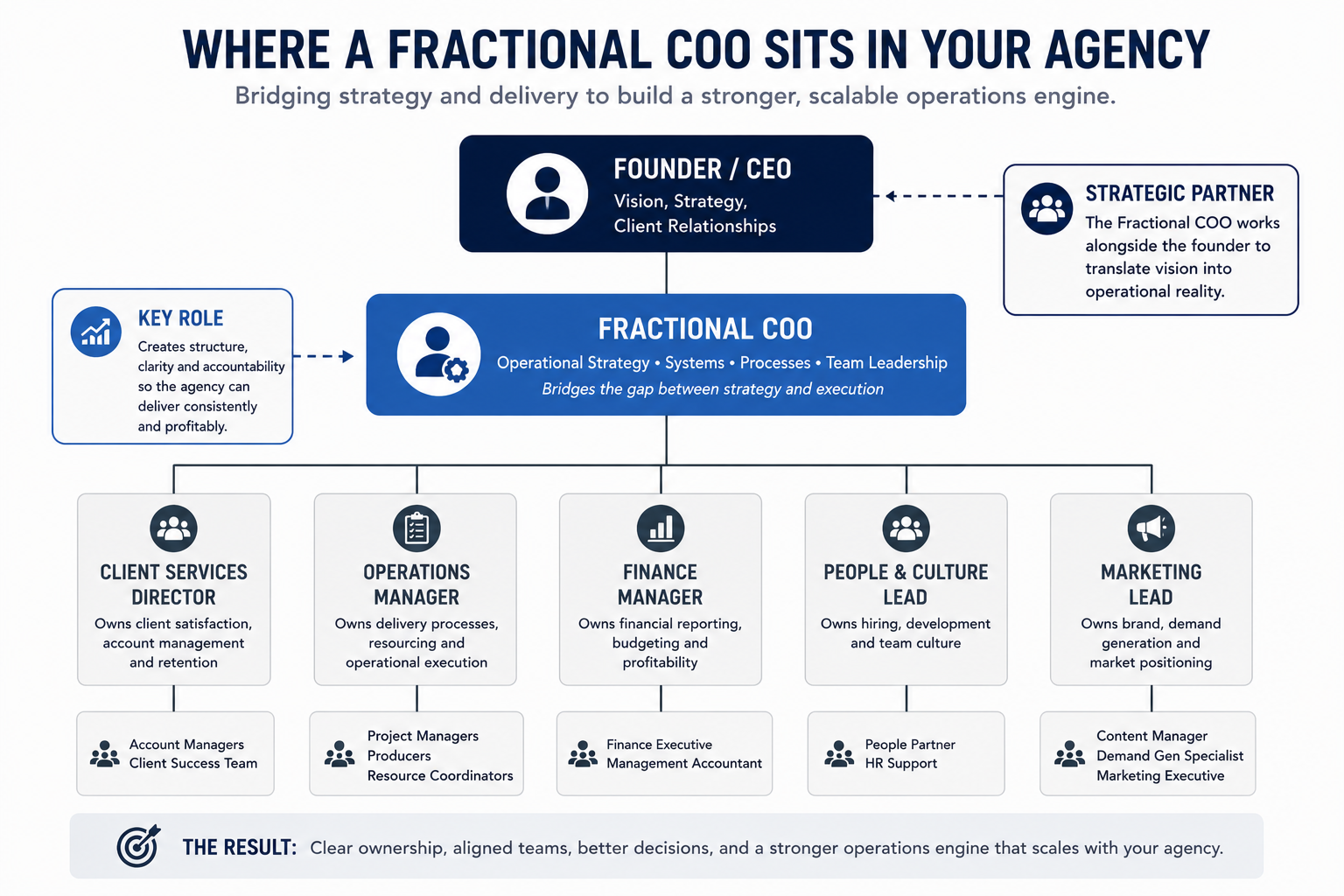
A fractional COO for an agency is an experienced chief operating officer who works with your business on a part-time or retained basis, providing senior operational leadership without the cost or commitment of a full-time hire.
In an agency context, that means building delivery systems, reducing founder dependency, improving team capacity, and addressing the margin erosion that comes from unstructured growth.
A fractional COO is not a consultant who hands over a report and leaves, and they are not an operations manager who executes tasks; they lead operationally, on a set cadence, and are accountable for measurable outcomes.
How much does a fractional COO for an agency cost?
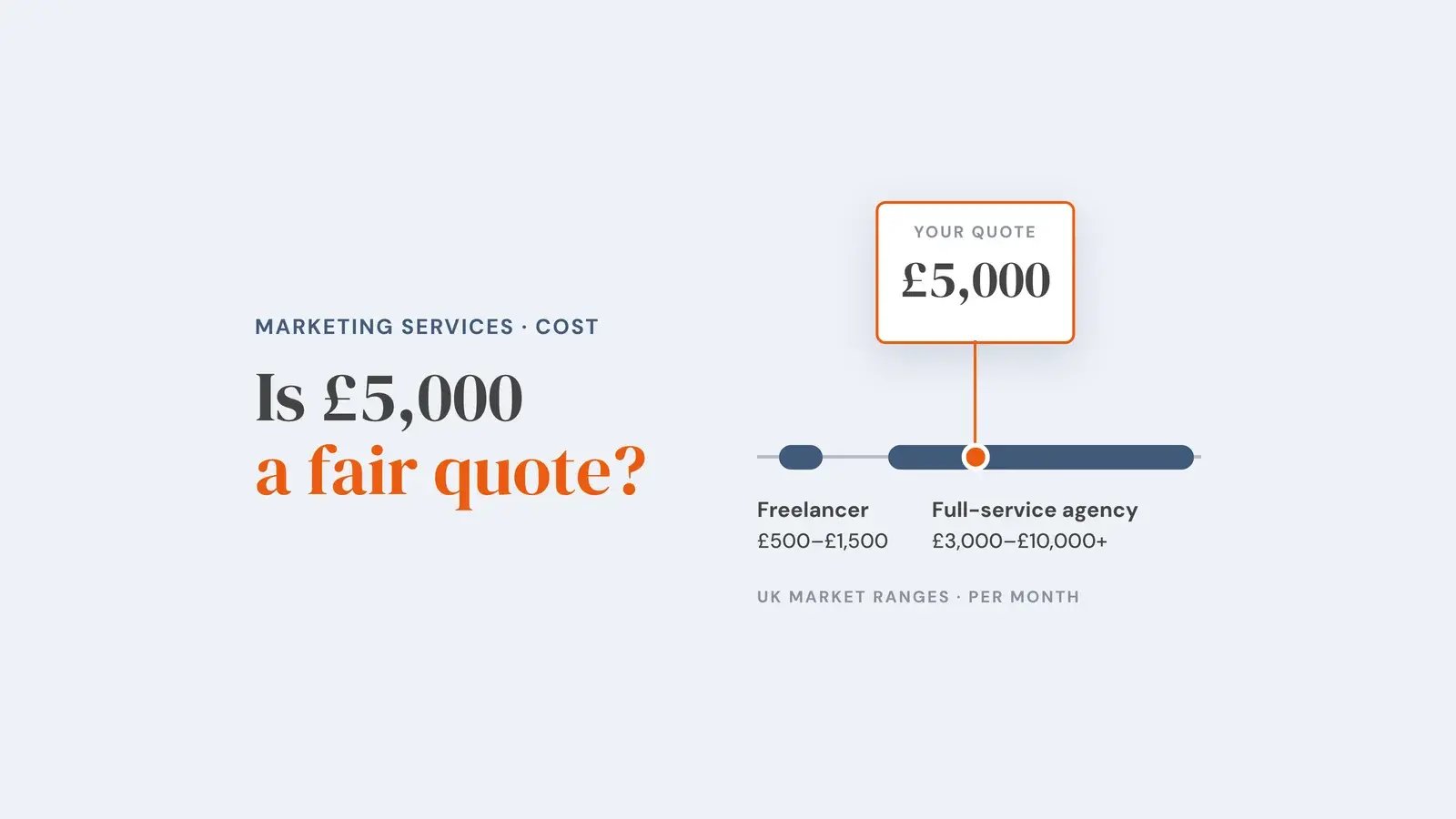
A fractional COO for an agency typically costs between £2,500 and £12,000 per month ($3,125–$15,000), depending on the engagement model, seniority, and scope of work.
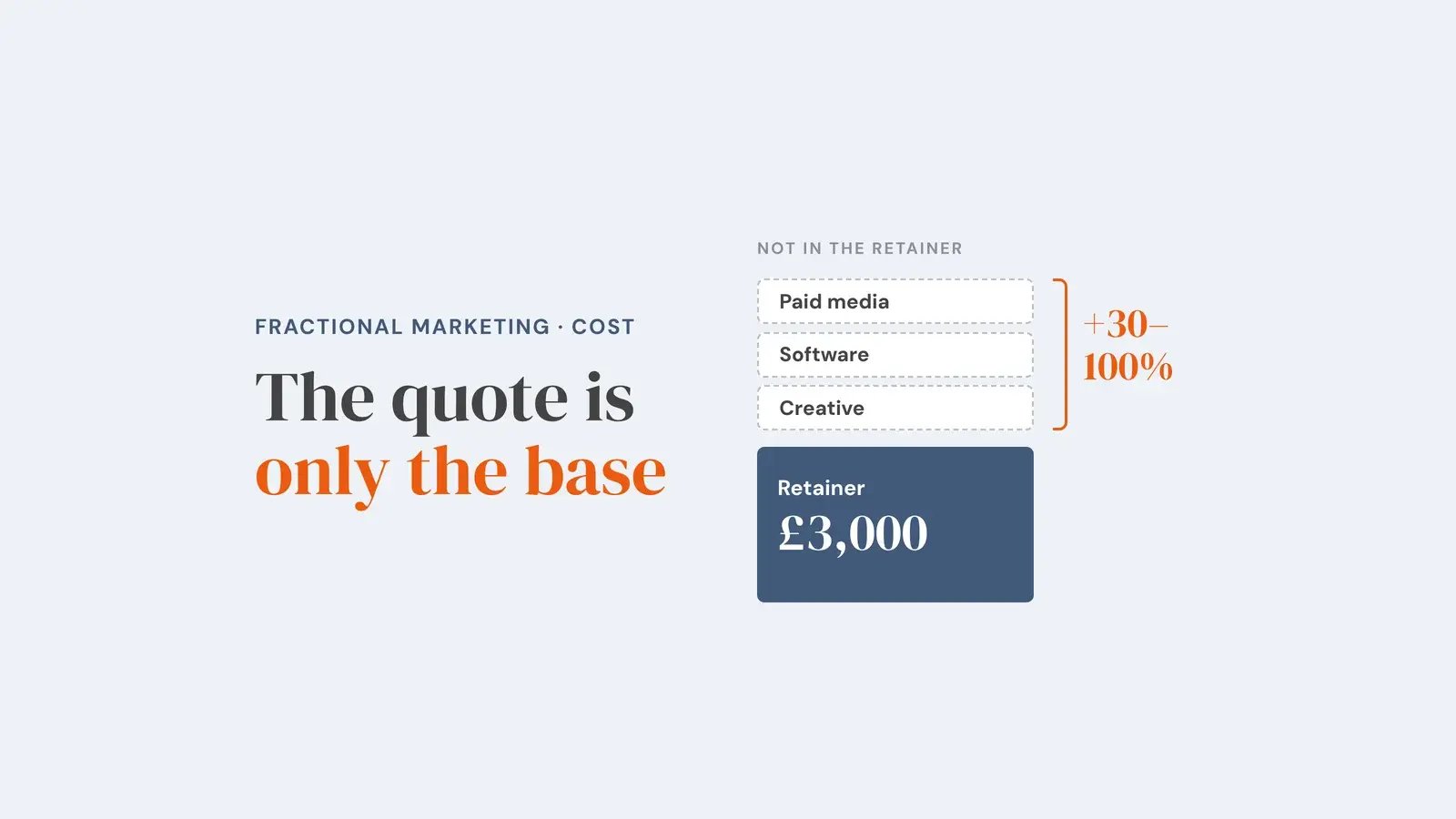
For transparency: the figures below are my own rates as a fractional COO working with agencies, not independent market data. My Fractional COO packages for agencies are priced between £4,200 and £6,900 per month ($5,250–$8,625), with a minimum 6-month engagement, covering weekly leadership sessions, core operations management, and team development at higher tiers. See full pricing on my Agency Services Pricing page.
Costs rise when engagements require multi-team coordination, compressed timelines, or significant rebuilding from scratch. They reduce when existing foundations are sound and scope is limited.
-4.png?width=1536&height=1024&name=Generated%20image%201%20(1)-4.png)
Fractional COO vs. full-time COO vs. operations manager: what's right for your agency?
A fractional COO costs 60–80% less than a full-time COO while delivering the same strategic operational expertise, making it the most cost-efficient option for agencies generating between £500K and £5M in annual revenue ($625K–$6.25M).
A full-time COO in the UK/US typically costs £90,000–£150,000 ($112,500–$187,500) per year in salary, before employer contributions, benefits, and recruitment fees.
These three roles are not interchangeable: a full-time COO owns operations daily, a fractional COO leads strategically on a defined cadence, and an operations manager executes within a system that already exists.
-4.png?width=1536&height=1024&name=Generated%20image%201%20(2)-4.png)
What operational problems does a fractional COO solve for agencies?
The most common reason agencies hire a fractional COO is that revenue has grown but profitability, delivery consistency, and team structure have not kept pace, a pattern sometimes called scaling chaos.
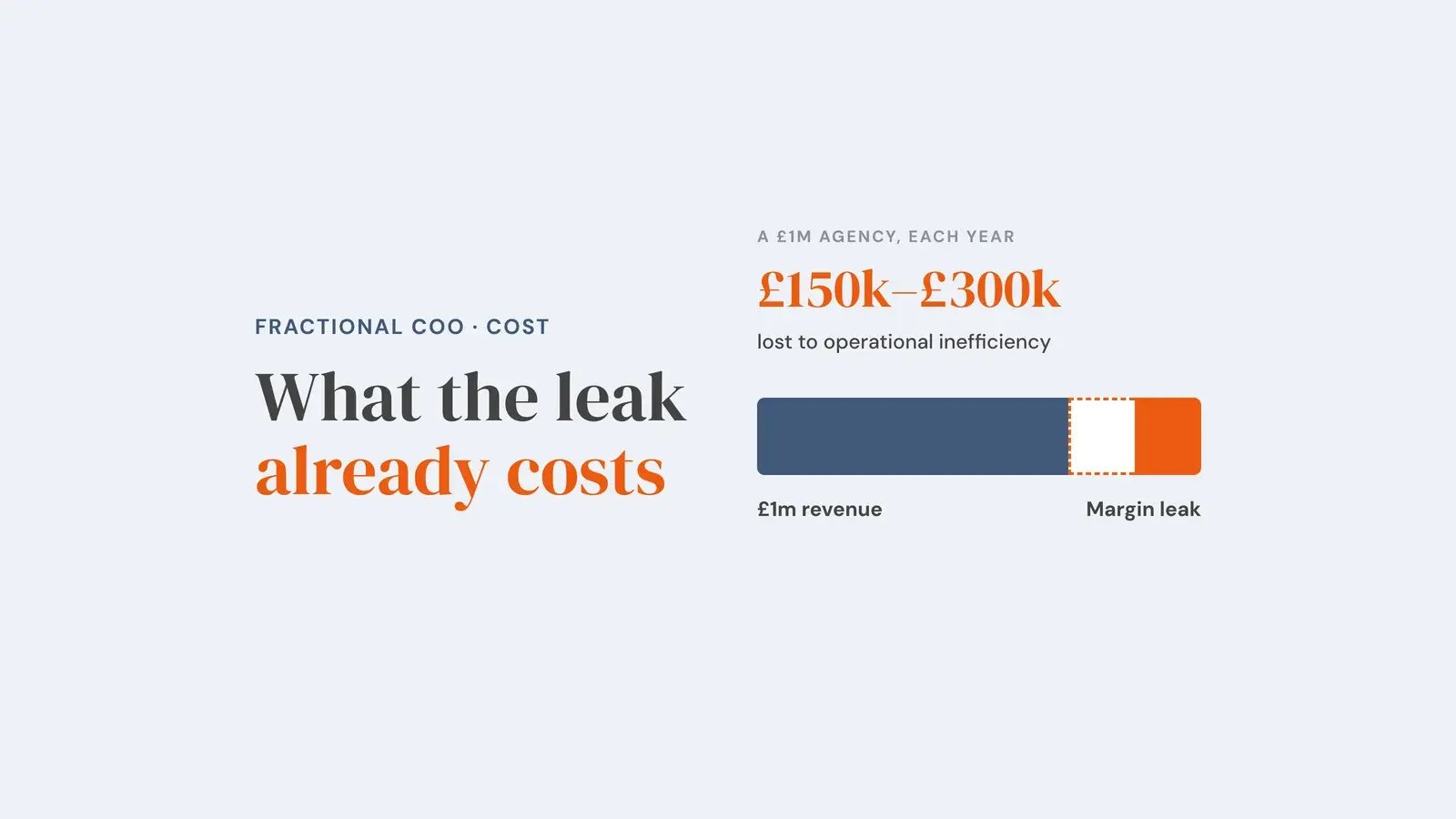
Operational inefficiency typically erodes 15–30% of potential agency profit. For a £1m revenue agency ($1.25M), that is £150,000–£300,000 ($187,500–$375,000) per year in margin leakage. (Estimate based on structured agency operations engagements, see Agency Services Pricing page for context.)
The 6 problems a fractional COO is most often hired to fix:
- Every decision routes through the founder; no delegation infrastructure
- Delivery quality is inconsistent across the team
- Projects overrun, margins disappear, and no one catches it early enough
- New hires take too long to onboard and too often leave
- No visibility on team capacity until someone is already overloaded
- Nothing is documented; nothing can scale without the founder present
Four risks to be aware of before hiring: a fractional COO cannot fix a broken sales process, will not generate new revenue directly, requires genuine buy-in from the founding team, and needs time, not weeks, to produce structural change.
Related reading: Why agency growth stalls at founder capacity (even with a team)
How to know when your agency is ready for a fractional COO
Most agencies are ready for a fractional COO when they are generating at least £750K–£1M in annual revenue ($937,500–$1.25M), the founder is operationally overwhelmed, and growth is being constrained by lack of structure rather than lack of clients.
Below that threshold, the monthly retainer cost is unlikely to be recovered through operational gains. A focused systems audit or part-time operations manager is usually the more appropriate starting point.
Run through this 5-question self-assessment:
- Are you personally involved in most operational decisions?
- Is delivery quality inconsistent across your team?
- Have you tried hiring your way out of this problem, and it has not worked?
- Is your revenue growing but your take-home pay staying flat or declining?
- Could your agency operate for two weeks without you?
If you answered yes to 3 or more of these questions, a fractional COO engagement is worth serious evaluation.
-3.png?width=1536&height=1024&name=Generated%20image%201%20(3)-3.png)
Is a fractional COO worth the cost for agencies? Real ROI to expect
A fractional COO is worth the cost when the engagement generates measurable gains in delivery margin, team capacity, or founder time that exceed the monthly retainer, which most well-scoped engagements achieve within 60–90 days.
Example ROI scenario
This example is an estimation, based on a typical 15-person digital agency engagement.
Agencies typically report outcomes including a 15–25% improvement in project profitability, reduced scope creep, faster new-hire onboarding, and a founder able to exit day-to-day operations within 6–12 months.
-1.png?width=1536&height=1024&name=Generated%20image%201%20(4)-1.png)
How to choose the right fractional COO for your agency
The most important criterion when choosing a fractional COO is direct experience inside an agency environment; general COO or business leadership experience does not reliably translate to delivery-led, client-service businesses.
Evaluate any candidate against these 7 criteria:
- Agency-specific operating experience, not just general SME consultancy
- A clear methodology for the first 90 days
- References from comparable agency engagements
- Transparent pricing and defined scope before any contract is signed
- An operating cadence (days per week, communication style) that fits your team
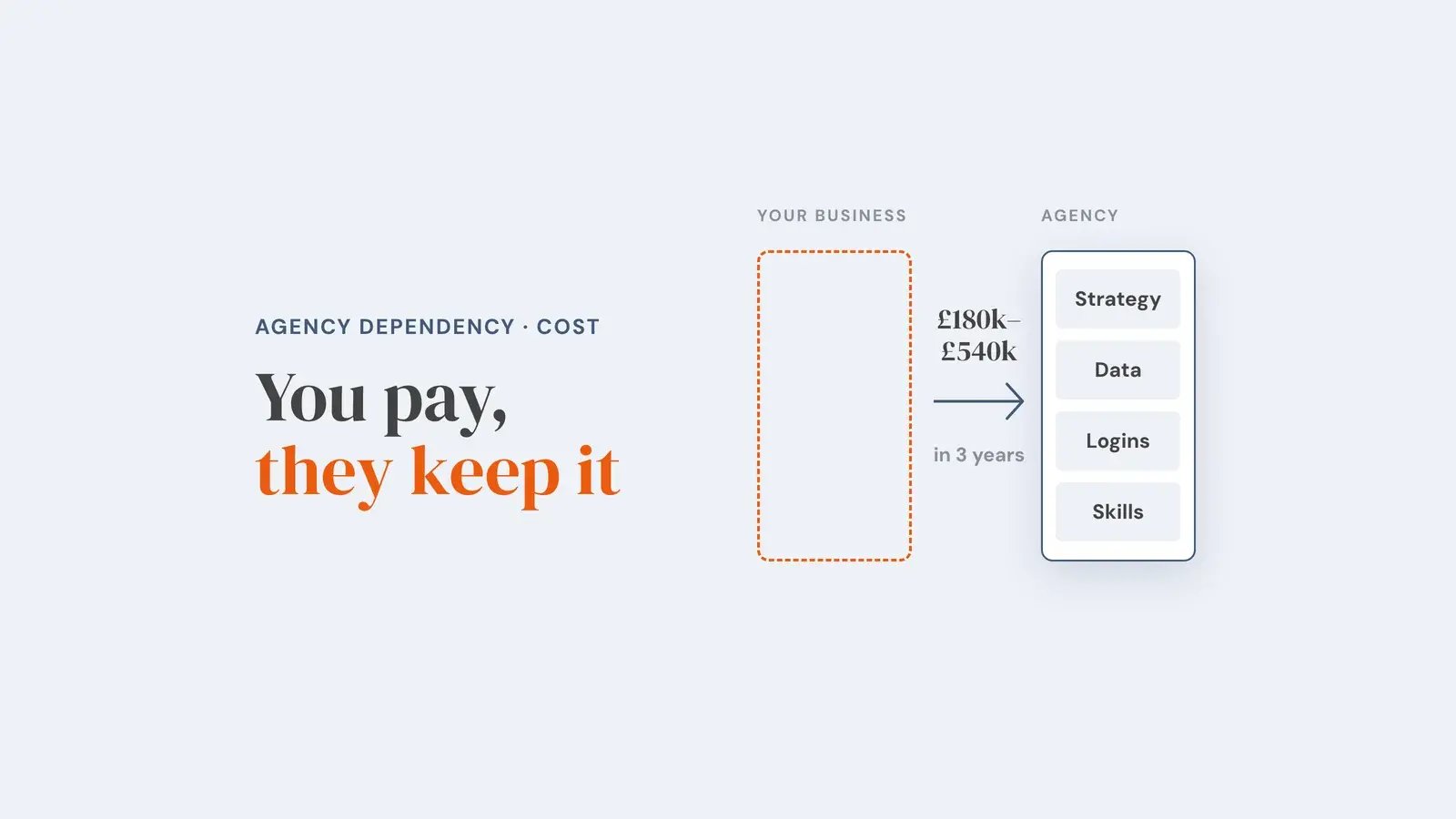
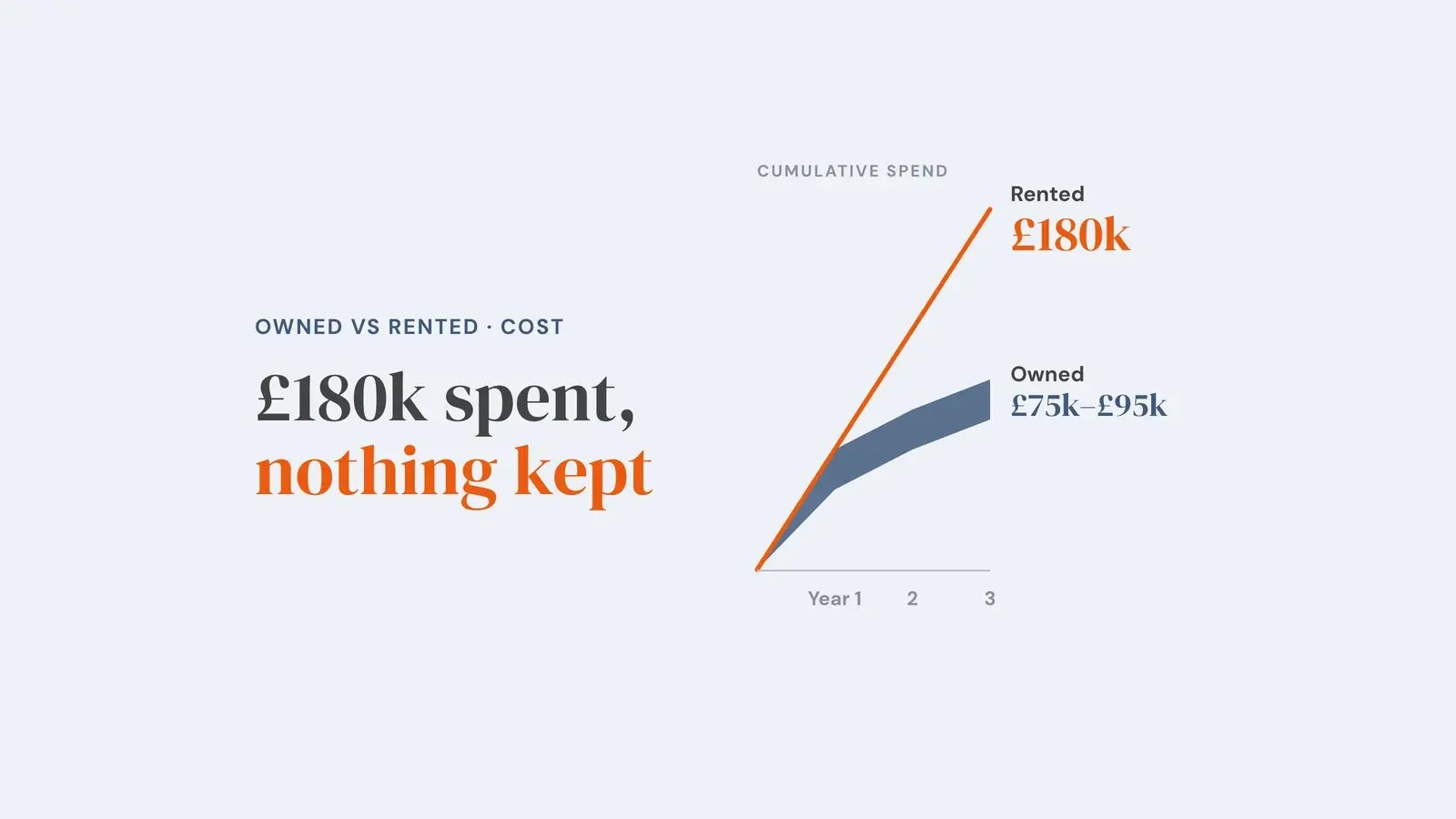
- A commitment to building internal capability, not extending dependency on them
- Sector fit: do they understand how your type of agency actually makes money?
The goal is to find someone who installs the system, trains your team, and makes themselves unnecessary. Structure before scale is a principle, not just a phrase.
Related reading: Fractional COO First 90 Days for Agencies: A Phase-by-Phase Breakdown of What to Expect
Frequently asked questions about fractional COO costs for agencies
The questions below address the most common concerns agency owners raise when evaluating a fractional COO engagement.
How many hours per week does a fractional COO typically work for an agency?
Most retained engagements run at 1–3 days per week, adjusted based on agency size and scope.
Is it a long-term commitment?
Most engagements carry a minimum term, typically 6 months, to allow enough time to build and embed operational systems that hold.
Can a fractional COO work with a remote or distributed agency team?
Yes. Most experienced fractional COOs operate effectively across remote and hybrid environments using tools like Slack, Asana, or ClickUp.
How quickly should I expect to see results?
Most well-scoped engagements produce measurable operational gains within 60–90 days. Full structural change typically takes 6–12 months.
What is the difference between a fractional COO and a fractional integrator?
An integrator (a term from the EOS business framework) executes on a defined plan. A fractional COO designs the operational architecture, leads the team, and holds the system accountable; it is a broader and more senior function.
Conclusion
You have been running an agency long enough to know that the real ceiling is not clients; it is capacity, systems, and your own time.
You now have the cost benchmarks, the ROI framework, and the decision criteria to assess whether a fractional COO is the right move for your agency at this stage.
I built this framework from running fractional COO engagements exclusively inside agencies, not as generic operations consultancy — so it reflects how agencies actually make money.
The next step is simple: run the 5-question self-assessment, estimate your margin leakage using the ROI framework in this article, and decide whether the investment is proportionate to what you stand to recover.
How to take action now
- Run the 5-question readiness assessment above
- Calculate your potential margin leakage: take your annual revenue and multiply by 15–30%
- Review the 7 selection criteria before speaking to any candidate
Your next read is Fractional COO vs full-time hire: the true 12-month cost breakdown so you can see exactly how the numbers compare over a full year before you commit.

About the author
Tom Wardman is an agency operations specialist and fractional COO working exclusively with digital marketing, creative, and professional services agencies. He helps agency owners build the operational infrastructure needed to grow without founder dependency, and designs every engagement so that the system stays when he leaves. Published pricing, frameworks, and agency-specific resources are available at tomwardman.com.
Pricing disclaimer: All GBP–USD price conversions are rounded estimates and correct at the time of publishing. Exchange rates fluctuate and figures should be treated as indicative only.
Topics: