

Are you spending £10,000 ($12,500) or more on marketing each year but struggling to explain what it's actually producing? Do you know which channels are generating results, and which are quietly draining budget with nothing to show for it?
This article gives you a structured, self-led framework for auditing your own marketing spend, without paying a consultant to do it for you. It's written for founders, MDs, and in-house marketers managing budgets of £10,000–£100,000 ($12,500–$125,000) per year, based in the UK, who want a clear picture of where their money is going.
By the end, you'll know how to gather your data, evaluate each channel, and build a stop/scale/fix decision list you can act on immediately.
Key takeaways
- A marketing spend audit is a structured review of where your budget is going, what return each channel is generating, and whether your spend matches your business goals.
- Businesses reviewing their marketing spend for the first time typically find that 20–40% of budget is misallocated or producing no measurable return. (Estimated figure based on common patterns observed across SME marketing engagements; no single published source covers all markets.)
- A freelance marketing auditor typically charges £500–£3,000 ($625–$3,750) to audit a £10K–£50K ($12,500–$62,500) annual budget. For most businesses at that level, a self-led audit costs nothing beyond a few focused hours.
- The 6-step DIY audit process requires no specialist skills, only access to your ad accounts, analytics platform, and a spreadsheet.
- Every marketing channel should be evaluated against three core metrics: cost per result, volume of results, and 90-day trend direction.
What is a marketing spend audit?
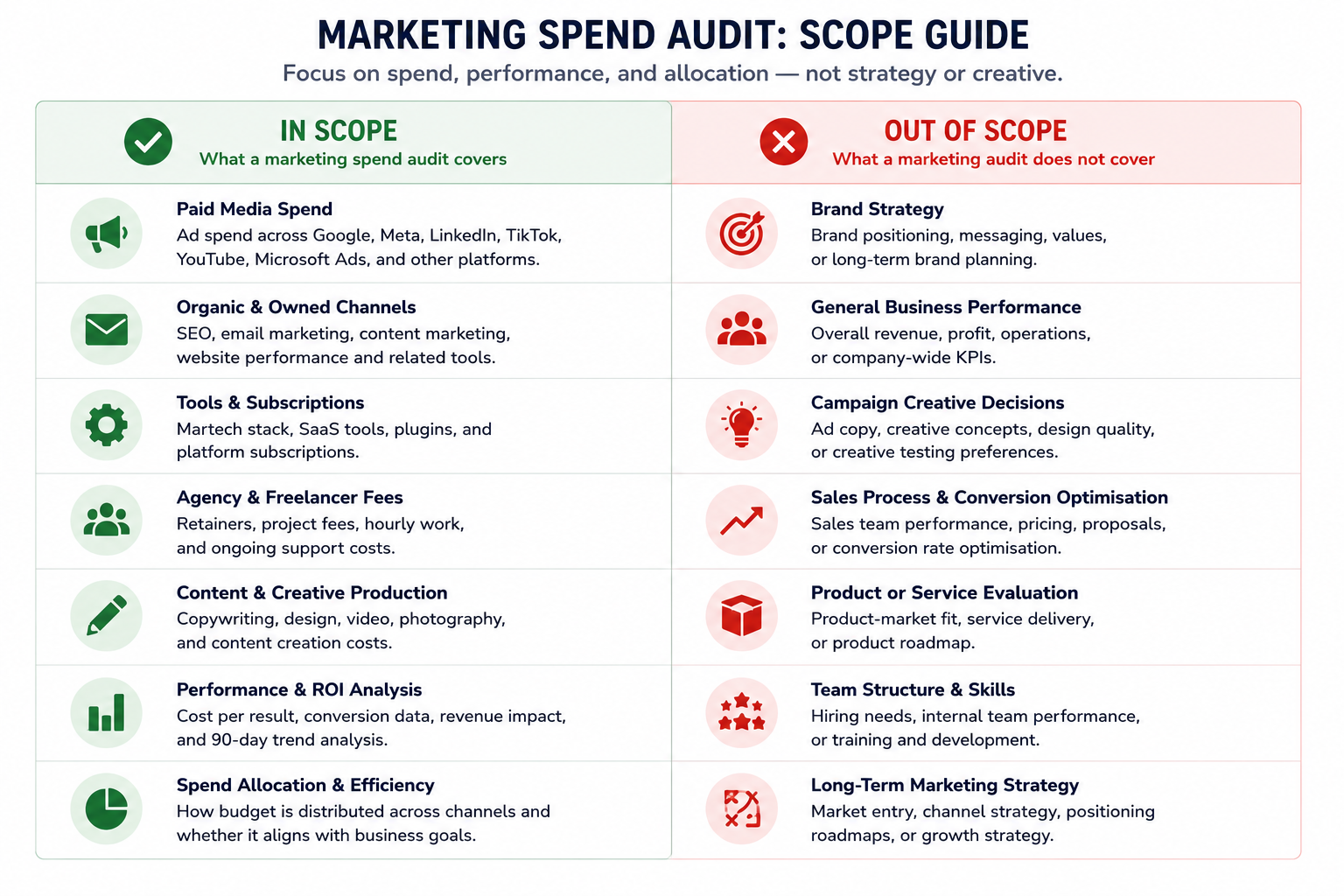
A marketing spend audit is a structured review of where your marketing budget is going, what return each channel or campaign is generating, and whether your spend allocation matches your business goals.
It typically covers paid media, organic channels, tools and software, agency or freelancer fees, and any content or creative production costs.
What it does not cover: brand strategy, general business performance, or campaign creative decisions. The audit is about spend structure and measurable output — not storytelling.
Why do marketing budgets of £10,000+ often hide significant waste?
At £10,000 ($12,500) or more in annual spend, budget waste typically isn't caused by one bad decision; it accumulates quietly across overlapping tools, underperforming campaigns, and channels that were never properly evaluated.
The most common waste patterns include:
- Subscriptions to SaaS tools that are no longer actively used
- Ad campaigns set up months ago and never reviewed
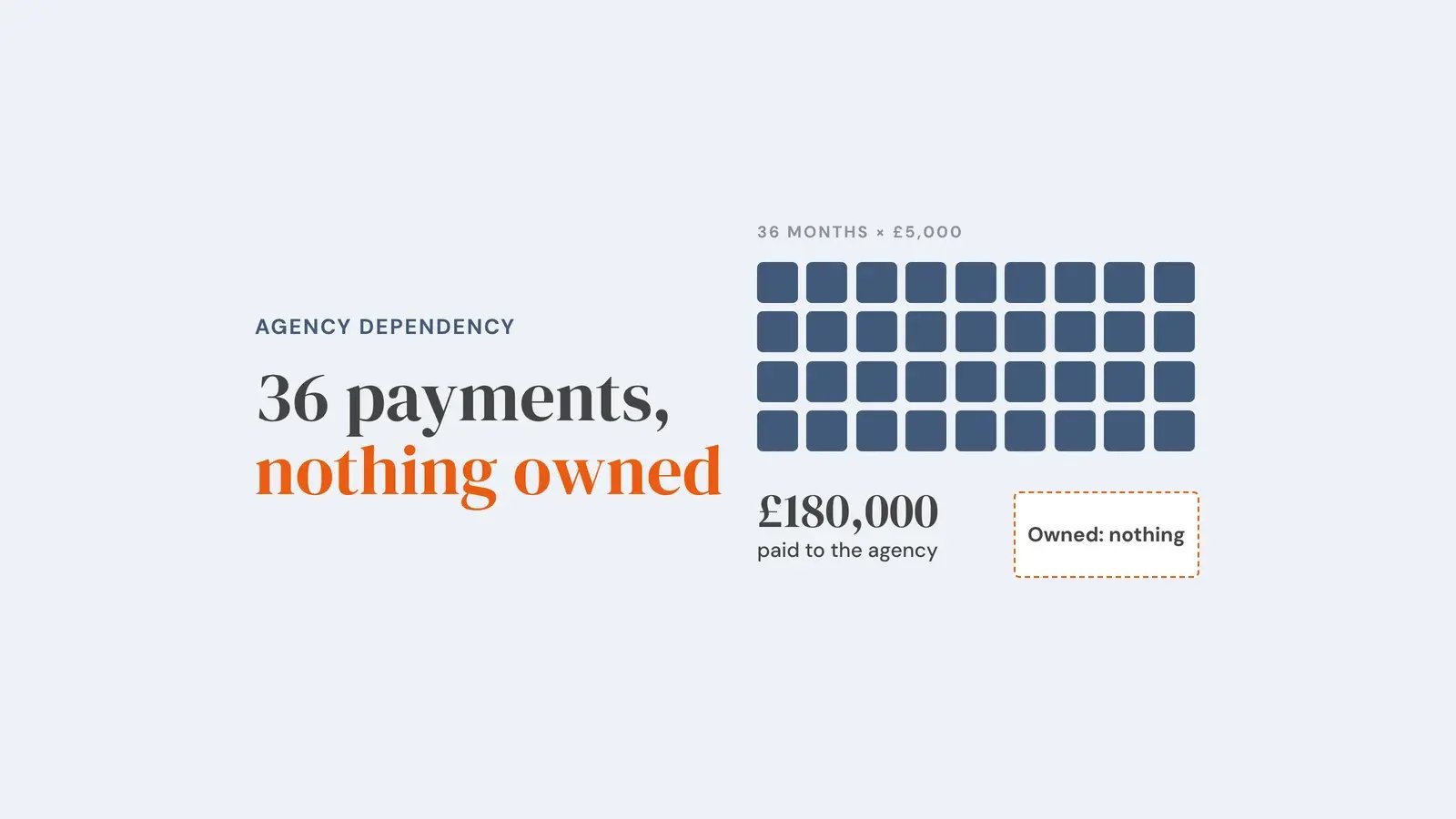
- Agency retainers with no defined outcome tracking
- Duplicate functionality across your tech stack
- Spend allocated to channels based on habit, not data
- "Awareness" activity with no conversion tracking in place
The misconception is that waste is a large-company problem. In reality, businesses spending as little as £10,000 ($12,500) per year are just as likely to have structural inefficiency baked in, sometimes more so, because fewer people are checking.
Should you audit your own marketing spend or hire a consultant?
For most businesses spending under £50,000 ($62,500) per year on marketing, a self-led audit produces equally actionable findings at a fraction of the cost.
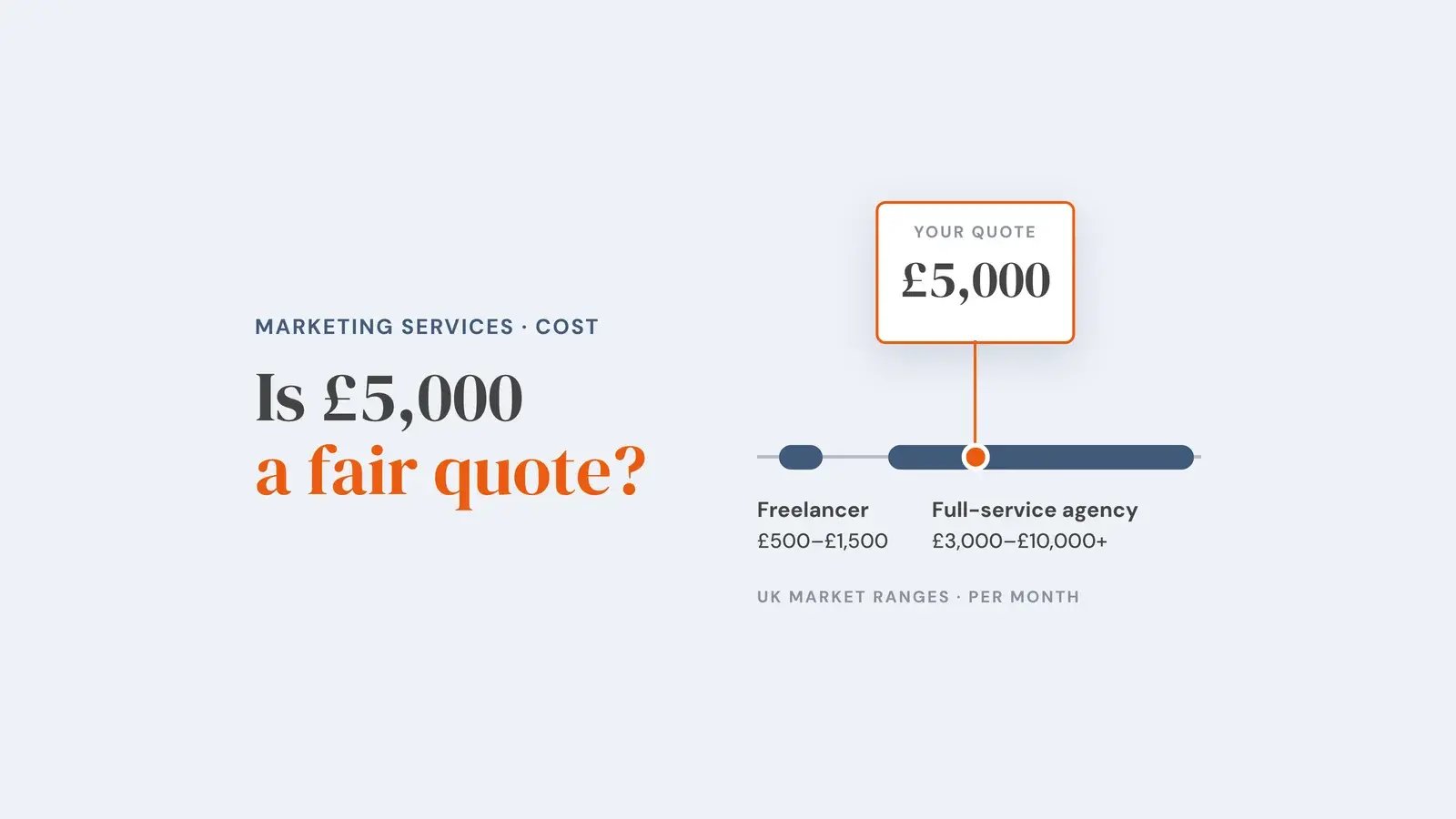
A freelance marketing auditor typically charges £500–£3,000 ($625–$3,750) for a structured audit of a £10K–£50K ($12,500–$62,500) annual budget. A mid-size agency may charge £2,000–£8,000+ ($2,500–$10,000+) for the same scope.
| DIY audit | Hire a consultant | |
|---|---|---|
| Cost | £0 beyond your time | £500–£8,000+ ($625–$10,000+) |
| Time to complete | 4–8 hours | 1–3 weeks |
| Output | Self-directed action list | Documented findings report |
| Best suited to | Budgets under £100,000 ($125,000) | Complex multi-channel or £100,000+ ($125,000+) spend |
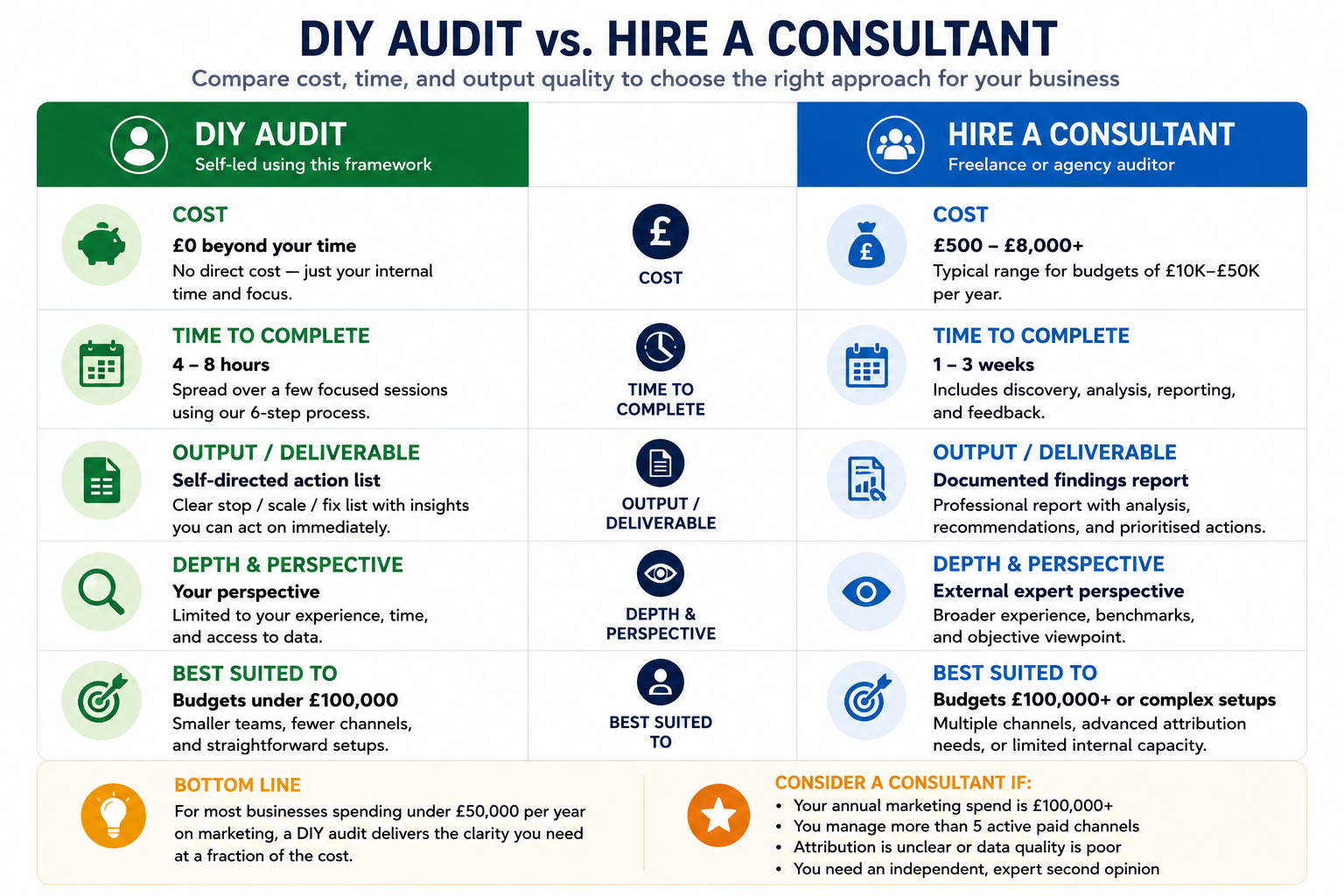
If your attribution is broken, your spend exceeds £100,000 ($125,000), or you're managing more than 5 active paid channels, professional support is worth considering. Below those thresholds, this framework is sufficient.
The 6-step process to audit your own marketing spend
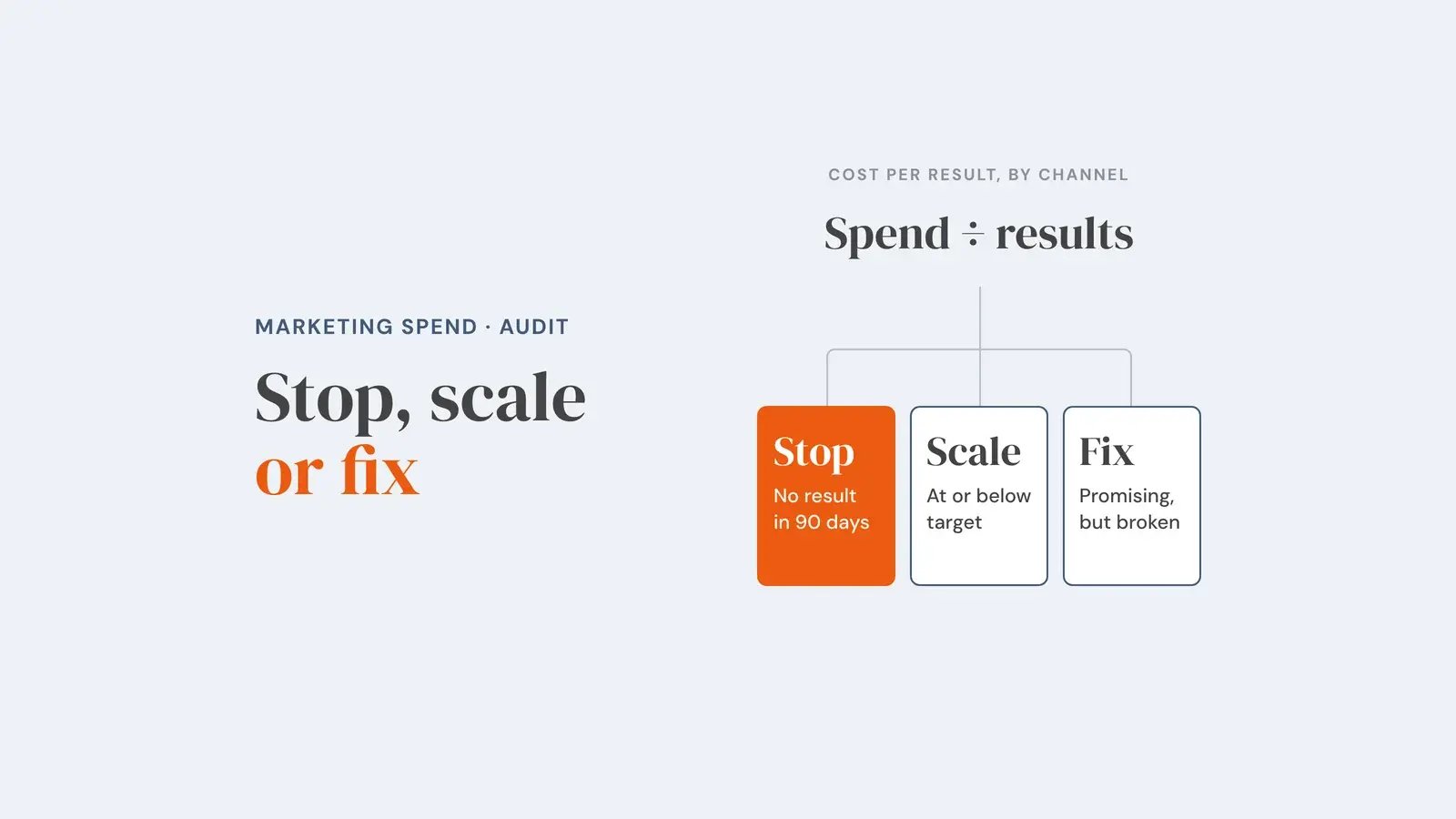
Auditing your own marketing spend follows 6 clear steps: gather all spend data in one place, map spend to channels, pull performance metrics, calculate cost per result, identify underperformers, and build a stop/scale/fix decision list.
This process requires no specialist skills, only access to your ad accounts, analytics platform, and a spreadsheet.
Step 1: Gather all spend data
Pull every invoice, subscription, and ad account statement for the past 90 days. Include agency fees, tool costs, and freelancer payments. Put everything into one spreadsheet.
Step 2: Map spend to channels
Categorise each cost by channel: paid search, paid social, SEO, email, content, events, tools. Assign a monthly average to each.
Step 3: Pull performance metrics
Extract primary performance data from your analytics platform or ad dashboard. Use at least 90 days of data to avoid short-term distortion.
Step 4: Calculate cost per result
Divide each channel's spend by its measurable output (leads, calls booked, purchases).
Formula: Monthly spend ÷ number of results = cost per result. This single number is your most important metric.
Step 5: Identify underperformers
Any channel producing a cost per result significantly above your target, or producing no trackable result at all, is flagged for review.
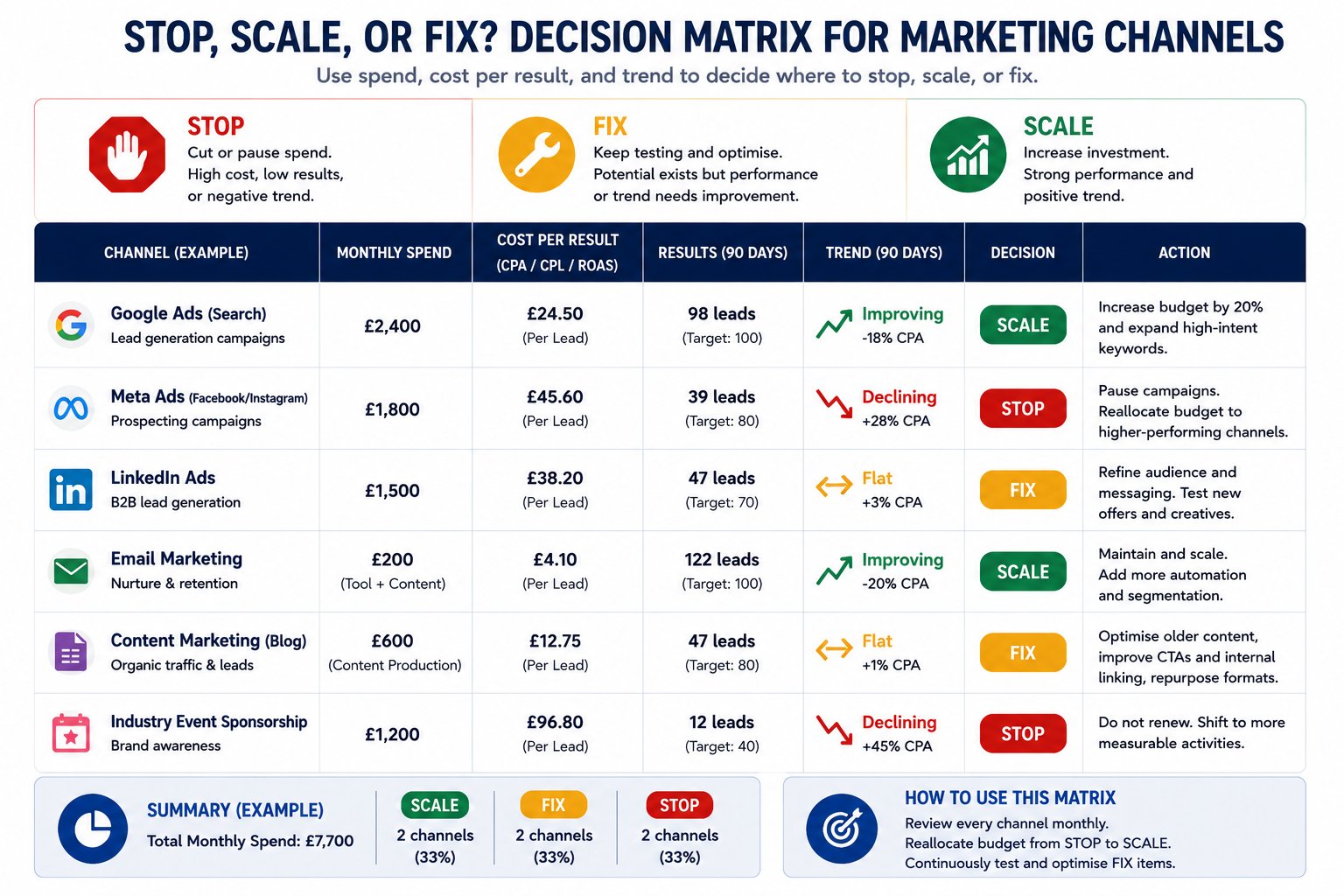
Step 6: Build your stop/scale/fix list
Assign one of 3 verdicts to each channel:
- Stop: any channel that has produced no trackable result in 90 days. Pause spend immediately and reassign budget elsewhere.
- Scale: any channel with a cost per result at or below your target and capacity to absorb more investment.
- Fix: any channel showing early promise but with structural problems, poor creative, a weak landing page, or broken conversion tracking.
What tools do you need to audit your own marketing spend?
You do not need specialist audit software; the data you need is already available inside the platforms you are currently paying for.
- Google Analytics 4 (Free): Website traffic, conversion paths, and channel attribution. See the Google Analytics 4 Help Centre for guidance on setting up conversion tracking.
- Google Looker Studio (Free): Connect multiple data sources into one visual dashboard.
- Google Ads dashboard (Free): Campaign-level spend, clicks, and conversions.
- Meta Ads Manager (Free): Paid social performance broken down by campaign and ad set.
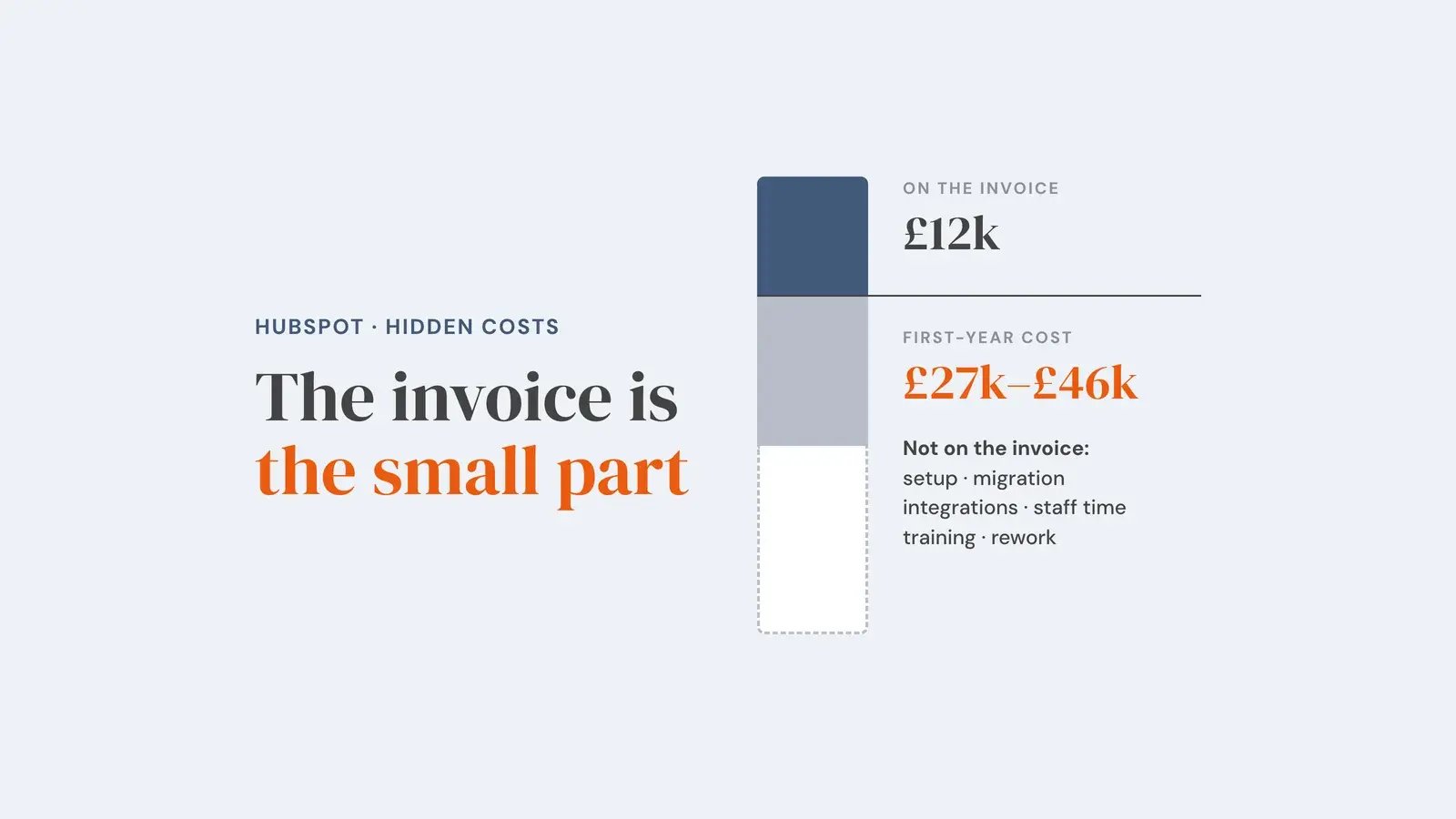
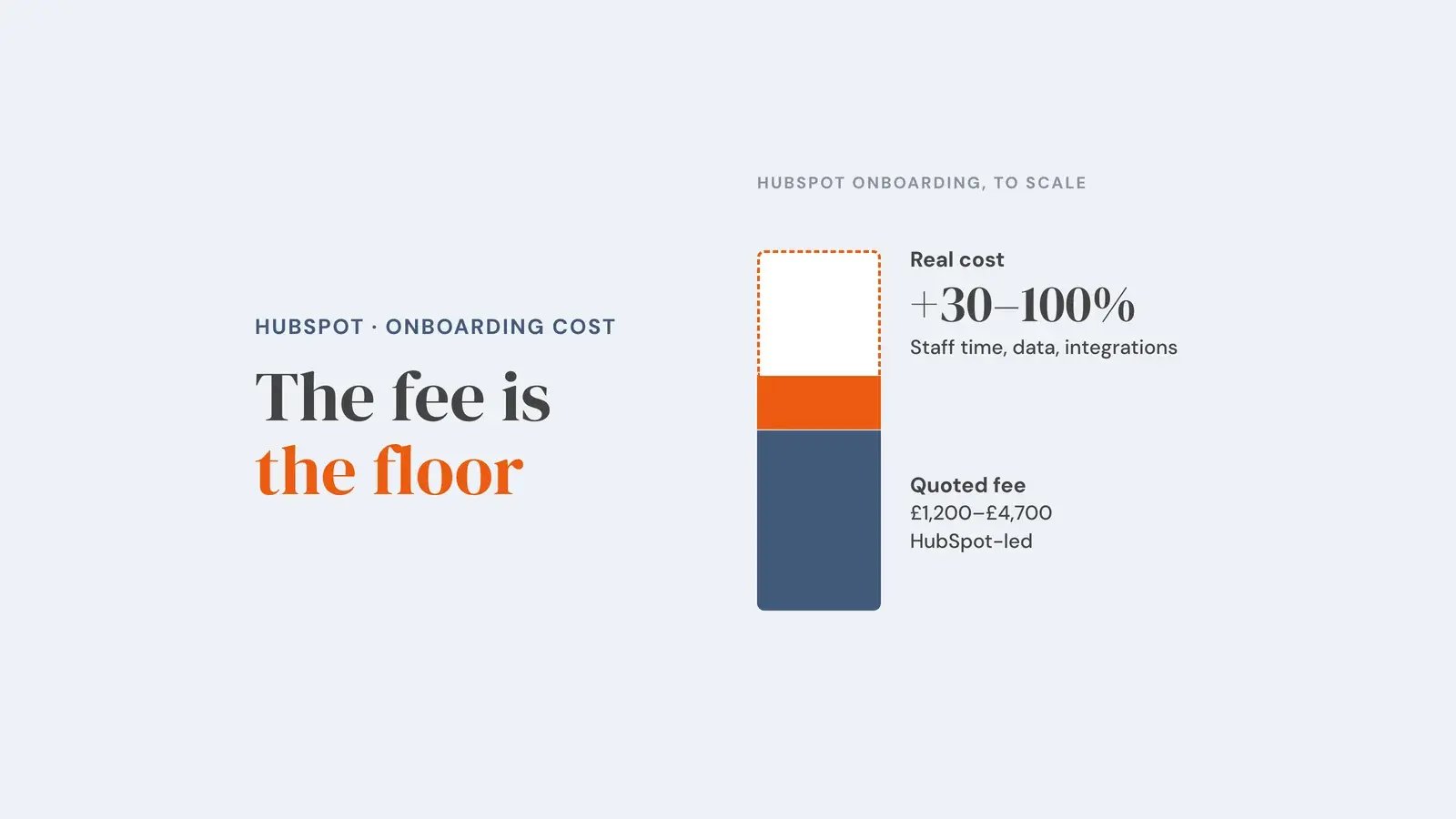
- HubSpot (Free–Paid): CRM data, lead source tracking, and deal attribution. HubSpot's own knowledge base covers configuration guidance for most standard use cases.
- A spreadsheet (Free): Google Sheets or Excel is sufficient to consolidate and calculate everything.
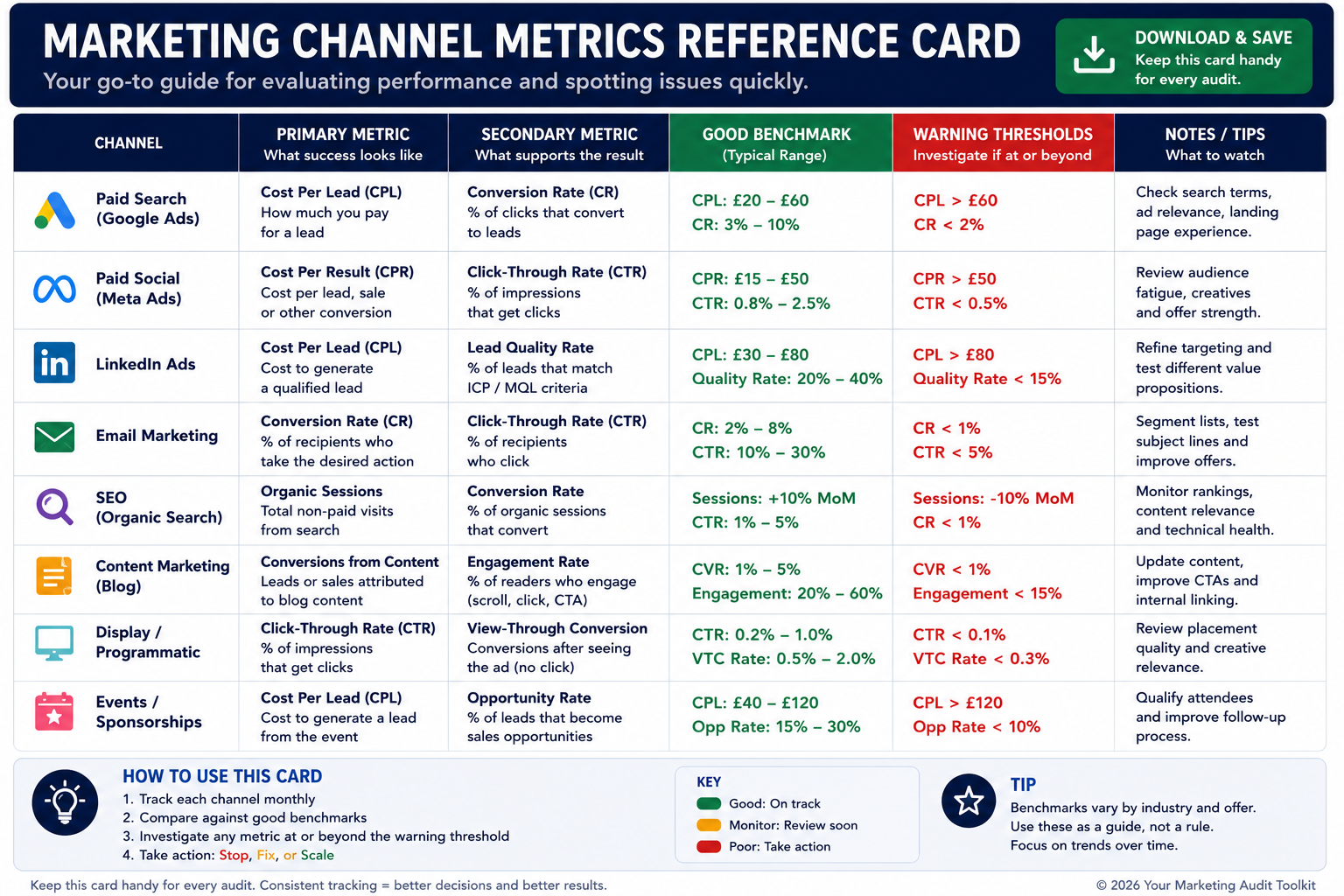
What metrics should you check in every marketing channel?
Every marketing channel should be evaluated against 3 core metrics: cost per result, volume of results, and trend direction over the last 90 days. The specific metric varies by channel, but the evaluation logic is the same.
What are the most common mistakes in a DIY marketing spend audit?
The most common mistake in a self-led marketing audit is evaluating channels in isolation rather than reviewing how they interact; for example, cutting brand search spend without accounting for its role in converting leads driven by social.
Other frequent errors:
- Using last-click attribution only. Fix: Review assisted conversions in GA4 to see which channels contribute earlier in the buyer journey.
- Auditing too short a time window. Fix: Use a minimum of 90 days. For SEO and content, 6 months is more reliable.
- Cutting spend based on volume alone. Fix: A low-volume channel with a strong cost per result is worth keeping.
- Forgetting fixed tool costs. Fix: List every monthly SaaS subscription. Unused tools are your quickest wins.
- Treating the audit as a one-off. Fix: Schedule a recurring quarterly calendar reminder. A regular review discipline is what converts a one-time exercise into a performance system.
Frequently asked questions about auditing marketing spend
How often should I audit my marketing spend?
Quarterly is the right cadence for most businesses. A full audit once a year, with lighter channel reviews every 90 days, keeps spend aligned with results without becoming a constant distraction.
What if I don't have reliable tracking in place?
You can still audit, but your findings will be directional rather than definitive. Use what you can measure. Then let the audit identify which tracking gaps to fix first; that becomes part of your action list.
How long does a DIY marketing audit take?
For a budget of £10K–£50K ($12,500–$62,500) annually, expect 4–8 hours across 2 sessions: one to gather data, one to analyse and build your action list.
At what budget level should I consider hiring a consultant instead?
Once your annual marketing spend exceeds £100,000 ($125,000), or you're managing more than 5 active paid channels, the complexity typically justifies professional input. At that level, a structured engagement with an experienced marketing consultant or fractional CMO is worth considering.
What should I do with the findings once the audit is complete?
Prioritise your stop/scale/fix list by impact and speed of execution. Stop wasteful spend immediately. Fix underperformers within 30 days. Reallocate recovered budget to what's working.
Conclusion
You came here not knowing where your marketing budget was going or whether it was working. You now have a structured process to find out, without paying a consultant to tell you.
Where you are now: You have a 6-step framework, a tool list, and a decision matrix that applies to any channel at any budget level.
Where to go next: Run the audit. Start with your top 3 channels by spend. Build your stop/scale/fix list before reallocating a single pound.
How to take action now
- Pull the last 90 days of spend data from every active channel and tool
- Calculate cost per result for each using the formula: spend ÷ measurable output
- Apply stop, scale, or fix to each line item in your spreadsheet
- Eliminate or pause anything producing no trackable result immediately
- Set a recurring quarterly calendar reminder to repeat the process
If you'd prefer a structured diagnosis with documented findings rather than going it alone, my 90-Minute Marketing Triage™ gives you exactly that in a single session.
Related reading
-
Why Marketing Retainers Fail, and Why Outcome-Based Marketing Wins
-
How Digital Marketing Agencies Use Vanity Metrics to Hide Poor Performance

About the author
Tom Wardman is a fractional marketing consultant and Growth Independence Architect™ who helps founder-led B2B businesses replace agency dependency with growth systems they own and operate. He is one of the UK's first 5 certified coaches in the Endless Customers methodology, trained directly under Marcus Sheridan, and the author of Build a Trusted Brand. His work sits at the intersection of strategy, system installation, and capability transfer, with one design principle: every engagement reduces the client's reliance on external support, including on him.
Pricing disclaimer: All GBP–USD price conversions are rounded estimates and correct at the time of publishing. Exchange rates fluctuate and figures should be treated as indicative only.
Topics: