

Are you approving a marketing budget you cannot fully trace? Can you explain to a stakeholder, right now, exactly where every pound is going and what it is producing?
If either question made you hesitate, you are not alone. Most founder-led businesses commit significant marketing budgets without receiving a clear account of how that money is split between fees, media, tools, and results.
By the end of this article, you will have a 7-point checklist, a cost breakdown framework, and a direct test for distinguishing a transparent marketing partner from an opaque one.
You will also get a practical 5-step setup process and a direct comparison of transparent versus opaque agency behaviour, so you can evaluate any current or future engagement with confidence.
Key takeaways
- A transparent marketing investment separates agency fees, media spend, technology costs, and third-party costs into clearly documented, itemised line items.
- Best-in-class transparency covers 7 components: itemised fees, media spend visibility, agreed KPIs, regular reporting, defined asset ownership, a change-control process, and conflict-of-interest disclosure.
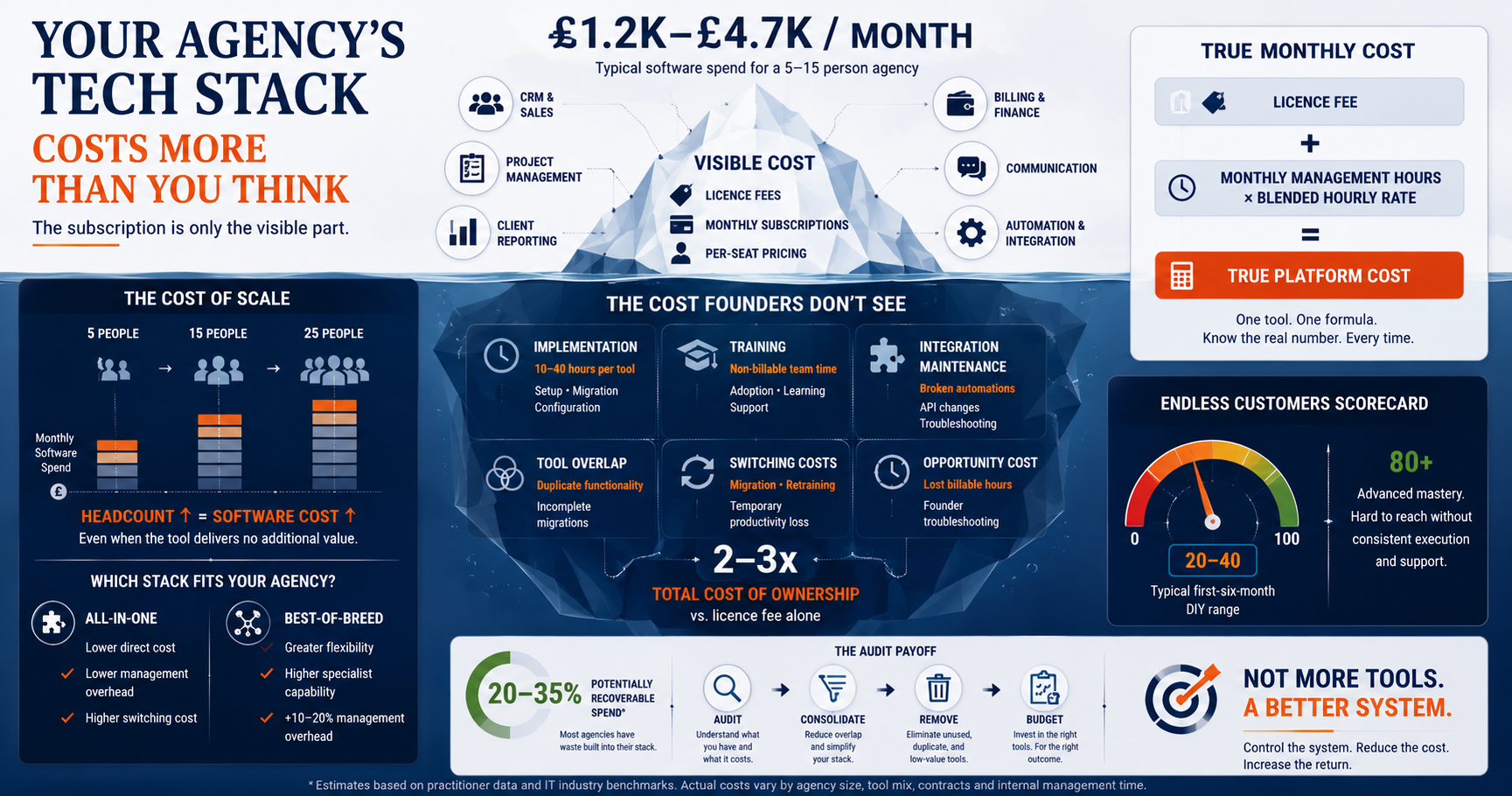
- Bundling all costs into a single monthly retainer is one of the most common ways cost opacity enters a client–agency relationship.
- Asking for a written budget breakdown before signing is the fastest test of whether a marketing partner operates transparently.
- Most transparency failures are structural; they come from unclear contracts and unset reporting expectations, not bad intent.
What is a transparent marketing investment?
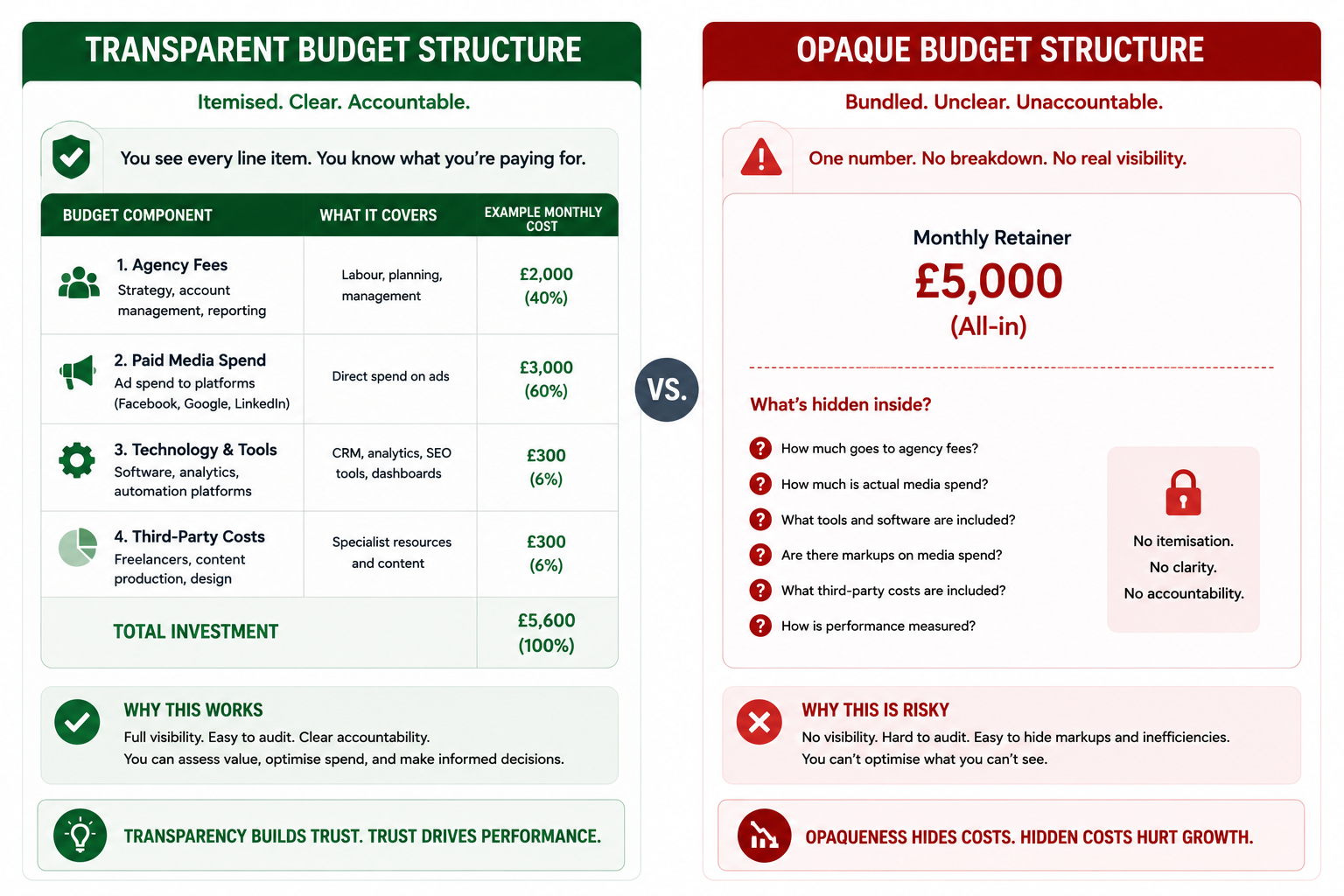
A transparent marketing investment is one where the client has documented visibility into how every pound of budget is allocated, what fees are charged, and how performance is measured.
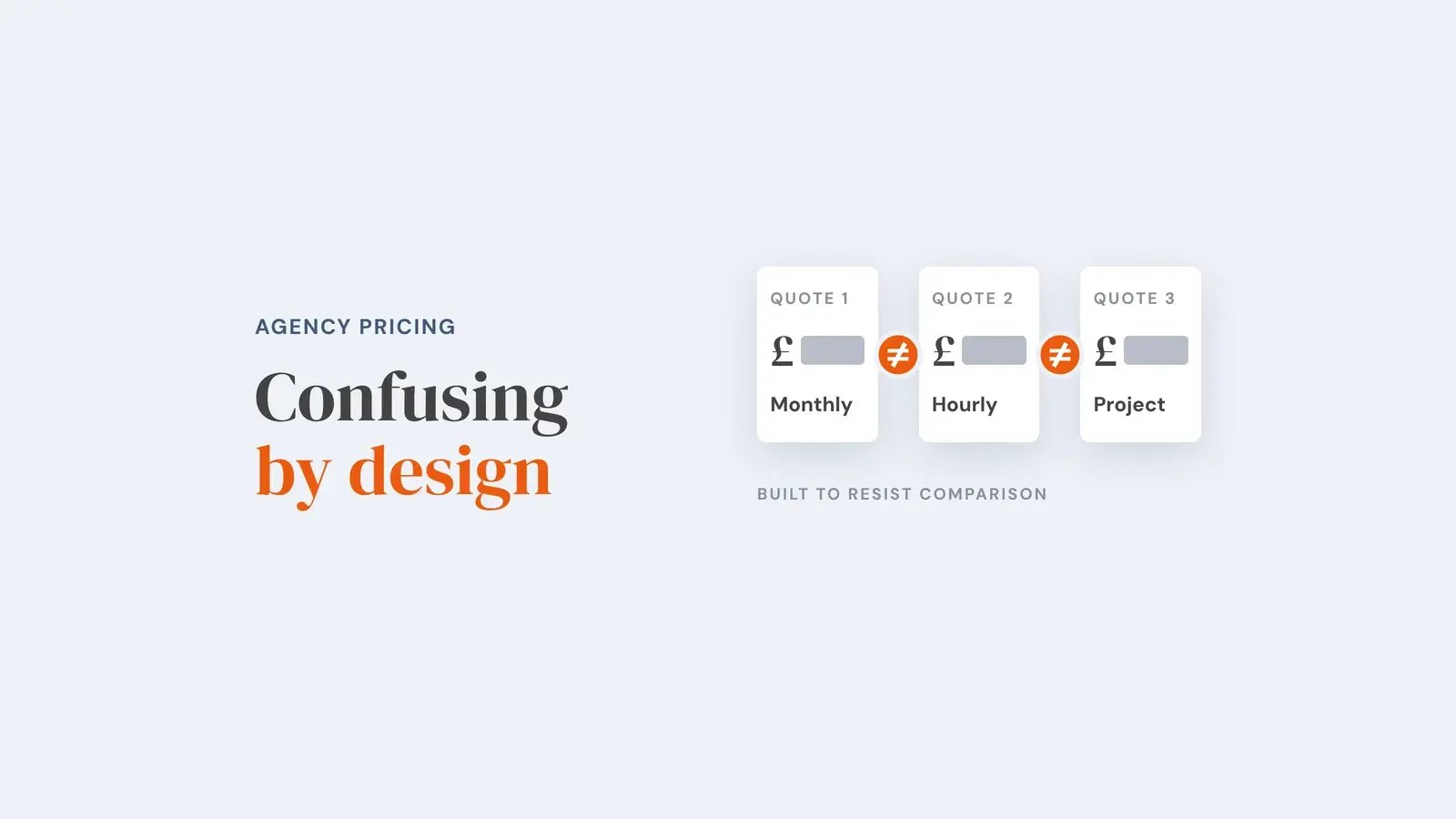
Unlike opaque arrangements, where agency margins, media markups, or bundled costs disappear inside a single retainer figure, a transparent investment separates and explains each cost and outcome.
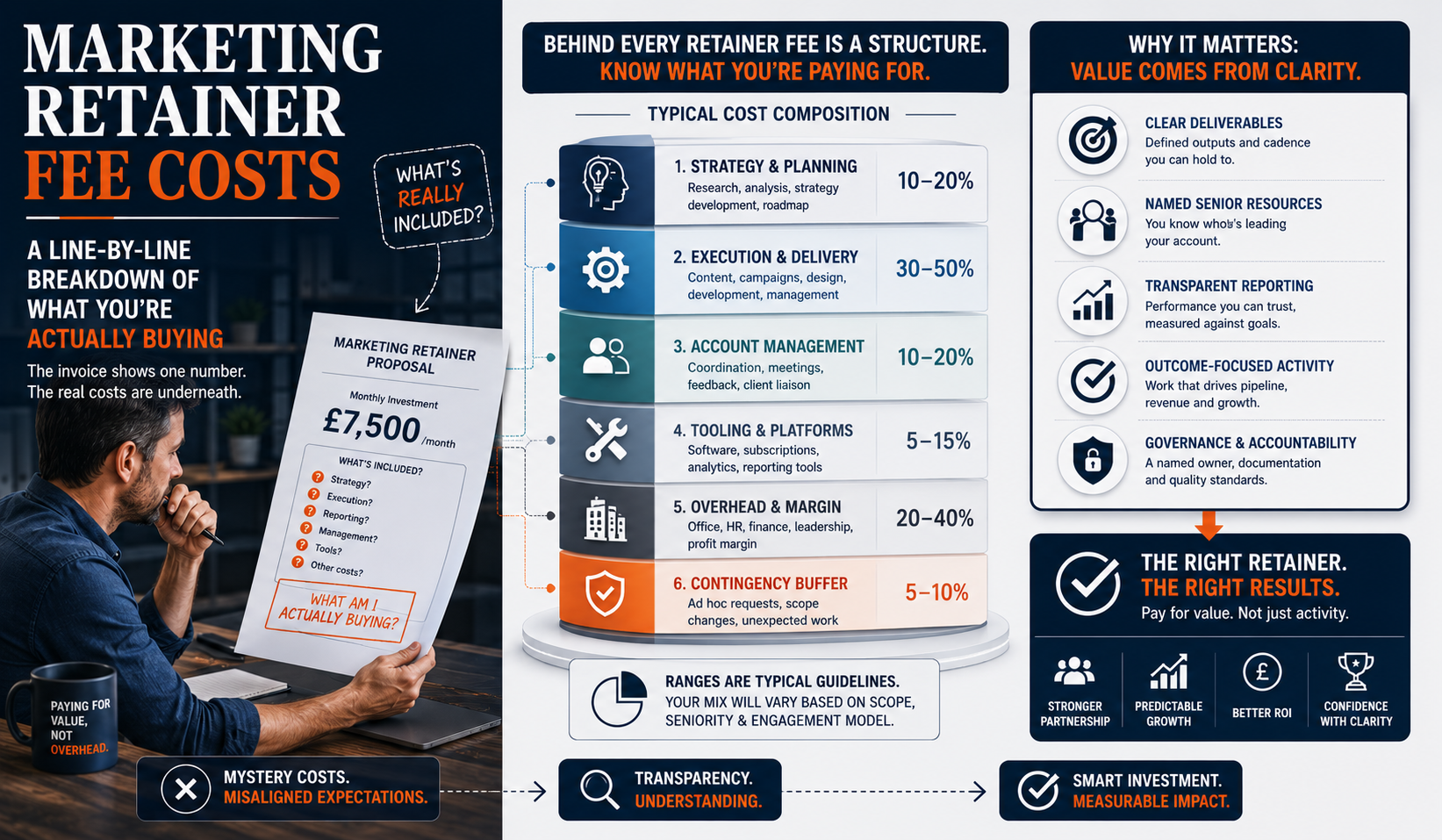
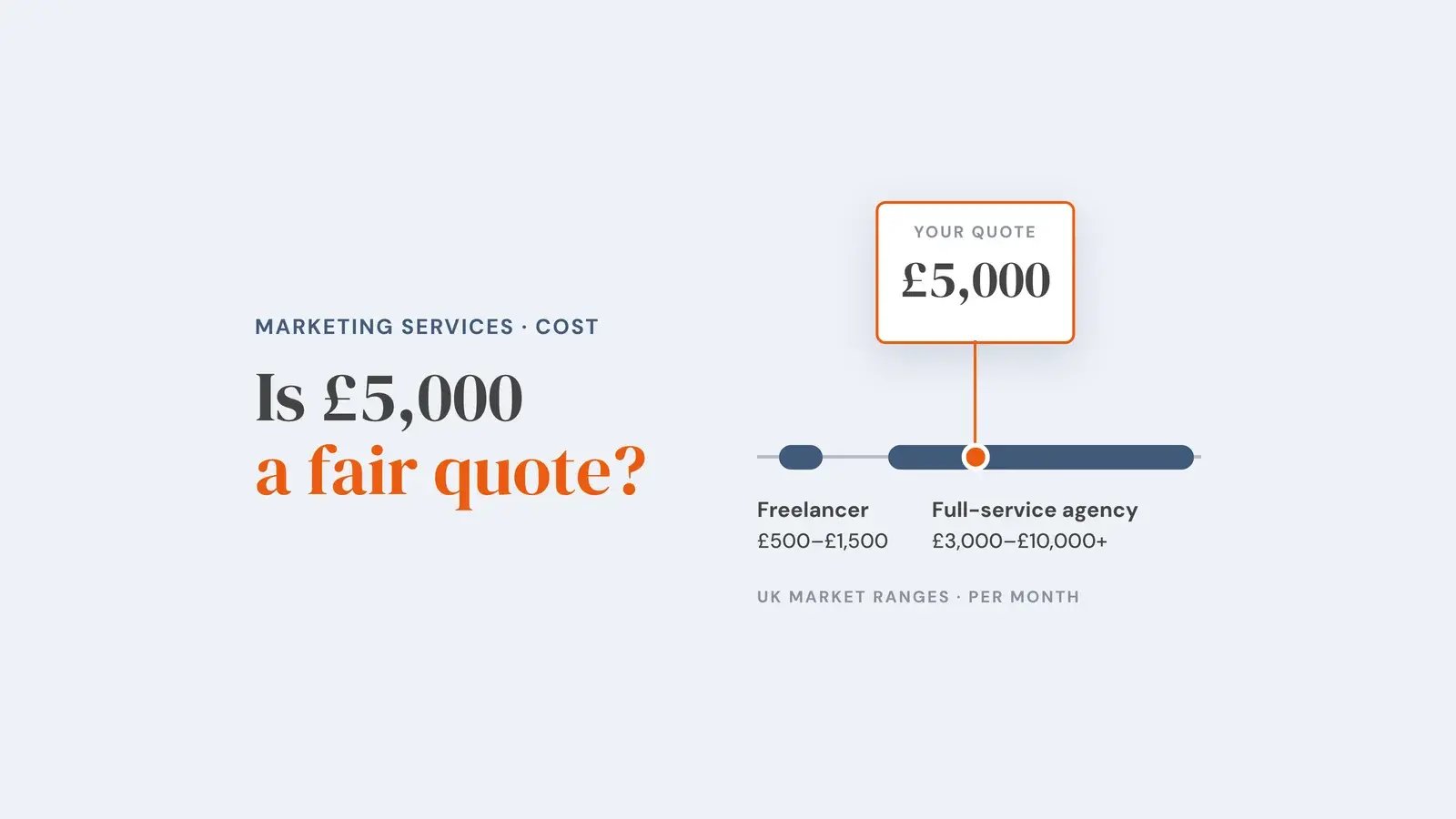
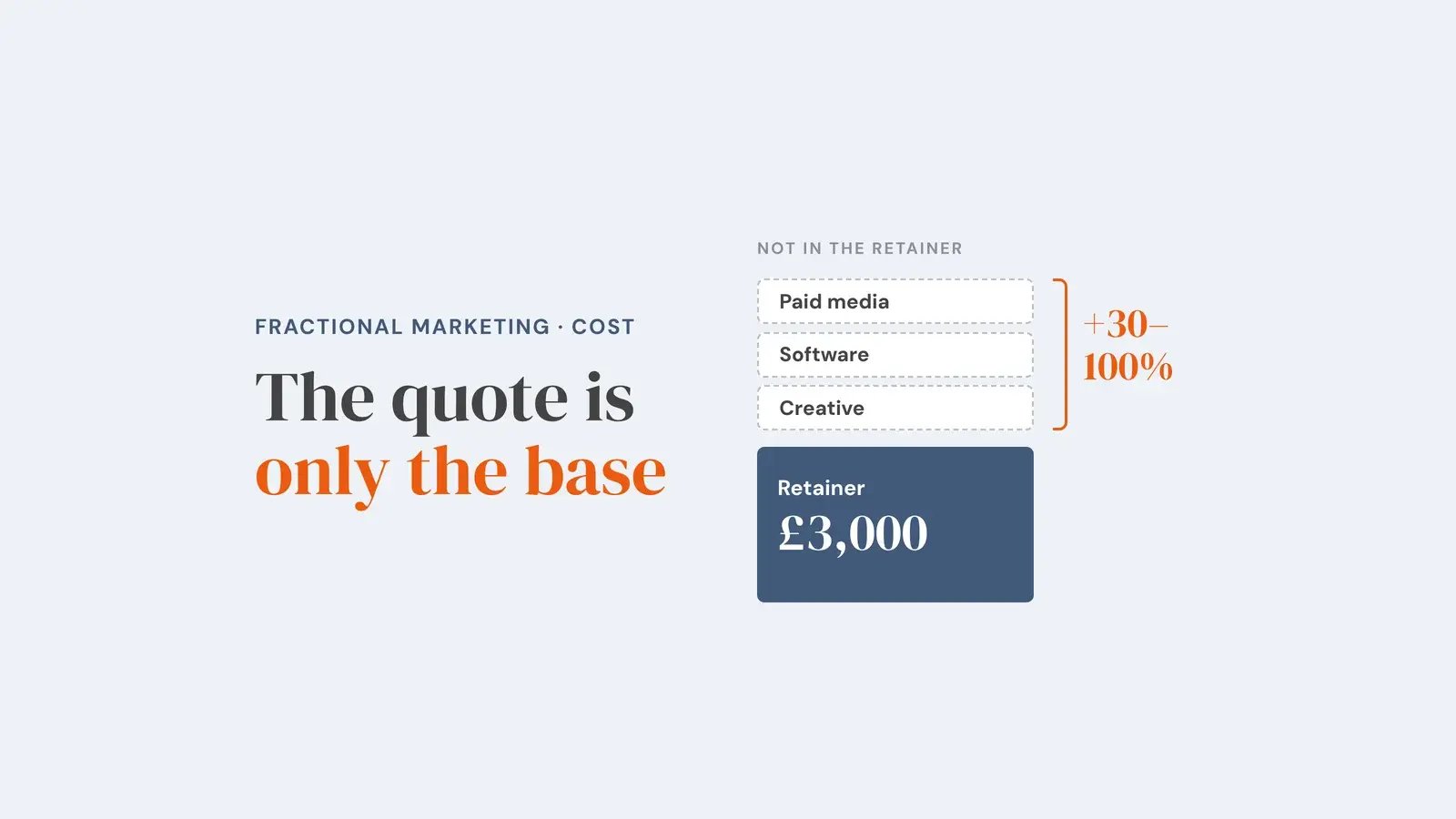
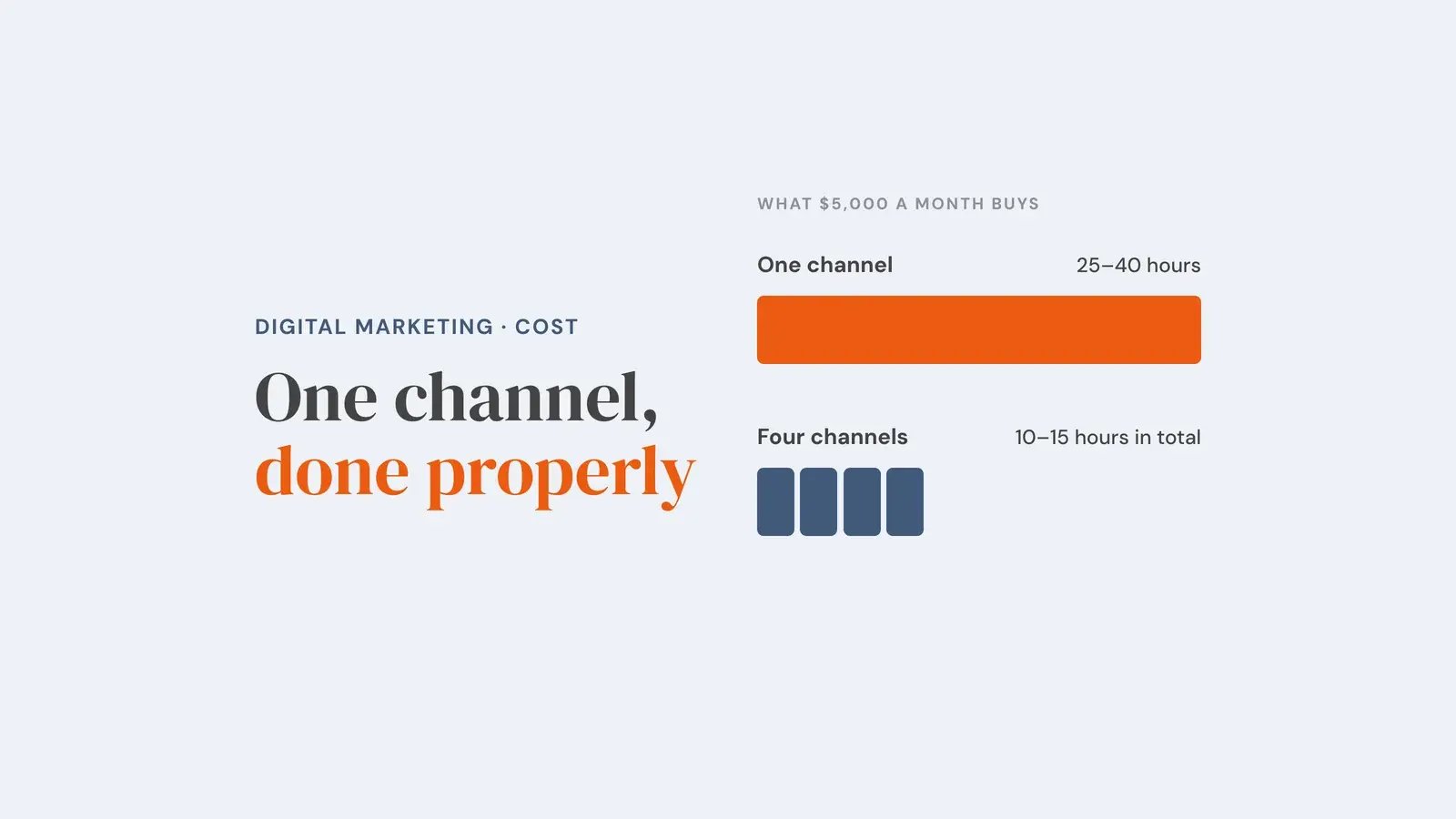
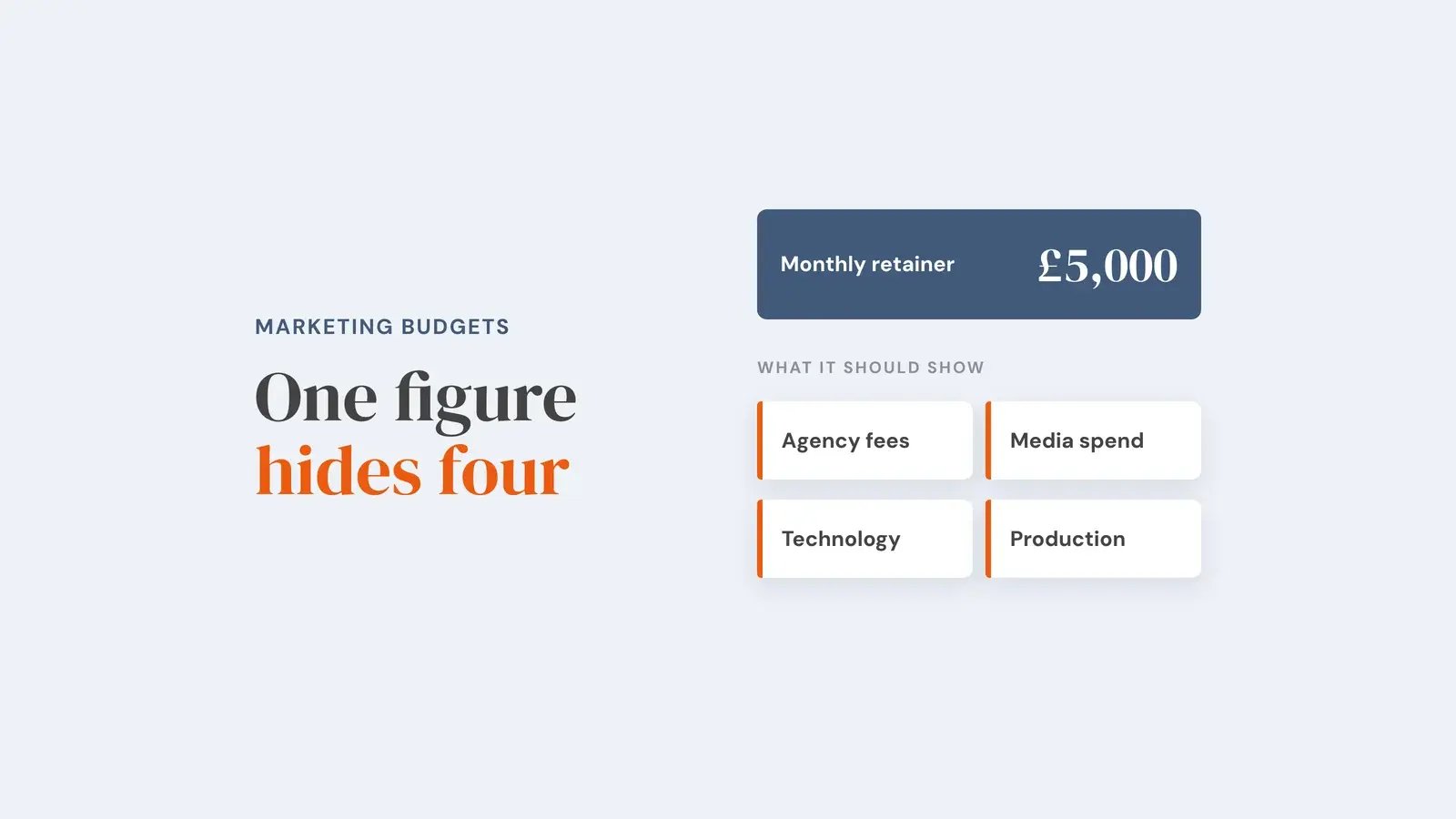
A common scenario: a client paying £5,000/month ($6,250) with no breakdown between strategy work, ad management fees, and actual media spend. That structure protects the agency's margin. It does not protect the client's budget.
[Insert comparison diagram: transparent vs opaque budget structure side by side]
Alt text: Side-by-side diagram comparing a transparent, itemised marketing budget with an opaque bundled retainer structure.
Why marketing transparency matters right now
Marketing transparency matters because buyers are increasingly unwilling to approve budgets they cannot trace, audit, or explain to their stakeholders.
With tighter budgets and growing pressure on ROI, clients who lack clear sight into their investment are more likely to cut spend prematurely, or switch providers without understanding what was actually working.
The structural risks of opaque marketing spend include:
- Budget leakage: Undisclosed media markups, typically 10–20% above rate card, pass through with no client visibility. (Source: ISBA Programmatic Supply Chain Transparency Study, 2023)
- Misaligned KPIs — Activity metrics (impressions, clicks, sessions) replace outcome metrics (pipeline, revenue, retention).
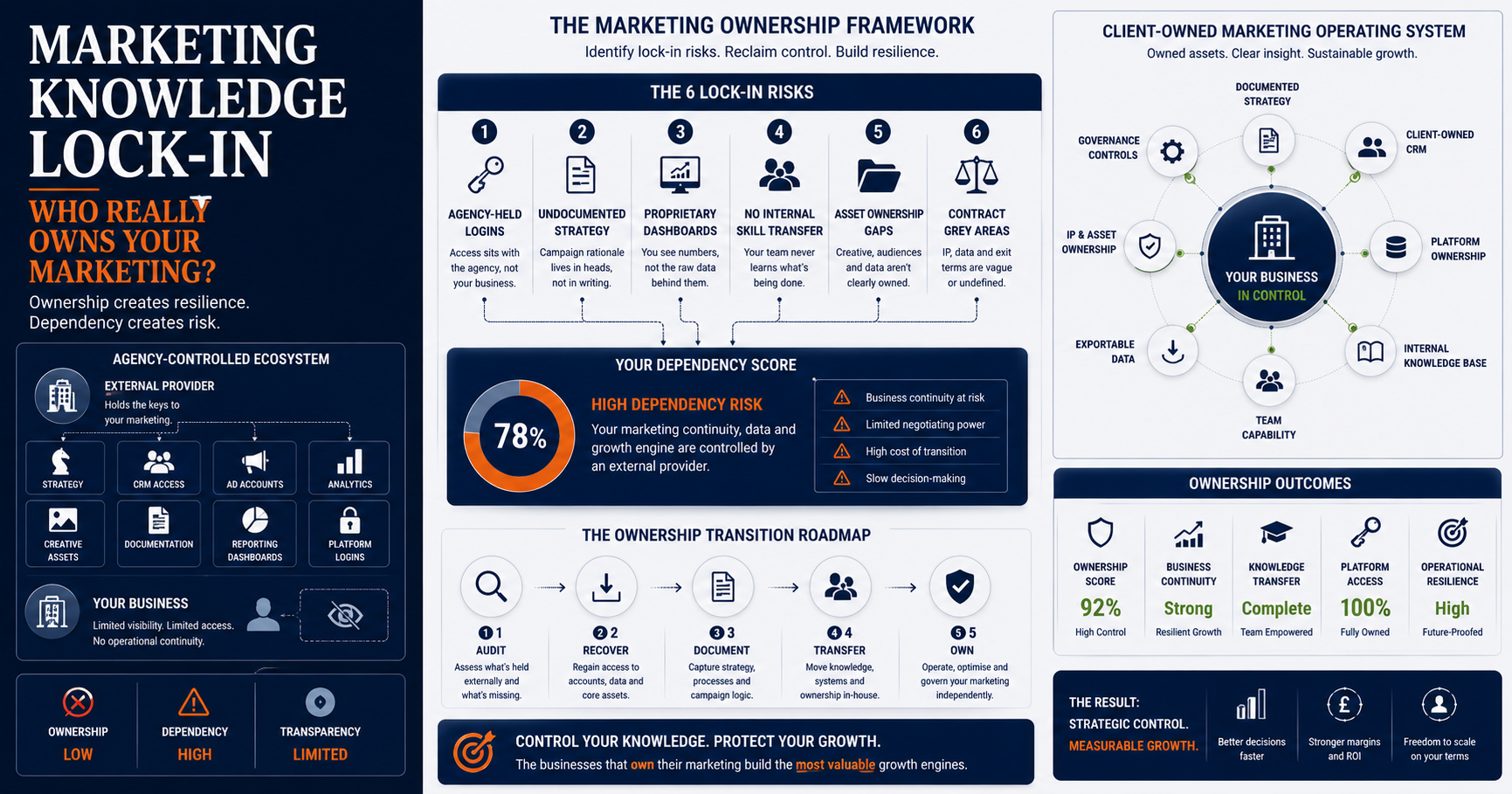
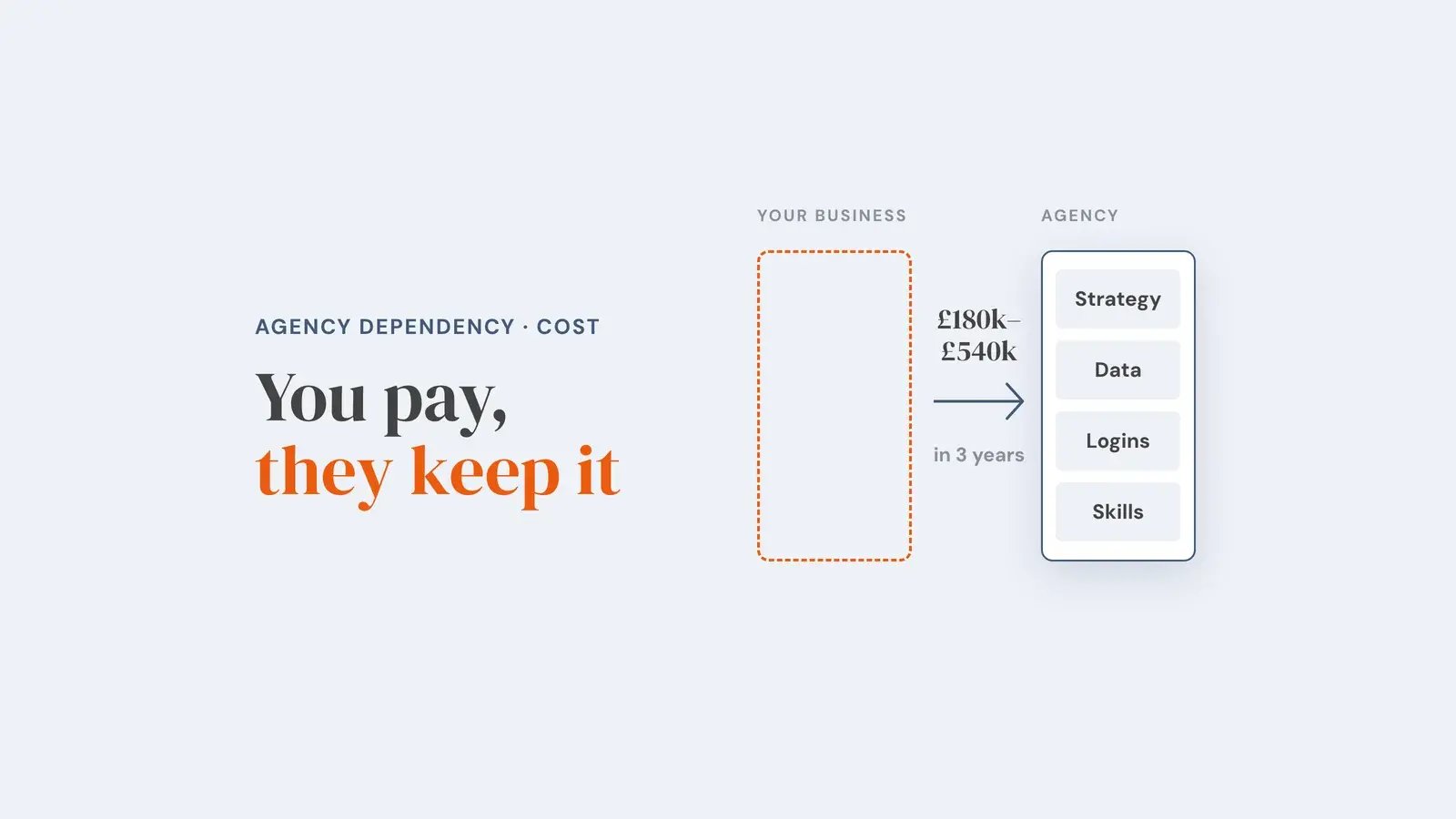
- Lost institutional knowledge — When an agency holds your accounts, data, or creative assets, you lose continuity if the relationship ends.
- Premature spend cuts — Without evidence of what is working, budget decisions are based on perception rather than performance.
What a best-in-class transparent marketing investment must include
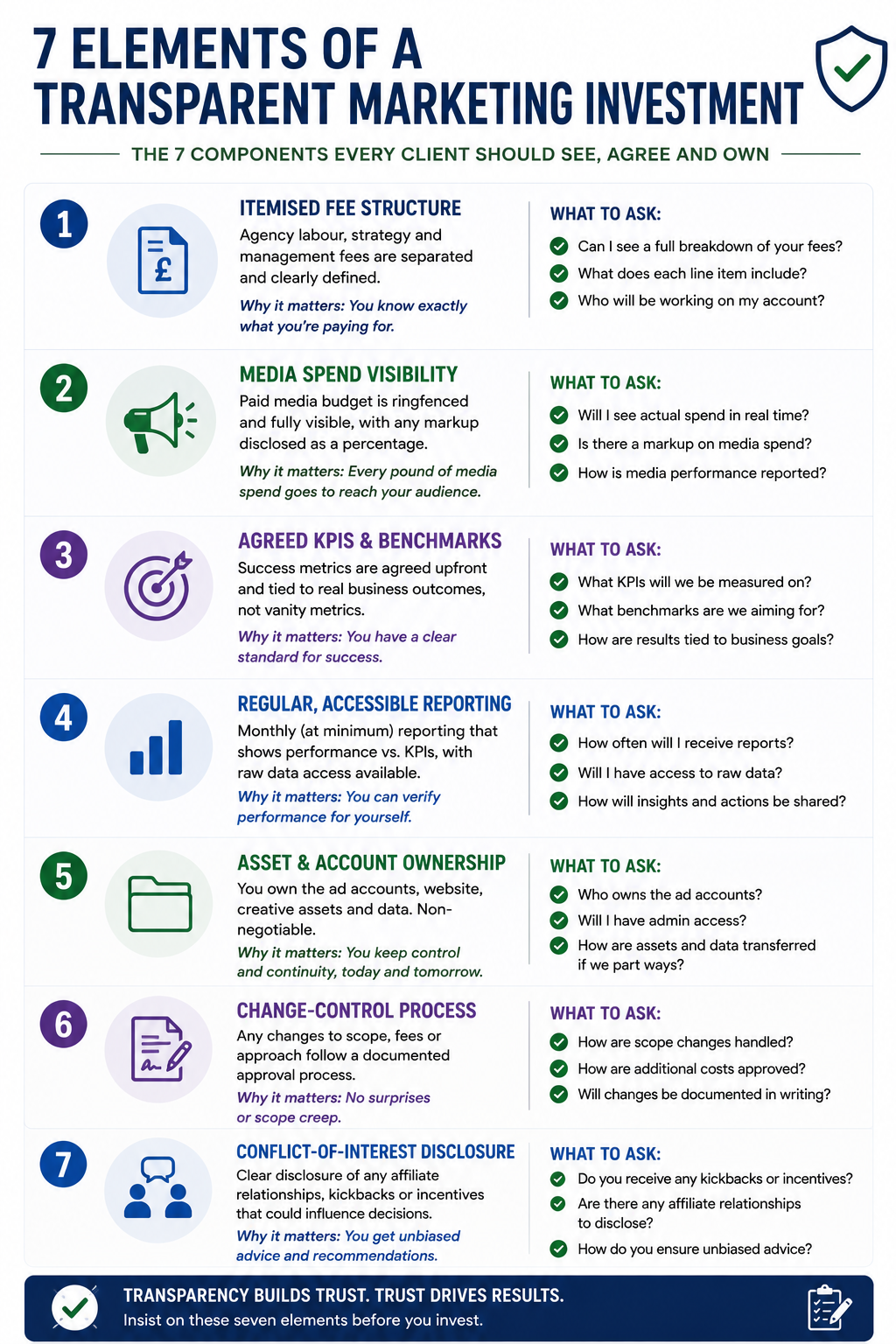
A best-in-class transparent marketing investment must include 7 core elements. Together, they give clients the evidence needed to assess value, course-correct quickly, and make informed reinvestment decisions.
Each component serves a different accountability function. For each one, consider what happens if it is absent, because that is the real test of whether it belongs in your engagement terms.
- Itemised fee structure: Agency labour, strategy, and management fees are separated and named. You know what each line is paying for. Without this, you cannot distinguish what you are paying for work from what you are paying for access, and you cannot challenge a fee increase without data.
- Media spend visibility: Paid media budget is ringfenced and clearly attributed. Any markup on spend is disclosed as a percentage in the contract. Without this, a portion of every pound you think is reaching your audience is instead funding an undisclosed margin.
- Agreed KPIs and benchmarks: Success metrics are defined before work starts, tied to business outcomes rather than activity volume. Without this, an agency can always point to something that went up, and you have no basis to push back.
- Regular, accessible reporting: Monthly at minimum, showing performance against agreed KPIs with raw data access available to the client. Without this, you are relying on a curated summary. Curated summaries protect the agency's narrative, not your budget.
- Asset and account ownership: You own the ad accounts, website, creative assets, and data. This is non-negotiable. Without this, an agency exit leaves you rebuilding access from scratch, often during the period when continuity matters most.
- Change-control and reallocation process: Any budget reallocation or scope change requires written sign-off from both parties. Nothing moves without your approval. Without this, budgets shift to whatever is easiest to deliver, not whatever is most likely to perform.
- Conflict-of-interest and vendor disclosure: If a partner earns referral fees or commissions from recommended vendors, this is declared in writing upfront. Without this, a recommendation to use a particular platform or tool may be motivated by the agency's income, not your outcomes.
Cost categories that should always be itemised
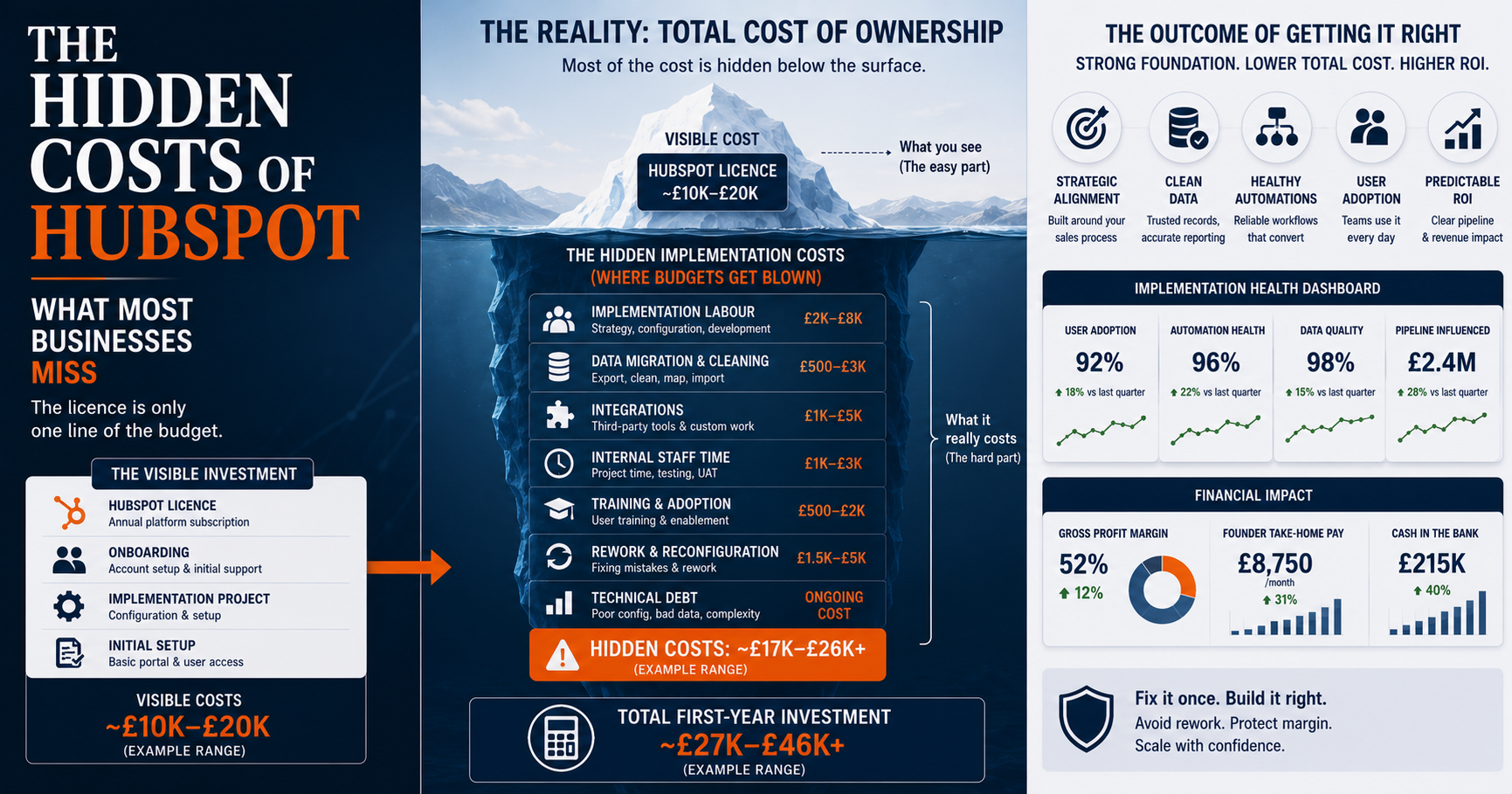
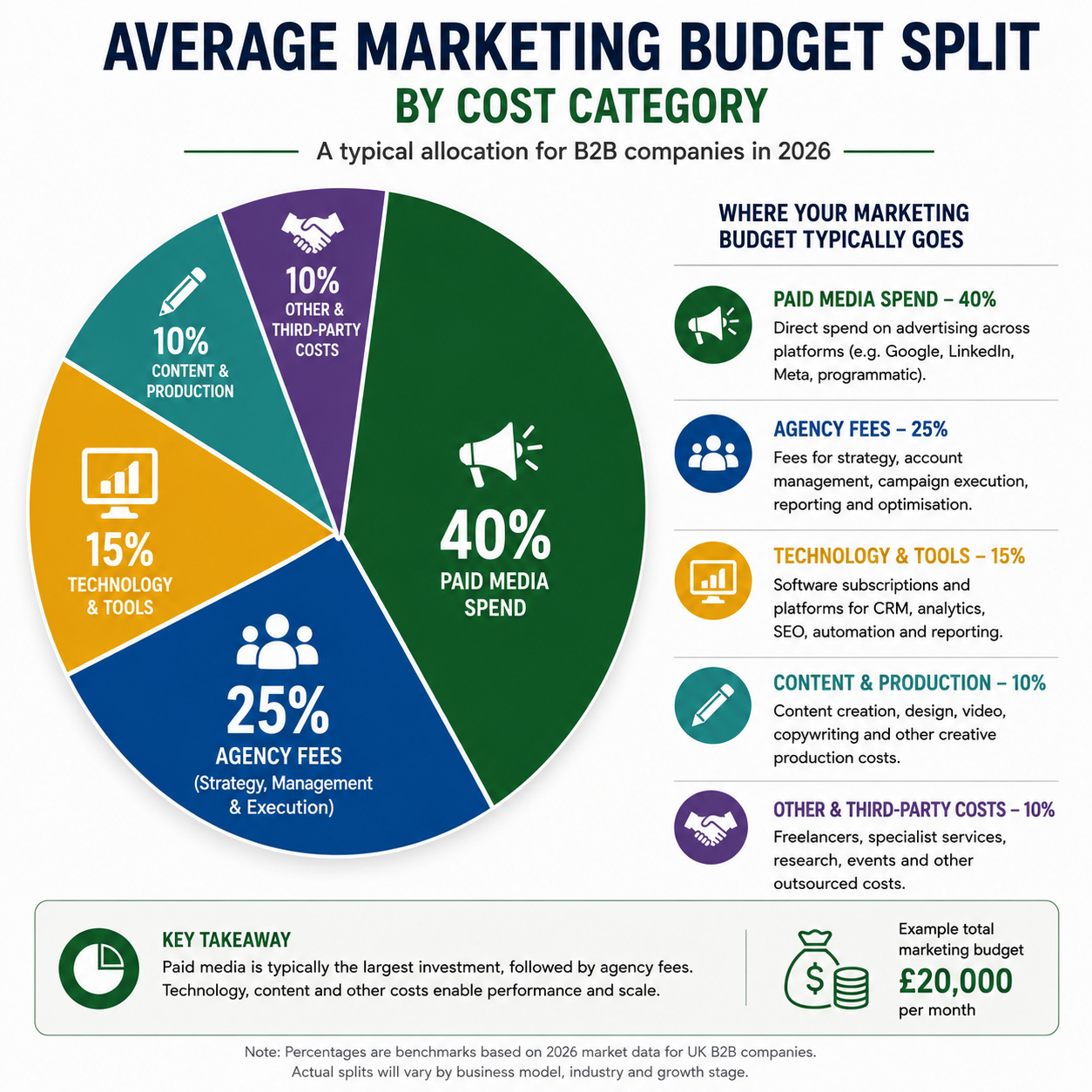
A transparent marketing investment should separate at minimum four cost categories: agency labour fees, paid media spend, technology and platform costs, and third-party production or vendor costs.
Bundling these into a single monthly figure is one of the most common ways cost opacity enters a client–agency relationship, and the first thing an informed buyer should push back on.
For a typical B2B service business spending £3,000–£5,000/month ($3,750–$6,250), agency labour fees often account for 50–60% of total budget, with paid media, technology, and production making up the remainder. The exact split will vary, but without itemisation, you have no way to know whether that split reflects your priorities or the agency's.
Transparent vs opaque agencies: how to tell the difference
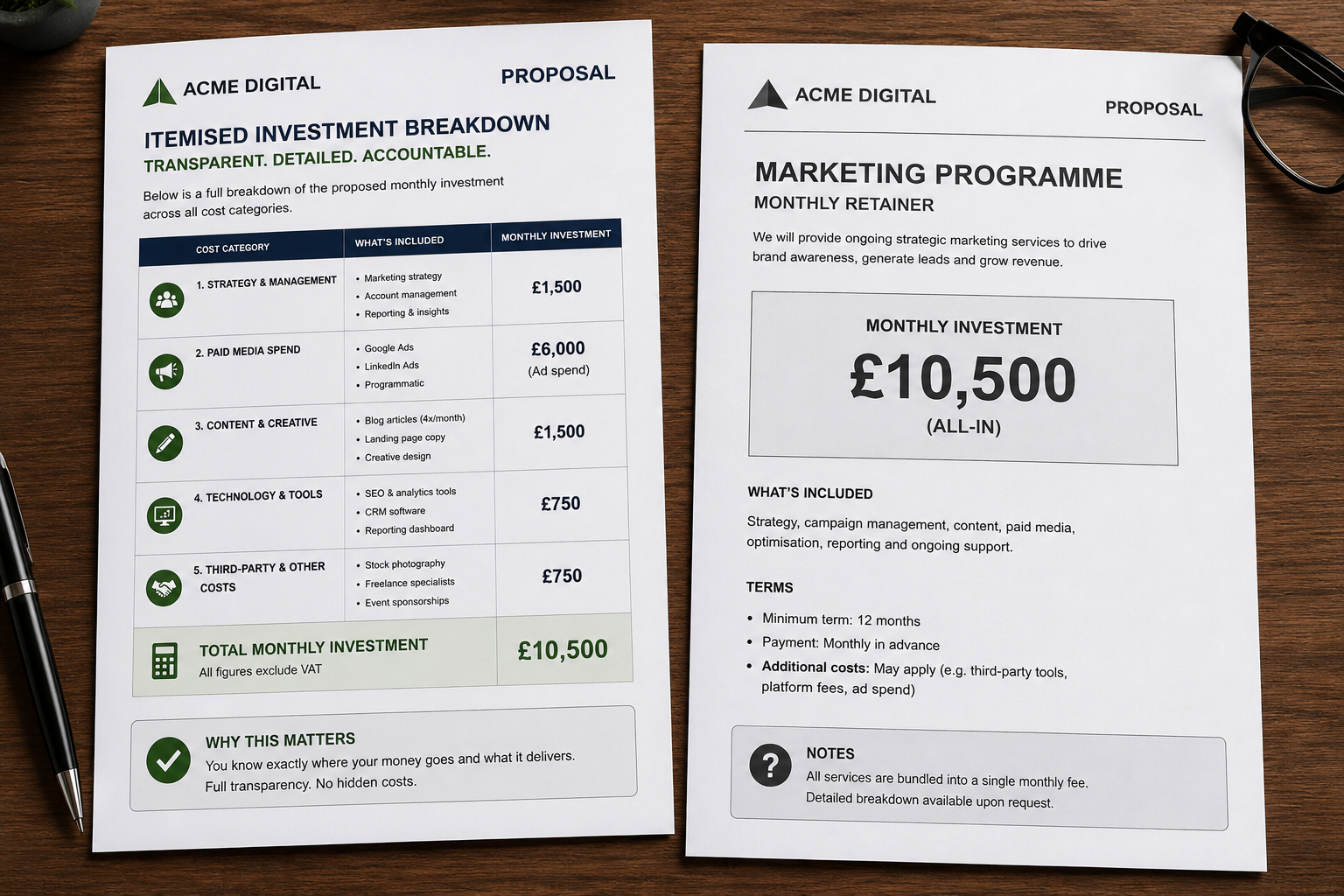
The clearest test of a transparent agency is to ask, before signing, for a written breakdown of how your budget will be allocated. A transparent agency will answer without hesitation.
Opaque agencies typically offer bundled pricing, retain ownership of ad accounts and creative assets, and produce reports that highlight activity rather than business outcomes.
The difference in practice:
- Transparent: fully itemised scope of work before signing / Opaque: single monthly retainer with no line-item breakdown
- Transparent: client holds login access to all accounts from day one / Opaque: agency holds accounts "on your behalf"
- Transparent: KPIs tied to pipeline, revenue, and retention / Opaque: reports lead with impressions, clicks, and sessions
- Transparent: media markup stated as a named percentage in the contract / Opaque: markup absorbed into the retainer without disclosure
- Transparent: full asset and data handover on exit, regardless of reason / Opaque: handover delayed, conditional, or disputed
See also: Pricing Compared: Fractional vs Traditional Agency Models for a direct comparison of how this works in practice
How to set up a transparent marketing engagement from day one
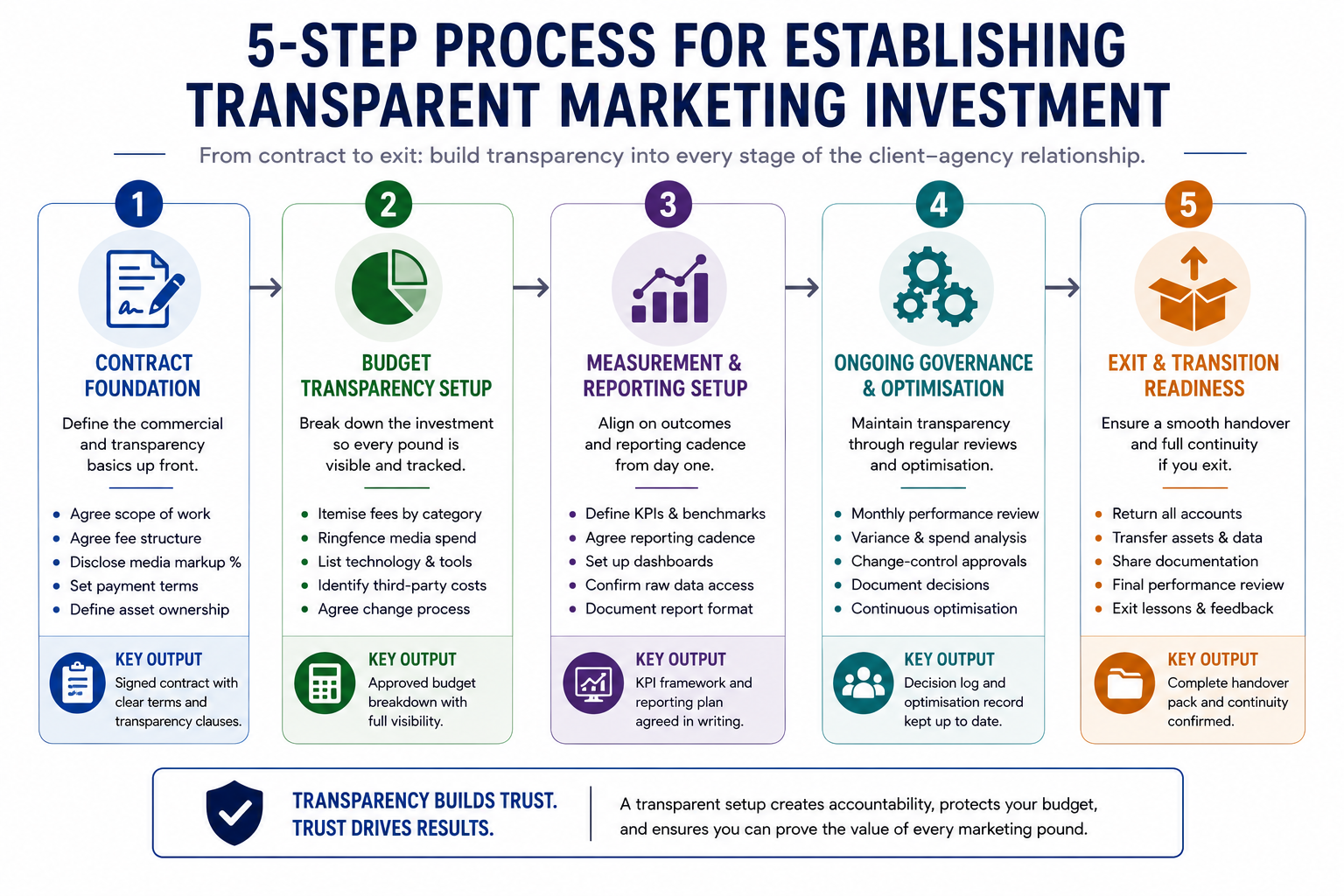
To set up a transparent marketing engagement, require a fully itemised scope-of-work document before any contract is signed, with fees, media budget, and success metrics listed as separate line items.
Follow these 5 steps:
- Require itemised costs in the scope of work: Fees, media budget, tools, and KPIs listed separately before signing. If a proposal shows a single figure, ask for it broken down in writing.
- Confirm account and asset ownership: Clarify in the contract who holds login access to all platforms, accounts, and creative files from day one.
- Set a reporting cadence: Monthly performance reviews against agreed KPIs, with raw data access available to you at all times.
- Agree a change-control process: Any budget reallocation or scope change requires written approval from both parties before action is taken.
- Define exit terms upfront: Full data and account handover at the end of the contract, regardless of reason for leaving.
If your current engagement already lacks these structures, you are not starting from a comfortable position, and it is worth acknowledging that. Discovering mid-contract that your costs are bundled, your assets are held by the agency, or your KPIs are activity-based is frustrating.
Some of that can be fixed retrospectively. A written review request, where you ask for a budget breakdown and a formal reporting template, is a fair and professional first step. But some structural gaps, particularly around asset ownership, may only be fully resolvable at contract renewal. Knowing that is useful information.
FAQ: transparent marketing investment
The most frequently asked questions about transparent marketing investments concern fee structures, reporting rights, media markup norms, and the contractual protections buyers should request.
Is it normal for agencies to mark up media spend?
Yes; a degree of markup is standard practice. A transparent agency will state the percentage (typically 10–20%) in writing before contracts are signed. An opaque agency will not raise it at all.
How often should I receive a marketing investment report?
Monthly is the standard minimum. Active paid media campaigns warrant weekly performance updates. Anything less than monthly for strategy-level reporting is worth raising directly.
Who should own my ad accounts and creative assets?
You should, always. Ad account ownership can be transferred in minutes. If an agency resists or delays this, treat it as a structural risk to your business continuity.
Can smaller businesses expect the same transparency as larger ones?
They should, and the honest answer is that it depends on the partner, not the budget size. A £2,000/month ($2,500) engagement warrants itemised costs, agreed KPIs, and access to reporting. Some agencies do deprioritise smaller clients on transparency; that is a signal about how they operate, not a norm to accept. Ask the same questions regardless of your spend level. A partner who applies transparency selectively is not a transparent partner.
See also: Fractional Marketing Contract: 10 Questions to Ask Before You Sign
Taking action: where to go from here
You came here asking whether your marketing budget was traceable, and whether you could explain to a stakeholder exactly where every pound is going. That question deserves a clear answer — and now you have the framework to find it.
You now have a 7-point checklist, a cost breakdown model, and a direct comparison between transparent and opaque agency behaviour. That is enough to evaluate any current or future engagement with confidence.
The next step is applying it:
- Run your current engagement against the 7-element checklist and note any gaps.
- Request a retrospective budget breakdown if your costs are currently bundled into a single figure.
- Confirm account and asset ownership before your next contract renewal.
- Use the 5-step framework when briefing any new marketing partner.
- Read Marketing Partner Checklist: What Founders Must Review Before Hiring for a full due-diligence process before committing budget.
Suggested related article: How Much Does a Fractional Marketing Director Cost?
If you want a marketing relationship built on structural clarity from day one, with no black boxes, no bundled costs, and full ownership transferred to your team, my Fractional Marketing Director service is designed to deliver exactly that.

About the author
Tom Wardman is a Fractional Marketing Director and strategic marketing consultant working with founder-led businesses across the UK. He specialises in building in-house marketing systems that clients own outright, with transparent investment structures and performance accountability built in from the start.
Pricing disclaimer: All GBP–USD price conversions are rounded estimates and correct at the time of publishing. Exchange rates fluctuate and figures should be treated as indicative only.