

If you cannot explain why your marketing is doing what it is doing without opening a document your agency wrote, you have outsourced more than execution. You have outsourced judgement.
I have worked inside agencies and alongside founder-led businesses, and in almost every engagement the same thing is true on day one: the client can describe what their agency does, but not why. That gap is structural, not personal.
By the end of this article you will be able to test where your business sits, and start moving decision-making back in-house within 90 days.
Key takeaways
- Outsourcing marketing execution is a resourcing decision. Outsourcing marketing thinking is a structural one, and it is far harder to reverse.
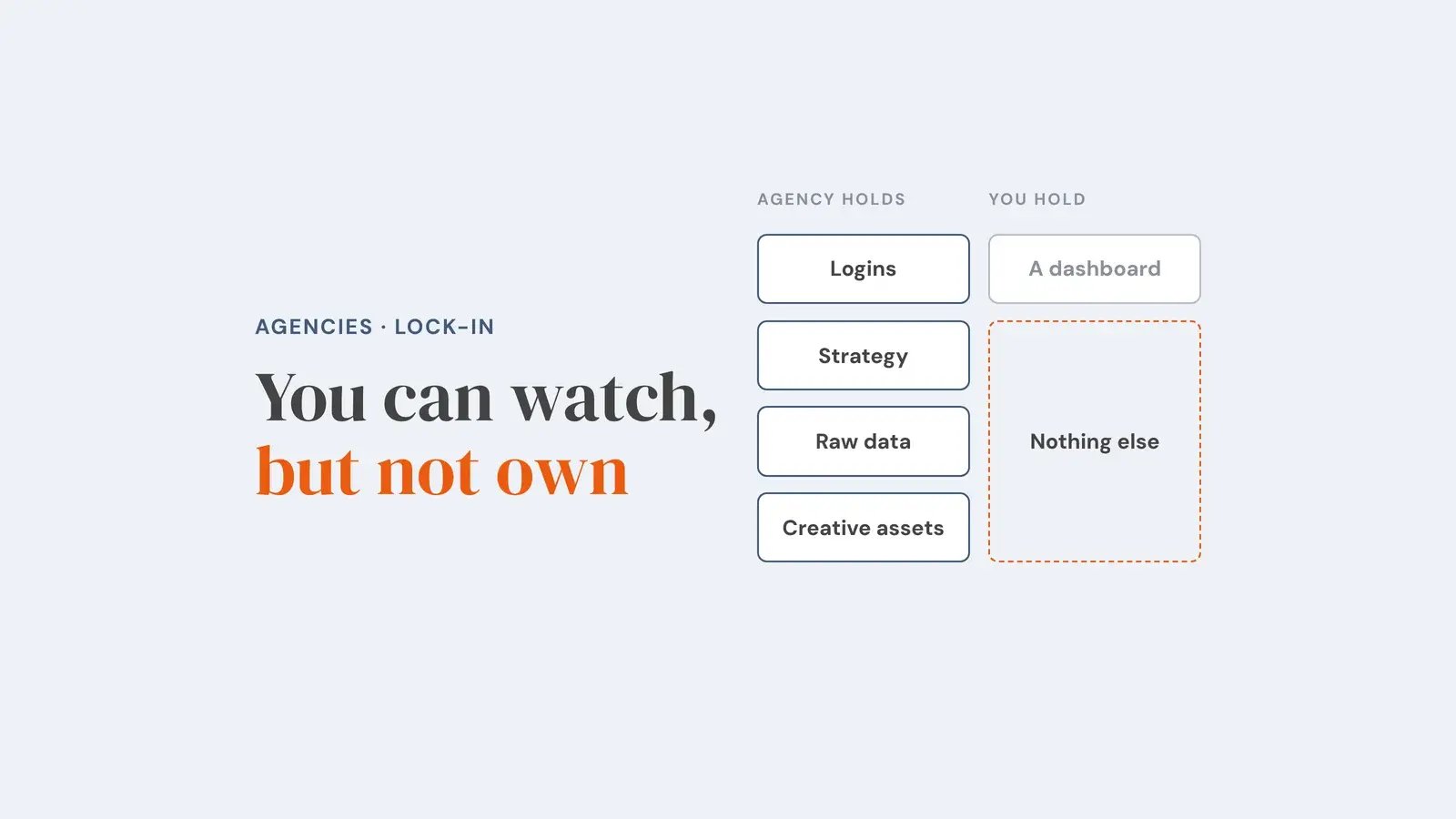
- Decision authority transfers gradually through reporting, roadmaps and metric definitions, not through anything written in a contract.
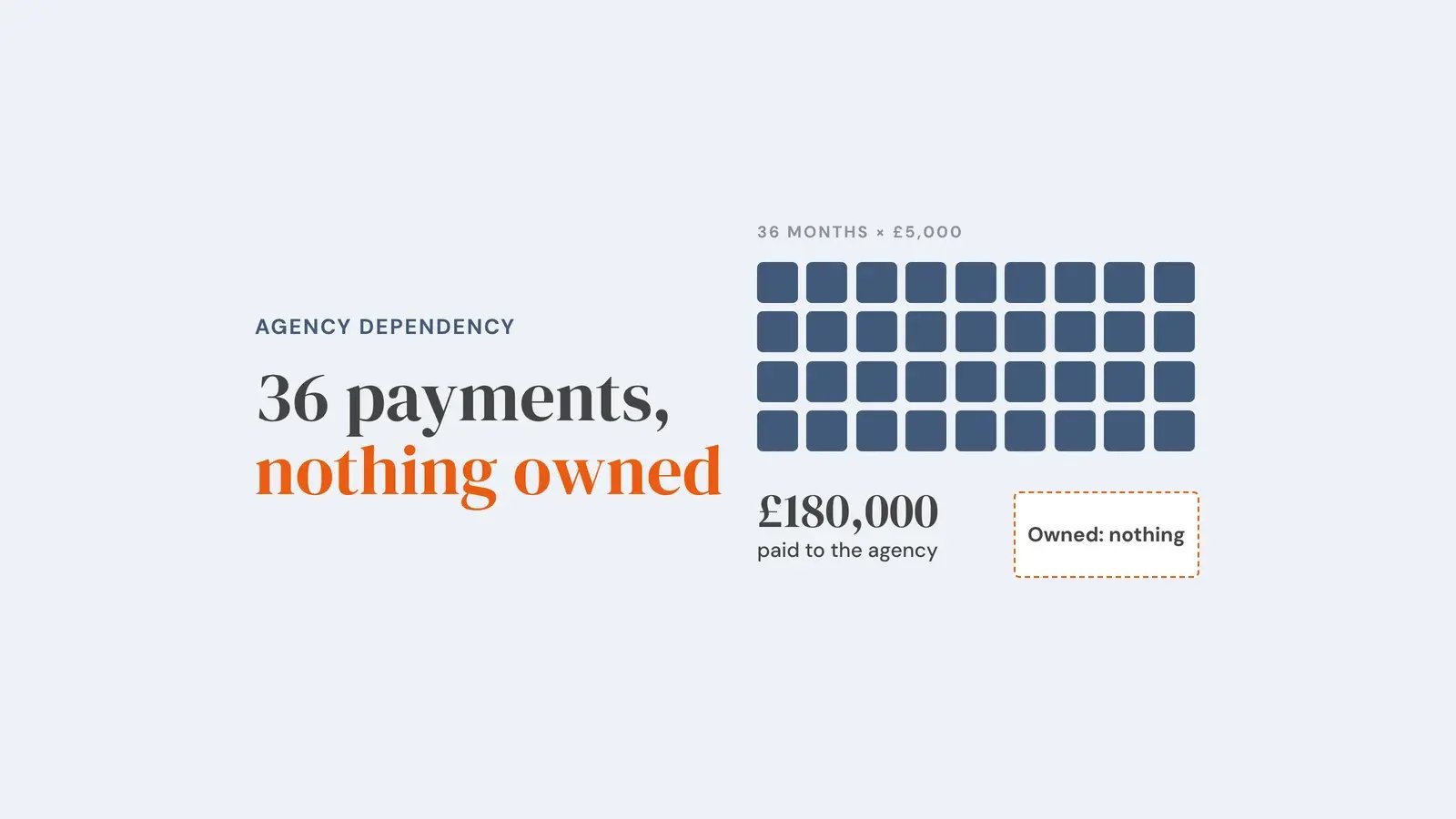
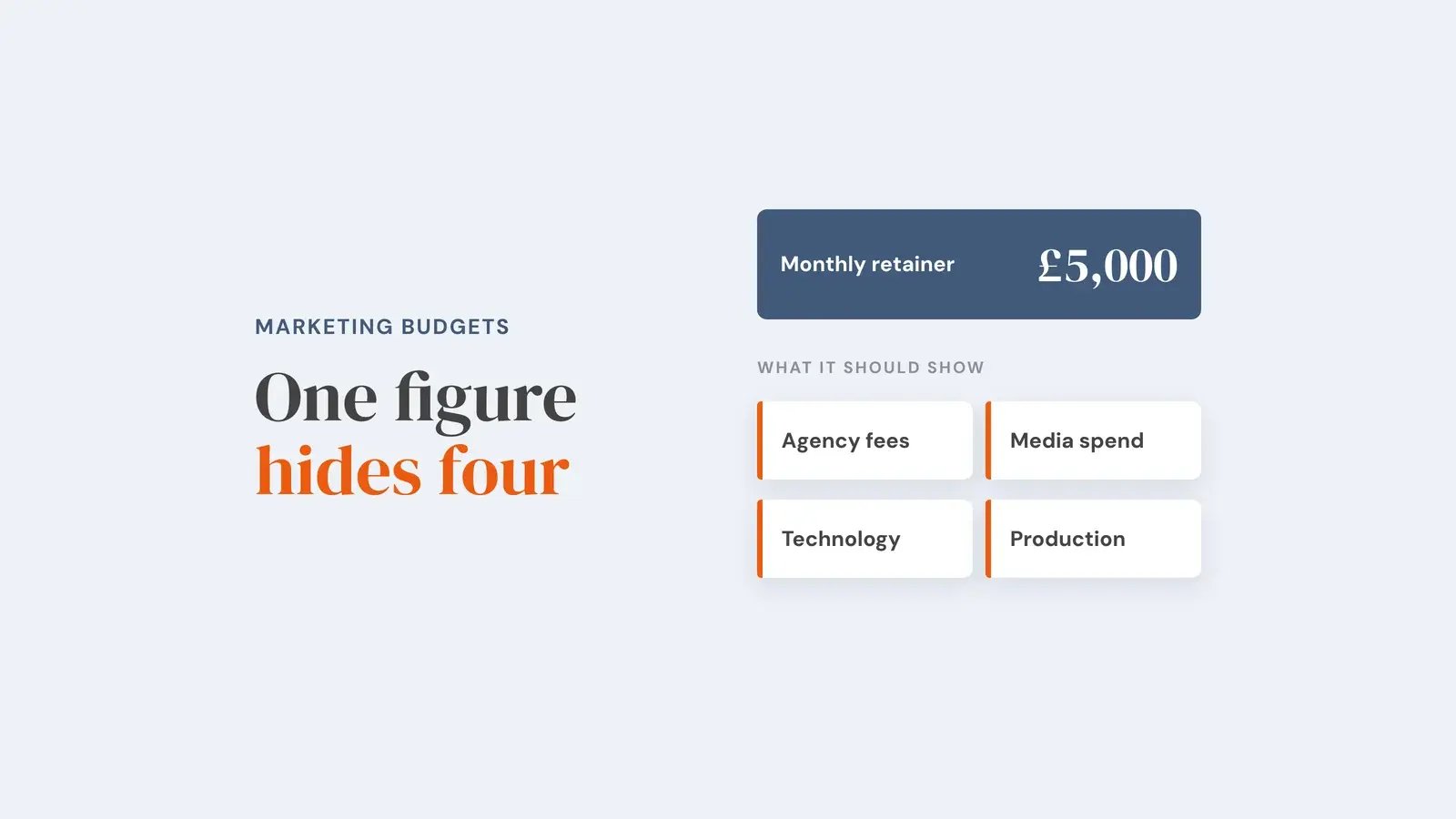
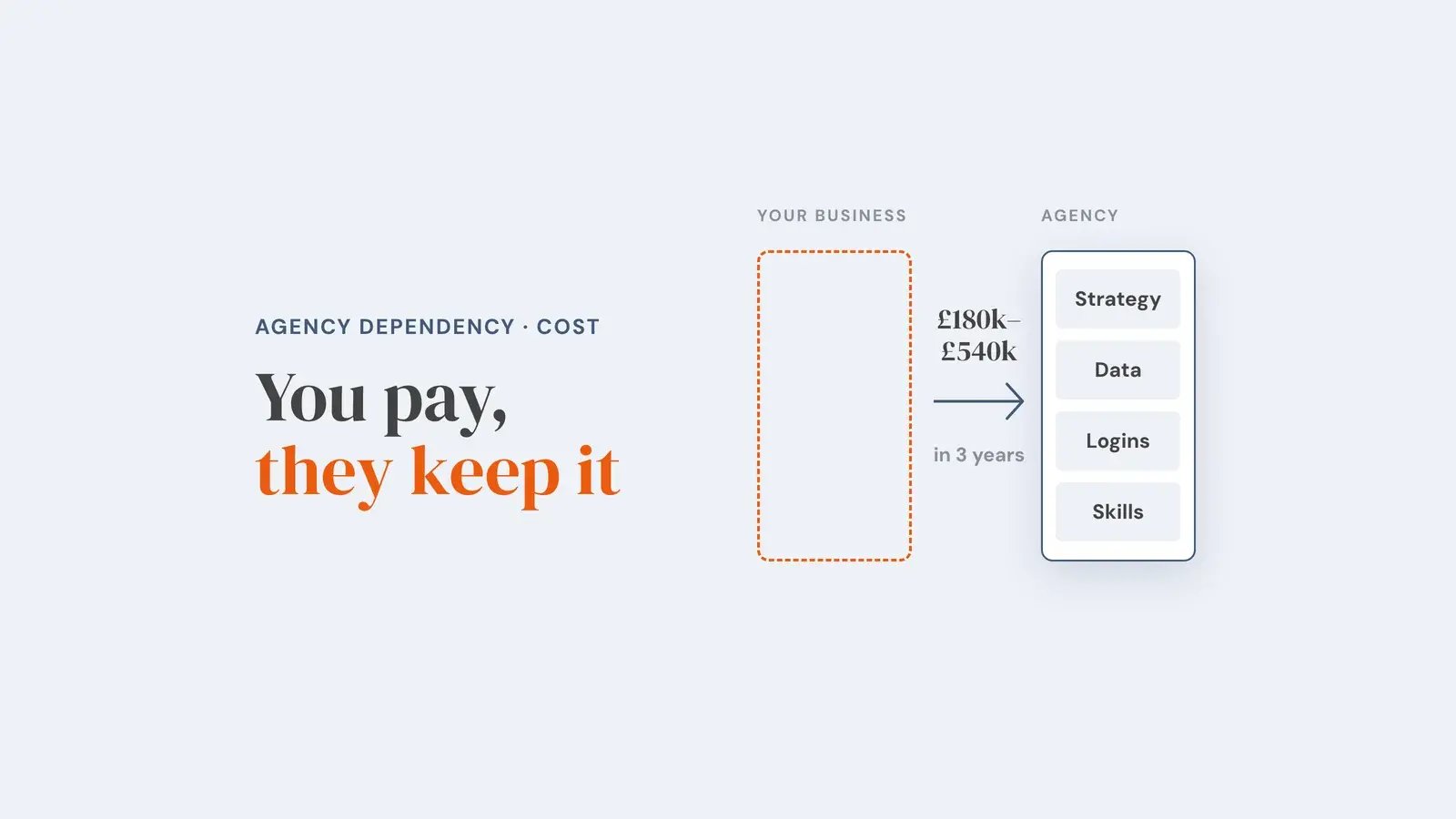
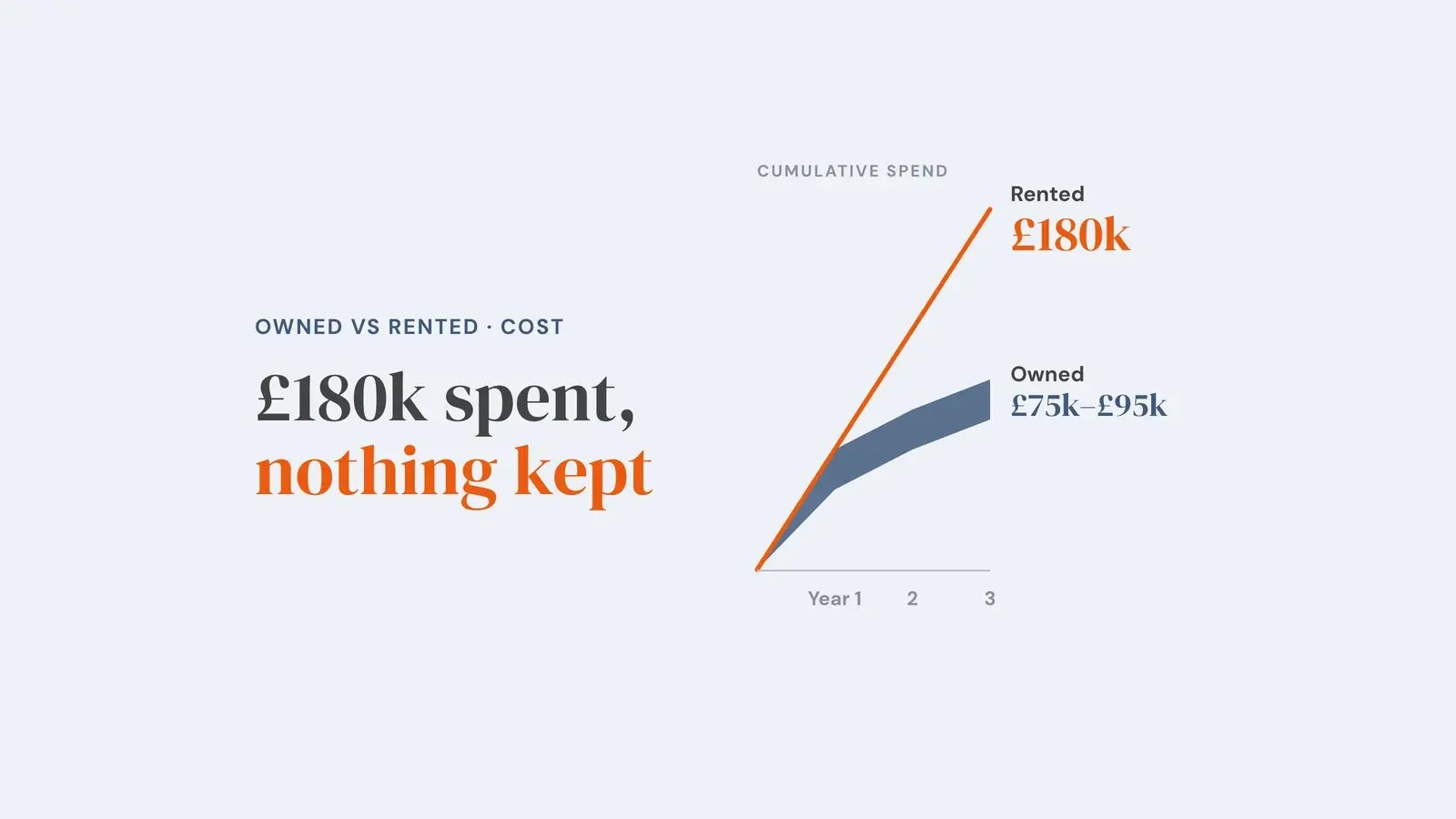
- A £5,000 (about $6,300) monthly retainer costs £180,000 (about $228,000) over three years.
- You can tell thinking has been outsourced when no one internally can explain the current strategy without external help.
- Capability transfer moves decision-making back in-house in roughly one quarter, without changing supplier.
What does hiring an agency to think for you actually mean?
Hiring an agency to think for you means outsourcing marketing judgement, including strategy, prioritisation, diagnosis and the definition of success, rather than outsourcing the execution work those decisions produce.
Execution is a task. Thinking is an asset. Execution can be bought back next month from any competent supplier. Judgement takes years to rebuild once a business stops exercising it, because it is built from watching decisions play out, not from reading a deck about them.
Most founders never make this choice consciously. They hire for capacity, then find the reasoning behind their marketing sits inside someone else's business.
Why does decision-making drift outside your business?
Decision-making drifts to the agency because founders hire for capacity and inherit authority transfer as a side effect. No contract states that strategic control changes hands. It happens in increments.
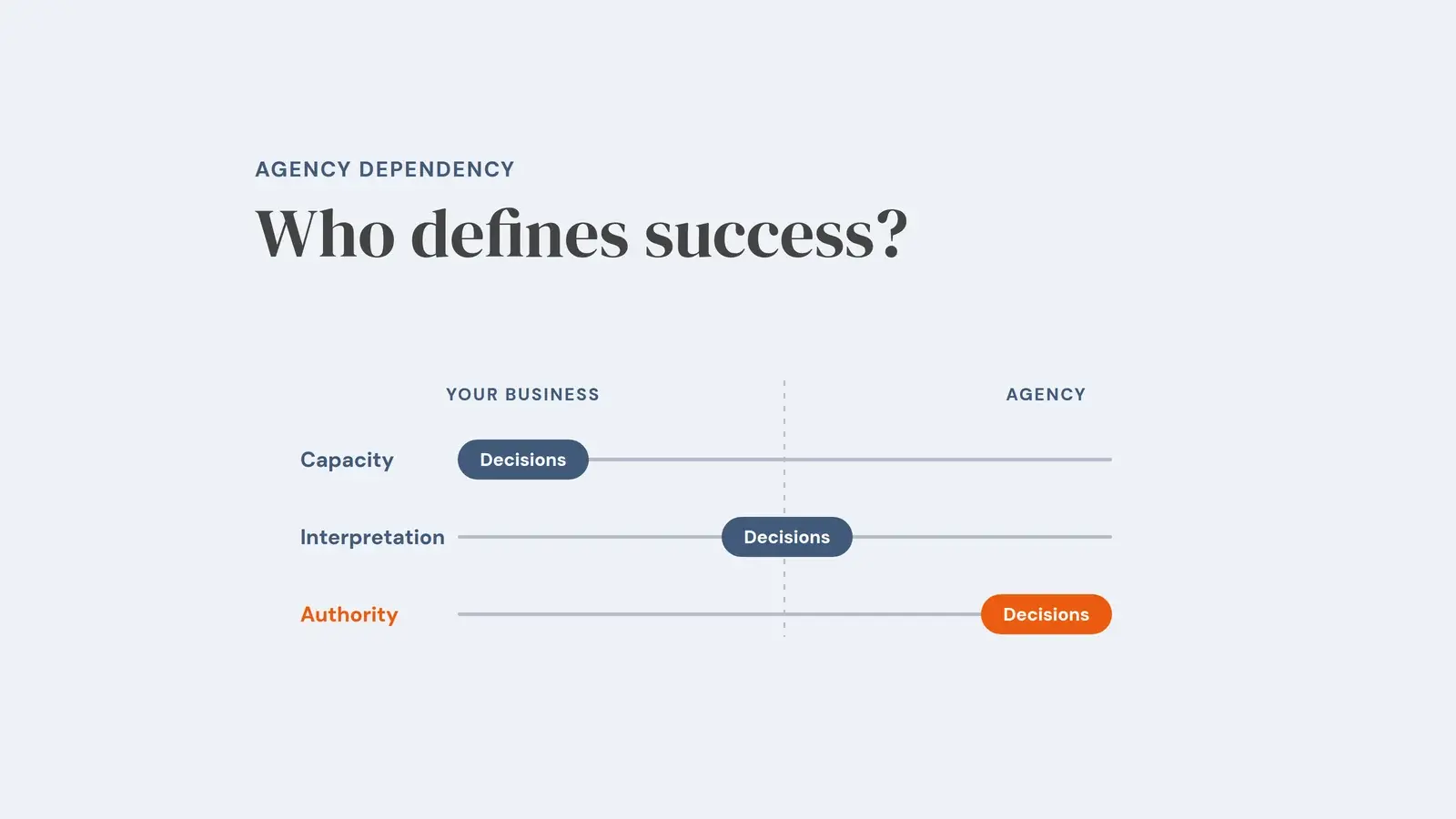
Very few agencies engineer this deliberately. It is what happens when a supplier is competent, responsive and closer to the detail than anyone internally. The drift follows three stages:
- Capacity: You hire help because your team is stretched. The agency executes work you specified.
- Interpretation: The agency reports on performance, so it decides what the numbers mean before you see them.
- Authority: The agency defines what a qualified lead is, which channels get budget, and what "working" looks like. It is now setting the standard it is measured against.
Stage three is the structural problem. When your supplier defines success, poor performance becomes very difficult to detect.
Related Reading: Agency Reporting Red Flags: Is Your Agency Hiding Poor Results?
What does outsourced thinking actually cost?
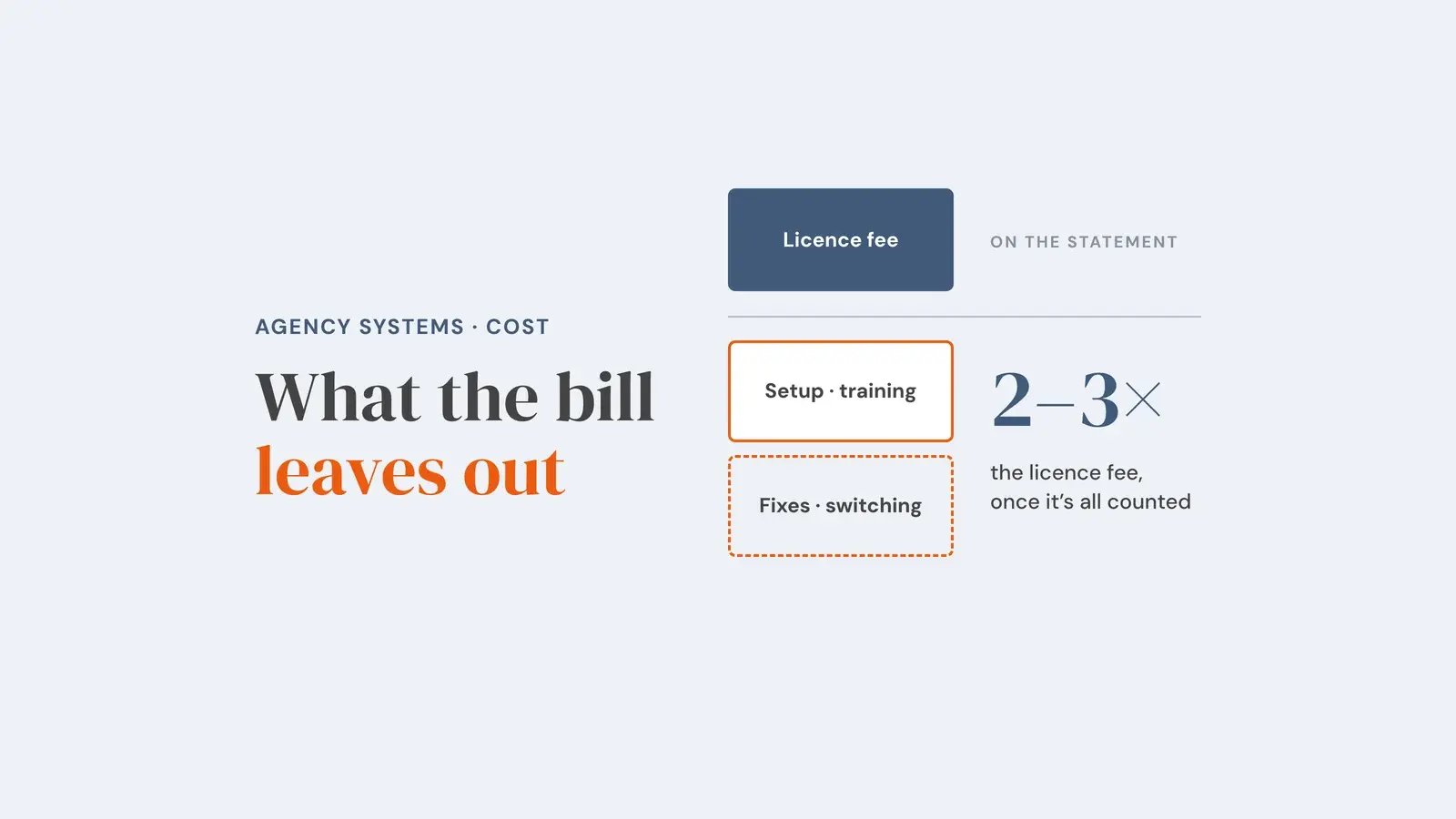
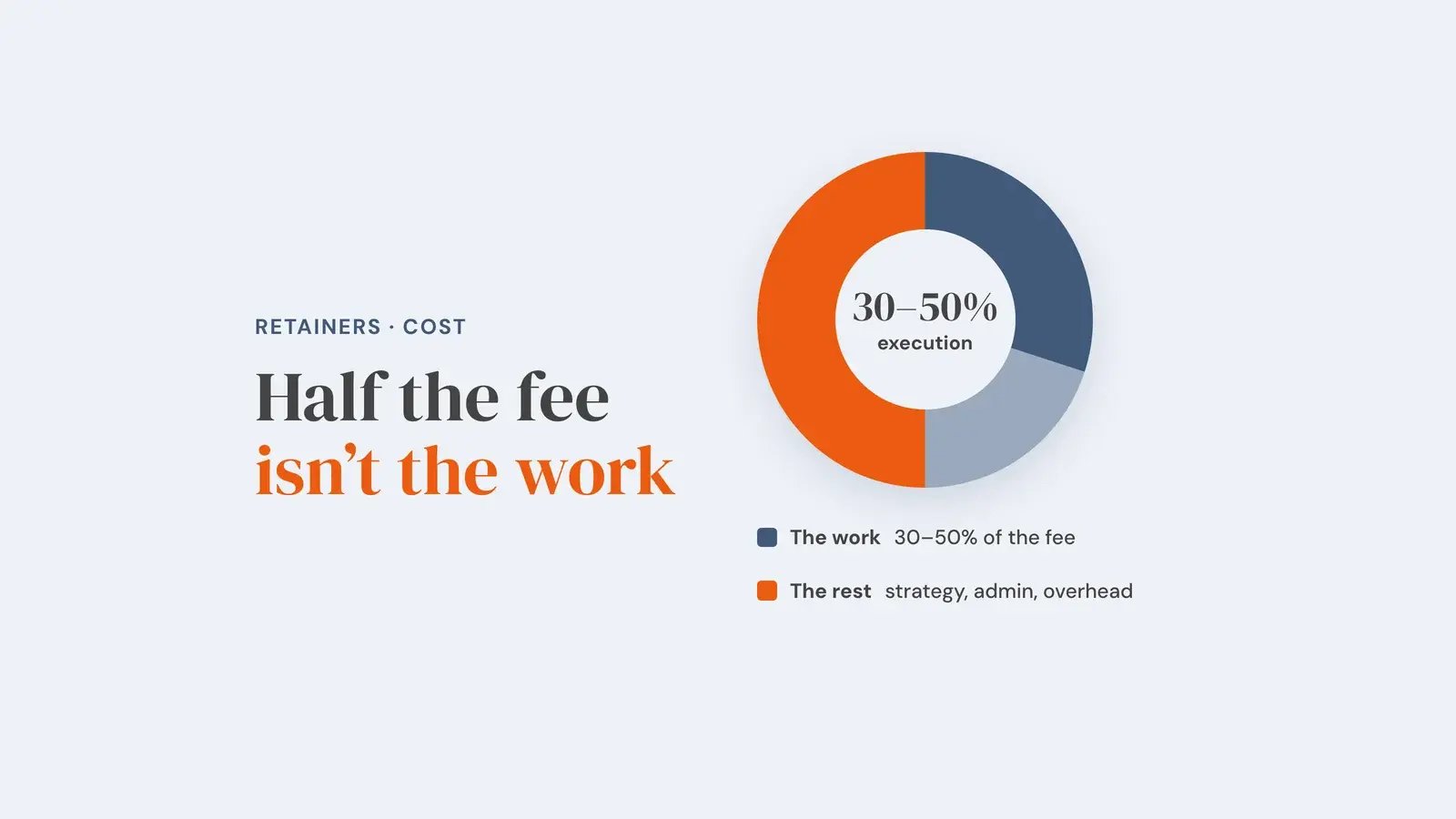
Outsourced thinking costs more than the retainer, because the real expense is the internal capability you are not building while you pay for it. Whether that capability gets built at all is a scope decision most contracts never make.
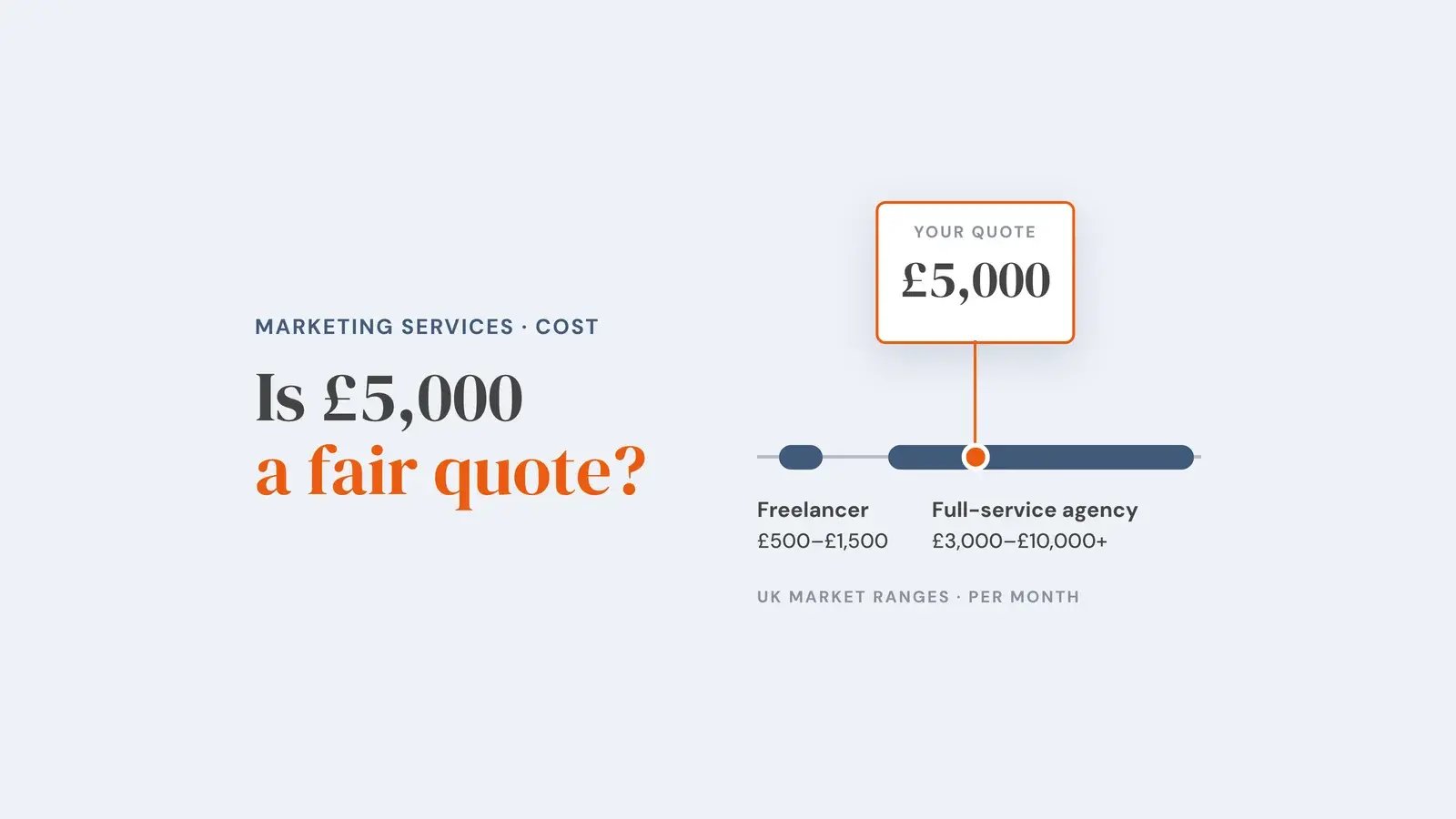
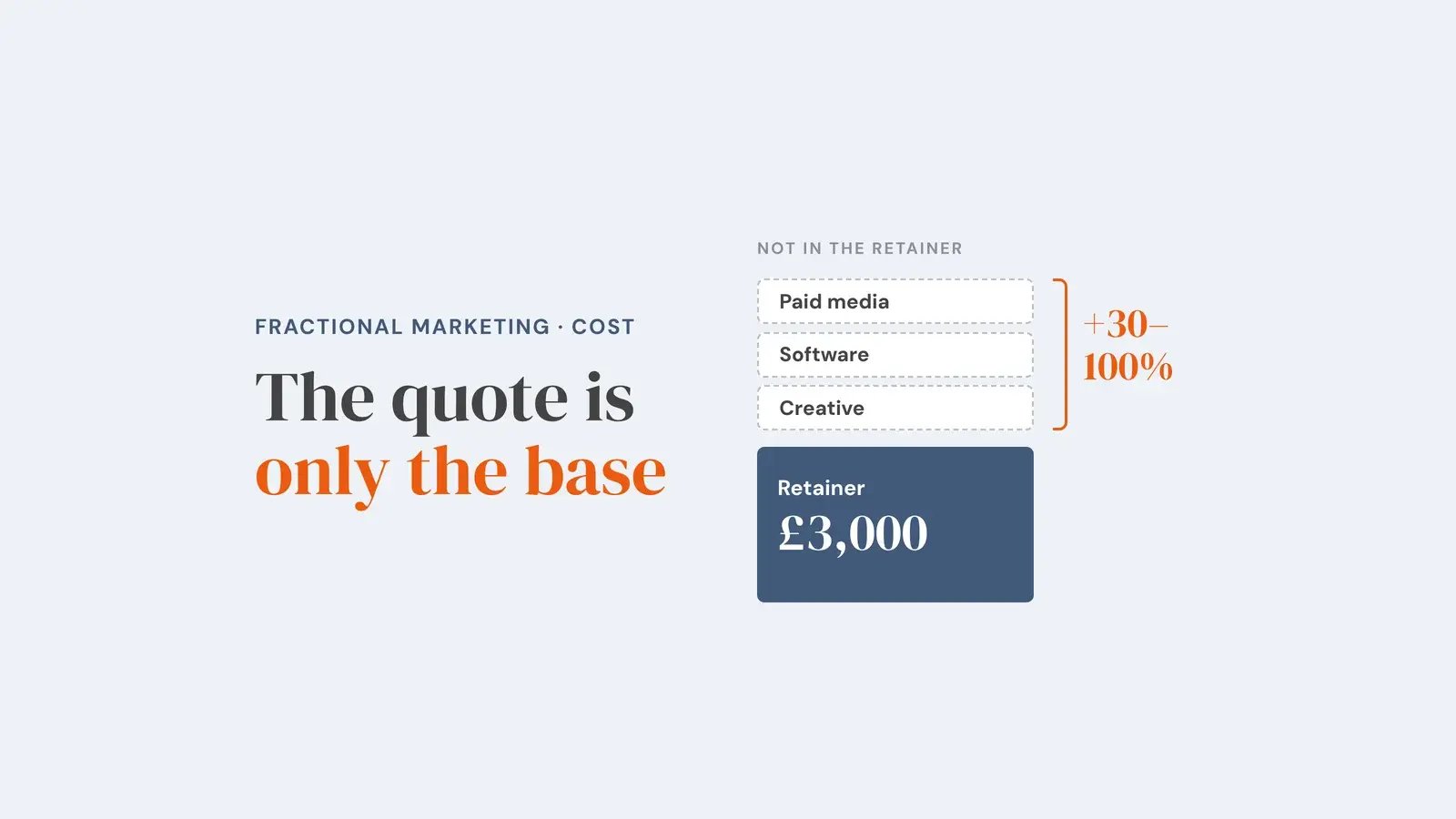
The retainers I see across founder-led B2B businesses usually fall between £3,000 and £10,000 per month (roughly $3,800–$12,700). That is my own observation, not published market data, and the figures below are illustrative.
| Duration at £5,000/month | Cumulative spend | What your team retains at the end |
|---|---|---|
| 12 months | £60,000 (about $76,000) | Historic performance data, and whatever your team absorbed informally |
| 24 months | £120,000 (about $152,000) | The above, plus working knowledge of channels — rarely written down |
| 36 months | £180,000 (about $228,000) | Documented decision frameworks only if they were specified in the scope |
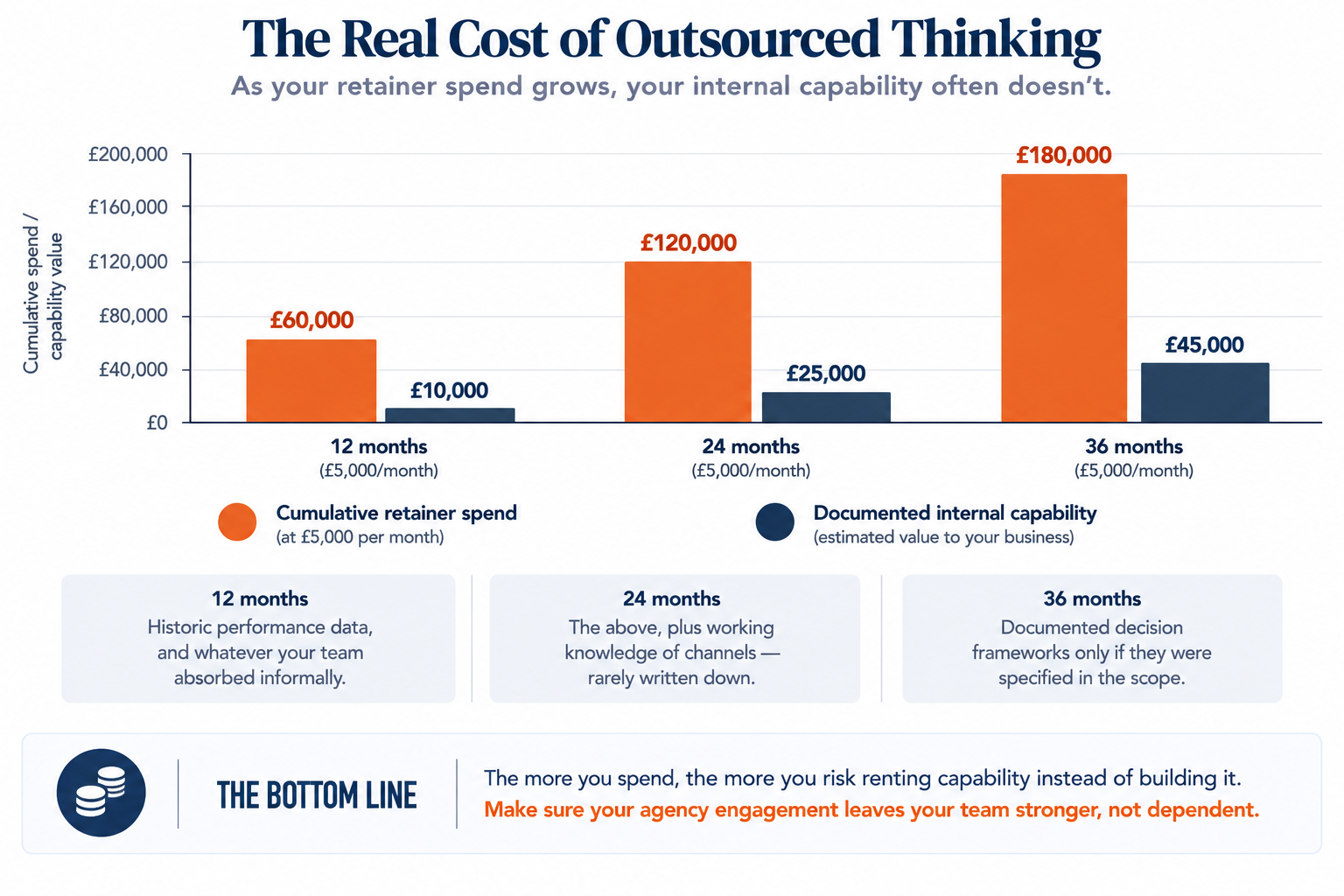
To work out your own position: multiply your monthly fee by the months engaged, then list every marketing decision framework your team could operate tomorrow without external input. A short list means most of that figure was rented, not invested.
Should you let your agency handle marketing strategy?
Hiring experts should reduce the effort required to make good decisions, not remove your business from making them. Those are two different outcomes, and they are easy to confuse.
Expertise works best as input to your judgement. The moment it replaces your judgement, you have bought an opinion you have no way to evaluate. In my experience, that is why founders in this position describe feeling stuck rather than badly served. The work may be perfectly good, and they still cannot assess it.
Related Reading: Marketing Knowledge Lock-In: The Real Cost of Agency Dependency
How can you tell if your agency is thinking for you?
You can tell your agency is thinking for you when no one inside your business can explain the current strategy without opening a document the agency wrote.
Five questions expose the position quickly. Ask them internally before raising any of it with your agency.
- Who decided what a qualified lead is for this business, and when?
- Can a member of your team explain why the current channel mix exists?
- If the agency stopped work tomorrow, who would set next quarter's priorities?
- Are performance metrics defined by you, or supplied by the people being measured?
- Where is the reasoning behind the last three significant marketing decisions written down?
If several of those answers are uncertain, the thinking now sits outside the business.
Outsourced thinking versus transferred capability
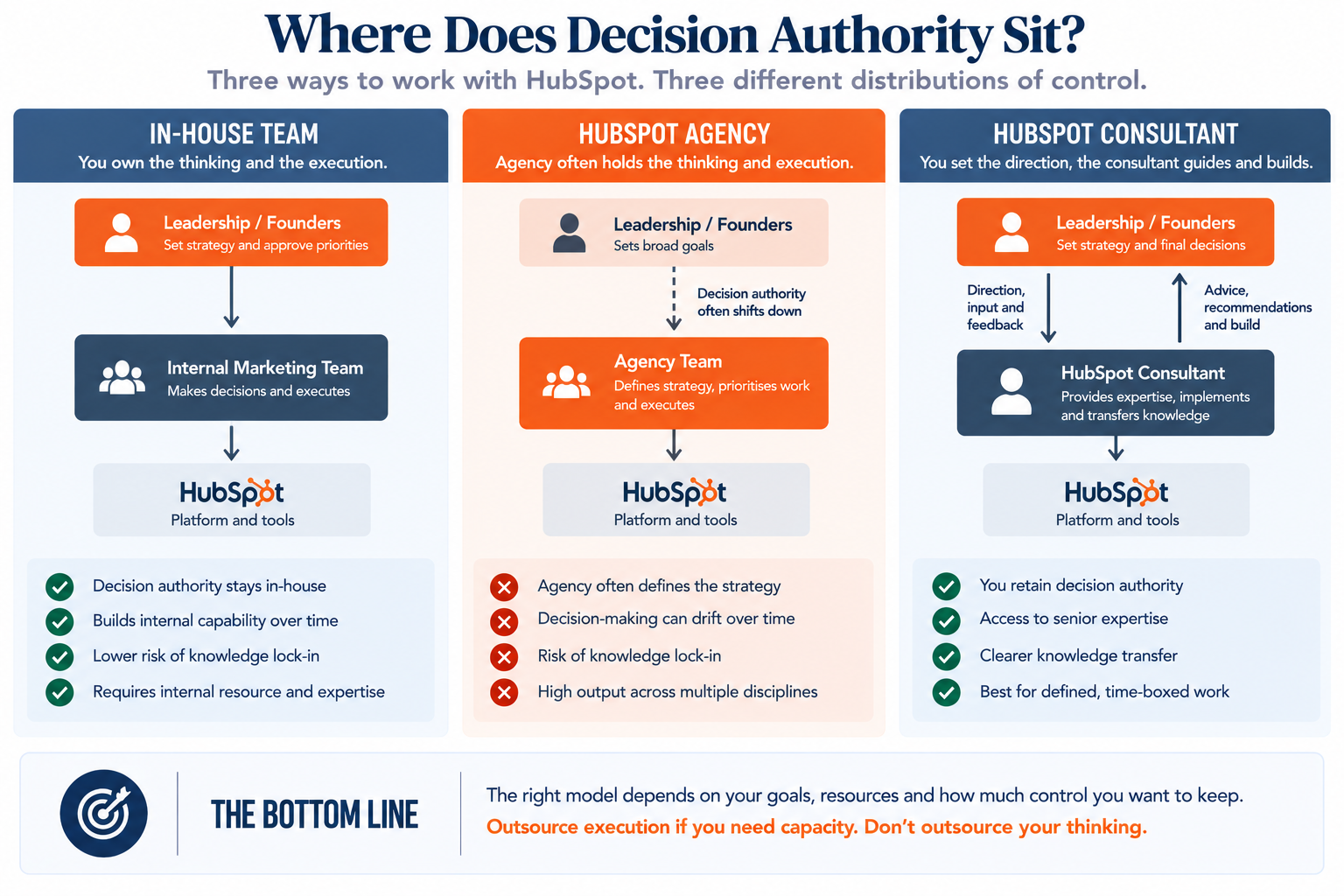
Outsourced thinking produces deliverables. Transferred capability produces decisions your team can make without external input. The difference is invisible month to month and obvious at the point of exit.
| Outsourced thinking | Transferred capability | |
|---|---|---|
| What you receive | Reports, decks, campaigns | Documented decision frameworks |
| Who defines success | The agency | Your leadership team |
| Cost of leaving | Capability stops with payment | System stays, cost ends |
| Decision speed | Waits on external input | Made internally, same week |
| Direction of spend over time | Flat or rising | Falls by design |
What should an agency legitimately think about?
An agency should absolutely think about craft, channel mechanics and execution quality, because that is what specialist expertise is for. The problem is not external input. The problem is external ownership.
The line sits at anything that defines what "good" means for your business. Positioning, qualification criteria, budget priority and success measurement belong internally. Ad structure, production quality and channel tactics are legitimately outsourced. Keep the definitions. Delegate the delivery.
How do you take the thinking back without ending the relationship?
You take the thinking back by changing what you ask for, not by changing supplier. Most agencies will work inside a structure you define, because a clear brief makes their job easier.
- Write your own definitions first (weeks 1–2): Qualified lead, target buyer, priority outcome. One page, agreed internally.
- Reclaim the metric set (weeks 3–4): Tell your agency what you will measure. Reporting becomes a supply of data, not conclusions.
- Move planning in-house (weeks 5–8): Your team sets quarterly priorities. The agency proposes how to deliver them.
- Document decisions as they are made (ongoing): A record of what was decided and why. This is the asset that survives any supplier change.
The sequence takes roughly one quarter, with no contract termination required. If your agency resists all four steps, that resistance is the clearest diagnostic you will get.
Related Reading: Agency Not Delivering ROI: What to Do and When to Leave
Frequently asked questions
Is it ever right to let an agency lead strategy?
Briefly, yes. In an emergency, or a market entry where you hold no internal knowledge, external leadership can be the fastest route. It should carry an end date and a plan to transfer the reasoning back.
What if we have no internal marketer?
Strategic ownership sits with leadership, not a job title. A founder who defines the qualification criteria and the priority outcome has retained the thinking, whoever executes it.
Does this apply to fractional CMOs?
It applies to any external role. The test is the same: does the arrangement build internal decision-making capability, or hold it externally?
How long does capability transfer take?
The four steps take around 90 days. In the businesses I work with, confidence in operating the structure usually takes another two or three quarters.
Will our agency resist this?
Good ones welcome it, because clear internal ownership produces better briefs. Resistance tells you the relationship depends on your uncertainty, a distinction covered in Best Marketing Partners: 7 Things Top Agencies Do Differently.
What should you do if your agency is thinking for you?
Outsourced thinking is not a failure of judgement. It is what happens when a business hires for capacity and never draws a line around ownership.
You now have a way to test your position and a 90-day sequence for moving decision authority back. None of it requires you to fire anyone.
How to take action now
- Answer the five diagnostic questions internally this week.
- Write a one-page definition of a qualified lead, agreed by sales and leadership.
- Calculate your cumulative retainer spend and list what your team could operate alone.
- Set your own metric definitions and tell your agency what you will measure.
- Start a written record of marketing decisions and the reasoning behind each one.
For a wider view of how this pattern forms across a full engagement, read Agency Dependency: What It Is, What It Costs, And How To Escape It. For a UK industry perspective on client-agency relationships, see the Institute of Practitioners in Advertising.

About the author
Tom Wardman is a Growth Independence Architect™ and author of Build a Trusted Brand. He helps founder-led B2B businesses replace agency dependency with documented growth systems their own teams run, and was one of the UK's first five certified Endless Customers coaches, trained directly under Marcus Sheridan.
Pricing disclaimer: All GBP–USD price conversions are rounded estimates and correct at the time of publishing. Exchange rates fluctuate and figures should be treated as indicative only.
Topics: