
Are you already paying for SEO and wondering whether AI visibility is just another vendor upsell? Or are you genuinely unsure whether your existing spend covers it — or leaves a gap that matters commercially?
I work through this exact budget question with founder-led B2B businesses as a certified member of the AI Trust Signals Implementation Network and one of the UK's first five certified Endless Customers coaches. What follows is the same framework I use before any client commits spend.
This article is written for marketing leaders and founder-led B2B businesses making a specific budget decision: whether AI visibility deserves its own line item alongside existing SEO spend. By the end, you will know what AI visibility actually costs, how much overlap exists with what you are already funding, and how to reach a clear, justified decision.
Key takeaways
- AI visibility, defined as being cited by tools like ChatGPT, Perplexity, and Google AI Overviews, is distinct from SEO and needs different tactics.
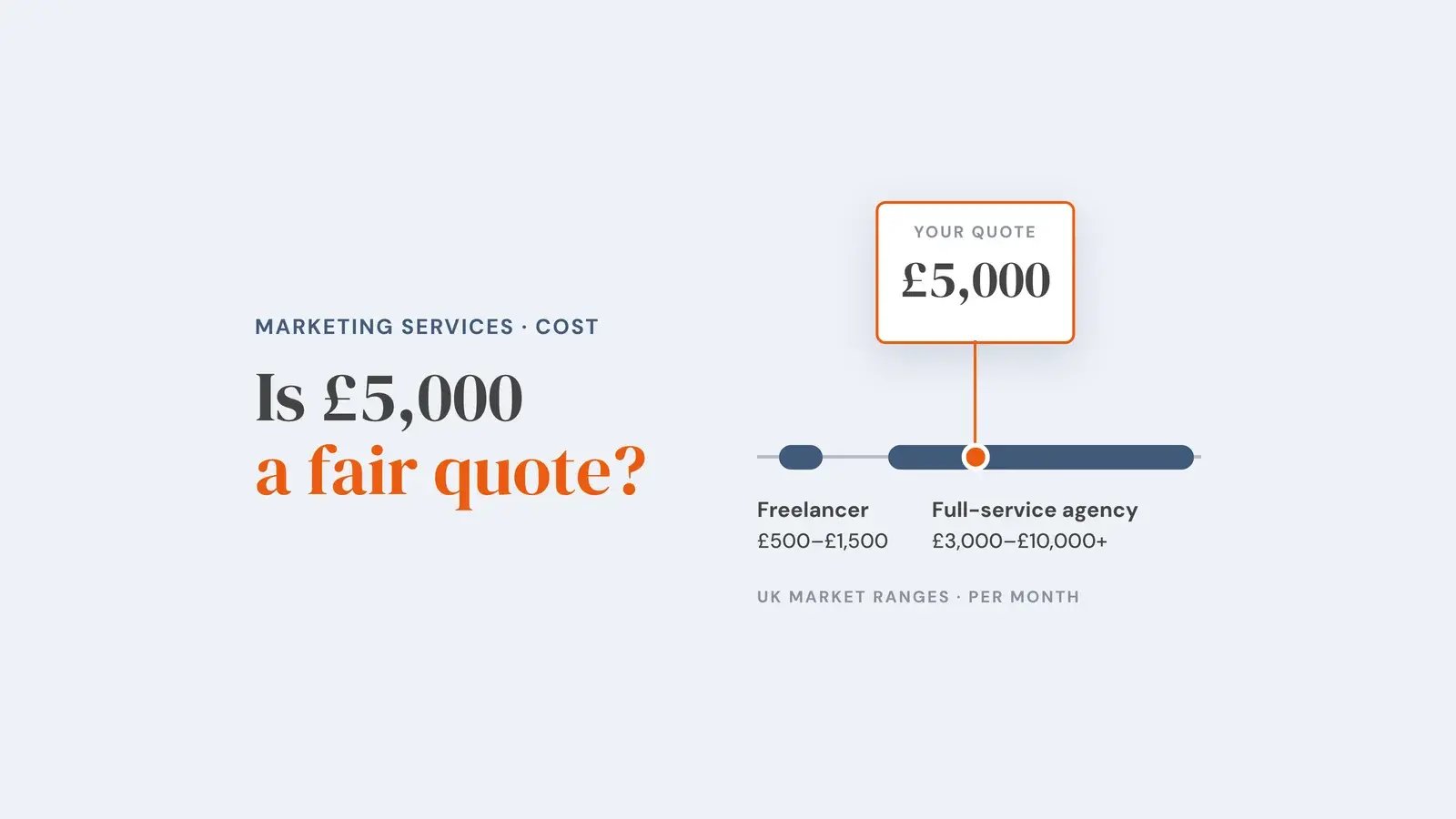
- In 2026, AI visibility services range from roughly £400–£800/month ($530–$1,050) for monitoring tools to £5,000–£15,000+/month ($6,700–$20,000) for specialist programmes.
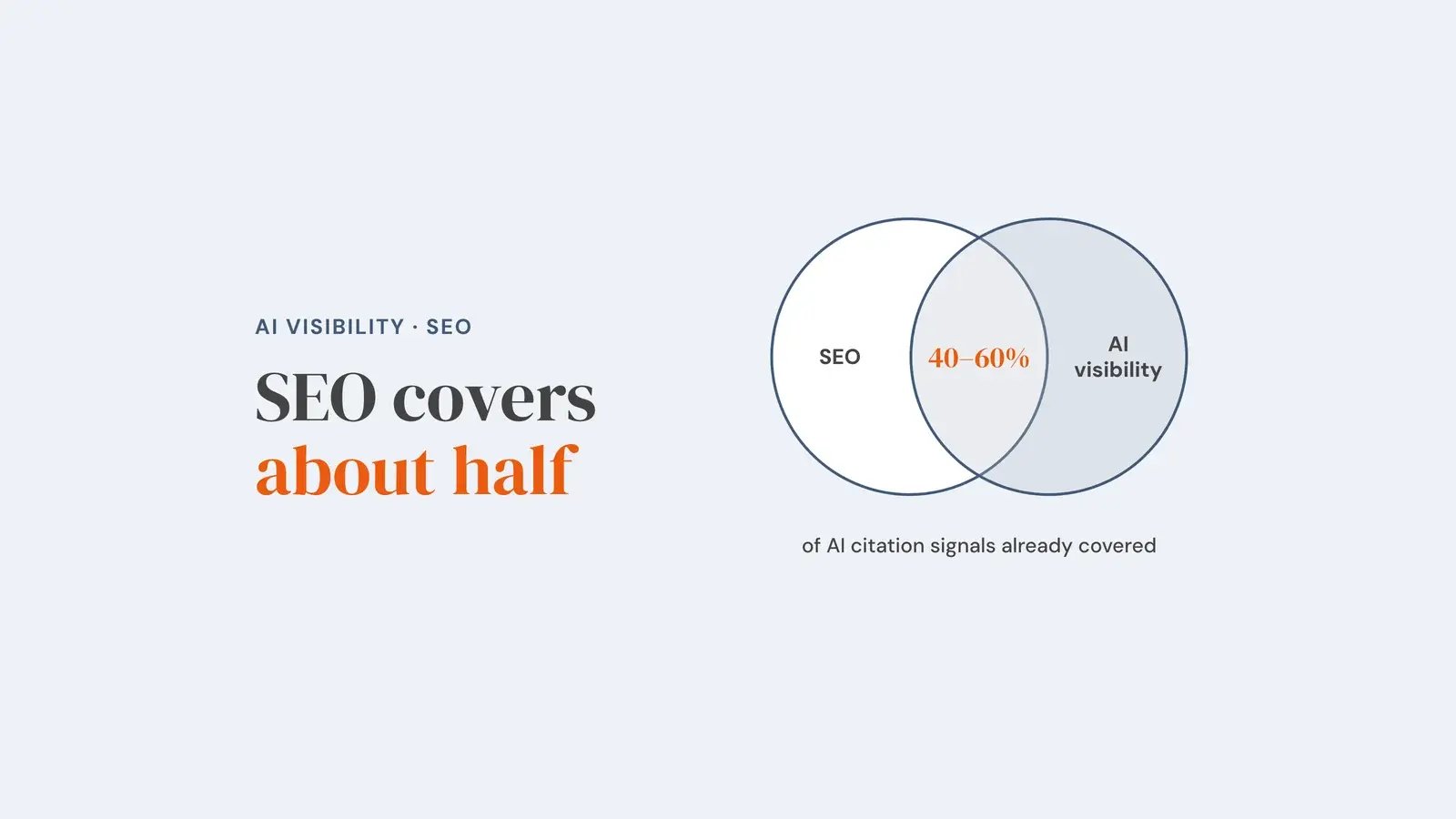
- A well-executed SEO programme already covers around 40–60% of the signals that drive AI citation, but not all of them.
- Separate AI visibility investment is most justified for B2B businesses where buyers use AI tools to shortlist vendors before they visit a website.
- The biggest risk is paying for services that duplicate existing SEO spend without delivering measurably more citations in AI-generated answers.
What is AI visibility, and how does it differ from SEO?
AI visibility is a brand's ability to appear in answers generated by AI tools, such as ChatGPT, Perplexity, Google AI Overviews, and Gemini, independently of traditional search engine rankings.
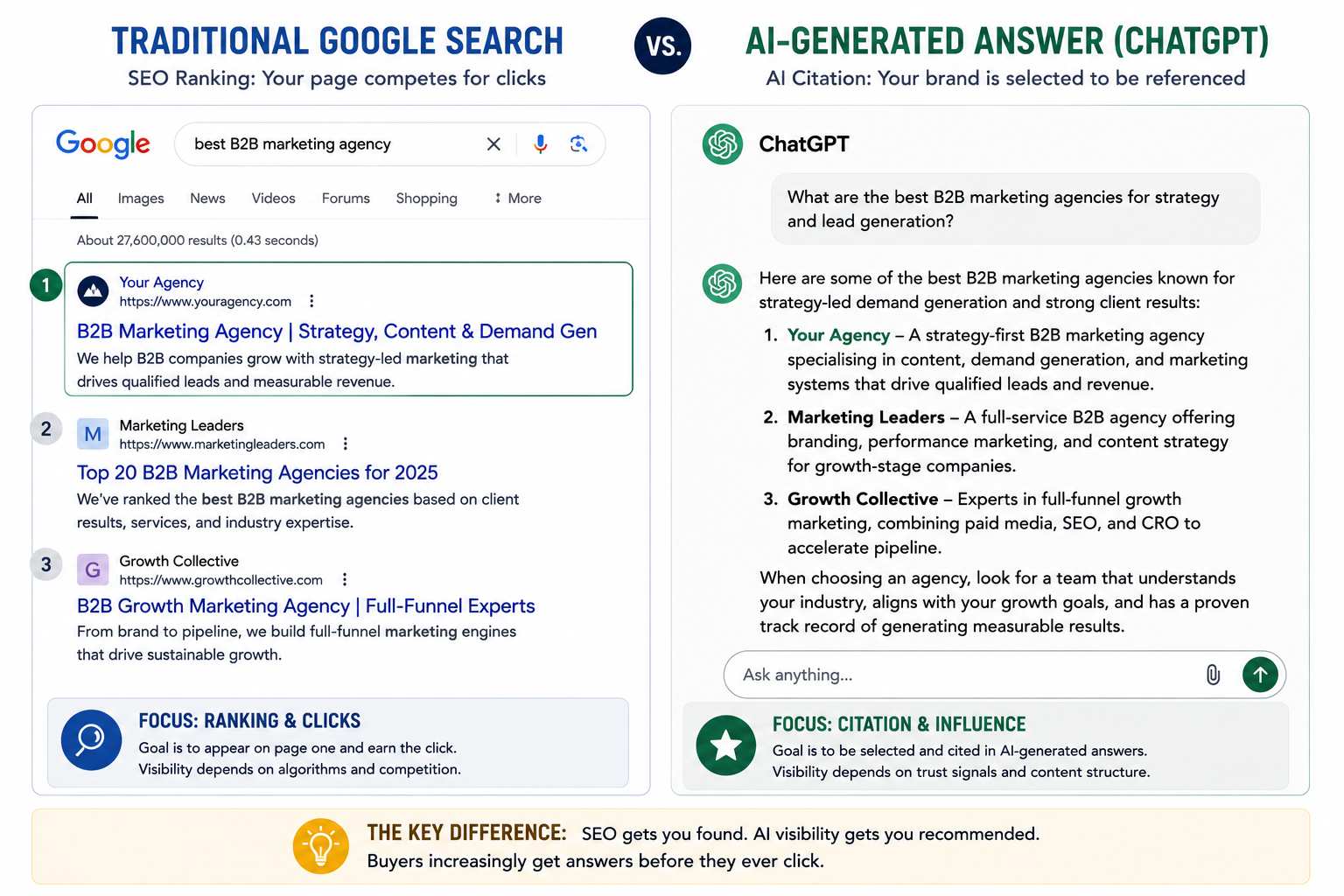
SEO (Search Engine Optimisation) helps your pages rank on search engines like Google. AI visibility is different: it determines whether large language models select, cite, or summarise your content when building a response to a user's question.
You can rank on page one of Google and still be completely absent from AI-generated answers. The two systems use different signals and measure success differently.
AEO (Answer Engine Optimisation) and GEO (Generative Engine Optimisation) are the two disciplines that sit under AI visibility. AEO structures content for direct-answer retrieval. GEO builds the authority signals that generative AI needs to reference your brand confidently.
-Jul-23-2026-02-30-07-8053-PM.png?width=1536&height=1024&name=Generated%20image%201%20(1)-Jul-23-2026-02-30-07-8053-PM.png)
Why the AI visibility vs. SEO cost question is urgent right now
AI-generated answer summaries now appear above organic search results for a growing share of commercial queries, meaning businesses can rank well on Google and still lose traffic, leads, and brand consideration.
According to BrightEdge research, AI Overviews appear in over 30% of Google searches, with significantly higher rates for informational and research-driven queries, exactly the queries B2B buyers use to shortlist vendors.
If your buyers are asking ChatGPT "which consultant should I use for X?" and your brand never appears in the answer, your Google ranking is functionally irrelevant at that moment. That shift is what makes this a live budget decision, not a future-planning exercise.
What does AI visibility actually cost?
AI visibility services in 2026 typically fall into two tiers:
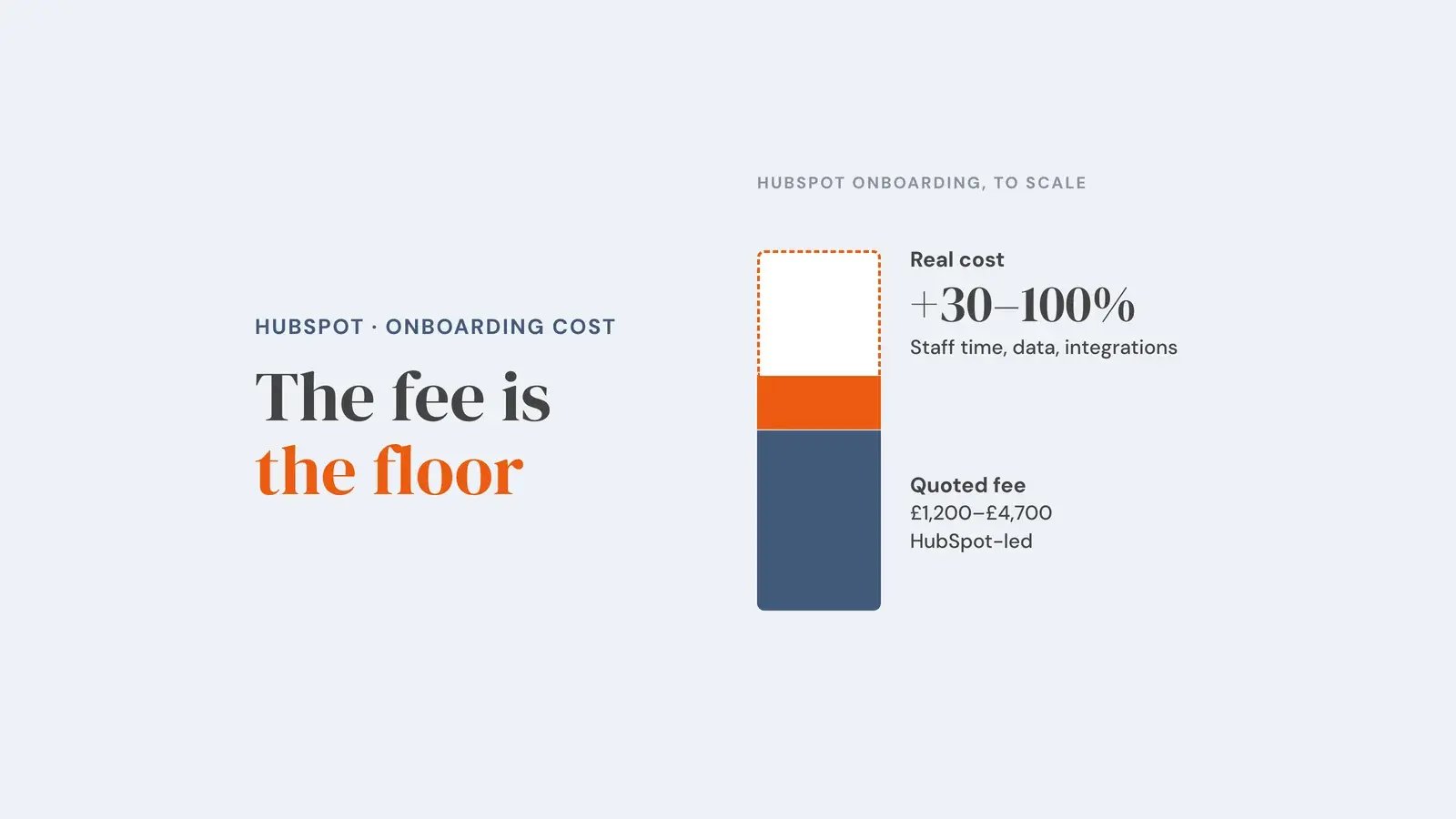
- Entry-level monitoring tools: £400–£800/month ($530–$1,050)
- Specialist AEO consultancy and full content programmes: £5,000–£15,000+/month ($6,700–$20,000)
These ranges are estimates based on current UK market rates. Always confirm scope and deliverables before committing.
-Jul-23-2026-02-32-09-0123-PM.png?width=1536&height=1024&name=Generated%20image%201%20(2)-Jul-23-2026-02-32-09-0123-PM.png)
My AI Visibility Optimisation service sits within the blended-to-full-service range:
- Baseline audit: £1,500 ($2,000), one-off
- Full remediation: £5,500 ($7,400), over 6–8 weeks
- Ongoing support: £2,000/month ($2,700/month), 6-month minimum
How much of your existing SEO investment already covers AI visibility?
A well-executed SEO programme, particularly one built around E-E-A-T principles, authoritative content, and structured data, already provides meaningful overlap with the signals that make content AI-visible.
The gap is rarely about content quality. It is about format and structure. Traditional SEO content is often written for a human scanning a results page. AI citation favours content that answers a specific question in the first paragraph: direct, concise, and clearly attributable.
-4.png?width=1536&height=1024&name=Generated%20image%201%20(3)-4.png)
AI visibility vs. SEO: where they overlap and where they diverge
AI visibility and SEO share foundational requirements, including quality content, domain authority, structured data, and topical depth, but diverge sharply in how success is measured and what the optimisation target actually is.
SEO optimises for ranking position; AI visibility optimises for whether your content is selected as source material when an AI model assembles an answer to a user's question. The overlap is real. The gap requires deliberate effort, not simply more of the same activity.
When is paying separately for AI visibility worth it? A 7-point checklist
Paying separately for AI visibility is worth it when your business operates in a high-consideration, research-driven category where buyers use AI tools to shortlist vendors before they ever visit a website.
Use this checklist to assess your own situation:
- Do your buyers research purchases over days or weeks, not minutes?
- Does your category appear in AI-generated "best of" or "who should I use for X?" answers?
- Are competitors already appearing in ChatGPT or Perplexity responses in your niche?
- Is your average deal value above £10,000 ($13,400), making research-heavy buyers a key segment?
- Is your existing SEO content structured around direct questions rather than keyword density?
- Do your buyers use AI assistants actively as part of their working day?
- Do you rely on being found by buyers who do not yet know your brand name?
If you answered yes to four or more, separate AI visibility investment is likely to deliver a return. Fewer than three, and your existing SEO foundations may already cover enough ground for now, though that gap will only grow over time.
Worth being upfront about: I sell AI Visibility Optimisation services, so I have a stake in this answer. That's exactly why the checklist above is built to tell you when not to spend, not just when to.
How to evaluate AI visibility tools and services: 6 key criteria to check
The best AI visibility tools and services offer measurable citation tracking across major AI platforms, content gap analysis against AI-specific query formats, and clear reporting on share of voice in AI-generated answers, not just traditional rank tracking.
When evaluating any provider or tool, check for these 6 criteria:
- Platform coverage: Does it track ChatGPT, Perplexity, Google AI Overviews, and Gemini, or just one?
- Citation tracking: Can it show whether your brand is being cited, and how frequently?
- Content gap analysis: Does it identify which query types you are absent from?
- Before-and-after reporting: Can you measure improvement over time in a concrete way?
- SEO separation: Does the provider clearly distinguish AI retrieval performance from organic search performance?
- Methodology transparency: Can the provider explain specifically why your content is or is not being cited?
Any provider using organic search rankings as a proxy for AI visibility should be treated with caution. They are related, but they are not the same measure.
Problems and risks of paying for AI visibility without a clear strategy
The most common and costly mistake is paying for monitoring or content services that duplicate existing SEO spend without delivering measurably more citations in AI-generated answers.
Other frequent failure modes include:
- Vendors conflating search rankings with AI visibility and using one as evidence of the other
- No agreed success metrics before contracts are signed; if you cannot measure it, you cannot justify it
- AI-optimised content created in isolation that cannibalises existing organic performance
- Paying for monitoring tools without acting on the findings, cost without implementation benefit
- Treating AI visibility as a one-time project rather than an ongoing infrastructure decision
Related reading: Marketing Agency Not Delivering ROI: Root Causes, Diagnostic Steps, and How to Fix It
Frequently asked questions about AI visibility and SEO budgets
Can I do AI visibility myself without paying for a specialist?
Yes, to a point. You can audit your AI presence manually and restructure existing content for better answer retrieval. Technical elements, such as schema deployment and systematic LLM citation tracking, typically require either a specialist tool or external support to execute consistently.
How long does it take to see results?
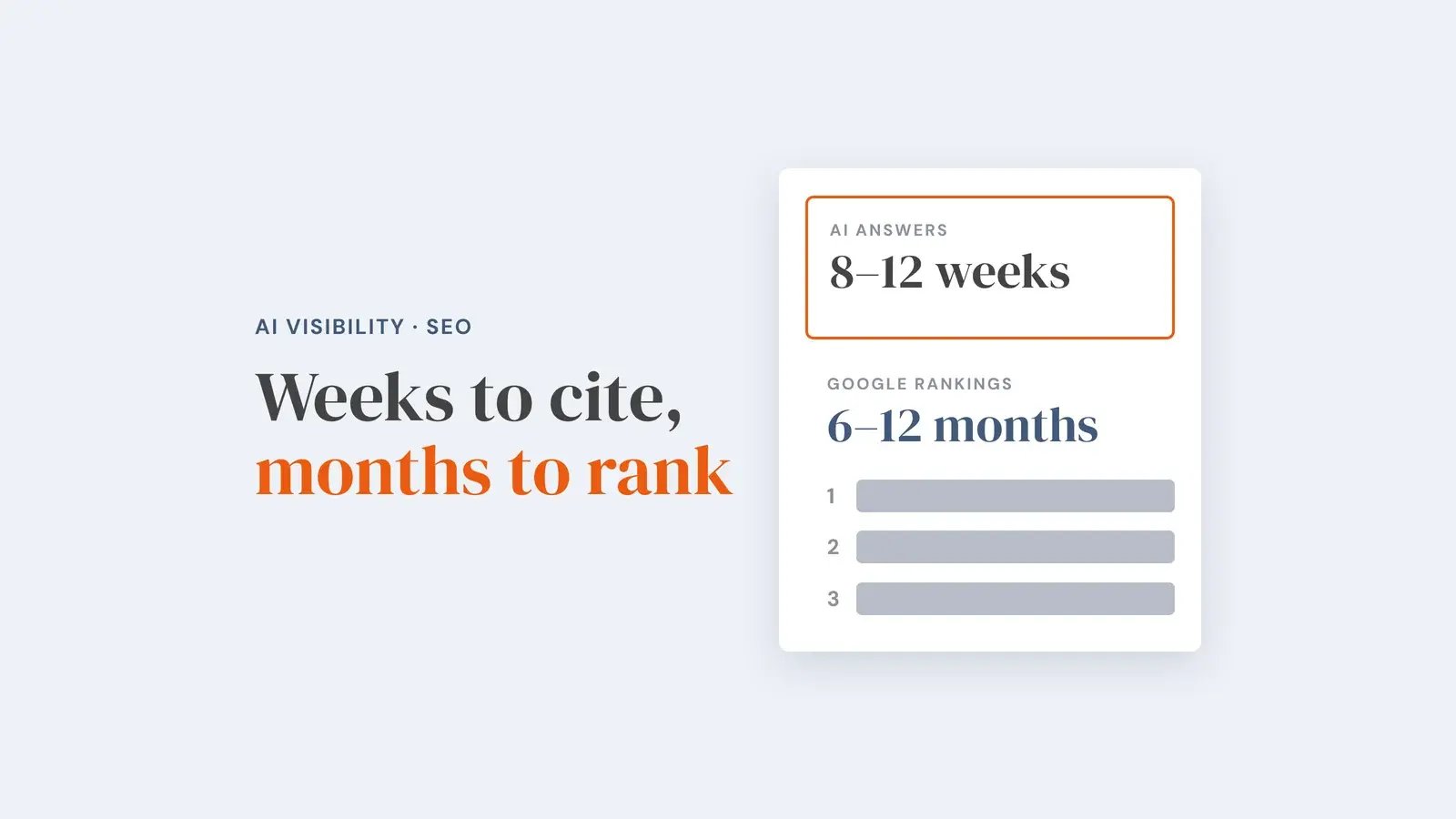
Technical remediation, such as schema deployment and content restructuring, can show early improvement within 4–8 weeks. Building consistent citation presence across LLMs typically takes 3–6 months of sustained effort.
Should I cut my SEO budget to fund AI visibility?
No. Strong SEO foundations, particularly E-E-A-T signals and authoritative content, directly support AI citation. Cutting SEO to fund AI visibility alone would undermine both.
How do I measure ROI from AI visibility?
Track citation frequency in target AI platforms, brand mention volume changes, and, where attributable, leads that cite AI tools as their discovery source. Specialist monitoring tools can quantify share of voice in AI-generated answers over time.
Is AEO the same as AI visibility?
No. AEO is one component of AI visibility, focused on direct-answer retrieval. AI visibility also includes GEO and the broader trust signal infrastructure that determines whether AI systems treat your brand as a credible source worth citing.
Conclusion
You came to this question with a real concern: whether your existing SEO spend is being quietly undermined by a gap you have not yet addressed.
The answer is clear. SEO and AI visibility overlap significantly but are not interchangeable. If your buyers research through AI tools before they ever reach your website, that gap has commercial consequences. If your category is transactional or your content is already structured around direct answers, the gap may be smaller than vendors suggest.
You now have the framework to make a justified decision rather than a reactive one, the same one I use with clients before they commit budget to AI visibility.
How to take action now
- Run a manual check: search for your category in ChatGPT and Perplexity. Are you appearing? Are competitors?
- Audit your existing content structure: Does each key page answer a specific question in the opening paragraph?
- Review your current schema markup for FAQ, HowTo, and author credibility gaps
- Assess your buyer journey: do your prospects use AI tools to research before shortlisting vendors?
Related reading: Why ChatGPT Doesn't Recommend Your Business (And How to Fix It)
If you want a structured audit of your AI trust signals and a clear before-and-after remediation roadmap, my AI Visibility Optimisation service covers all 19 trust signals. You own the roadmap and the capability to maintain it, no ongoing dependency required.

About the author
Tom Wardman is a fractional marketing consultant and Growth Independence Architect™ working with founder-led B2B businesses across the UK. He helps businesses replace agency dependency with self-sufficient growth systems, including AI visibility infrastructure they own and can maintain without ongoing external support. Tom is a certified member of the AI Trust Signals Implementation Network and one of the UK's first five certified coaches in the Endless Customers methodology. He is also the author of Build a Trusted Brand.
Pricing disclaimer: All GBP–USD price conversions are rounded estimates and correct at the time of publishing. Exchange rates fluctuate and figures should be treated as indicative only.
Topics: