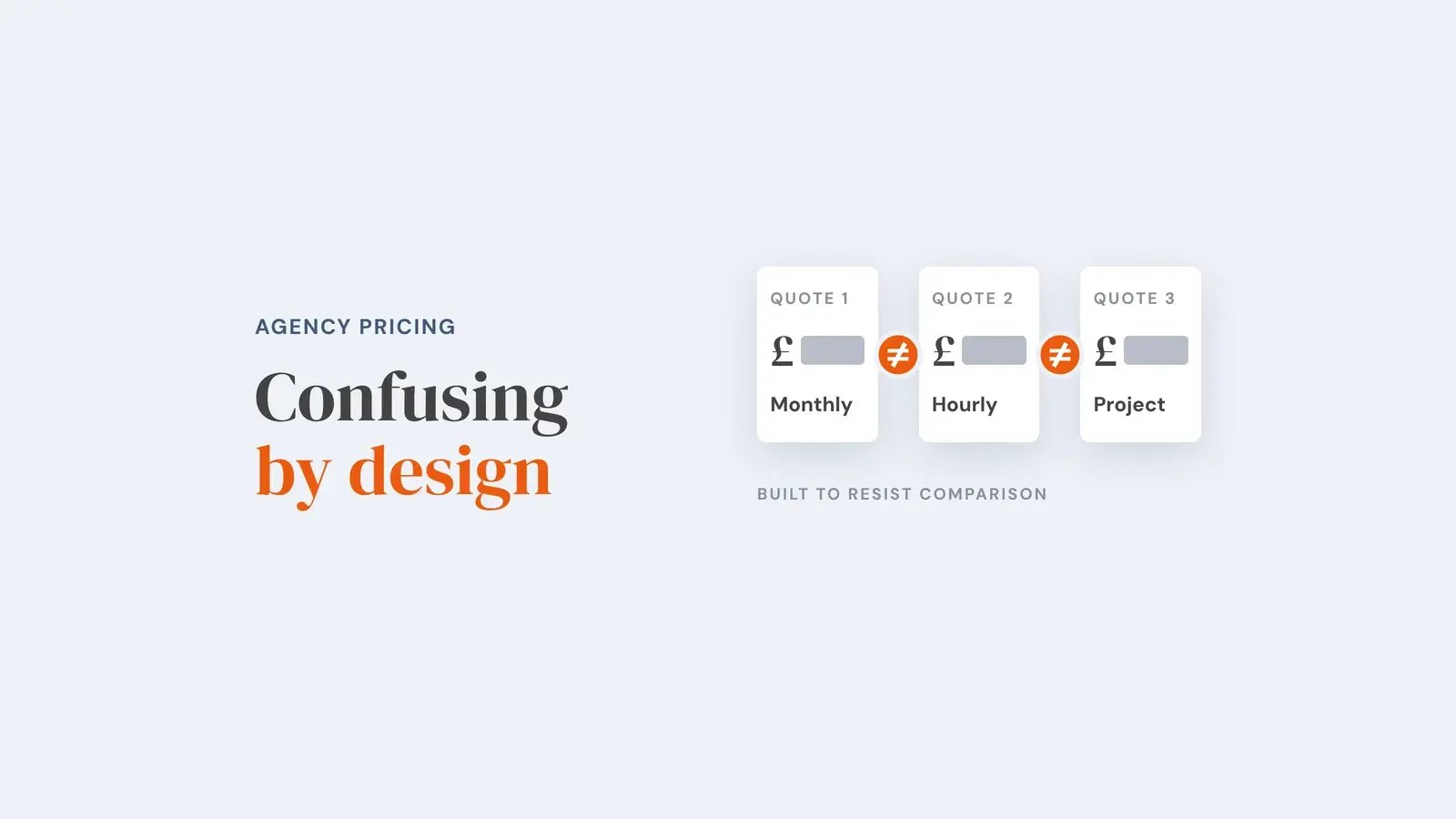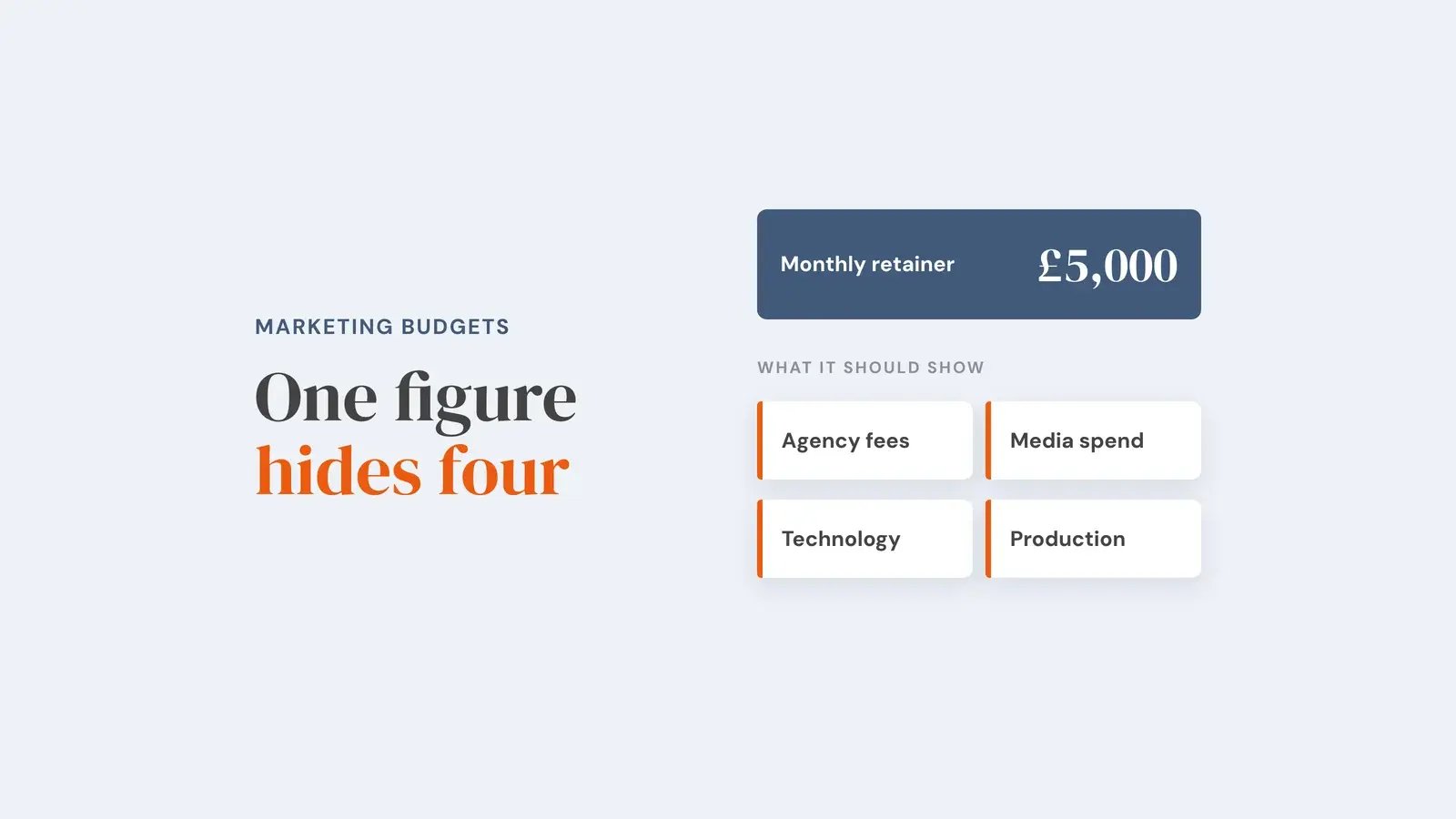


Have you recently sat through an agency renewal conversation and struggled to explain what last year's retainer actually produced? And if you decided to leave, do you know what it would cost, financially and operationally, to rebuild what your agency currently holds?
This article gives you the real 36-month cost of agency dependency, not just the monthly line item, so you can make a clear, evidence-based decision about whether to stay, switch, or start building capability in-house.
You will leave with a 3-year cost model, a breakdown of hidden costs most budget reviews miss, and a practical audit framework to help you act on what the numbers show.
Key takeaways
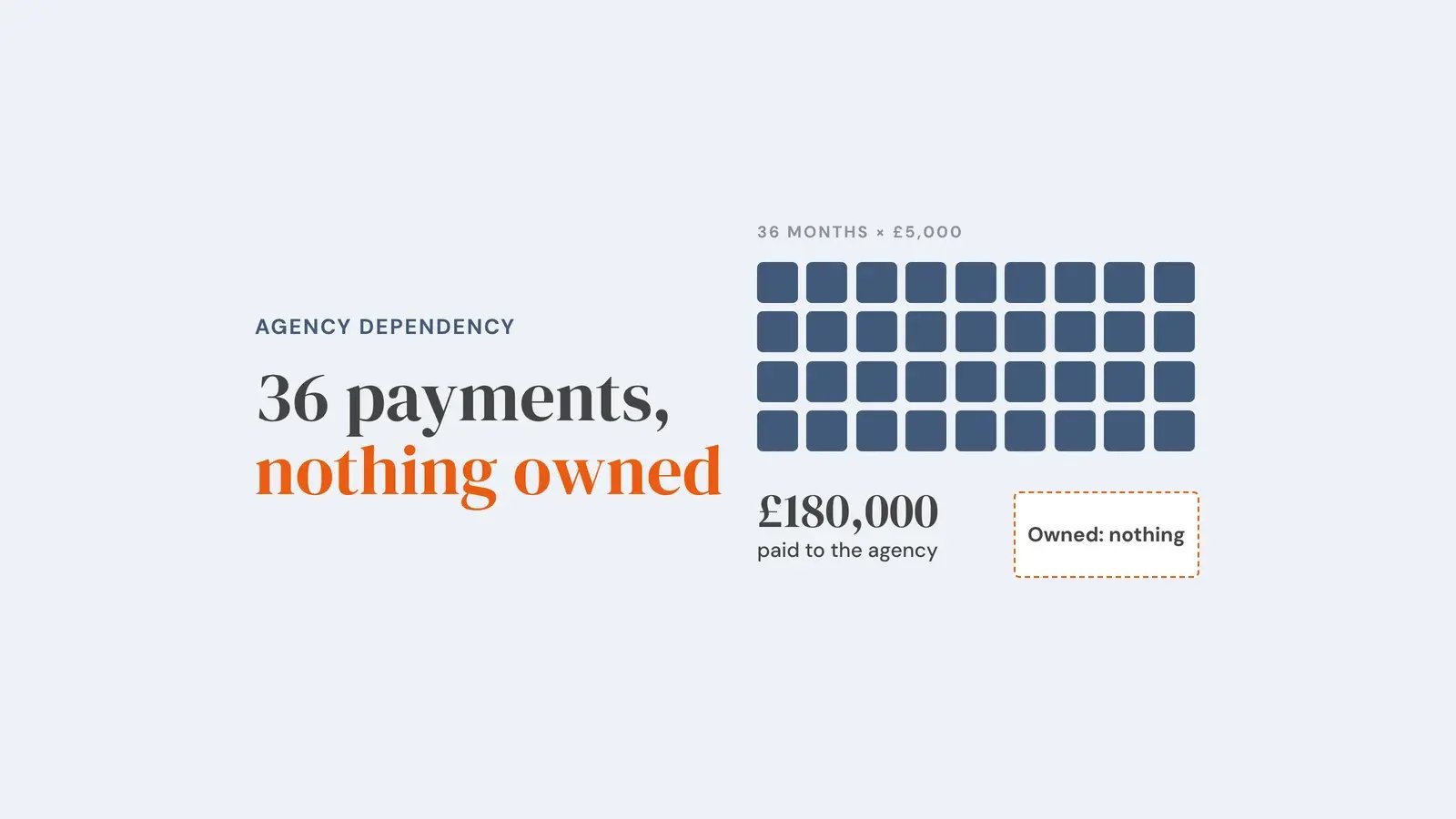
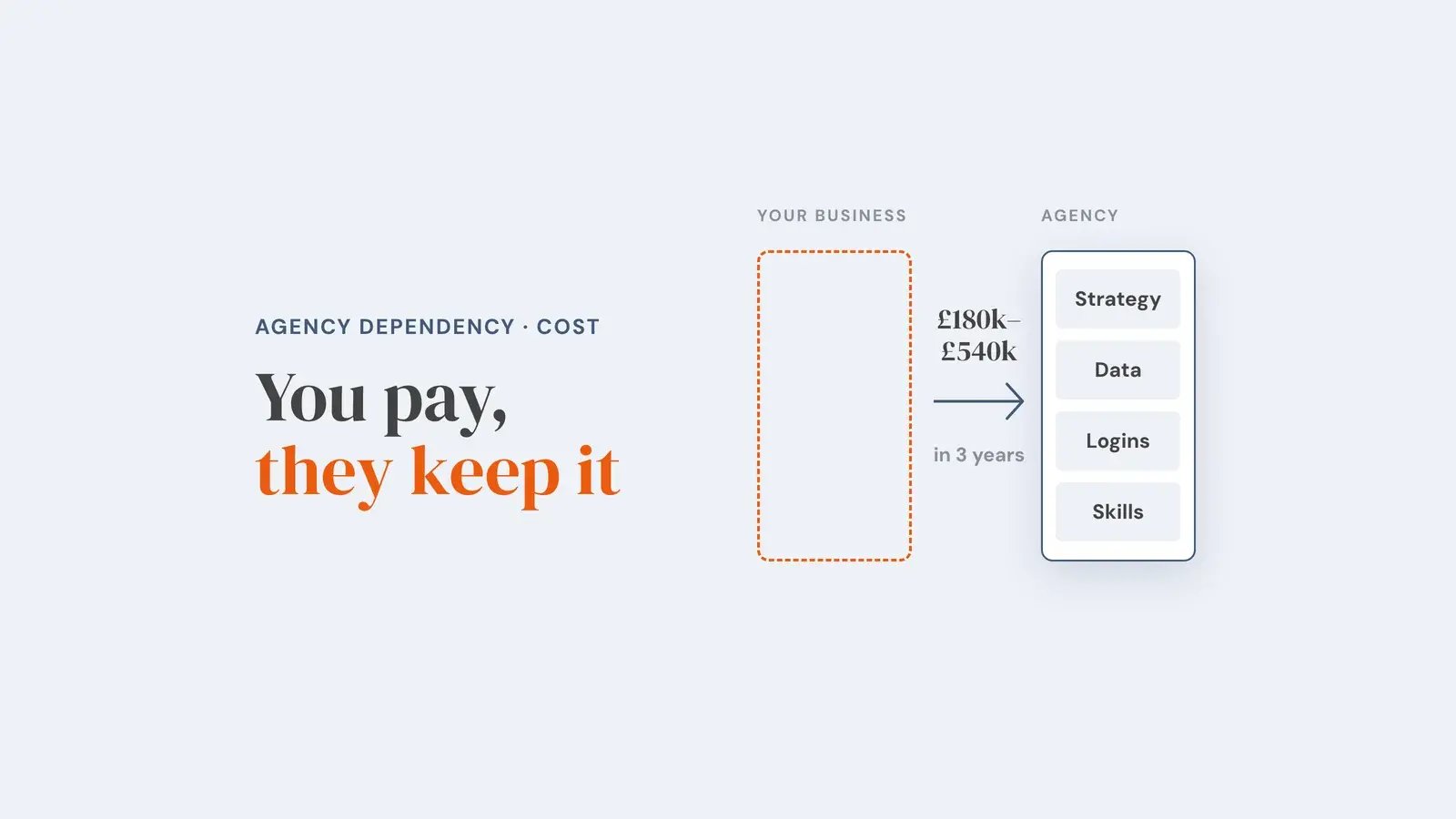
- A mid-market business spending £5,000–£15,000 ($6,250–$18,750) per month on agency retainers will pay £180,000–£540,000 ($225,000–$675,000) over three years, before project add-ons and scope creep.
- The hidden costs of agency dependency — knowledge drain, asset lock-in, and strategic delay, frequently exceed the direct retainer spend across a 36-month period.
- Building in-house marketing capability is typically 20–40% cheaper than maintaining equivalent agency retainers when compared over 3 years.
- A structured transition away from agency dependency typically takes 12–24 months; the hybrid model reaches break-even earliest, making it the most accessible starting point for businesses mid-dependency.
What is agency dependency and why does it matter?
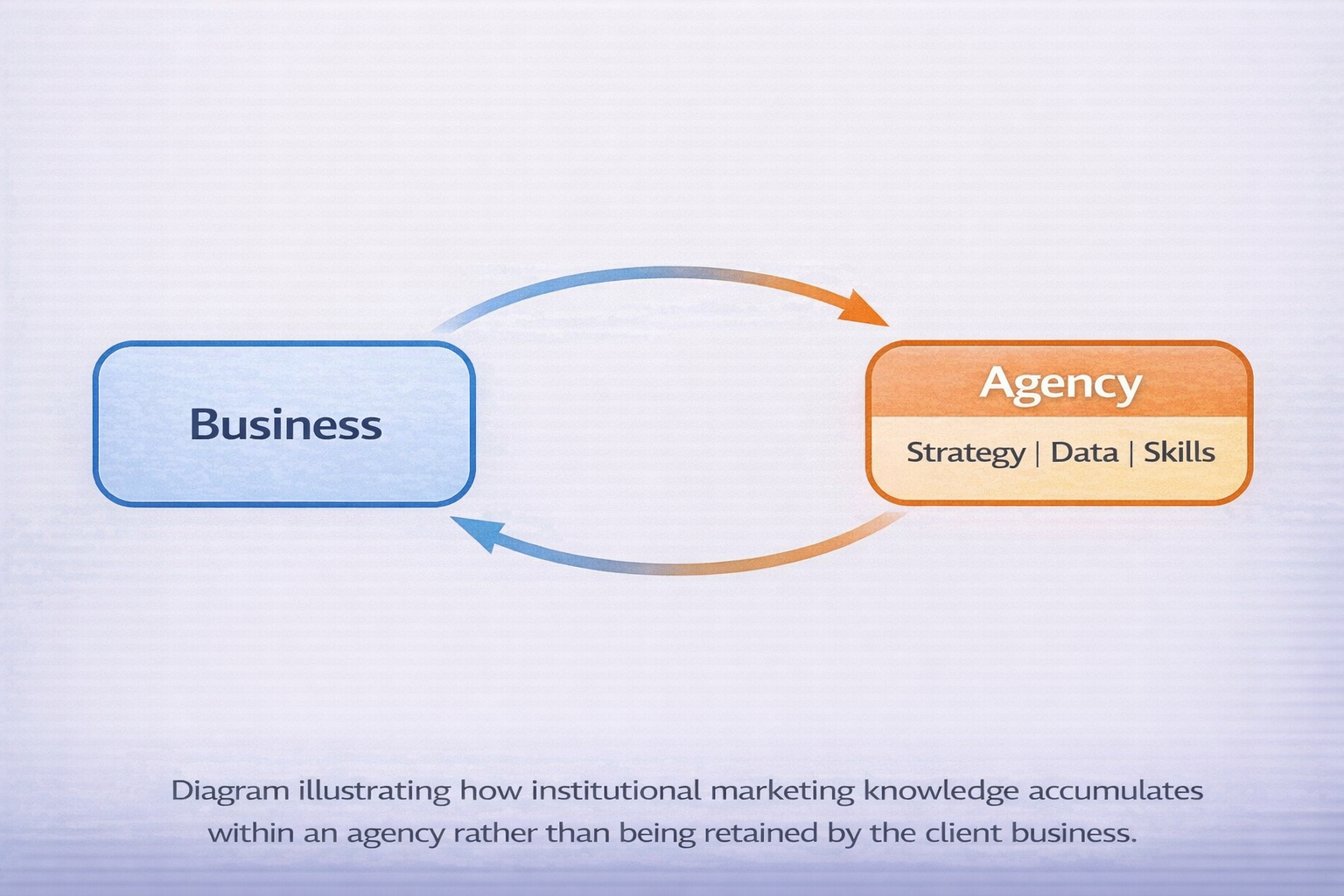
Agency dependency is the state in which a business cannot execute core marketing functions without an external agency, because the skills, strategy, and institutional knowledge live outside the organisation. It matters financially because dependency is self-reinforcing: the longer it continues, the harder and more expensive it becomes to exit.
In practice, agency dependency looks like this:
- No in-house SEO capability, all optimisation lives with the agency
- Content briefed, produced, and published entirely externally
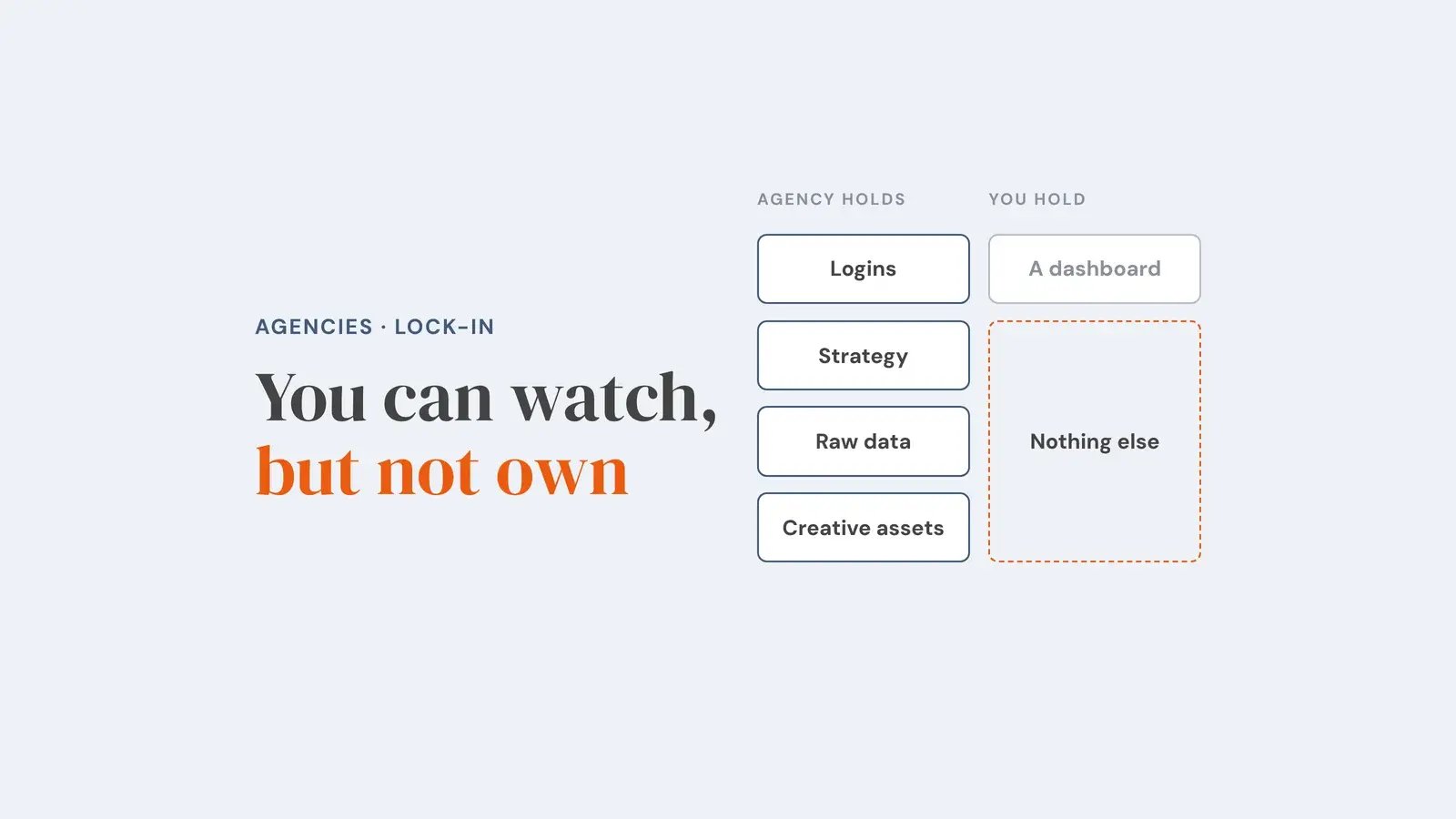
- The agency holds login credentials to your CMS, ad accounts, and analytics
- You cannot confidently answer: "If our agency disappeared tomorrow, would our pipeline survive?"
The problem is not that agencies do poor work. It is that the retainer model is designed to keep knowledge external, and most businesses do not notice the structural cost of that until they try to leave.
What does agency dependency actually cost over 3 years?
A typical mid-market business spending £5,000–£15,000 ($6,250–$18,750) per month on agency retainers will pay between £180,000 and £540,000 ($225,000–$675,000) over three years, before accounting for any project or overage fees.
Most business owners focus on the monthly figure. The 36-month total is often the number that triggers a genuine strategic review.
| Monthly retainer | 3-year retainer total | Estimated project add-ons (20%) | Approx. 3-year total |
|---|---|---|---|
| £3,000 ($3,750) | £108,000 ($135,000) | £21,600 ($27,000) | £129,600 ($162,000) |
| £7,500 ($9,375) | £270,000 ($337,500) | £54,000 ($67,500) | £324,000 ($405,000) |
| £15,000 ($18,750) | £540,000 ($675,000) | £108,000 ($135,000) | £648,000 ($810,000) |
Project add-on figures are conservative estimates. Actual figures will vary by agency and scope.
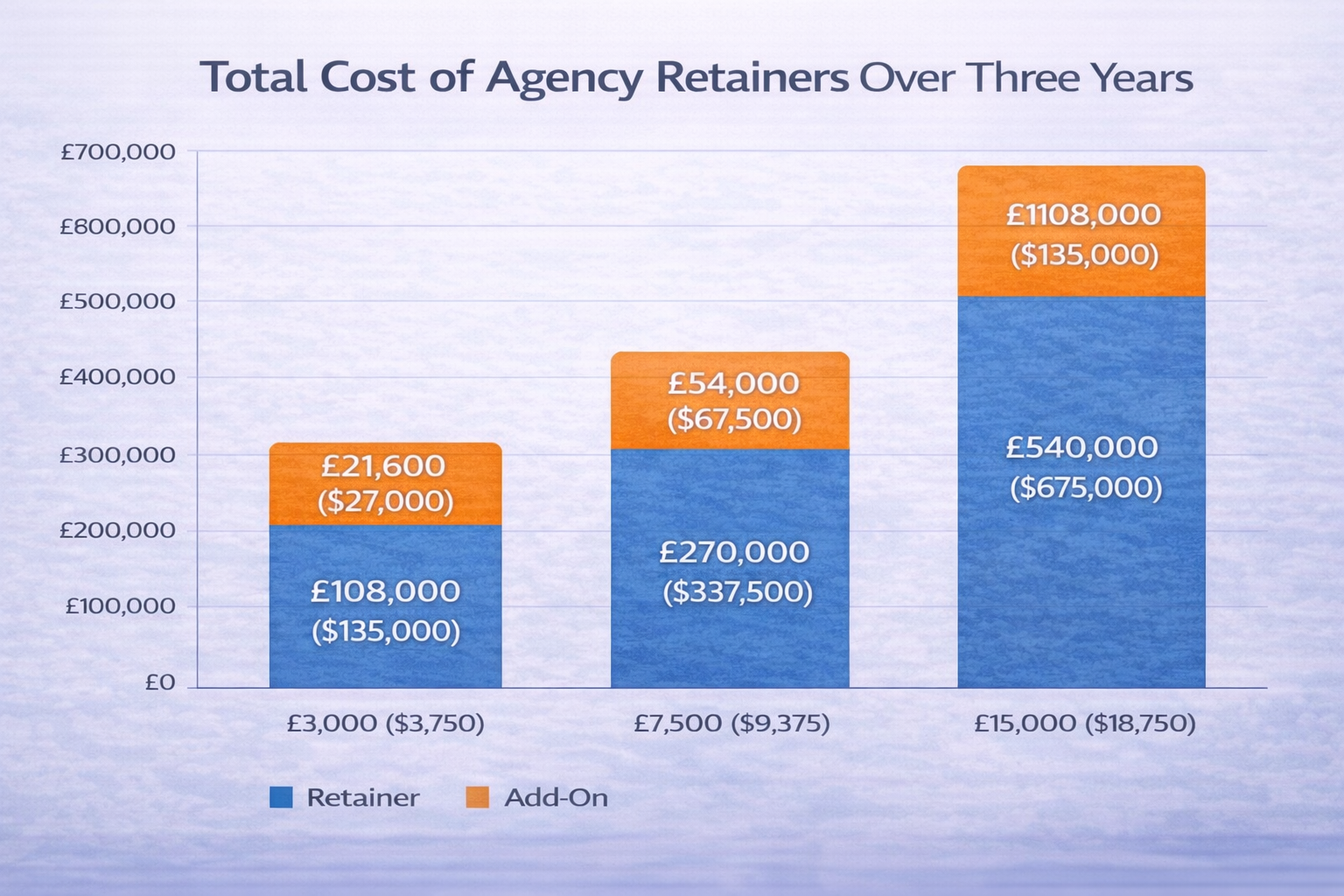
Retainer fees rarely stay flat. Agencies typically apply annual increases at renewal, and the scope of "out of scope" work tends to expand over time. By year 3, most retainers cost more in real terms than they did in year 1.
Assumptions & scope: These estimates assume UK-based B2B businesses with £2m–£20m ($2.5m–$25m) revenue; retainers running for a full 36 months; project add-ons estimated at 20% of retainer total (a conservative assumption based on common agency billing patterns, not independently verified industry data). USD conversions are rounded estimates.
The hidden costs most businesses never calculate
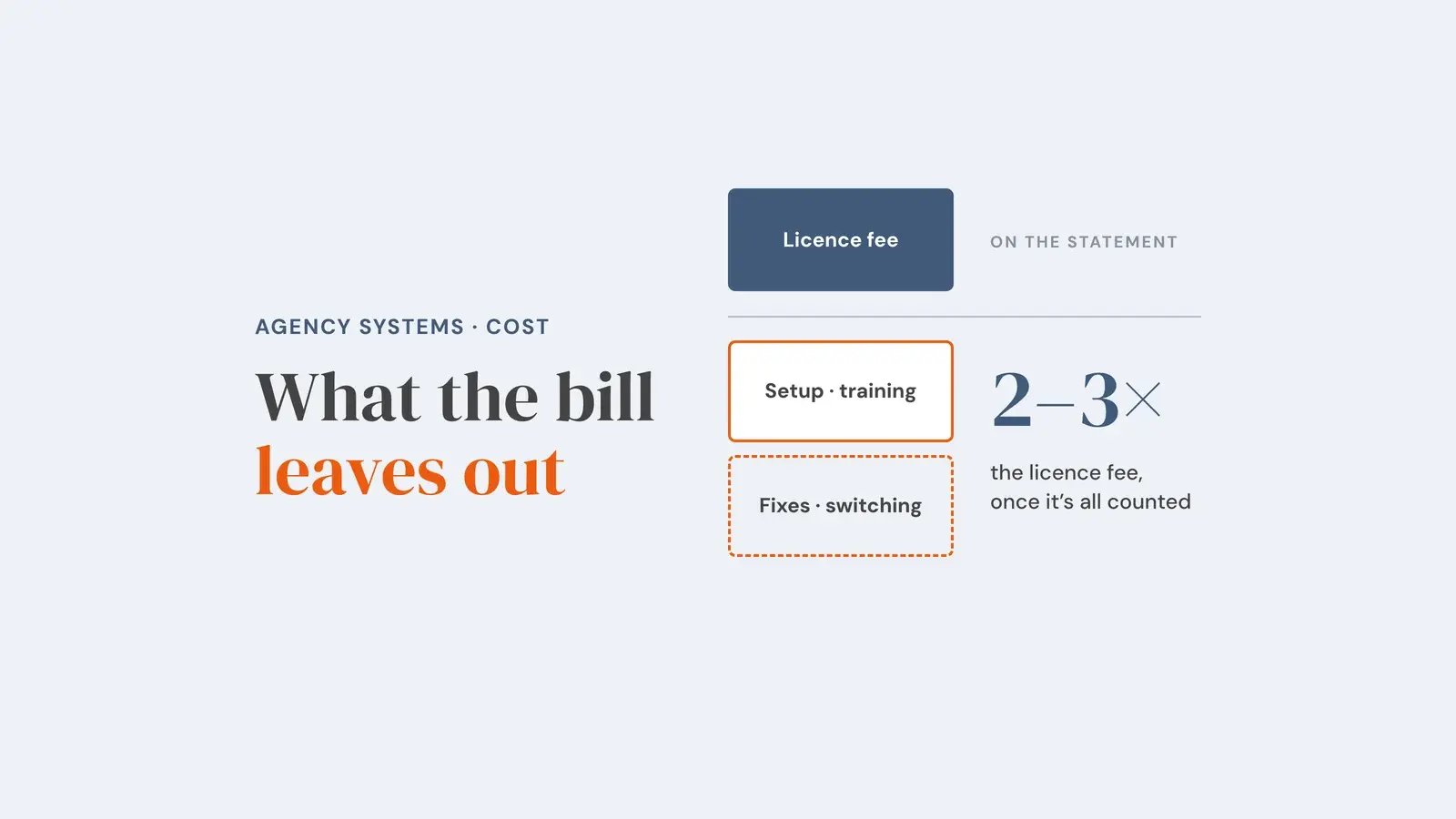
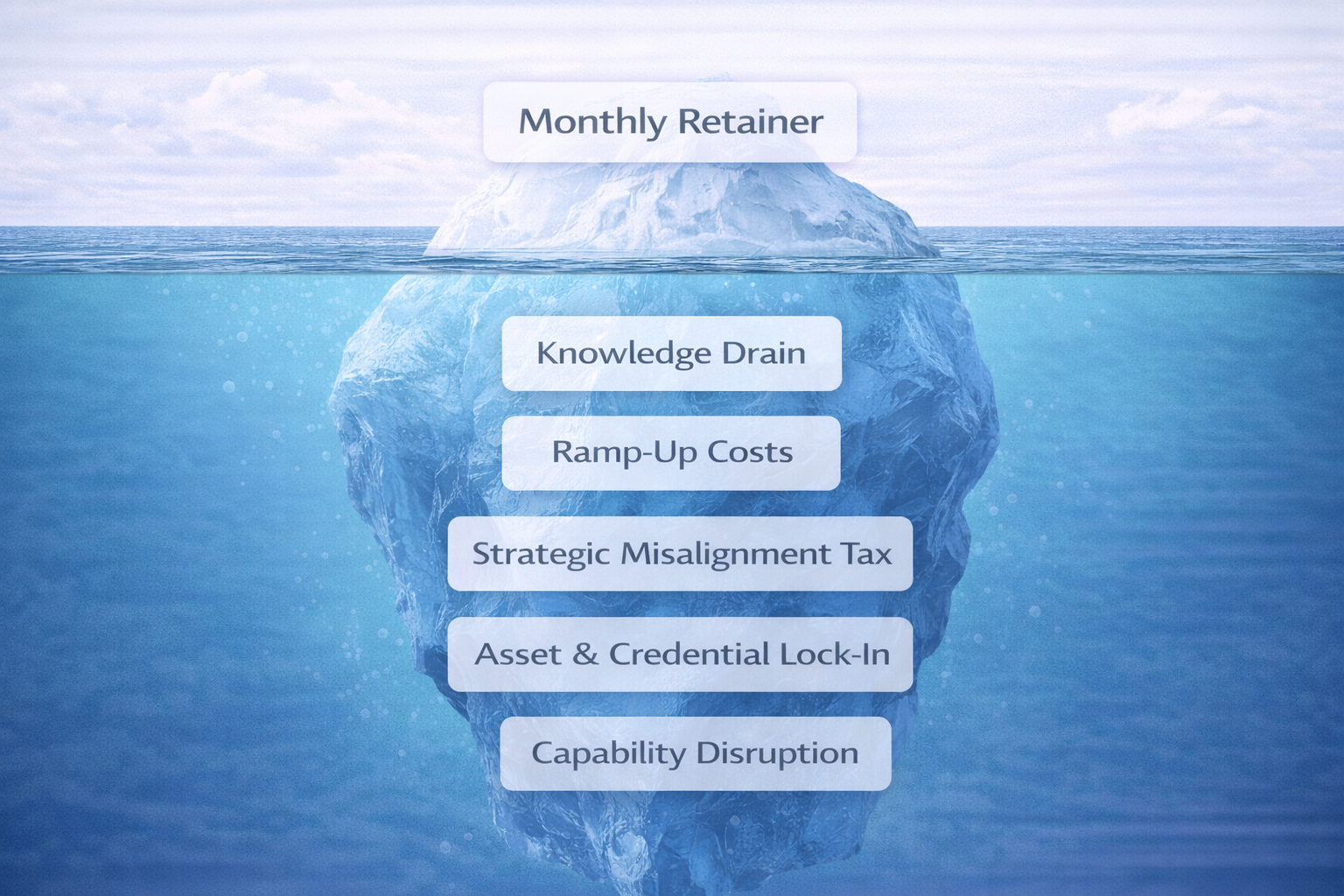
The most expensive costs of agency dependency are rarely on the invoice. Instead, they accumulate quietly across 36 months and almost never appear in a budget review.
Six hidden cost categories to assess:
- Knowledge drain: strategy, data, and process leave with the agency when the relationship ends; rebuilding costs time and money. In practice, this often means paying a new agency or consultant to reconstruct the strategic context your outgoing agency took with them.
- Ramp-up costs: switching agencies typically requires 30–90 days of paid onboarding before meaningful work begins; this cost repeats with every change. Businesses that have switched twice in three years often find they have paid for three separate onboarding periods without ever reaching full momentum.
- Strategic misalignment tax: agencies optimise for deliverables; businesses need revenue outcomes. The gap between "we published 12 articles" and "we generated pipeline" is a real, if invisible, cost that compounds month on month.
- Asset and credential lock-in: CMS access, ad accounts, and brand assets often require negotiation or legal intervention to recover. Some businesses only discover this when they try to leave, at which point the agency holds leverage they did not know they had surrendered.
- Capability opportunity cost: every month you outsource is a month your team does not build skills and systems that compound in value over time. Founders who have made the transition often reflect that the capability gap felt small at year one and significant by year three.
- Slow response time tax: external agencies handle multiple clients; the briefing lag in fast-moving markets costs you pipeline. A 3–5 day turnaround on a time-sensitive brief is standard; in competitive B2B markets, that lag has a real pipeline cost.
These hidden costs frequently exceed the direct retainer spend across a 3-year period, yet they almost never feature in a cost review.
Agency dependency vs. in-house capability: a 3-year cost comparison
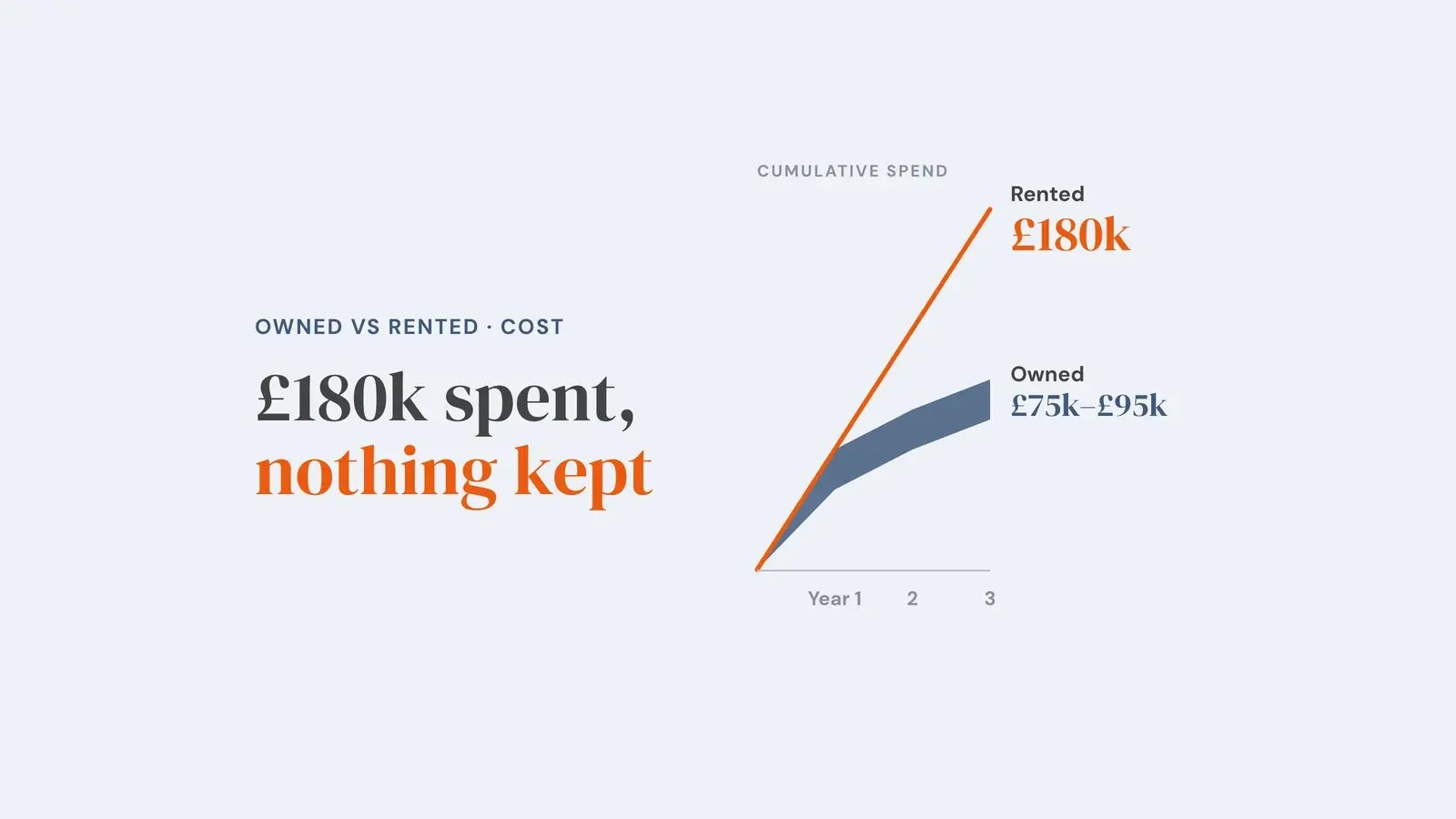
When compared over the full 36 months, building a small in-house marketing team is typically 20–40% cheaper than maintaining equivalent agency retainers, and produces compounding returns through owned knowledge and faster execution.
| Agency model | In-house model | Hybrid model | |
|---|---|---|---|
| Year 1 cost | £60,000–£180,000 ($75,000–$225,000) | £70,000–£120,000 ($87,500–$150,000) | £50,000–£120,000 ($62,500–$150,000) |
| Year 2 cost | £60,000–£180,000 ($75,000–$225,000) | £60,000–£100,000 ($75,000–$125,000) | £40,000–£90,000 ($50,000–$112,500) |
| Year 3 cost | £66,000–£198,000 ($82,500–$247,500) | £60,000–£100,000 ($75,000–$125,000) | £35,000–£80,000 ($43,750–$100,000) |
| Knowledge retained | Low | High | Medium–High |
| Strategic control | Low | High | Medium–High |
In-house costs include salary, employer NI, tools, and onboarding. Figures are estimates based on UK market rates. Agency figures reflect typical B2B retainer ranges. External reference: CIPD UK salary benchmarking data]=
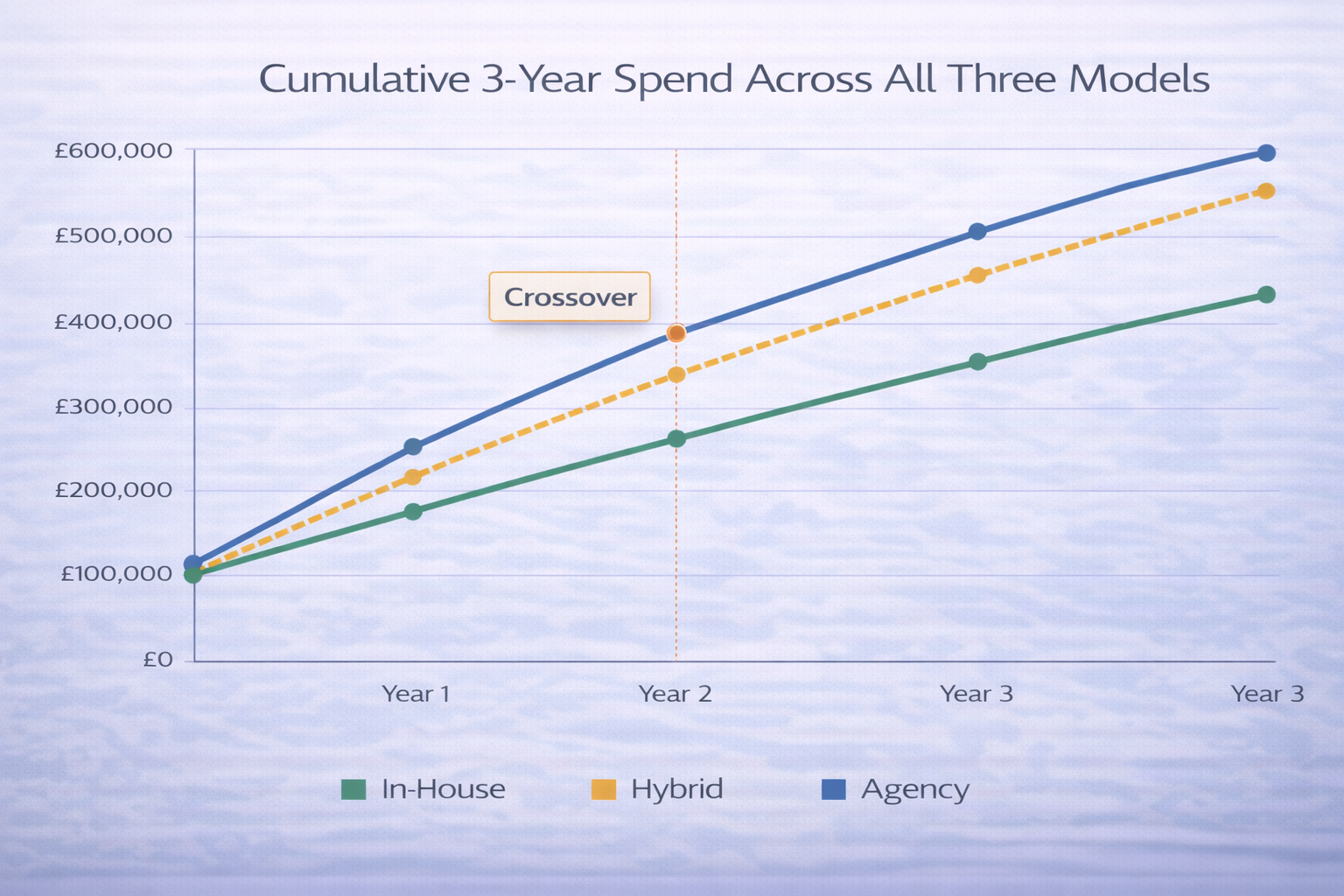
The comparison only looks unfavourable in year 1, when hiring and onboarding costs are front-loaded. From year 2 onwards, the in-house model almost always wins on unit economics. The hybrid model reaches break-even earliest, making it the most accessible starting point for businesses mid-dependency.
The 5 biggest problems with long-term agency dependency
The five most common problems with long-term agency dependency are: strategic drift, knowledge lock-in, escalating costs with diminishing returns, brand voice inconsistency, and slow responsiveness when market conditions shift.
- Strategic drift: when strategy lives with the agency, it gradually aligns to what the agency can deliver, not what your business needs. In practice, this often sounds like: "our agency keeps delivering what we agreed 18 months ago, even though the business has moved on." By the time you notice the misalignment, you have already paid for it.
- Knowledge lock-in: data, contacts, CMS structure, and creative direction become embedded in agency infrastructure. Leaving becomes costly not just financially but operationally. Most businesses only realise the extent of it when they try to exit.
- Escalating costs, declining returns: early gains from positioning and SEO reduce over time; fees rarely do. Founders often describe this as the moment they realise their agency is maintaining a position they built two years ago, not building new ground, but the invoice has not changed.
- Brand voice inconsistency: junior staff rotate; each new person re-learns your tone and market. Founders often describe this as a slow drift that is hard to name until a piece of content goes out that clearly does not sound like them.
- Slow market responsiveness: a 3–5 day briefing cycle is standard; in competitive markets, that lag is expensive. When a competitor moves, a market shifts, or an opportunity opens, an agency on a monthly delivery cycle simply cannot respond at the speed the moment requires.
Each problem compounds over time, which is why 3 years is the inflection point at which agency dependency becomes genuinely costly to unwind.
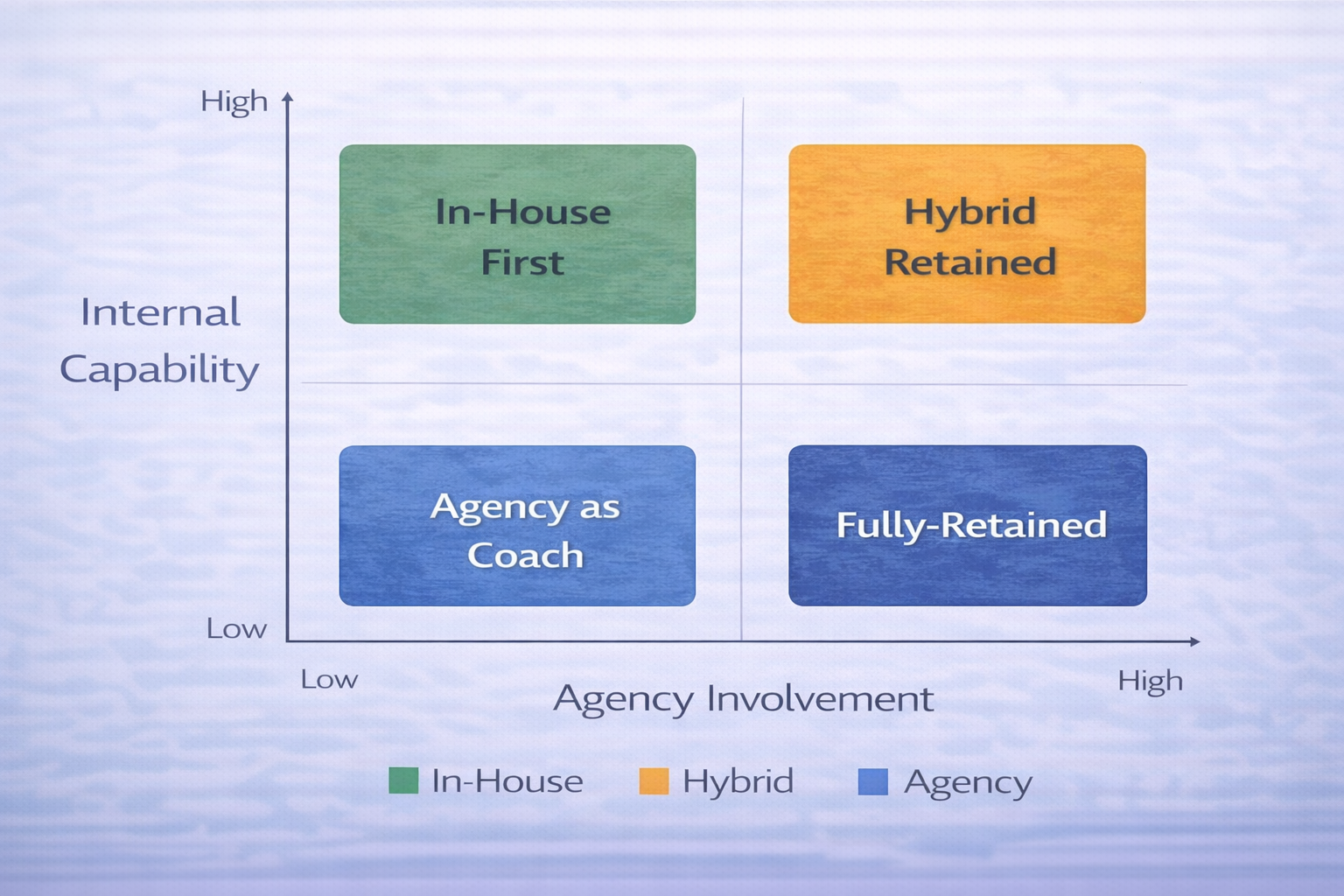
The 4 most common models for reducing agency dependency
The strongest businesses do not eliminate agencies, but in fact use a structured model that keeps agencies accountable for specialist execution while building internal ownership of strategy, data, and creative direction.
A note on perspective: I offer one of these models myself; the embedded consultant and hybrid retained approaches, which means I have both a commercial interest and direct experience with how they perform. I've tried to represent all four models fairly, but you should factor that context into how you weigh what follows.
Four proven models for reducing agency dependency:
- In-house-first model: strategy, content, and core execution built internally; agencies retained only for defined specialist tasks (e.g. paid media, technical audits)
- Agency-as-specialist model: 1–2 agencies retained for specific channels with clear KPIs; all strategy owned internally; best suited to businesses with an established in-house function
- Embedded consultant model: a Fractional CMO or Fractional Marketing Director sits inside the business, owns the brief, and directs agency output; agencies execute but do not set direction
- Hybrid retained model: a structured combination of in-house capability and targeted agency support, phased over 18–24 months until dependency reduces to specialist-only; this is the architecture behind my In-House Growth Engine™
For a detailed comparison of these models on cost and ROI, see: Agency vs. In-House vs. Fractional: Which Marketing Model Wins on ROI?
How to audit your agency spend and build a 3-year exit plan
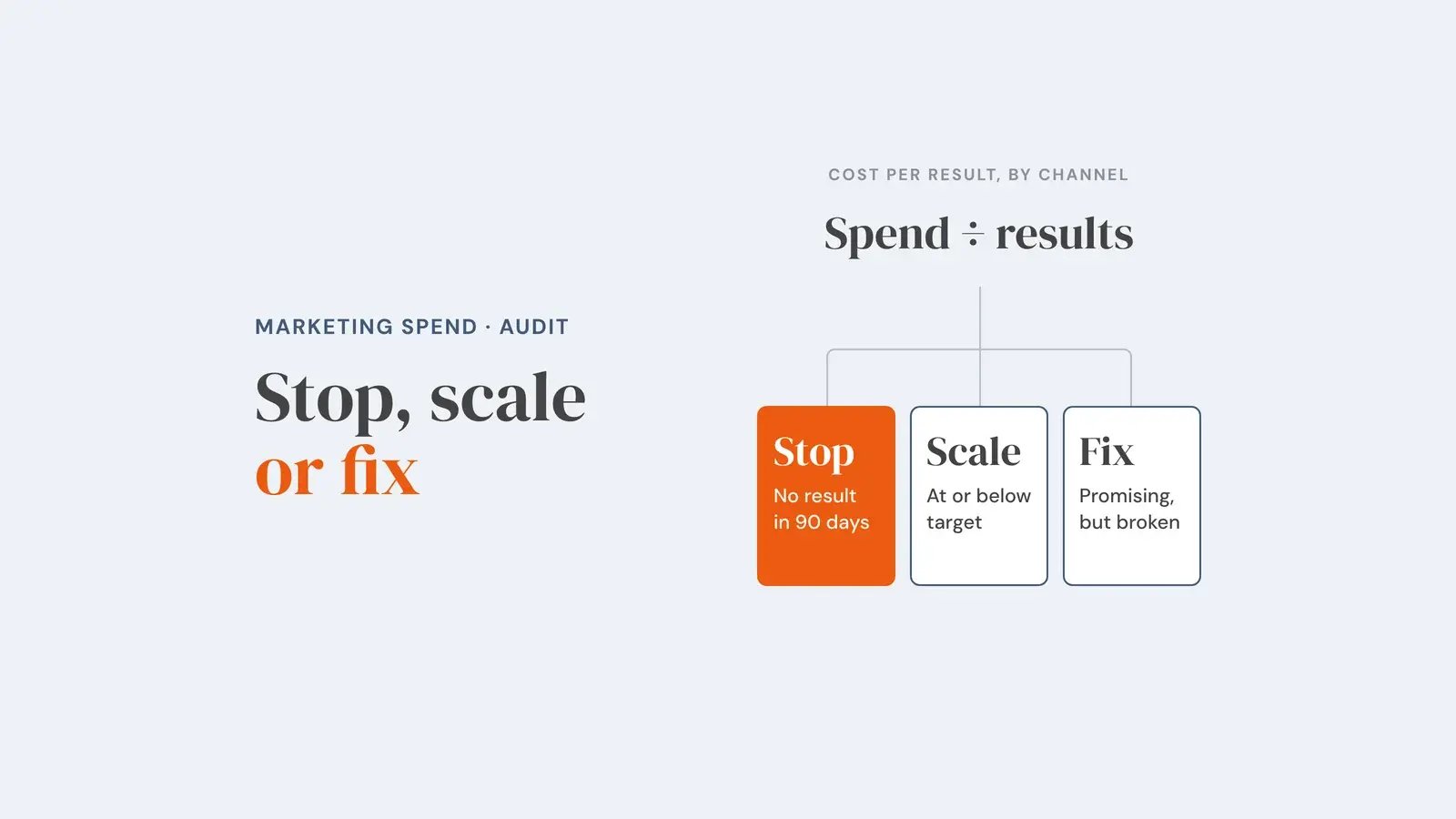
The first step in reducing agency dependency is a full spend audit: list every agency, retainer, and project fee paid in the last 12 months, map each cost to a specific output, and ask whether that output could be produced in-house within 12 months.
Follow these 5 steps:
- List every spend item: retainers, project fees, freelance, and externally managed tools
- Map each cost to an output: if you cannot attribute the result, treat it as a structural gap
- Apply the 12-month test: could a skilled in-house hire absorb this within 12 months at a lower unit cost? If yes, plan a transition
- Review your contracts: check notice periods, IP ownership, and credential access terms before deciding to exit
- Build a phased plan: set 90-day milestones; prioritise the highest-cost, lowest-value agency activities first
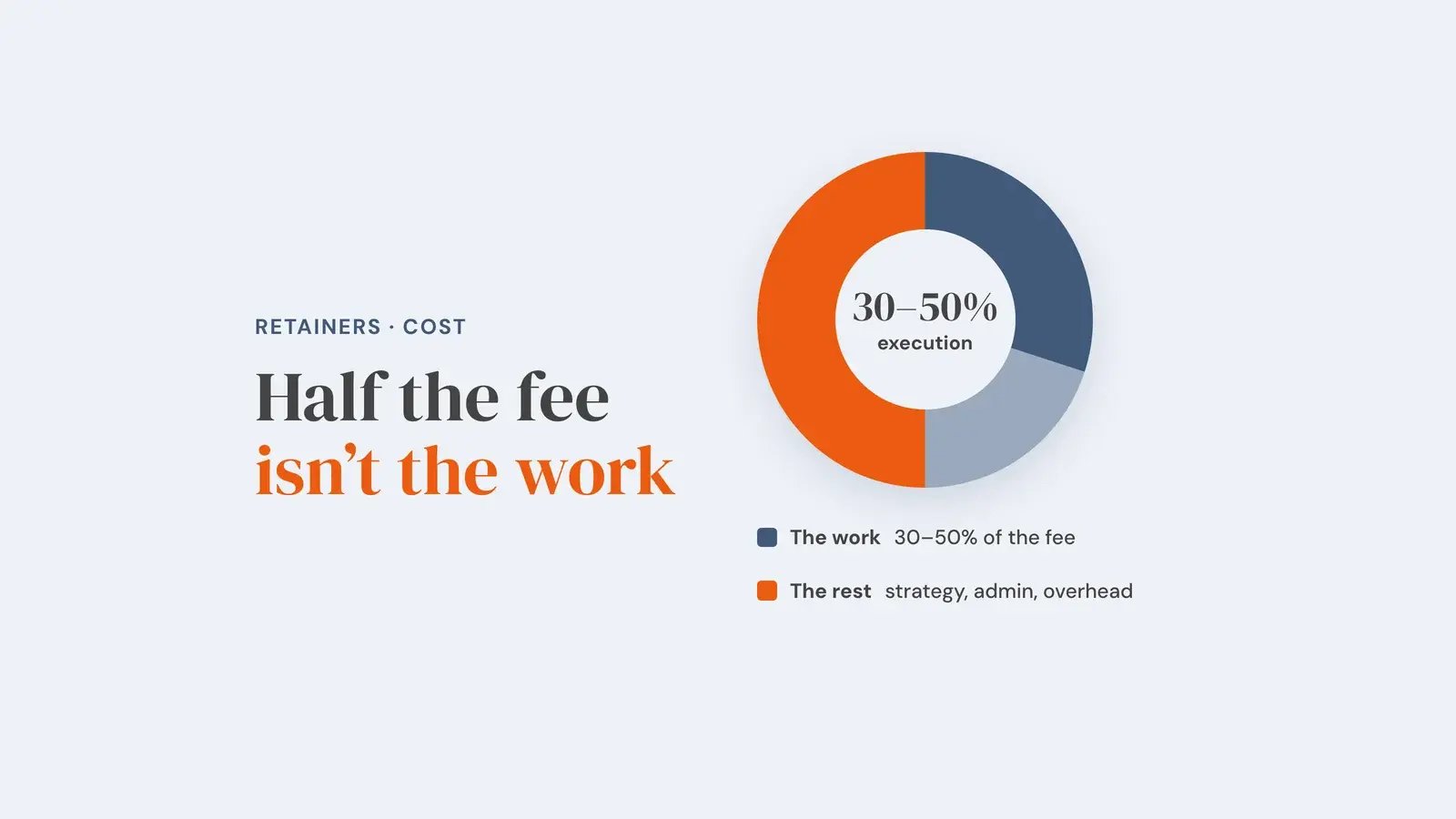
Most businesses find that 30–50% of agency spend covers tasks a single skilled in-house hire could absorb within the first year. (Estimate based on typical client engagements; individual results vary.)
Simple calculation framework: Annual agency cost − (in-house hire cost + tools + training) = Year 1 saving potential
Example: £90,000 ($112,500) agency spend − £60,000 ($75,000) in-house total cost = £30,000 ($37,500) Year 1 saving, compounding as capability grows.
See also: In-House vs Outsourced Marketing: What's Best for Scaling B2B Growth?
Frequently asked questions about agency dependency costs
The most common questions about agency dependency costs relate to when it makes financial sense to hire in-house, how to calculate the true total, and what transition costs in year 1.
Is hiring in-house always cheaper than using an agency?
Not in year 1. Recruitment, onboarding, and ramp-up mean the first 12 months of an in-house hire often cost more than a retainer. From year 2 onwards, the economics typically reverse, and the in-house model delivers compounding returns through owned knowledge.
What is a reasonable agency retainer for a mid-sized B2B business?
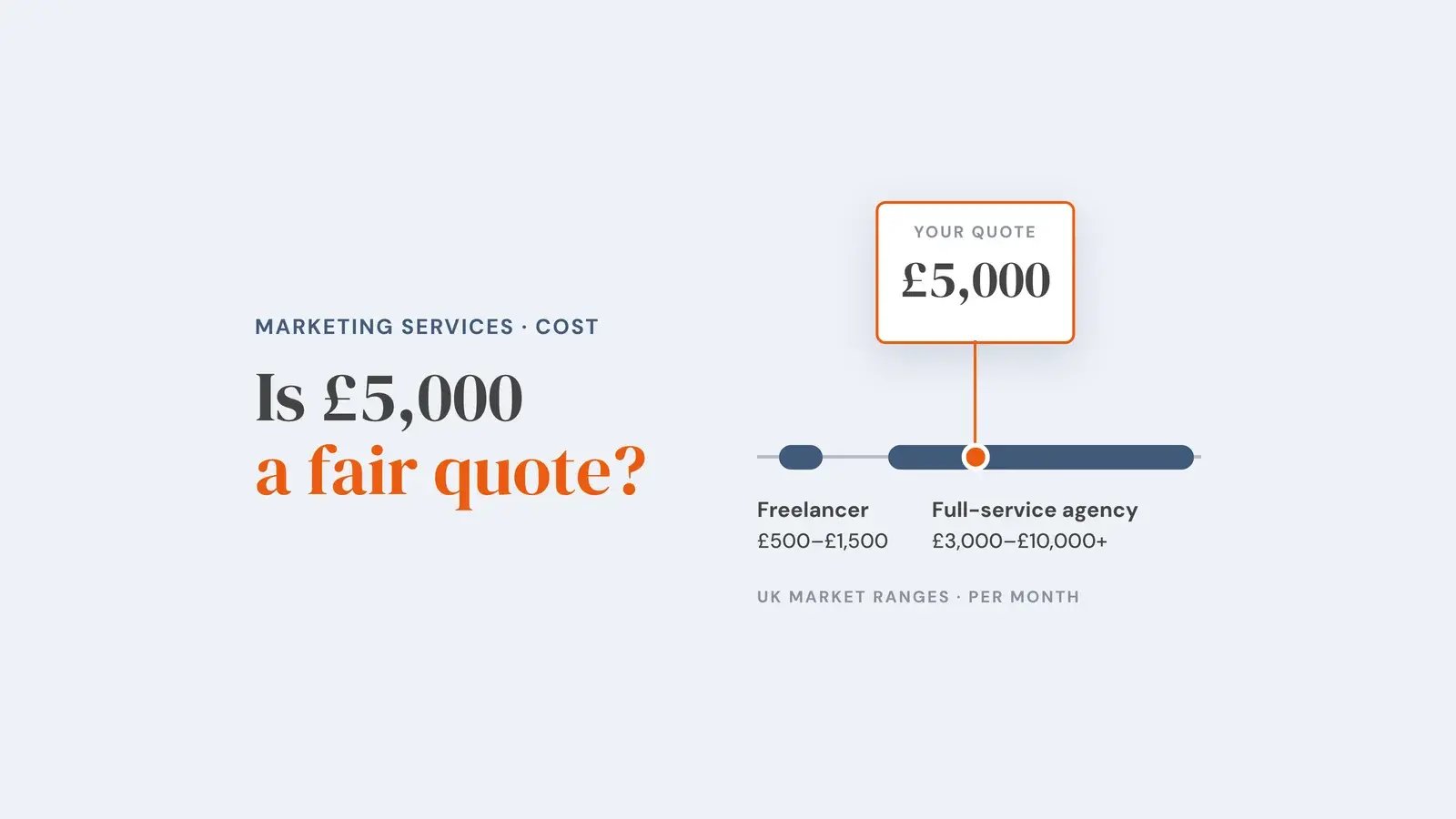
In the UK, mid-market B2B retainers typically run between £3,000 and £10,000 ($3,750–$12,500) per month, depending on scope. Full-service inbound retainers can reach £15,000 ($18,750) per month. See my pricing page for more information.
How long does it take to transition away from agency dependency?
A structured transition typically takes 12–24 months: 1–3 months for audit and assessment, 6–12 months for building in-house skills and documentation, and months 12–24 for full ownership transfer.
What happens to my assets when I leave an agency?
This depends on your contract. Many agreements retain agency IP over website builds, ad accounts, and content. Before exiting, confirm who owns your CMS, ad account logins, brand assets, and audience data.
How do I exit an agency relationship without damaging it?
Most agencies respect a well-managed exit more than a sudden one. Give proper notice as per your contract, document what you need transferred (credentials, assets, campaign history), and frame the transition as an evolution rather than a dismissal. Many businesses maintain a narrower specialist relationship with their former agency after reducing the retainer, which often works better for both parties than the original full-service arrangement.
Can I reduce agency costs without building a full internal team?
Yes. A fractional consultant model, where a senior strategist directs agency output and builds your internal capability in parallel, can reduce total spend by 20–40% within 12 months, without the commitment of a full-time hire.
Conclusion
You came to this article with a number, the monthly retainer, and probably a nagging sense that it no longer reflects the value. You now have the 36-month total, the hidden cost categories that never appear on an invoice, and a clear picture of what the alternatives actually cost once the year 1 front-loading is behind you.
That renewal conversation you've been putting off is easier to navigate when you can see the full three-year picture. The question is not whether to act; it is where to start.
Take the Marketing Debt Scorecard; it takes 3 minutes and identifies your highest-cost dependency gaps. From there, you'll have a clear starting point for an audit conversation.
If this article has raised questions about which model fits your situation, these two pieces go deeper:
-
What Does It Actually Cost to "Own" Your Marketing vs Rent It Forever?
-
Agency vs. In-House vs. Fractional: Which Marketing Model Wins on ROI?

About the author
Tom Wardman is a fractional marketing consultant and Growth Independence Architect™ who helps founder-led B2B businesses replace agency dependency with self-sufficient growth systems. He is the creator of the In-House Growth Engine™, the author of Build a Trusted Brand, and one of the UK's first five certified coaches in the Endless Customers System™, trained directly under Marcus Sheridan. Every engagement he runs is designed to make his involvement unnecessary over time.
Pricing disclaimer: All GBP–USD price conversions are rounded estimates and correct at the time of publishing. Exchange rates fluctuate and figures should be treated as indicative only.