

Key Takeaways
- Whack-a-mole marketing is a reactive approach where teams constantly shift focus between urgent tasks without a cohesive strategy, commonly resulting in 20–40% budget waste and significant missed revenue.
- The root causes include undefined goals, lack of prioritisation frameworks, responding to every new trend, and stakeholder-driven urgency without clear decision criteria.
- Strategic marketing requires five core components: documented annual strategy, quarterly tactical plans, priority scoring matrix, weekly review rituals, and clear decision authority.
- Transitioning from reactive to strategic execution takes 30–60 days using a structured seven-step implementation process, not an overnight transformation.
- Maintaining strategic discipline requires a documented 'new request protocol' that evaluates every incoming idea against your priority matrix before adding it to the queue.
Does your marketing feel like you're constantly putting out fires?
Do you start each week with a plan, only to watch it unravel as urgent requests, competitor moves, and last-minute campaigns take over?
If this sounds familiar, you're stuck in reactive marketing, and the cost is higher than it looks. Scattered effort means slower pipeline, inconsistent messaging, and a team that's always busy but never quite moving forward. Left unchecked, it stalls revenue growth, frustrates leadership, and burns out the people doing the work.
This article is for marketing leaders, founders, and business owners in growing B2B businesses who want to stop the chaos and build a system that turns marketing into a reliable growth engine.
You'll learn:
- The six root causes of reactive marketing
- The measurable cost of chaos, including direct, opportunity, and human costs
- A five-component framework to eliminate it permanently
Let's build marketing that works for your business, not against it.
What is "whack-a-mole" marketing?
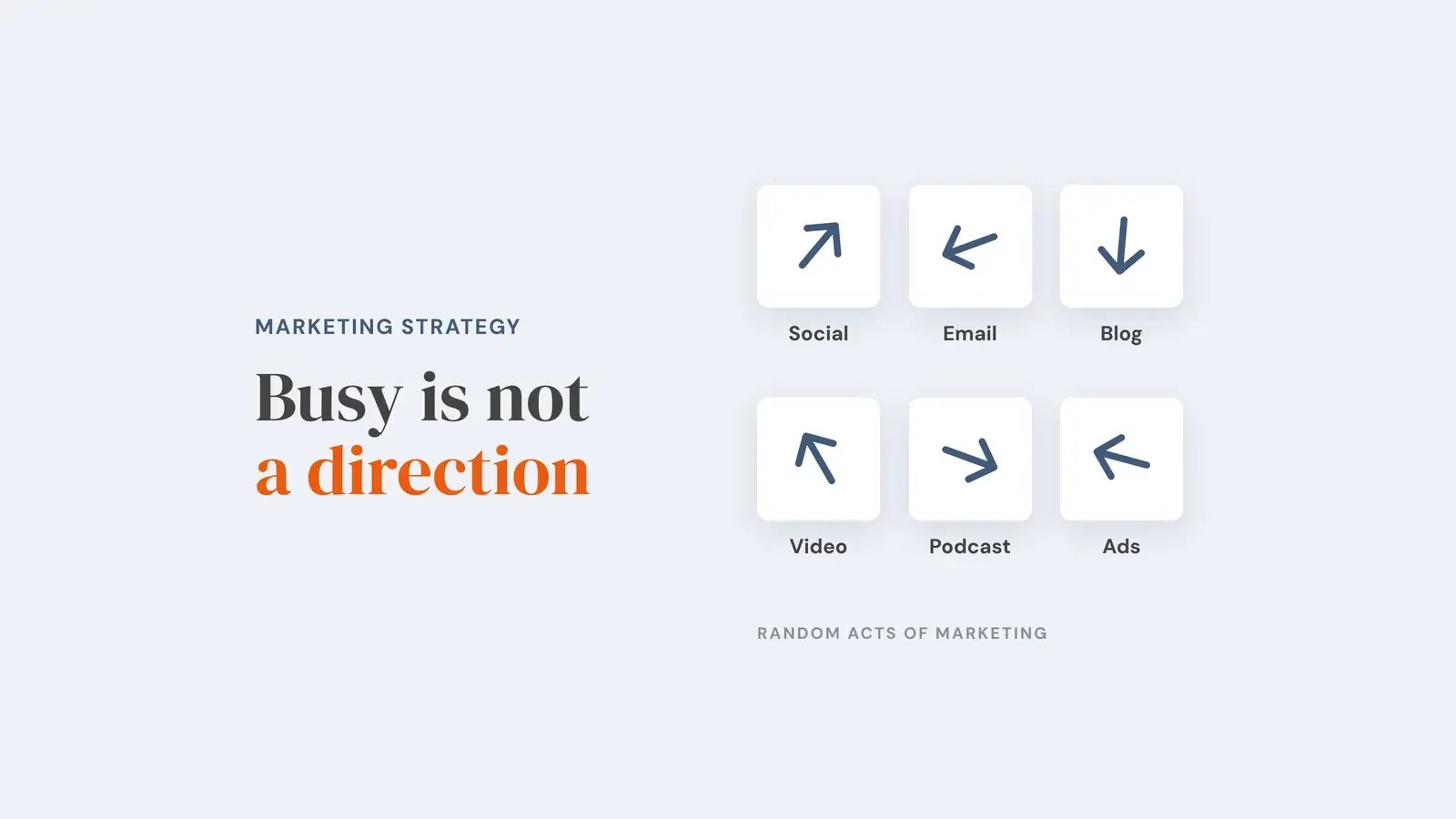
Whack-a-mole marketing is a reactive approach where teams constantly shift focus between urgent tasks, campaigns, and channels without a cohesive strategy or long-term plan. This pattern creates a cycle where marketers feel perpetually behind, addressing immediate fires rather than building sustainable growth systems.
The term perfectly captures the experience: the moment you handle one urgent request, another pops up demanding immediate attention.
Common symptoms include:
- Starting campaigns without finishing previous ones
- Chasing every new platform, tool, or trend without testing fit
- Responding to competitor moves rather than executing your own plan
- Making decisions based on who shouts loudest, not what drives results
- Feeling exhausted but unable to point to meaningful progress
If your team spends more time reacting to urgency than executing against documented goals, you're playing whack-a-mole with your marketing.
Why reactive marketing happens: Six root causes for B2B teams
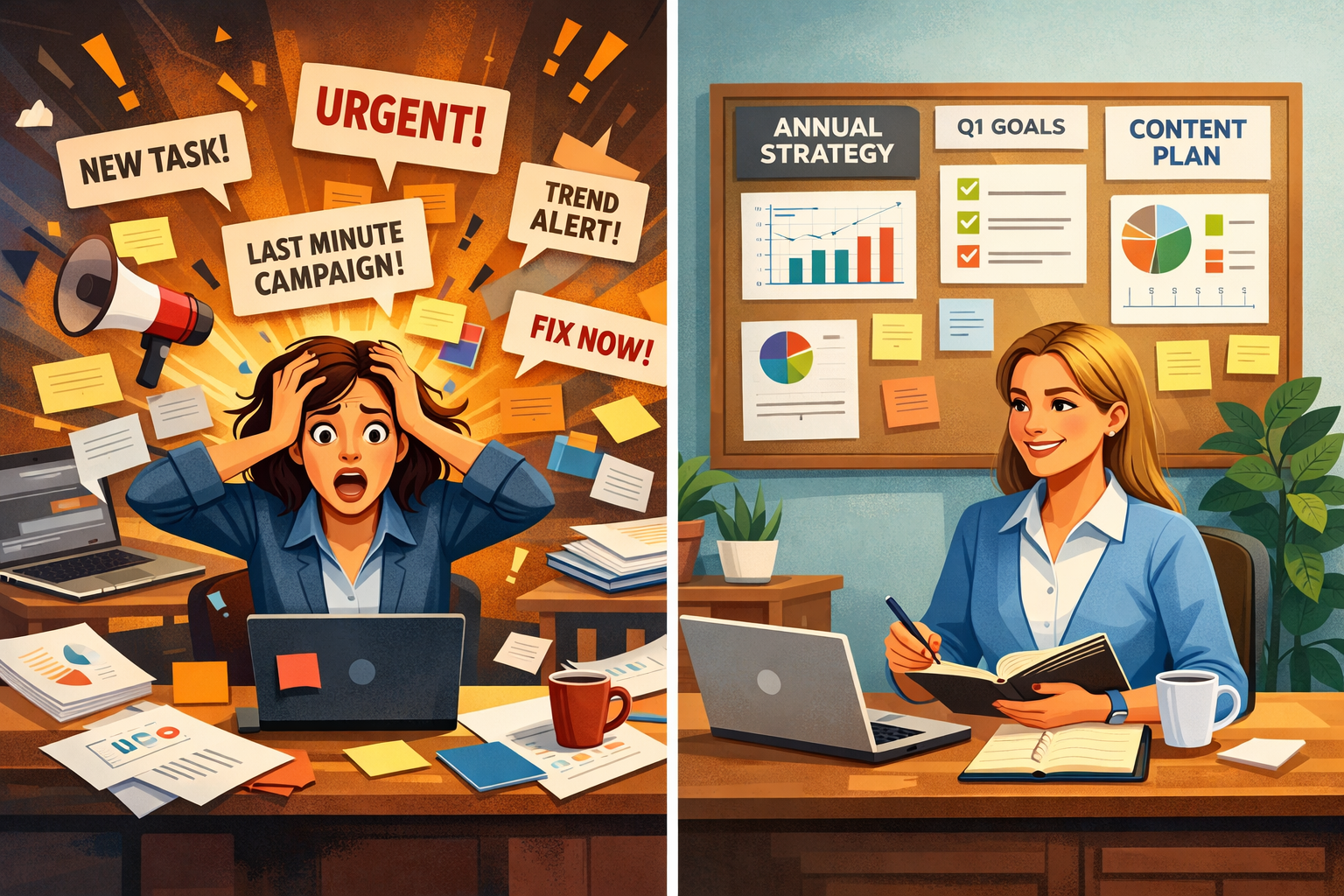
Marketing becomes reactive when teams lack documented strategy, clear prioritisation frameworks, or alignment between leadership and execution. The most common root causes include undefined goals, responding to every new trend or tool, stakeholder-driven urgency without criteria, and measurement gaps that prevent teams from knowing what's actually working.
Marketing leaders often ask: "Why does this keep happening despite our best intentions?" Here are the six primary root causes:
- No documented strategy: Teams operate from memory, conversations, and assumptions rather than written plans everyone can reference and follow.
- Undefined success metrics: Without clarity on what good performance looks like, every request feels equally important and urgent.
- Trend-chasing behaviour: Jumping on TikTok, AI tools, or whatever competitors are doing without asking if it serves your specific buyer.
- Stakeholder-driven priorities: Executives and department heads submit requests that bypass any strategic filter, creating competing demands.
- No decision authority: Teams lack clear ownership over what gets done, what gets delayed, and what gets declined completely.
- Measurement gaps: Without knowing what's working, teams can't confidently say no to new ideas or double down on what drives results.
The pattern reinforces itself: reactive behaviour prevents strategic planning, which creates more reactive behaviour.
The real cost of reactive marketing for B2B companies
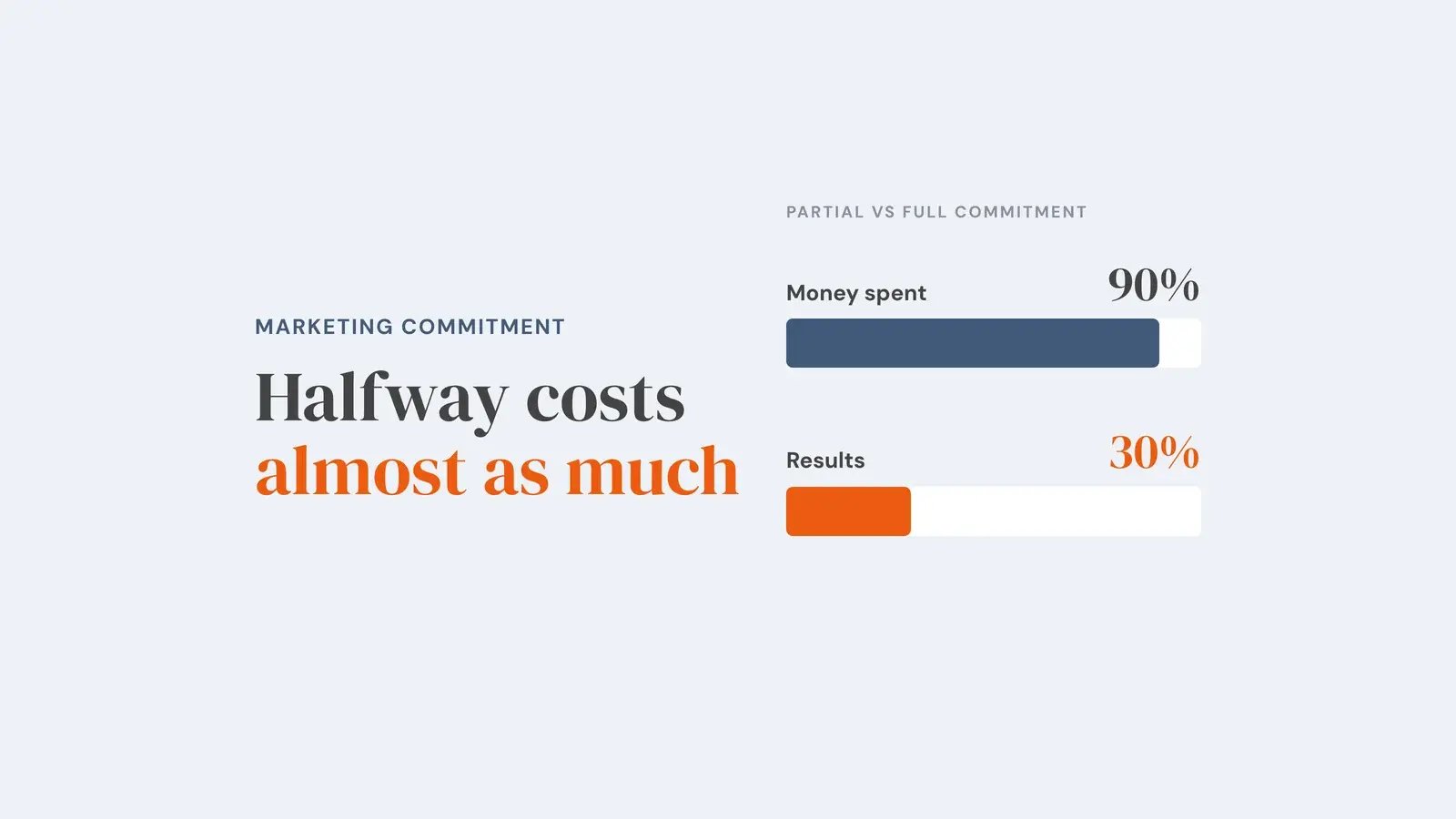
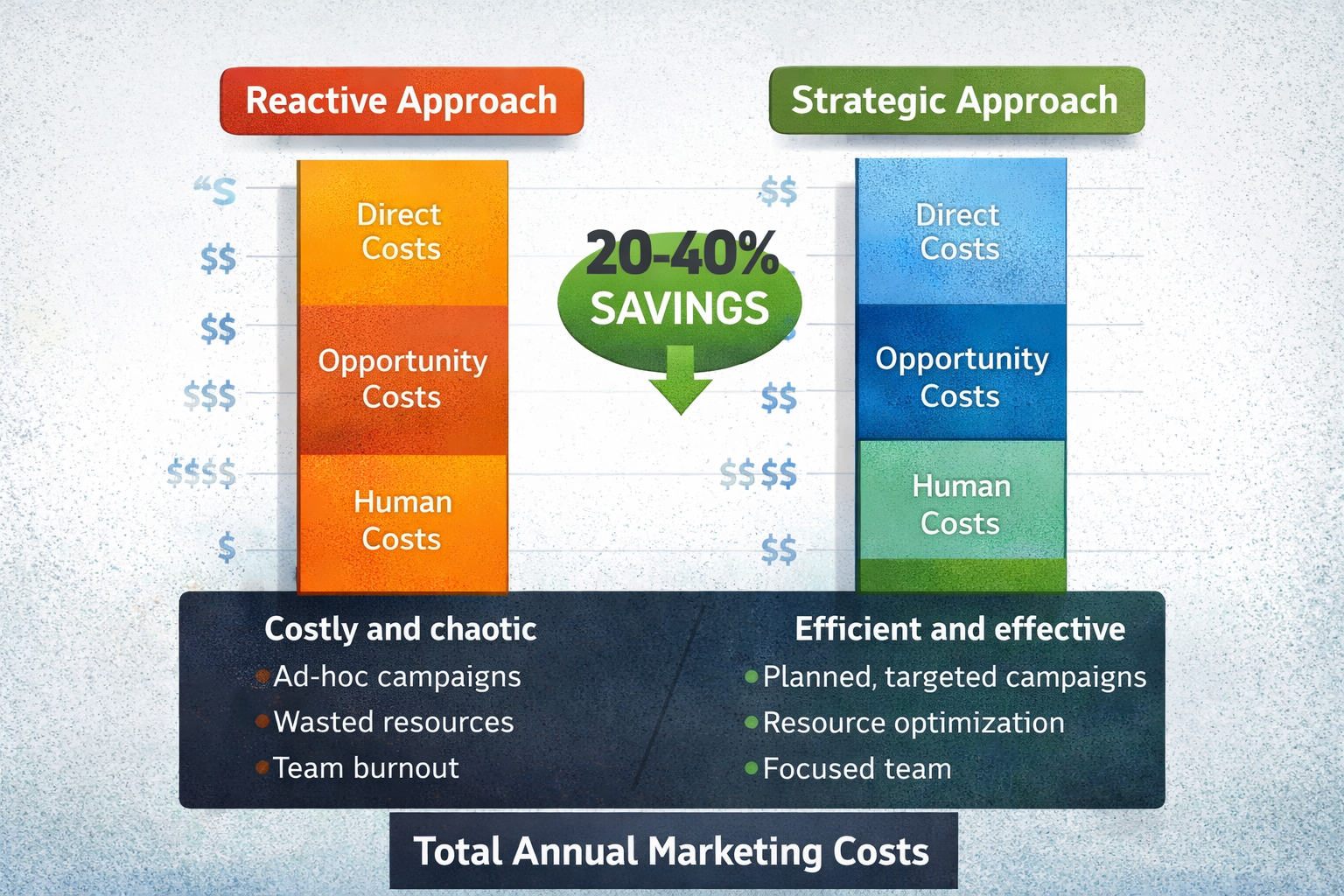
Reactive marketing commonly results in 20–40% budget waste, compounded by team burnout and missed revenue opportunities. Beyond direct spend, whack-a-mole marketing erodes brand consistency, delays compounding results from long-term channels like SEO and content, and increases employee turnover in marketing roles.
These are observed ranges from audits I've conducted with mid-market B2B clients, your actual figure will depend on how fragmented your current activity is.
| Cost Category | Impact | Estimated Financial Effect |
|---|---|---|
| Direct Costs | Wasted ad spend on untested campaigns, tool sprawl from buying every new platform, production costs for abandoned projects | 15–25% budget waste annually |
| Opportunity Costs | Delayed SEO results from inconsistent content, lost compounding returns from stopping/starting initiatives, missed market positioning windows | 2–3x longer to see ROI |
| Human Costs | Team burnout and disengagement, higher marketing staff turnover (avg 18-month tenure vs 36+ months strategic), loss of institutional knowledge | £25,000–£50,000 ($31,250–$62,500) per replacement hire |
These figures are estimates based on my work with mid-market B2B businesses between £1 million ($1.25m) and £50 million ($62.5m) in annual revenue, where reactive marketing patterns typically show up most clearly.
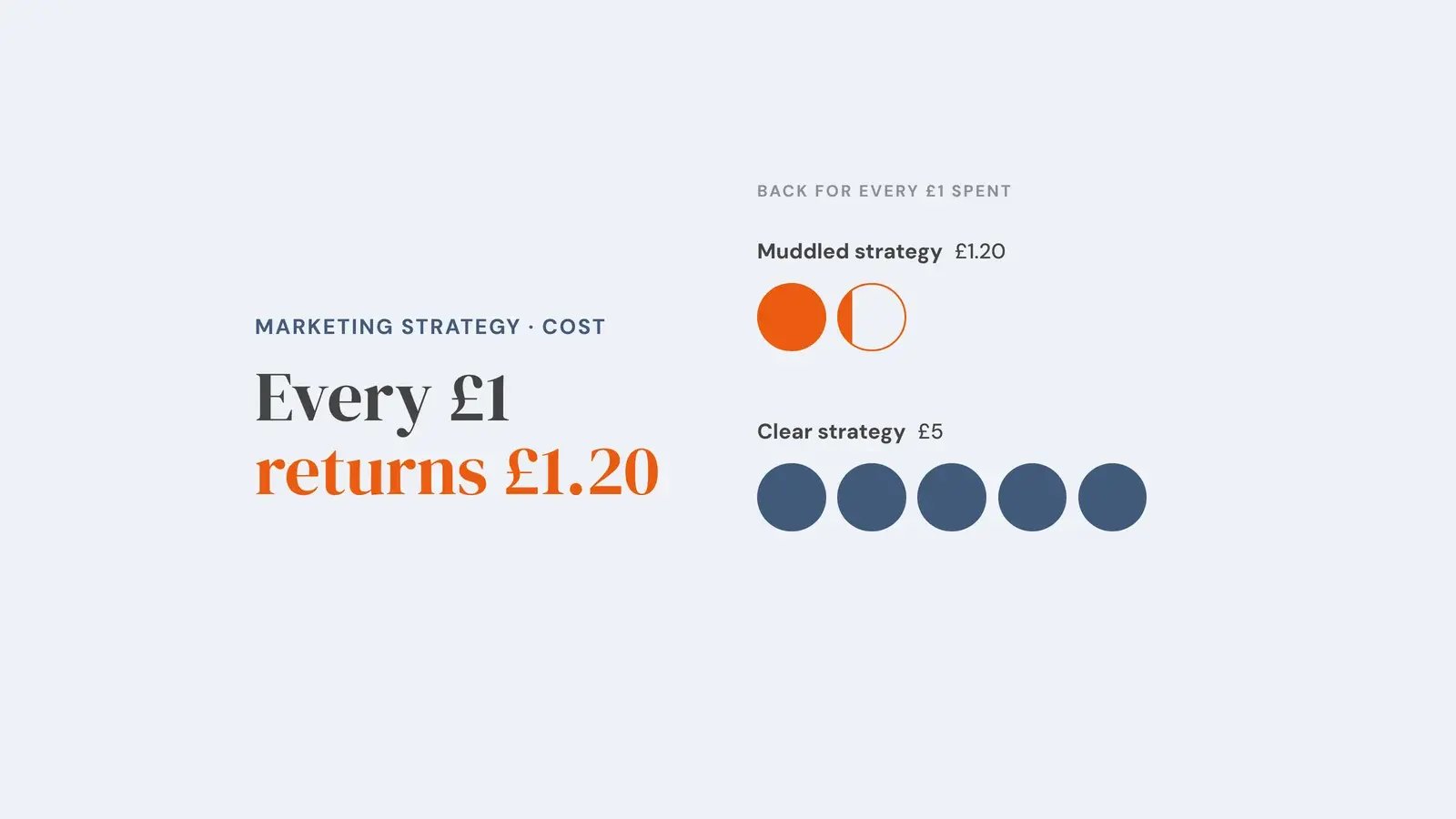
According to HubSpot's State of Marketing Report, companies with documented marketing strategies are 313% more likely to report success than those without one, reinforcing what I see on the ground with clients.
The hidden cost is trust erosion with your buyers. When your messaging changes every quarter and campaigns contradict each other, prospects notice and wonder if you actually know what you're doing.
Reactive vs. strategic marketing: Key differences for B2B companies
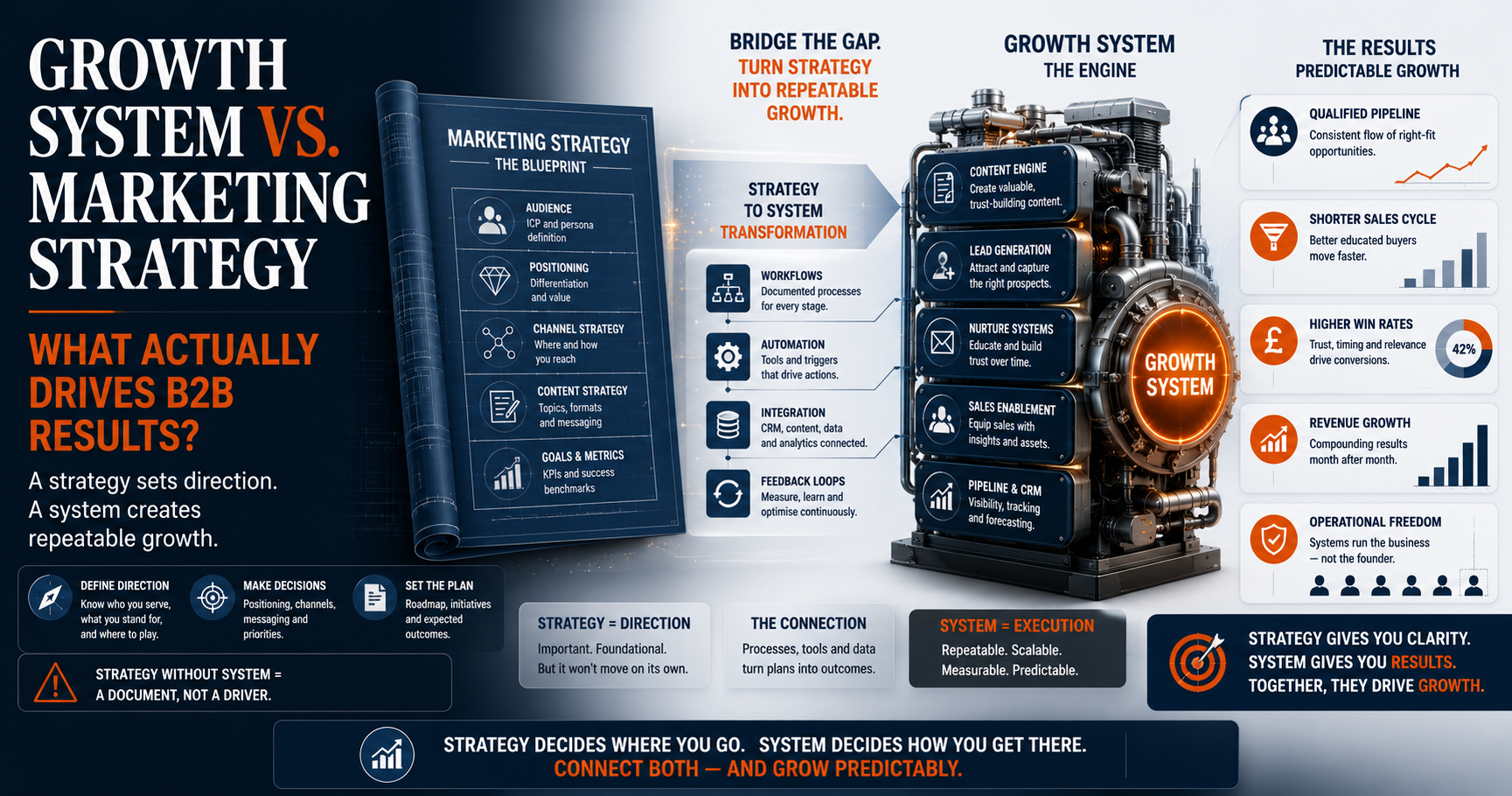
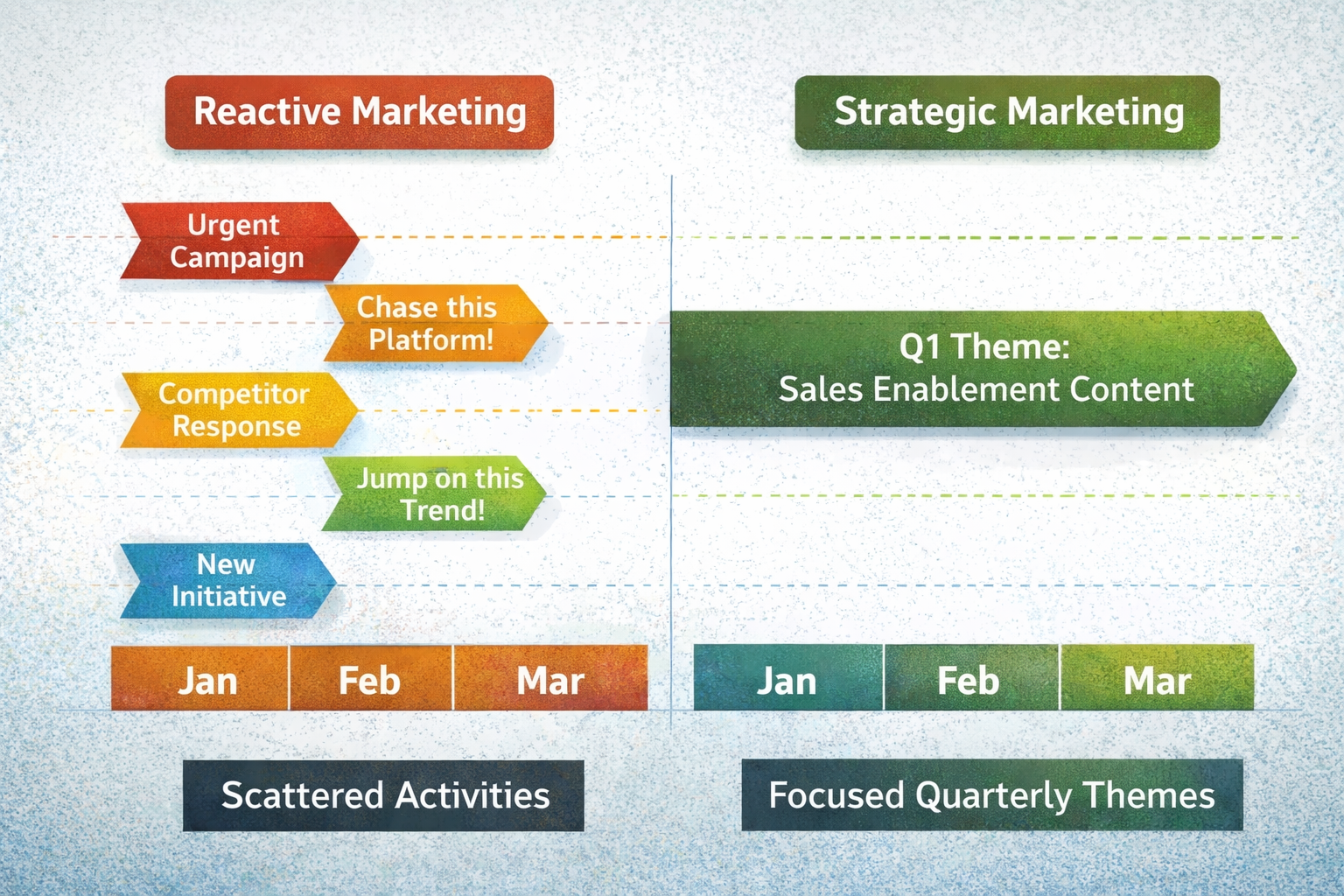
Strategic marketing operates from documented plans, priority matrices, and leading indicators, not urgency, gut feel, or whoever shouted loudest this week. The fundamental difference lies in decision-making: strategic teams ask 'does this align with our 90-day plan?' while reactive teams ask 'is this urgent right now?'
| Dimension | Reactive Marketing | Strategic Marketing |
|---|---|---|
| Planning approach | Week-to-week, driven by urgency | Annual strategy, quarterly execution plans |
| Decision criteria | Loudest voice, competitor moves | Priority matrix, alignment with goals |
| Time horizon | This week, this month | 90-day cycles, 12-month view |
| Measurement focus | Lagging metrics (revenue, leads) | Leading indicators (content velocity, pipeline influence) |
| Team experience | Chaotic, burnt out, unclear on priorities | Focused, confident, knows what matters |
| Typical results | Inconsistent, hard to attribute | Predictable, compounding over time |
The shift from reactive to strategic isn't about working harder or hiring more people. It's about building systems that protect your team's focus and ensure effort compounds rather than cancels itself out.
A note on context: some industries, such as crisis communications, fast-moving tech launches, heavily regulated sectors, genuinely require more flexibility than others. The framework below isn't about rigidity; it's about making your reactive moments intentional rather than the default.
The strategic marketing framework: Five components to eliminate whack-a-mole
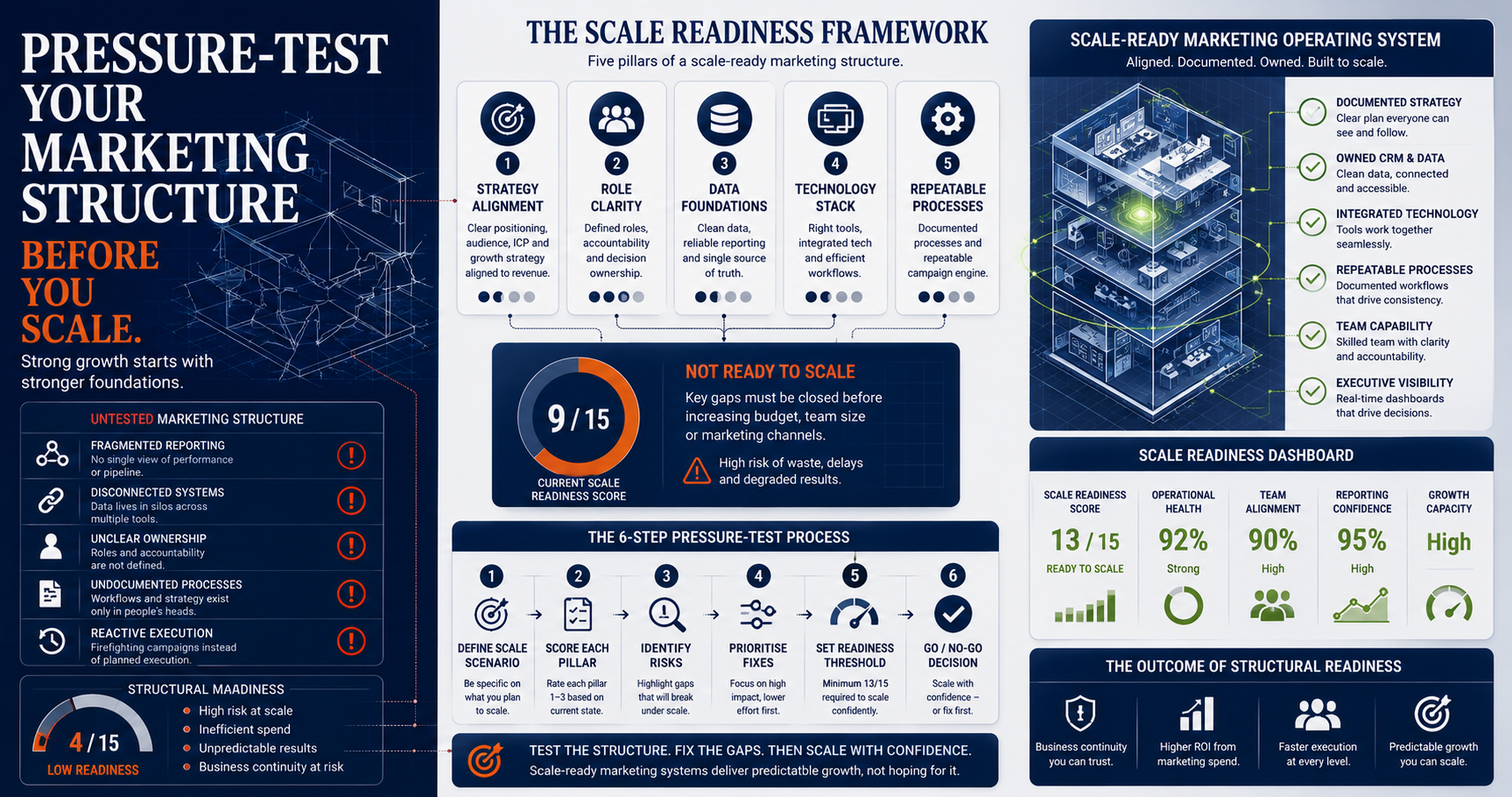
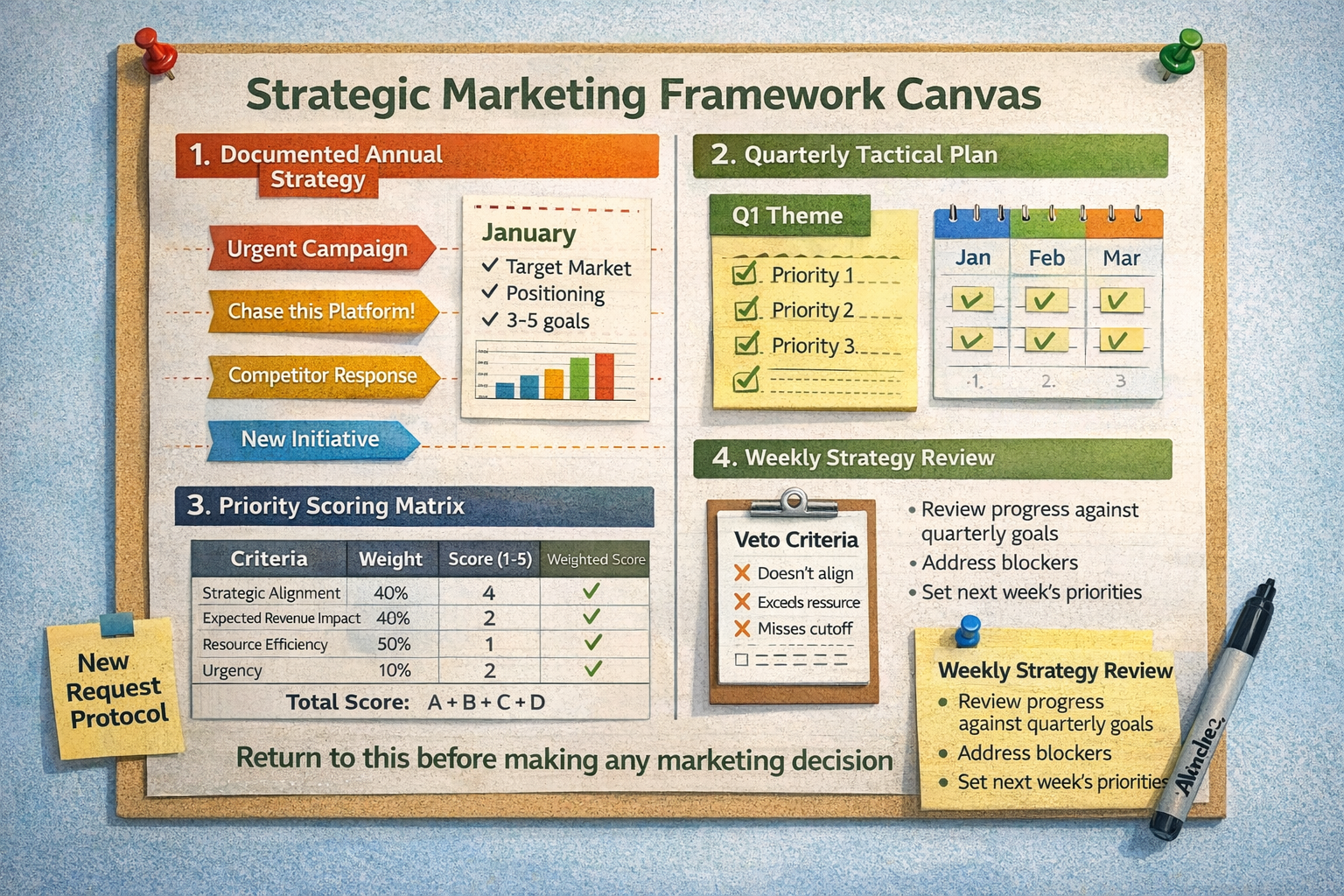
A strategic marketing framework eliminates whack-a-mole behaviour by establishing five interconnected systems: documented annual strategy, quarterly tactical plans, priority scoring matrix, weekly review cadence, and defined decision authority. Each component serves a specific purpose, and each one has a clear failure mode if it's missing.
Component 1: Documented annual strategy
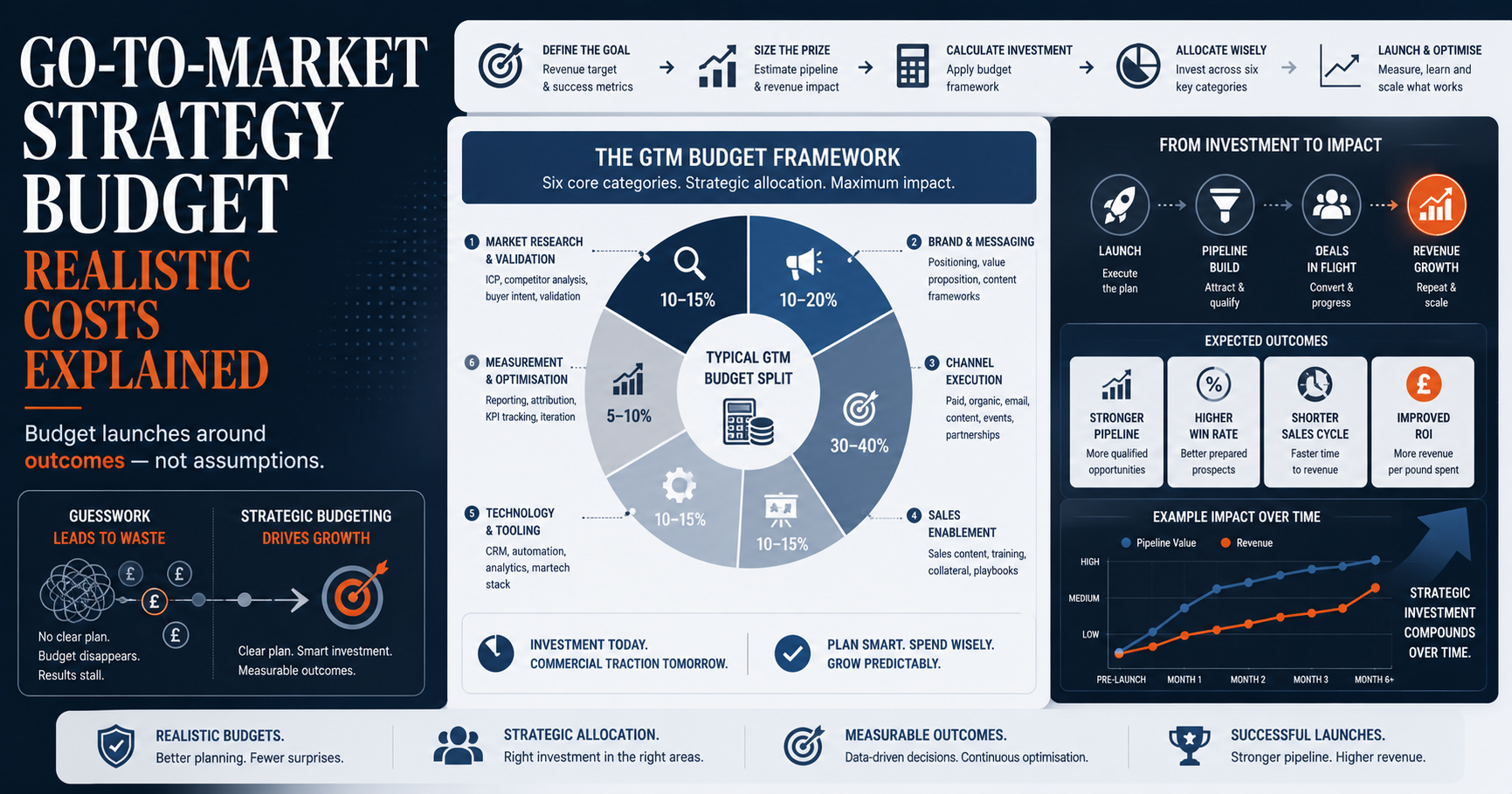
A single-page document stating your target market, positioning, three to five annual goals, and budget allocation by channel becomes your reference point for every decision. Without this document, every request arrives in a vacuum, and urgent always beats important.
Component 2: Quarterly tactical plans with themes
Break the year into four 90-day cycles, each with a specific theme (e.g., 'sales enablement content', 'SEO foundation', 'customer retention'). Without a quarterly theme, activity fragments across too many objectives, and nothing compounds. Themes create the focus that makes effort add up.
Component 3: Priority scoring matrix
A simple framework for scoring new requests against strategic alignment, resource cost, expected impact, and urgency is what separates strategic teams from reactive ones. Without it, every incoming idea competes equally, and the loudest voice wins.
Component 4: Weekly strategy review ritual
A 30-minute standing meeting where you review progress against quarterly goals, address blockers, and confirm next week's priorities. Skip this and drift sets in within two to three weeks, plans stop being plans and become aspirations. This ritual prevents drift and catches misalignment before it becomes expensive.
Component 5: Clear decision authority and veto criteria
Document who can approve new initiatives, what triggers automatic decline, and how exceptions get escalated. Without written decision authority, every request is a negotiation, and urgency always wins.
How to implement a strategic marketing framework: Step-by-step for B2B teams
Transitioning from reactive to strategic marketing requires a structured 30–60 day implementation process, not an overnight transformation. Follow these seven steps in sequence to build the foundation for sustainable, non-reactive marketing.
- Audit and eliminate 20–30% of wasted effort immediately (Week 1): This is typically a half-day workshop for small teams or a two to three day structured audit for larger ones. List every active campaign, tool subscription, and recurring commitment. Identify what's working, what's unclear, and what's consuming resource with no clear return. Most teams find significant waste they can cut on day one.
- Define 3–5 annual goals tied directly to revenue (Week 1–2): Choose objectives like 'generate 200 qualified leads' or 'reduce sales cycle by 15 days'. Avoid vanity metrics like followers or impressions.
- Build your first 90-day theme and commit to it (Week 2–3): Pick one strategic focus for the next quarter and list the specific deliverables needed to achieve it. Commit to finishing these before starting anything new.
- Build and test your priority matrix (Week 3): Define your scoring criteria and thresholds. Run your current active projects through it to see what should actually be getting resources.
- Establish your weekly review ritual (Week 4): Schedule your 30-minute standing meeting, create the agenda template, and assign ownership for tracking progress.
- Communicate the new process to leadership and stakeholders (Week 4–5): Brief everyone on how requests will now be evaluated. Set the expectation: 'we should do this' must become 'which current priority should we stop to do this?'
- Run your first 30-day cycle and iterate (Week 5–8): Execute your plan, hold weekly reviews, and practice using your priority matrix on real incoming requests. Adjust based on what you learn.
The goal isn't perfection. The goal is building the habit of strategic decision-making before urgency forces your hand.
Best tools and systems for strategic marketing execution
The best strategic marketing systems combine lightweight project management (Asana, ClickUp, or Monday.com), collaborative documentation (Notion or Confluence), and unified analytics dashboards. Tool selection matters less than consistent usage; most whack-a-mole marketing stems from process gaps, not technology limitations.
| Function | Recommended Tools | What It Does |
|---|---|---|
| Strategy documentation | Notion, Confluence, Google Docs | Stores your annual plan, quarterly themes, and priority matrix in one accessible location |
| Tactical project management | Asana, ClickUp, Monday.com | Tracks deliverables, deadlines, and dependencies so nothing falls through cracks |
| Priority scoring | Notion databases, Airtable, custom spreadsheet | Applies your scoring matrix to incoming requests systematically |
| Performance dashboards | HubSpot, Google Looker Studio, Databox | Consolidates metrics across channels so you can see what's working without hunting |
Start with what you already have. If your team uses Google Workspace, build your framework in Docs and Sheets before buying new tools. The system matters more than the software.
I work with clients using everything from Notion to enterprise marketing platforms. The companies seeing the best results aren't the ones with the fanciest tools; they're the ones who've built clear processes their team actually follows.
How to maintain strategic discipline when urgent requests arrive
Strategic discipline requires a documented 'new request protocol' that evaluates every incoming idea against your priority matrix before adding it to the queue. The key is replacing 'we should do this' with 'if we do this, which current priority gets delayed or cancelled?' — forcing explicit trade-off conversations that most teams currently avoid.
Here's the four-question filter for evaluating new requests:
- Does this directly support one of our 3–5 annual goals? If no, it's an automatic decline unless it's a genuine emergency (lost major client, regulatory requirement, competitive threat to survival).
- Does it align with our current quarterly theme? If no, it goes into a 'next quarter review' list rather than your active queue.
- What's the estimated resource cost in hours and budget? Compare this against what you'd need to stop or delay to create that capacity.
- What's the expected impact using our priority matrix? Score it honestly. If it ranks below your current committed work, decline it or defer it.
Sample priority matrix template:
| Criteria | Weight | Score (1–5) | Weighted Score |
|---|---|---|---|
| Strategic alignment | 40% | ||
| Expected revenue impact | 30% | ||
| Resource efficiency | 20% | ||
| Urgency (time-sensitivity) | 10% | ||
| Total |
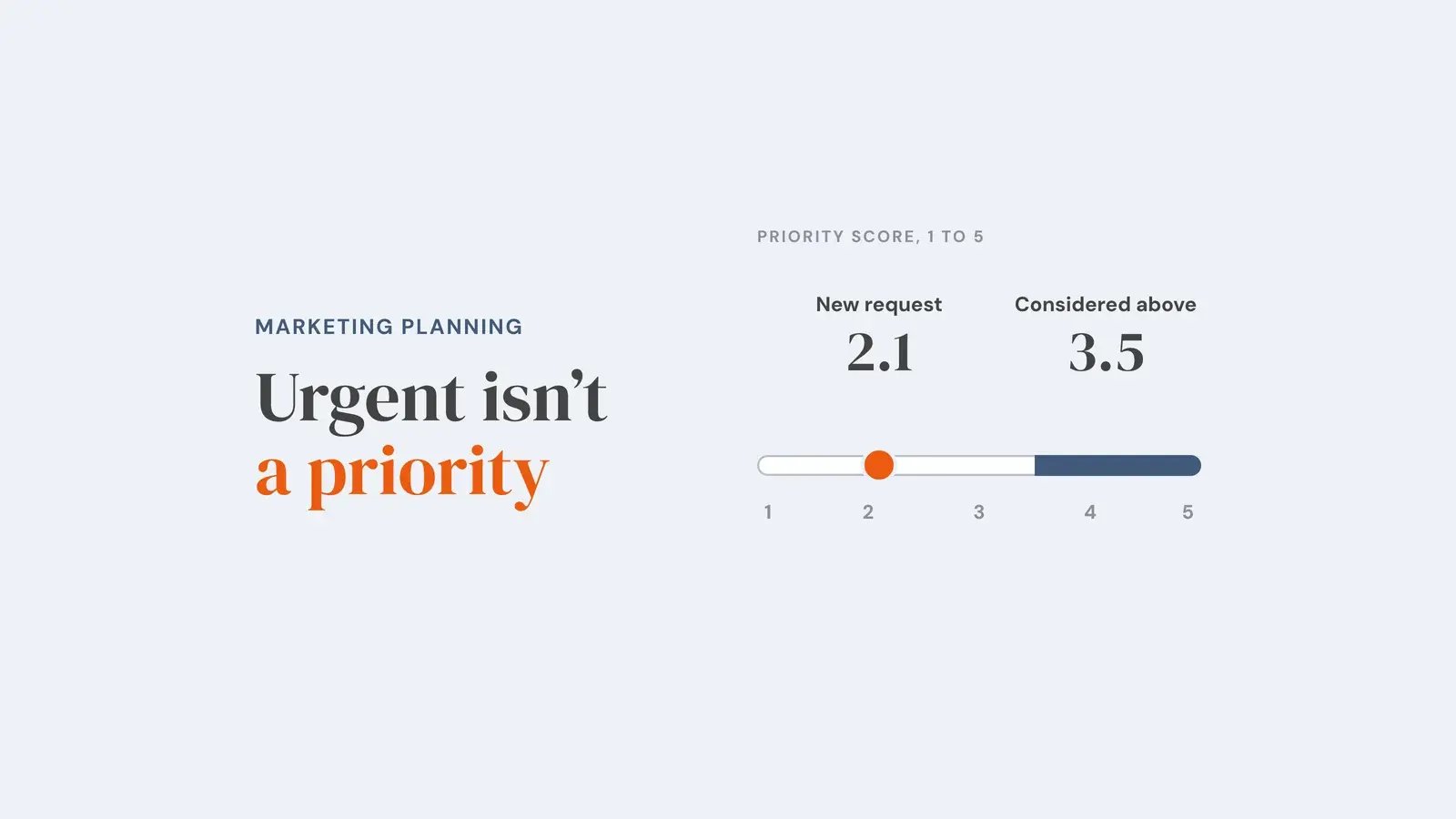
Anything scoring below 3.0 gets declined. Anything between 3.0–3.5 gets added to the backlog for quarterly review. Only items above 3.5 enter active consideration.
Here's a worked example: a request comes in to create a new LinkedIn campaign for a product launch that wasn't in the quarterly plan. Strategic alignment: 2/5 (supports brand awareness, not our Q1 sales enablement theme). Revenue impact: 2/5 (no direct pipeline attribution planned). Resource efficiency: 2/5 (requires 20+ hours of creative work). Urgency: 3/5. Weighted total: (2×0.4) + (2×0.3) + (2×0.2) + (3×0.1) = 0.8 + 0.6 + 0.4 + 0.3 = 2.1. Result: deferred to Q2 planning session.
Practice saying: 'That's interesting, but our priority matrix shows it doesn't score high enough to displace our current Q1 commitments. Let's revisit it in our Q2 planning session.'
Frequently asked questions about stopping reactive marketing
Marketing leaders often ask these questions when transitioning from reactive to strategic execution.
What if leadership keeps changing priorities?
This is the hardest situation, and the most common reason strategic frameworks fail. Your documented strategy and priority matrix become your protection. When priorities change, you show leadership the trade-offs: 'If we shift to this new priority, here's what gets delayed and the revenue impact.' Often they haven't considered the cost of constant changes. If they still insist on shifting every week, you've got a leadership problem, not a marketing problem.
How do you say no to executives?
You don't say no to executives. You say, 'Here's our current quarterly plan and its expected impact. If we take on your request, which of these committed deliverables should we delay, and what's the acceptable impact on our Q1 goals?' Frame it as a resource allocation question, not a rejection. Most executives respect the discipline when you show the trade-offs clearly.
How long does it take to stop feeling reactive?
Most teams report feeling noticeably less chaotic within 30–45 days of implementing the strategic framework. Full transformation takes two to three quarterly cycles (6–9 months) because you need to prove the system works before leadership and stakeholders fully trust it.
Can small teams be strategic, or is this just for enterprises?
Small teams benefit most from strategic frameworks because you have fewer resources to waste. A two-person marketing team using a quarterly plan and priority matrix will outperform a ten-person team operating reactively. The framework scales to any size — I've used it with solo founders and with 50-person marketing departments.
What's the first thing to implement?
Start with your quarterly theme. Pick one strategic focus for the next 90 days and communicate it clearly: 'This quarter we're building sales enablement content. Anything that doesn't support that gets deferred to Q2.' This single change creates immediate clarity and reduces whack-a-mole behaviour by 40–50%.
Conclusion
You don't need another tactic. You need protection for your focus. The framework in this article gives you exactly that, but only if you implement it rather than file it away.
How to Take Action Now
- Audit your current marketing commitments and identify what's actually driving results versus what's just creating activity
- Define one strategic theme for your next 90 days and communicate it to everyone who submits marketing requests
- Build a simple priority matrix with your scoring criteria and thresholds, then test it on your current backlog
- Schedule your weekly 30-minute strategy review and commit to holding it every single week for the next quarter
- Document your new request protocol so incoming ideas get evaluated systematically, not emotionally
Is This Right for You?
My done-with-you strategic guidance helps growing B2B businesses implement exactly this framework, with monthly direction to keep you consistent and accountable.
This is a good fit if you are:
- A founder-led or owner-managed B2B business with £3m–£10m ($3.75m–$12.5m) annual revenue
- A business with at least one internal marketing resource (even part-time)
- A leader who is genuinely committed to building a quarterly execution discipline
This is not the right fit if you are:
- A startup under £500,000 ($625,000) revenue, the framework assumes you have some existing marketing activity to systematise
- A business without any internal marketing ownership, external execution without internal accountability rarely produces lasting change
- A founder unwilling to commit to quarterly focus, the system only works if leadership protects the plan
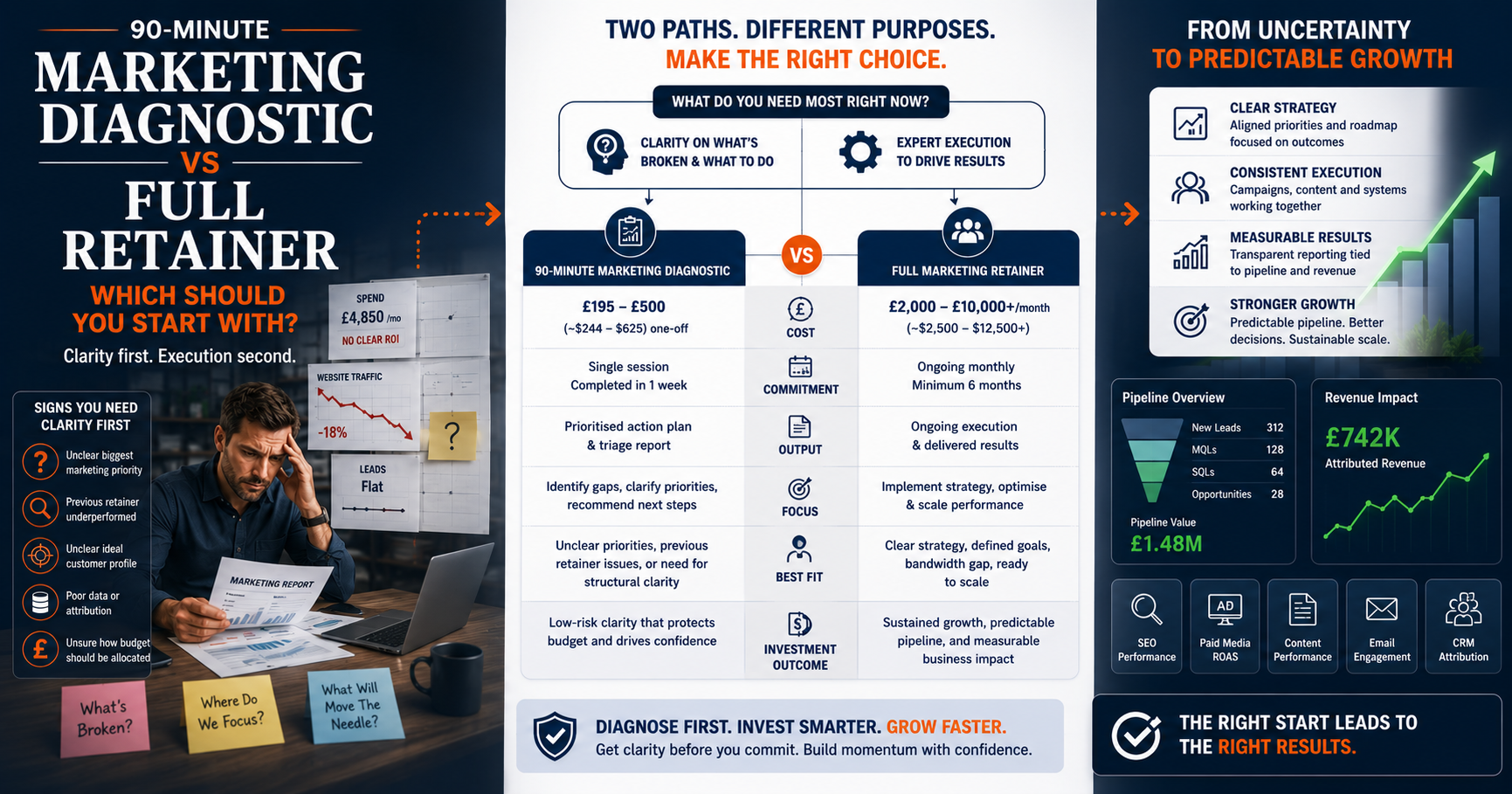
Investment ranges from £2,000–£7,000 ($2,500–$8,750) per month depending on the scope of engagement. Learn more about my strategic marketing services here

About the Author
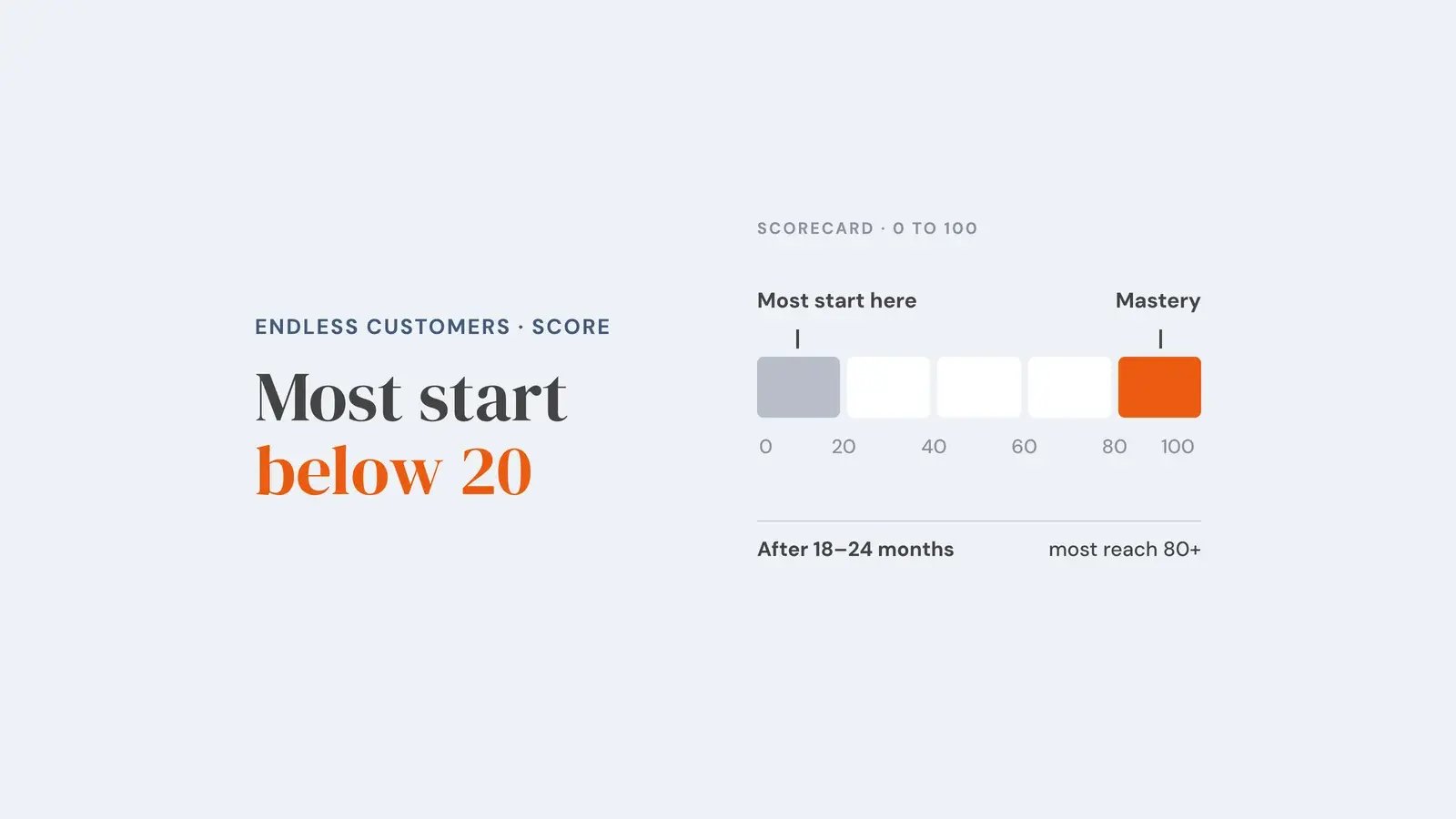
I'm Tom Wardman, and I help businesses build marketing systems that create trust and drive predictable growth. I've spent years working with mid-market B2B companies to transform chaotic, reactive marketing into strategic growth engines their teams actually own and operate. My approach is built on the Endless Customers System™ — a proven framework that works across industries to help you become the most trusted choice in your market. I work directly with founders, marketing leaders, and their teams through hands-on execution, strategic guidance, and training programmes designed to build capability you'll own forever.
Pricing Disclaimer: All GBP–USD price conversions are rounded estimates and correct at the time of publishing. Exchange rates fluctuate and figures should be treated as indicative only.
Topics: