

Key Takeaways
- Directionless marketing occurs when businesses execute multiple activities without a unified strategy, clear goals, or measurable connection to revenue outcomes.
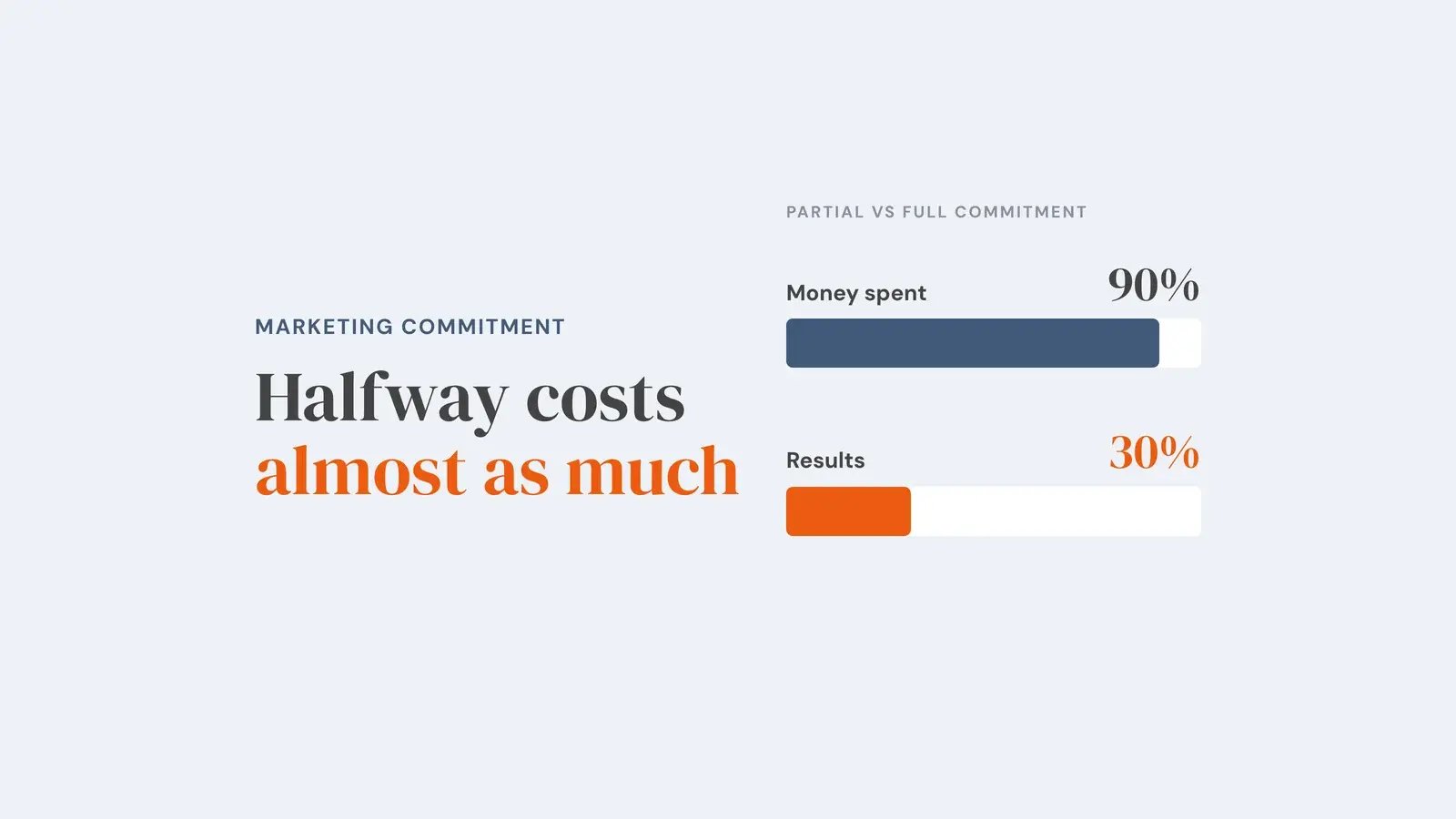
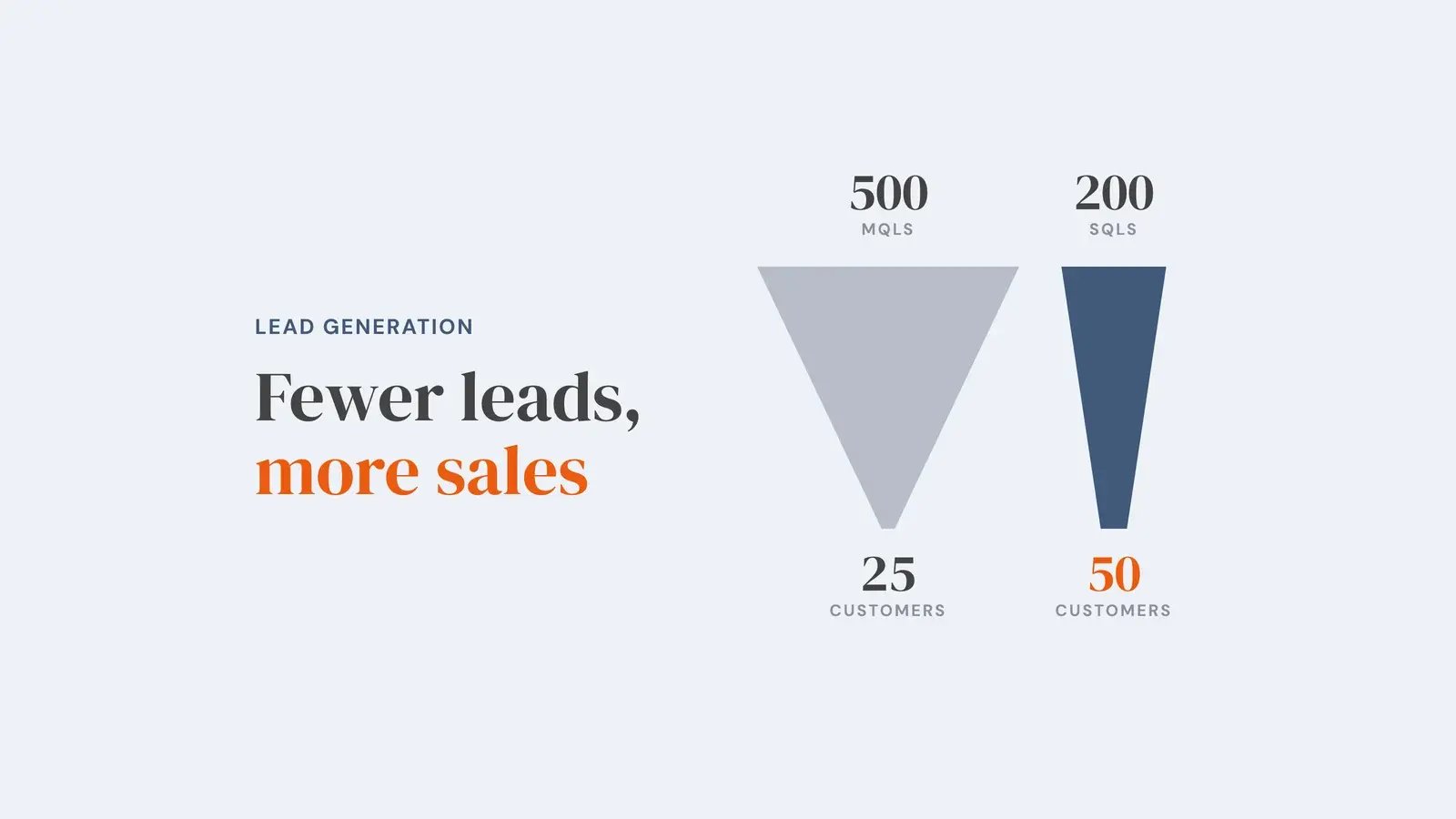
- Businesses with directionless marketing typically waste 30-50% of their marketing budget on disconnected tactics that neither build on previous efforts nor contribute to a coherent customer journey.
- Five warning signs indicate strategy absence: reactive content creation, inconsistent messaging, inability to articulate target audience, undefined metrics, and constant pivots.
- Restoring marketing direction requires documenting your ideal customer profile, auditing current activities, defining 3-5 measurable goals tied to revenue, creating a focused 90-day plan, and establishing weekly review rhythms.
- Most businesses can establish strategic direction within 4-6 weeks, though full team adoption typically requires 90 days of consistent execution.
Are you pouring time and budget into marketing without seeing real results?
Your marketing team posts daily on social media. You send regular emails. Content gets created. Budgets get spent. Yet when someone asks what results you're getting, you struggle to give a clear answer.
When was the last time your marketing activity directly translated into revenue growth?
This article is for business leaders and marketing teams who feel busy but uncertain whether their efforts connect to actual business growth. You'll learn why marketing becomes directionless, how to recognise the warning signs, and the specific steps to establish strategic clarity that drives measurable results.
What is directionless marketing?
Directionless marketing occurs when a business executes multiple marketing activities without a unified strategy, clear goals, or measurable connection to revenue outcomes. Teams often report feeling 'busy' with social posts, emails, and content creation, yet struggle to explain how these efforts contribute to business growth or customer acquisition.
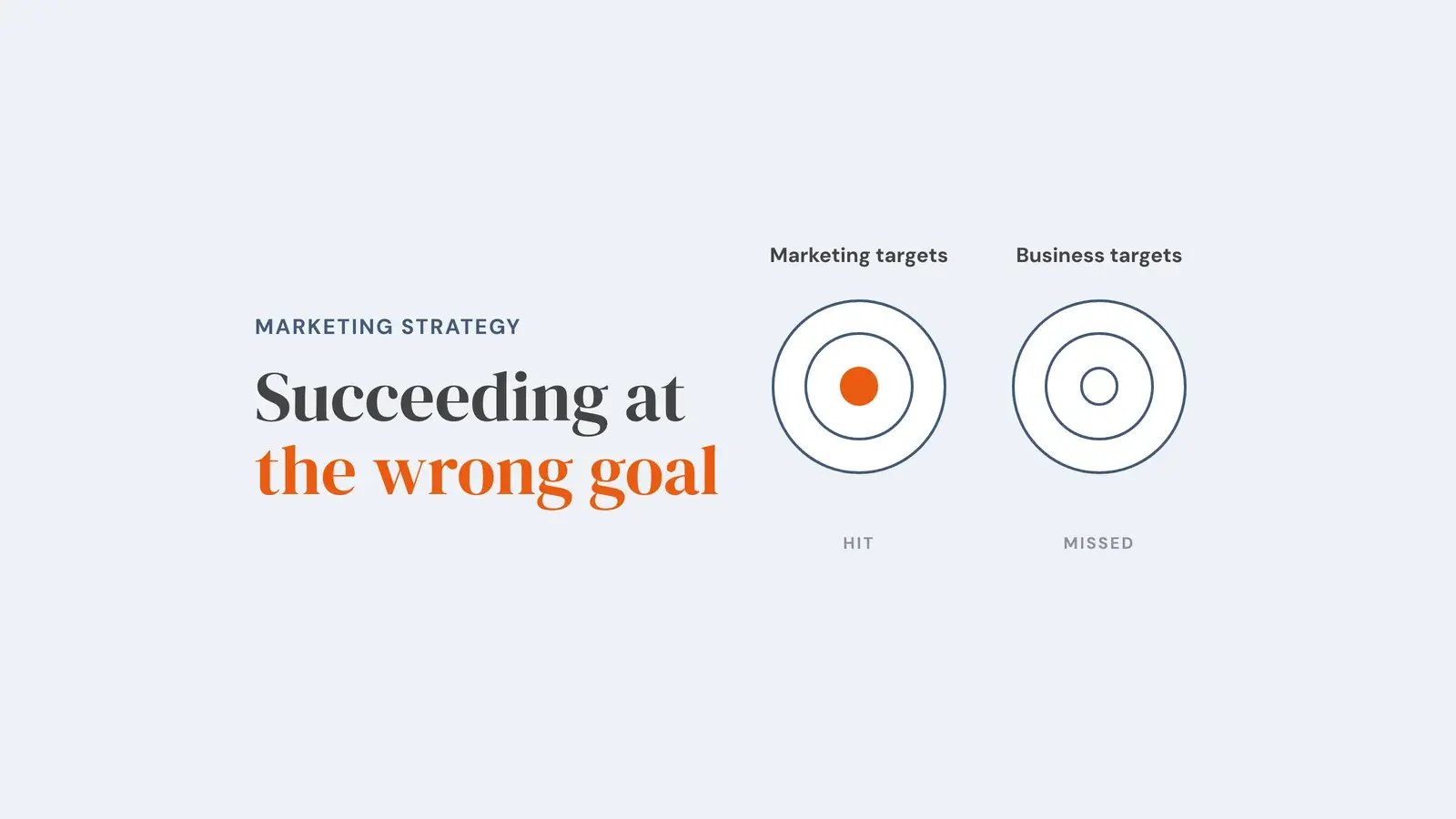
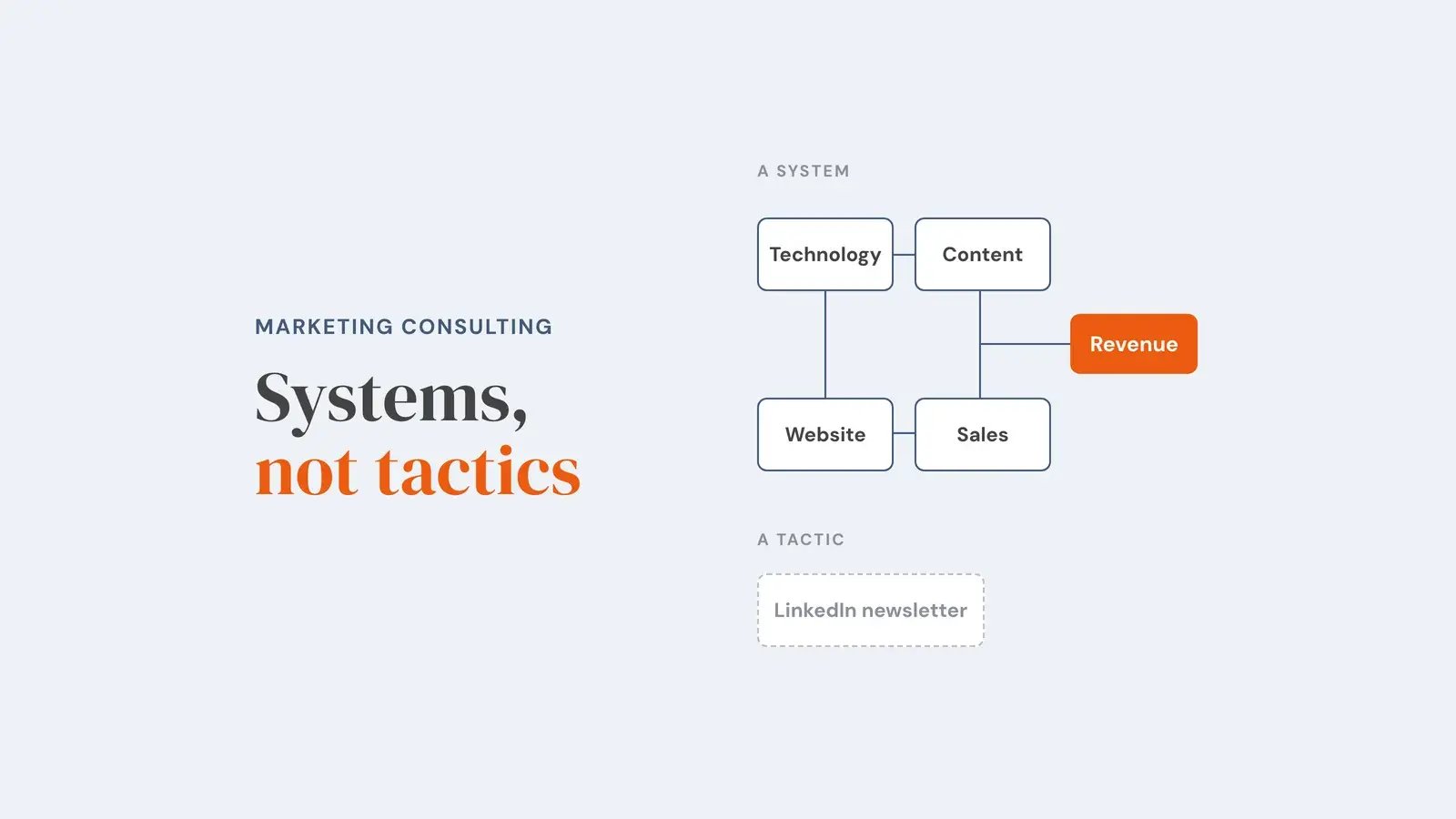
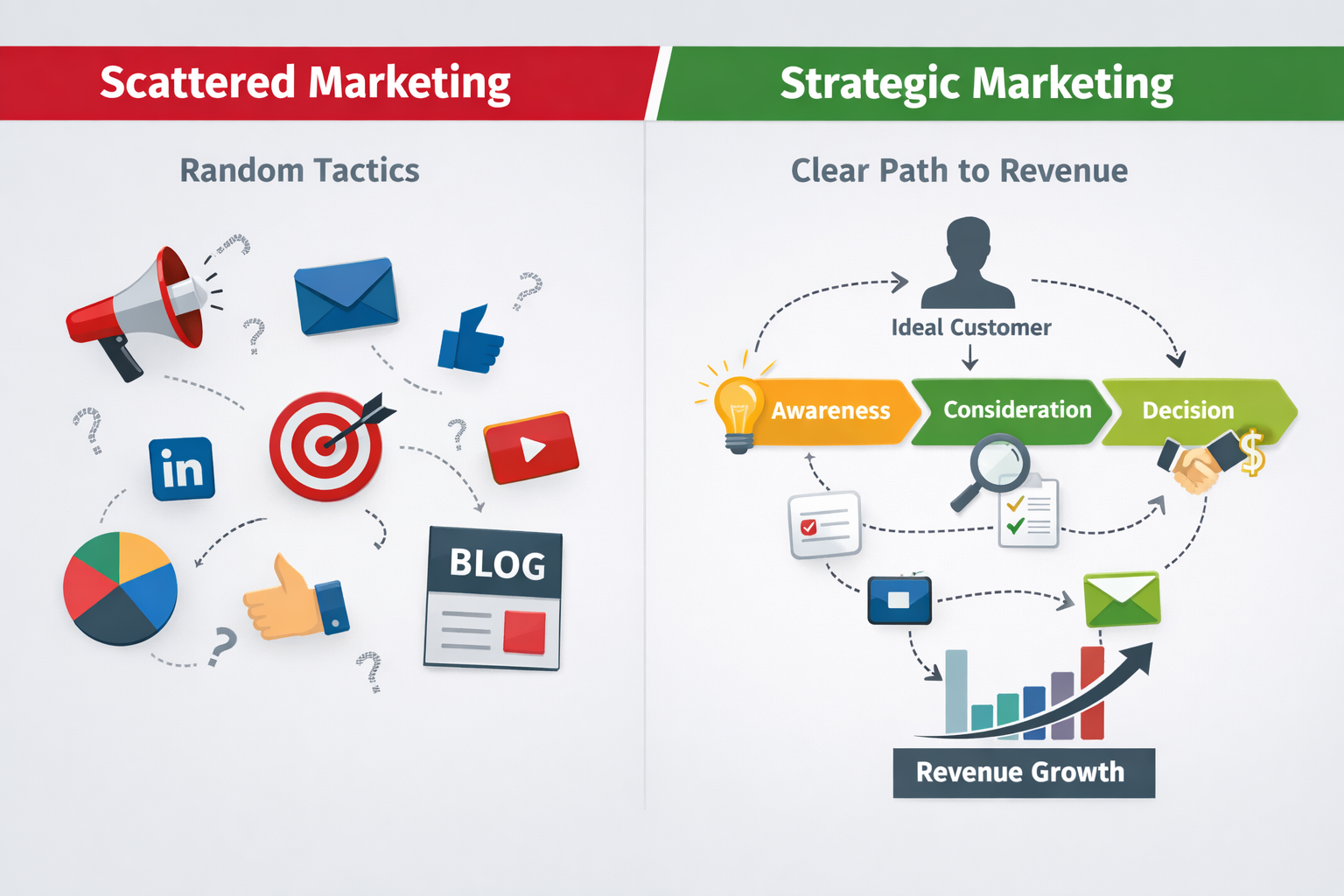
This happens when tactics replace strategy. You post on Instagram because competitors do. You create blog content because someone said you should. You run LinkedIn ads because a webinar promised results. None of these activities necessarily connect to what your buyers actually need or ask at different stages of their decision process.
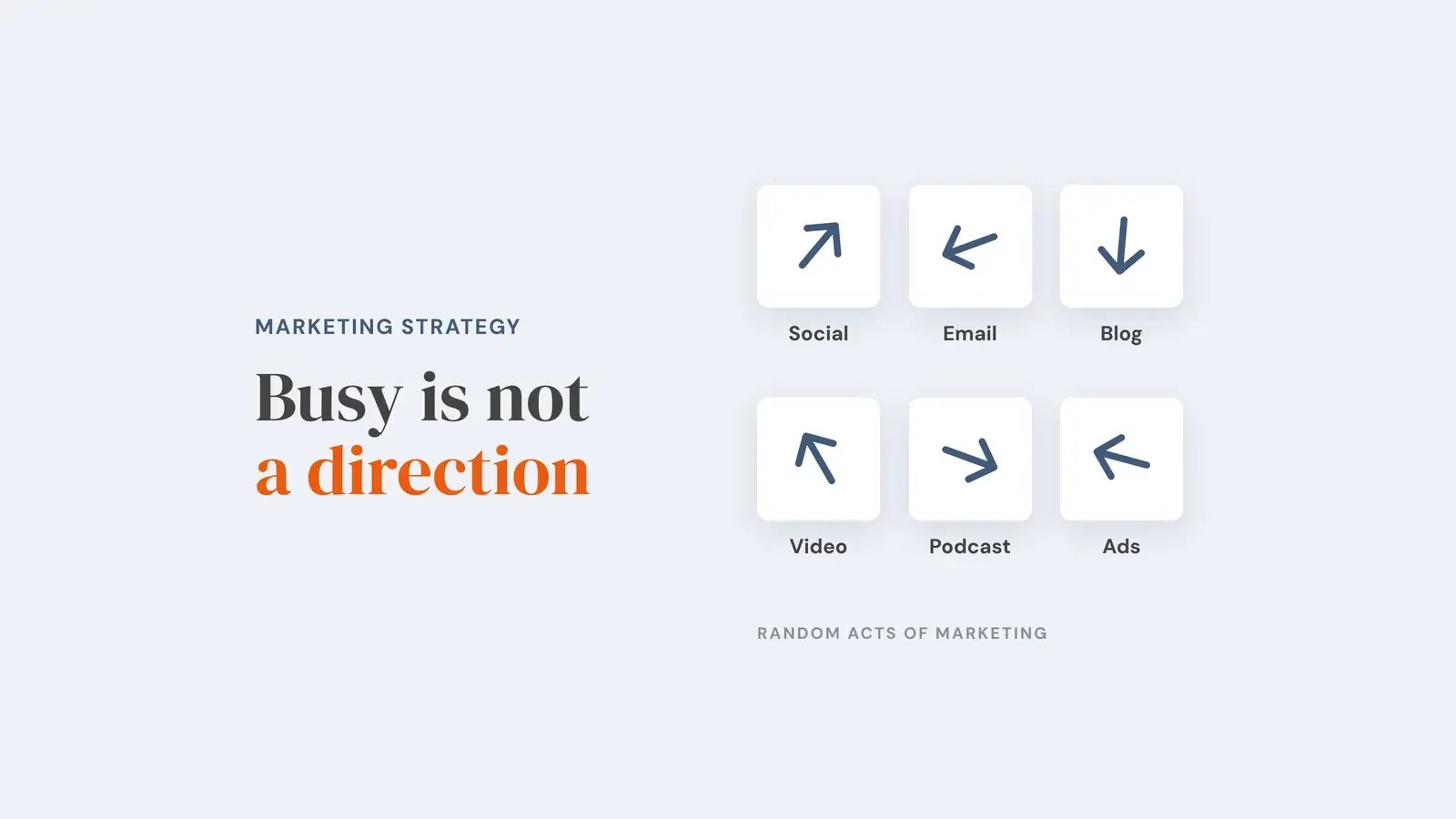
The result is random acts of marketing—disconnected efforts that consume time and budget without building toward anything specific. Each initiative starts fresh, ignoring what came before, creating a perpetual cycle of starting over.
5 clear signs your marketing strategy is broken (and what it's costing you)
Marketing teams exhibit five consistent patterns when strategy is absent:
- Reactive content creation driven by trends rather than buyer needs
- Inconsistent messaging across channels
- Inability to articulate target audience clearly
- No defined metrics or abandoned dashboards
- Constant 'pivots' that reset progress to zero.
These symptoms often coexist, creating a cycle where increased activity masks the absence of strategic progress.
- You're reacting to trends instead of buyer questions. Your content calendar fills with whatever's trending on LinkedIn or topics competitors recently covered, not the specific questions your buyers ask your sales team during actual conversations.
- Your team can't clearly describe your ideal customer. Ask three team members to describe who you serve and you'll get three different answers—different company sizes, different industries, different problems you solve.
- Metrics get measured inconsistently or not at all. Dashboards exist but nobody reviews them. When pressed, teams cite vanity metrics like 'impressions' or 'engagement' rather than leads generated or opportunities created.
- Messaging varies wildly across channels. Your website emphasises one value proposition, your LinkedIn another, and your sales team tells a third story entirely. Prospects receive conflicting messages depending on where they encounter you.
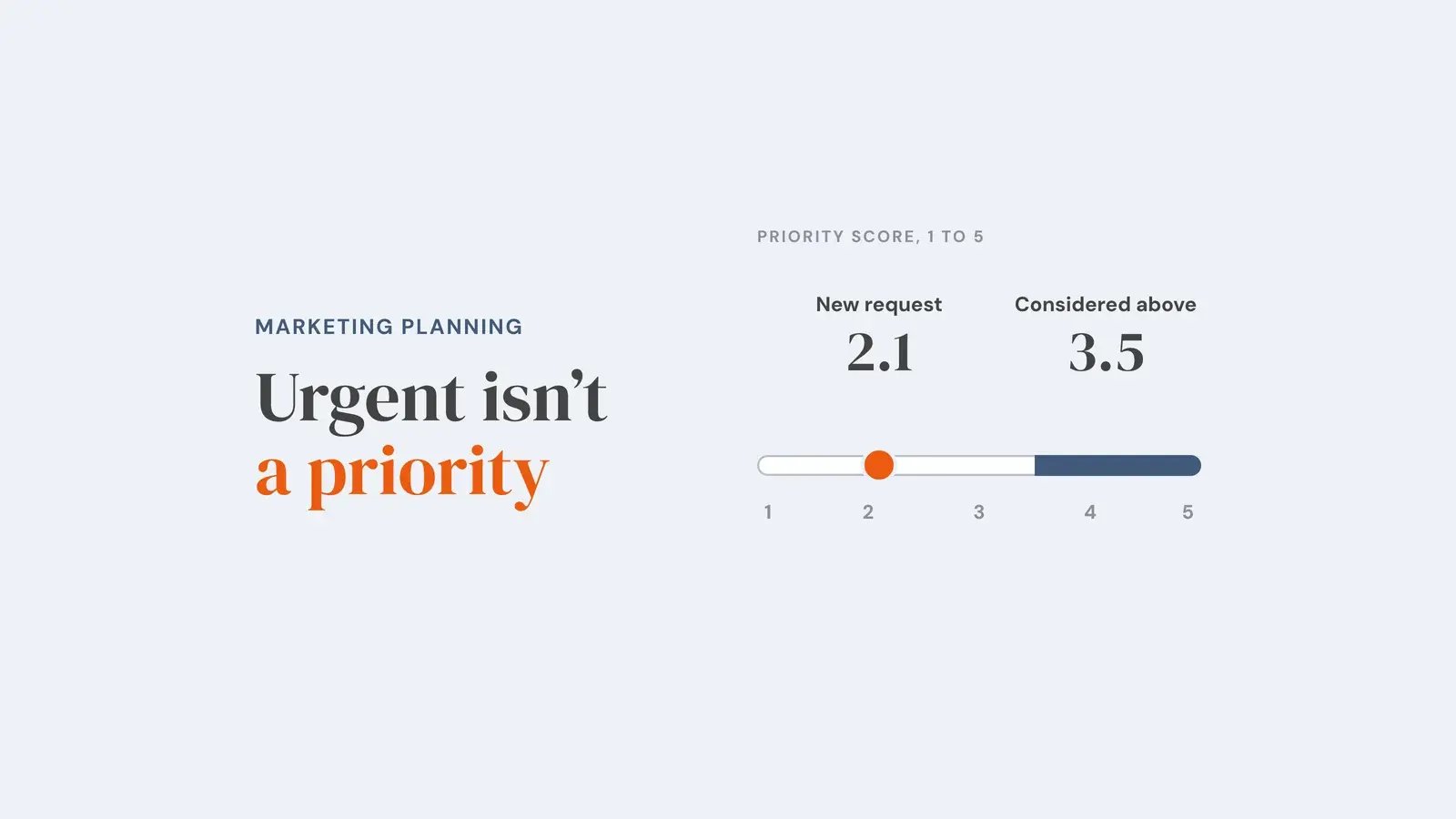
- Priorities shift constantly. This month it's video, next month it's podcasting, then suddenly it's account-based marketing. Each shift abandons previous work before it has time to show results.
Why high output doesn't equal marketing success
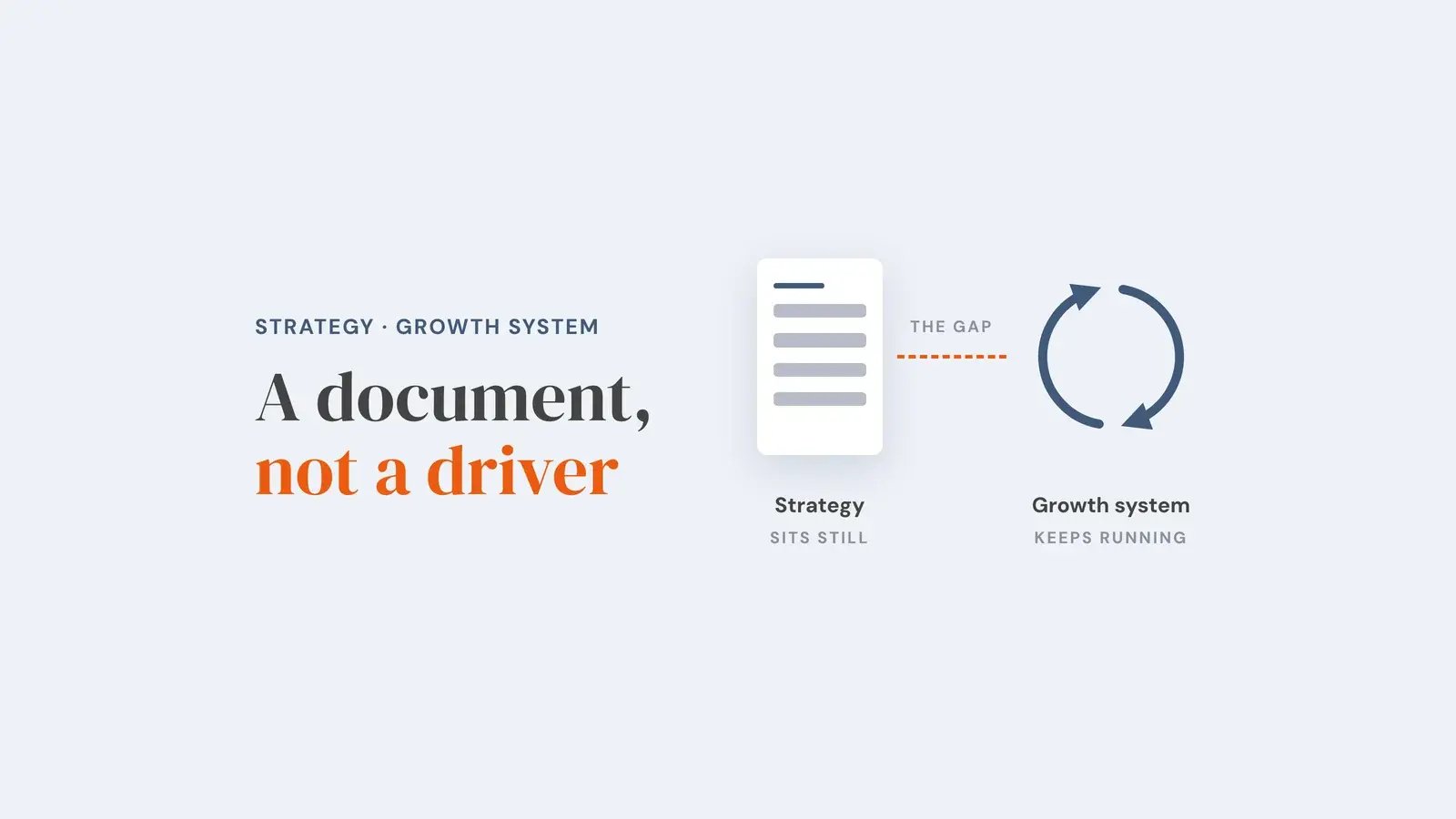
The 'busy but directionless' paradox stems from confusing marketing activity with marketing strategy; teams mistake execution volume for strategic progress. Without a documented strategy connecting activities to buyer stages and business objectives, every tactic feels equally urgent, leading to random acts of marketing that consume resources without compounding results.
Activity creates the illusion of progress. Your team points to output: "We published 12 blog posts this month" or "We sent 8 email campaigns." But output doesn't equal outcome. None of that activity matters if it doesn't answer questions buyers actually ask or move prospects closer to purchase decisions.
The underlying problem is treating tactics as interchangeable. When you lack strategic criteria for deciding what to do, everything seems worth trying. This leads to initiative overload where your team runs on a treadmill, working harder without moving forward.
The hidden costs of directionless marketing
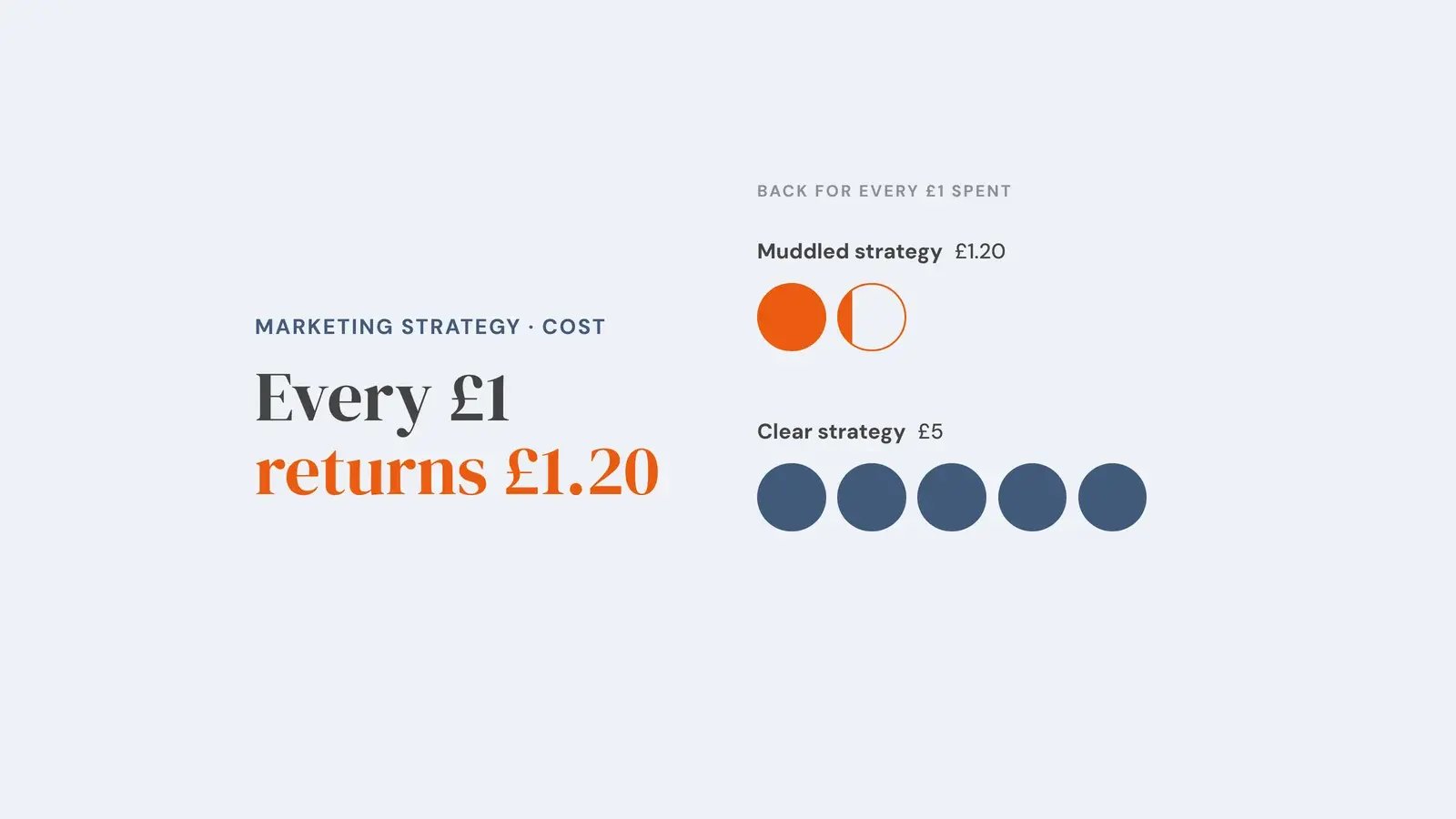
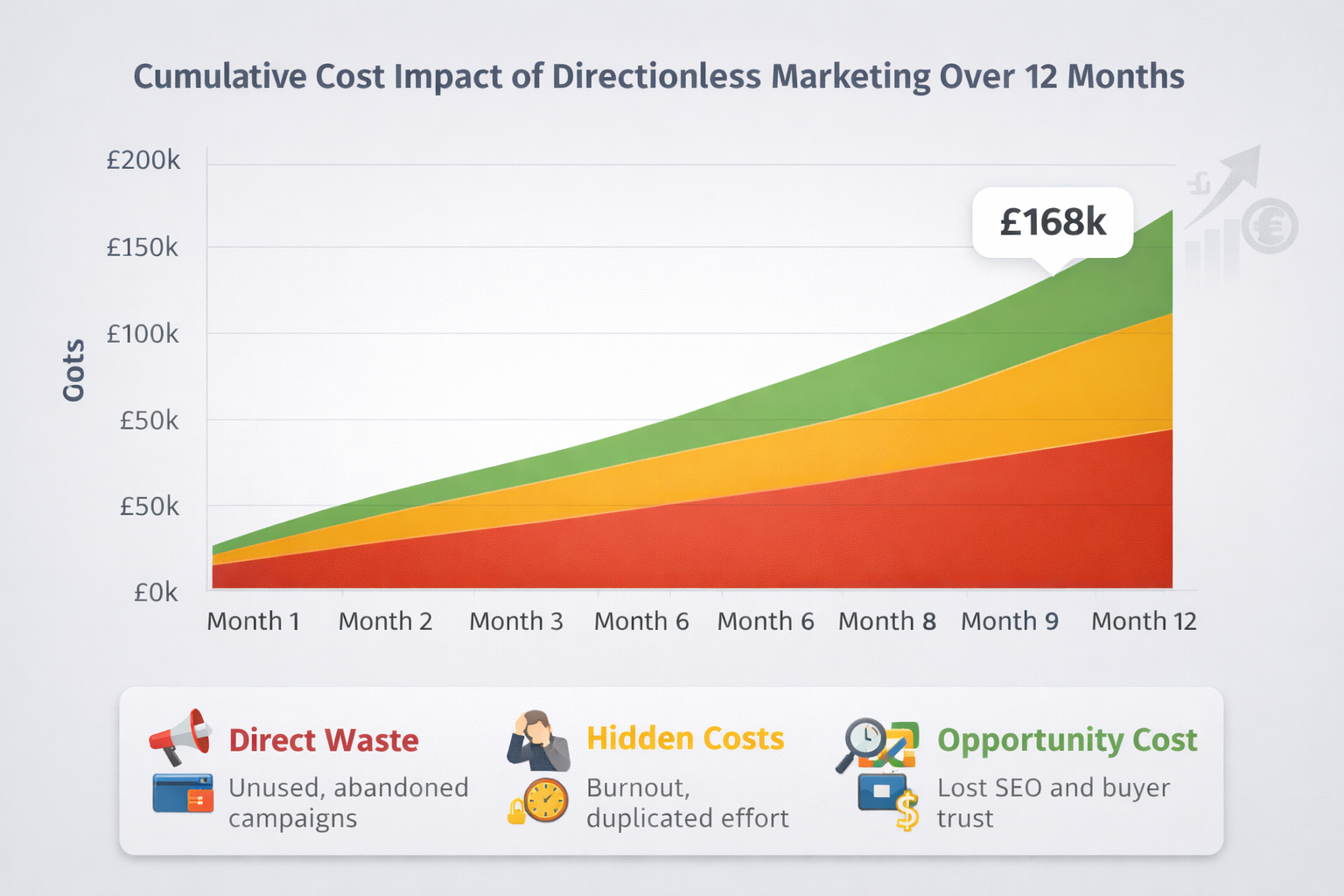
Businesses with directionless marketing typically waste 30-50% of their marketing budget on disconnected tactics that neither build on previous efforts nor contribute to a coherent customer journey. Beyond direct financial waste, hidden costs include team burnout from constantly changing priorities, lost momentum as initiatives are abandoned mid-flight, and opportunity cost of not building compounding assets like SEO authority or brand trust.
| Cost Type | Examples | Annual Impact (£10k/month budget) |
|---|---|---|
| Direct waste | Unused tools, abandoned campaigns, redundant content | £36,000–£60,000 ($45,000–$75,000) |
| Hidden costs | Team turnover, rework, duplicated effort | £24,000–£36,000 ($30,000–$45,000) |
| Opportunity cost | Lost SEO momentum, missed buyer trust, competitor advantage | £48,000–£84,000 ($60,000–$105,000) |
The most expensive cost is time. Every month spent without strategic direction is a month your competitors use to build trust with buyers who could have chosen you. That market position becomes increasingly difficult to recover the longer you wait.
Why marketing loses direction
Three root causes create directionless marketing: absence of a documented strategy that connects tactics to revenue goals, lack of clear ownership and decision-making authority, and no systematic way to capture and prioritise what buyers actually ask.
These structural gaps force teams into perpetual reactive mode, where the loudest voice or latest trend determines priorities rather than strategic fit or buyer impact.
Missing strategy documentation
Most businesses don't have a written document answering: Who exactly are we serving? What specific questions do they ask at each buying stage? Which channels do they use for research? What content addresses their questions? Without documentation, institutional knowledge lives in people's heads, creating inconsistency and making strategic decisions impossible.
No clear decision framework
When opportunities arise, such as a speaking engagement, a partnership proposal, a content collaboration, teams lack criteria for deciding whether to participate. Without frameworks like "Does this reach our ideal buyer?" or "Does this answer a question our sales team hears repeatedly?", everything seems potentially valuable, leading to scattered effort.
No systematic buyer feedback loop
Without a process to capture what buyers actually ask during sales conversations, marketing operates on assumptions rather than evidence. Teams create content based on what they think matters instead of addressing the real questions prospects raise repeatedly.
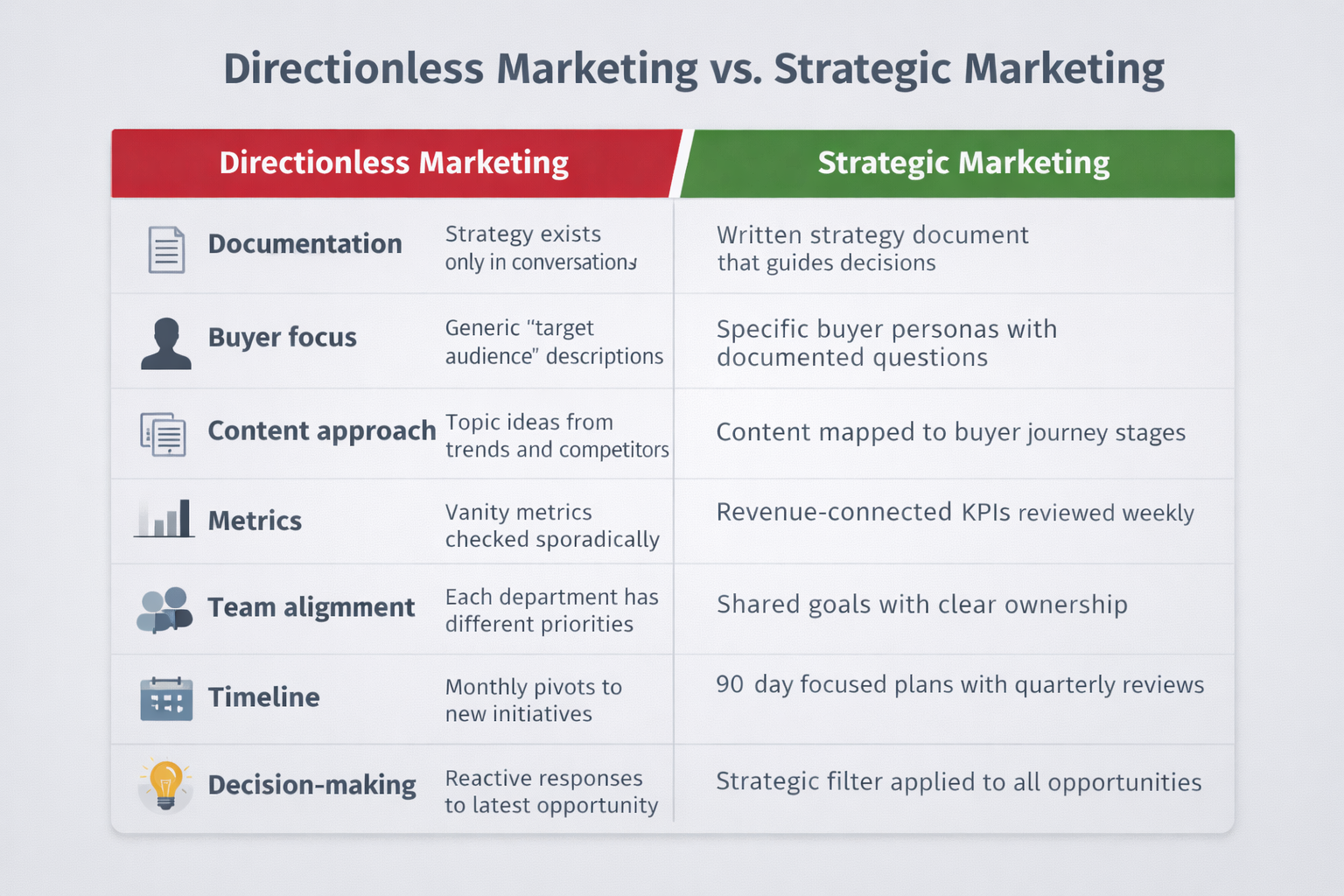
Directionless marketing vs. strategic marketing: what's different?
Strategic marketing is characterised by documented buyer personas, a content plan mapped to buyer questions and stages, defined success metrics reviewed regularly, and cumulative efforts that build on previous work rather than resetting. Directionless marketing, by contrast, lacks documentation, shifts focus monthly, measures vanity metrics inconsistently, and treats each campaign as isolated from the last.
| Attribute | Directionless Marketing | Strategic Marketing |
|---|---|---|
| Documentation | Strategy exists only in conversations | Written strategy document that guides decisions |
| Buyer focus | Generic "target audience" descriptions | Specific buyer personas with documented questions |
| Content approach | Topic ideas from trends and competitors | Content mapped to buyer journey stages |
| Metrics | Vanity metrics checked sporadically | Revenue-connected KPIs reviewed weekly |
| Team alignment | Each department has different priorities | Shared goals with clear ownership |
| Timeline | Monthly pivots to new initiatives | 90-day focused plans with quarterly reviews |
| Decision-making | Reactive responses to latest opportunity | Strategic filter applied to all opportunities |
| Results | Inconsistent, hard to attribute | Compounding, measurable growth |
How to fix directionless marketing: 5-step framework
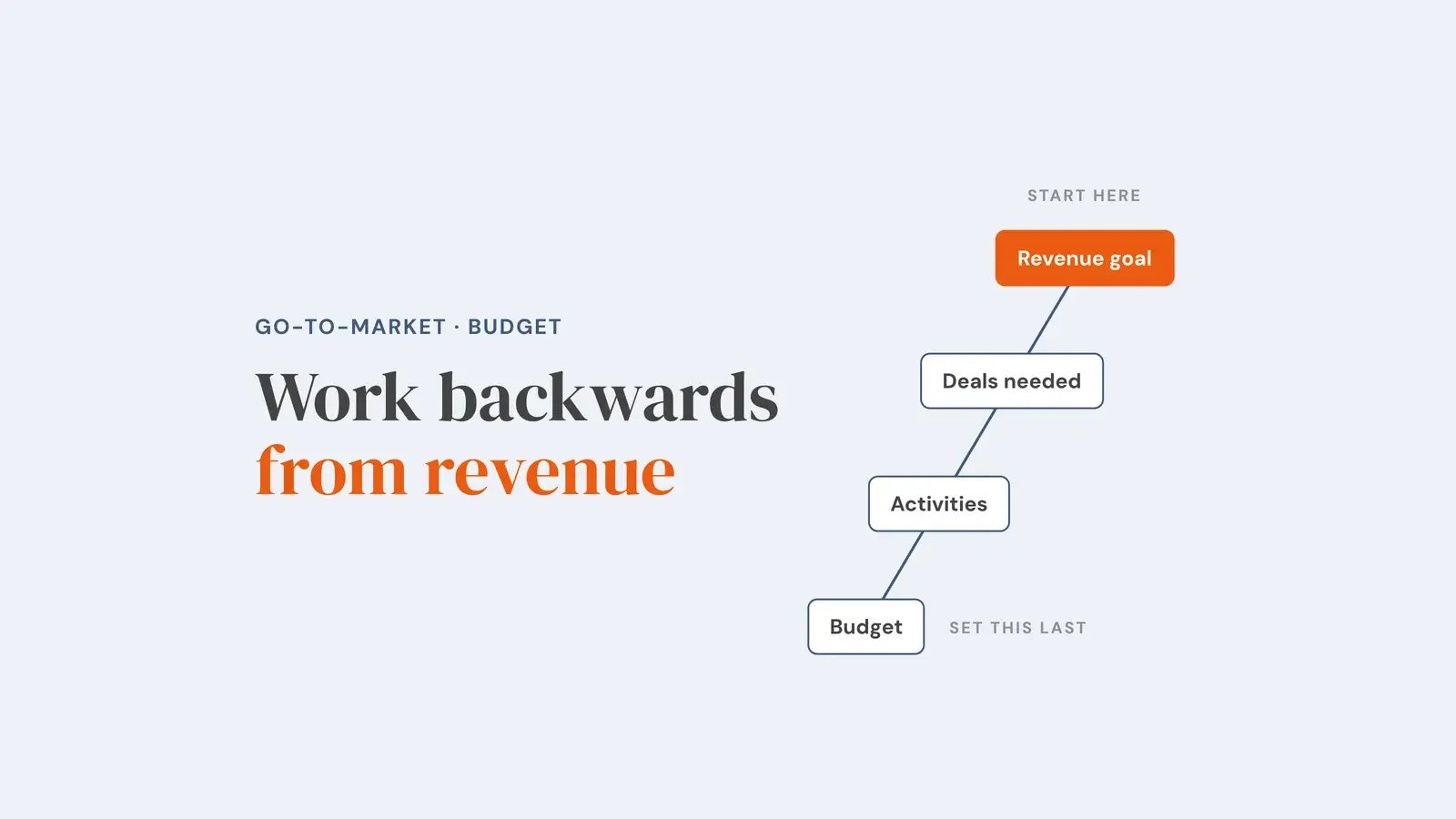
Restoring marketing direction requires five sequential steps: documenting your ideal customer profile and the specific questions they ask at each buying stage, auditing current activities to identify what to stop or consolidate, defining 3-5 measurable goals tied directly to revenue, creating a 90-day focused plan with clear ownership, and establishing a weekly review rhythm to maintain accountability.
This framework prioritises strategic clarity over activity volume, deliberately reducing the number of initiatives to ensure each one serves a documented buyer need and business objective.
Step 1: Document who you serve and what they ask
Interview your sales team to identify the 20-30 questions buyers ask most frequently. Group these questions by buying stage (awareness, consideration, decision). Create a simple document defining your ideal customer: company size, industry, annual revenue, decision-makers involved, and typical buying process length.
Step 2: Audit and eliminate low-impact activities
List every marketing activity currently running. Score each against two criteria: "Does this address a documented buyer question?" and "Can we measure its impact on pipeline or revenue?" Stop or consolidate anything scoring low on both measures—this typically eliminates 40-60% of current activities.
Step 3: Define 3-5 measurable goals tied to revenue
Choose metrics your finance team would recognise: qualified leads generated, sales opportunities created, average deal size, sales cycle length, or customer acquisition cost. Avoid metrics like 'followers' or 'engagement' unless you can demonstrate their connection to revenue.
Step 4: Create a 90-day focused plan
Select the 3-5 marketing initiatives that most directly address your top buyer questions and support your revenue goals. Assign clear ownership for each initiative. Document what success looks like and how you'll measure it. Resist adding new initiatives until the 90 days complete.
Step 5: Establish weekly review rhythm
Set a recurring weekly meeting where the team reviews progress against the 90-day plan. Use the meeting to identify blockers, make small adjustments, and hold each other accountable. This consistent rhythm prevents the gradual drift back into reactive mode.
What to look for in a marketing strategy consultant
The right marketing strategist should prioritise strategy documentation and buyer research over execution tactics, demonstrate a systematic approach to connecting marketing activities to revenue, and show evidence of helping teams eliminate busywork rather than adding more tasks.
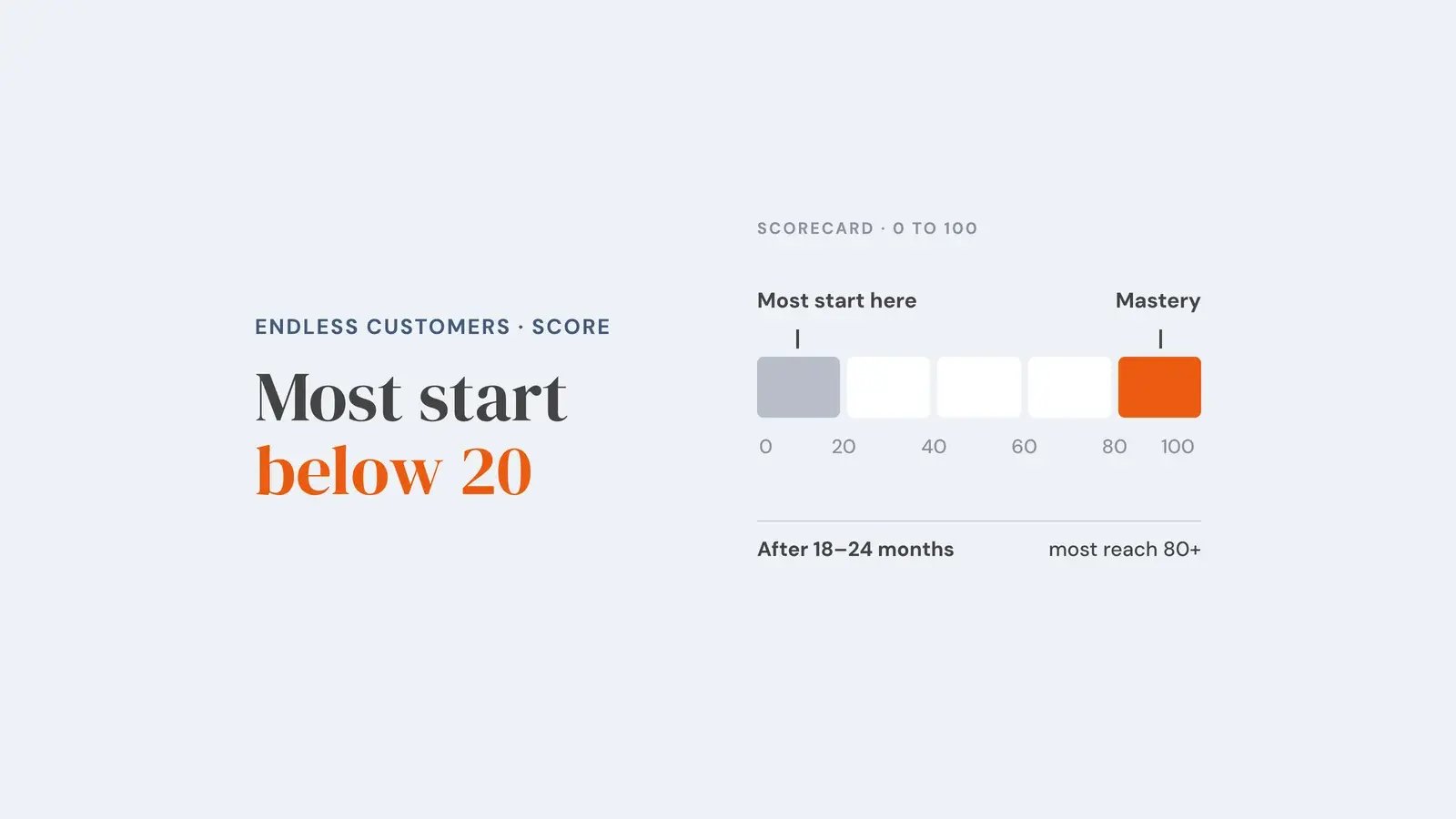
Key credentials include expertise in frameworks like Endless Customers, proven experience creating strategy documentation that teams actually use, and a focus on teaching your team strategic thinking rather than creating dependency.
Look for these seven selection criteria:
- Strategy-first approach: They start with discovery and documentation, not immediately proposing tactics
- Buyer-centric methodology: They interview your customers and sales team before recommending channels
- Framework expertise: They use proven systems (like They Ask You Answer or similar) rather than inventing approaches
- Teaching orientation: They transfer knowledge to your team, not just execute on your behalf
- Revenue connection: They speak about pipeline, opportunities, and sales cycle—not just traffic and leads
- Documentation focus: They produce written strategy documents your team can reference and follow
- Realistic timelines: They acknowledge that building strategic capability takes 90+ days, not weeks
Learn more about my marketing strategy services
How long does it take to fix directionless marketing?
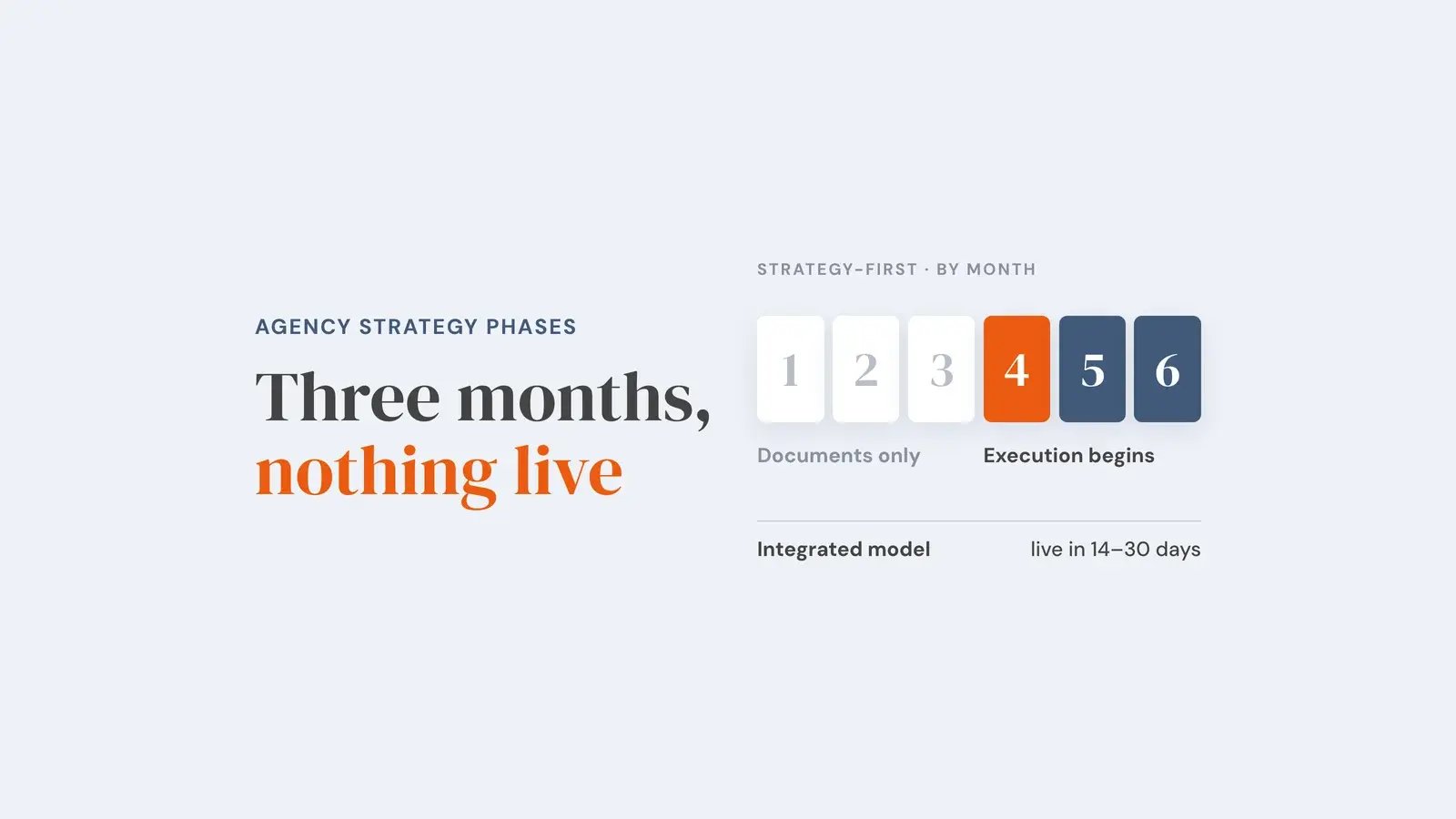
Most businesses can establish strategic direction within 4-6 weeks through focused strategy workshops, buyer research, and documentation, though full team adoption and habit change typically requires 90 days of consistent execution.
The timeline varies based on organisation size, existing documentation, and leadership commitment to making strategic decisions rather than defaulting to tactical busyness.
The transformation happens in three phases:
- Weeks 1-2: Strategy documentation: defining ideal customers, documenting buyer questions, auditing current activities, and establishing metrics.
- Weeks 3-6: Plan creation and early execution: building the 90-day focused plan, assigning ownership, stopping low-impact activities, and beginning strategic initiatives.
- Weeks 7-12: Habit formation and refinement: maintaining weekly reviews, adjusting based on early results, and reinforcing the discipline to stay focused rather than chasing new shiny objects.
The faster path depends on leadership commitment. Teams with executive support who participate actively in workshops and enforce the strategic filter can establish direction in 4 weeks. Teams without active leadership typically take 8-10 weeks as they work to build consensus and secure necessary buy-in.
FAQ: Directionless marketing questions
Business owners and marketing leaders frequently ask similar questions when recognising their marketing lacks direction. These answers address the most common concerns about diagnosis, timeline, investment, and implementation.
How do I know if my marketing is truly directionless or just in a growth phase?
Directionless marketing shows specific symptoms: you can't articulate why you're doing specific activities beyond "we thought we should," your team can't explain how current work connects to revenue, and priorities shift every 30-60 days. Growth-phase marketing might feel chaotic but still has documented strategy, clear metrics, and consistent focus even while scaling quickly. If you can't produce a written document explaining your strategy, you're likely directionless rather than just growing fast.
Can I fix this without hiring outside help?
Yes, if you have internal expertise in marketing strategy frameworks and dedicated time to lead the process. The challenge most businesses face isn't capability but capacity—leaders understand what needs doing but can't extract themselves from daily operations long enough to document strategy and lead the change. An external strategist accelerates the process and provides accountability, but disciplined internal teams can achieve the same outcome over a longer timeline.
What's the typical investment to work with a strategy consultant?
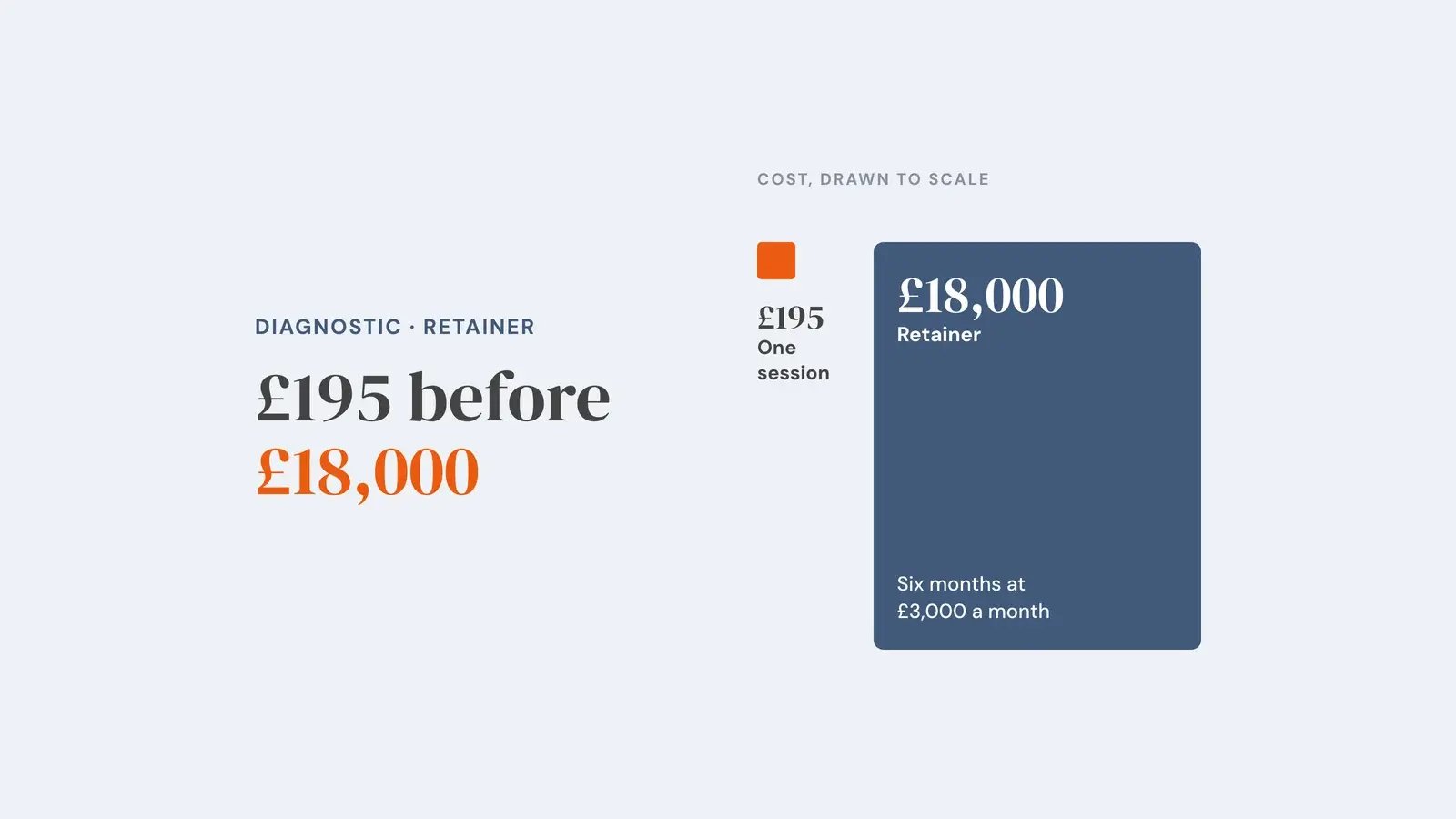
Marketing strategy consultants in the UK typically charge £3,000–£8,000 ($3,750–$10,000) for initial strategy documentation spanning 4-6 weeks. Ongoing strategic support (often called fractional CMO or marketing director services) ranges from £2,500–£7,500 ($3,125–$9,375) per month depending on time commitment and scope. The investment pays back quickly when you eliminate 30-50% of wasted marketing spend within the first 90 days.
Will fixing our strategy mean stopping campaigns already in progress?
Usually yes, partially. The audit typically reveals 40-60% of current activities should stop because they don't address buyer questions or connect to revenue goals. However, you'll also identify the 40% of activities that should continue and receive more focus. Stopping low-impact work frees capacity to execute high-impact work properly, ultimately producing better results with the same or smaller team.
How do I get leadership buy-in to slow down and create strategy first?
Present the cost of continuing without strategy: calculate wasted budget, show examples of abandoned initiatives, demonstrate team frustration from changing priorities, and illustrate competitor advantage being built while you remain directionless. Frame the conversation as "invest 4-6 weeks now to stop wasting 30-50% of budget forever" rather than "slow down." Most executives respond to clear cost-benefit analysis showing ROI of strategic clarity.
Conclusion
You came here frustrated by marketing that feels busy but gets no results; social posts, emails, and content that consume time and budget without clear connection to business growth.
You now understand what causes directionless marketing and how to fix it. The five-step framework gives you a proven path: document who you serve and what they ask, audit and eliminate low-impact activities, define measurable goals tied to revenue, create a focused 90-day plan, and establish weekly review rhythms. This takes 4-6 weeks to establish, with full team adoption requiring 90 days.
Your next step is straightforward. Start with a quick audit this week: list all current marketing activities and score each on "addresses buyer question" and "measurable revenue impact." Then interview your sales team to document the 20 most common questions buyers ask. These two actions create the foundation for strategic clarity.
I help businesses transform directionless marketing into focused strategy through the Endless Customers System™, building internal capability you'll own forever, not temporary fixes that disappear when you stop paying. Let's talk about where you are now and where you want to be.

About the Author
Tom Wardman is a marketing strategist specialising in helping businesses build trusted brands through proven frameworks like They Ask You Answer and the Endless Customers System™. He works with business leaders and their teams doing £1 million to £50 million ($1.25 million to $62.5 million) in annual revenue to create marketing strategies that connect directly to revenue outcomes. Rather than creating agency dependency, Tom focuses on building internal capability through hands-on execution, strategic guidance, and comprehensive training that teams own forever.
Pricing Disclaimer: All GBP–USD price conversions are rounded estimates and correct at the time of publishing. Exchange rates fluctuate and figures should be treated as indicative only.
Topics: