

Are you spending thousands on a marketing agency and still not seeing a clear return? Are you unsure whether the problem sits with them or with you?
This article gives you a structured way to diagnose the real cause, have the right accountability conversation, and make a confident, well-reasoned decision: stay, renegotiate, or leave.
Here is what you will find inside: a plain-English definition of what ROI actually means in an agency context, a 4-part diagnostic audit to identify root cause, a 6-step reset process if the relationship is salvageable, and a clear stay/renegotiate/exit decision framework for when it is not.
It is written for business owners and marketing leaders who are frustrated with a current agency relationship and need to act, without repeating the same mistake with whoever comes next.
Key Takeaways
- Not seeing ROI from your agency means revenue, leads, or measurable outcomes have not grown in proportion to your spend — but "ROI" is often left undefined at the start of any engagement.
- Agencies fail to deliver results for three core reasons: misaligned expectations, poor strategy execution, or insufficient access to client data.
- Most businesses that see meaningful ROI from a marketing agency are investing at least £2,000–£5,000/month ($2,500–$6,250), with results typically emerging between months three and nine.
- Before cutting budget or replacing the agency, diagnose root cause across four areas: goal clarity, reporting quality, strategy coherence, and your own team's responsiveness.
- Fire your agency if they resist accountability, cannot explain why results have stalled, or if a structured reset period passes with no improvement.
What does "no ROI from your agency" actually mean?
Not seeing ROI from your agency means your revenue, leads, or measurable outcomes have not grown in proportion to the fees and time you are investing in the relationship.
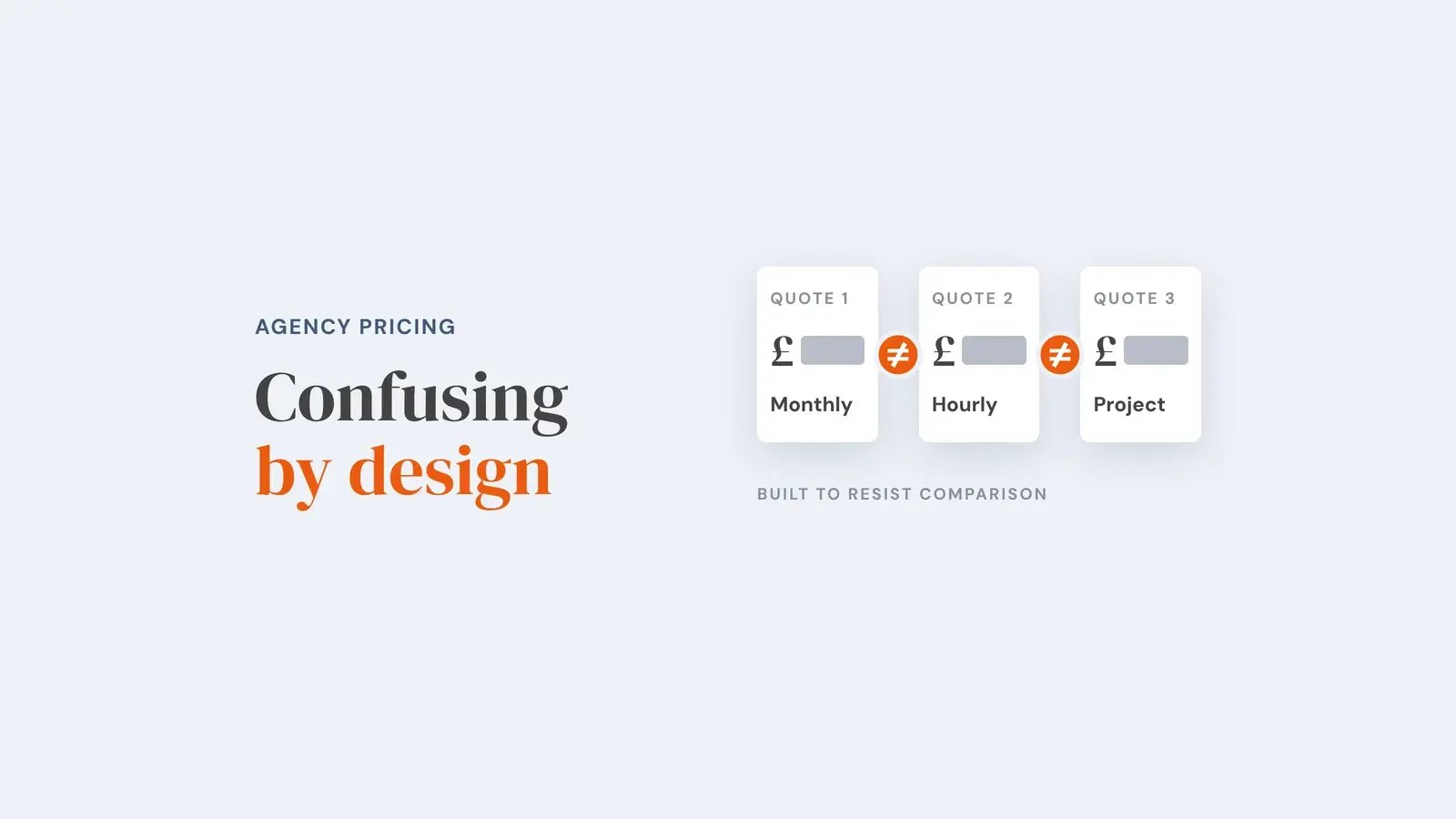
The challenge is that "ROI" is rarely defined at the start of an engagement. Both sides measure success differently, and both feel justified.
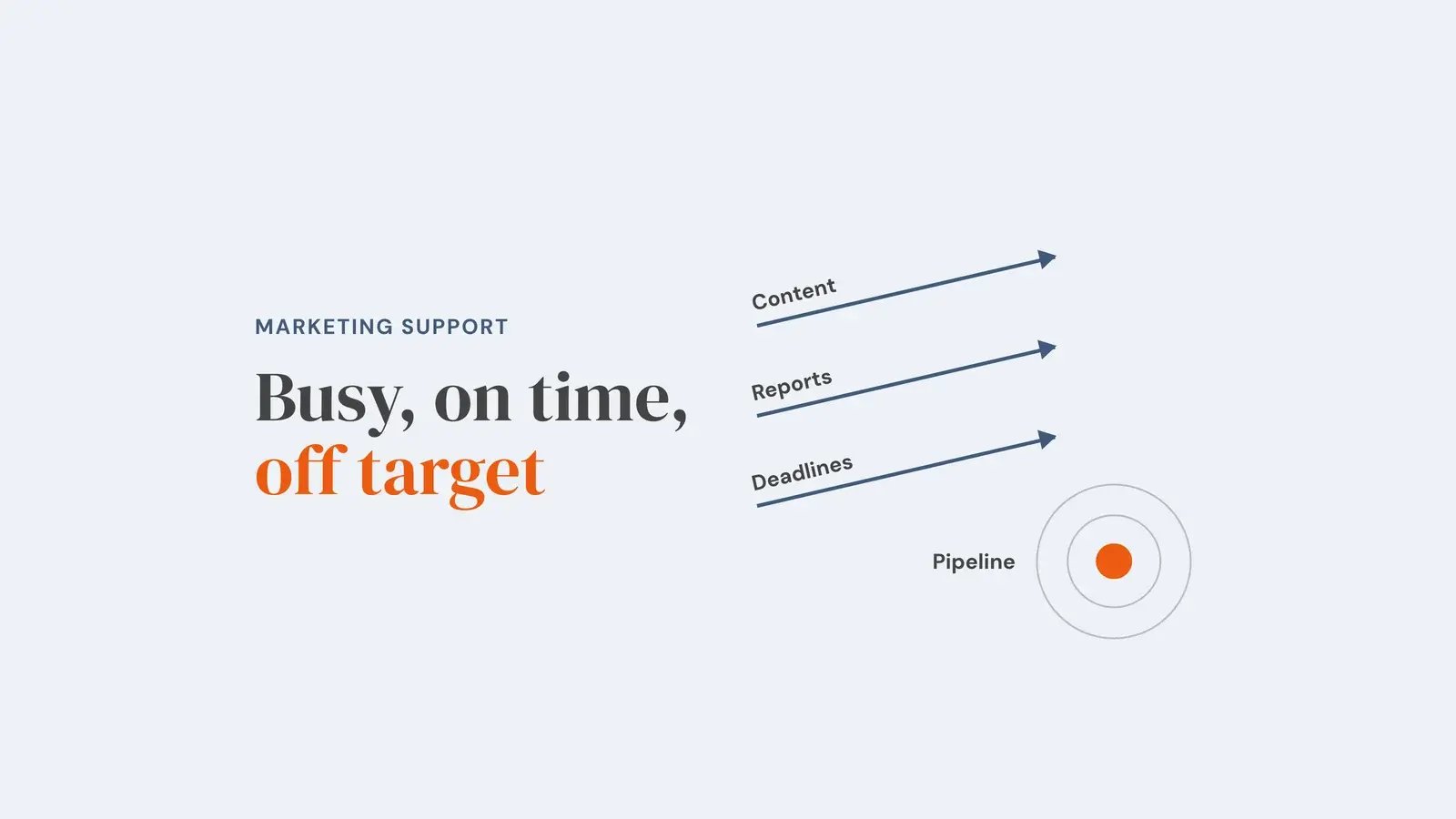
Your agency points to increased traffic and social growth. You point to an unchanged pipeline. Both are right, and that is the problem.
| Vanity metric | ROI-linked metric |
|---|---|
| Website sessions | Marketing-attributed revenue |
| Follower growth | Pipeline value from leads |
| Email open rate | Booked sales conversations |
| Content pieces published | Content-influenced deals closed |
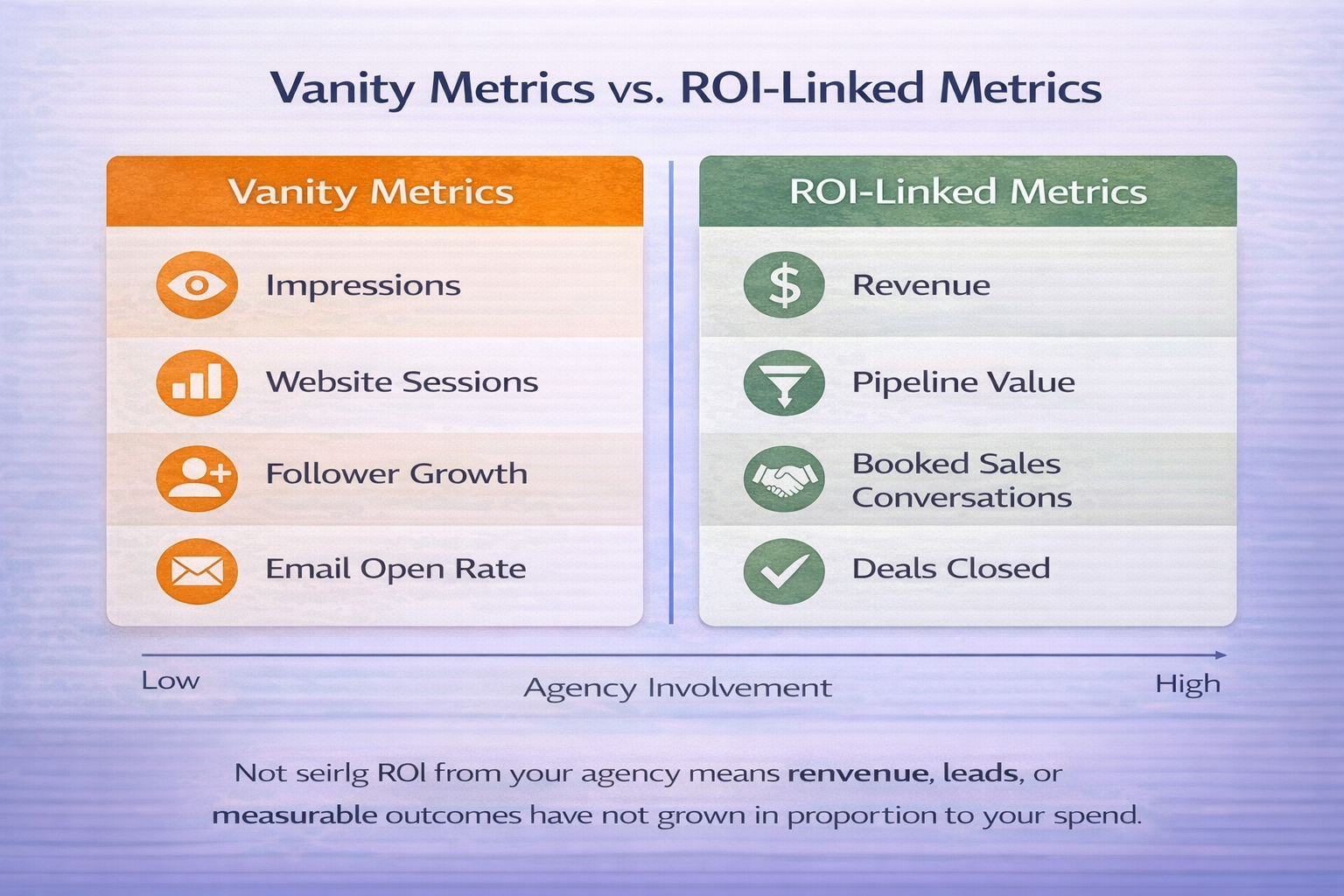
The first step is not to fire the agency. It is to agree, in writing, what ROI actually means for your business.
For more on how agencies weaponise misleading reporting, see this article on the vanity metric epidemic for more on how agencies fool you with fake wins.
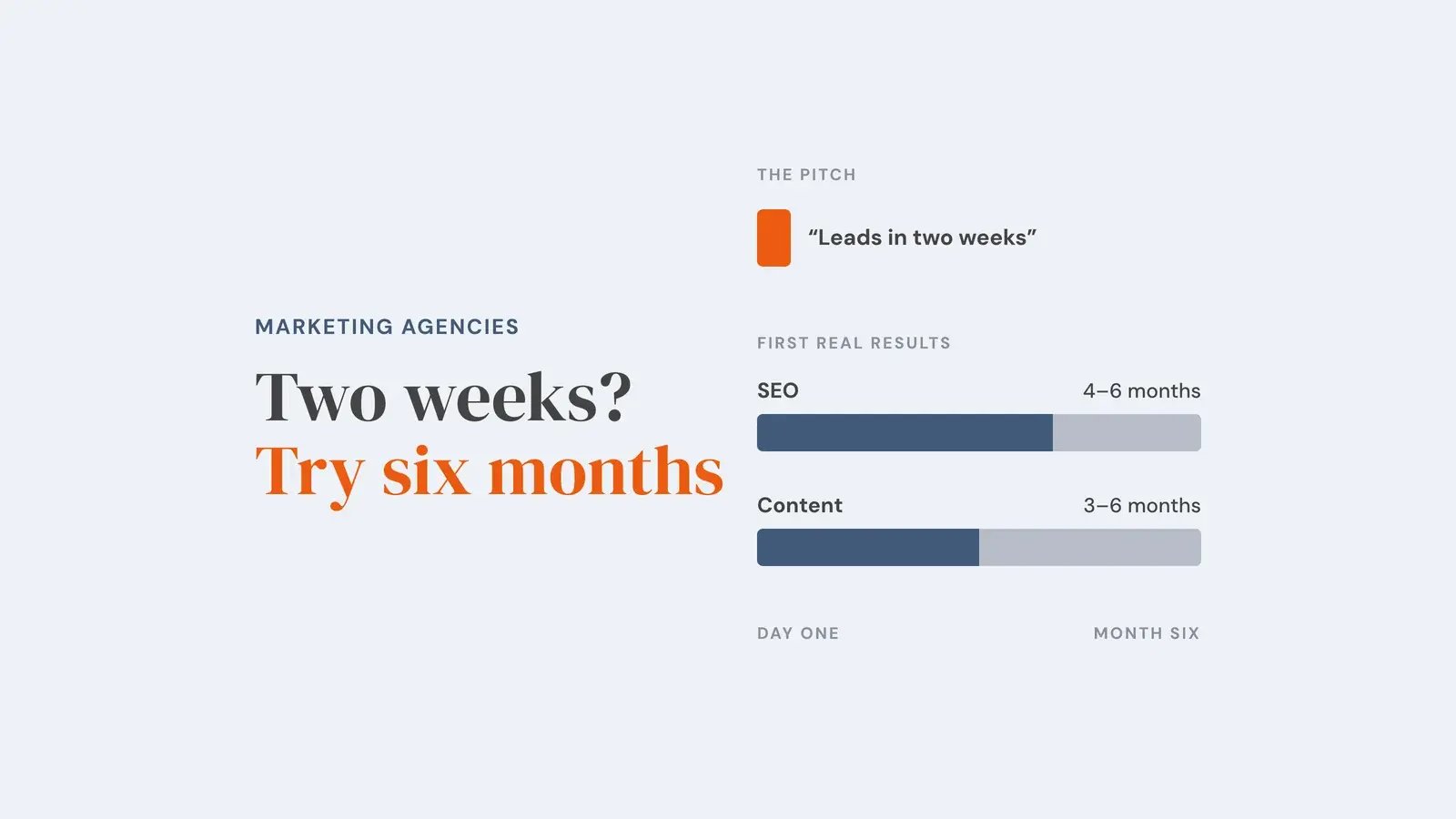
Realistic ROI timelines by channel (estimates based on industry consensus):
- PPC: 1–3 months to optimise toward positive ROI
- SEO: 6–12 months for significant measurable results
- Content marketing: 6–18 months for compounding authority gains
Why agencies fail to deliver ROI, and who's really responsible
Agencies fail to deliver ROI for three core reasons: misaligned expectations, poor strategy execution, or a lack of access to the data and resources they need from the client.
One of the most common misconceptions is that slow results are always the agency's fault. In reality, the client is a contributing variable in nearly every underperforming engagement.
Agency-side failures:
- Strategy built on assumptions, not buyer research
- Activity reported instead of outcomes
- High staff turnover causing lost context
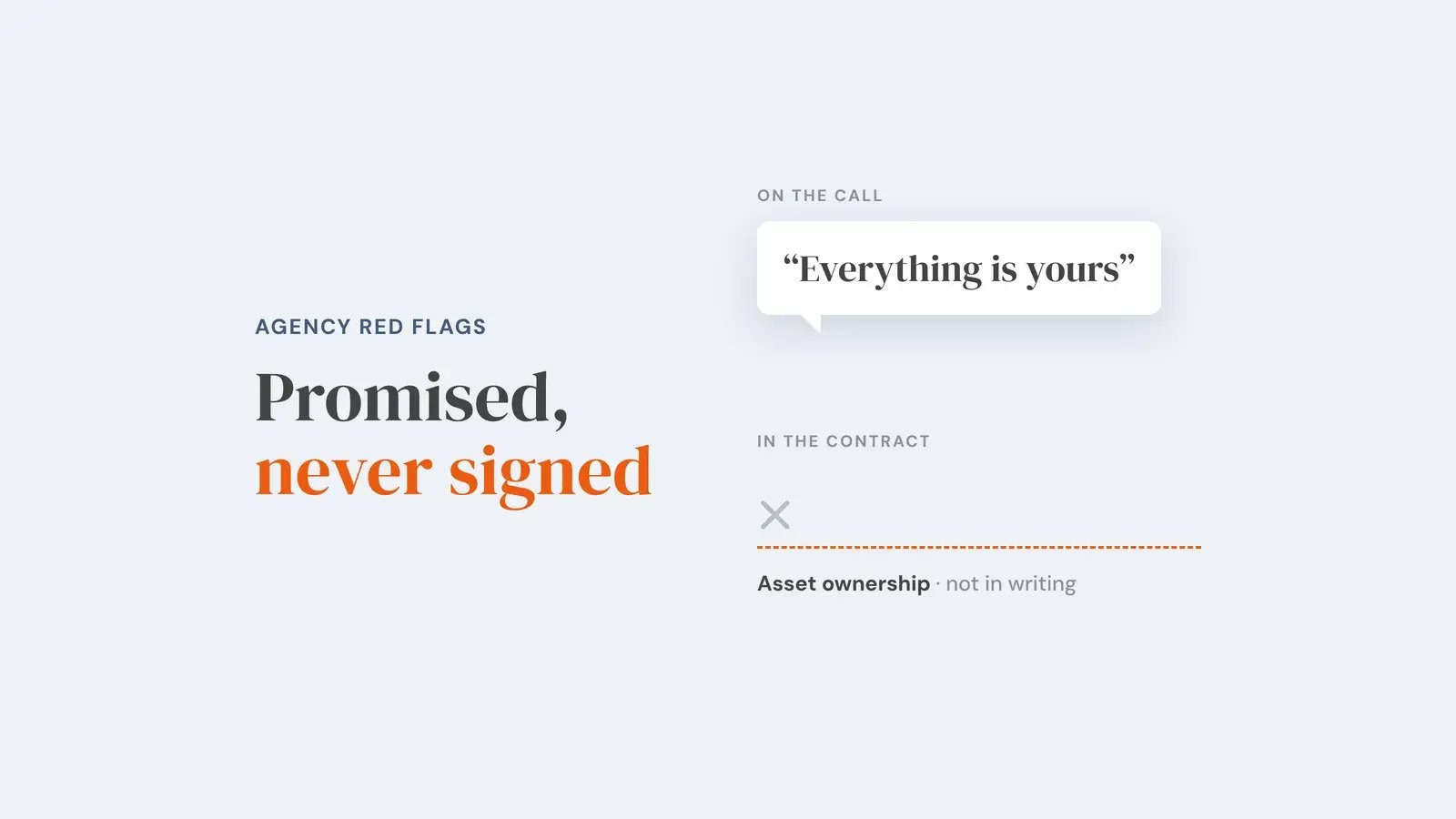
- Over-promising during sales, under-delivering in execution
Client-side failures (that agencies rarely say out loud):
- Slow approvals and inconsistent responsiveness
- Briefs that change without adjusting timelines or budget
- No internal champion aligning sales and marketing
- ROI expectations set unrealistically during the sales process
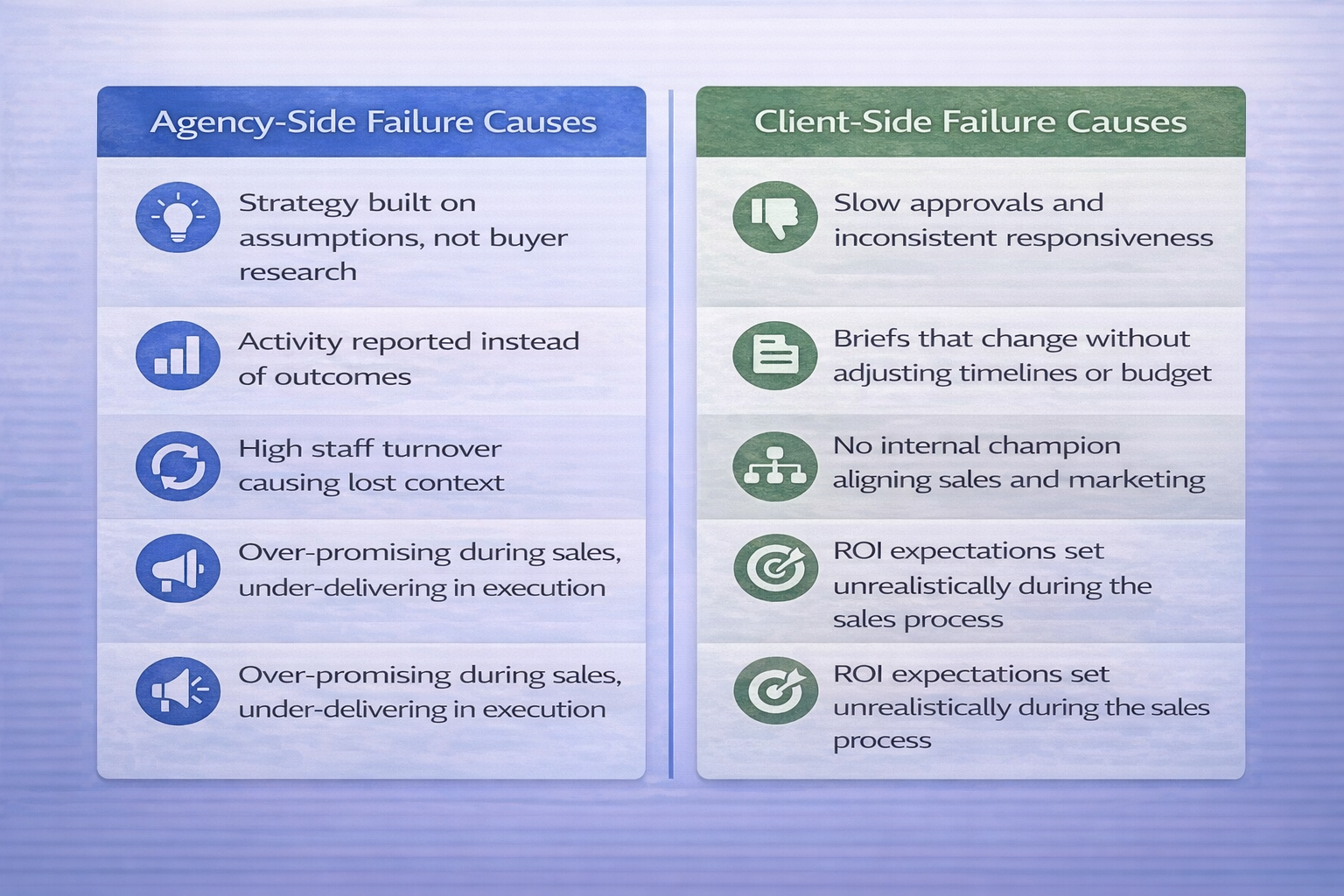
Before escalating, honestly assess both lists. The root cause is rarely one-sided.
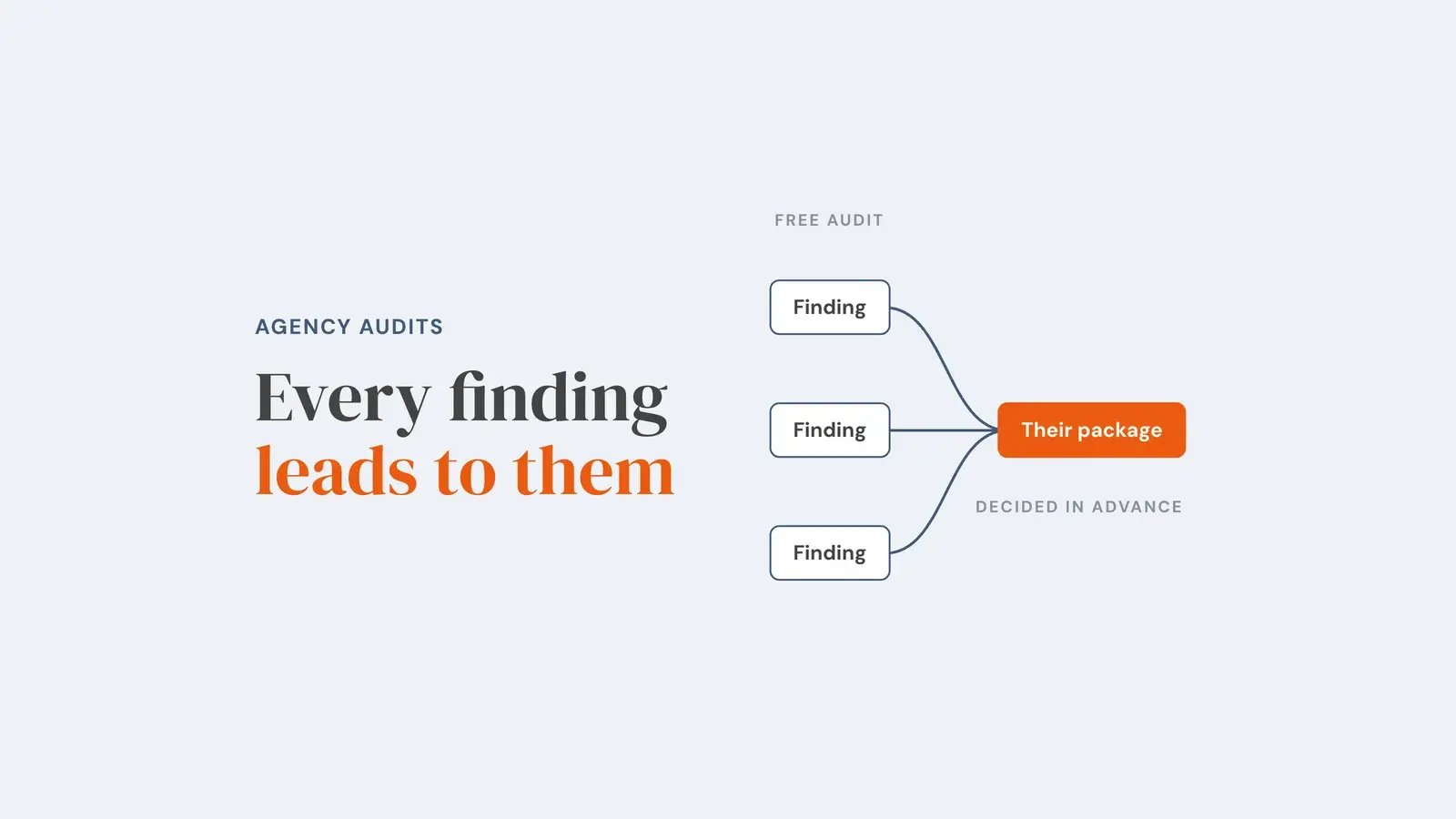
See also: Why Most Agency "Audits" Are Just Sales Funnels in Disguise
What does it typically cost to get real ROI from a marketing agency?
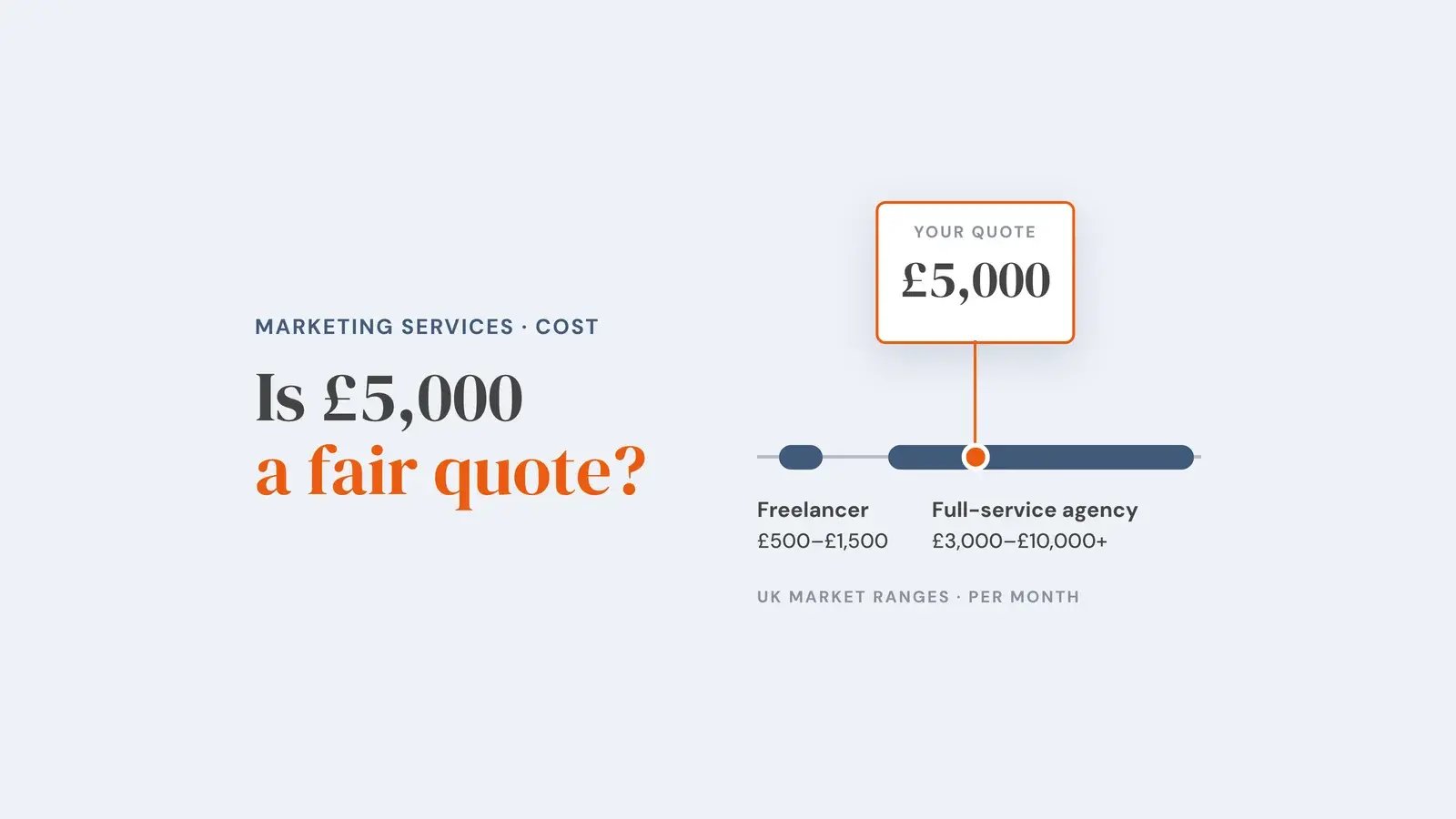
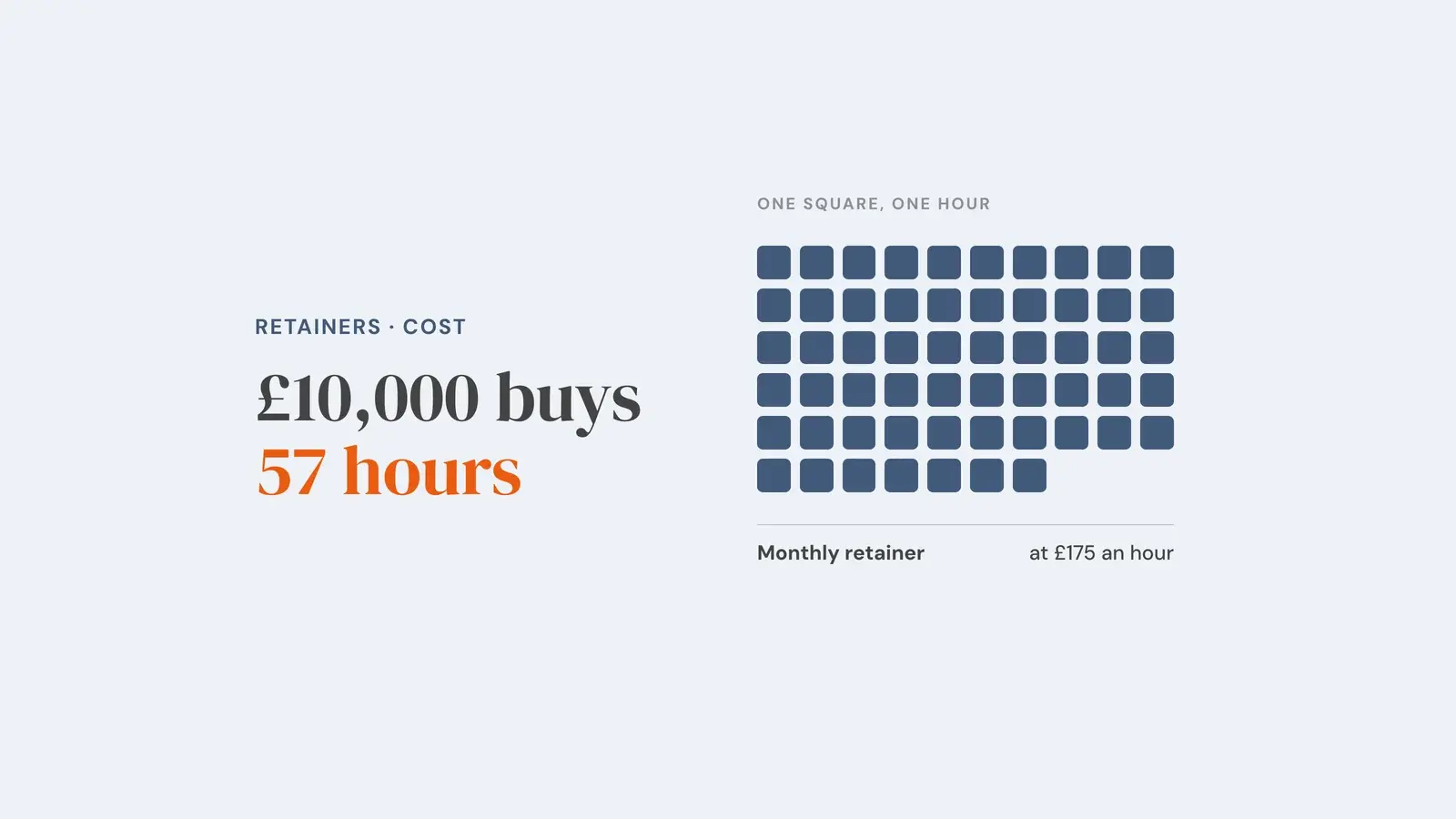
Most businesses that see meaningful ROI from a marketing agency are investing a minimum of £2,000–£5,000/month ($2,500–$6,250), with results typically emerging between months three and nine depending on the channel. (Estimate based on observed UK agency market pricing.)
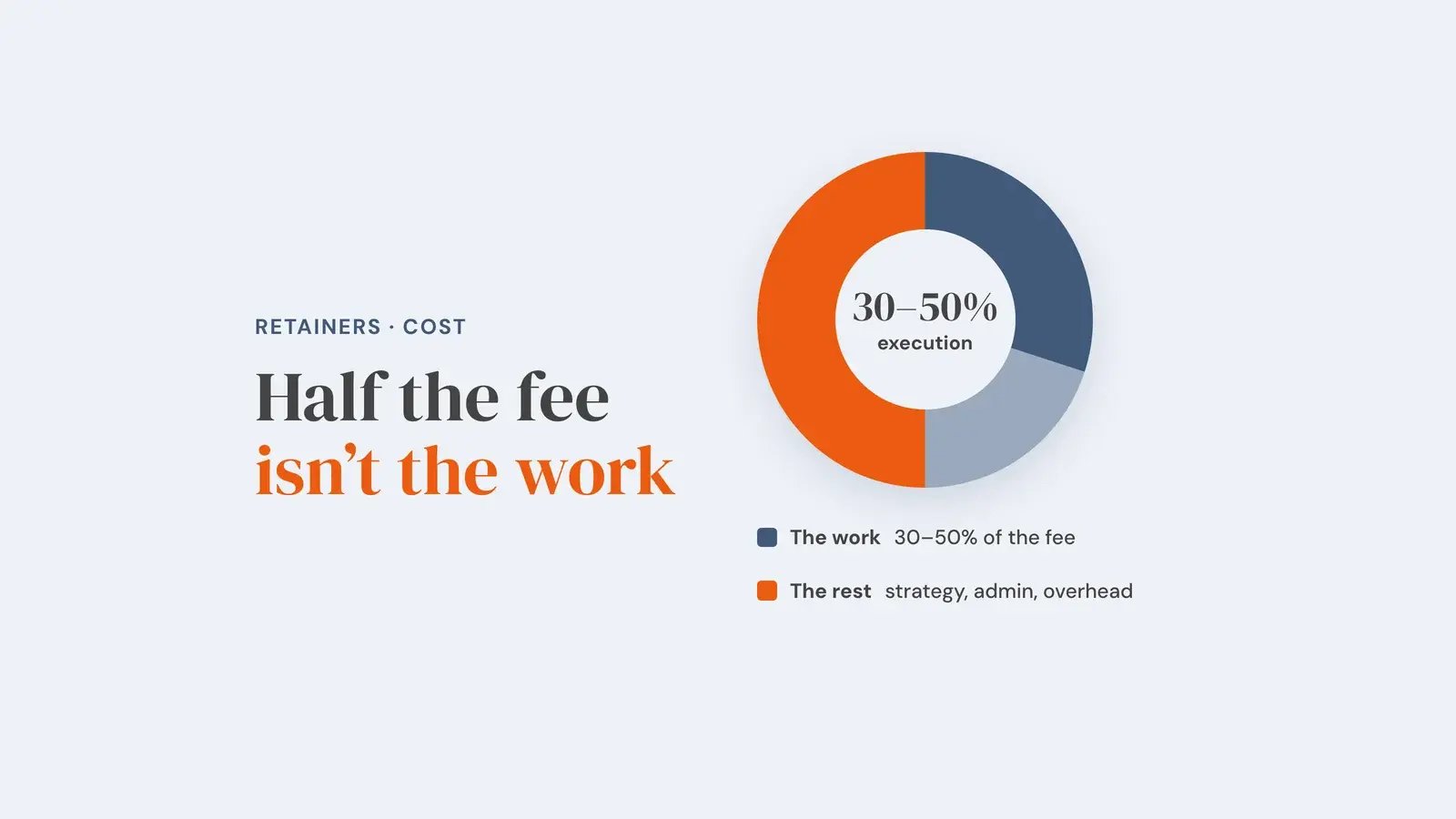
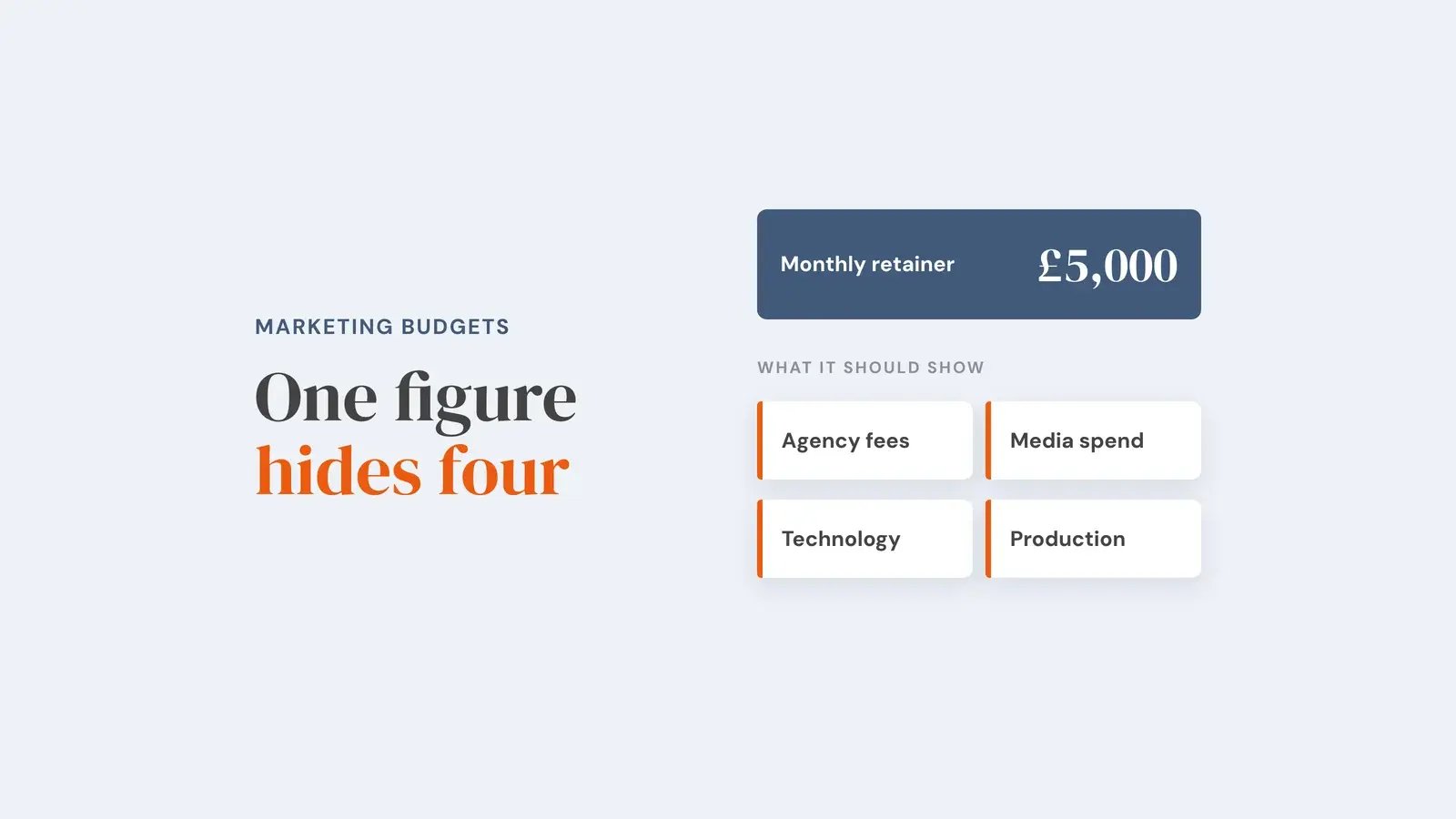
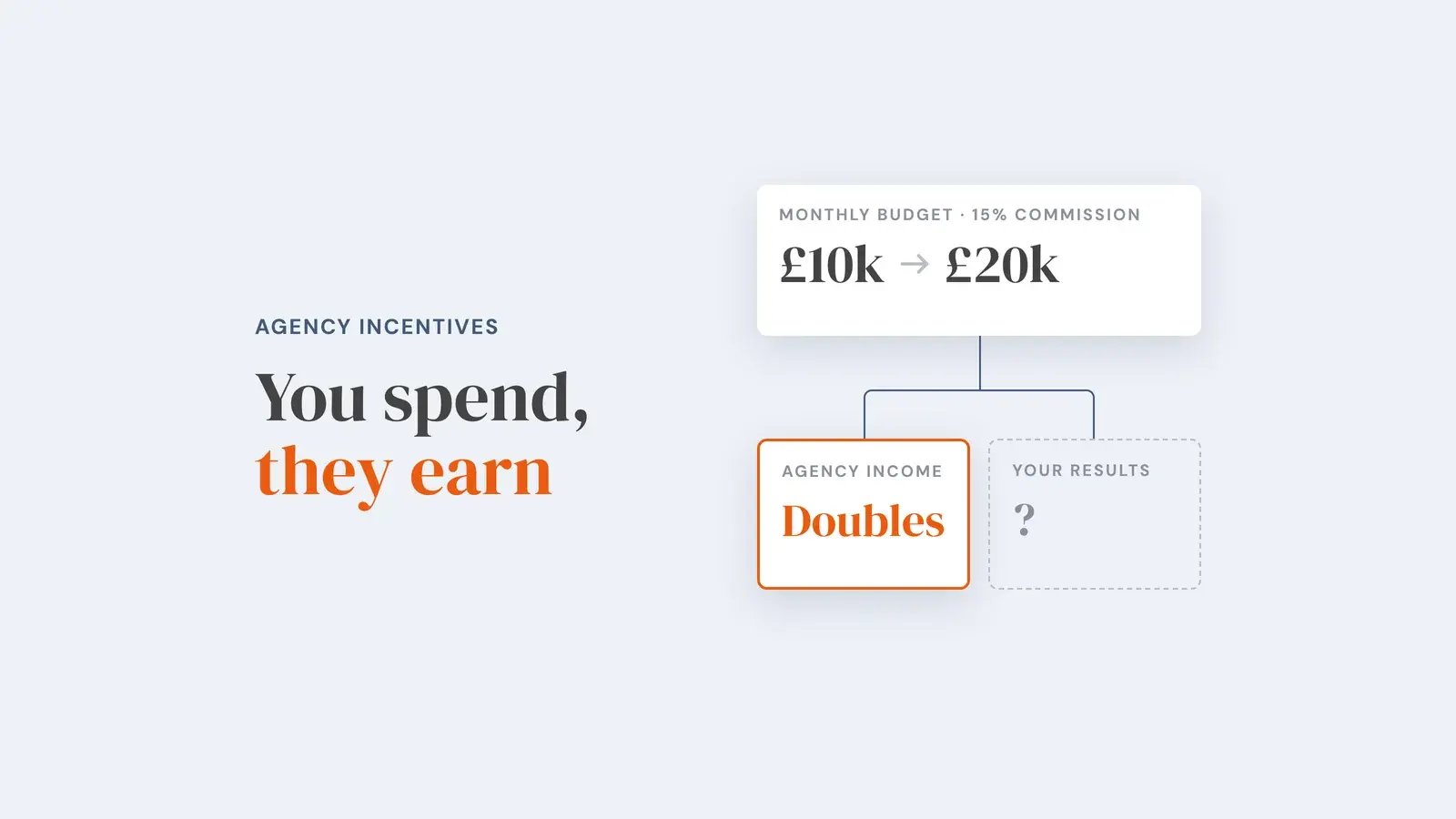
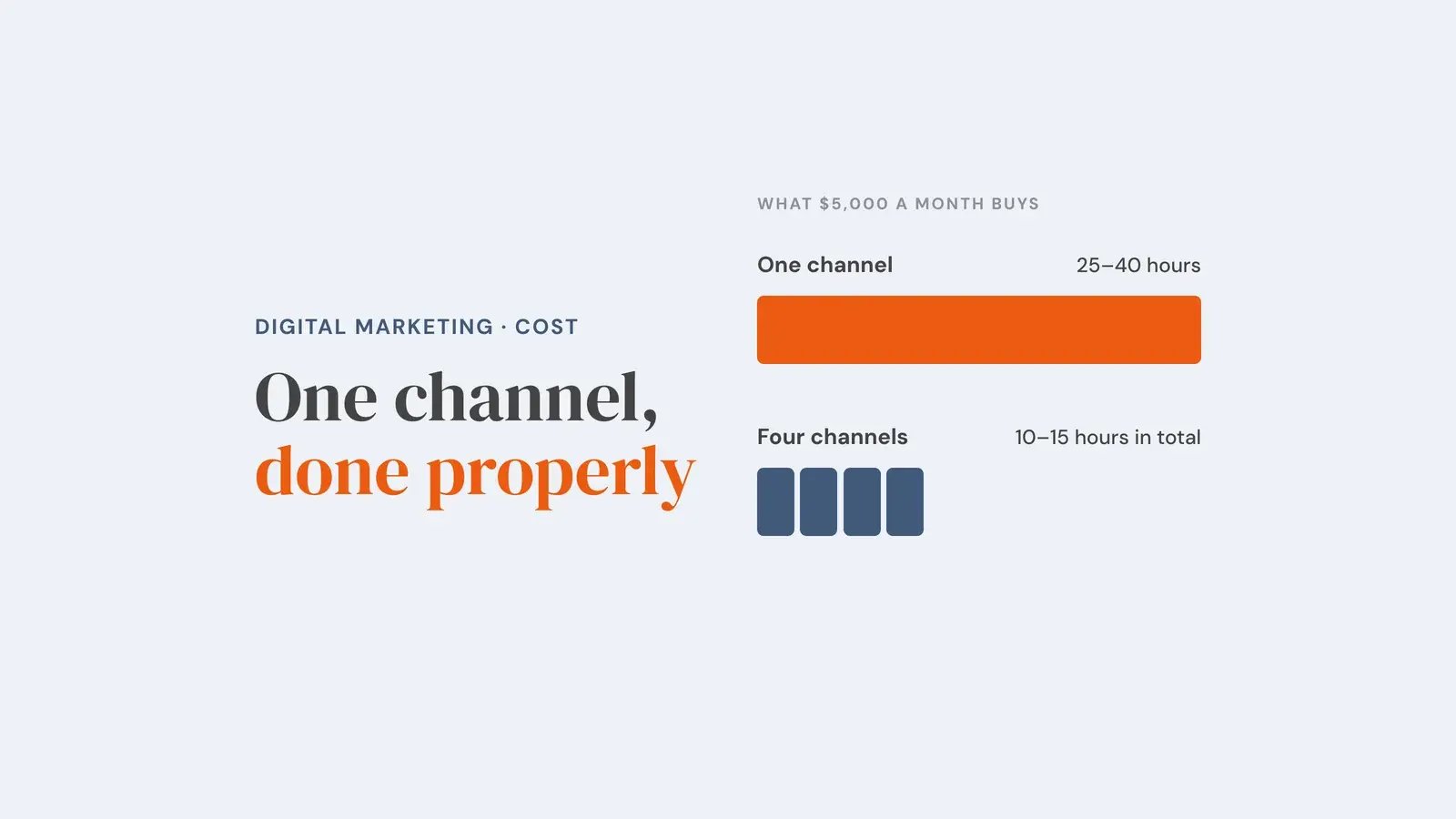
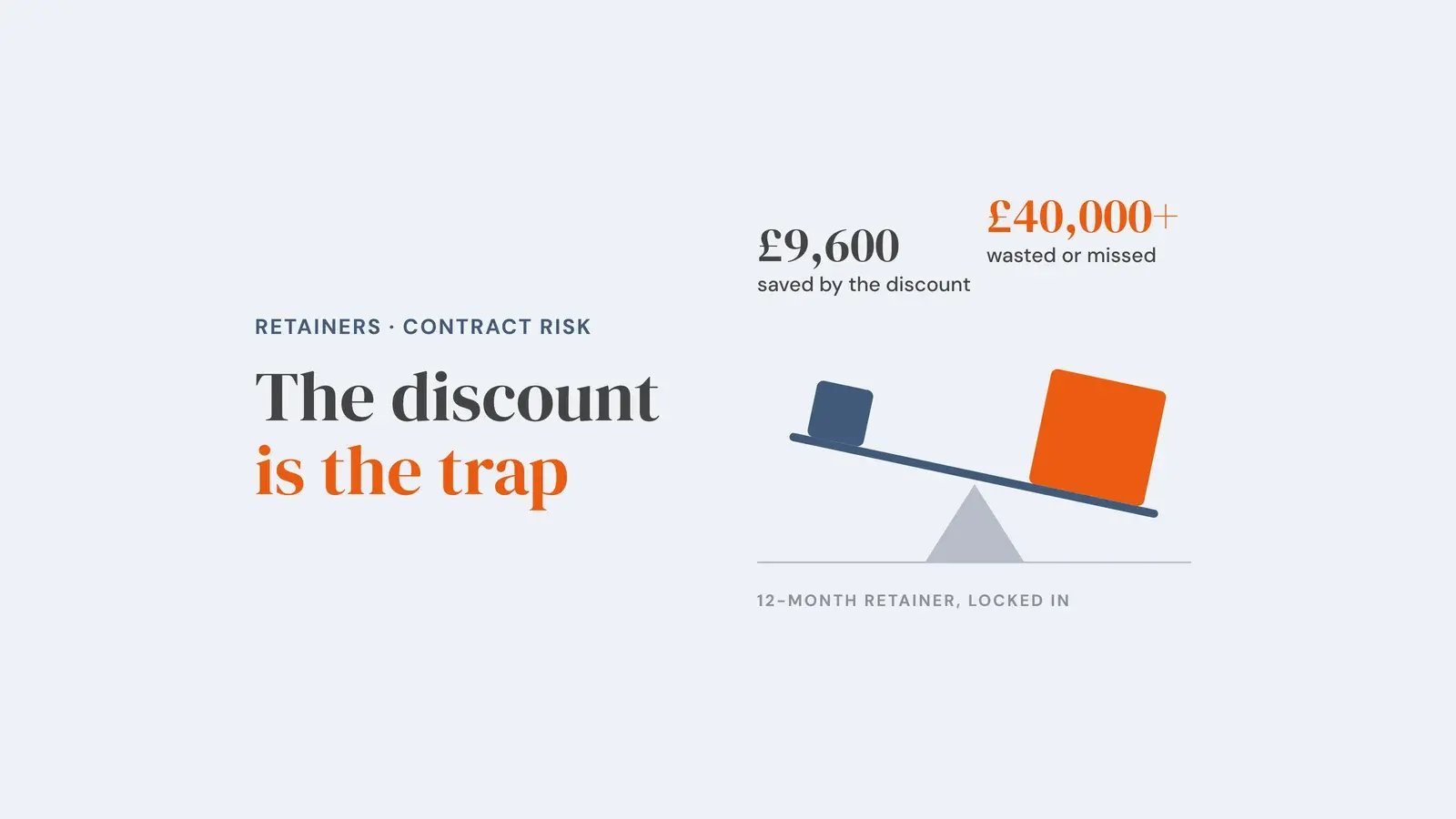
Underfunding your retainer is one of the fastest ways to guarantee poor results. Agencies cannot execute a results-driving strategy on a budget that only covers administration.
| Monthly budget | Realistic outcome expectation |
|---|---|
| Under £1,000 ($1,250) | Brand-only activity; no lead generation |
| £1,000–£2,000 ($1,250–$2,500) | Limited activity; minimal pipeline impact |
| £2,000–£5,000 ($2,500–$6,250) | Lead generation; measurable results from month 4–6 |
| £5,000+ ($6,250+) | Scalable pipeline results; full strategic execution |
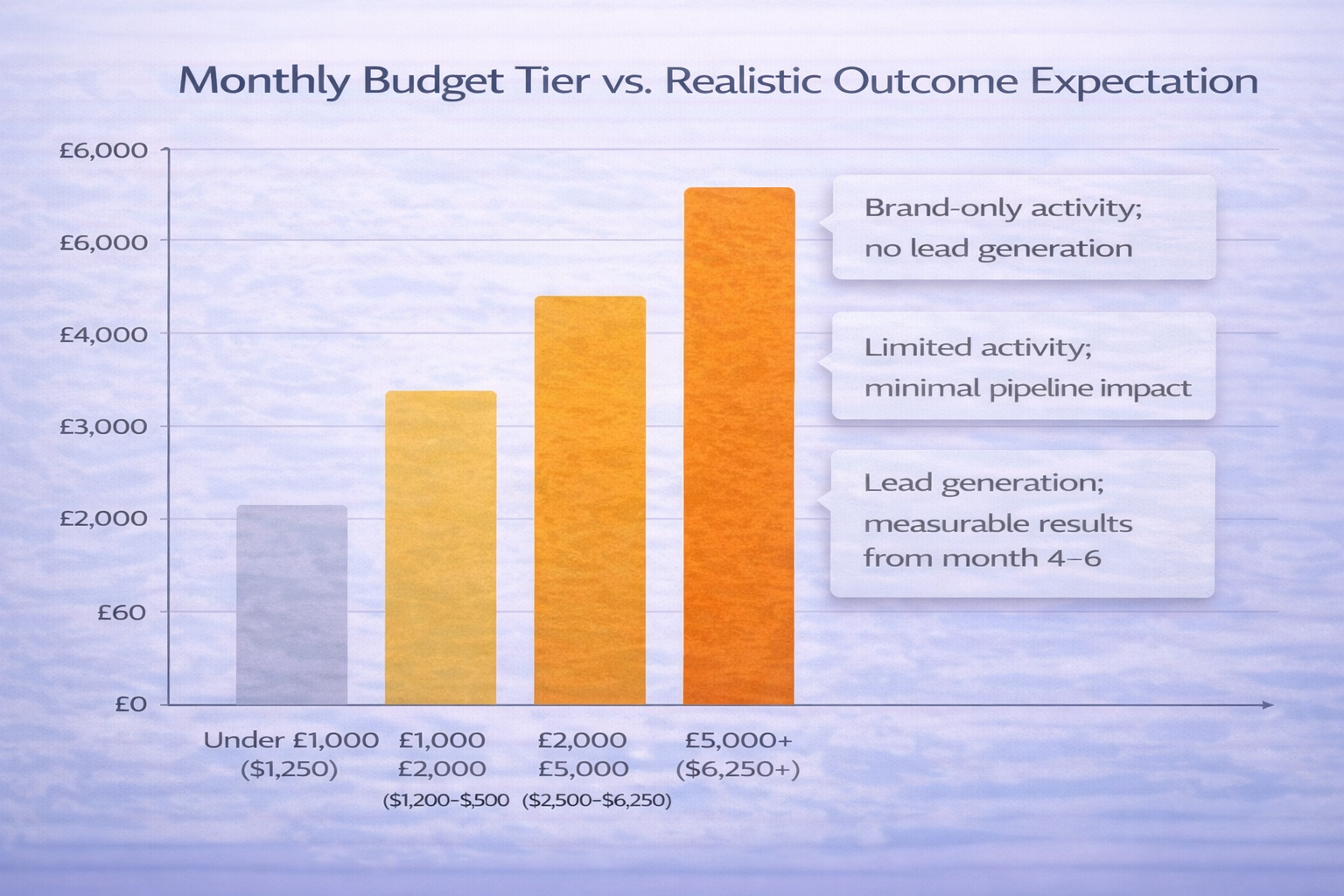
ROI calculation framework: Monthly agency cost × 12 = Annual investment ÷ Number of attributable new clients in the year = Cost per acquired client
Compare this against your average client lifetime value. In my experience working with founder-led B2B businesses, if cost per acquired client exceeds 30% of lifetime value, the ROI case is structurally weak.
See What You're Really Paying For with a Marketing Retainer (And What You Shouldn't Be) for more detail on where retainer spend actually goes.
How to diagnose a failing agency relationship (4-part audit)
Before taking any action, diagnose the root cause by auditing four areas: goal clarity, reporting quality, strategy coherence, and your own team's responsiveness to the agency.
Reacting without a diagnosis, by cutting budget or replacing the agency immediately, tends to repeat the same problem with the next provider.
The 4-part agency performance audit:
- Goal clarity: Are success metrics documented and agreed by both parties? If not, no one can objectively say results are poor.
- Reporting quality: Does your agency report on revenue-linked metrics, or vanity metrics? Can you connect activity to outcomes?
- Strategy coherence: Is there a documented strategy, or are activities running without a clear connecting logic?
- Your team's responsiveness: How quickly are you approving work, sharing data, and providing feedback?
| Symptom | Root cause indicator |
|---|---|
| Lots of activity, empty pipeline | Strategy problem |
| Good strategy, inconsistent delivery | Execution problem |
| No visibility, no reporting | Accountability problem |
| Early results that have since stalled | Client-side bottleneck likely |
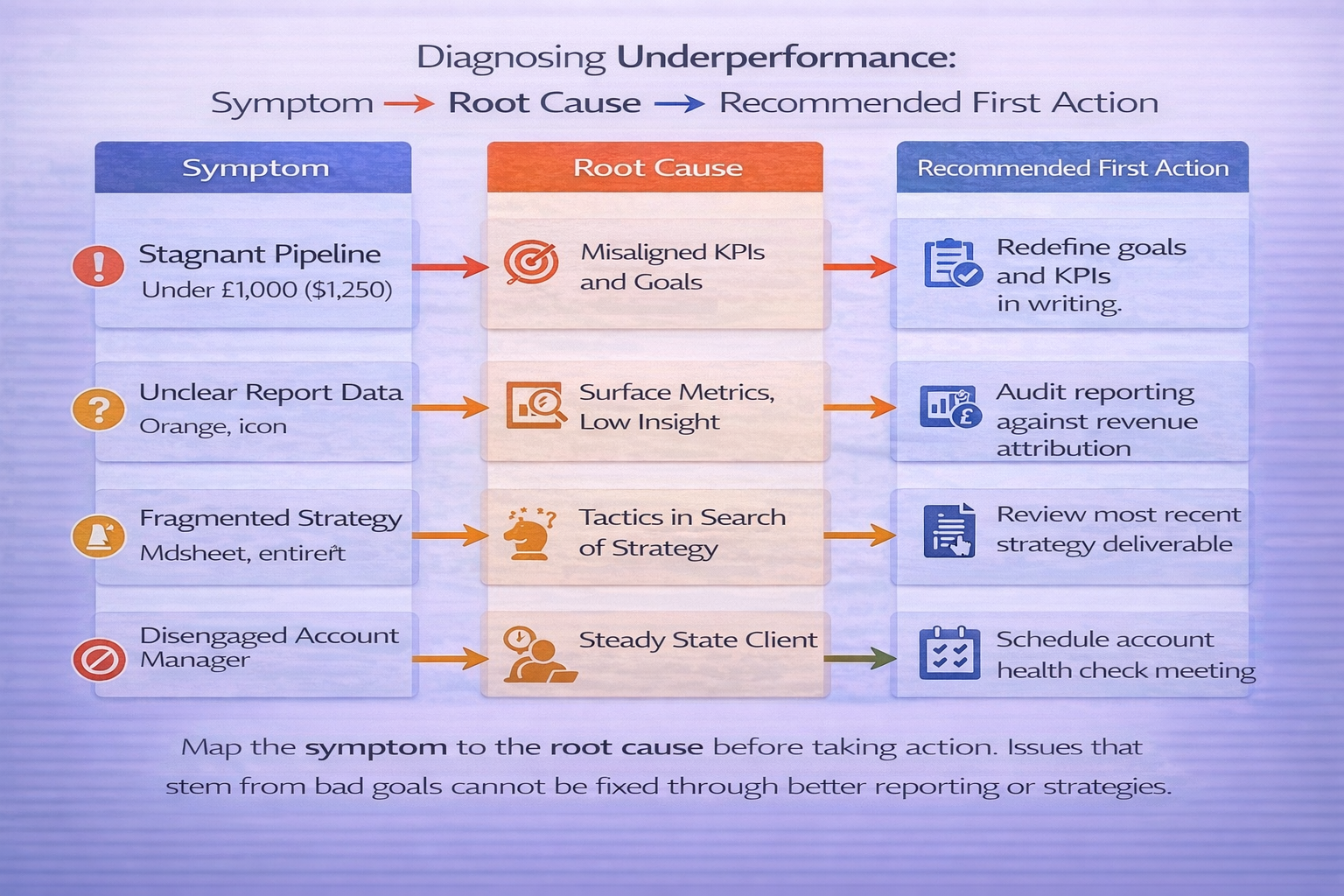
Agency vs. in-house vs. freelancer: which delivers better ROI?
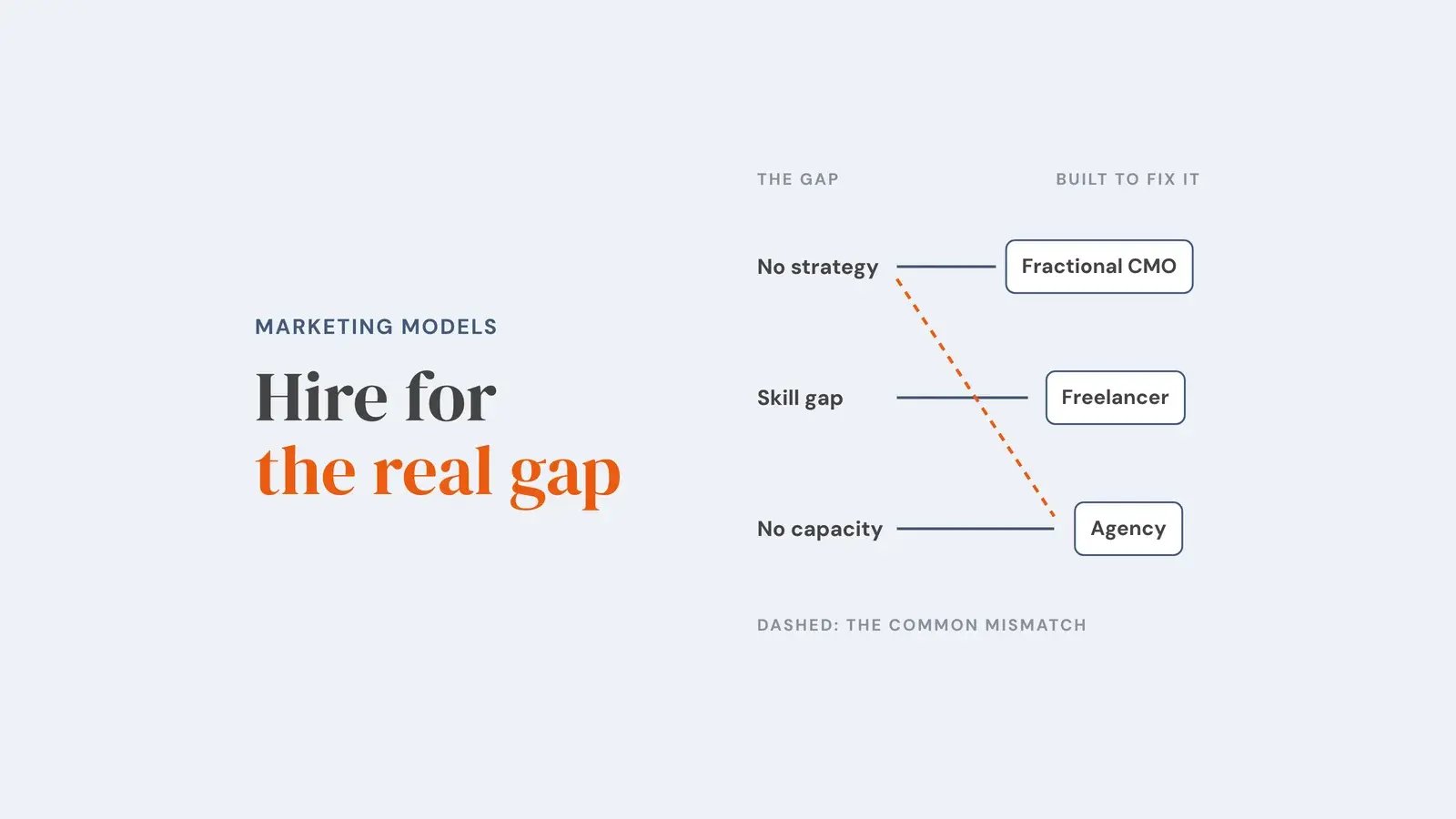
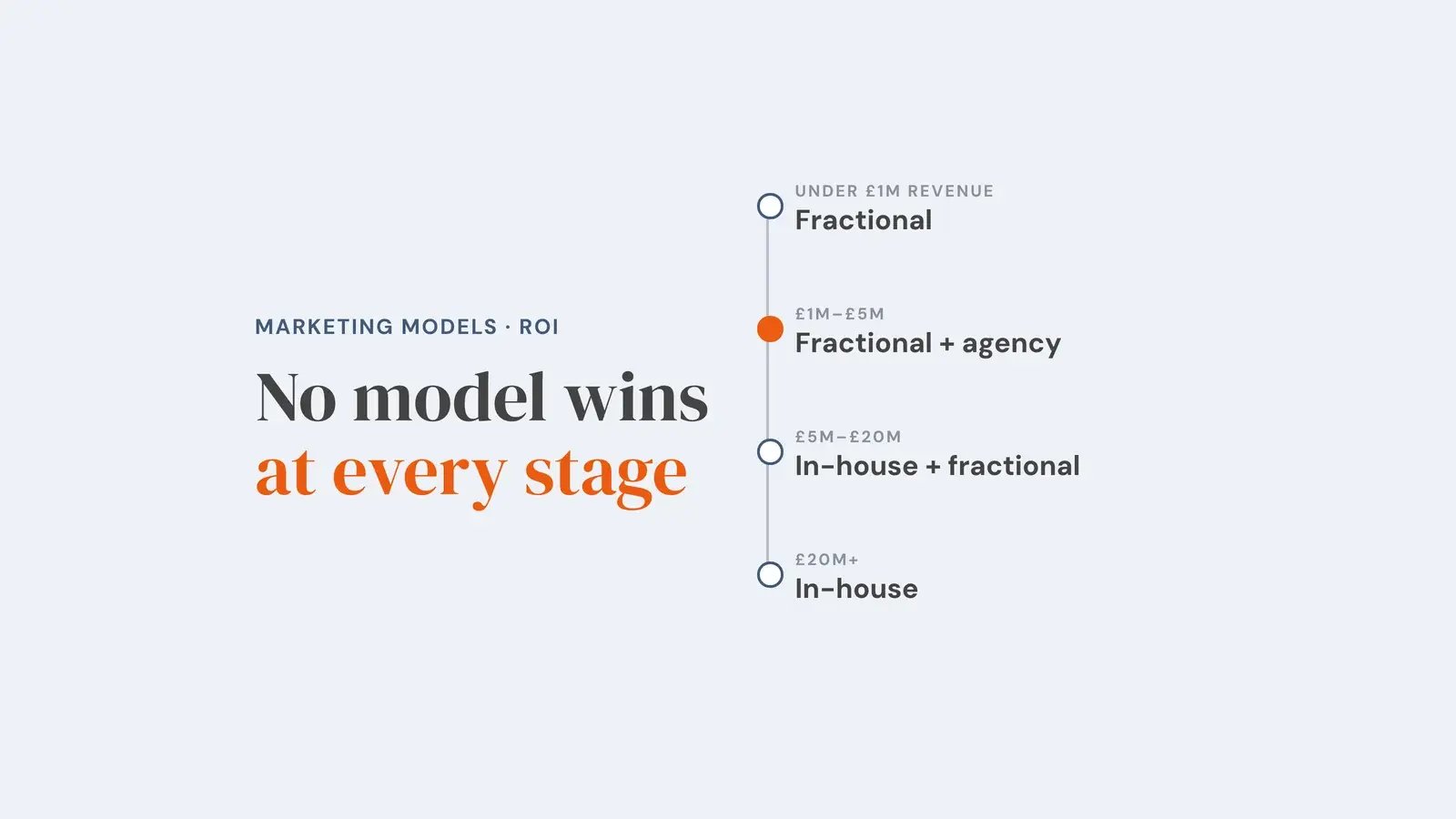
Whether an agency, in-house team, or freelancer delivers better ROI depends entirely on your business stage, budget, and the specialism required, there is no universally superior model.
| Model | Typical UK cost | Strengths | Ownership |
|---|---|---|---|
| Agency | £2,000–£10,000+/month ($2,500–$12,500+) | Breadth, scale | Low — capability leaves with them |
| In-house | £35,000–£70,000+/year salary ($43,750–$87,500+) | Brand depth, speed | High |
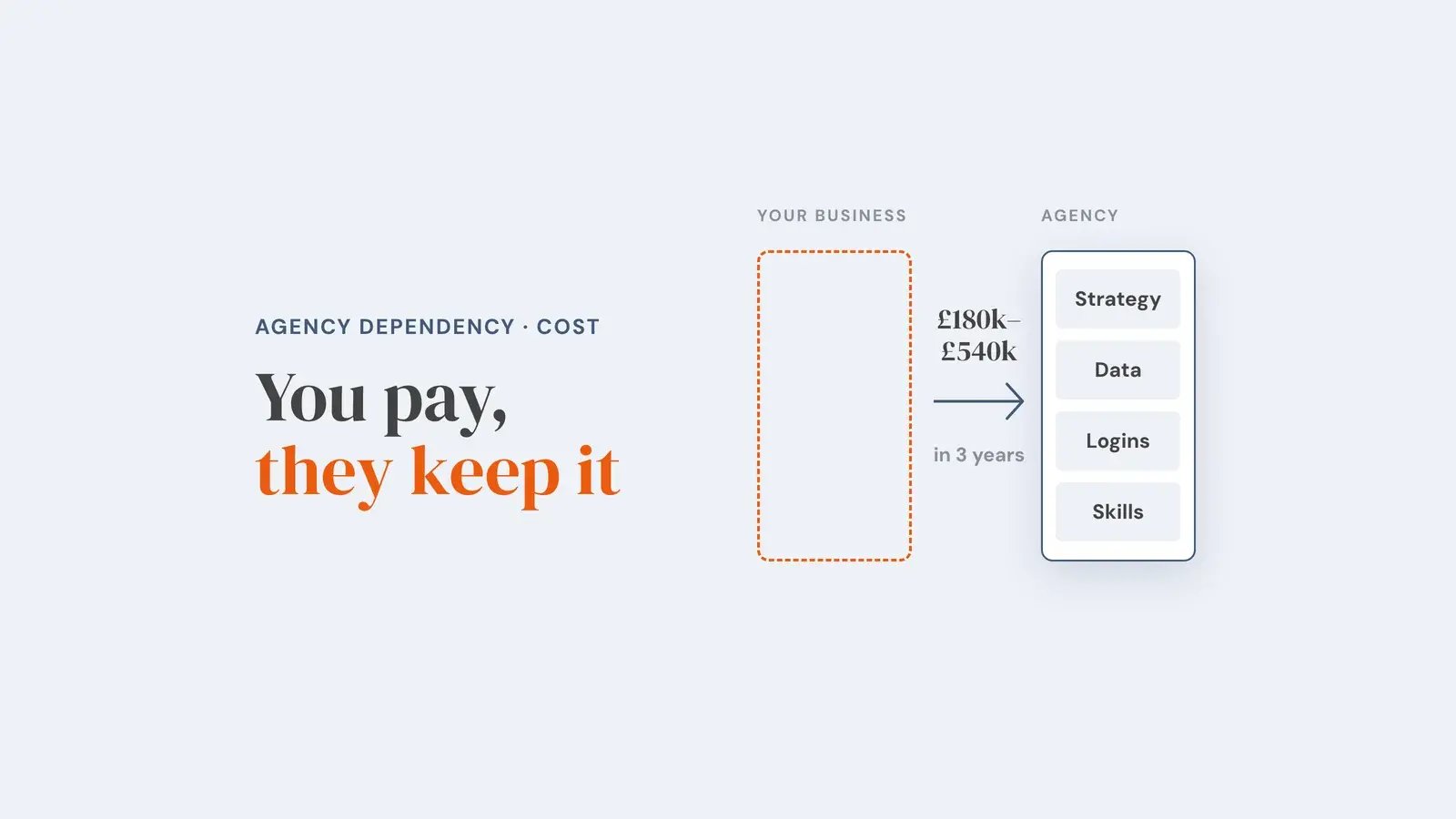
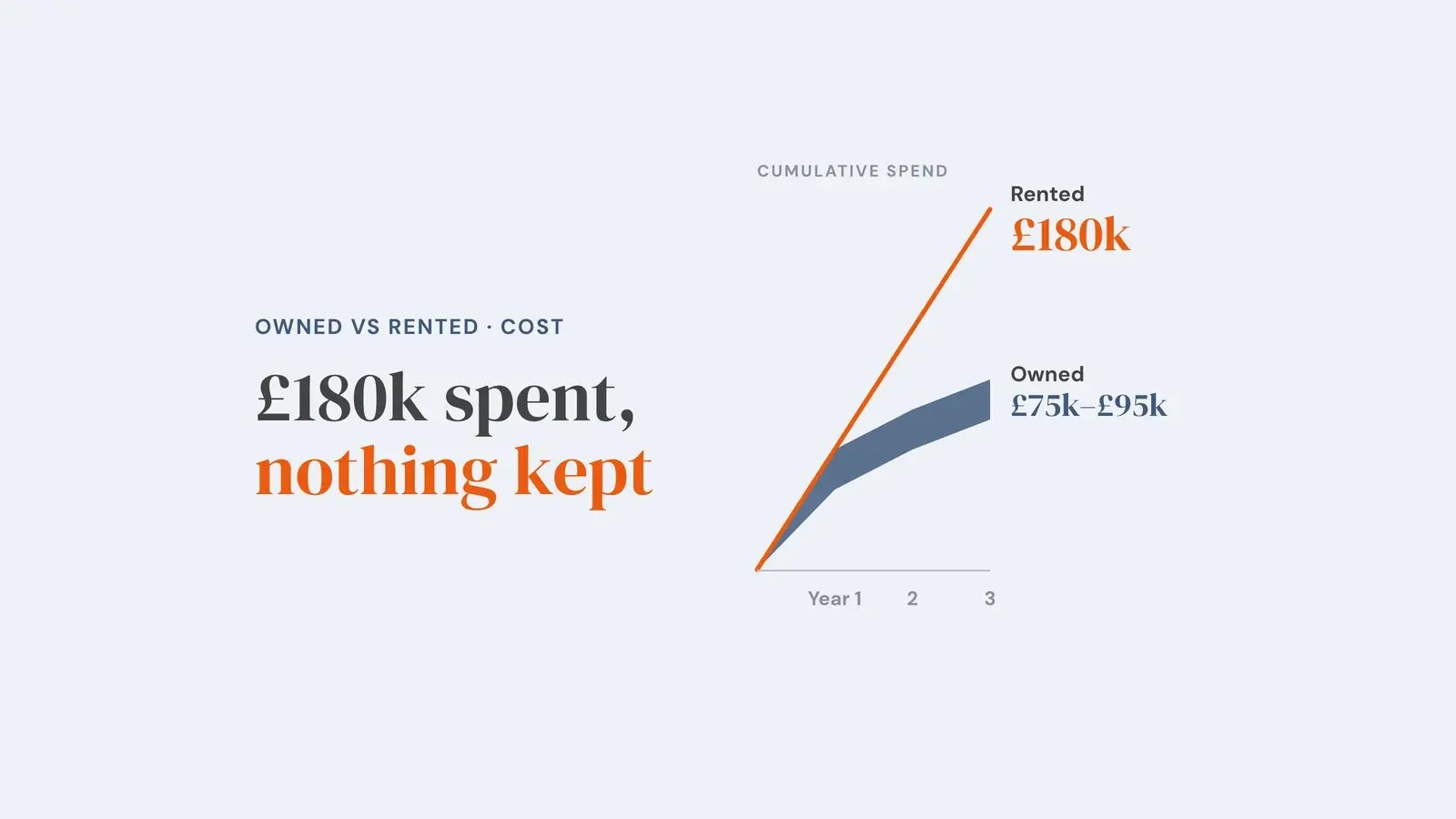
| Freelancer | £500–£2,000/month ($625–$2,500) | Cost efficiency, narrow scope | Medium |
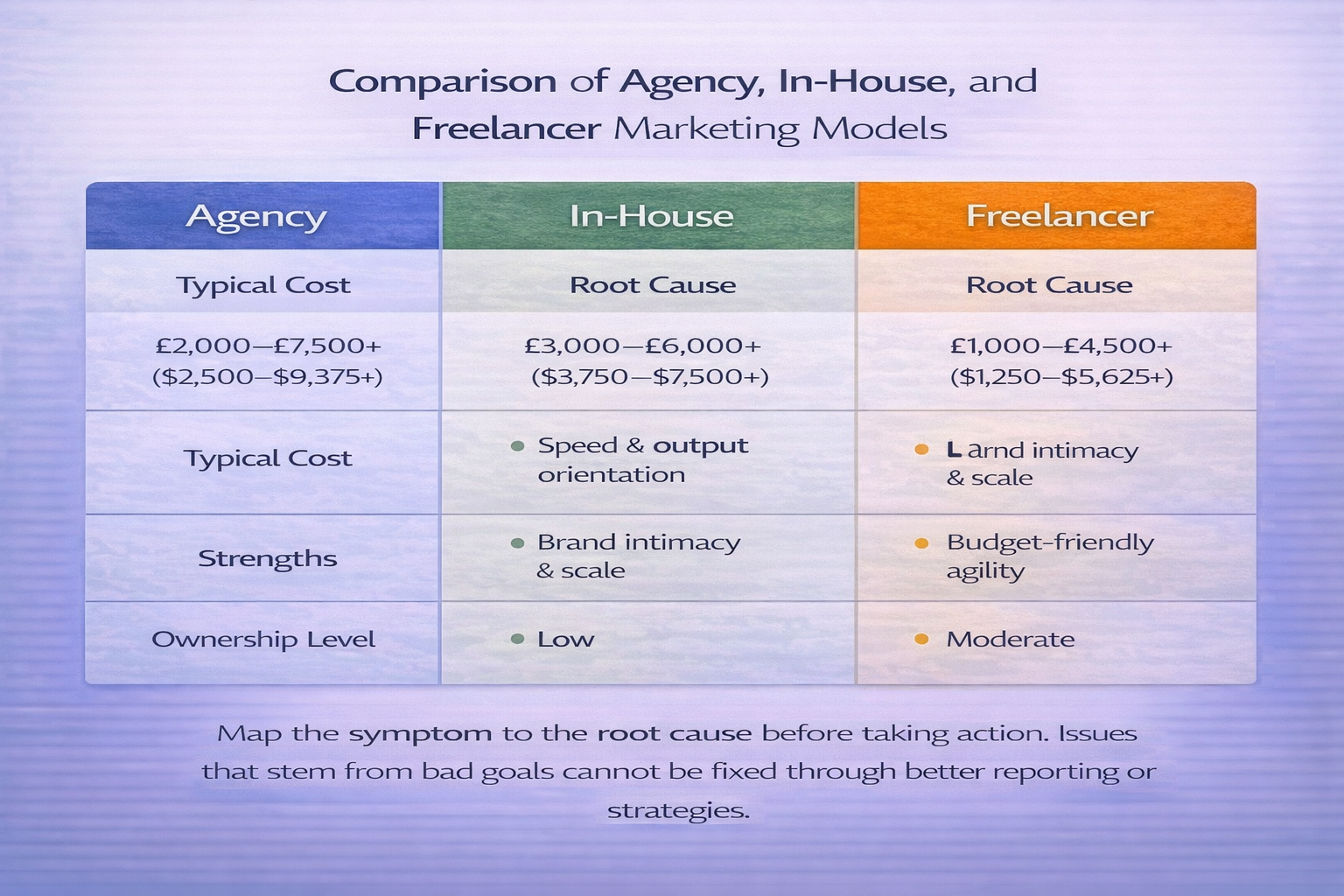
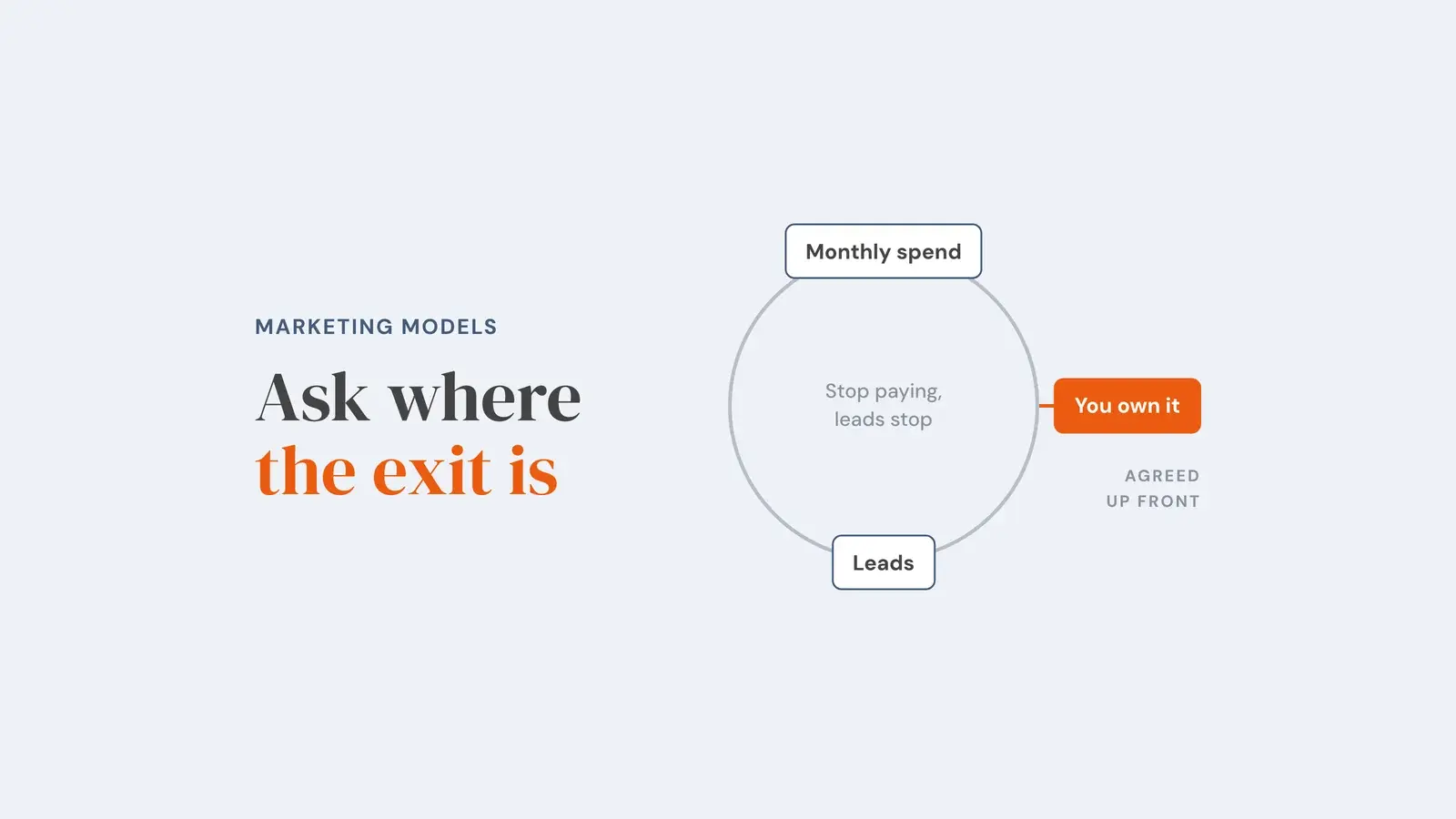
Agencies offer breadth; in-house teams offer ownership; freelancers offer efficiency in well-defined scope. If your previous agency engagement failed due to structural issues, undefined goals, vanity reporting, no strategy, a new agency will not solve the underlying problem.
For a deeper comparison, see Agency vs. In-House vs. Freelancer: Which Marketing Model Is Right for Your Business?
How to fix a failing agency relationship
The most effective way to fix a failing agency relationship is to reset it formally: a documented performance review, agreed KPIs, and a defined review window with clear consequences.
Most underperforming agency relationships can be salvaged if both parties are willing to commit to a structured reset.
6-step agency reset process:
- Request a written strategy audit from your agency, what is working, what is not.
- Agree a shared, documented definition of ROI.
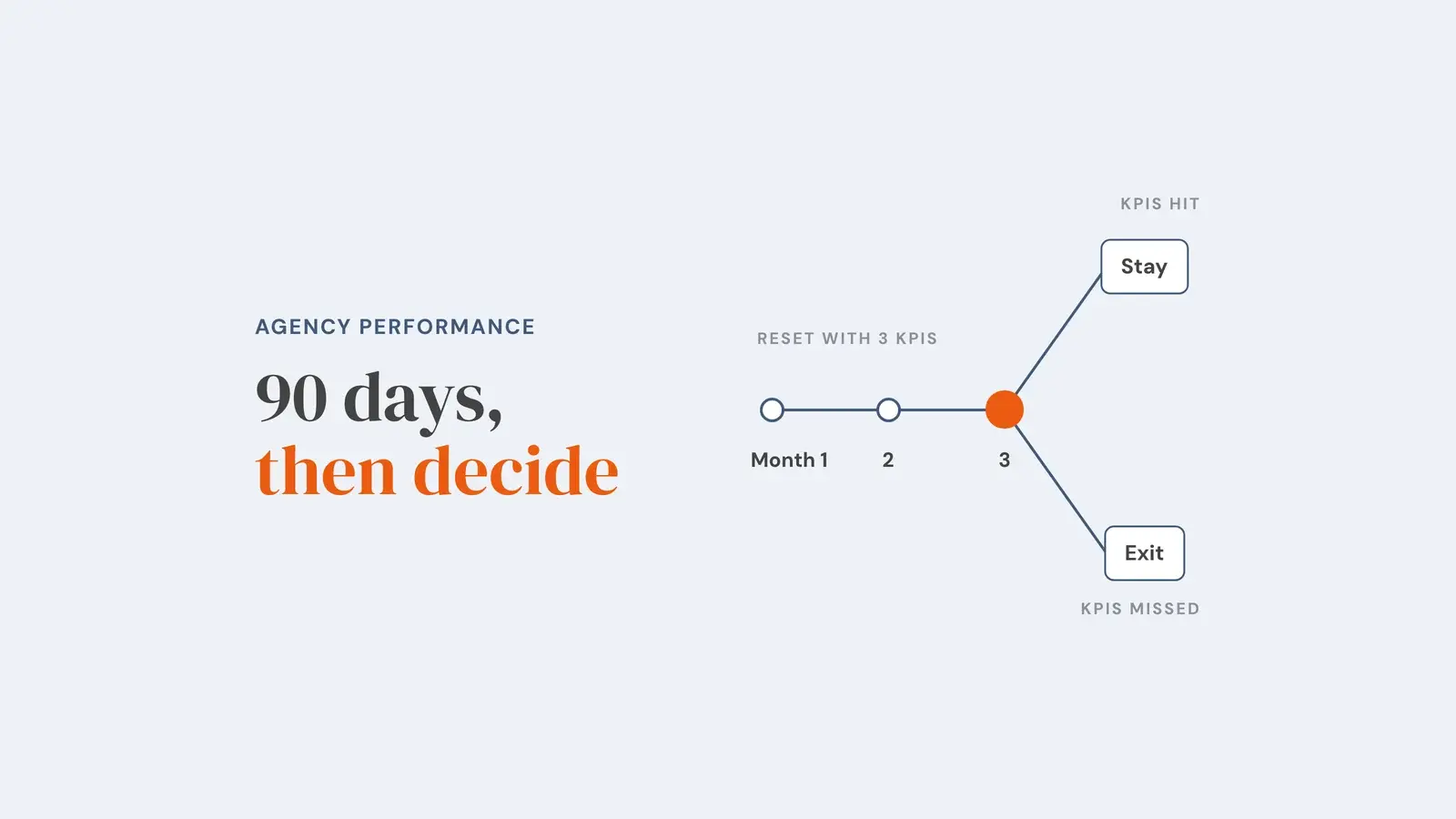
- Set three measurable KPIs for the next 90 days.
- Establish a monthly performance review cadence.
- Remove internal bottlenecks on your side (slow approvals, withheld data).
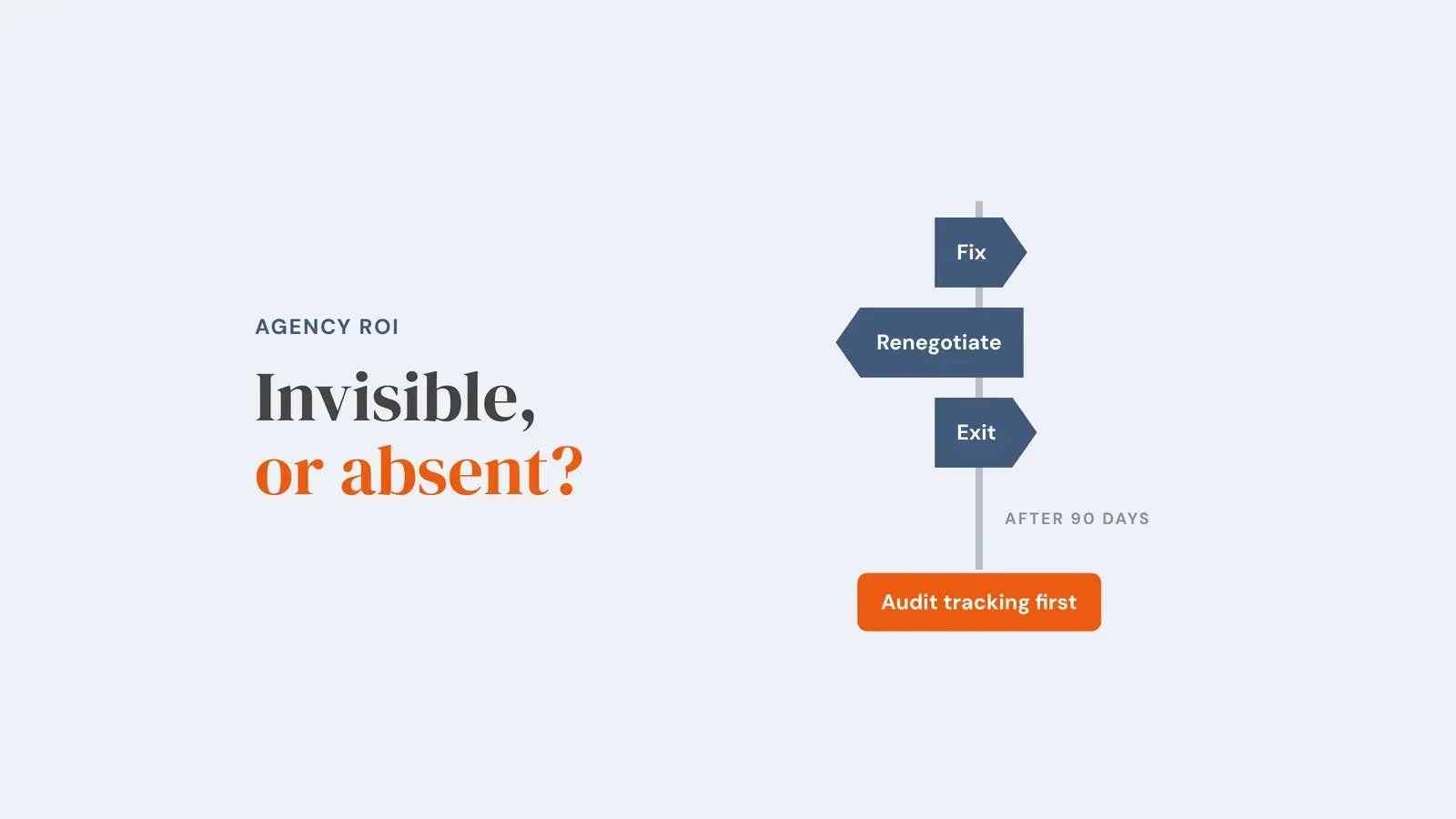
- Set a hard review point — if KPIs are missed at month three, the conversation shifts to exit.
When should you stay, renegotiate, or fire your agency?
Stay if the root cause is resolvable, the agency is transparent about what is not working, and they can present a credible revised plan.
Renegotiate if budget, scope, or timeline misalignment is the core issue. Fire your agency if they resist accountability, cannot explain why results have stalled, or if a reset period has passed with no measurable improvement.
| Situation | Recommended action |
|---|---|
| No reporting provided | Exit |
| Wrong channel strategy identified | Renegotiate |
| Client approvals were consistently late | Stay + internal fix |
| Agency cannot explain performance decline | Exit |
| Budget was too low for the agreed scope | Renegotiate |
| Reset period passed with no improvement | Exit |
| Both sides missed expectations | Reset + 90-day trial |
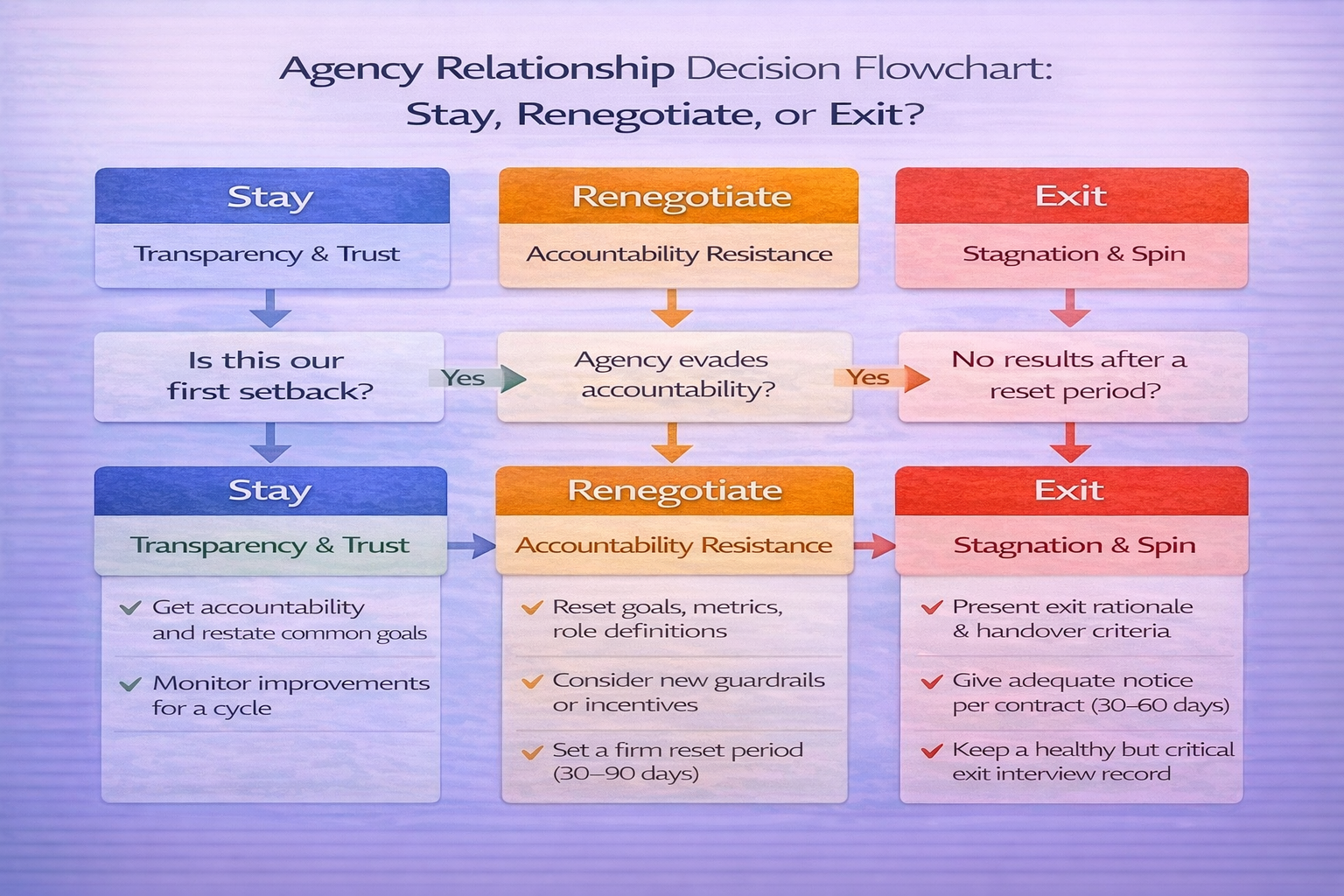
Alt text: A decision flowchart mapping agency relationship situations to the three recommended actions: stay, renegotiate, or exit.
The goal is not to assign blame. It is to make a decision based on evidence, not frustration.
FAQ: common questions when your agency isn't delivering ROI
The most common questions at this stage cover timelines, contracts, alternatives, and how to avoid repeating the same mistake.
How long should I give my agency before expecting ROI?
It depends on the channel. PPC can show results within 1–3 months. SEO and content marketing typically take 6–12 months. If your agency cannot give you a realistic, channel-specific timeline, that is a red flag in itself.
Can I break my agency contract early if they are not performing?
Most agency contracts include notice periods and, sometimes, performance clauses. Review your agreement carefully. If results are demonstrably below agreed benchmarks, you may have grounds to exit. Seek legal advice before acting. GOV.UK guidance on business contracts
Should I hire a new agency or bring marketing in-house?
If structural issues caused the failure, such as poor goal-setting, vanity reporting, no strategy, a new agency resets the clock without fixing the architecture. See What the Best Modern Marketing Partners Do Differently: Transparency, AI, and Actual Strategy before making that call.
What should I ask for in a performance review meeting?
Ask for: KPIs agreed vs. achieved, a written explanation of any shortfalls, a revised 90-day plan with named owners, and confirmation of any data or access they need from your side.
Conclusion
You arrived here with a real and costly problem: an agency relationship consuming budget and producing results that are difficult to justify.
You now have a structured path forward: a framework to diagnose root cause, a process to reset or exit, and a clear decision model for what comes next.
The question worth sitting with is not simply "should I fire this agency?" It is: "If this agency disappeared tomorrow, would my pipeline survive?"
If that question is uncomfortable, the problem is likely bigger than the agency.
How to take action now
- Take the Marketing Debt Scorecard to identify structural marketing gaps before your next agency conversation.
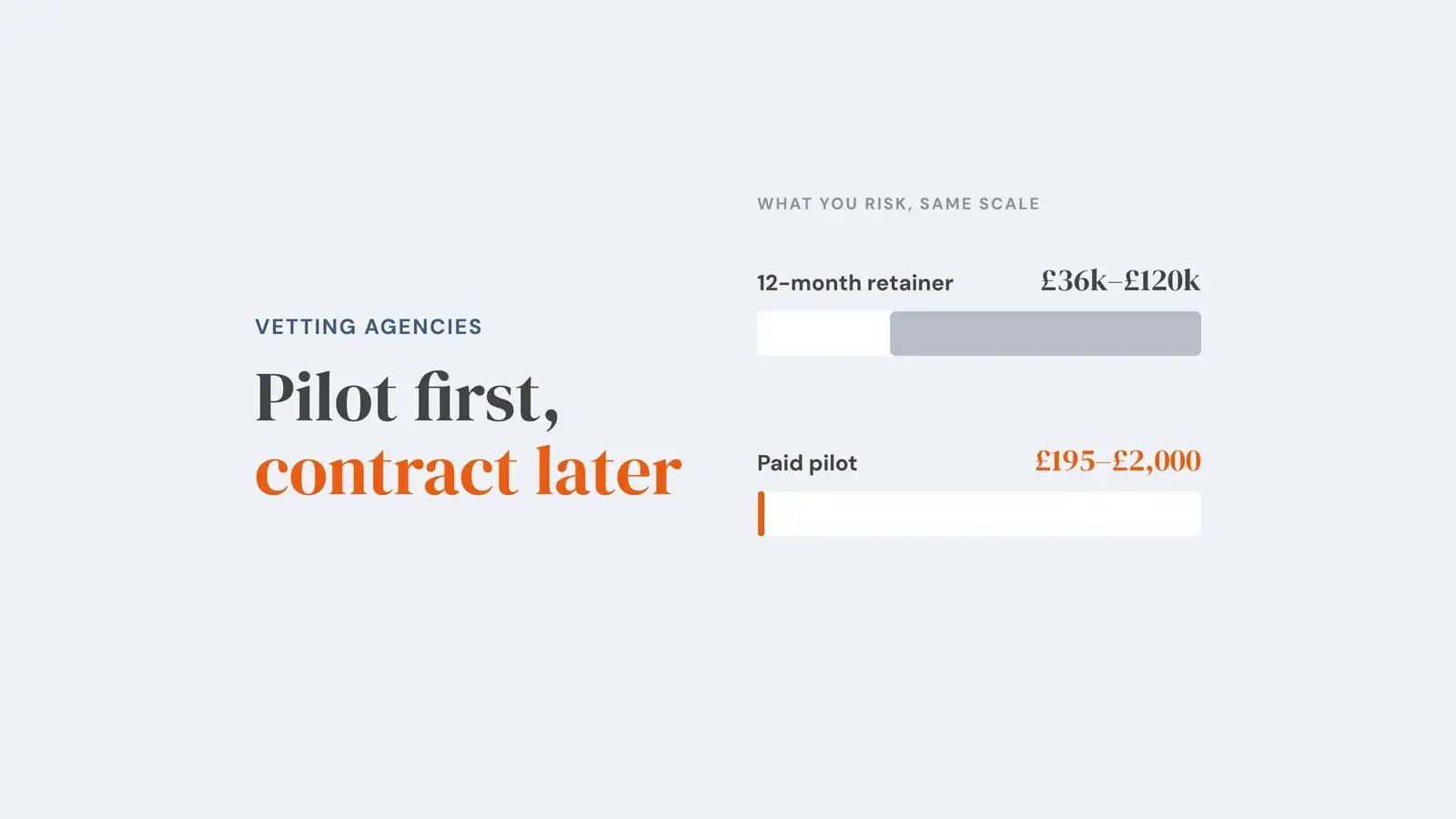
- Book a 90-Minute Marketing Triage™ (£195 / $245) for an independent diagnosis of what is broken in your current setup, with a documented report within 24 hours. If the Triage reveals that what you need is strategic leadership rather than a new agency, my Fractional CMO service starts from £4,700/month ($5,875/month).
- If the problem is deeper than one agency, if it is about ownership and structure, explore the In-House Growth Engine™, a path to marketing your team runs and controls.
Suggested reading: Why Most Agency "Audits" Are Just Sales Funnels in Disguise

About the author
Tom Wardman is a fractional marketing consultant, author of Build a Trusted Brand, and the creator of the In-House Growth Engine™ framework. He works with founder-led B2B businesses to replace agency dependency with self-sufficient growth systems their teams own and operate. He is one of the UK's first certified coaches in the Endless Customers methodology, trained directly under Marcus Sheridan.
Pricing disclaimer: All GBP–USD price conversions use a rate of £1 = $1.25 and are rounded estimates correct at the time of publishing. Exchange rates fluctuate and figures should be treated as indicative only.