

Are you stuck in an endless loop of outsourcing your marketing work, without your team actually getting smarter or more capable?
Have you ever wondered why your agency delivers results, but your internal team can't replicate them when the contract ends?
Agencies that teach instead of just "do" will lower your long-term costs, increase your internal marketing performance, and make your company less dependent on external support. This approach transforms your team from order-takers into strategic thinkers who can drive growth independently.
In this article, you'll learn:
- Why traditional outsourcing models set you up for perpetual dependency
- How teaching-first agencies work differently and why they create better value
- What warning signs to look for (and avoid) when choosing an agency partner
- The financial benefits of knowledge transfer over traditional retainers
- How to implement a teach-and-do system inside your company
- Practical methods to measure genuine knowledge transfer success
Why traditional agency outsourcing models are failing businesses
Traditional agency outsourcing creates dependency rather than capability, leaving businesses vulnerable when contracts end or budgets tighten.
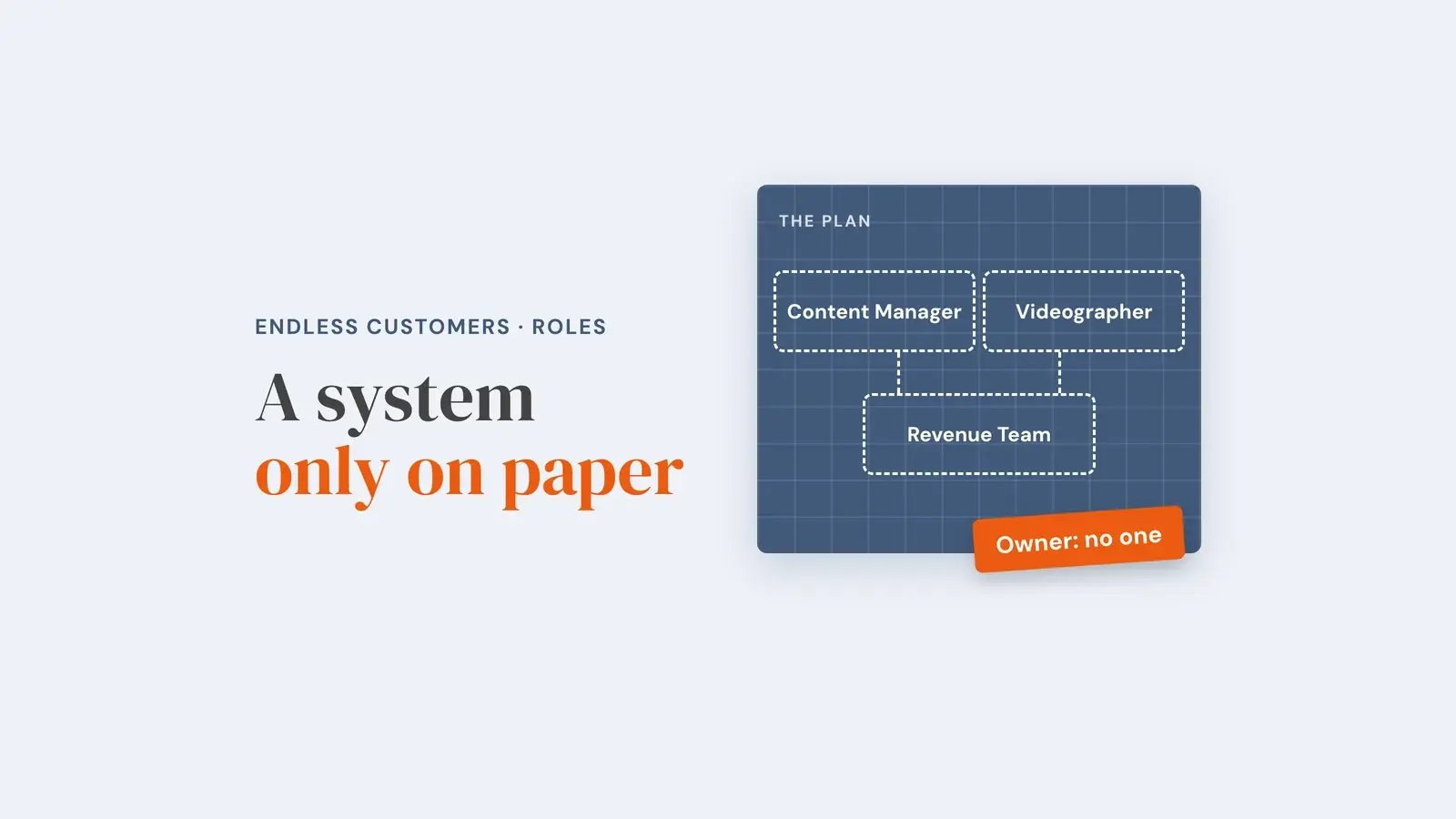
Most agencies operate like a black box. They take your brief, disappear for weeks, then present polished deliverables. You get the work done, but you don't get the knowledge.
This approach treats symptoms rather than building the internal systems that drive long-term growth.
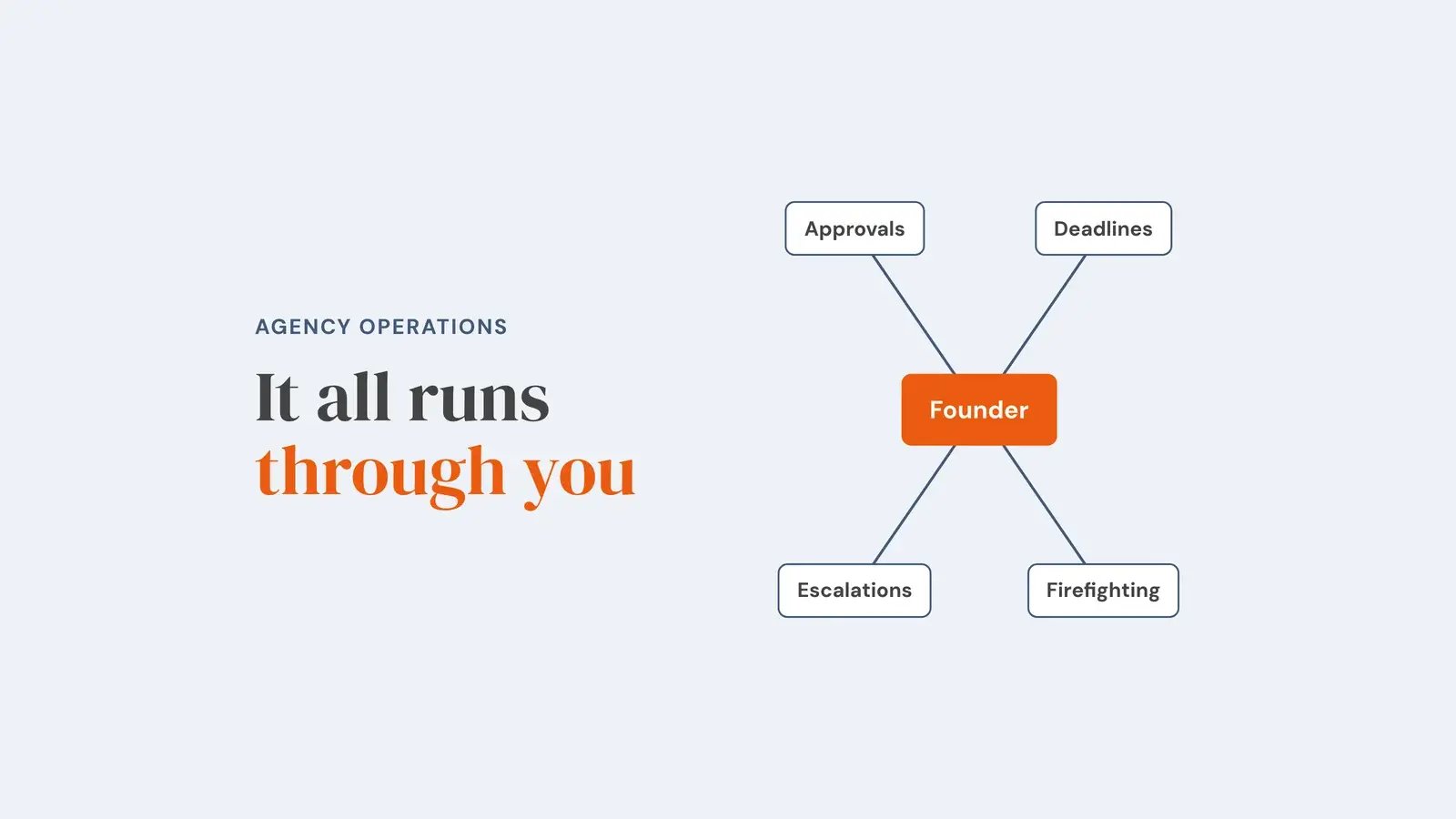
The dependency trap starts small but grows quickly. You outsource one campaign, then another. Soon you're relying on external resources for content, strategy, and execution. Your team becomes order-takers rather than strategic thinkers.
When budgets shrink or agencies change direction, you're left scrambling. The knowledge walked out the door with your last monthly payment.
The hidden costs of traditional outsourcing
Traditional outsourcing models hide their true costs behind attractive monthly retainers.
- Knowledge hoarding: Agencies protect their methods to maintain control, leaving you dependent on their expertise
- Repeated learning curves: Every new agency starts from scratch, rebuilding understanding you've already paid for multiple times
- Internal skill degradation: Your team's capabilities decline when they're not actively involved in strategic work
Without internal knowledge development, you're buying the same services repeatedly instead of building lasting value.
Teaching-first agencies vs traditional agencies: What's the difference?
Teaching-first agencies prioritise knowledge transfer and skill development alongside project delivery, creating lasting value for their clients.
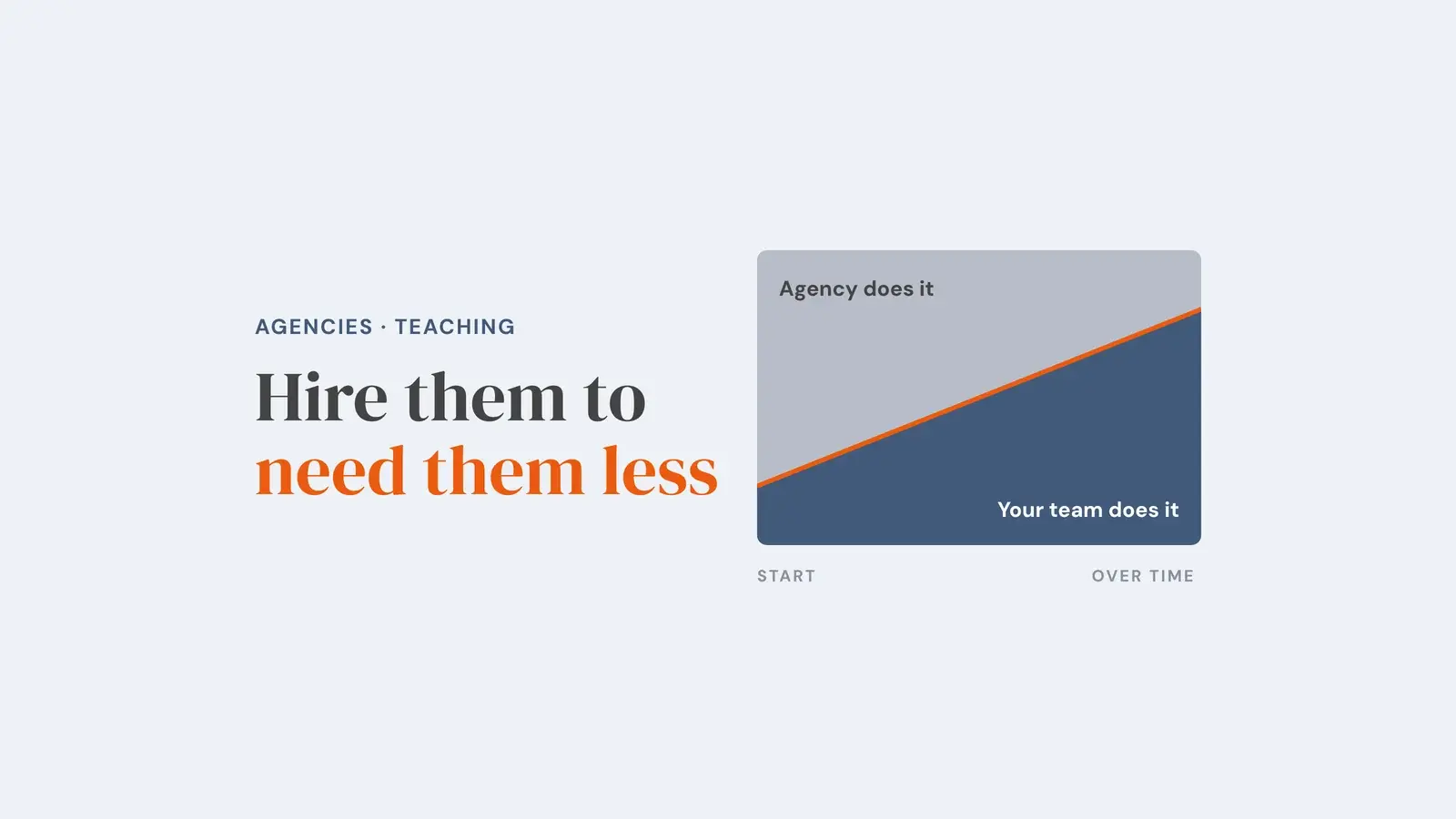
Unlike traditional agencies that guard their processes, these firms actively work to make themselves less necessary over time. They measure success not just by deliverables, but by your team's growing independence.
The teaching-first approach combines execution with education. Every project becomes a learning opportunity. Your team works alongside experts, gradually taking on more responsibility while building confidence and capability.
Key characteristics of teaching-first agencies
Genuine teaching-focused agencies demonstrate specific behaviours that separate them from traditional service providers:
- Transparent methodologies: They share their processes openly and explain the reasoning behind every recommendation
- Skills transfer planning: Knowledge transfer milestones are built into project timelines from day one
- Team involvement requirements: Your people are expected to participate actively, not just approve deliverables
- Independence metrics: Success is measured by your ability to handle tasks without external support
My approach through the Endless Customers System™ exemplifies this philosophy. Whether through my In-House Marketing Sales and Mastery programme or Fractional Marketing Director services, I focus on building your team's capabilities alongside delivering results.
The goal is simple: make your business less dependent on external support while achieving better outcomes.
How to identify agencies that actually teach vs those that just claim to
The best teaching-focused agencies provide clear documentation, training materials, and measurable skill development milestones as standard deliverables.
Many agencies claim to offer "consultative" or "partnership" approaches, but their actions reveal different priorities. Look beyond marketing materials to assess genuine commitment to knowledge transfer.
Red flags that reveal traditional outsourcing mindset
Watch for these warning signs during initial conversations:
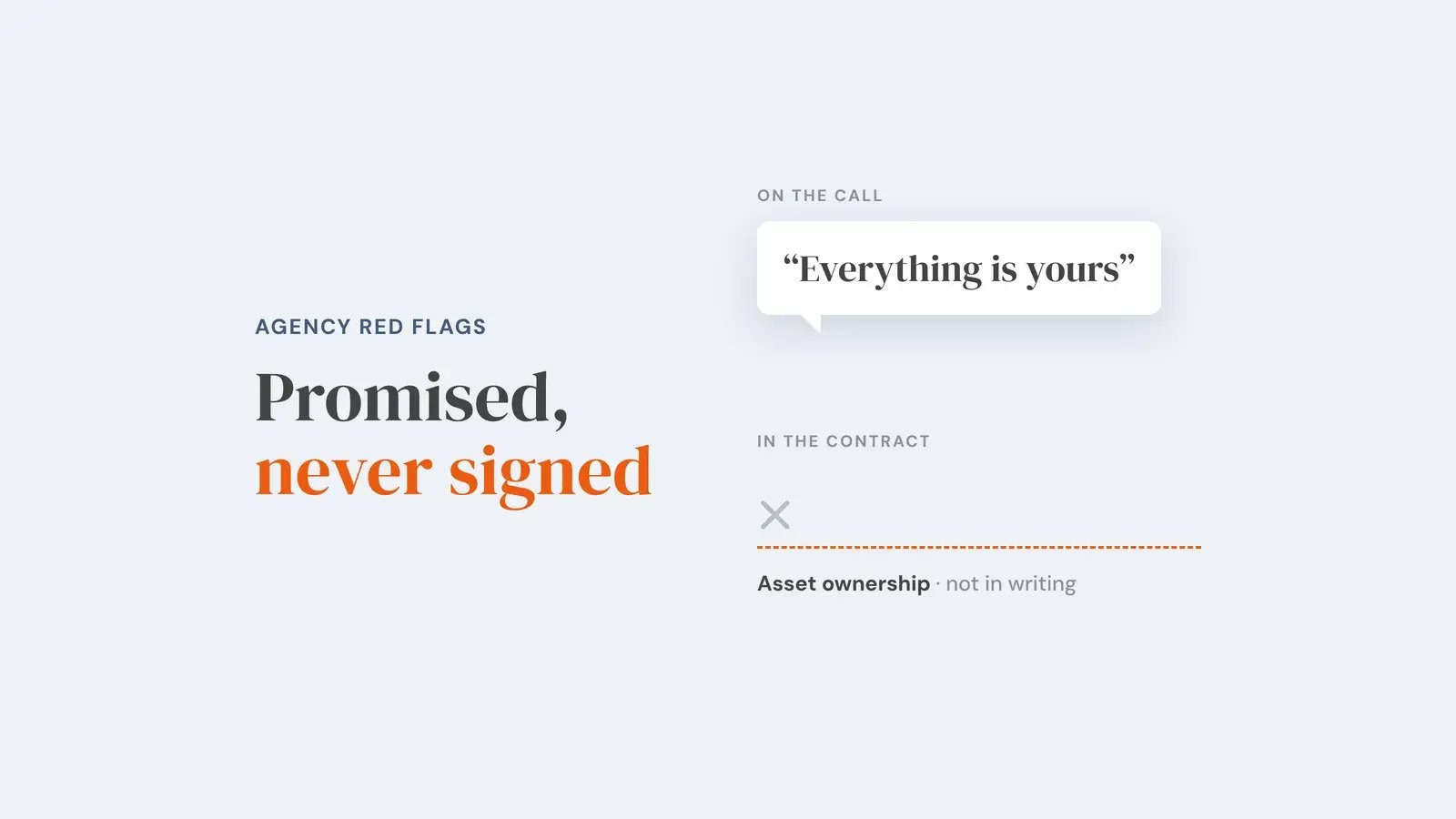
- Reluctance to explain their methodology in detail
- Proposals focused solely on deliverables without mentioning team development
- Resistance to including your team in strategic discussions
- No mention of documentation or knowledge transfer processes
- Inability to provide examples of clients who became more independent
Green flags that indicate genuine teaching focus
Authentic teaching-first agencies demonstrate these characteristics:
- Methodology transparency: They explain their approach clearly and provide detailed process documentation
- Team development plans: Proposals include specific training elements and skill-building objectives
- Independence success stories: They can share examples of clients who reduced their dependency over time
- Knowledge transfer deliverables: Training materials, documentation, and capability assessments are included as standard outputs
The litmus test is simple: ask potential partners how they measure the success of knowledge transfer and what specific steps they take to build your internal capabilities.
The financial benefits of choosing education-focused agency partnerships
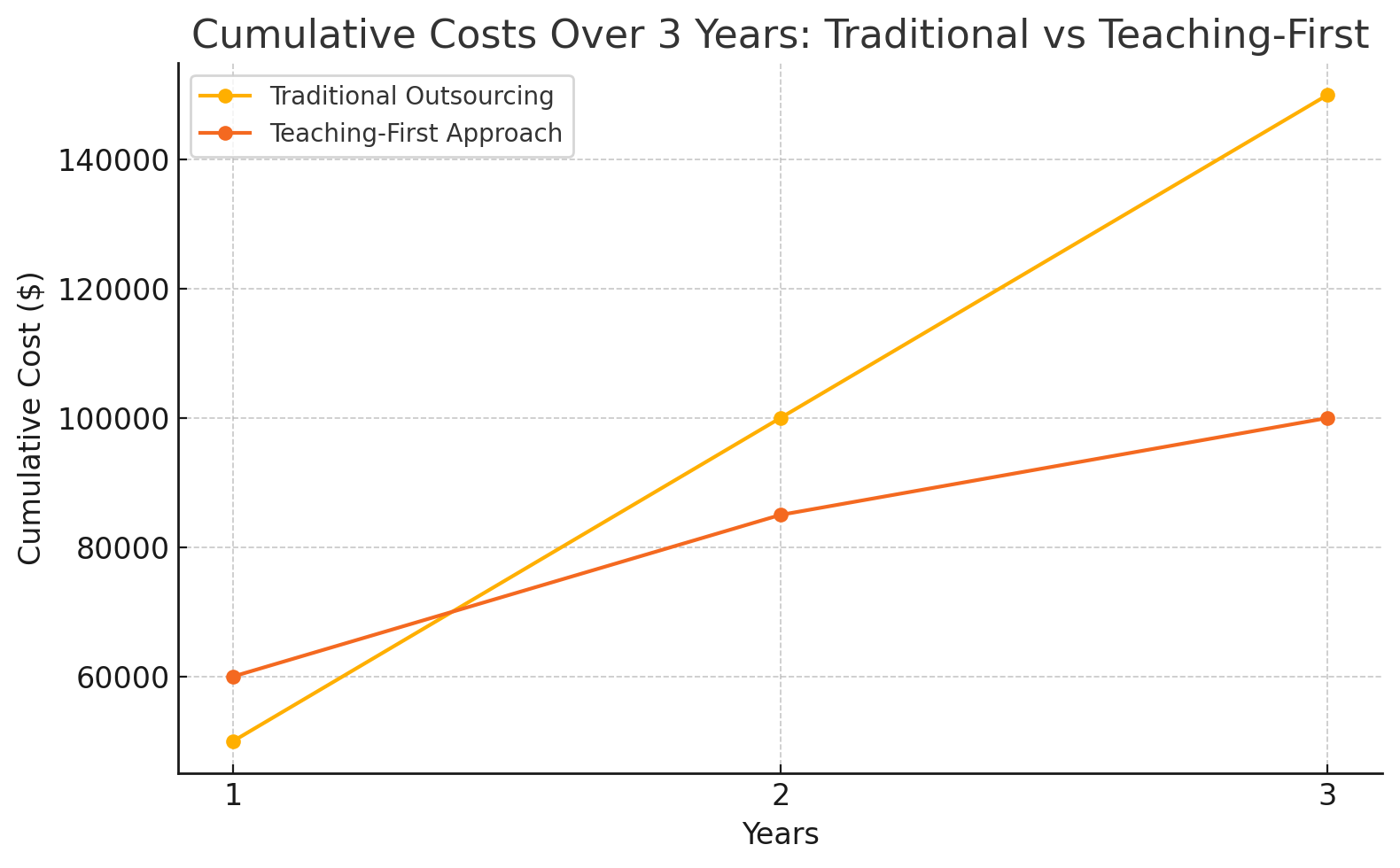
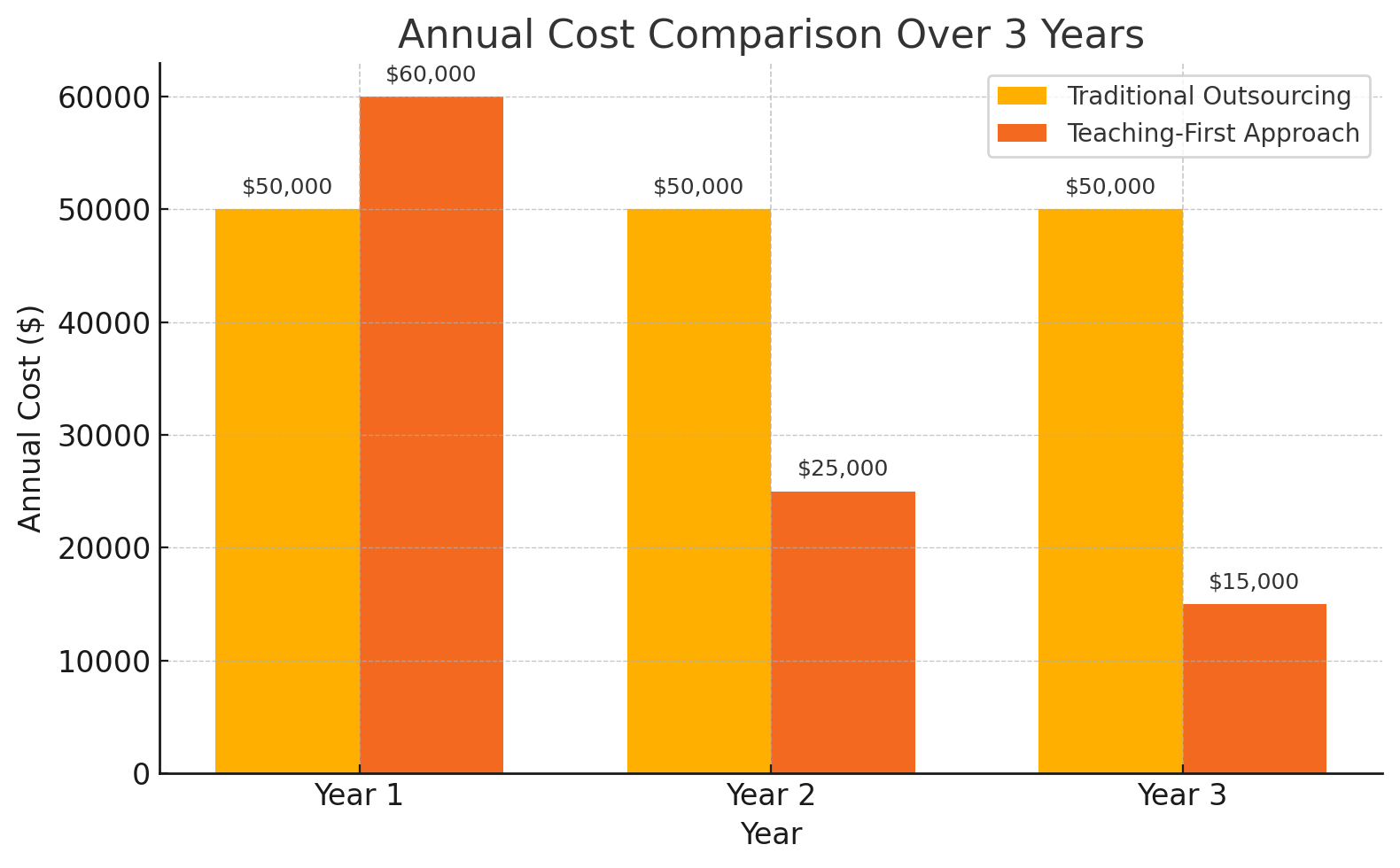
Businesses that partner with teaching-first agencies typically see 40-60% lower long-term costs compared to traditional outsourcing models.
This cost reduction comes from decreased dependency on external resources and improved internal efficiency over time. While initial investments might be slightly higher, the return compounds quickly.
Breaking down the cost comparison
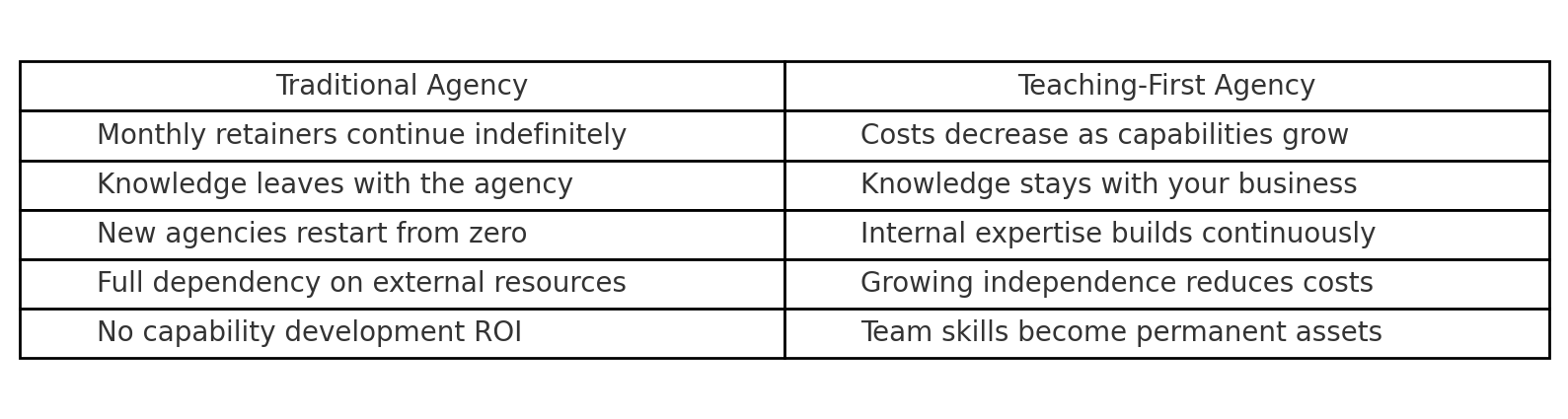
Here's how teaching-first partnerships deliver superior financial returns:
| Traditional Outsourcing | Teaching-First Partnership |
|---|---|
| Monthly retainers continue indefinitely | Costs decrease as capabilities grow |
| Knowledge leaves with the agency | Knowledge stays with your business |
| New agencies restart from zero | Internal expertise builds continuously |
| Full dependency on external resources | Growing independence reduces costs |
| No capability development ROI | Team skills become permanent assets |
Real-world cost savings examples
Teaching-first partnerships deliver measurable financial benefits within 12-18 months:
- Reduced agency dependency: Businesses typically cut external marketing costs by 50% within two years
- Faster execution: Internal teams work more efficiently with proper training, reducing project timelines
- Better decision-making: Educated teams avoid costly mistakes and make smarter strategic choices
The compounding effect means your marketing becomes both more effective and less expensive over time.
Through my In-House Sales and Marketing Mastery programme, clients build the expertise to handle marketing confidently and effectively. The investment in training pays for itself through reduced external dependency and improved results.
How to implement a teach-and-do marketing approach in your business
Successful implementation requires establishing clear learning objectives and knowledge transfer milestones from day one of any agency partnership.
The most effective approach combines hands-on project work with structured training sessions and regular capability assessments. This ensures knowledge transfer happens systematically, not accidentally.
Setting up for success from the start
Create the right foundation before your first project begins:
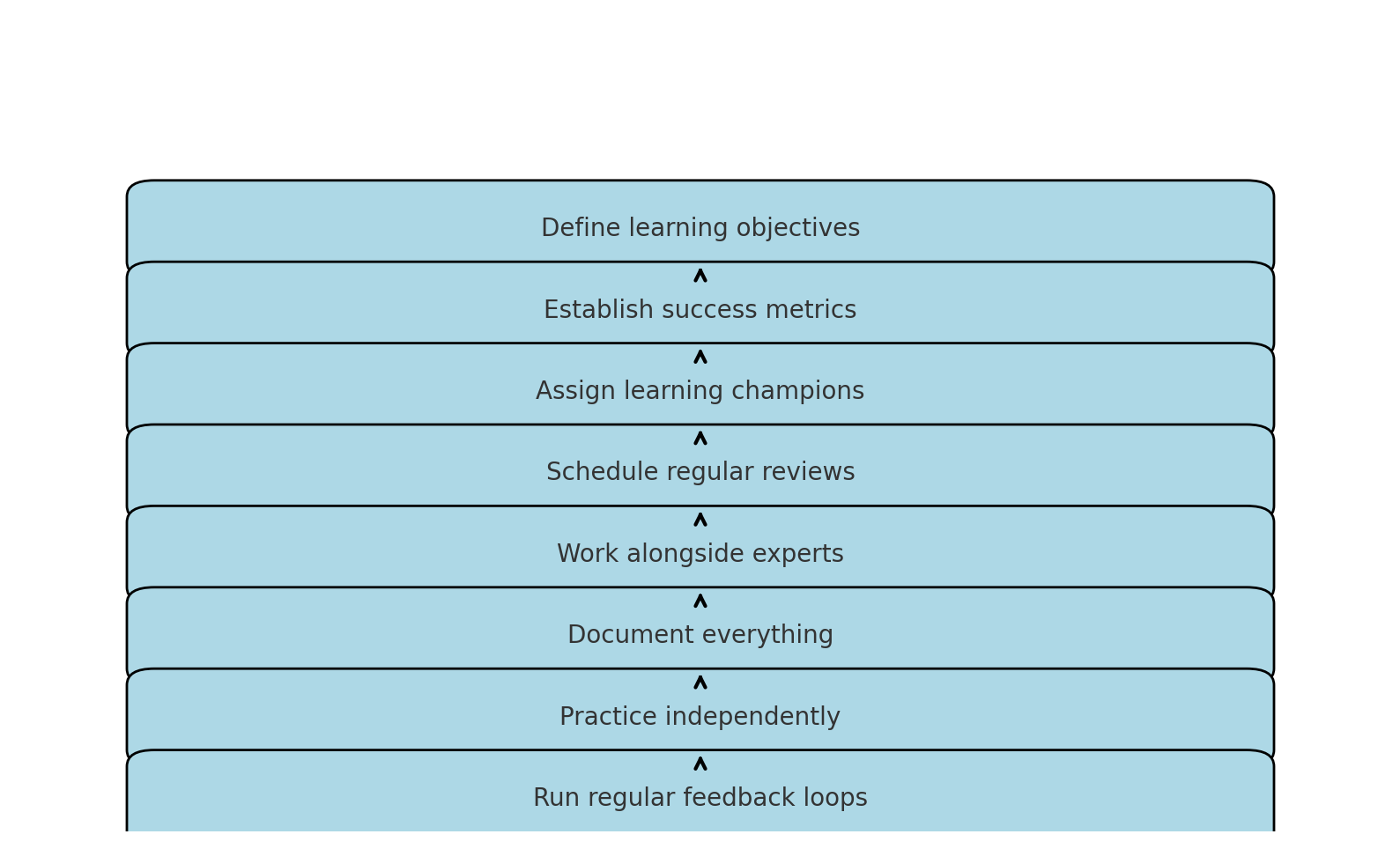
- Define learning objectives: Specify exactly what capabilities your team should develop during the partnership
- Establish success metrics: Set measurable goals for knowledge transfer alongside project deliverables
- Assign learning champions: Designate team members responsible for capturing and sharing knowledge internally
- Schedule regular reviews: Plan quarterly assessments to track capability development and adjust approaches
Structuring effective knowledge transfer sessions
The best teaching happens through guided practice, not passive presentations:
- Work alongside experts: Your team should be hands-on participants, not passive observers
- Document everything: Create detailed process guides and decision frameworks during projects
- Practice independently: Schedule time for your team to apply new skills without external support
- Regular feedback loops: Get expert guidance on your independent work to accelerate learning
My Company Alignment Workshop demonstrates this approach in action, uniting sales and marketing teams around shared goals while building practical capabilities they can use immediately.
Creating internal systems that support continued learning
Knowledge transfer only succeeds when it's supported by proper internal systems:
- Documentation standards: Establish templates and processes for capturing institutional knowledge
- Cross-training programmes: Ensure multiple team members understand each process
- Regular skill assessments: Track capability development and identify areas needing attention
- Continuous improvement culture: Encourage teams to refine and improve processes over time
How to measure the success of knowledge transfer from agency partnerships
Effective measurement focuses on your team's ability to independently execute tasks that were previously outsourced, tracked through specific skill assessments and project outcomes.
The ultimate success metric is the percentage of previously outsourced work that your internal team can now handle without external support. But meaningful measurement requires more detailed tracking.
Key performance indicators for knowledge transfer
Track these metrics to assess genuine knowledge transfer success:
- Independence ratio: Percentage of work your team handles without external support
- Quality consistency: Comparing results of internal work to previous agency deliverables
- Speed improvement: How quickly your team completes tasks as they gain experience
- Knowledge retention: Team performance on skills assessments over time
- Cost reduction: Decreased external spending as internal capabilities grow
Creating assessment frameworks that actually measure capability
Develop structured approaches to evaluate learning progress:
| Assessment Type | Frequency | Success Criteria |
|---|---|---|
| Skill demonstrations | Monthly | Team completes tasks independently with quality standards met |
| Process documentation | Quarterly | Complete, accurate guides that enable others to replicate work |
| Knowledge tests | Bi-annually | Team answers strategic questions correctly without external input |
| Independent projects | Annually | Successful completion of full campaigns without agency support |
Long-term indicators of sustainable capability
Watch for these signs that knowledge transfer has created lasting change:
- Proactive problem-solving: Your team identifies and solves challenges without external guidance
- Strategic thinking: Internal discussions focus on "why" not just "what" and "how"
- Knowledge sharing: Team members teach others and improve existing processes
- Confident decision-making: Reduced need for external validation on routine decisions
The best partnerships make themselves redundant through successful knowledge transfer, leaving you with both better results and the capabilities to maintain them independently.
Building lasting capability starts with the right partnership choice
Teaching-first agencies don't just get the job done — they build your internal capability to replicate, improve, and eventually own the work yourself. This approach transforms your team from dependent consumers of agency services into confident, strategic marketers who drive sustainable growth.
You've seen how traditional outsourcing keeps you trapped in perpetual dependency, bleeding budget with nothing to show for it when contracts end. You've discovered the hidden costs of knowledge hoarding, the warning signs to avoid, and the green flags that signal genuine partnership.
Ready to audit your current agency relationships and identify hidden dependency risks? Book a friendly consultation to discuss your specific situation and discover whether a teaching-first approach could transform your marketing results.