

Key Takeaways
- Long-term marketing retainers (12–36 months) lock you into fixed costs that eliminate budget flexibility and prevent you from responding to market changes or allocating funds to better-performing channels.
- Most retainer contracts lack meaningful performance clauses or KPI-based exit rights, meaning you'll continue paying even when results decline due to agency complacency or staff turnover.
- While long-term retainers offer 10–20% monthly discounts, the hidden costs of reduced accountability, opportunity loss, and exit penalties typically outweigh any upfront savings.
- The optimal contract length for most businesses is 3–6 months with clear performance milestones, providing enough time for strategy implementation whilst maintaining agency accountability.
- Red flags include auto-renewal clauses, vague deliverable definitions, termination penalties exceeding two months of fees, and contracts lacking specific KPIs or performance standards.
Should you sign a 12-, 24-, or even 36-month marketing retainer just because it comes with a discount? What if the agency underdelivers, or worse, disappears halfway through?
You're about to commit £60,000+ ($75,000+) to a long-term retainer, but are you truly protected if results don't show up? This article exposes the seven hidden dangers of long-term marketing retainer agreements and shows you how to evaluate and structure contracts that actually protect your business whilst giving agencies enough time to deliver results.
In this article, you'll learn the seven hidden dangers of extended marketing commitments, how to spot high-risk contract terms before signing, and what contract length actually protects your interests whilst allowing for meaningful results.
What is a long-term marketing retainer?
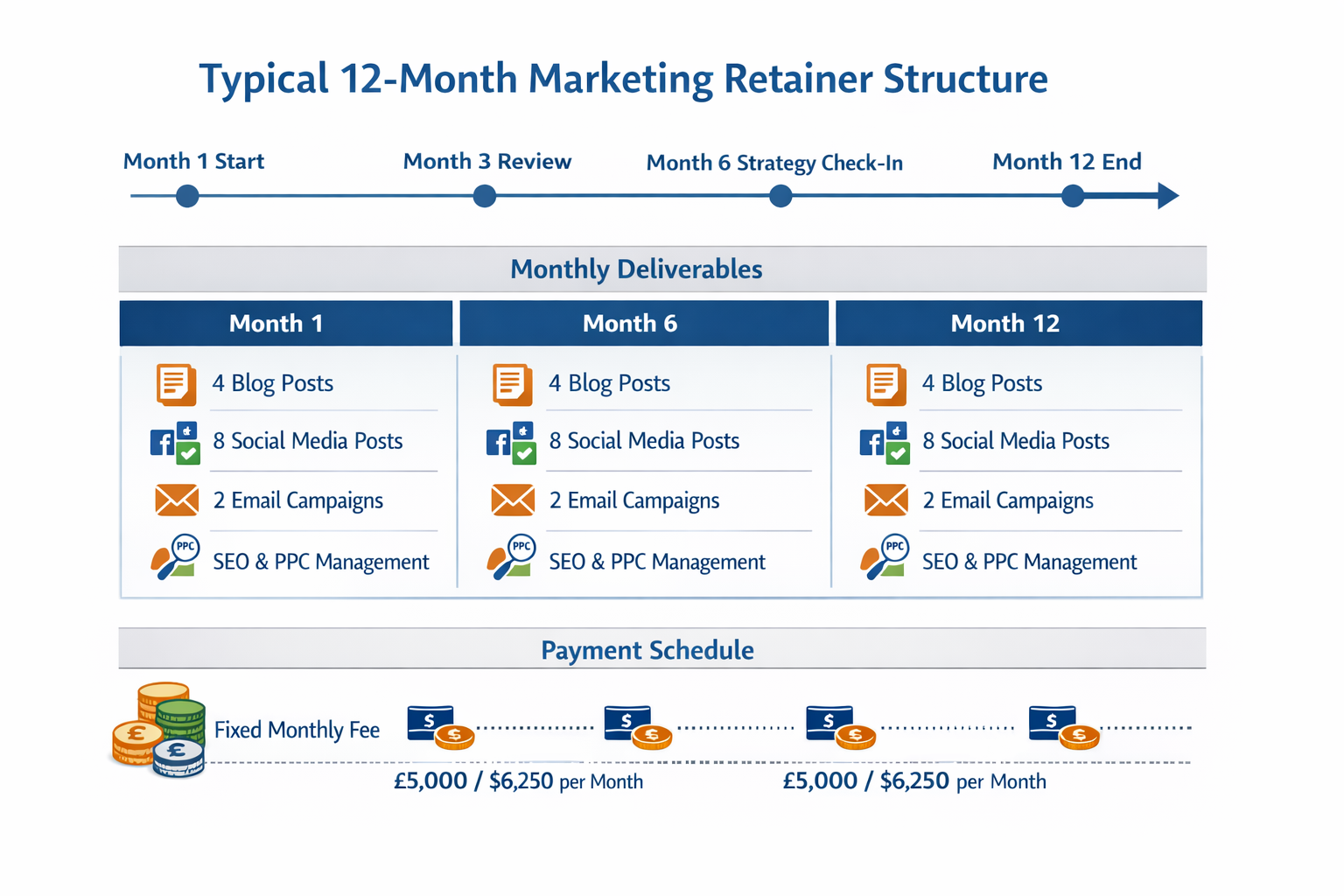
A long-term marketing retainer is a contractual agreement where a business pays a marketing agency or consultant a recurring monthly fee for ongoing services, typically spanning 6 to 36 months. These contracts bundle various marketing activities, such as content creation, SEO, social media management, or advertising, into a fixed monthly cost with predetermined deliverables.
Most retainers include:
- Monthly deliverables (blog posts, social media content, email campaigns)
- Access to a dedicated account manager or team
- Strategic planning and performance reporting
- Ongoing optimisation of campaigns and channels
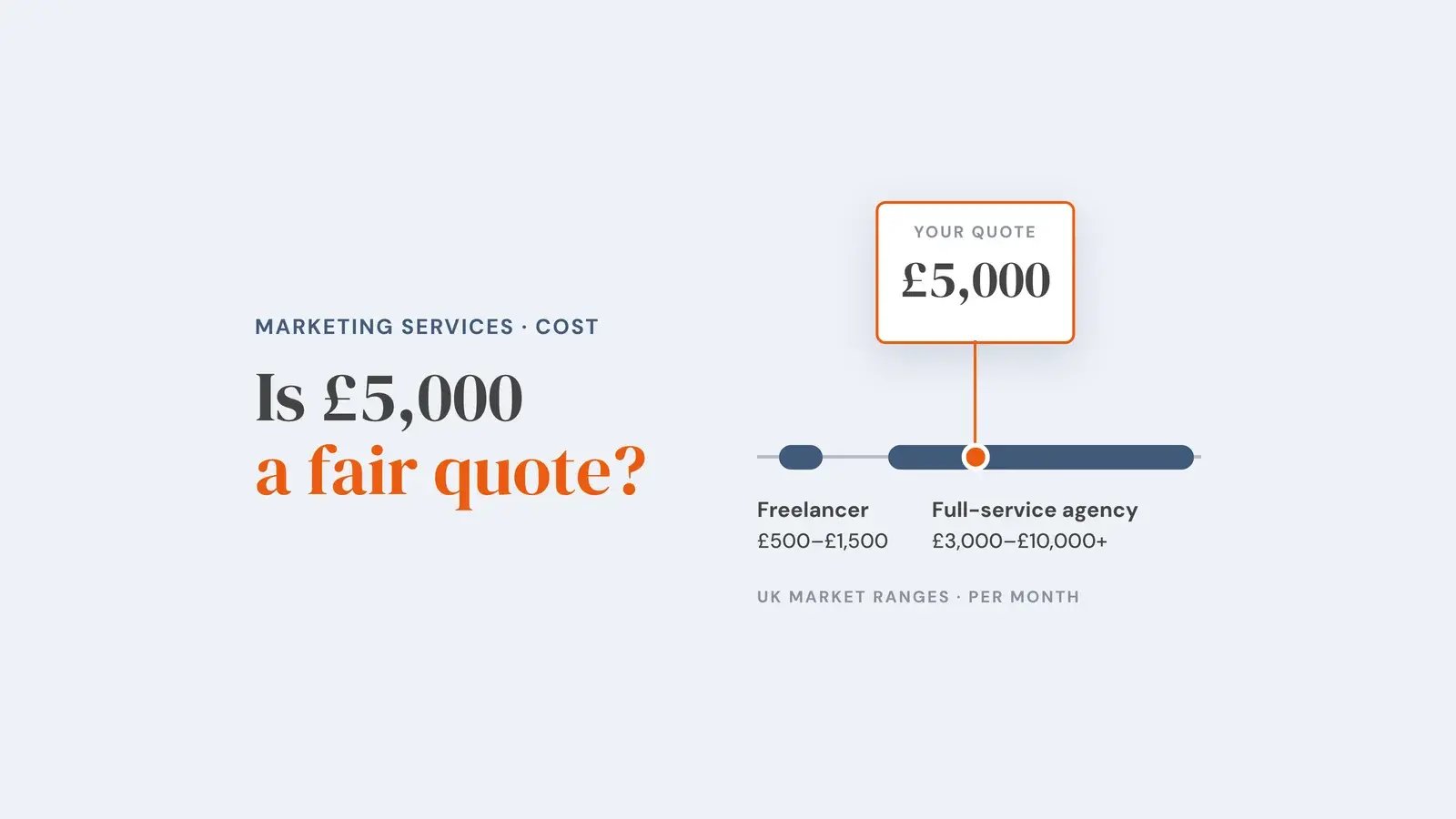
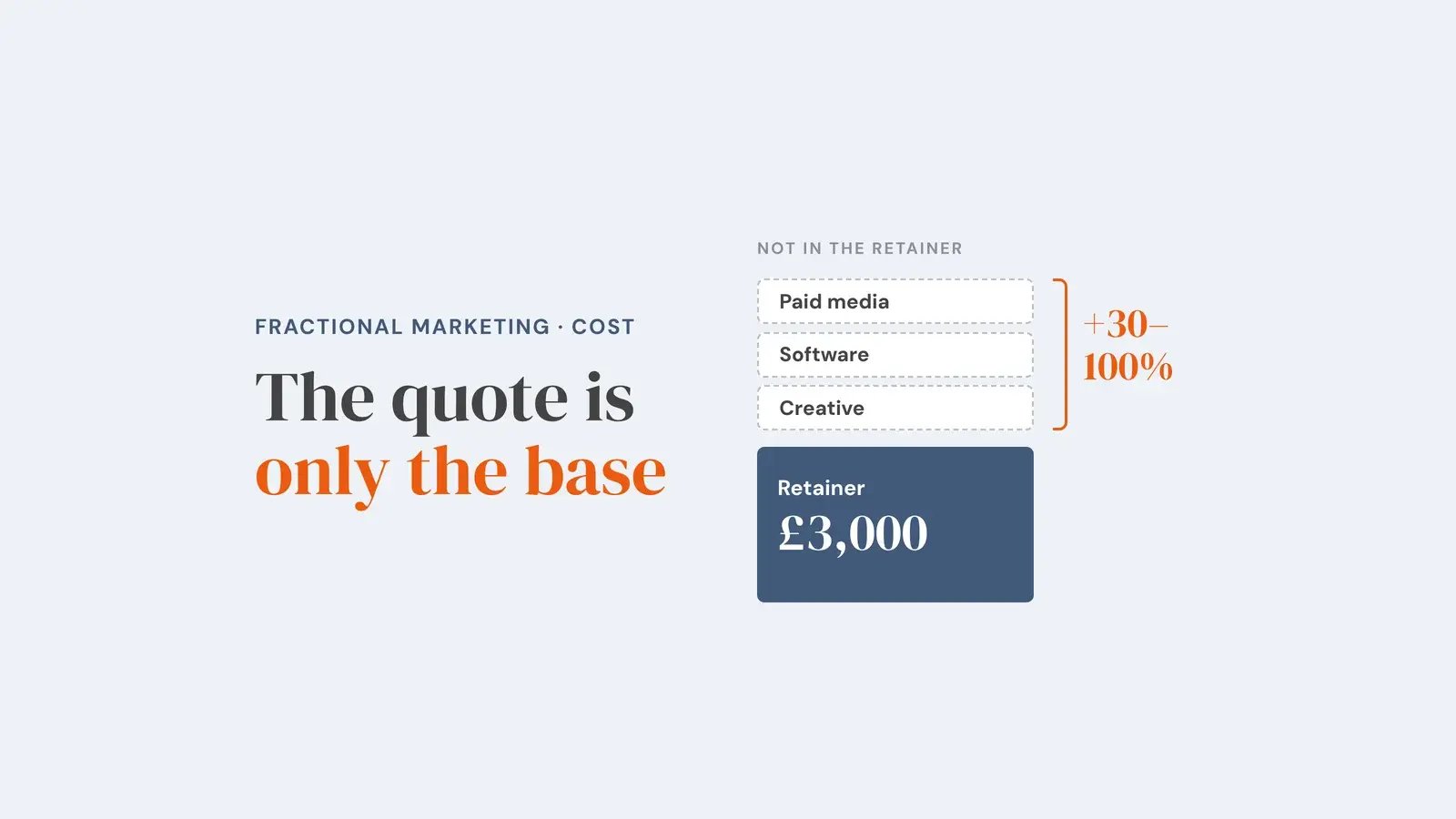
- Fixed monthly fees ranging from £3,000 to £10,000+ ($3,750 to $12,500+)
The defining characteristic of long-term retainers is the extended commitment period, which agencies justify as necessary for "seeing results" or "proper strategy implementation."
Why marketing agencies push long-term retainer contracts (and why that's a red flag)
Marketing agencies advocate for long-term retainers primarily to secure predictable revenue and reduce client acquisition costs, but this business model inherently creates a misalignment of incentives.
Once you're locked into a long-term contract, the agency's incentive to deliver high performance typically drops. While agencies frame extended contracts as necessary for "strategic continuity," the reality is that multi-year agreements guarantee their income regardless of performance, reducing competitive pressure to deliver measurable results.
Agencies benefit from long contracts because:
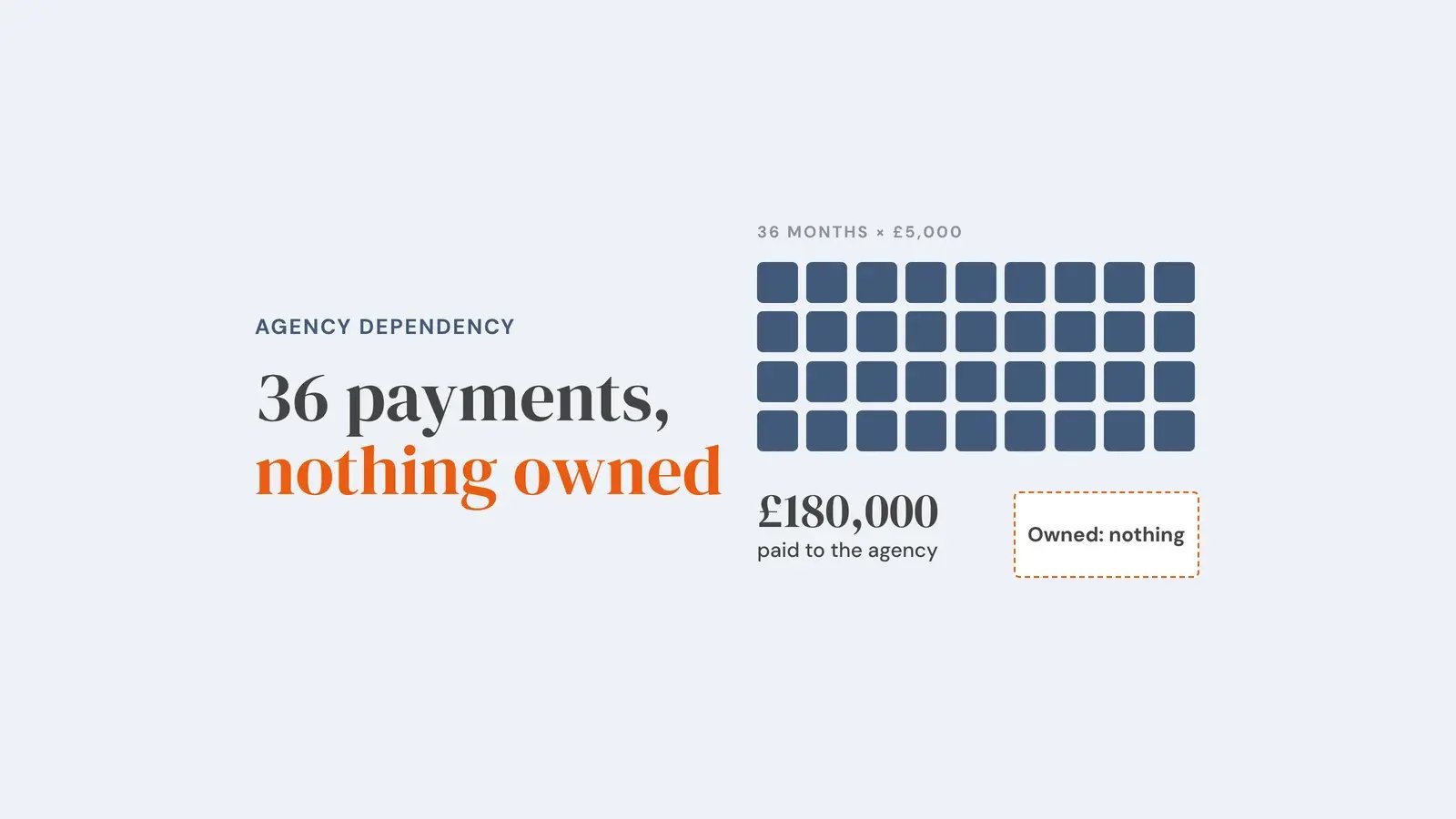
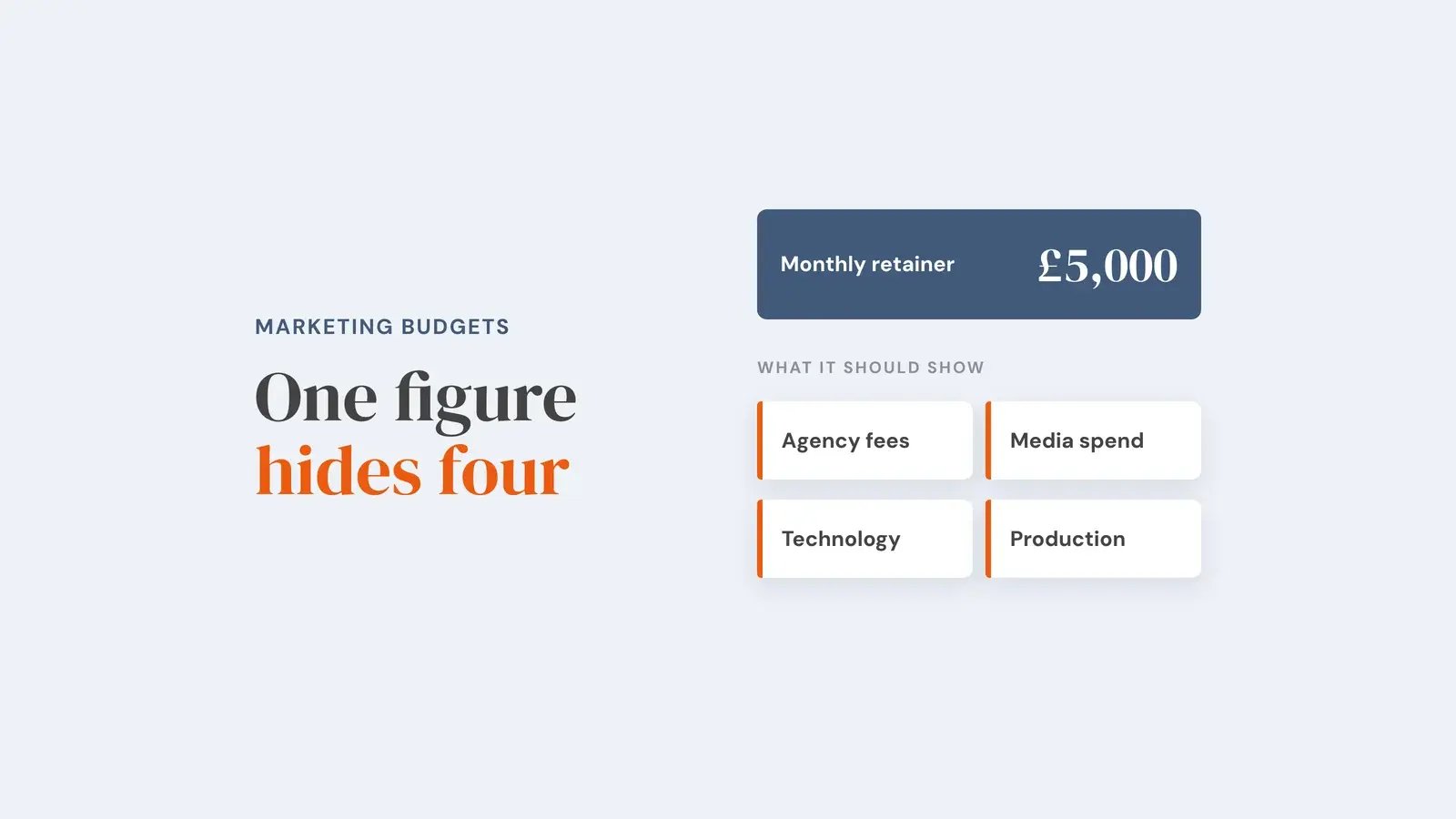
- Revenue predictability: A 24-month contract at £5,000/month ($6,250/month) guarantees £120,000 ($150,000) regardless of results.
- Reduced acquisition costs: Longer client retention means fewer new clients needed to maintain revenue targets.
- Staff planning: Long commitments allow agencies to hire and allocate resources without worrying about sudden client departures.
- Competitive protection: Once locked in, you can't easily switch to better-performing providers without financial penalties.
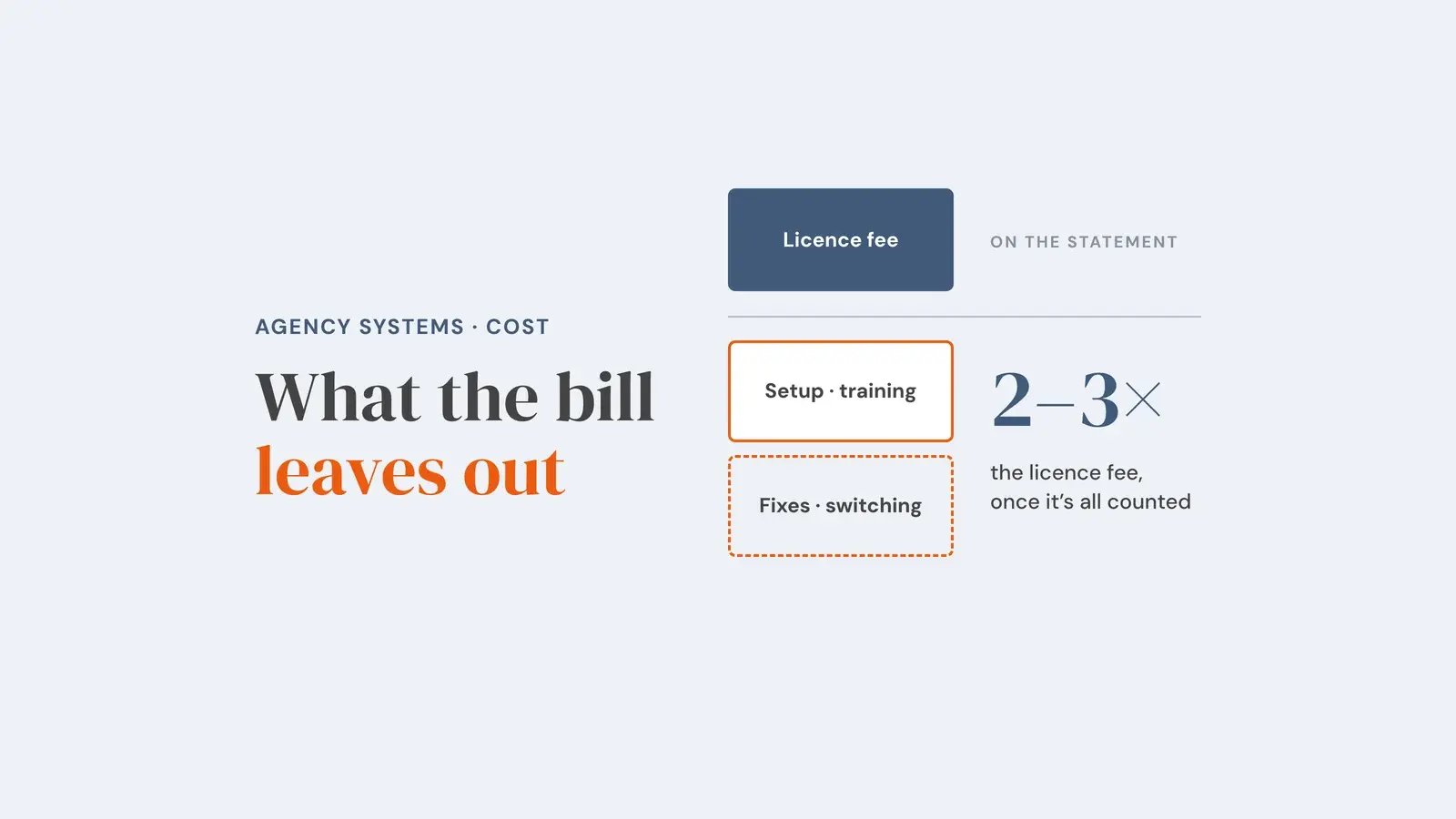
The discount offered for longer commitments, typically 10–20%, is designed to make the financial penalty of early termination feel more severe, not to reward your loyalty.
The 7 hidden risks of long-term marketing retainer agreements
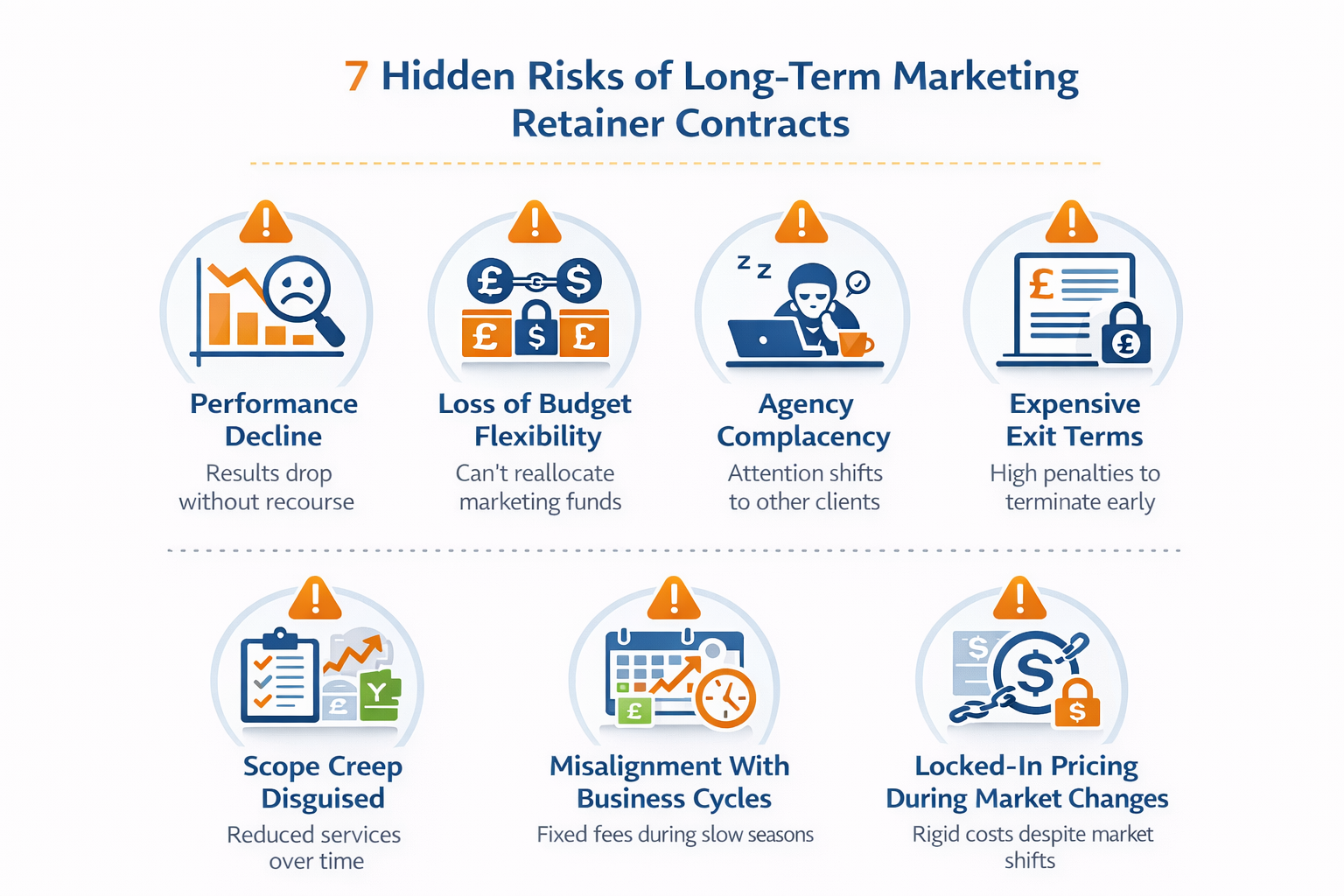
Long-term marketing retainer agreements carry substantial hidden risks that most businesses don't discover until they're locked into unfavourable terms. These dangers extend beyond simple contract length to include performance accountability, budget flexibility, strategic misalignment, and exit complexity.
1. Performance decline without accountability
Without regular renewal points, agencies have reduced incentive to maintain high performance. Most contracts lack KPI-based exit clauses, meaning declining results don't give you termination rights. Your account often gets reassigned to junior staff whilst senior strategists focus on new client acquisitions.
2. Locked-in pricing during market changes
When market conditions shift or new marketing channels emerge, you're stuck paying for outdated services whilst competitors pivot to more effective strategies. You can't respond to market opportunities without double-paying for services you're no longer using.
3. Loss of budget flexibility
A £6,000/month ($7,500/month) 18-month retainer commits £108,000 ($135,000), eliminating your ability to test new channels, respond to seasonal opportunities, or capitalise on market shifts. Fixed retainers consume 40–70% of your total marketing budget, eliminating the agility needed to respond to opportunities or threats.
4. Agency complacency and resource reallocation
Once the contract is signed, your account often gets handed to junior staff whilst senior strategists move to new client acquisitions. Performance monitoring becomes less rigorous when revenue is guaranteed. The agency wins larger clients and shifts their best resources away from your account.
5. Expensive and complicated exit terms
Early termination clauses typically require 60–90 days' notice plus penalties of 25–50% of remaining contract value, making it financially painful to leave underperforming relationships. Businesses often pay £30,000–£60,000 ($37,500–$75,000) for the final 6–12 months of underperforming retainers simply because exiting costs more than staying.
6. Scope creep disguised as strategy
Agencies often reduce actual deliverables over time whilst increasing "strategic calls" and reporting meetings that don't deliver tangible value. Content becomes generic and rushed as the agency spreads resources thinner across more clients.
7. Misalignment with business cycles
Your business needs fluctuate, but fixed retainers don't scale down during slower periods or scale up when you need to capitalise on growth opportunities. Economic conditions change, requiring reduced marketing spend, but you're contractually obligated to maintain full payments regardless of business performance.
How long-term retainers eliminate your marketing budget flexibility
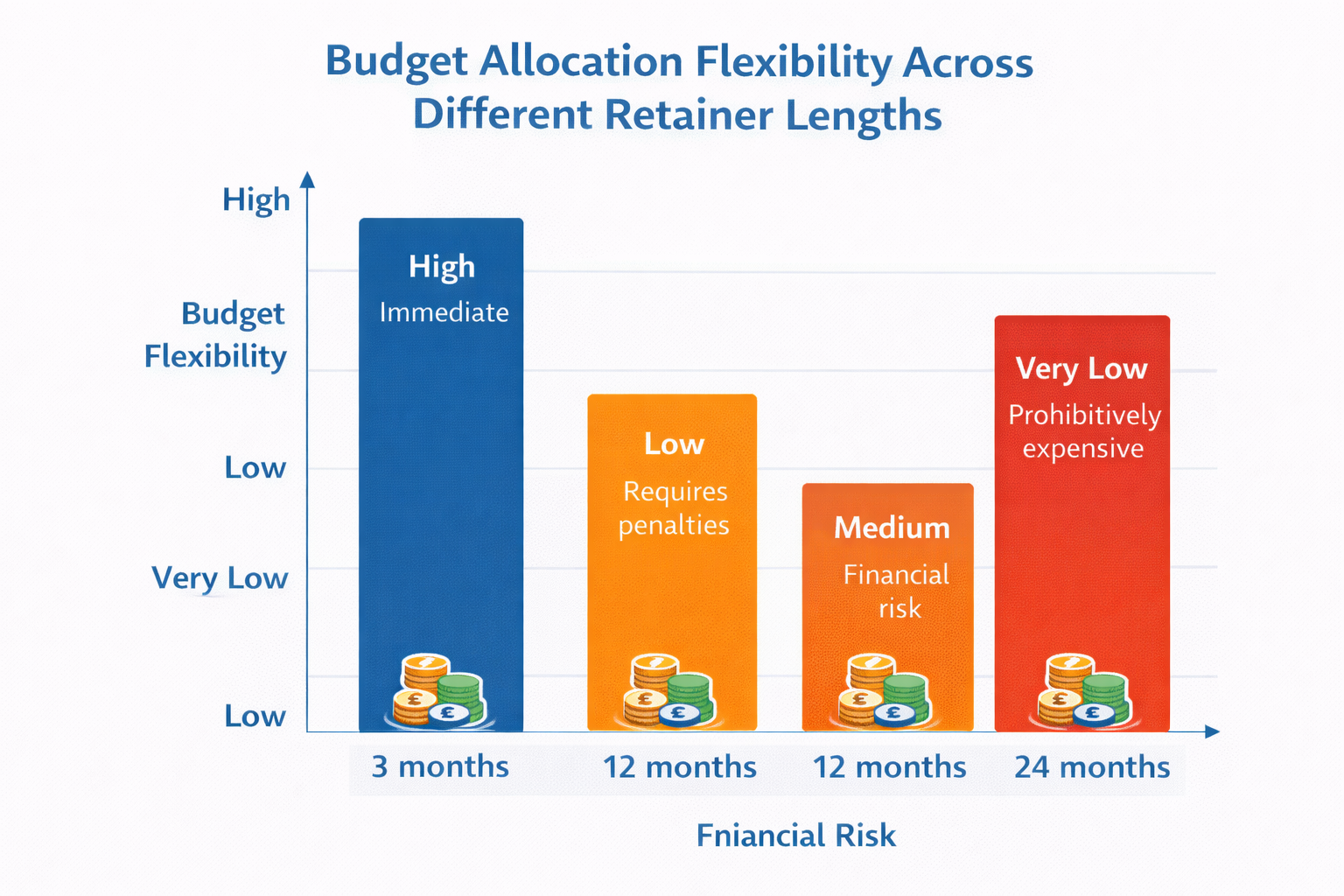
One of the most damaging but often overlooked consequences of long-term retainers is how they quietly lock up your budget and limit your agility. Long-term retainer commitments can consume 40–70% of your total marketing budget, eliminating the agility needed to respond to market opportunities, seasonal demands, or competitive threats.
When a 12- or 24-month contract locks in your largest marketing expense, you lose the ability to reallocate funds to higher-performing channels or emerging opportunities without paying for services you're no longer using.
Consider these scenarios:
- A competitor launches in your market, requiring rapid response advertising, but 65% of your budget is locked into a retainer that doesn't include paid advertising.
- Your data shows LinkedIn driving 3x better leads than the social channels in your retainer, but you can't shift budget without paying exit penalties.
- Economic conditions change, requiring you to reduce marketing spend, but you're contractually obligated to maintain full payments regardless of business performance.
Budget lock-in forces you to either double-pay (maintaining the retainer whilst funding new initiatives separately) or miss opportunities entirely.
| Contract Length | Budget Flexibility | Ability to Pivot | Financial Risk |
|---|---|---|---|
| 3 months | High | Immediate | Low |
| 12 months | Low | Requires penalties | Medium |
| 24 months | Very low | Prohibitively expensive | High |
What to do when agency performance declines in a long-term retainer (exit options and remedies)
Most long-term retainer agreements lack meaningful performance clauses or early termination rights tied to specific KPIs, leaving businesses paying for substandard work with limited recourse.
When an agency's performance deteriorates, whether due to staff turnover, attention shift to larger clients, or simple complacency, you're typically obligated to continue paying whilst results stagnate or decline.
Common performance decline scenarios include:
- Staff turnover: The senior strategist who sold you the contract leaves, and your account gets reassigned to someone unfamiliar with your business.
- Attention drift: The agency wins larger clients and shifts their best resources away from your account.
- Outdated tactics: The agency continues executing the original strategy even when data shows it's no longer working.
- Deliverable quality decline: Content becomes generic and rushed as the agency spreads resources thinner.
Your contractual options are typically limited to:
- Continuing to pay for poor performance
- Paying early termination penalties of 25–50% of remaining contract value
- Engaging in lengthy disputes that damage the working relationship further.
I've seen businesses pay £30,000–£60,000 ($37,500–$75,000) for the final 6–12 months of underperforming retainers simply because the exit penalties and notice periods made leaving more expensive than staying. This is precisely why establishing clear performance-based exit clauses before signing any contract is essential.
Long-term retainers vs. month-to-month agreements: Real cost and risk comparison
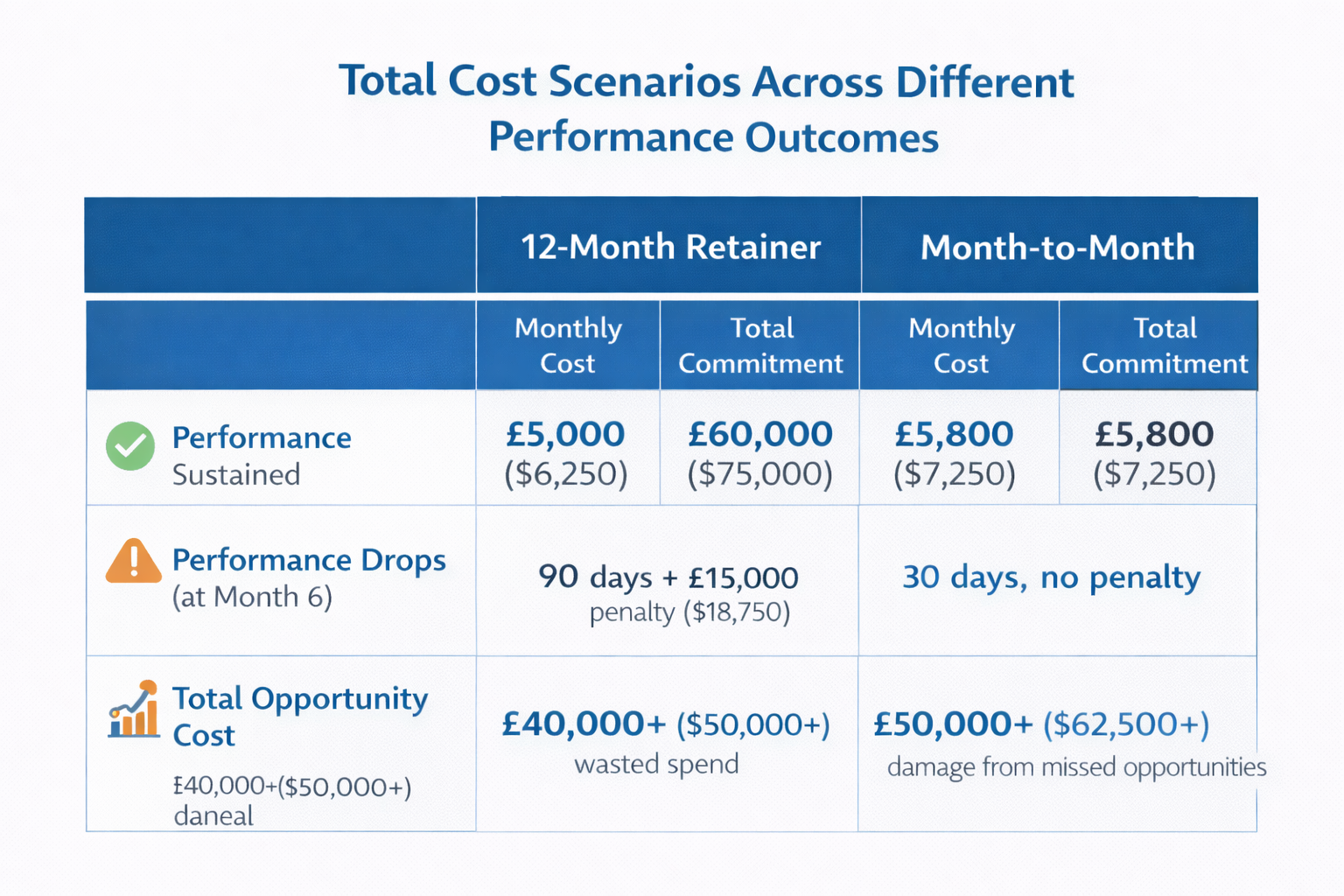
Whilst long-term retainers typically offer 10–20% monthly discounts compared to month-to-month agreements, this upfront savings often masks substantially higher total costs when you factor in performance risk and opportunity cost.
Month-to-month agreements cost more per month but provide continuous accountability, immediate exit options, and the flexibility to reallocate budget based on actual performance, advantages that typically outweigh the per-month premium.
| Criteria | 12-Month Retainer | Month-to-Month |
|---|---|---|
| Monthly cost | £5,000 ($6,250) | £5,800 ($7,250) |
| Total commitment | £60,000 ($75,000) | £5,800 ($7,250) |
| Exit terms | 60-90 days + penalties | 30 days, no penalty |
| Performance accountability | Low | High |
| Budget flexibility | None | Complete |
| Agency motivation | Declines over time | Consistently high |
| Total risk exposure | £60,000+ ($75,000+) | £5,800 ($7,250) |
Calculation framework: Compare the "savings" from a long-term discount against the cost of being locked in:
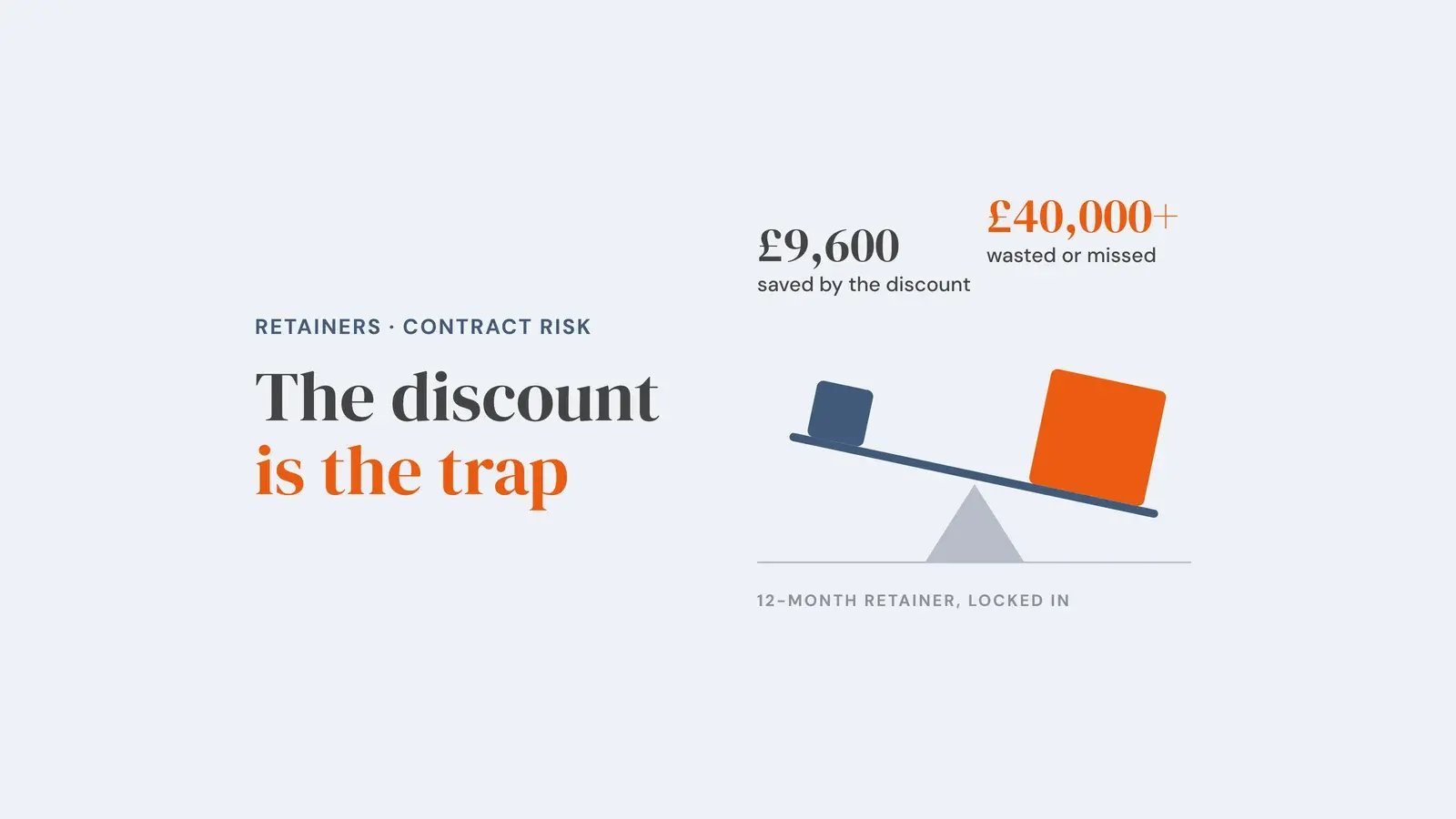
- Monthly discount on 12-month retainer: £800 ($1,000) × 12 months = £9,600 ($12,000) saved
- Cost if performance drops at month 6 and you're locked in: £30,000 ($37,500) paid for poor results
- Opportunity cost of not pivoting to better channels: Varies, but often £10,000–£50,000+ ($12,500–$62,500+)
- Net result: The £9,600 "savings" can easily cost you £40,000+ ($50,000+) in wasted spend and missed opportunities.
For businesses seeking a different approach, building internal marketing capability through training programmes often provides better long-term value than paying for ongoing agency retainers.
5-point checklist to evaluate if a long-term marketing retainer is right for your business
A long-term marketing retainer may be appropriate in specific circumstances, but only after evaluating five critical factors: your budget stability, the agency's performance history, contract exit provisions, alternative vendor options, and your business's growth predictability. Most businesses should default to shorter initial engagements (3–6 months) before considering extended commitments, regardless of discount incentives.
Follow this evaluation framework:
- Budget stability test: Can you comfortably commit this amount for the full term even if business conditions worsen? If a 20% revenue decline would make the retainer unaffordable, the contract is too long.
- Performance history requirement: Have you worked with this agency for at least 6 months and seen consistently strong, measurable results? Never sign a long-term contract as your first engagement.
- Exit provision assessment: Does the contract include performance-based exit clauses tied to specific KPIs? If results drop below agreed thresholds, can you terminate without penalties? If not, the contract heavily favours the agency.
- Market alternatives check: Are there 2–3 comparable providers you could switch to if needed? If this agency has unique capabilities you can't replicate elsewhere, you're in a weak negotiating position.
- Business predictability evaluation: Can you forecast your marketing needs, priorities, and target channels with confidence for the full contract term? Most businesses can't predict beyond 3–6 months with accuracy.
If you can't answer "yes" to at least four of these five factors, choose a shorter initial contract or negotiate better exit terms before signing.
Red flags in long-term marketing retainer contracts
Certain contract provisions signal high-risk retainer agreements that heavily favour the agency over the client, including auto-renewal clauses, vague deliverable definitions, and termination penalties exceeding two months of fees. Identifying these red flags before signing can prevent costly commitments to underperforming agency relationships.
Watch for these warning signs:
- Auto-renewal clauses: Contract automatically renews for another 6–12 months unless you provide 60–90 days' advance notice
- Vague deliverables: "Up to 8 blog posts per month" or "ongoing optimisation" without specific KPIs or quality standards
- Excessive termination penalties: Fees exceeding two months of retainer costs or percentage-based penalties of remaining contract value
- No performance standards: Contract lacks specific KPIs, success metrics, or minimum performance thresholds
- Scope change restrictions: All deliverable changes require formal amendments with additional fees
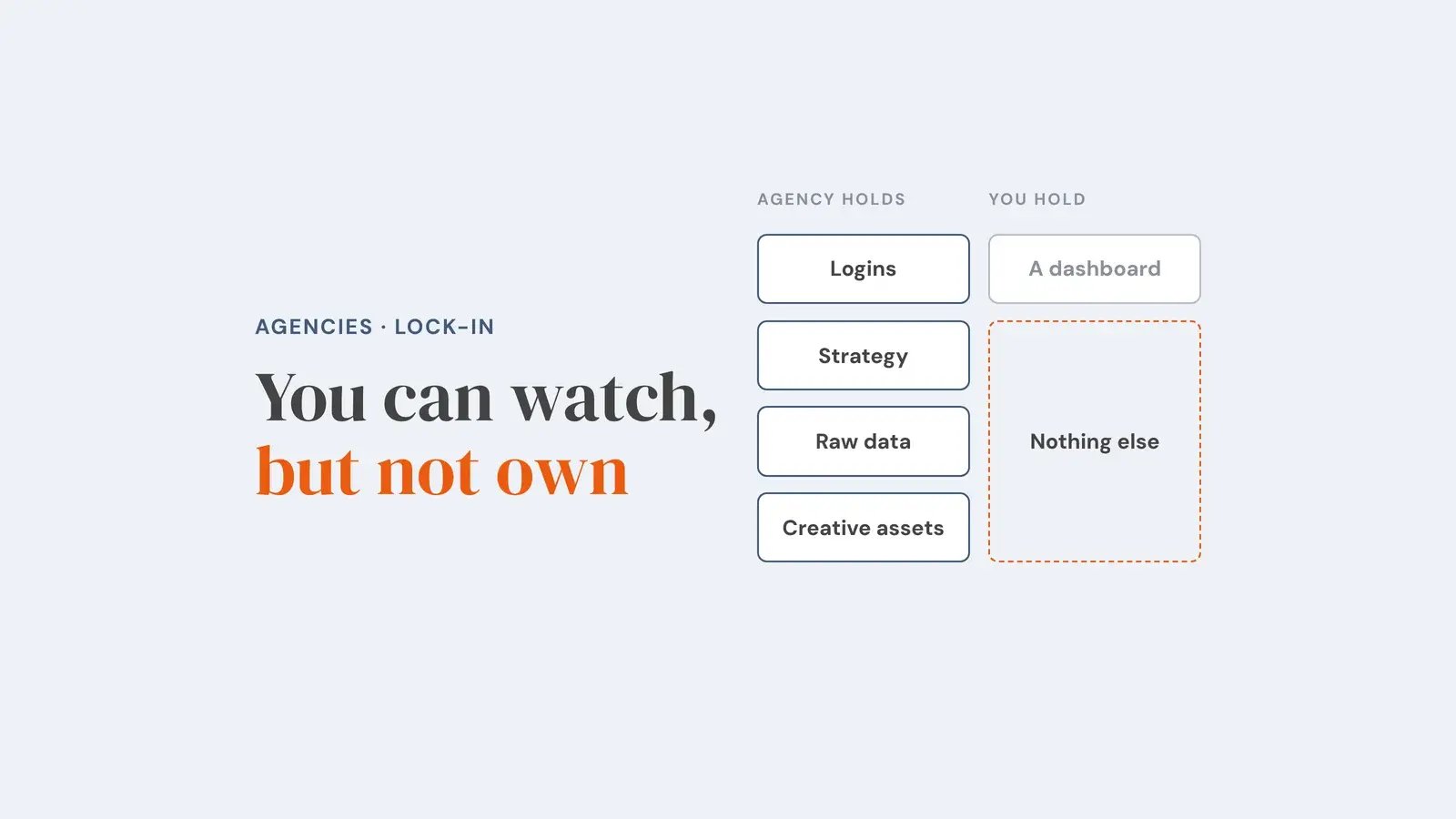
- Ownership ambiguity: Unclear whether you own content, strategies, and assets created during the engagement
- Guaranteed results claims: Promises of specific rankings, traffic numbers, or lead volumes (legitimate providers never guarantee specific outcomes)
- Upfront payment requirements: Demands for 3–6 months of fees paid in advance
Any contract containing three or more of these red flags should be rejected or heavily renegotiated before signing.
What's the ideal marketing retainer contract length?
For most small to mid-sized businesses, the optimal marketing contract length is 3–6 months with clearly defined performance milestones and straightforward renewal or exit terms.
This timeframe provides sufficient runway for strategy implementation and results measurement whilst maintaining agency accountability and preserving your ability to pivot based on performance data.
Recommended contract lengths by situation:
| Business Situation | Recommended Length | Rationale |
|---|---|---|
| First engagement with provider | 3 months | Test performance before larger commitment |
| Established relationship, proven results | 6 months | Balance stability with accountability |
| Strategic transformation project | 6–9 months | Enough time for implementation, not too long for market changes |
| Ongoing optimisation only | Month-to-month | Maximum flexibility for tactical adjustments |
Longer contracts (12+ months) might be justified only when:
- You've already worked successfully with the provider for 6+ months and results are documented
- The contract includes quarterly performance reviews with penalty-free exit options if KPIs aren't met
- You're getting a discount exceeding 20% and have confirmed budget stability for the full term
- The engagement involves significant upfront work (such as complete website rebuild) that requires time to show ROI
Even in these scenarios, insist on performance-based exit clauses tied to specific metrics.
Frequently asked questions about marketing retainer risks
Buyers considering long-term marketing retainers consistently ask similar questions about contract terms, exit options, and risk mitigation strategies. These FAQs address the most common concerns that arise during contract negotiation.
Can I negotiate shorter contract terms even if the agency requires 12 months?
Yes, and you should. If an agency refuses to start with a 3–6 month initial engagement, that's a red flag indicating they're not confident in their ability to deliver results that would earn a renewal. Propose a shorter initial term with a path to longer commitment if performance milestones are met.
What if performance drops significantly mid-contract?
Review your contract for performance clauses or material breach provisions. If specific deliverables aren't being met, you may have grounds for termination. Document all performance issues in writing and request a formal remediation plan. If the agency refuses to address the problems, consult a solicitor about your exit options; sometimes the threat of legal action is enough to negotiate a reasonable exit.
Are there alternatives to traditional long-term retainers?
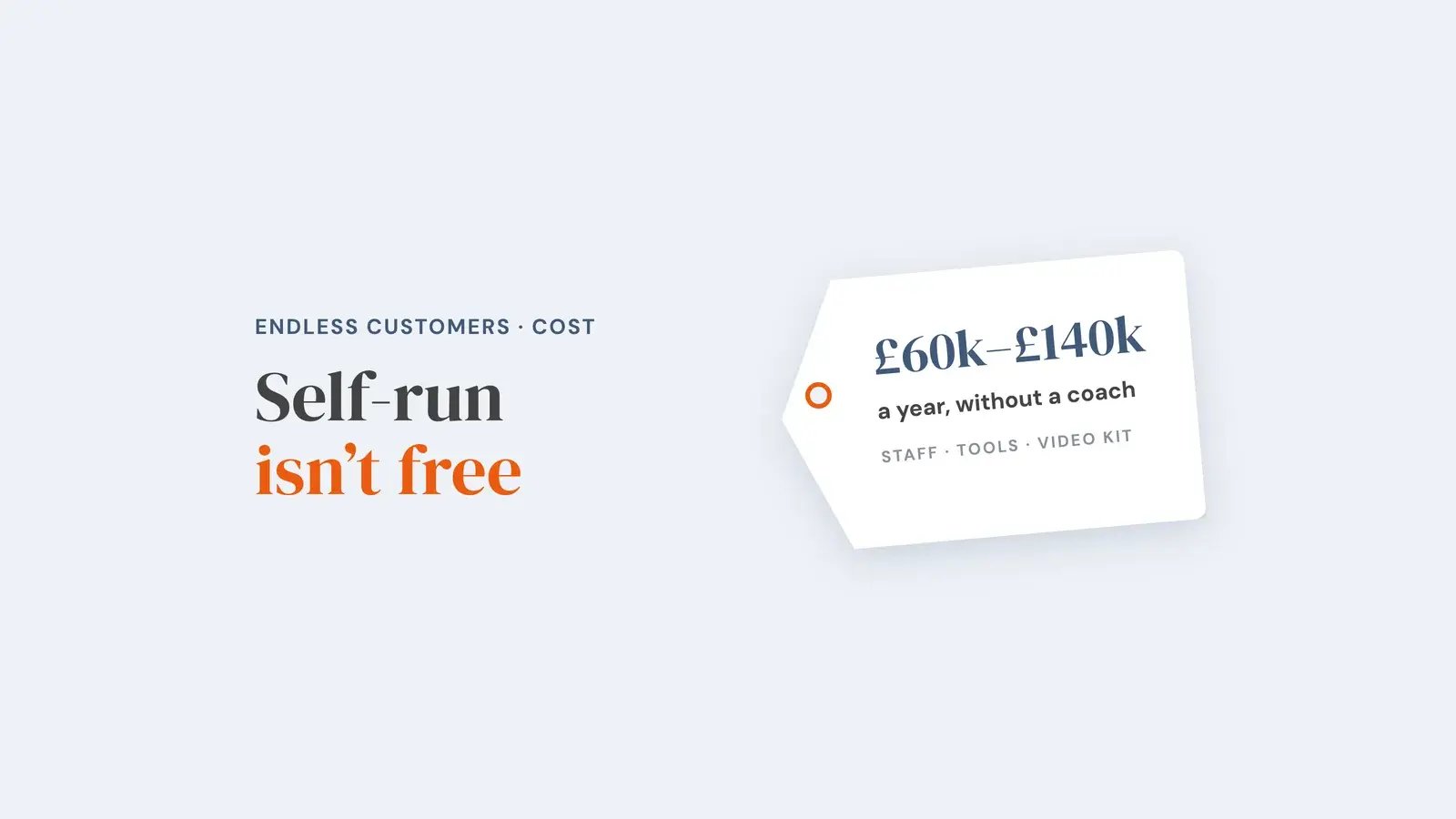
Yes. Project-based engagements, fractional marketing leadership, or training programmes that build your internal capability offer alternatives to traditional retainers. My services, for example, focus on building your team's capability rather than creating dependency, whether through hands-on Fractional Marketing Director support (from £2,000/month or $2,500/month) or training programmes that make you independent (£2,200–£4,400/month or $2,750–$5,500/month for 18–24 months, then you graduate).
How much discount justifies a longer commitment?
The discount itself shouldn't drive your decision, the total risk exposure should. A 20% discount on a 24-month contract saves £24,000 ($30,000) if you're paying £5,000/month ($6,250/month), but if performance drops at month 8, you'll waste £80,000+ ($100,000+) on poor results. Focus on minimising downside risk rather than maximising upfront savings.
What exit provisions should I insist on?
At minimum: (1) 30-day notice period, (2) termination penalties not exceeding two months of fees, (3) performance-based exit clauses tied to specific KPIs, (4) quarterly review points with penalty-free exit options if agreed metrics aren't met, and (5) clear ownership of all assets, content, and strategies created during the engagement.
Conclusion: Protecting your business from long-term retainer risks
If you've been tempted to lock in a 12- or 24-month retainer because of the promise of savings or strategic continuity, now you know the real risks lurking beneath the surface. From declining performance without accountability to expensive exit penalties and locked budgets, these contracts often serve the agency, not you.
Long-term marketing retainers (12–36 months) create substantial risks for businesses by eliminating budget flexibility, reducing agency accountability, and locking in outdated strategies during rapidly changing markets.
Whilst agencies benefit from guaranteed revenue regardless of performance, businesses absorb all the downside risk: declining results, expensive exit penalties, and opportunity costs from missed market changes.
The overwhelming evidence points to one clear strategy: default to 3–6 month initial contracts with specific performance milestones and straightforward exit terms. This approach gives agencies sufficient time to deliver results whilst maintaining continuous accountability and preserving your ability to pivot based on actual performance data rather than promises.
If an agency has delivered strong results for 6+ months and you've confirmed budget stability, then consider longer commitments, but only with performance-based exit clauses that protect your interests, not just the agency's revenue stream.
How to take action now
Review any pending retainer contracts for the red flags outlined above; if you spot three or more, renegotiate or walk away.
Calculate the total risk exposure of your proposed contract (monthly fee × contract length) and confirm you can afford to lose that entire amount if performance fails.
Counter-propose a 3-month initial engagement with clearly defined KPIs and a path to longer commitment after proven results.
Insist on performance-based exit clauses tied to specific metrics in any contract exceeding 6 months.
Document expected deliverables, quality standards, and success metrics in writing before signing anything.
Rather than locking yourself into a long-term retainer that transfers risk entirely to you, consider an approach that builds your internal marketing capability whilst providing the expertise you need. My Fractional Marketing Director services and training programmes focus on knowledge transfer, not dependency, so you're building assets you'll own rather than renting expertise that disappears when payments stop.

About the Author
I'm Tom Wardman, and I help businesses build marketing capability that actually belongs to them. Unlike traditional agencies that lock you into endless retainers, my services—from Fractional Marketing Director support to comprehensive training programmes—focus on transferring knowledge and building your team's skills. I've spent over 15 years working with businesses to create marketing systems they own, not rent. My approach combines hands-on execution when needed with strategic guidance and training that makes you independent, not dependent.
Pricing Disclaimer: All GBP–USD price conversions use an approximate exchange rate of £1 = $1.25 and are rounded estimates correct at the time of publishing. Exchange rates fluctuate and figures should be treated as indicative only.