

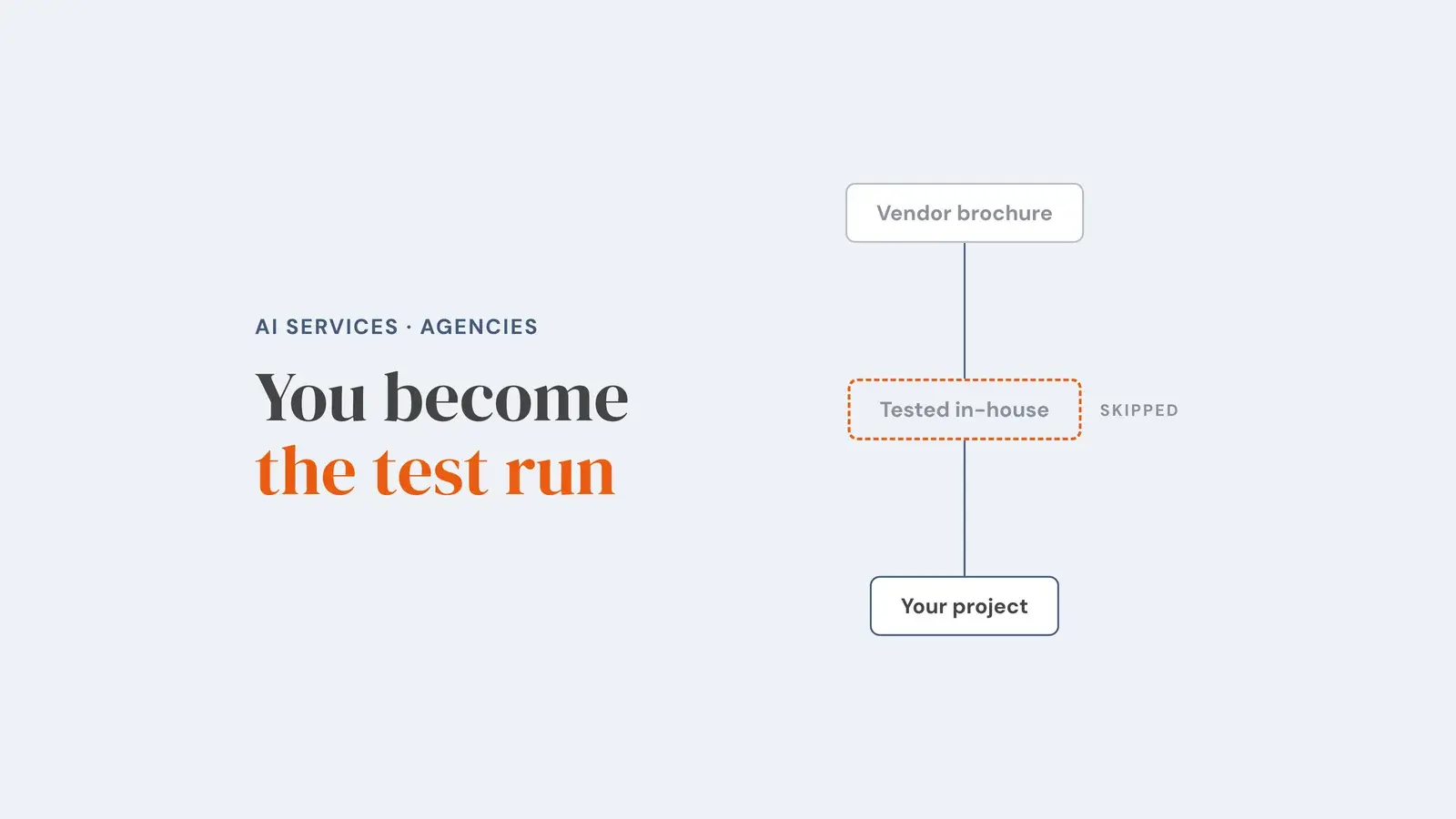
Many agencies today offer AI services without having any internal experience using the tools themselves. They're selling solutions they've never tested, promising results they've never achieved.
As someone who helps companies implement AI internally before ever recommending tools to clients, I've seen firsthand the risks of skipping this step. My work with over 40 businesses has shown me the real difference between theory and practice.
In this article, you'll learn why internal experience is crucial, what red flags to watch out for, and how to identify agencies that truly walk the talk.
What's wrong with AI-inexperienced agencies selling AI services?
Agencies that sell AI services without implementing them internally create a fundamental credibility gap that undermines client trust and project success.
Think about it logically. How can an agency recommend AI tools for your business when they haven't tested them in their own operations?
This disconnect reveals a lack of genuine understanding about AI's real-world challenges and limitations. When agencies haven't experienced the frustrations of data quality issues, the time investment needed for proper training, or the change management required for adoption, they can't provide realistic guidance.
The problem runs deeper than credibility. These agencies often base their recommendations on vendor marketing materials rather than practical experience. They promise outcomes they've never achieved themselves.
AI-inexperienced agencies: How they hurt client outcomes
Without firsthand experience using AI tools, agencies cannot accurately assess implementation timelines, potential roadblocks, or realistic ROI expectations for their clients.
I've seen businesses waste months on AI projects that were doomed from the start. The agency promised a three-month timeline for what should have been a nine-month project. They underestimated the data preparation work needed.
Timeline failures
This inexperience often leads to overpromising on deliverables and underestimating the change management required for successful AI adoption. Teams resist new tools when the rollout lacks proper planning and support.
Tool mismatch and integration issues
Poor tool selection based on feature lists rather than practical usability is the most common failure point. Consider these common failures:
- Poor tool selection based on feature lists rather than practical usability
- Unrealistic expectations about immediate productivity gains
- Inadequate training programmes that leave teams frustrated
- Missing integration requirements that surface weeks into projects
The result? Projects that drain budgets, frustrate teams, and create scepticism about AI's actual value.
5 common reasons agencies avoid internal AI use
Many agencies resist internal AI adoption due to concerns about data security, employee resistance, and the initial investment required for training and integration.
The reasons vary, but the patterns are consistent. Some agency owners worry that AI will reduce billable hours. Others fear disrupting established workflows that generate predictable revenue.
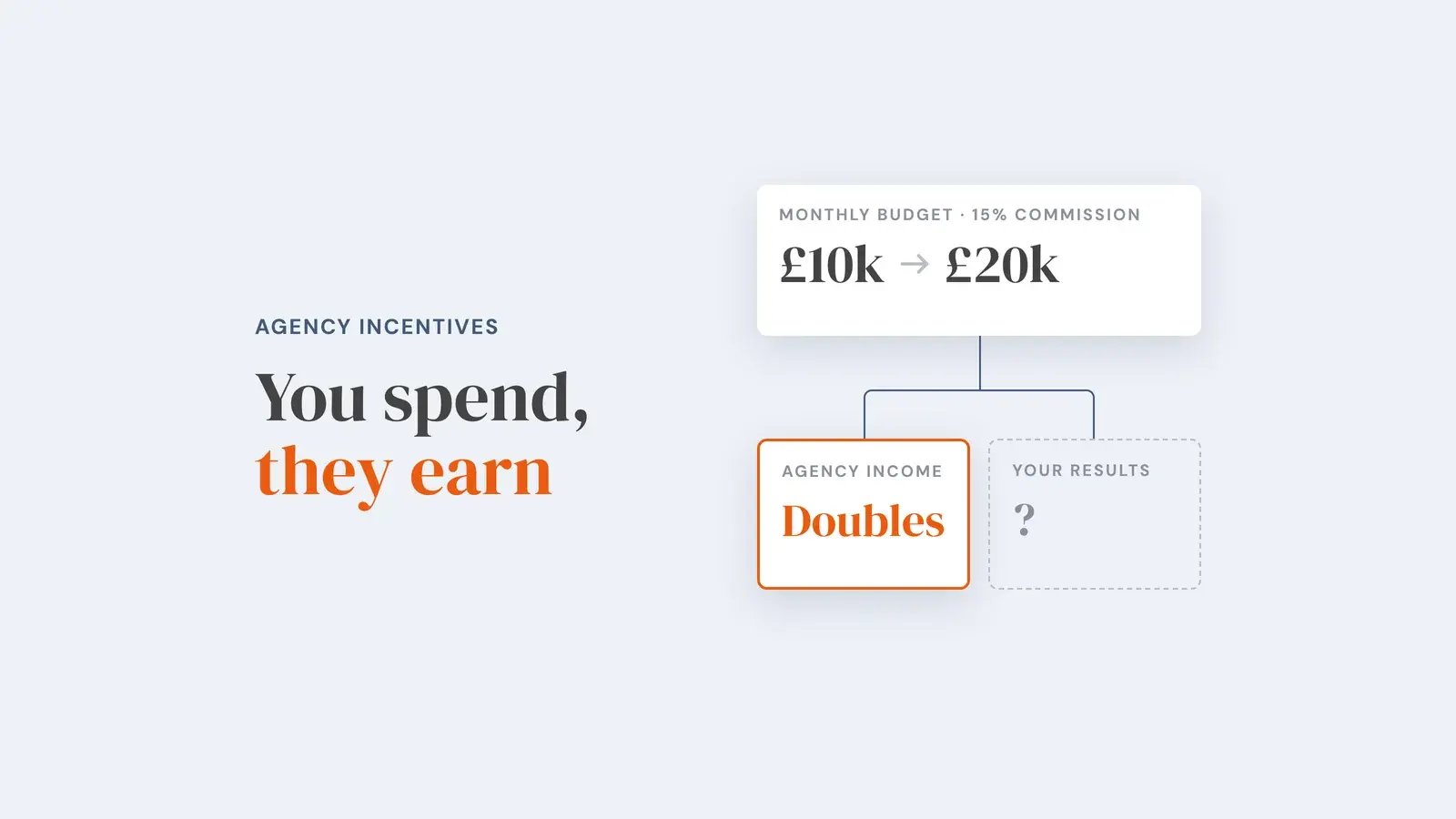
Others fear that AI automation might reduce billable hours or threaten traditional service delivery models that drive their revenue. This creates a perverse incentive where agencies profit from selling AI while avoiding its efficiency benefits.
Common barriers include:
- Fear of client data security breaches
- Resistance from team members who view AI as threatening
- Uncertainty about which tools provide genuine value
- Lack of internal technical expertise to manage implementation
- Concerns about training costs and time investment
These concerns are understandable, but they create a dangerous knowledge gap when agencies offer AI services without addressing these same challenges internally.
What problems arise when agencies fake AI expertise?
Agencies without genuine AI experience often rely on theoretical knowledge and vendor marketing materials, leading to misaligned strategies and failed implementations.
The warning signs are obvious once you know what to look for. These agencies speak in generalities about AI benefits without sharing specific examples from their own experience.
This superficial understanding creates a cascade of issues including poor tool selection, inadequate training programmes, and unrealistic client expectations. When problems arise, they lack the troubleshooting experience to resolve them quickly.
Here's what typically goes wrong:
| Problem Area | Impact | Why It Happens |
|---|---|---|
| Tool Selection | Wrong platforms chosen | No hands-on testing experience |
| Timeline Planning | Constant delays | Underestimating complexity |
| Change Management | Team resistance | No experience managing internal adoption |
| ROI Measurement | Unclear results | No baseline from internal use |
| Problem Resolution | Extended downtime | Lack of troubleshooting experience |
The client becomes the testing ground for strategies the agency has never validated internally.

How to identify agencies with authentic AI experience
Clients should ask specific questions about which AI tools the agency uses daily, how they've measured internal productivity gains, and what challenges they've overcome in their own AI journey.
The best way to spot genuine expertise is through specific questioning. Ask for concrete examples rather than accepting vague promises.
Authentic agencies will readily share case studies of their internal AI use, including both successes and failures, rather than speaking only in theoretical terms.
Essential Questions to Ask Your Agency
Use these questions to separate genuine practitioners from opportunistic vendors:
- "Which AI tools does your team use daily, and for what specific tasks?"
- "Can you show me examples of how AI has improved your internal processes?"
- "What problems have you encountered with AI implementation, and how did you solve them?"
- "How do you measure the ROI of AI tools in your own operations?"
- "Which AI initiatives failed at your agency, and what did you learn?"
Real practitioners will have detailed answers with specific metrics. They'll discuss both wins and setbacks because that's reality with new technology.
Agencies with authentic experience often demonstrate their tools during presentations rather than just talking about them. They show rather than tell.
The true cost of working with AI-inexperienced agencies
Beyond wasted budget and time, clients face opportunity costs, damaged stakeholder confidence, and potential competitive disadvantages when AI projects fail due to agency inexperience.
The financial impact extends far beyond the project fee. Failed AI initiatives create organisational fatigue that makes future technology adoption much harder.
The hidden costs include extensive rework, additional consulting fees to fix problems, and the organisational fatigue that makes future AI initiatives harder to launch.
Calculate Your Real Exposure
- Direct costs: Wasted agency fees, unused software licences, internal time invested
- Opportunity costs: Competitive advantages missed while dealing with failed projects
- Relationship costs: Damaged trust between marketing teams and leadership
- Future costs: Increased resistance to beneficial technology initiatives
I've worked with businesses that spent over £50,000 ($63,000) on AI projects that delivered no measurable results. The agency promised revolutionary outcomes but lacked the experience to deliver them.
The reputational damage can last years. Teams become sceptical about AI's benefits because their first experience was poorly managed by inexperienced consultants.
Industry standards: What needs to change
The marketing and consulting industry needs clearer standards for AI service providers, requiring demonstrated internal usage before agencies can credibly sell AI services.
Change starts with transparency. Agencies should be required to demonstrate their internal AI use before offering these services to clients.
Professional associations and certification bodies should establish requirements that separate genuine AI practitioners from opportunistic vendors riding the hype wave.
Some organisations are getting this right. The Marketing AI Institute's AI Practitioner Certification, for instance, requires documented case studies of internal implementation before accreditation. This approach creates the transparency clients deserve.
Who Should Take Action
The solution requires action from multiple groups:
Industry associations should create certification programmes that require proof of internal AI implementation, not just theoretical knowledge.
Procurement teams need better frameworks for evaluating AI service providers, focusing on demonstrated experience rather than compelling presentations.
Technology vendors should require partner agencies to show internal usage metrics before granting preferred status or co-marketing opportunities.
As someone who helps businesses improve their marketing capabilities [link to fractional marketing director services], I've seen the difference between theoretical knowledge and practical experience. Real change requires agencies that understand both the promise and the reality of AI implementation.
Conclusion
You've now seen the real risks of hiring agencies that sell AI without using it. The credibility gap between what they promise and what they practice costs businesses money, time, and competitive advantage.
If you've been burned by flashy presentations with no substance, you're not alone. The solution isn't complex—demand proof of internal AI use before engaging any agency for AI services.
I'm Tom Wardman, and I help clients achieve real value through grounded, proven AI implementation. Ready to work with someone who practices what they teach? Learn more about my marketing services.
Topics: