

If your agency disappeared tomorrow, would your marketing survive? And if you decided to switch providers, would you still own your ad accounts, your campaign data, and your content assets?
If the honest answer is "no", or even "I'm not sure", this article will show you exactly how to spot agency dependency, understand what it's really costing you, and build a clear, low-risk path back to owning your marketing.
It is for founders and marketing leaders paying a monthly retainer but feeling increasingly disconnected from what they actually own. You will learn what agency dependency is, why the model creates it by design, and how to exit it without losing momentum.
Key takeaways
- Agency dependency occurs when a business loses internal capability, data access, and strategic control because marketing is fully outsourced on a long-term retainer.
- The agency retainer model is structurally designed to retain clients, not build their capability, making dependency a predictable outcome, not a coincidence.
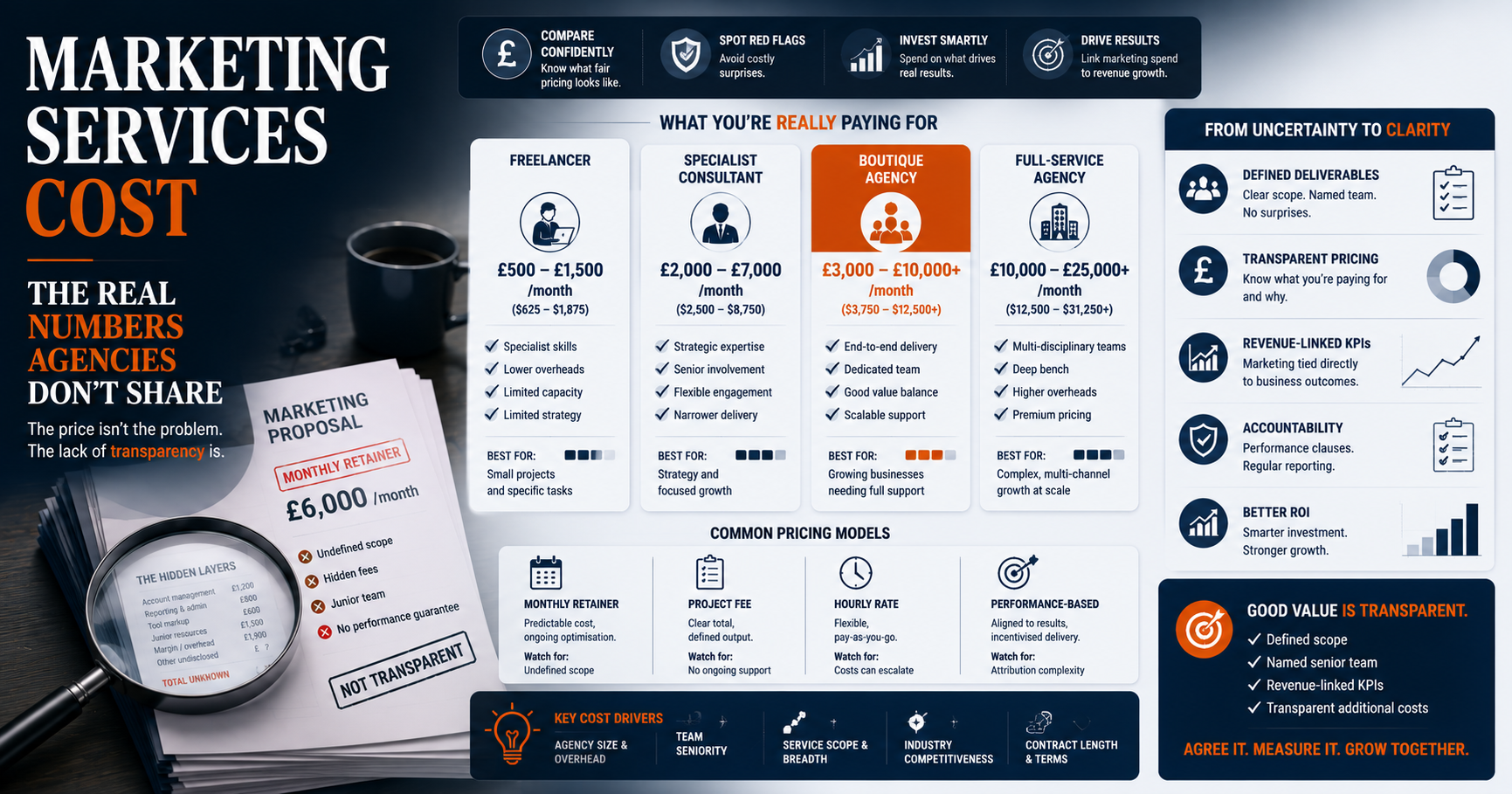
- Mid-market businesses typically pay £3,000–£20,000 ($3,800–$25,000) per month on retainers, but hidden costs, including zero internal capability built and data loss on exit, are often far greater.
- The clearest sign of agency dependency is being unable to answer basic questions about your own marketing without asking your agency first.
- Escaping dependency requires a structured transition: audit what you own, reclaim your data, then build internal capability before reducing agency reliance.
What is agency dependency?
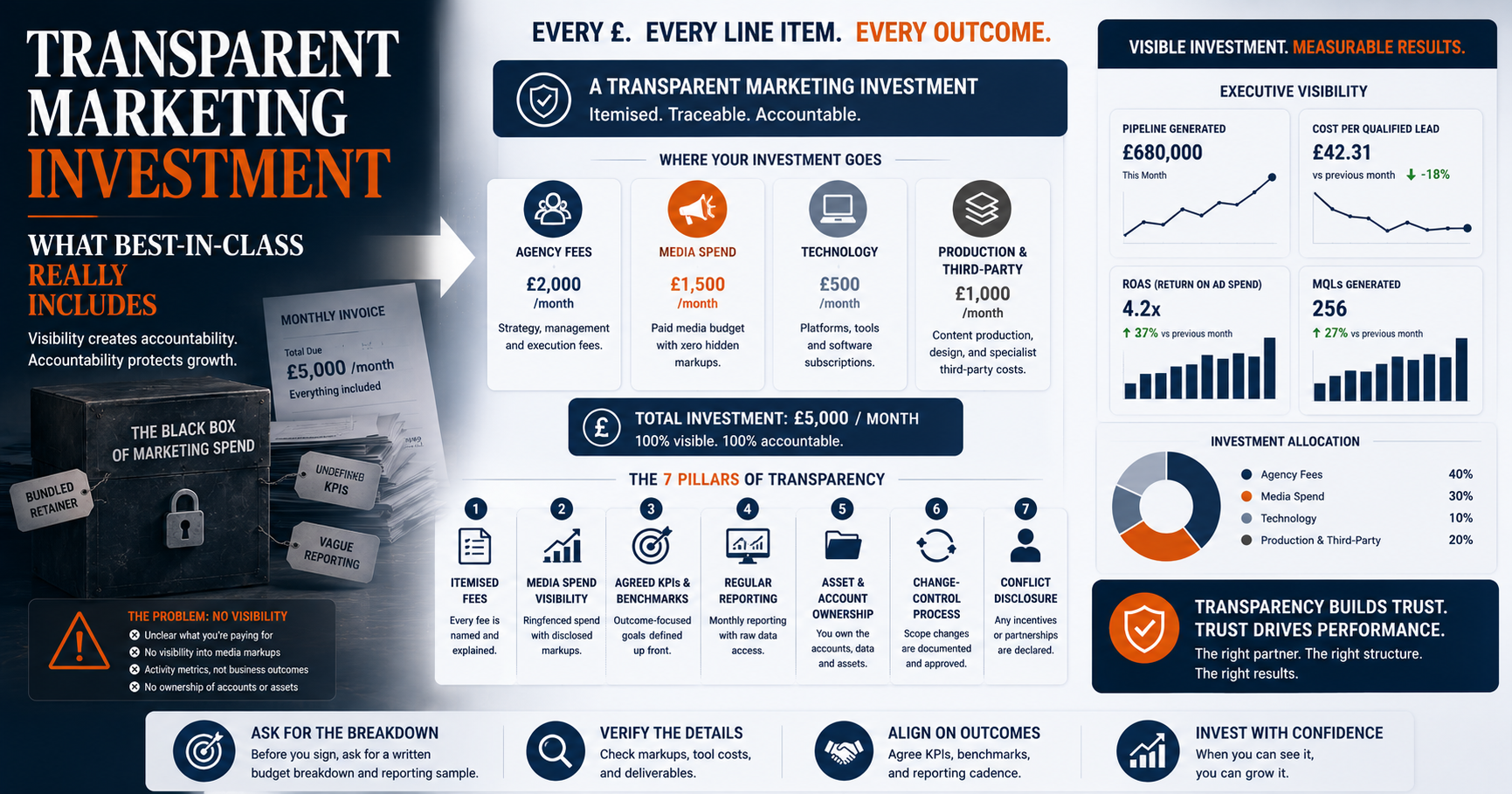
Agency dependency is when a business becomes so reliant on an external agency that it loses the internal capability, data access, and strategic control to operate without them.
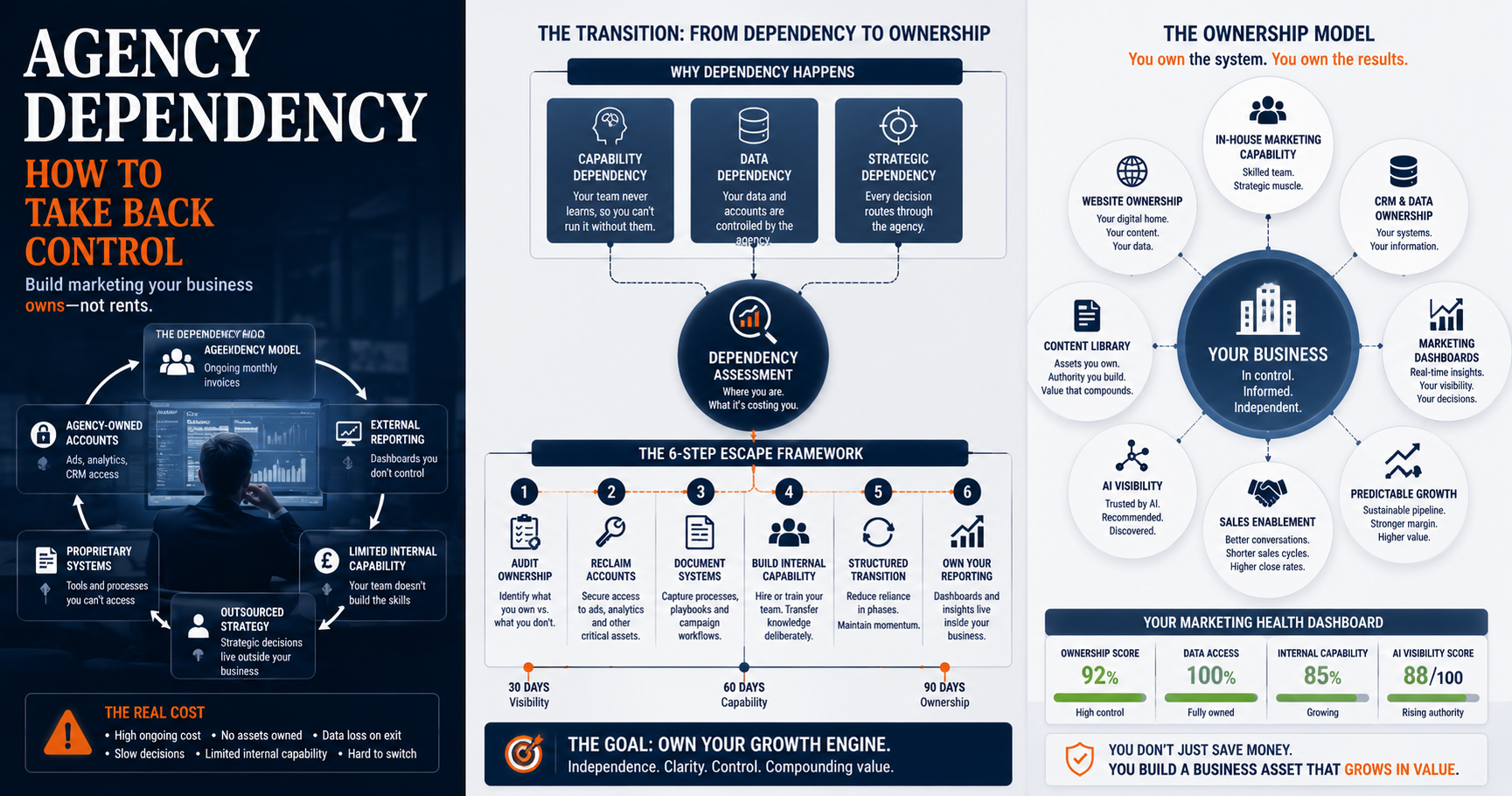
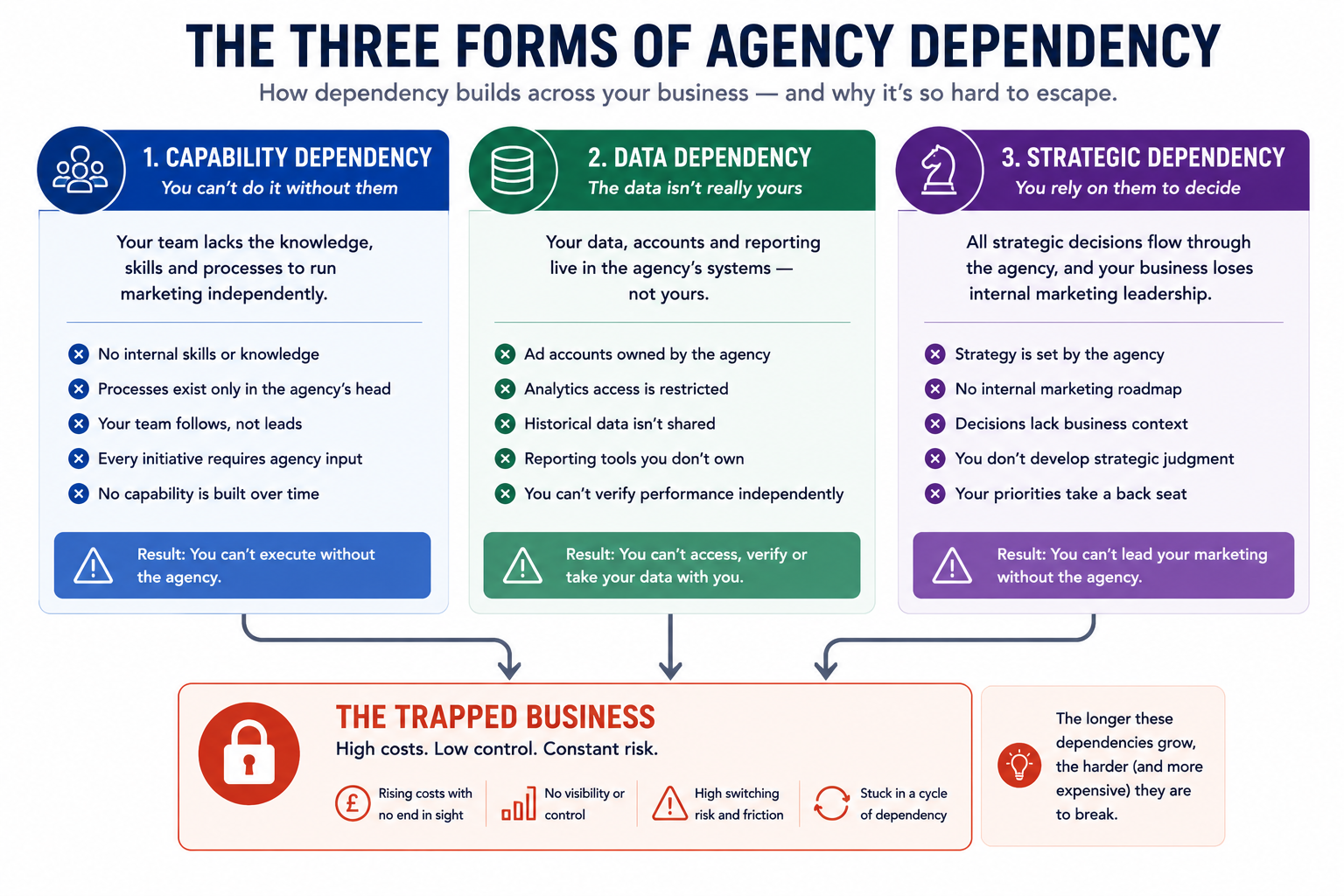
It typically develops gradually. What starts as a convenient outsourcing arrangement slowly becomes the business's only functioning marketing structure. Three forms emerge over time:
- Capability dependency: Your team never learns how campaigns work, so they cannot run them independently.
- Data dependency: The agency manages your accounts and analytics, so your performance history belongs to them, not you.
- Strategic dependency: Every marketing decision routes through the agency, and your internal team stops developing any strategic judgement.
By the time dependency becomes visible, it is expensive to undo.
Why the agency model is structurally built to keep you dependent
Agencies are not deliberately predatory, but their business model, built on recurring retainer revenue, is structurally set up to make clients need them, not to build their clients' ability to operate without them.
The incentive gap is baked into the model:
-1.png?width=1536&height=1024&name=Generated%20image%201%20(1)-1.png)
From proprietary dashboards to knowledge that never transfers to your team, the mechanics of most agency relationships quietly erode internal capability over time. This is not about bad agencies. It is about a model that was never designed with your long-term independence in mind.
What does agency dependency actually cost you?
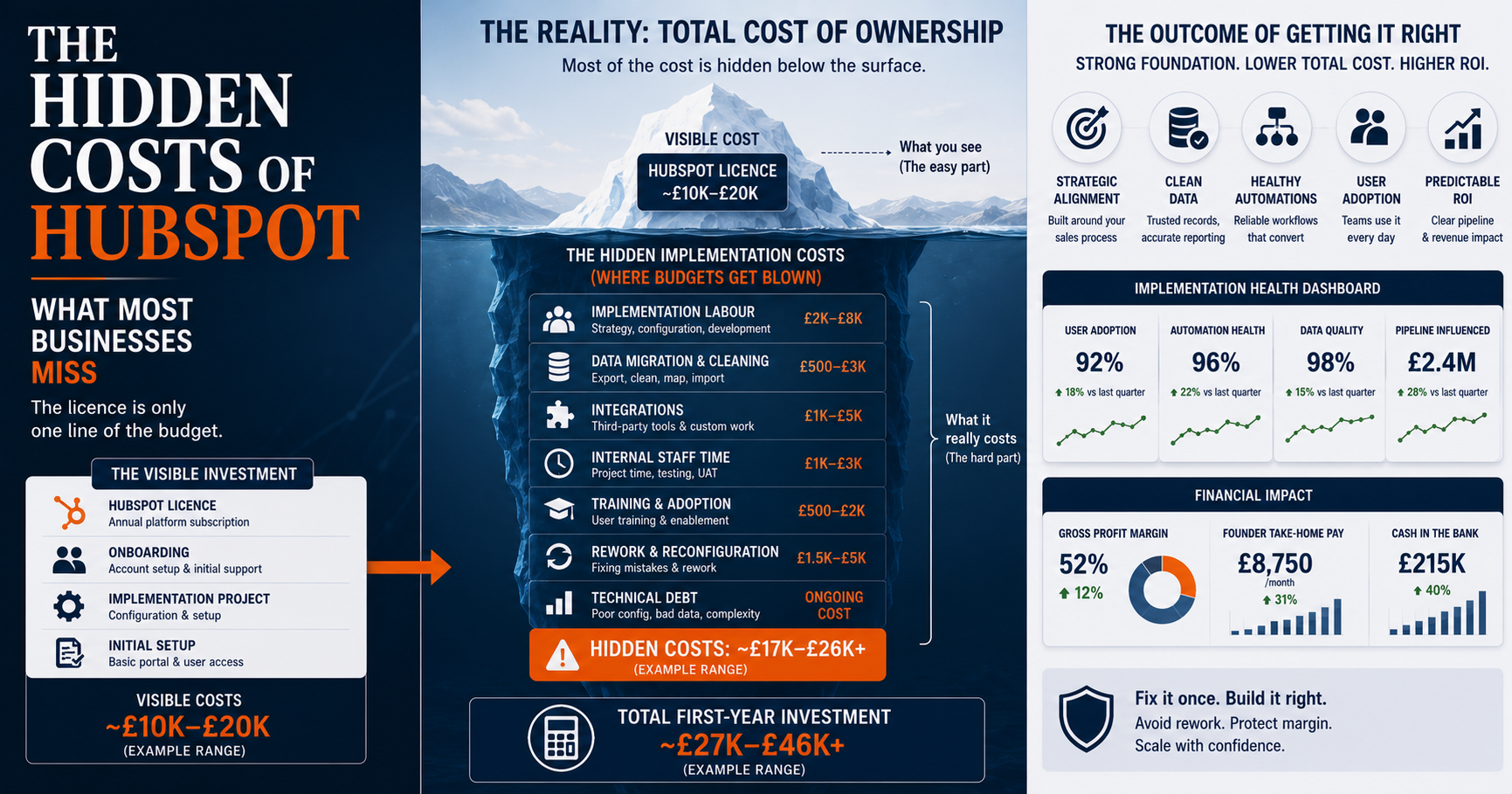
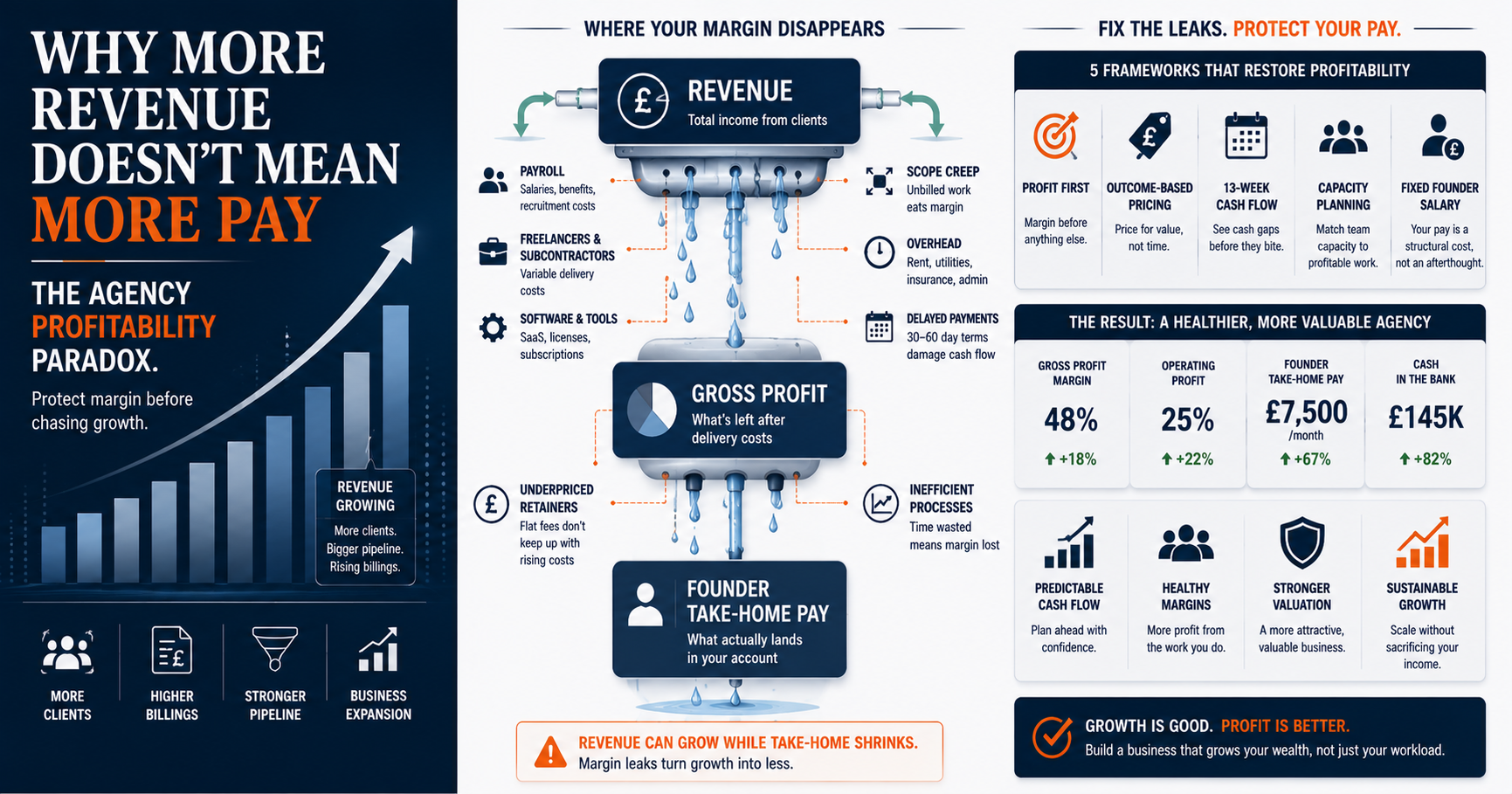
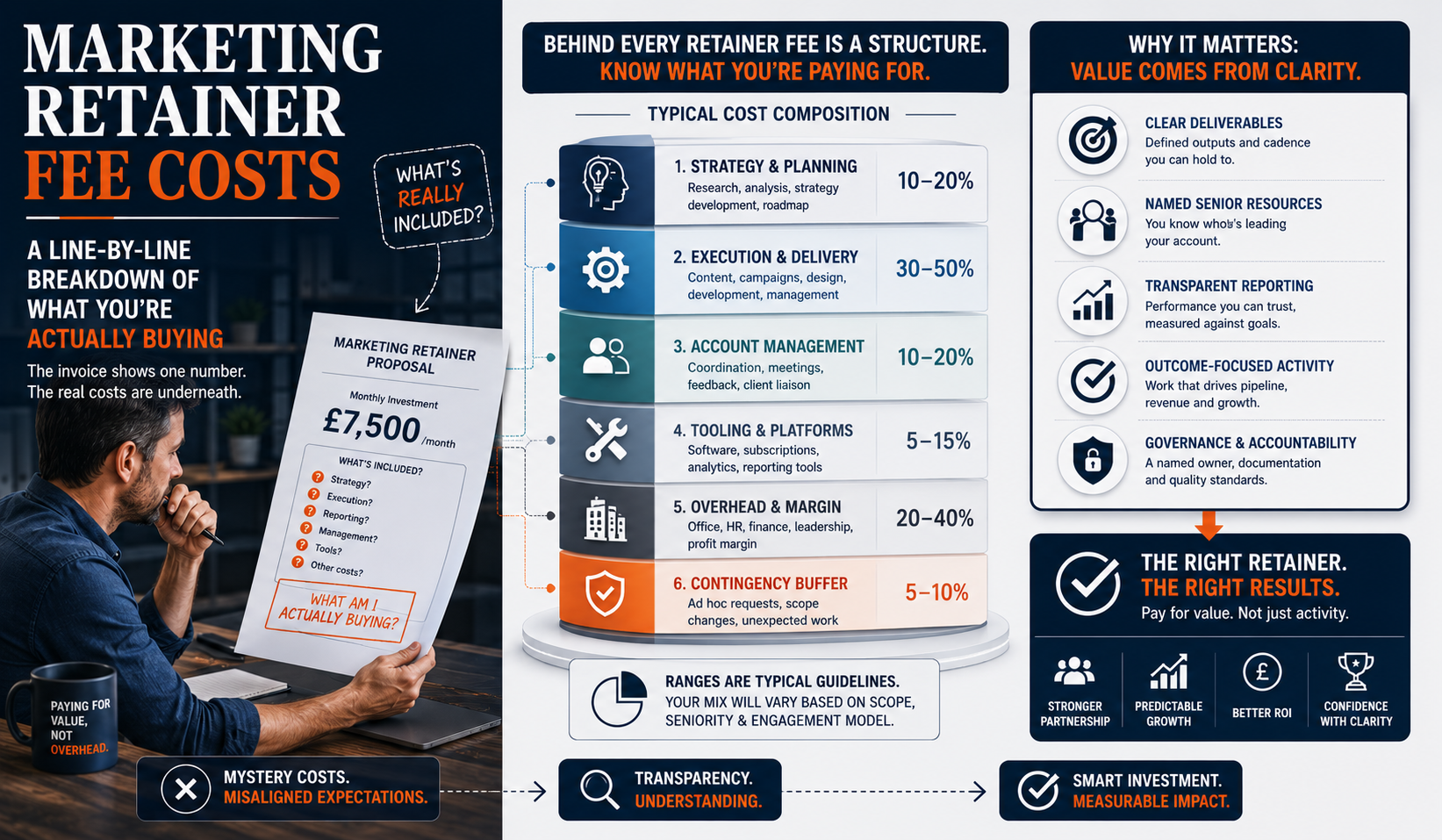
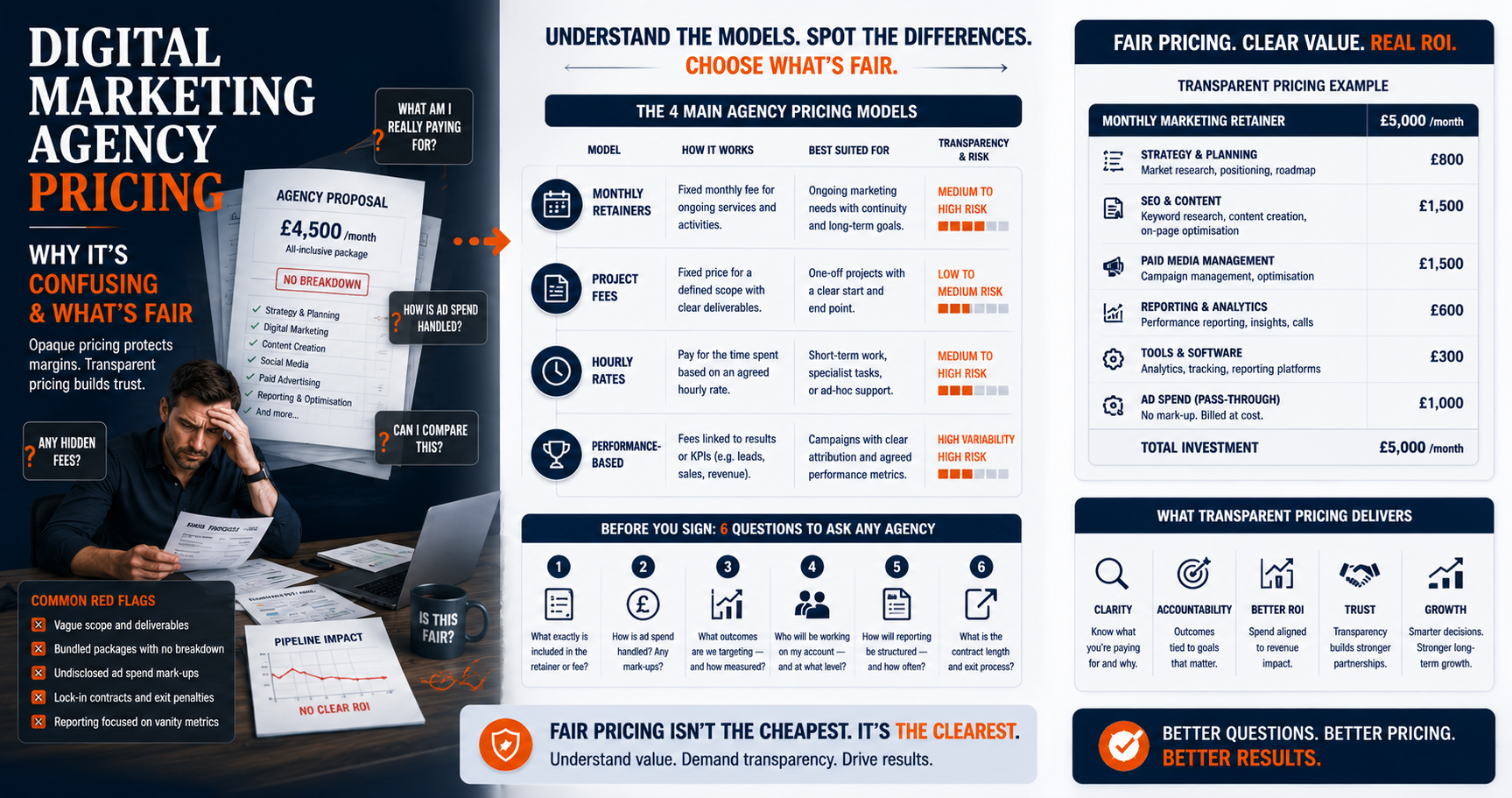
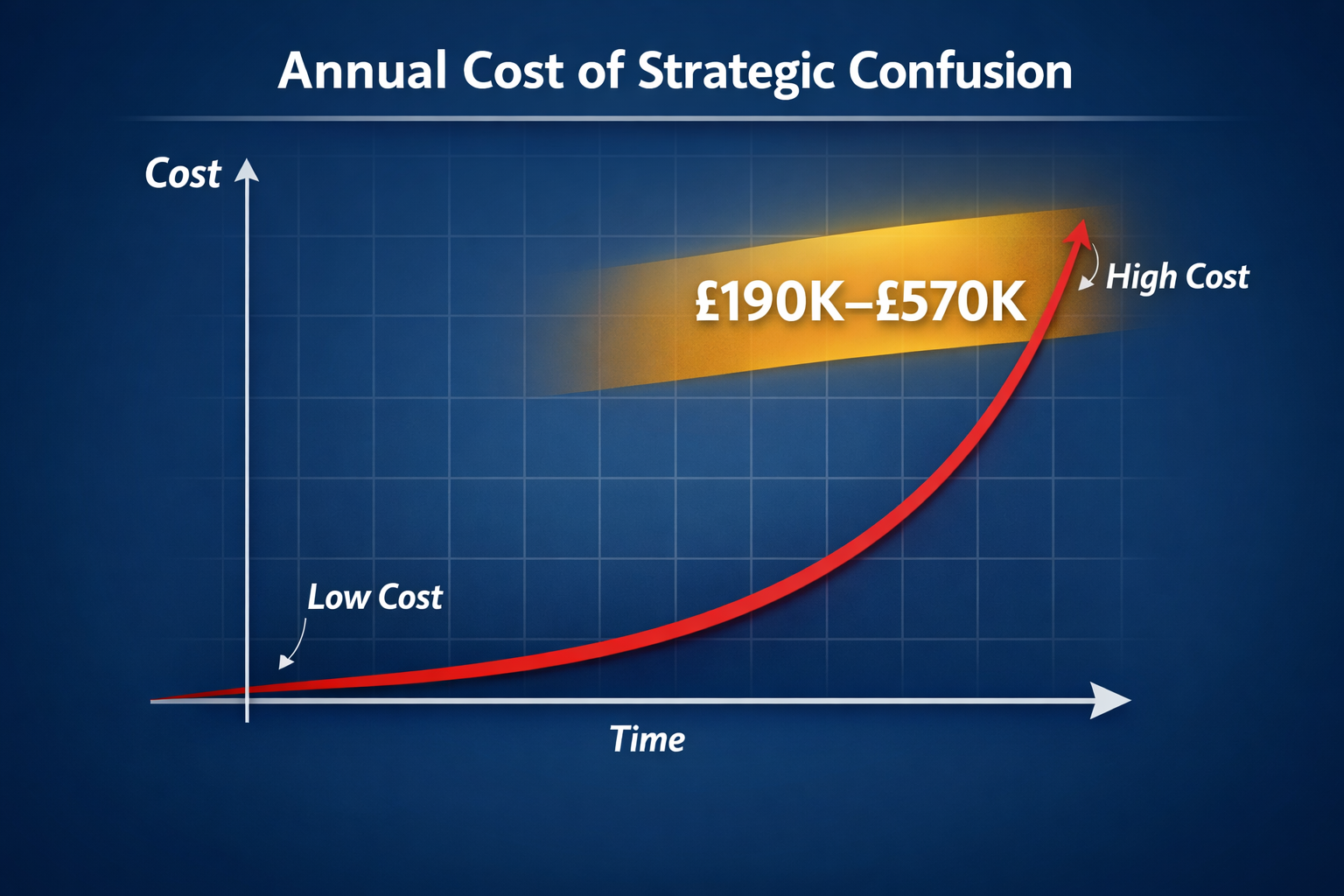
The direct cost of agency dependency is the retainer itself, typically £3,000–£20,000 ($3,800–$25,000) per month for mid-market businesses, but the hidden costs in lost data, switching friction, and zero capability built are often far higher.
(Retainer ranges are estimates based on UK/US agency pricing and the author's market experience, 2025.)
-1.png?width=1536&height=1024&name=Generated%20image%201%20(2)-1.png)
Retainer cost benchmarks over three years
- Traditional agency retainers run £3,000–£10,000+ ($3,800–$12,700+) per month — estimated, based on published UK agency pricing (2025).
- A £5,000/month ($6,300) retainer over 36 months = £180,000 ($228,000), with the agency still owning the systems at the end.
- A structured 18–24 month capability transfer programme typically costs less in total — and ends with your team owning the system outright — compared to a three-year traditional retainer at the same monthly rate (source: my own [pricing page).
Simple cost framework
- Monthly retainer × 36 = 3-year spend.
- At the end of it, does your team own the system?
- If not, you have paid for access, not ownership.
7 warning signs you're trapped in agency dependency
The clearest sign of agency dependency is being unable to answer basic questions about your own marketing, such as your cost per lead or which campaigns are live, without asking your agency first.
- You don't own your ad accounts: The agency set them up under their own credentials.
- Reports arrive without context: You receive dashboards you don't understand or trust.
- You've been discouraged from hiring internally: The agency framed in-house resource as unnecessary.
- You can't explain your own growth system: Could you describe what is driving your leads right now?
- Switching feels impossible: You believe leaving would mean starting from scratch.
- Your team has no marketing skills: Every task routes externally; nothing has transferred.
- There is no defined endpoint: The retainer continues, with no independence plan in sight.
-1.png?width=1024&height=1536&name=Generated%20image%201%20(3)-1.png)
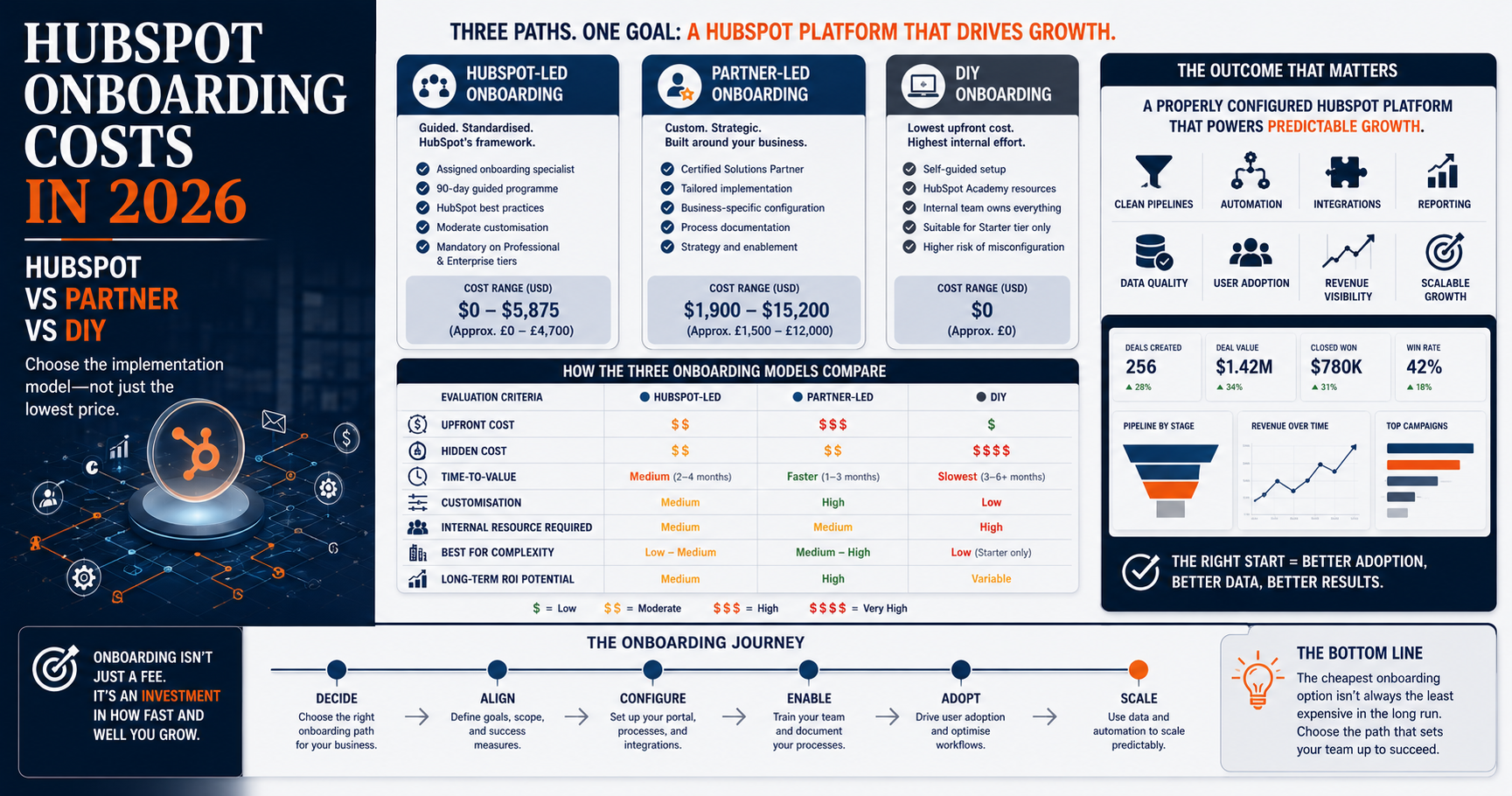
Agency vs. in-house vs. hybrid: Which gives you more control?
The agency model offers speed and breadth of expertise but scores lowest on control, data ownership, and long-term cost when compared to in-house or hybrid alternatives.
In-house teams build compounding capability and retain all data, but require upfront hiring investment and ramp time, which is why a hybrid or fractional model is the preferred first step for most businesses escaping dependency.
Best alternatives to explore
The best alternatives to the traditional agency model are fractional leadership, embedded partnerships, hybrid models, and fully in-house teams, each suited to a different stage of business maturity.
For most mid-market businesses, a fractional or hybrid model offers the fastest path to regaining control without the full cost and risk of immediate in-house hiring. My In-House Growth Engine™ is a four-stage framework that takes founder-led businesses from full agency reliance to internal ownership.
6 steps to escape agency dependency
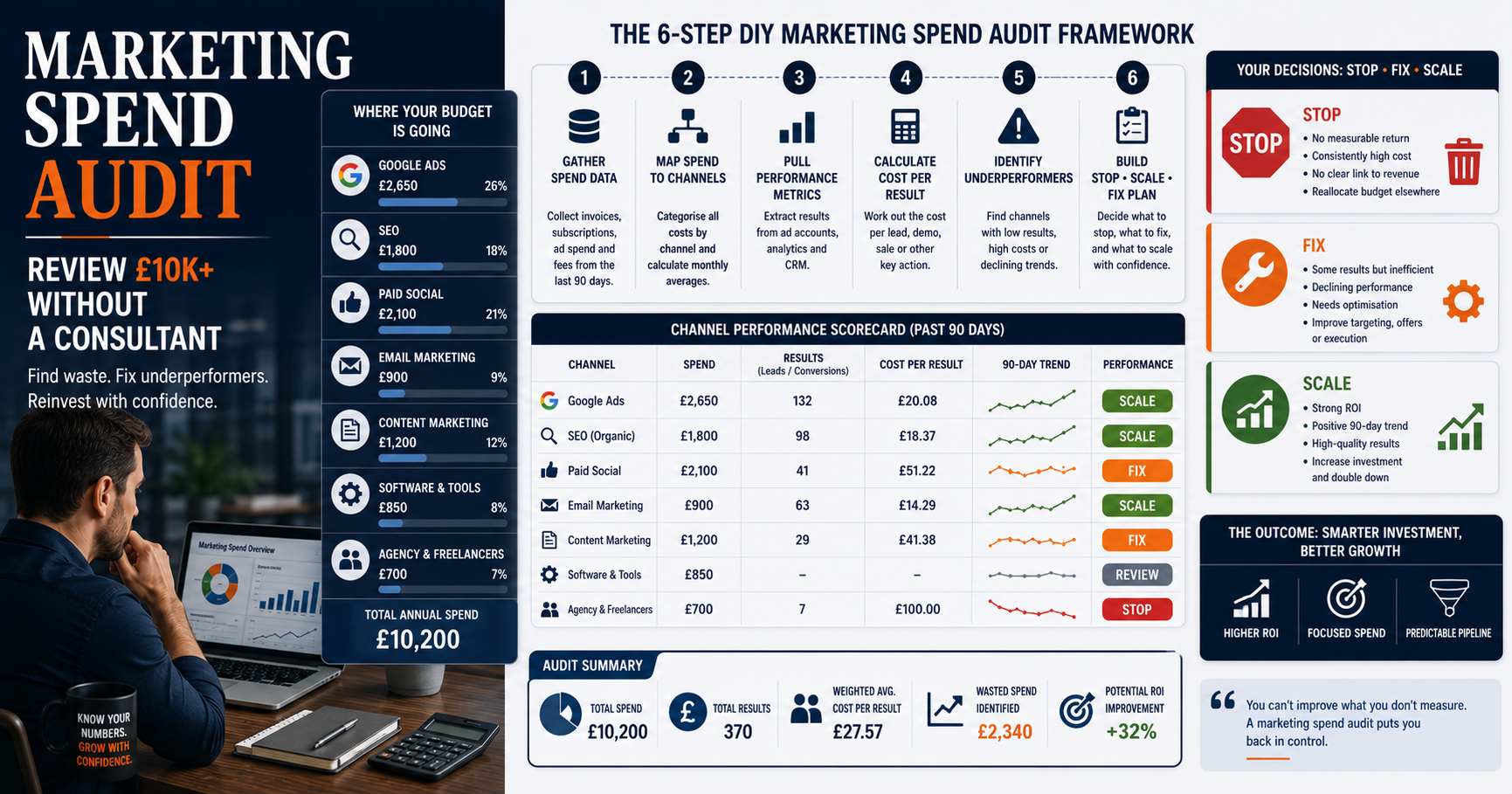
Escaping agency dependency requires a structured transition that secures your data and assets first, builds internal capability in parallel, and only reduces agency reliance once continuity is confirmed.
- Audit what you own: List every platform, account, and tool. Confirm who holds admin access to each.
- Reclaim your accounts and data: Request admin rights to all ad accounts, analytics, CRM, and content assets, before giving notice.
- Document what is running: Capture every live campaign, workflow, and process. Do not rely on the agency to do this voluntarily.
- Build capability in parallel: Bring in a hire, train an existing team member, or engage a fractional marketing director before ending the agency relationship.
- Give structured notice: Set a 30–90 day transition period with clear milestones for data transfer and knowledge handover.
- Own your reporting from day one: Build your own performance baseline so results are always measured on your terms, not the agency's.
Trying to exit too quickly, or without first auditing what you own, is the most common reason businesses find this transition painful.
Frequently asked questions about agency dependency
These are the questions founders most commonly ask when they start to question whether their agency relationship is working in their favour.
Do I own my ad accounts if my agency set them up?
Not automatically. If accounts were created under the agency's credentials, you may have no access to your historical data when you leave. Make sure all accounts are created under your own business credentials, and request admin access now if they are not.
How much notice do I need to give to exit?
Most agency contracts require 30–90 days' notice. Some include 12-month minimum terms with early exit penalties. Check your contract before you plan a transition, see: Questions to ask before signing a marketing agency contract.
How do I know if my agency is performing or just maintaining the status quo?
Ask for attribution data, specifically, which campaigns are driving leads that convert to revenue, not just clicks and impressions. If your agency cannot answer clearly, that is your answer. See also: How Digital Marketing Agencies Use Vanity Metrics to Hide Poor Performance.
What should I do first if I suspect I'm dependent?
Start with a 90-Minute Marketing Triage™ — a structured diagnostic that maps your current setup and gives you a documented path forward within 24 hours.
Conclusion
You started paying an agency to grow your business. Somewhere along the way, that arrangement quietly shifted from support to dependency, and the longer it ran, the harder it became to see clearly.
The agency model is not the problem. The absence of an ownership plan is.
I'll say this plainly: I help businesses make exactly this transition, so I have a stake in this argument. But the underlying math, what you've paid, what you own at the end of it, and whether your team can operate independently, holds regardless of who's pointing it out.
You now know what dependency looks like, what it costs across three years, and the six steps to exit it cleanly. The right next move is to run an audit, find out who owns your accounts, whether your team can explain your marketing system, and what a structured transition would look like.
How to take action now
- Run an access audit, and list every platform and confirm who holds admin credentials.
- Request all live campaign documentation from your agency now.
- Take the Marketing Debt Scorecard to identify your structural marketing gaps.
Additional support
- Book a 90-Minute Marketing Triage™ for a clear, documented diagnosis of your situation.
- Explore the In-House Growth Engine™ to map your path from dependency to full ownership.
Your next step: read Why Marketing Retainers Fail, and Why Outcome-Based Marketing Wins to understand why the retainer model itself struggles to align with founder-led growth goals.

About the author
Tom Wardman is a fractional marketing consultant and Growth Independence Architect™ helping founder-led B2B businesses replace agency dependency with self-sufficient growth systems they own and control. With experience on both the agency and client side, Tom designs and installs the In-House Growth Engine™, a structured framework that transfers full marketing ownership to your team. He is one of the UK's first five certified coaches in the Endless Customers methodology and the author of Build a Trusted Brand.
Pricing disclaimer: All GBP–USD price conversions are rounded estimates and correct at the time of publishing. Exchange rates fluctuate and figures should be treated as indicative only.
Topics: