

Are you considering a fractional marketing engagement but uncertain whether the contract in front of you actually protects you? Do you know what you're actually agreeing to, on scope, IP, and exit, before you sign it?
This article gives you 10 specific questions to ask any fractional marketing provider before you sign anything, along with a clear framework for evaluating what you hear back. It's written for founders and MDs at growth-stage businesses who want to enter a fractional engagement with clear expectations on both sides, not just a signed agreement built on the assumption that alignment will follow. The article covers what these contracts should include, the questions that expose misaligned assumptions, and how to evaluate the answers before you commit.
As a Fractional Marketing Director who works with founder-led businesses at growth stage, building structured marketing systems that create predictable, measurable outcomes, I've seen what happens when these conversations don't happen before the contract is signed.
What is a fractional marketing contract?
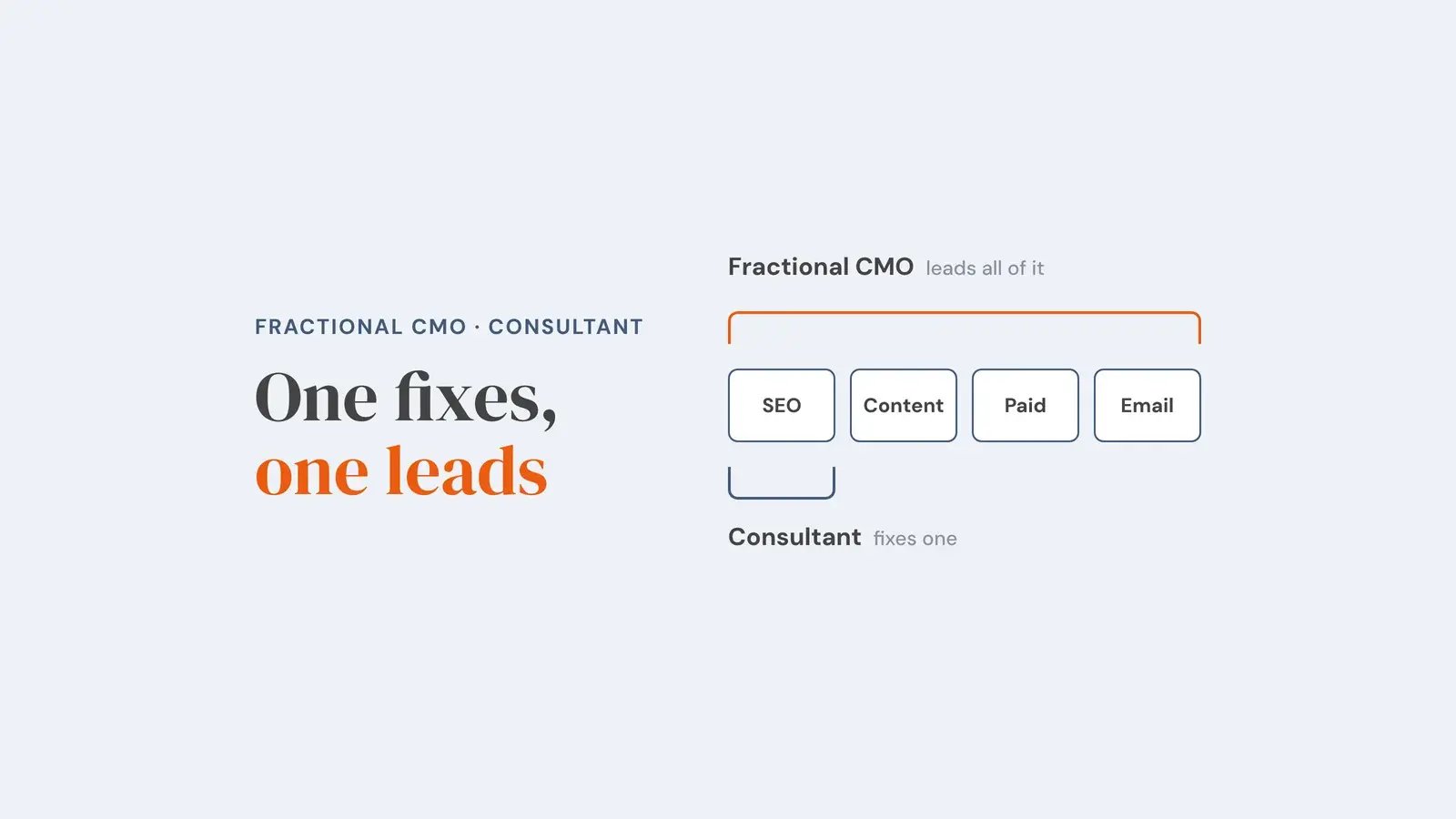
A fractional marketing contract is a formal agreement that engages a part-time or project-based marketing leader, typically a Fractional CMO or Fractional Marketing Director, to deliver defined marketing outcomes without the cost or commitment of a full-time hire.
Unlike a standard agency retainer, a fractional contract places the provider in a strategic leadership role inside your business. That makes the terms of scope, authority, reporting, and accountability significantly more consequential than a typical service agreement.
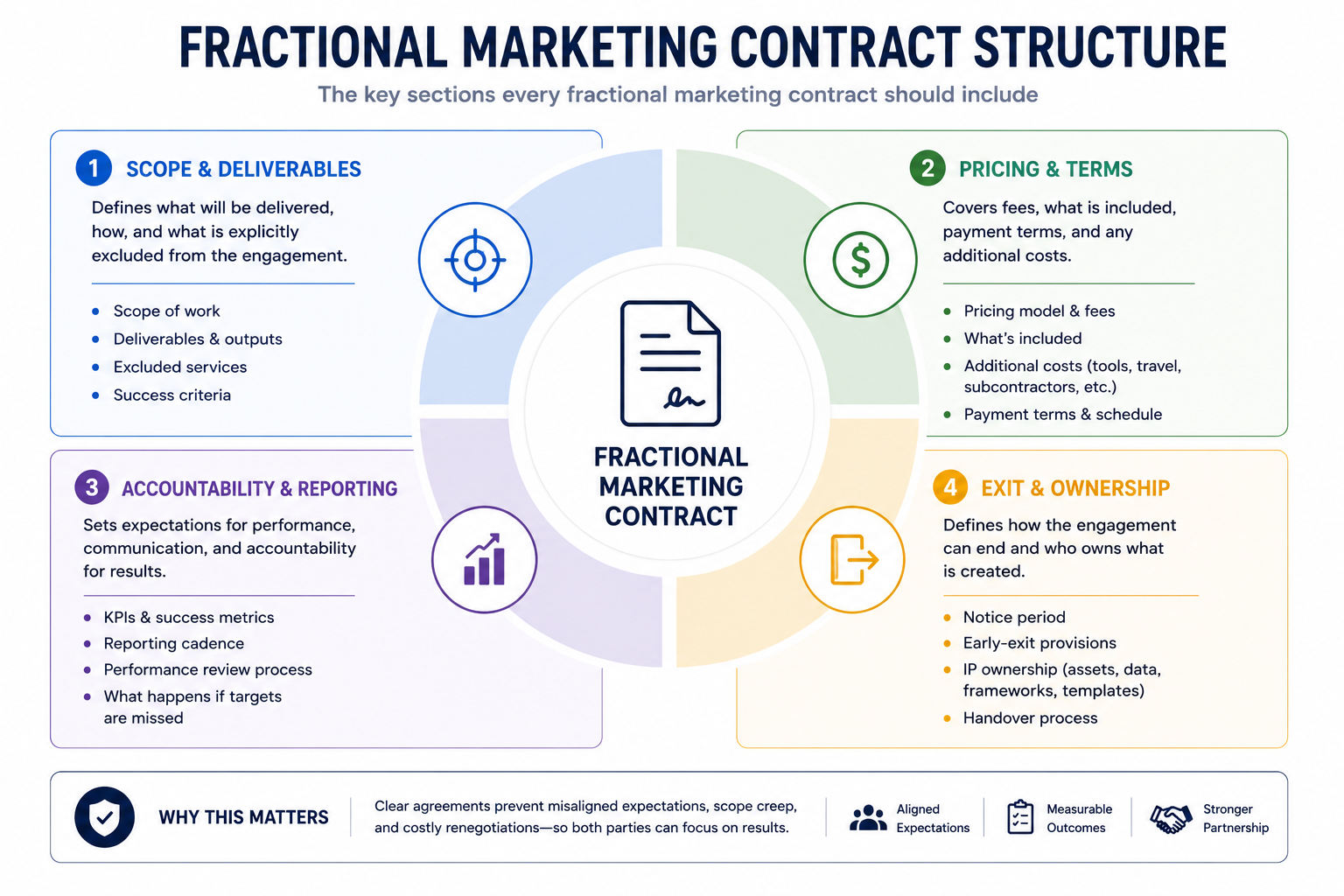
These contracts typically cover: scope and deliverables, duration, notice period, pricing model, reporting cadence, KPI ownership, and IP terms.
Why the questions you ask before signing matter more than the contract itself
Most fractional marketing engagements that fail do so not because of bad work, but because of misaligned expectations that were never surfaced before the contract was signed.
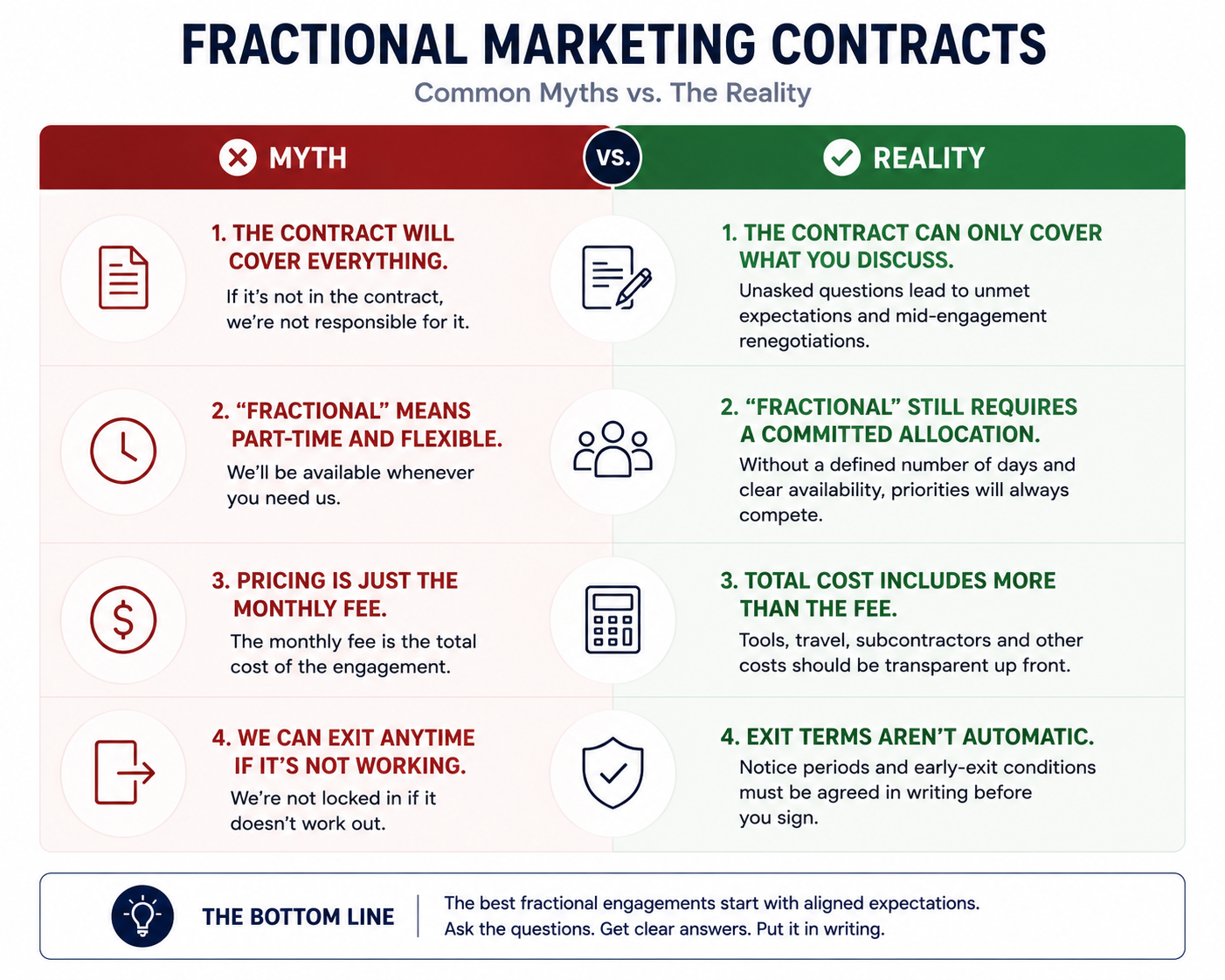
A well-written contract only protects you on the things that were discussed. If you didn't ask about IP ownership, time allocation, or what happens when targets are missed, the contract won't cover any of it.
Every question you skip before signing becomes a renegotiation you'll have mid-engagement, usually under pressure, and rarely on your terms.
The 10 best questions to ask before signing a fractional marketing contract
The 10 most important questions to ask cover scope clarity, pricing transparency, strategic authority, reporting cadence, IP ownership, exit terms, team integration, performance benchmarks, time allocation, and decision-making boundaries.
Each question is designed to expose the assumptions both parties are making, so they can be resolved in writing, not after the invoice arrives.
Questions 1–5: Scope, strategy, and authority
1. What is specifically included in scope, and what is not?
Vague scope is the most common source of cost overruns in fractional engagements. A strong answer names deliverables, channels, and activities explicitly excluded from the engagement.
2. What level of strategic authority will you have?
A provider without authority to act quickly becomes a highly paid adviser with limited output. Look for defined decision-making rights and a clear sign-off process for decisions that require your approval.
3. How many days per month are committed, and how is that tracked?
"Fractional" can mean 2 days or 15 days per month, and an unclear time allocation creates unmet expectations on both sides. Confirm a specific number with a named tracking method.
4. How will you integrate with our existing team?
Without a defined integration plan, a fractional hire can create role confusion or be quietly sidelined. Expect a clear onboarding process and defined communication cadence.
5. Who owns strategy, and who owns execution?
Many fractional contracts blur this line entirely. You need to know what the provider leads, what your team delivers, and where third parties are required to fill gaps.
Questions 6–10: Pricing, performance, and exit
6. What does the pricing include, and are there any additional costs?
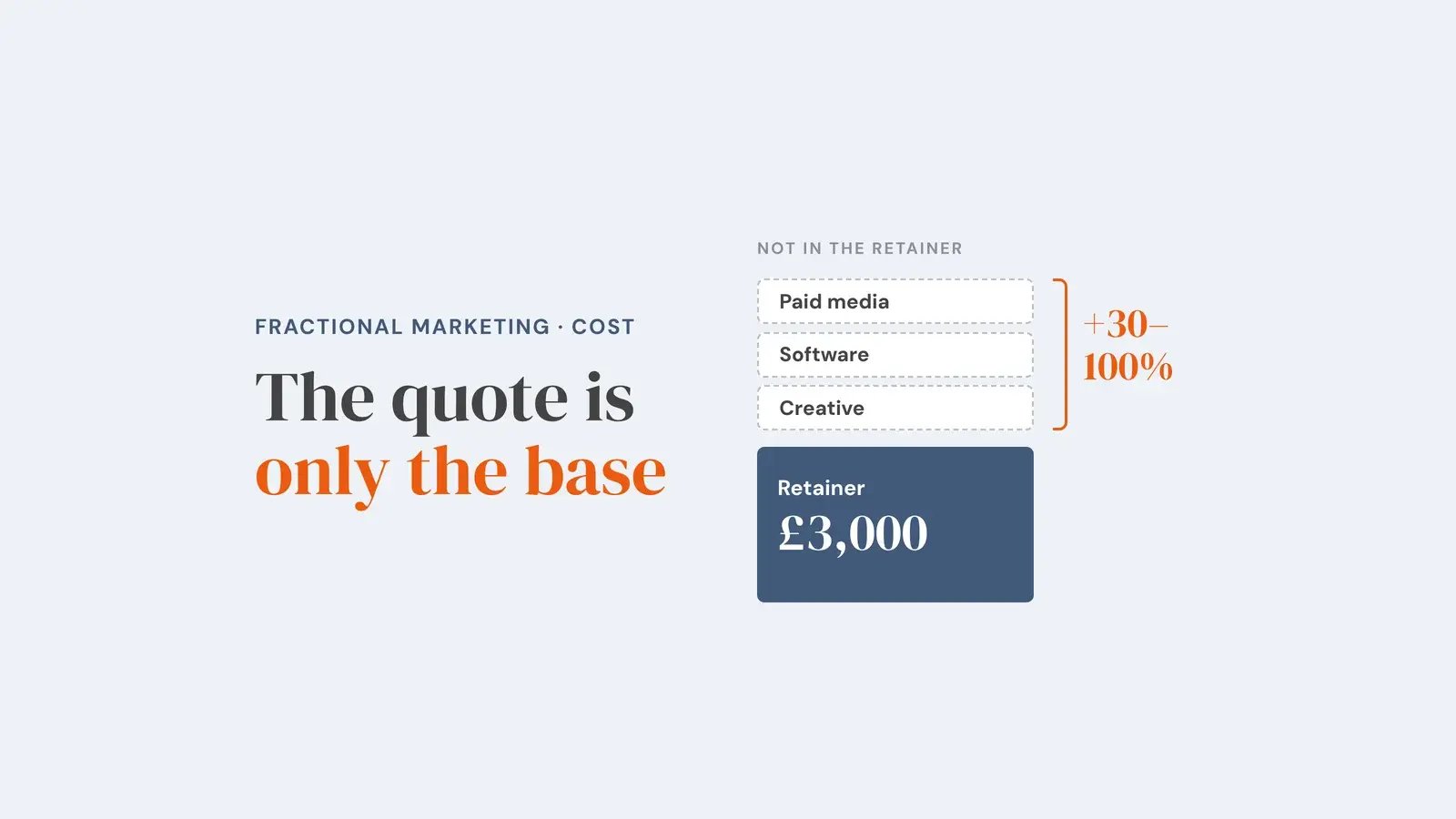
Tools, travel, and subcontractors are frequently absent from headline figures. A strong answer itemises all costs before you sign.
7. What KPIs are you accountable for, and what happens if targets are missed?
Accountability without defined metrics is unenforceable. Expect named KPIs, a measurement methodology, and a clearly documented process for addressing underperformance.
8. Who owns the IP, assets, and data created during the engagement?
IP ownership is not automatically assumed to belong to the client. Confirm there is an explicit clause covering all assets created, including proprietary frameworks or templates.
9. What is the notice period, and are there early-exit provisions?
30 days can leave you financially exposed in an underperforming engagement. Confirm both the standard notice period and what conditions allow you to exit early.
10. Do you have exclusivity terms available?
A fractional provider working simultaneously with a direct competitor is a genuine strategic risk, and it is rarely disclosed unless asked directly. Exclusivity must be negotiated and written in.
Common misconceptions about fractional marketing contracts
The most damaging misconception is that a lower day-rate automatically means a lower total cost. In practice, vague scope and undefined deliverables consistently produce overruns that exceed what a more structured engagement would have cost.
Day-rate pricing often looks cheaper upfront but produces higher total costs when scope is left undefined. A simple benchmark: monthly retainer × committed term length = baseline total investment. Add 15–20% to account for onboarding time, tooling costs, and out-of-scope requests.
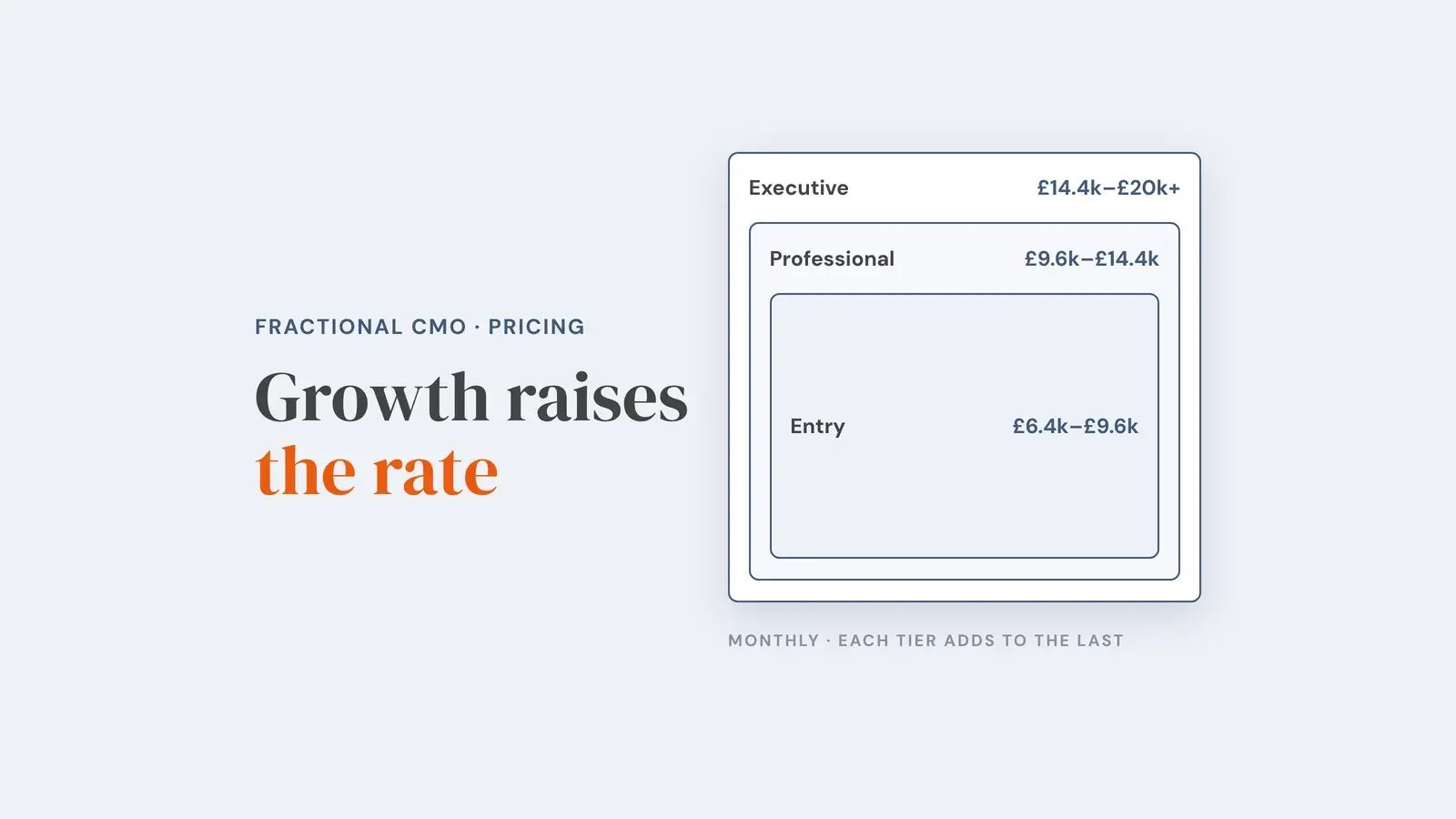
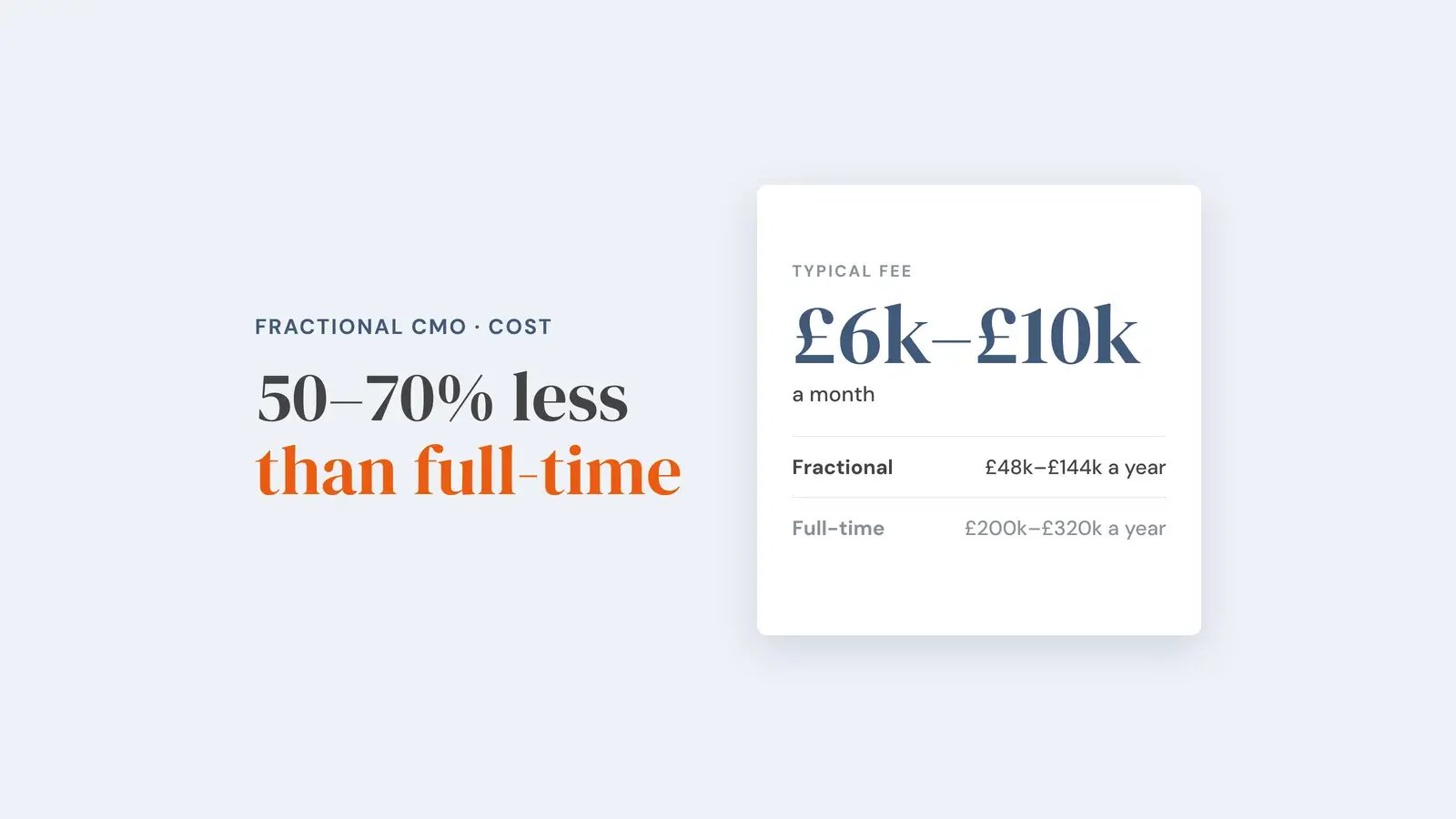
Fractional marketing contracts in the UK typically cost £2,000–£12,000 ($2,500–$15,000) per month, depending on seniority and days committed.
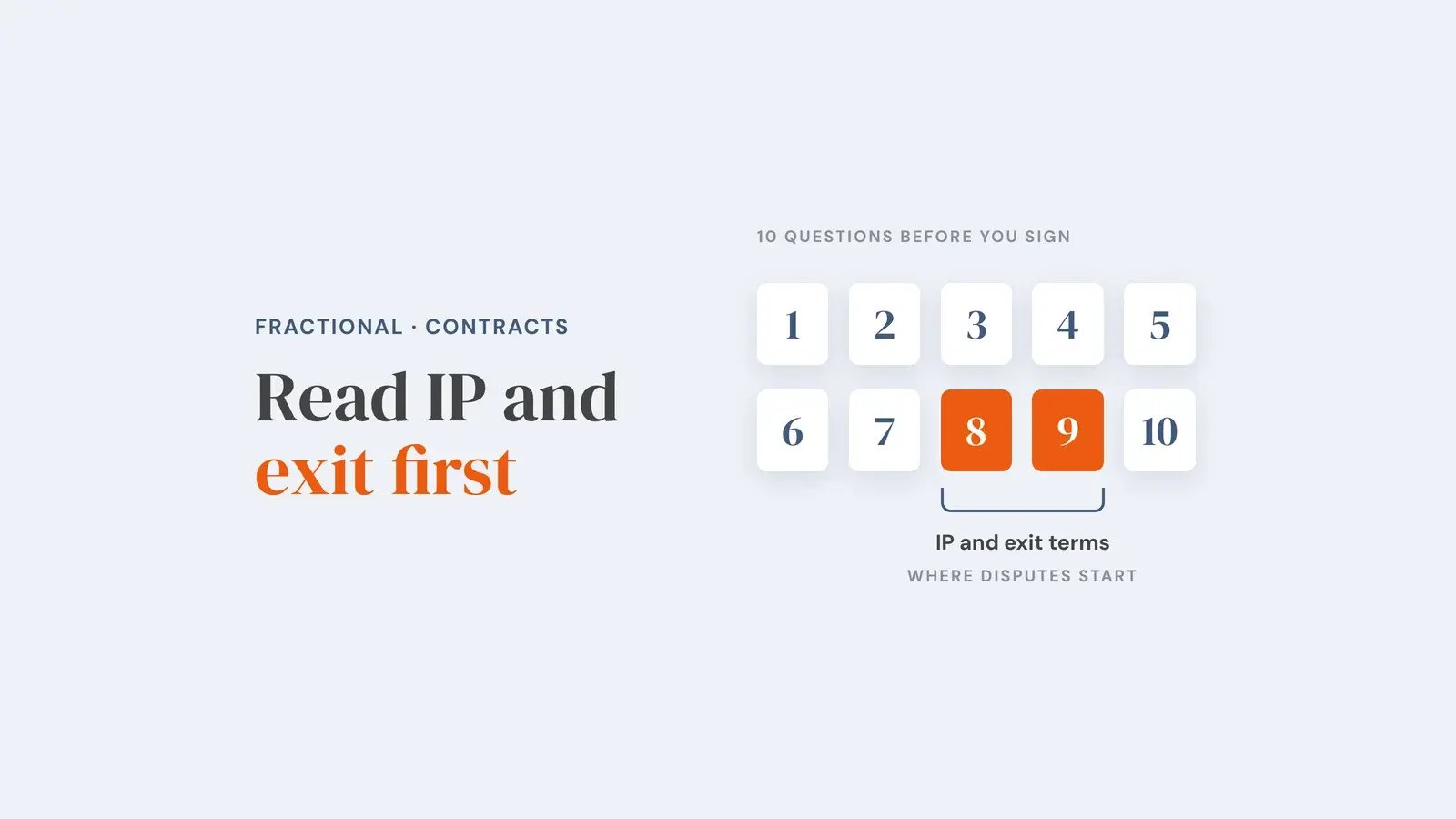
Read the IP and exit clauses before anything else, as they are the two areas most likely to cause disputes, and the two most likely to be left vague in a first draft.
How to assess accountability before you sign
A fractional marketing contract should specify which KPIs the provider is accountable for, how and when they will report on progress, and what happens if agreed milestones are not met.
Without explicit accountability terms written into the agreement, it becomes nearly impossible to evaluate whether an engagement is delivering, or to exit without dispute.
Every strong fractional contract includes:
- Named KPIs measured from an agreed baseline
- A defined reporting schedule — monthly at minimum
- A 60–90 day formal review point built into the contract
- A documented process for raising underperformance concerns
- A defined remedy or exit route if targets are not reached
If a provider is reluctant to commit accountability terms to paper, that reluctance is a signal worth acting on.
Recommend reading: What Your First Month Working With Me Will Really Look Like
Putting the questions to work: a 4-step evaluation process
Treat these questions as a structured scoring process; send them before the first call, evaluate the quality of responses, and treat any hesitation or vagueness as a signal, not just the answers themselves.
- Pre-send your questions before the first call; response depth and speed are signals in themselves
- Score the answers on specificity, honesty, and alignment with your needs
- Flag any deflected or vague responses, especially on scope, IP, or exit terms
- Negotiate based on gaps identified; any answer that was vague is a clause that needs tightening before you sign
A provider who welcomes structured due diligence is demonstrating the same rigour you'll want applied to your marketing.
External link: CIPD guidance on engaging contractors and freelancers
Frequently asked questions about fractional marketing contracts
How long should a fractional marketing contract run?
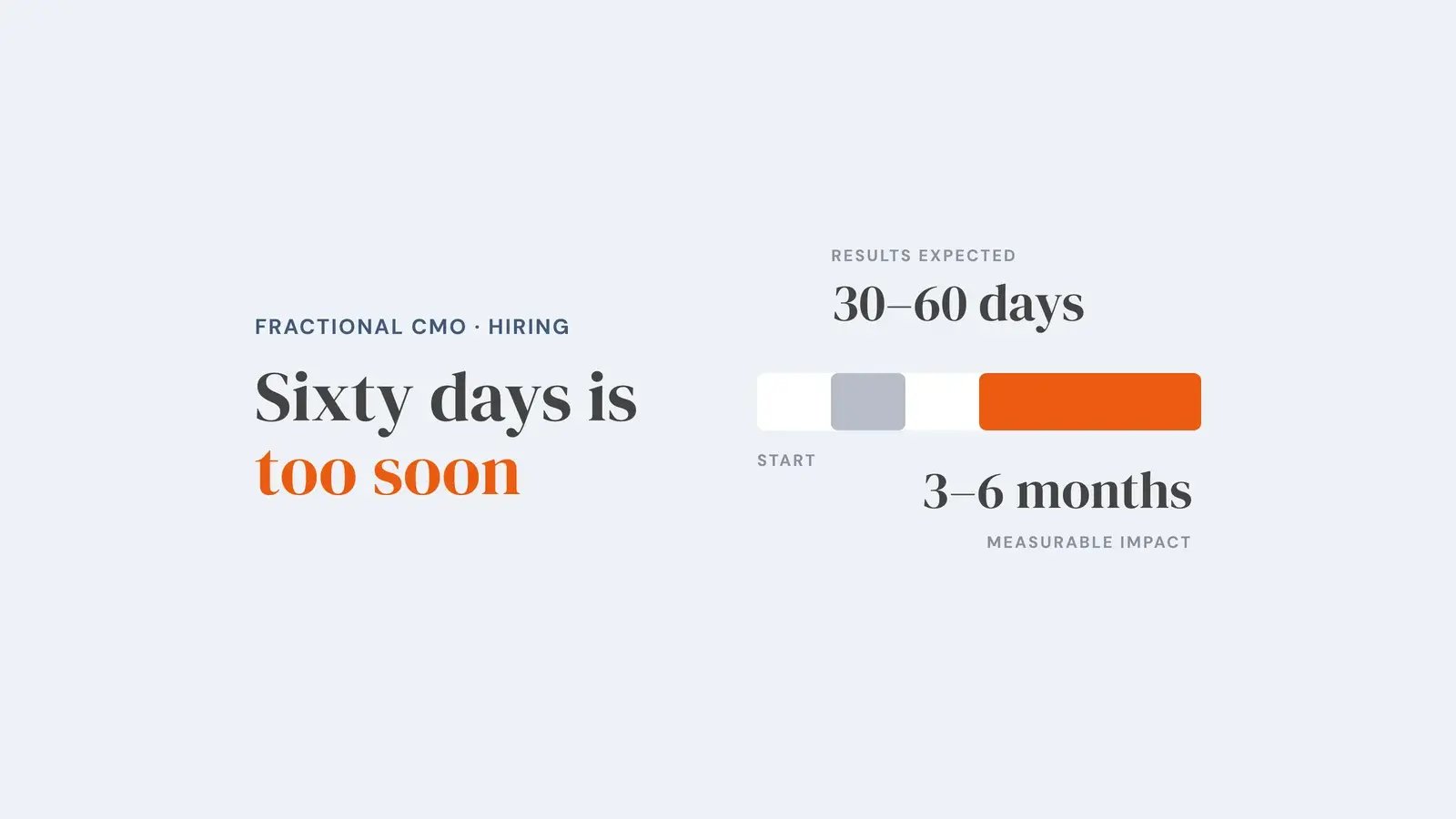
Most initial engagements start on a 3–6 month term, long enough for strategy to gain traction and results to become measurable.
What notice period is standard?
30 days is standard. 60 days is reasonable for senior strategic roles. Anything beyond 90 days warrants a direct question about why that level of protection is needed.
Can a fractional marketer work with my competitors?
There is no industry-standard rule on this. Exclusivity must be negotiated and written into the contract; it will not be offered unless you ask for it.
Conclusion
You came to this article uncertain which questions to ask before signing a fractional marketing contract. You now have 10 specific ones, along with a framework for evaluating the answers, a pricing benchmark to test any quote against, and a clear picture of the terms that matter most.
Most engagements that fail do so because these questions were never asked. The contract gets signed. The assumptions stay hidden. And the renegotiation happens mid-engagement, under pressure. The structure of a fractional engagement is set before the contract is signed. The clarity, accountability, and protection you have throughout the engagement are determined by the questions you ask right now.
Read Fractional CMO vs. Fractional Marketing Director: Which Role Does Your Business Need? before your next provider conversation, confirming you're engaging the right type of support is the right first step before negotiating any terms.

About Tom Wardman
Tom Wardman is a Fractional Marketing Director and independent marketing strategist working with founder-led businesses at growth stage. His work focuses on building structured, owned marketing systems that create predictable, measurable growth, without creating dependency on agencies or external providers. He publishes practical, evidence-based content on fractional marketing, strategic structure, and in-house capability building.
His Fractional Marketing Director service starts from £2,000 ($2,500) per month for 5 committed days, including strategic planning and regular progress sessions. Recommend reading: How Much Does It Cost to Work with Me? 2025 Pricing Guide
Pricing disclaimer: All GBP–USD price conversions are rounded estimates and correct at the time of publishing. Exchange rates fluctuate and figures should be treated as indicative only.
Topics: