

If you're leading a B2B marketing team, chances are you've felt the sting of losing a key player: tighter deadlines, missed campaign goals, and a noticeable dip in team morale.
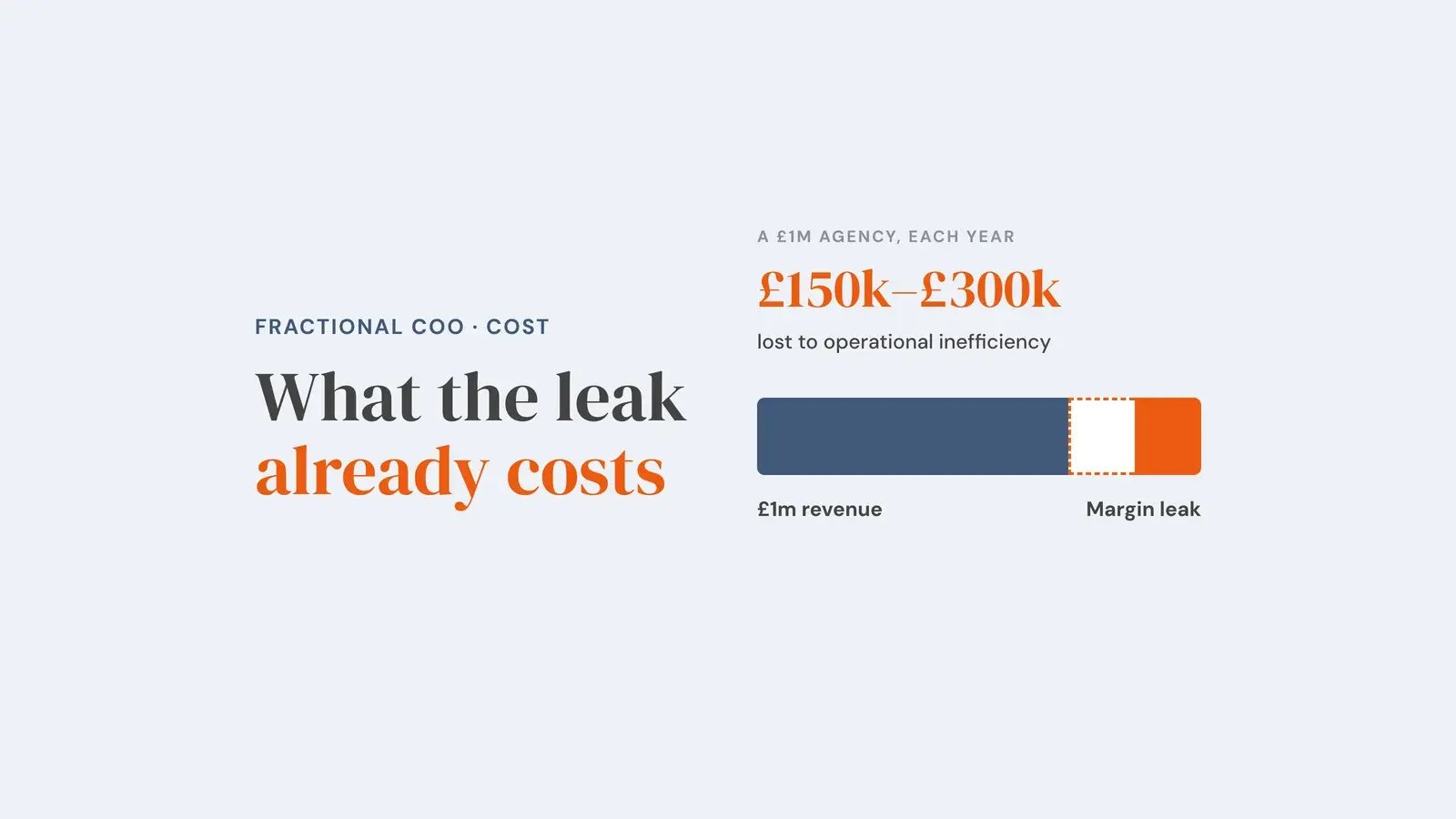
Most leaders assume the cost of turnover stops at recruitment fees. In reality, each departure can cost your company 150-200% of that employee's annual salary.
In this article, I'll break down the true costs (including hidden ones), explore why marketing teams are especially vulnerable, and show you cost-effective ways to stop the cycle. You'll learn:
- How to calculate the real cost of losing a marketing team member
- Hidden costs that don't appear on your balance sheet
- Why marketing turnover costs more than other departments
- Industry benchmarks and how your costs compare
- Cost-effective strategies to reduce marketing team turnover
I've helped dozens of businesses build stronger marketing teams through my In-House Sales and Marketing Mastery programme. The companies that invest in retention strategies consistently outperform those caught in the expensive cycle of constant recruitment and training.
What does marketing team turnover actually cost B2B companies?
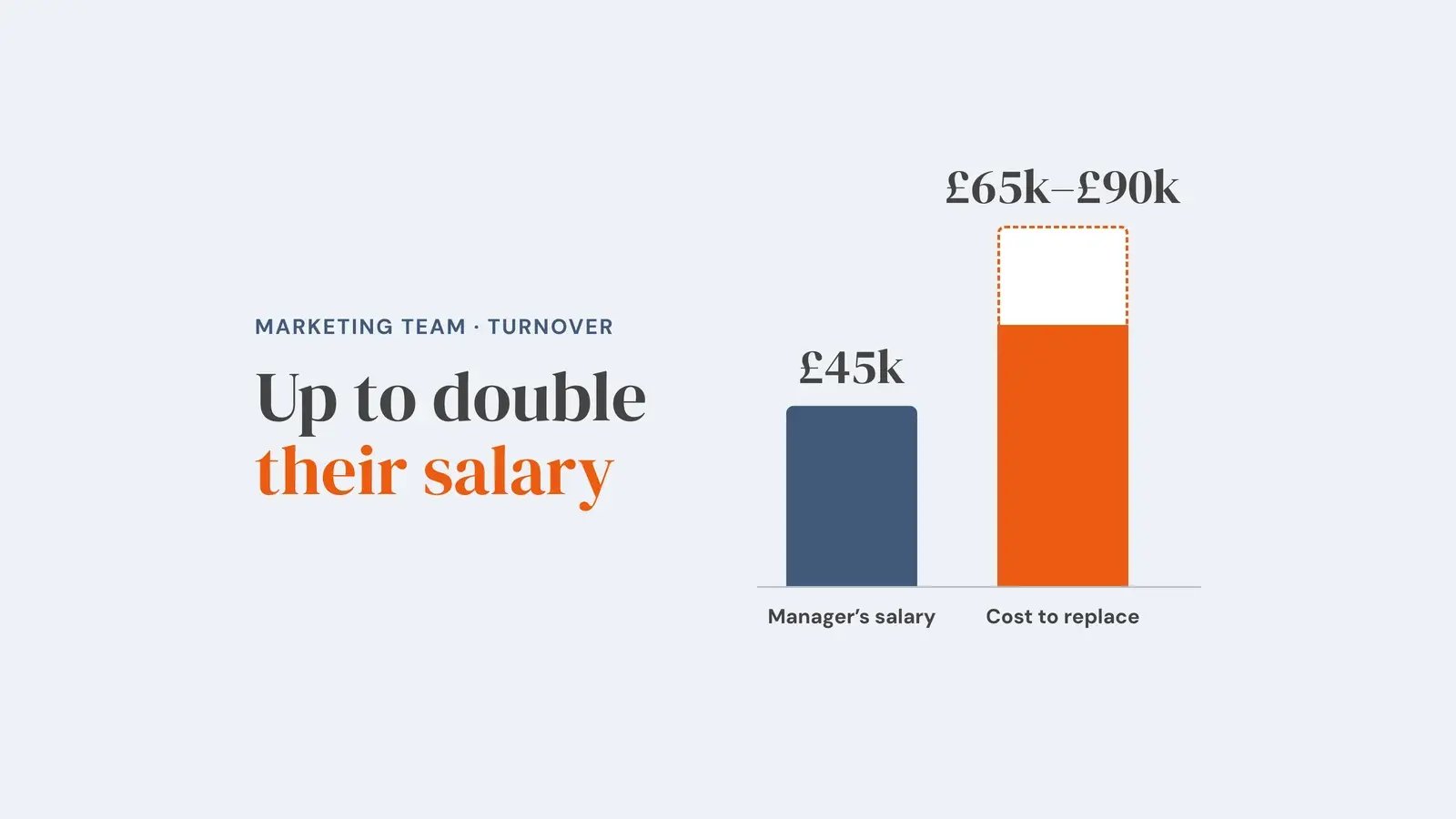
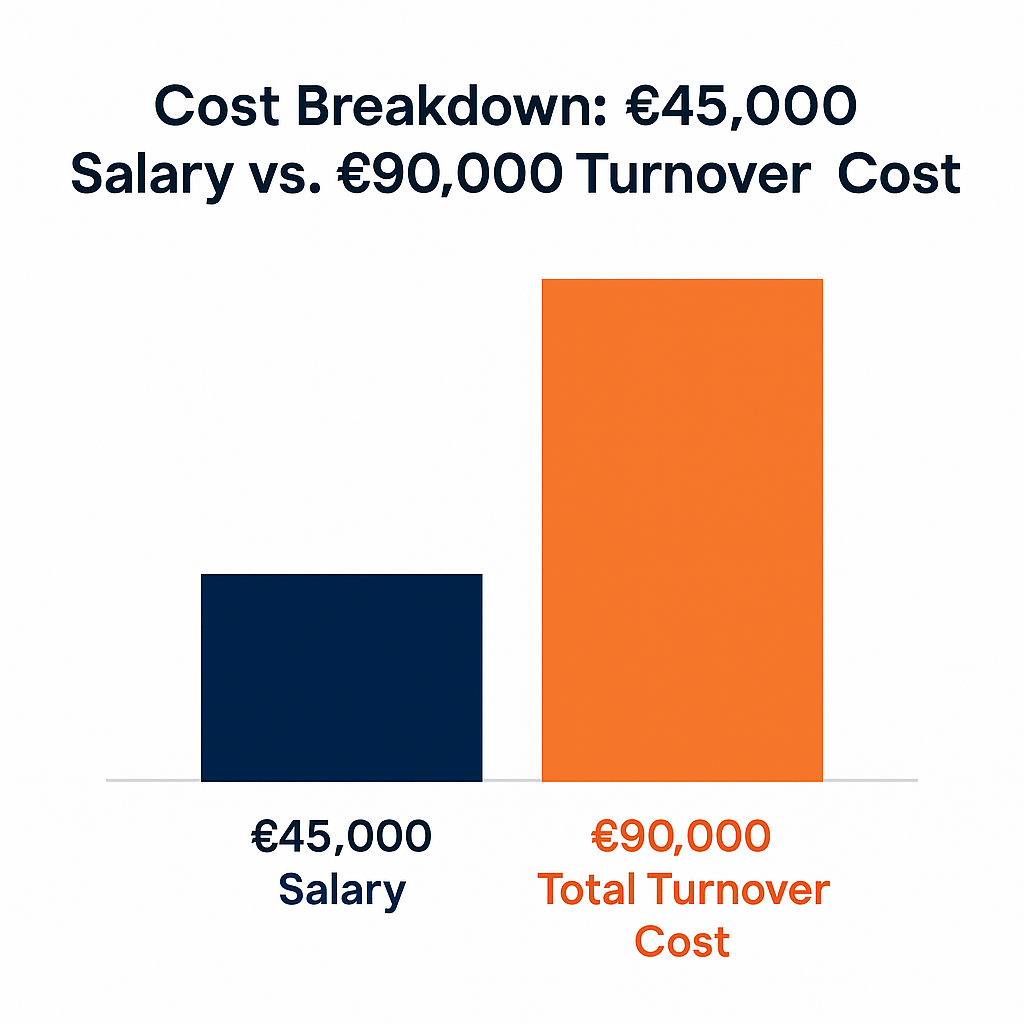
Marketing team turnover costs B2B companies an average of 150-200% of an employee's annual salary when factoring in both direct and indirect expenses.
This figure includes recruitment fees, onboarding time, lost productivity, and the often-overlooked impact on campaign performance and customer relationships.
For a typical marketing manager earning £45,000 ($57,000), the total cost reaches £65,000-£90,000 ($82,000-$114,000) per departure.
Here's the breakdown:
| Cost Category | Amount (£) | Amount ($) |
|---|---|---|
| Direct replacement costs | £13,500 | $17,000 |
| Lost productivity during transition | £22,500 | $28,500 |
| Training and onboarding costs | £9,000 | $11,400 |
| Opportunity costs | £20,000+ | $25,000+ |
| Total cost | £65,000-£90,000 | $82,000-$114,000 |
The financial impact extends beyond immediate replacement expenses. Research from the Work Institute shows that replacing knowledge workers costs between 75-150% of their annual salary. For marketing roles requiring specialised skills and relationship building, these costs often reach the higher end of this range.
How to calculate the real cost of losing a marketing team member
The true cost calculation includes replacement costs (typically 20-30% of salary), lost productivity during transition (3-6 months of reduced output), and opportunity costs from delayed campaigns.
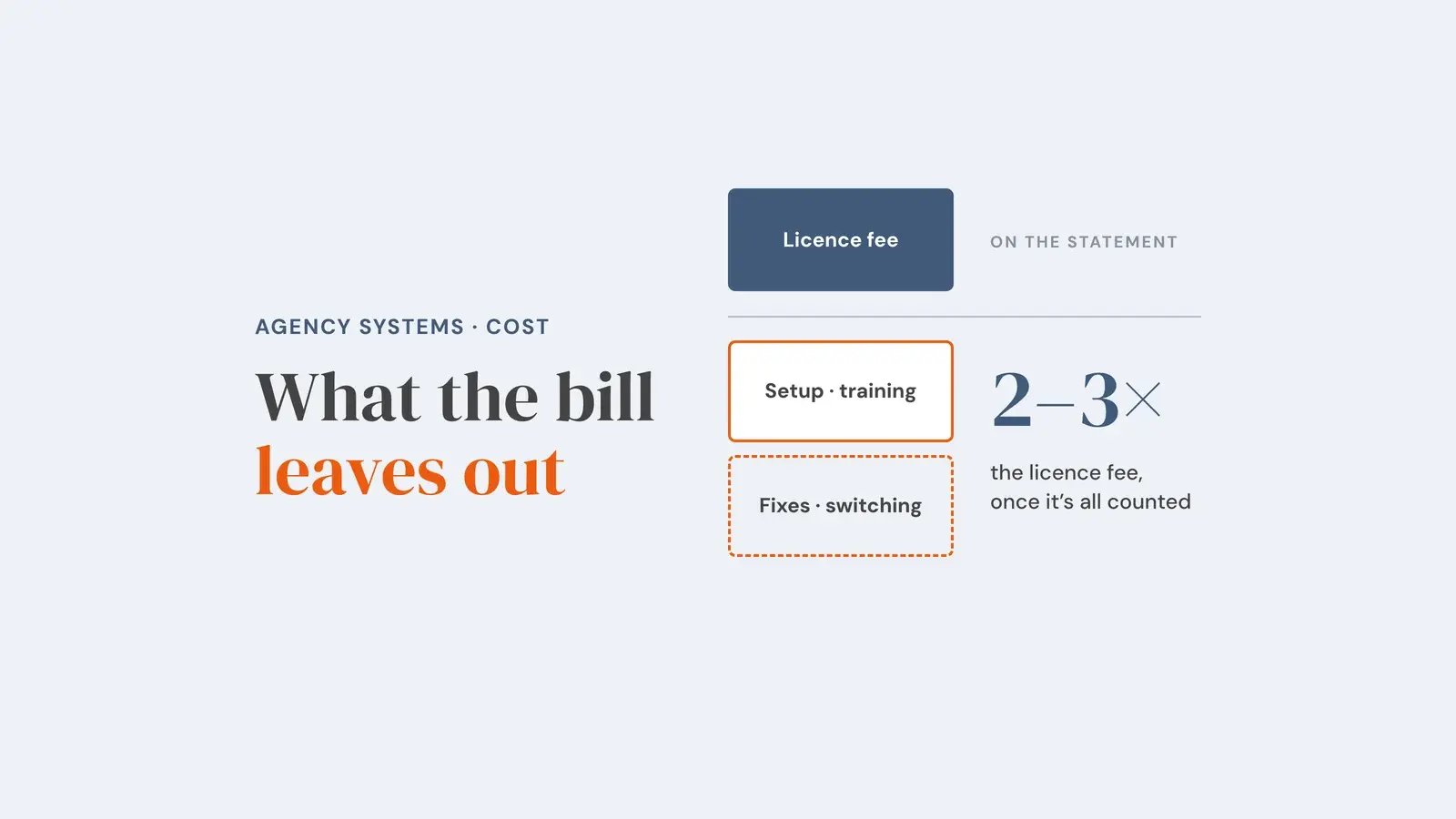
Most B2B companies underestimate these costs by focusing only on recruitment expenses while ignoring the cascading effects on revenue generation and team morale.
Direct replacement costs
These visible expenses appear on your balance sheet:
- Recruitment agency fees: 15-25% of annual salary
- Internal recruitment time: HR and management hours
- Interview expenses: Travel, accommodation, venue costs
- Background checks: References, qualification verification
- Onboarding materials: Equipment, software licences, training resources
Lost productivity costs
The biggest expense comes from reduced team output during transition periods:
- New hire ramp-up time: 3-6 months to full productivity
- Remaining team covering additional responsibilities
- Management time spent training and supporting
- Knowledge transfer sessions and documentation
Training and development expenses
Modern marketing roles require extensive upskilling:
- Platform-specific training (HubSpot, Google Ads, social media tools)
- Industry knowledge development
- Company-specific processes and systems
- Average training cost: £2,000-£5,000 ($2,500-$6,300) per new marketing hire
Hidden costs that don't appear on your balance sheet
The most expensive hidden costs include lost institutional knowledge, damaged client relationships, and the ripple effect of increased turnover among remaining team members.
These indirect costs can often exceed direct replacement expenses, particularly when senior marketing professionals leave during critical periods or product launches.
Lost institutional knowledge
Every departing marketing team member takes valuable insights with them:
- Customer personas and behaviour patterns they've observed over months or years
- Campaign performance data and what really drives results
- Relationship networks with suppliers, freelancers, and industry contacts
- Process improvements and workarounds they've developed
Replacing this institutional knowledge can take 12-18 months and often never fully happens.
Damaged team morale and retention
One departure often triggers others:
- Remaining team members question their own future
- Increased workload leads to burnout and stress
- Companies experiencing high turnover see 40% higher voluntary departures among remaining staff
- Recruitment becomes harder as employer brand reputation suffers
Client and campaign impact
Marketing continuity directly affects business performance:
- Campaign delays while new team members get up to speed
- Inconsistent messaging during transition periods
- Client relationship disruption when account management changes
- Pipeline gaps from reduced lead generation during transitions
Competitive disadvantage
Marketing turnover creates strategic vulnerabilities that competitors can exploit.
Beyond immediate competitive intelligence, turnover forces your team into reactive mode:
- Brand consistency suffers during knowledge transfer periods
- Innovation slows as teams focus on maintaining basic operations
- Market opportunities missed during recruitment and training periods
How does marketing turnover cost compare to other teams?
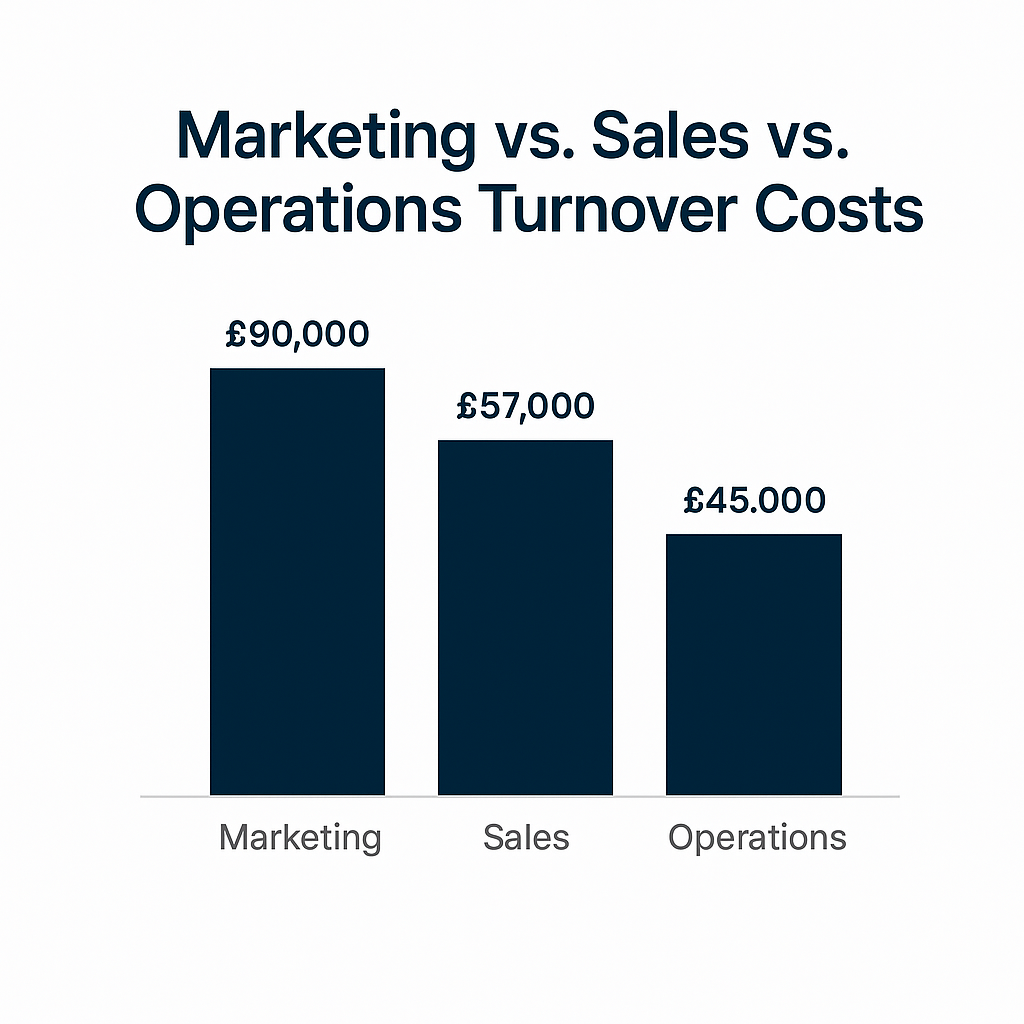
Marketing roles have 27% higher turnover costs compared to other departments due to the creative nature of work, longer ramp-up times, and deeper client relationship requirements.
Unlike sales or operations roles with clear performance metrics, marketing positions require complex skill combinations and relationship networks that take 6-12 months to fully rebuild.
Unique marketing challenges
Marketing turnover costs exceed other departments for specific reasons:
| Factor | Marketing Impact | Other Departments |
|---|---|---|
| Skill complexity | Multi-platform expertise required | Often single-system focused |
| Relationship depth | Customer insights take years to develop | Transactional relationships |
| Creative continuity | Brand voice and messaging consistency | Process-driven outputs |
| Performance measurement | Results delayed by 3-6 months | Immediate performance tracking |
| Industry knowledge | Deep sector expertise required | General business knowledge sufficient |
The trust-building factor
Marketing roles uniquely focus on building customer trust over time:
- Content creators must understand customer pain points developed through years of research
- Campaign managers need historical performance data to optimise effectively
- Digital marketers require deep platform knowledge that takes months to acquire
This trust-building expertise cannot be quickly replicated, making marketing turnover particularly expensive for B2B companies.
Technology and platform dependencies
Modern marketing requires mastery of multiple platforms:
- HubSpot, Salesforce, Google Analytics, each requiring weeks of training
- Social media platforms with constantly changing algorithms
- Design and automation tools with steep learning curves
- Industry-specific software that varies by sector
New marketing hires typically need 4-6 months to achieve competency across their required technology stack, compared to 2-3 months for most other roles.
Industry benchmarks: how your turnover costs compare
High-performing B2B companies maintain marketing turnover rates below 15% annually, while struggling organisations see rates exceeding 30% with proportionally higher associated costs.
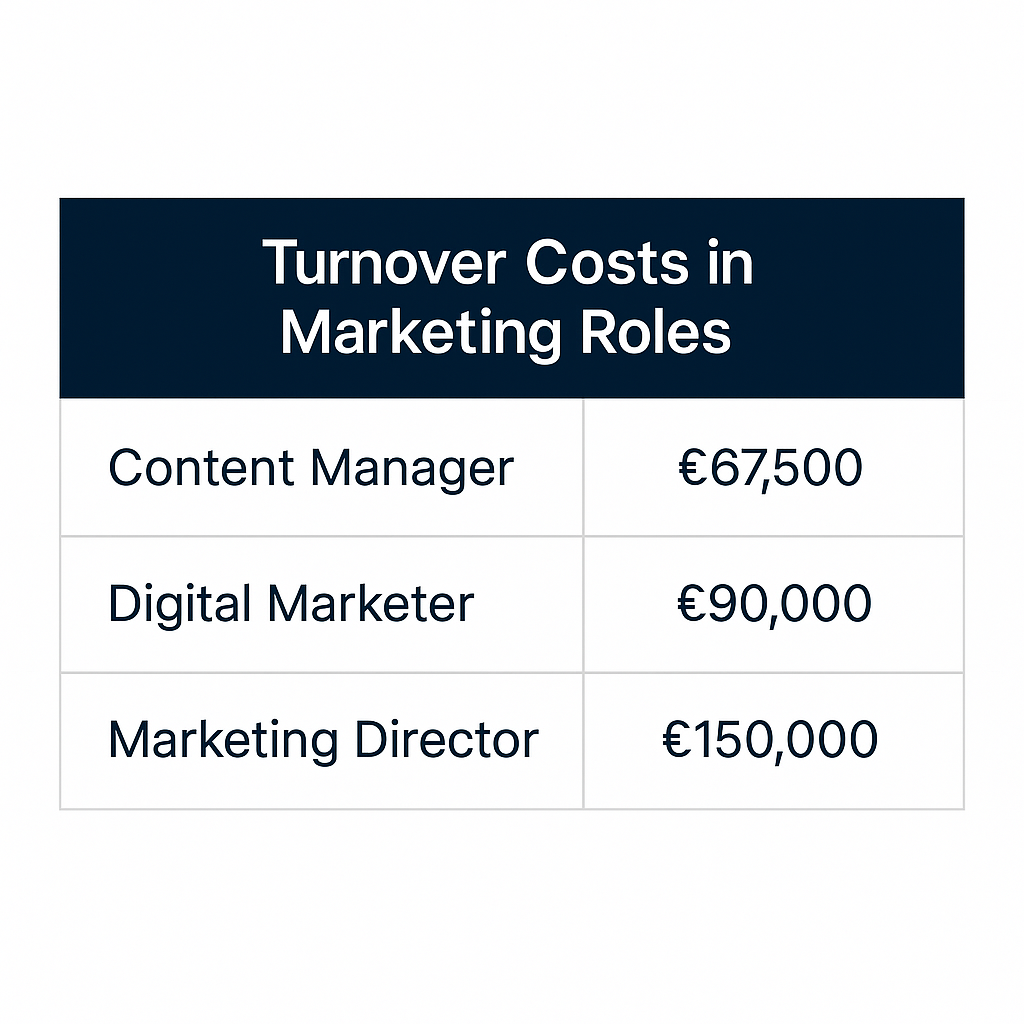
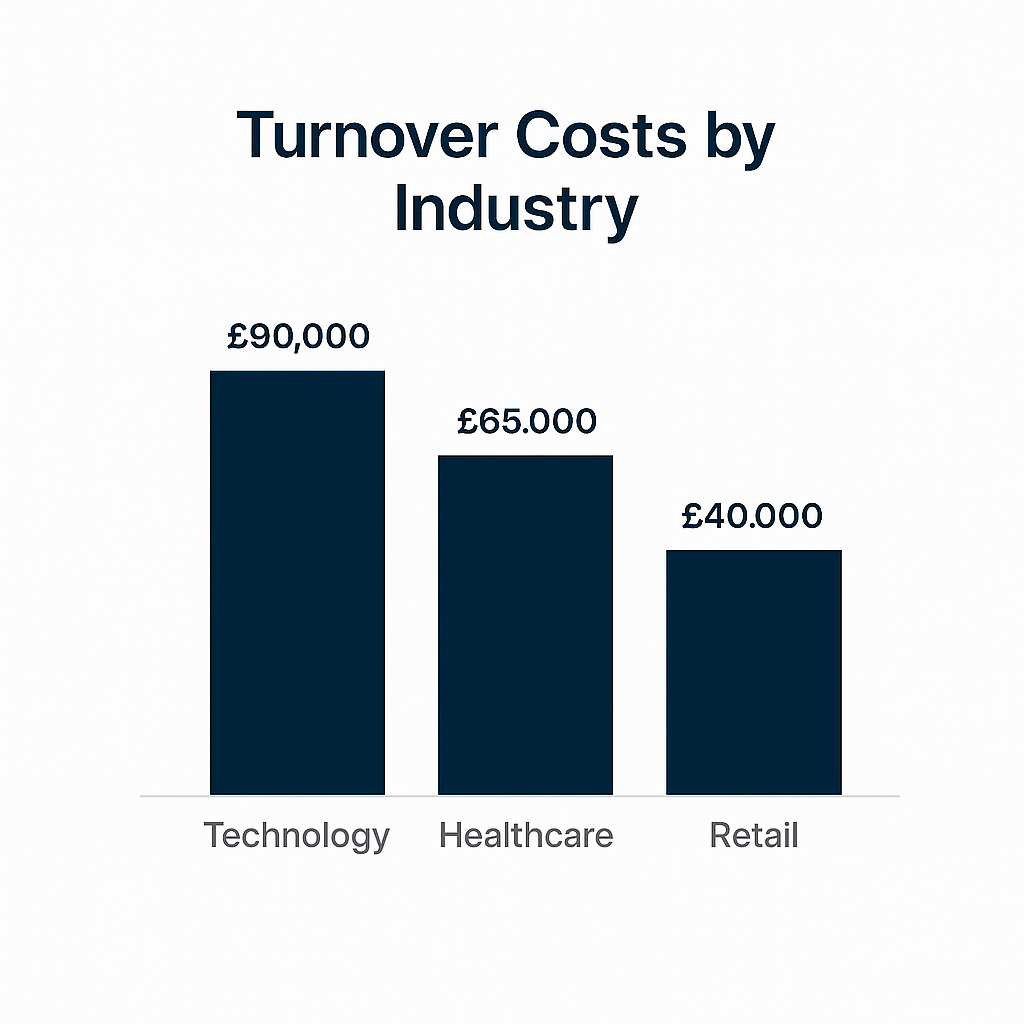
Companies in competitive sectors like SaaS and professional services report the highest marketing turnover costs, averaging £85,000-£150,000 ($107,000-$189,000) per departed team member.
Industry turnover cost benchmarks
| Industry Sector | Average Turnover Cost (£) | Average Turnover Cost ($) | Typical Annual Rate |
|---|---|---|---|
| SaaS/Technology | £95,000-£150,000 | $120,000-$189,000 | 22-35% |
| Professional Services | £75,000-£120,000 | $95,000-$152,000 | 18-28% |
| Manufacturing | £65,000-£95,000 | $82,000-$120,000 | 15-25% |
| Healthcare | £70,000-£110,000 | $88,000-$139,000 | 12-20% |
| Financial Services | £85,000-£130,000 | $107,000-$164,000 | 16-24% |
Does company size affect marketing turnover costs?
Turnover costs vary significantly by organisation size:
Small businesses (< 50 employees):
- Higher per-person impact due to smaller teams
- Average cost: 200-250% of annual salary
- Longer recovery periods from key departures
Medium businesses (50-200 employees):
- More systematic replacement processes
- Average cost: 150-200% of annual salary
- Better knowledge documentation and transfer
Large enterprises (200+ employees):
- Structured onboarding and development programmes
- Average cost: 100-150% of annual salary
- Reduced individual departure impact
Regional Variations
UK marketing turnover costs by region:
- London: £100,000-£180,000 ($126,000-$227,000) — highest salaries, competitive market
- Manchester/Birmingham: £75,000-£130,000 ($95,000-$164,000) — growing tech hubs
- Other regions: £60,000-£110,000 ($76,000-$139,000) — lower salary bases, less competition
These figures reflect both salary differences and varying recruitment challenges across UK regions.
Cost-effective strategies to reduce marketing team turnover
The most cost-effective retention strategies focus on career development pathways, competitive compensation benchmarking, and creating clear advancement opportunities within marketing specialisations.
Companies that invest 3-5% of marketing payroll in retention initiatives typically see 40-60% lower turnover costs and significantly improved team performance metrics.
Development-focused retention
Investing in team development costs far less than constant recruitment.
Consider these proven approaches:
- Skills training programmes: £2,000-£5,000 ($2,500-$6,300) per person annually
- Conference and certification support: £1,500-£3,000 ($1,900-$3,800) per team member
- Internal mentoring programmes: Time investment with minimal direct costs
- Cross-training opportunities: Reduces single points of failure
My In-House Sales and Marketing Mastery programme helps businesses build these development pathways systematically. The programme gives you the frameworks and tools to create a development-first culture that reduces turnover and builds stronger teams.
Compensation and recognition strategies
Regular compensation reviews prevent departures:
- Annual market rate analysis: Ensure salaries remain competitive
- Performance-based bonuses: Tied to clear, achievable marketing metrics
- Professional development budgets: £2,000-£4,000 ($2,500-$5,000) per team member
- Flexible working arrangements: Particularly valued by marketing professionals
Clear career progression
Marketing professionals need visible advancement opportunities:
- Specialist tracks: Content marketing, digital advertising, marketing operations
- Leadership pathways: From coordinator to manager to director roles
- Cross-functional opportunities: Working with sales, product, customer success
- External recognition: Speaking opportunities, industry awards, thought leadership
Creating marketing-specific culture
Marketing teams thrive in environments that support creativity and innovation:
- Experimentation budgets: 10-15% of marketing spend for testing new approaches
- Creative time allocation: 20% time for exploring new ideas and skills
- Results celebration: Regular recognition of successful campaigns and innovations
- Industry engagement: Supporting attendance at marketing events and communities
Retention investment ROI
The mathematics of retention investment are compelling:
| Investment Category | Annual Cost per Person |
|---|---|
| Training investment | £3,000 ($3,800) |
| Development programmes | £5,000 ($6,300) |
| Total retention investment | £8,000 ($10,100) |
| Turnover cost avoided | £90,000 ($114,000) |
| Return on investment | 1,025% ROI |
It pays to keep your marketing team
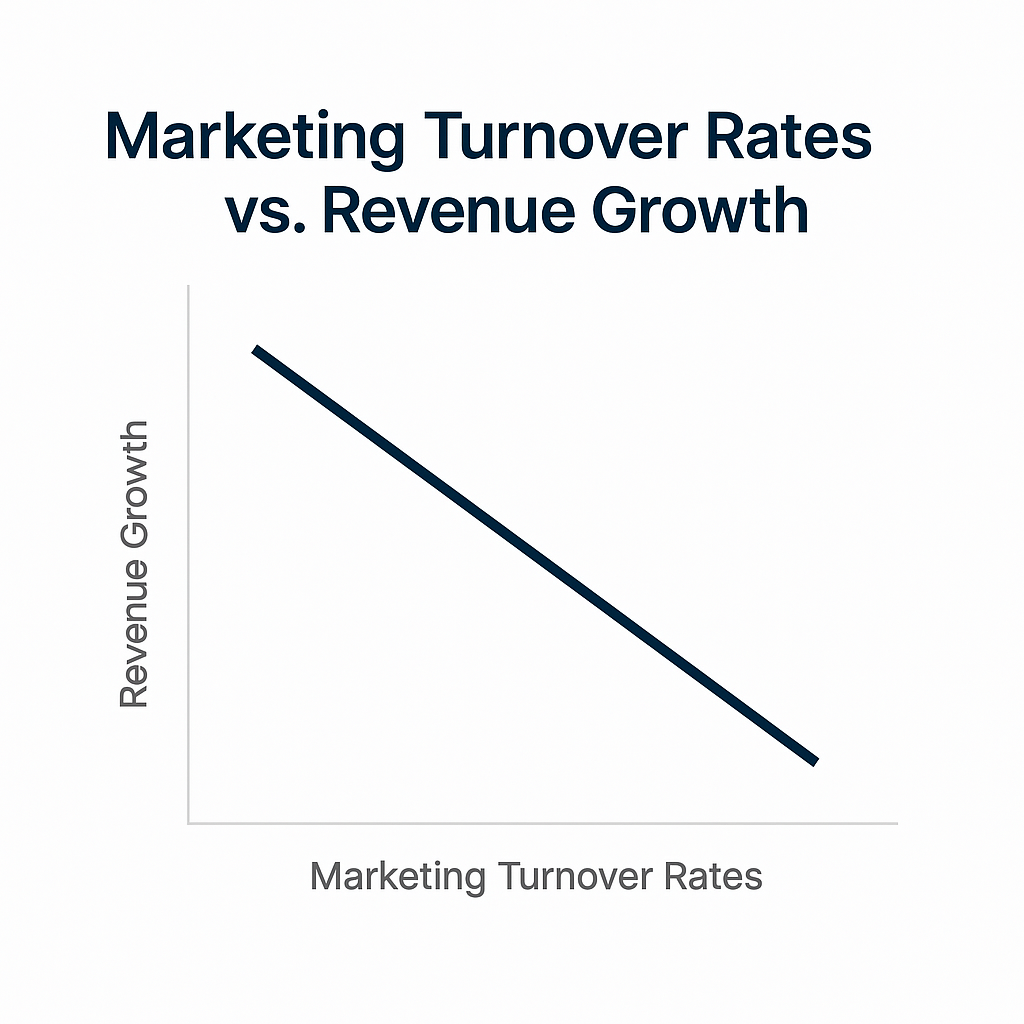
Marketing turnover is more than a hiring problem; it's a growth blocker. Now that you understand how those hidden costs stack up, you're better equipped to make smarter, longer-term decisions about your team.
If turnover has been disrupting your campaigns, morale, or goals, it's time to change the game.
Your next step? Explore the In-House Sales and Marketing Mastery programme to design a development-first team culture that keeps your best people engaged and growing. Or book a consultation to audit your current retention strategy and develop a tailored plan for building a marketing team that sticks around.