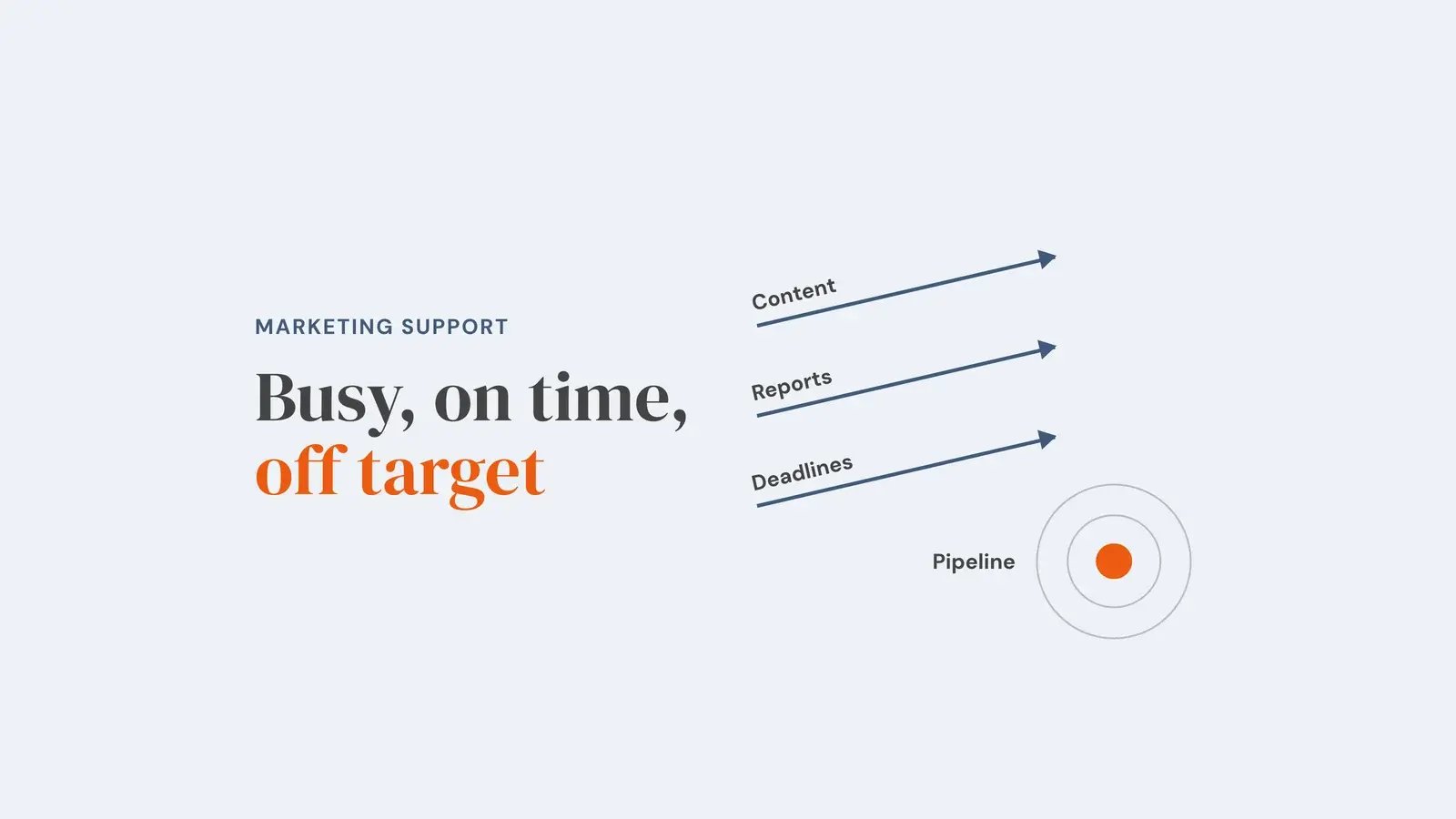


Is your marketing team producing content that your sales team never touches? Are well-researched articles, guides, and videos sitting unused while deals take longer to close than they should?
This is not a motivation problem. It is a structural one, and it has a clear fix.
This article is for marketing leaders, sales directors, and business owners who want to understand why sales ignores content and what to put in place to make content central to how deals are won. In this article, you will get the root causes, the cost of inaction, and three structural fixes you can begin implementing immediately.
Key Takeaways
- When a sales team won't use marketing content, the root cause is almost always structural; content was built without sales input, so it doesn't reflect real buyer conversations.
- Unused content has a direct commercial cost: buyers who arrive at sales calls under-educated are statistically far less likely to close.
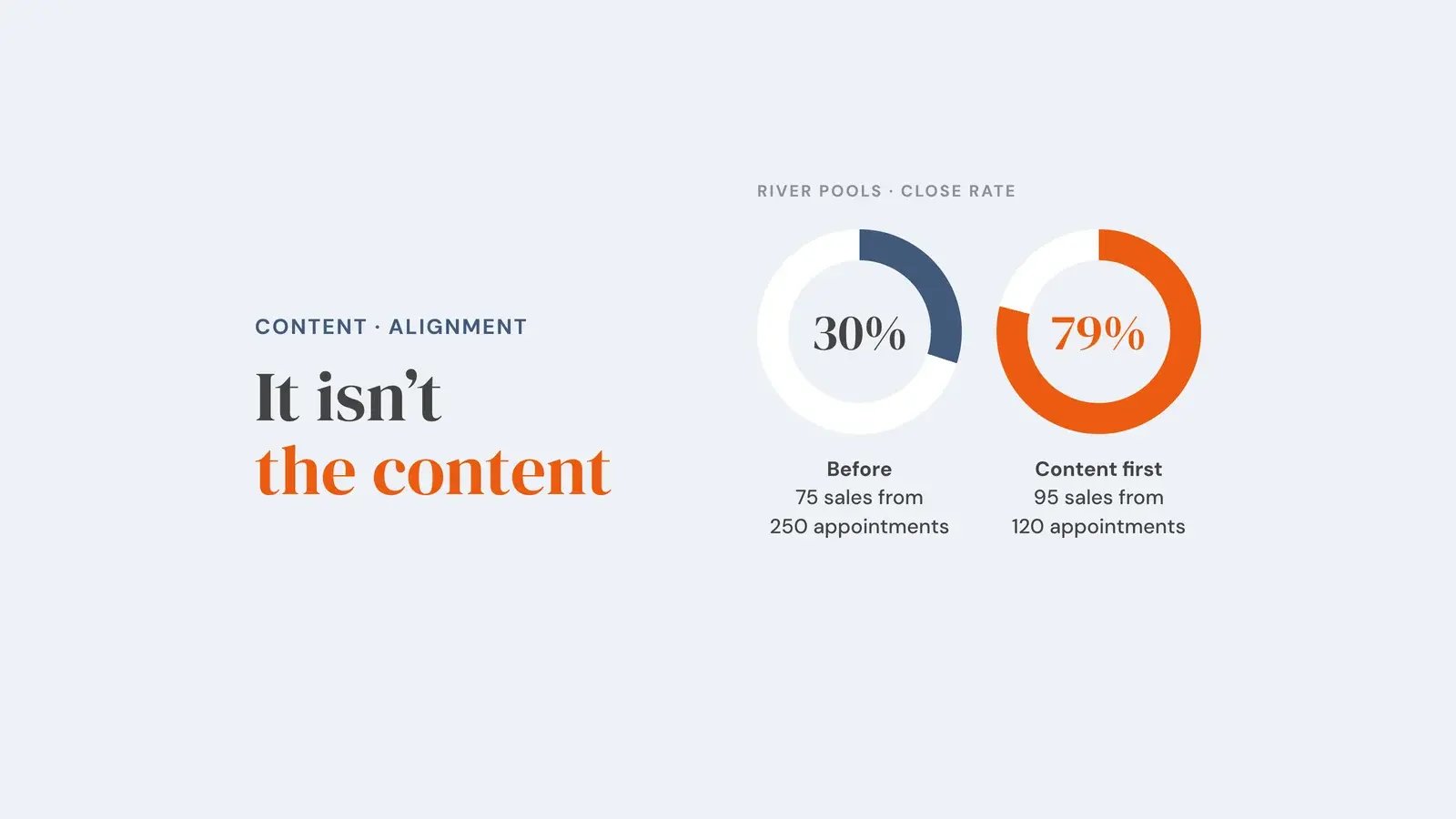
- Assignment Selling, requiring prospects to consume specific content before a sales call, is the most proven fix, with documented close rate improvements from 30% to 80% at River Pools after implementation.
- Getting sales involved as subject matter experts (SMEs) in content creation is the fastest route to genuine adoption.
- A Revenue Team, a structured recurring meeting between sales, marketing, and leadership, removes the conditions that allow the gap to persist.
What does it mean when sales won't use your content?
When your sales team won't use the content marketing creates, it signals a structural misalignment between two teams that should be driving revenue together, not a personality conflict or a matter of stubbornness.
This breakdown is one of the most common problems in content-driven organisations. And it almost always has a fixable root cause.
In plain terms: sales ignores content when that content was not built around the real questions, objections, and conversations that happen in a sales call. When the output doesn't match the input, adoption fails, not because salespeople are difficult, but because they are practical.
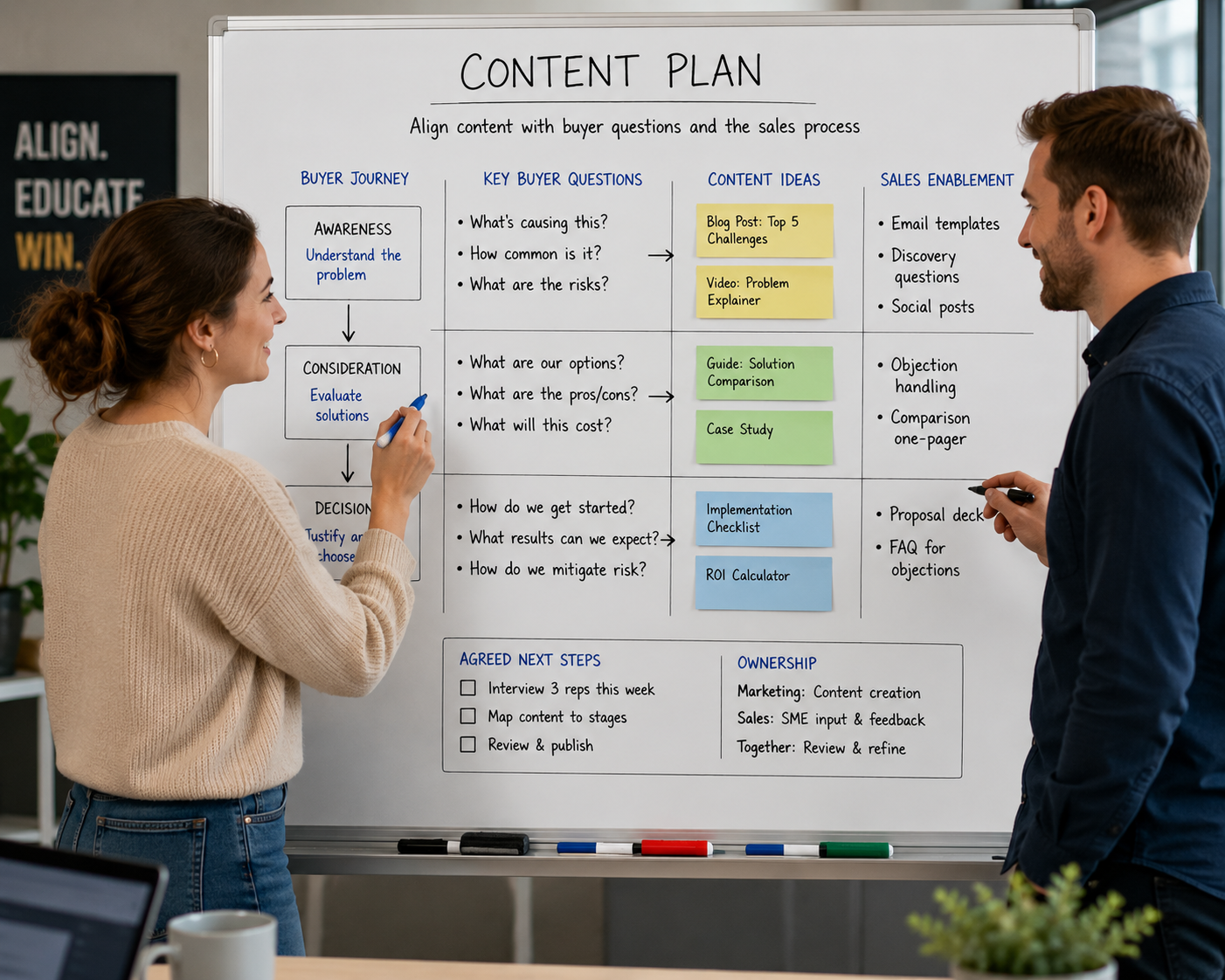
Why sales teams ignore marketing content, and it's not what you think
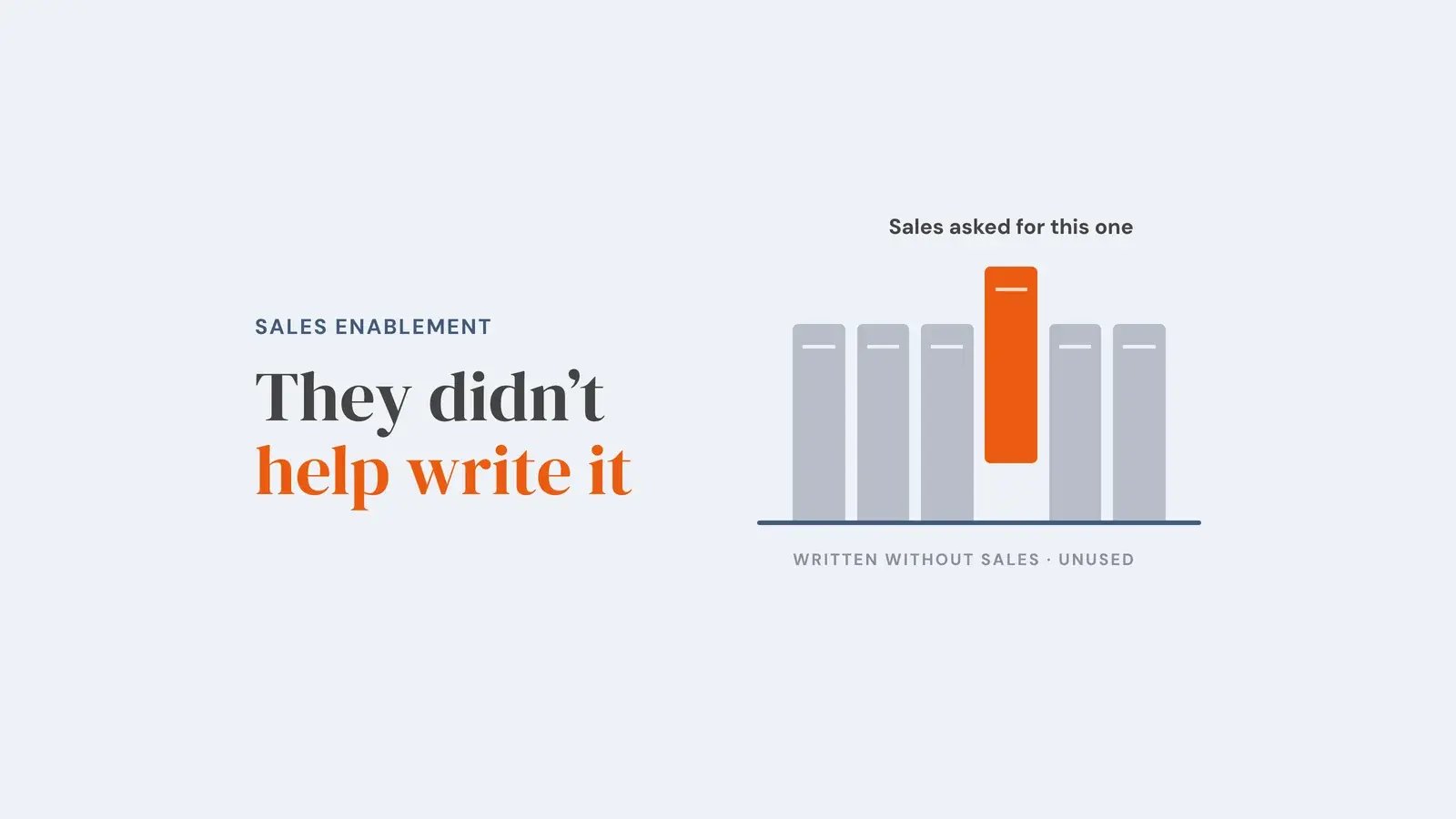
The most common reason sales ignores marketing content is not laziness; it's that the content was never built around actual sales conversations.
When salespeople aren't involved in content creation, the output rarely reflects the real questions buyers ask or the objections that surface in live calls. It feels generic, so sales leaves it on the shelf.
Here are the diagnostic signs that this is a process gap, not a people problem:
- Sales describes the content as "not relevant" or "too basic"
- Content is never referenced in follow-up emails or pre-meeting assignments
- Marketing and sales measure success by different metrics and rarely compare notes
- Salespeople build their own informal resources to fill the gap
- There is no agreed process for when or how to use specific pieces of content
Common misconception: "If we made more content, sales would eventually use it." More content does not fix the adoption problem. Process does.
The real cost of unused content
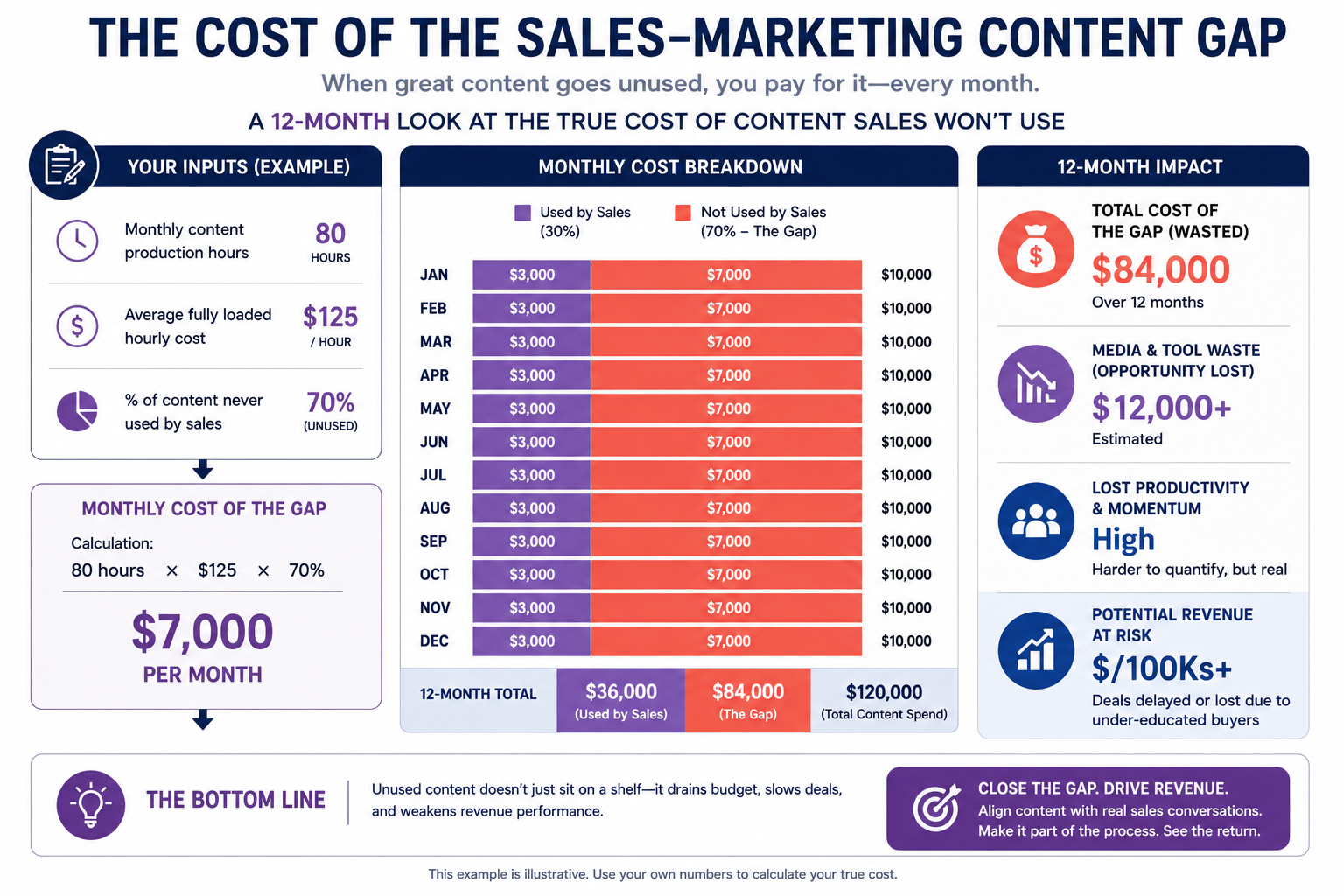
Content that sales won't use has a direct cost: every article, video, or guide that never enters the sales process is a sunk investment producing zero measurable return.
Beyond wasted production time, the gap costs deals. Data from Marcus Sheridan's They Ask, You Answer, independently documented by IMPACT, shows that prospects who consumed 30 or more pages of content before a sales appointment closed at 80%. Those who didn't hit that threshold closed at just 25%, the industry average.
A simple way to estimate your own cost:
Monthly content production hours x average hourly cost x % of content never used by sales = monthly cost of your adoption gap.
Assignment Selling, and why hoping sales figures it out isn't a strategy
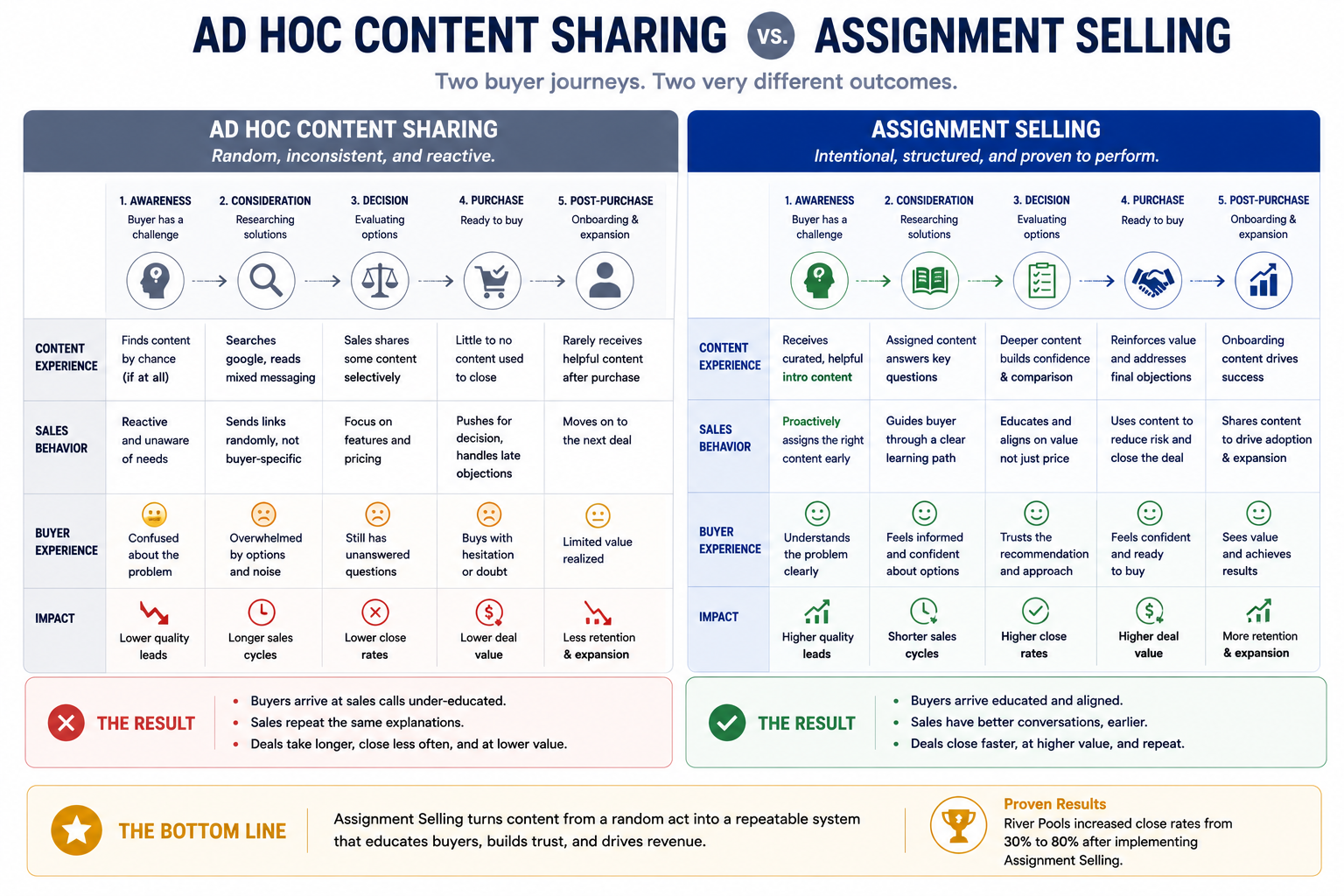
Assignment Selling, defined as requiring prospects to consume specific educational content before sales conversations, is the most effective way to embed content into the sales process as a standard, repeatable step.
Rather than leaving content sharing to chance, Assignment Selling maps specific pieces to specific stages of the process. It becomes a system, not an afterthought.
The results are well-documented:
- River Pools: Close rates rose from 30% to 80% in one year after making content mandatory pre-appointment, with fewer total appointments.
- CSI Accounting & Payroll: Implementing Assignment Selling produced a 10.19% increase in average sale price in year one, rising to 39.7% in year two.
How to get sales involved in content creation from the start
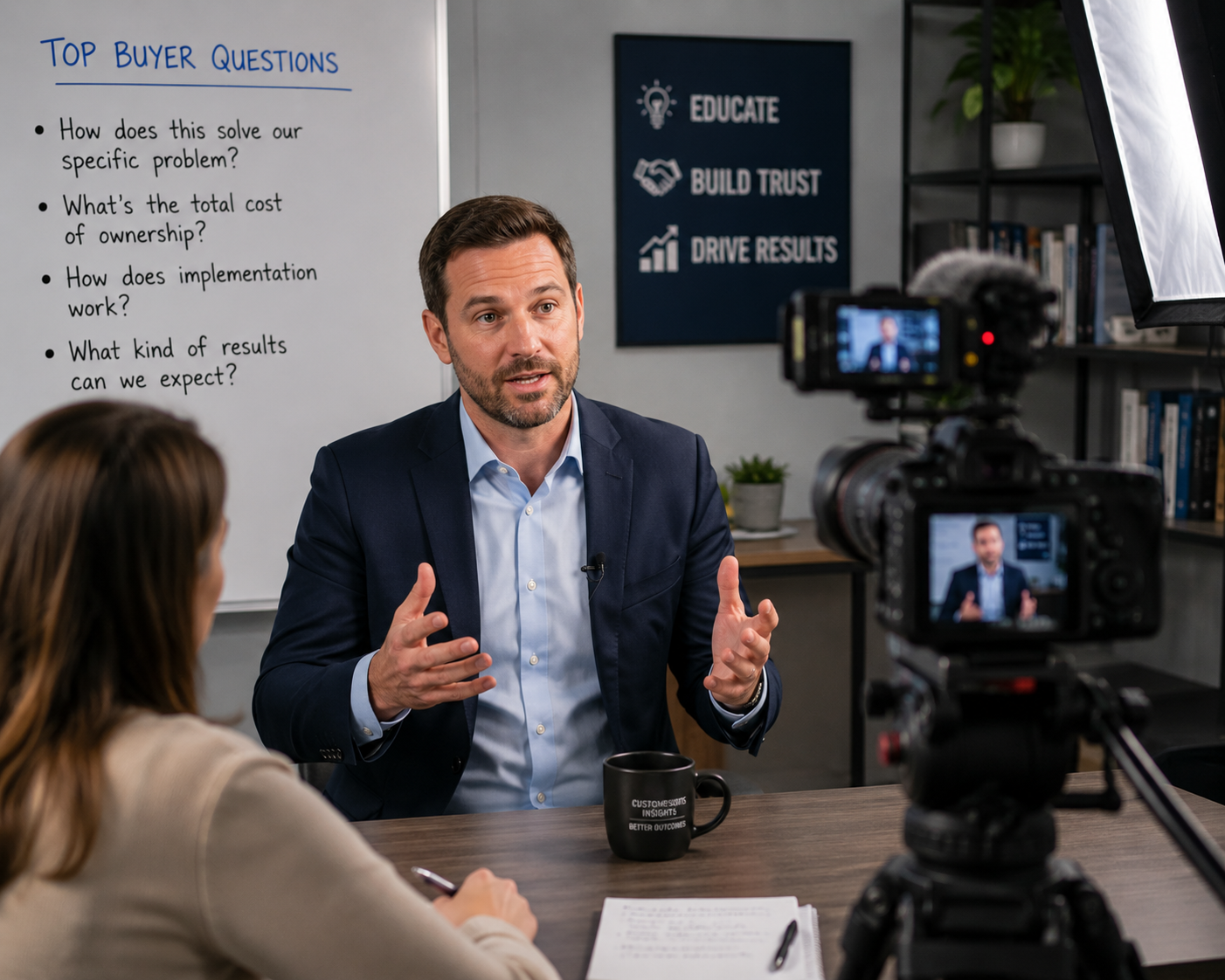
The fastest way to get sales to use content is to make sure they helped create it.
When salespeople contribute real questions, objections, and frontline insights, the content naturally aligns with how they sell. When salespeople see their own language and real-world scenarios in the content, they share it without being asked.
Four practical ways to extract sales insight for content:
- Monthly interview sessions: A content creator sits with a salesperson for 30–60 minutes and captures the top buyer questions heard that month
- Editorial calendar input: Sales nominates topics before each planning cycle, and marketing builds around what sales needs
- Sales call recordings: Review calls for recurring themes that content can pre-handle
- Objection mapping workshops: Bring sales and marketing together to document common objections and assign a content piece to each one
This is the subject matter expert (SME) model, and it sits at the centre of the Endless Customers System™.
How to build a Revenue Team that closes the sales-marketing gap
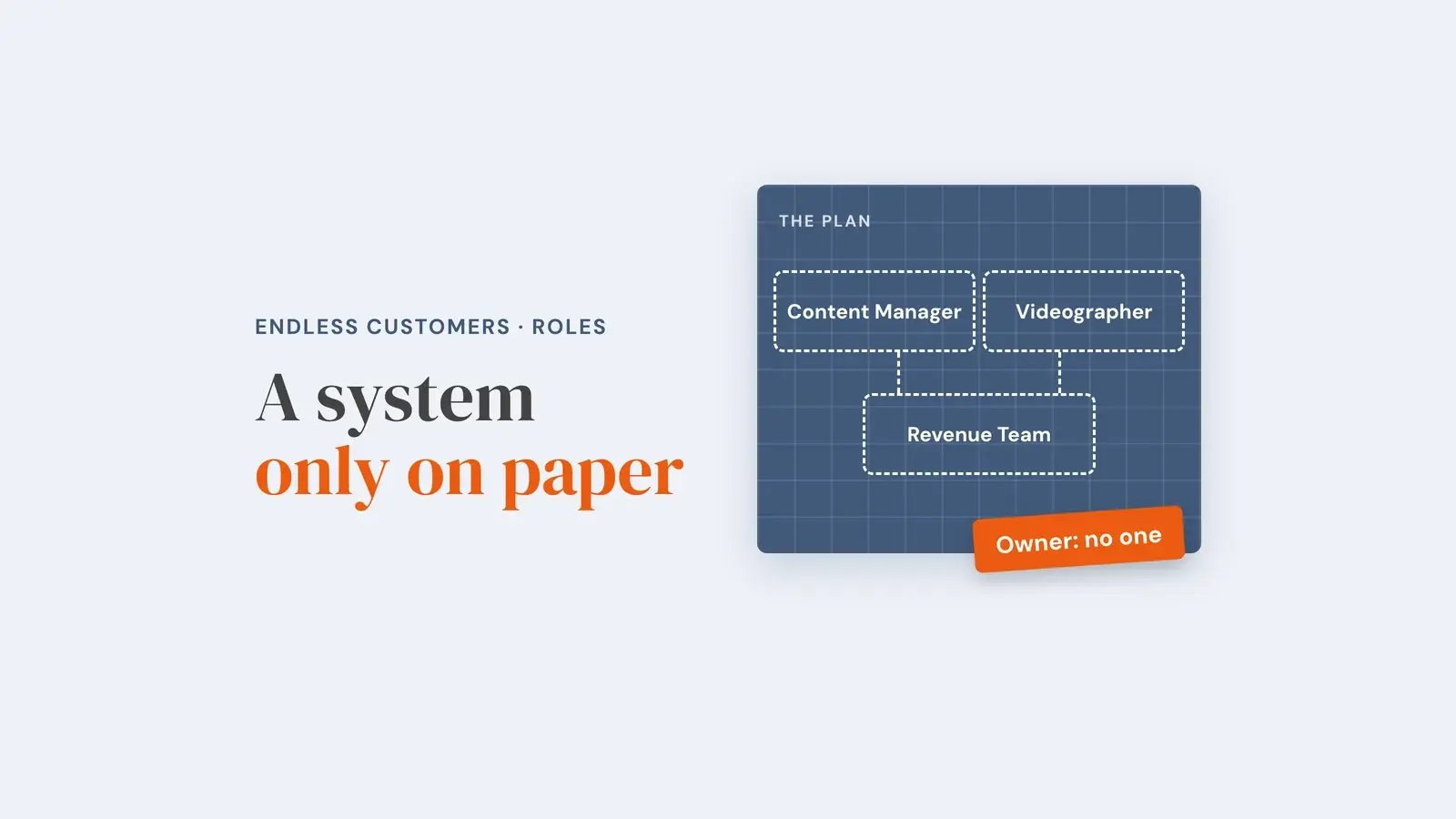
A Revenue Team is a structured, recurring meeting between sales, marketing, and leadership with one shared mission: making your brand the most known and trusted in your market.
Unlike occasional cross-team check-ins, a Revenue Team creates joint ownership of the entire buyer journey. Neither team can point the finger at the other when both own the result.
A typical Revenue Team meeting agenda covers:
- Sales sharing current buyer questions and live objections
- Editorial calendar planning and topic assignment
- Review of recently published content and how it performed in real sales conversations
- Marketing sharing traffic, lead, and content engagement data
- Identifying friction points in the handoff between marketing and sales
Companies that skip this step consistently stall, regardless of how strong their content strategy looks on paper. The meeting structure is what stops alignment from drifting.
Recommended reading: Endless Customers Alignment Workshop: What It Is and How It Drives Execution
How to map content to your sales process step by step
Mapping specific content pieces to specific stages of your sales process is the practical step that turns a content library into a tool your sales team will actually pick up.
Early-stage prospects need broad, trust-building content. Prospects closer to a decision need comparisons, case studies, and pricing context, and your salespeople need to know exactly which piece to assign and when.
| Sales stage | Content type to assign |
|---|---|
| Initial enquiry / first contact | Educational articles addressing the buyer's core problem |
| Discovery call booked | "They Ask, You Answer" content covering top objections |
| Proposal stage | Pricing and cost transparency content, competitor comparisons |
| Decision / closing | Case studies, testimonials, implementation guides |
| Post-sale onboarding | Process documentation, FAQs, how-to content |
Train your team on this map. Role-play it. Then hold them to it. Without accountability, the map sits in a folder and gets ignored.
Frequently asked questions
The most common questions about sales content adoption share a root cause: the process for creating, distributing, and using content was never built with the sales team in mind.
What if sales says the content "isn't relevant"?
That is feedback, not resistance. Sit with the salesperson, ask what they would actually find useful, and build it. Relevance is fixed through involvement.
How do I get leadership to enforce content adoption?
Tie it to sales metrics. When salespeople see shorter cycles and higher close rates from Assignment Selling, adoption becomes self-reinforcing. Leadership's role is to make the process mandatory early on.
Do we need a large content library before starting Assignment Selling?
No. Start with 2–3 pieces that address the most repeated objections. A small, well-used content set beats a large, ignored one every time.
What if only some salespeople use it and others don't?
Treat it as a process requirement, not optional behaviour. Assignment Selling must be documented as part of your sales process. Inconsistency here is a leadership problem, not a sales one.
How to take this forward
You came into this article with a sales team that was ignoring the content marketing creates. You now know it was not a people problem; it was a process problem. The fix sits in three places: content built with sales input, Assignment Selling embedded into the sales process, and a Revenue Team meeting that keeps both functions aligned.
The right starting point is not a new content strategy. It is aligning your teams around a shared process before building anything else.
How to take action now
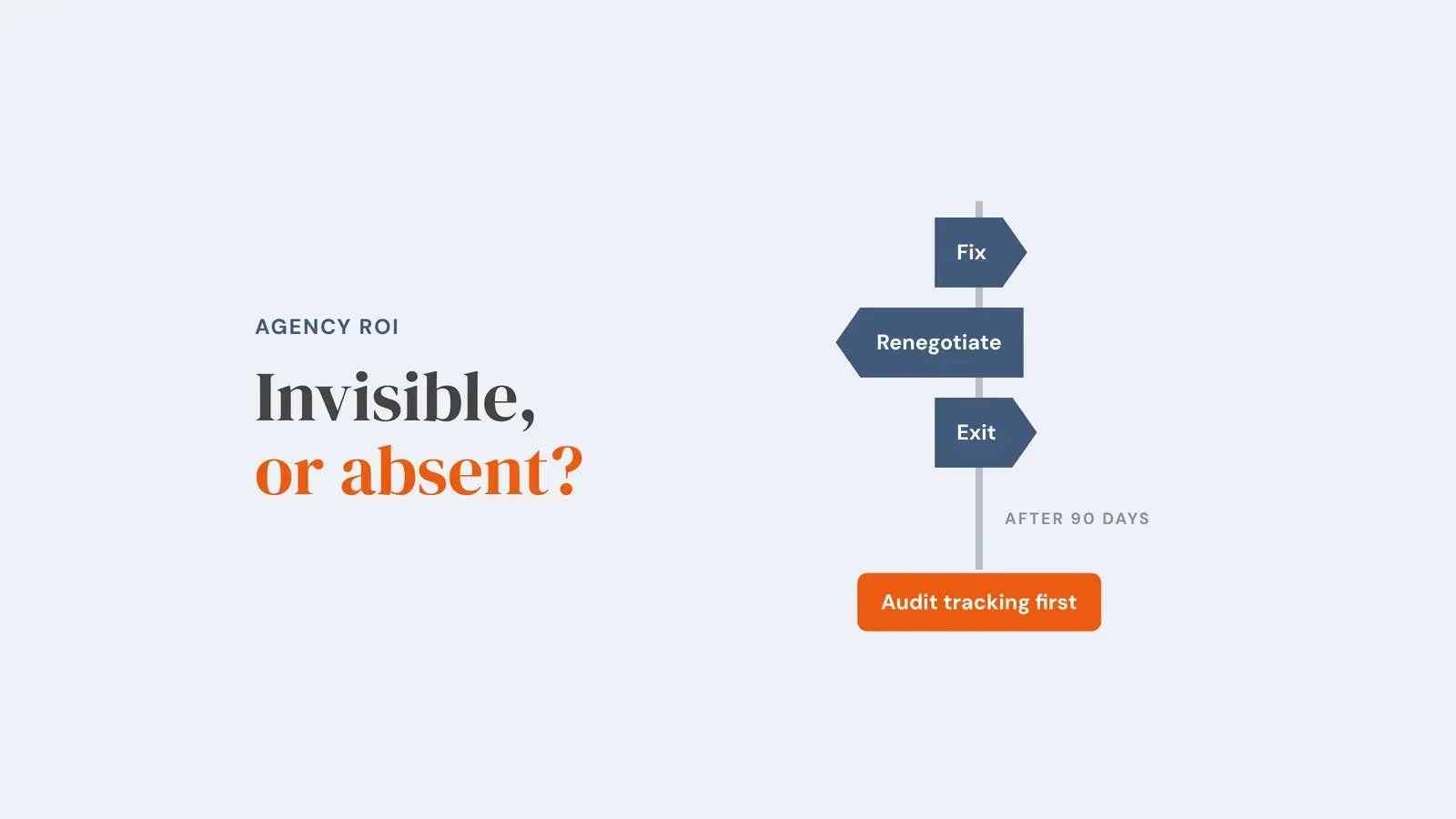
- Audit your current content library and ask sales which pieces they have used in the last 90 days
- Book a 30-minute session with one salesperson and record the top five buyer questions they hear every month
- Assign one piece of content as mandatory reading before your next five sales appointments, and track the difference
- Schedule a Revenue Team meeting, even a 45-minute first session, with sales, marketing, and one leadership stakeholder
- Map your current sales stages against the content framework table in the section above and identify which stages currently have no assigned content
Related article: Why Endless Customers Fails Without Sales Buy-In (And How to Fix It)
My Endless Customers™ Implementation programme trains your sales and marketing teams to own this process internally, starting with a Growth Alignment Intensive™ that brings leadership, sales, and marketing into one room to establish the shared foundation everything else is built on. Book a scoping call to find out if it's the right starting point for your business.

About the author
Tom Wardman is a fractional marketing consultant and one of the UK's first five certified coaches in the Endless Customers methodology, trained directly under Marcus Sheridan. He works with founder-led B2B businesses to replace agency dependency with self-sufficient growth systems, built around sales-marketing alignment, Assignment Selling, and content that closes deals. His engagement model is designed to make his involvement unnecessary over time. That is the point.
Pricing disclaimer: All GBP–USD price conversions are rounded estimates and correct at the time of publishing. Exchange rates fluctuate and figures should be treated as indicative only.
Topics: