

Are you frustrated with marketing that brings disappointing results?
Does it feel like every marketing hire or agency relationship turns into expensive disappointment?
The wrong fractional CMO can drain your budget, derail your revenue targets, and leave your team more confused than when you started. I've spent the last decade helping companies avoid these exact pitfalls, working across industries to build marketing systems that actually deliver measurable growth.
By the end of this article, you'll know exactly what mistakes to avoid and how to find the right fractional marketing leader who will transform your marketing into a trust-building, revenue-driving system. We'll walk through seven mistakes, from treating them like full-time staff to setting unrealistic timelines—so you can make a confident, high-ROI hire.
What is a fractional CMO and why do hiring mistakes happen?
A fractional CMO is a senior marketing executive who works part-time or project-based for multiple companies, providing strategic marketing leadership without the full-time commitment and cost.
Despite the growing popularity of fractional executives, many companies make costly hiring mistakes because they approach fractional CMO recruitment the same way they would hire a full-time employee.
The problem isn't with fractional CMOs themselves, but with how businesses approach the hiring process. Most companies lack experience working with fractional executives and fall into predictable traps that waste money and block growth.
Mistake #1: Treating fractional CMOs like full-time employees
The biggest mistake companies make is expecting fractional CMOs to be available 40+ hours per week and attend every meeting, despite hiring them specifically for part-time strategic work.
This misalignment leads to frustration on both sides and undermines the core value proposition of fractional leadership.
Fractional CMOs succeed when they focus on high-impact strategic work, not administrative tasks. When you expect them to operate like full-time employees, you're paying premium rates for work that could be handled by junior staff.
Here's what treating fractional CMOs like employees looks like:
- Expecting immediate responses to non-urgent messages
- Requiring attendance at every team meeting
- Assigning administrative tasks instead of strategic priorities
- Demanding detailed time tracking for every hour worked
Instead, treat your fractional CMO as a strategic partner who delivers specific outcomes within agreed boundaries.
Mistake #2: Hiring based on industry experience alone
Many companies prioritise finding a fractional CMO with extensive experience in their specific industry over proven strategic marketing capabilities and adaptability.
While industry knowledge can be valuable, the most effective fractional CMOs bring diverse experience and fresh perspectives that can drive breakthrough results.
Great fractional CMOs excel because they understand marketing fundamentals that work across industries. They bring proven frameworks for building customer trust, generating leads, and measuring success - skills that translate regardless of your sector.
Consider these factors instead of just industry match:
- Track record of measurable marketing results
- Ability to learn quickly and adapt strategies
- Experience with businesses at your growth stage
- Proven frameworks for building customer trust
- References from companies facing similar challenges
The best fractional CMOs combine marketing expertise with business acumen, not just industry knowledge.
Learn more about my approach to fractional CMO leadership.
Mistake #3: Unclear scope and expectations from the start
Companies frequently fail to define specific deliverables, success metrics, and boundaries for their fractional CMO engagement, leading to confusion and misaligned expectations.
Without clear scope definition, both parties often struggle with accountability and measuring the impact of the fractional CMO's work.
Successful fractional CMO relationships start with crystal-clear agreements about what success looks like. This includes specific deliverables, communication schedules, and measurable outcomes.
Your scope should define:
| Element | What to Include |
|---|---|
| Deliverables | Specific outputs like strategy documents, campaign plans, or team training |
| Metrics | Clear KPIs such as lead quality, conversion rates, or revenue attribution |
| Communication | Meeting schedules, reporting frequency, and response expectations |
| Boundaries | What's included and excluded from their responsibilities |
| Timeline | Key milestones and review points throughout the engagement |
Without a well-defined scope from day one, even the most talented fractional CMO will struggle to deliver the results you need.
Mistake #4: Inadequate onboarding and context sharing
Most companies provide minimal onboarding to fractional CMOs, assuming they should immediately understand the business, customers, and internal dynamics.
This lack of proper context-setting significantly delays the fractional CMO's ability to make strategic contributions and reduces their overall effectiveness.
Effective fractional CMOs need deep context to make strategic decisions that build customer trust. They must understand your customers' buying journey, internal team dynamics, and competitive landscape.
Your onboarding should cover:
- Company history, mission, and values
- Current marketing performance and challenges
- Customer personas and buying behaviour
- Sales process and team structure
- Technology stack and data sources
- Previous marketing efforts and results
- Budget constraints and approval processes
Investment in proper onboarding pays dividends through faster impact and better strategic decisions.
Mistake #5: Focusing only on cost rather than value
Companies often choose the cheapest fractional CMO option without considering the potential return on investment or the quality of strategic guidance they'll receive.
This penny-wise, pound-foolish approach frequently results in subpar marketing strategies and missed growth opportunities that cost far more than the initial savings.
The right fractional CMO pays for themselves through improved marketing performance and avoided costly mistakes. They bring experience that prevents expensive trial-and-error approaches.
Consider total value, not just hourly rates:
- Revenue impact from improved lead generation
- Cost savings from optimised marketing spend
- Time savings through proven frameworks
- Risk reduction from experienced guidance
- Team development and capability building
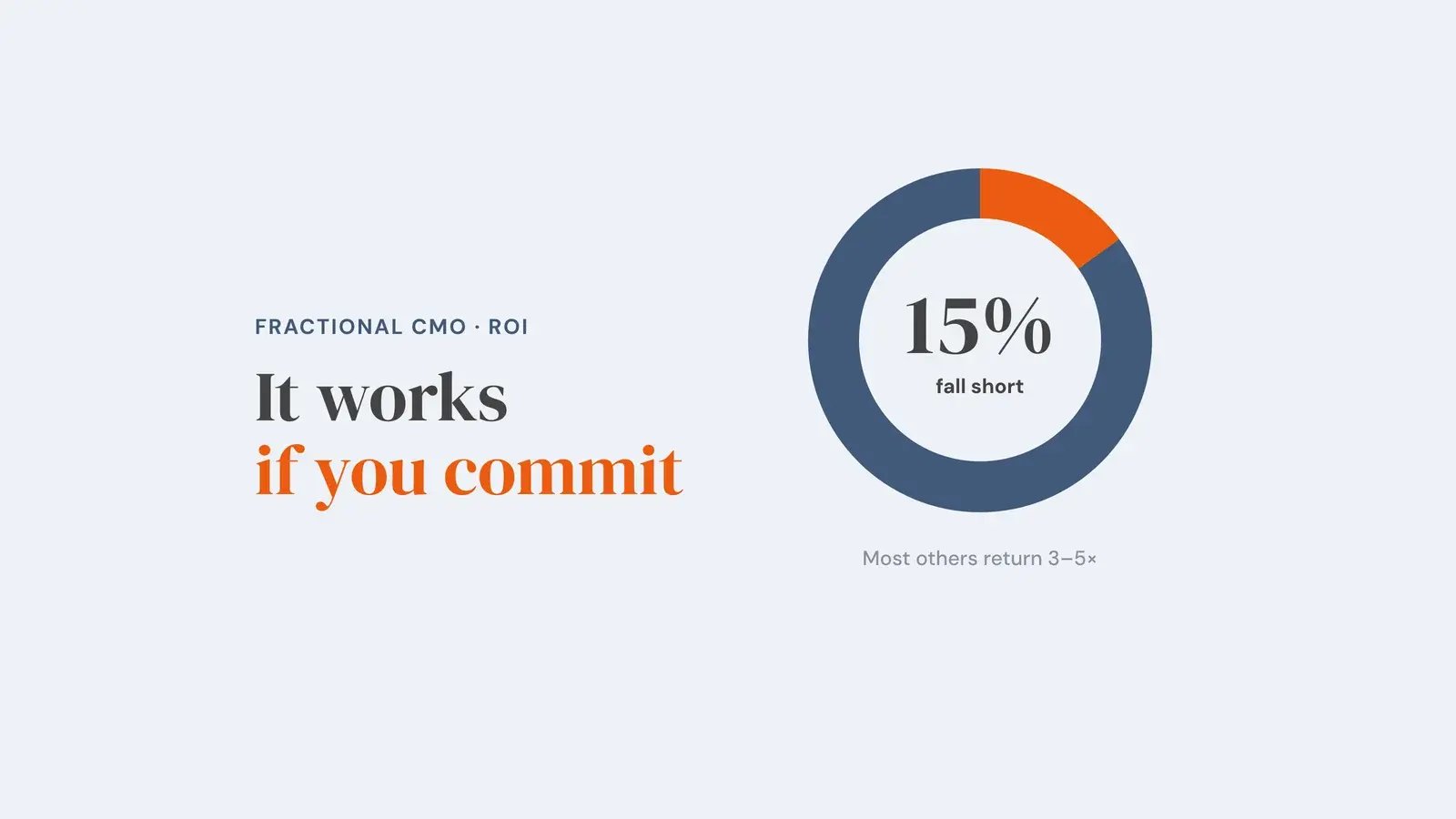
A skilled fractional CMO who costs more upfront often delivers significantly better ROI than cheaper alternatives.
Read more about fractional executive ROI and business impact.
Mistake #6: Not integrating fractional CMOs with existing teams
Many organizations treat fractional CMOs as external consultants rather than integrated team members, limiting their access to information and decision-making processes.
This isolation prevents fractional CMOs from building the relationships and trust necessary to drive meaningful marketing transformation.
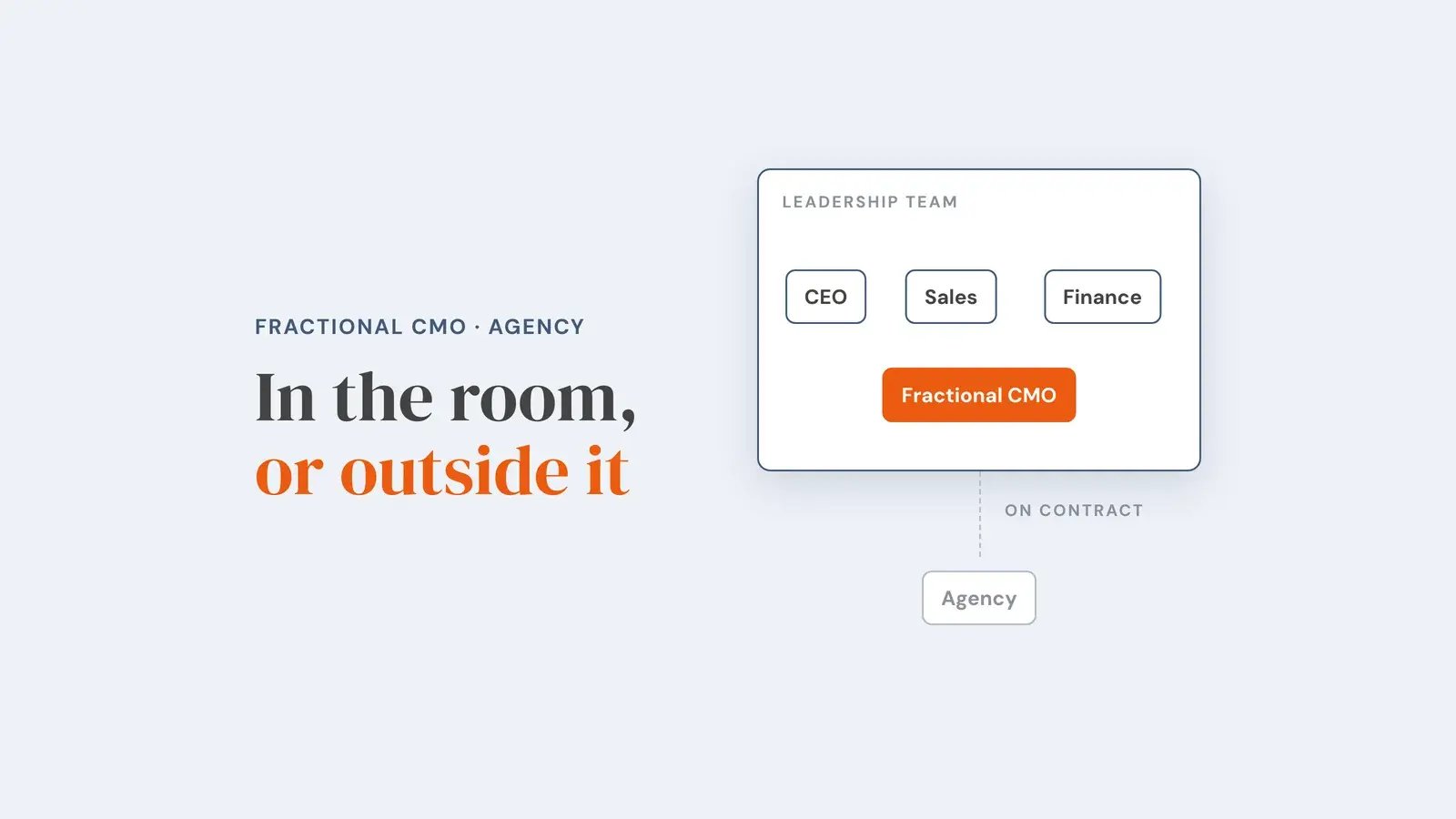
Successful fractional CMOs function as part of your leadership team, with appropriate access to information and decision-making authority. They need internal champions and collaborative relationships to be effective.
Integration best practices include:
- Including them in relevant leadership meetings
- Providing access to necessary systems and data
- Introducing them properly to key team members
- Giving appropriate authority to make decisions
- Creating clear communication channels
- Establishing regular feedback loops
Treat your fractional CMO as a valued team member, not an outside vendor.
Mistake #7: Short-term thinking and unrealistic timelines
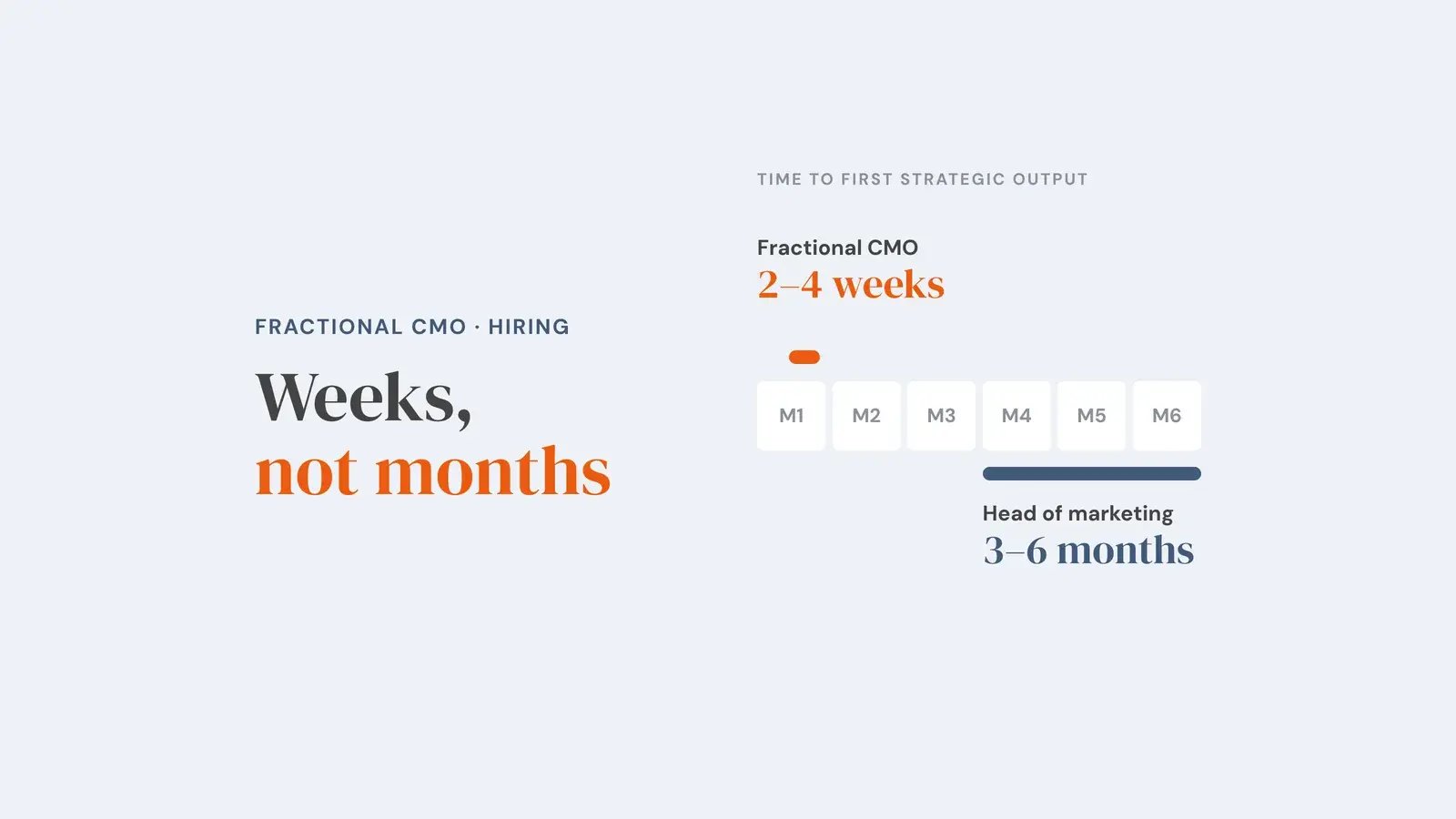
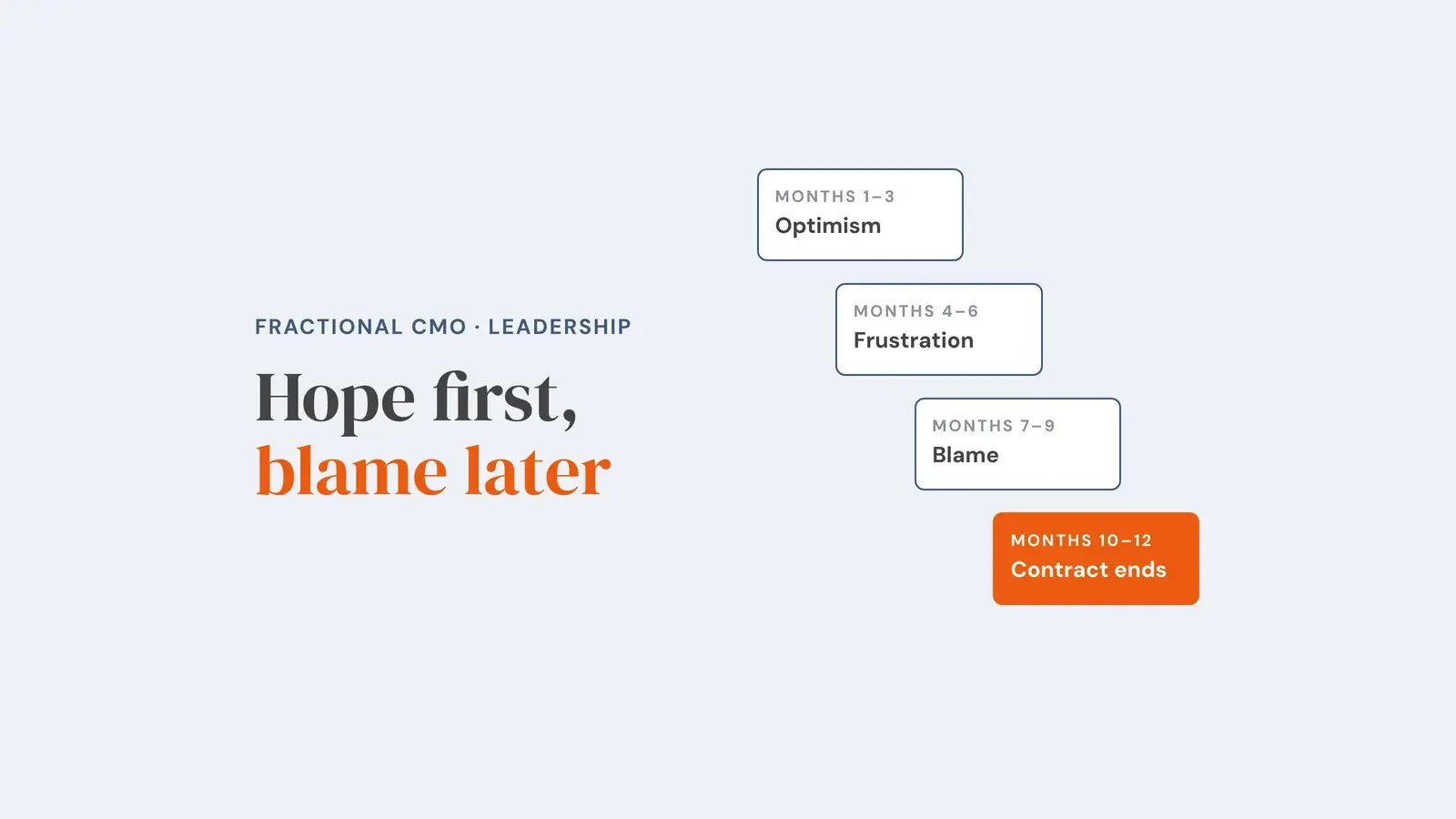
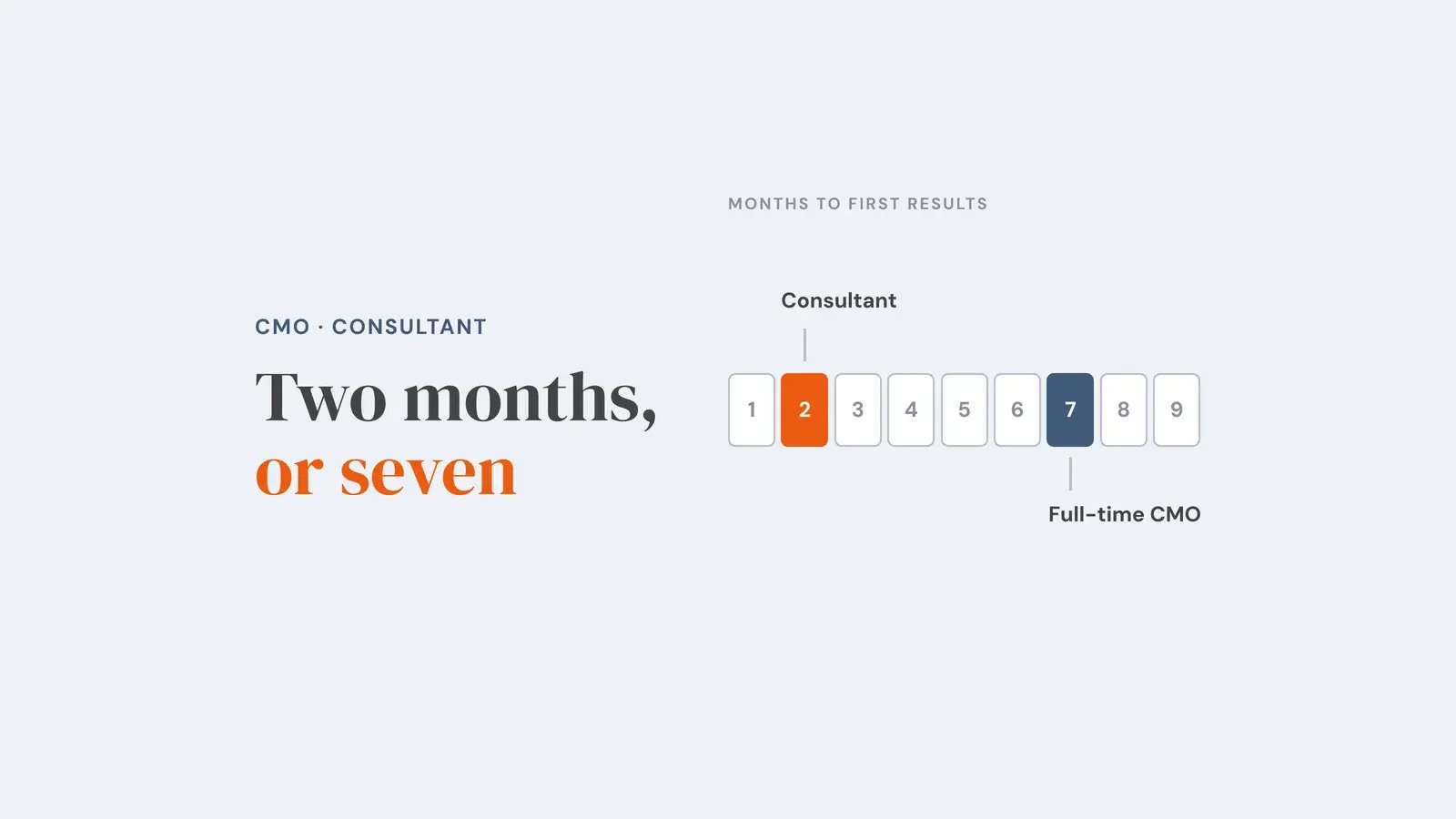
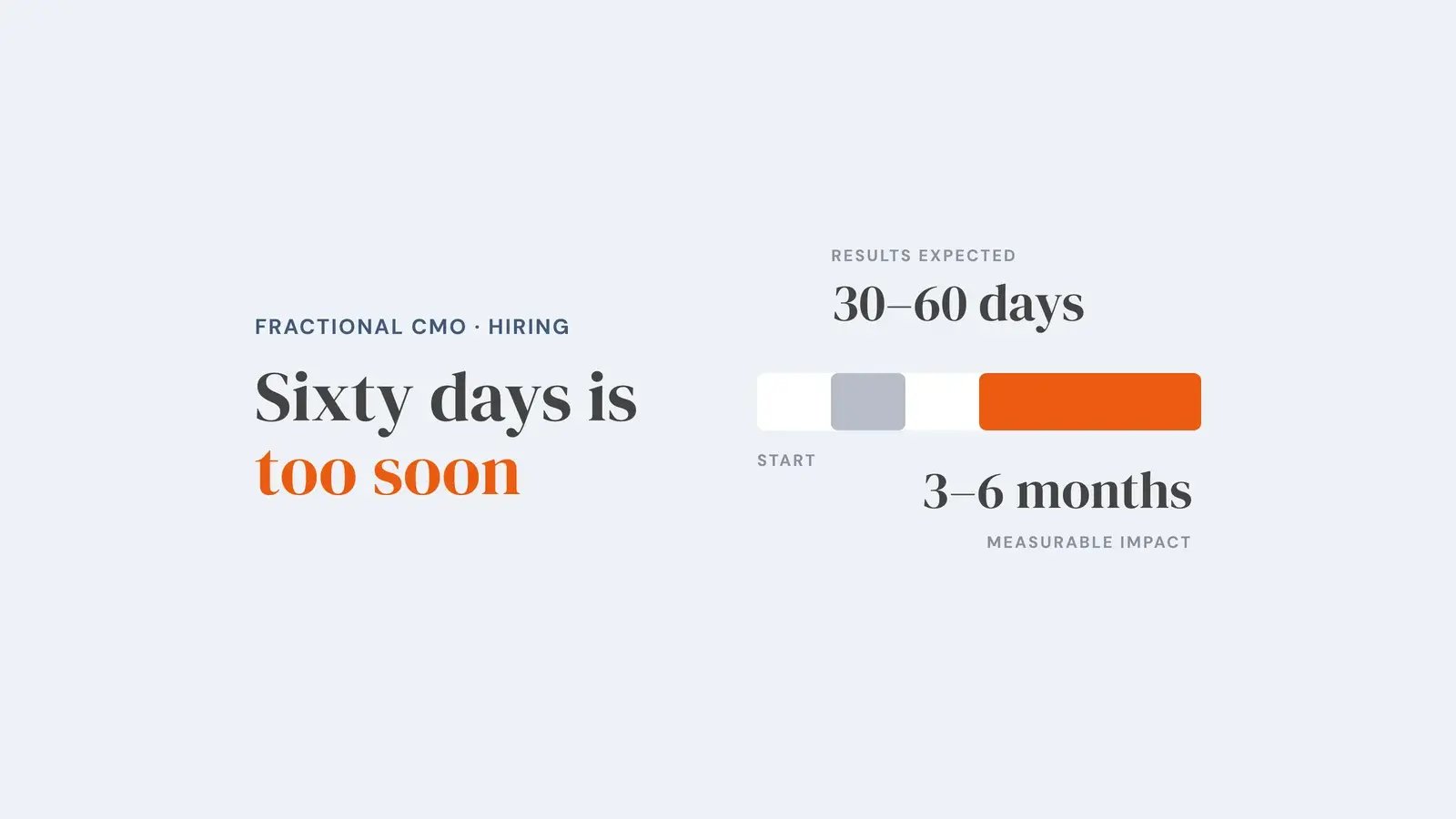
Companies frequently expect fractional CMOs to deliver immediate results within 30-60 days, despite marketing strategies typically requiring 3-6 months to show measurable impact.
This impatience often leads to premature termination of engagements just as strategic initiatives are beginning to gain traction.
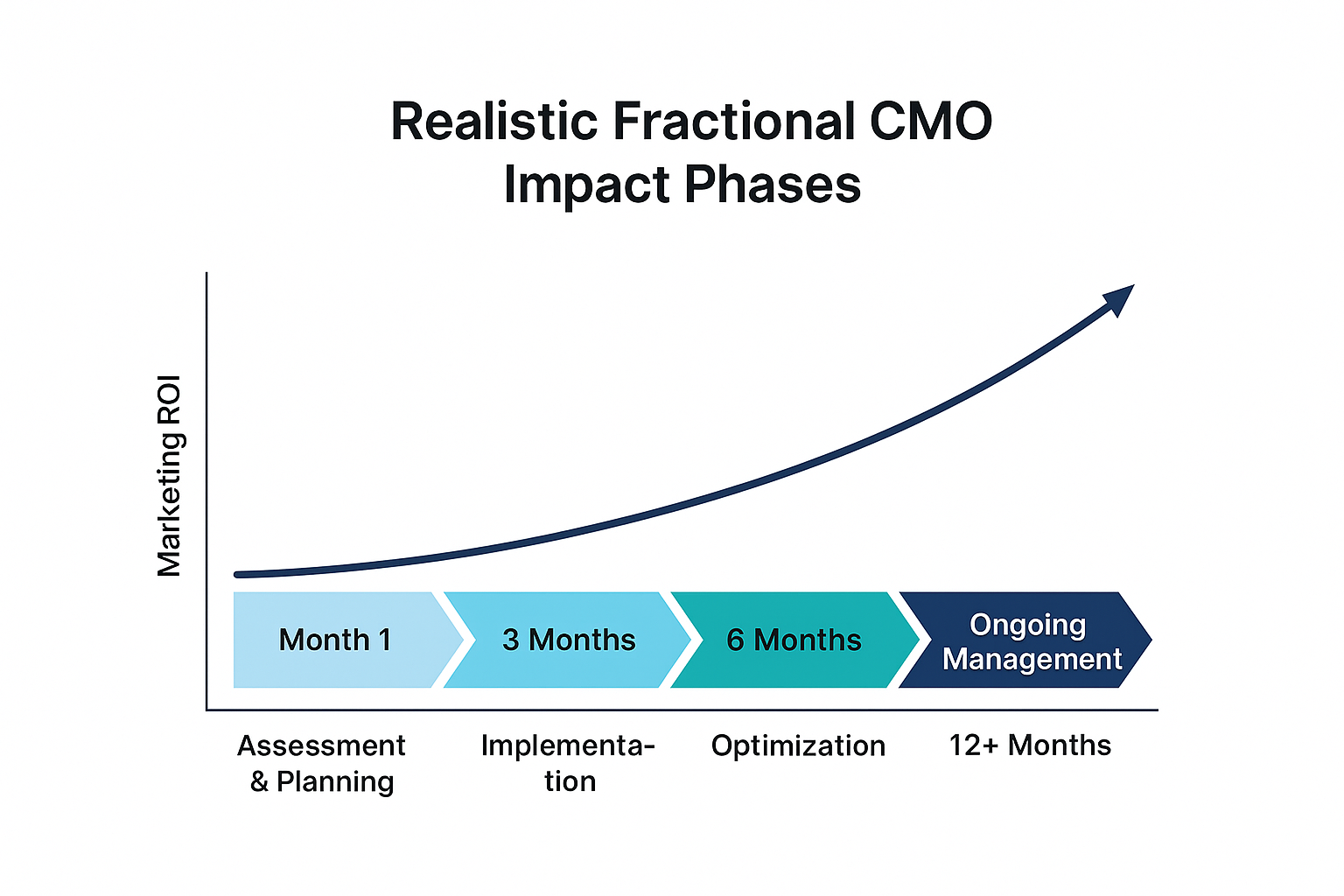
Building customer trust and implementing new marketing systems takes time to show results. The best fractional CMOs focus on sustainable strategies that create lasting growth, not quick fixes.
Realistic timeline expectations:
| Timeframe | What to Expect |
|---|---|
| 30-60 days | Strategy development, team alignment, and quick wins implementation |
| 3-6 months | Initial results from new strategies, improved processes, and better data |
| 6-12 months | Measurable improvements in lead quality, conversion rates, and revenue |
| 12+ months | Sustainable growth systems and marketing independence |
Marketing transformation is a marathon, not a sprint—plan for sustainable growth rather than quick fixes.
How to avoid these fractional CMO hiring mistakes
Successfully hiring a fractional CMO requires treating the process as a strategic partnership rather than a traditional employment relationship.
The key is establishing clear communication, realistic expectations, and proper integration processes from day one of the engagement.
Start with these proven strategies:
- Define success clearly: Work together to establish specific, measurable outcomes that align with business objectives. Document these in writing before the engagement begins.
- Invest in proper onboarding: Provide comprehensive context about your business, customers, and challenges. This upfront investment accelerates results.
- Set realistic timelines: Understand that meaningful marketing transformation takes months, not weeks. Plan for the long term while celebrating early wins.
- Integrate fully: Treat your fractional CMO as a valued team member with appropriate access and authority. Foster collaborative relationships across the organization.
- Focus on value: Evaluate candidates based on potential ROI and strategic capability, not just hourly rates. Consider the total impact on business growth.
- Communicate expectations: Establish clear boundaries about availability, deliverables, and communication preferences. Regular check-ins prevent misunderstandings.
As someone who has worked as a fractional CMO across multiple industries, I've seen how these approaches make the difference between successful partnerships and frustrating failures. The companies that get the best results treat fractional leadership as a strategic investment, not a cost-cutting exercise.
Red flags to watch for when hiring a fractional CMO
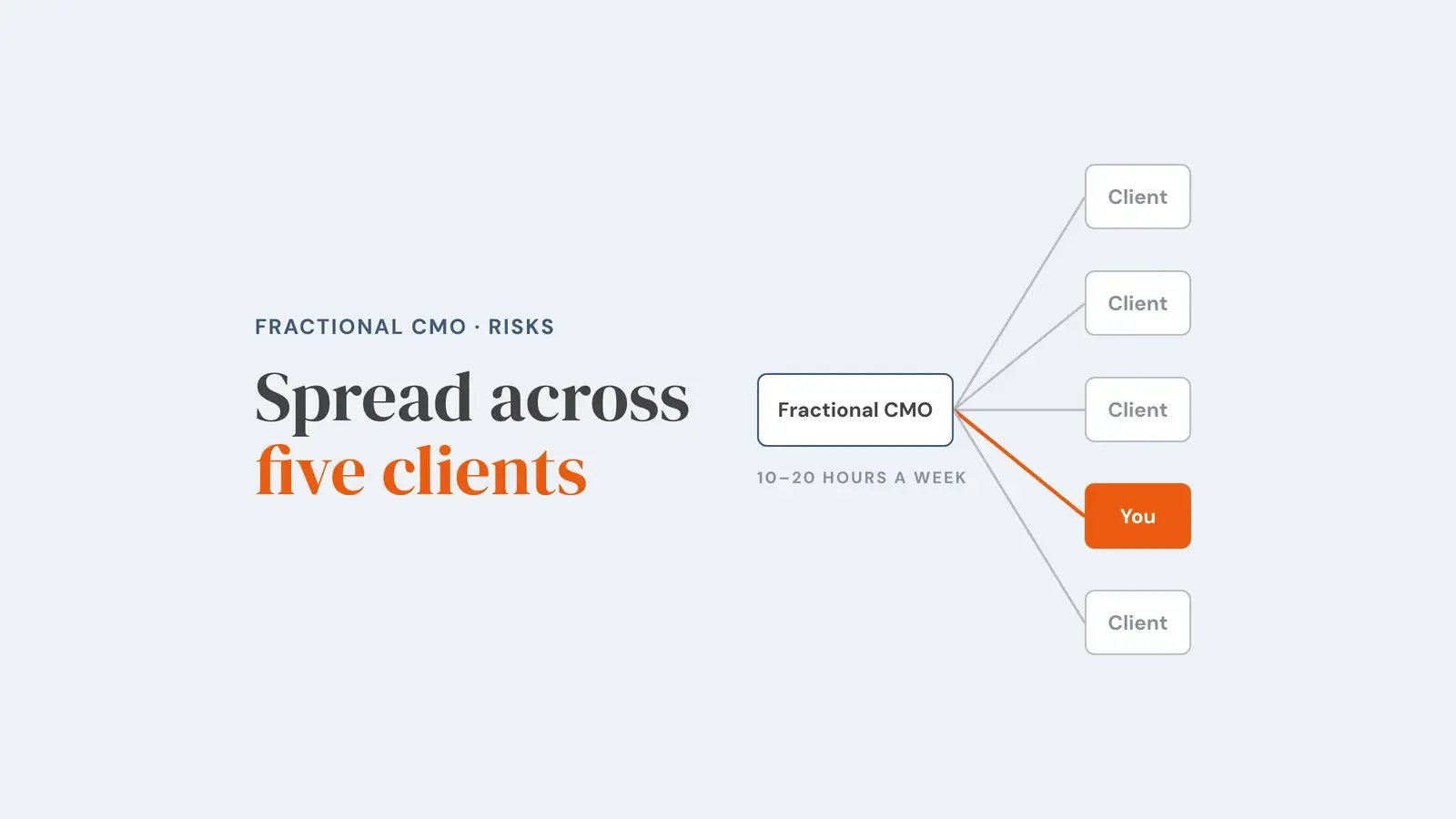
Warning signs include fractional CMOs who promise immediate results, lack specific case studies, or seem to take on unlimited clients without clear capacity management.
Other red flags include poor communication during the proposal process, reluctance to provide references, or unwillingness to commit to specific deliverables and timelines.
Watch for these concerning behaviours:
- Guaranteeing specific results within unrealistic timeframes
- Vague descriptions of previous successes without concrete metrics
- Unwillingness to provide client references or case studies
- Poor responsiveness during the hiring process
- Unclear pricing or hidden costs
- Taking on too many clients simultaneously
- Lack of relevant certifications or continuing education
- Generic proposals that don't address your specific challenges
The best fractional CMOs are transparent about their capacity, realistic about timelines, and specific about their approach to your challenges.
Trust your instincts; if something feels off during the hiring process, it probably won't improve once the engagement begins.
Your next step in hiring the right fractional CMO
Most companies struggle with fractional CMO hiring because they treat it like a traditional employment relationship instead of a strategic partnership.
Now that you understand the seven critical mistakes and how to avoid them, you're equipped to make a smarter hiring decision that actually drives growth rather than drains resources.
The right fractional CMO transforms your marketing from scattered activities into a trust-building system that delivers measurable revenue. I've worked with companies across industries to implement exactly these frameworks, and I currently have capacity for select clients who are serious about building marketing that works.
Book a free 30-minute consultation to explore how strategic fractional leadership could solve your marketing challenges.