

Key Takeaways
- Endless Customers is a comprehensive customer acquisition system with five key components that cannot work without sales team buy-in, as buyers complete 80% of their journey before reaching out.
- When sales and marketing work in silos, Endless Customers fails, creating miscommunication, frustration, and stalled progress.
- Sales teams refuse to use marketing content when they haven't been involved in creating it, don't understand its purpose, or weren't trained on how and when to deploy it.
- Assignment Selling only works when sales leaders are believers, salespeople commit to using it consistently, and management provides ongoing training—without these elements, it fails.
- Skipping Alignment Day creates gaps in understanding, commitment, and execution that cause the strategy to fail, as leadership's repeated messages get tuned out while an outside facilitator cuts through familiarity.
Is your sales team ignoring the content marketing you've invested in? Do they say it doesn't help them close deals?
This article will show you the root causes of that breakdown, and exactly how to fix it. You'll learn what causes misalignment, how to rebuild trust and buy-in, and a step-by-step implementation approach that works.
You've read Endless Customers. You're excited about becoming the most trusted brand in your market. You've started creating content, publishing articles, and building your website.
But here's the thing: your sales team isn't on board. They're not using the content. They're not showing up to Revenue Team meetings. They don't see how any of this helps them close deals.
And now? Your implementation is stuck.
This article is for business owners, marketing leaders, and sales managers who are trying to implement Endless Customers principles but struggling to get full organisational buy-in.
What is the Endless Customers System™ and why does sales buy-in matter?
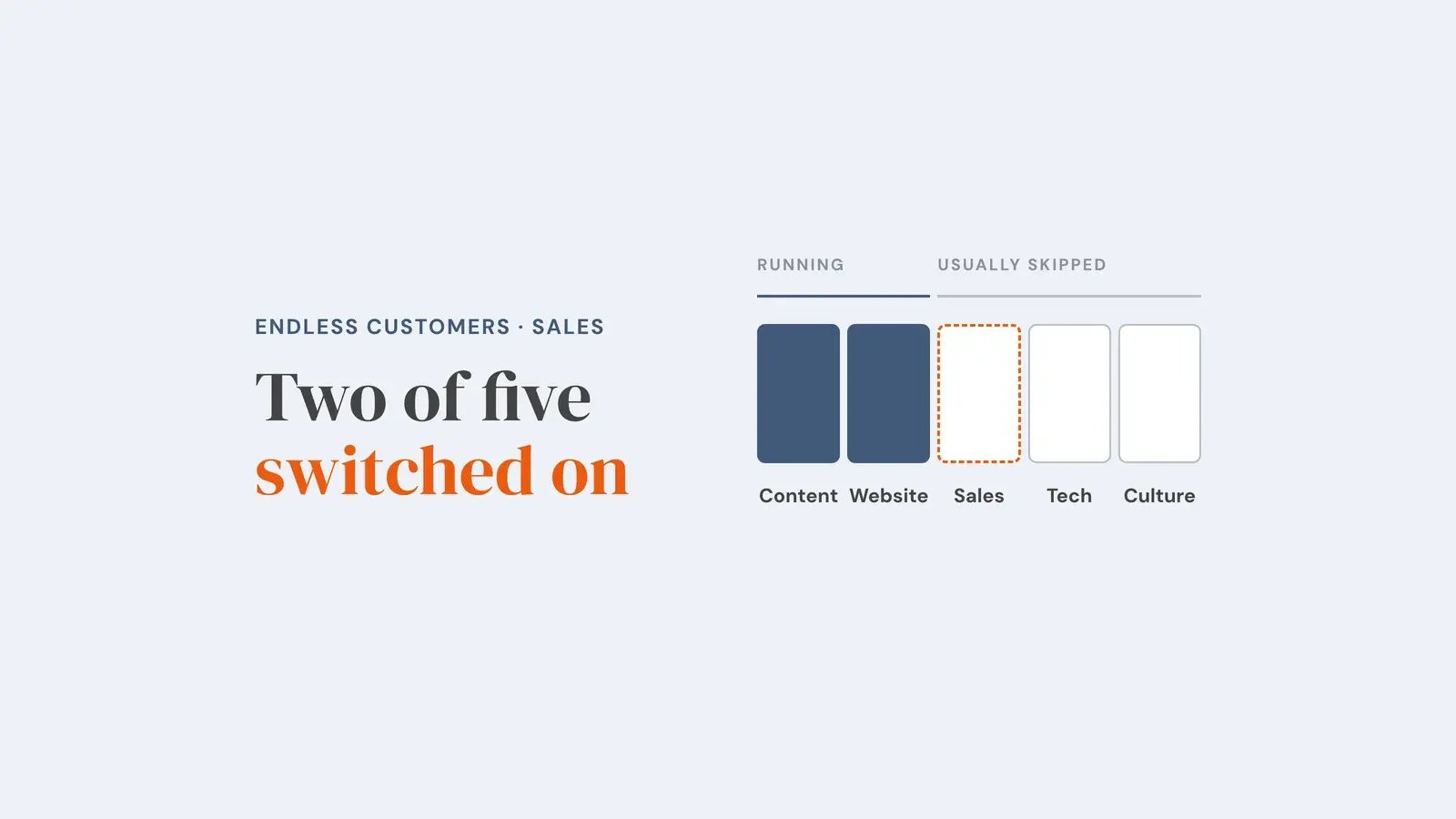
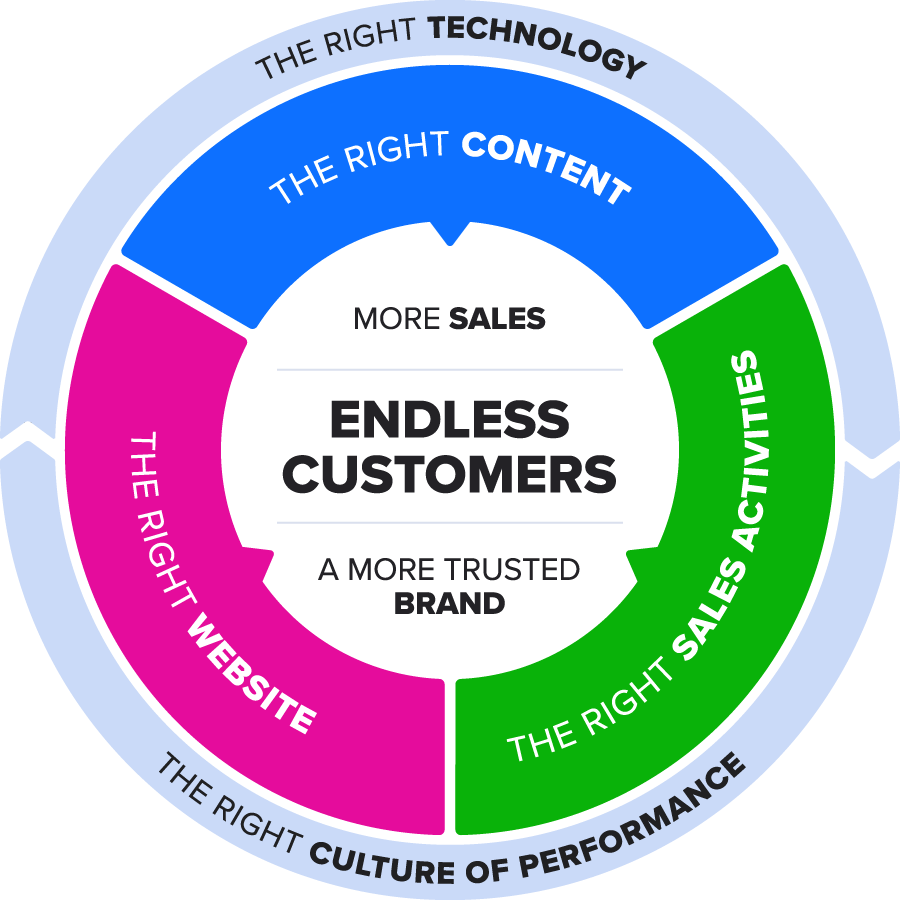
Endless Customers is a comprehensive customer acquisition system that transforms businesses into the most known and trusted brand in their market through five key components: The Right Content, The Right Website, The Right Sales Activities, The Right Technology, and The Right Culture of Performance.
These five components work together to build trust with buyers and generate endless customers. But here's what most businesses miss; all five components must work in harmony.
Without sales team buy-in, this strategy cannot work, because buyers complete 80% of their journey before ever reaching out, meaning sales and marketing must operate as a unified Revenue Team to influence the entire buying process.
When 80% of the buying process happens before a prospect talks to sales, marketing handles most of the buyer's journey. But sales still controls the conversations that close deals. If these teams operate as separate islands, gaps form in the buyer experience and opportunities slip through the cracks.
The five components include:
- The Right Content: Transform your organisation into a media powerhouse producing high-quality, trust-building content
- The Right Website: An educational hub that delivers the experience modern buyers expect
- The Right Sales Activities: A documented, content-driven process that positions your team as trusted advisors
- The Right Technology: Tools that create an exceptional experience with your brand
- The Right Culture of Performance: Commitment to growth, accountability, and continuous learning
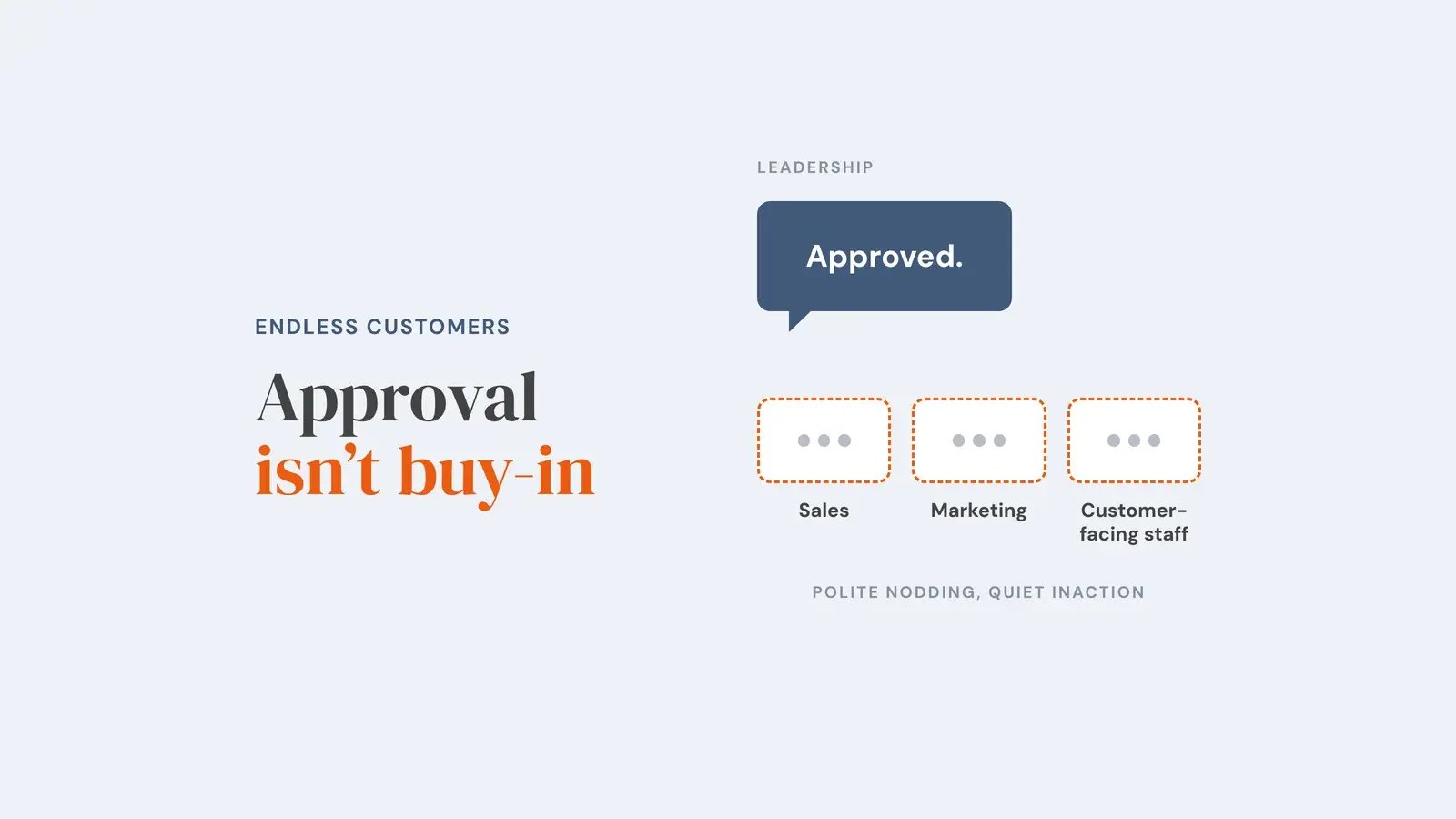
When sales and marketing work in silos, Endless Customers fails
When sales and marketing teams work in silos during Endless Customers implementation, the strategy falls apart, creating miscommunication, frustration, and stalled progress toward becoming a known and trusted brand.
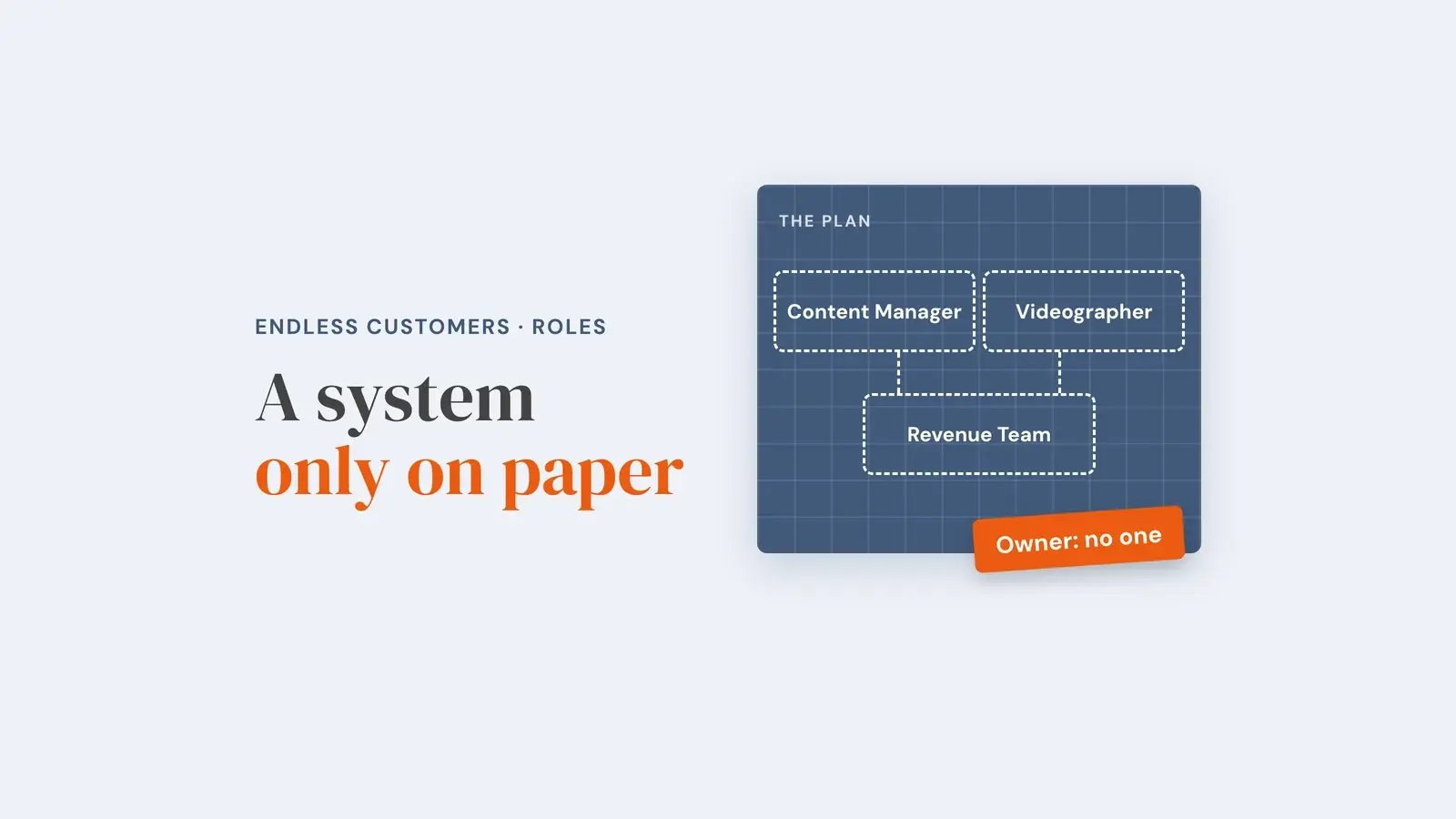
Marketing creates content that sales doesn't understand or use. Sales continues selling the same way they always have, ignoring the educational materials marketing produces. Neither team attends the other's meetings. Both wonder why results aren't improving.
Patrick Accounting experienced this firsthand when they attempted implementation without proper alignment: their teams worked independently, talked past each other, and spun their wheels until they brought in outside help to unify their efforts.
Matt Patrick and Mike Schaeffer realised they were stuck. Without a unified vision and clear objectives, their efforts were stalling. They brought in a Certified Coach to facilitate their Alignment Day and help them align on their strategy.
"We went from talking past each other to truly collaborating... If we hadn't done that Alignment Day, we'd still be spinning our wheels."
Since then, Patrick Accounting has seen dramatic improvements in communication, efficiency, and their bottom line.
Why sales teams ignore marketing content, and how to fix it
Sales teams refuse to use marketing content when they haven't been involved in creating it, don't understand its purpose, or weren't trained on how and when to deploy it in their sales process.
Think about it from their perspective. Marketing drops a new article or video in Slack and says "use this with prospects." But sales doesn't know which prospects need it, at what stage of the conversation, or what outcome it's supposed to drive.
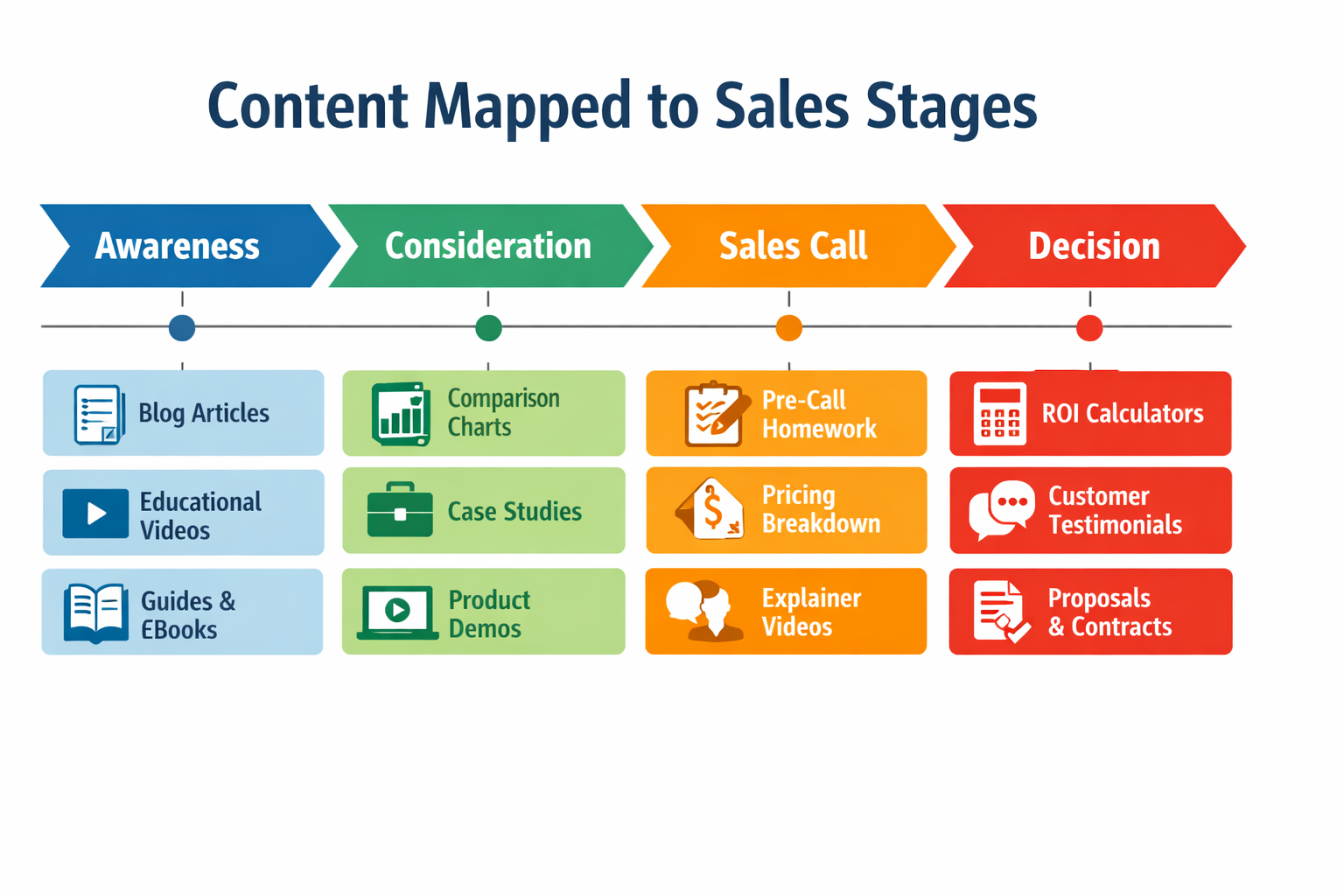
Without Assignment Selling training and a documented content-to-sales-stage mapping, your educational content sits unused while salespeople revert to the same old tactics that no longer work in today's buyer-first environment.
The disconnect happens because:
- Sales wasn't involved in brainstorming content topics based on real buyer questions
- No one trained sales on the Assignment Selling methodology
- Sales doesn't understand how content shortens sales cycles or improves close rates
- The sales process isn't documented with clear entry and exit criteria for each stage
- There's no mapping showing which content supports which stage of the buyer's journey
Your sales team doesn't ignore content because they're stubborn. They ignore it because they don't see how it fits into the work they already do every day.
Why Assignment Selling fails without sales support (and how to fix it)
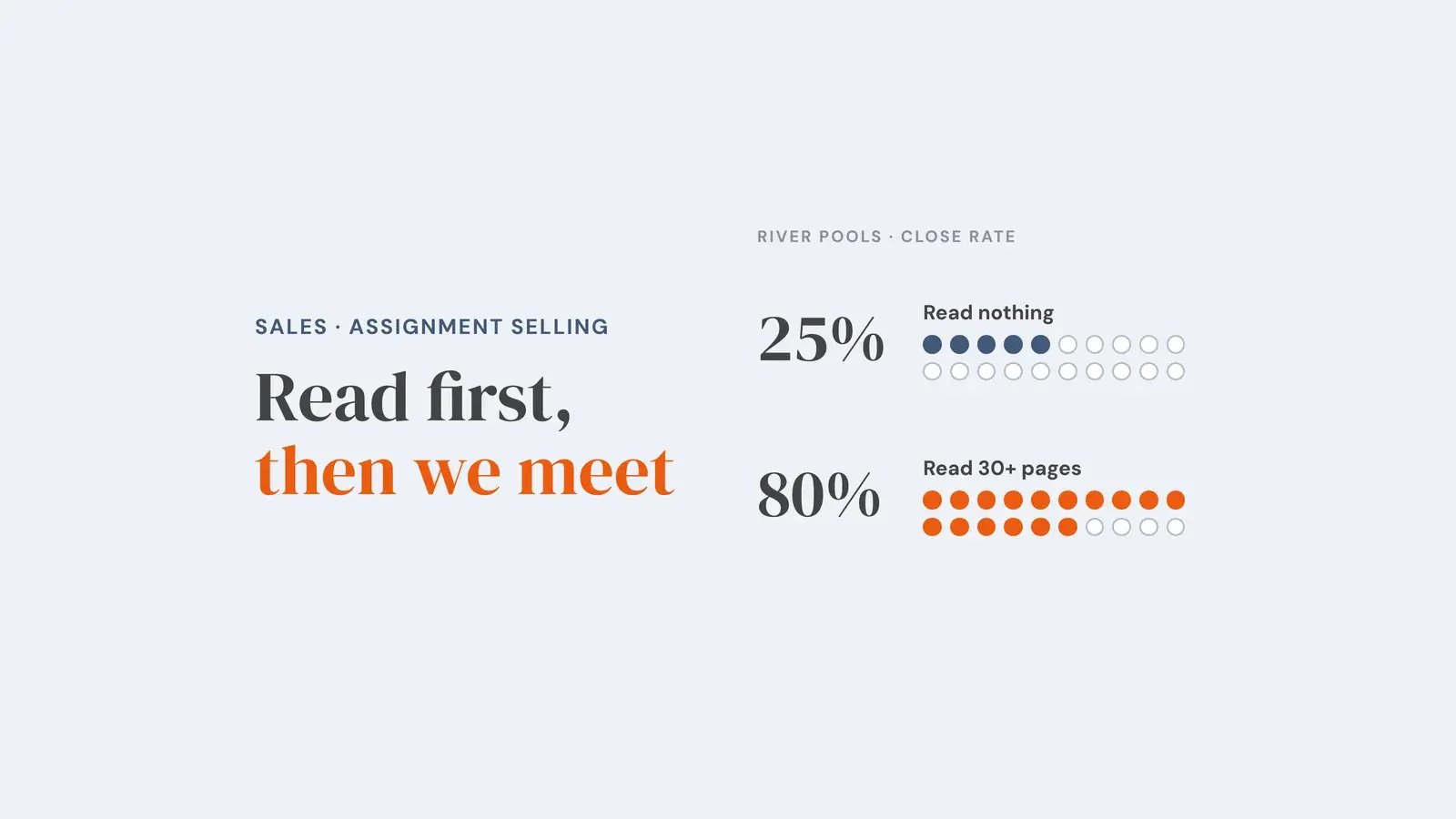
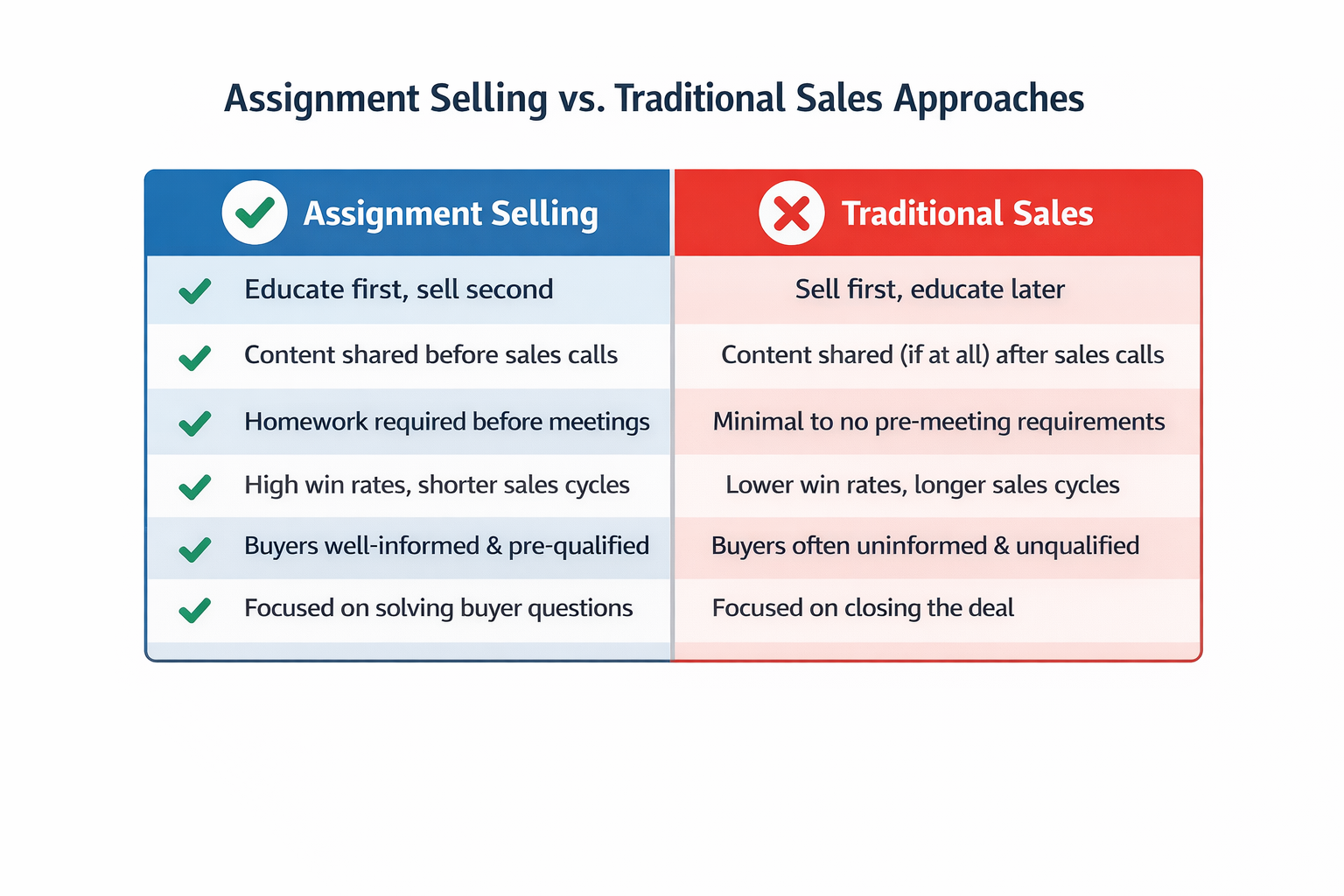
Assignment Selling is the practice of requiring prospects to consume specific educational content (articles, videos, guides) before sales conversations to dramatically improve close rates and reduce sales cycles.
Instead of showing up to discovery calls with prospects who know nothing about your company, Assignment Selling ensures every conversation happens with informed, qualified buyers. You send homework, such as an article about your process or a video explaining pricing, and make it clear you expect them to complete it before your meeting.
This methodology only works when sales leaders are believers, salespeople commit to using it consistently, and management provides ongoing training and oversight—without these elements, Assignment Selling becomes another abandoned initiative that never delivers results.
Here's what successful implementation requires versus what causes failure:
| Required for Success | What Causes Failure |
|---|---|
| Sales managers who believe in the methodology | Leadership that's sceptical or unsupportive |
| Documented sales process with content mapped to each stage | No clear process or content-to-stage alignment |
| Initial training on what, how, and why | One-time announcement with no real training |
| Ongoing coaching and role-play practice | Set it and forget it approach |
| Accountability for actually assigning content | No tracking or consequences for non-use |
| Willingness to delay meetings if homework isn't done | Fear of "offending" prospects by requiring work |
Great sales requires two main elements: great leaders and great training. If sales managers don't buy in, Assignment Selling will fail no matter how good your content is.
How CSI Accounting increased their average sale price 39.7% with sales buy-in
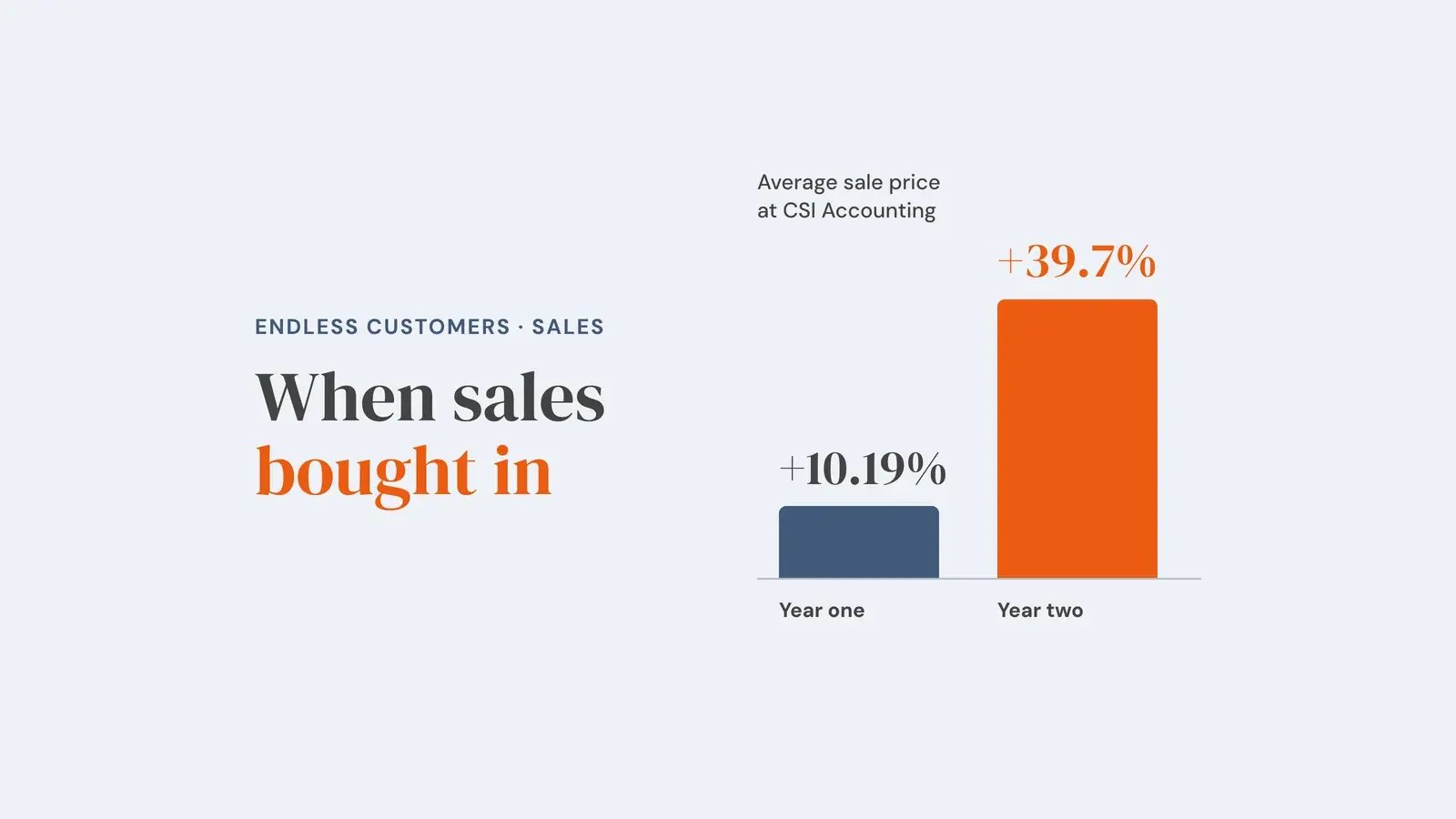
CSI Accounting & Payroll achieved a 39.7% increase in average sale price by year two of implementing Assignment Selling, but only because their entire sales team committed to requiring prospects complete homework before calls.
Brian Paulson, the owner, was tired of dealing with prospects interested only in quick fixes and low prices. CSI created targeted content including an article titled "What It's Like Working with CSI" detailing the entire client journey, plus an 80% video addressing top questions about working with them.
Their success came from sales leadership making the bold choice not to engage with prospects who refused to do the work, ensuring every conversation happened with informed, qualified buyers ready for partnership rather than price shopping.
The results were remarkable. In the first year, CSI saw a 10.19% increase in average sale price. By the second year, that increase soared to 39.7%.
"Assignment Selling didn't just change our sales process, it revolutionised it. We're closing better deals with clients who genuinely value what we offer."
This wasn't luck. It was the outcome of educating clients who genuinely valued what CSI offered, and it only worked because sales leadership believed in it and the entire team committed to consistent execution.
What are the critical problems when you skip Alignment Day?
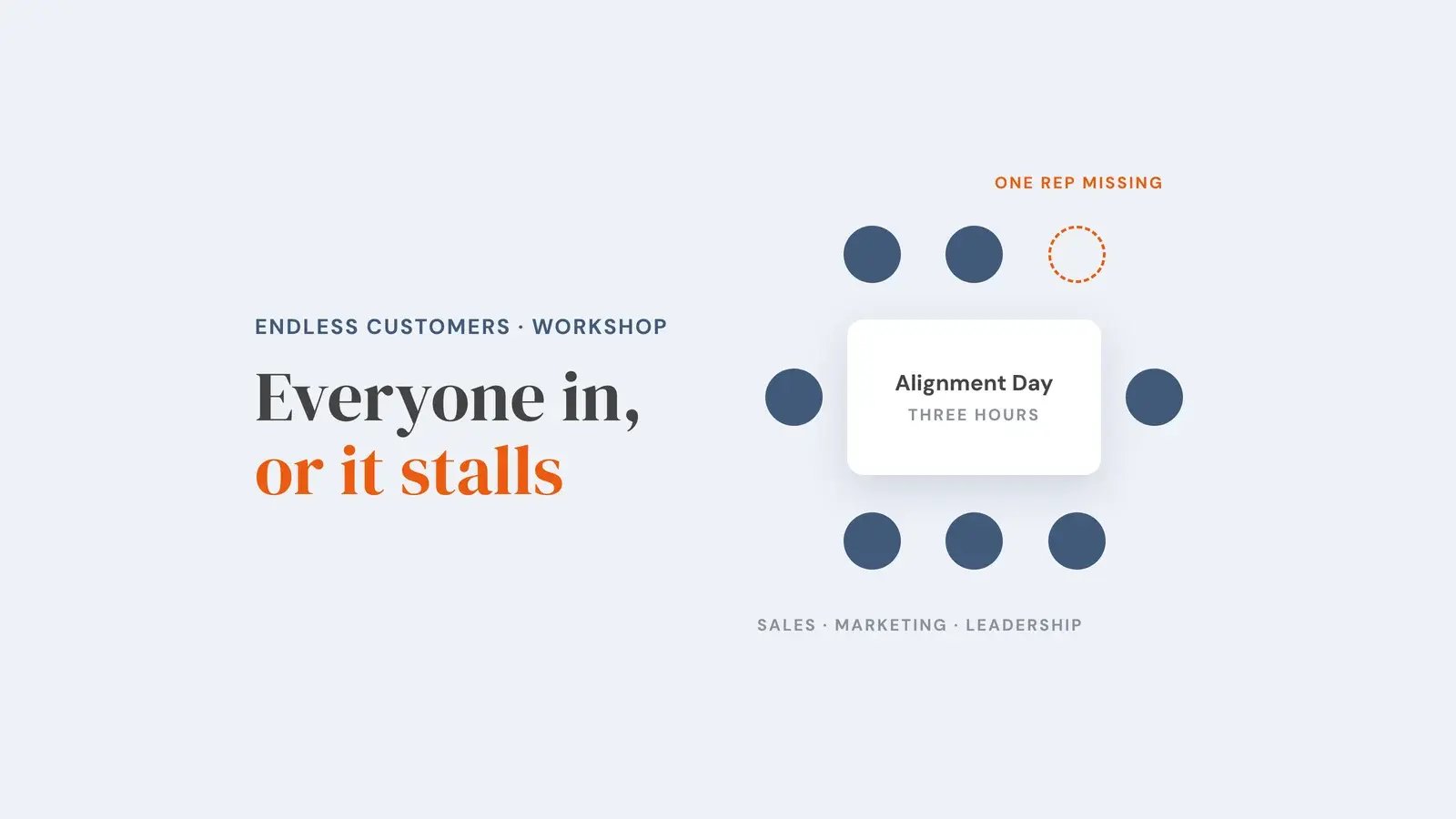
Skipping Alignment Day is the #1 reason sales and marketing never fully align, the three-hour training session that unifies your entire customer-facing organisation around Endless Customers principles.
Alignment Day covers how buyers have changed, the four pillars of a known and trusted brand, brainstorming topics and strategies, and defining roles and responsibilities. It's designed to get everyone, sales, marketing, leadership, and anyone who interacts with customers, on the same page.
Leadership's repeated messages about the new strategy get tuned out by teams who hear from them constantly, but an outside facilitator cuts through familiarity and makes the same principles land with fresh urgency that drives real change.
There's an old saying: "You can be a prophet to the world, but no one is going to listen to you in your own hometown." As a leader, your team hears from you all the time. That constant exposure dulls the impact of new ideas, especially when presenting bold changes.
When an Endless Customers Certified Coach facilitates Alignment Day, they bring fresh energy and an unbiased perspective. They'll deliver the same key messages you would—but in a way that resonates differently because it's coming from outside the organisation.
Critical problems when you skip Alignment Day:
- Sales team doesn't understand why the strategy matters or how it helps them
- Marketing operates in isolation without sales insights or support
- No one takes ownership because roles and responsibilities weren't clearly defined
- Team members lack the "aha moment" that drives genuine commitment
- Strategy feels like another leadership flavour-of-the-month that will soon be forgotten
- Patrick Accounting-style spinning of wheels while teams talk past each other
Why sales teams won't act as subject matter experts without alignment
Sales teams refuse to participate in content creation as subject matter experts when they don't understand how it benefits their selling process or haven't been properly aligned on their role in the broader strategy.
Your sales team lives on the front lines every single day. They hear customer pain points firsthand, answer the same questions repeatedly, and understand what actually drives buyers to take action.
Your best content insights come from salespeople living on the front lines hearing customer pain points daily, but without Alignment Day establishing their critical role, they see content as 'marketing's job' and the entire strategy loses its most valuable resource.
When sales acts as subject matter experts, content becomes more practical and usable in the sales process. Stories gain authenticity because they're drawn from real experiences. Assignment Selling becomes seamless. Most importantly, collective expertise reaches more people, solidifying trust and setting your brand apart.
But this only happens when sales understands why their participation matters—and that understanding comes from Alignment Day.
How much does failed implementation actually cost your business?
Failed Endless Customers implementation costs businesses far more than wasted time and resources—it means continuing to lose deals to competitors, watching sales cycles drag on indefinitely, and remaining invisible in a market where buyers are desperately seeking a trusted advisor.
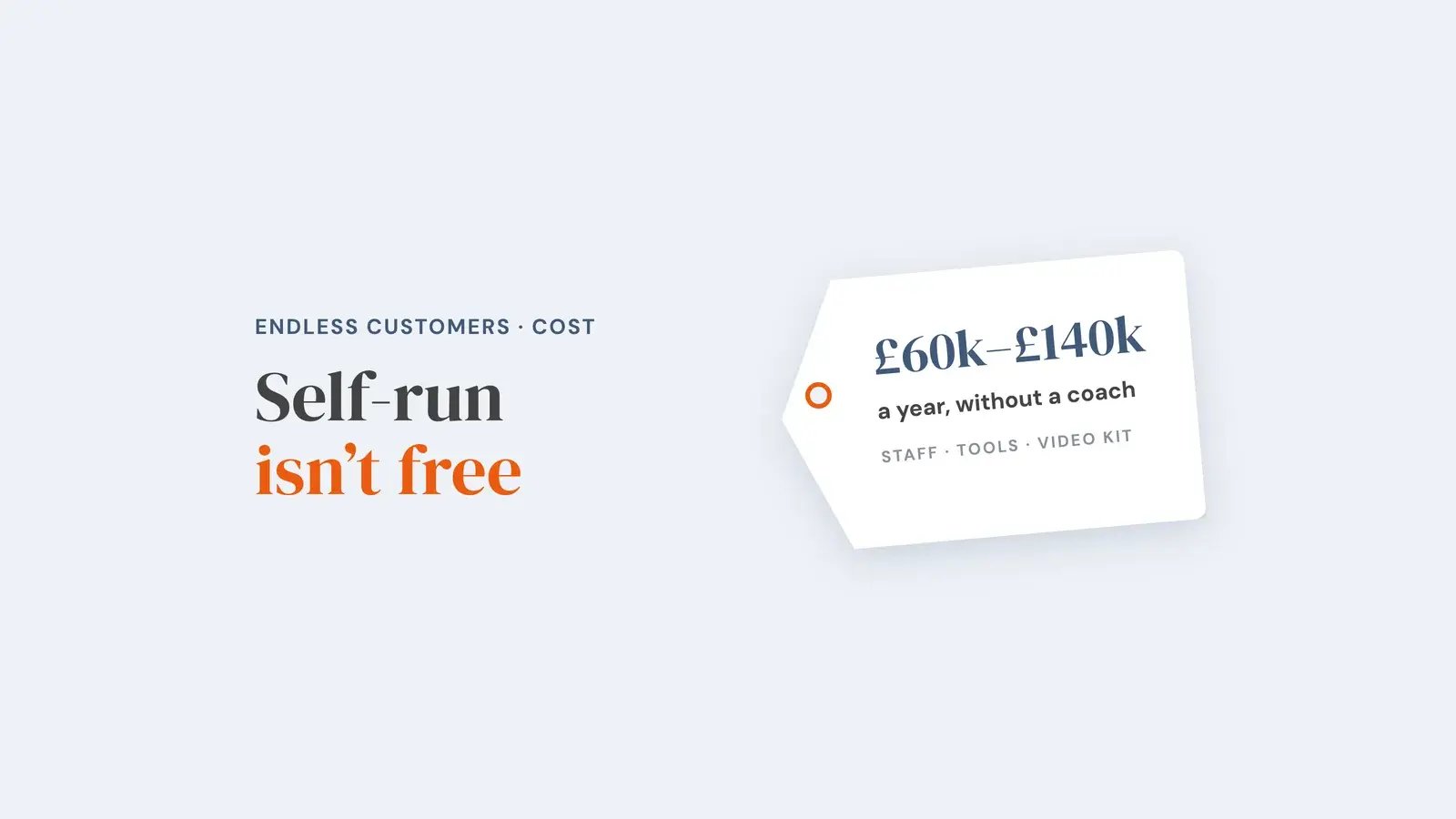
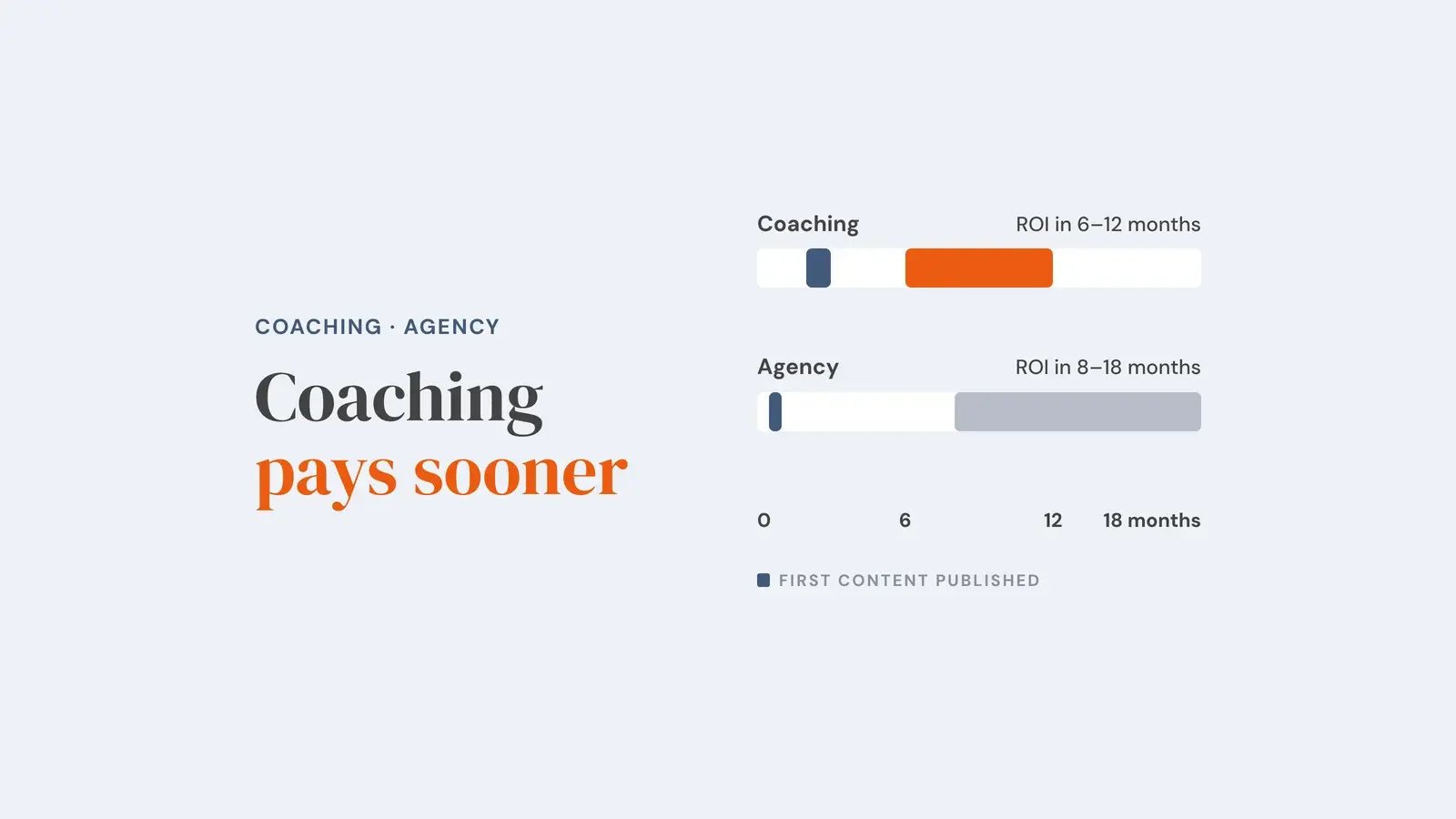
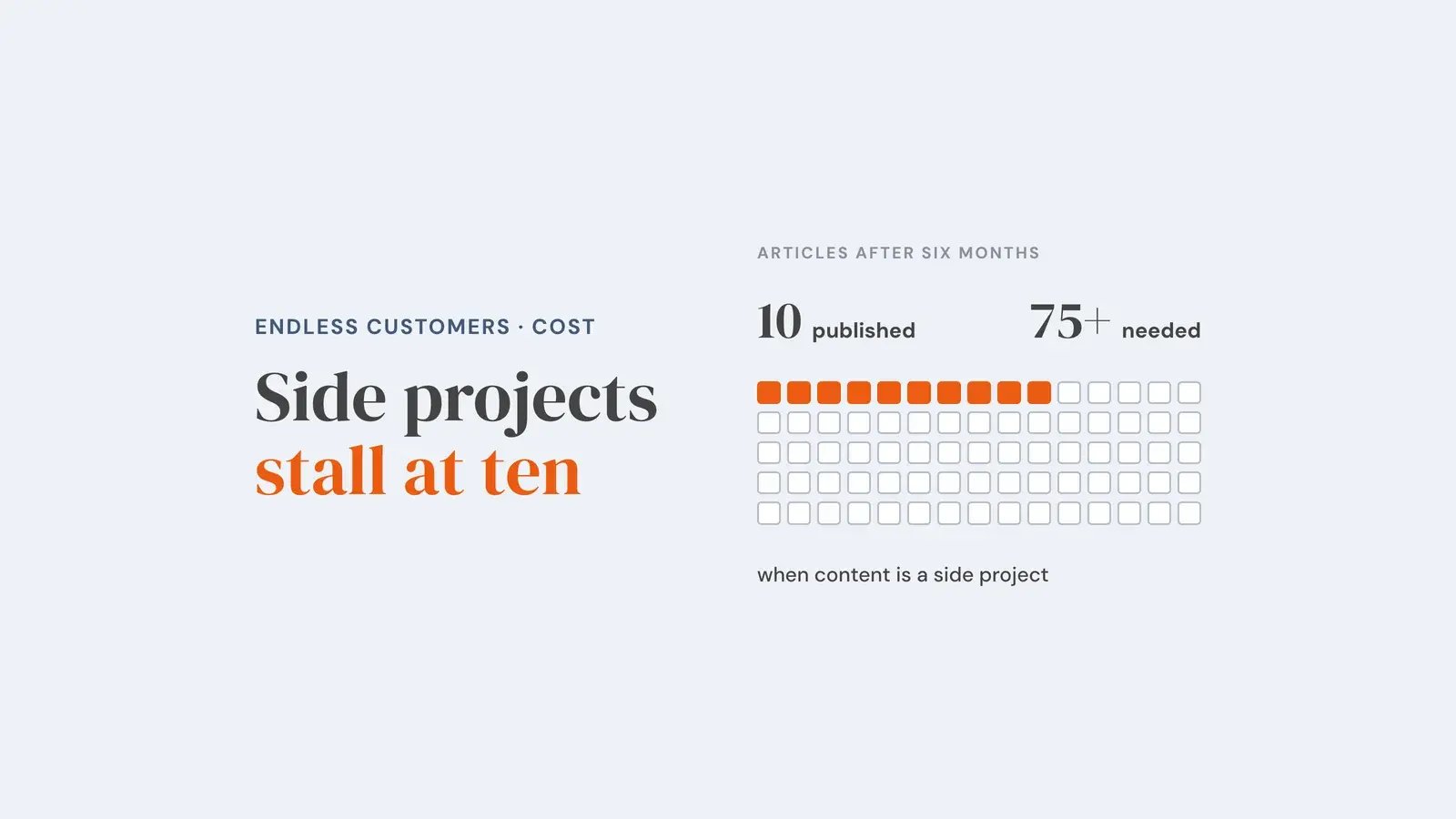
The opportunity cost isn't just the £3,000–£10,000 ($3,750–$12,500) per month you might spend on ineffective agency outsourcing. It's every deal you lose because prospects found a competitor's educational content more helpful. It's every sales cycle that takes three months longer than it should. It's every qualified lead who never finds your website because your content strategy isn't working.
The opportunity cost includes declining website traffic and leads, lower close rates, continuing reliance on ineffective agency outsourcing, and staying trapped in the commodity game where price becomes the only differentiator.
Hidden costs of failed implementation:
- Declining revenue: Prospects choose competitors who have established trust through educational content
- Extended sales cycles: Without Assignment Selling, every deal takes longer to close
- Lower close rates: Salespeople lack the tools to educate and qualify prospects before conversations
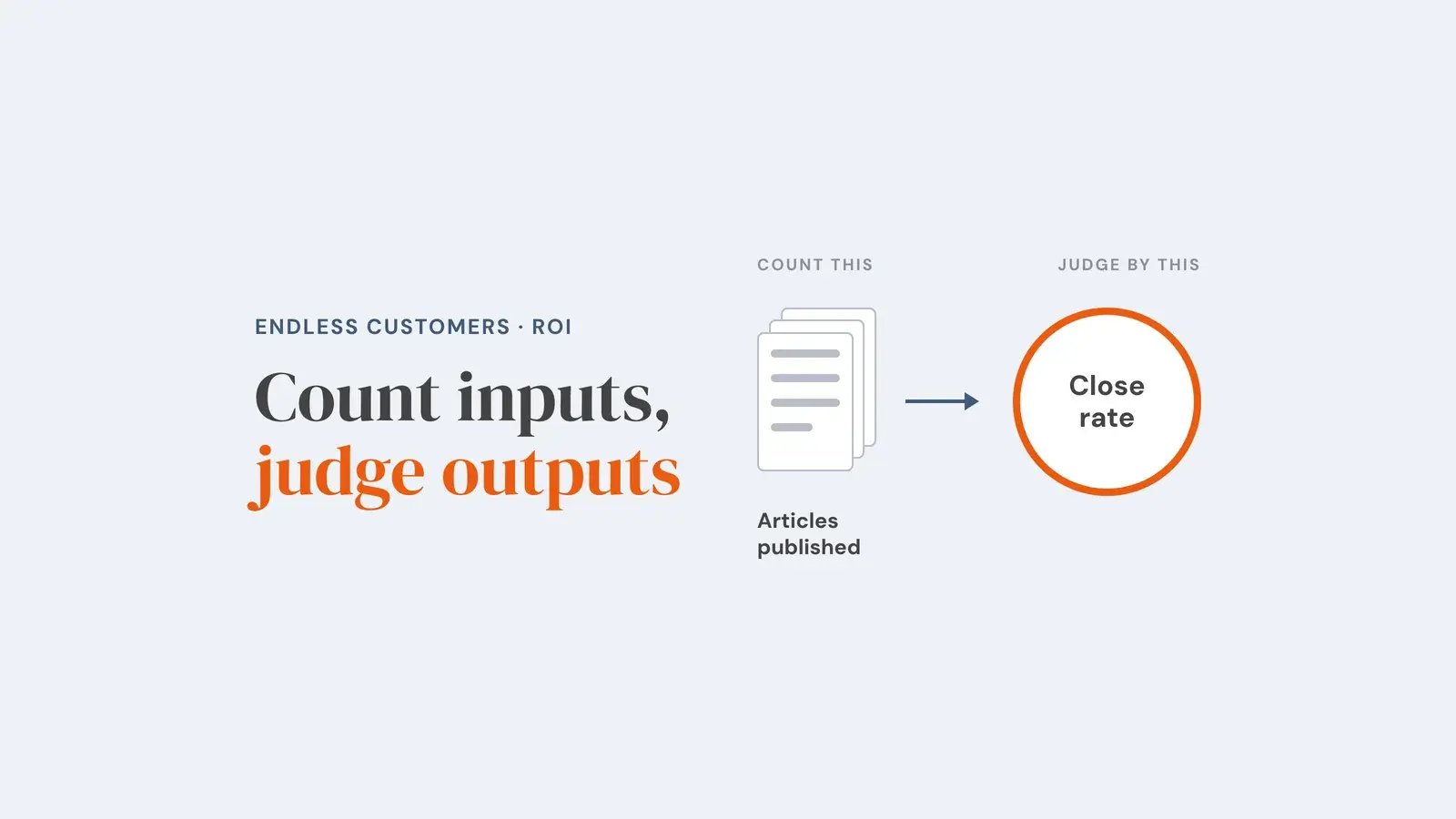
- Wasted marketing spend: Content no one uses delivers zero return on investment
- Team frustration and turnover: Good people leave when they see strategies fail repeatedly
- Lost market position: Competitors establish themselves as the trusted voice while you remain invisible
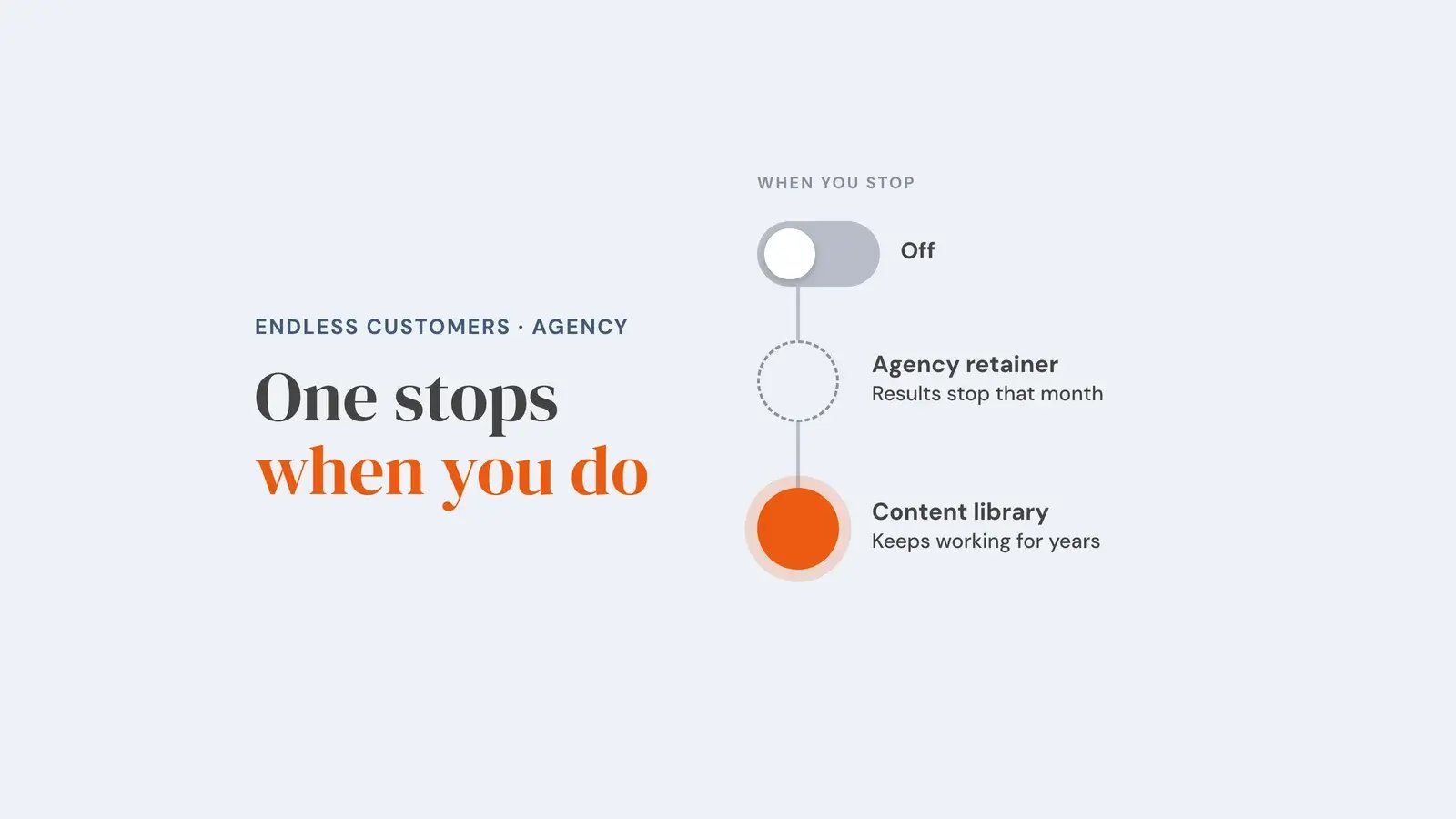
- Ongoing agency dependency: Continue paying £36,000–£120,000 ($45,000–$150,000) annually for mediocre results
The real cost isn't what you spend trying to implement Endless Customers. It's what you lose by implementing it badly.
What's the right way to implement Endless Customers with full sales buy-in?
Successful Endless Customers implementation requires following a specific sequence: securing leadership commitment first, conducting Alignment Day for all customer-facing teams, establishing quarterly planning with 3-5 focus areas, and creating a unified Revenue Team with sales and marketing meeting regularly.
You can't skip steps or tackle everything at once. The sequence matters because each phase builds on the previous one.
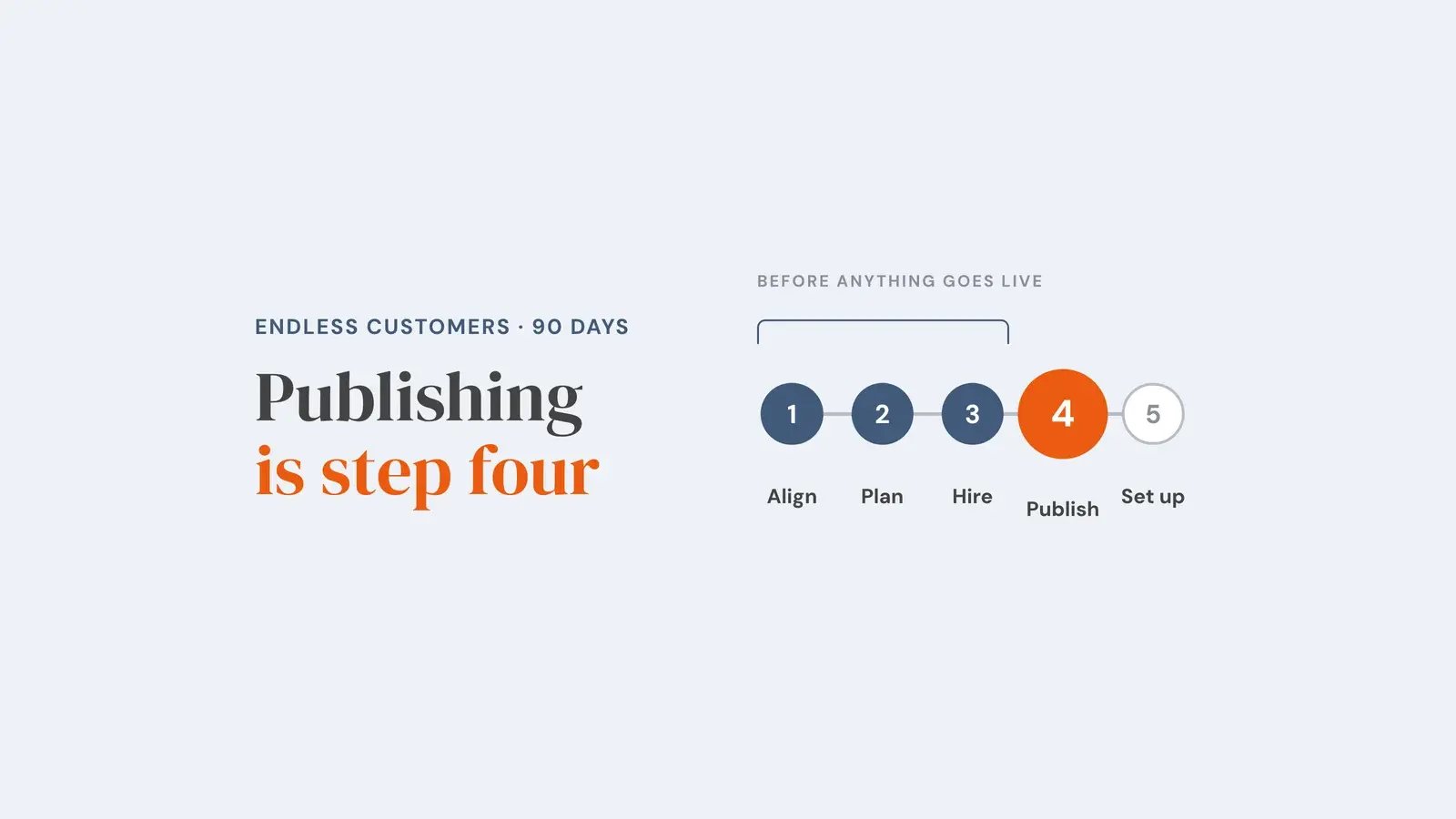
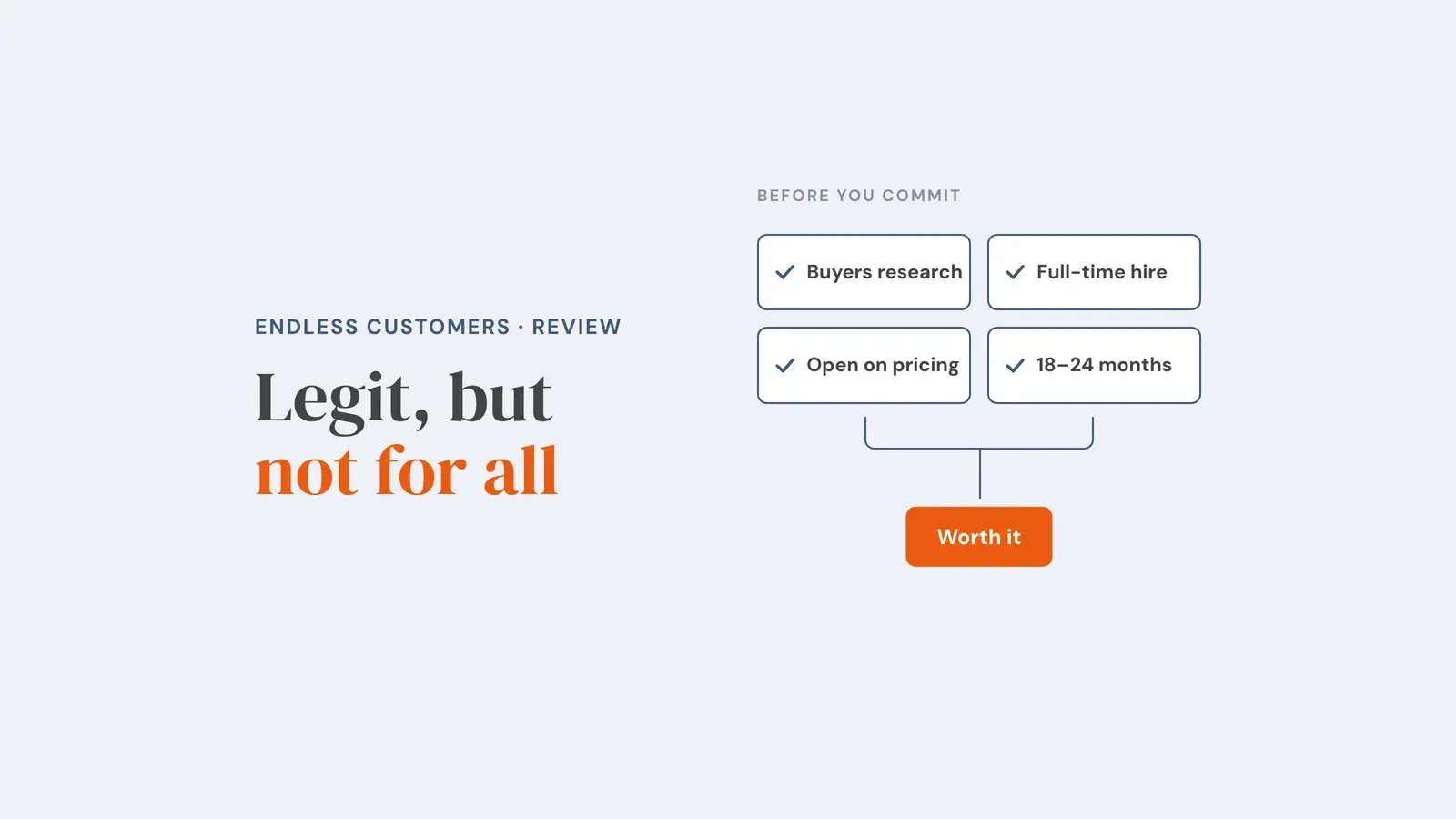
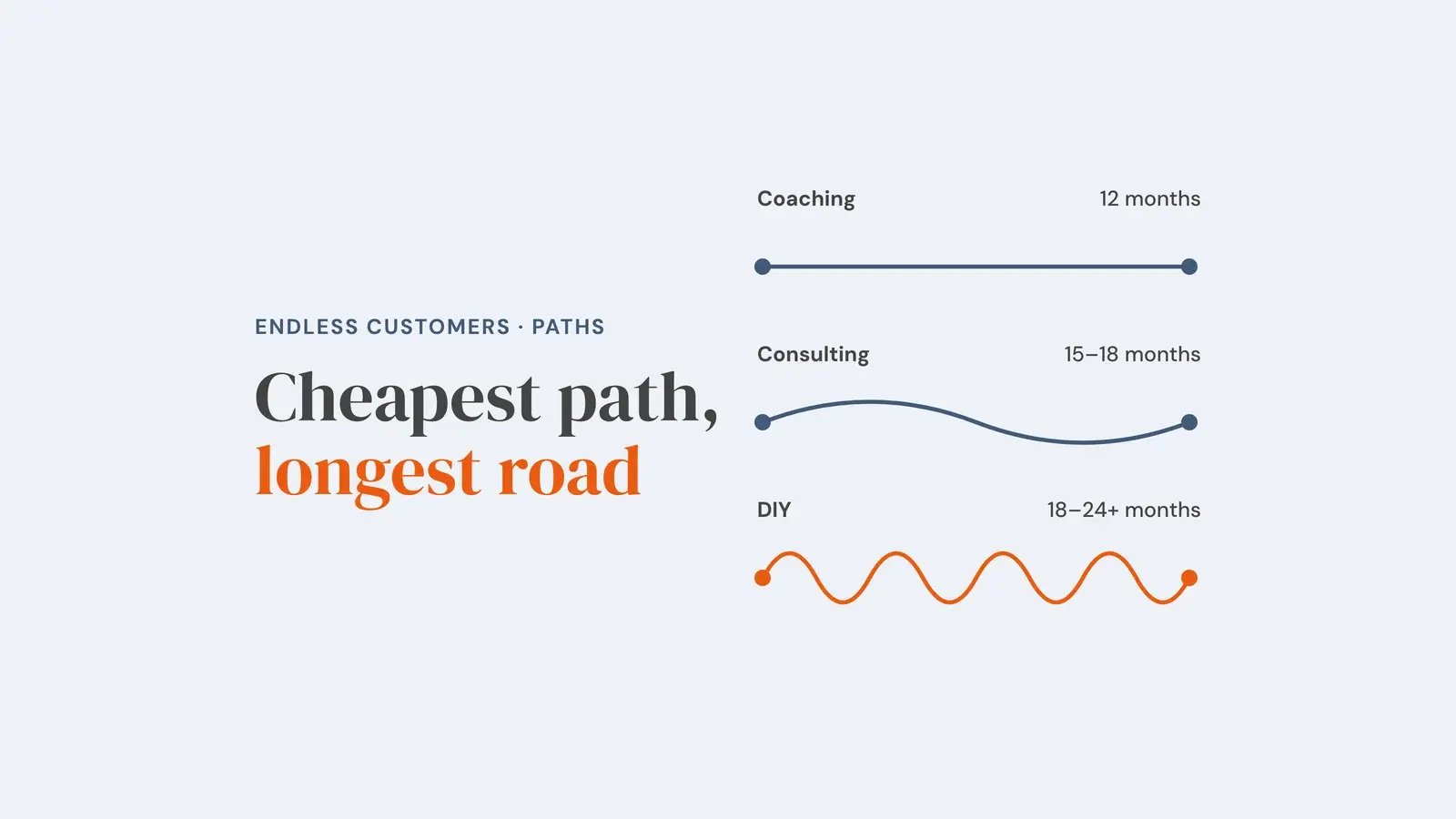
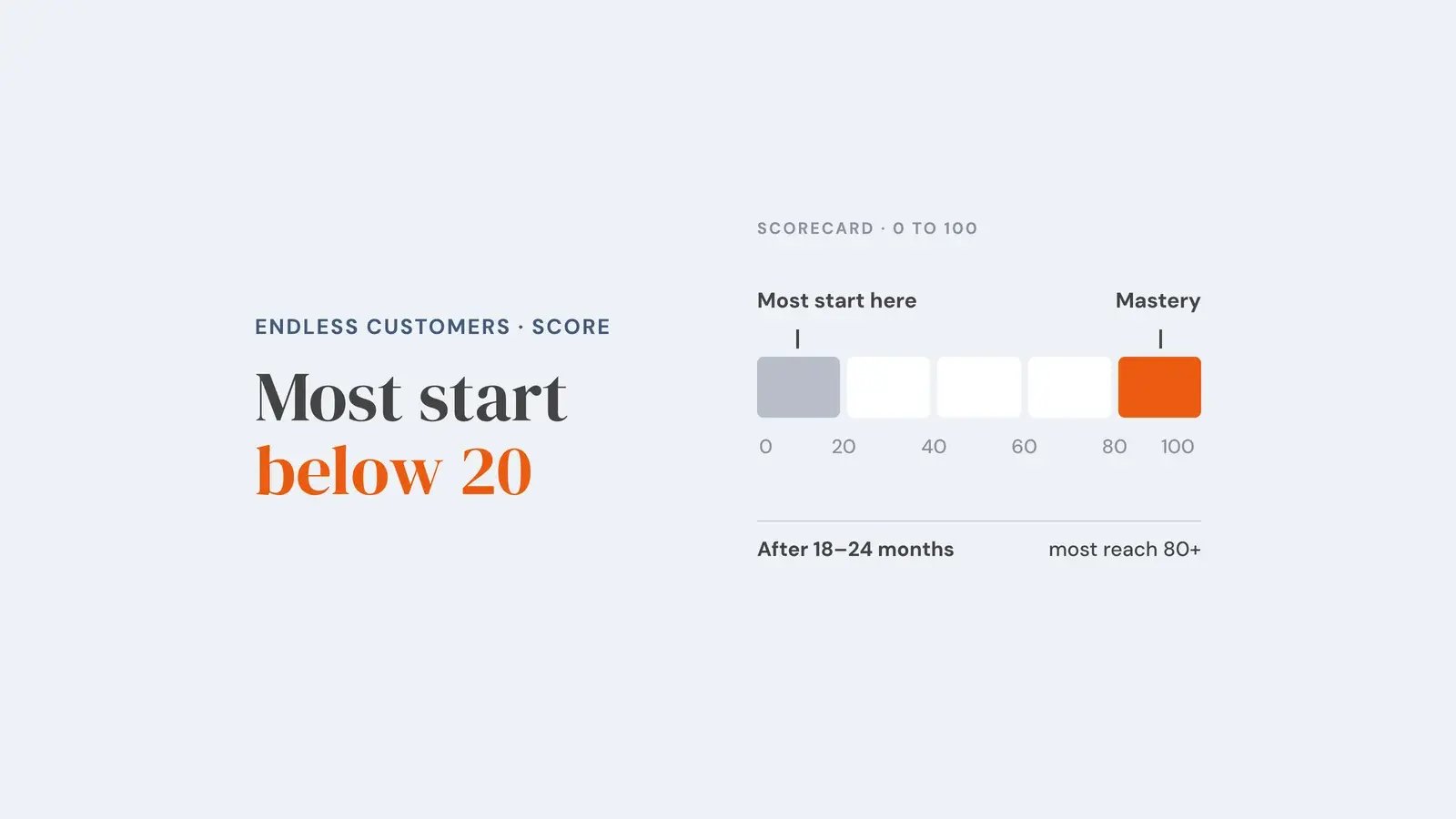
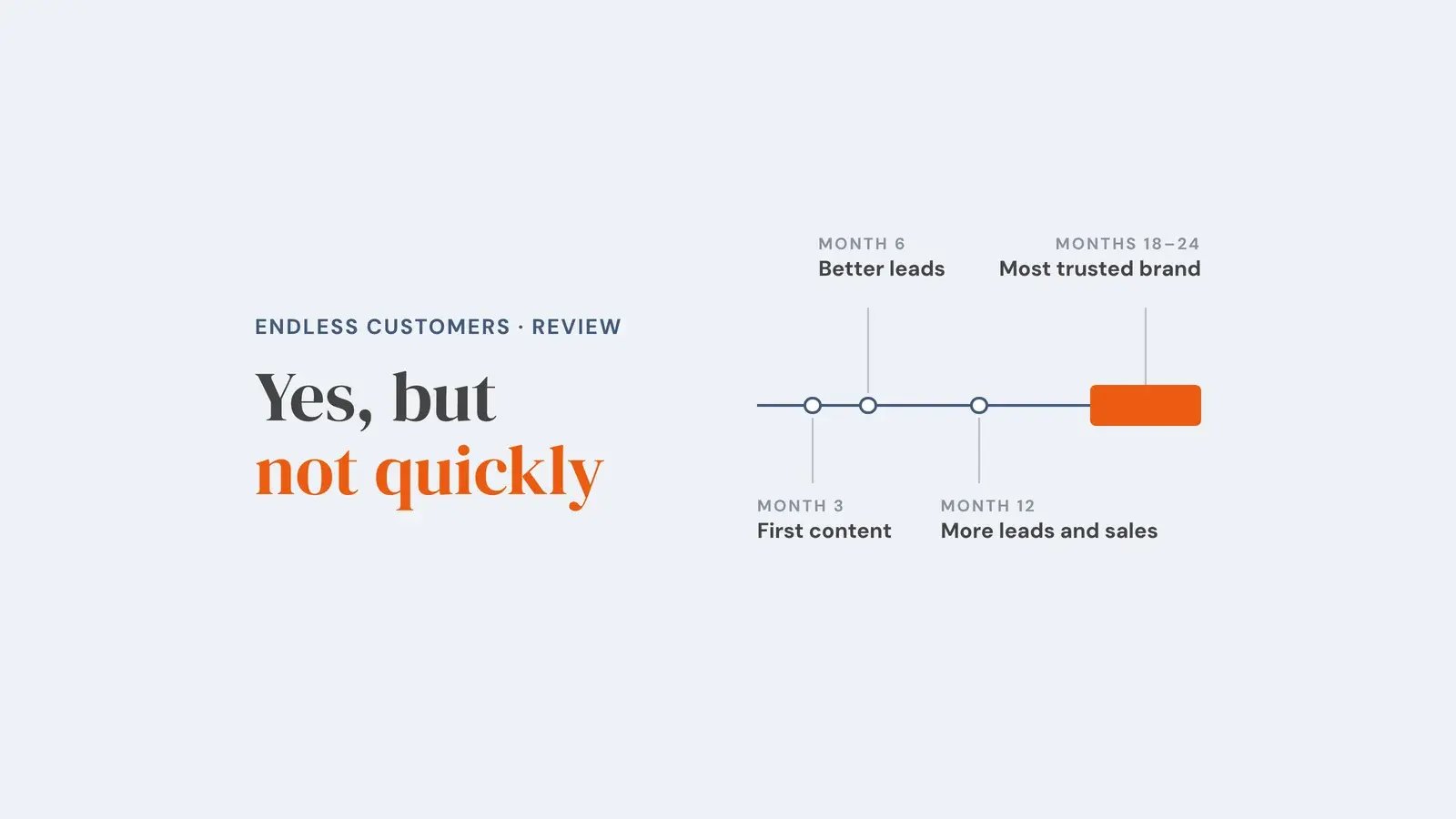
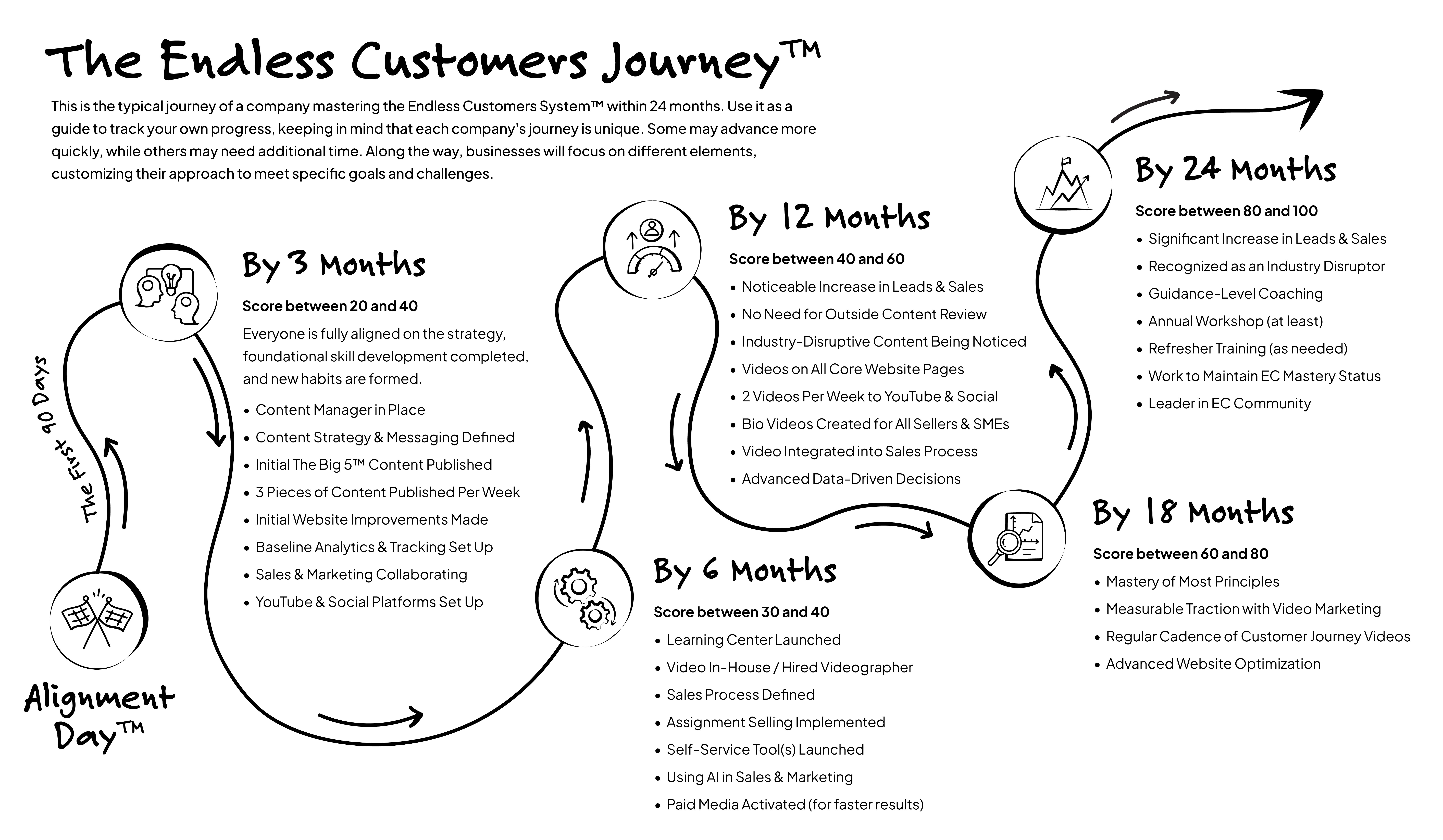
The typical journey takes 18-24 months to reach mastery, with clear milestones at 90 days (first Big 5 content published, sales training begun), 6 months (Assignment Selling defined and followed), and 12 months (noticeable increases in leads and sales with video integrated throughout the sales process).
Here's what the implementation timeline looks like:
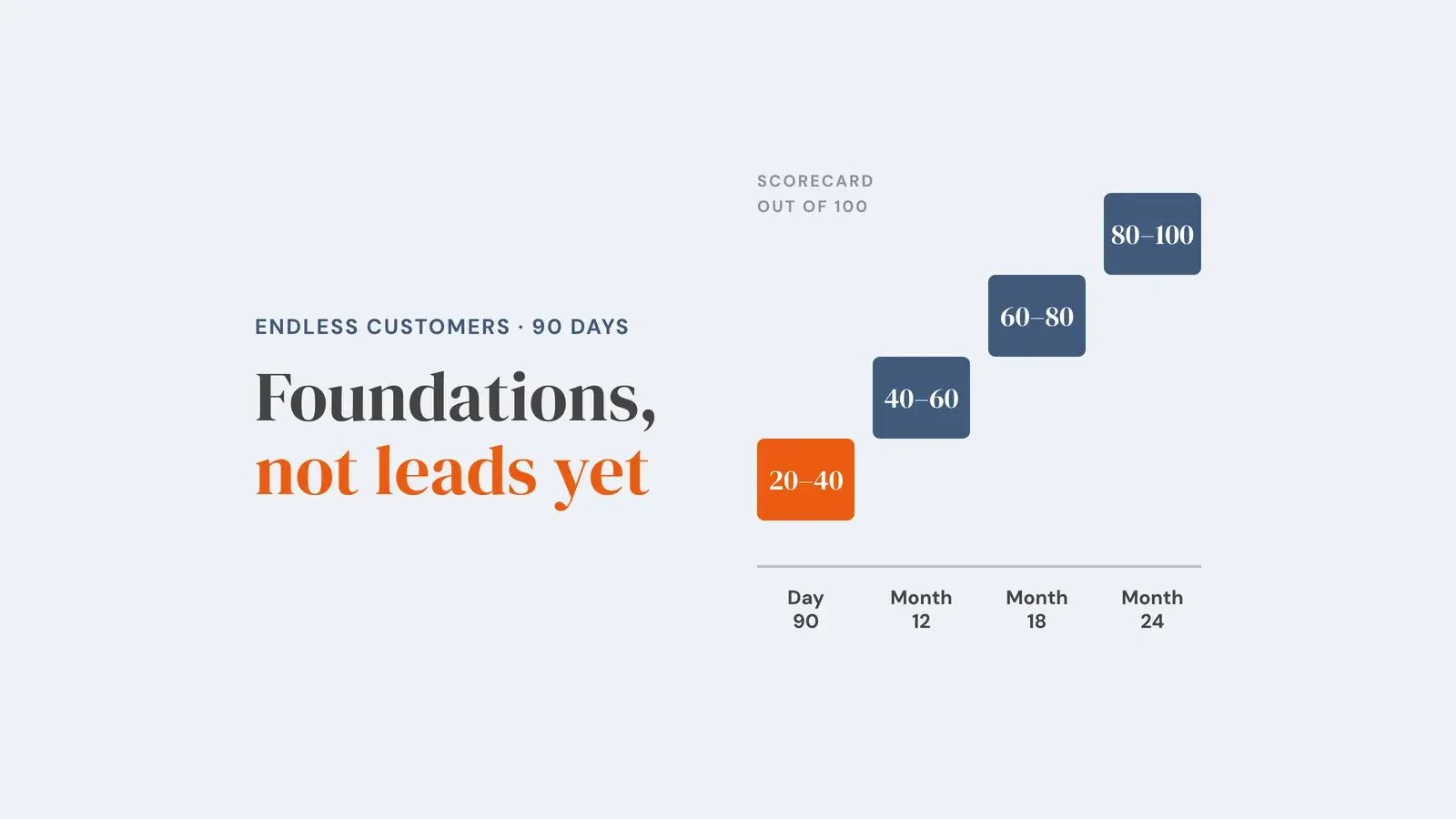
| Timeline | Key Milestones | Typical Scorecard Score |
|---|---|---|
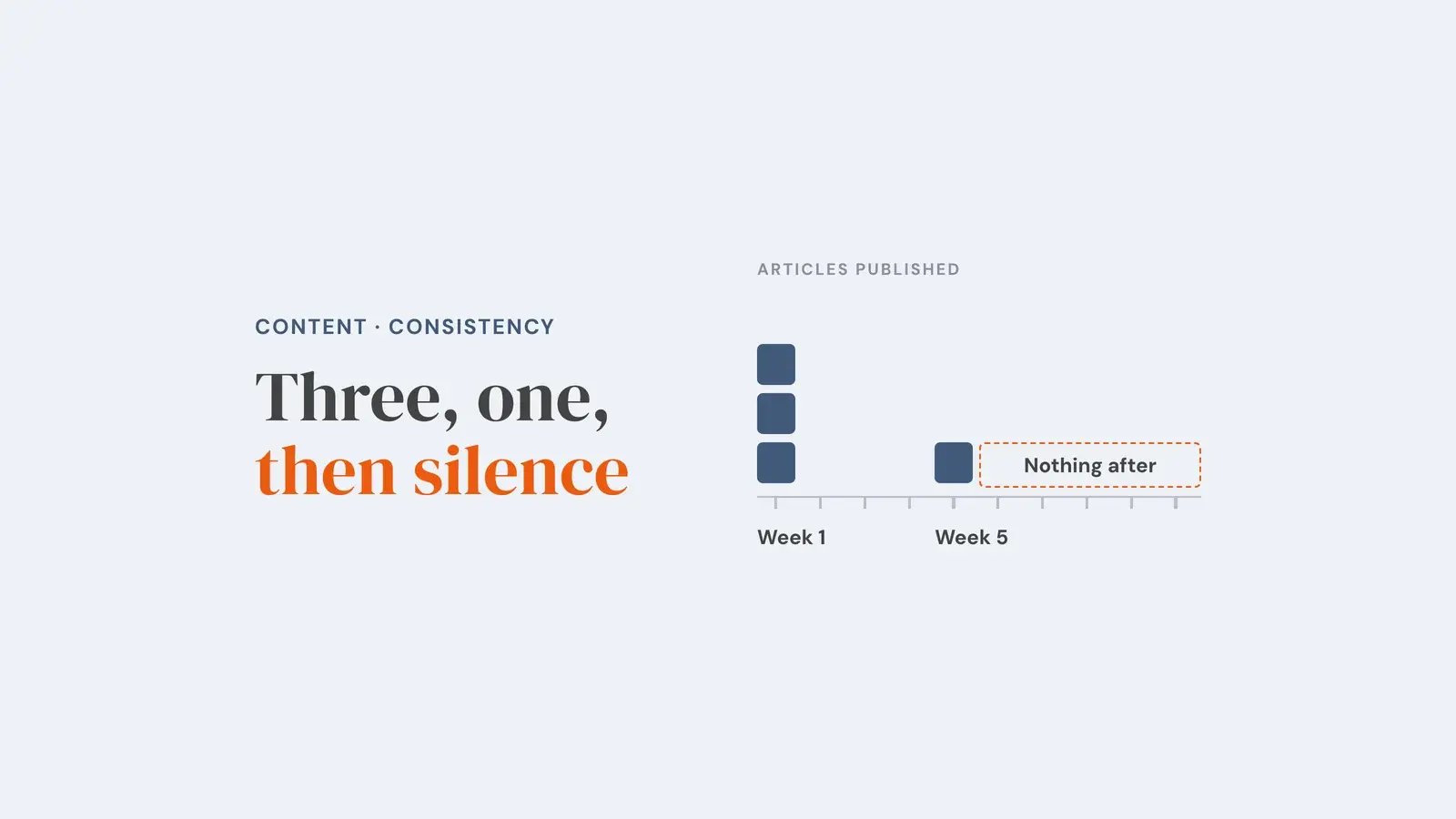
| 90 Days | Content owner in place, first Big 5 content published, 3 pieces per week commitment, sales and marketing collaboration launched | 20-40 |
| 6 Months | Learning centre launched, Assignment Selling defined and followed by all, self-service tools launched, AI integrated | 30-40 |
| 12 Months | Noticeable increase in leads and sales, videos on all core website pages, video integrated into sales process, advanced data-driven decisions | 40-60 |
| 18 Months | Mastery of most principles, measurable video marketing traction, advanced website optimisation | 60-80 |
| 24 Months | Significant increase in leads and sales, recognised as industry disruptor, maintaining mastery status | 80-100 |
The Endless Customers Scorecard helps you track progress across the five components. Most businesses begin with a score below 20; that's completely normal.
Step 1: Get sales leadership to become believers first
Great sales requires two main elements, great leaders and great training, which means sales managers must be believers in Endless Customers principles before you attempt to roll it out to the broader team.
Start with your sales managers. Show them the CSI Accounting case study. Walk them through how Assignment Selling shortens sales cycles and improves close rates. Address their concerns directly. Get them genuinely excited about the possibilities.
If sales managers don't buy in, the strategy will fail no matter how good your content is or how much marketing invests in the system.
Once managers are believers, find a few champions on the team who will embrace it and immediately integrate it into their day-to-day selling. Use their early success stories to train the rest of the team, ensuring everyone understands the what, how, and why.
Step 2: Create your Revenue Team structure and meeting cadence
A Revenue Team brings together marketing, sales, and leadership to work toward one mission, making your brand the most known and trusted in your market—with regular meetings where sales shares buyer questions, marketing shares performance metrics, and both collaborate on content strategy.
Regular Revenue Team meetings should cover:
- Sales sharing current buyer questions and objections
- Editorial calendar planning and assignments
- Review of recently published content
- Marketing sharing performance metrics
- Addressing challenges and friction points
- Planning company-wide communications
For real alignment, marketers must join sales calls to hear buyer conversations firsthand, while salespeople need to understand marketing trends and strategies so both teams share ownership of the entire buyer's journey.
Meetings alone aren't enough. Marketers need to sit in on sales calls. Salespeople need to attend marketing strategy sessions. Both teams must see themselves as partners driving revenue together, not separate departments competing for credit.
When should you bring in an Endless Customers Certified Coach?
An Endless Customers Certified Coach should facilitate your Alignment Day and guide your quarterly planning sessions because they bring fresh energy and an unbiased outside perspective that cuts through the noise of daily routines and makes key messages resonate differently.
You know the strategy. You've read the book. You understand what needs to happen. But when you present it to your team, it doesn't land the way you hoped.
Companies that attempt implementation alone, like Patrick Accounting did initially, often get stuck working in silos and waste months spinning their wheels before realising they need expert facilitation to get everyone truly aligned.
A Certified Coach also brings experience working with dozens of companies implementing the same strategy. They've seen what works, what fails, and how to navigate common obstacles. They can spot gaps in your approach before they become major problems.
I work with businesses as an Endless Customers Certified Coach, facilitating Alignment Days and guiding teams through quarterly planning. My In-House Sales & Marketing Mastery programme helps organisations build internal capabilities so they own their marketing engine rather than depending on agencies.
FAQs About Sales Buy-In for Endless Customers Implementation
What if only part of my sales team is willing to participate?
Start with a few champions on the sales team who will embrace Endless Customers and immediately integrate it into their day-to-day selling. Once you have success stories from these early adopters, use their results to train the rest of the team and demonstrate real-world proof that the methodology works.
Don't wait for unanimous buy-in before you start. Work with the willing. Document their wins. Share specific examples of how Assignment Selling helped them close deals faster or at higher price points. Nothing converts sceptics like seeing their peers succeed.
How long until we see results from Assignment Selling?
Companies typically see noticeable increases in leads and sales by the 12-month mark when Assignment Selling is properly implemented with full sales team support. However, individual deals close faster almost immediately when prospects complete their educational homework before sales conversations.
The compound effect takes time to build. In the first 90 days, you're laying groundwork. By six months, Assignment Selling is defined and being followed. By 12 months, the cumulative impact of better-qualified prospects, shorter sales cycles, and higher close rates becomes obvious in your numbers.
Can marketing implement this without involving sales at all?
No; attempting Endless Customers as a marketing-only initiative is one of the most common and costly mistakes companies make. When your entire customer-facing organisation isn't involved, gaps form, the strategy falls apart, and results suffer because buyers are 80% through their journey before reaching sales.
Marketing can create perfect content. But if sales doesn't use it, doesn't assign it, doesn't reference it in conversations, and doesn't provide insights on what buyers are really asking, that content will never drive the results you need.
What's the minimum commitment needed from our sales team?
Sales team members must attend Alignment Day training, participate in monthly Revenue Team meetings, use content consistently in their documented sales process, and be willing to act as subject matter experts for content creation at least occasionally. Without this baseline commitment, the strategy cannot succeed.
That's the minimum. Top-performing companies go further—sales leaders regularly coach team members on Assignment Selling, salespeople proactively suggest content topics based on buyer conversations, and the entire team sees themselves as teachers helping buyers make confident decisions.
Conclusion
You started reading this article because your Endless Customers implementation wasn't working. Marketing was creating content, but sales wasn't using it. Teams were working in silos. Results weren't materialising.
Now you know why Endless Customers fails without sales buy-in. Without Alignment Day, teams talk past each other. Without Assignment Selling training, content sits unused. Without a Revenue Team structure, gaps form in the buyer experience.
The cost isn't just in time; it's lost deals, team frustration, and being stuck. Most companies won't do this work. They'll try to implement Endless Customers as a marketing-only initiative. They'll skip Alignment Day to save time. They'll avoid the hard conversations with sales leadership. And they'll stay stuck.
You don't have to stay stuck—take the first step toward true alignment.
Start by meeting with your sales leadership to address concerns and get their buy-in. Then book an Alignment Day with a Certified Coach to unify your entire customer-facing team. Establish monthly Revenue Team meetings on the calendar with clear agendas. Document your sales process with entry and exit criteria for each stage. Map existing content to specific sales stages and identify gaps that need filling.
As a Certified Coach, I've helped teams overcome this, so you don't have to figure it out alone. If you're ready to align your entire team and start implementing properly, my Company Alignment Workshop unifies your organisation around Endless Customers principles, while my In-House Sales & Marketing Mastery programme builds the internal capabilities you need for long-term success.
Schedule a free discovery call to talk through your challenges and whether Alignment Day is right for your team.

About the Author
Tom Wardman is an Endless Customers Certified Coach with over a decade of experience leading marketing inside agencies and in-house teams. He partners with business owners and their teams to build the internal capabilities needed to become the most trusted brand in their market, ending reliance on agencies through hands-on support, strategic guidance, and comprehensive training. His approach focuses on ownership, clarity, and lasting results, not dependency.
Pricing Disclaimer: All GBP–USD price conversions are rounded estimates and correct at the time of publishing. Exchange rates fluctuate and figures should be treated as indicative only.