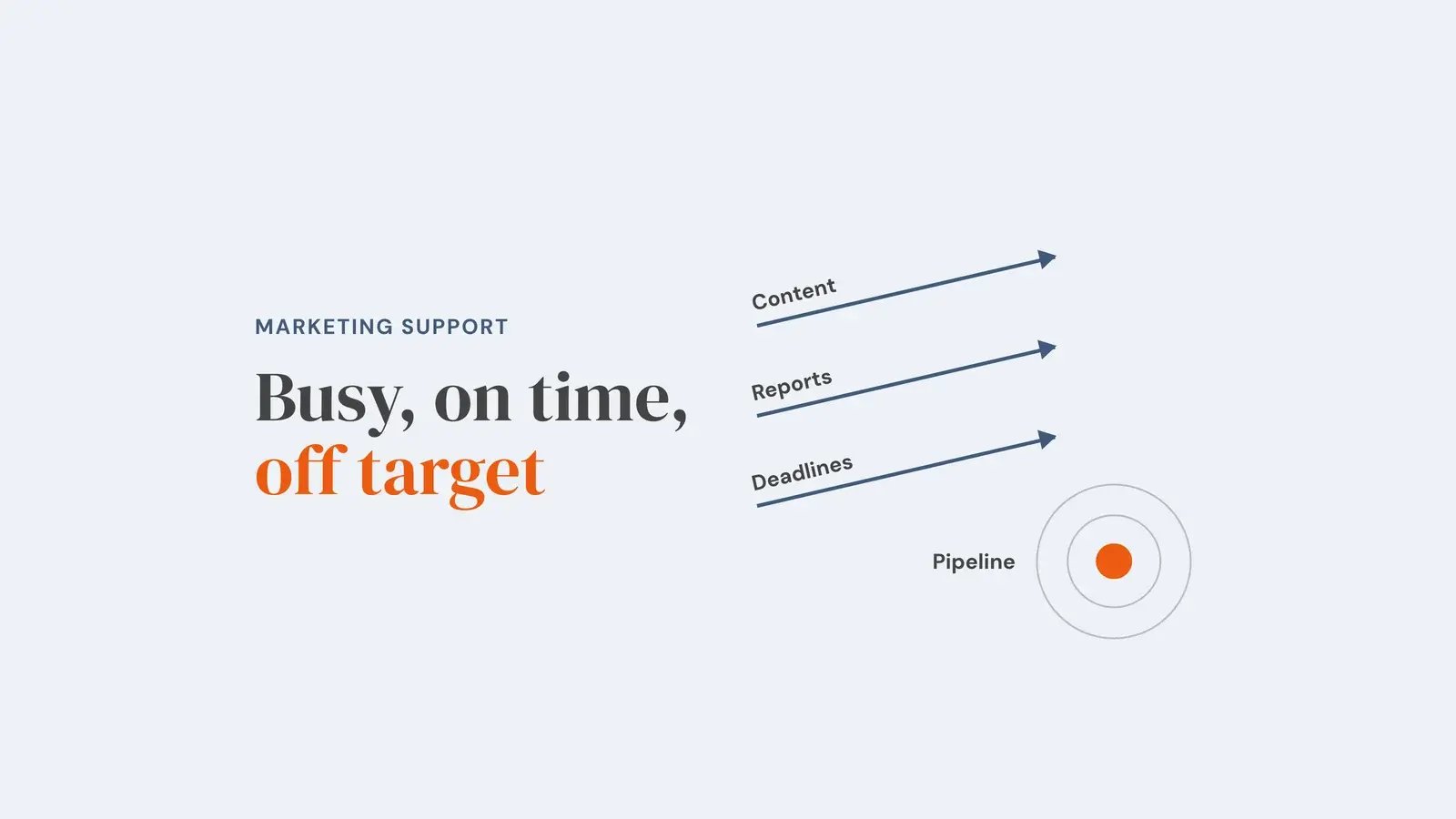


You've spent thousands on your marketing team, but leads are flat, sales cycles are long, and your CEO is asking, "What are we even paying for?"
Every month, you're investing in salaries, tools, and campaigns. Meanwhile, your competitors seem to generate better results with less effort. Their content drives engagement. Their campaigns fill pipelines. Their marketing actually contributes to growth.
Here's what you need to know: Research shows that 73% of in-house marketing teams consistently underperform compared to their potential, leaving millions in unrealised revenue on the table.
After helping over in-house marketing teams transform their performance and increase marketing ROI by an average of 2x, I've identified exactly what separates high-performing teams from those that struggle. The good news? These aren't capability issues; they're fixable structural problems.
Here are the 7 specific factors that determine whether your marketing team thrives or merely survives:
- Clear roles and ownership accountability
- Proper technology and tool investment
- Continuous skills development
- Sales and business objective alignment
- Data-driven measurement frameworks
- Strategic (not reactive) leadership
- Systematic execution processes
This article reveals why most marketing teams fall short and provides a clear roadmap to building a team that consistently delivers measurable growth.
In-house marketing teams vs agencies: Why the performance gap exists
In-house marketing teams underperform primarily due to resource constraints, skills gaps, and lack of strategic alignment with business objectives.
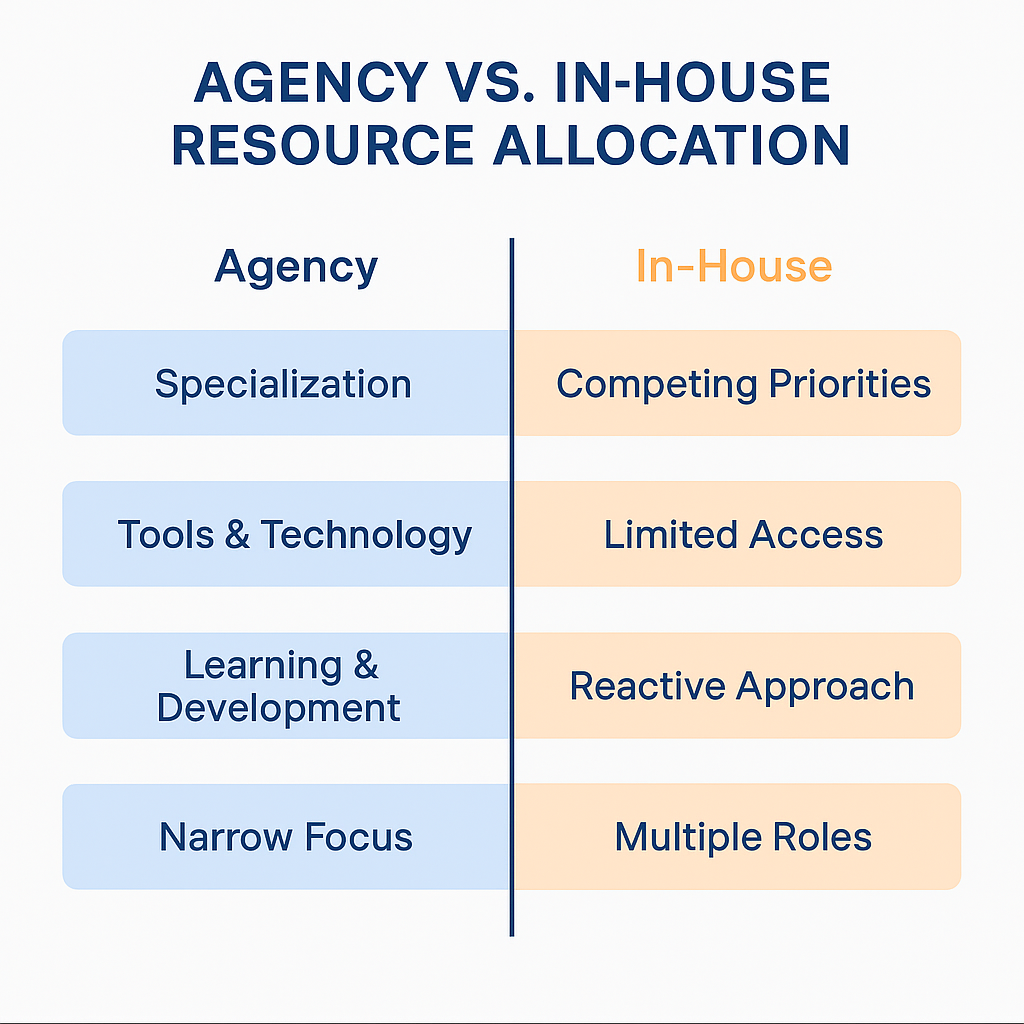
Unlike specialised agencies that focus solely on marketing expertise, internal teams often struggle with competing priorities and limited access to cutting-edge tools and talent.
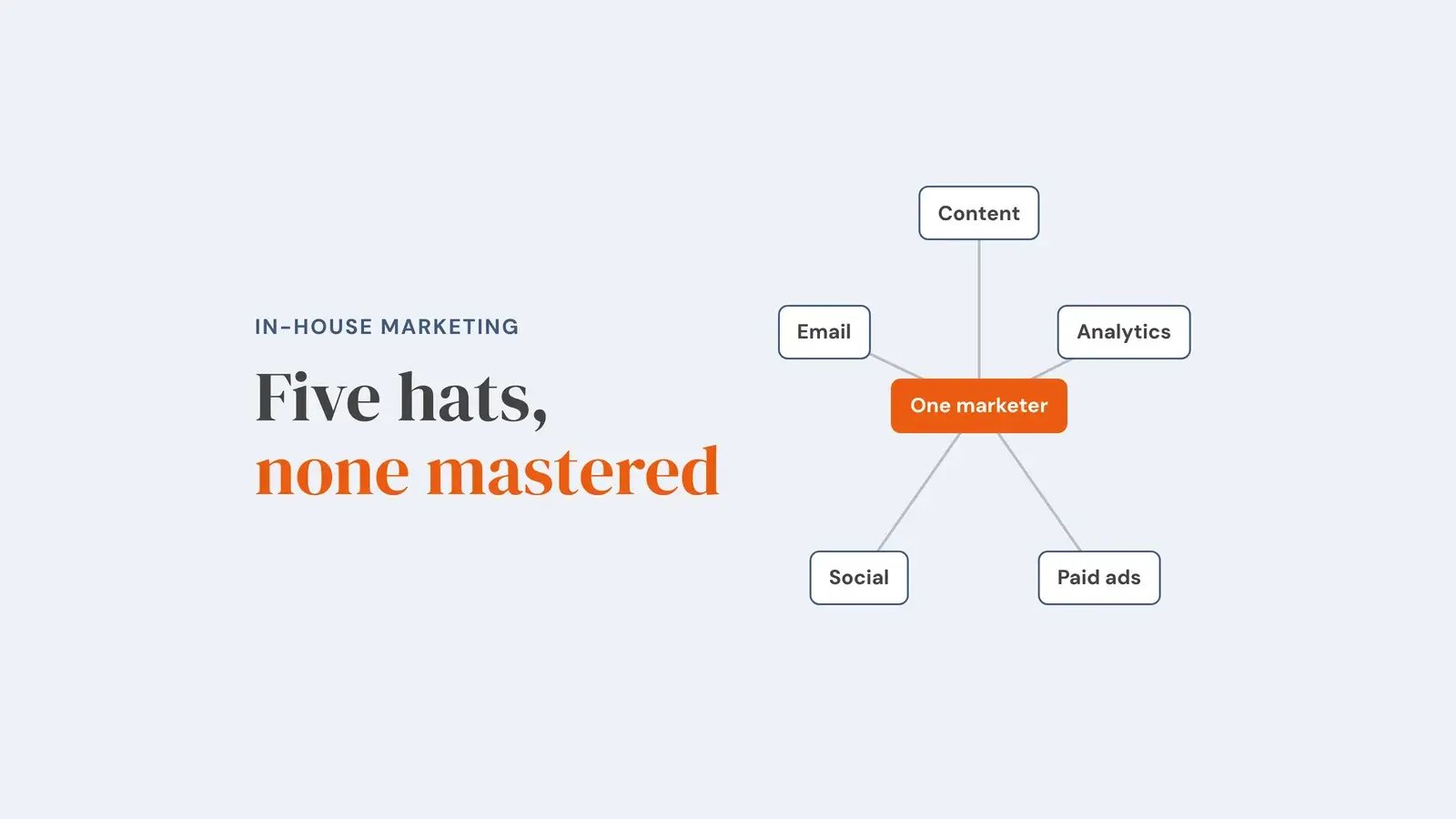
The typical in-house marketer wears five different hats but masters none.
The problem starts with unrealistic expectations. Most businesses expect their in-house team to match agency-level expertise across multiple disciplines – from content creation to data analytics to paid advertising. Yet they provide neither the budget nor the time for proper skill development.
This jack-of-all-trades approach means your team becomes reactive rather than strategic. They spend time on urgent tasks instead of important ones. They create content without understanding buyer psychology. They run campaigns without proper measurement frameworks.
Meanwhile, agencies invest heavily in specialisation, tools, and continuous learning. They have dedicated strategists, content creators, analysts, and account managers. Each person focuses on their area of expertise, creating better outcomes through deep knowledge rather than surface-level competence.
Marketing team structure problems: Why clear roles drive performance
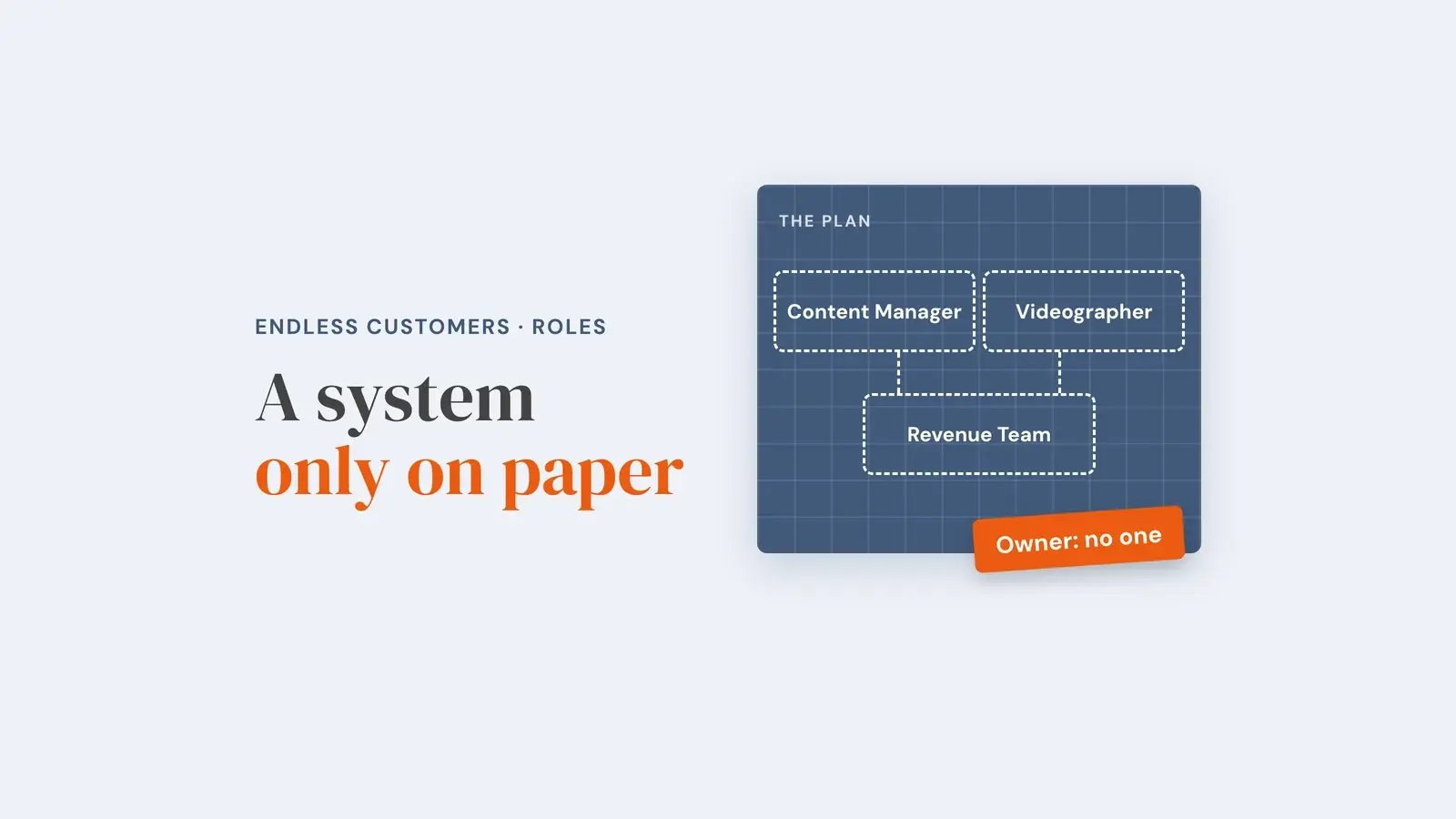
Most companies fail to define clear marketing roles and responsibilities, leading to overlapping duties, accountability gaps, and inefficient workflow processes.
Without proper organisational structure, marketing teams become reactive rather than strategic, spending time on tactical execution instead of driving meaningful business growth.
When roles overlap without clear ownership, important work gets missed; when roles are too narrow without collaboration, efforts become fragmented.
The root issue is treating marketing like other business functions. Sales has clear roles – SDRs, account executives, managers. Finance has bookkeepers, analysts, controllers. But marketing? "Sarah handles our marketing" or "The marketing team does everything digital."
This vague structure creates chaos, not results.
I've seen marketing teams where everyone creates content but nobody owns strategy. Others where someone manages social media, another handles email, and a third does "general marketing" – with no coordination between efforts.
The most successful teams I work with have clearly defined roles:
- Strategic leadership (someone who thinks big picture)
- Content creation (someone who understands buyer psychology)
- Technical execution (someone who manages tools and data)
- Sales alignment (someone who bridges marketing and sales)
Clear structure isn't about hierarchy – it's about accountability and efficiency.
Marketing budget allocation: How underfunding kills team performance
Insufficient budget allocation forces marketing teams to choose between essential tools, talent, and campaigns, ultimately compromising their ability to deliver measurable results.
Companies that underfund their marketing departments typically see 40% lower ROI compared to those that invest adequately in marketing infrastructure and resources.
Free tools cost time, junior staff need supervision, and untrained teams make expensive mistakes.
Here's what happens when marketing budgets get squeezed: teams resort to free tools that require manual workarounds. They hire junior staff because senior talent costs more. They skip training because it's seen as optional.
The false economy becomes obvious quickly.
I regularly audit marketing departments spending £30,000 ($37,500) annually on salaries but only £3,000 ($3,750) on tools and training. That's backwards thinking. The right marketing technology and education multiplies team effectiveness.
Consider this breakdown for a proper marketing department:
- 60% on people (salaries, benefits, training)
- 25% on tools and technology
- 15% on campaigns and content creation
| Investment Area | Underfunded Team | Properly Funded Team |
|---|---|---|
| Tools | Free/basic versions | Professional platforms |
| Training | Occasional webinars | Regular skill development |
| Content | In-house only | Mix of internal and external |
| Measurement | Basic analytics | Advanced tracking and insights |
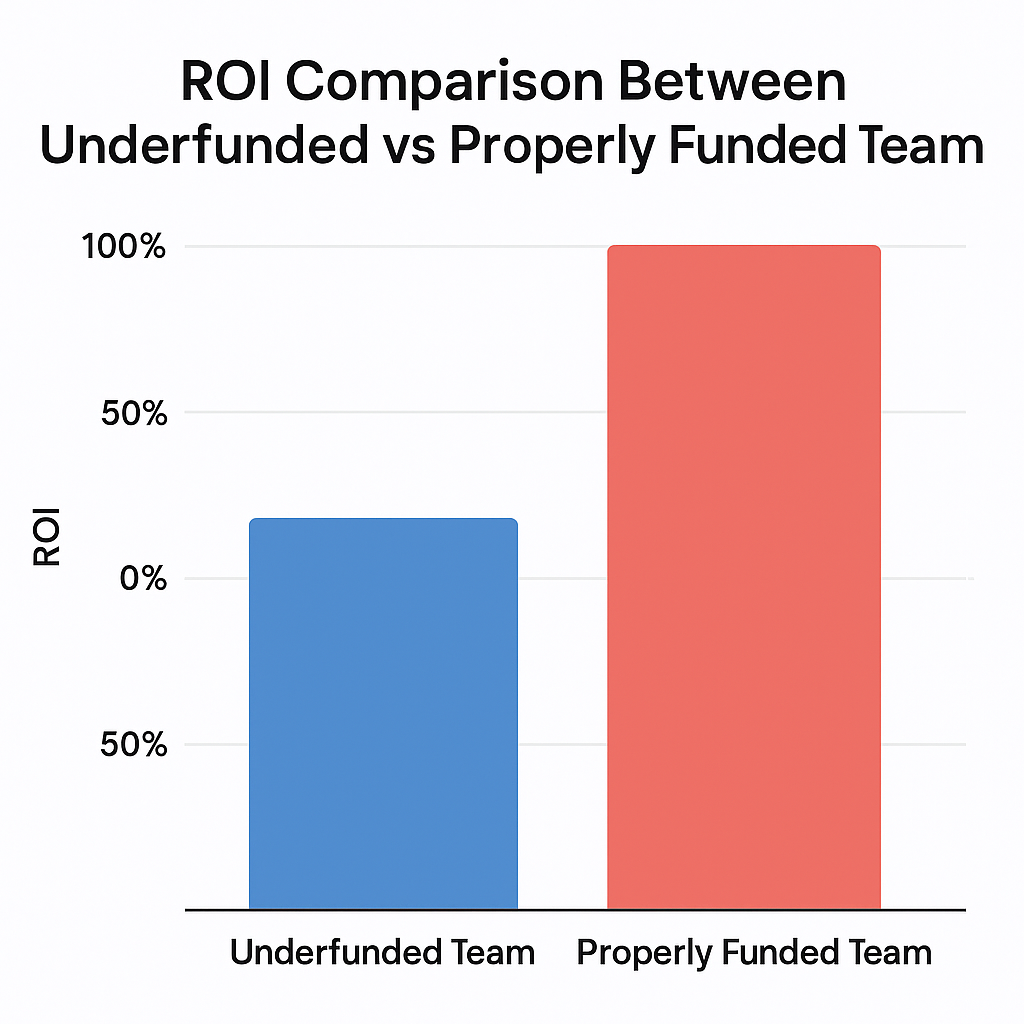
When you starve marketing of resources, you get predictably poor results.
Marketing skills gaps that kill ROI (and how to fill them)
The most common skills gaps in marketing teams include data analytics, marketing automation, content strategy, and digital advertising expertise.
As marketing technology evolves rapidly, teams without continuous learning programs fall behind competitors who invest in upskilling their marketing professionals.
Most marketers are promoted before they master strategy, and it's costing you conversions.
The skills gap problem has three layers. First, marketing education hasn't kept pace with industry changes. Most marketers learned outdated approaches that don't work in today's buyer-controlled environment.
Second, businesses promote based on tenure rather than competency. Your content creator becomes "marketing manager" without learning strategy. Your social media person becomes "digital marketing lead" without understanding attribution.
Third, there's the tool trap. Teams learn software features instead of marketing principles. They know how to use HubSpot but not how to create trust-building content. They can run Facebook ads but can't write copy that converts.
The critical skills missing in most teams:
- Buyer psychology: Understanding how people actually make purchasing decisions
- Content strategy: Creating material that builds trust and drives sales
- Marketing automation: Setting up systems that nurture leads effectively
- Data interpretation: Turning metrics into actionable insights
- Sales alignment: Bridging the gap between marketing and revenue
My In-House Sales and Marketing Mastery programme addresses these exact gaps, helping teams master both strategic thinking and practical execution.
Skills gaps aren't about intelligence; they're about investment in development.
Sales and marketing alignment: Why silos destroy revenue growth
Marketing teams underperform when they operate in silos, focusing on vanity metrics instead of revenue-generating activities that directly support sales goals.
Successful marketing organisations establish clear communication channels and shared KPIs between marketing and sales to ensure alignment on lead quality and conversion targets.
Marketing celebrates website traffic while sales struggles with unqualified leads—and revenue stays flat.
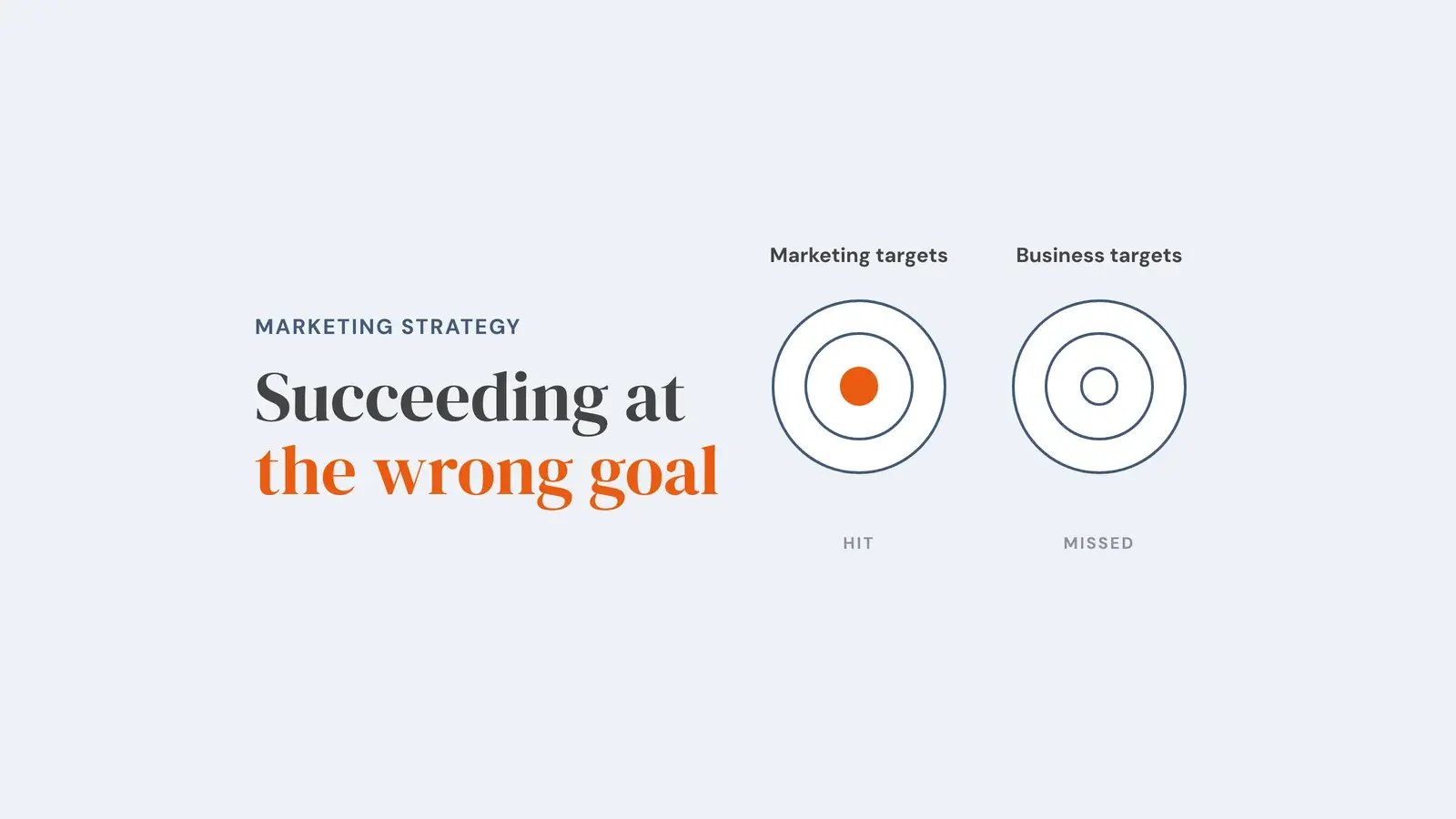
The alignment problem starts at the top. Business leaders give marketing teams activity-based goals instead of outcome-based ones. "Publish three blog posts per week" instead of "Generate 50 qualified leads monthly."
This creates a fundamental disconnect. Marketing points to social media engagement while revenue stays flat. Marketing reports on email open rates while deals get stuck in the pipeline.
I've seen companies where marketing and sales use different definitions for the same terms. Marketing calls someone a "lead" after they download content. Sales calls them a "lead" after they book a meeting. Neither team understands why the other seems unreasonable.
The solution requires shared language and shared goals:
- Unified lead definitions: Everyone agrees what constitutes a qualified lead (a simple 30-minute meeting to align on this can instantly improve performance)
- Shared revenue targets: Marketing has skin in the game for actual sales
- Regular communication: Weekly meetings to discuss lead quality and feedback
- Joint planning: Both teams involved in campaign strategy and lead nurturing
- Integrated tools: Shared systems that provide visibility into the full customer journey
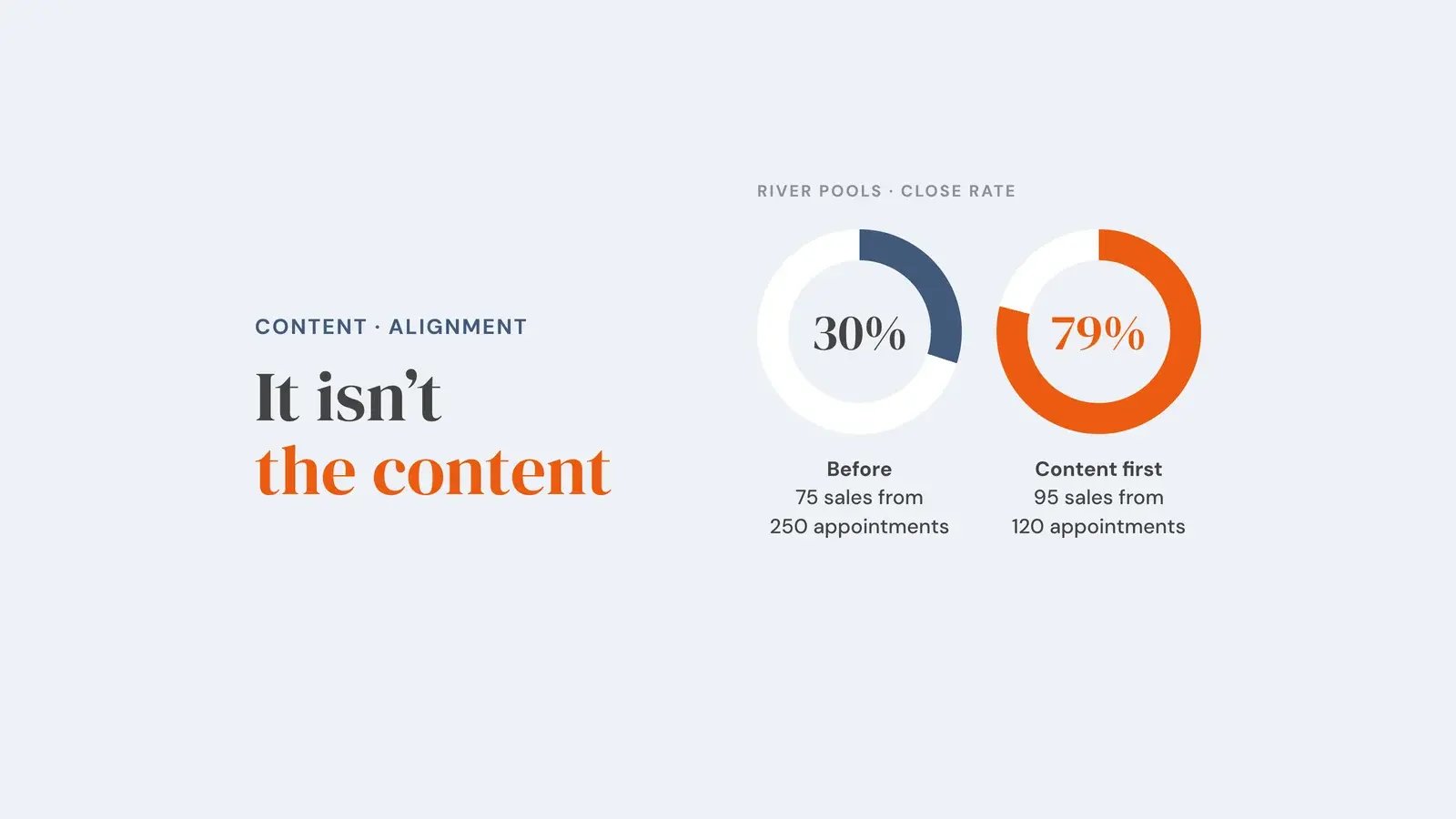
When marketing and sales align properly, everything improves. Sales cycles shorten because marketing creates better-qualified leads. Conversion rates increase because marketing content supports the sales process. Customer lifetime value grows because both teams focus on attracting ideal buyers.
Outdated marketing tools: How technology limitations reduce team effectiveness
Marketing teams using outdated tools lose competitive advantage through inefficient processes, poor data insights, and inability to execute sophisticated campaigns.
Modern marketing requires integrated technology stacks that enable automation, personalisation, and real-time performance tracking across multiple channels.
Your team spends hours on administrative tasks instead of strategic work because disconnected tools can't talk to each other.
The technology trap comes in two forms: using tools that are too basic, or using too many disconnected tools.
Basic tools seem cost-effective initially. Free email platforms, simple website builders, basic social media schedulers. But they create hidden costs through manual work and missed opportunities.
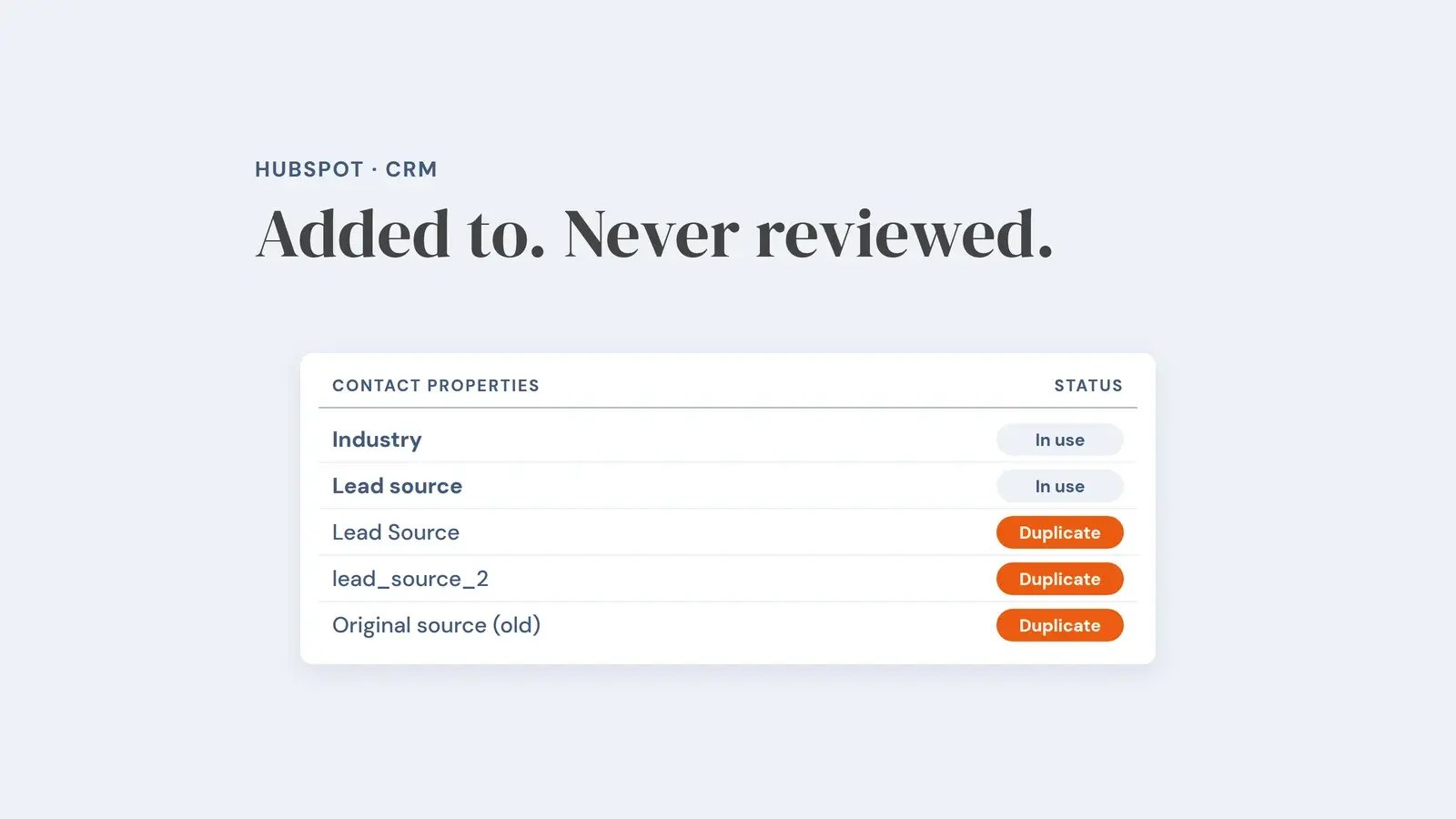
Disconnected tools create different problems. Your email platform doesn't talk to your CRM. Your website analytics don't connect to your advertising data. Your content management system exists separately from your sales pipeline.
The result? Your team can't track customer journeys. They miss opportunities for automation. They make decisions based on partial data.
Here's what modern marketing technology should provide:
Integration capabilities:
- All tools share data seamlessly
- Customer information updates across platforms
- Campaign performance tracked from initial touch to final sale
Automation features:
- Lead nurturing sequences based on behaviour
- Personalised content delivery
- Automatic follow-up for sales teams
Analytics and insights:
- Clear attribution for marketing activities
- Predictive analytics for future performance
- Detailed customer journey mapping
My HubSpot consultancy services help teams implement integrated systems that eliminate manual work while providing better insights.
The right technology doesn't just improve efficiency; it transforms what's possible.
Marketing leadership mistakes that cause team underperformance
Marketing leadership failures include micromanagement, unclear goal setting, insufficient strategic vision, and failure to advocate for team resources at the executive level.
Effective marketing leaders balance strategic thinking with tactical execution while creating an environment that encourages experimentation and data-driven decision making.
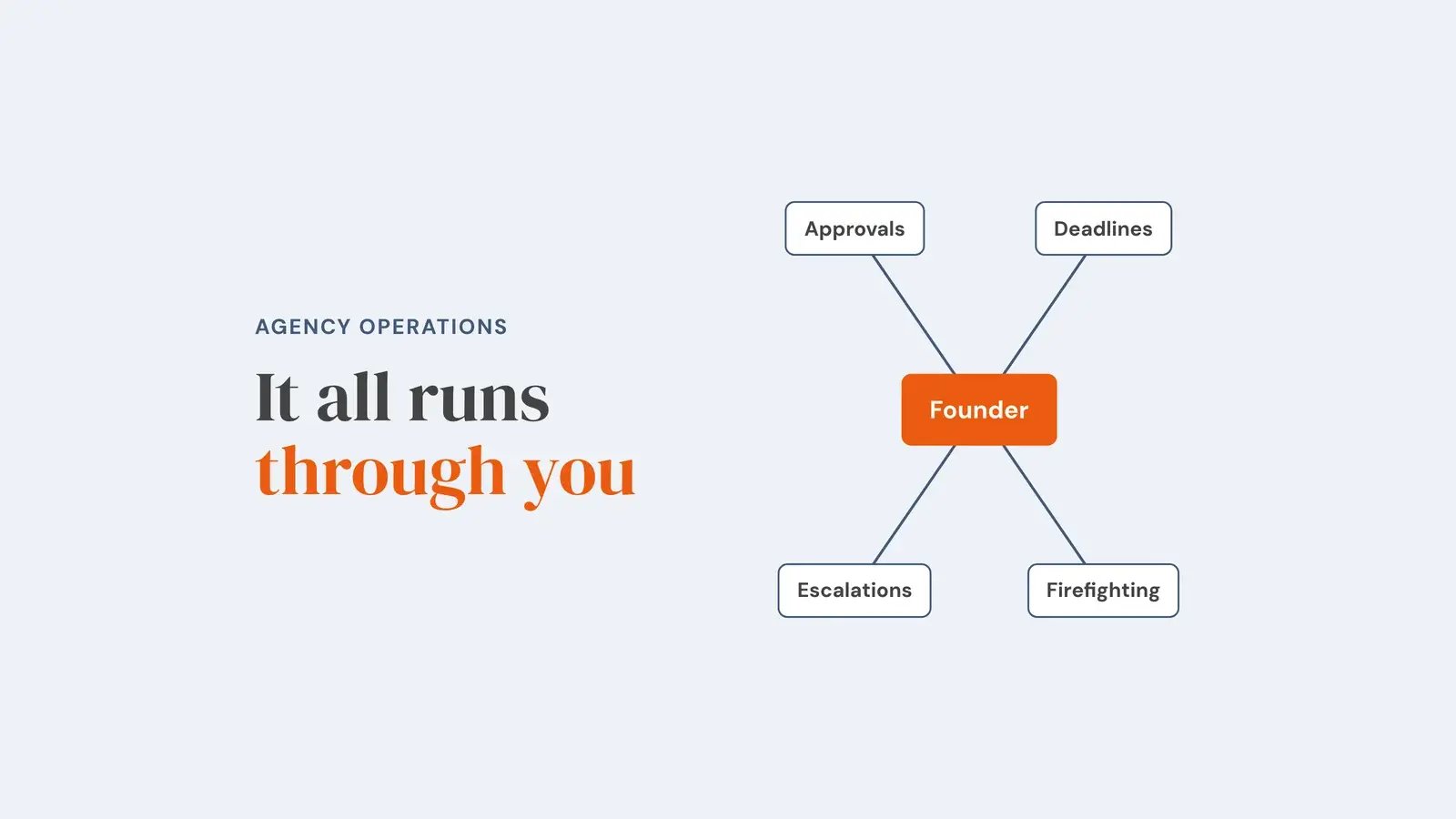
When leaders insist on approving every blog post and social update, they create bottlenecks that kill creativity and miss opportunities.
Poor marketing leadership shows up in predictable patterns. Leaders who came from other departments but don't understand modern marketing. Leaders who focus on activities instead of outcomes. Leaders who fail to protect their teams from unrealistic demands.
The micromanagement trap is especially damaging. Teams become afraid to take initiative. Creativity gets stifled. Opportunities get missed while waiting for approvals.
Equally damaging is unclear goal setting. Teams receive vague instructions like "increase brand awareness" or "improve lead generation" without specific targets or timelines. They work hard but can't tell if they're succeeding.
Effective marketing leaders provide different support:
- Clear strategic direction: Teams understand how their work connects to business goals
- Appropriate autonomy: People can execute within defined parameters without constant oversight
- Regular feedback: Performance discussions focus on outcomes and improvement
- Resource advocacy: Leaders fight for the budget and tools their teams need
- Skills development: Ongoing investment in team capabilities and career growth
The best marketing leaders I know act more like coaches than managers. They set clear expectations, provide necessary resources, remove obstacles, and let talented people do their work.
When leadership improves, everything else follows. Team confidence increases. Decision-making speeds up. Results improve because people focus on outcomes instead of politics.
How to build a high-performing in-house marketing team
Building a high-performing marketing team requires strategic hiring, continuous education, proper tool investment, and clear performance metrics aligned with business objectives.
Companies that follow a structured approach to marketing team development see 65% higher performance rates and significantly better ROI on their marketing investments.
After working with dozens of marketing teams, I've identified the seven factors that separate high performers from those that struggle. Address these systematically, and your team's impact will transform.
1. Define clear roles and responsibilities
Stop treating marketing like a single function. Create specific roles with defined outcomes. Even small teams need clear ownership of strategy, content, and execution.
2. Invest in proper tools and technology
Marketing teams need professional-grade tools to compete. Budget 25% of your marketing spend on technology that integrates and automates routine tasks.
3. Prioritise continuous learning
Marketing changes rapidly. Teams without ongoing education fall behind quickly. Invest in training, conferences, and certification programs.
4. Align with sales and business goals
Marketing success means revenue growth, not just activity metrics. Create shared goals and regular communication between marketing and sales.
5. Implement measurement frameworks
You can't improve what you don't measure properly. Track metrics that connect marketing activities to business outcomes.
6. Provide strategic leadership
Teams need direction, not micromanagement. Leaders should set clear goals, provide resources, and remove obstacles.
7. Create systems for consistent execution
High-performing teams have processes for everything from content creation to lead nurturing. Systems create predictable results.
These aren't quick fixes – they're foundational changes that compound over time. But companies that implement them systematically see dramatic improvements in marketing effectiveness.
As your guide through this transformation, I help businesses implement these exact changes through my various services – whether you need hands-on execution, strategic guidance, or team training.
Conclusion: Transform your marketing team from underperforming to revenue-driving
Remember that frustration you felt at the beginning of this article? Watching your marketing team work hard but struggle to deliver results. Investing in people and tools while competitors seem to succeed effortlessly.
That struggle isn't about your team's capability or commitment. When 73% of in-house teams face the same challenges, the problem is structural, not personal. Your marketers are trapped between unrealistic expectations and insufficient resources, trying to compete against specialised agencies with generalist skills and basic tools.
But now you understand the seven structural factors that determine marketing success:
- Clear roles and responsibilities – End the chaos of overlapping duties
- Proper tool investment – Give your team professional-grade technology
- Continuous skills development – Keep pace with rapid industry changes
- Sales alignment – Create shared goals for revenue growth
- Measurement systems – Track what actually matters to the business
- Strategic leadership – Provide direction without micromanagement
- Consistent execution processes – Build predictable, repeatable results
The future is clear: you can continue accepting mediocre results from frustrated team members, or you can systematically address these seven factors and transform your marketing team into the competitive advantage your business deserves.
If you're ready to stop wasting budget and start seeing results, my In-House Marketing Mastery programme will give your team the exact systems and skills needed to become a reliable engine for growth.
Topics: