


Have you already hired a freelancer or an agency and found it didn't quite solve the problem? And do you know which of these models is actually built to solve the problem you have right now?
This article will help you make a clear, stage-appropriate hiring decision. You'll understand what each model is built to solve, how they compare on cost and risk, and which one fits where your business is right now.
This is written for founders, MDs, and operators at B2B companies who need external marketing support and want to choose the right model the first time, not after a costly mismatch.
Key Takeaways
- A marketing agency, a freelancer, and a fractional CMO are three distinct models that differ in what they own, what they deliver, and how they integrate with your business.
- Agencies solve for execution capacity; freelancers solve for specific skill gaps; fractional CMOs solve for strategic leadership without a full-time hire.
- In 2025, agencies typically cost £3,000–£20,000+ ($3,750–$25,000+) per month; freelancers charge £300–£800+ ($375–$1,000+) per day; fractional CMOs commonly sit between £2,000–£8,000 ($2,500–$10,000) per month.
- Choosing based on budget or convenience, rather than matching the model to the problem, is the most common and costly mistake.
- Business stage is the most reliable filter: it narrows the decision faster than budget, headcount, or industry.
What are marketing agencies, freelancers, and fractional CMOs?
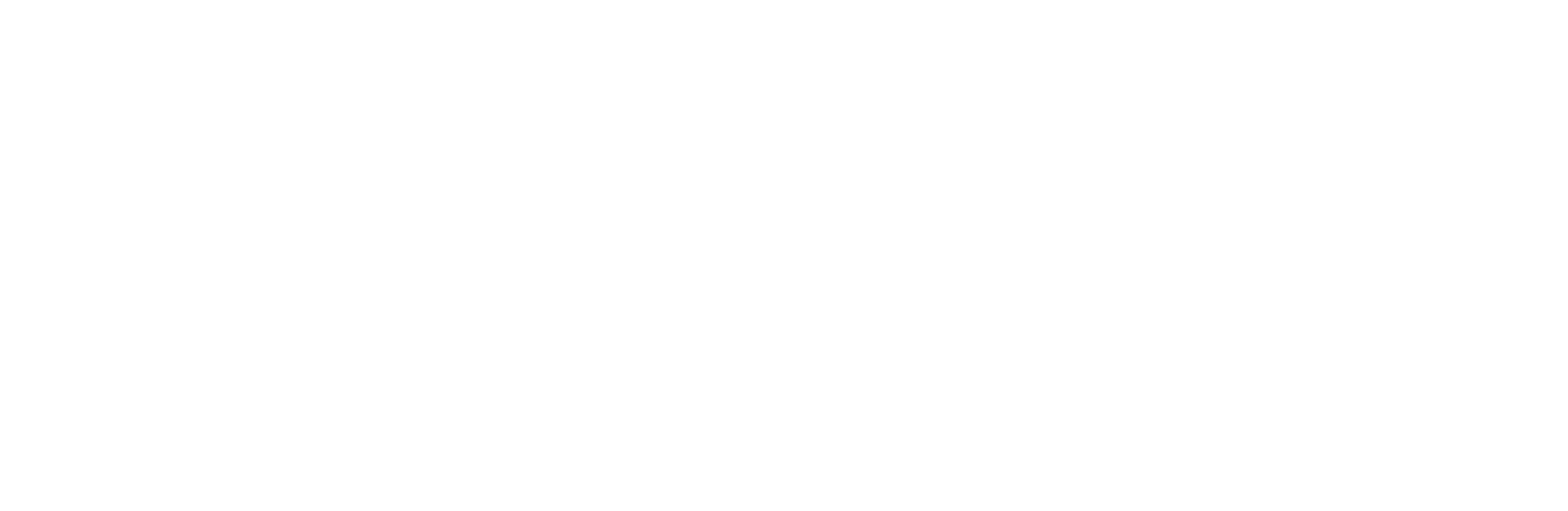
A marketing agency, a freelancer, and a fractional CMO are three distinct external hiring models that differ fundamentally in what they own, what they deliver, and how they integrate with your business.
- Marketing agency: A team-based provider that executes marketing on your behalf, managing channels, producing content, and running campaigns, usually under a monthly retainer. Knowledge stays with the agency, not inside your business.
- Freelancer: An individual specialist hired for a defined skill or task, such as copywriting, PPC, design. Freelancers execute within a narrow scope and rarely own or direct marketing strategy.
- Fractional CMO: A senior marketing leader who works inside your business part-time, taking strategic ownership of marketing direction. A fractional CMO provides leadership and a roadmap, not execution, and typically directs an internal team or external providers.
Understanding this structural difference, not just the cost difference, is the starting point for making the right decision.
What specific problem does each model actually solve?
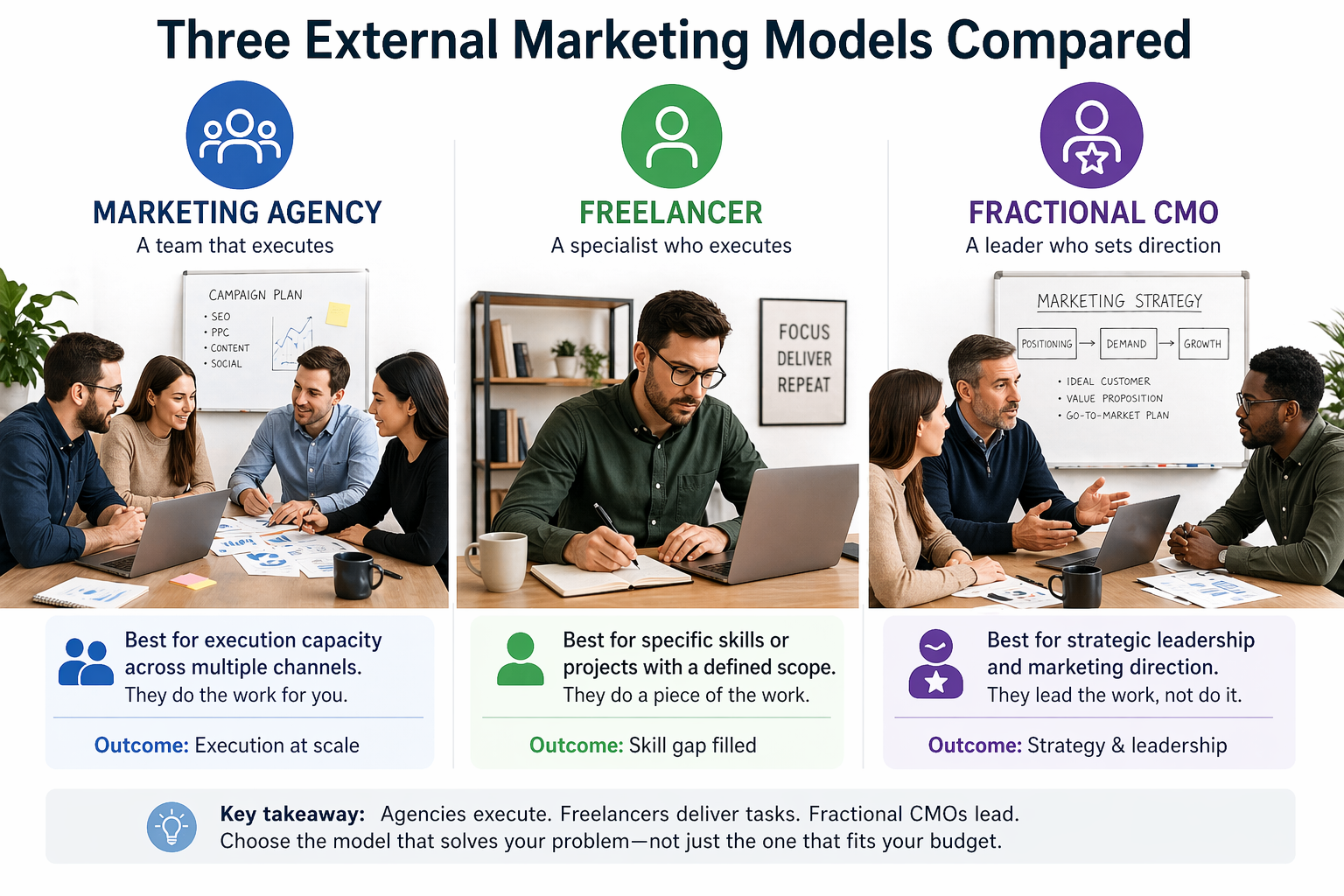
Each model is purpose-built for a different core problem: agencies solve for execution capacity, freelancers solve for specific skill gaps, and fractional CMOs solve for strategic leadership without a full-time hire.
| Model | Core problem it solves | What it does NOT solve |
|---|---|---|
| Marketing agency | Multi-channel execution at scale | Strategic ownership, internal capability |
| Freelancer | A defined skill gap, filled quickly | Strategy, team direction, or accountability |
| Fractional CMO | Marketing leadership without a full-time salary | High-volume execution — that still needs a separate resource |
Choosing based on budget or convenience alone, rather than matching the model to the problem, is the most common and most expensive mistake businesses make.
A typical example: a founder hires a content agency because it feels like the most tangible option, only to realise six months later that the problem was never content volume; it was the absence of a clear positioning strategy. The agency delivered exactly what it was hired for. It just wasn't the right model for the actual problem.
How much does a marketing agency, freelancer, or fractional CMO cost?
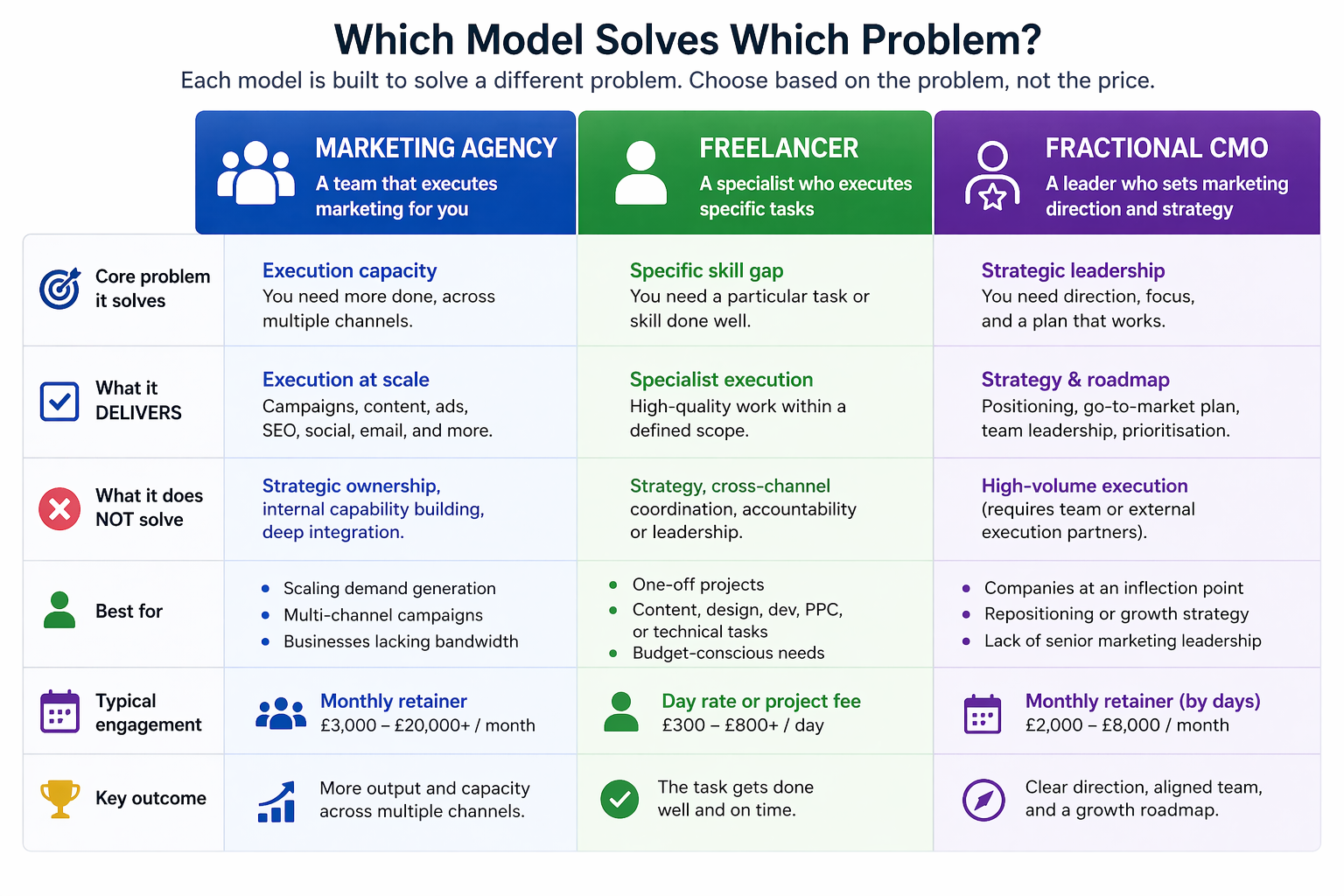
Marketing agencies typically cost £3,000–£20,000+ ($3,750–$25,000+) per month on retainer; freelancers range from £300–£800+ ($375–$1,000+) per day; and fractional CMOs commonly sit between £2,000–£8,000 ($2,500–$10,000) per month for a defined number of days.
| Model | Typical monthly cost | Cost structure | Common hidden costs |
|---|---|---|---|
| Agency | £3,000–£20,000+ ($3,750–$25,000+) | Monthly retainer | Account management layers, junior delivery, onboarding fees |
| Freelancer | £1,200–£6,400+ ($1,500–$8,000+)* | Day rate or project fee | No strategy, no management, continuity gaps |
| Fractional CMO | £2,000–£8,000 ($2,500–$10,000) | Monthly retainer by days | Execution still needs a separate resource |
*Freelancer monthly estimates assume 4–8 working days per month at £300–£800 ($375–$1,000)/day. These are indicative estimates based on typical UK market rates; actual figures vary by specialism and experience.
12-month cost comparison (illustrative):
- Agency at £5,000 ($6,250)/month for 12 months = £60,000 ($75,000); knowledge stays with agency at the end
- Fractional CMO at £4,000 ($5,000)/month for 12 months = £48,000 ($60,000); strategy and roadmap owned by your business at the end
Cost comparisons between the three models are misleading without also comparing what you own at the end of the engagement.
Note: a fractional CMO engagement typically requires additional execution resource, such as freelancers or an agency, on top of the retainer fee. Factor this into total cost when comparing models.
What are the drawbacks and risks of each model?
Every external marketing model carries trade-offs: agencies can deprioritise smaller accounts and create structural dependency; freelancers lack strategic breadth; and fractional CMOs require internal buy-in and execution resource to be effective.
Agency risks:
- Knowledge stays with the agency, not inside your business
- Smaller clients often receive less senior attention
- Retainers continue regardless of results
- Exit leaves you with no owned capability or system
Freelancer risks:
- No strategic ownership or accountability for outcomes
- Coordinating multiple freelancers creates management overhead
- Limited availability and no continuity guarantee
Fractional CMO risks:
- Needs execution resource to act on strategy (a team, agency, or freelancers)
- Requires strong internal stakeholder alignment to be effective
- Results take longer to materialise if marketing foundations are weak
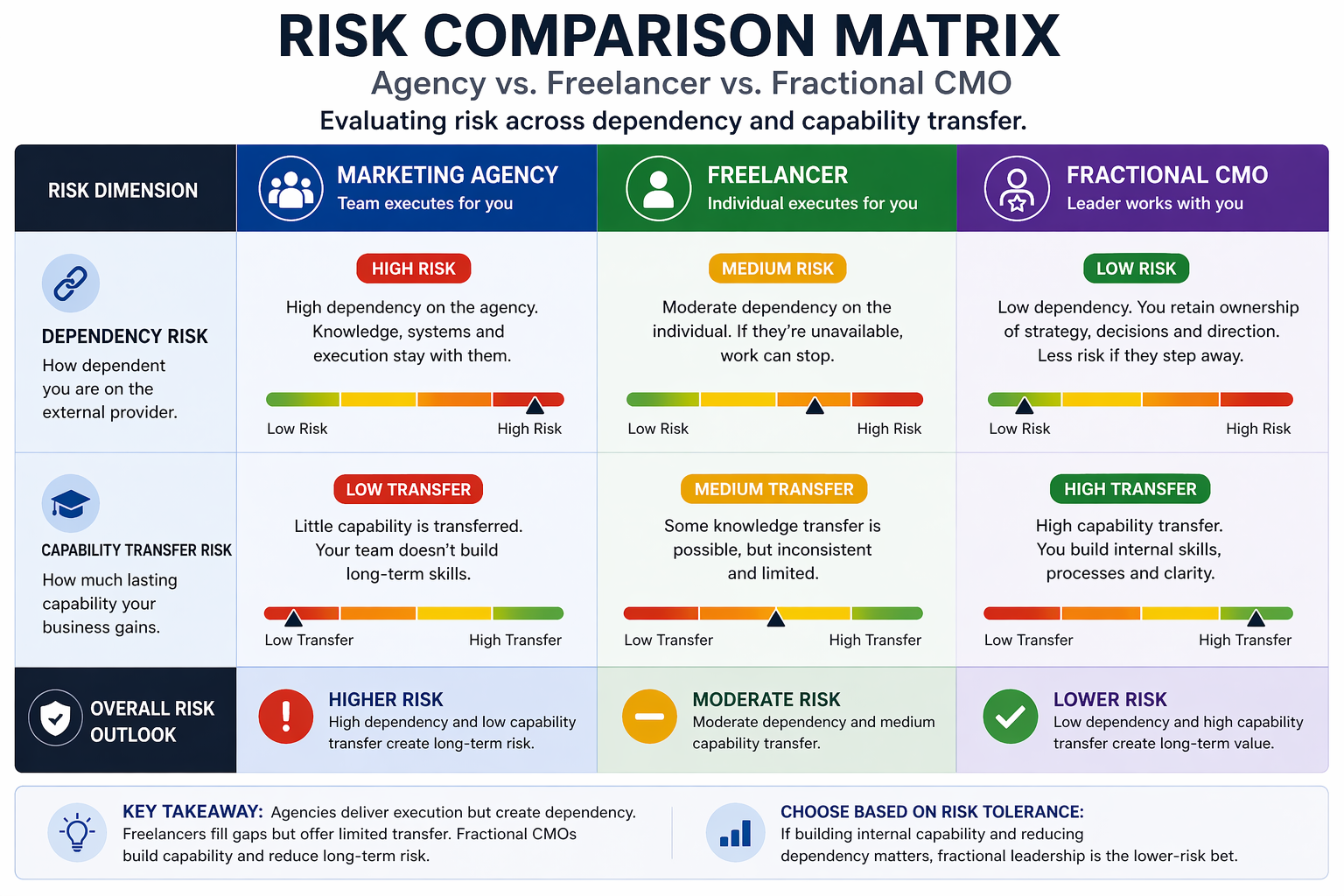
Agency vs. freelancer vs. fractional CMO: side-by-side comparison
Compared side by side, a marketing agency leads on multi-channel execution and team depth; a freelancer leads on specialist skill and flexibility; and a fractional CMO leads on strategic ownership, cross-functional alignment, and internal capability transfer.
| Criteria | Agency | Freelancer | Fractional CMO |
|---|---|---|---|
| Strategy ownership | Low | None | High |
| Execution depth | High | Medium (one skill) | Low (directs others) |
| Monthly cost | £3,000–£20,000+ ($3,750–$25,000+) | £1,200–£6,400+* ($1,500–$8,000+) | £2,000–£8,000 ($2,500–$10,000) |
| Flexibility | Low (retainer) | High | Medium |
| Accountability | Shared | Task-level only | Full ownership |
| Internal capability built | Rarely | No | Yes, by design |
| Onboarding time | 4–8 weeks | 1–2 weeks | 2–4 weeks |
*Freelancer monthly estimates assume 4–8 working days per month at £300–£800 ($375–$1,000)/day.
No single model wins across all dimensions. The right choice depends entirely on what your business needs most right now, and at which stage it currently sits.
External resource: IMPACT on the Endless Customers methodology and in-house capability transfer
Which model is best for your business stage and situation?
Business stage is the single most reliable filter; it narrows the field faster than budget, headcount, or industry.
- No marketing foundations yet: Start with a fractional CMO or Fractional Marketing Director. You need strategy before execution, building on no structure produces fragile, disconnected results.
- Strategy is clear; you have a specific skill gap: Hire a freelancer. You know what you need; bring in the right specialist without paying for what you don't.
- Defined channel focus and high content demand: Agency. You need execution capacity your team cannot supply internally.
- Team in place but lacks direction and alignment: Fractional CMO. Leadership and a roadmap, not more activity.
- Scaling fast with multiple channels to cover: Agency or a combined model; a fractional CMO directing an agency or freelancers.
- Have been relying on an agency or freelancers for 12+ months and want to end that dependency: A fractional CMO focused on capability transfer.
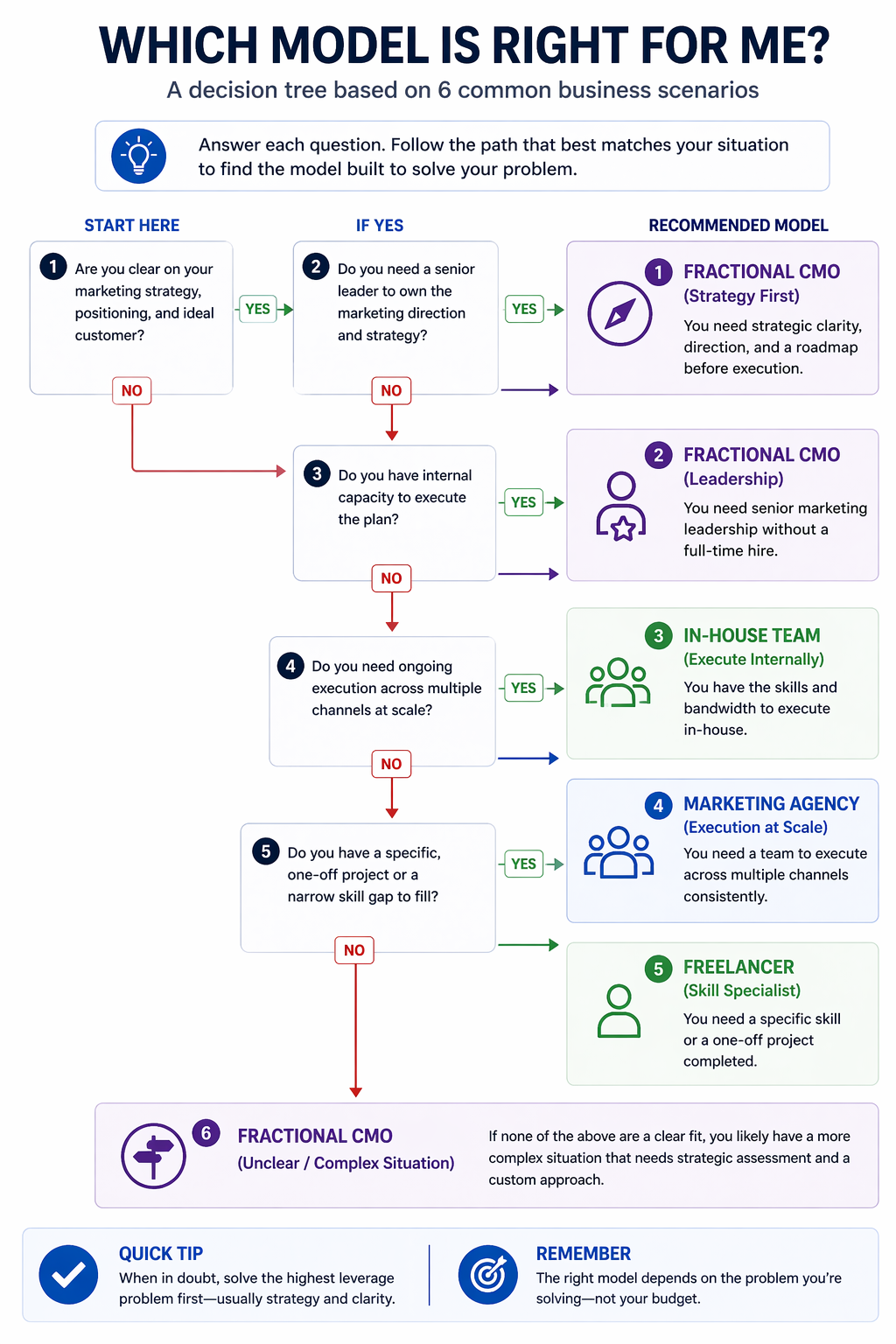
How to choose the right marketing model in 5 steps
Choosing the right external marketing model comes down to five decisions, worked through in order.
- Define the core problem: Is it a lack of strategy, a skills gap, or a lack of execution capacity? Each answer points to a different model.
- Assess your internal execution capacity: Do you have a team who can be directed, or does all execution need to come in externally?
- Set a realistic budget, factoring in what you own at the end: Monthly cost is the wrong number to focus on. What does three years of that arrangement actually cost you?
- Determine how much strategic ownership you need: If you cannot explain your growth system clearly today, you likely need leadership before execution.
- Stress-test your shortlisted option against your 12-month goals: If this model disappeared tomorrow, what would remain inside your business?
Working through these steps in order prevents the most predictable error, selecting a model based on familiarity or price before the actual problem is clearly defined.
If you're unsure where your marketing is structurally weak before you reach step 3, the Marketing Debt Scorecard can help you identify the gaps.
Frequently asked questions
Can I use a freelancer and a fractional CMO at the same time?
Yes, and it often works well. A fractional CMO provides strategic direction; freelancers handle specific execution tasks the CMO assigns. This gives you leadership and delivery without the cost of a full agency retainer.
Can I use an agency and a fractional CMO at the same time?
Yes, and for businesses scaling across multiple channels, it's often the most effective structure. The fractional CMO owns strategy, sets priorities, and holds the agency accountable for outcomes. Without that layer, agencies tend to operate on briefs rather than business goals. This is the combined model referenced in the business stage section above.
When is it too early to hire a fractional CMO?
If your business has no marketing foundations, no CRM, no defined buyer journey, no documented process, a fractional CMO will spend significant time building basics rather than leading. A hands-on Fractional Marketing Director is often the better entry point. See my Fractional Marketing Director service.
What's the difference between a fractional CMO and a marketing consultant?
A fractional CMO takes ownership of marketing performance and leads the team. A consultant advises and delivers recommendations but typically does not own outcomes or manage execution. The accountability structure is fundamentally different.
Conclusion
You came to this article trying to choose between three models that look similar on paper but solve different problems in practice. Now you understand the structural difference between them.
Agencies, freelancers, and fractional CMOs are each the right answer, for the right situation. Agencies deliver execution capacity. Freelancers fill specific skill gaps. Fractional CMOs provide strategic ownership and, at their best, build something your business keeps permanently.
The decision starts with clarity about the problem, not the price tag. Start there, and the right model becomes straightforward.
How to take action now
- Identify whether your primary gap is strategy, execution, or a specific skill
- Map your internal capacity, what can your team own vs. what needs to come in externally?
- Work through the five-step framework above before committing to any model
- Take the Marketing Debt Scorecard to identify where your marketing is structurally weak
- Book a free 30-minute call to assess which model fits your situation
Related reading: Working with Me vs. Hiring a Traditional Marketing Agency: Which Is Right for You?

About the author
Tom Wardman is a fractional marketing consultant and Growth Independence Architect™ working with founder-led B2B companies. He installs growth systems that businesses can own and operate without ongoing external reliance. One of the UK's first certified Endless Customers coaches, trained directly under Marcus Sheridan, and author of Build a Trusted Brand, Tom's work is grounded in one principle: structure before scale.
Pricing disclaimer: All GBP–USD price conversions use a rate of £1 = $1.25 and are rounded estimates correct at the time of publishing. Exchange rates fluctuate and figures should be treated as indicative only.