

Are your sales and marketing teams putting in the work, but you're not sure whether the numbers are actually moving? Do you find yourself wondering if the content, the videos, and the training are genuinely paying off, or just keeping people busy?
This article is for business owners and marketing leaders who are already committed to, or seriously evaluating, the Endless Customers System™, and need a clear, honest way to measure progress.
You'll get a structured framework for tracking ROI across sales, content, and implementation progress, plus the specific data points from businesses that have done it, so you can stop guessing and start making informed decisions.
Key takeaways
- ROI from the Endless Customers System™ flows through four areas: sales close rate, content performance, website effectiveness, and cultural alignment, not a single metric.
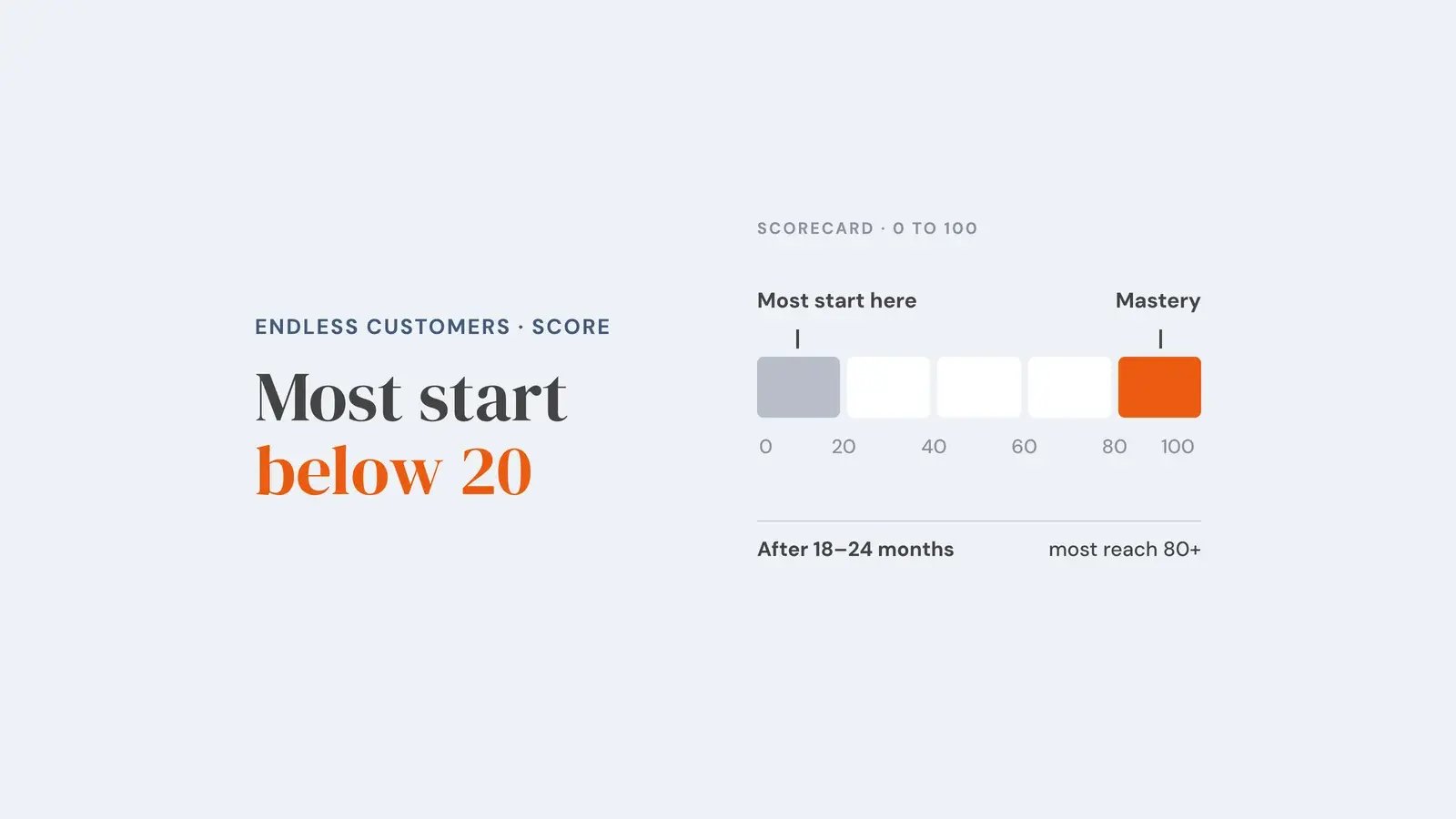
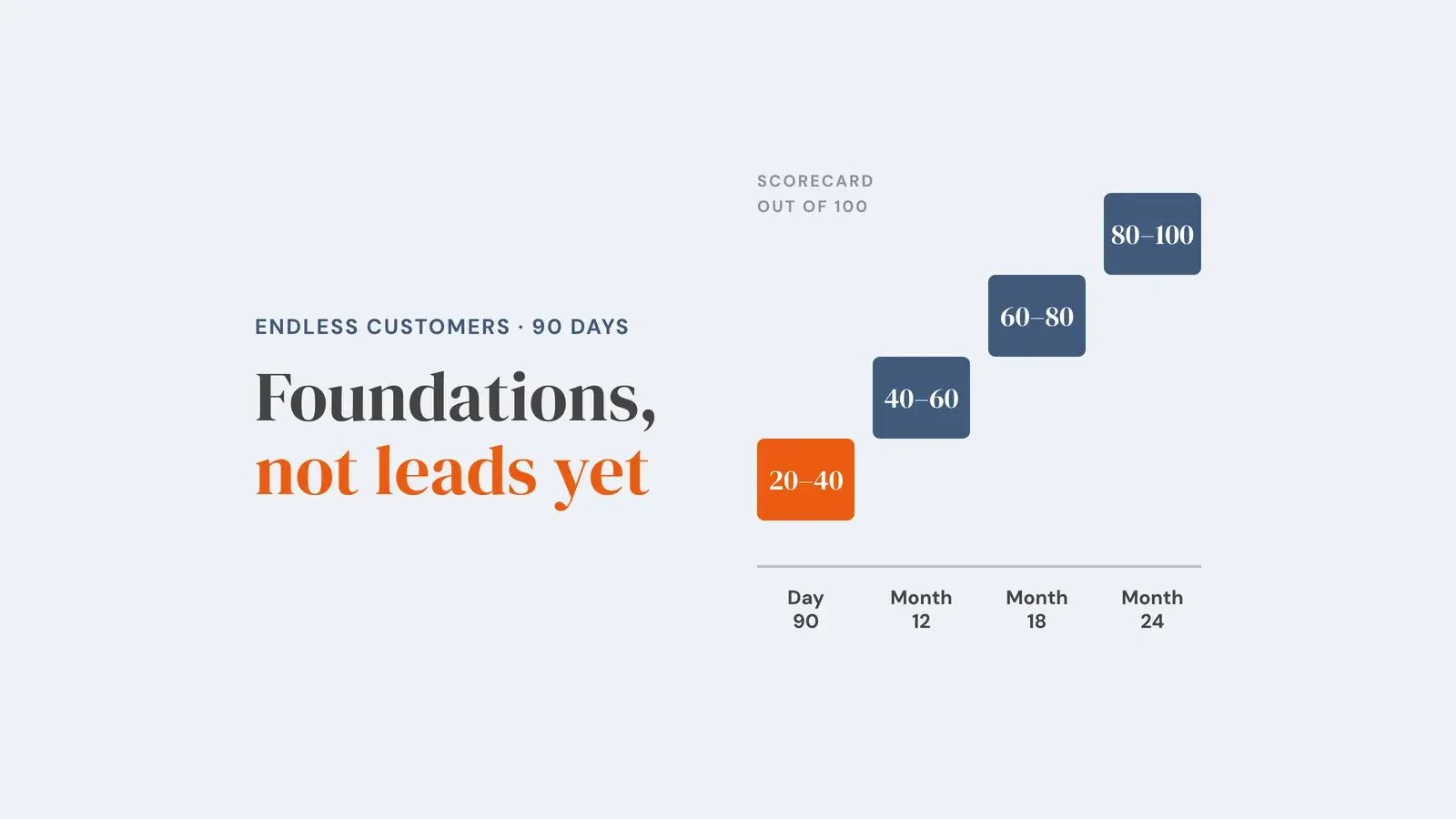
- The Endless Customers Scorecard is a 10-prompt quarterly assessment across five components. Most businesses reach full mastery (80+) within 18–24 months.
- Prospects who consume 30 or more pages of content before their first appointment close at 80%, versus 25% for those who don't.
- Tracking only website traffic is an unreliable measure of ROI in an era of zero-click search and AI-generated answers.
- Real-world results from River Pools, Sheffield Metals, and CSI Accounting & Payroll demonstrate compounding ROI over 12–24 months, not overnight.
What does ROI really mean in an Endless Customers implementation?
ROI from an Endless Customers implementation is best measured across four interconnected areas: sales efficiency, content performance, website effectiveness, and cultural alignment, not by any single metric in isolation.
Unlike a paid ad campaign, where ROI is a straightforward cost-per-click calculation, this system builds compounding, long-term value. That means a rise in close rate matters. So does deal size. And so does whether your sales team is actively using content in live conversations.
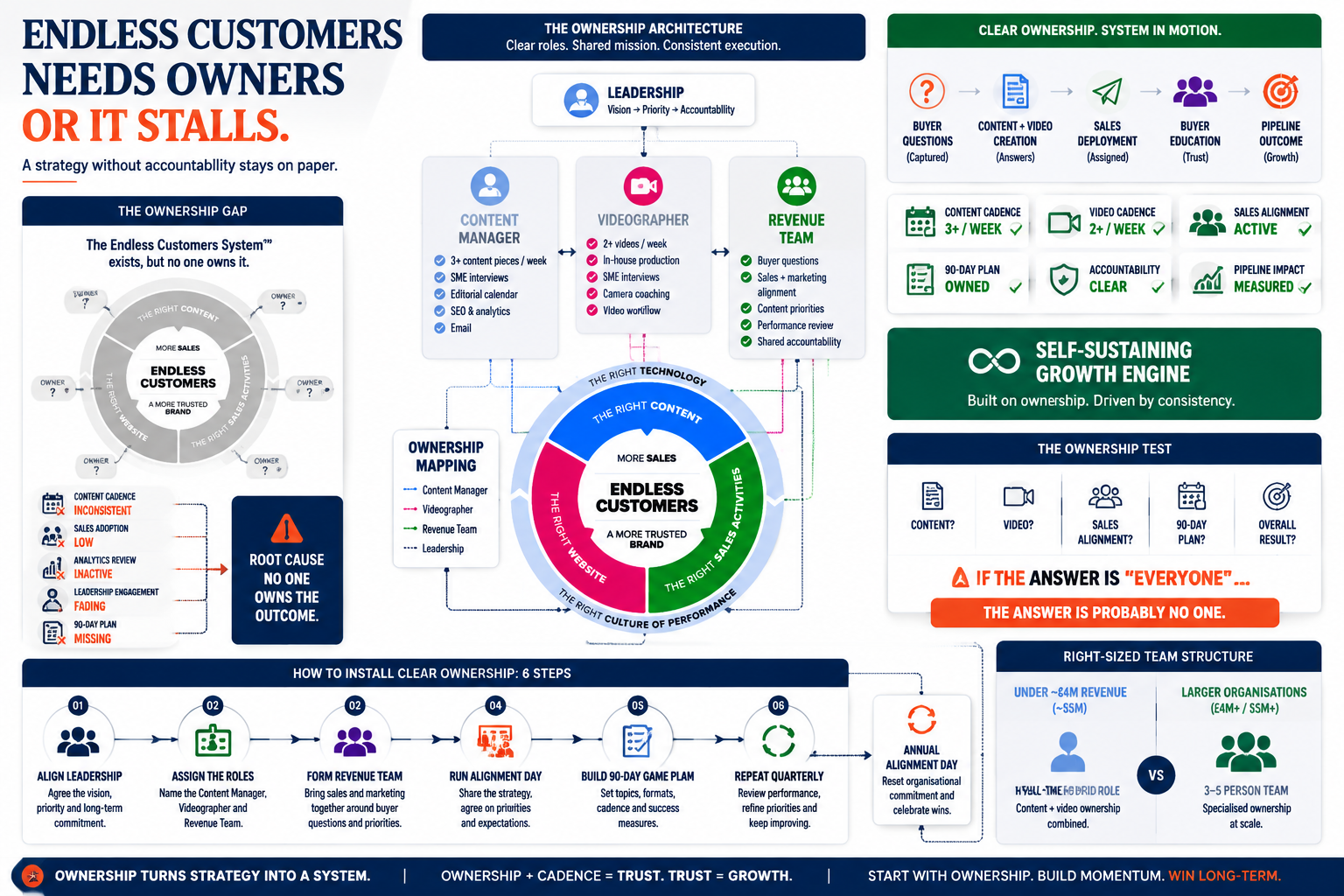
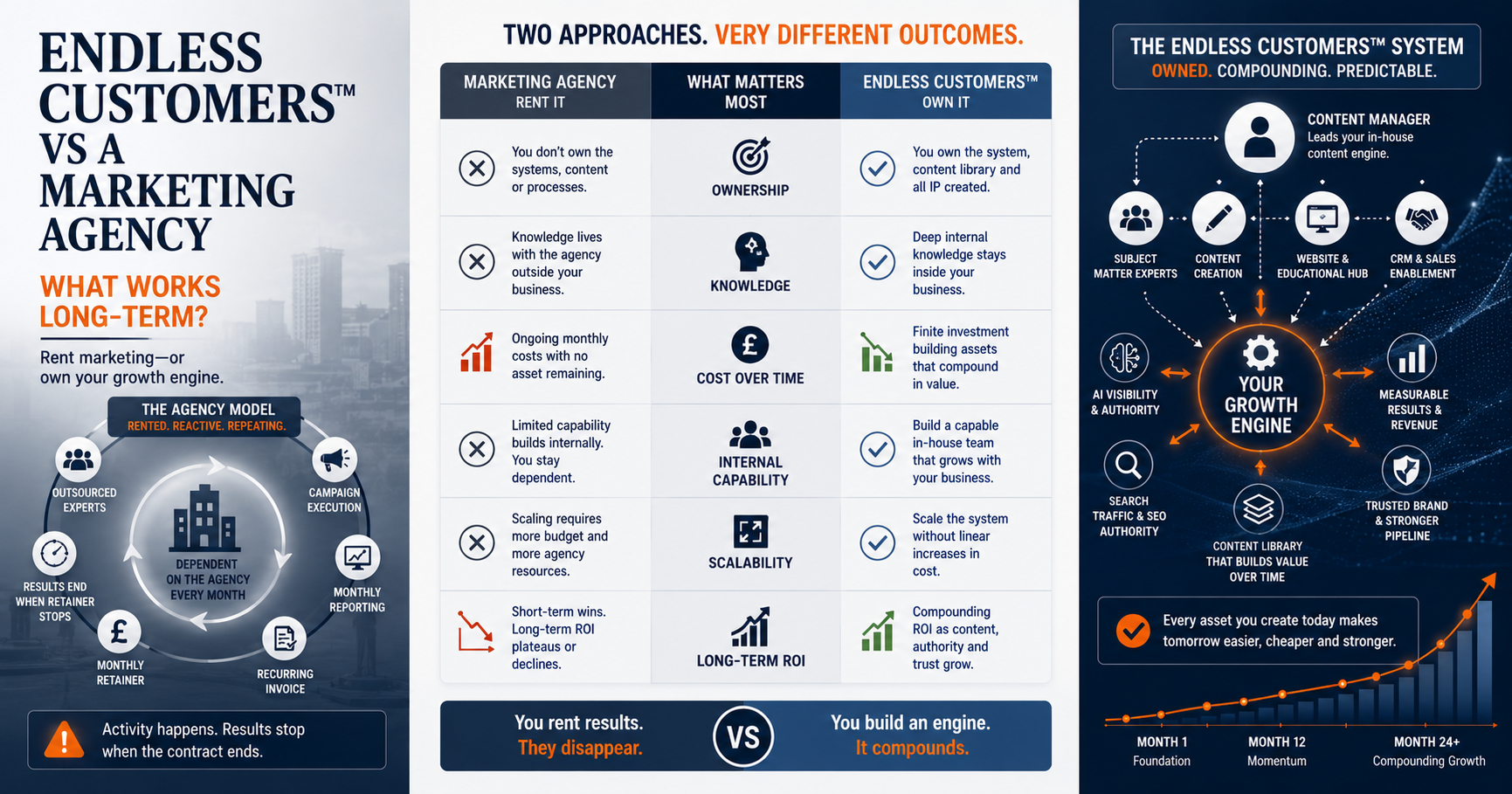
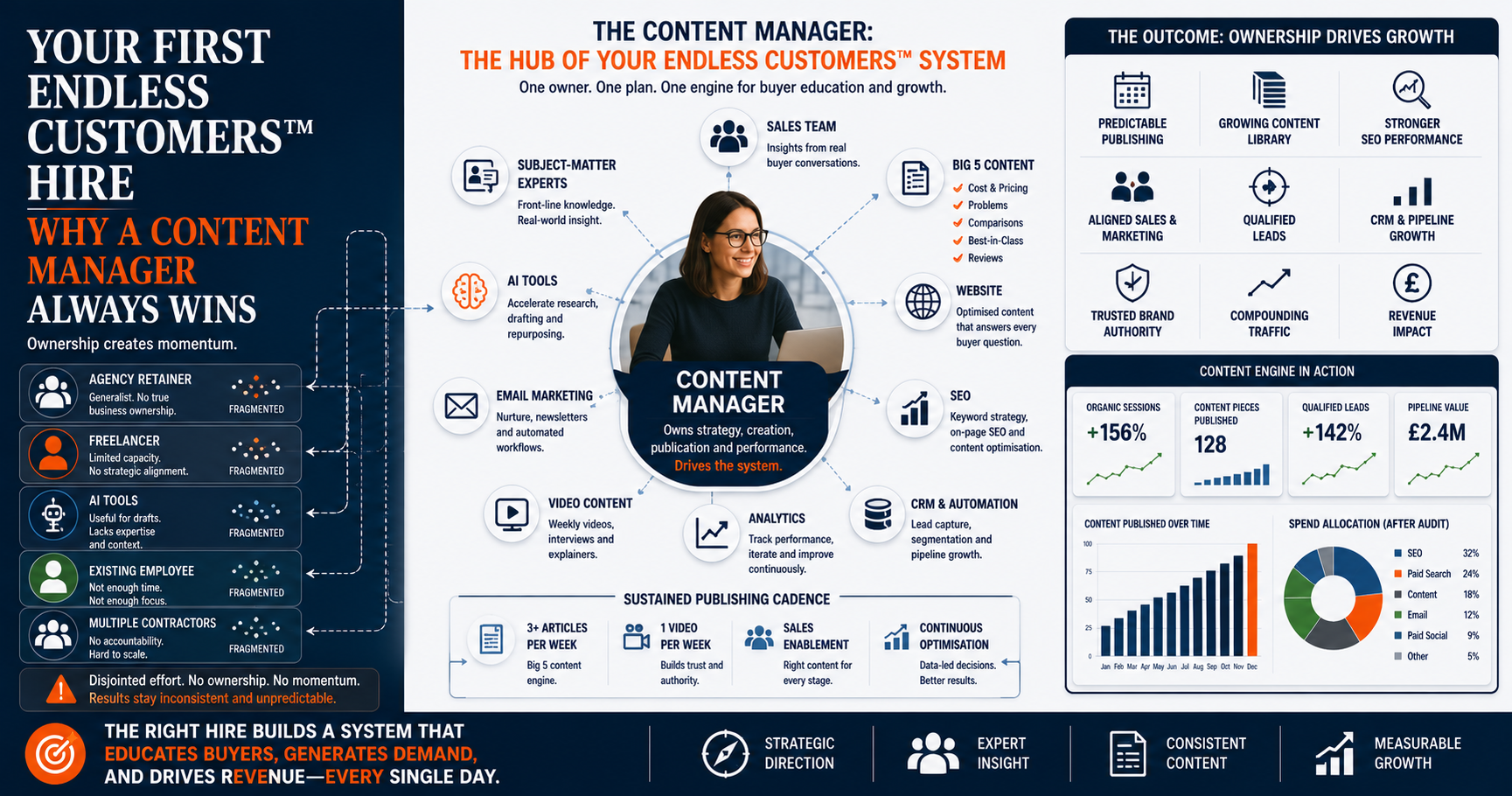
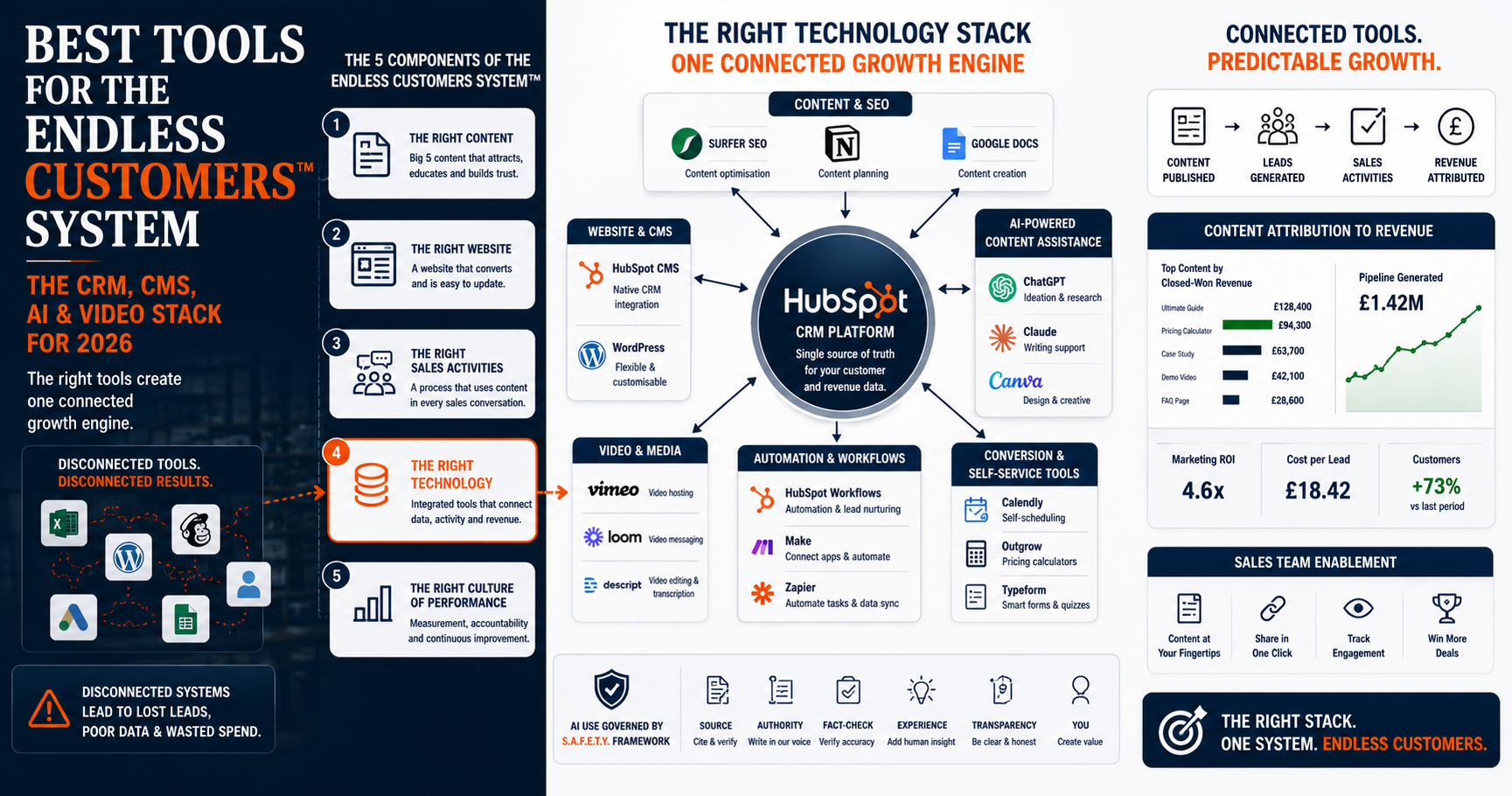
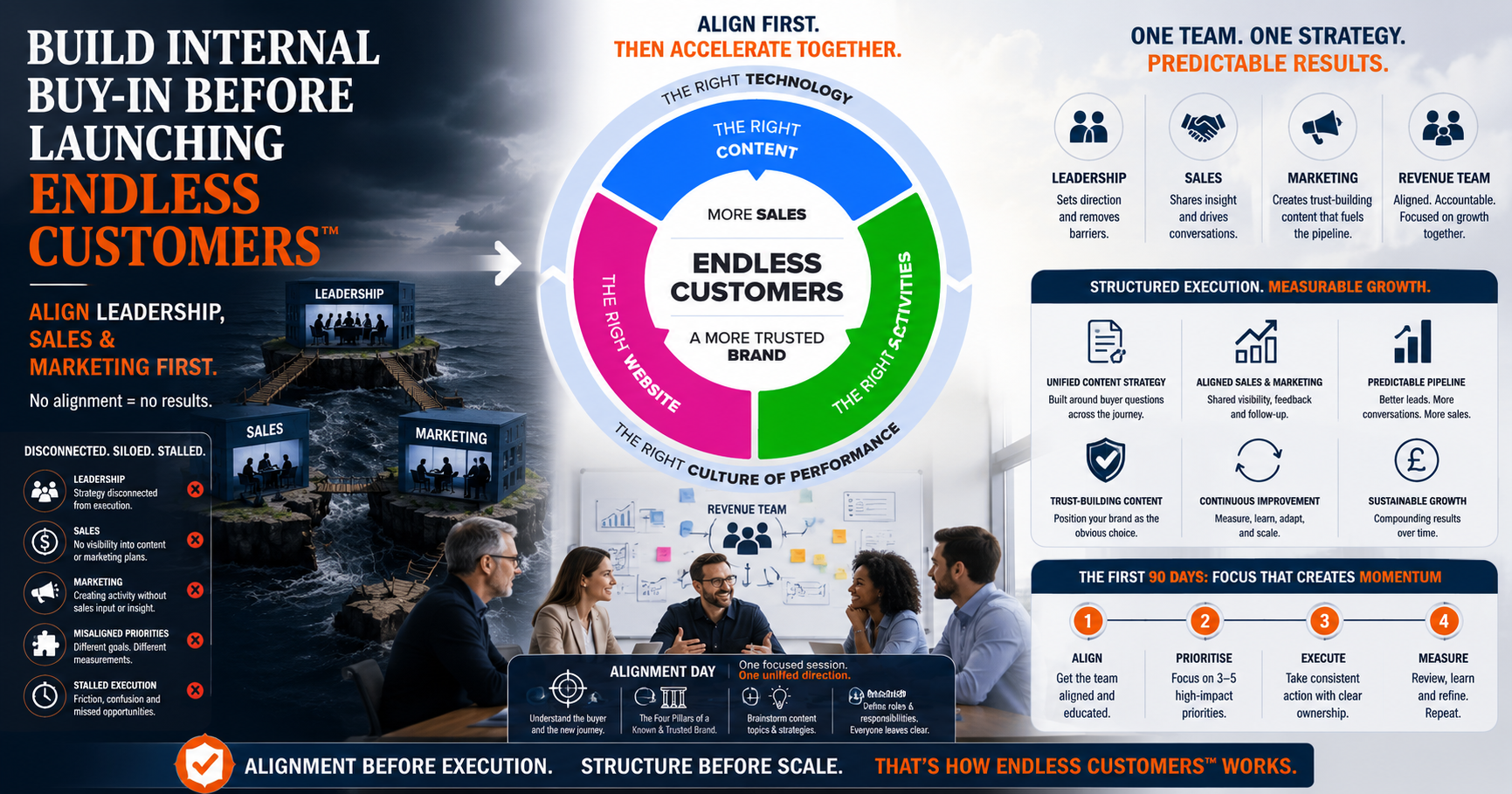
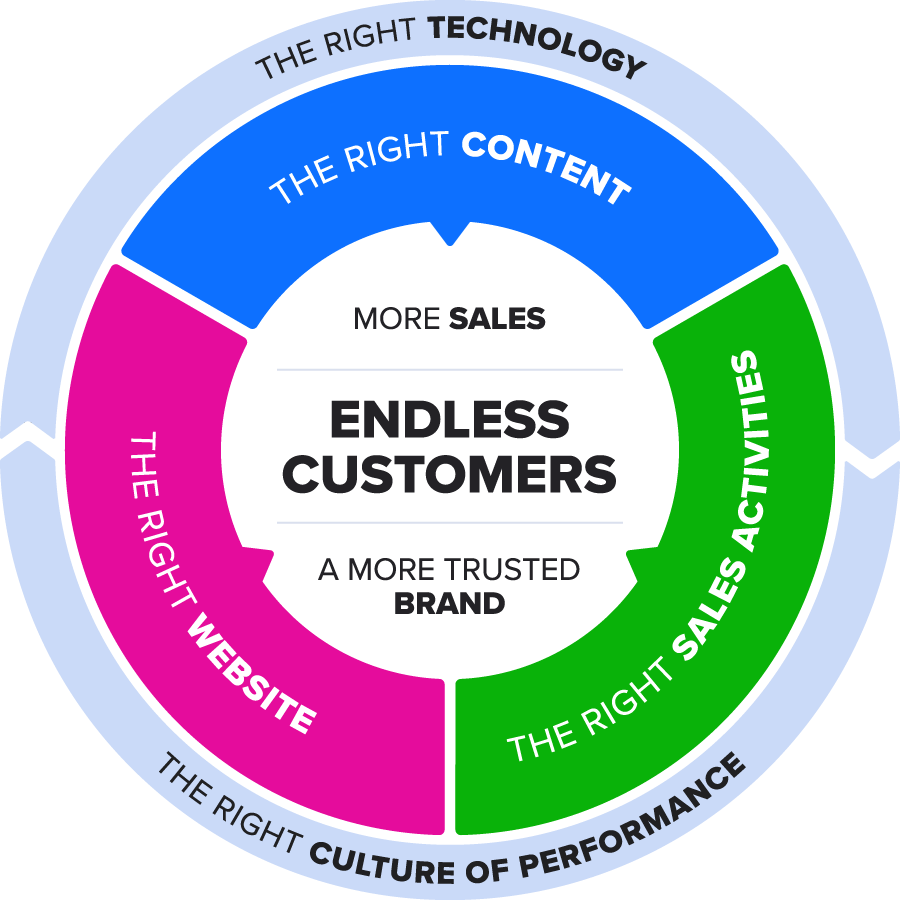
The system's five core components: Right Content, Right Website, Right Sales Activities, Right Technology, and Right Culture of Performance, each produce their own measurable signals. Taken together, they tell the real story.
No single dashboard will capture this. That's why the Endless Customers Scorecard exists.
The Endless Customers Scorecard: your built-in ROI measurement tool
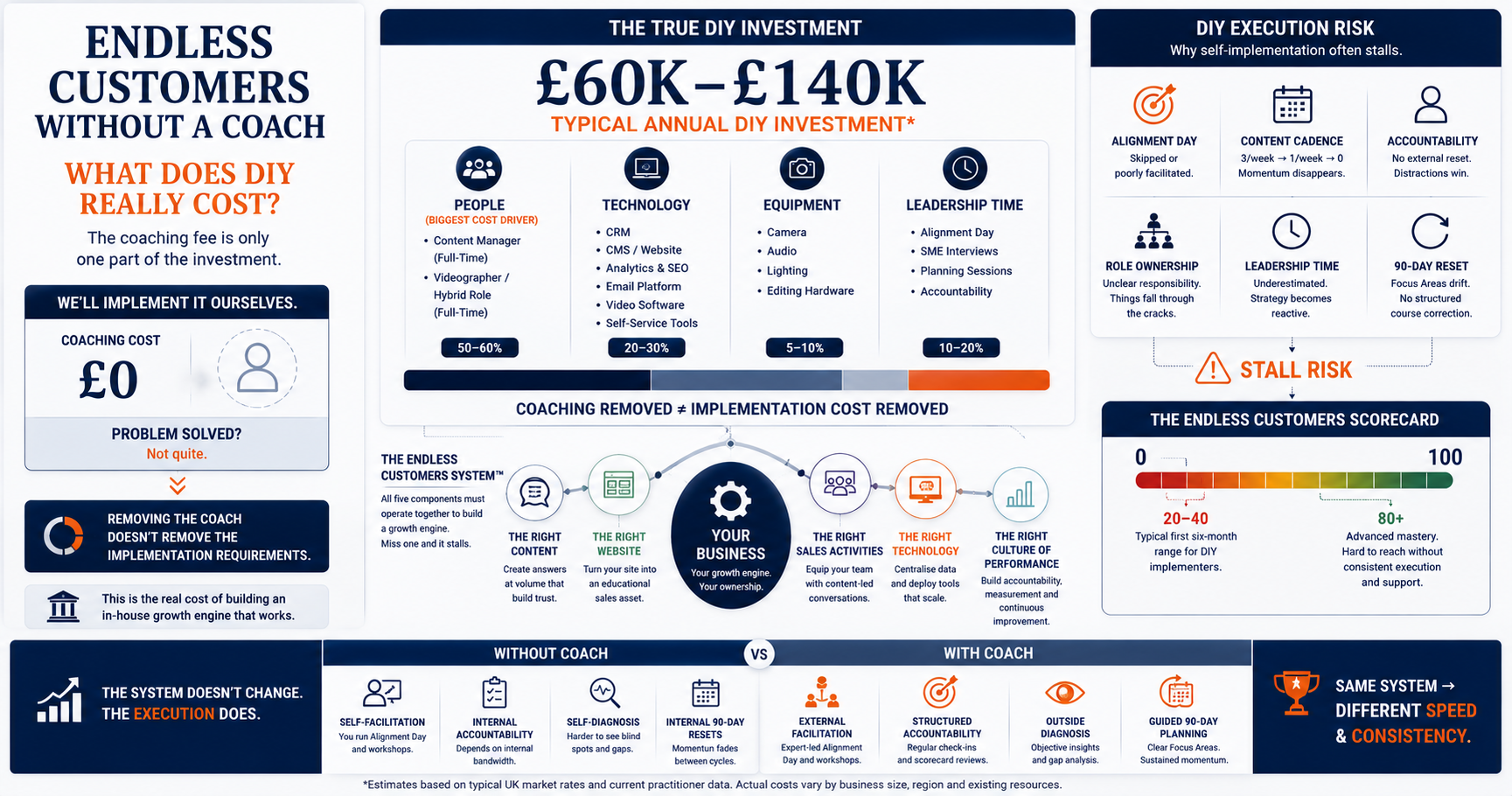
The Endless Customers Scorecard is a 10-prompt self-assessment, scored 0–10 per prompt across all five components, completed quarterly as a team, and it is the primary tool for measuring growth and progress with the framework.
Each prompt maps directly to a component, giving leadership a consistent, structured view of where the business is strong and where it is falling behind. The scoring is intentionally subjective. The value is in honest discussion, not in achieving a high number.
Complete it as a team, not solo. Group discussion surfaces blind spots that one person simply won't catch.
| Score range | What it means |
|---|---|
| 0–19 | Beginning. Significant work needed across multiple areas. |
| 20–39 | Getting started. Frequent support still needed. |
| 40–59 | Halfway there. Occasional support needed. |
| 60–79 | Significant traction. Business improving continuously. |
| 80–100 | Full mastery. Minimal outside support required. |
Timeline benchmarks: when should you expect to see results?
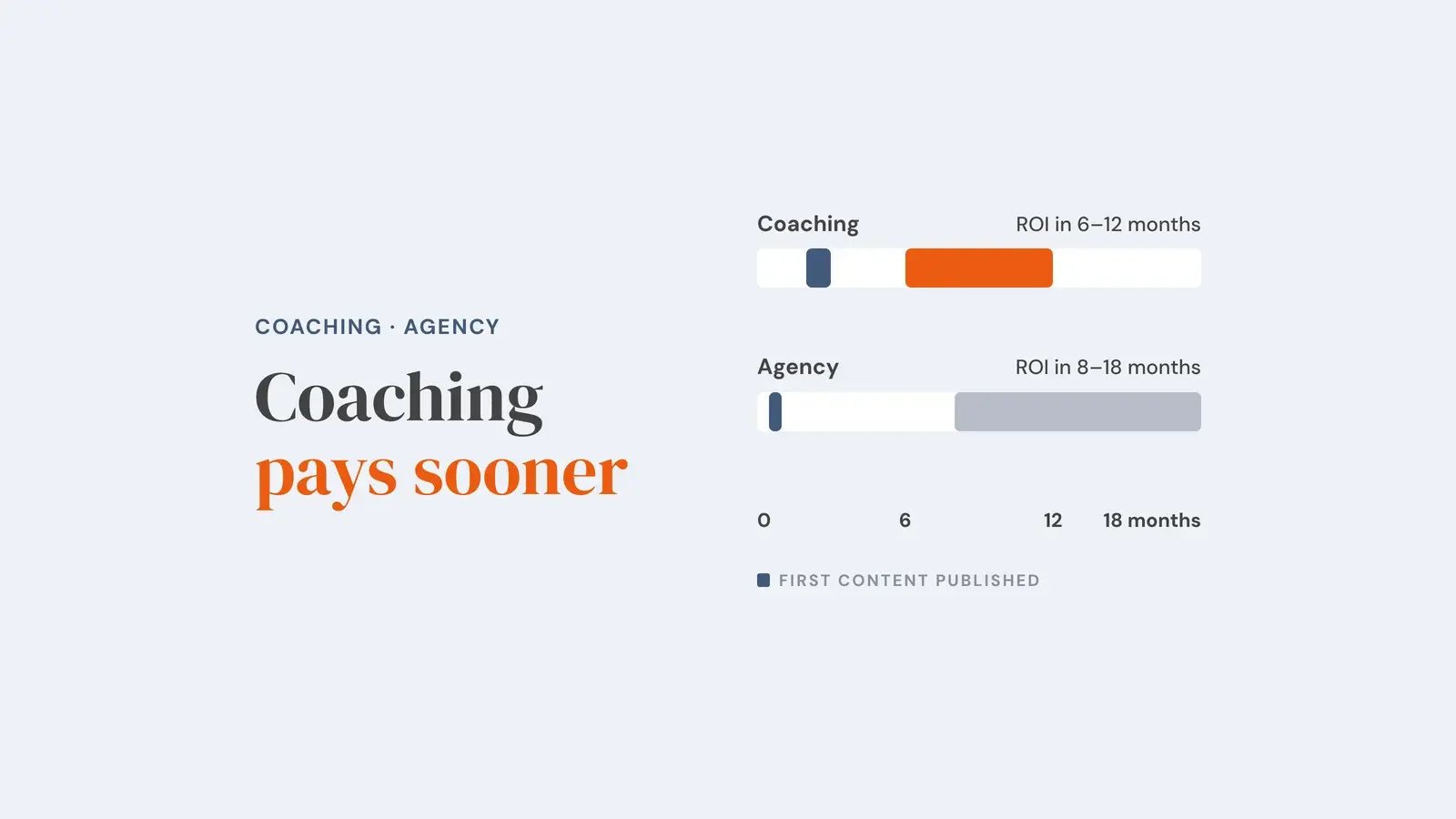
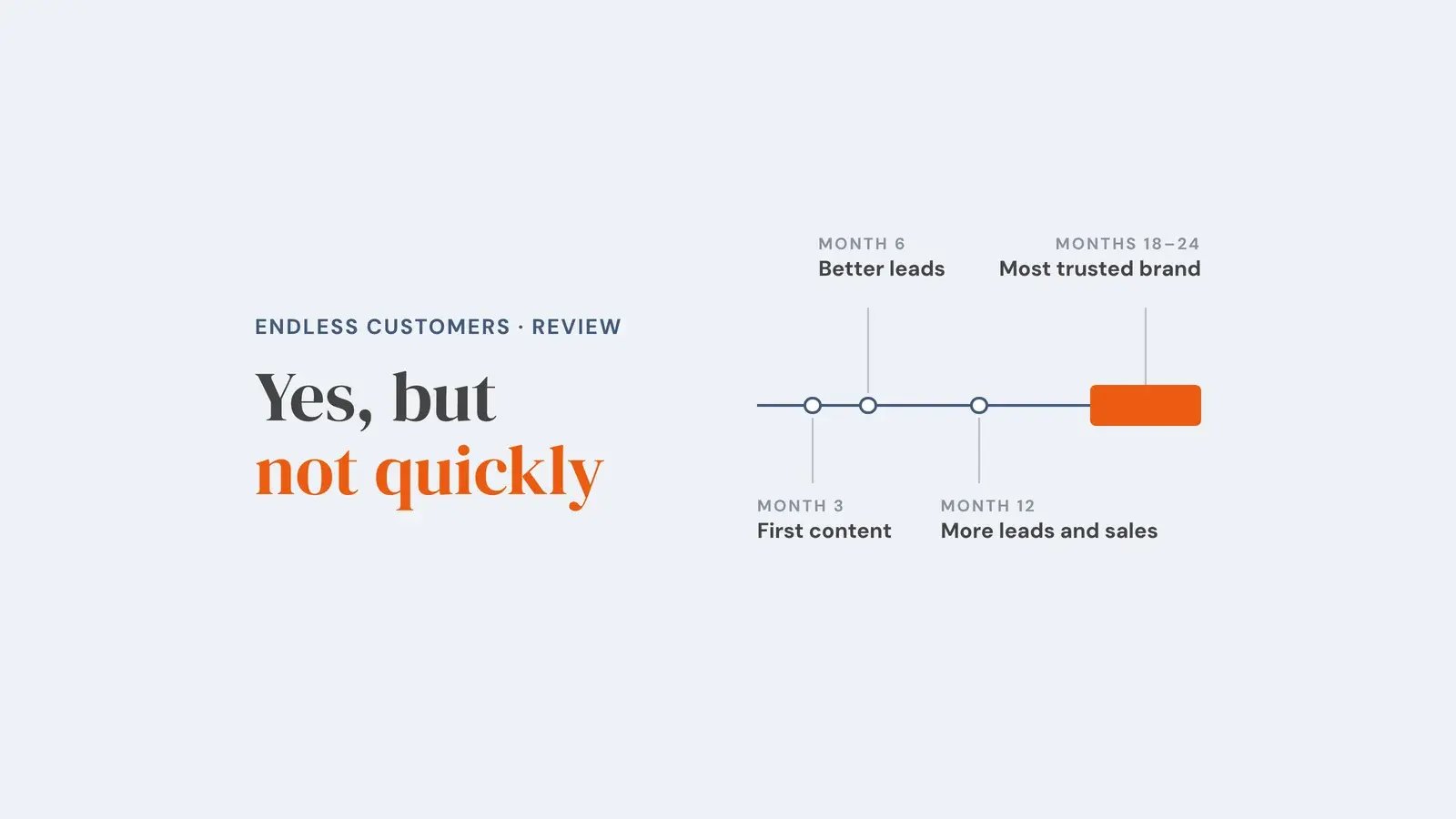
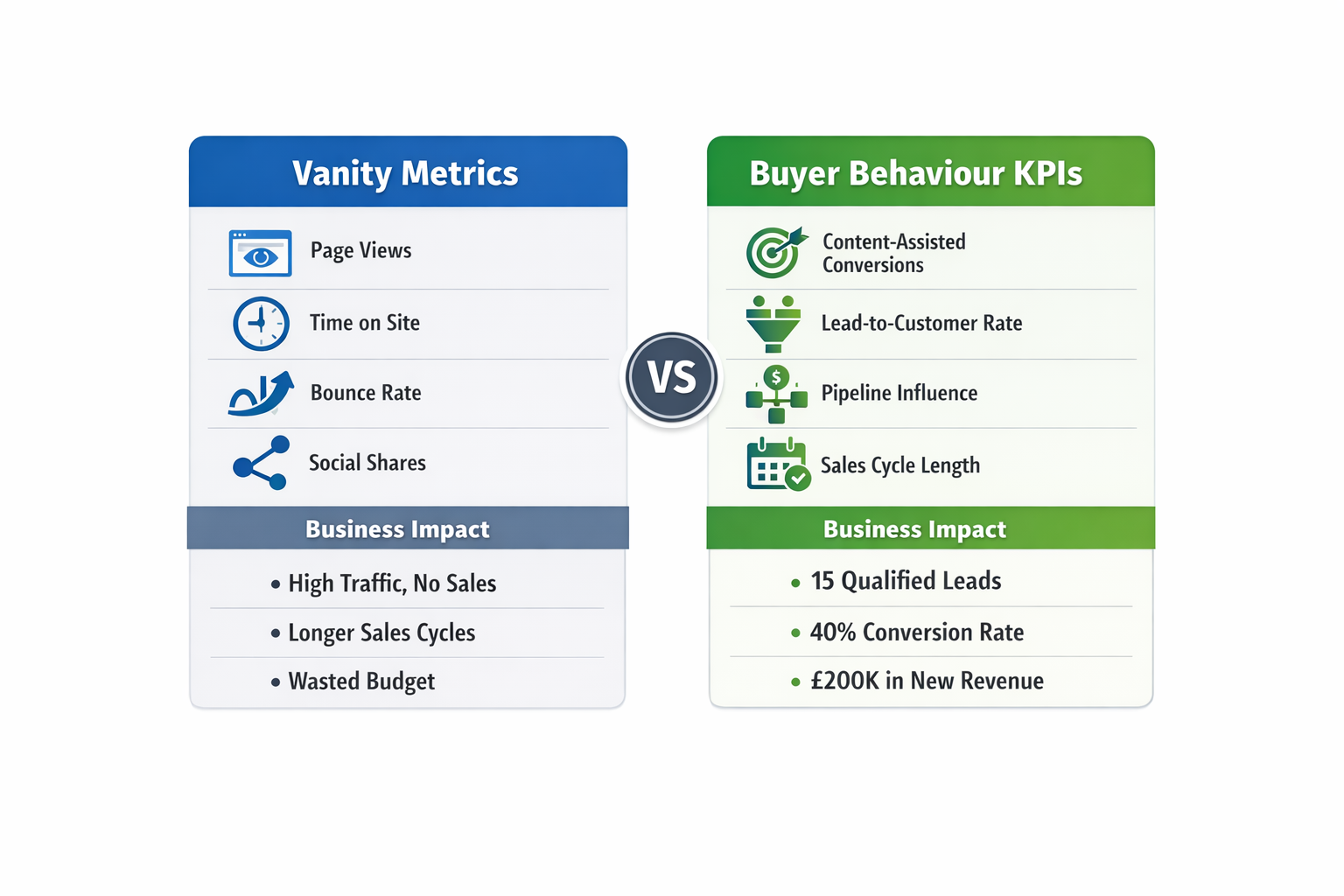
Most businesses don't see a noticeable increase in leads and sales until around the 12-month mark, and that is expected, not a sign the system is failing.
| Timeframe | Typical scorecard score | Key milestones |
|---|---|---|
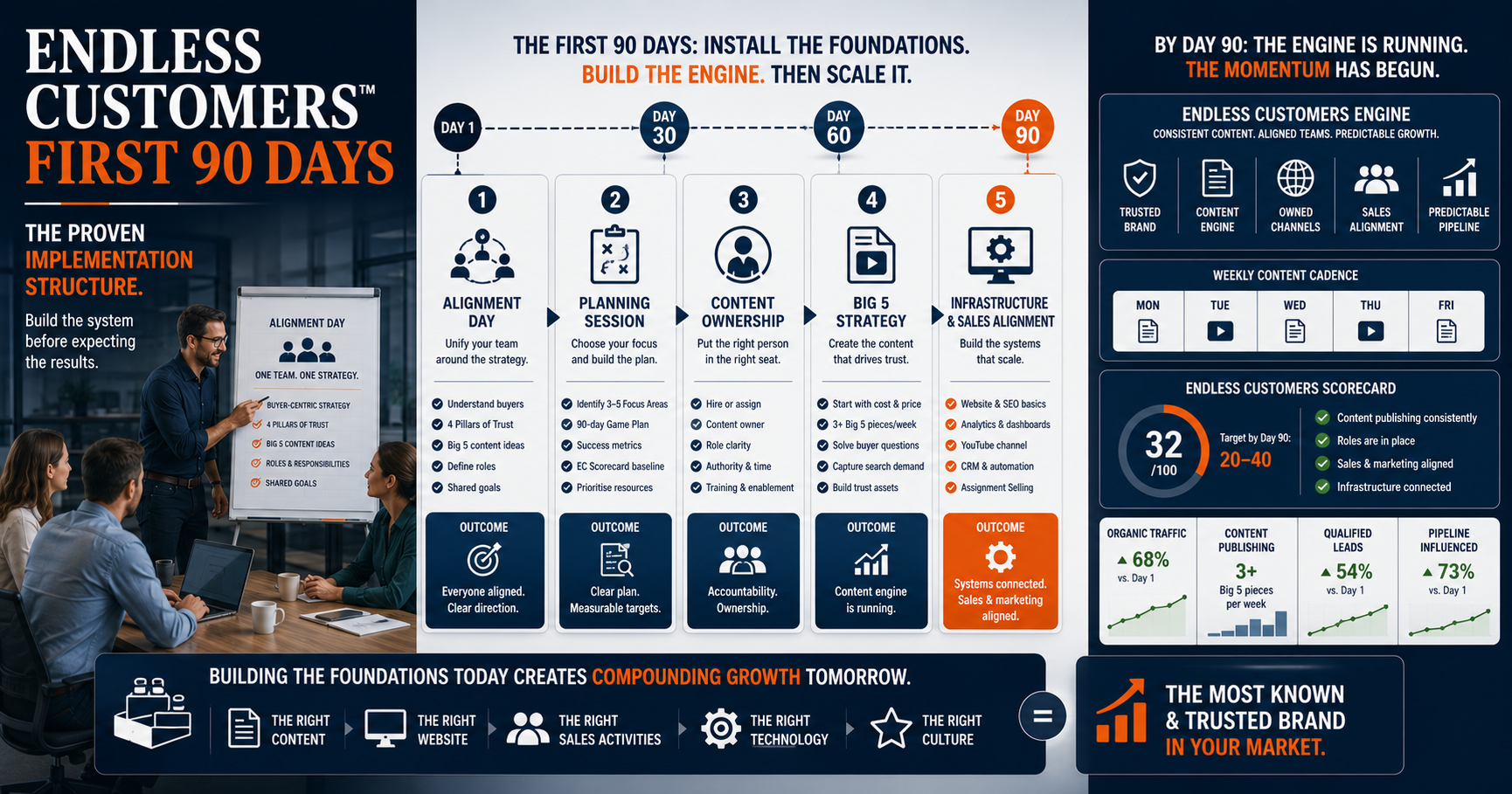
| 3 months | 20–40 | Content strategy defined, first Big 5 articles published, analytics baseline set |
| 6 months | 30–40 | Learning centre live, Assignment Selling defined, videographer in place |
| 12 months | 40–60 | Noticeable increase in leads and sales, video integrated into sales process |
| 18 months | 60–80 | Measurable video traction, advanced website optimisation |
| 24 months | 80–100 | Most trusted brand in market, significant and sustained revenue growth |
By 24 months, businesses that stay fully committed are typically recognised as the most known and trusted brand in their market. The early months are for building the system. The returns compound from month 12 onwards.
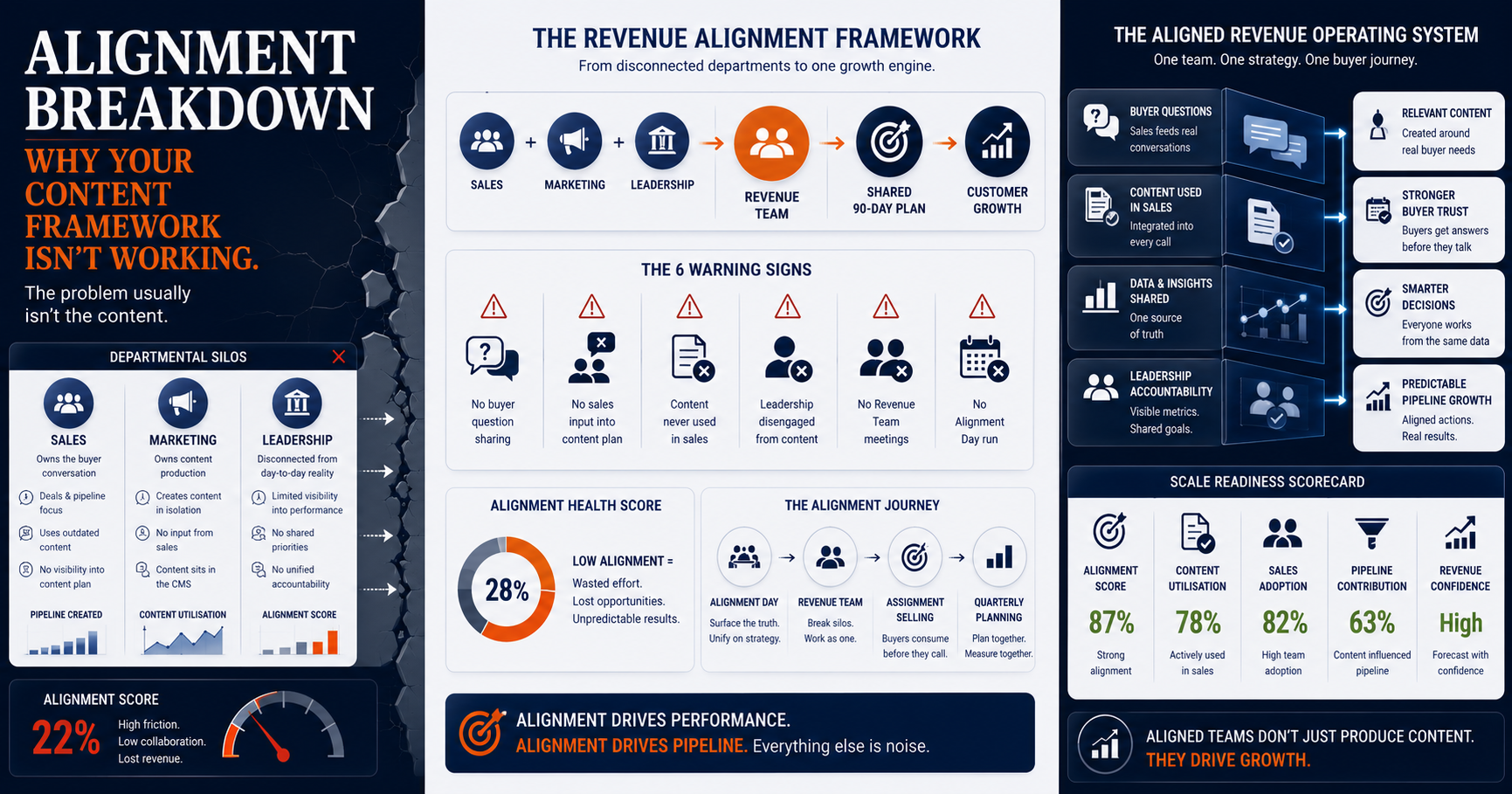
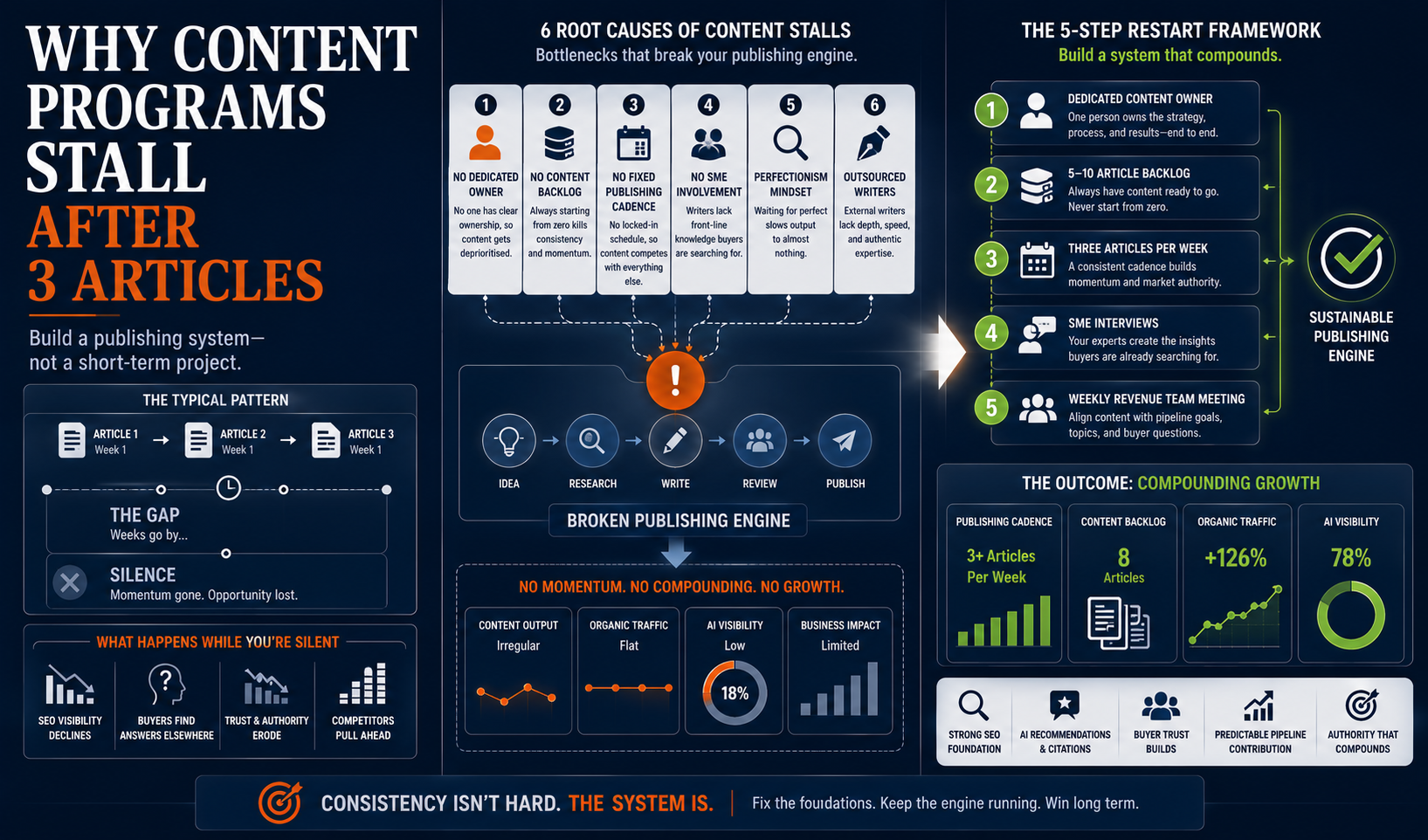
It's worth noting that partial implementation produces partial results. Businesses that publish content inconsistently, skip Assignment Selling, or fail to align sales and marketing will score lower on the Scorecard, and see proportionally weaker returns. The Scorecard is the diagnostic tool that shows you exactly where the gaps are.
What real Endless Customers ROI looks like: three proven examples
The most credible evidence of what this system delivers comes from documented, named businesses, not projections.
River Pools
After requiring prospects to consume 30 or more pages of content before their first sales appointment, River Pools moved from a 30% close rate (75 pools in 250 appointments) to a 79% close rate (95 pools in 120 appointments) in one year.
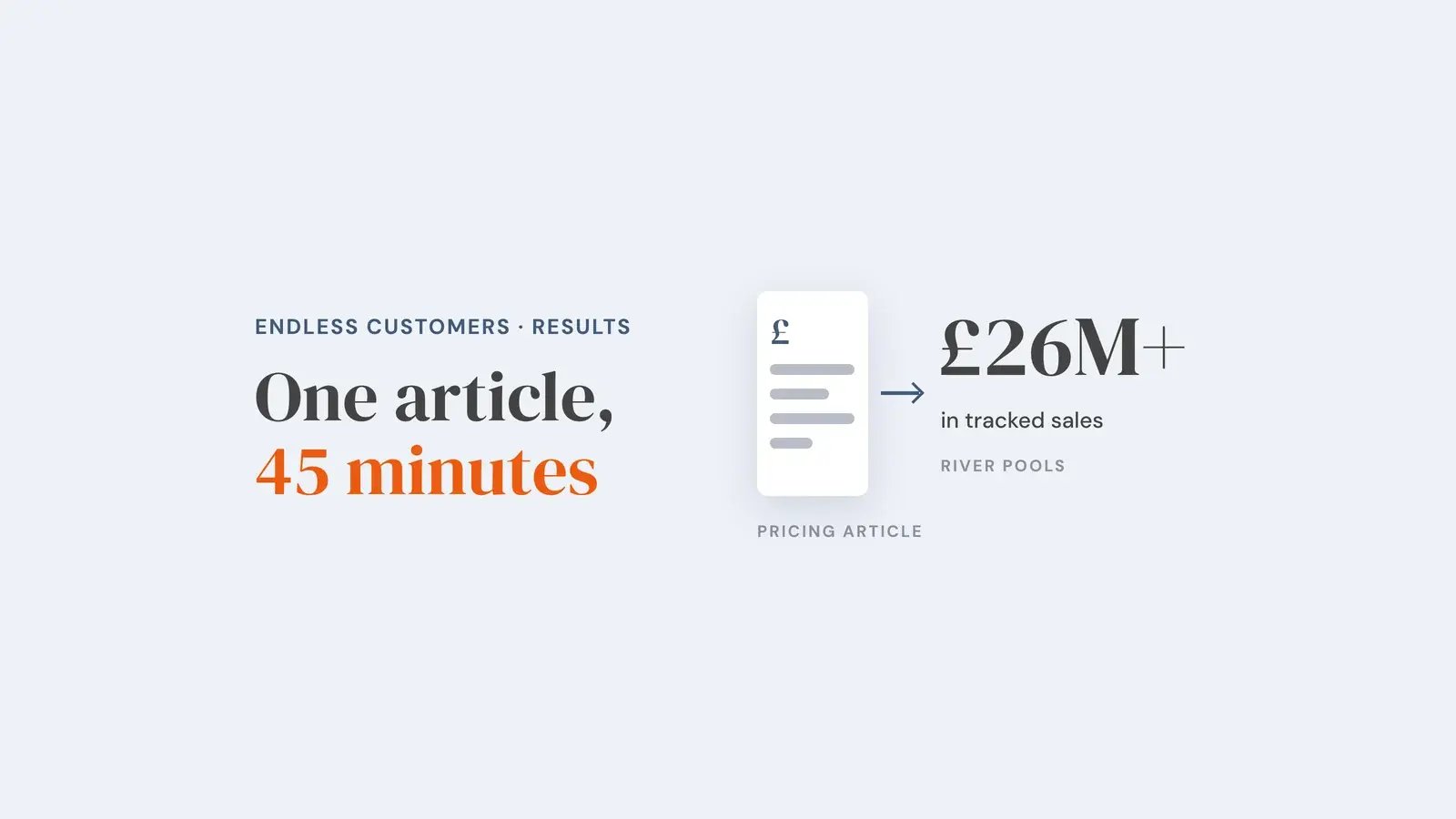
Their pricing article alone has generated over $35 million in sales. Note: the broader book benchmark, prospects who consumed 30 or more pages closing at 80% versus 25% for those who hadn't, reflects the general Assignment Selling data; River Pools' own figures document their specific year-one improvement as the process was embedded.
Sheffield Metals
Videographer Thad Barnette built a 500-video YouTube library, the "Metal Roofing Channel", now generating more than 60 qualified leads per week and over $20 million in sales.
CSI Accounting & Payroll
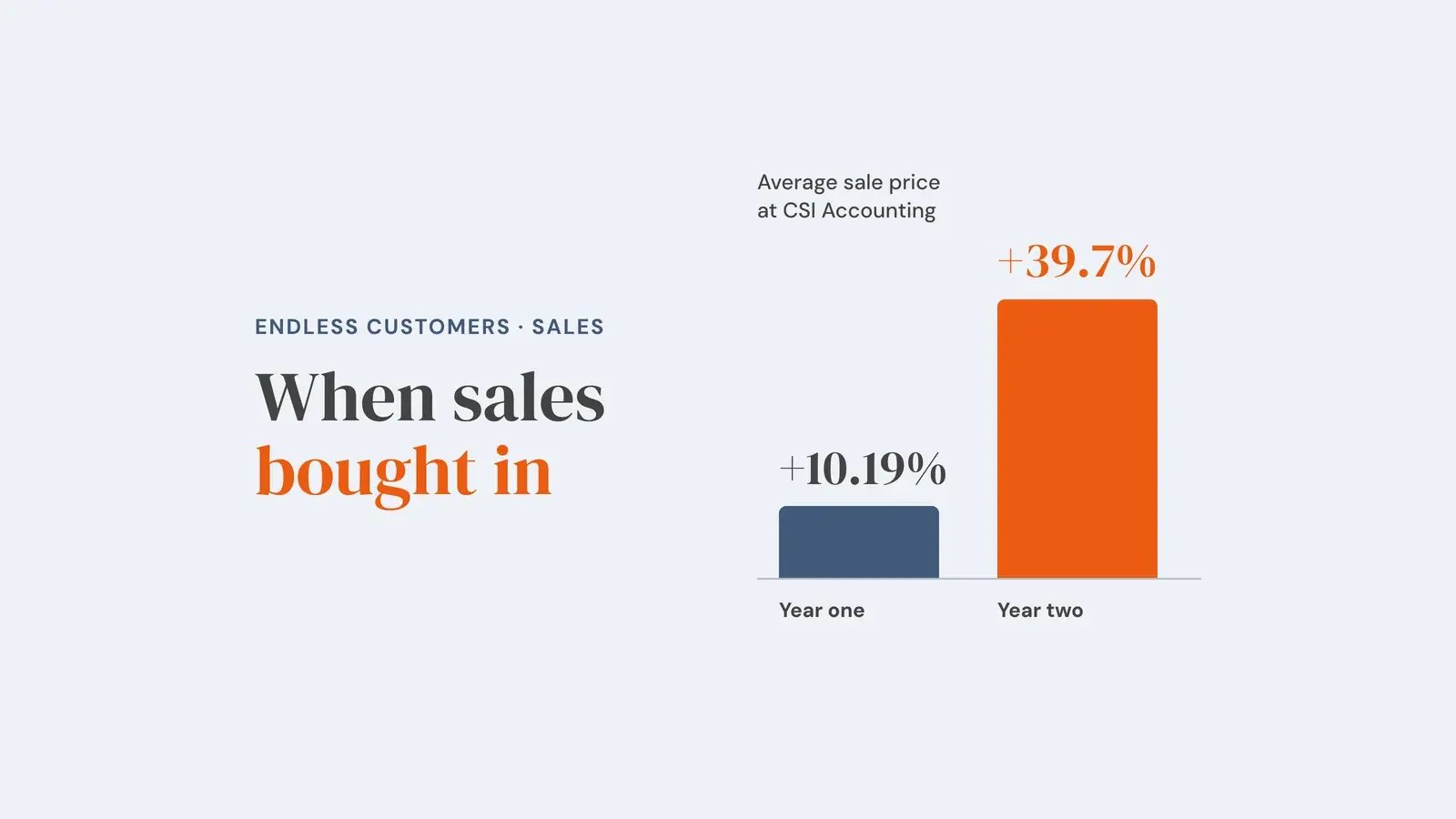
After implementing Assignment Selling, CSI saw a 10.19% increase in average sale price in year one, rising to 39.7% by year two.
These results share a common thread: the ROI is tied directly to sales process change, not just content volume. Content without Assignment Selling produces far weaker returns.
How to measure Assignment Selling's impact on your sales process
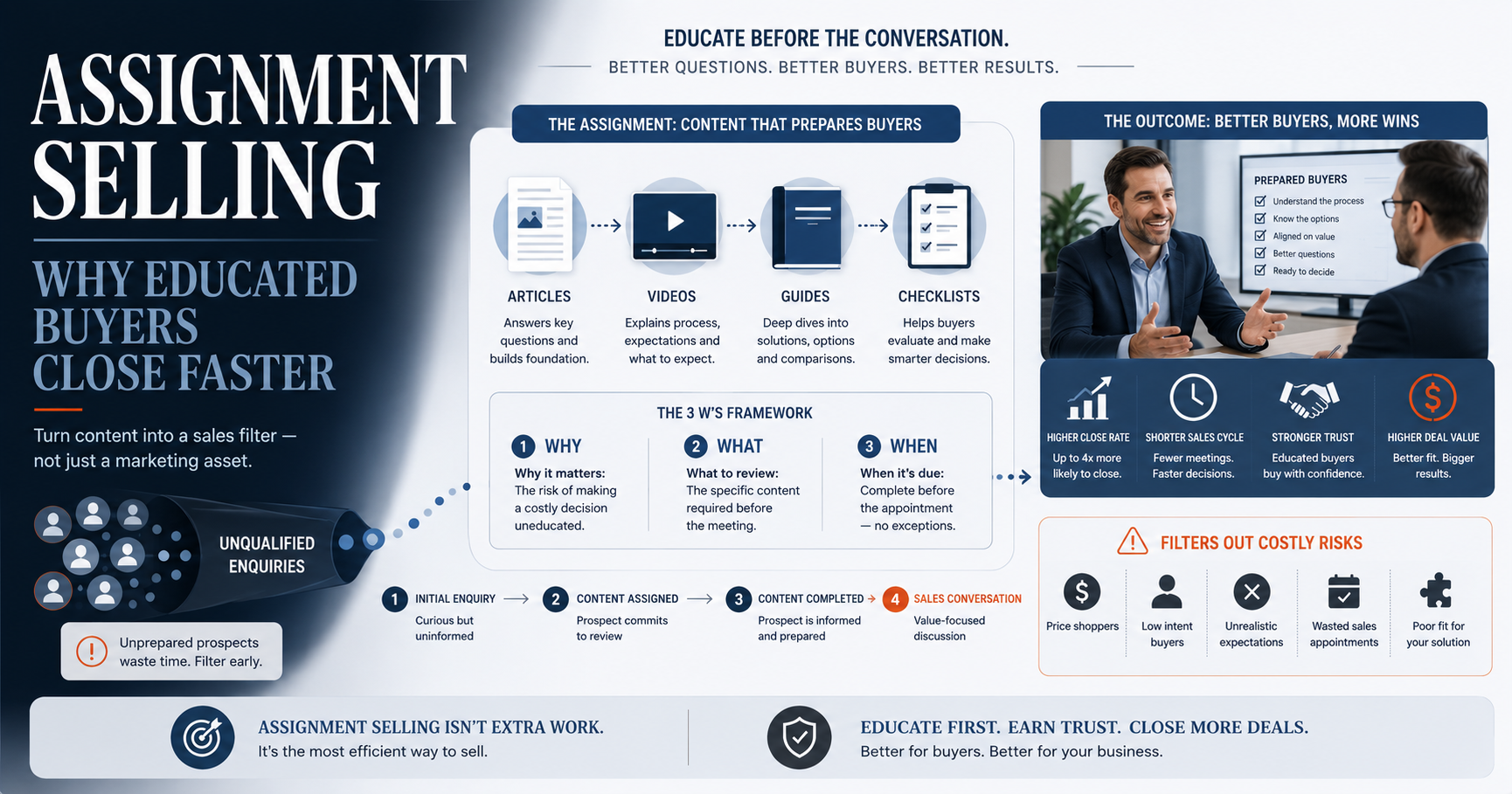
Assignment Selling, requiring prospects to consume specific educational content before a sales conversation, is the fastest-acting ROI driver in the Endless Customers System™.
The clearest signal it is working: your close rate rises while the total number of appointments needed to hit your revenue target falls. Marcus Sheridan's data shows prospects who consumed 30 or more pages of content before a sales appointment closed at 80%, versus 25% for those who had not, a 4x difference trackable in any CRM.
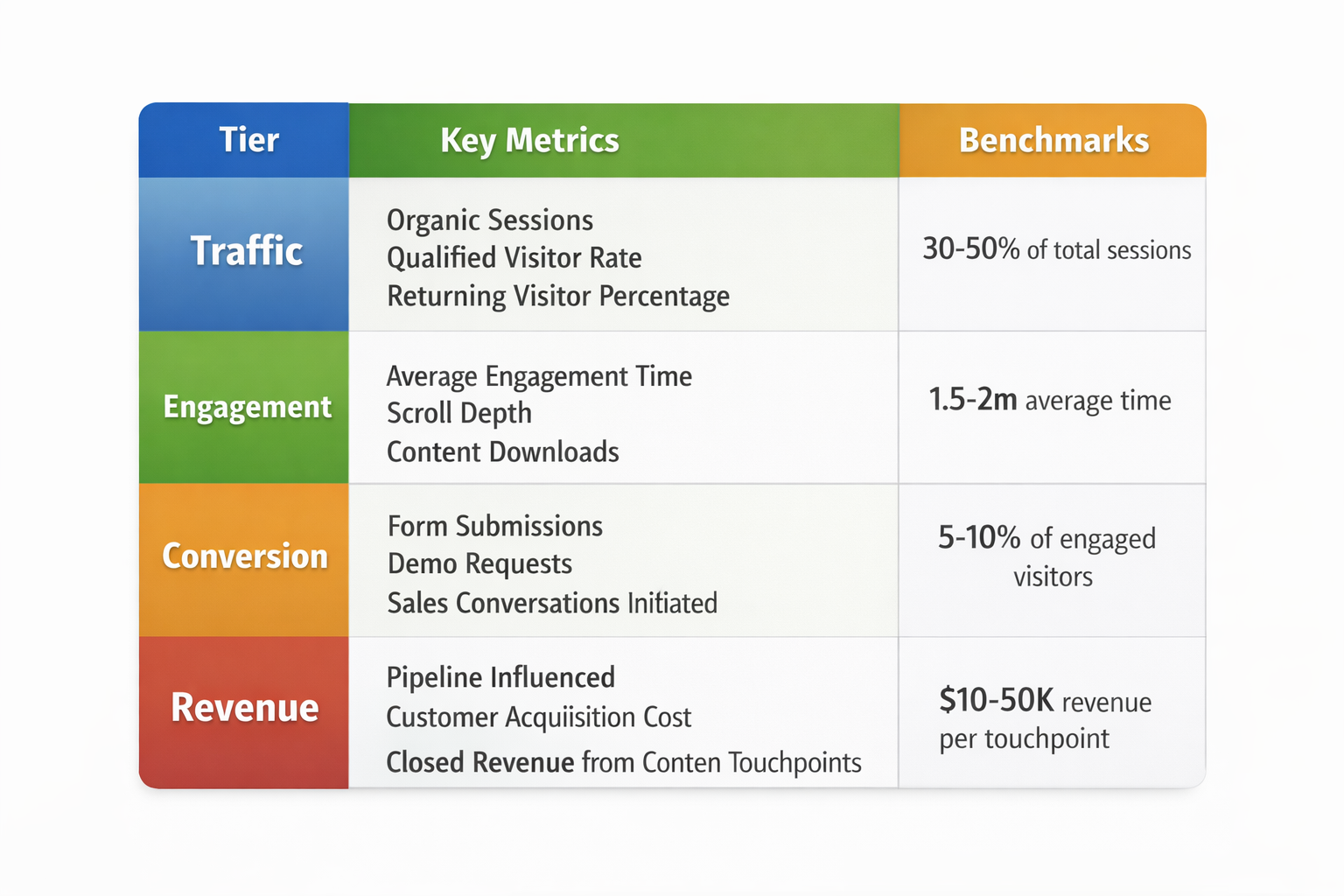
Track these four data points per sales rep:
- Close rate before and after Assignment Selling is introduced
- Average number of appointments needed to close a deal
- Average deal size
- Percentage of prospects who completed their content assignment before the first meeting
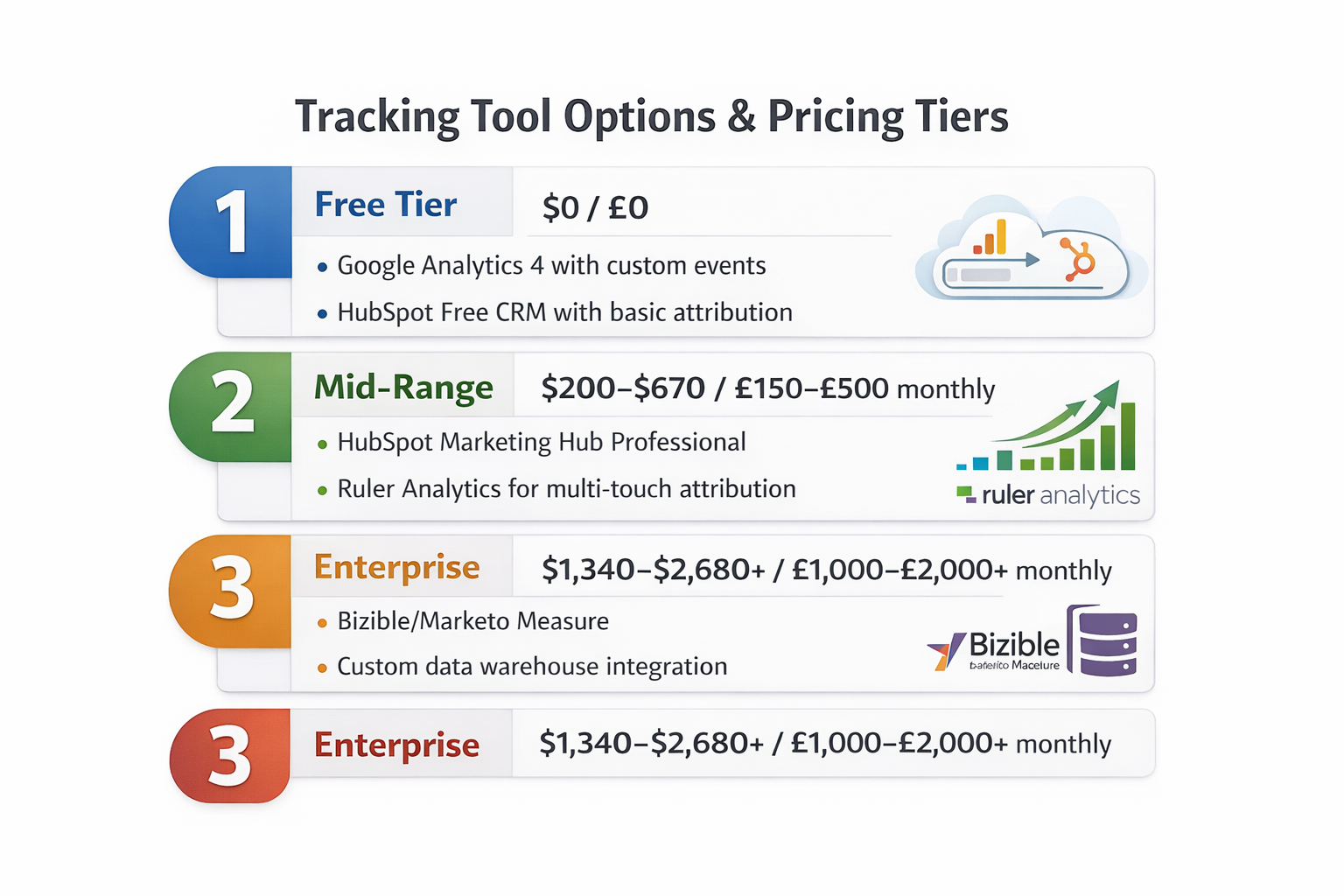
If content consumption and close rate are not being tracked together in your CRM, the clearest ROI attribution signal in the system is being missed.
Common mistakes that make ROI hard to measure
The most common mistake is failing to connect content to closed deals in your CRM, because without that attribution, you cannot prove what is actually driving pipeline.
Other pitfalls:
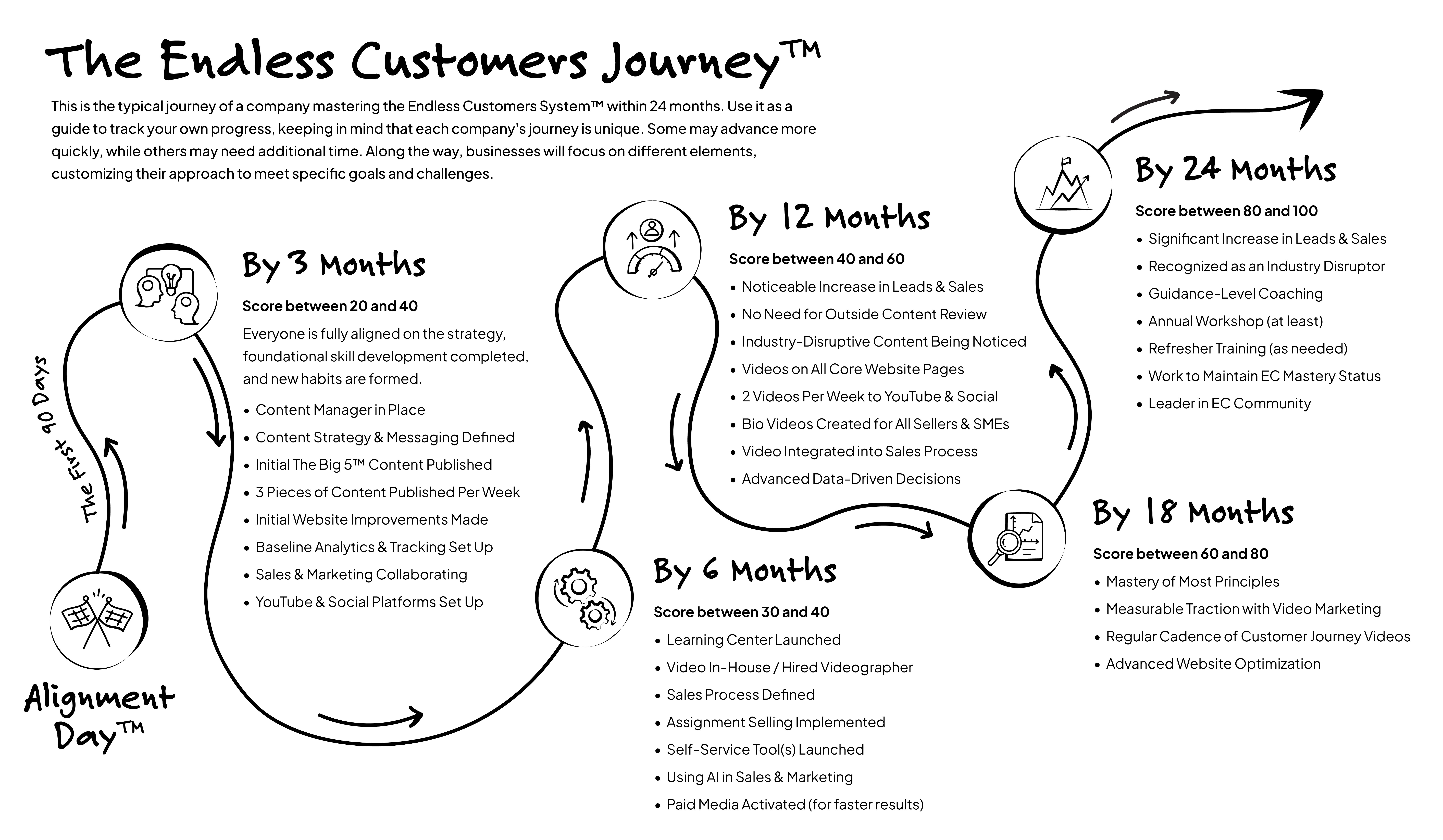
- Tracking only website traffic: With zero-click search and AI-generated answers, traffic is an increasingly unreliable proxy for business impact.
- Expecting results in the first 90 days: The first quarter is about foundations, not revenue. Scorecard scores of 20–40 at three months are normal.
- Completing the Scorecard only once: It is a quarterly tool. A single snapshot shows position, it cannot show trajectory.
- Completing it solo: Shared team assessment surfaces the blind spots that matter most.
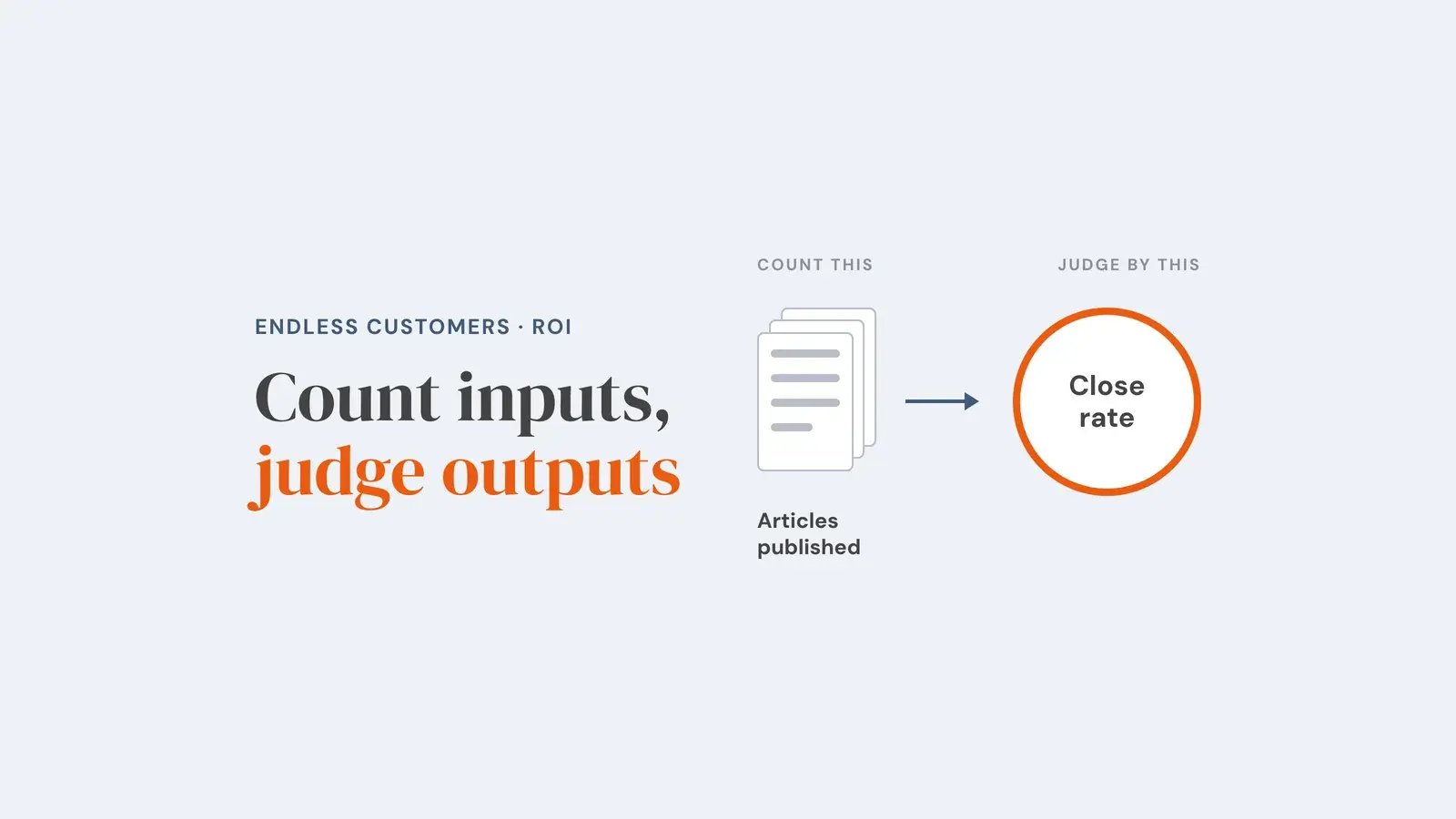
- Measuring inputs instead of outputs: Articles published is an input. Close rate is an output. Track both, but judge by the latter.
How to build your ROI measurement system: the practical setup
Building an Endless Customers ROI measurement system starts with establishing your baseline before you begin, so you have a true before-and-after comparison.
- Set your baseline: Pull current close rate, average deal size, monthly organic sessions, and your opening Scorecard score.
- Set your Scorecard cadence: Complete it quarterly, as a team, during planning sessions.
- Connect content attribution in your CRM: Tag content pieces to prospects and link them to closed deals.
- Track Assignment Selling per rep: Log content assignment completion rates and compare close rates across the team.
- Hold a monthly Revenue Team meeting: Sales and marketing review content performance, pipeline, and Scorecard progress together.
A simple ROI calculation framework: Monthly content-attributed revenue ÷ monthly in-house content team cost = Content ROI multiple
If your in-house team costs £5,000 ($6,250) per month and content attribution in your CRM shows £30,000 ($37,500) in influenced pipeline, your content ROI multiple is 6x, a figure that compounds as the content library grows.
Recommended reading: How Much Should You Budget for Implementing the Endless Customers System Internally?
Conclusion
You started this article unsure whether your Endless Customers implementation was actually working. You now have the specific tools; the Scorecard, the attribution framework, the timeline benchmarks, and the real-world numbers, to measure it with clarity.
The businesses that stall with this system are rarely the ones who stop doing the work. They are the ones who measure the wrong things, too early, and draw the wrong conclusions.
How to take action now
- Pull your current close rate, average deal size, and organic sessions toda,— these become your baseline
- Schedule your first Scorecard session as a team within the next 30 days
- Set up content attribution tagging in your CRM before publishing your next piece of content
- Start tracking Assignment Selling completion rates per rep in your next sales meeting
Additional reading:
-
What to Expect When You Commit to the Endless Customers System for 90 Days
-
What's the True ROI of the Endless Customers System? (Short-Term vs Long-Term)
If you'd like to review your Scorecard baseline with an expert before your next planning session, and leave with a clear 90-day action plan that aligns your sales and marketing teams, my Growth Alignment Intensive™ is built exactly for that.

About the author
Tom Wardman is a certified Endless Customers coach and strategic marketing consultant. He works with founder-led businesses across the UK to replace agency dependency with owned growth systems, transferring full capability to internal teams within 18–24 months through the Endless Customers Implementation programme and Growth Alignment Intensive™.
Pricing disclaimer: All GBP–USD price conversions are rounded estimates and correct at the time of publishing. Exchange rates fluctuate and figures should be treated as indicative only.