

Your marketing isn't bringing in the customers your business needs. You've heard about the Endless Customers System—how it helps businesses become the most known and trusted brands in their markets—but implementation feels impossible. Sales cycles drag on, your team resists change, and you're seeing no return on your marketing investment.
I've spent years helping business owners transform their marketing through proven systems. What I've learned is this: most businesses don't fail because the system doesn't work. They fail because they encounter predictable roadblocks and don't know how to overcome them.
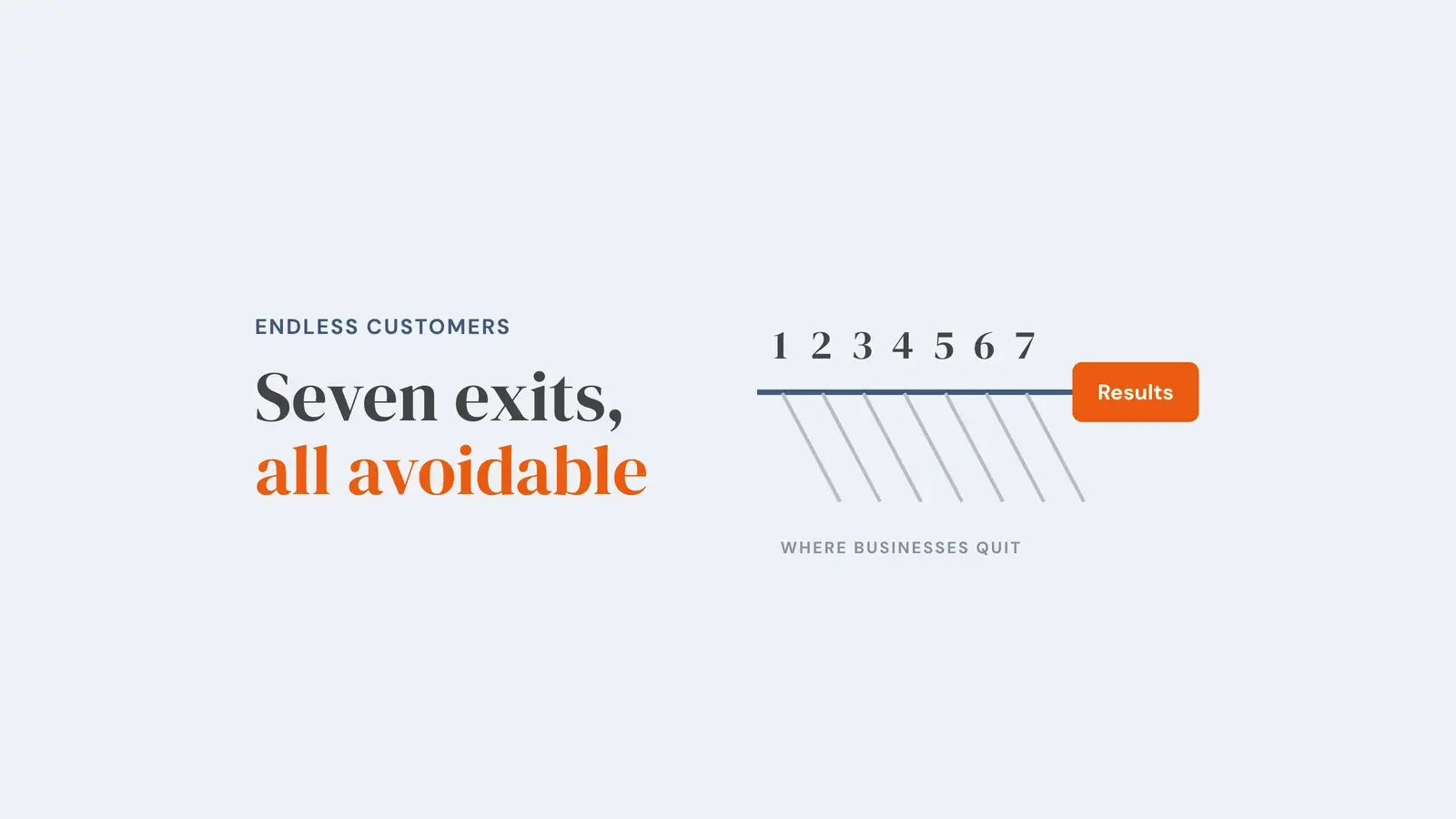
In this article, you'll learn the 7 most common reasons businesses quit the Endless Customers System and discover practical strategies to overcome each challenge. By understanding these obstacles before you start, you can avoid the pitfalls that derail most companies and build the trust-based marketing system your business deserves.
Overview: What is the Endless Customers System and why implementation proves difficult
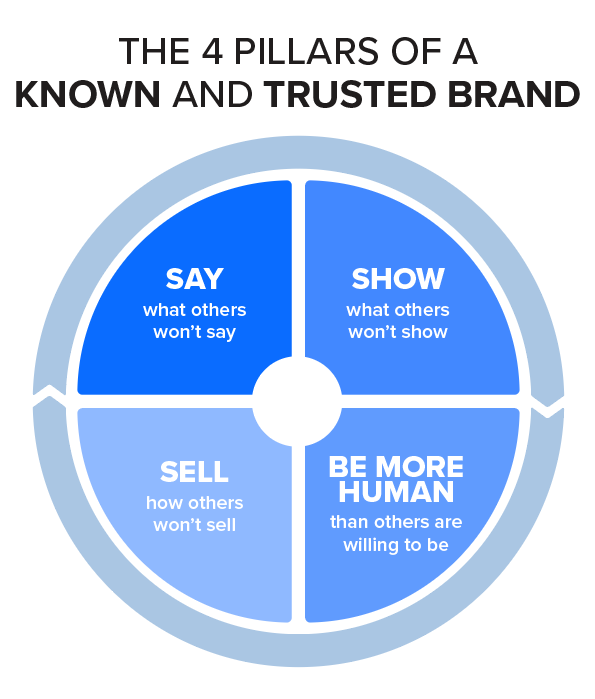
The Endless Customers System is a framework built on four pillars that help businesses become the most known and trusted brand in their market through transparent, customer-focused marketing.
The system operates on four principles:
- Say what others in your space aren't willing to say
- Show what others in your space aren't willing to show
- Sell in a way others in your space aren't willing to sell
- Be more human than others in your space are willing to be
Despite its proven success with thousands of companies worldwide, most businesses struggle to implement the system. The primary reason? It challenges everything most companies believe about traditional marketing approaches.
The system requires businesses to become media companies first, focusing on education and transparency rather than promotion. This shift proves too challenging for many organisations, leading them to quit before seeing meaningful results.
7 reasons business owners quit the Endless Customers System (and how to overcome them)
1. Fear of disruption: Why radical transparency feels risky to business owners
Loss aversion bias prevents many business owners from implementing strategies that challenge industry norms, even when their current marketing produces mediocre results.
This psychological barrier shows up in several ways:
- Resistance to transparent pricing discussions: Many businesses fear discussing costs openly will scare away potential customers
- Reluctance to address negative topics: Companies avoid discussing potential problems or drawbacks with their products
- Avoiding honest competitor comparisons: Most brands refuse to acknowledge when competitors might be better suited for certain customers
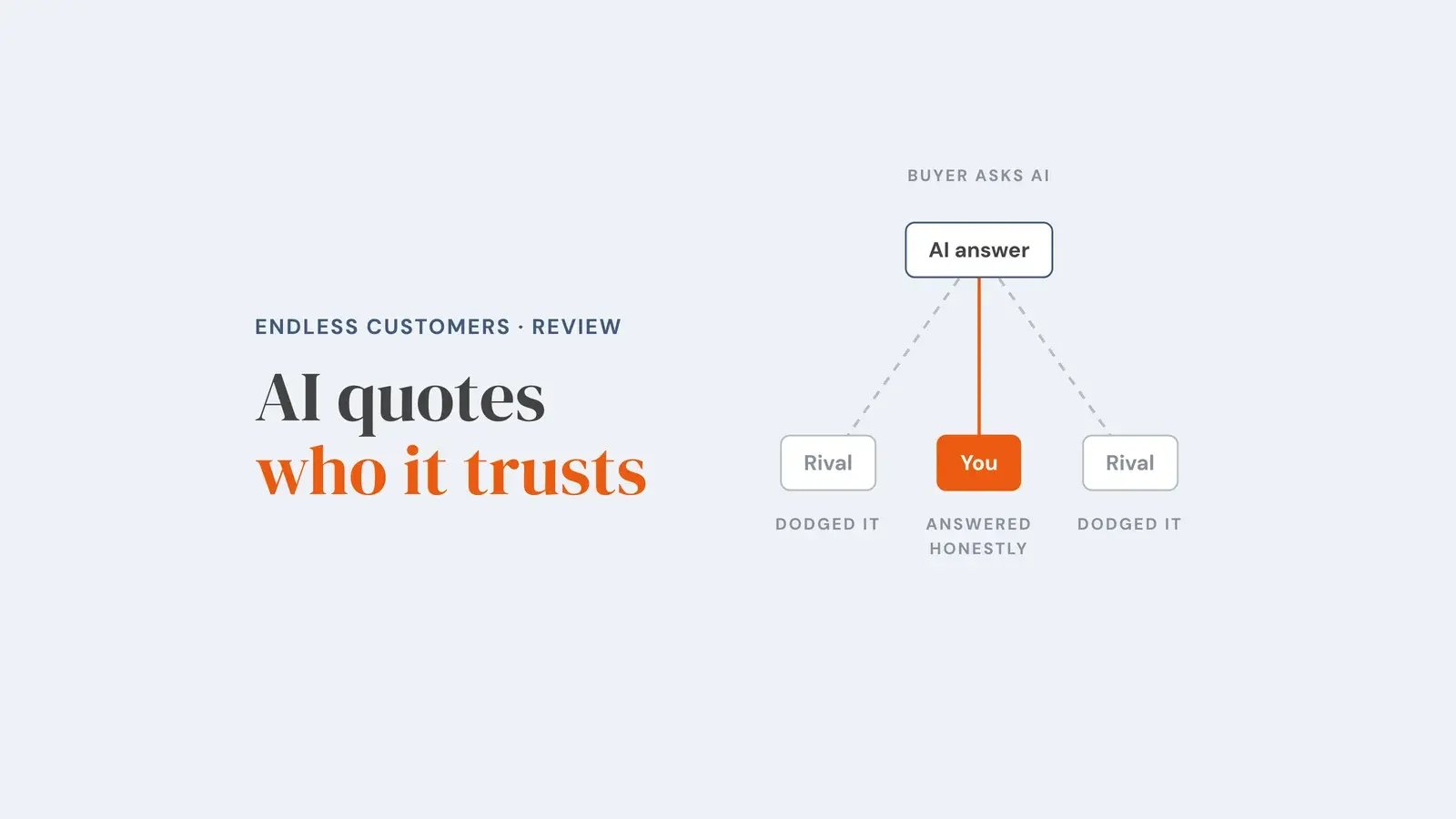
The irony? Buyers already know these conversations are happening. They're researching pricing online, reading reviews about problems, and comparing options with or without your input.
The question isn't whether these discussions occur, but whether you'll be part of them. When you refuse to address the elephant in the room, you lose the opportunity to frame the conversation and build trust through transparency.
2. Organisational inertia: Why teams resist the media company mindset
Established businesses struggle with organisational inertia, where existing processes and cultural norms create resistance to the changes required by the Endless Customers approach.
Common examples of damaging inertia:
- Marketing departments focused on "brand awareness" rather than trust-building
- Sales teams resistant to transparent, education-first approaches
- Leadership unwilling to let subject matter experts create content
- Legal departments blocking helpful customer education due to risk aversion
The deeper the organisation's roots, the stronger the resistance to change becomes. This inertia proves particularly problematic when transforming from a traditional business model into a media company that prioritises content creation and customer education.
Breaking through requires acknowledging that maintaining the status quo is often riskier than embracing strategic change, especially in today's competitive landscape.
3. Leadership misalignment: Why lack of buy-in undermines system implementation
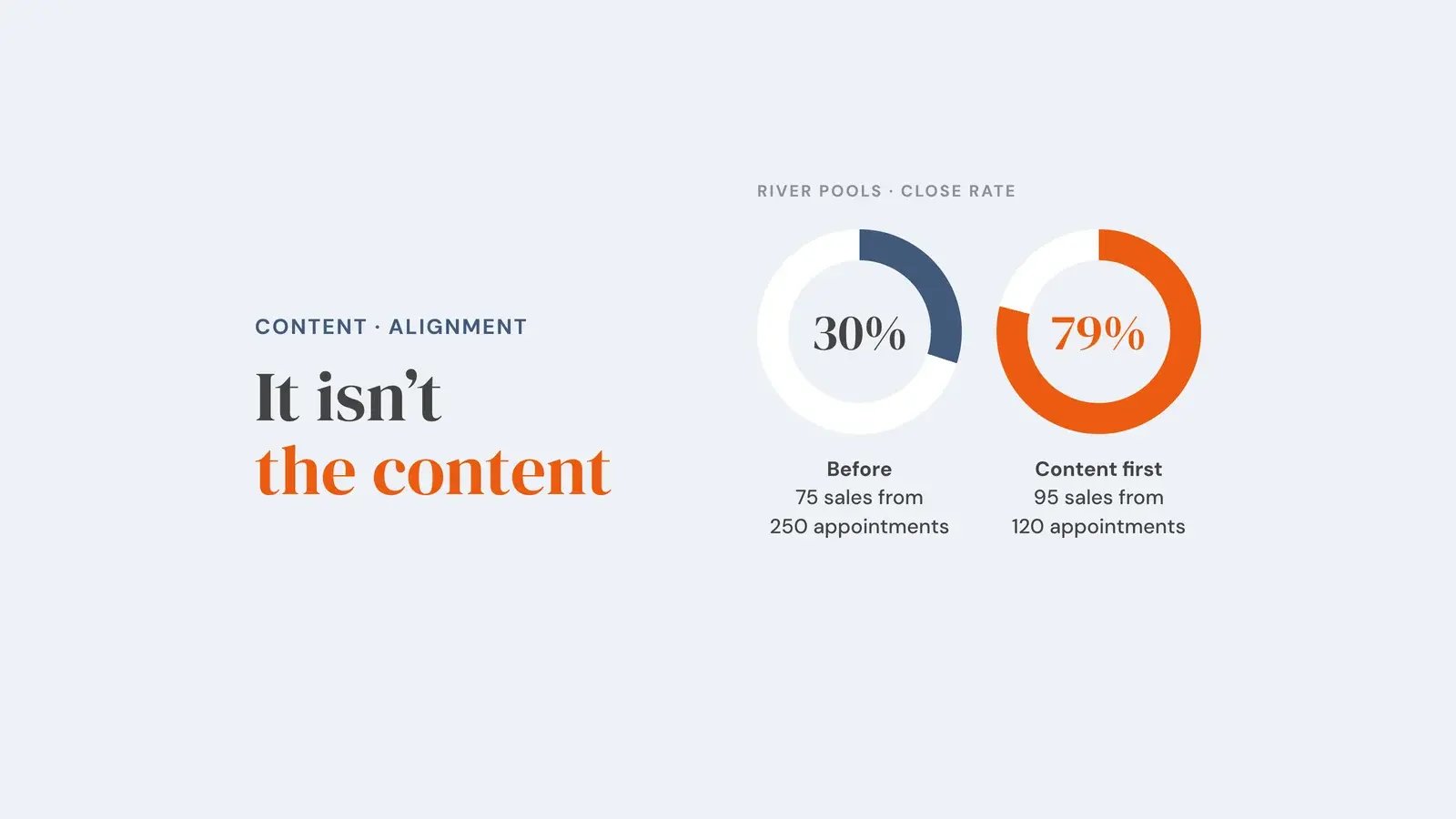
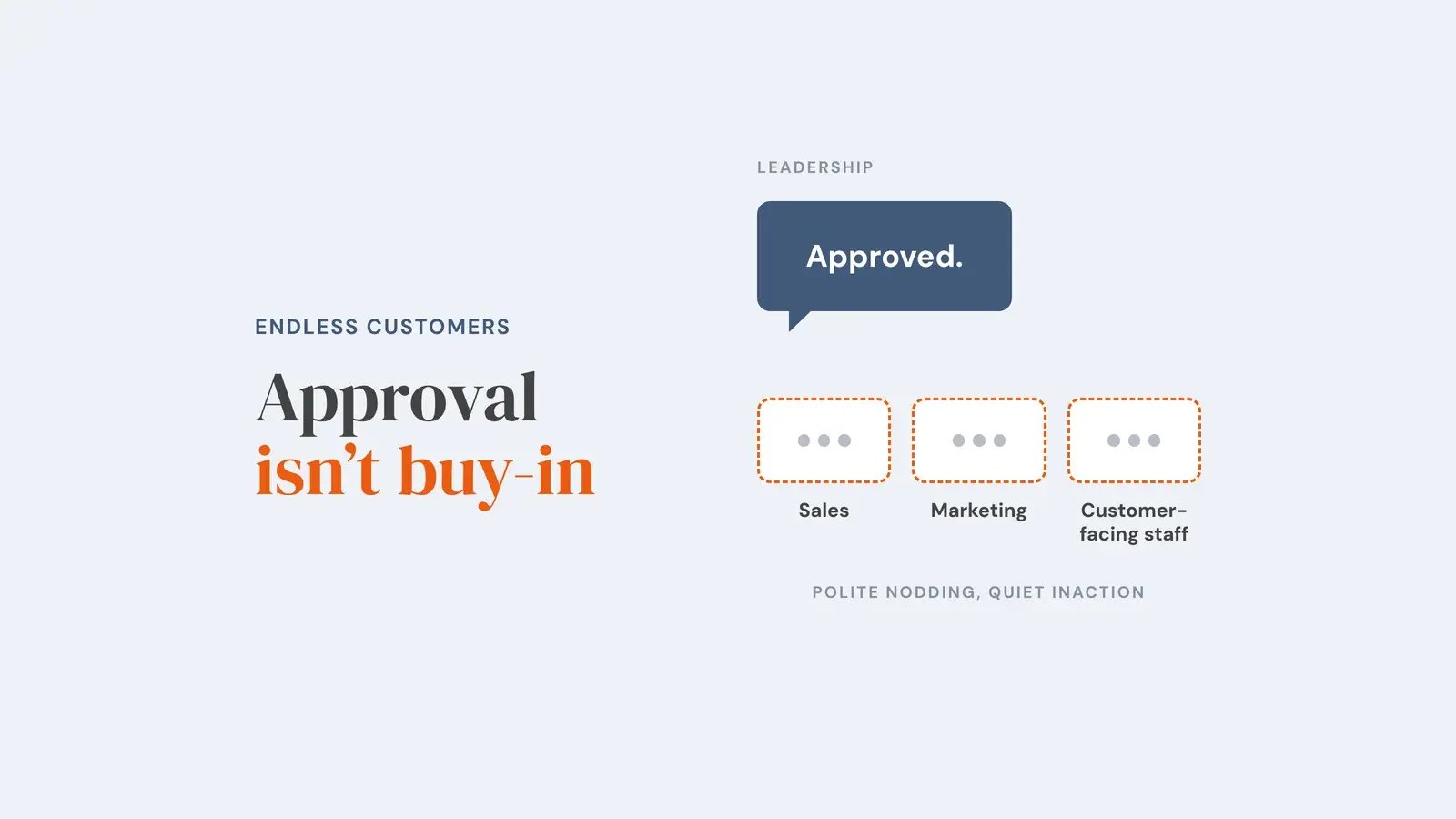
Success with the Endless Customers System requires complete leadership alignment, yet many businesses fail because key decision-makers aren't fully committed to the long-term transformation.
The most common alignment problems:
- Mixed messages from leadership about priorities and resource allocation
- Lack of understanding about what the system truly requires
- Impatience with timeline expectations versus reality
- Competing initiatives that dilute focus and resources
Without unanimous leadership support, teams struggle to allocate necessary resources for content creation, website optimisation, and cultural changes essential to the system.
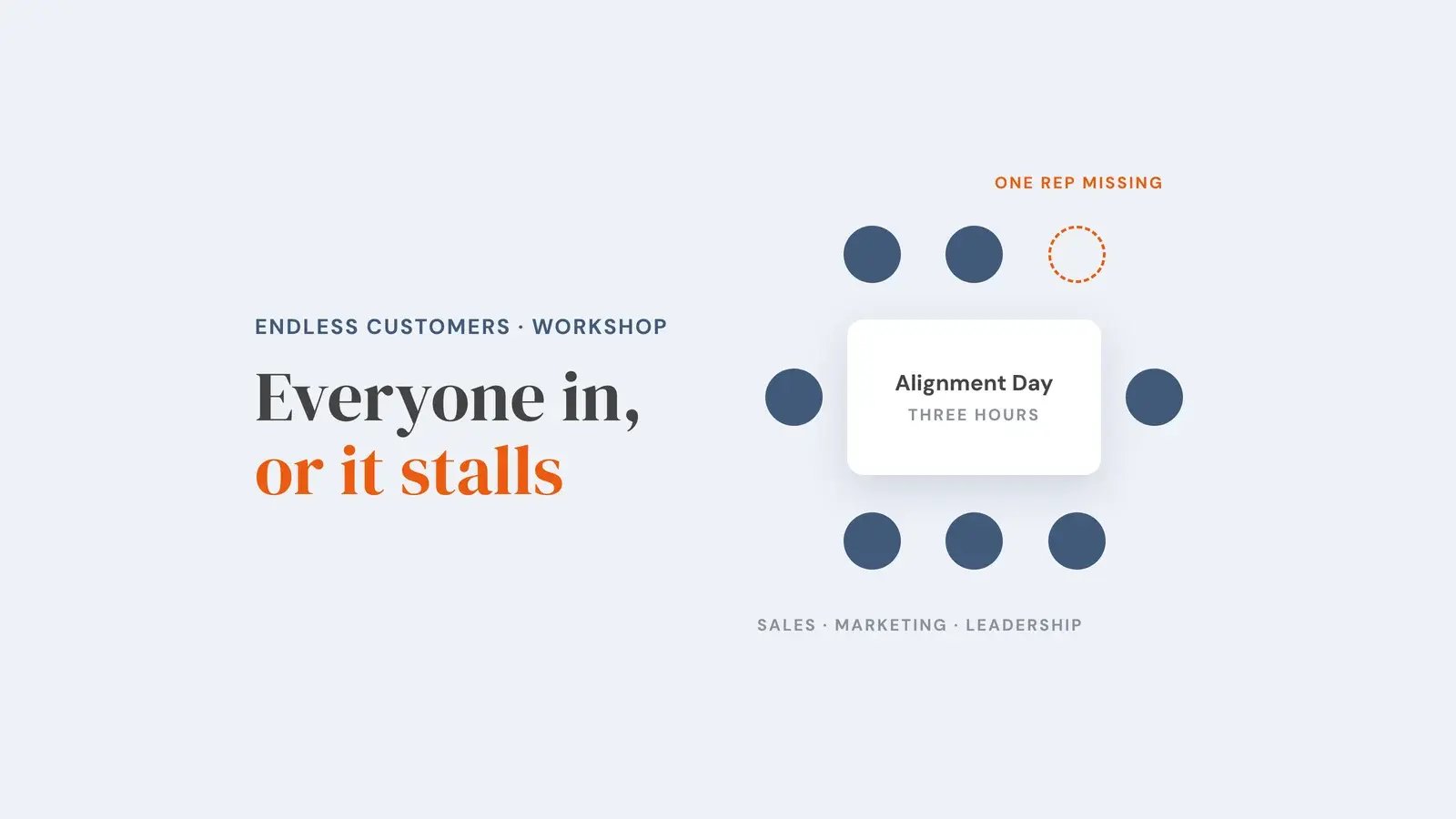
I've seen countless businesses fail not because the system doesn't work, but because leadership wasn't truly aligned from the start. This is why my Company Alignment Workshop focuses first on ensuring all key decision-makers understand the what, how, and why before beginning any tactical work.
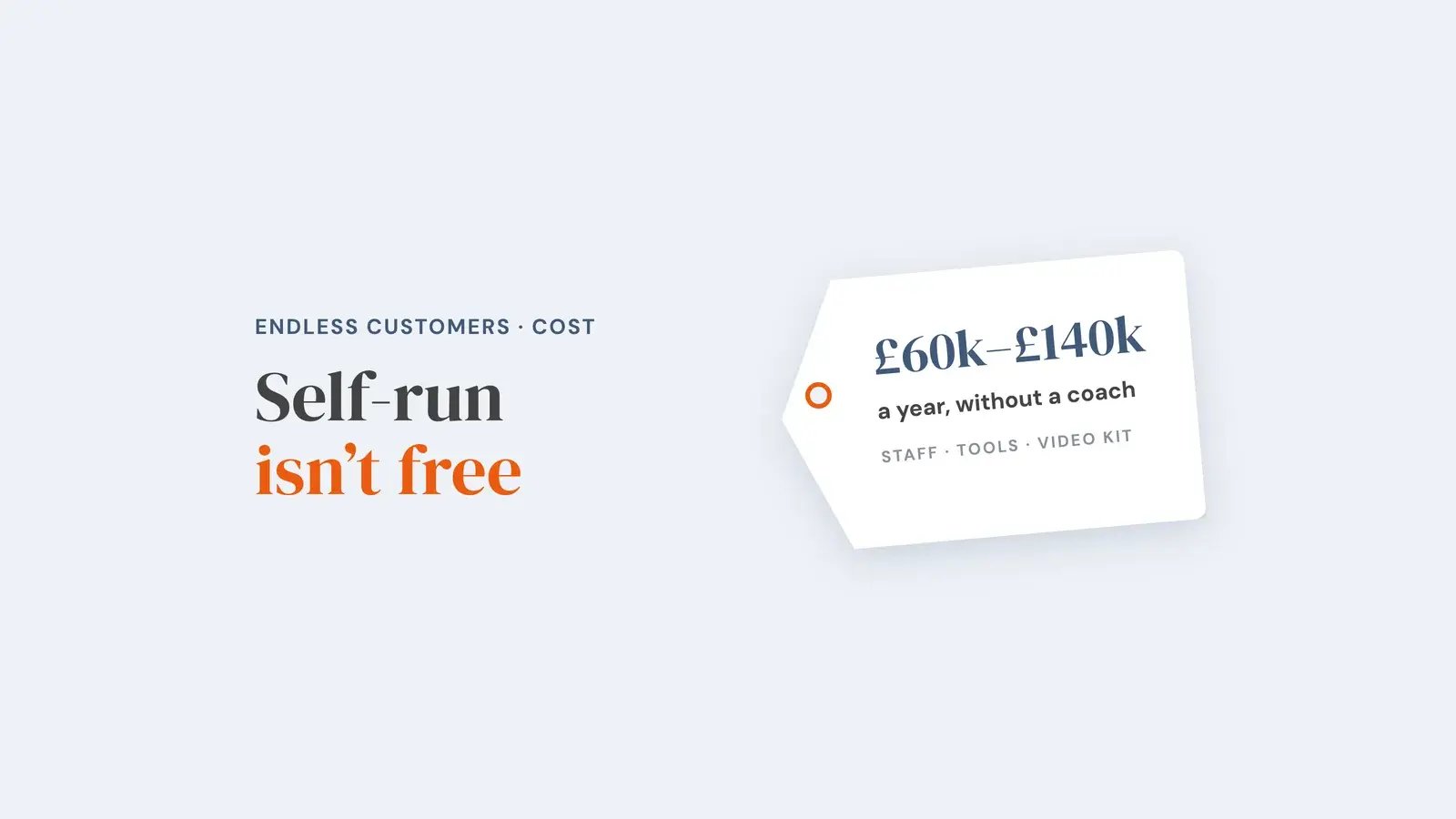
4. Resource allocation challenges: Why building an in-house marketing team feels too expensive
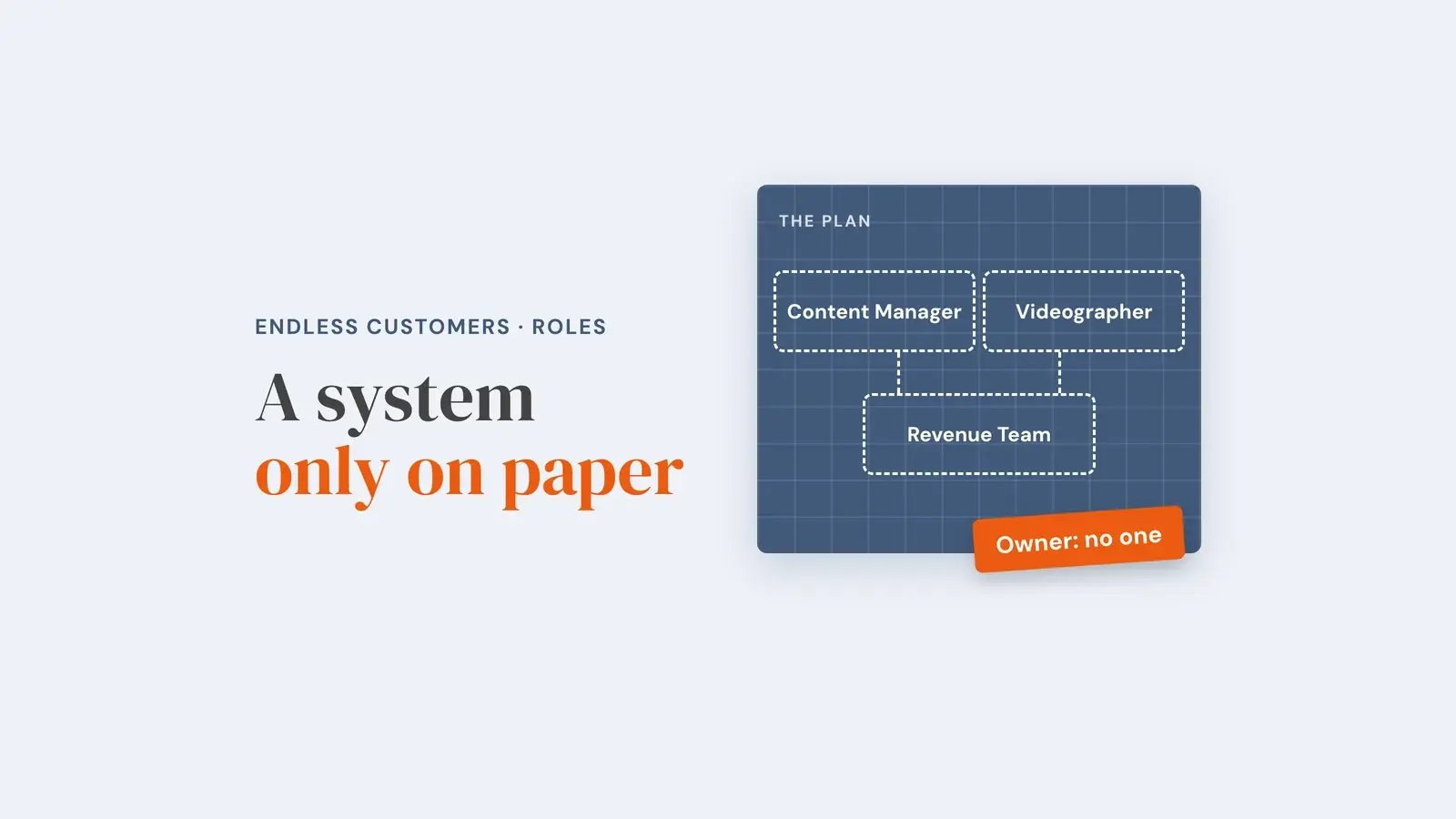
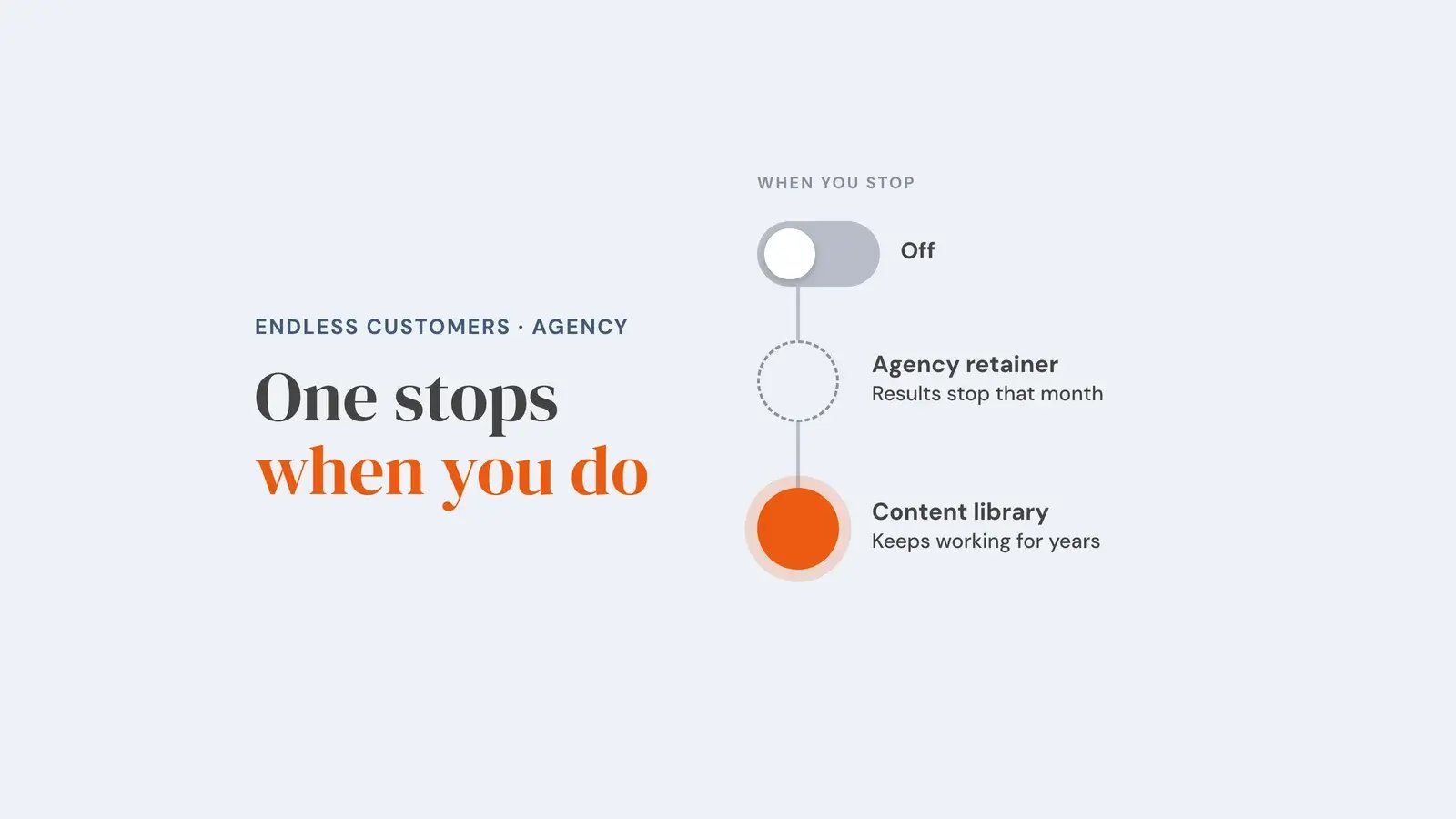
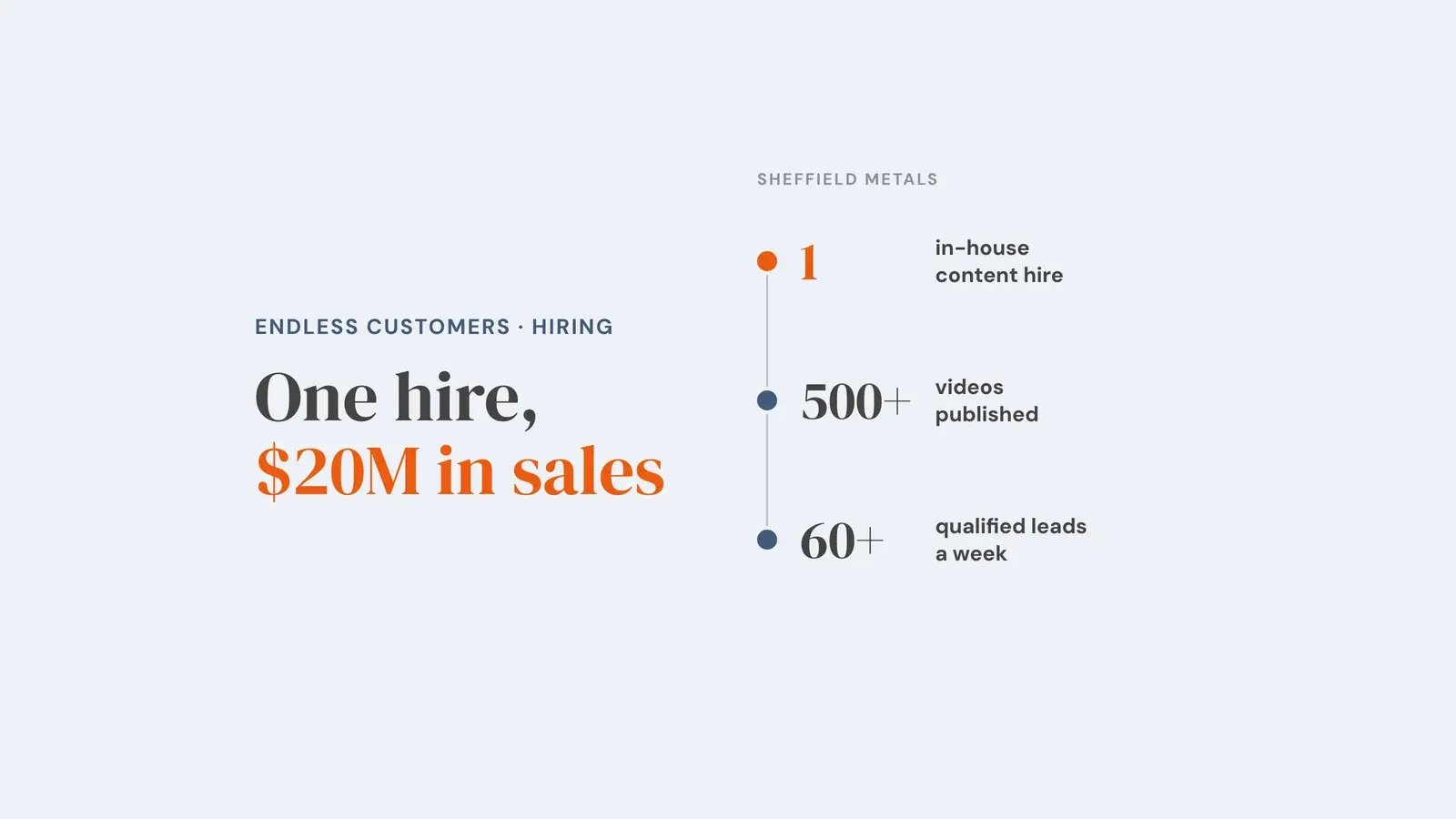
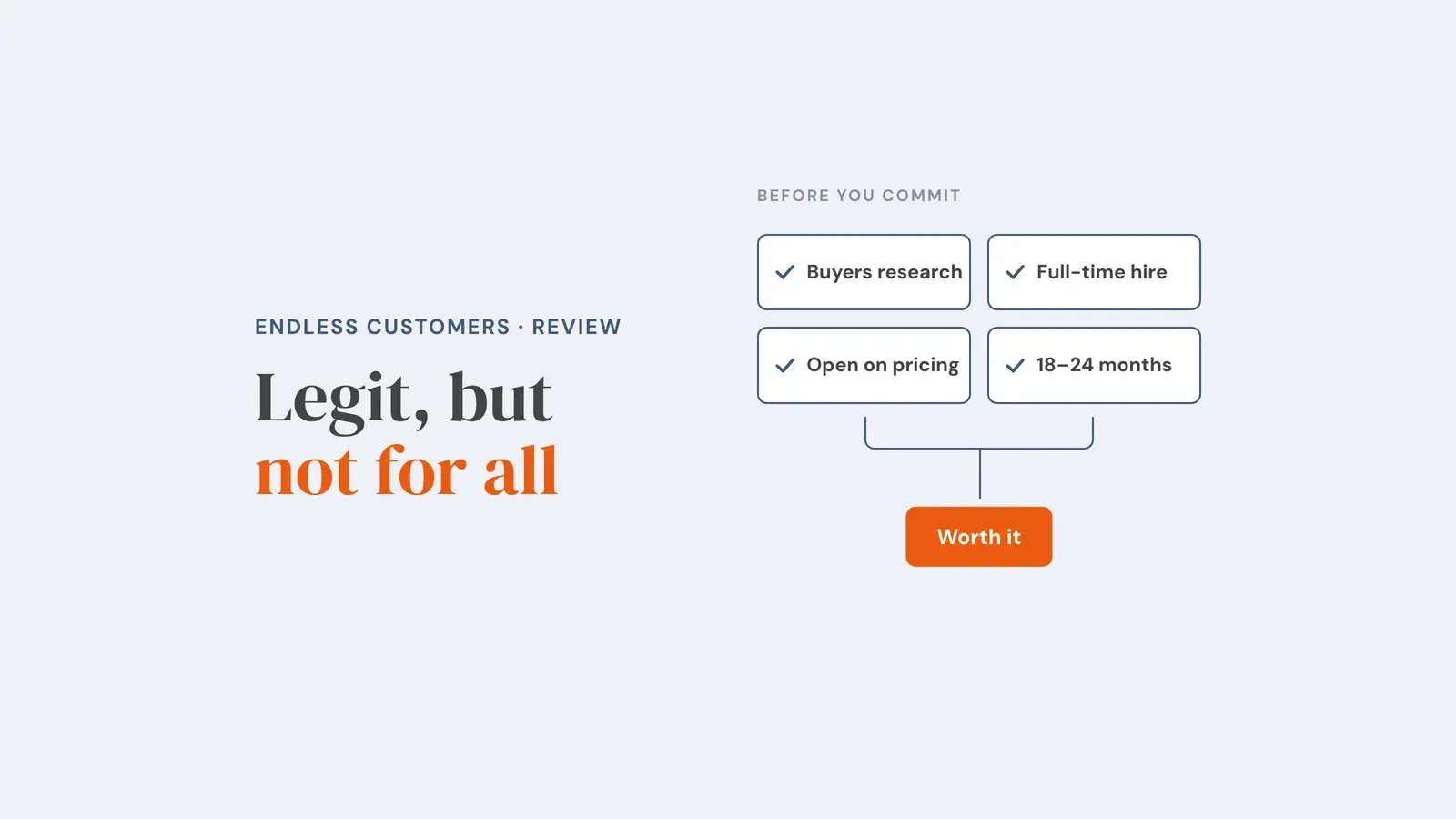
Many business owners quit the system when they realise it requires dedicated in-house resources, including content managers and videographers, rather than relying solely on external agencies.
The resource challenges typically include:
- Hiring content creators: Most businesses underestimate the need for dedicated content team members
- Training existing staff: Current employees need new skills to create trust-building content
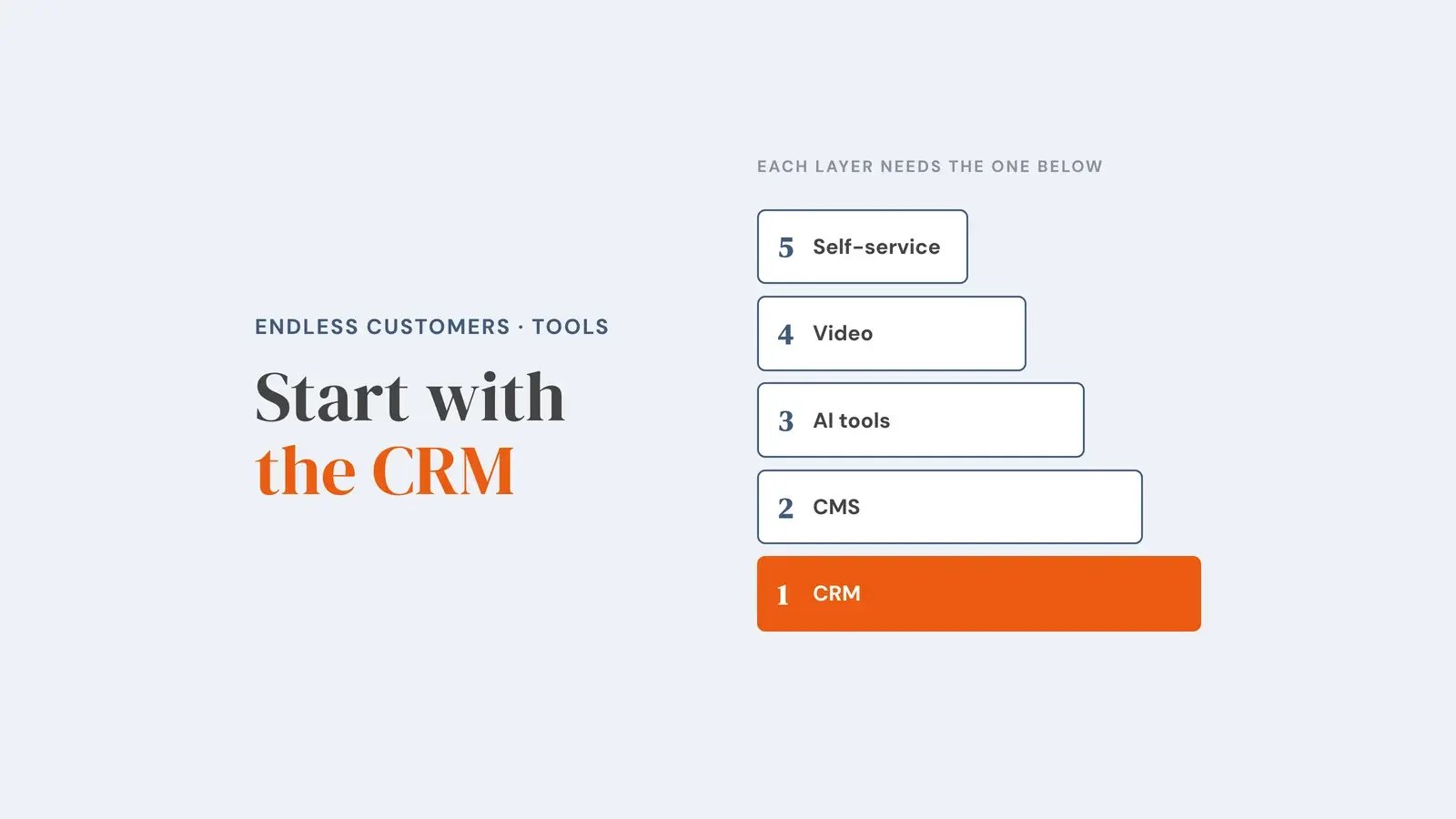
- Technology investments: Proper tools for content creation, website optimisation, and tracking require budget allocation
- Time commitment: Leadership must dedicate significant time to strategic planning and execution
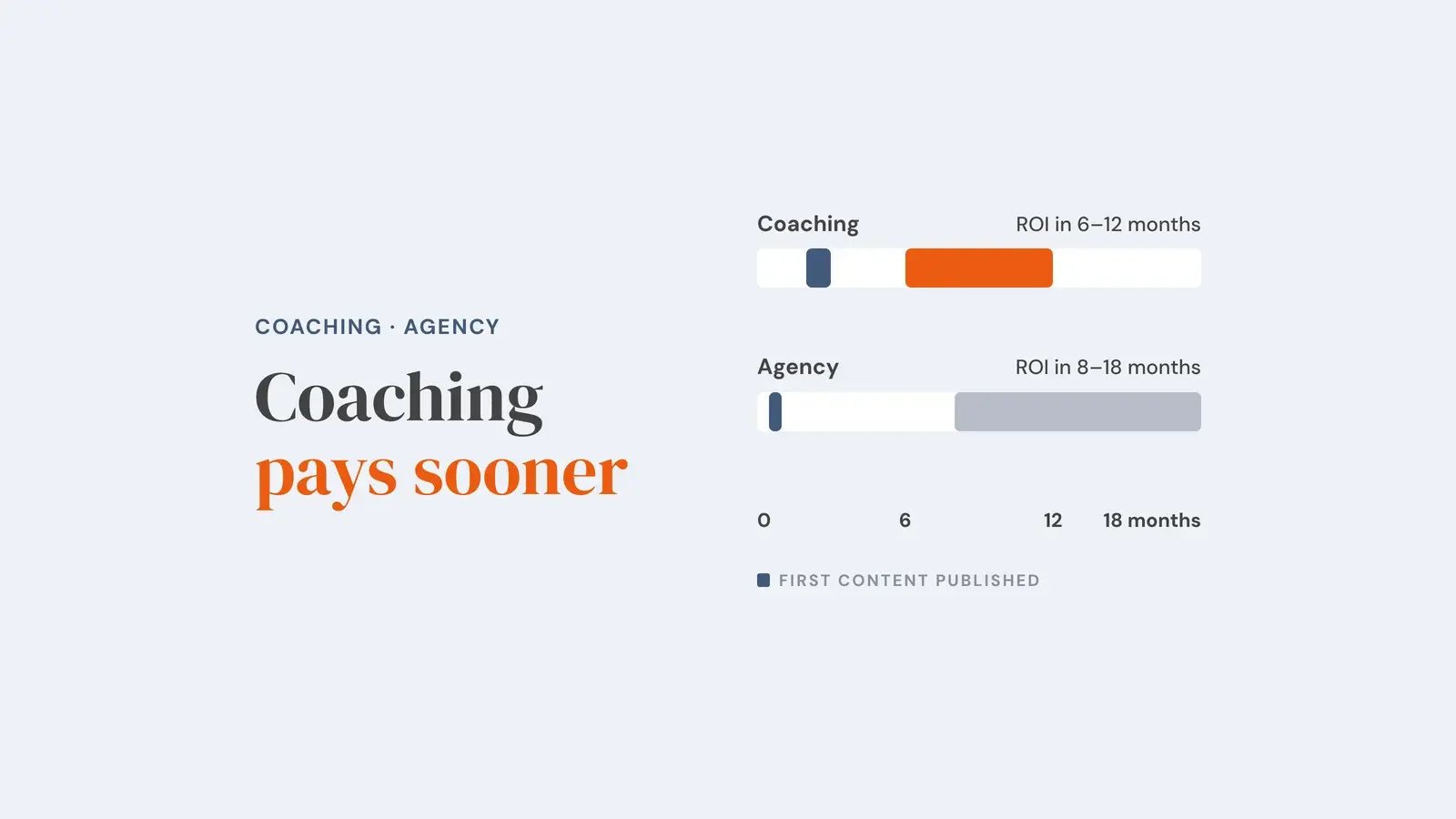
The perceived cost of bringing marketing in-house often overshadows the long-term return on investment. However, businesses that successfully implement the system typically see 2-3x better results than those relying entirely on external agencies, because in-house teams understand customers and industry nuances that outsiders simply cannot match.
My In-House Sales and Marketing Mastery programme specifically addresses this challenge by providing the training and systems needed to build internal capabilities efficiently.
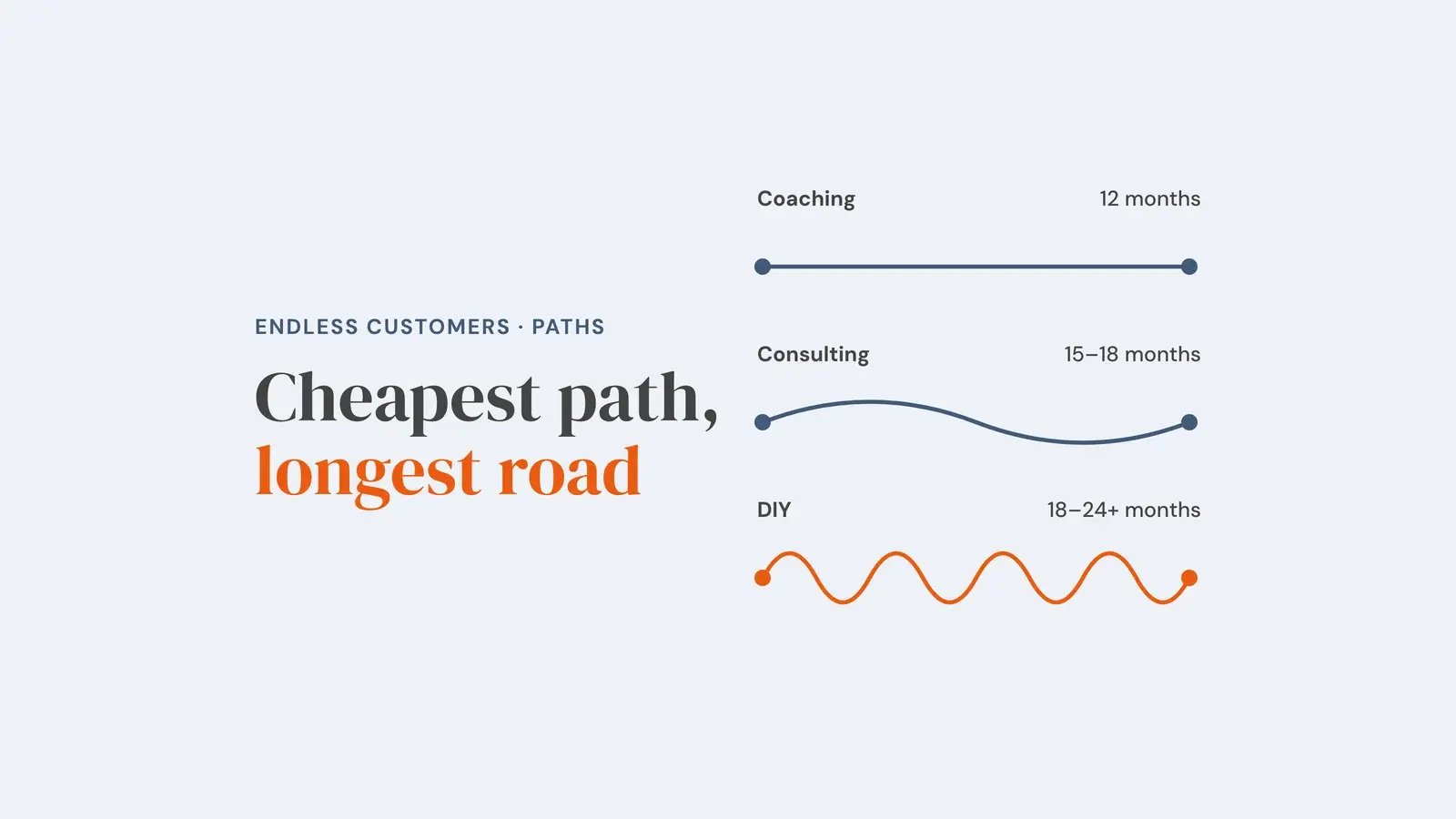
5. Unrealistic timeline expectations: Why businesses quit before seeing results
The Endless Customers System actively warns against seeking quick fixes, yet many owners quit when they don't see immediate results from their content creation and website optimisation efforts.
Common unrealistic expectations:
- Expecting viral content within the first month
- Demanding immediate lead generation from new content efforts
- Seeking instant competitive advantage from transparency initiatives
- Wanting overnight cultural transformation in sales and marketing teams
Building trust and becoming a known brand in any market requires sustained effort over months or years, not the instant gratification many business owners expect from marketing investments.
The businesses that succeed understand this is about transformation, not tactical quick wins. They commit to consistent content creation, ongoing website optimisation, and cultural changes that compound over time.
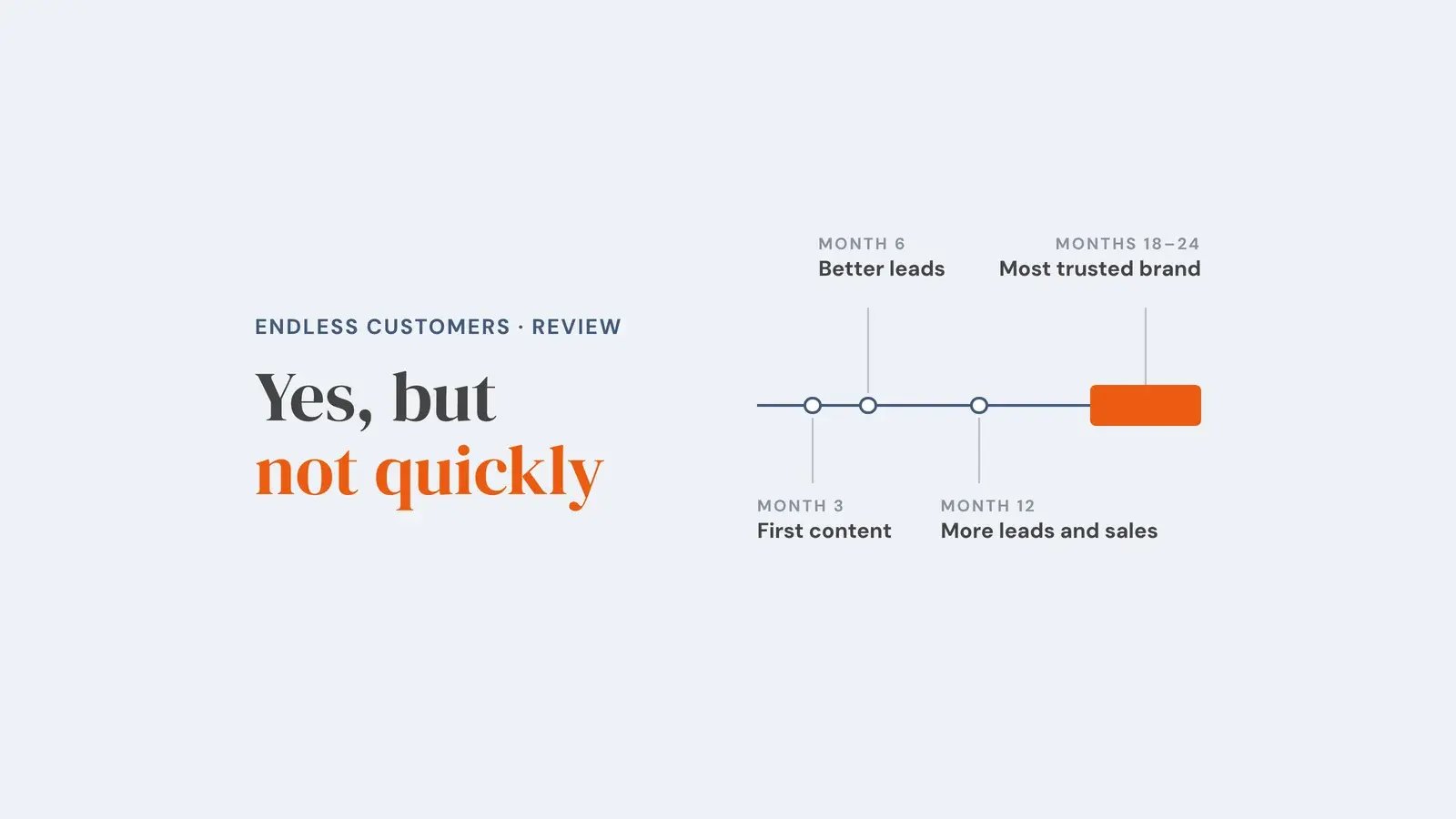
Sustainable results typically emerge after 6-12 months of consistent implementation, with exponential growth following in years two and three.
Recommended reading: Harvard Business Review study on long-term marketing effectiveness
6. Content creation overwhelm: Why unprepared teams can't sustain production
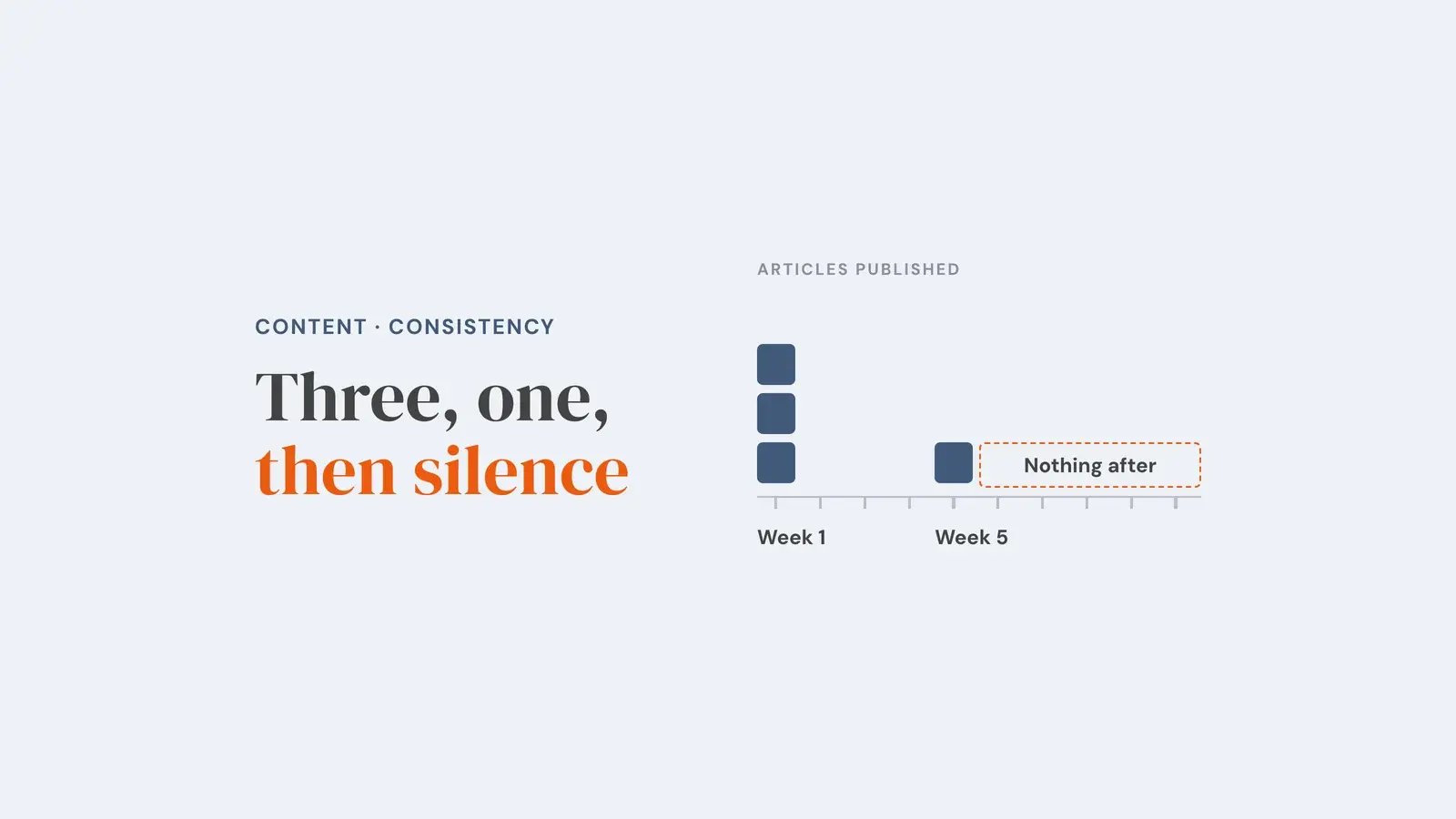
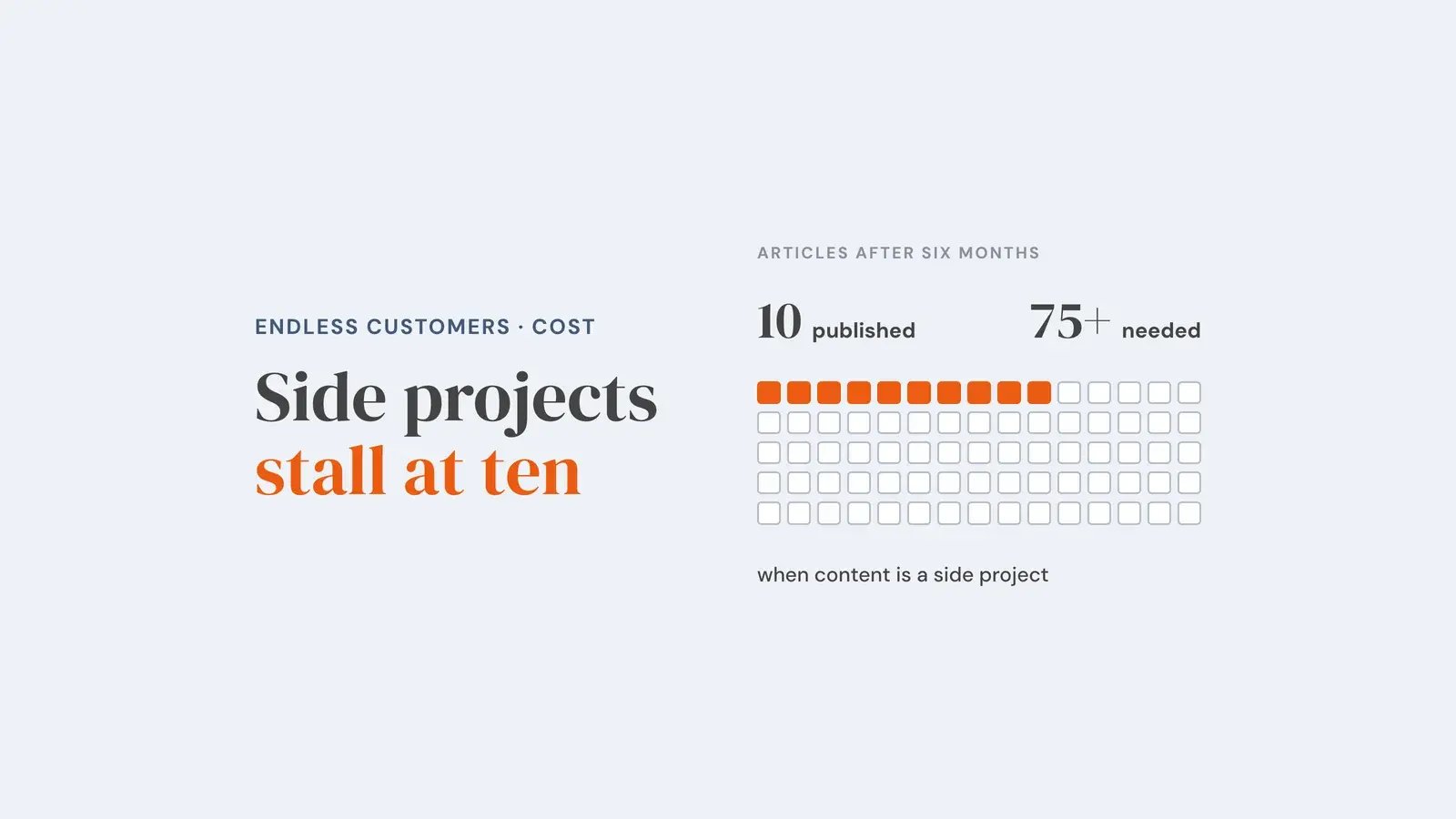
Creating high-quality, transparent content consistently proves too challenging for many businesses, especially when it requires tackling topics competitors actively avoid.
The content challenges:
| Challenge Area | Common Problems | Impact on Implementation |
|---|---|---|
| Volume Requirements | Underestimating content needs | Inconsistent publishing schedules |
| Quality Standards | Creating promotional rather than educational content | Poor audience engagement |
| Subject Matter | Avoiding difficult industry topics | Missing trust-building opportunities |
| Technical Execution | Lack of video and website skills | Professional presentation gaps |
The shift from traditional marketing to operating like a media company demands new skills, processes, and mindsets that overwhelm teams unprepared for the transformation. Many businesses quit when they realise content creation requires the same discipline and resources as any other core business function.
Successful implementation requires treating content creation as seriously as product development or customer service, with dedicated resources, clear processes, and measurable outcomes.
7. Lack of structured support: Why execution fails without proper guidance
Even with commitment and resources, many businesses struggle without proper guidance on tactical execution and ongoing support through the implementation journey.
Common execution problems:
- No clear roadmap for which content to create first
- Confusion about website structure and optimisation priorities
- Uncertainty about measuring progress and success
- Missing accountability systems to maintain momentum
Businesses need more than theory—they need actionable frameworks, templates, and expert guidance to turn concepts into consistent execution.
This is precisely why structured programmes like the Company Alignment Workshop and In-House Sales and Marketing Mastery exist: to provide the step-by-step support that bridges the gap between understanding the system and successfully implementing it.
How to overcome these challenges and succeed with Endless Customers
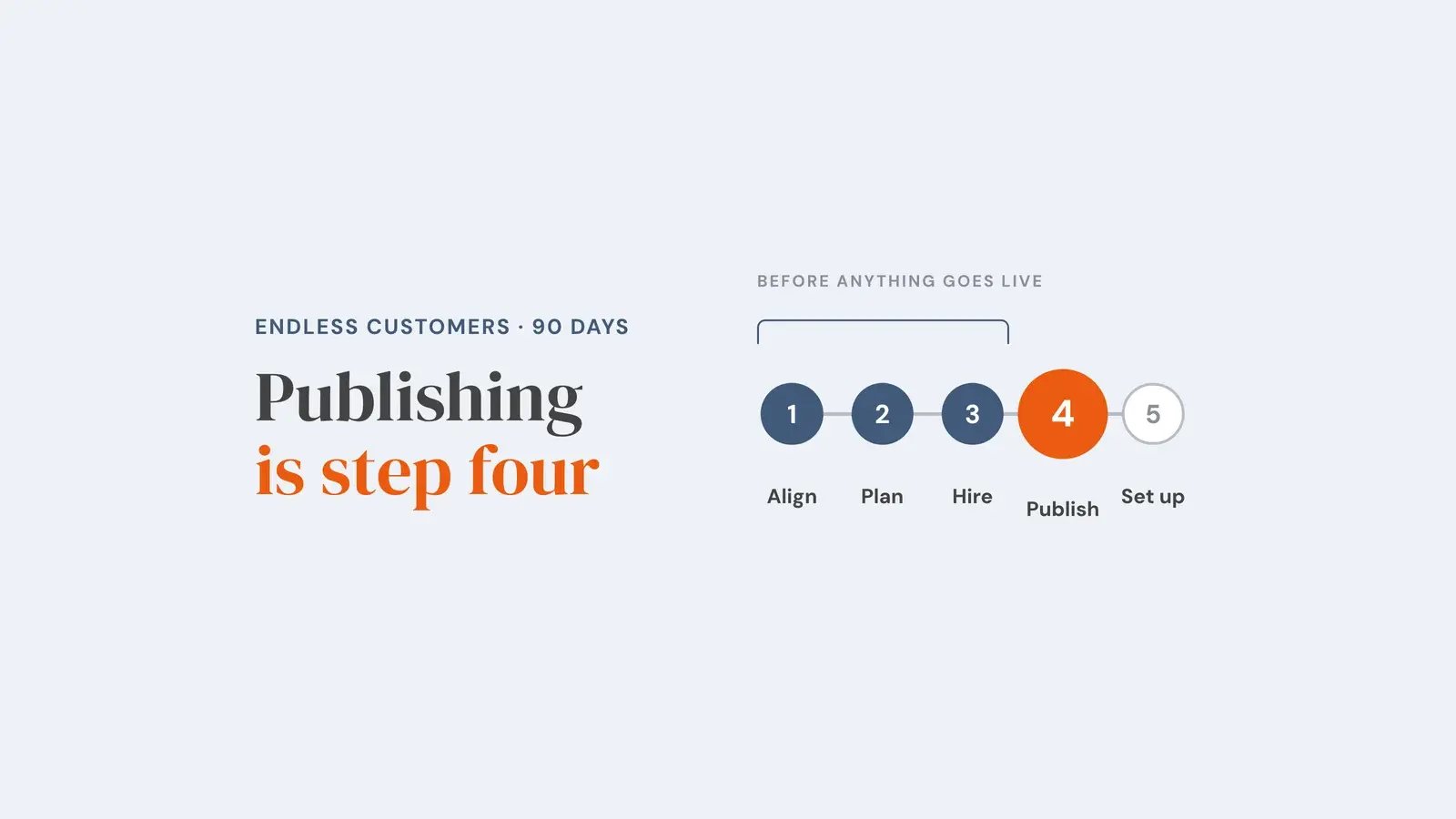
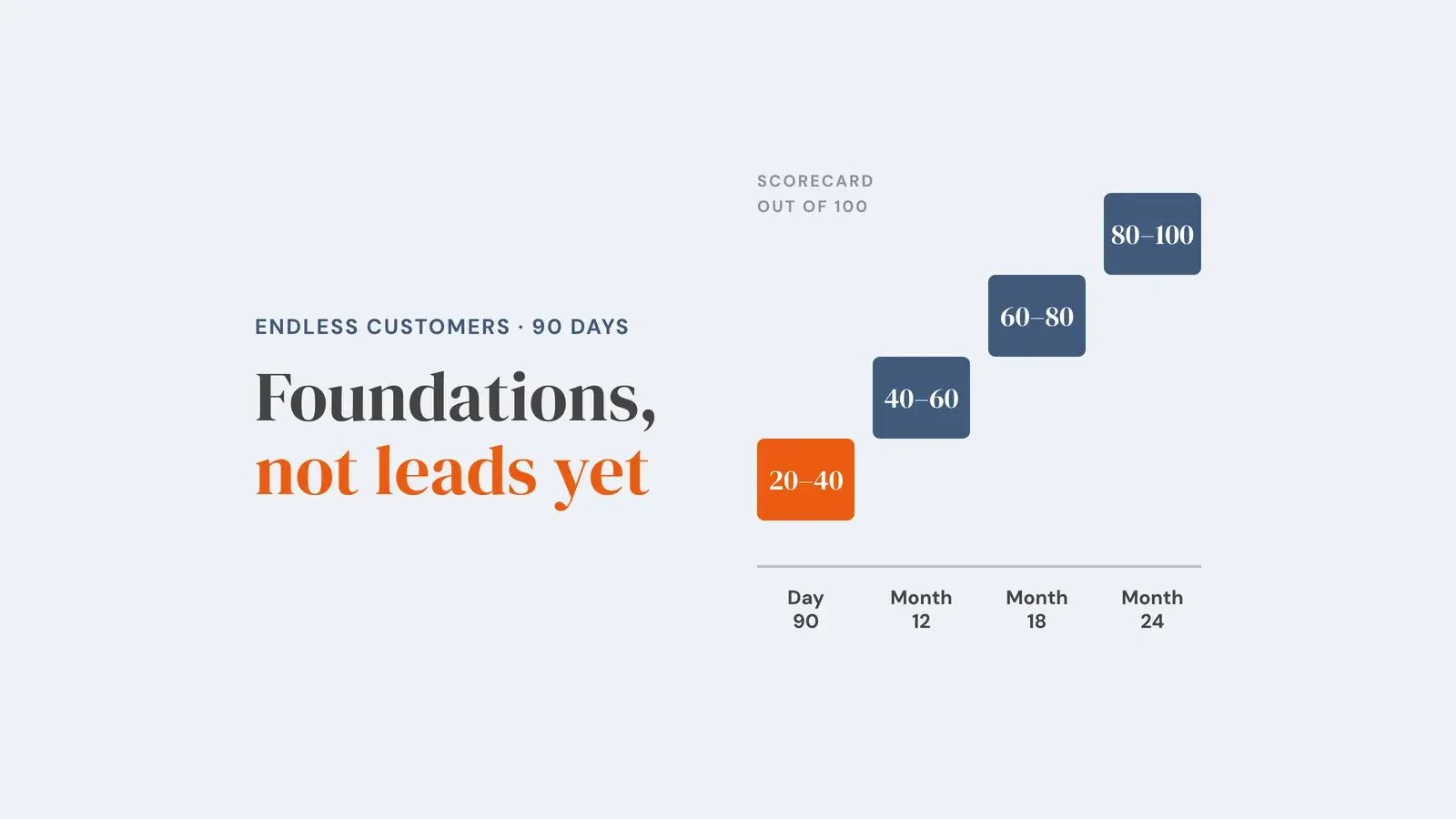
Success starts with proper foundation-setting through alignment workshops that ensure all leadership understands the what, how, and why of the system before beginning tactical work.
Here's how to overcome each major challenge:
Address fear of disruption:
- Start with low-risk content topics to build confidence
- Show examples of industry leaders who've succeeded through transparency
- Frame honesty as competitive advantage rather than risk
Break through inertia:
- Begin with pilot programmes rather than company-wide changes
- Celebrate small wins to build momentum
- Connect new approaches to existing company values
Ensure leadership alignment:
- Conduct formal alignment sessions before implementation
- Document agreements and expectations clearly
- Schedule regular check-ins to maintain focus
Solve resource challenges:
- Start with existing team members and gradual skill development
- Calculate long-term ROI to justify initial investments
- Consider hybrid approaches with strategic external support
Manage timeline expectations:
- Set realistic milestones with leadership from day one
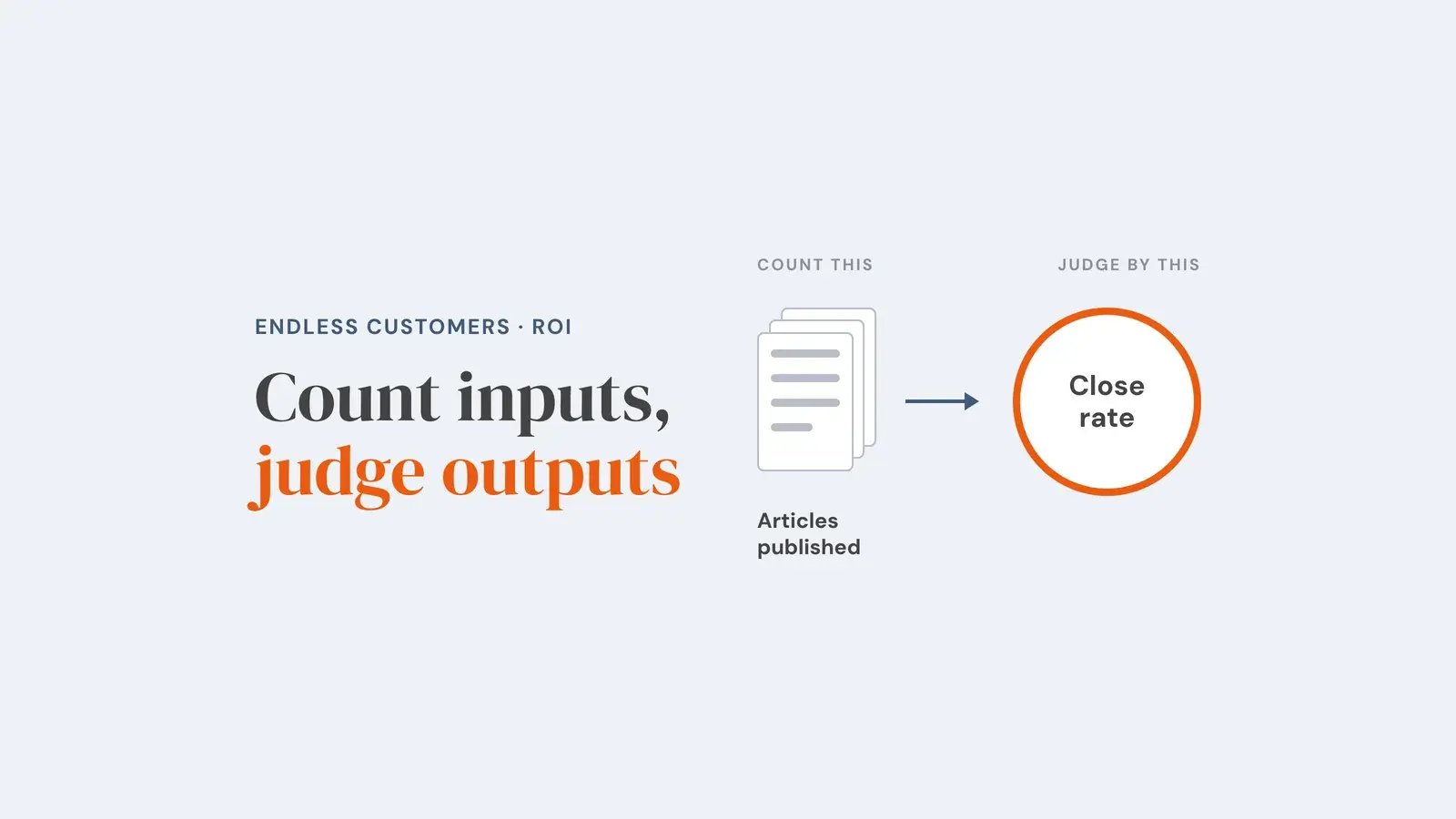
- Track leading indicators (content production, website traffic) rather than just revenue
- Celebrate progress markers to maintain momentum
Overcome content overwhelm:
- Begin with answer-based content addressing common customer questions
- Establish sustainable content calendars and production processes
- Focus on consistency over perfection in early stages
Implement with structure:
- Use proven frameworks and templates from the start
- Engage expert guidance for strategic decisions
- Build accountability systems to maintain progress
The key? Successful businesses reframe risk by recognising that maintaining the status quo in today's competitive landscape is often more dangerous than taking strategic risks to differentiate their brand.
Stay the course
You've now seen the seven most common reasons businesses quit the Endless Customers System—fear of disruption, organisational inertia, leadership misalignment, resource concerns, unrealistic timelines, content overwhelm, and lack of structured support.
These challenges are real, but they're also predictable and solvable. The businesses that succeed with this system aren't necessarily smarter or better funded. They're simply the ones willing to confront these obstacles head-on with proper planning and support.
Now it's time to take the first step: ensuring your leadership team is properly aligned before you begin. My name is Tom Wardman, and I help business owners build trust and grow through proven marketing systems. The Company Alignment Workshop is designed specifically to set your team up for success from day one.
Stop guessing what works. Let's talk about where you are now and where you want to be.
Want to avoid the mistakes that derail most marketing teams? Explore the Company Alignment Workshop to set your leadership team up for success from the start.
Looking for more insights on building trust-based marketing? Read this related article: "Endless Customers Cost: Complete 2025 Implementation Guide"

Topics: