

Are you thinking about transforming your marketing with the Endless Customers System™ but unsure what the journey really looks like?
Does the idea of investing time, money, and team effort without knowing what happens next feel risky?
You're not alone, and in this article, you'll get a clear roadmap of what to expect in your first 90 days with Endless Customers. From Alignment Day to publishing 20+ trust-building pieces, this guide outlines every milestone, challenge, and result that builds the foundation of your future marketing success.
Here's what we'll cover: how Alignment Day launches your journey, the 8 specific milestones you'll complete, the challenges you'll face, and how this period sets you up for sustainable, long-term growth.
What is the Endless Customers System™?
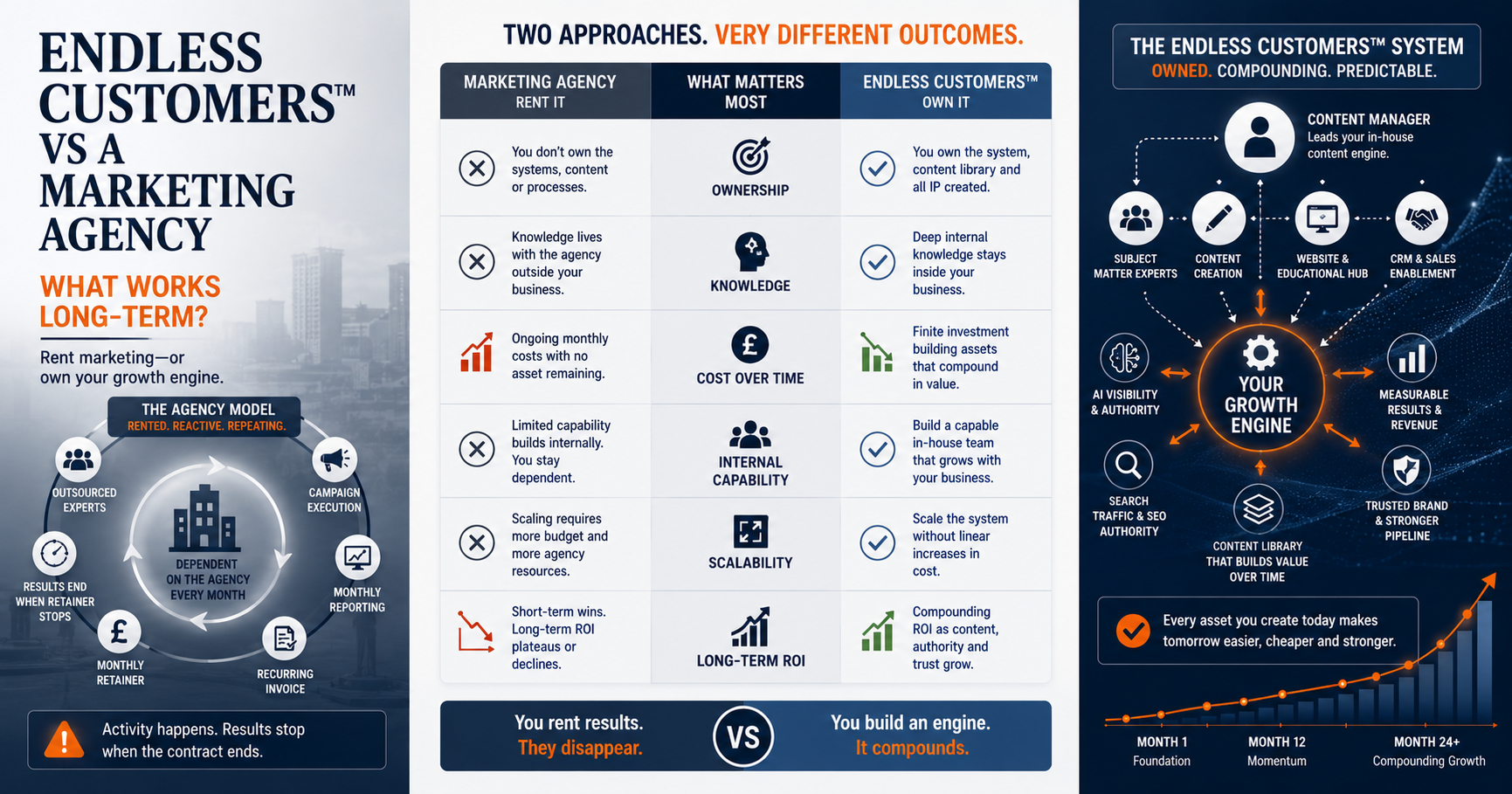
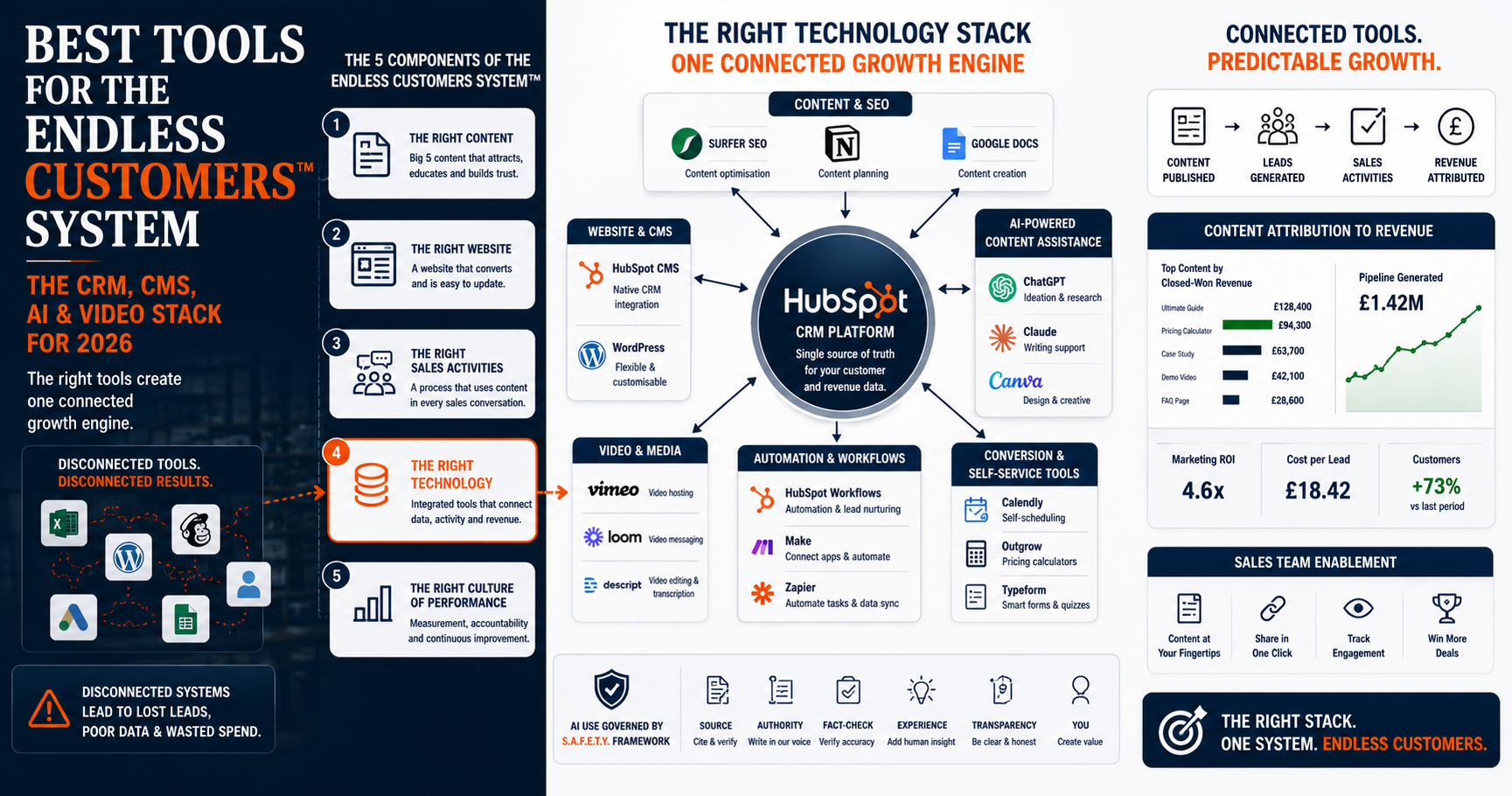
The Endless Customers System™ is a comprehensive content marketing and sales methodology designed to transform your business into the most known and trusted brand in your market.
This proven framework centres on radical transparency through The Big 5 content topics: cost and pricing, problems, versus and comparisons, reviews, and best-in-class recommendations.
It combines written content strategies, video marketing techniques called The Selling 7, and creates a culture where sales and marketing teams collaborate instead of working in silos. The system works because buyers today trust brands that answer their questions honestly, show them what others won't, and sell in ways that respect how people actually want to buy.
Why your first 90 days are critical to long-term success
The first 90 days are about laying the groundwork for your Endless Customers programme by building the systems, strategies, and habits that will support long-term success.
During this foundational phase, you're not chasing immediate results. You're putting people, processes, and tools in place that create sustainable growth.
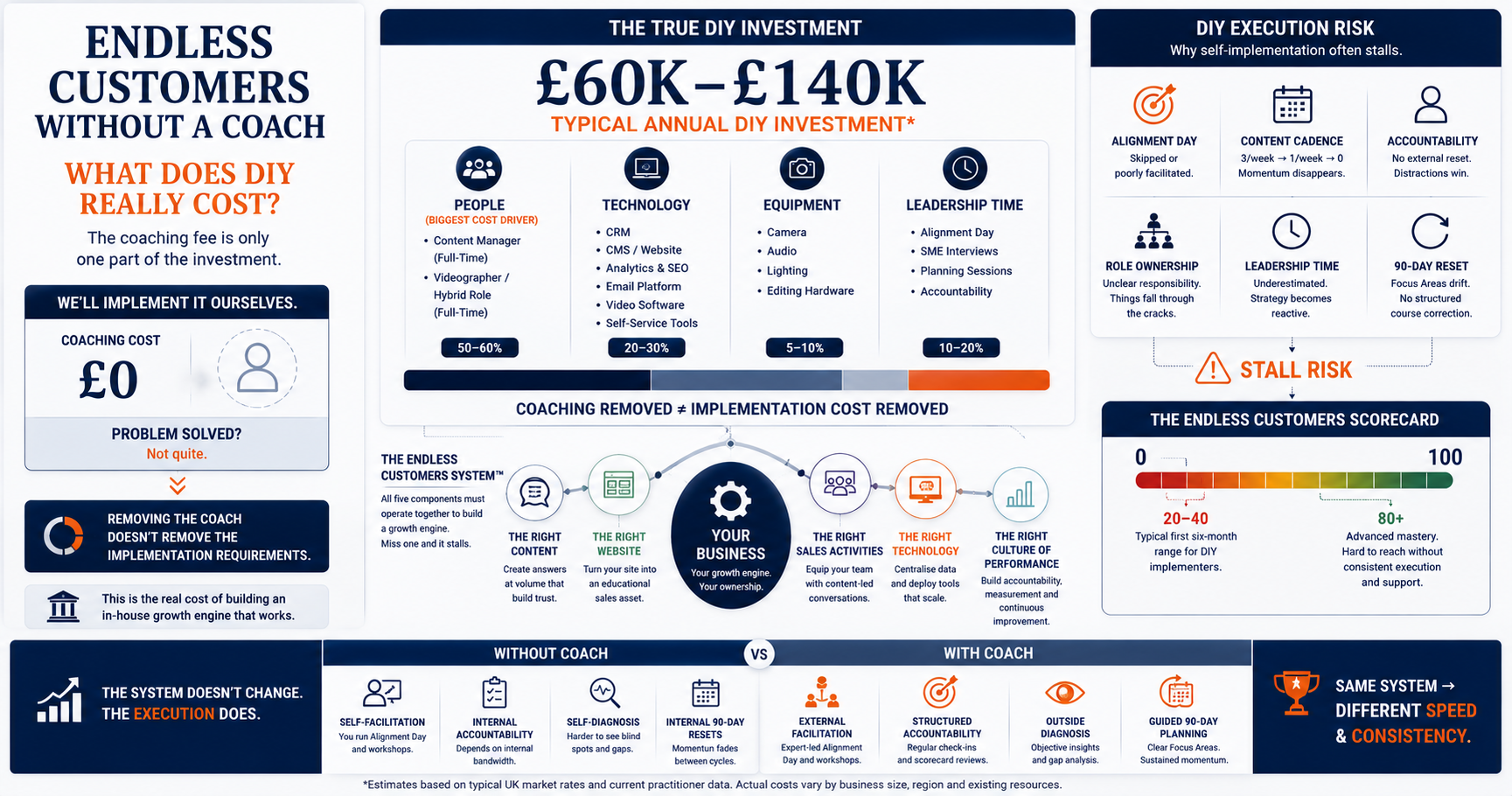
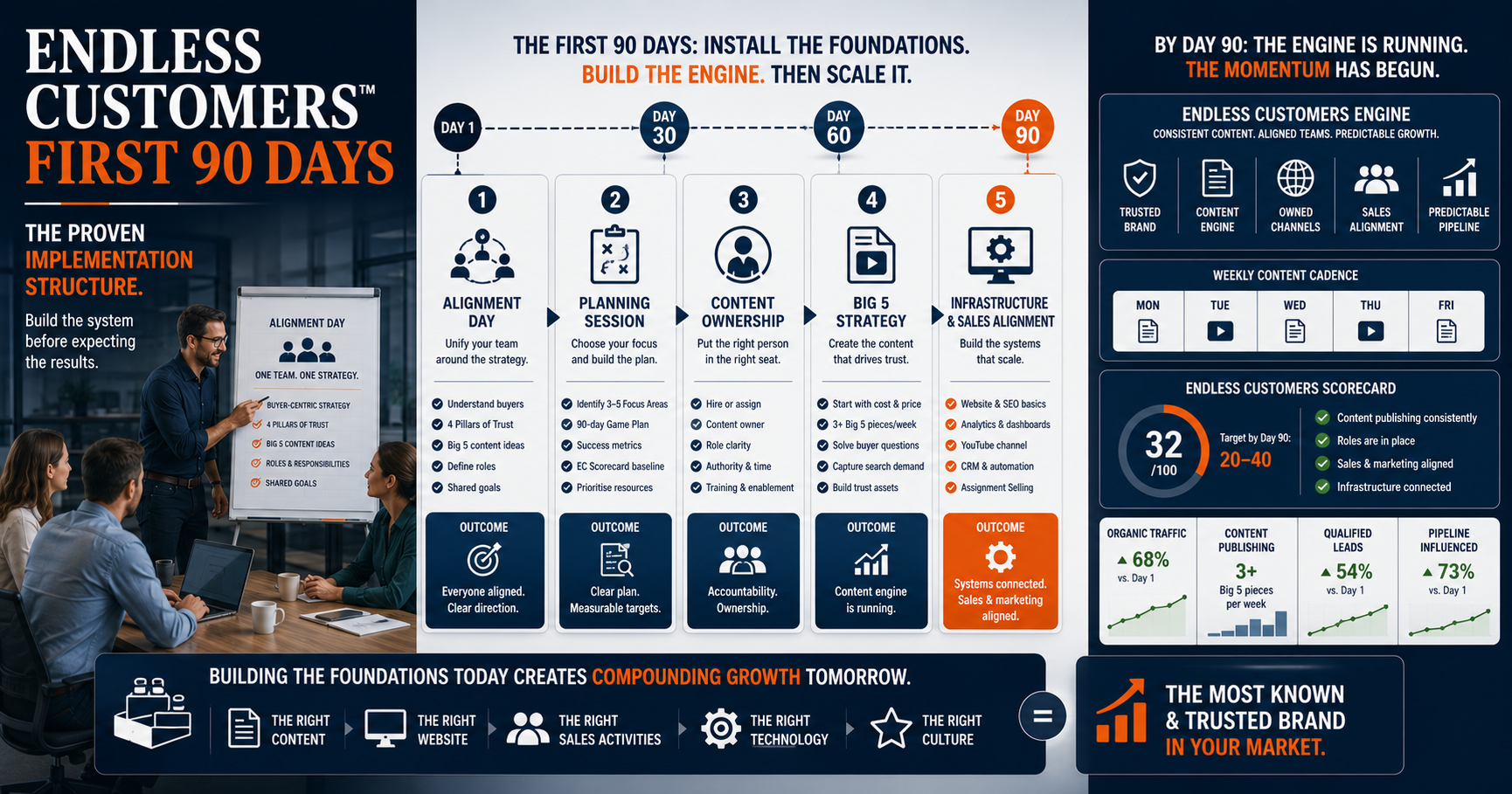
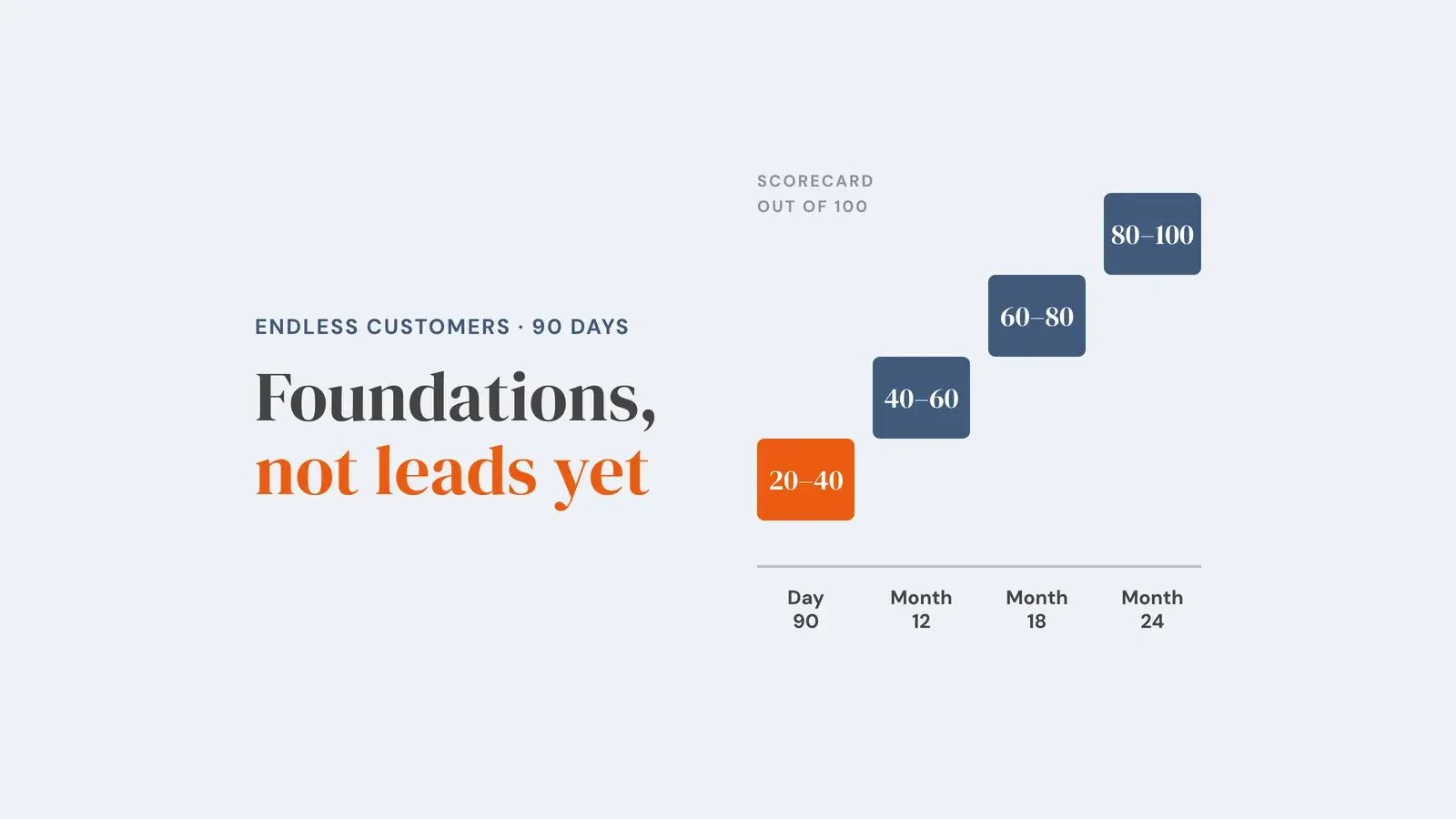
Most companies achieve an Endless Customers Scorecard rating between 20 and 40 by the end of this period, meaning your team is getting the hang of it, although you still require frequent assistance in several areas. That's perfectly normal and expected.
Think of this quarter as building your marketing engine. You'll hire key people, define your strategy, publish your first trust-building content, and establish the collaboration between sales and marketing that makes everything else possible.
How Alignment Day kicks off your 90-day journey
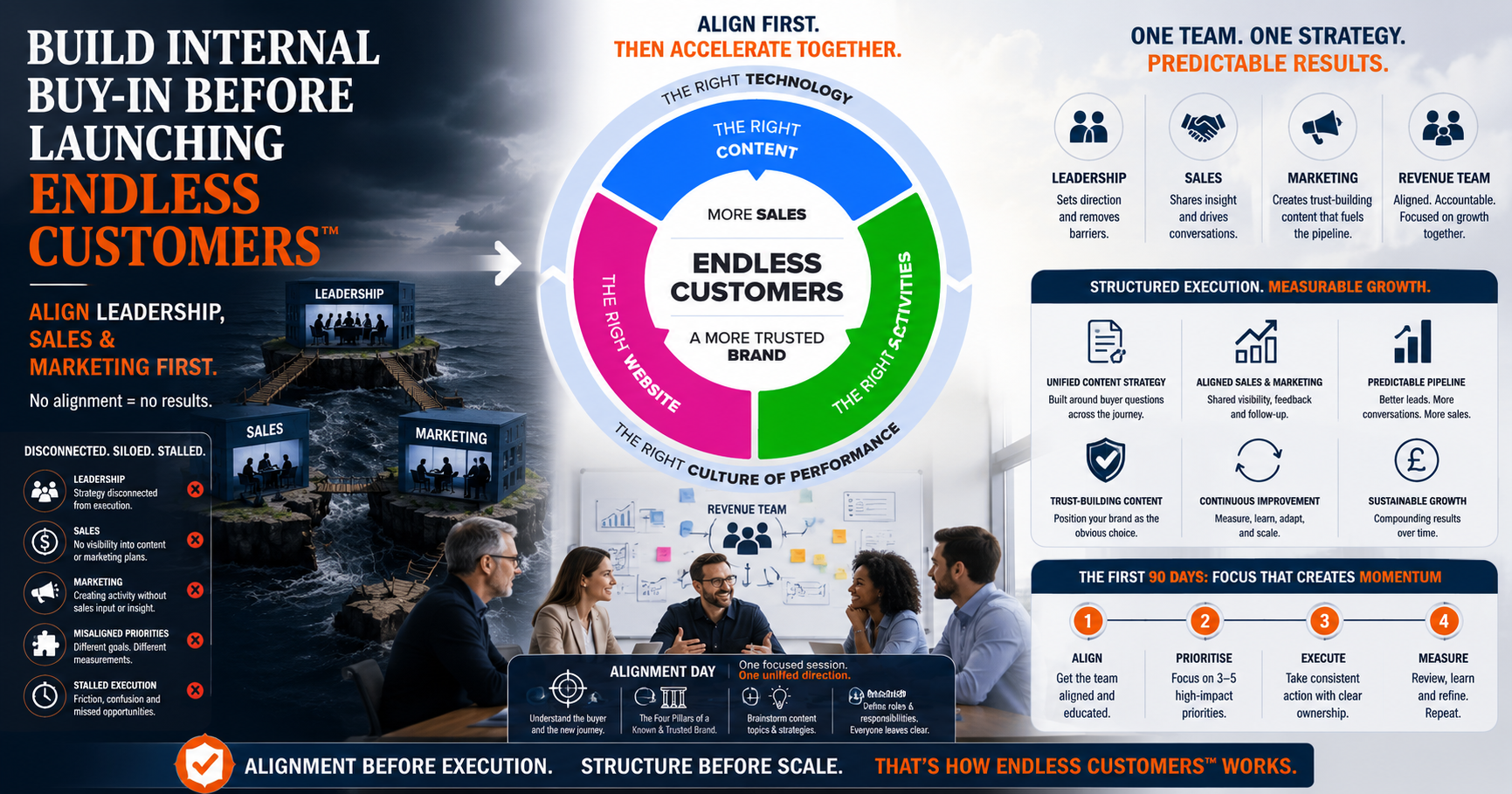
Alignment Day is a focused, three-hour training session designed to unify your entire organisation (sales, marketing, leadership, and customer-facing teams), around the principles of Endless Customers.
This kickoff event isn't optional. When your entire customer-facing organisation isn't involved, gaps form, the strategy falls apart, and results suffer.
During Alignment Day, your team covers four essential areas:
- How buyers have changed: Exploring the modern buying journey and why prospects research extensively before reaching out
- The Four Pillars of a Known and Trusted Brand: Breaking down the core principles and their practical applications
- Brainstorming topics and strategies: Generating ideas to bring The Four Pillars to life through content, marketing, and sales efforts
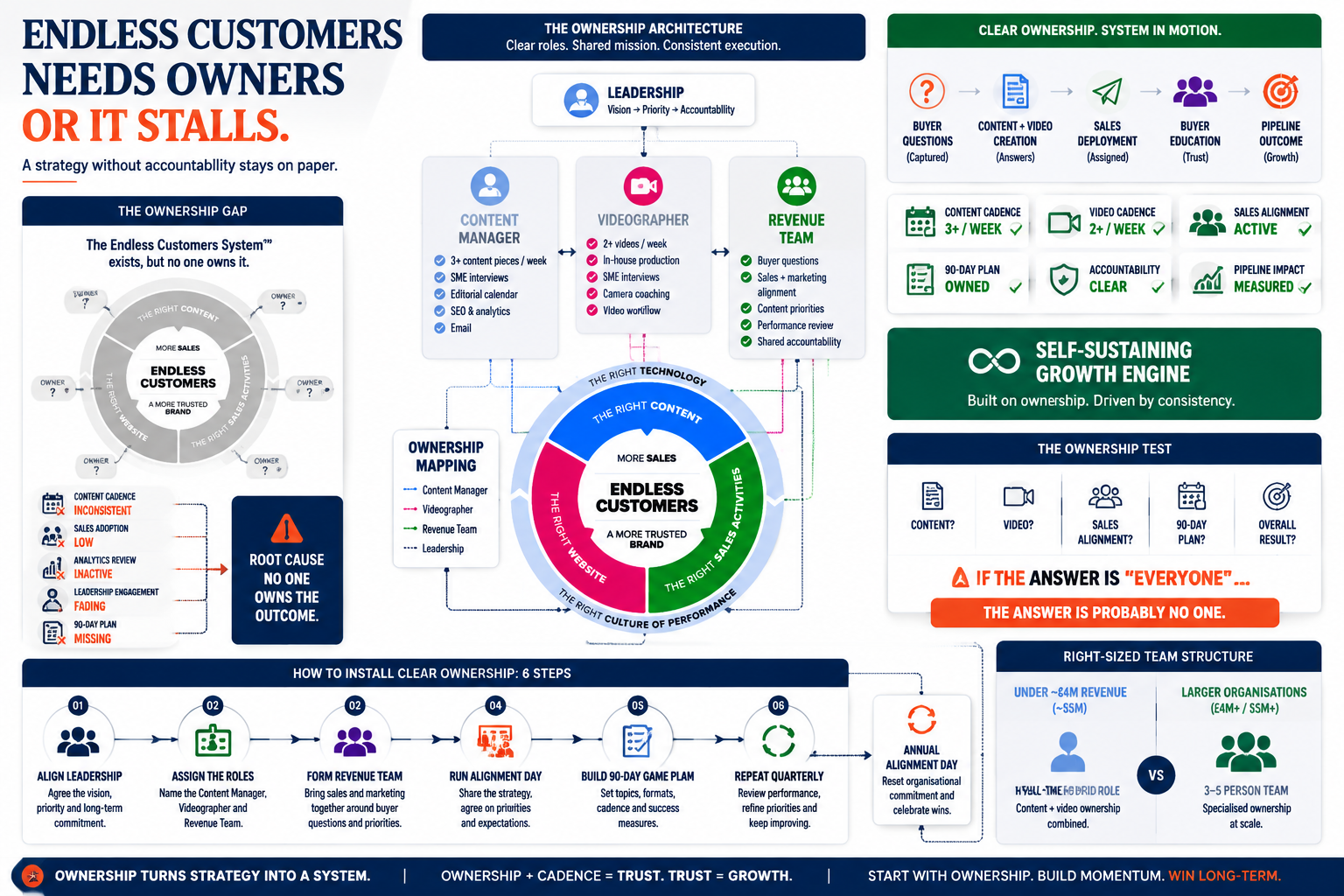
- Defining roles and responsibilities: Ensuring everyone understands how Endless Customers impacts their role and what's required of them
By the end of this session, your team won't just understand the "why" behind Endless Customers; they'll know their specific role in making it work. More importantly, they'll be inspired to own it.
The difference an outside voice makes during Alignment Day is significant. When I facilitate this session as a Certified Coach, I bring fresh energy and an unbiased perspective. Your team hears the same messages you've been sharing, but coming from someone outside the organisation, it resonates differently and cuts through the noise of daily routines.
The 8 milestones you'll complete in your first 90 days
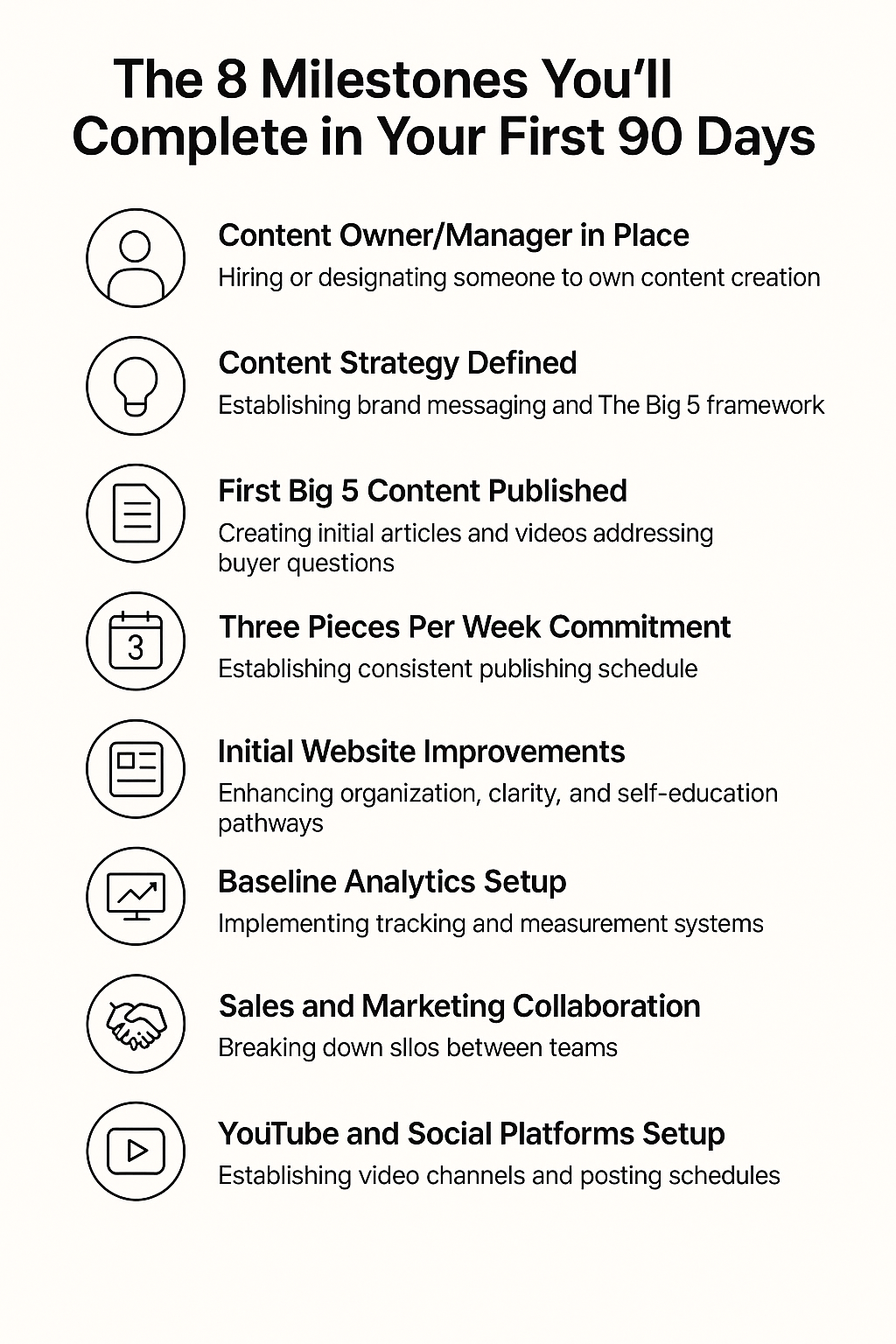
By the end of your first 90 days, you should complete eight key milestones that establish your foundation for becoming a known and trusted brand.
These aren't arbitrary targets. They're the essential building blocks that every successful Endless Customers company puts in place during this initial period.
Here's your roadmap:
| Milestone | What it involves | Why it matters |
|---|---|---|
| Content Owner/Manager in Place | Hiring or designating someone to own content creation | Content production is a full-time job requiring dedicated ownership |
| Content Strategy Defined | Establishing brand messaging and The Big 5 framework | Without strategy, you'll publish random content that doesn't drive trust |
| First Big 5 Content Published | Creating initial articles and videos addressing buyer questions | Demonstrates your commitment to radical transparency |
| Three Pieces Per Week Commitment | Establishing consistent publishing schedule | Algorithms and buyers both reward consistency |
| Initial Website Improvements | Enhancing organisation, clarity, and self-education pathways | Your website becomes a tool for building trust, not just a brochure |
| Baseline Analytics Setup | Implementing tracking and measurement systems | You can't improve what you don't measure |
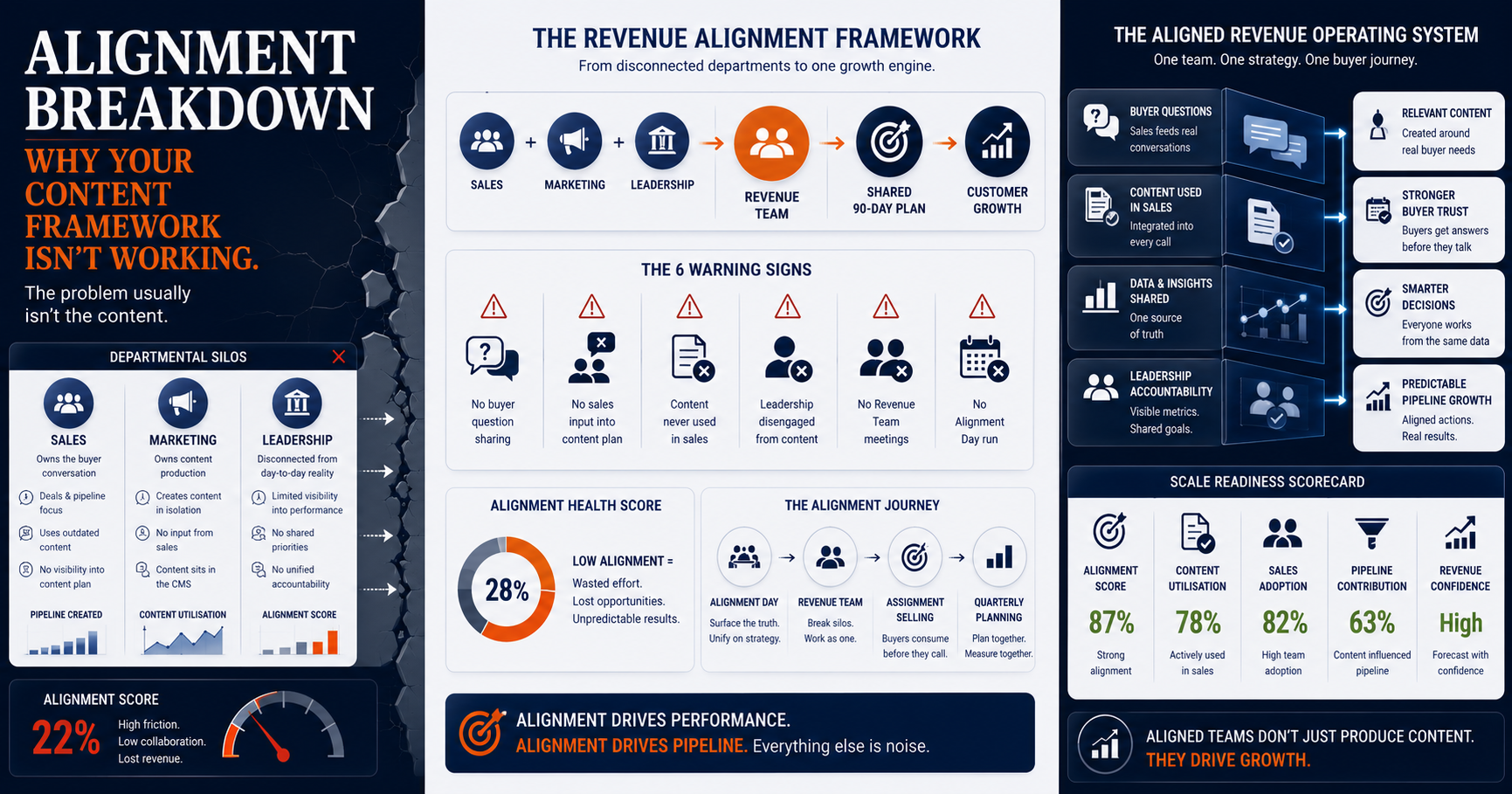
| Sales and Marketing Collaboration | Breaking down silos between teams | Endless Customers only works when teams operate as one revenue unit |
| YouTube and Social Platforms Setup | Establishing video channels and posting schedules | Creates infrastructure for showing what others won't |
These milestones work together to create momentum. Miss one, and the others become harder to achieve. Complete them all, and you'll be positioned to accelerate through the six-month, 12-month, and 24-month stages of the Endless Customers journey.
How to hire and onboard your Content Manager in 90 days
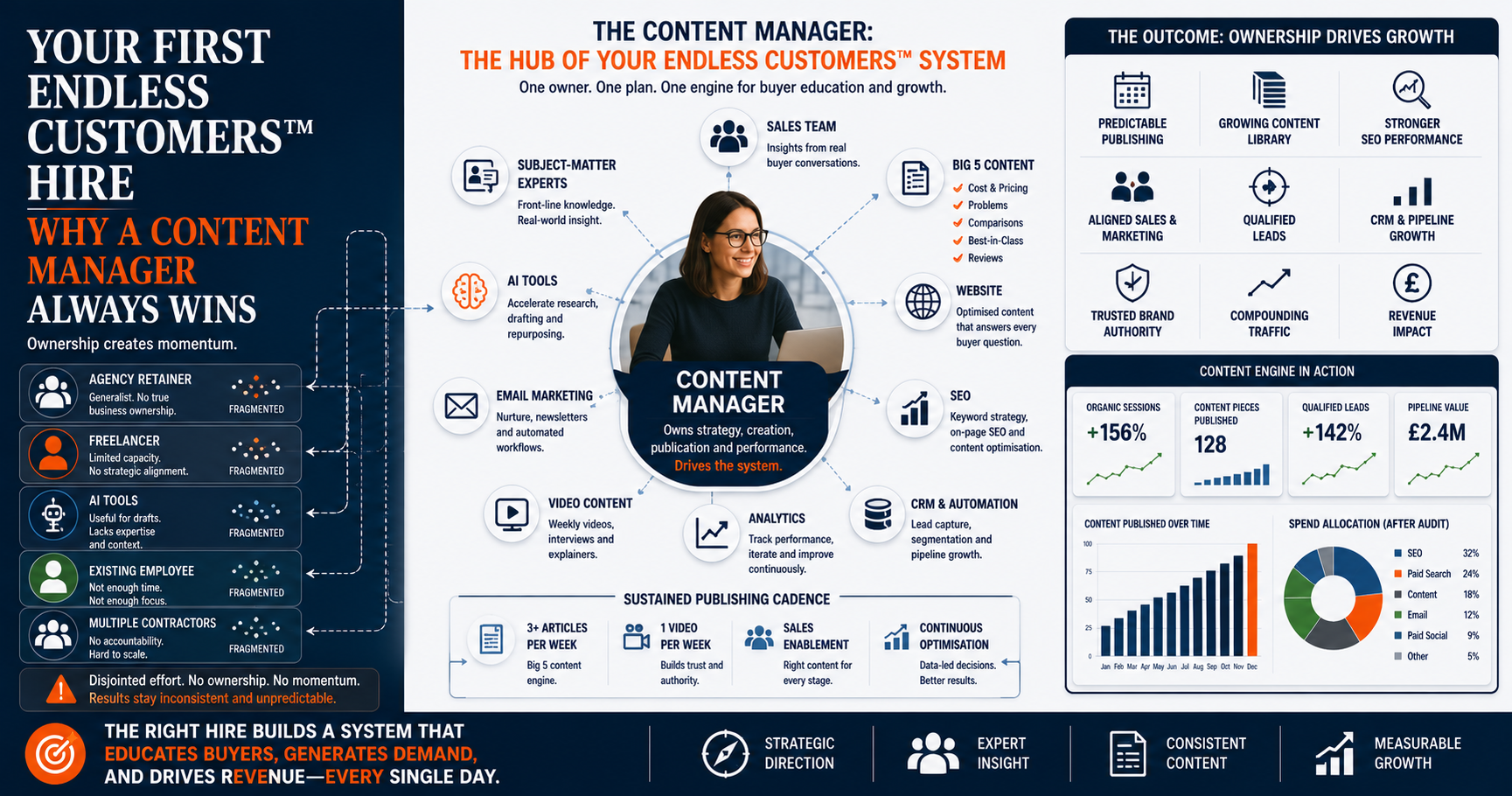
Producing great content is a full-time job that requires hiring or designating a dedicated content manager who has the heart of a teacher with a love of learning, writing, and communicating.
Don't underestimate this hire. Your content manager becomes the engine of your media company.
This person handles far more than just writing articles. They're responsible for:
- Publishing at least three pieces of content per week based on The Big 5
- Interviewing internal subject matter experts to capture authentic expertise
- Managing analytics and reporting for all content marketing efforts
- Overseeing search engine optimisation for your website and content
- Handling email marketing, including newsletters and automated workflows
- Leveraging AI tools to speed up production processes
The best content managers have impeccable writing skills, understand editorial style guides, can tell great stories across formats, and possess incredible people skills. They need to think like educators, intuitively understanding what your audience needs to know and how they want to consume it.
For companies with revenues under £1 million ($1.25 million), this role might fall on a key leader or even the business owner initially. For companies with over £5 million ($6.25 million) in revenue, you're likely building a team of three to five people, including this content owner and a dedicated videographer.
During your first 90 days, getting this person hired, trained, and producing content ranks among your highest priorities.
How to define your content strategy and brand messaging
Your content strategy should start with The Big 5 topics that buyers research most: cost and pricing, problems, versus and comparisons, reviews, and best-in-class recommendations.
These five topics represent what every buyer wants to know before making a purchase decision. They're universal across industries, whether you're B2C or B2B, local or national, product or service.
Focus first on your core product or service, beginning with cost and price content. Why? Because pricing information is often the most immediately helpful for your sales team and removes major barriers to purchase.
When buyers visit your website looking for pricing and can't find it, they experience frustration—the "F-word of the internet." They don't wait around or call you. They keep searching until they find a competitor willing to provide that information.
Your content strategy during the first 90 days should map out:
- Which products or services you'll cover first
- Specific articles and videos within each Big 5 category
- Who your internal subject matter experts are for each topic
- How you'll address questions honestly without defaulting to "it depends"
- Where this content will live on your website (ideally in a learning centre)
Say what others in your space aren't willing to say. That's how you build trust and differentiate your brand.
5 types of trust-building "Big 5" content to publish first
Your initial content should address the questions, fears, and concerns that real buyers have when they're closest to making a purchasing decision.
This isn't fluffy, top-of-the-funnel content. You're creating pieces that help people who are actively considering a purchase understand whether your solution is right for them.
Within the first 90 days, aim to publish at least 20 pieces of content that openly address The Big 5 topics. Start with the questions your sales team hears most often.
Examples of trust-building content to create:
- "How much does [your product/service] cost?"
- "What are the most common problems with [your solution]?"
- "[Your company] vs. [competitor]: An honest comparison"
- "Is [your product/service] right for you? Here's who we're best (and worst) for"
- "The best [product category] for [specific use case]"
Each piece demonstrates radical transparency. When you discuss pricing, include real numbers and factors that affect cost. When you cover problems, be honest about the drawbacks and challenges, not sarcastic or dismissive.
This content becomes ammunition for your sales team. They can send articles to prospects during the buying journey, answer objections before they arise, and speed up the sales cycle by building trust before the first conversation.
Why you need to commit to three pieces of content per week
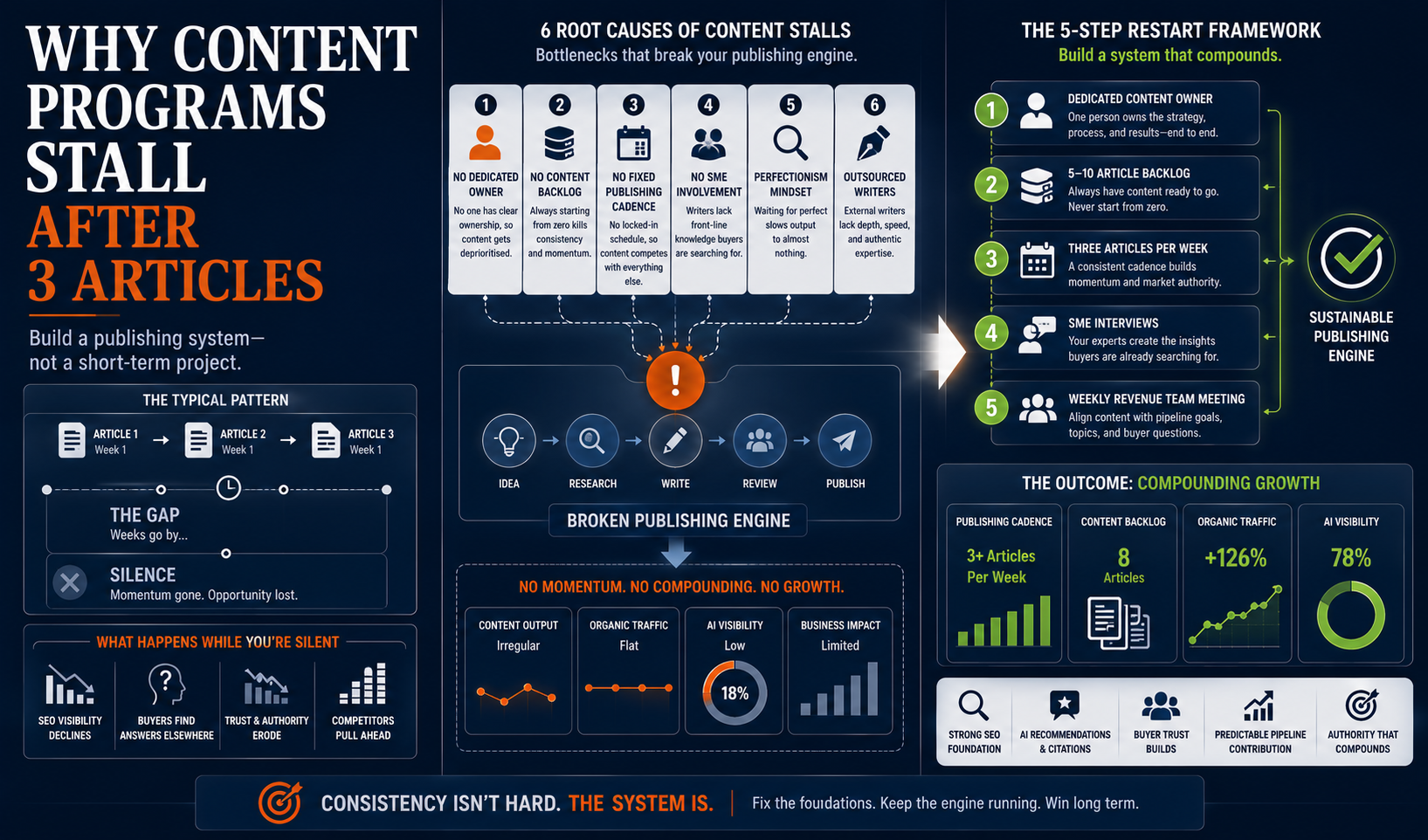
Publishing a minimum of three pieces of content per week creates the necessary signals for AI systems to continuously recommend your content whilst maintaining a steady stream of fresh information for your followers.
This frequency isn't arbitrary. Through years of implementing this system, we've found three pieces per week is the sweet spot. Less than that, and you don't create enough signals for algorithms or maintain enough momentum with your audience.
Build a backlog of 5-10 pieces of content already scheduled for release. This ensures that holidays, sick days, or unexpected events don't bring your publishing to a screeching halt.
Think like a publisher. Media companies don't stop producing content because someone takes a holiday. They maintain consistent schedules because their audience expects it—and algorithms reward it.
During your first 90 days, establishing this rhythm matters more than perfection. Your content will improve with practice, but consistency builds trust with both buyers and search engines.
How to make your initial website improvements in 90 days
Your website improvements during the first 90 days should focus on organisation, clarity of messaging, and creating pathways for visitors to self-educate and become sales-qualified leads.
You're not redesigning your entire website during this period. You're making strategic enhancements that support your content strategy and help visitors find answers to their questions.
Priority improvements include:
- Creating or enhancing your learning centre where all educational content lives
- Improving navigation so visitors can easily find information by topic
- Adding clear calls-to-action that guide people to next steps
- Ensuring pricing information is accessible and transparent
- Making video content prominent on core pages
- Optimising for mobile experience
These early enhancements lay the foundation for eventually having the most trusted and best-performing website in your market, one that helps buyers make informed decisions rather than just promoting your services.

How to set up content analytics and tracking systems
Establishing proper analytics from day one allows you to measure the effectiveness of your content marketing efforts and make data-driven decisions as you progress.
Your content manager should take ownership of all analytics and reporting. This isn't just about tracking website traffic—though that matters.
You need to monitor:
- Which content pieces generate the most engagement
- How visitors navigate through your website
- Where leads are coming from
- What content your sales team uses most often
- Brand mentions and social media engagement
- Whether AI systems are recommending your content
During the first 90 days, you're establishing baselines. You may not see dramatic improvements yet, but you're creating the measurement framework that shows progress over time.
This data becomes essential during your quarterly planning sessions when you assess what's working and where to focus next.
How to launch true sales and marketing collaboration
The Endless Customers system only works when your sales and marketing teams work together as a unified revenue team rather than operating in silos.
This represents a cultural shift for most organisations. Sales and marketing have traditionally blamed each other, marketing claims sales doesn't follow up on leads, whilst sales complains that marketing generates poor-quality prospects.
True collaboration means:
- Sales team members participate in content creation by sharing customer questions and providing subject matter expertise
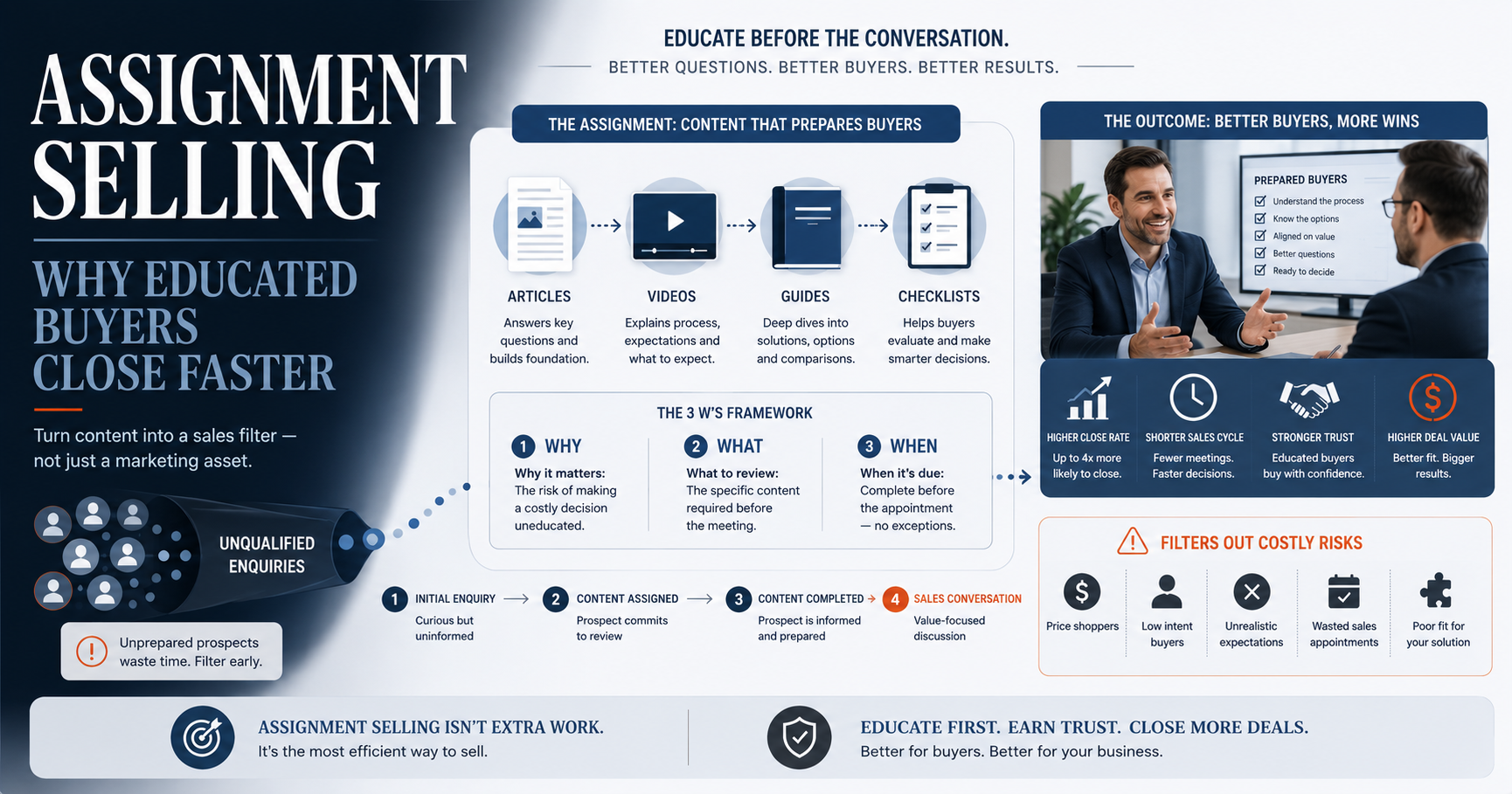
- Marketing creates materials that sellers actually use in their process, like assignment selling content
- Both teams meet monthly to align on how they can best support each other
- Everyone celebrates shared revenue goals rather than departmental metrics
During Alignment Day, you'll define specific roles and responsibilities. Your first 90 days is when you start living those out.
One practical step: establish a monthly meeting where sales shares the questions they're hearing most often, and marketing prioritises creating content that addresses those questions.
Why YouTube and social media are crucial to building buyer trust
Your YouTube channel should be treated with the same level of care, strategy, and consistency as your website, complete with optimised playlists, regular posting schedules, and strong calls to action.
YouTube is the second-largest search engine in the world. Buyers discover products, connect with brands, and research purchases there every single day.
During your first 90 days, you're establishing the infrastructure for video content:
- Creating your YouTube channel with professional branding
- Organising content into playlists by topic (The Big 5 categories work well)
- Defining your posting schedule (aim for at least two videos per week)
- Setting up your social media platforms for distributing content
- Establishing processes for creating short-form vertical video for social platforms
You're also likely hiring or designating a videographer during this period—someone who owns video production in-house and builds a video-first culture.
By establishing these platforms early, you create the infrastructure needed to show what others aren't willing to show. Video builds trust faster than written content alone because buyers see the real people behind your brand.
External resource: YouTube SEO: How to Optimize Videos for YouTube Search
How to use quarterly planning to focus your efforts
After Alignment Day, your leadership team will identify 3-5 top priorities, called Focus Areas, for your first 90 days to ensure meaningful progress towards becoming the most known and trusted brand in your market.
With so many opportunities ahead, you can't tackle everything at once. Quarterly planning sessions help you narrow your focus to the most impactful initiatives.
These Focus Areas become part of a clear Game Plan that outlines:
- Specific action steps required
- Who owns each initiative
- Timeline for execution
- How you'll measure success
This 90-day cadence strikes the perfect balance. It gives your team enough time to make meaningful progress without letting things drag on or lose urgency.
At the end of each quarter, you revisit your progress, celebrate wins, and refine the next set of Focus Areas. This iterative process keeps your team aligned, agile, and consistently moving forward.
What results to expect by day 90
By the end of your first 90 days, your Endless Customers Scorecard will likely show a score between 20 and 40, indicating that your team is getting the hang of the system although you still require frequent assistance in several areas.
This score is perfectly normal and expected. Most businesses begin their journey with scores below 20, so reaching 20-40 represents significant progress.
You'll have accomplished:
- Published at least 20 pieces of content addressing The Big 5
- Established a content manager and potentially a videographer
- Created foundational systems and processes
- Built momentum for continued progress
- Aligned your sales and marketing teams around shared goals
- Set up the infrastructure for video and social media content
- Defined your strategy and priorities for the next 90 days
You probably won't see dramatic increases in leads or sales yet. That's not the goal of this period.
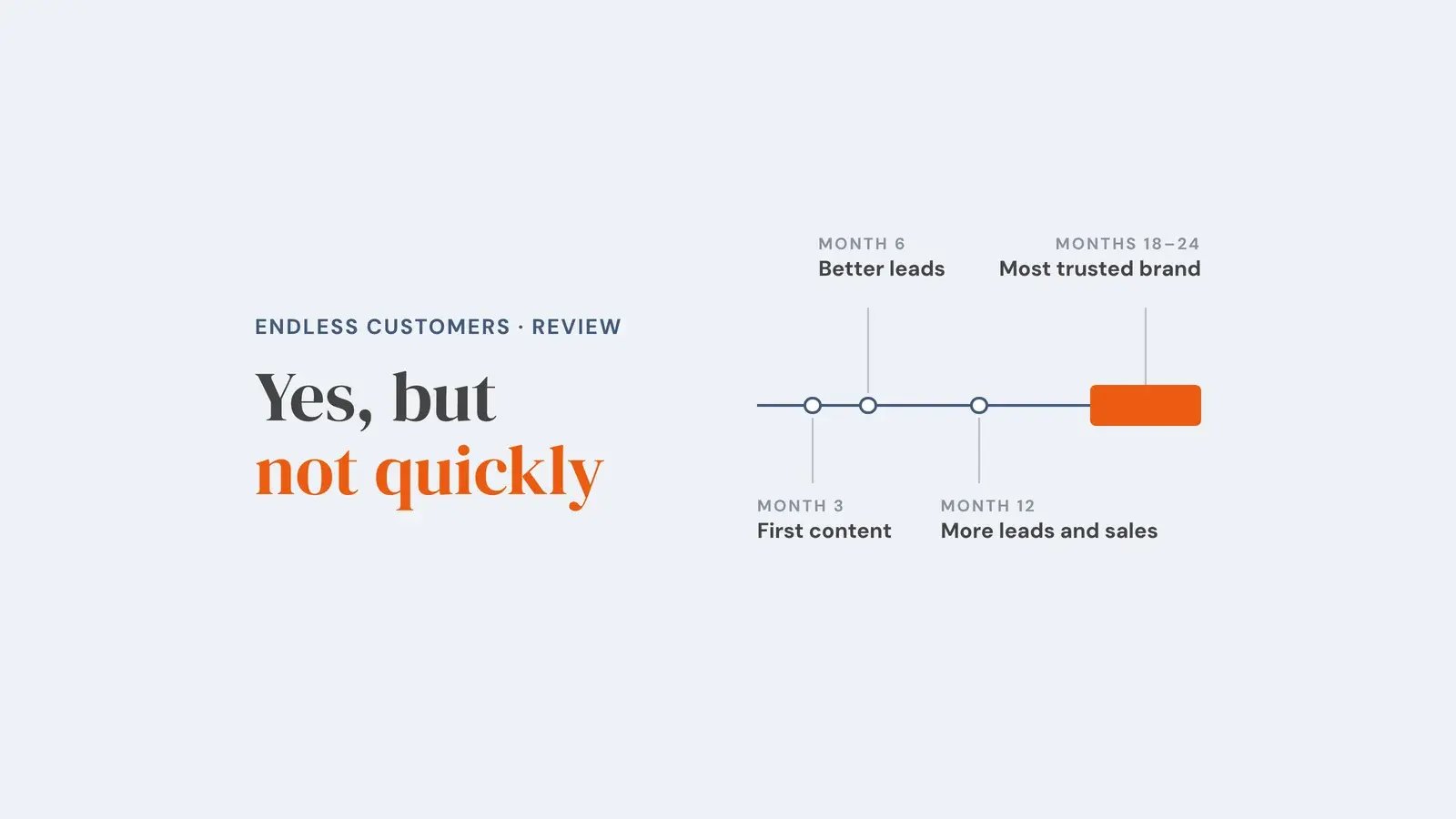
You're building the marketing engine that will generate those results over the next 6, 12, and 24 months. Companies that stay committed to the process typically reach scores of 40-60 by 12 months, 60-80 by 18 months, and 80-100 by 24 months.
Common challenges in your first 90 days and how to overcome them
The biggest challenge most businesses face is resistance to change, with team members defaulting to "that wouldn't work for our buyer" or "we're different" rather than embracing radical transparency and disruption.
You'll hear variations of these objections:
- "If it ain't broke, don't fix it" (Loss Aversion Bias)
- "This is how we've always done it" (Organisational Inertia)
- "What if this fails and we look bad?" (Career Risk Aversion)
- "Why change when we're already profitable?" (Success Paradox)
- "This is how our industry works" (Market Myopia)
Overcoming these obstacles requires several approaches:
Make failure safe. Foster an environment where smart risks are seen as learning opportunities, not punishments. When team members worry about looking bad, they default to safe, ineffective marketing.
Reframe risk as greater through inaction. The biggest risk isn't trying something new—it's staying stagnant whilst competitors adopt these principles and become the known and trusted brand in your market.
Use the Endless Customers framework to stay focused. Instead of feeling overwhelmed by all the possibilities, concentrate on The Big 5 and the eight milestones for your first 90 days. The framework provides clarity.
Challenge the "we're different" mindset. Every business is unique in some ways, but the need to build trust is universal. When you're tempted to say "this won't work for us," ask instead: "Would doing this induce more trust?" If the answer is yes, everything else falls into place.
How your first 90 days set you up for long-term success
The systems, strategies, and habits you build during your first 90 days create a foundation that enables you to progress through subsequent milestones: reaching 40-60 points by 12 months, 60-80 by 18 months, and 80-100 by 24 months.
This initial quarter establishes the momentum you need for the entire journey.
By six months, you'll launch your learning centre, hire or train a videographer, define your sales process with assignment selling, and possibly activate paid media for faster results.
By 12 months, you'll see a noticeable increase in leads and sales, publish industry-disruptive content that gets attention, integrate video throughout your website and sales process, and make advanced data-driven decisions.
Companies that stay committed to the process and consistently implement the principles at the highest level will become the most known and trusted brand in their market within 18-24 months, complete with significant increases in leads and sales.
But none of that happens without the foundation you build in your first 90 days. The hiring, the systems, the content, the collaboration: all of it matters.
A note about bias and this approach
As a Certified Coach of Endless Customers, I believe in this system because I've seen the results firsthand with businesses across industries. The approach outlined in this article is based on Endless Customers' methodology, a system I recommend because it works, not because of sales spin.
That said, the principles of radical transparency, The Big 5 content topics, and sales-marketing alignment are universal truths about how modern buyers make decisions. Whether you work with me or implement them on your own, these principles will help you build trust and grow your business.
Your next step: Start your 90-day journey
You now know what to expect in your first 90 days with Endless Customers. You understand the eight milestones you'll complete, the challenges you'll face, and the foundation you'll build for long-term success.
If you're still struggling with slow marketing results, misalignment between sales and marketing, or the feeling that your content isn't driving real business growth, this system provides the roadmap you need.
Your next step is to book your Company Alignment Workshop. This three-hour session unites your entire organisation around the principles of radical transparency, defines your specific roles and responsibilities, and creates your 90-day Game Plan for success. This is where your transformation begins.
As your coach, I can guide companies like yours to become the most known and trusted brand in your market, not through marketing tricks, but through building genuine trust with your buyers.
Now that you know what happens in the first 90 days, explore the complete 24-month roadmap to becoming your industry's most trusted brand. You'll discover what milestones to expect at 6, 12, 18, and 24 months, and how companies achieve scores of 80-100 by staying committed to this proven system.
Topics: