

Is AI making content marketing obsolete?
Are buyers now getting answers without ever visiting your website, leaving your brand invisible while competitors fill the gap?
If you're evaluating the Endless Customers system, you're likely asking a more important question: is this still worth the investment in an AI-driven world, or has the ground shifted too far?
Get this wrong and the consequences are real: wasted budget, rising customer acquisition costs, a sales team left without support, and a pipeline that never compounds the way it should.
In this review, you'll see exactly how the system works today, the real results companies are achieving, where it falls short, and whether it's the right fit for your business. And for some businesses, this approach simply won't be the right fit, we'll cover that in detail.
As someone who delivers this programme, I have a clear bias, but this review is designed to show both where the system succeeds and where it doesn't fit.
No hype. Just a clear-eyed assessment of one of the most significant marketing frameworks of the last decade, and whether it survives the AI era intact.
Key Takeaways
- Endless Customers is a trust-based marketing and sales system, not a media spend; the core investment is in internal content capability and cultural change, not an advertising budget.
- AI tools like ChatGPT and Perplexity source their answers from trusted, authoritative content already online. Publishing honest Big 5 content makes you the brand AI recommends.
- Yale Appliance grew from a $37 million (~£30m) single-store business to a $100+ million (~£80m+) four-location operation using these principles. A single article at River Pools and Spas generated over $35 million (~£28m) in tracked revenue.
- The system is best suited to B2B and considered-purchase businesses with annual revenues between roughly $3 million and $100 million (about £2.25 million to £80 million).
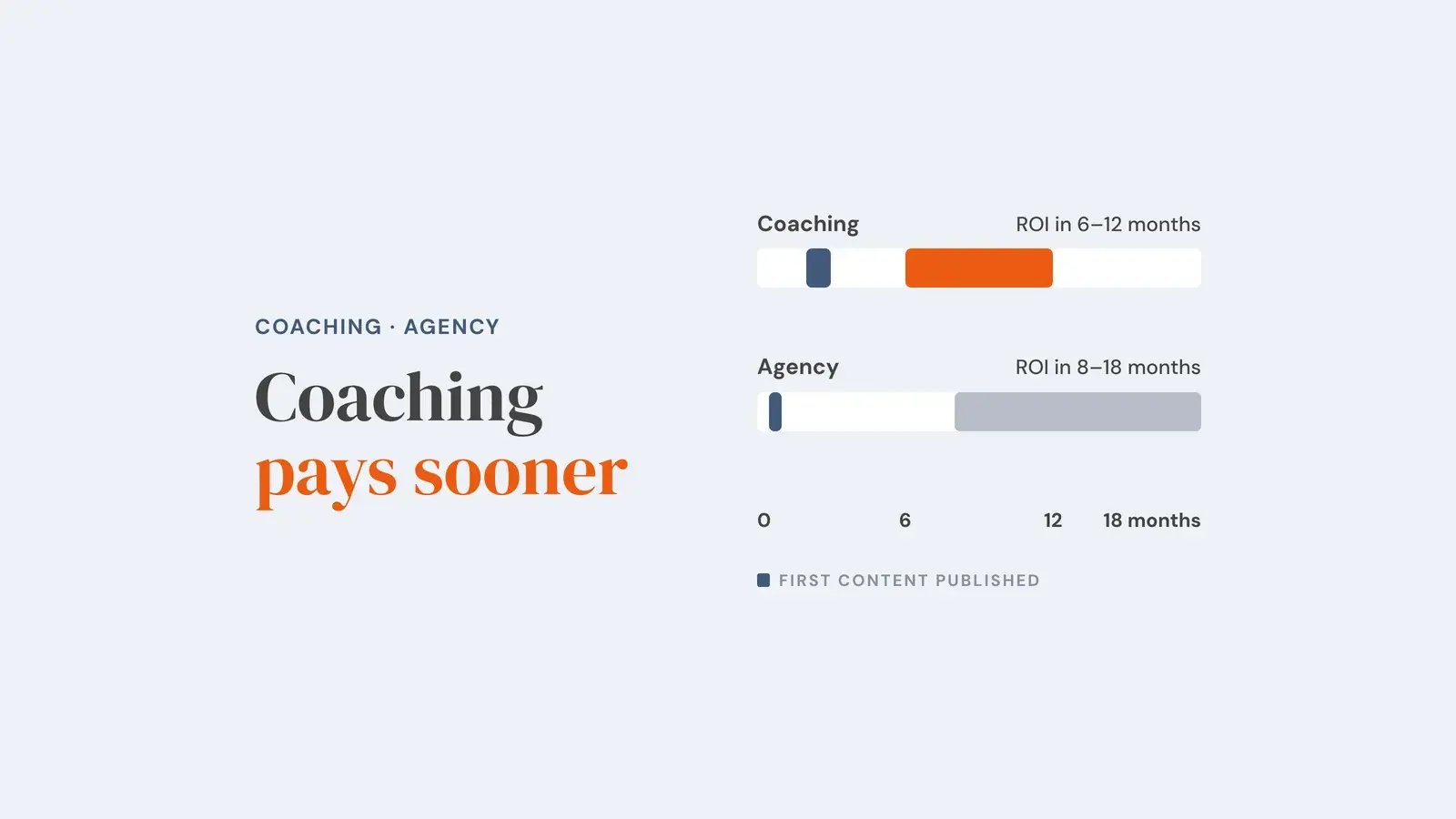
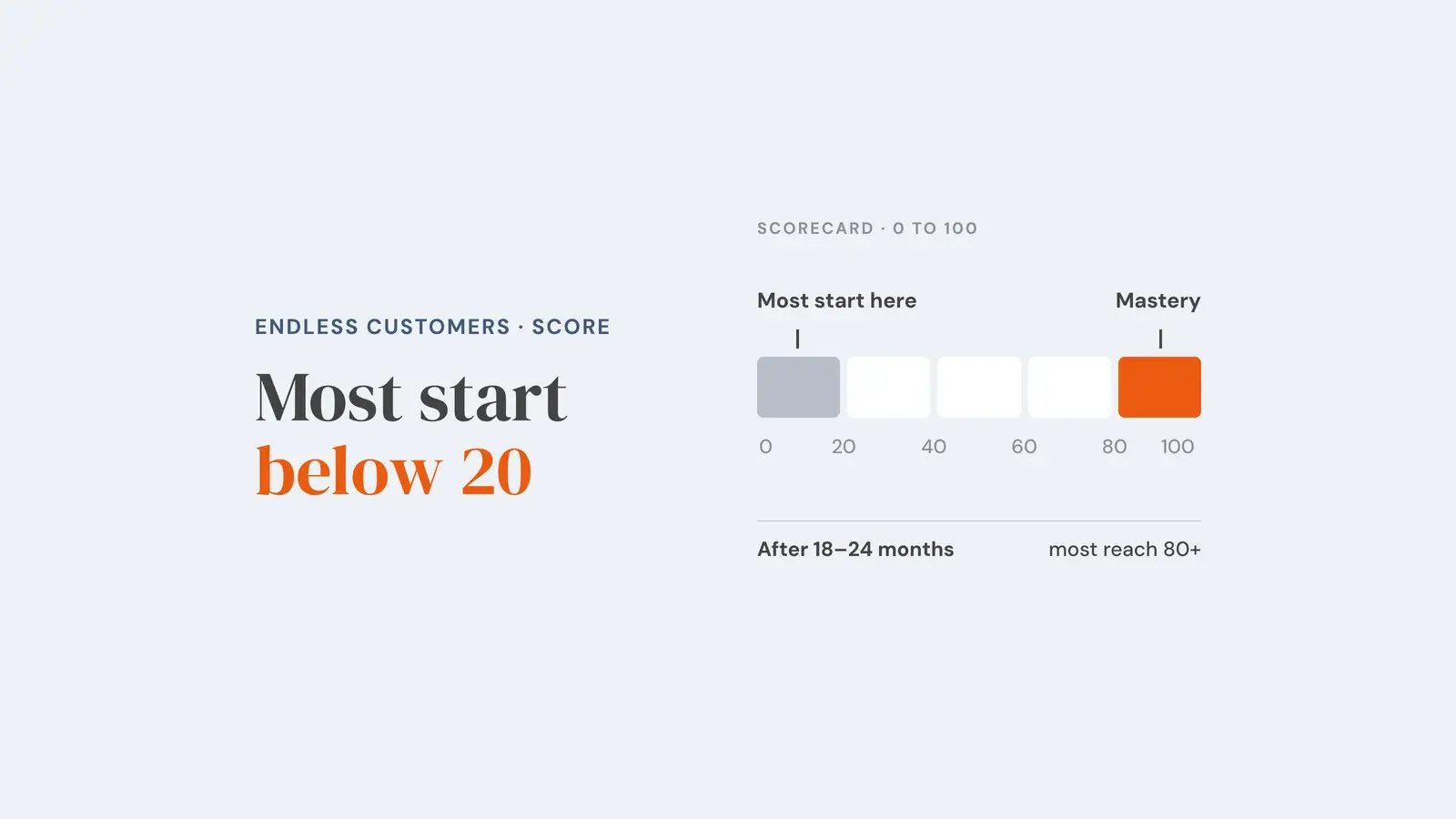
- Most businesses see meaningful results at the 12-month mark. IMPACT puts mastery, a Scorecard above 80, at around 24 months; coaching runs month to month, with no fixed programme length.
What is the Endless Customers System™ and how does it work?
Endless Customers is a trust-based marketing and sales system built on radical transparency, teaching companies to become the most known and trusted brand in their market by obsessively answering the questions buyers are already asking.
Originally developed by Marcus Sheridan as They Ask, You Answer after he saved his swimming pool company from bankruptcy, it was reimagined for the AI era as a full framework built around 4 Pillars and 5 operational Components.
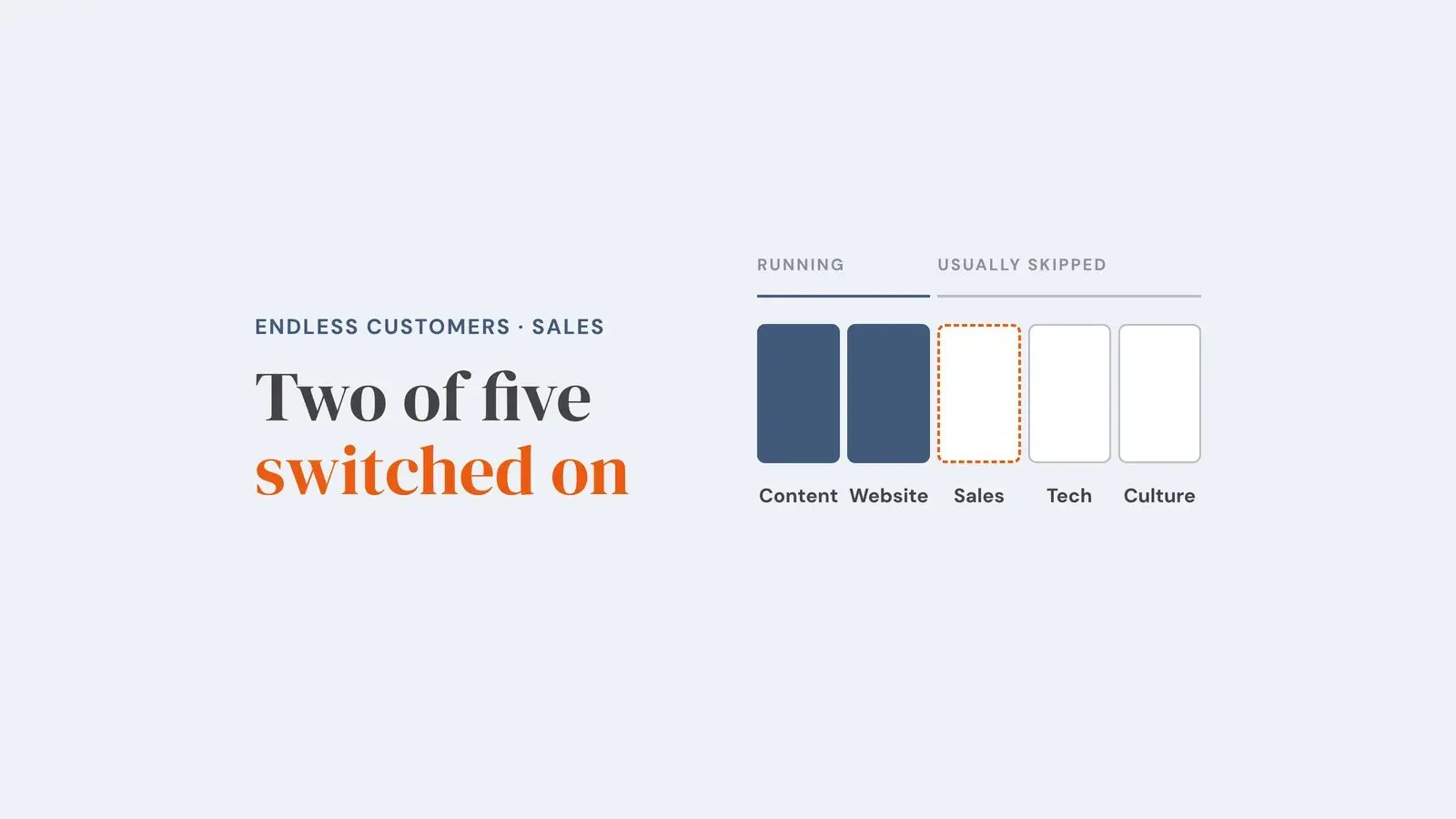
The 4 Pillars define the mindset: say, show, and sell in ways others aren't willing to, and be more human than competitors are willing to be. The 5 Components translate that mindset into execution — covering content, website, sales activities, technology, and a culture of performance.
Every decision in the system is filtered through one question: "Will this induce more trust?"
| 4 Pillars (mindset) | 5 Components (execution) |
|---|---|
| Say what others won't say | The right content |
| Show what others won't show | The right website |
| Sell in ways others won't sell | The right sales activities |
| Be human in ways others won't | The right technology |
| The right culture of performance |
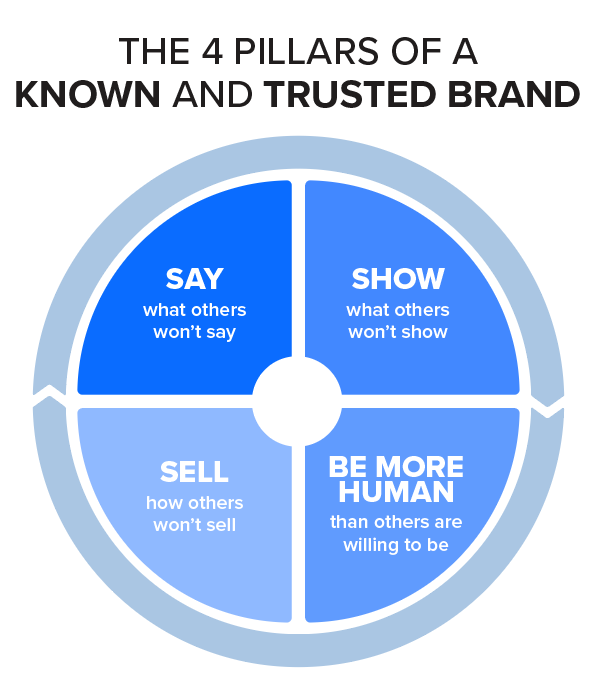
For you, this means your marketing stops being dependent on external vendors and becomes a controllable internal asset, one that compounds in value the longer your team runs it.
What does it cost to implement Endless Customers?
Implementing Endless Customers is not primarily a media spend; the core investment is in internal time, talent, and cultural change, not an ad budget.
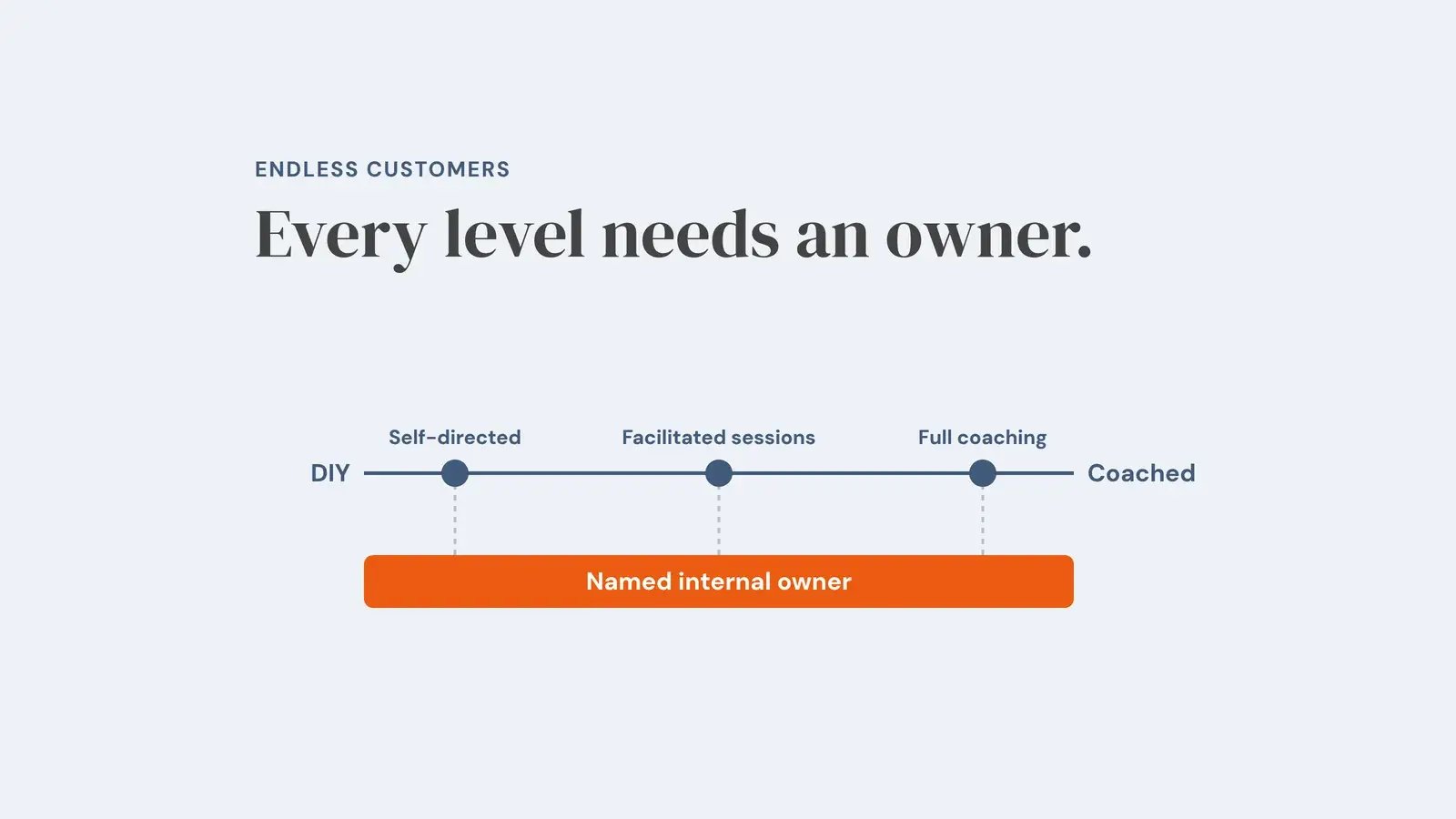
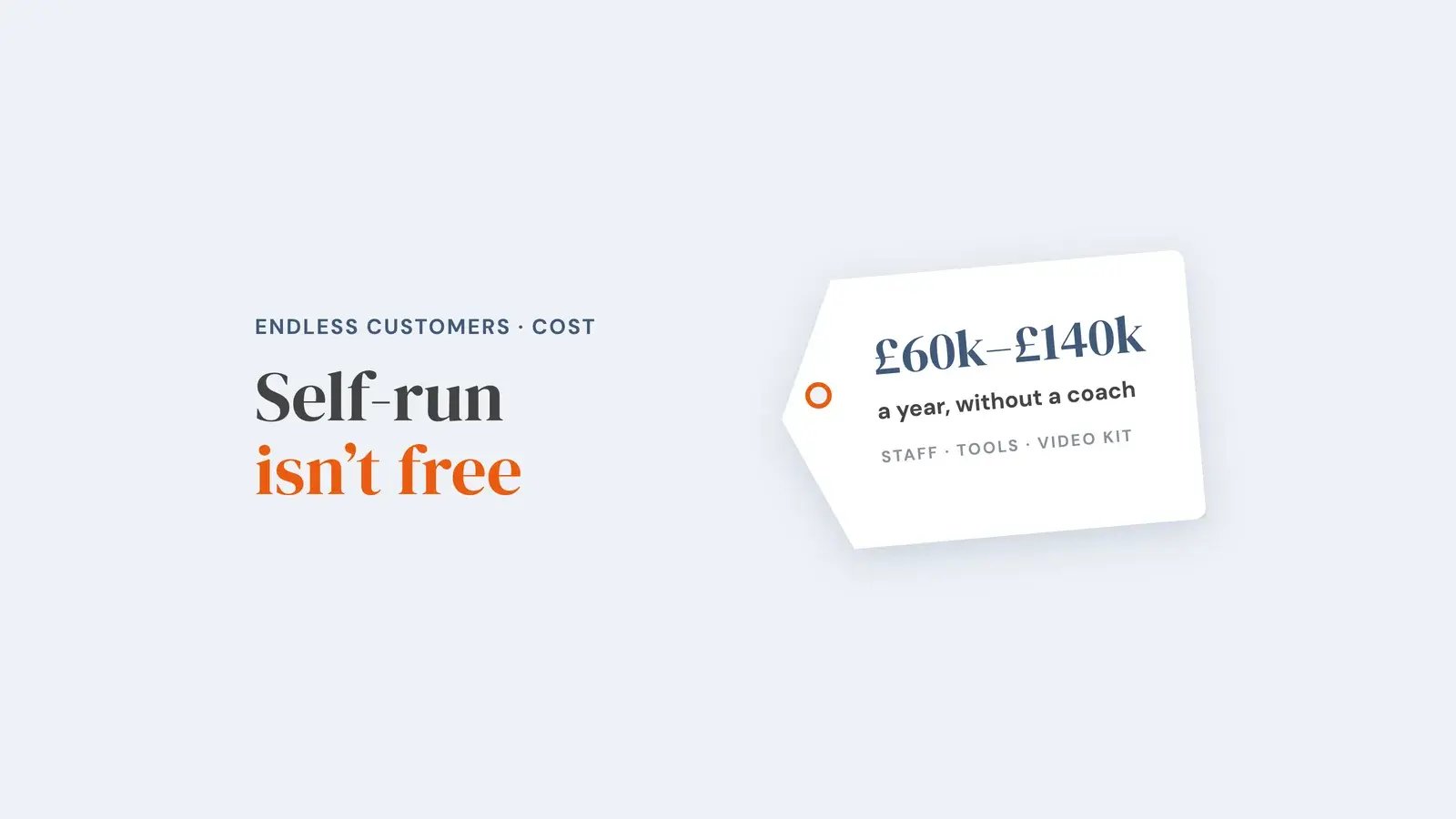
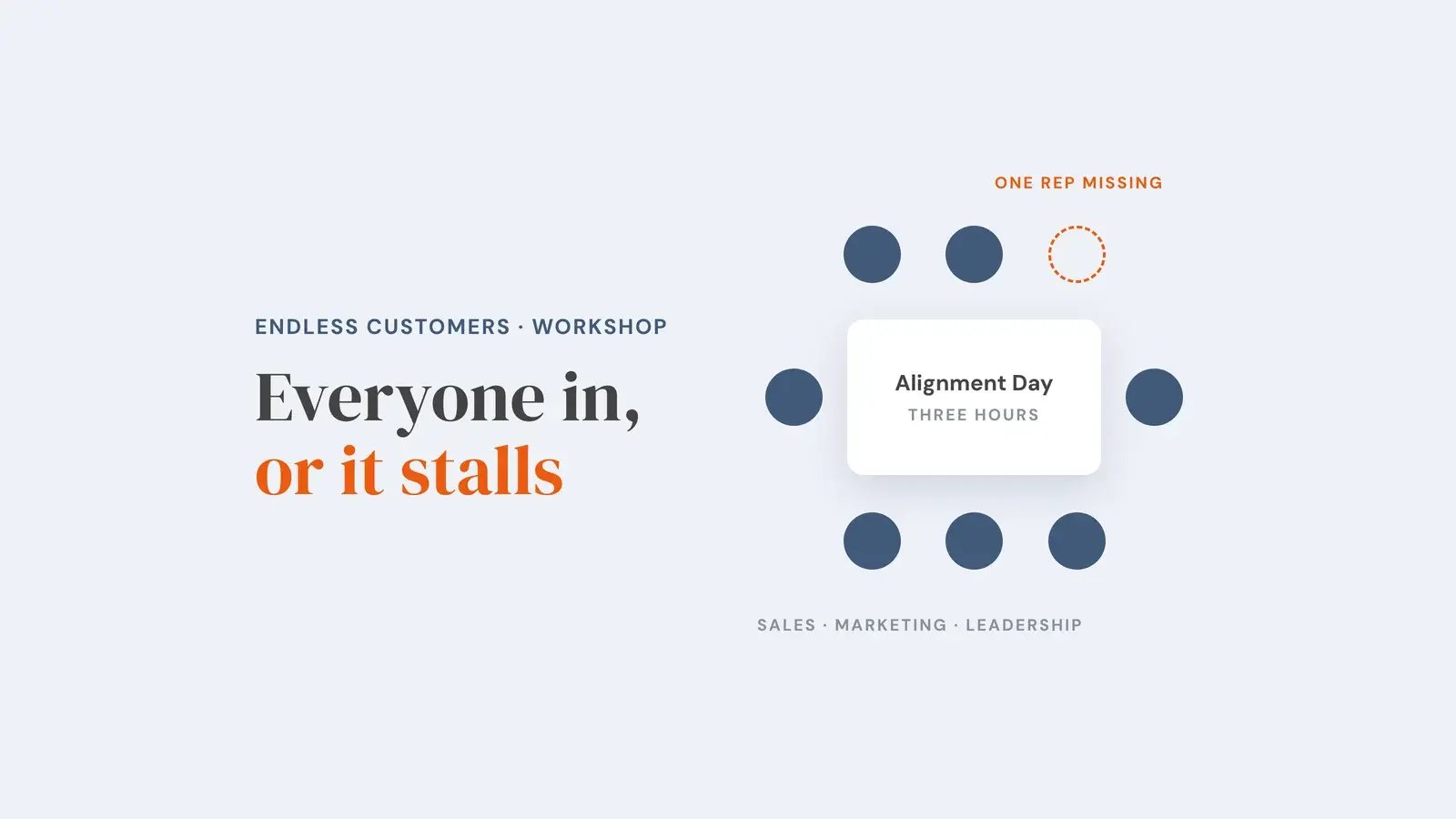
Most businesses begin with a structured diagnostic before moving into regular coaching. Endless Customers Coaching by IMPACT, with me as your coach: Deep Diagnostic & Roadmap $5,000 (£3,750) one-time, then coaching from $3,750 (£2,800) a month, month to month on 30 days' notice; Alignment Day $10,000. IMPACT puts coaching and training at $75,000–$150,000 a year for most companies. Mastery in around 24 months.
| Investment area | Typical commitment |
|---|---|
| Deep Diagnostic & Roadmap | £3,750 one-off ($5,000) |
| Alignment Day (if your roadmap calls for it) | $10,000 one-off, from IMPACT |
| Monthly coaching | From £2,800/month ($3,750) |
| Content manager hire (recommended) | £24,000–£46,000/year ($31,000–$59,000) |
| Video equipment | £500–£2,000 one-off ($650–$2,600) |
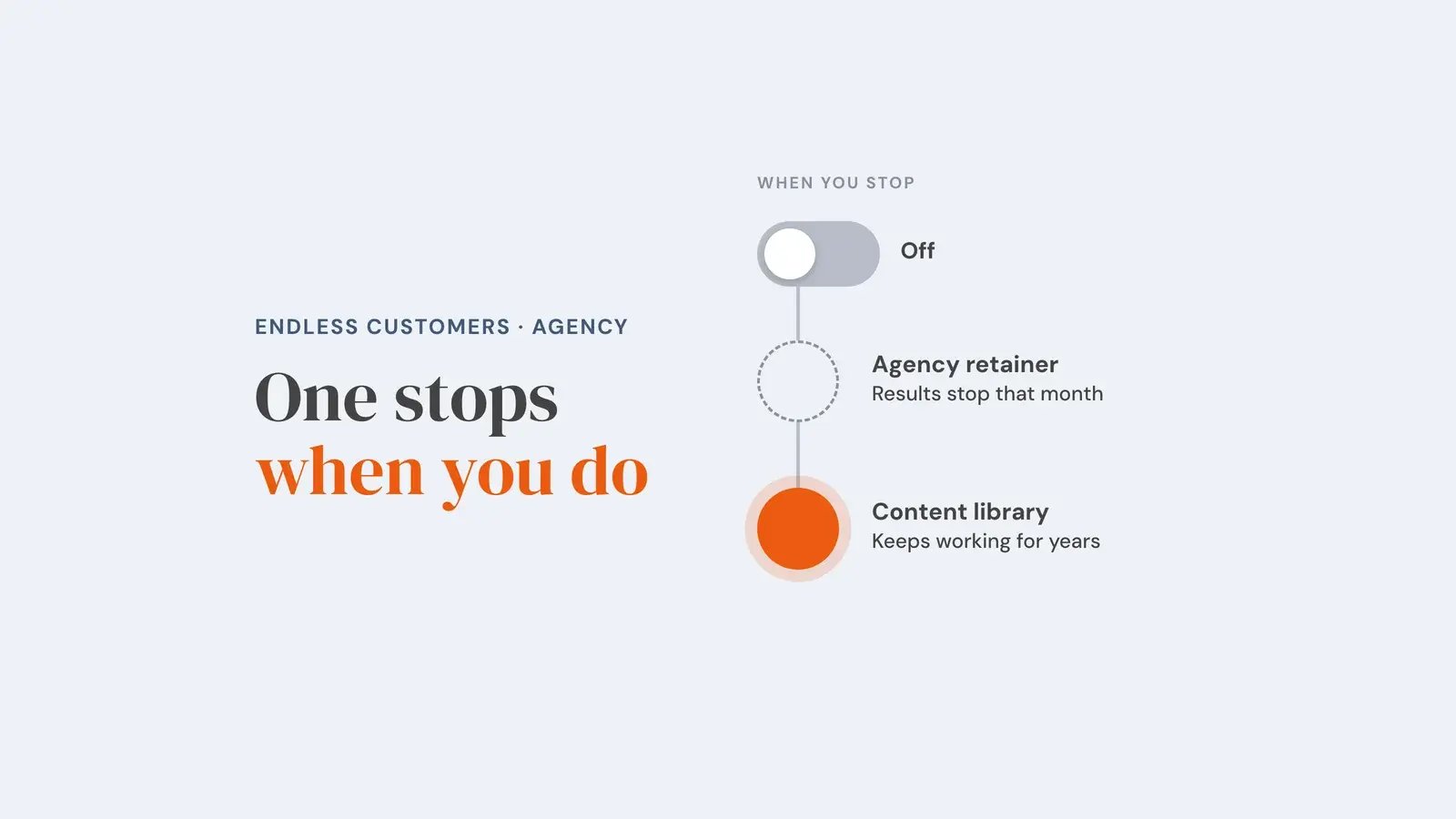
The honest long-term comparison matters here. A traditional agency retainer at £5,000/month ($6,400) costs £90,000 ($115,000) over 18 months, with nothing owned at the end. The Endless Customers programme builds marketing your team owns.
Does AI make Endless Customers obsolete, or more effective?
Endless Customers becomes more valuable in the AI era because AI platforms prioritise trusted, human-created content, and that is exactly what the system is built to produce.
Endless Customers works because it turns your business into the most trusted source in your market, which is exactly what AI platforms prioritise.
Around 47% of Google searches end without a click, according to iPullRank's analysis of Datos clickstream data from October 2024 to December 2025. Buyers increasingly get their answers directly from AI tools like ChatGPT, Perplexity, and Google's AI Overviews, before they ever visit a website. Forrester's research on AI in buying found that 94% of business buyers now use AI during the buying process, up from 89% a year earlier. Pew Research Center found that Google users clicked a link in only 8% of visits when an AI summary appeared, against 15% without one, in its study of AI summaries in search.
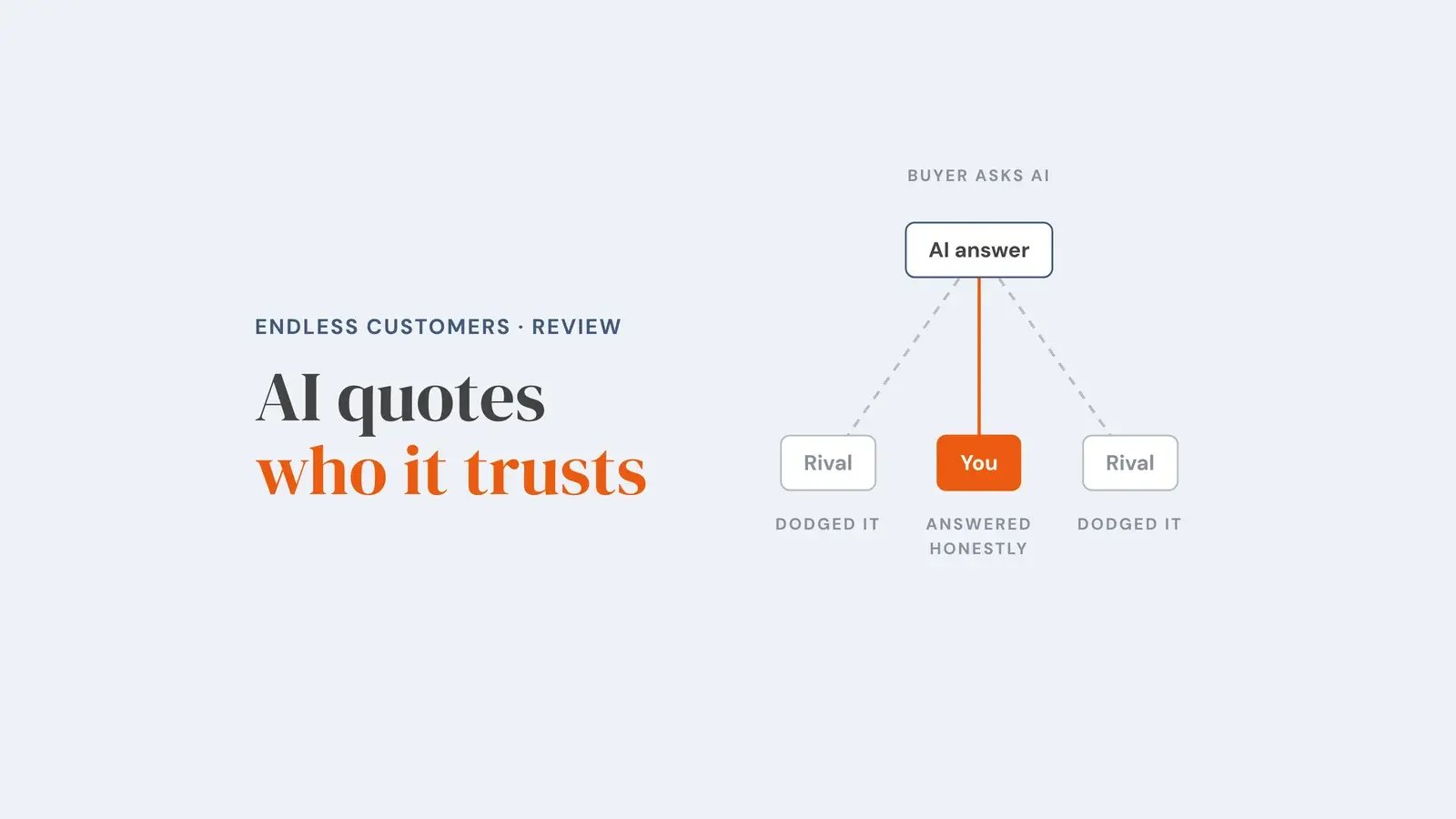
These systems pull their answers from trusted, authoritative content already on the web. If you publish transparent, buyer-focused Big 5 content, you are precisely the source AI cites. If you have avoided difficult buyer questions, you are invisible in this new layer entirely. Google's own documentation on AI features says AI Overviews draw on indexed pages and advises site owners to focus on helpful, reliable, people-first content.
The Endless Customers system was built for exactly this shift. Creating the most honest, comprehensive, buyer-focused content in your market makes you the source AI tools recognise and recommend.
Real results from Endless Customers: case studies and revenue impact
The Endless Customers System™ has produced documented, measurable results across industries.
The most cited example is Yale Appliance, a family-owned retailer in Boston. Before adopting these principles, it was a $37 million (~£30m) single-store business. Today it operates as a $100+ million (~£80m+), four-location operation, growing through a pandemic with increasing margins year after year.
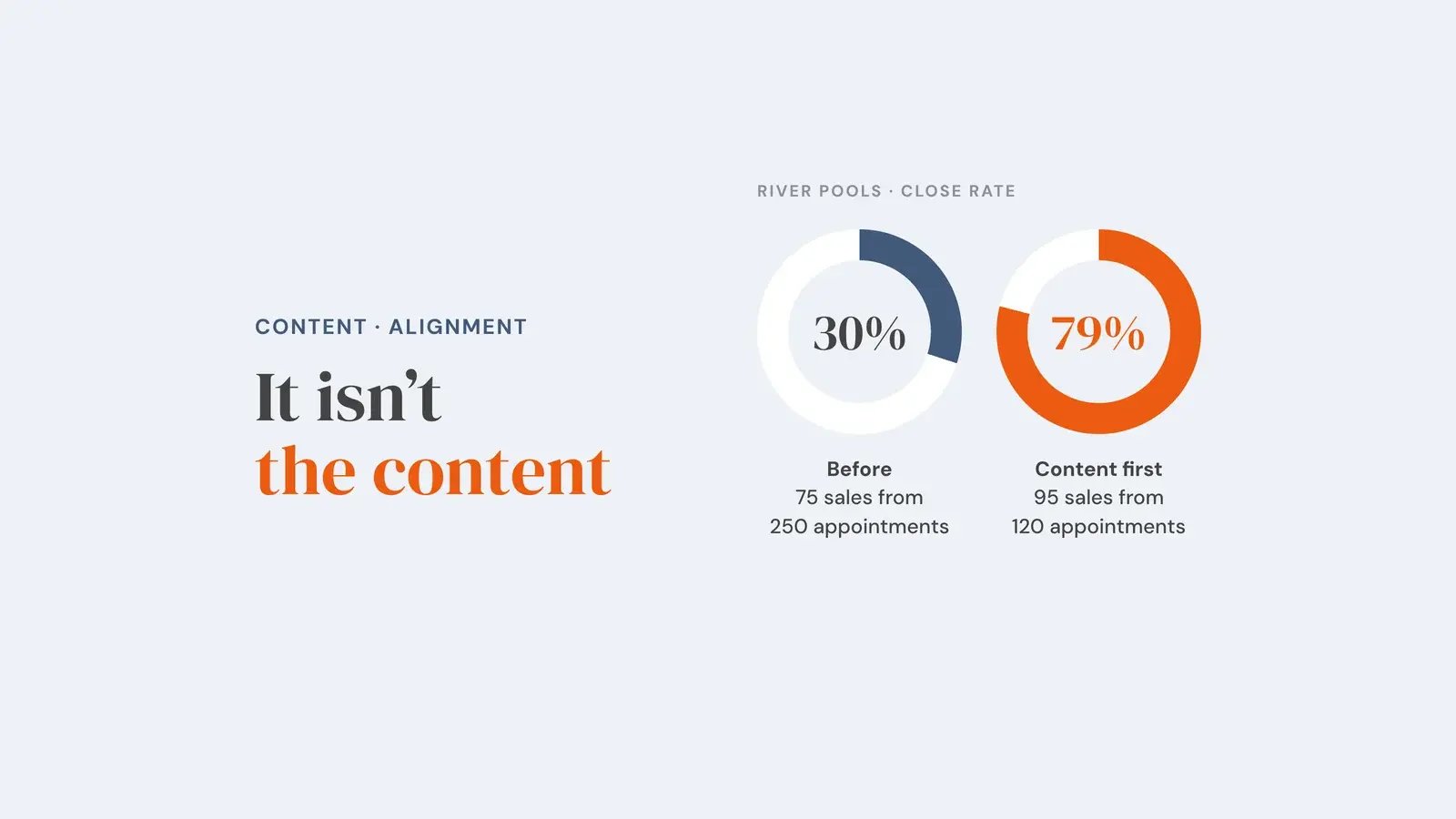
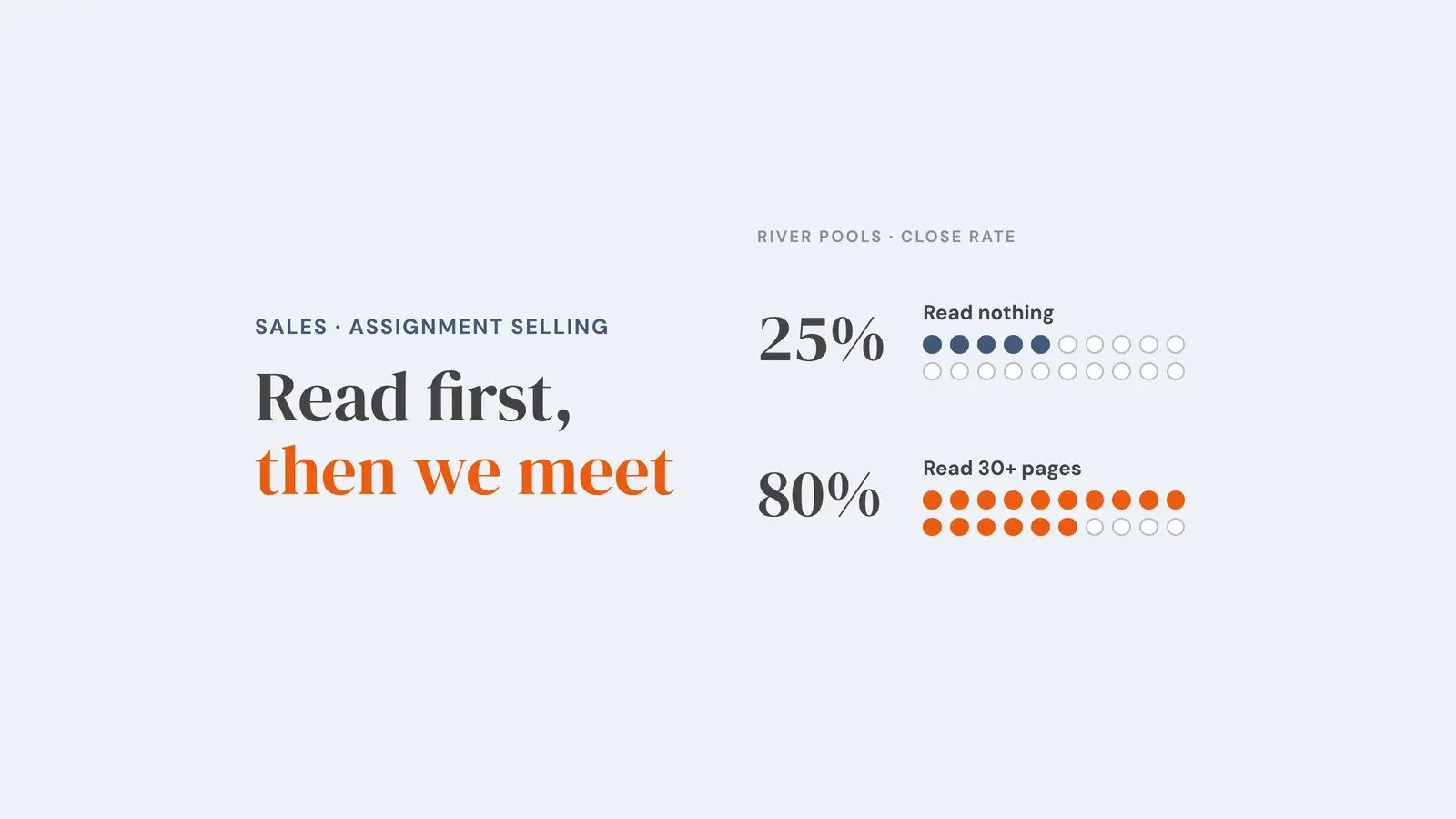
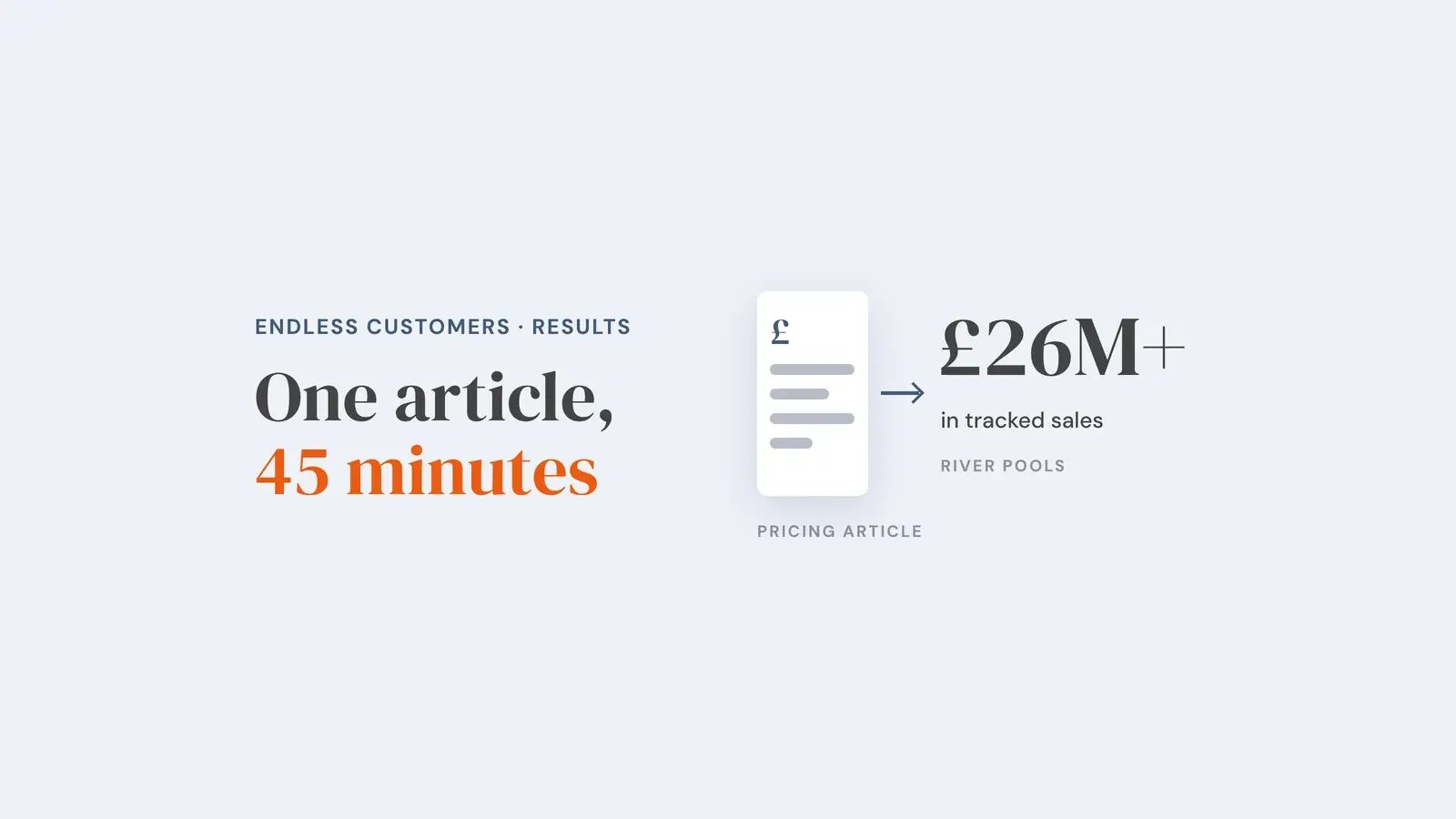
At River Pools and Spas, a single 45-minute article answering "How much does a fiberglass pool cost?" has generated millions of page views and over $35 million (~£28m) in tracked revenue.
| Company | Industry | Documented result |
|---|---|---|
| Yale Appliance | Home appliances | $37m → $100m+; one to four locations |
| River Pools and Spas | Pool construction | $35m+ from one article |
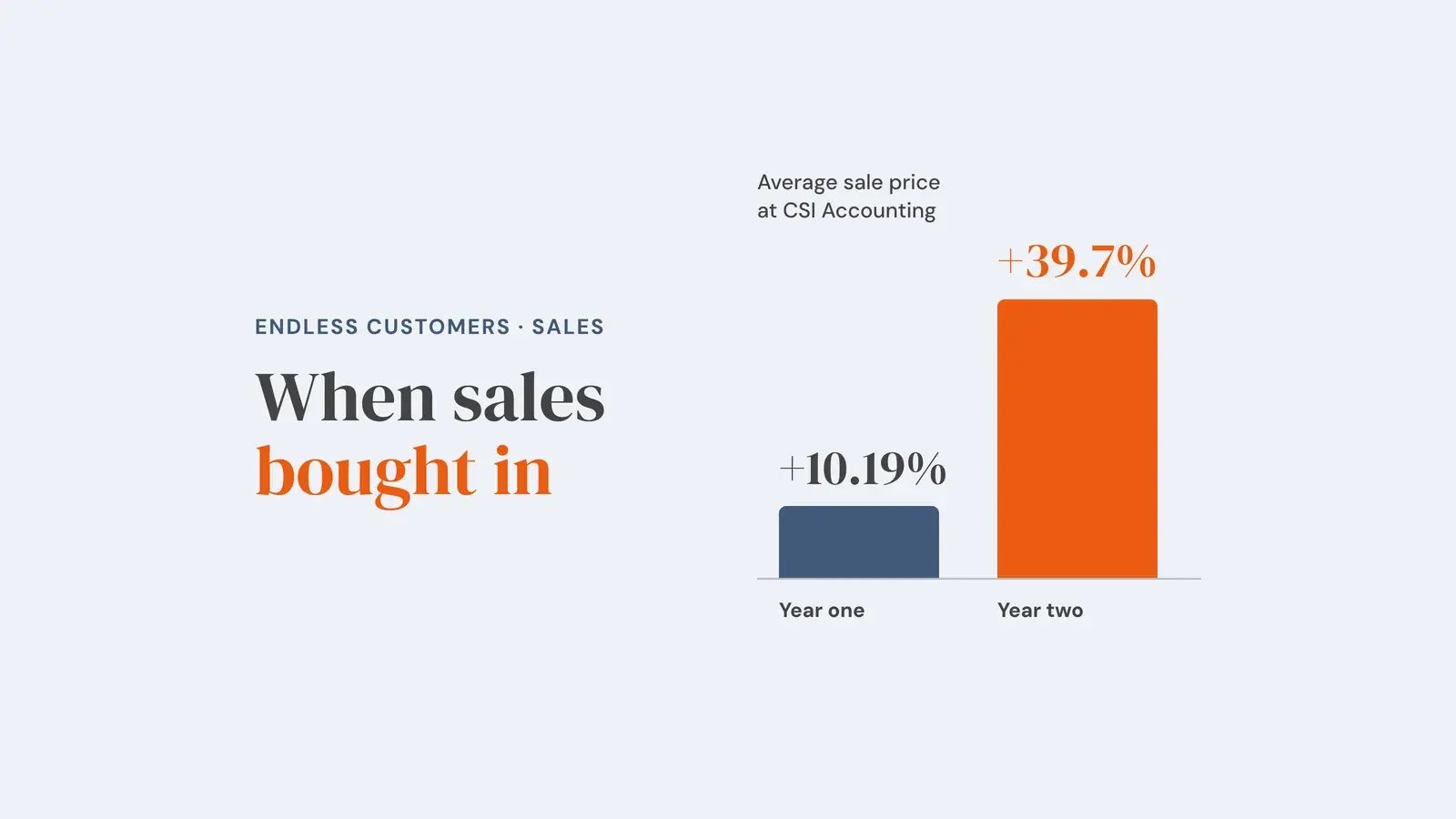
| CSI Accounting & Payroll | Professional services | 39.7% increase in average sale price (year 2) |

These are not paid-ad results; they are the compounding effect of building a trusted brand over time. Content published three years ago still generates leads today.
Problems and limitations: what you should know before starting
Endless Customers is not a quick fix; it requires genuine long-term commitment from leadership, willingness to produce content internally, and readiness to challenge your own industry norms.
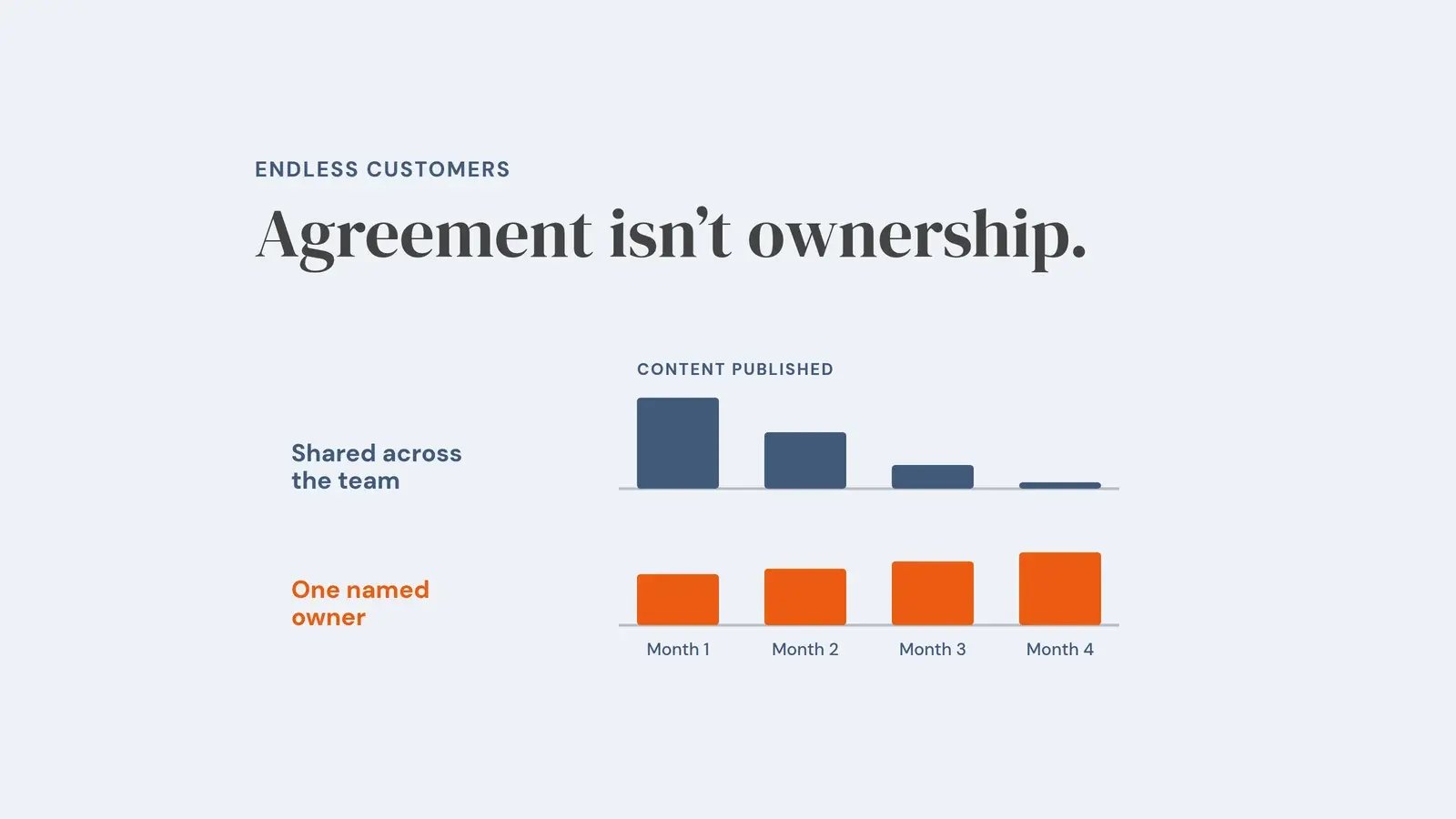
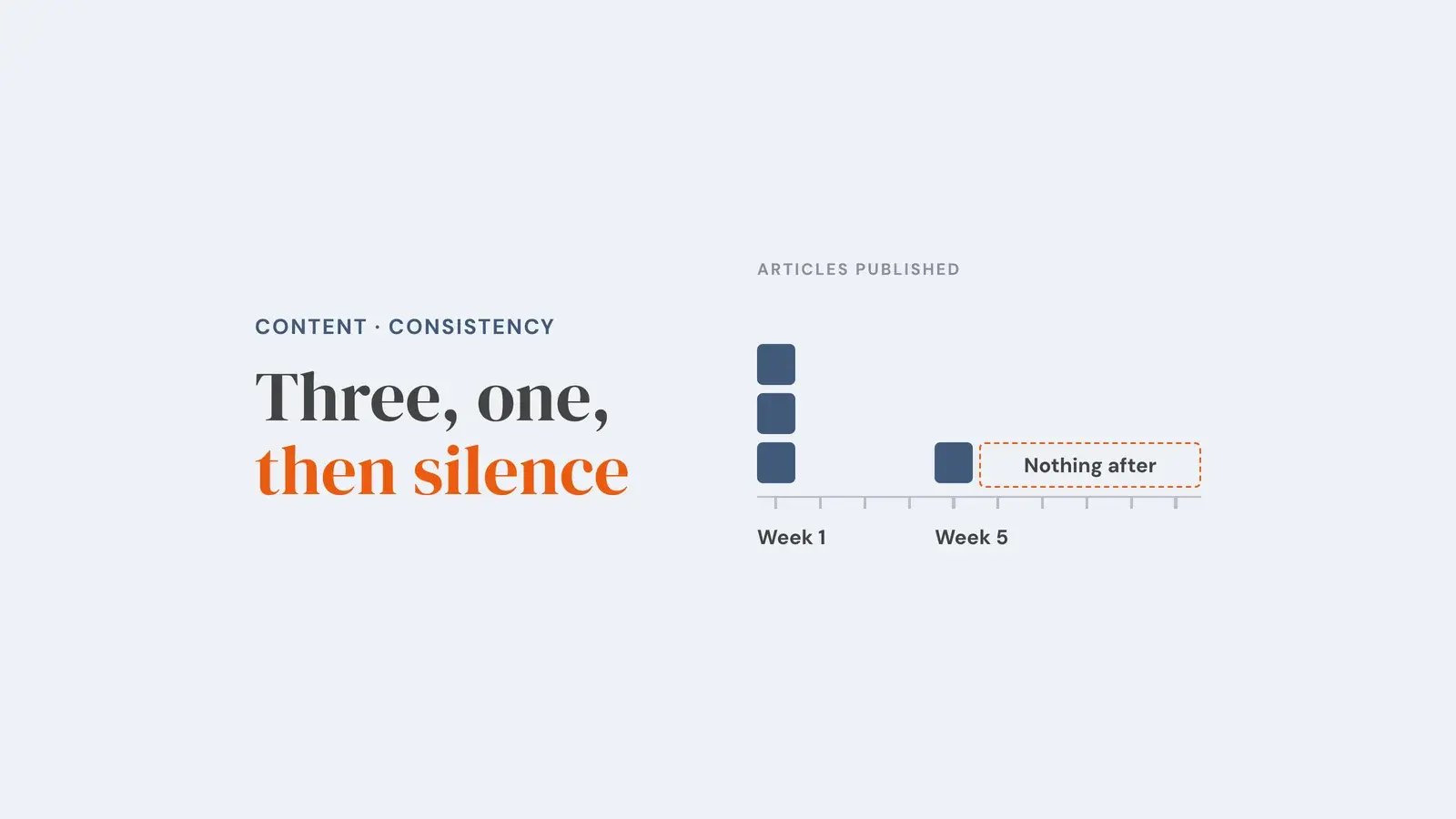
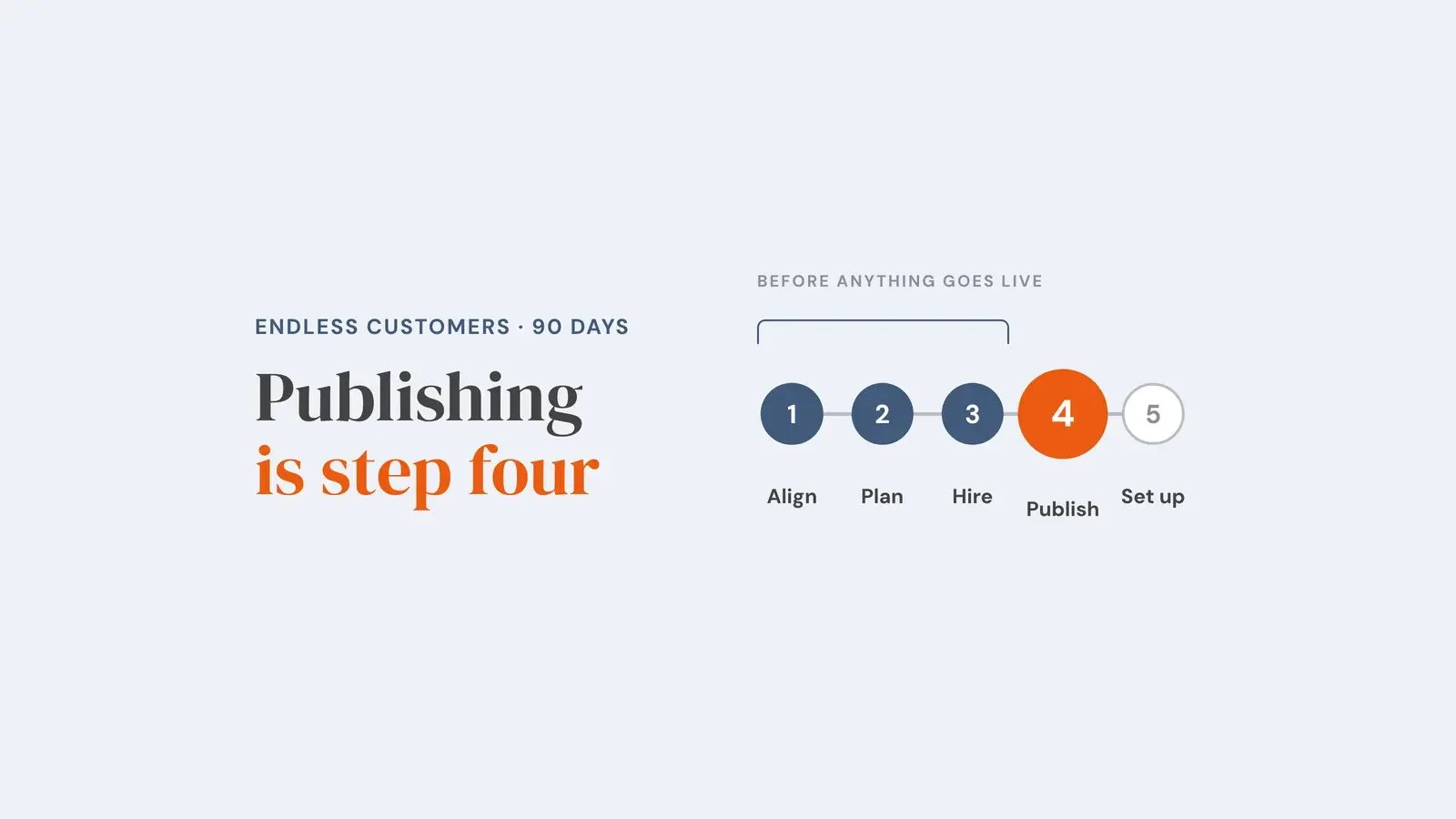
The system fails most often not because the approach is wrong, but because businesses underestimate the demand. In practice, the most common failure point arrives between 90 and 120 days, when early results haven't materialised and internal momentum stalls. Based on implementation experience across multiple businesses, many fail to maintain the content consistency required to reach month 12. The most common reasons companies stall:
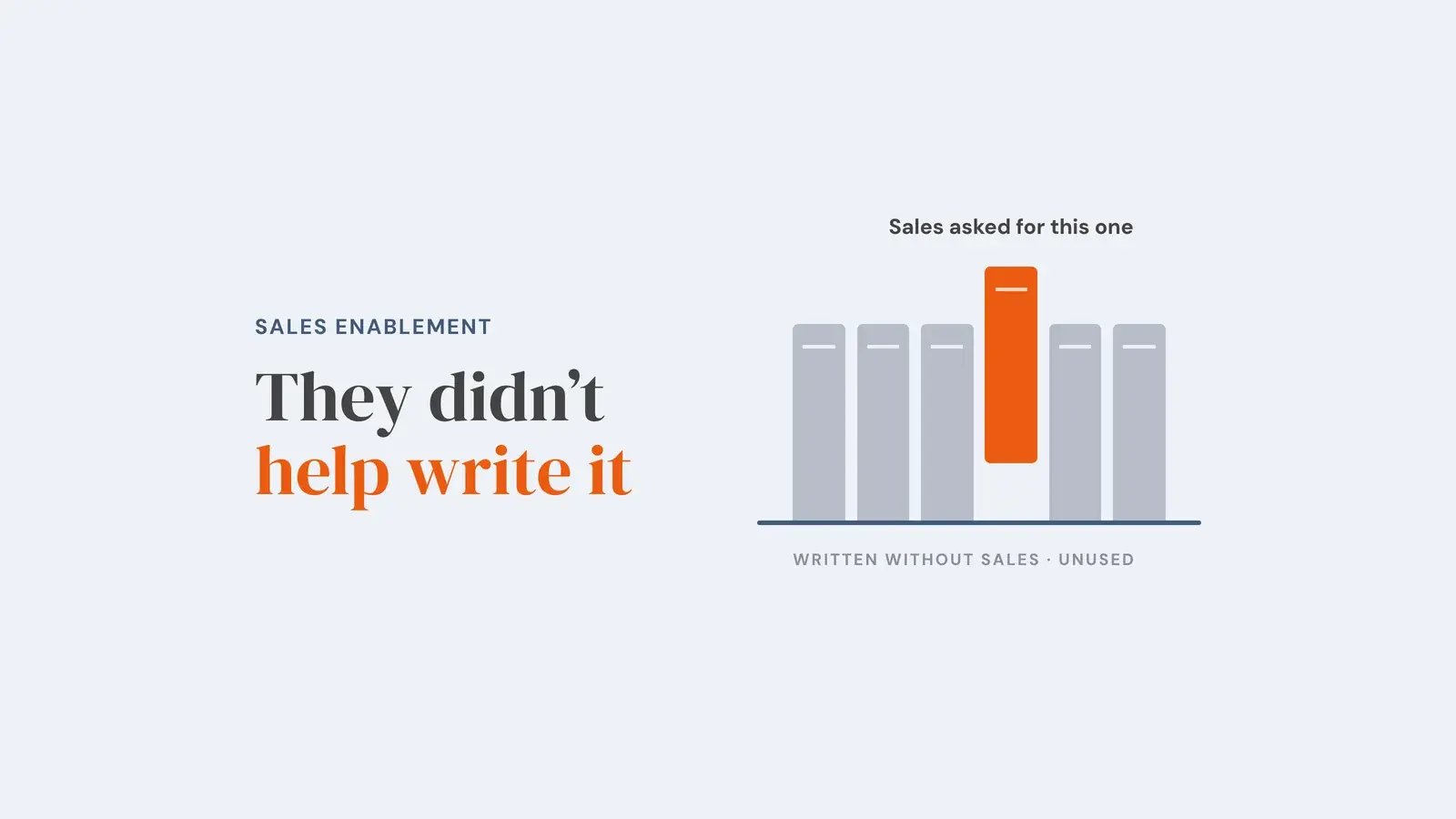
- Sales and marketing were never aligned from the outset
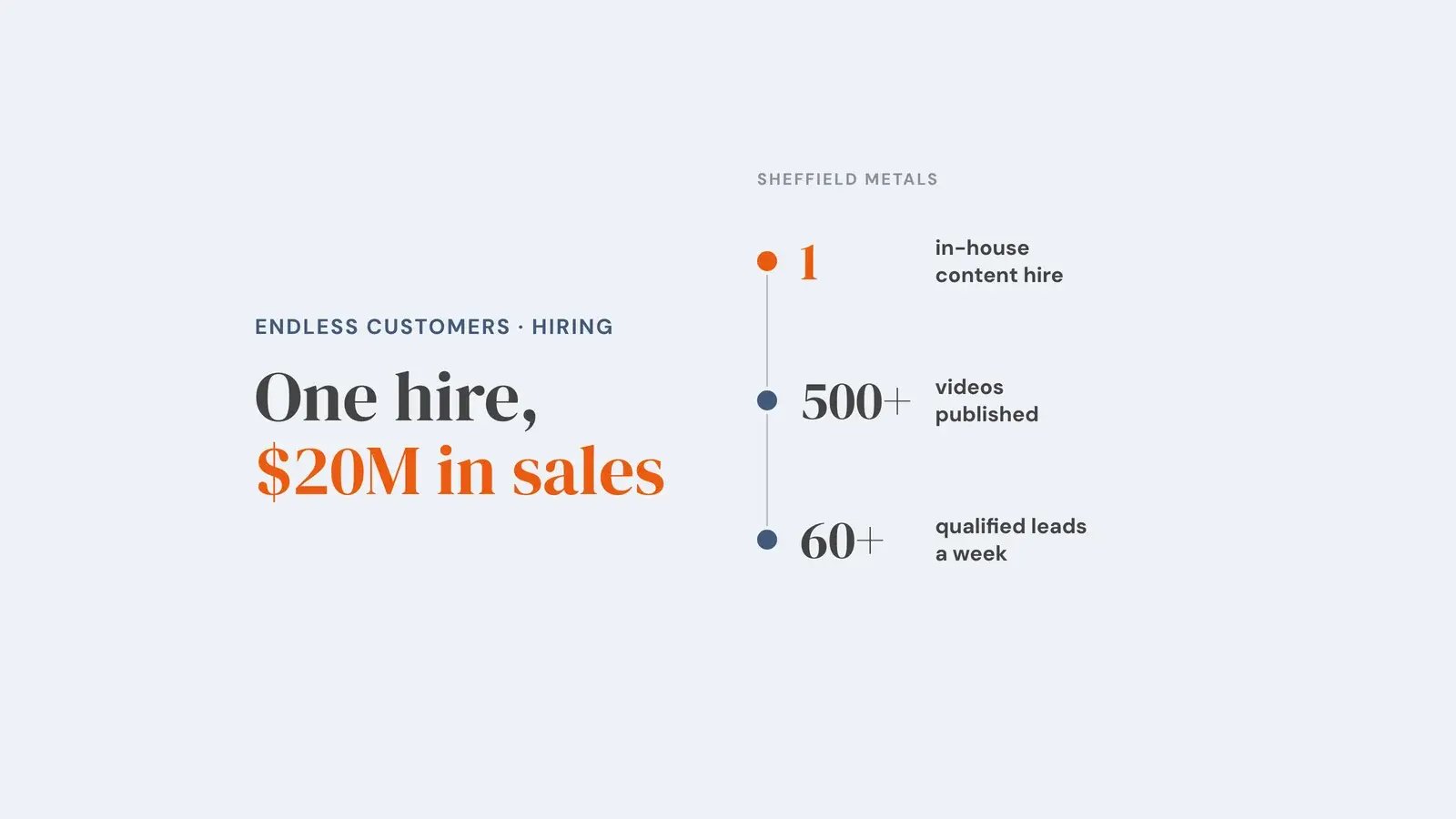
- Content production was outsourced rather than built in-house
- Momentum collapsed after 90 days when early results didn't arrive, often because the programme was treated as a marketing project rather than a business transformation
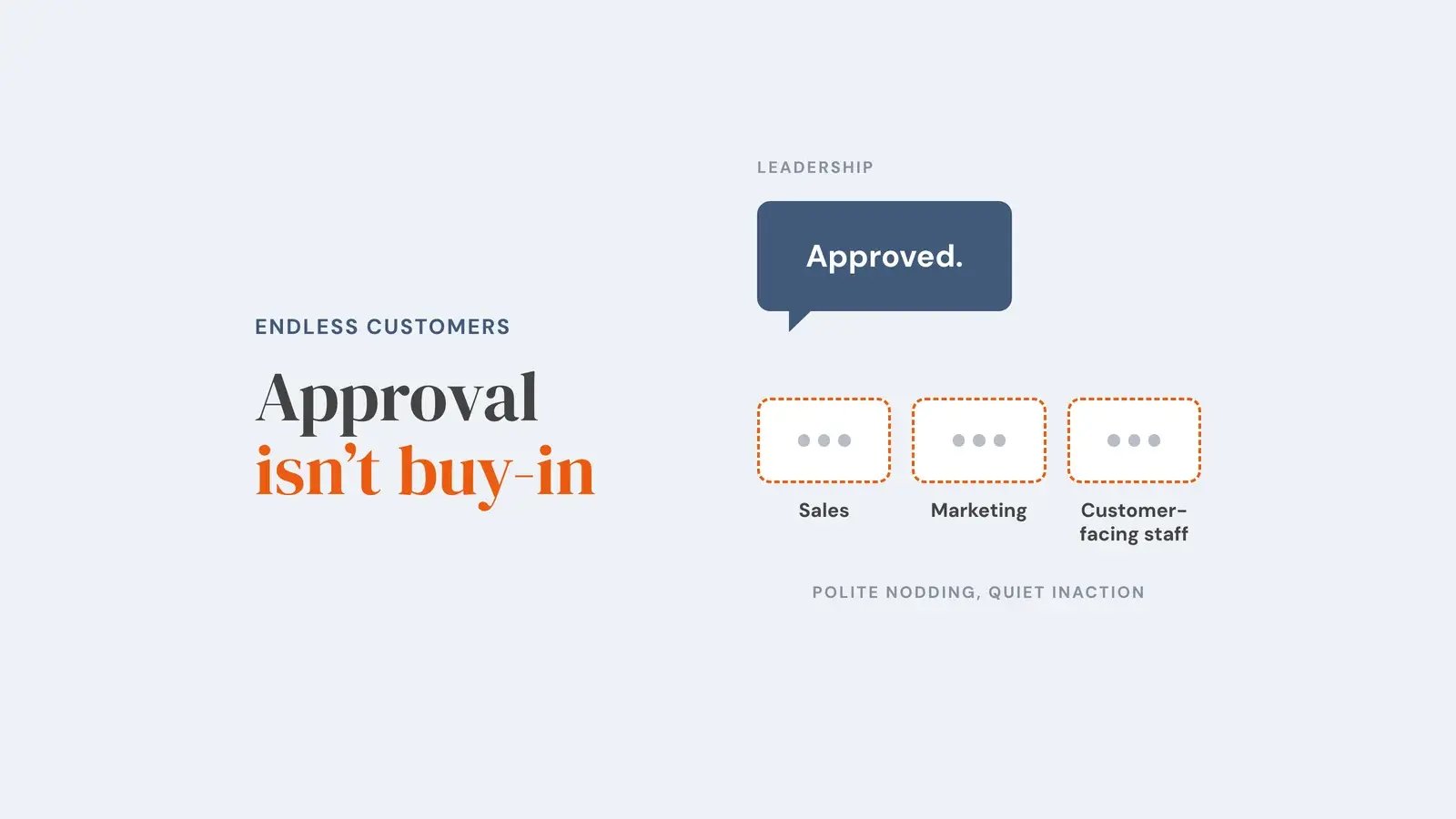
- Leadership disengaged after the initial workshop
- Businesses expected paid-ad speed from an organic trust-building system
Internal resistance sits behind many of these. Teams fall back on "we're different" or "this wouldn't work in our industry", along with "if it ain't broke, don't fix it" and "what if this fails and we look bad?" Getting past that takes visible commitment from leadership.
Warning signs the system may not fit your business right now:
- You need qualified leads within 60–90 days with no tolerance for a longer build
- Your sales cycle is very short or impulse-driven (convenience retail, restaurants)
- Your leadership team is not prepared to participate actively in content creation
- You plan to outsource all content production and never own it internally

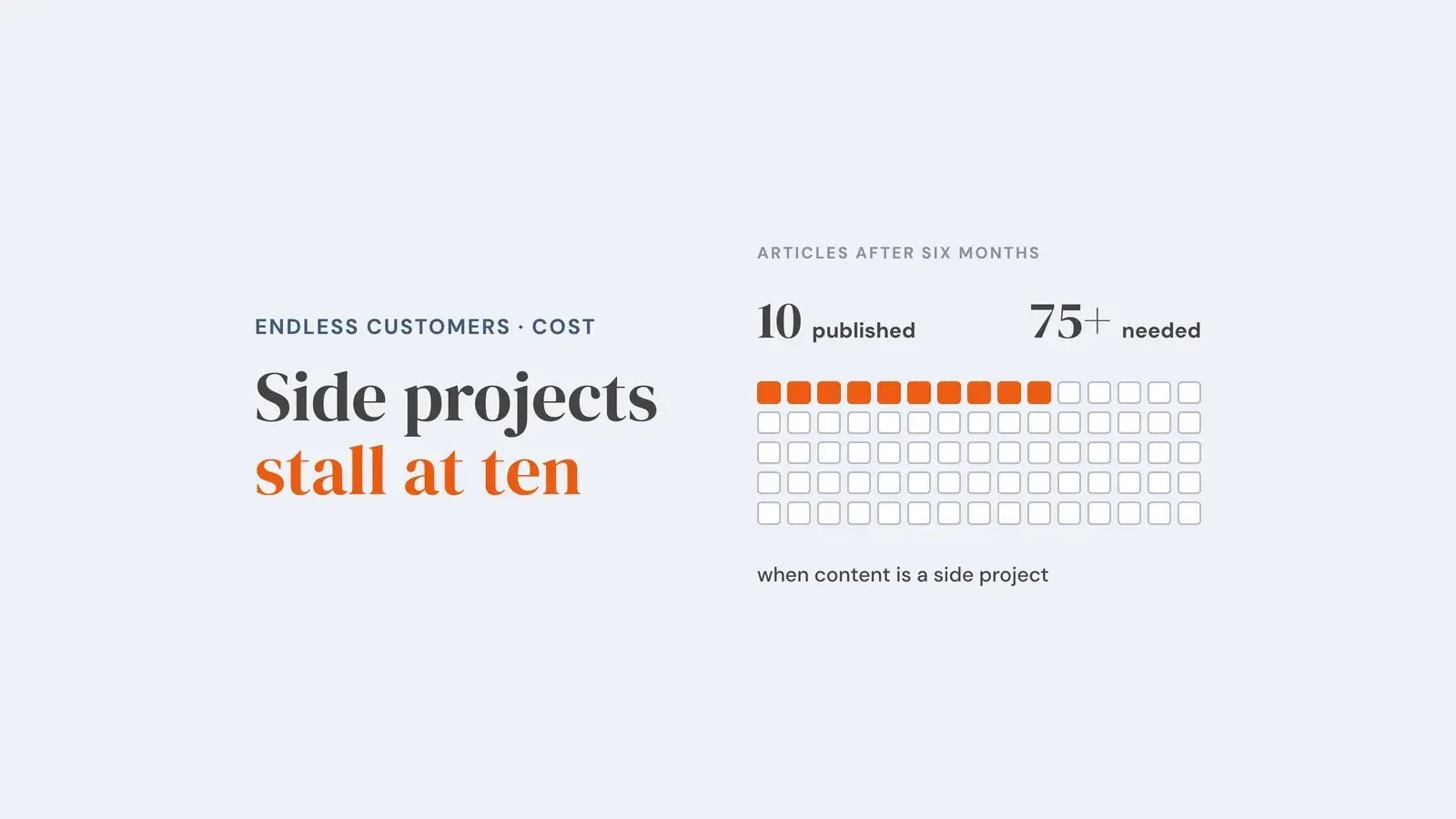
Two more limits to weigh up. The system won't suit a business that is unwilling to be open about pricing and problems, because those are the topics it depends on. It also takes real capacity: three or more pieces of content a week, sustained for around 24 months, and cultural change across the company.
Endless Customers vs. traditional marketing approaches: SEO agencies, paid ads, and AI-generated content
The fundamental difference between Endless Customers and most traditional marketing approaches is ownership: Endless Customers builds your in-house capability and brand authority, whereas other approaches build ongoing dependency.
It's worth comparing the main alternatives directly:
Endless Customers vs. SEO agencies
A traditional SEO agency builds links and optimises pages, but the strategy, knowledge, and content assets typically leave with them when the contract ends. Endless Customers builds your team's capability permanently. The cost over 18 months is similar; the residual value is not.
Endless Customers vs. paid ads
Paid channels can generate leads quickly, but the moment spend stops, so does the pipeline. Endless Customers builds compounding organic authority. The two aren't mutually exclusive, but businesses relying solely on paid channels remain permanently dependent on ad spend.
Endless Customers vs. AI-generated content strategies
AI tools can accelerate content production, but they cannot replace the genuine transparency and buyer obsession that makes Endless Customers work.
AI-generated content that doesn't answer real buyer questions with real expertise won't earn the trust of either human readers or AI platforms. Endless Customers provides the strategic framework that makes AI a useful accelerator, not a shortcut. Google warns in its guidance on generative AI content that mass-producing AI pages without adding value for users may breach its spam policies.
| Factor | Endless Customers | Traditional agency | Paid ads |
|---|---|---|---|
| Content ownership | Internal, fully owned | Agency-held; leaves with them | N/A |
| Sales alignment | Built into the system | Rarely included | Rarely included |
| AI visibility | Directly improves it | Not typically addressed | Not typically addressed |
| Long-term cost | Reduces as your team grows | Ongoing indefinitely | Ongoing indefinitely |
| Speed to results | 12–24 months (compounds) | Faster initially, no compounding | Fast initially, no compounding |
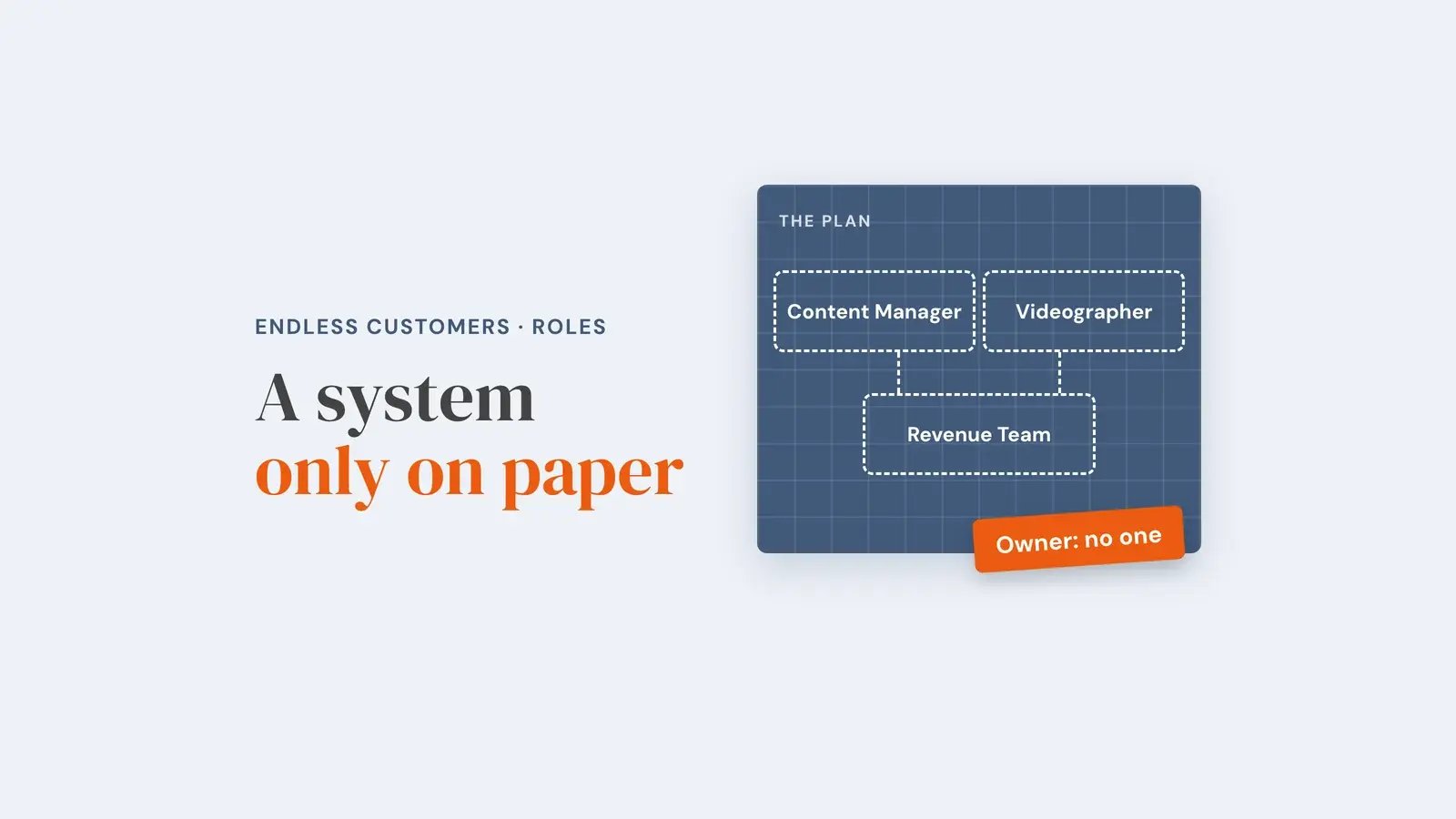
The system positions sales and marketing as a unified Revenue Team working from the same trust-building mission. Most alternative models treat content as a deliverable, not a cultural shift, which is precisely why they rarely compound the way owned, in-house content does.
For you, the decision comes down to this: do you want short-term lead generation, or long-term marketing your team owns?
Who is Endless Customers best for?
Endless Customers is best suited to businesses with annual revenues between roughly $3 million and $100 million (about £2.25 million to £80 million) operating in high-research, considered-purchase categories.
These include B2B services, construction, professional services, healthcare, home improvement, manufacturing, and real estate, anywhere a buyer spends significant time researching before making contact.
It is a poor fit for restaurants, convenience retail, low-cost impulse purchases and emergency services, because buyers in those categories don't research before they decide. The test is simple: does your customer spend time researching before buying? If not, you'll struggle.
Five criteria that indicate a strong fit:
- Your buyers research extensively before making contact with you
- Leadership is prepared to stay committed for around 24 months, even though coaching runs month to month
- You want marketing your team owns, not marketing rented from an agency
- Your sales team is open to using content strategically in sales conversations
- You are willing to publish on the topics competitors actively avoid
The system delivers its strongest results for companies willing to build internal content capability and challenge industry norms, not those seeking fast, outsourced lead generation.
How to get started: a practical framework
Getting started with Endless Customers in the AI era begins with one guiding question applied to every content and sales decision: "Will this induce more trust?"
From there, the practical path follows a phased journey:
- Months 0–1: Alignment Day to align leadership, sales, and marketing around one system
- Months 1–3: Launch Big 5 content production; begin Assignment Selling with your sales team
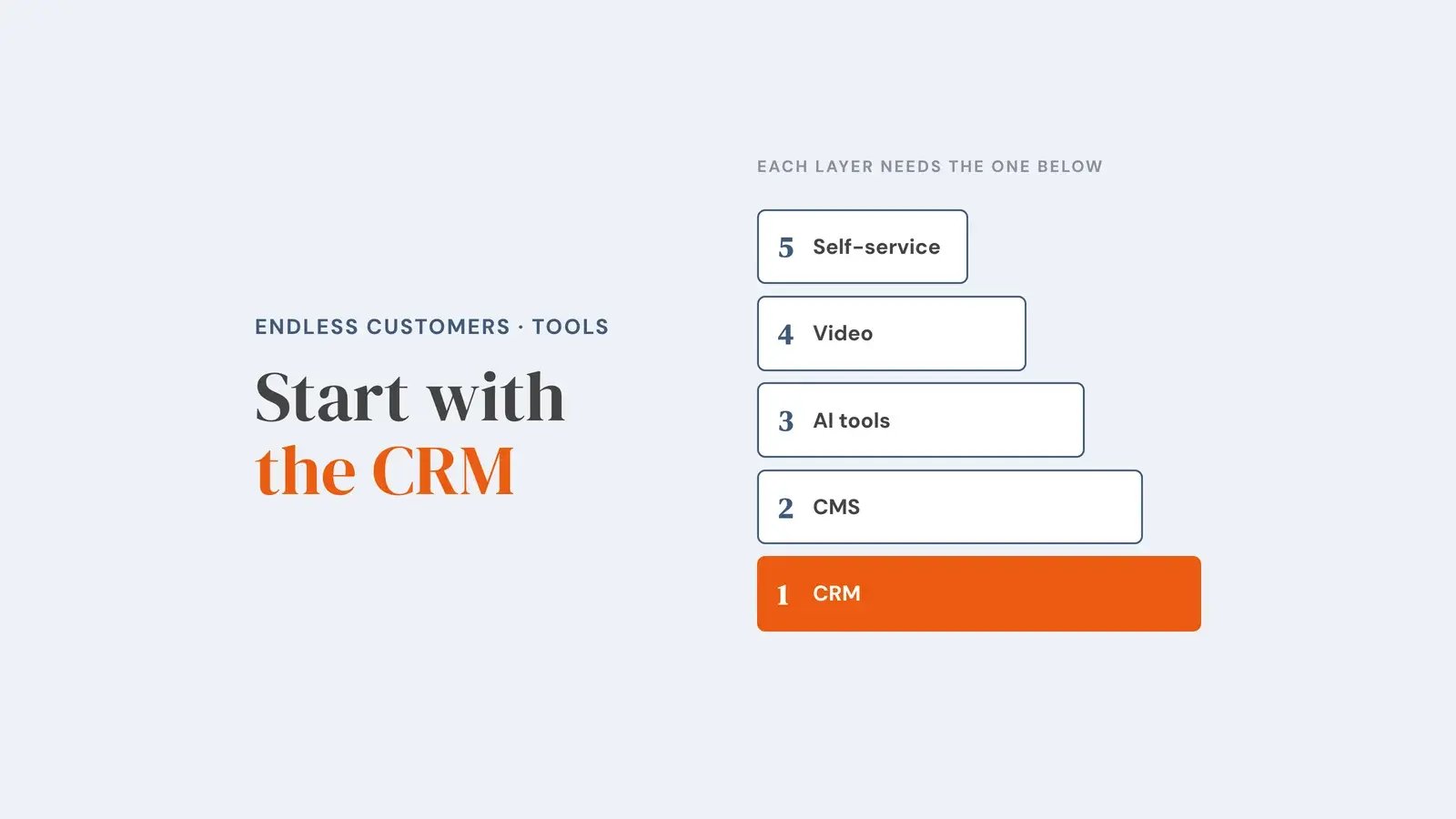
- Months 3–6: Add video to the content mix; embed HubSpot or equivalent CRM technology
- Months 6–12: Build content depth and consistency; track trust signals and AI visibility
- Months 12–24: Achieve full in-house ownership; establish recognised authority in your market
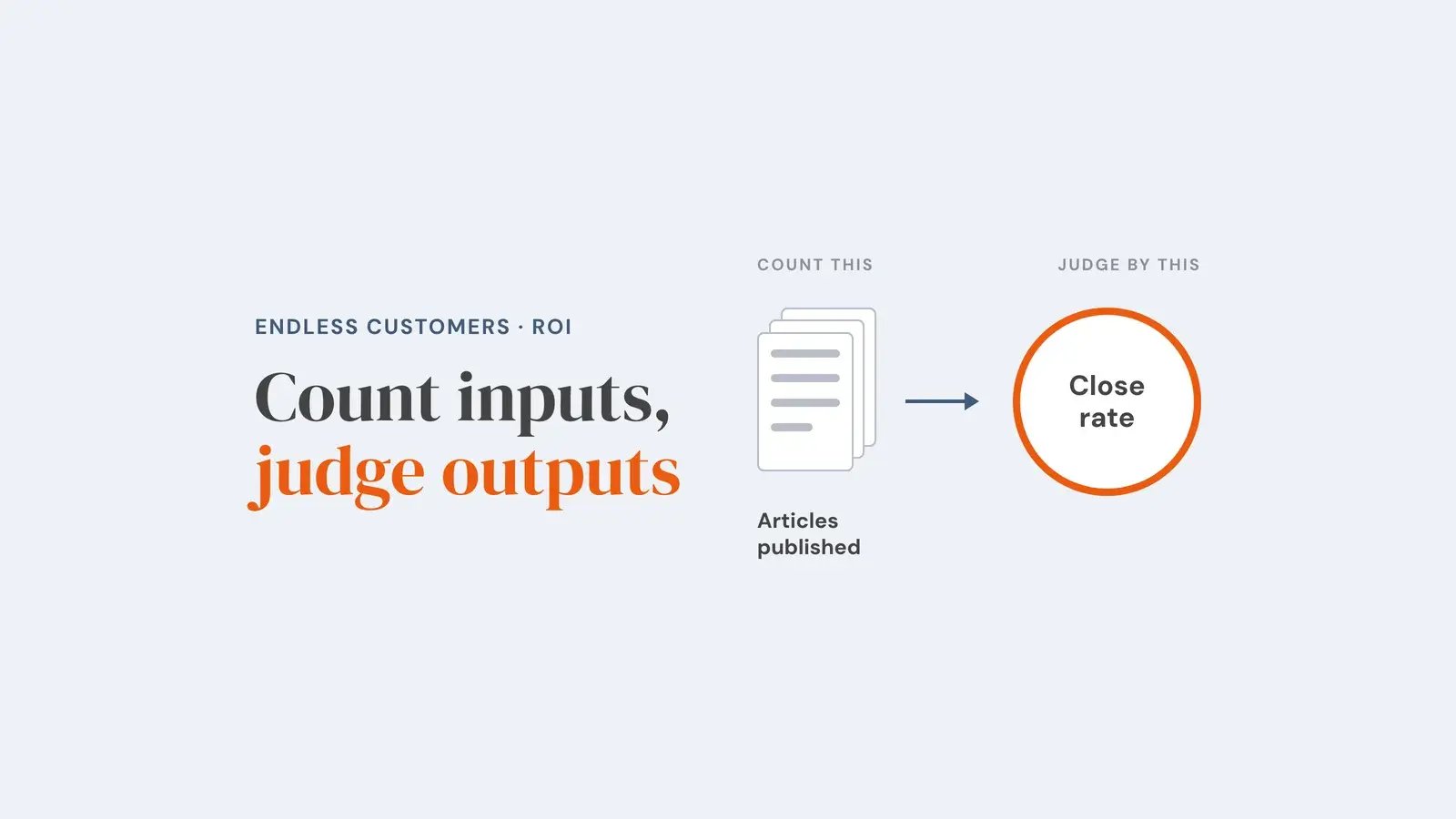
A simple ROI framework to consider: cancel a £5,000/month ($6,400) agency retainer at month 3 and you save £90,000 ($115,000) over 18 months. Add to that the compounding content asset your team now owns outright, generating leads without further ad spend, and the long-term return on internal capability compounds well beyond the initial investment.
If you want a realistic timeline of what the early months actually look like, read what to expect in your first 90 days with Endless Customers.
To avoid the most common alignment failures, follow these best practices for getting sales and marketing aligned with Endless Customers.
Not sure if you're ready to start? Read how to know if your business is ready for the Endless Customers system.
Frequently asked questions
Is Endless Customers the same as They Ask, You Answer?
It is the direct evolution of They Ask, You Answer, reimagined for the AI era. The core philosophy — radical transparency and answering every buyer question — remains unchanged. Endless Customers adds the 4 Pillars framework, a video-first strategy, and specific guidance for building trust and visibility in a world of AI-generated search results.
How long does it take to see results?
Most businesses begin to see a noticeable increase in leads and sales around the 12-month mark. IMPACT puts mastery, a Scorecard above 80, at around 24 months. The first 90 days focus on alignment and content foundations.
Will AI tools hurt my visibility if I follow this system?
No. Following Endless Customers actively improves your chances of being cited by AI tools. ChatGPT, Perplexity, and Google AI Overviews pull answers from trusted, comprehensive content. Publishing consistent Big 5 content makes your business a source those systems recognise and recommend.
Do I need to hire a coach to make this work?
No. You can implement the system yourself using the book and the Endless Customers Companion Guide. Coaching gives you pace, fewer wrong turns and someone to hold leadership to the plan.
Will talking about problems and pricing online hurt our sales?
Buyers will find out about your weak spots and likely prices anyway. If you raise them first, you become the honest adviser rather than the business that avoided the question.
Can this work in regulated industries like finance or healthcare?
Yes, within your compliance boundaries. Be as open as you legally and ethically can, get legal approval on content where needed, and focus on education rather than specific recommendations the rules don't allow.
Conclusion
AI hasn't made content obsolete, but it has raised the bar for trust.
If you came to this article worried that AI was making your content marketing irrelevant, here is what the evidence actually shows: Yale Appliance and River Pools. A system that doesn't fight AI; it feeds it.
If you've been relying on outdated marketing tactics, you're likely already seeing the impact: fewer organic clicks, longer sales cycles, and increasing pressure on paid channels to fill the gap.
Endless Customers offers a different path, one built on trust, transparency, and marketing your team owns for the long term.
This is the work I do with businesses every day, helping them build marketing their team owns.
If you want to see whether this approach fits your business, your next step is to book a scoping call and assess your current marketing gaps.
Ready to own your marketing? Book a scoping call to discuss the Endless Customers Coaching and whether it fits where your business is now.
Suggested related article: How to Know If Your Business Is Ready for the Endless Customers System

Pricing disclaimer: All GBP–USD price conversions are rounded estimates and correct at the time of publishing. Exchange rates fluctuate and figures should be treated as indicative only.
Topics: