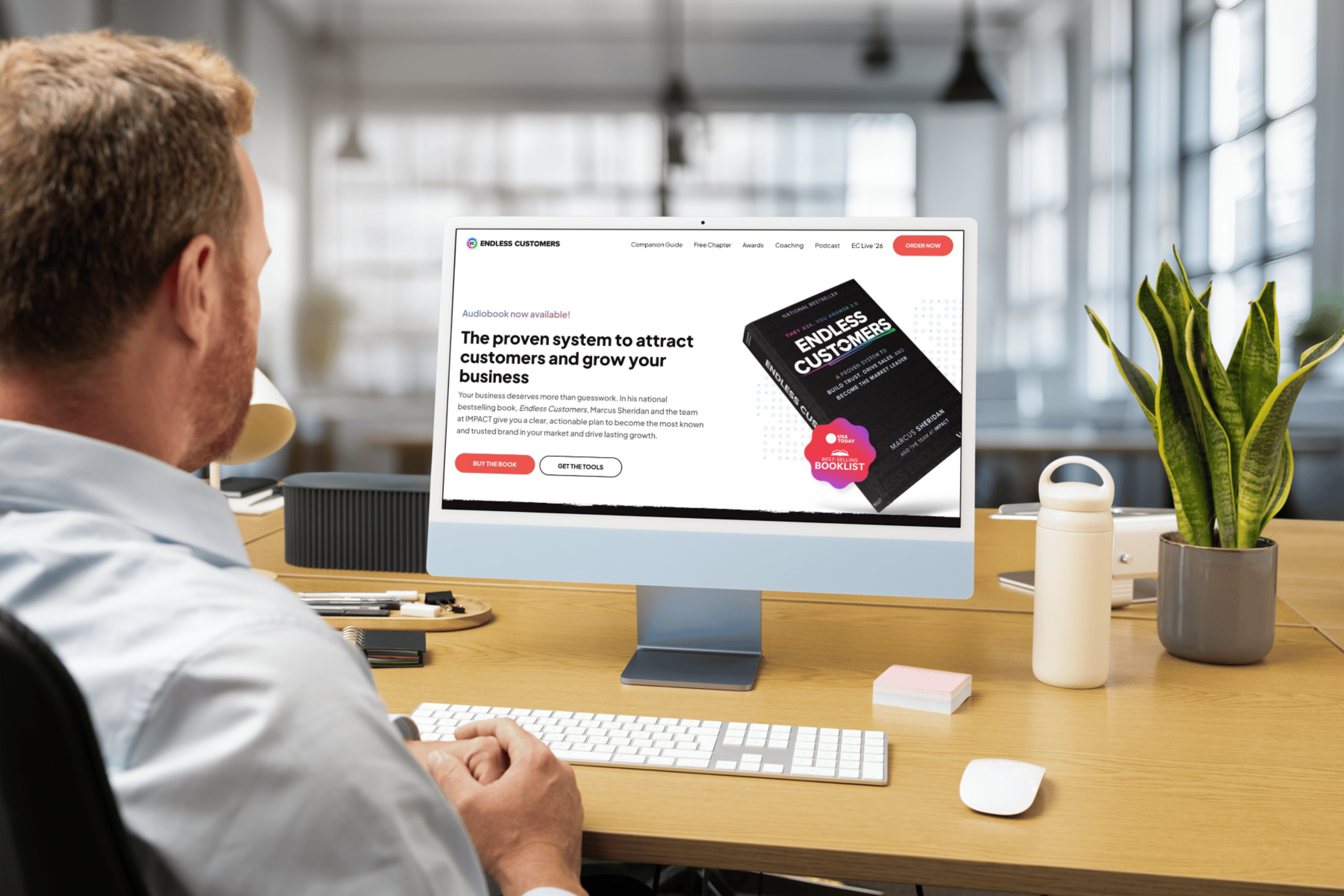



Does your sales team know your content exists? Do they use it before calls, or does it sit in a folder no one opens?
If your Endless Customers implementation is owned entirely by marketing, you are getting partial results, and the reason is structural, not creative.
This article breaks down what Endless Customers actually is, all five components, and exactly how each one feeds your sales results, not just your traffic. You will see where most implementations stall, what full adoption looks like, and what to do differently starting this month.
Key Takeaways
- Endless Customers is a five-component revenue system, not a content-marketing programme.
- The most common failure is treating it as marketing-only and keeping sales out of it entirely.
- Assignment Selling helped River Pools reduce total appointments from 250 to 120 while raising close rates from 30% to 79%.
- Buyers are typically 80% through their decision before speaking to a salesperson; the system is built around that reality.
- Companies that implement all five components see measurable ROI within 6–24 months.
What is the Endless Customers System™, really?
Endless Customers is a revenue system, built on trust, transparency, and sales-marketing integration, that helps companies become the most known and trusted brand in their market.
Originally developed as the "They Ask, You Answer" philosophy by Marcus Sheridan, it evolved into a five-component framework: the Right Content, the Right Website, the Right Sales Activities, the Right Technology, and the Right Culture of Performance.
| Component | What it involves | Primary outcome |
|---|---|---|
| The Right Content | Transparent, buyer-focused articles and videos | Pre-educated, qualified leads |
| The Right Website | Educational hub with self-service tools | Converts traffic into pipeline |
| The Right Sales Activities | Content-driven process + Assignment Selling | Higher close rates, shorter cycles |
| The Right Technology | CRM, automation, and AI tools | Consistent buyer experience and data |
| The Right Culture | Leadership accountability + shared scorecard | Sustained adoption across the business |
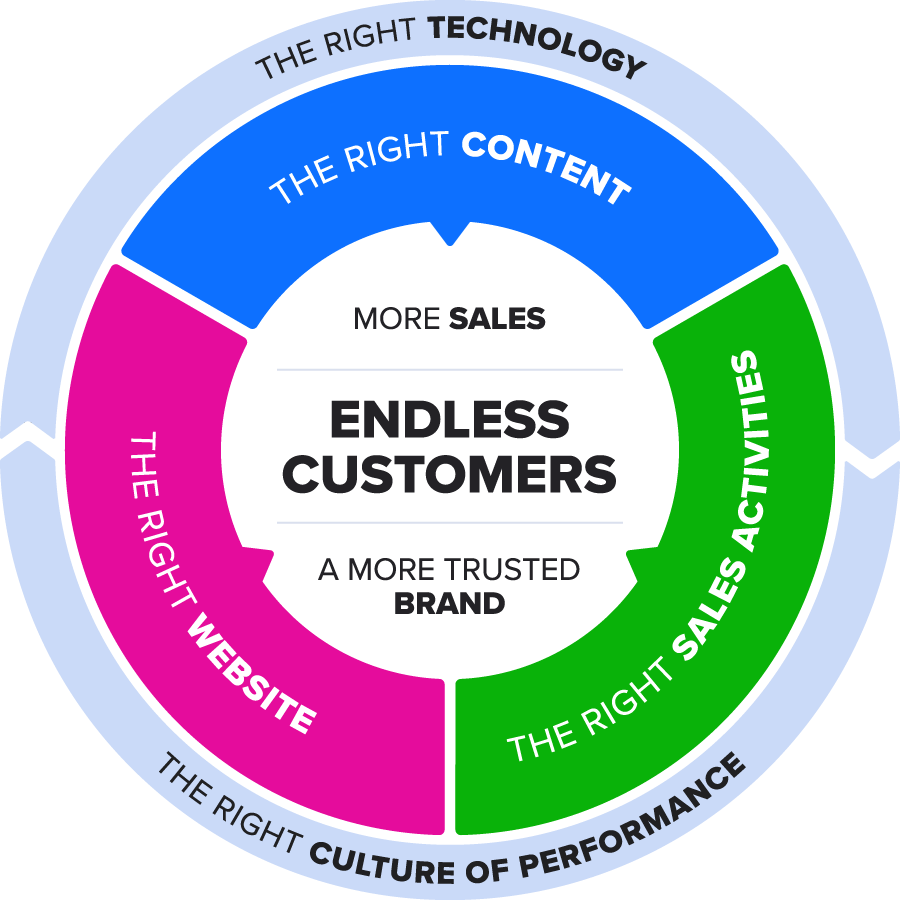
Miss one component and you feel it: a gap in performance, a crack in the foundation, a missed opportunity. Sales Activities and Culture are where most companies fall short because they hand everything to marketing and move on.
The system is best suited to businesses with annual revenues between £800,000 ($1,000,000) and £80 million ($100,000,000).
The misconception that costs you real revenue
The most common mistake with Endless Customers is treating it as a content-marketing programme, and that misreading is exactly why so many implementations underperform.
Because the system involves publishing articles and videos, leaders instinctively hand it to the marketing team. Sales is kept out. The result is content that attracts visitors but does not close deals.
The Endless Customers manuscript is direct on this:
"Don't make the mistake of thinking this is solely a marketing play. Endless Customers is just as much a sales initiative."
When sales sits on the sidelines, the system only operates at half capacity. Marketing produces content salespeople never use. Sales continues teaching basics on every call. Close rates stay flat. Both teams are frustrated.
It is worth noting that even a partial implementation, starting with the Right Content alone, will still improve lead quality and reduce the number of unqualified enquiries your team handles. But without sales integration, the system cannot reach its ceiling. The fix is structural. It starts with bringing sales into the process from day one, which is what the Revenue Team model is designed to do.
Recommended reading: What happens when you try to implement Endless Customers without sales buy-in?
How the Big 5 topics function as pre-sale conversations
Why the Big 5 are sales tools, not just SEO topics
The Big 5 — Cost & Price, Problems, Versus & Comparisons, Reviews, and Best in Class — are not blog-traffic topics. They are the exact questions buyers research before they ever agree to talk to a salesperson.
| Big 5 topic | Sales objection it neutralises | Recommended format |
|---|---|---|
| Cost & Price | "I don't know if we can afford this" | Article + pricing calculator |
| Problems | "What are the risks with this product?" | Article + video |
| Versus & Comparisons | "Why you and not a competitor?" | Comparison article or video |
| Reviews | "Can I trust this company?" | Review article + case studies |
| Best in Class | "What are all my options?" | Buyer's guide |
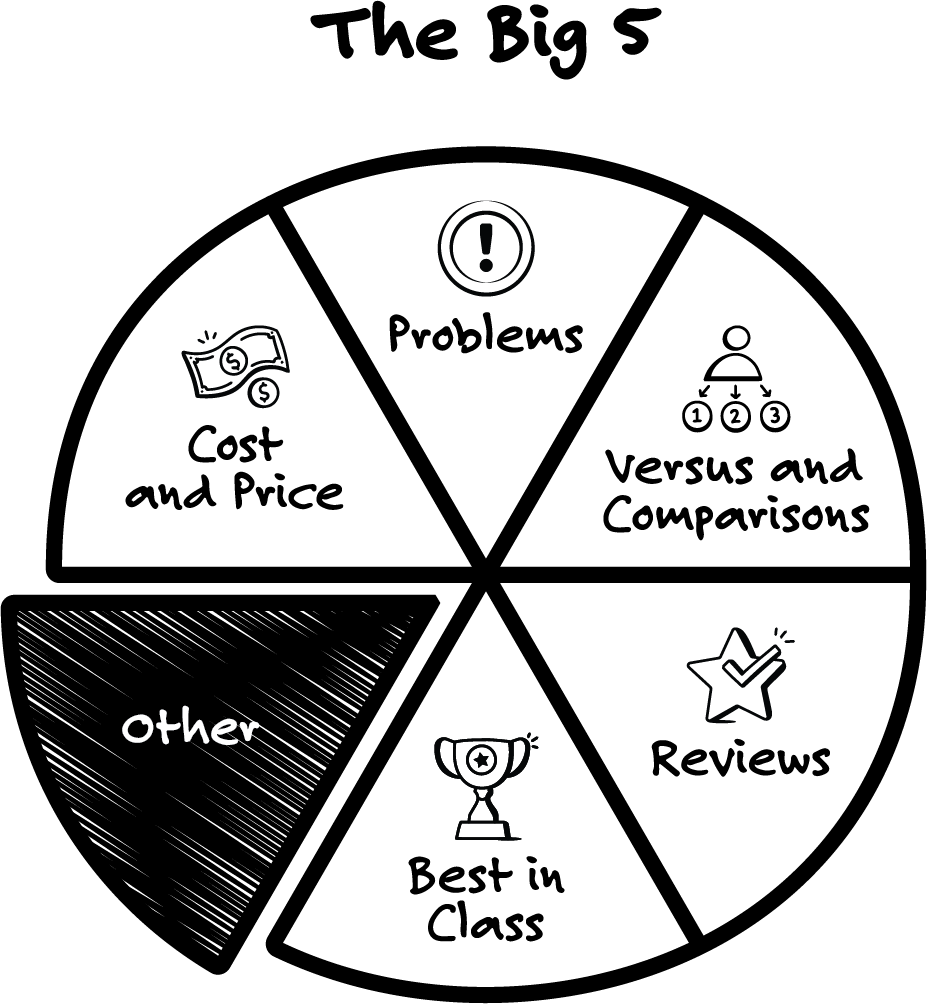
When a prospect reads your pricing article or watches your comparison video, they are self-qualifying in real time, arriving at the first conversation already pre-sold.
River Pools published a single pricing article in 2009 that has since generated over $35 million in tracked sales over the life of the article, as measured through HubSpot analytics. Sheffield Metals' honest article on metal roofing problems received over one million views, contributing directly to brand growth and increased sales nationally.
Assignment Selling: the step most businesses skip entirely
Assignment Selling is the practice of requiring prospects to consume specific educational content before a sales conversation, and it is the mechanism that turns Endless Customers from a content theory into a measurable sales result.
At River Pools, Marcus Sheridan found that prospects who consumed 30 or more pages of content before their first appointment bought 80% of the time. Those who did not? A 25% close rate, the industry average.
River Pools went from selling 75 pools across 250 appointments (a 30% close rate) to 95 pools across just 120 appointments, a 79% close rate in a single year. While other business factors will always play a role, Sheridan attributes this shift directly to Assignment Selling. More revenue. Fewer meetings. Less time spent teaching basics.
The four steps to implementing Assignment Selling:
- Define and document your sales process, stage by stage.
- Map specific content (articles, videos, tools) to each stage.
- Assign content to every prospect before each conversation, using a clear written script.
- Track consumption in your CRM and adjust based on what actually drives closes.
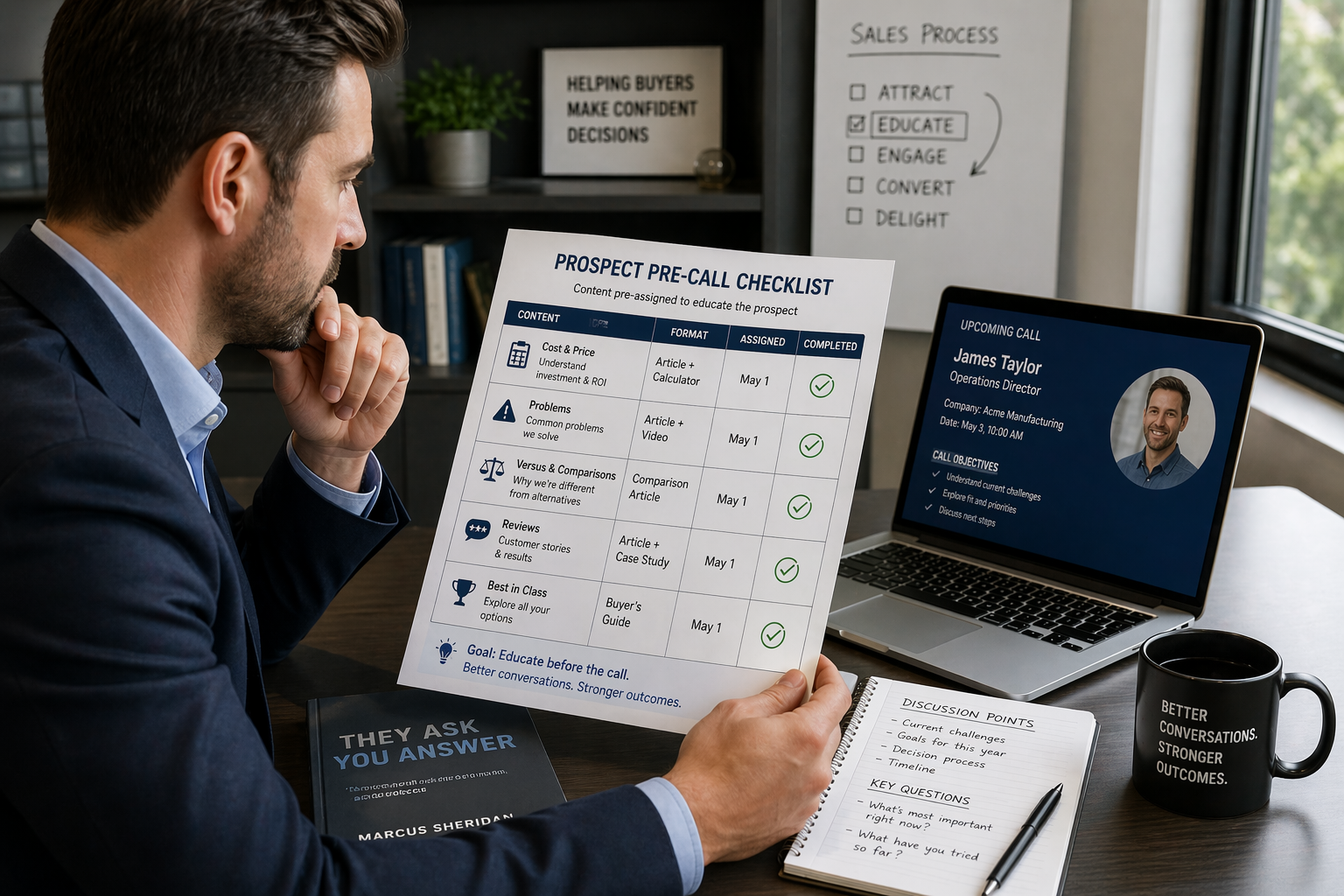
Salespeople who use Assignment Selling spend less time teaching and more time closing — which is what every salesperson actually wants. See: Best practices for getting sales and marketing aligned with the Endless Customers system.
The Revenue Team: where sales and marketing merge into one engine
A Revenue Team, bringing together sales, marketing, and leadership under one shared mission — is the structural mechanism Endless Customers uses to make content drive deals, not just traffic.
Research widely cited in B2B sales suggests buyers are typically 80% through their decision before speaking to a salesperson. That means marketing handles most of the buyer journey, yet most sales teams still behave as though they control the whole process.
The Revenue Team fixes that by giving both functions shared ownership of the entire buyer journey.
A regular Revenue Team meeting, ideally weekly or fortnightly in the early stages of implementation, covers:
- Sales sharing live buyer questions and objections
- Editorial calendar planning and content assignments
- Review of recently published content performance
- Marketing sharing pipeline metrics and traffic data
- Identifying friction points in the buying process
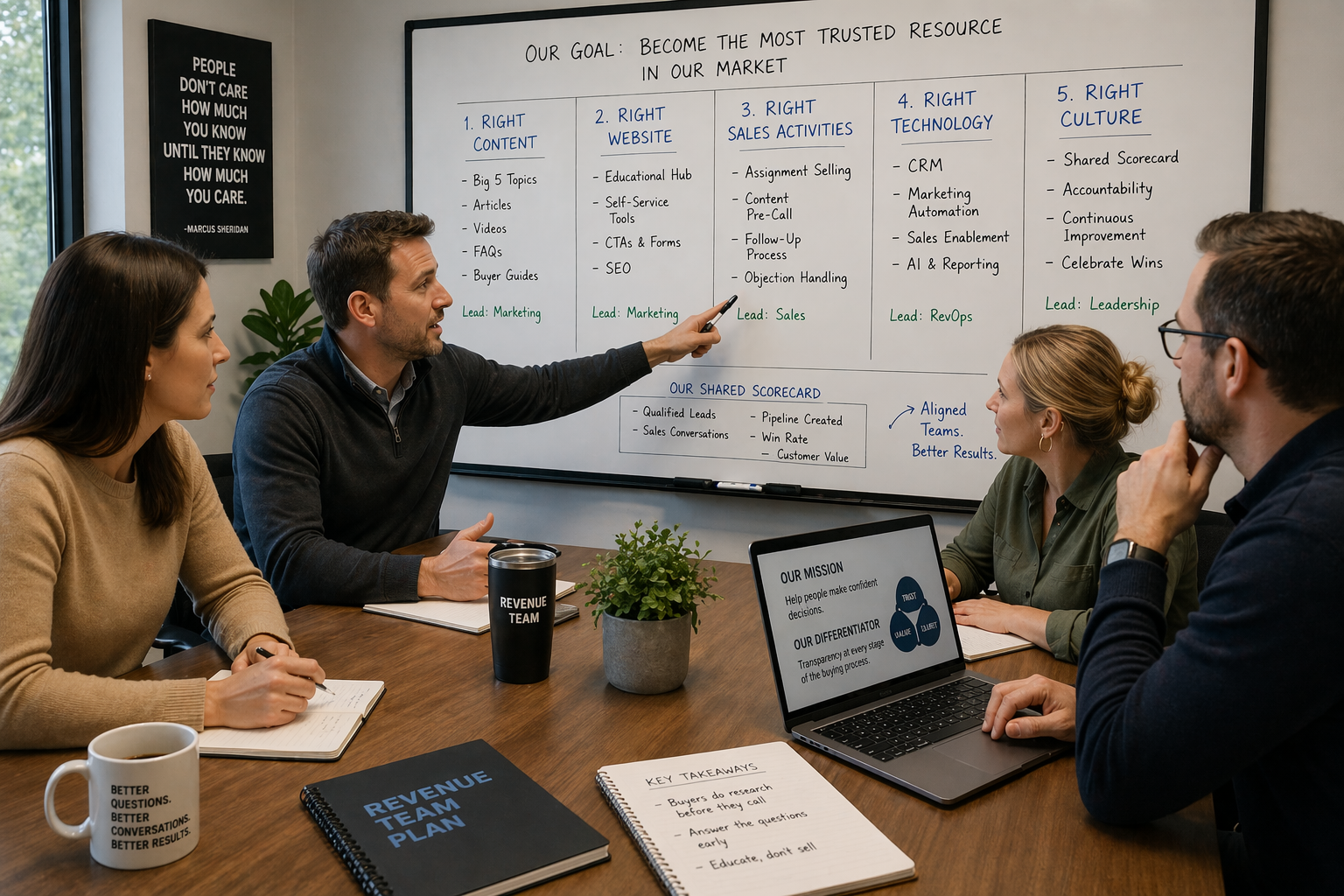
One common failure at this stage: Revenue Team meetings drift into reporting sessions rather than planning sessions. If your team is spending more time reviewing dashboards than deciding what to produce next, reset the agenda.
The Endless Customers manuscript warns:
"I've seen it hundreds of times — companies think they can skip the Revenue Team piece. Don't make this mistake."
Self-service tools: five types that sell on your behalf around the clock
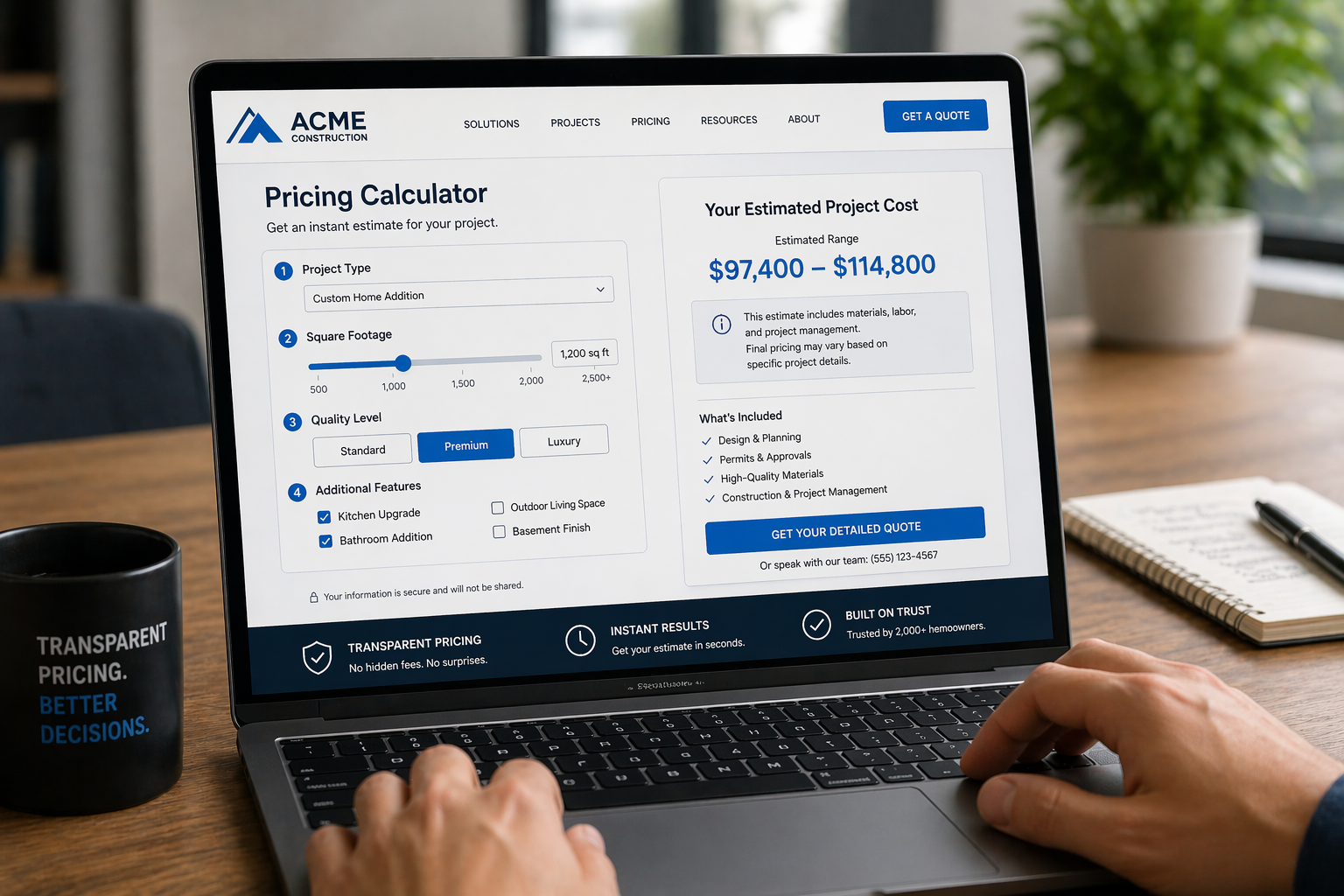
Self-service tools let buyers qualify themselves, explore pricing, and move forward, without waiting to speak to a salesperson. That makes them one of the highest-ROI elements of the full system.
The five types:
- Pricing calculators: answer "Can we afford this?" and qualify budget upfront
- Self-assessment quizzes: help buyers identify gaps and readiness
- Product configurators: guide buyers to the right solution visually
- Self-scheduling tools: remove friction from booking a first conversation
- Self-selection guides: help prospects decide if your product is the right fit
One IMPACT client in home improvement built a pricing calculator ahead of peak season. May leads jumped from 200 to 700 a 350% year-on-year increase. The tool cost less than £20,000 ($25,000) to build and generated over £800,000 ($1,000,000) in additional revenue.
Self-service tools are not a future investment; they are a present competitive advantage for any business with a considered sales cycle.
When Endless Customers does not work as a sales system
Endless Customers is explicitly not suited to businesses with short, impulse-driven sales cycles, and beyond industry fit, it fails whenever leadership treats it as marketing-only.
It is not suited to:
- Businesses with impulse or very low-consideration purchases (restaurants, convenience retail)
- Organisations unwilling to publish transparent content on pricing, problems, or comparisons
- Companies that keep sales and marketing structurally separate throughout implementation
- Leadership teams expecting measurable results inside 90 days
- Businesses that outsource the system entirely and retain no internal ownership
The system requires genuine long-term commitment. The manuscript is unambiguous:
"If you're not ready to invest the time and effort — or if your organisation isn't prepared to challenge the status quo — this might not be the path for you."
For businesses that do fit the profile, the 6–24 month Endless Customers implementation typically produces a measurable increase in qualified leads and close rates, alongside a reduction in sales cycle length. Explore: What to expect when you commit to the Endless Customers system for 90 days
Conclusion
The system has five components, and most implementations only activate two of them. You have likely been running Endless Customers as a content strategy. That is not a failure; it is where almost every business starts. Content without sales integration produces traffic. The full system produces revenue.
The path forward is structural. Bring sales into the process. Build a Revenue Team. Deploy content in Assignment Selling. Add self-service tools that work without you.
How to take action now
- Audit whether your sales team is using existing content before calls
- Schedule a Revenue Team meeting with sales, marketing, and leadership this month
- Identify one Big 5 content gap and produce it with direct input from sales
- Map at least one self-service tool to your highest-friction buyer question
Ready to install the full system? The Growth Alignment Intensive™ is a single focused day that aligns your leadership, sales, and marketing teams, sets your priorities for the first 90 days, and builds the foundation the rest of the system depends on.
Related reading: How to Measure ROI from Your Endless Customers Implementation

About the author
Tom Wardman is a certified Endless Customers coach and strategic marketing consultant who works with founder-led businesses to install growth systems their teams can run without outside dependency. His programmes, including the Growth Alignment Intensive™ and Endless Customers™ Implementation, are structured around one outcome: predictable growth, fully owned.
Pricing disclaimer: All GBP–USD price conversions are rounded estimates and correct at the time of publishing. Exchange rates fluctuate and figures should be treated as indicative only.