

Frustrated that your freelancer keeps missing the mark? Wondering why even top-rated talent with glowing testimonials can't seem to deliver what you actually need?
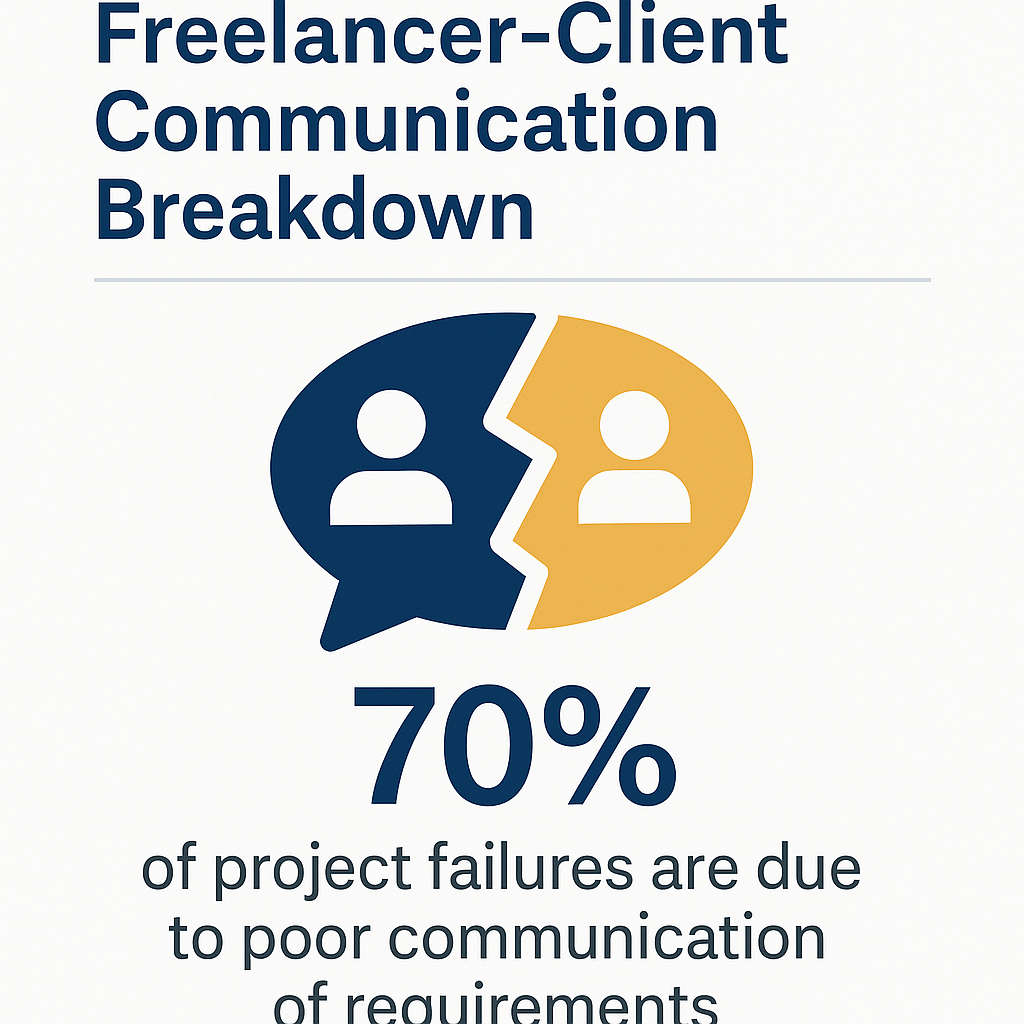
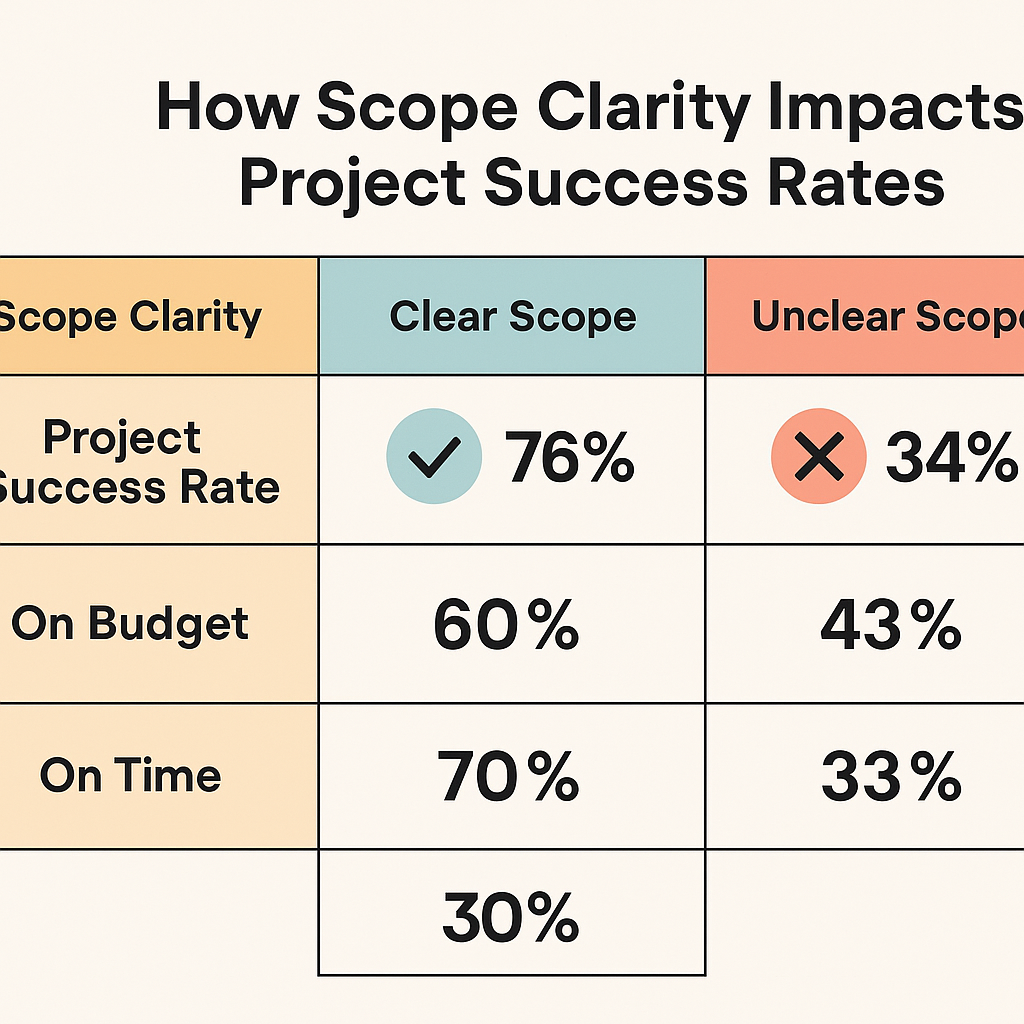
Here's the truth: 70% of project failures aren't the freelancer's fault. They're caused by vague or shifting project scope. Most business owners blame the wrong thing when projects go sideways. In this article, you'll learn how to fix that and turn disappointing partnerships into high-performing collaborations.
You'll discover the real reasons freelancer relationships break down, the hidden costs of vague project briefs, and practical signs your scope process needs urgent attention.
Why project scope problems are the hidden cause of freelancer conflicts
When projects fail or relationships sour, you might naturally blame the freelancer's skills or work ethic, but the real culprit is usually an unclear, incomplete, or constantly changing scope of work.
The pattern repeats across industries. You hire someone talented, brief them on what you need, and expect them to deliver exactly what you envisioned. When the final deliverable doesn't match your expectations, the natural response is to question their competence.
But here's what's actually happening: both parties are working from completely different mental models of success. You have a clear picture in your head of what "good" looks like. They're following the brief you gave them, which likely contains significant gaps or ambiguities.
Research from the Project Management Institute shows that organisations waste an average of £97 million ($121.25 million) for every £1 billion ($1.25 billion) invested due to poor project performance. The majority of these failures trace back to scope-related issues, not talent deficits.
Your freelancer isn't psychic. They can only deliver based on what you've communicated, not what you're thinking.
How vague project requirements set everyone up for failure
Vague project requirements create a communication vacuum where assumptions flourish and expectations diverge dramatically.
You might think your scope is clear, but if it includes phrases like "modern, professional website design," "engaging content for our target audience," or "user-friendly interface," your freelancers are still guessing.
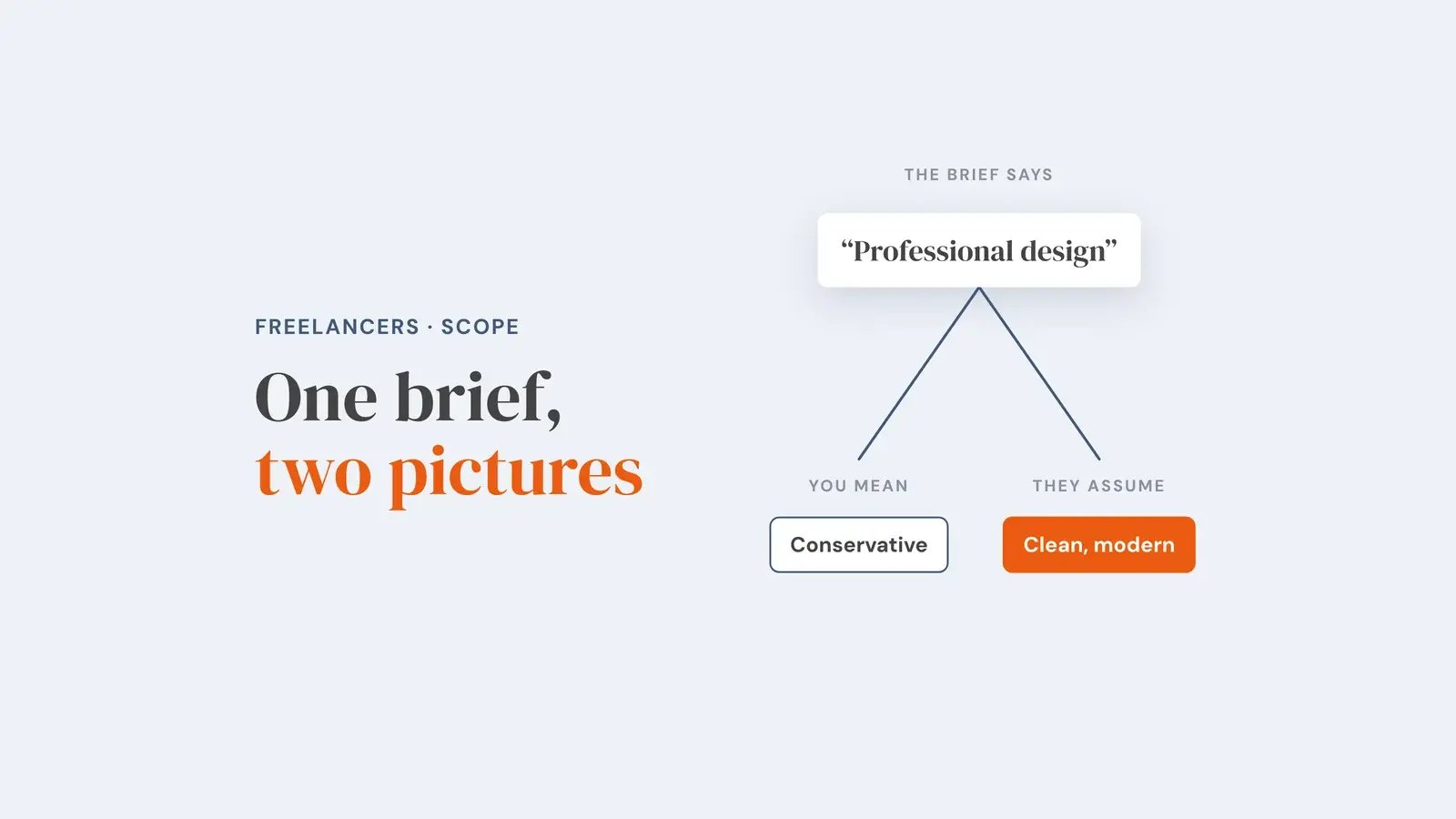
Each phrase feels specific to you, but they're meaningless to someone else. "Modern" to you might mean clean and minimal. To your freelancer, it could suggest bold and interactive. "Professional" might mean conservative corporate styling or contemporary creative aesthetics.
Without specific deliverables, timelines, and success criteria, you and your freelancers operate from different mental models of what the project should achieve.
Your freelancer fills in the gaps based on their experience and preferences. You fill in the gaps based on your internal vision and business context. Neither party realises the other is working from incomplete information until the work is delivered.
This disconnect compounds throughout the project. Each revision request feels reasonable to you but arbitrary to them. Each delivery feels complete to them but inadequate to you.
| Vague Requirement | What You Mean | What Freelancer Assumes |
|---|---|---|
| "Professional design" | Conservative, trustworthy appearance | Clean, modern aesthetic |
| "User-friendly" | Simple navigation for 50+ age group | Intuitive for tech-savvy users |
| "Engaging content" | Industry-specific jargon and examples | General, broadly appealing copy |
What scope creep actually costs your business beyond the budget
Scope creep doesn't just inflate project costs—it destroys trust, damages professional relationships, and can delay your business initiatives by months.
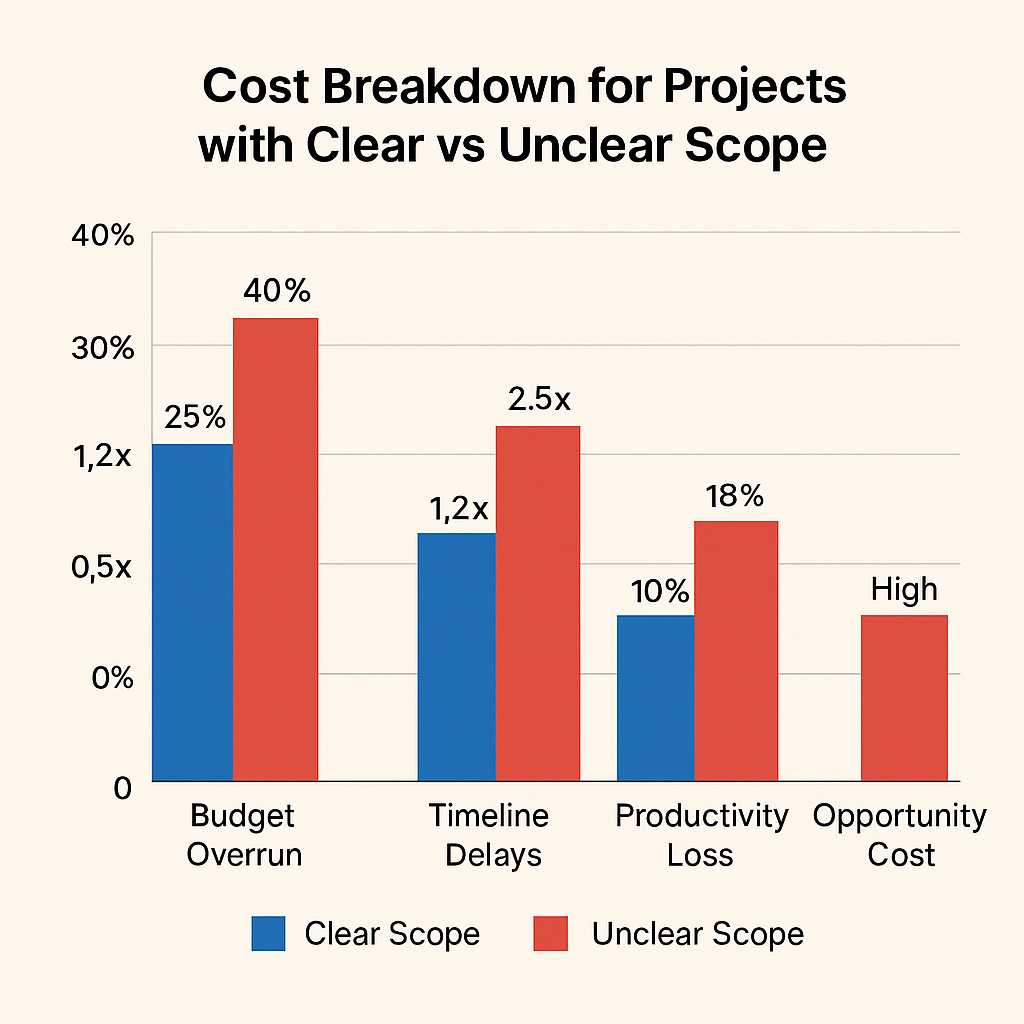
The obvious cost is financial. Your projects that start at £5,000 ($6,250) can easily balloon to £8,000 ($10,000) or more when scope boundaries aren't properly defined and enforced. But the hidden costs are often more damaging to your business.
The hidden costs include opportunity losses, team morale decline, and the long-term reputation damage that comes from repeatedly missing deadlines or launching subpar deliverables.
When your projects drag on beyond their intended timeline, you miss market opportunities. Your product launches get delayed. Your marketing campaigns lose relevance. Competitive advantages evaporate while you're stuck in revision cycles.
Your team loses confidence in external partnerships. They become hesitant to recommend freelancers or agencies, preferring to keep everything in-house even when internal resources are stretched thin.
Perhaps most damaging is the reputation impact. Word spreads quickly in professional networks about clients who are difficult to work with. The best freelancers start avoiding your projects, leaving you with a diminishing pool of talent.
The cost breakdown typically looks like this:
- Direct budget overruns: 30-50% above original estimate
- Timeline delays: 2-3x longer than planned completion
- Team productivity loss: 15-20% due to project management overhead
- Opportunity cost: Unmeasurable but often the largest impact
Why freelancers can't read your mind about project scope expectations
Your freelancers are not mind readers, and expecting them to intuit unstated requirements or business context is a recipe for disappointment.
You live and breathe your business every day. You know your customers' preferences, your brand guidelines, and the subtle distinctions that matter in your industry. This knowledge feels universal because it's so obvious to you.
Your freelancer, however talented, is coming to your project fresh. They don't know that your primary customer segment skews older and prefers traditional layouts. They haven't been in the sales meetings where prospects consistently ask about specific features. They weren't part of the brand development process that established your visual identity.
Even the most experienced professionals need explicit guidance about your brand standards, target audience preferences, technical constraints, and quality expectations.
The best freelancers will ask clarifying questions, but they don't know what they don't know. If you haven't volunteered information about technical limitations, budget constraints, or stakeholder preferences, they can't factor these elements into their work.
You should treat the briefing process as knowledge transfer, not just task assignment. Share context, examples, and constraints upfront rather than discovering gaps during delivery.
Consider sharing:
- Example projects you admire (and what specifically you like about them)
- Previous work that didn't meet expectations (and why)
- Technical constraints or platform requirements
- Stakeholder preferences and decision-making criteria
- Success metrics and how you'll measure results
How poor project scope definition leads to the blame game
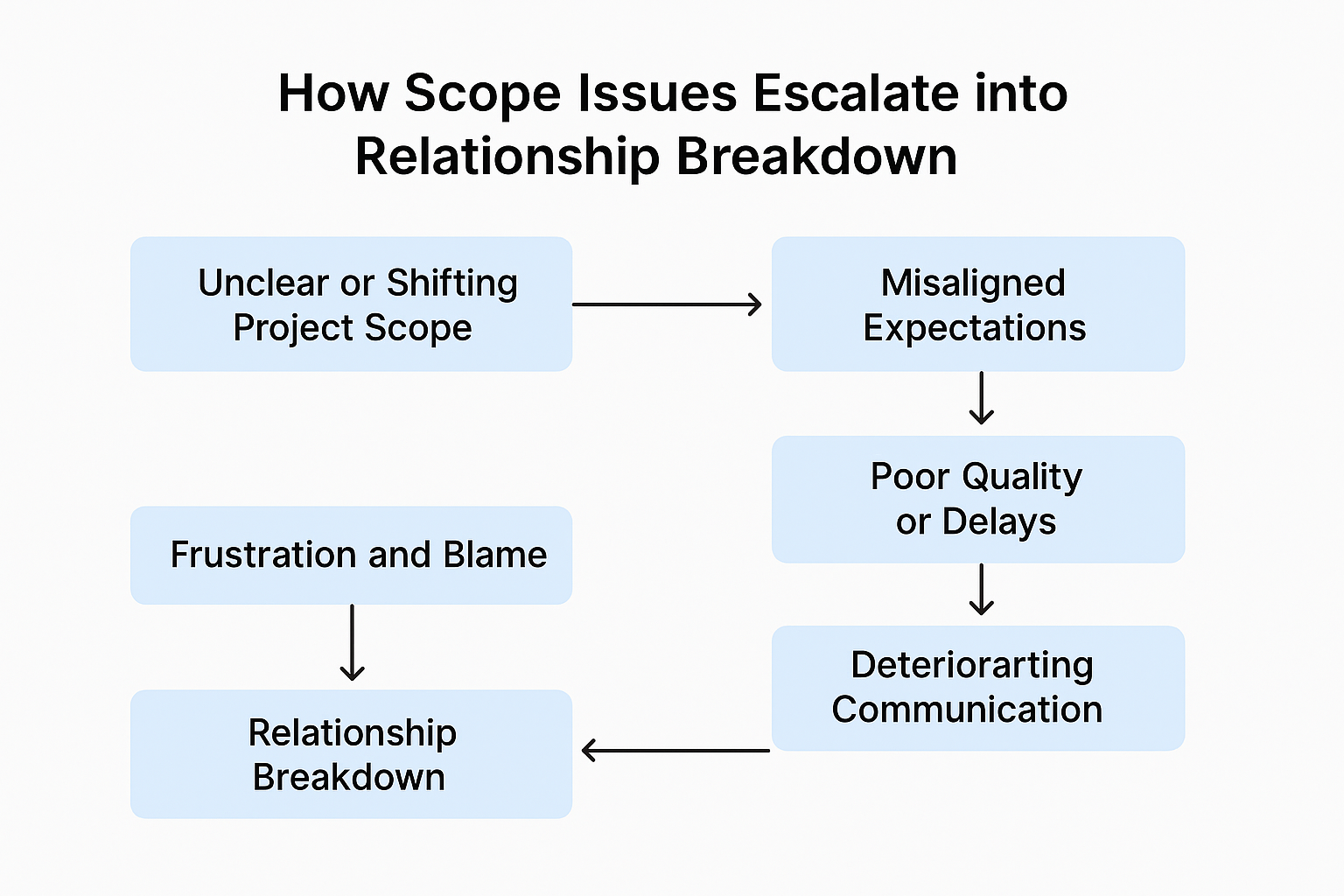
When projects go wrong due to scope issues, both parties typically retreat into defensive positions rather than addressing the root cause.
The pattern is predictable. You receive work that technically meets the brief but doesn't feel right. Your freelancer becomes defensive, pointing to the original requirements and arguing they've delivered exactly what was requested.
You blame freelancers for not delivering what you 'obviously' wanted, while freelancers feel frustrated about moving goalposts and unclear success metrics.
Both perspectives have merit. You genuinely believe your expectations were clear and reasonable. They genuinely believe they've fulfilled their obligations. Neither party wants to accept responsibility for the miscommunication.
This blame cycle destroys professional relationships and makes future collaboration impossible. You lose access to someone who might have been highly effective with clearer direction. They lose a potentially valuable long-term client relationship.
The blame game also prevents learning. Instead of identifying where your scope definition process broke down, both parties focus on defending their actions. The underlying system problem remains unsolved, ready to repeat with the next freelancer or client.
Breaking this cycle requires acknowledging that scope definition is a shared responsibility. Your job is to provide clear, complete requirements. Their job is to ask clarifying questions when something seems unclear or unrealistic.
Signs your project scope document is actually useless
A useless scope document uses generic language, lacks specific deliverables, and fails to address potential edge cases or revision processes.
You might think you're providing clear scope when you're actually handing over ambiguous wish lists. Your scope document might be professionally formatted and comprehensive in length, but still completely ineffective.
Warning signs include phrases like 'professional design,' 'user-friendly interface,' or 'modern aesthetic' without concrete definitions or examples.
Effective scope documents read like instruction manuals, not marketing brochures. They specify exact deliverables, file formats, revision rounds, approval processes, and success criteria. They anticipate potential edge cases and provide guidance for handling unexpected situations.
Here's how to evaluate your current scope documents:
| Ineffective Scope Language | Effective Scope Language |
|---|---|
| "Create an engaging design" | "Design must include company logo prominently, use brand colours #FF6B35 and #004E7C, and feature a hero image showcasing our product" |
| "Write compelling copy" | "Write 500 words of web copy targeting manufacturing directors, highlighting cost savings and efficiency gains, with 2-3 customer case studies integrated" |
| "Build a user-friendly interface" | "Interface must be accessible to users 45+ with limited technical experience, include search functionality, and load in under 3 seconds on mobile devices" |
Red flags in your scope documents:
- Subjective adjectives without examples or criteria
- Missing technical specifications or constraints
- No defined revision or approval process
- Vague timelines ("as soon as possible," "by end of month")
- No success metrics or acceptance criteria
The real cost of skipping project scope clarification
Skipping proper scope clarification typically results in 40-60% budget overruns, timeline extensions, and significantly lower client satisfaction scores.
The temptation is understandable. You're eager to get started, you think the requirements are obvious, and spending time on detailed scope clarification feels like unnecessary delay.
The rush to start working immediately often creates far more delays than taking time upfront to define clear parameters and expectations.
Your projects that skip thorough scope clarification face predictable problems:
- Revision loops: Multiple rounds of changes as unstated requirements surface
- Feature expansion: Project grows beyond original boundaries without formal change management
- Technical conflicts: Delivery doesn't integrate with existing systems or workflows
- Stakeholder rejection: Final deliverable fails to meet unspoken approval criteria
- Budget disputes: Additional work creates conflict over payment responsibility
The mathematics are stark. Spending an extra week on scope clarification might delay your start date, but it typically reduces total project duration by 2-4 weeks. The upfront investment in clarity pays dividends throughout the entire project lifecycle.
Professional service firms report that thorough scope clarification reduces project revisions by 60% and improves client satisfaction scores by 40%. The correlation between time invested in planning and final project success is remarkably consistent across industries.
Quality freelancers actually prefer clients who insist on detailed scope clarification. It signals professionalism and reduces their project risk significantly.
How to identify if scope issues are killing your freelancer relationships
Scope-related relationship problems typically manifest as repeated revision requests, communication breakdowns, and freelancers who seem increasingly frustrated or disengaged.
The symptoms often develop gradually, making them easy to miss until the relationship has deteriorated significantly. By recognising these patterns early, you can address scope issues before they destroy otherwise valuable partnerships.
If you've had multiple freelancers deliver work that technically meets the brief but doesn't feel right, the issue is almost certainly in your scope definition process.
Common warning signs include:
- Your freelancers asking for extensive clarification on seemingly straightforward requests
- Deliverables that meet stated requirements but miss the mark somehow
- Repeated requests for examples or additional context mid-project
- Freelancers becoming less responsive or enthusiastic over time
- Pattern of projects going over budget or timeline across different freelancers
- Difficulty finding freelancers willing to take on follow-up projects
The most telling sign is consistency across multiple relationships. If you've had similar issues with several different freelancers, the common factor is your briefing process, not their capabilities.
This realisation can be uncomfortable but also liberating. Scope problems are entirely within your control to fix, unlike freelancer skill or attitude issues.
Self-assessment questions:
- Do my project briefs specify exact deliverables and file formats?
- Have I shared examples of what success looks like?
- Did I explain the business context and constraints?
- Is the revision and approval process clearly defined?
- Are success metrics and acceptance criteria documented?
The moment of realisation...
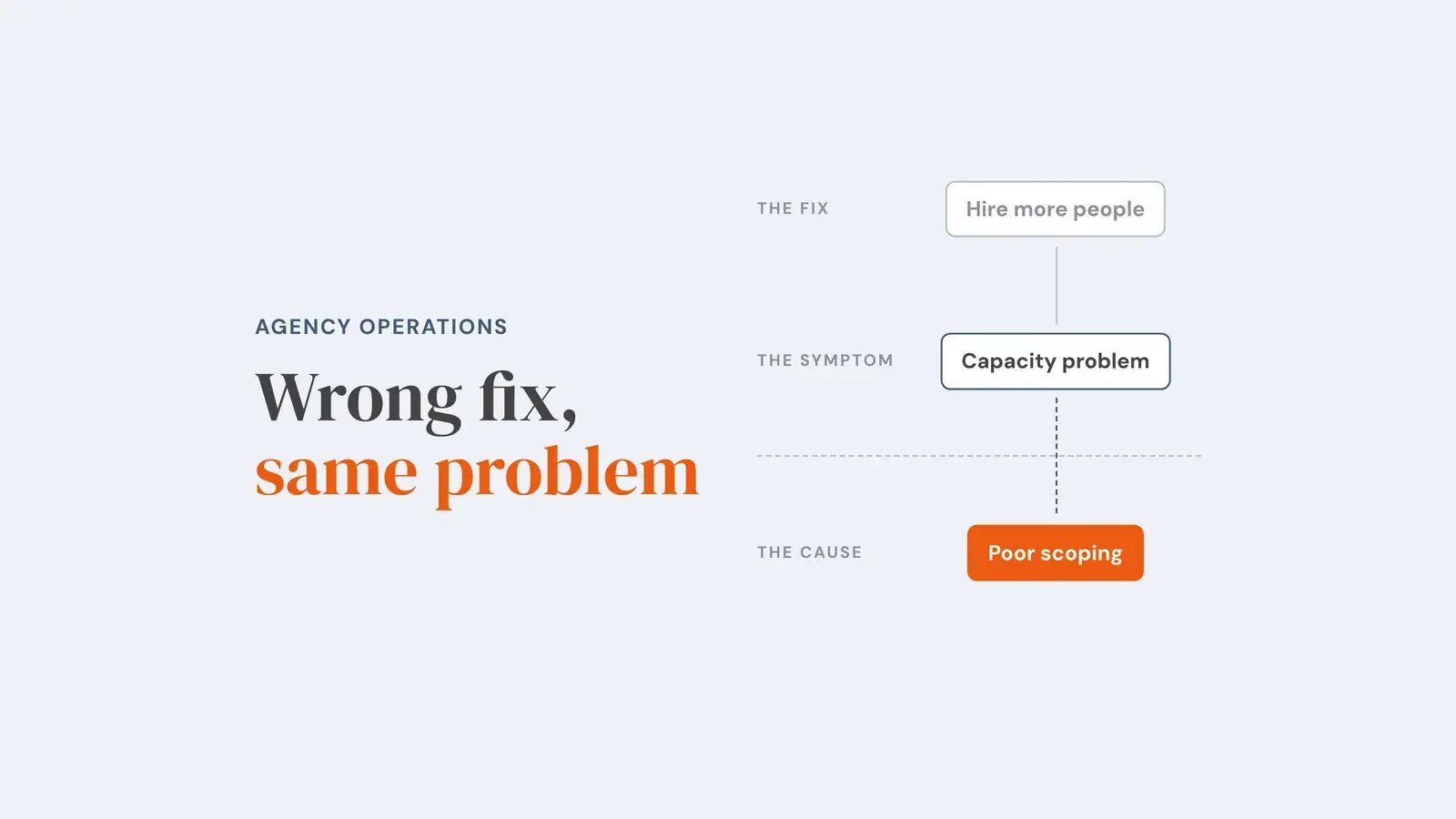
At the end of the day, most failed freelancer relationships don't stem from poor talent; they stem from poor direction. That frustration you've felt with missed expectations? It's often a symptom of misaligned project scope.
Throughout this article, you've discovered why vague requirements create conflict, how scope creep damages trust, and what warning signs indicate your briefing process needs attention. The pattern is clear: businesses that invest time in thorough scope clarification consistently get better results from their freelancer relationships.
Now that you understand what's really going wrong, your next step is to start writing clearer, more effective briefs that avoid the problems we've covered.
As your Fractional Marketing Director, I help companies like yours create repeatable systems that remove confusion and drive better results from external partners. Learn more about my done-for-you strategy services here.

Topics: