

You have already decided your marketing needs to improve. What you are stuck on is who should do it, your own people, or someone you pay by the month.
I build marketing functions inside founder-led B2B companies, and I am called in to rebuild the ones that broke. I also sell one of the models compared here, fractional leadership inside a hybrid setup, so hold me to the evidence rather than the conclusion.
This article is for leaders between £2m and £20m in revenue: what each model costs over three years, where each wins, how both fail, and how to choose. Below £2m, rent nearly everything and own only the strategy; above £20m, the question becomes which specialisms stay outside the team you already have.
Key takeaways
- Owning your marketing means the strategy, systems, and audience relationships stay inside your business, even when outside people do some of the delivery work.
- Outsourcing scales faster in year one, and stays the better answer for businesses built on paid acquisition or narrow specialisms.
- Owning scales better from year two where growth depends on content, trust, and sales alignment.
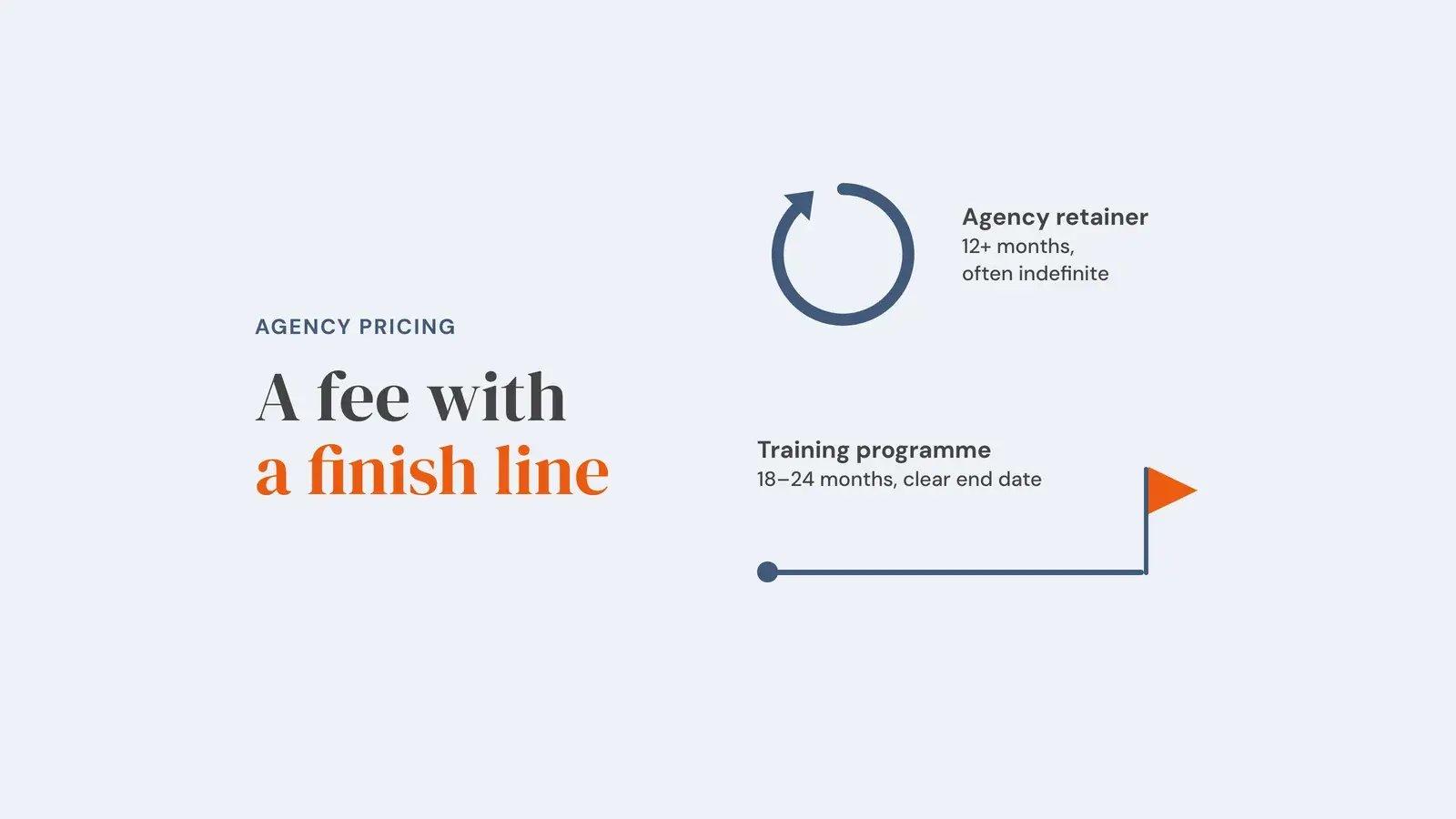
- A UK agency retainer typically runs £4,000–£12,000 per month ($5,100–$15,200). One senior in-house marketer costs £90,000–£115,000 ($114,000–$146,000) a year fully loaded.
- The deciding question is not cost. It is which layer you could not afford to lose overnight.
What does owning your marketing actually mean?
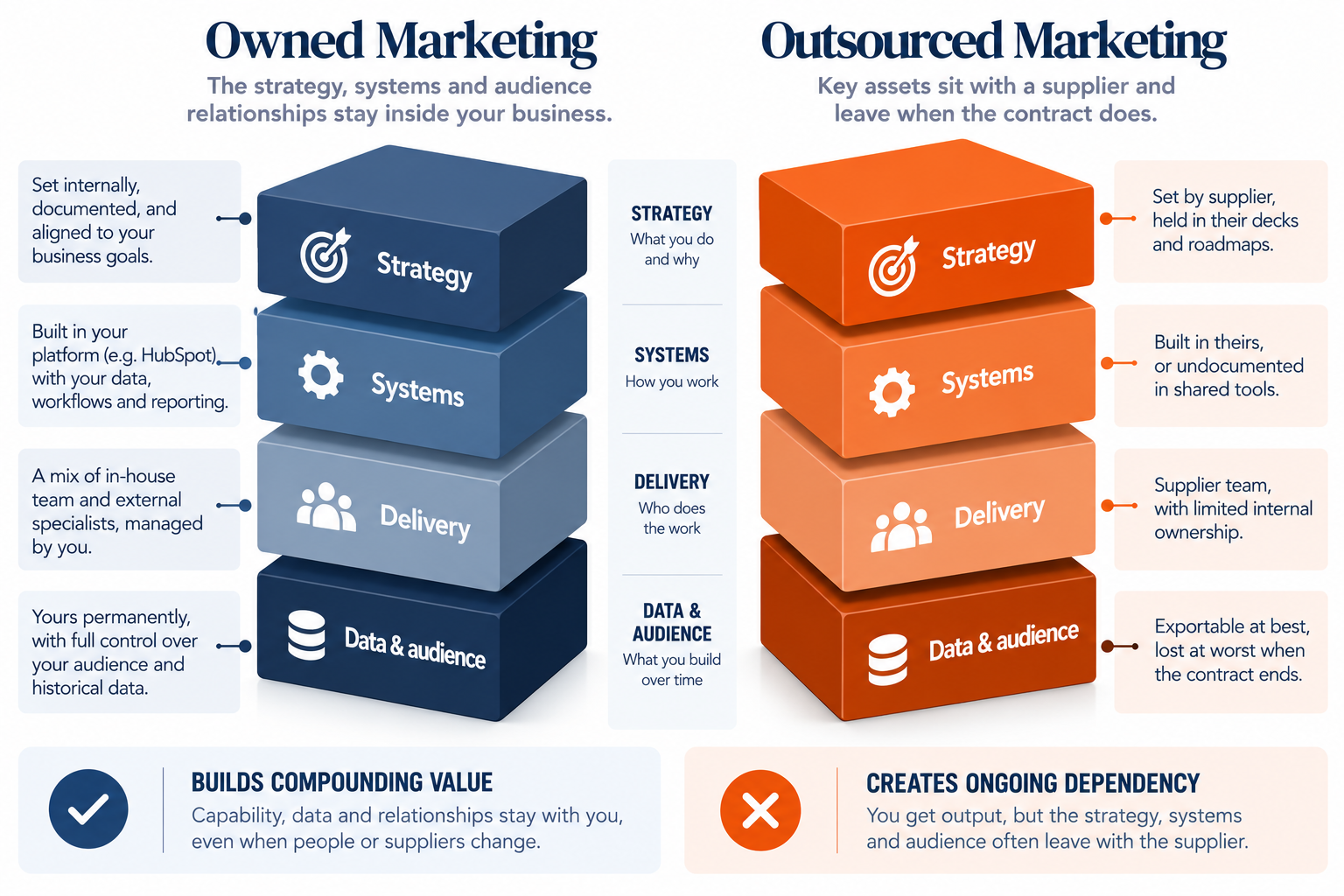
Owning your marketing means the strategy, the systems, and the audience relationships live inside your business, even when some delivery work is done by external people. Outsourcing means those assets sit with a supplier and leave when the contract does.
Most companies think the choice is between headcount and an agency. The real choice is where capability accumulates; you can have five freelancers and still own your marketing, or three employees and not own it.
| Layer | Owned model | Outsourced model |
|---|---|---|
| Strategy | Set internally, documented | Set by supplier, held in their decks |
| Systems (CRM, workflows, reporting) | Built in your platform | Built in theirs, or undocumented |
| Delivery | Mixed — internal plus specialists | Supplier team |
| Data and audience | Yours permanently | Exportable at best, lost at worst |
What does each model actually cost?
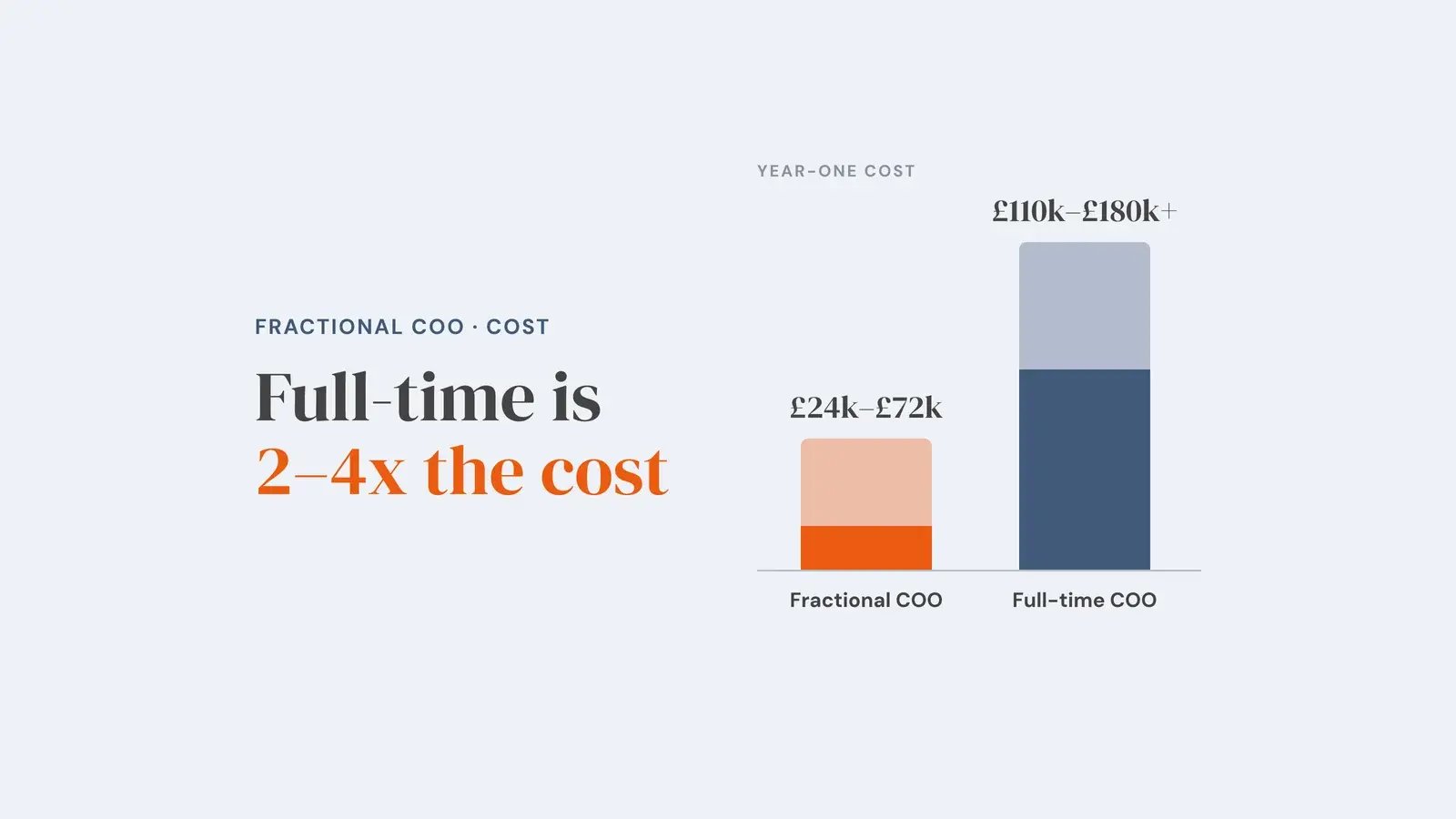
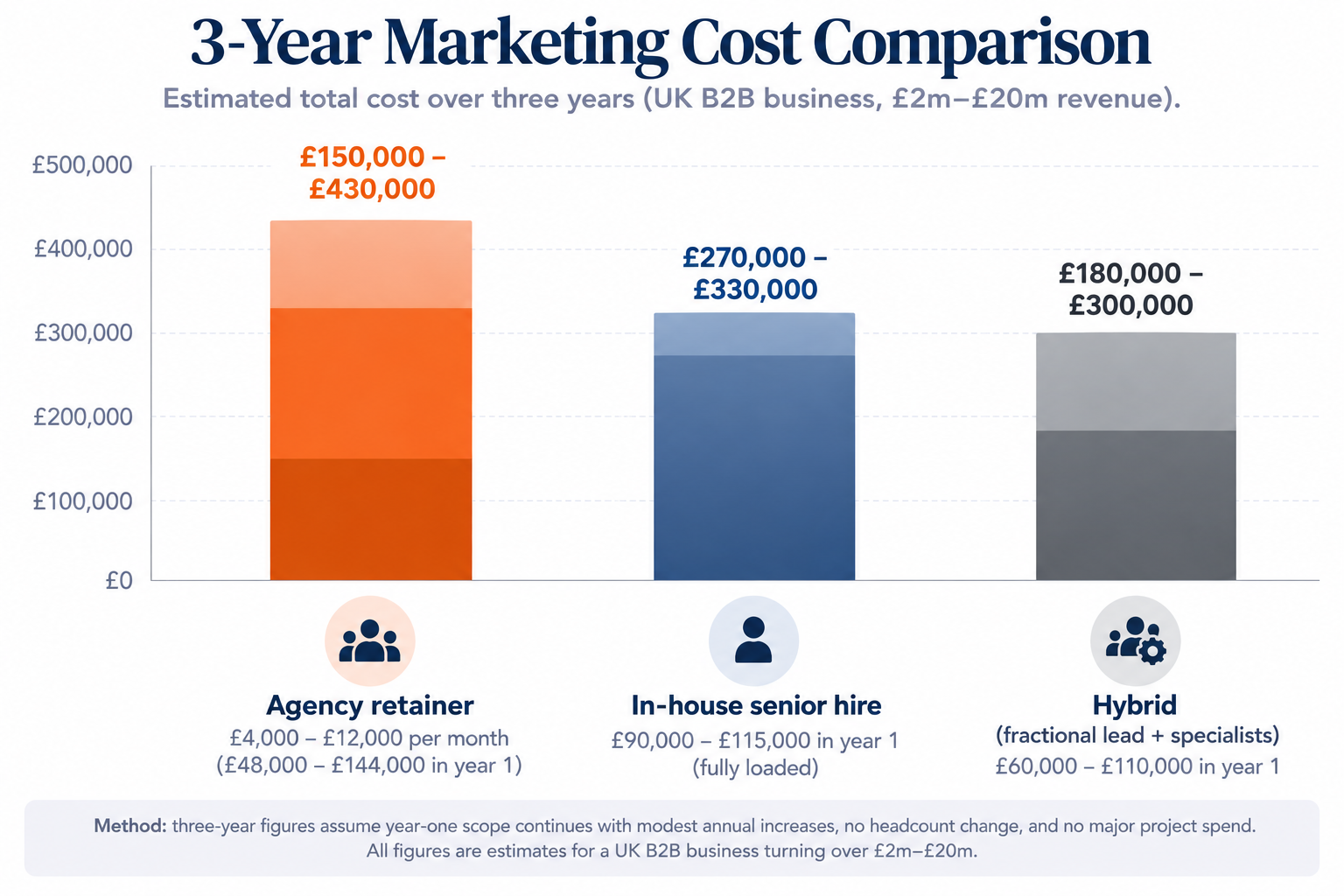
A retained UK agency typically costs £4,000–£12,000 per month ($5,100–$15,200), while one senior in-house marketer costs around £90,000–£115,000 ($114,000–$146,000) a year fully loaded. "Fully loaded" means the real annual cost to the business, not the salary line.
For a Head of Marketing that is roughly £60,000–£80,000 base, £12,000–£16,000 of employer National Insurance and pension, an £8,000–£12,000 first-year recruitment fee, and £5,000–£8,000 of software and training. The agency range reflects retainers I see quoted in this revenue band; salary components come from advertised UK roles. Both are estimates.
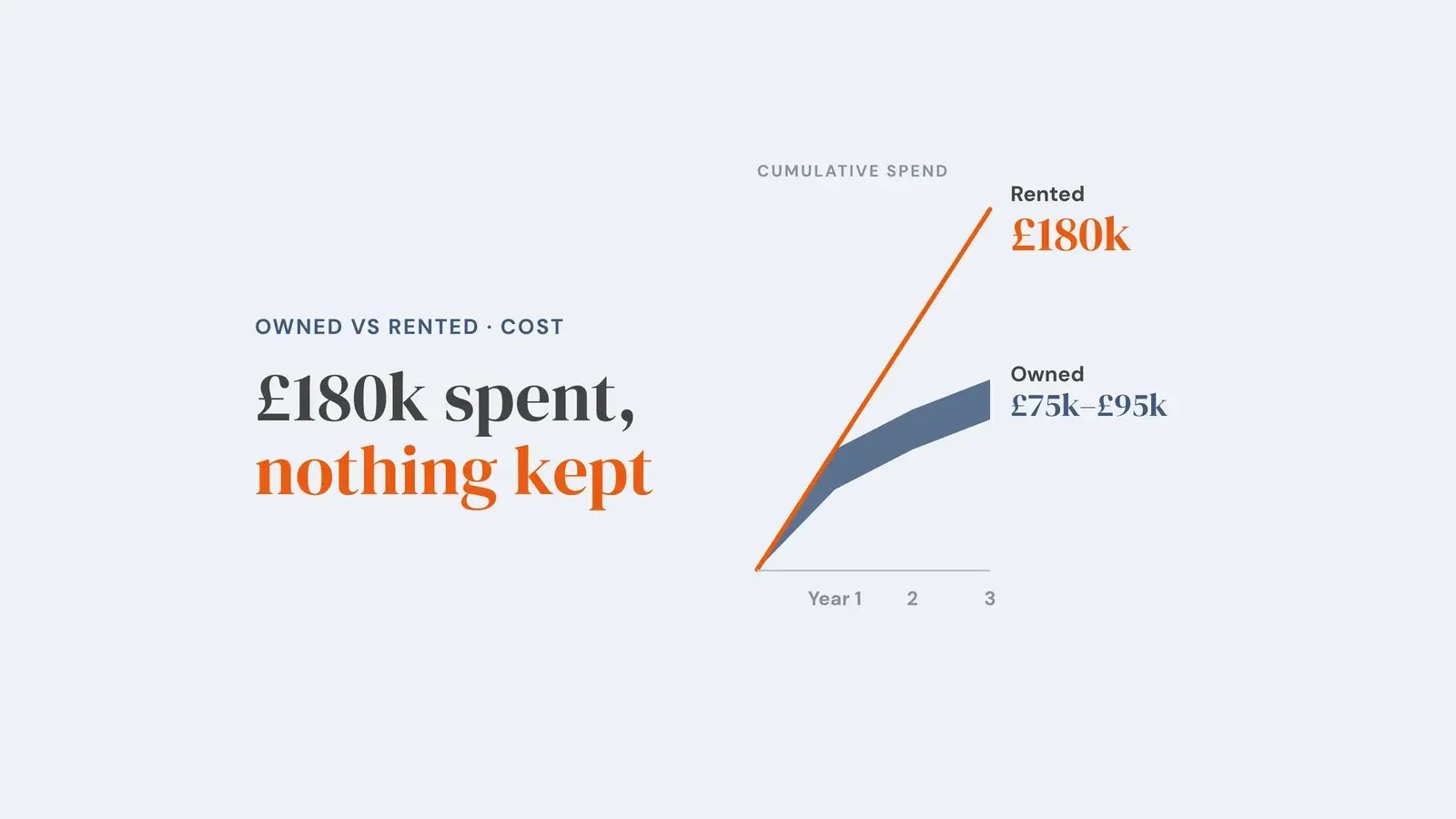
The hidden lines break most comparisons. Take a hire who leaves at month nine: nine months of loaded cost at £8,500 a month is £76,500, plus a second recruitment fee of roughly £10,000, plus three empty months, close to £90,000 ($114,000) for a year with nothing compounding, against £48,000–£144,000 for a year of agency retainer.
Related Reading: Poor Marketing Hire Costs: Real Numbers & How to Avoid Them
| Model | Year 1 | 3-year total (est.) | What you keep at the end |
|---|---|---|---|
| Agency retainer | £48,000–£144,000 | £150,000–£430,000 | Campaign history, limited documentation |
| One in-house senior hire | £90,000–£115,000 | £270,000–£330,000 | Skills, systems, documented process |
| Hybrid (fractional lead plus specialists) | £60,000–£110,000 | £180,000–£300,000 | Strategy, systems, and a trained team |
Method
three-year figures assume year-one scope continues with modest annual increases, no headcount change, and no major project spend. The hybrid row combines a fractional lead at £24,000–£50,000 a year with specialist delivery bought as needed. All figures assume a UK B2B business turning over £2m–£20m.
Where does outsourcing win?
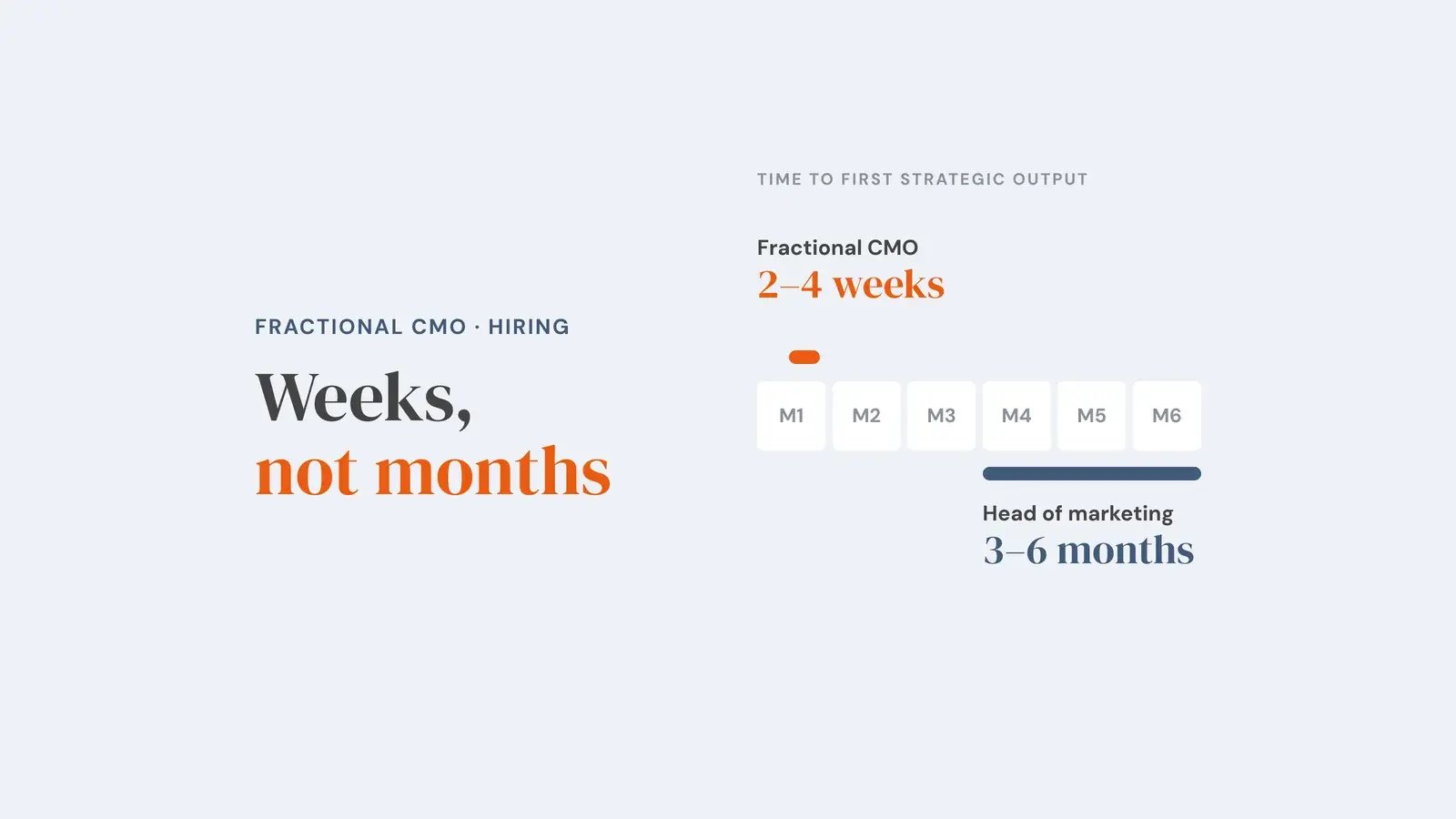
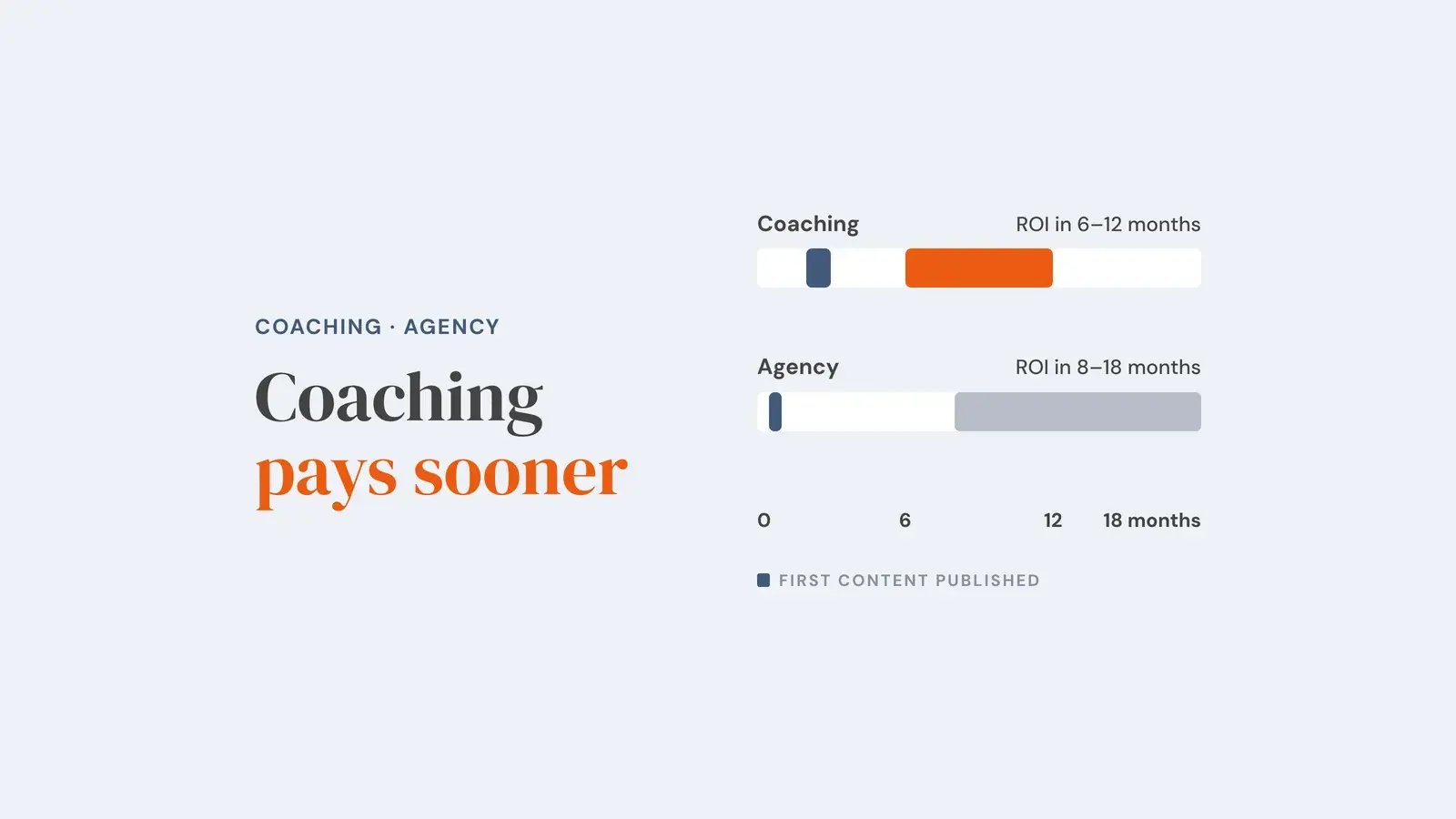
Outsourcing wins on speed to capability; an agency gives you six specialisms on Monday that would take eighteen months and three hires to build internally.
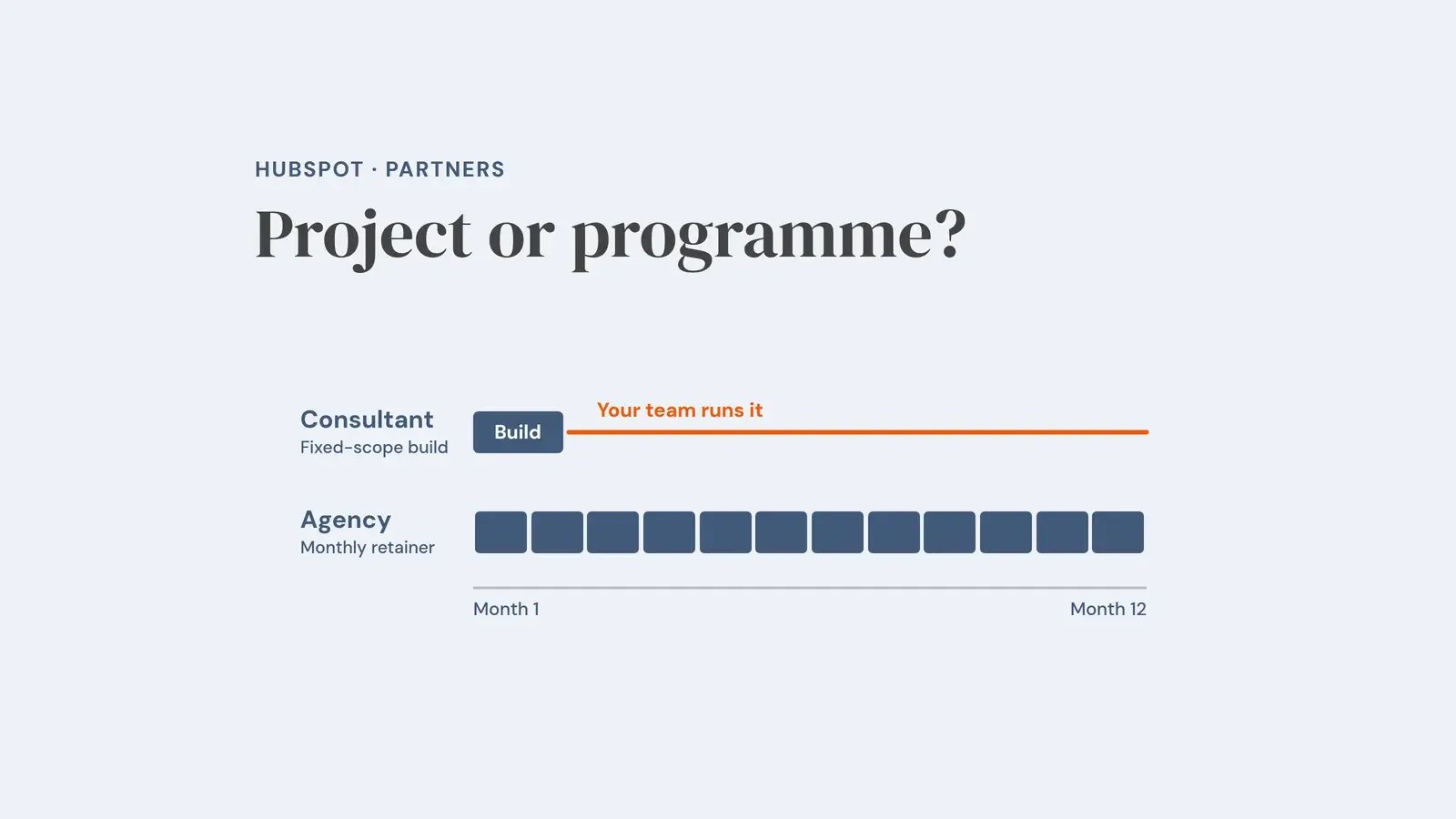
It is the right call when the need is specific, time-boxed, or too narrow to keep a person busy: paid media, technical SEO, video, website builds. If a skill is needed four days a month, hiring for it is a poor use of your money. A retainer can also be cut in 30 days; a salary cannot.
Outsourcing stays the better answer beyond three years in some businesses. If your growth depends on paid acquisition, a single channel, or deep technical specialism rather than on content and trust, the case for building internally is weak.
A company selling one product through paid search needs a media buyer who sees cost shifts across dozens of accounts before you do. In-house, you buy one person with one company's data, at a higher price.
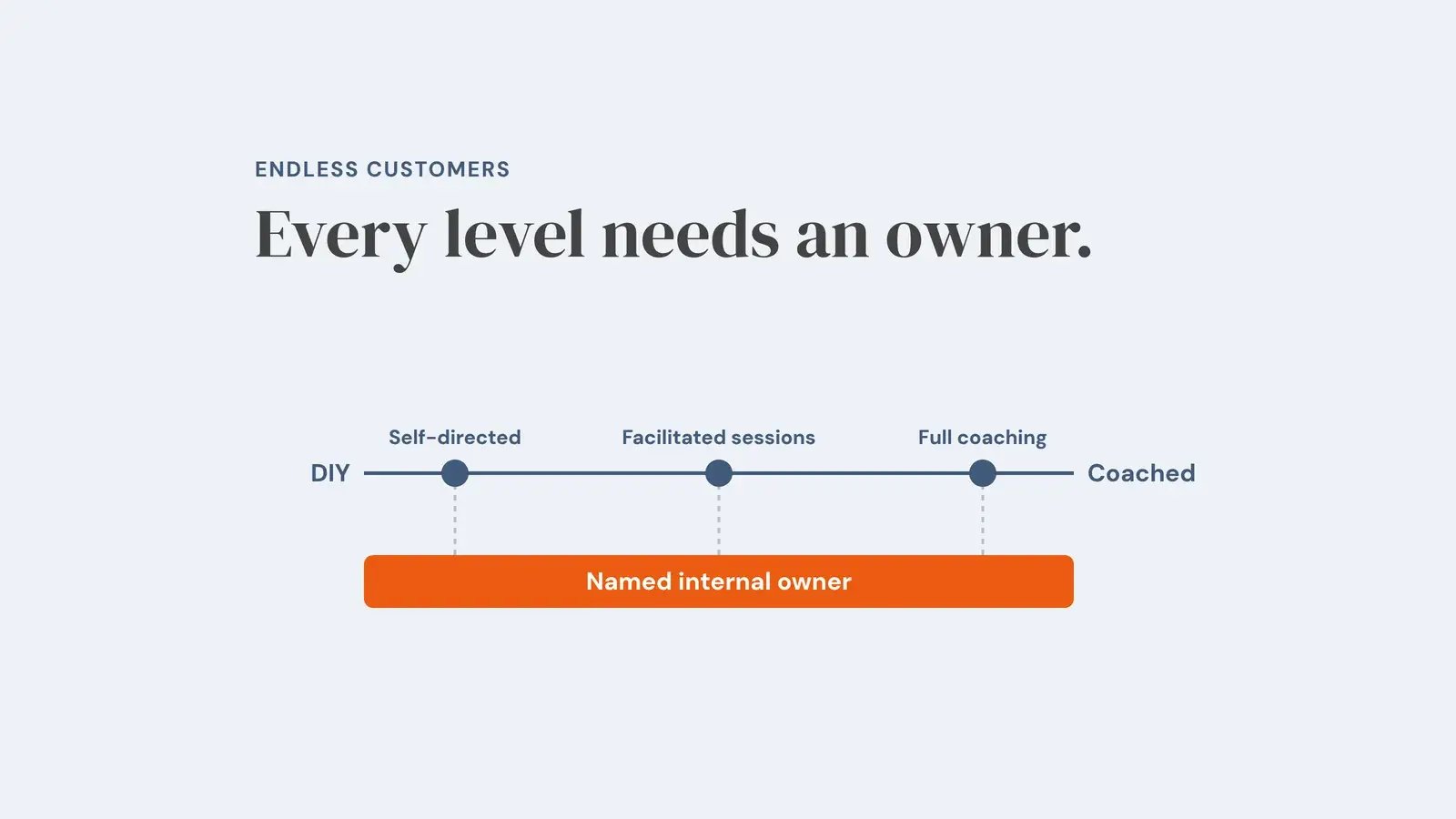
Owning marketing also requires management attention. If you cannot supply it, ownership will fail whatever the budget.
Which model scales better long-term?
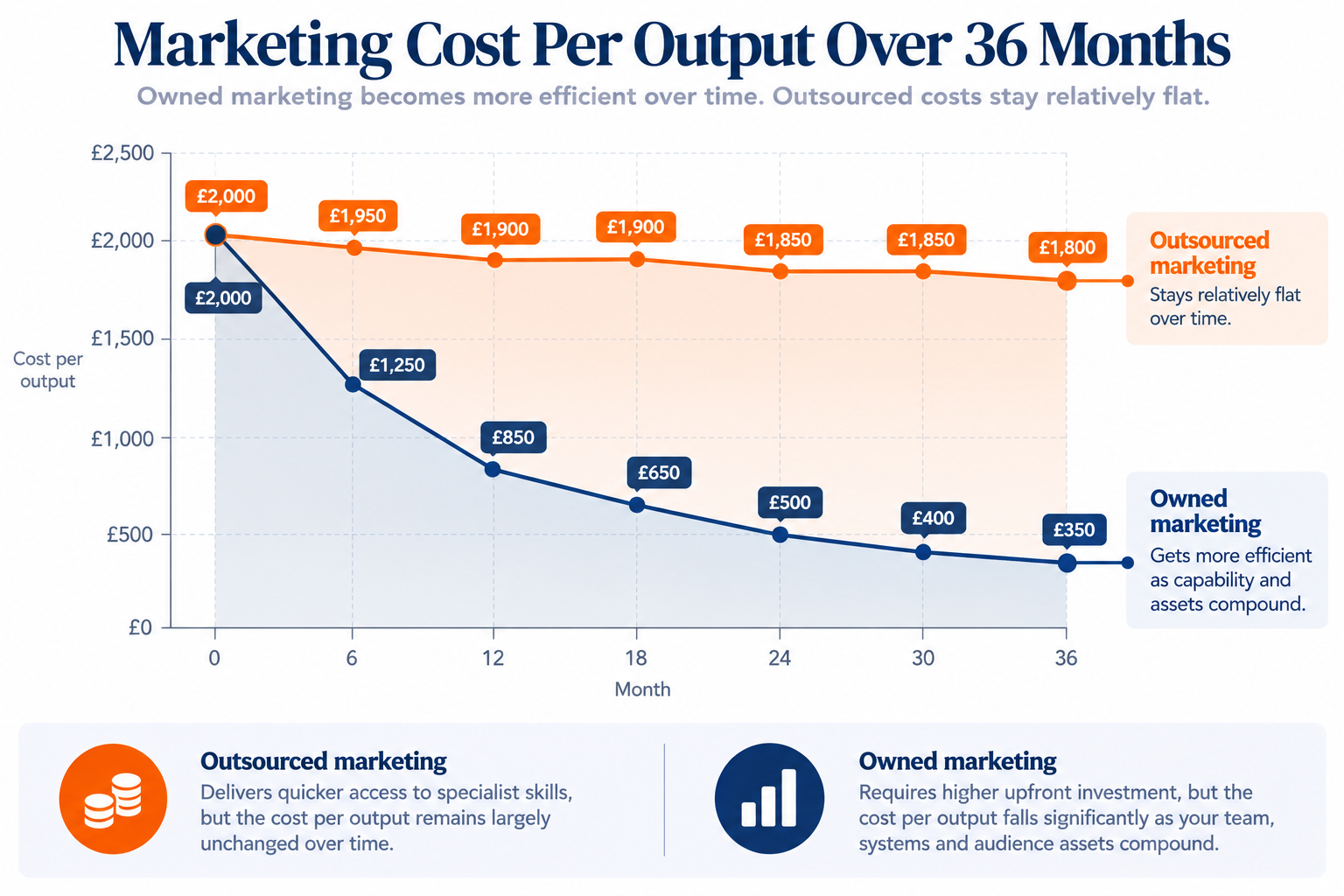
Owned marketing scales better long-term because its cost per output falls as capability builds, while outsourced marketing's cost per output stays flat or rises with volume. Cost per output means what you pay for one unit of finished work, be it an article, a campaign, a landing page, including the management time around it.
Doubling agency output roughly doubles the fee. Doubling internal output usually does not, because year two runs on systems year one paid for. Internal teams also sell better, because they sit close enough to sales to hear the objections and the reasons deals stall.
Related Reading: Owned vs Rented Marketing: The True Cost Breakdown
In the engagements I run the crossover usually lands in year two. Scale is not just more output; it is output that does not break when a supplier, a platform, or a person changes.
What goes wrong with each model?
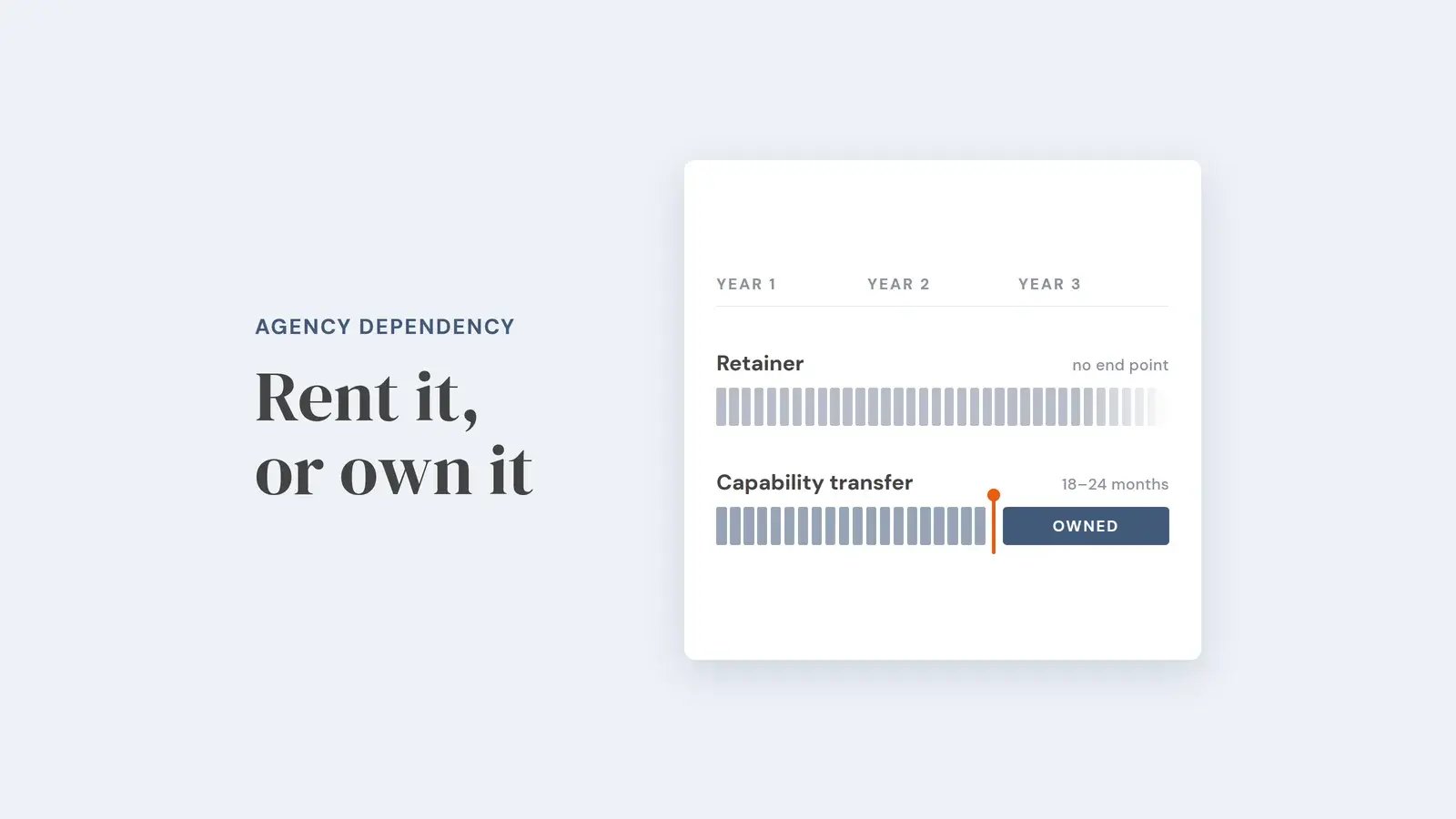
Outsourcing fails most often through dependency, and owning fails most often through under-resourcing. Both are visible a year before they become expensive.
Warning signs your agency relationship has become dependency
- You cannot describe your own strategy without opening their report.
- Your CRM was built by them and nobody internal can change a workflow.
- Leaving would mean losing your content calendar, ad history, or audience lists.
- Fees rise every renewal while output stays flat.
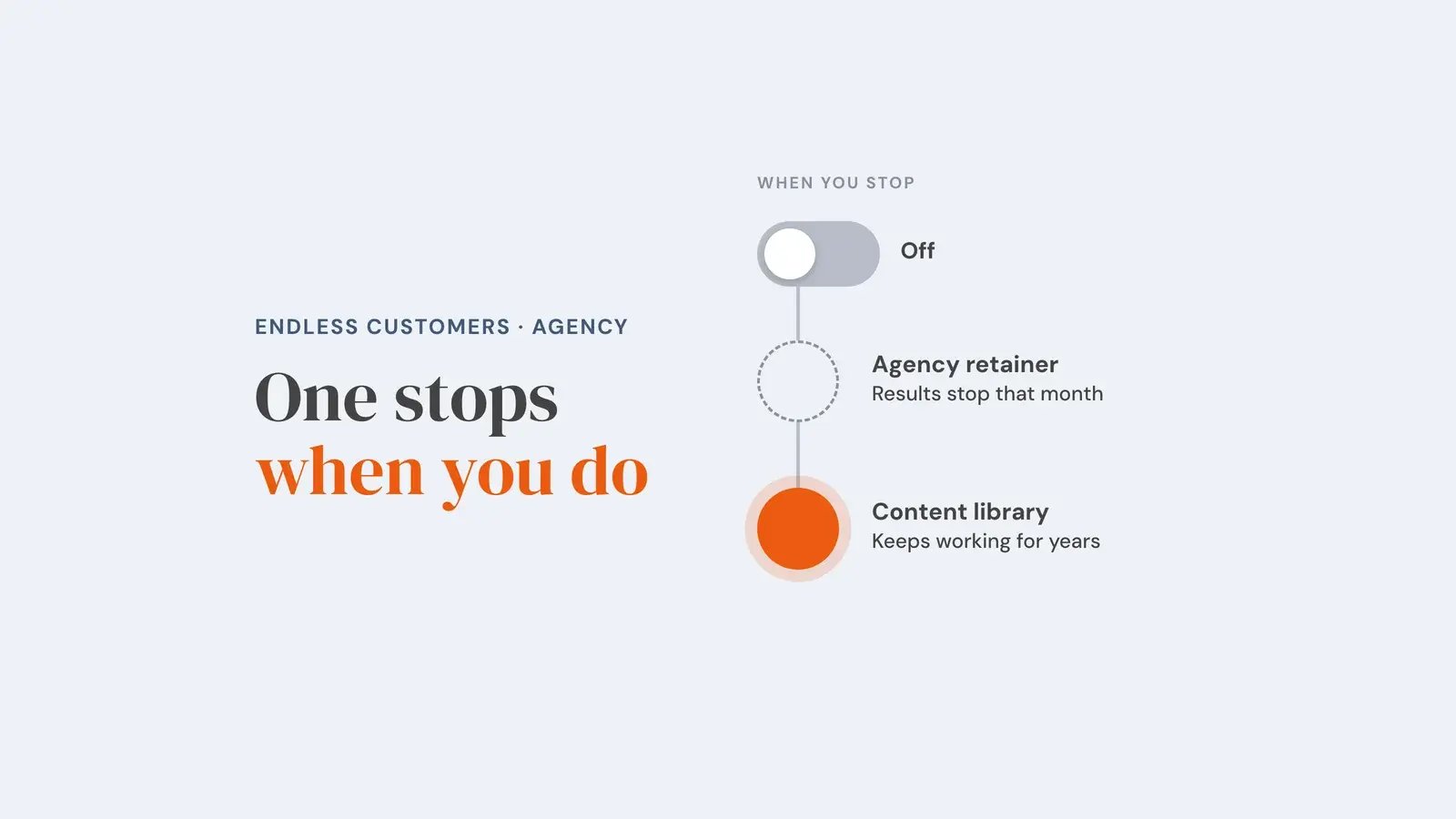
The third is the one I see most, and it is rarely deliberate: a company decides to move on and finds the blog on the agency's template, the ad account under their business manager, and the reporting in a dashboard nobody else can open. The exit takes months, not weeks.
Warning signs your in-house team is under-supported
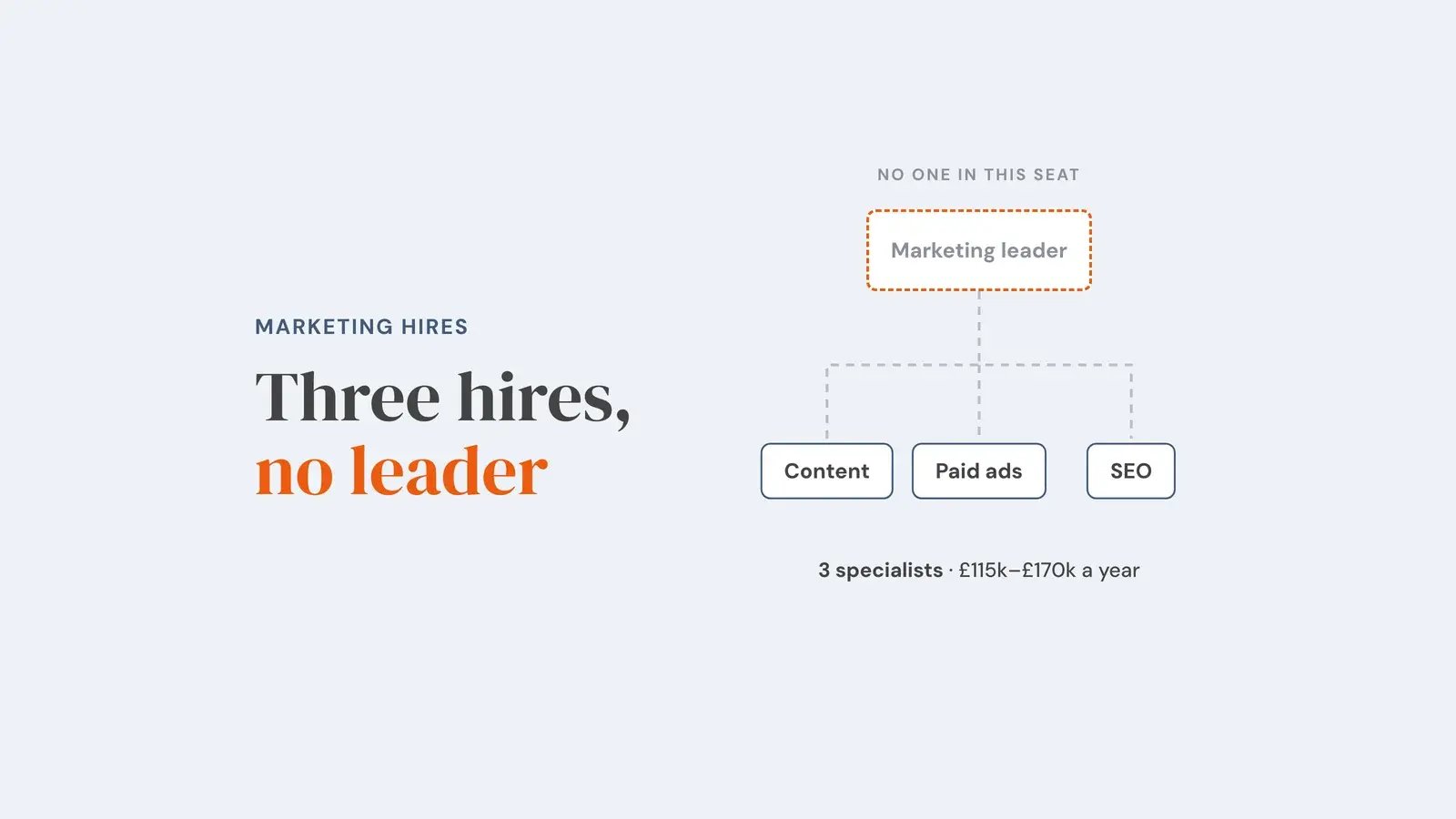
- Your marketing manager is writing the strategy they were hired to execute.
- Nobody senior reviews the plan against revenue targets.
- Every specialist task waits weeks because one person owns all of them.
Related Reading: Agency Dependency: The True 3-Year Cost to Your Business
Is there a hybrid model, and does it work?
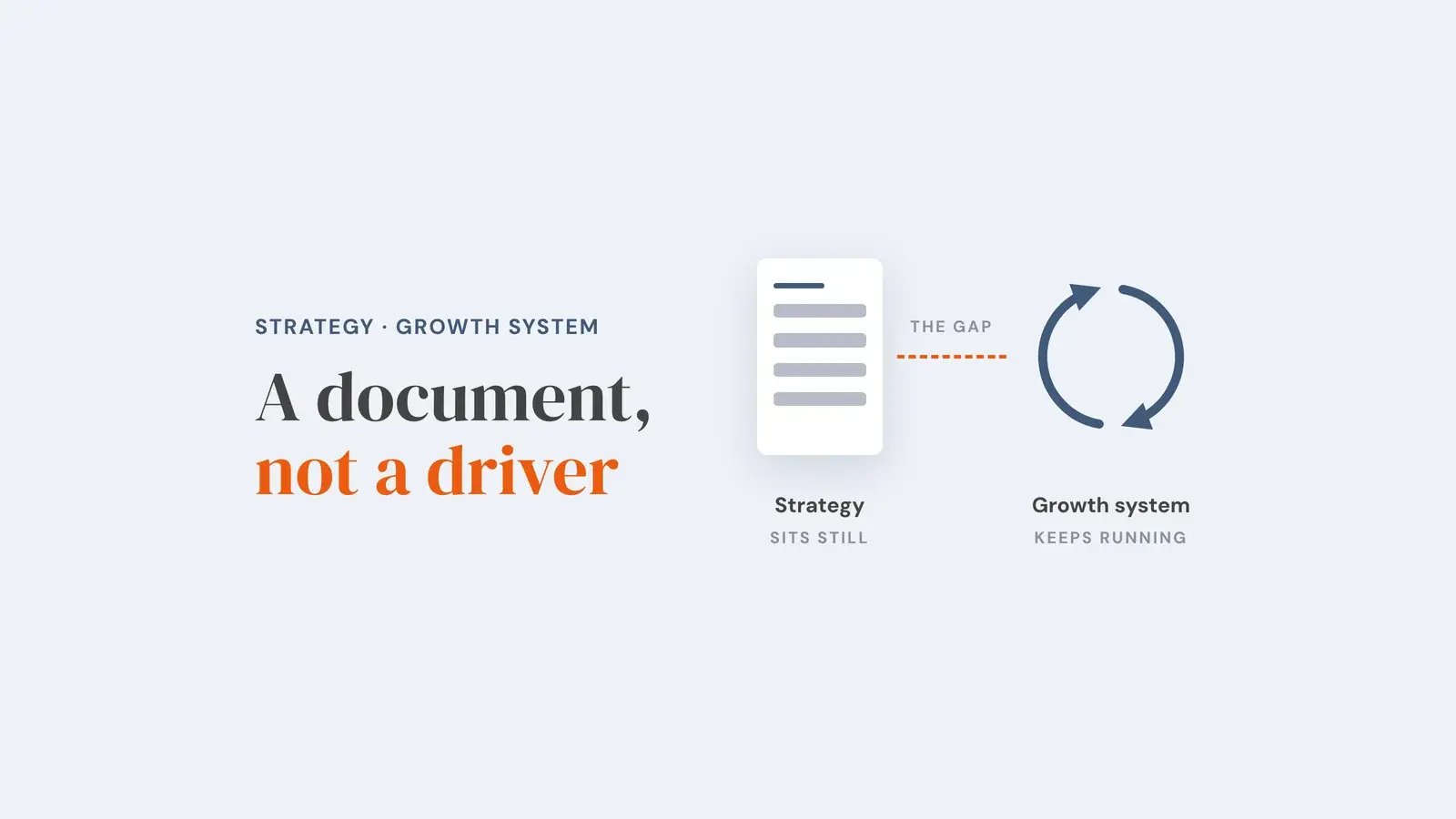
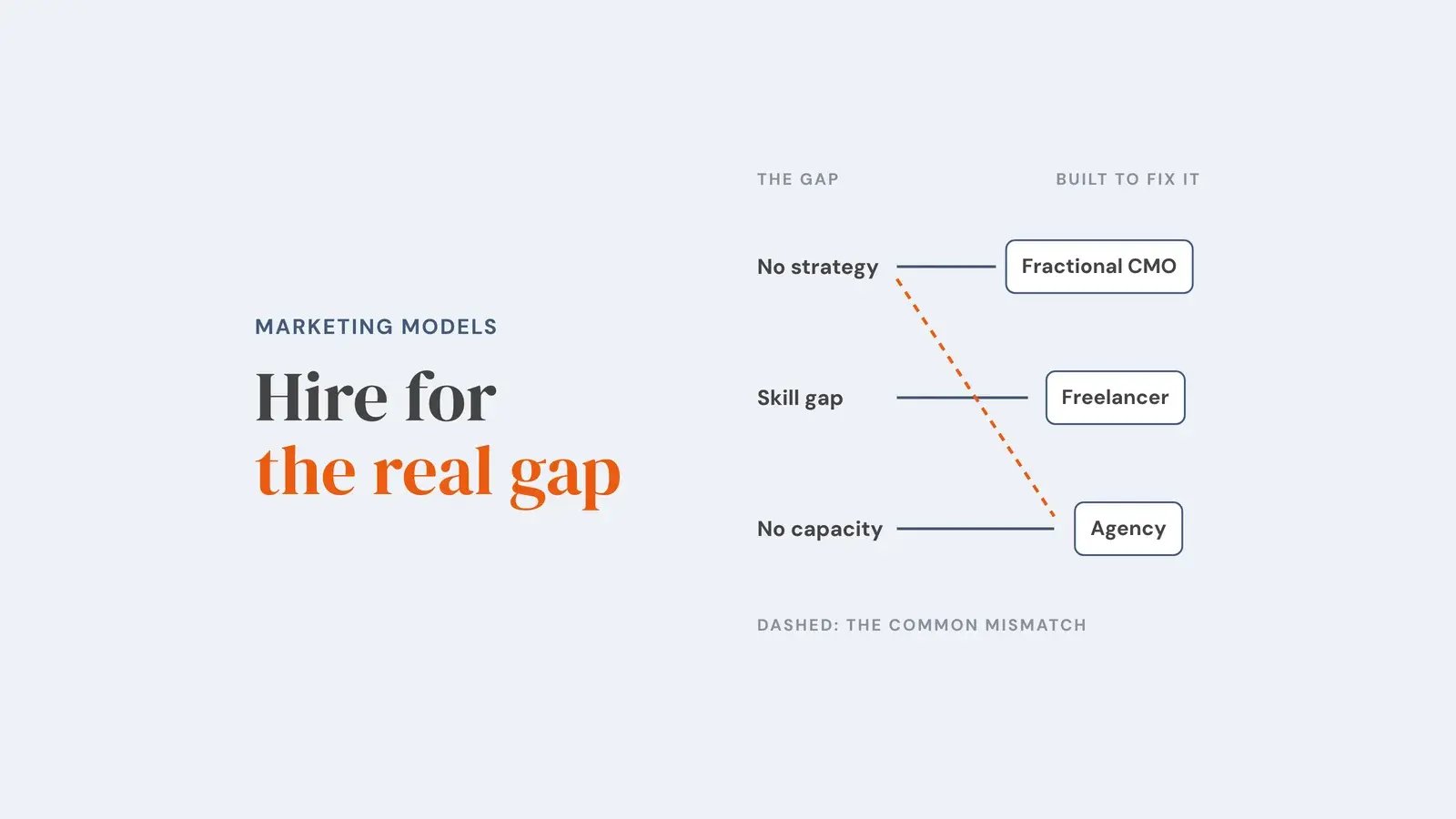
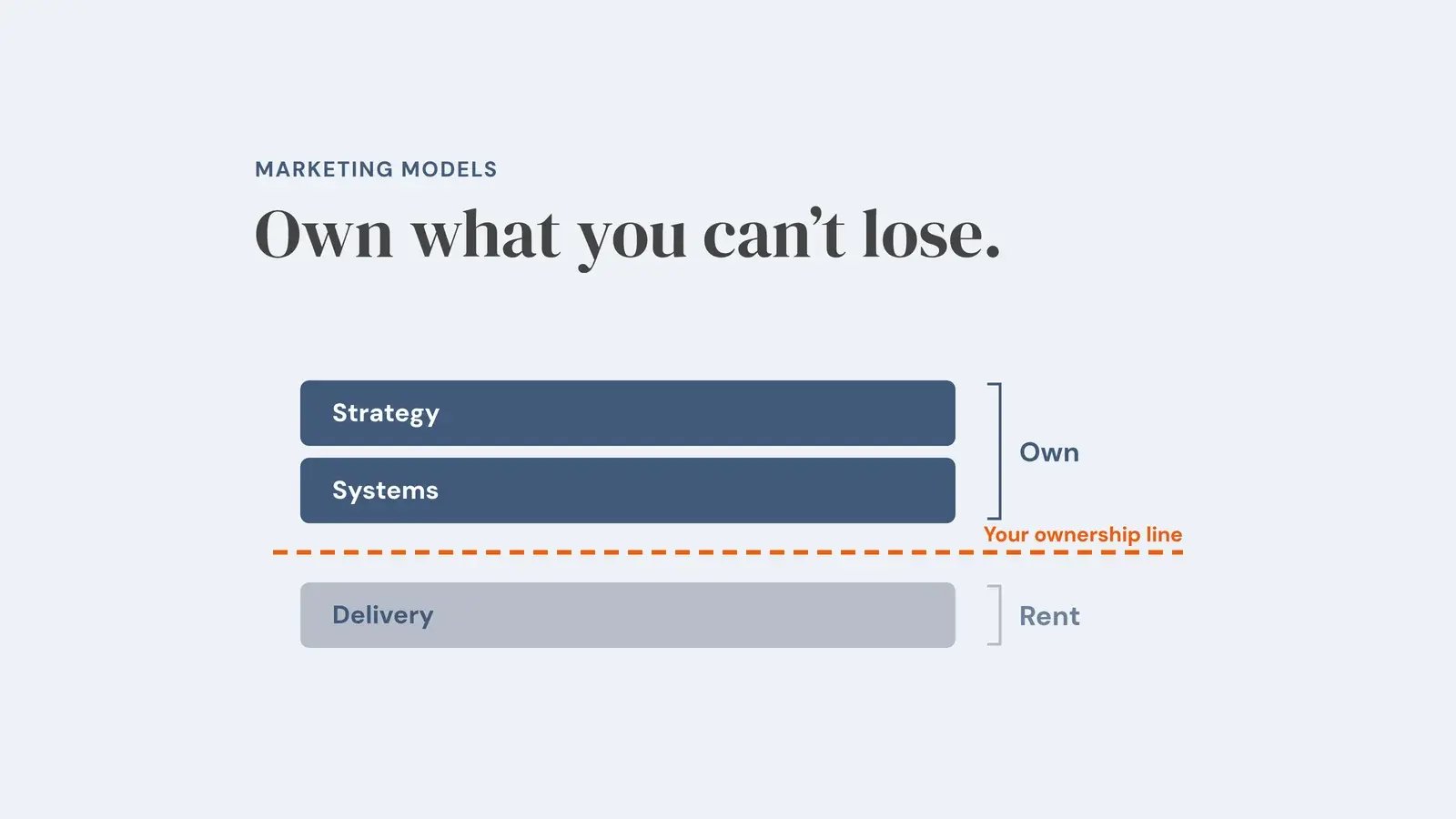
The model that works best for most scaling B2B businesses is a hybrid: own the strategy and the systems, rent the specialist execution. You get the compounding benefit of ownership without waiting three years to build a team.
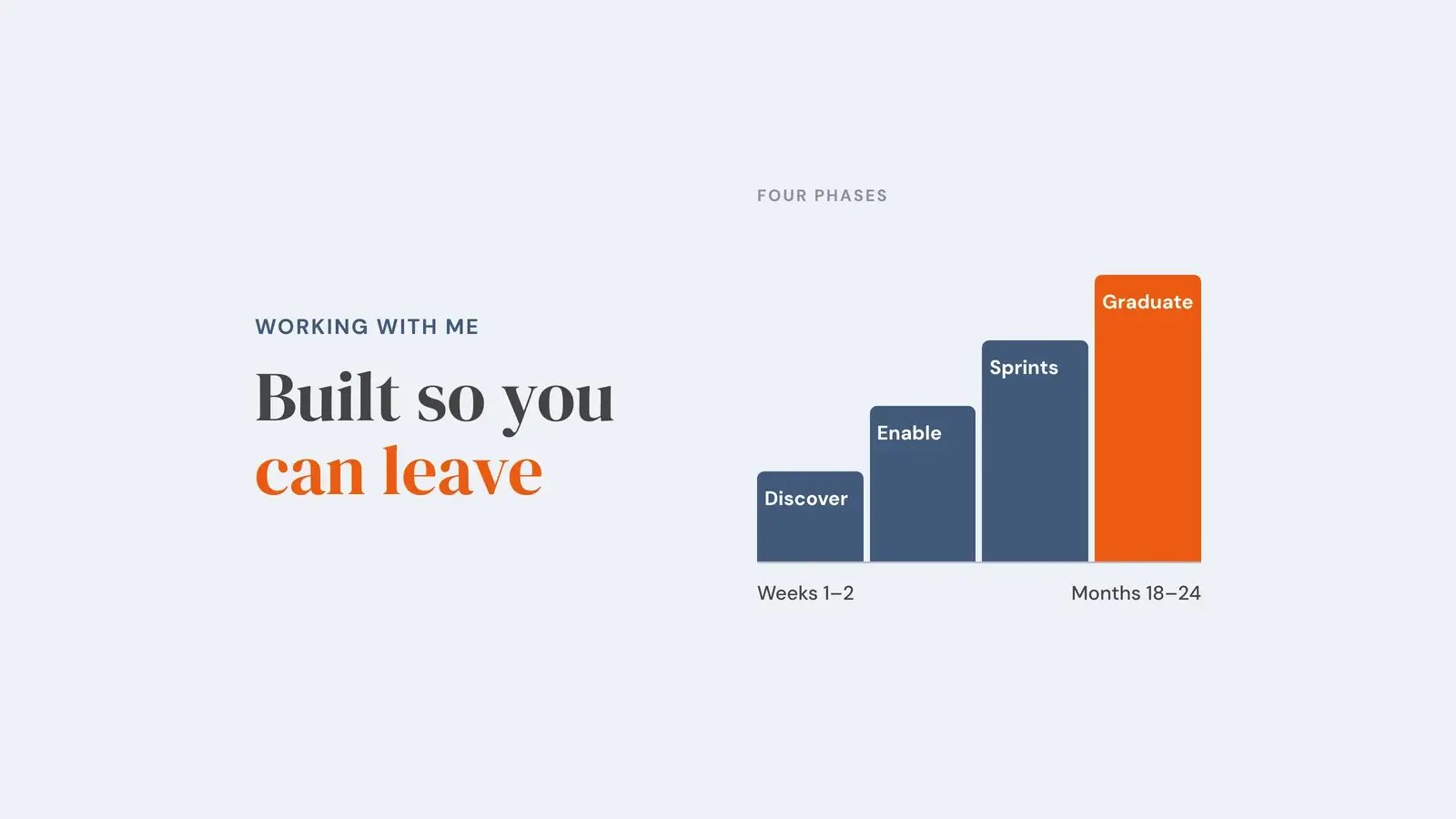
It works when it is built to end, and that is measurable: fewer external days at month twelve than at month three, with your internal owner running the plan. If external days are flat or rising after a year, the arrangement has become a retainer with a different name.
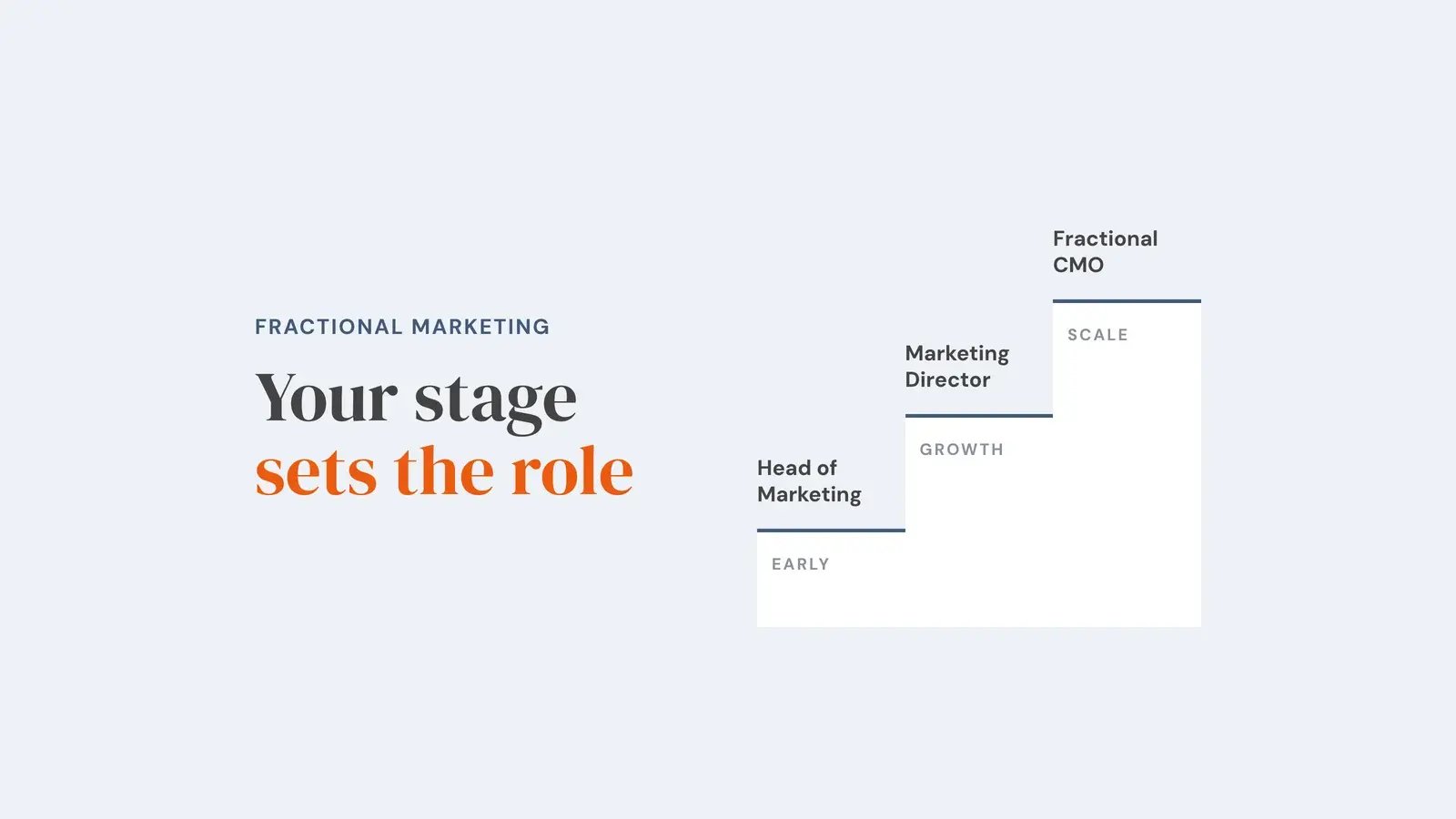
For transparency, these are my own published rates rather than market averages: a Fractional Marketing Director from £2,000 per month ($2,500), or a Fractional CMO at £4,700–£7,000 per month ($6,000–$8,900), compared against a full-time package in Fractional CMO vs Full-Time Marketing Hire: Cost Analysis.
How do you decide which model fits your business right now?
Decide by auditing three layers separately, those being strategy, systems, and delivery, and asking which you could not afford to lose overnight. Anything on that list should be owned; everything else can be rented.
- List where each layer sits today: Be honest about the difference between "we pay for it" and "we control it".
- Draw your ownership line: Mark the layers that must stay inside the business if a supplier disappeared.
- Sequence the move: One layer at a time: strategy, then systems, then delivery. Moving all three at once is how marketing stalls for six months.
To sanity-check the money: cost per marketing outcome = total 12-month marketing cost ÷ qualified opportunities created. A qualified opportunity is a prospect your sales team accepted and worked, not a form fill. If the owned figure is higher in year one but lower by year three, ownership is the better buy.
Frequently asked questions
How long does it take to bring marketing in-house?
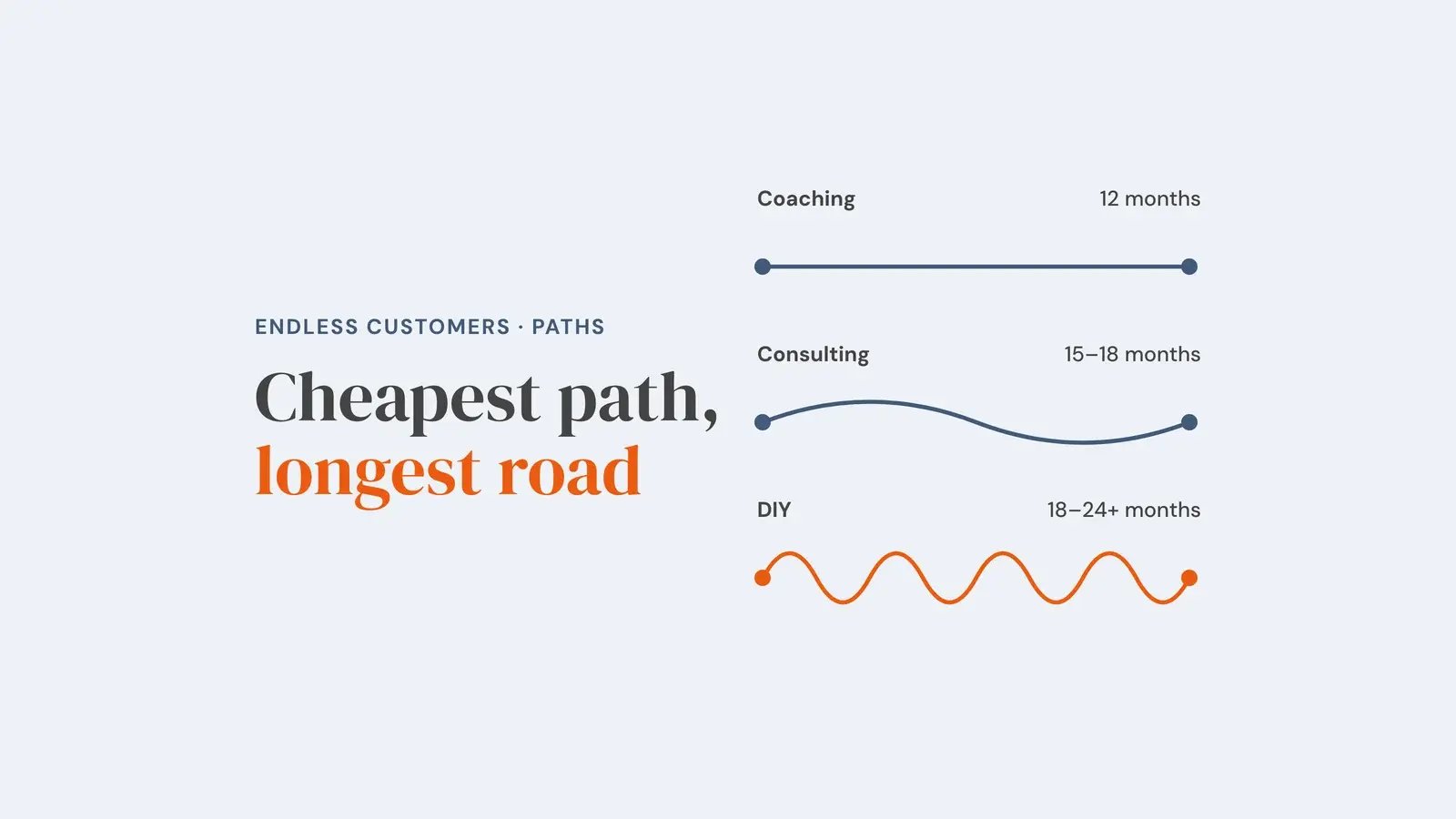
Six to twelve months to move strategy and systems, and eighteen to twenty-four months to build full delivery capability.
We tried bringing marketing in-house before and it did not work. Why would it be different now?
In most cases the strategy layer never moved; a manager was hired to execute a plan nobody owned. Moving delivery before strategy is the most common reason in-house attempts fail, and that is a sequencing problem rather than a people problem.
Can you own your marketing without hiring anyone full-time?
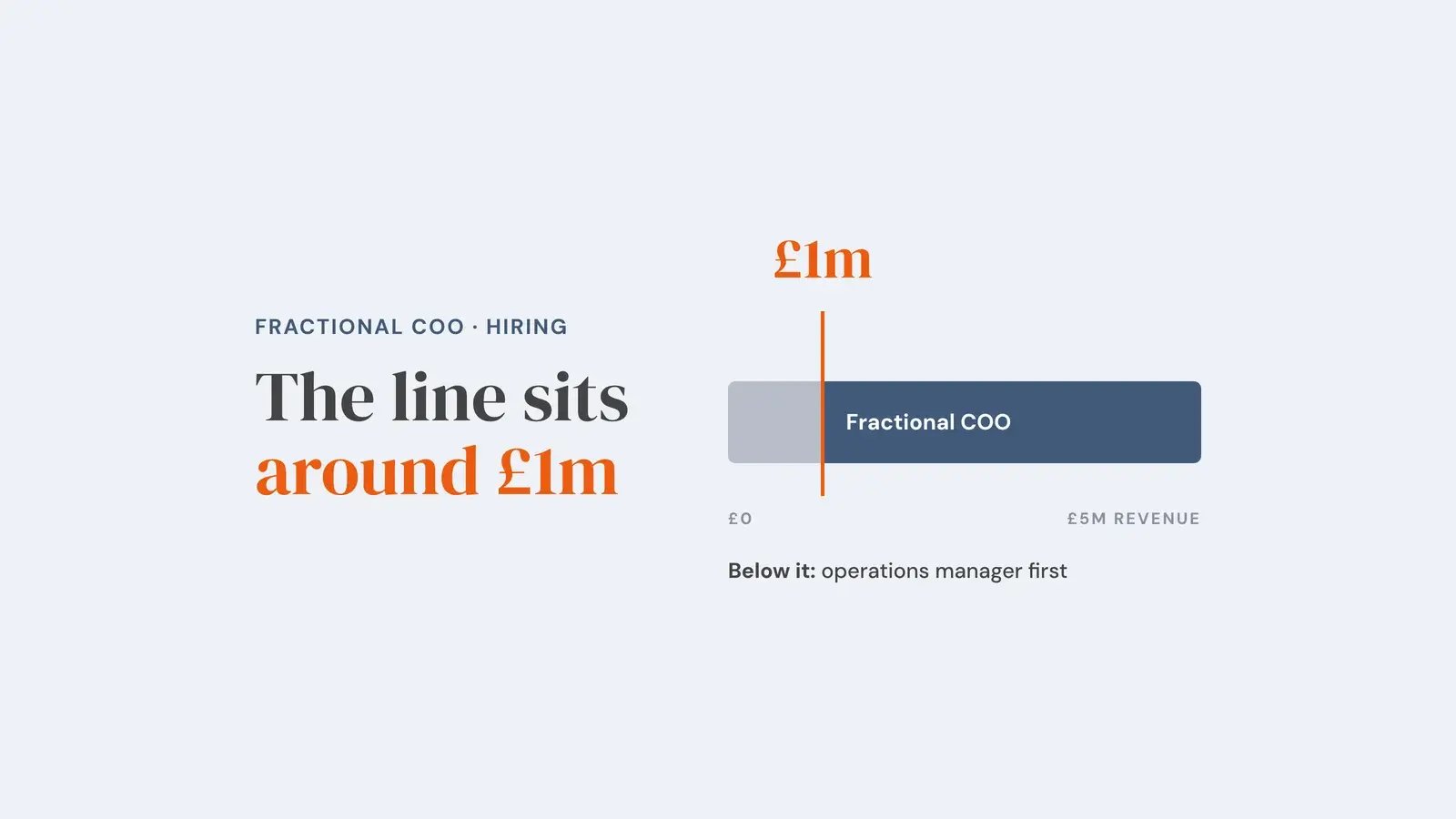
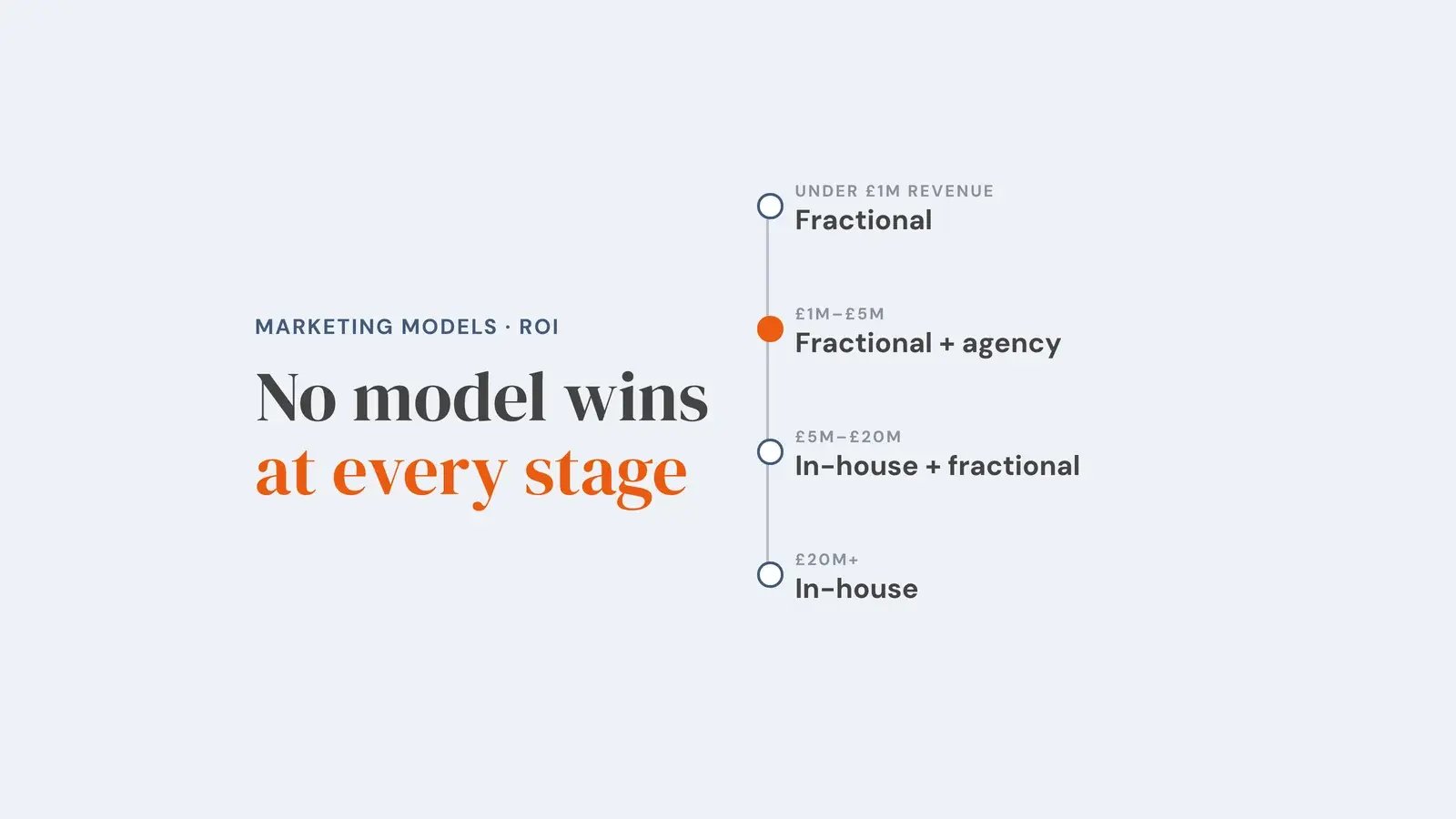
Yes. Fractional leadership plus documented systems gives you strategy and data ownership without a salaried team, which suits businesses under roughly £5m in revenue.
What should you never outsource?
Your strategy, your CRM administration, and your customer data. Those three decide what everyone else does, where the record of your pipeline lives, and who you can still reach if a supplier walks away. Outsource any of them and you are renting the ability to decide.
How do you exit an agency relationship without losing momentum?
Export your data and documentation first, keep the retainer running for 30–60 days while your internal owner takes over, then reduce scope in stages.
Where to go from here
You started this choosing between two suppliers of effort. The better question is which parts of your marketing should compound inside your business, and which you are happy to rent. Answer that and the model chooses itself.
How to take action now
- Run the three-layer audit this week and mark the layer you could not afford to lose.
- Work out your cost per qualified opportunity under your current model.
- Agree the sequence with your leadership team before anyone signs anything.
- Score where your marketing sits today with the Marketing Debt Scorecard.
Related Reading: In-House vs Outsourced Marketing: What's Best for Scaling B2B Growth?

Pricing disclaimer: All GBP–USD price conversions are rounded estimates and correct at the time of publishing. Exchange rates fluctuate and figures should be treated as indicative only.