

Is your agency retainer producing predictable revenue, or predictable invoices? And if you cancelled it tomorrow, would your pipeline survive the next quarter?
These are not rhetorical questions. They are the diagnostic. Most founder-led B2B businesses cannot answer either with confidence, and that gap is structural, not accidental.
I've spent years installing marketing systems inside founder-led businesses, and the pattern is consistent: the businesses that struggle most aren't short on marketing effort. They're short on ownership of the engine driving it.
This article compares two models directly: the agency retainer and capability transfer. You will learn what each costs over a three-year horizon, where each one fails, and how to use a clear framework to decide which model fits your business right now.
This is written for founders, MDs, and marketing leads weighing a long-term investment decision. It will not tell you one model is always right. It will give you the evidence to decide for yourself.
Key takeaways
- An agency retainer buys you ongoing marketing outputs; capability transfer builds the internal ability to produce those outputs permanently.
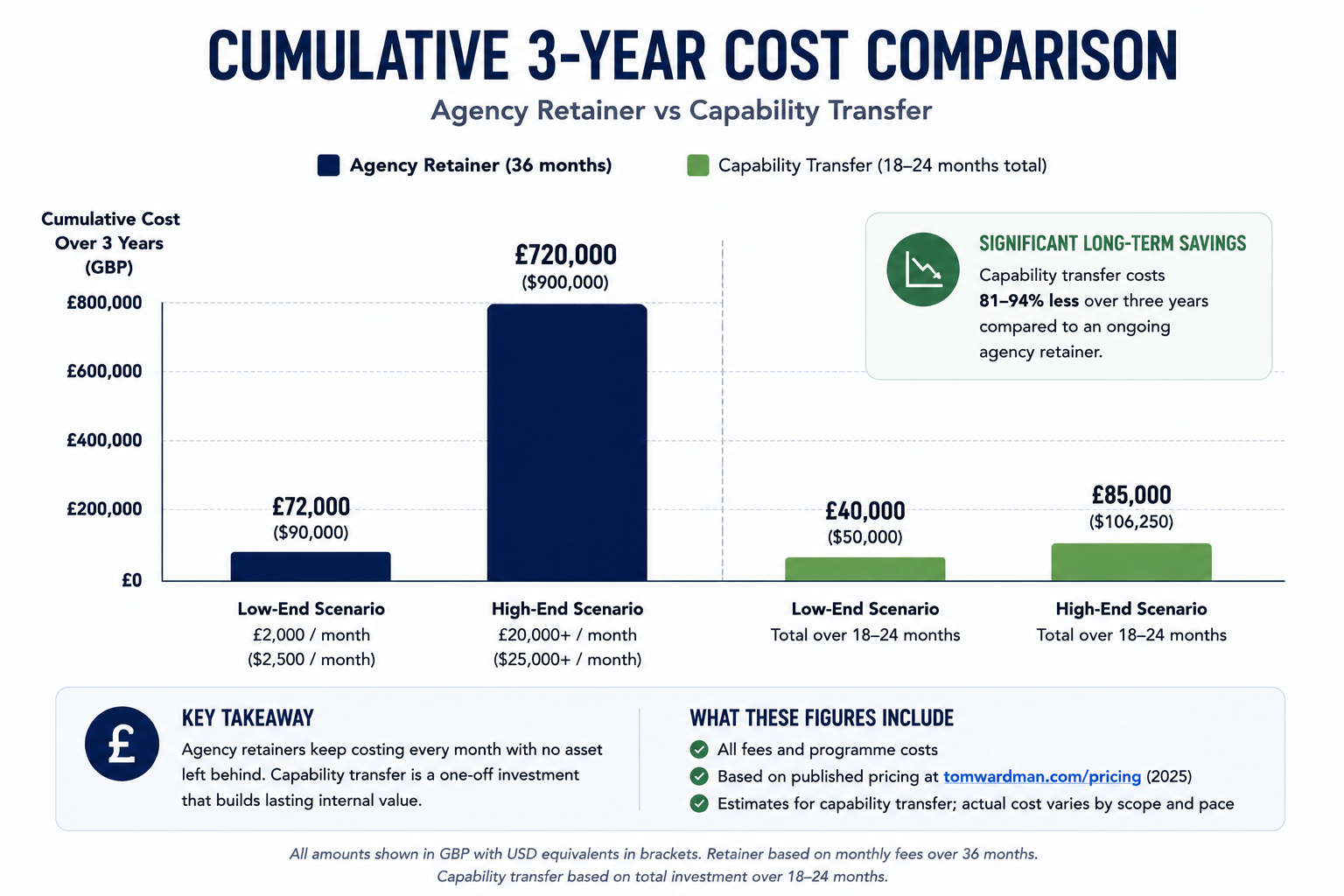
- UK/US agency retainers typically cost £2,000–£20,000+ ($2,500–$25,000+) per month. When a contract ends, the agency takes the systems and knowledge with them.
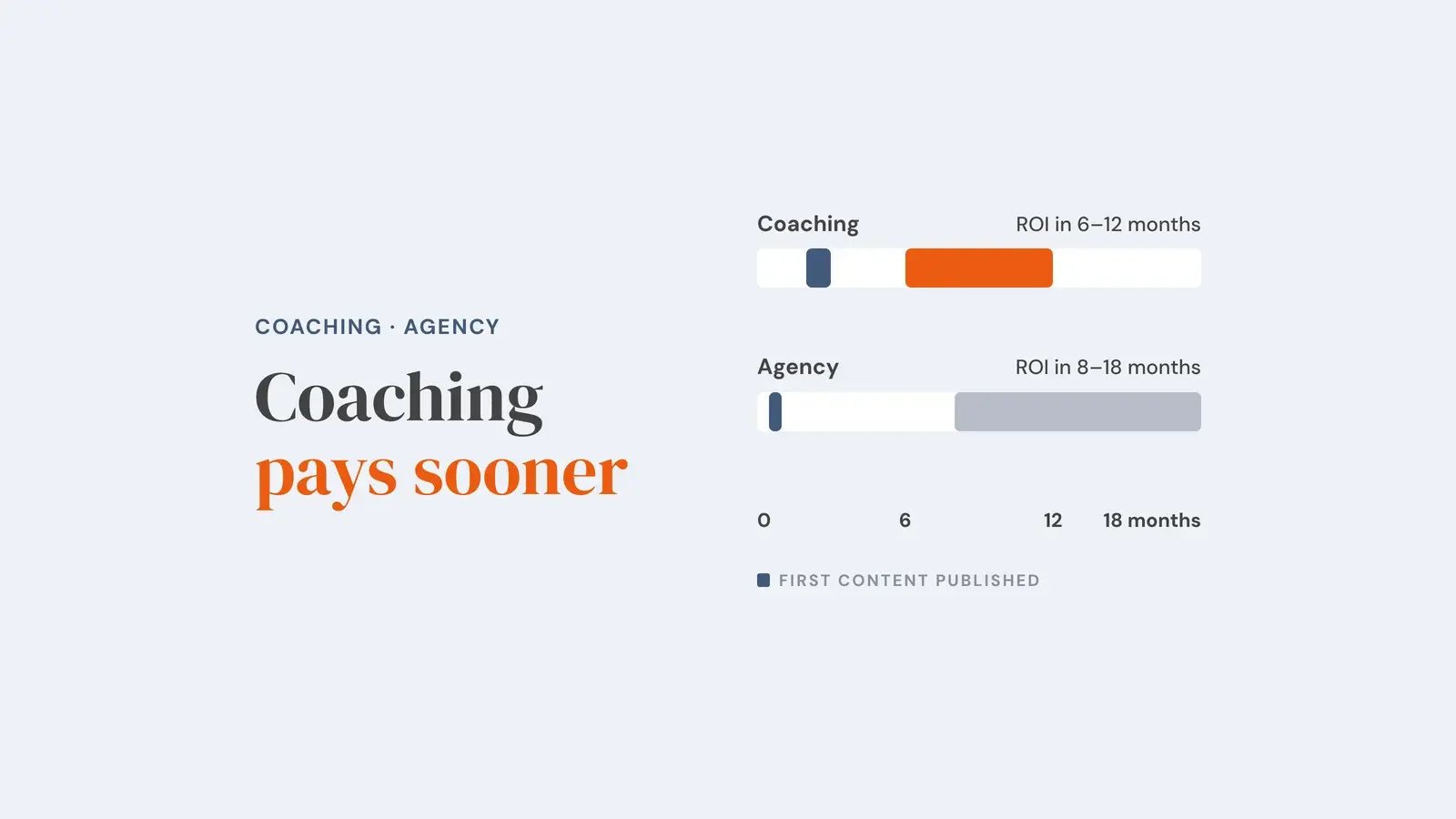
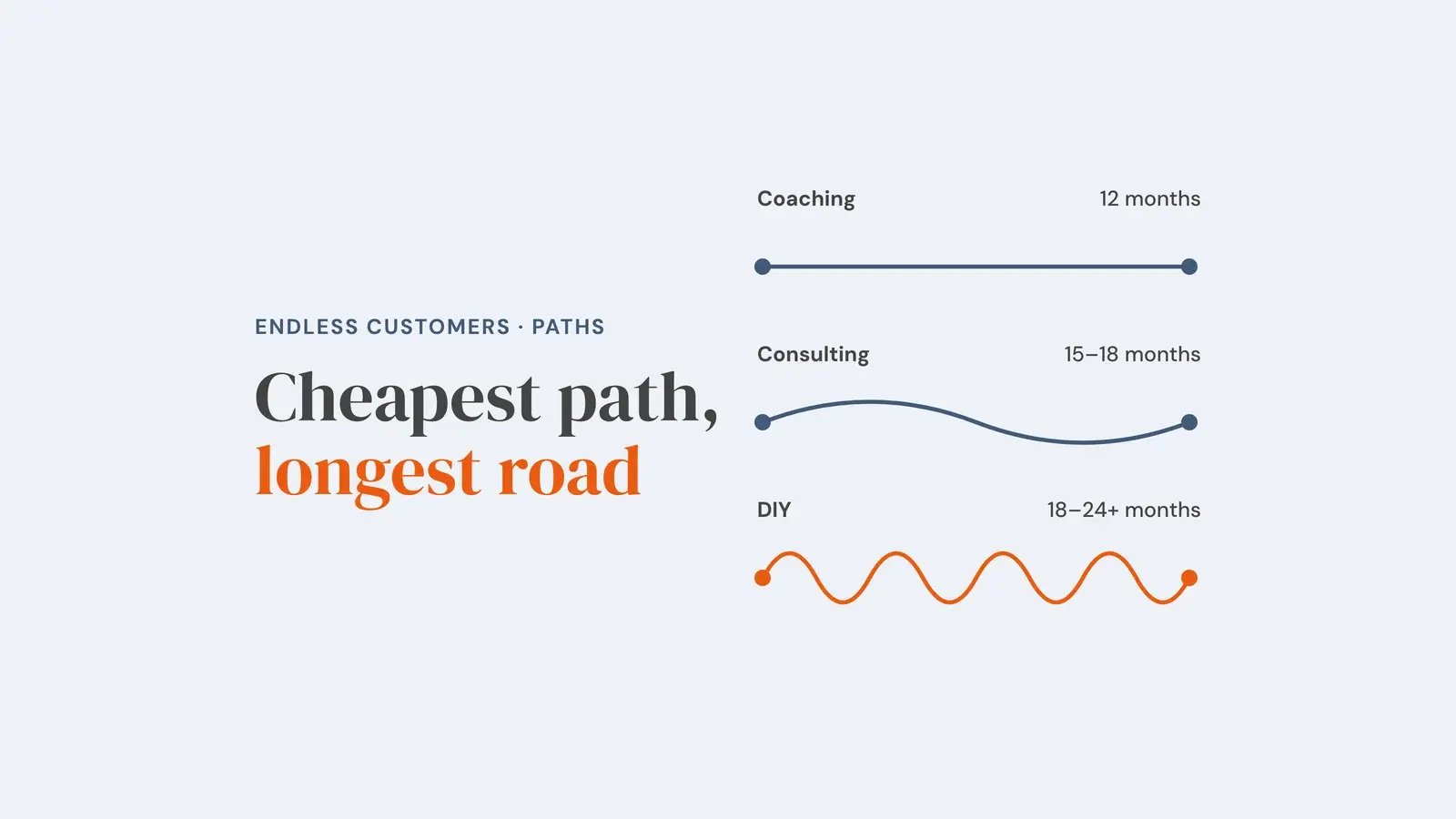
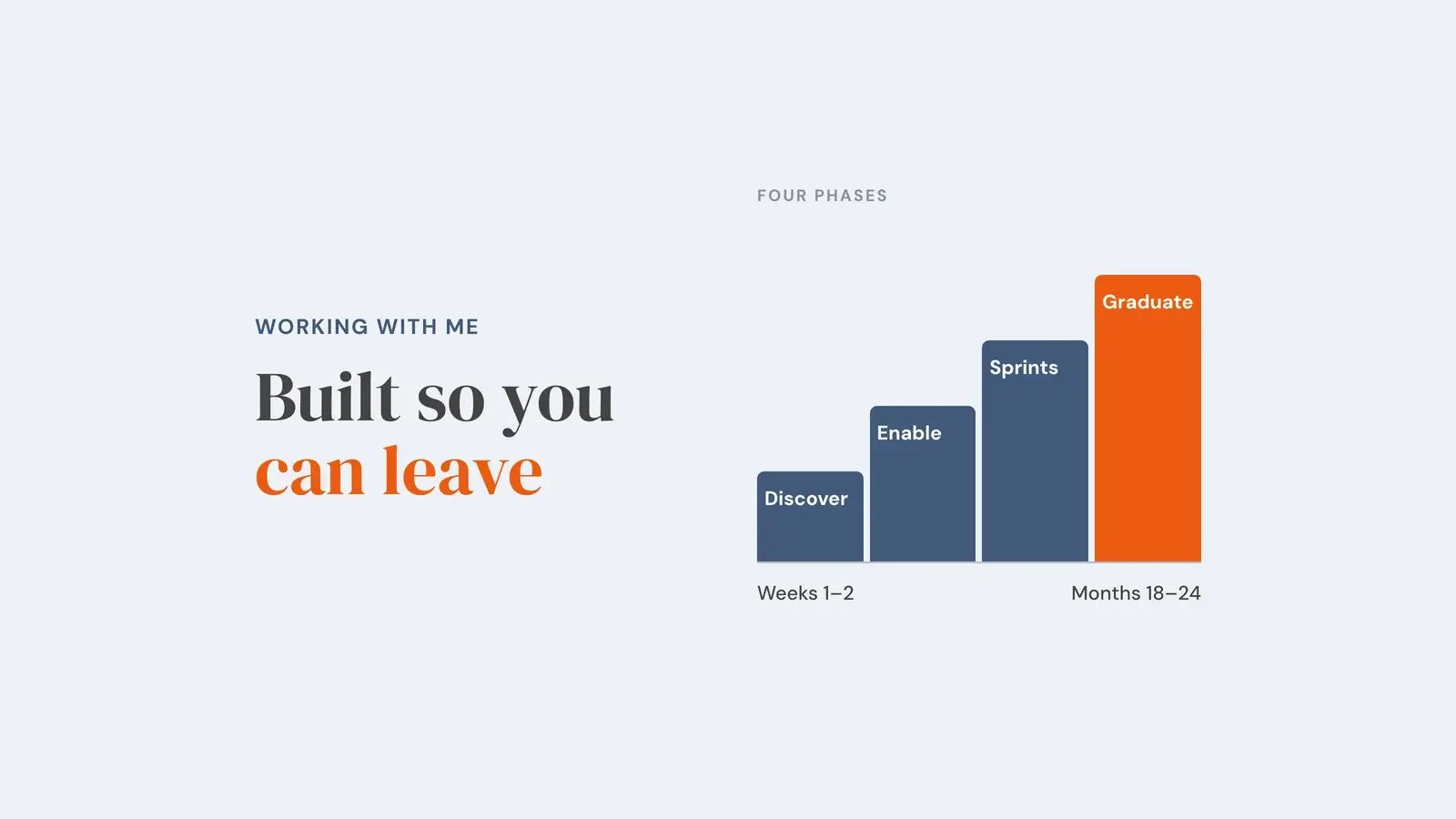
- Capability transfer programmes are a fixed-term investment, typically £40,000–£85,000 ($50,000–$106,250) total over 18–24 months, after which your team owns the system and external costs fall away.
- In most scenarios, capability transfer produces greater long-term return because it builds an internal asset that keeps paying off, rather than renting ongoing access.
- The right model depends on your team's current capacity, how urgently you need results, and whether you intend to own your marketing long-term.
What is an agency retainer, and what is capability transfer?
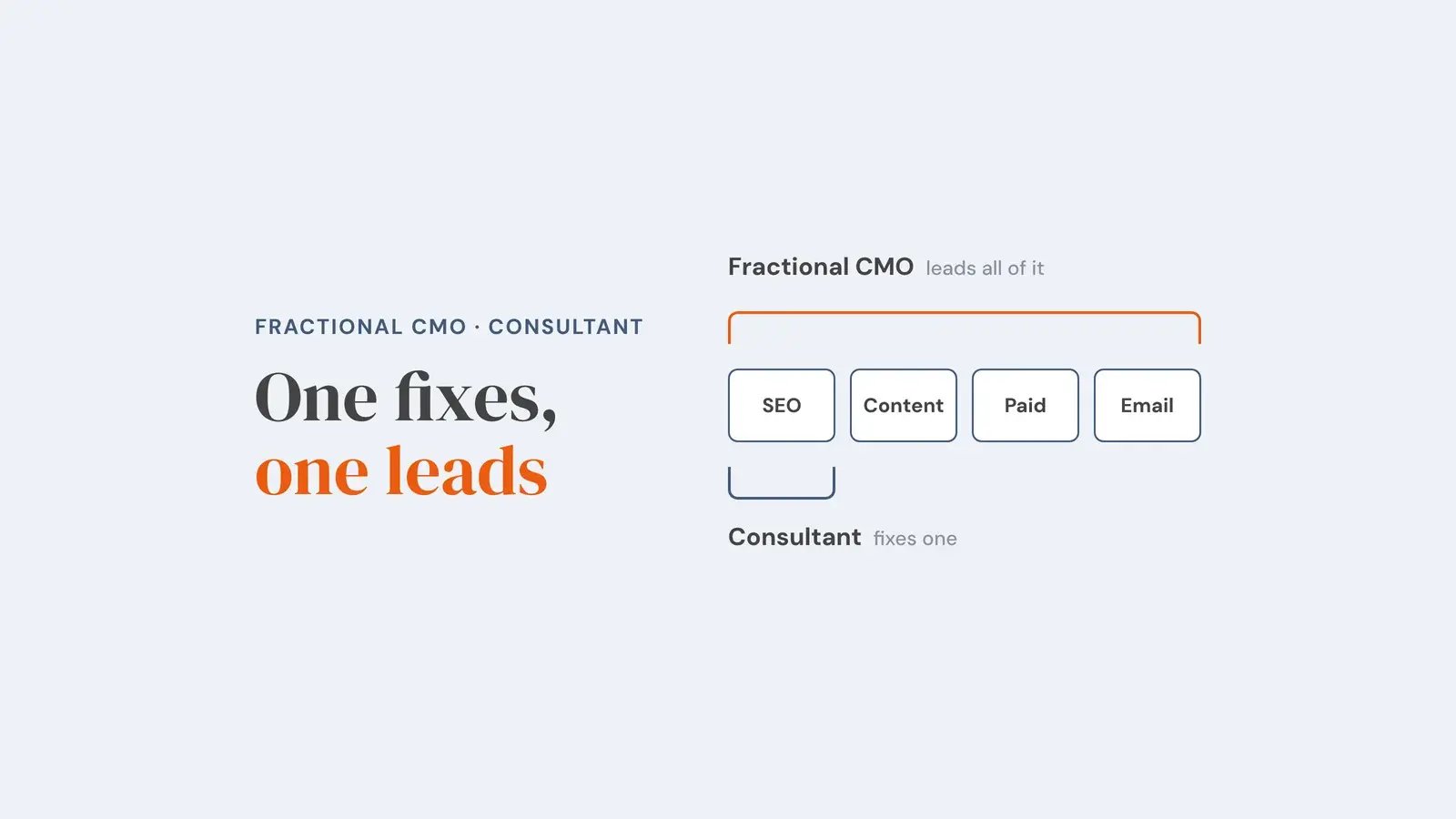
An agency retainer is a recurring monthly fee paid to an external agency to deliver marketing on your behalf. The agency executes. You receive outputs, typically reports, content, or campaigns. The knowledge, processes, and systems stay with the agency.
Capability transfer is a structured programme in which a consultant or agency builds your internal team's skills, tools, and workflows so they can run marketing independently.
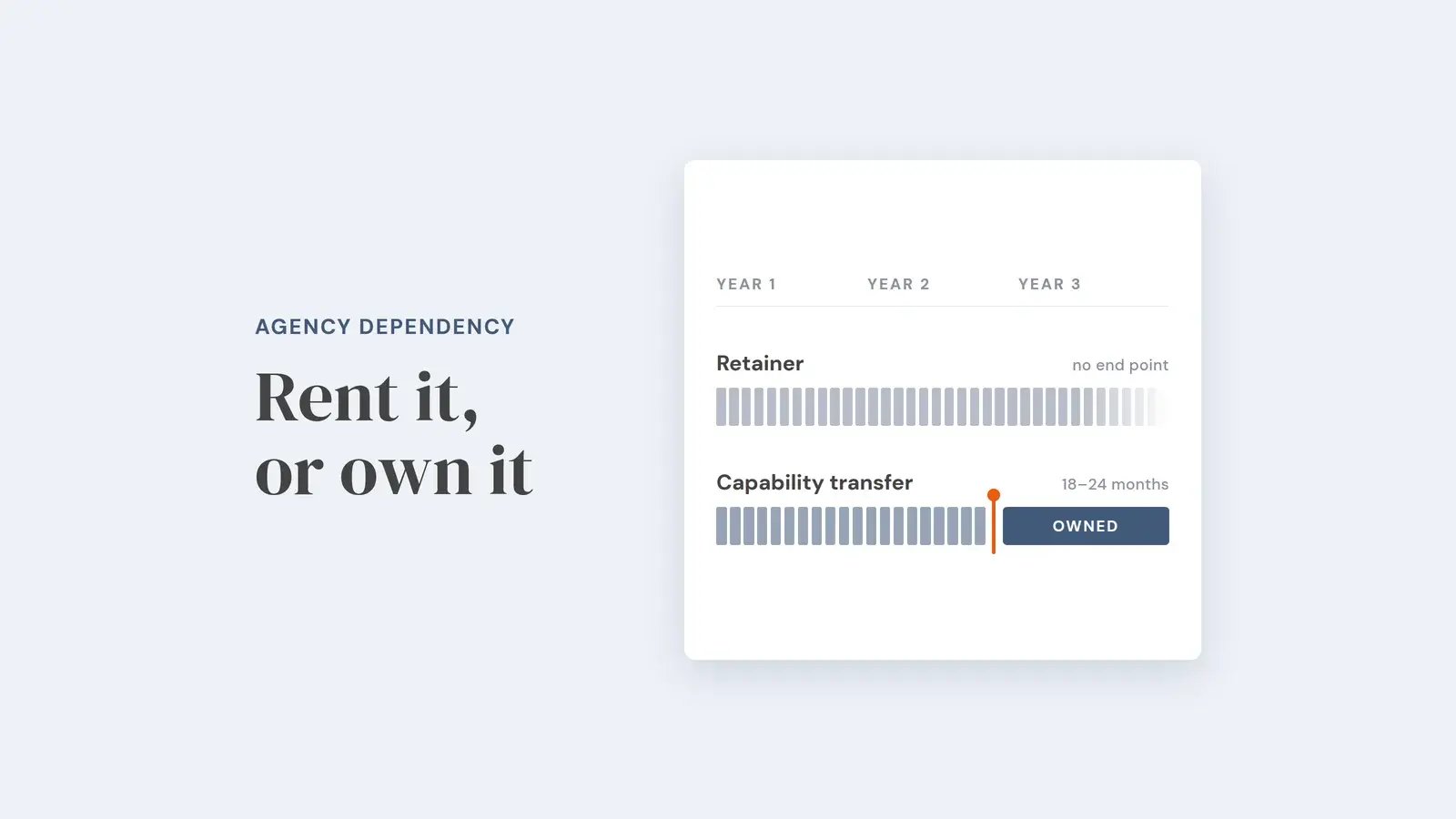
The core difference is ownership. A retainer rents you outputs. Capability transfer builds the ability to produce those outputs yourself.
Marketing dependency: the state in which your pipeline relies on an external provider to function. Stop paying and growth stops too.
Related Reading: Agency Dependency: What It Is, What It Costs, And How To Escape It
What does each model cost over time?
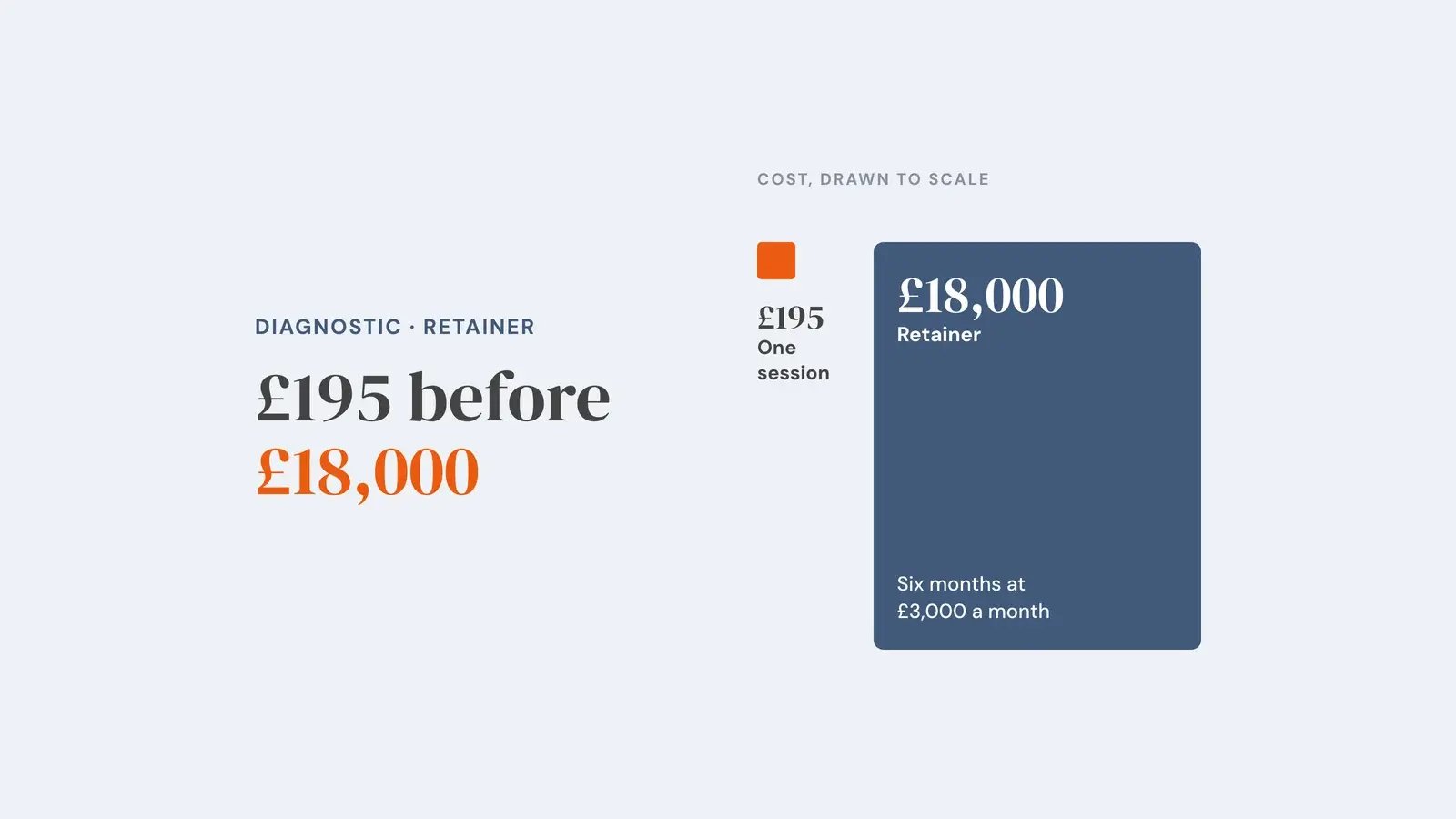
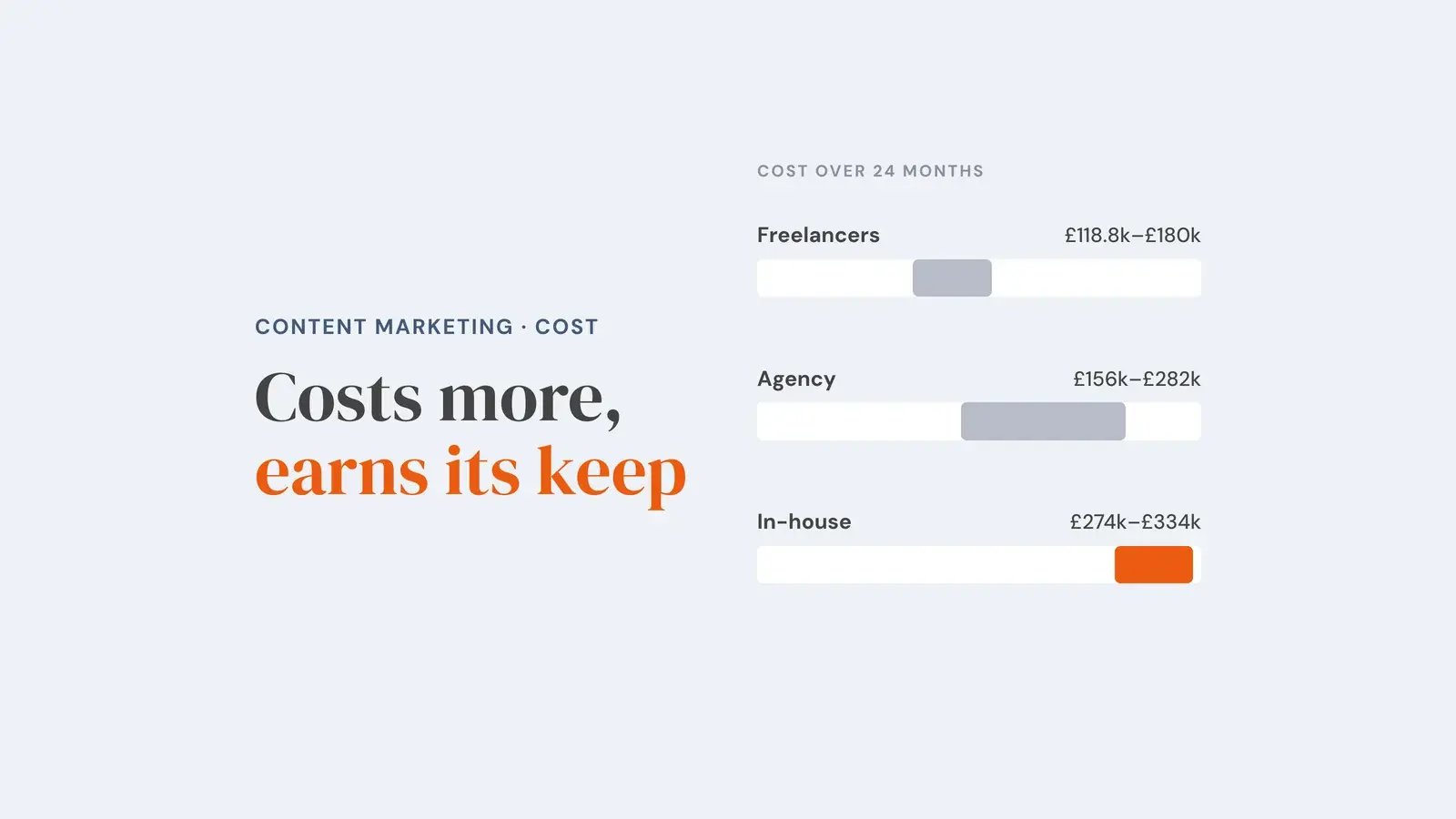
Agency retainers in the UK/US typically cost £2,000–£20,000+ ($2,500–$25,000+) per month, meaning a three-year commitment can reach £72,000–£720,000 ($90,000–$900,000) with no residual asset left behind.
After completing a capability transfer programme, a business pays no further retainer. The agency retainer model has no natural end point by design.
Risks and drawbacks of each model
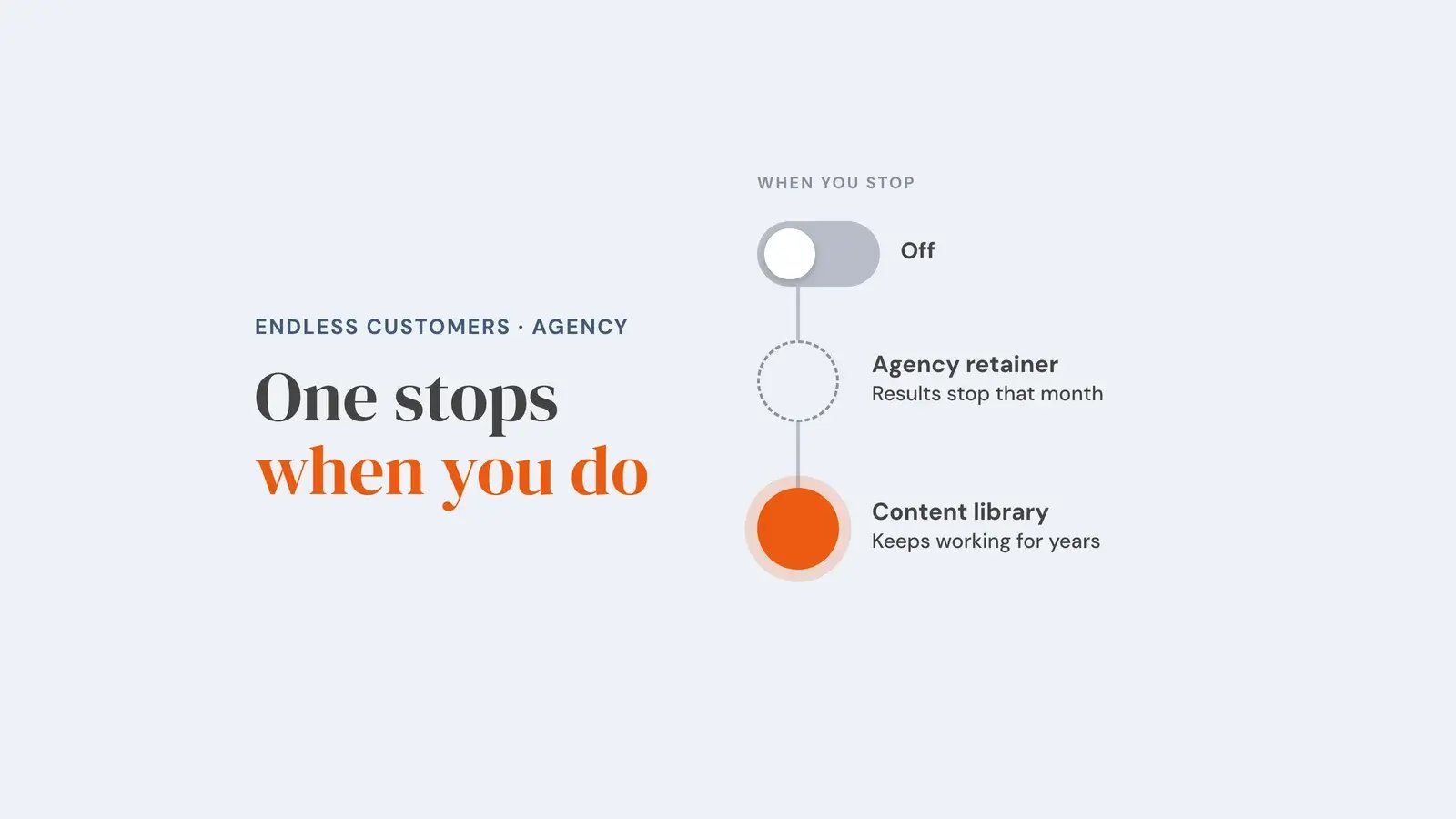
The primary risk of an agency retainer is dependency: cancel the contract and the capability, context, and institutional knowledge leave with the agency.
Capability transfer carries its own risks. If your team lacks the capacity to absorb training, suffers turnover, or the programme is poorly scoped, the investment can fail to embed.
Retainer risks
- You own nothing at the end of the engagement
- Reporting can obscure whether real commercial outcomes are being delivered See: How Digital Marketing Agencies Use Vanity Metrics to Hide Poor Performance
- Agency incentives are aligned with renewal, not your independence
- Knowledge remains locked externally; the longer it continues, the harder the exit
Capability transfer risks
- Requires genuine internal commitment from leadership and the team
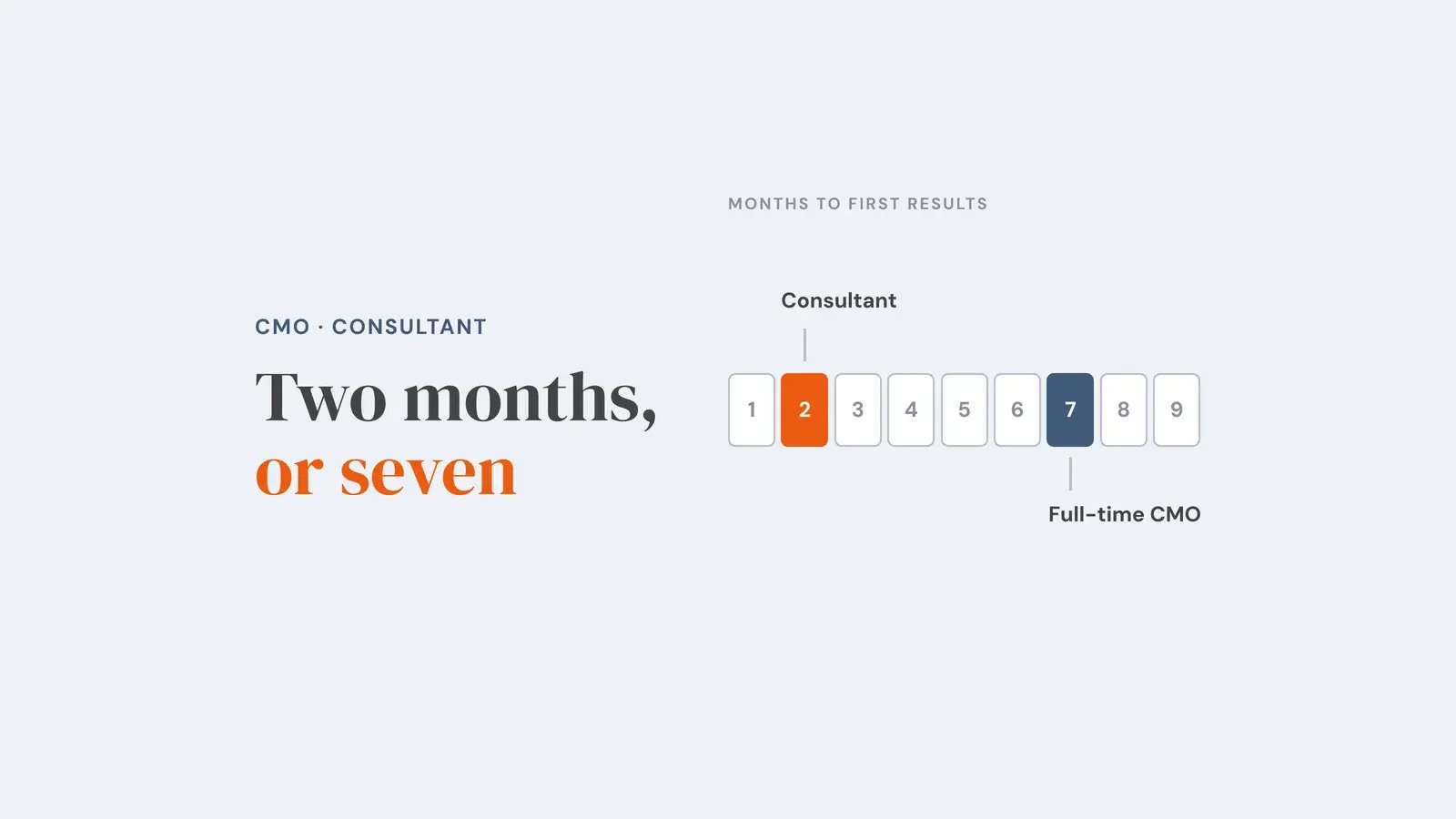
- Results take longer to appear in the early months
- Skills can atrophy if the team loses momentum after the programme ends
- Poorly structured programmes can create a new dependency on the provider
Agency retainer vs capability transfer: head-to-head
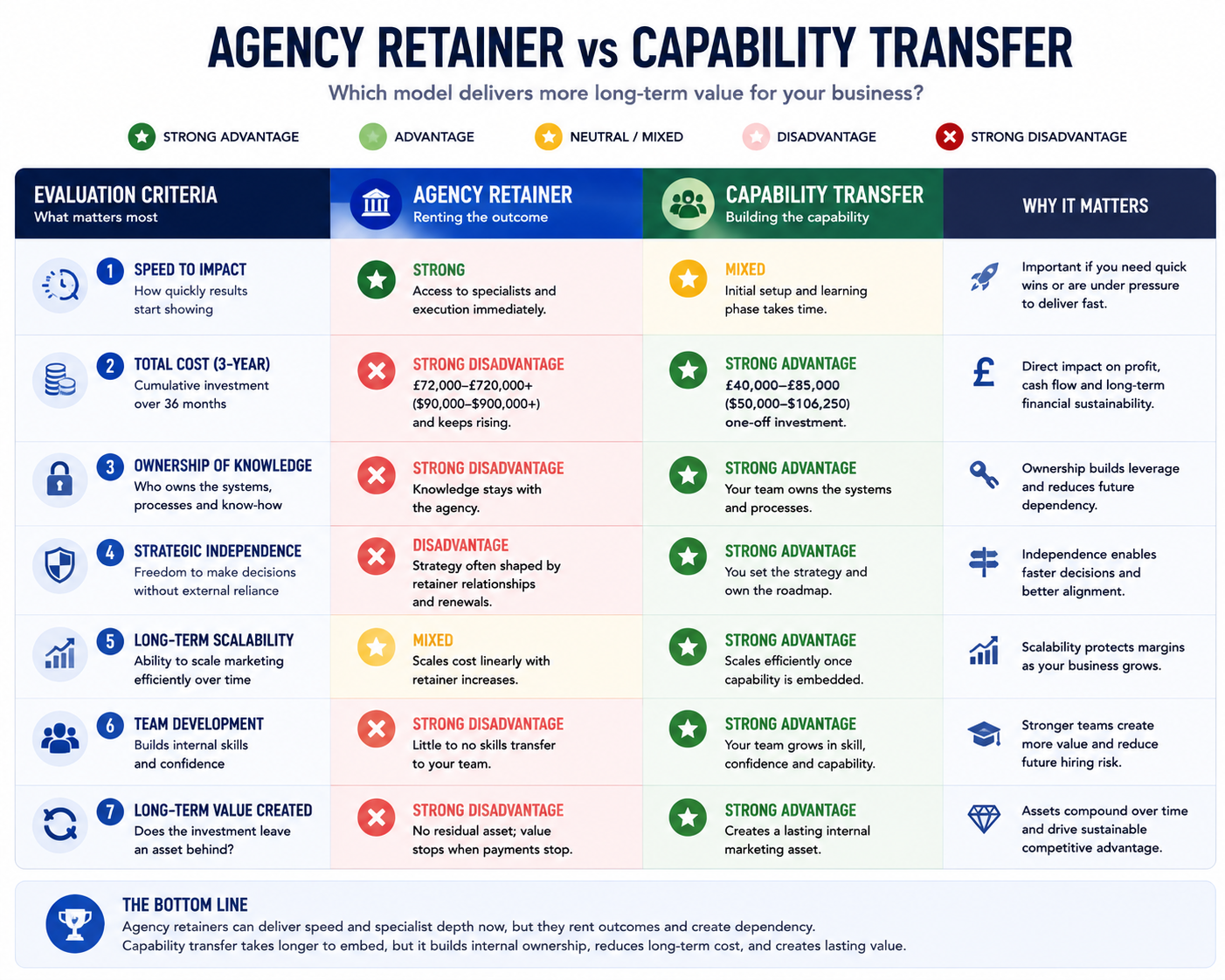
When compared directly, agency retainers outperform capability transfer on speed to execution and immediate specialist depth. Capability transfer outperforms on long-term cost, internal ownership, and strategic independence.
Neither model is universally superior. The right choice depends on your business stage, team maturity, and whether you need results immediately or resilience over time.
Which model creates more long-term value?
Capability transfer creates more long-term value in most scenarios because it produces a permanent internal asset, that being your team's expertise, rather than renting access to someone else's.
A retainer can deliver superior value when the specialism required is too narrow to justify full-time internal headcount, or when you are in a rapid-growth phase that your internal team cannot yet sustain.
Capability transfer wins when
- You plan to remain in business and market for three or more years
- Your team can absorb and apply new skills and processes
- Your goal is strategic control and long-term pipeline ownership
Retainer wins when
- You need a specialist skill set your team will never need full-time (e.g., technical paid media)
- You need immediate execution with zero internal resource available
- You are building internal capability in parallel and need a bridge
How to choose: a 5-step decision framework
The decision between a retainer and capability transfer comes down to five sequential questions about your current state, intent, and readiness.
- Is your pipeline critically low right now? If yes, a retainer may be needed to stabilise while you build. If not, capability transfer is the stronger long-term move.
- Does your team have the capacity to absorb training? No internal capacity means no capability transfer. Address that constraint first.
- What is your real 3-year cost? Multiply your current retainer fee by 36. Compare that to the capability transfer total in the table above.
- What happens if you stop paying? If the honest answer is "everything stops," you have a structural dependency problem that a new retainer will not solve.
- Is your goal ownership or execution? If you want to own your growth long-term, capability transfer is the only model designed to deliver that outcome.
Working through these questions in order stops businesses from defaulting to the familiar option rather than the strategically correct one.
When evaluating any provider, the most important thing to look for is transparency of method. Providers who document and teach their processes are working toward your independence. Those who obscure methodology are working toward their own renewal.
Can you combine both? The hybrid model
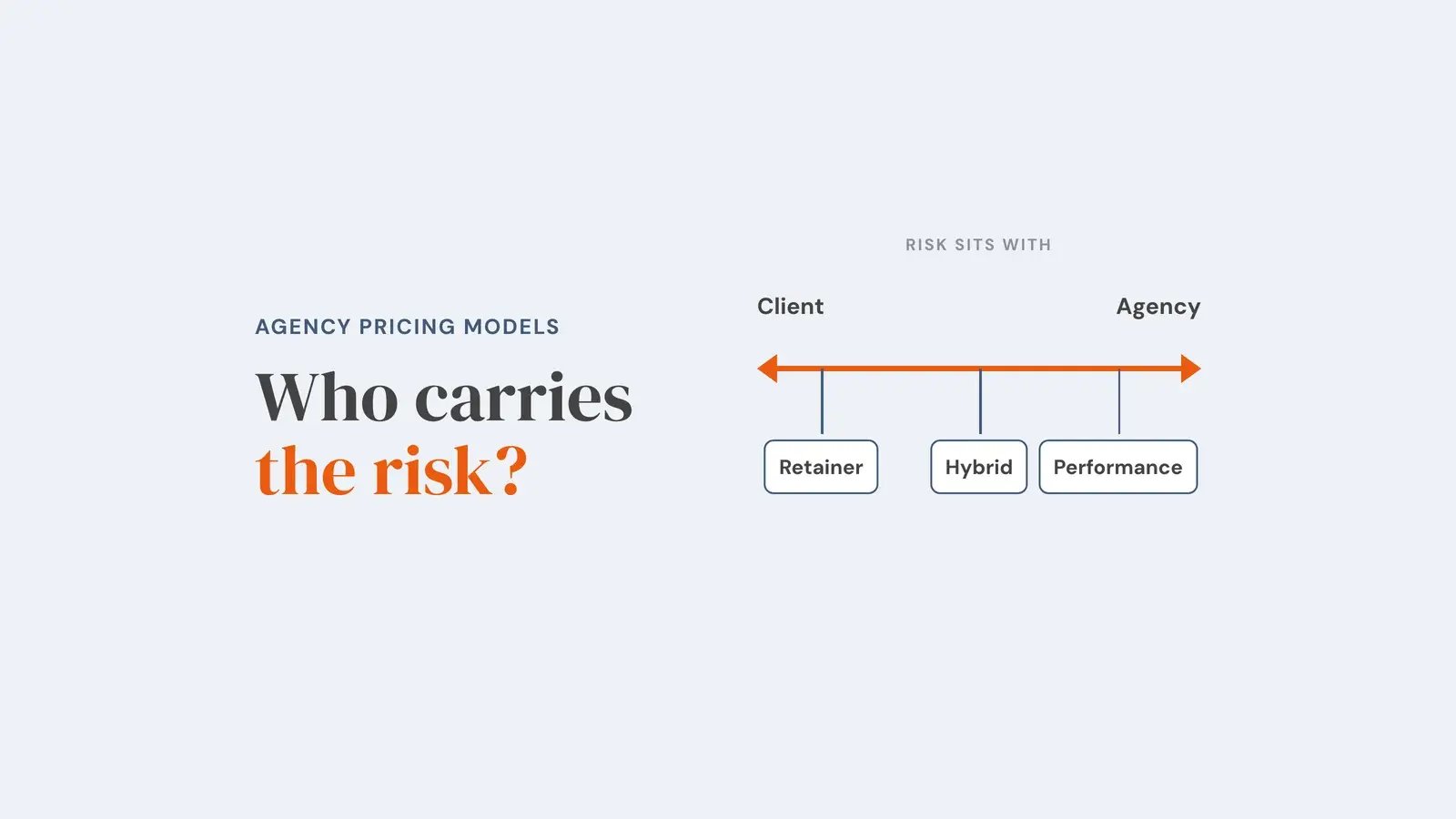
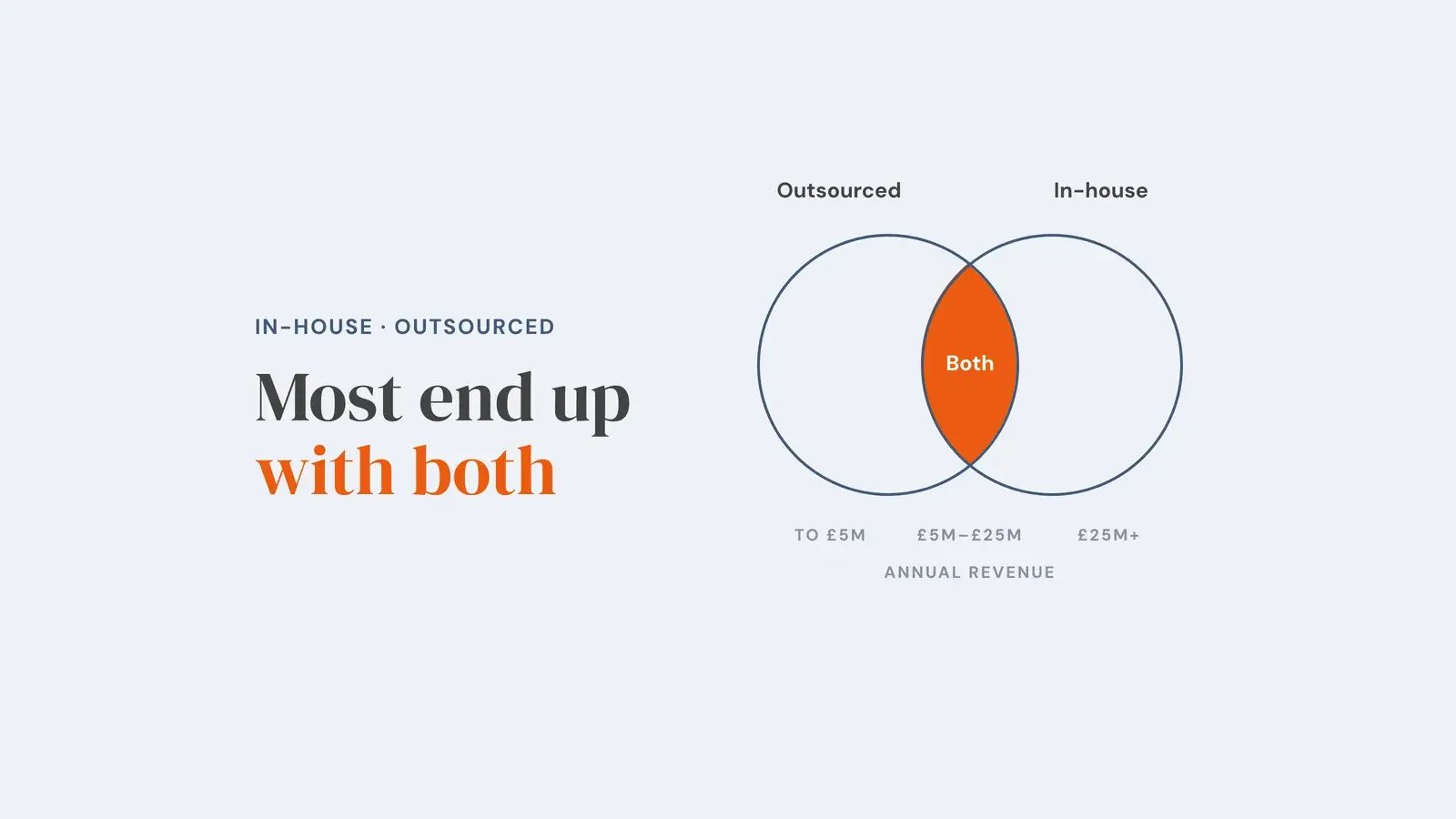
A hybrid model, where an agency delivers execution while running a structured capability transfer track in parallel, can give you the best of both, provided the transfer milestones and exit criteria are written into the contract.
Without defined exit criteria, hybrid arrangements drift back into pure retainer dependency.
A well-structured hybrid runs in three phases:
- Agency-led execution: The agency delivers while your internal team observes and learns
- Parallel transfer: Your team takes on increasing ownership with agency support in the background
- In-house led: Your team runs the system independently; the provider shifts to an advisory role
My Fractional Marketing Director service is built around this model. Execution is delivered from day one, capability is transferred by design, and the engagement has a documented endpoint rather than an open-ended retainer.
Conclusion
You arrived at this article with a choice to make: continue the retainer, or invest in something your business permanently owns.
The comparison is clear. Capability transfer costs less over a three-year horizon and produces an asset that stays with your business. An agency retainer costs more and produces nothing you own when it ends.
Where that leaves you depends on where you are now. If your pipeline is fragile, you may need execution support today. The structural mistake is assuming that means a retainer is the only option, or believing the retainer was ever designed to end.
Your next step is to take the Marketing Debt Scorecard to see exactly where your marketing structure is fragile, then run the 5-step decision framework above against your current situation.
Related reading
Book a scoping call to discuss which model fits your business. If you are ready to stop renting your marketing and start owning it, the In-House Growth Engine™ is where that transition begins.

About the author
Tom Wardman is a fractional marketing consultant and Growth Independence Architect™ working with founder-led B2B businesses across the UK. He installs the In-House Growth Engine™, a structured system that replaces agency dependency with in-house marketing ownership. He is one of the UK's first five certified coaches in the Endless Customers methodology, trained directly under Marcus Sheridan, and the author of Build a Trusted Brand.
Pricing disclaimer: All GBP–USD price conversions are rounded estimates and correct at the time of publishing. Exchange rates fluctuate and figures should be treated as indicative only.
Topics: