

Key Takeaways
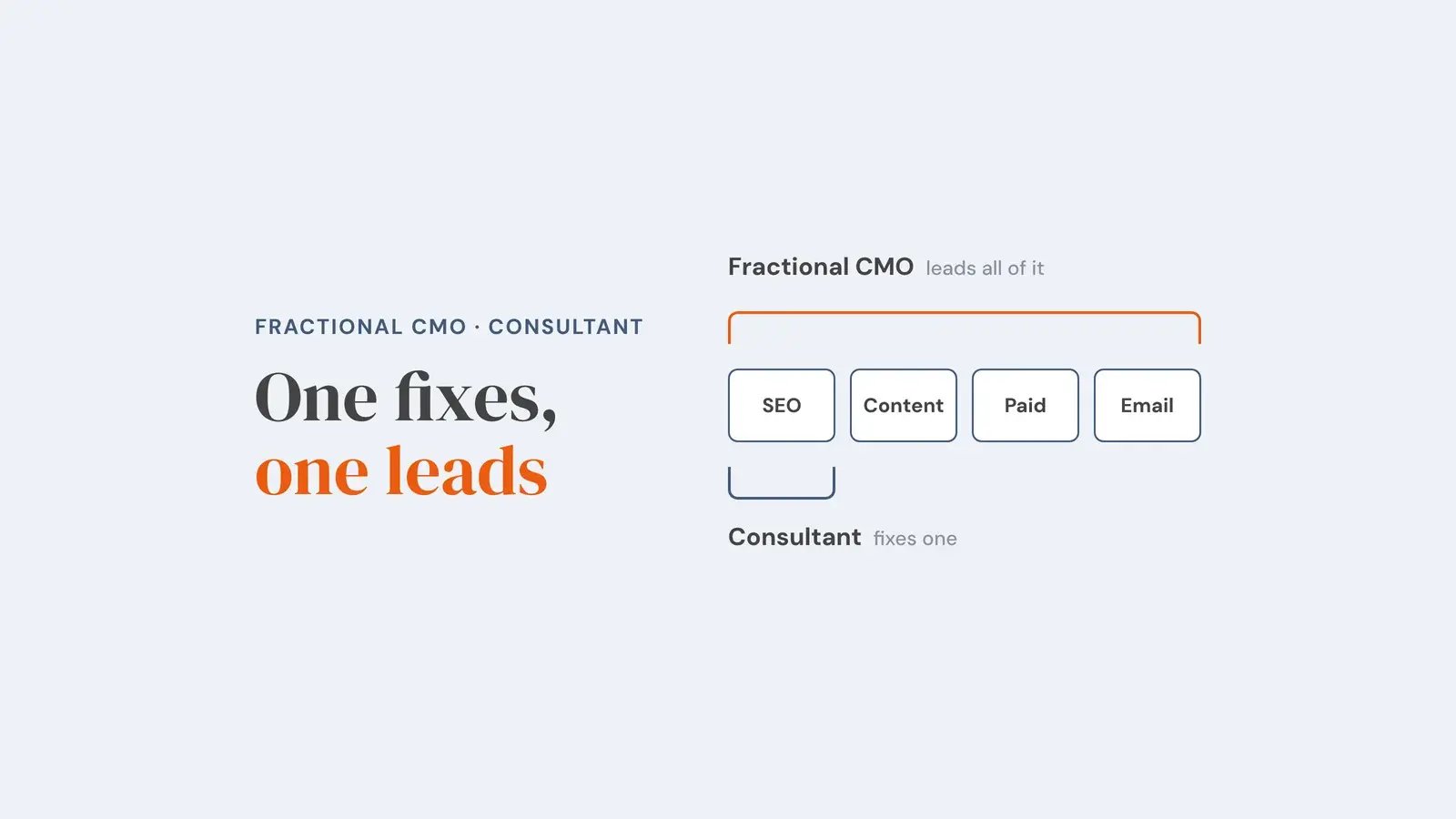
- Hiring a marketing leader first typically costs £90,000–£150,000+ ($112,500–$187,500+) annually for a full-time director, or £2,000–£7,000 ($2,500–$8,750) monthly for fractional leadership.
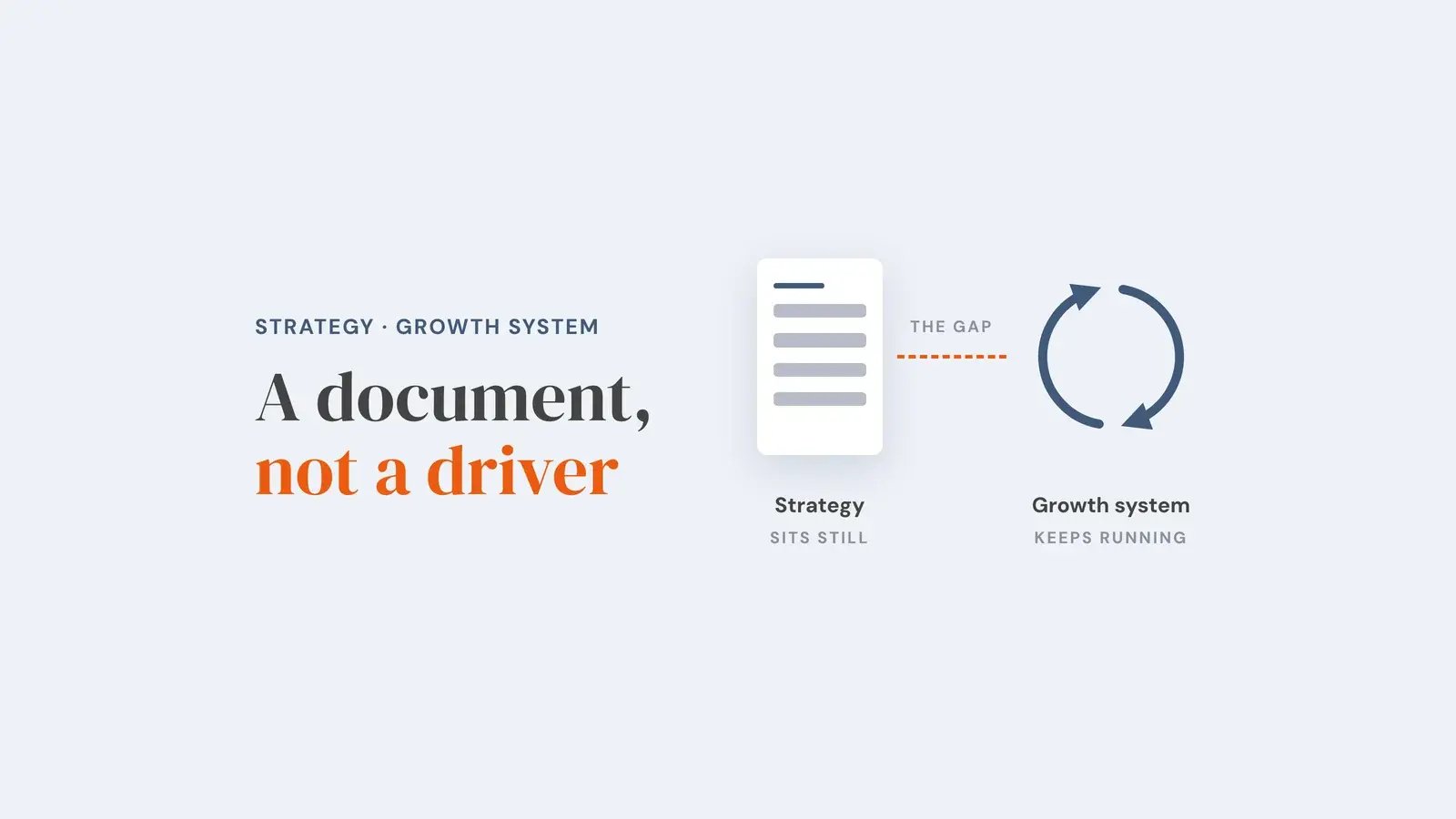
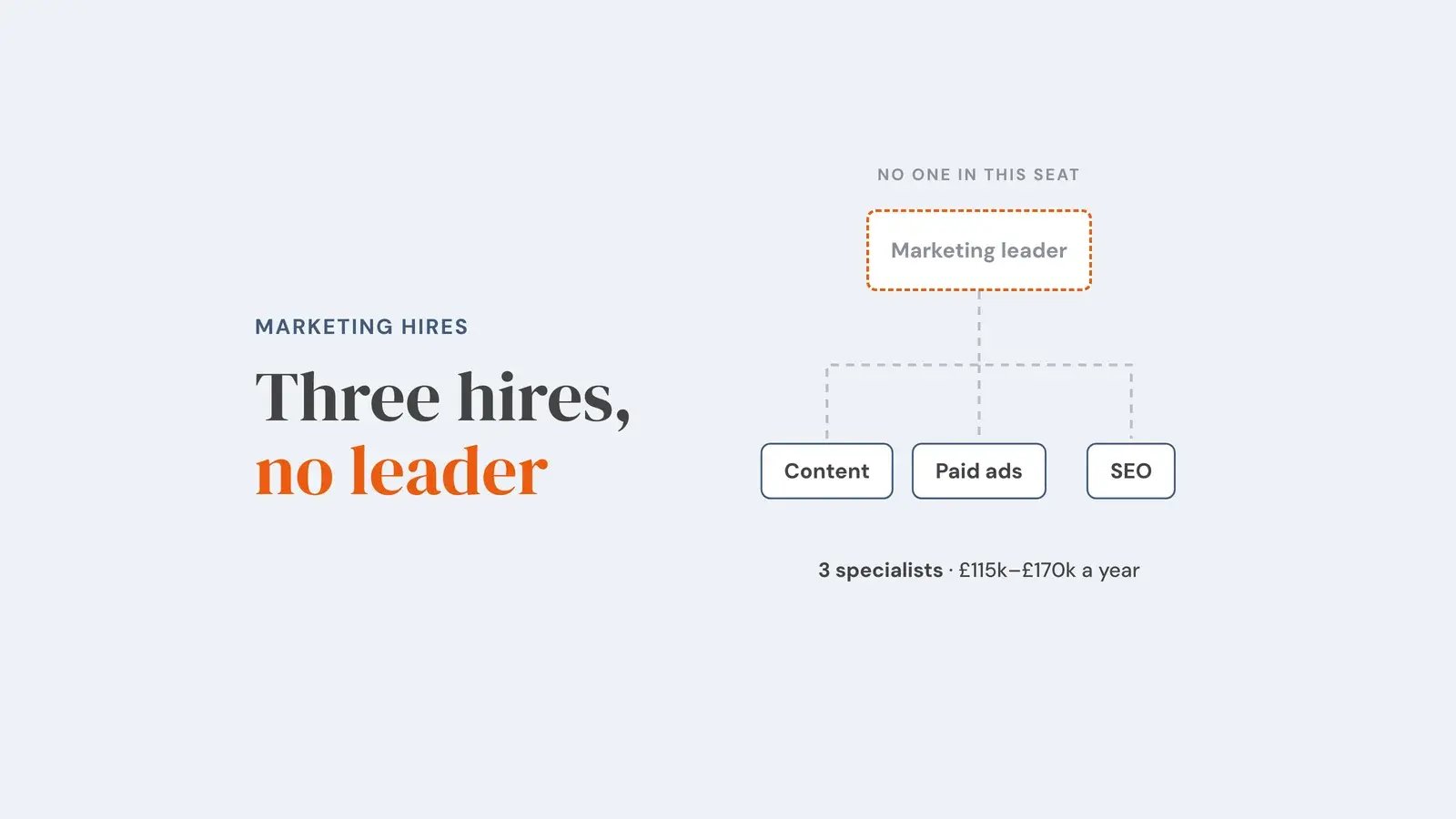
- Building a team first creates coordination problems: specialists work in silos, campaigns lack strategic direction, and no one owns marketing ROI or growth targets.
- For most companies scaling from £750,000–£7.5M ($937,500–$9,375,000) revenue, hiring senior marketing leadership first, either fractional or full-time, then building the team under their direction produces better results.
- A fractional CMO or marketing director (15–20 hours/week) plus one or two specialists offers strategic guidance with execution capacity for £6,000–£11,000 ($7,500–$13,750) monthly.
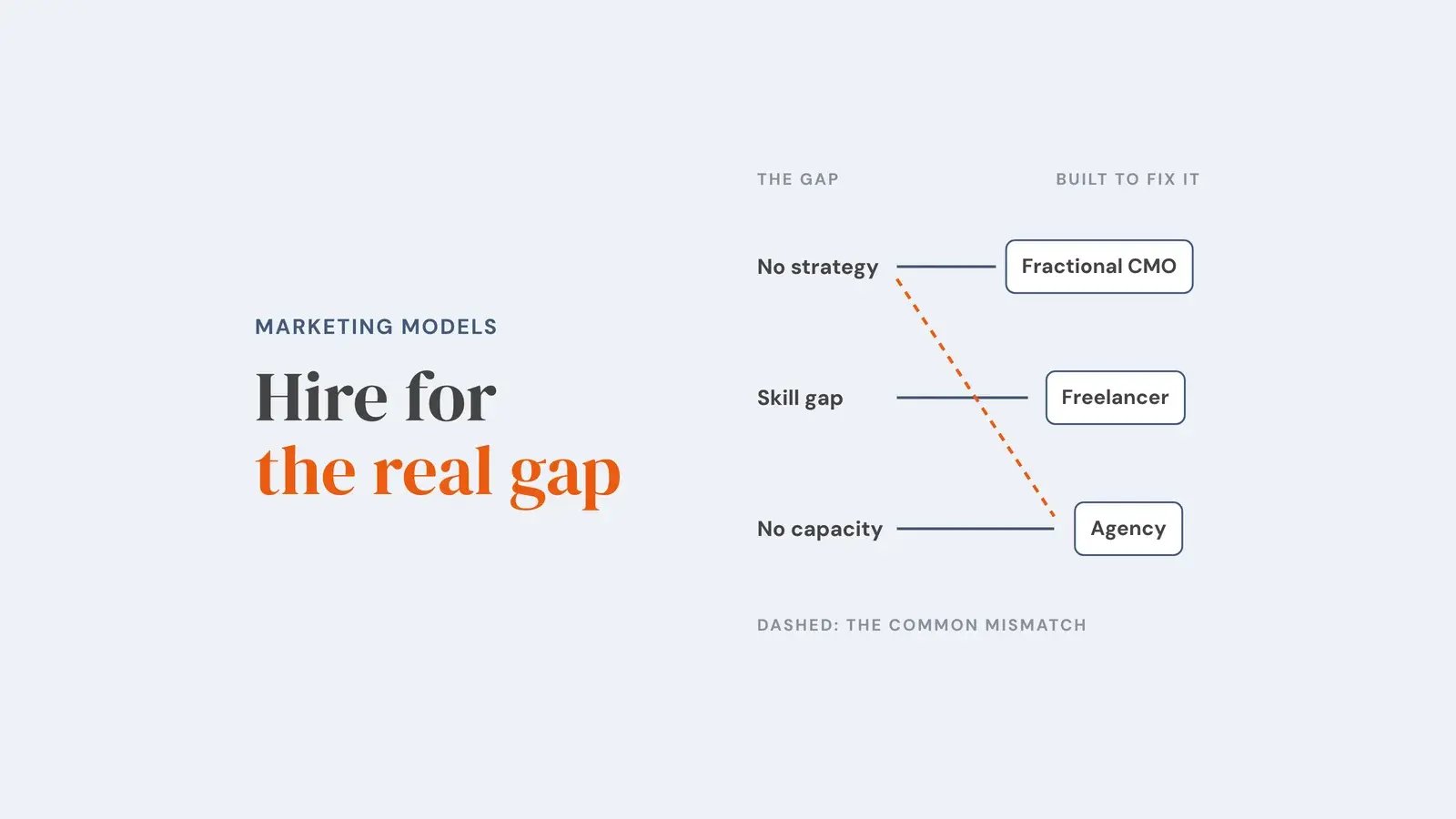
- The decision depends on three factors: your internal marketing competency, strategic clarity about which channels work, and whether you can evaluate specialist performance.
Should you hire a marketing director to create strategy before you have anyone to execute it? Or should you bring in specialists who can start running campaigns, even without senior leadership?
If you're wrestling with this question, you're probably about to commit £100,000–£200,000 ($125,000–$250,000) in marketing payroll, and you're worried about getting it wrong. Get this decision right and you accelerate growth. Get it wrong and you're looking at missed revenue targets, a growth plateau that lasts 12–18 months, and the painful process of unwinding a bad hire while your competitors pull ahead.
Maybe you've already had a marketing hire that didn't deliver. Maybe you're frustrated with agencies that produced "deliverables" but not growth. Maybe you're simply tired of guessing which approach will actually move the needle.
After helping businesses restructure their marketing teams over the past decade, often after hundreds of thousands in marketing payroll was misallocated, I've seen exactly where this decision goes wrong, and what separates the companies that build marketing engines from those that waste budget and lose momentum.
In this article, I'll help you determine which path reduces risk and accelerates growth based on your company's stage. You'll learn:
- The real first-year cost of each approach
- The common failure patterns to avoid
- A decision framework based on revenue stage and expertise
What does "hire marketing leader first" vs "build team first" mean?
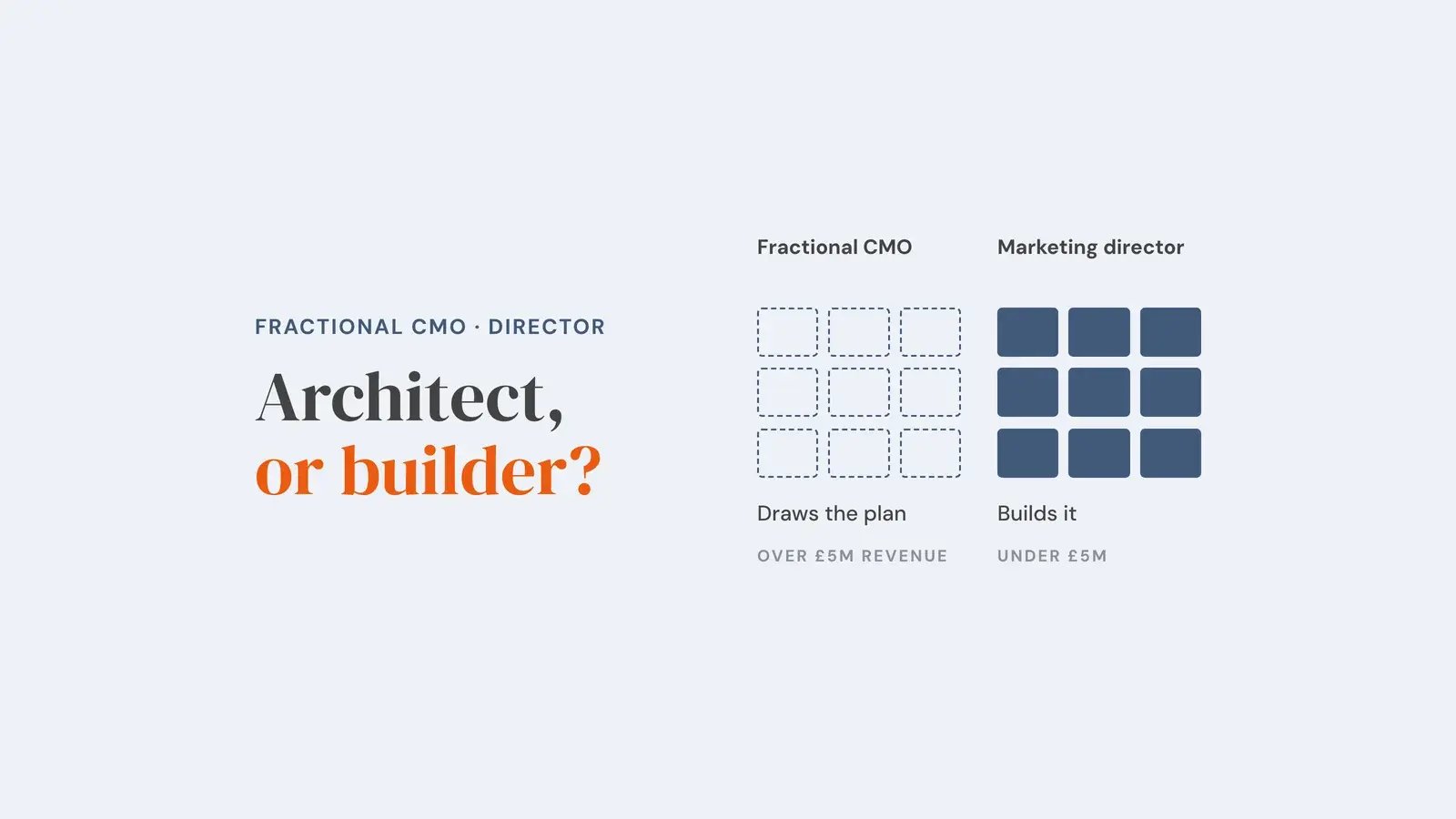
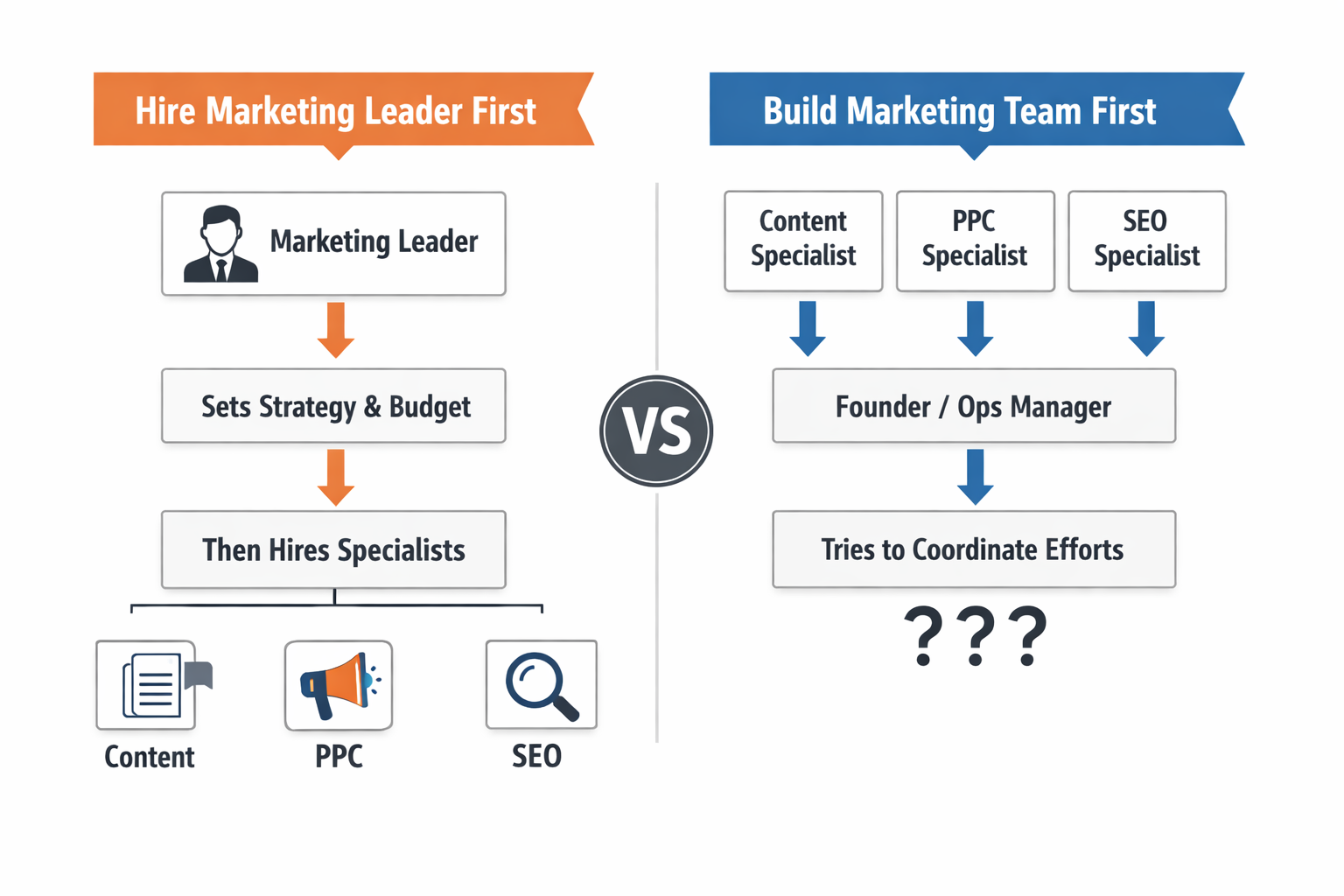
Hiring a marketing leader first means bringing in a director, VP, or fractional CMO before building out specialist roles, giving you strategic direction from day one. This person sets the overall marketing strategy, prioritises channels, manages budgets, and owns the marketing P&L, even if they initially lack a team to execute their plans.
Building the team first means hiring execution-focused specialists (content writer, paid ads manager, SEO specialist) and coordinating them yourself or through a general manager until the team reaches sufficient scale to justify leadership. You get immediate execution capacity but lack senior strategic oversight.
| Approach | Who you hire first | Who directs marketing | Who executes campaigns |
|---|---|---|---|
| Leader first | Director, VP, or Fractional CMO | The marketing leader | Leader initially, then hired specialists |
| Team first | Channel specialists (content, paid, SEO) | Founder or general manager | The specialists |
How much does each approach cost?
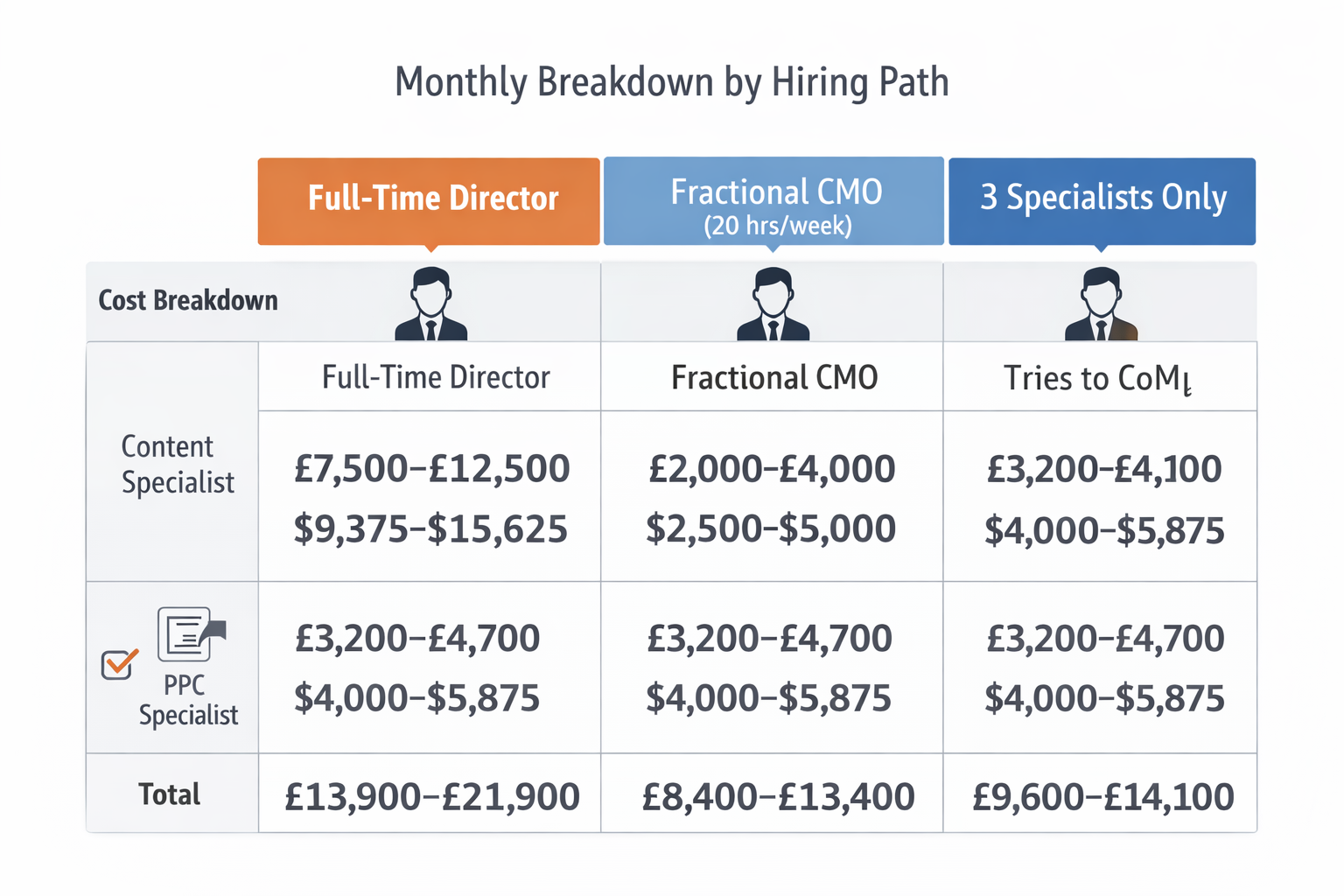
Hiring a marketing leader first typically costs £90,000–£150,000 ($112,500–$187,500) annually for a full-time director or VP, or £2,000–£7,000 ($2,500–$8,750) monthly for a fractional CMO or marketing director. This investment comes before any team salaries, meaning your first-year spend could reach £150,000–£200,000 ($187,500–$250,000) once you add one or two specialists.
Building a team first usually starts at £38,000–£56,000 ($47,500–$70,000) per specialist annually, meaning a three-person team costs £115,000–£170,000 ($143,750–$212,500) without senior leadership. This approach frontloads execution capacity over strategic direction.
The cheapest option on paper, hiring specialists only, often becomes the most expensive once you factor in wasted budget, misaligned campaigns, and the cost of eventually hiring leadership anyway. First-year cost comparison:
| Scenario | Year 1 investment (GBP) | Year 1 investment (USD) | What you get |
|---|---|---|---|
| Full-time director + 2 specialists | £165,000–£230,000 | $206,250–$287,500 | Strategy + execution capacity |
| Fractional CMO (20hrs/week) + 2 specialists | £135,000–£175,000 | $168,750–$218,750 | Strategy + execution capacity |
| 3 specialists only | £115,000–£170,000 | $143,750–$212,500 | Execution only, no strategic leadership |
What are the problems with hiring a marketing leader first?
The biggest problem with hiring a marketing leader first is that they often lack a team to execute their strategy, forcing them into tactical work instead of leadership and limiting their impact. A director hired to build your marketing engine ends up writing blog posts and managing your LinkedIn because no one else is there to do it.
Other significant problems include:
- Stage mismatch: Enterprise marketers with £5M+ ($6,250,000+) budgets often struggle in scrappy early-stage environments where they need hands-on execution skills, not just strategic thinking.
- Slow time-to-value: Building a full team under a new director can take 6–12 months, meaning you're paying leadership salaries before seeing meaningful campaign output.
- Budget constraints: A £120,000 ($150,000) director salary might consume your entire marketing budget, leaving nothing for the team they need to succeed.
- Isolation: Senior marketers need peer-level strategic discussion, which many small companies can't provide, leading to frustration and turnover.
A marketing leader without a team to execute is a strategist with no army: expensive, underutilised, and increasingly frustrated.
What are the problems with building a marketing team first?
Building a team without a marketing leader first creates coordination chaos: specialists work in silos, campaigns lack strategic alignment, and no one owns the overall marketing P&L or growth targets. Your paid ads manager optimises for clicks while your content writer focuses on engagement, but neither connects their work to revenue.
You'll also waste budget on misallocated resources because generalist founders or ops managers typically can't assess specialist performance, prioritise channels effectively, or build integrated campaigns. This leads to:
- Measurement gaps: No one sets proper attribution models or connects marketing activity to business outcomes.
- Hiring mistakes: Without marketing expertise, you'll struggle to interview specialists, assess their work quality, or know when someone isn't performing.
- Channel fragmentation: Each specialist advocates for their channel without understanding how it fits into your overall customer acquisition model.
- Retention problems: Good specialists leave when they realise no one can mentor them or provide career development.
- Strategic drift: Tactics change constantly based on what specialists read or learn, not what your business needs.
Without senior leadership, specialists optimise for activity, not revenue.
Hiring a marketing leader first vs. building team first: Side-by-side comparison
| Factor | Hire leader first | Build team first |
|---|---|---|
| Best for | Companies lacking internal marketing expertise; need strategic direction before execution | Founders with strong marketing knowledge; clear channel-specific needs |
| Typical company stage | £1M–£10M ($1,250,000–$12,500,000) revenue | £500K–£3M ($625,000–$3,750,000) revenue or very specific channel needs |
| First-year cost | £135,000–£230,000 ($168,750–$287,500) including team | £115,000–£170,000 ($143,750–$212,500) for 3 specialists |
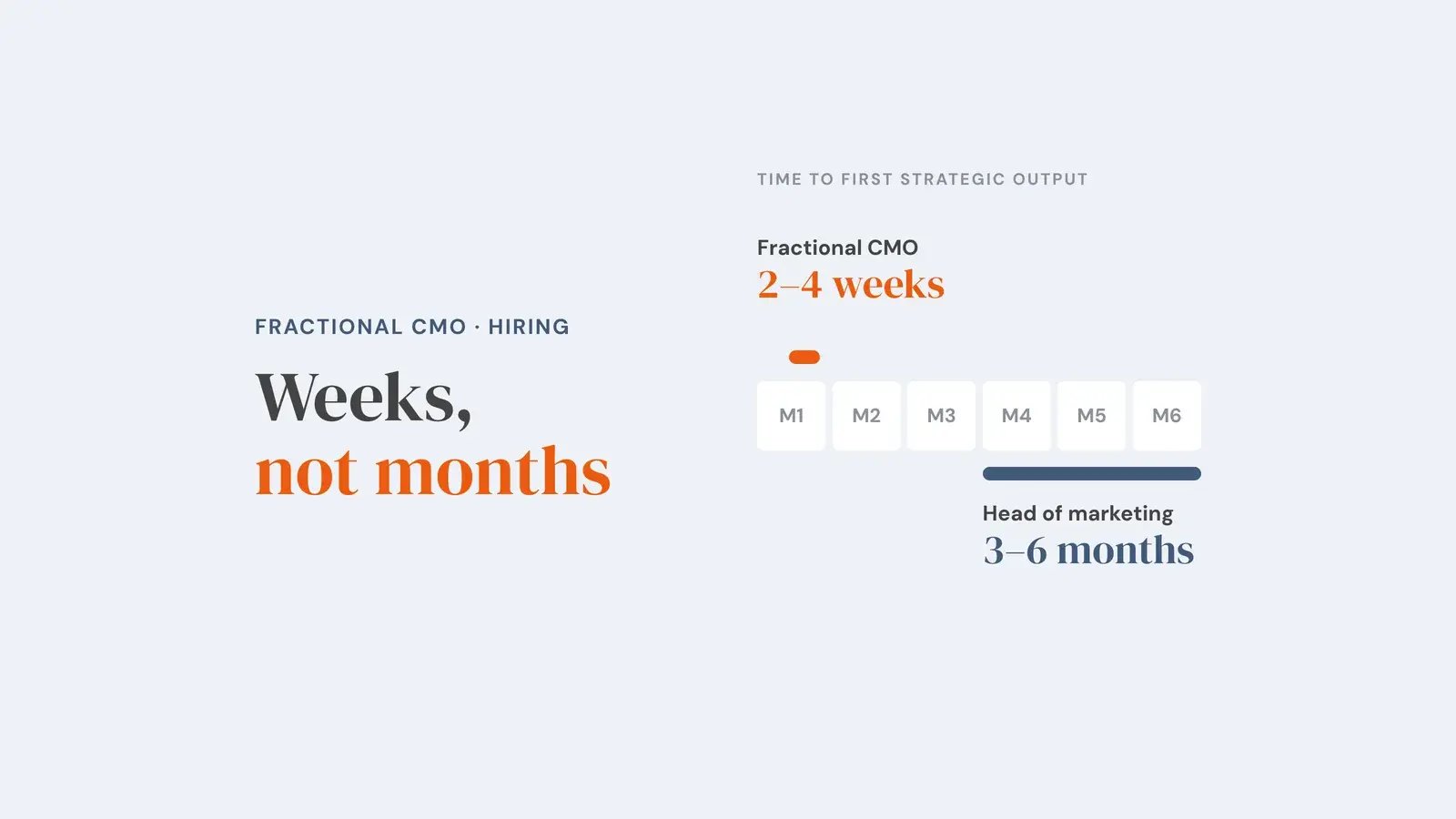
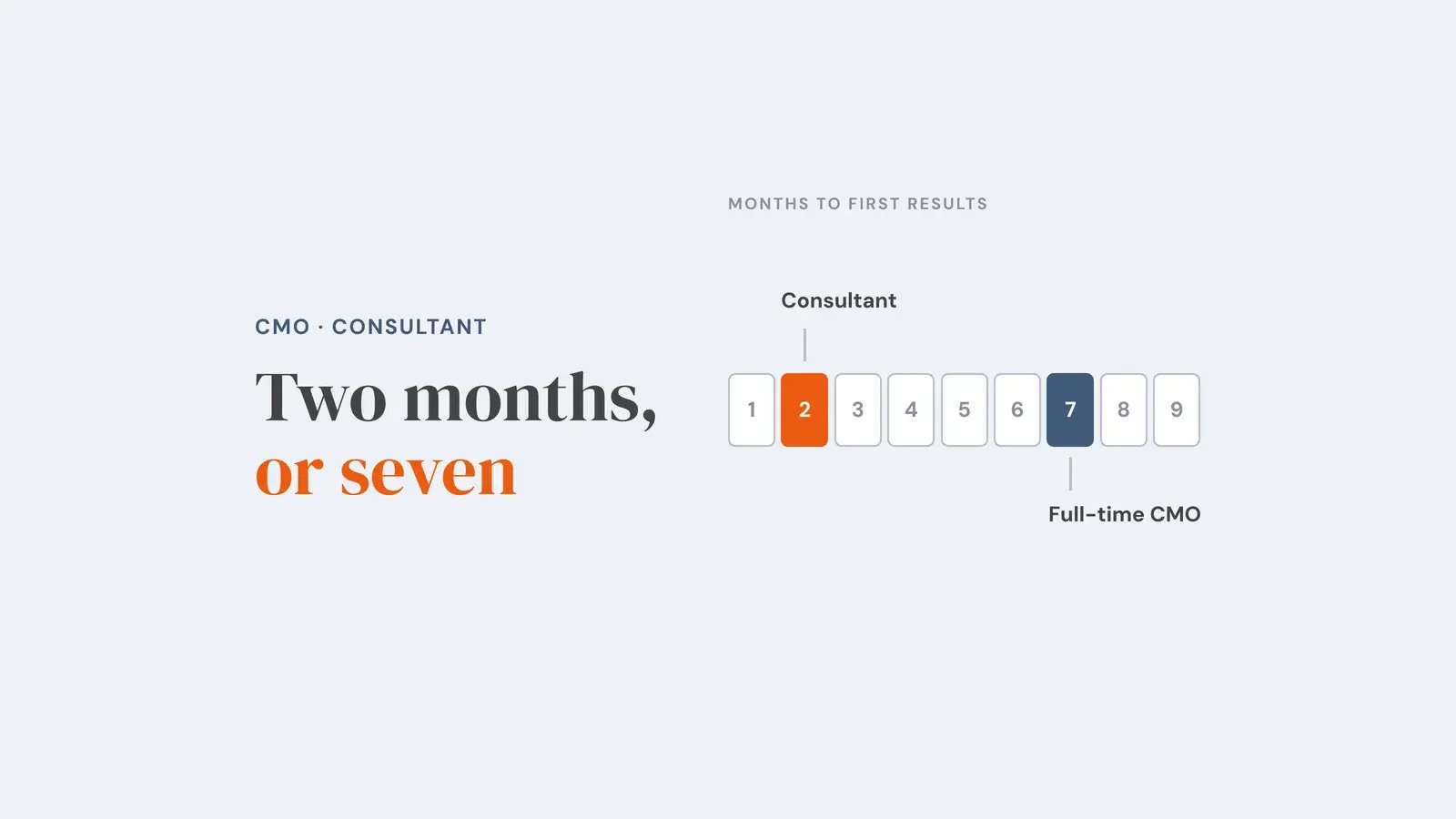
| Time to results | 3–6 months (includes hiring time) | 1–3 months (immediate execution) |
| Strategic clarity | High—leader defines strategy first | Low—tactics emerge from specialist preferences |
| Execution capacity | Limited initially, grows as team is built | High immediately, but uncoordinated |
| Risk of failure | Leader lacks team to execute plans | Coordination chaos and wasted budget |
The comparison isn't just cost versus speed; it's whether you're building a marketing system or just buying marketing activities.
When hiring a leader first is the right choice
Hiring a marketing leader first works best when you need strategic direction, have budget constraints that require focused execution, or lack internal marketing expertise to evaluate and coordinate specialists. This approach prevents expensive hiring mistakes and ensures every team addition serves a documented strategic need.
Choose this path if you're scaling from £1M–£10M ($1,250,000–$12,500,000) revenue, your leadership team has no one who's managed marketing budgets over £375,000 ($468,750) annually, or you've already tried hiring specialists and struggled with coordination.
When building a team first is the right choice
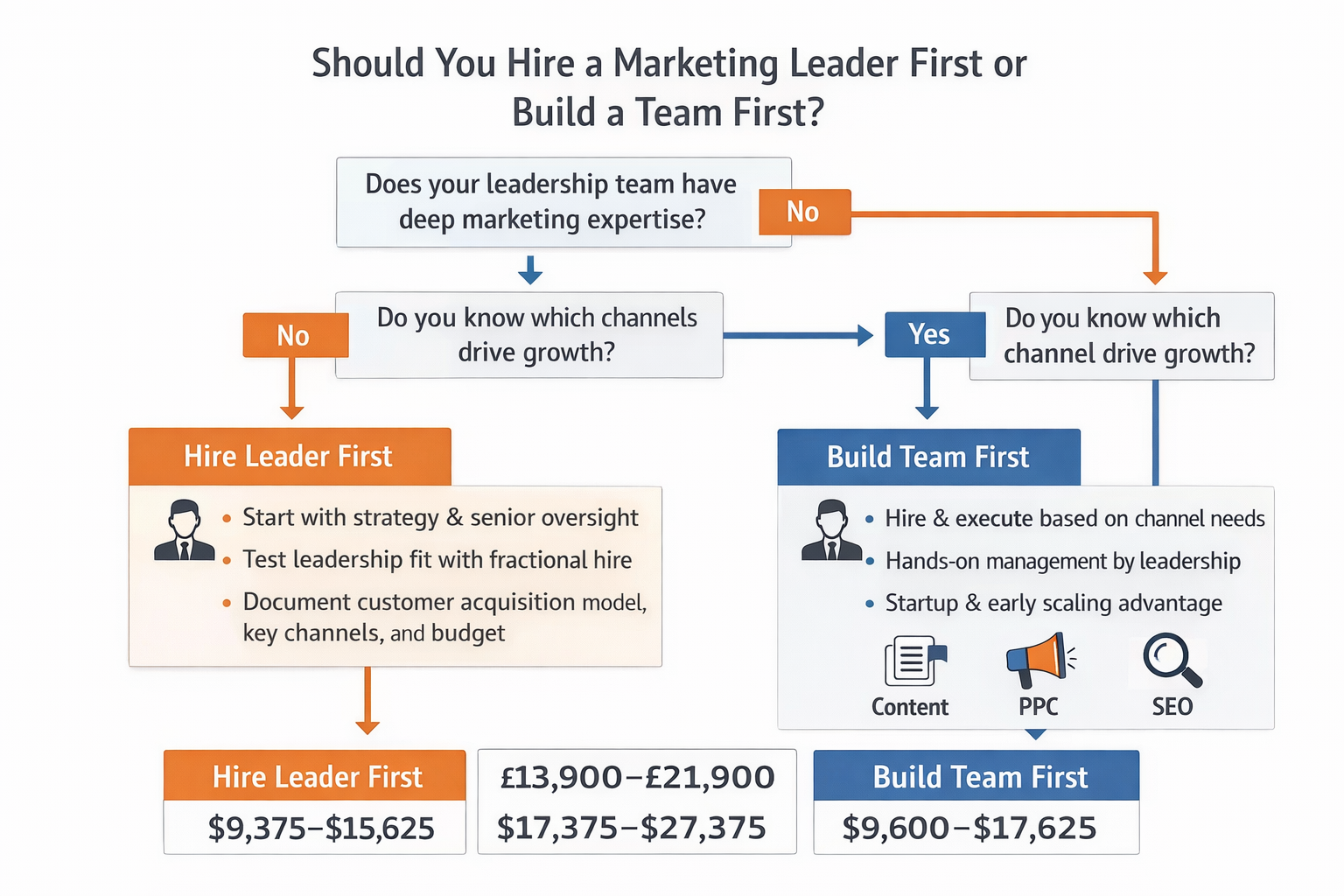
Building a team first makes sense when you have clear channel-specific needs, possess strong marketing knowledge yourself, or operate in a business model where execution velocity matters more than strategic sophistication. If you already know exactly which two or three channels drive your growth and just need capacity, specialists can deliver faster results.
This path works when you or a co-founder has 5+ years of marketing experience, you've already validated specific channels through testing, and you can personally evaluate specialist work quality and provide strategic direction.
Should you hire a marketing leader first? The best approach for most growing companies
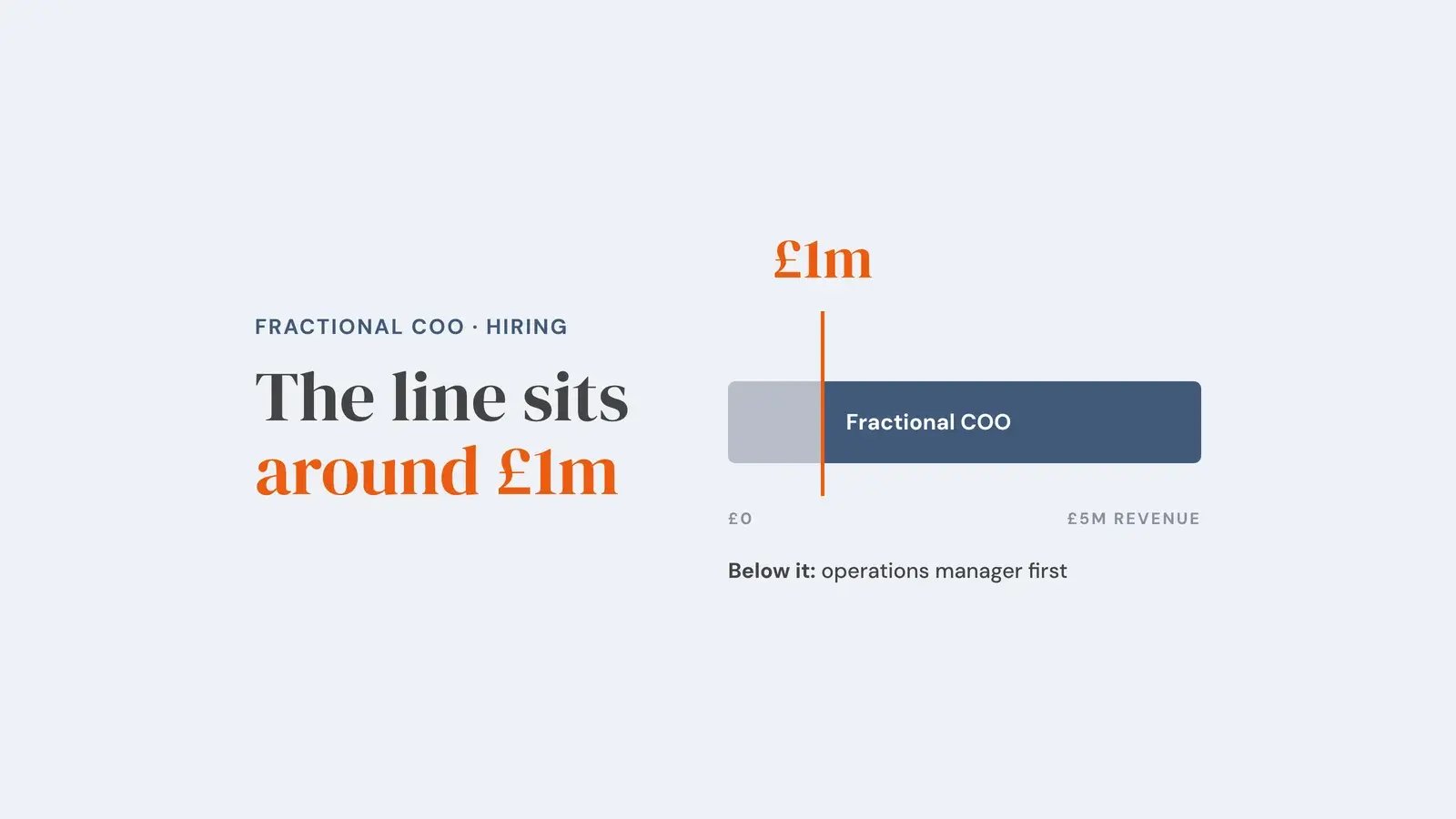
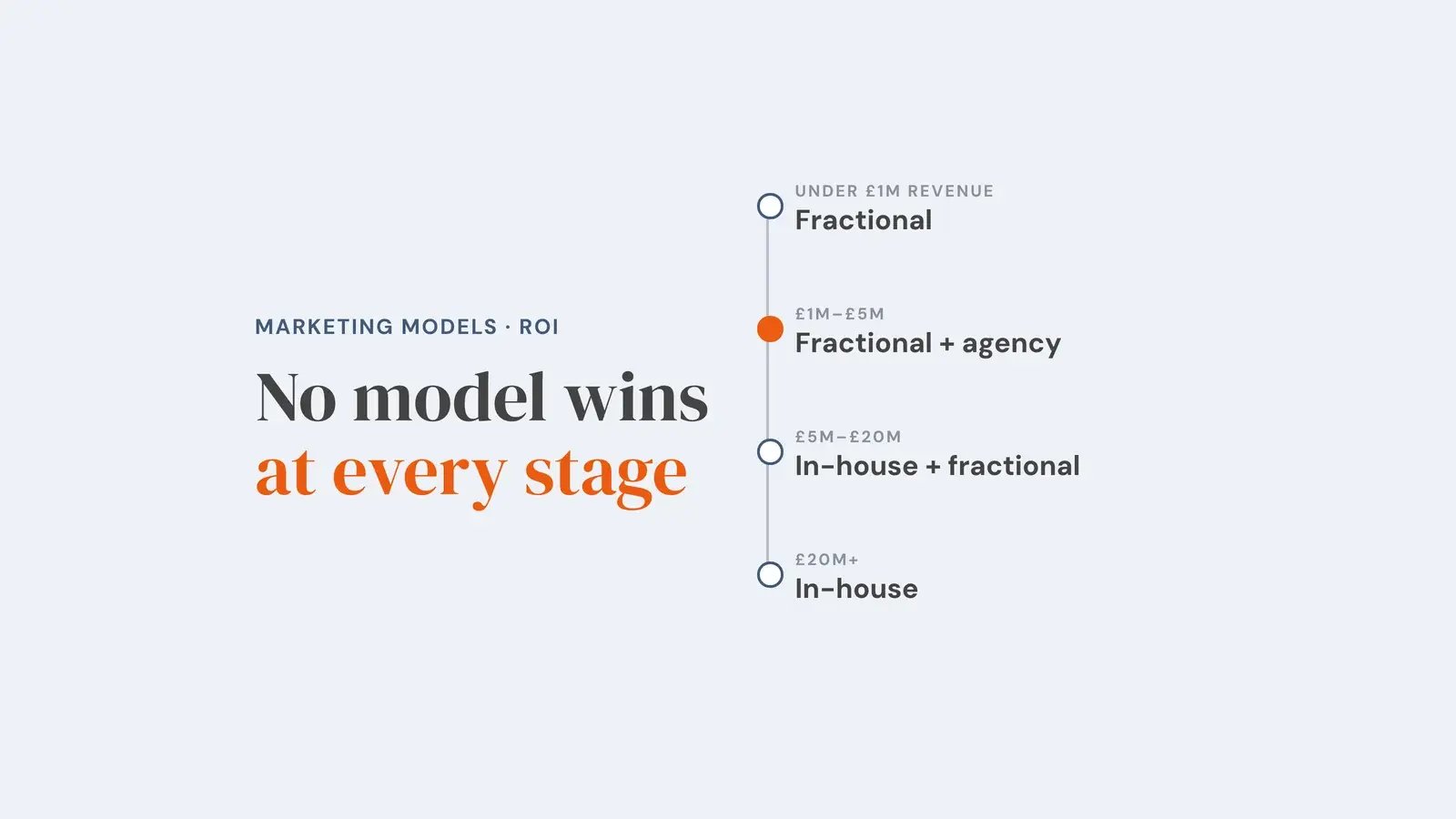
For most companies scaling from £750,000–£7.5M ($937,500–$9,375,000) in revenue, the best approach is hiring a senior marketing leader first, either fractional or full-time, then building the team under their direction. This sequence ensures every hire serves a documented strategic need, channel mix aligns with your customer acquisition model, and someone owns marketing ROI from the start. The leader can also interview specialists properly, spot underperformance quickly, and mentor team members effectively.
Often, that uncertainty is itself a strong signal you need leadership first.
Follow these criteria to determine your right sequence:
- Assess internal expertise: If no one on your leadership team has managed £375,000+ ($468,750+) annual marketing budgets, hire the leader first.
- Evaluate strategic clarity: Can you write down your customer acquisition model, ideal customer profile, and which 2–3 channels should receive 80% of investment? If not, hire the leader first.
- Check coordination capacity: Will you personally spend 10+ hours weekly managing marketing specialists, providing strategic direction, and running performance reviews? If not, hire the leader first.
- Review budget allocation: Can you afford £135,000+ ($168,750+) for both leadership and execution in year one? If yes, hire the leader first. If budget is tighter, consider the hybrid approach below.
- Examine past marketing attempts: Have previous marketing hires or agencies failed to deliver results? This often signals missing strategic oversight—hire the leader first.
How to decide which hiring path is right for your business
To decide whether to hire a marketing leader or build a team first, start by assessing your internal marketing competency; if no one on your leadership team has managed marketing budgets over £375,000 ($468,750) annually, hire the leader first. Without this expertise, you can't evaluate specialist work, prioritise channels, or coordinate campaigns effectively.
Next, evaluate your strategic clarity: if you already know exactly which channels work and what roles you need, you can hire specialists first; if you're still testing, you need leadership to guide that discovery. Strategy before execution prevents expensive mistakes.
Questions to ask before you decide
- Can someone on your leadership team personally train and manage marketing specialists in their day-to-day work?
- Do you have documented customer research showing where your buyers spend time and how they make decisions?
- Have you already tested at least three channels and can point to data showing which drove the best ROI?
- Can you write job descriptions for marketing specialists that accurately reflect the work they'll do and skills they need?
Red flags that signal you need a leader first
Watch for these warning signs:
- You've hired specialists before but couldn't tell if they were performing well
- Your marketing feels reactive; you keep trying new tactics based on what you read, not what your business needs
- Different marketing activities contradict each other or target different audiences
- You can't connect marketing spend to pipeline or revenue
- Previous agencies or freelancers delivered "deliverables" but not growth
If more than two of these apply to you, hiring specialists first will likely repeat the same cycle.
The hybrid approach: Fractional marketing leader and small team
A note on bias: I'm biased toward the leader-first and hybrid approaches because I've repeatedly seen specialist-first hires fail due to lack of direction. That said, this approach isn't right for every company. If you already have strong marketing knowledge on your leadership team and clear channel validation, hiring specialists first may genuinely be the faster path. I want to be upfront about that before recommending a model I also deliver as a service.
A fractional CMO or marketing director (15–20 hours/week) plus one or two specialists offers the strategic guidance of the leader-first approach with the execution capacity of the team-first model, typically for £6,000–£11,000 ($7,500–$13,750) monthly total. This balances strategic oversight with hands-on execution at a more accessible price point.
This hybrid works exceptionally well for companies between £1.5M–£7.5M ($1,875,000–$9,375,000) in revenue who need both strategy and execution but can't yet justify £225,000+ ($281,250+) in total marketing payroll. The fractional leader provides strategic direction, manages the specialists, and trains your team, while specialists handle day-to-day execution.
Typical hybrid structure:
- Fractional marketing director: £2,000–£4,700 ($2,500–$5,875) monthly for 15–20 hours/week
- One specialist (content or paid): £3,200–£4,700 ($4,000–$5,875) monthly
- One specialist (complementary channel): £3,200–£4,700 ($4,000–$5,875) monthly
The hybrid approach gives you 80% of the benefit of a full leadership hire at roughly 50% of the cost.
My Fractional Marketing Director service follows this model, providing strategic direction, hands-on implementation, and team training to build marketing capability you'll own long-term.
Frequently asked questions
We've compiled the most common questions about whether to hire a marketing leader or build a team first.
Can a marketing leader also do execution work?
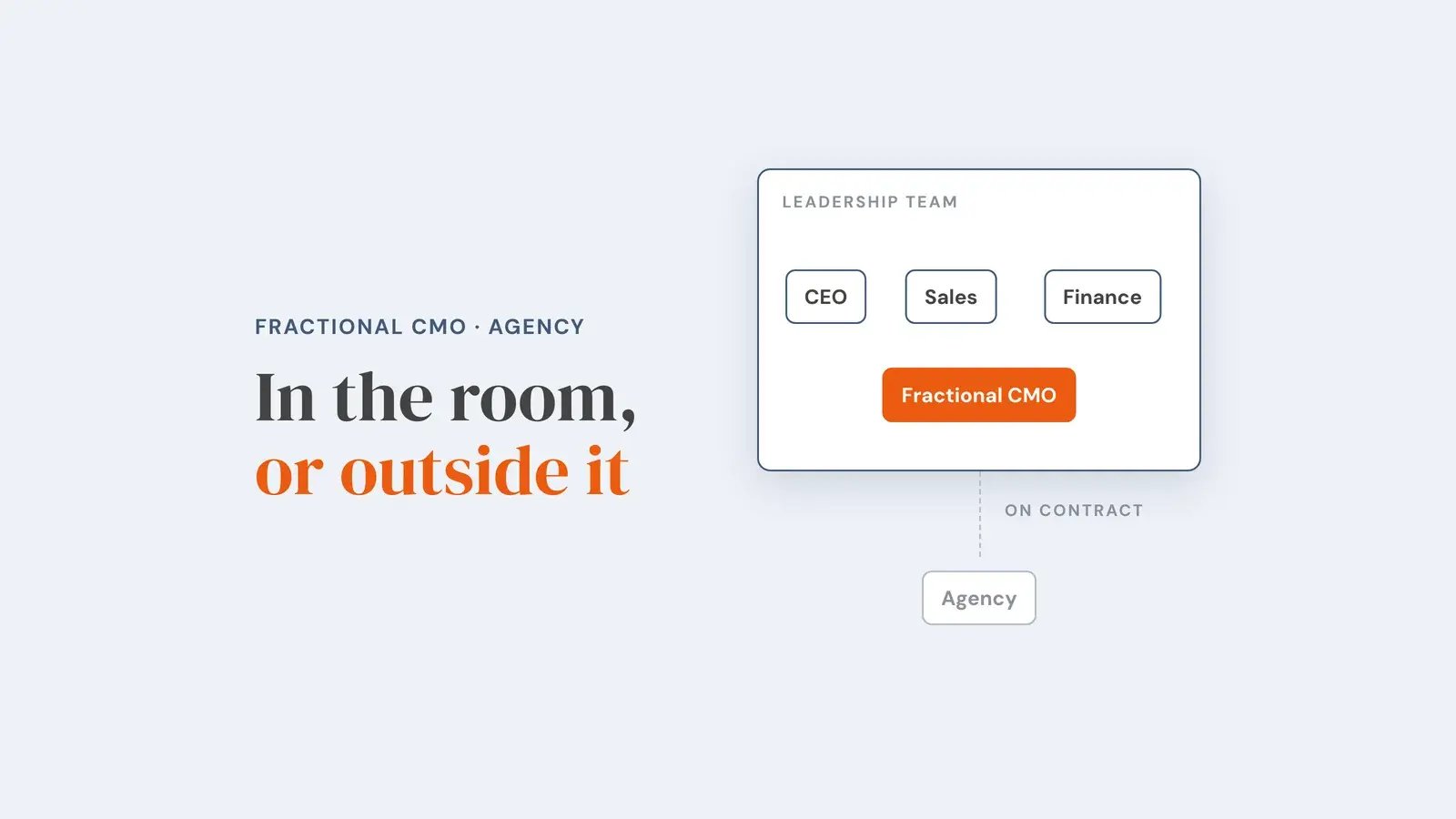
Yes, but only if you hire for that specific skill set. Many senior marketers focus purely on strategy and can't (or won't) write content, build campaigns, or manage tools directly. Fractional marketing directors often bridge this gap, providing both strategic direction and hands-on implementation until you build a full team.
How big should my team be before I hire a director?
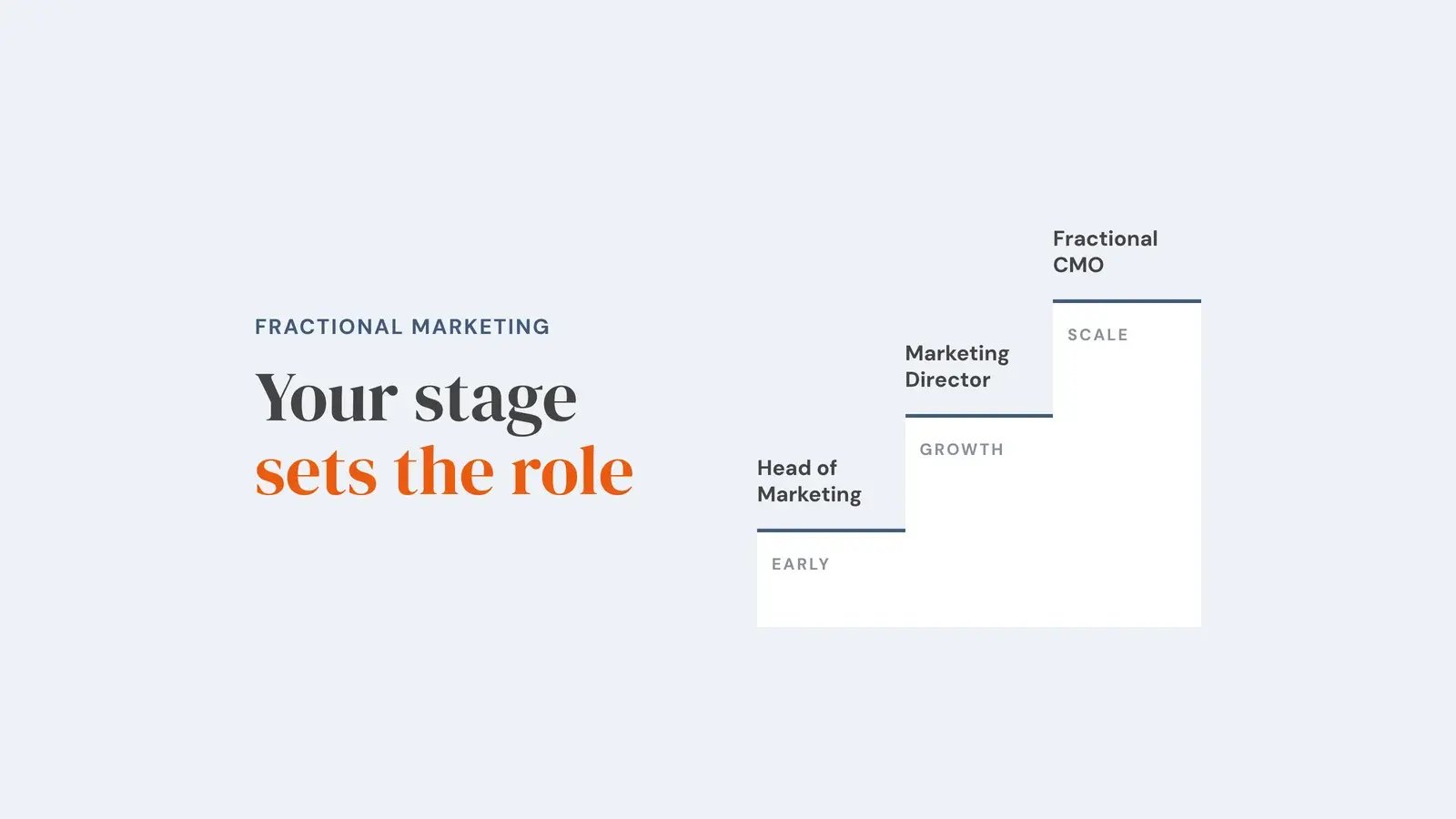
Most companies need a director once they reach 3–4 marketing specialists or £150,000+ ($187,500+) in annual marketing spend. Below that threshold, a fractional marketing director or CMO provides better value than a full-time hire.
What if I hire the wrong leader first?
A bad leadership hire can set you back 12–18 months and cost £120,000–£180,000 ($150,000–$225,000) in wasted salary plus opportunity cost. Mitigate this risk by hiring fractional first to test fit, checking references specifically about hands-on work at similar company stages, and setting clear 90-day performance milestones.
Should I hire a generalist marketer instead?
Generalists work well for very early-stage companies (under £750,000/$937,500 revenue) who need someone to do everything. But as you scale, you need either specialised execution or strategic leadership—generalists struggle to provide both at the level required for growth.
How long until I see results from each approach?
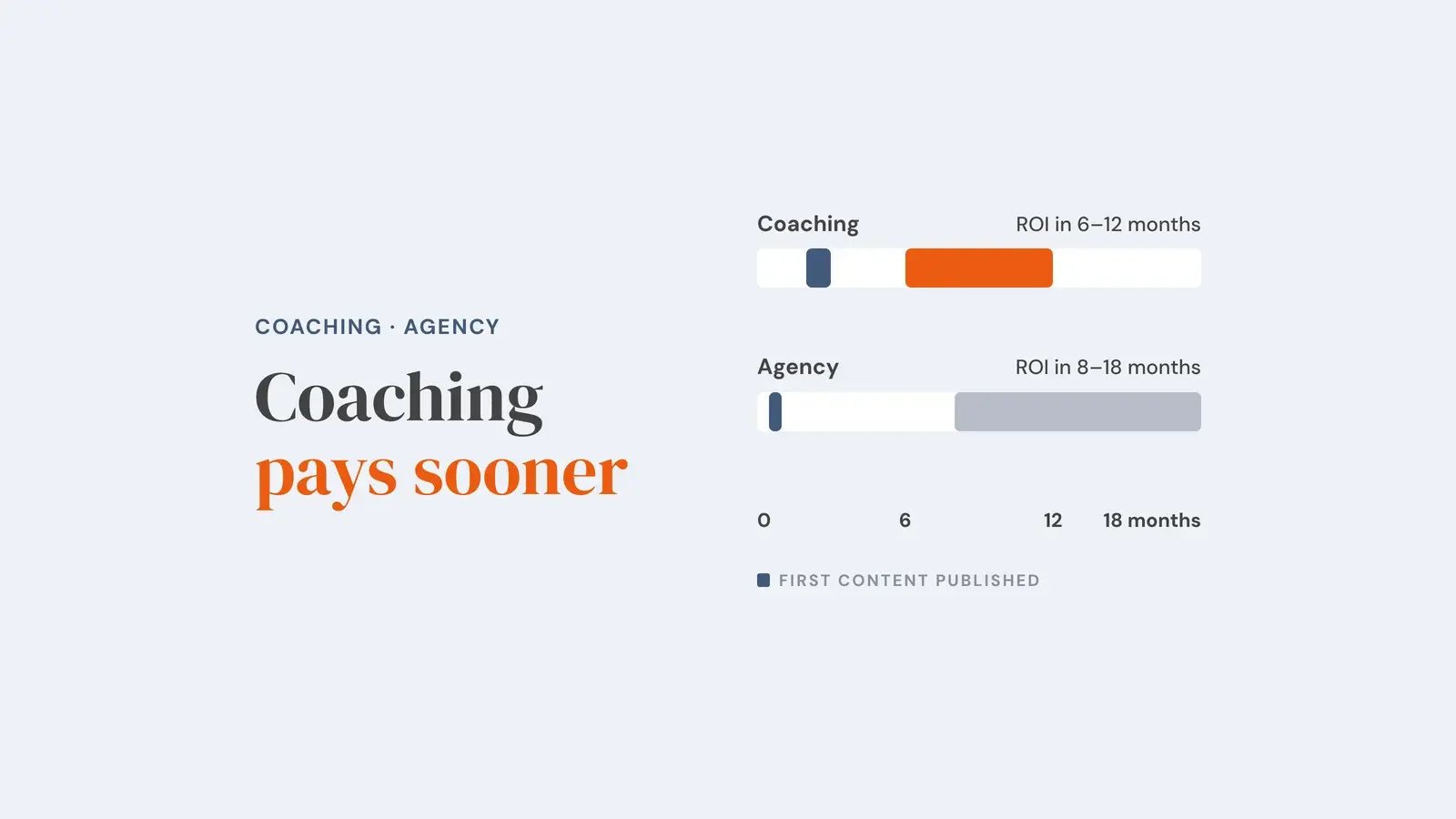
With a leader-first approach, expect 3–6 months before meaningful results (includes time to hire and onboard the team). With specialists first, you'll see activity in 1–3 months, but results often plateau without strategic direction to optimise and integrate campaigns.
Is it better to hire a CMO or marketing manager first?
For most SMEs, a marketing manager or director is the better first hire—they're closer to execution and more comfortable in resource-constrained environments. A CMO typically suits businesses with £10M+ ($12,500,000+) revenue, established teams, and complex multi-channel strategies. If you're unsure, a fractional CMO lets you access senior strategic thinking without committing to a C-suite salary.
What's the difference between a marketing director and CMO for small businesses?
In practice, the titles overlap significantly at smaller companies. A marketing director typically owns strategy and execution across channels, while a CMO focuses more on board-level strategy, brand positioning, and cross-functional alignment. For businesses under £10M ($12,500,000) revenue, a marketing director—fractional or full-time—usually provides better day-to-day value.
What if I can't afford either a leader or a full team?
Start with the smallest viable investment that includes strategic direction. A fractional marketing director at 10–15 hours/month can cost as little as £1,500–£2,500 ($1,875–$3,125) monthly and still provide the strategic clarity you need before hiring anyone else. Pair that with one versatile content or digital marketing specialist and you have a foundation that avoids the coordination problems of going specialist-only. The key is ensuring someone with marketing expertise is guiding decisions—even at a modest time commitment—before you scale spend.
Conclusion
You've seen the costs, trade-offs, and failure patterns of both approaches. For most growing companies, hiring marketing leadership first, whether fractional or full-time, prevents coordination problems, wasted budget, and strategic drift that commonly derail team-first approaches.
If you get this wrong, you don't just waste salary, you lose 12–18 months of growth.
The right sequence depends on your internal expertise, budget, and strategic clarity. If you lack deep marketing knowledge on your leadership team, hire the leader first. If you already know your acquisition model and just need execution capacity, specialists can deliver faster initial results.
The hybrid approach offers the best of both paths for companies between £1.5M–£7.5M ($1,875,000–$9,375,000) revenue: fractional leadership provides strategic direction while specialists deliver execution capacity, all within a manageable budget.
I help companies avoid that mistake by building the right marketing structure from day one—whether that's fractional leadership, team design, or a hybrid of both.
How to take action now
- Assess your internal marketing competency using the criteria above; be honest about gaps in expertise
- Document what you know about your customer acquisition model, successful channels, and strategic priorities
- Calculate your available budget for year-one marketing investment, including salaries, tools, and campaign spend
- Interview fractional marketing leaders if budget or strategic clarity is limited; this reduces risk while building capability
- Start with strategy if you're unsure which path to take; a marketing audit or strategy project clarifies what you need before you commit to hiring
If you'd like an external perspective before committing to a full-time hire, explore my Fractional Marketing Director service. It provides strategic guidance, hands-on implementation, and team training to help you build a marketing engine you'll own.

About the Author
I'm Tom Wardman, and I help business leaders build internal marketing capabilities that drive consistent growth. Over the past decade, I've worked with companies at every stage, from early-stage startups figuring out their first channels to established businesses scaling their marketing teams. I focus on what works: building trust with customers, creating systems that deliver reliable results, and transferring knowledge so you can run your marketing independently. My approach combines strategic thinking with hands-on execution, because marketing that doesn't connect to revenue isn't worth doing.
Pricing disclaimer: All GBP–USD price conversions are rounded estimates and correct at the time of publishing. Exchange rates fluctuate and figures should be treated as indicative only.
Topics: