

Are you confident your current tech stack can actually support the cadence the Endless Customers System™ demands: three or more pieces of Big 5 content per week, a sales team using content in every conversation, and a CRM connecting every piece of activity to closed revenue?
Most businesses implementing the system have the right ambition but the wrong tools. Worse, they often don't know which gap is holding them back.
This guide maps the best tools available in 2026 to each component of the Endless Customers System™. You will learn what each category needs to do, which platforms lead, and how to build your stack in the right sequence, so you end up with a system, not a collection of expensive subscriptions.
This article is written for founder-led B2B businesses implementing, or preparing to implement, the Endless Customers System™. If you are mid-implementation and auditing your current tools, the comparison tables and cost breakdown will be most useful. If you are evaluating whether to start, the sequencing section will show you what to prioritise first.
Key takeaways
- The Endless Customers System™ has five components; "The Right Technology" is one of the five pillars, not an optional add-on.
- HubSpot is the recommended CRM because it is the only platform that natively connects sales revenue to specific content on your website.
- A working SMB Endless Customers tech stack in 2026 typically costs between £400 ($500) and £2,500 ($3,125) per month, depending primarily on the HubSpot tier selected. (Estimate; see cost table below.)
- AI tools should assist content production, not replace the human expertise that makes Big 5 content trustworthy, governed by the S.A.F.E.T.Y. framework.
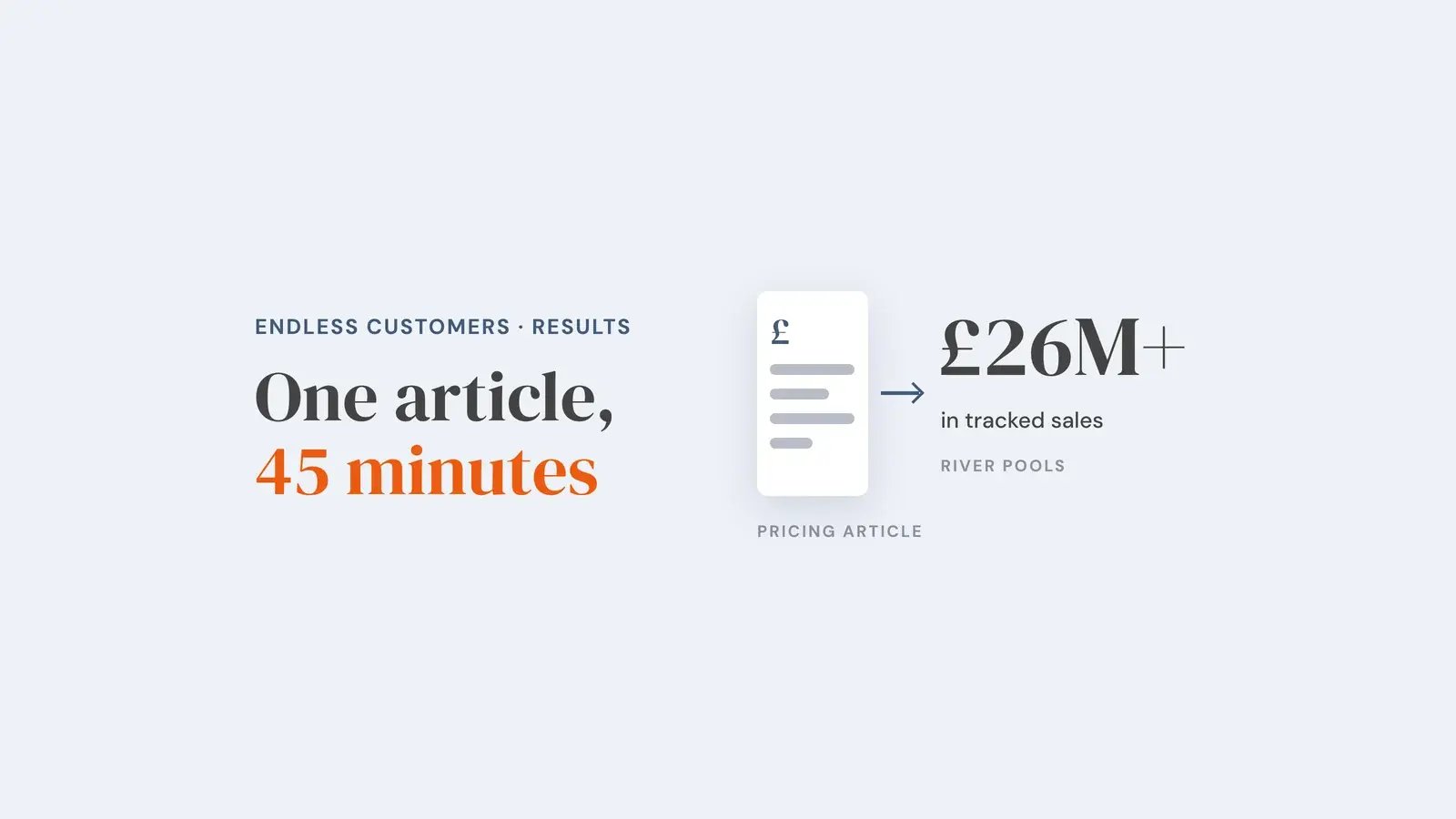
- Self-scheduling and pricing calculator tools deliver the fastest measurable results: one IMPACT client saw May leads jump from 200 to 700 after adding a pricing tool costing less than $25,000 (~£20,000).
What is the Endless Customers System™ and why do tools matter?
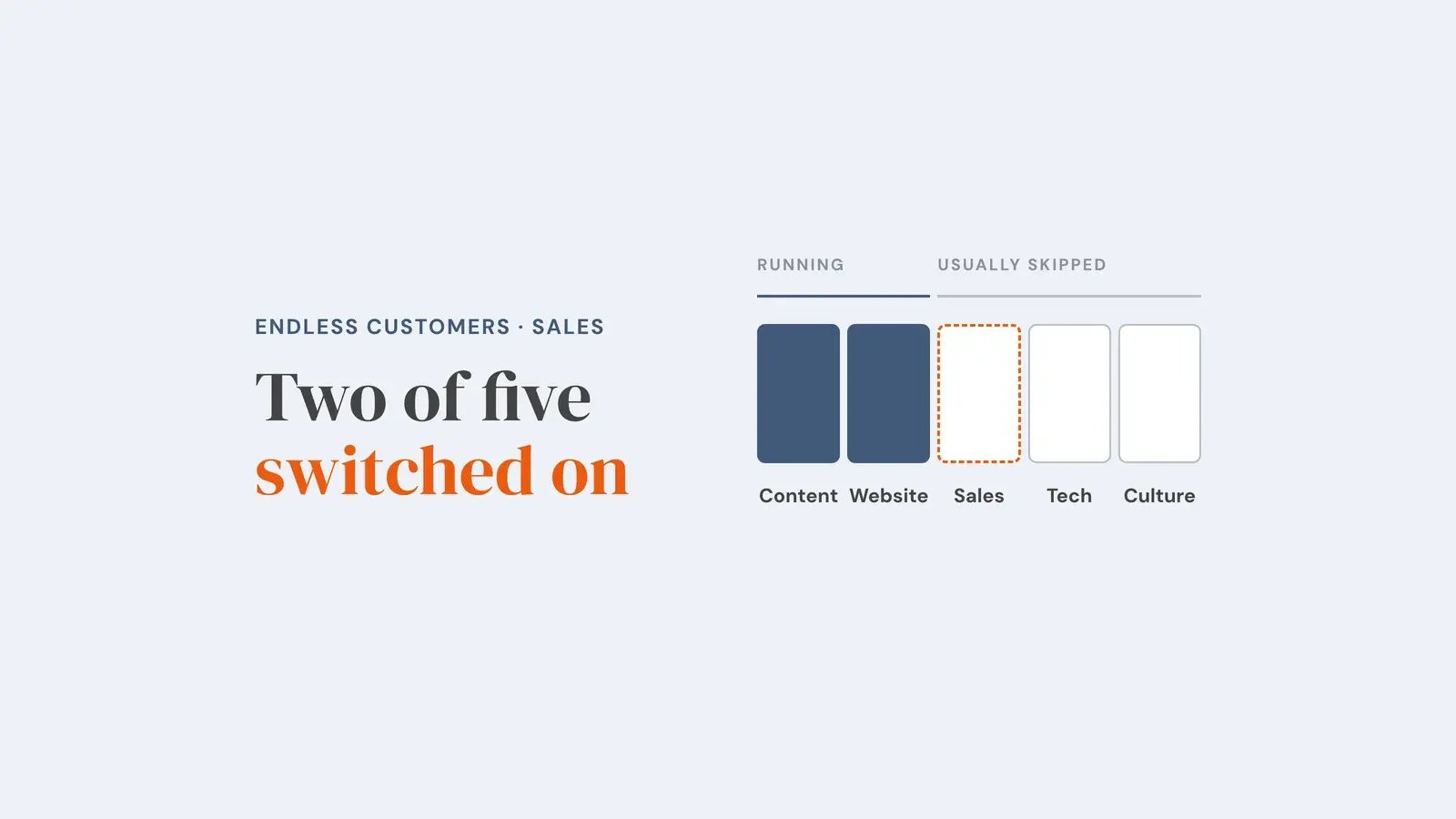
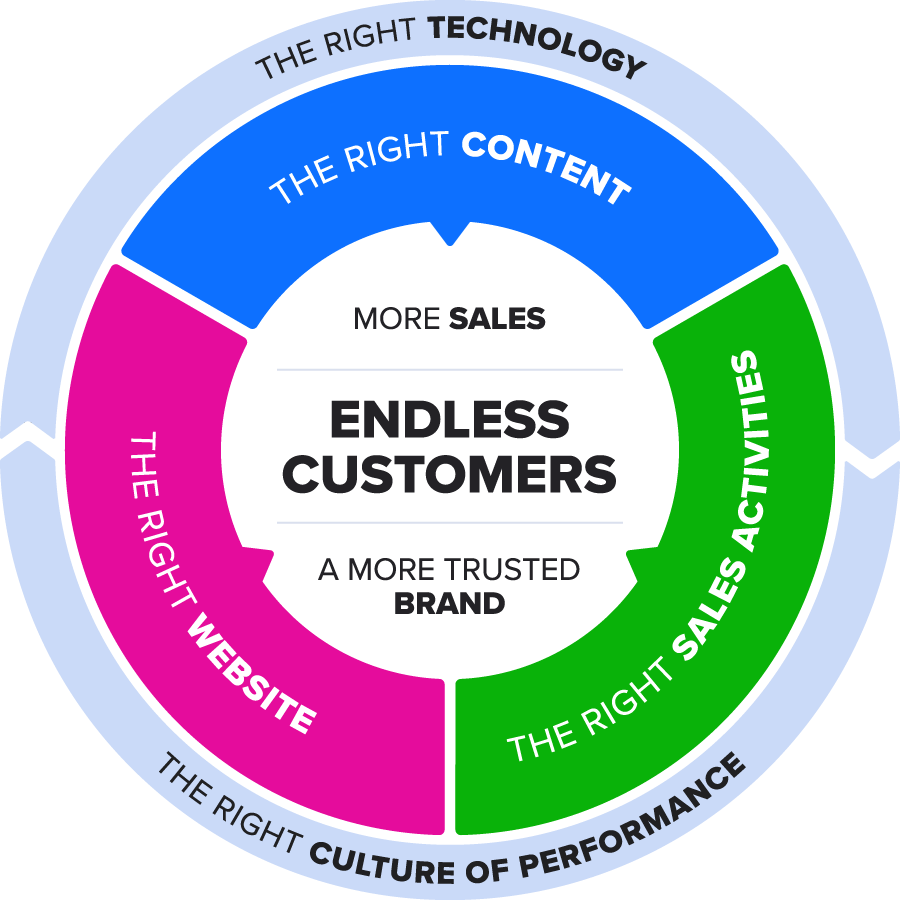
The Endless Customers System™ is built around five components: The Right Content, The Right Website, The Right Sales Activities, The Right Technology, and The Right Culture of Performance, all designed to make your business the most known and trusted brand in your market.
Technology is one of those five components, not a supporting layer on top of them. Without the right tools, content goes unpublished, data sits in silos, and your sales team cannot use content in their conversations.
In practice, The Right Technology means: a CRM that centralises customer data, a CMS your team controls without developer support, AI tools used responsibly, and self-service tools that reduce buyer friction.
The best CRM for Endless Customers: why HubSpot leads
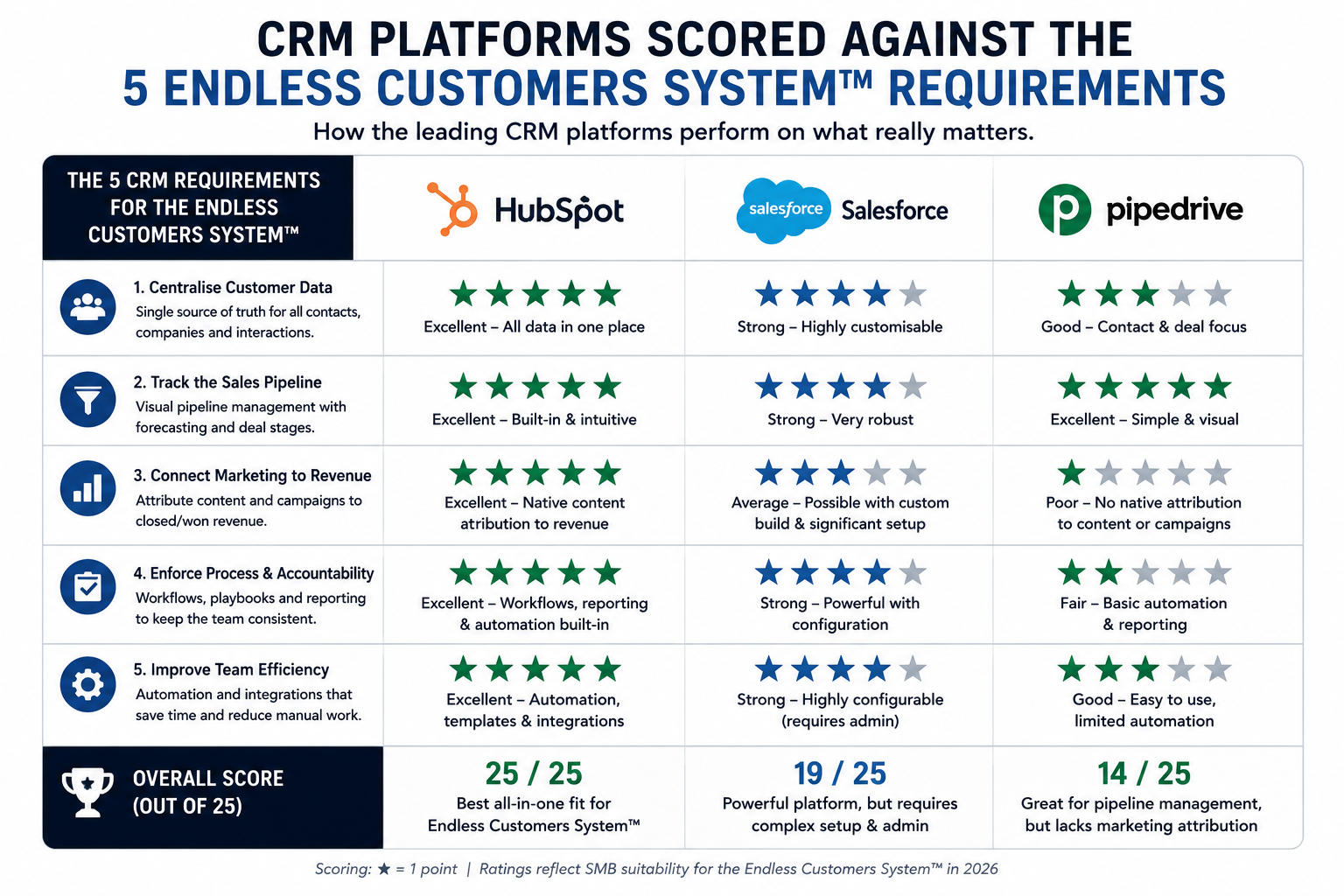
The best CRM for the Endless Customers System™ must centralise customer data, track the sales pipeline, connect marketing activity to revenue, enforce process, and improve team efficiency through automation, and HubSpot does all five within a single platform.
Most CRMs cover basic contact management. Very few connect marketing to closed revenue without significant custom build work. Salesforce typically requires substantial configuration and a dedicated admin in most SMB implementations to achieve what HubSpot delivers out of the box; Pipedrive is a capable pipeline tool but has no native content attribution layer.
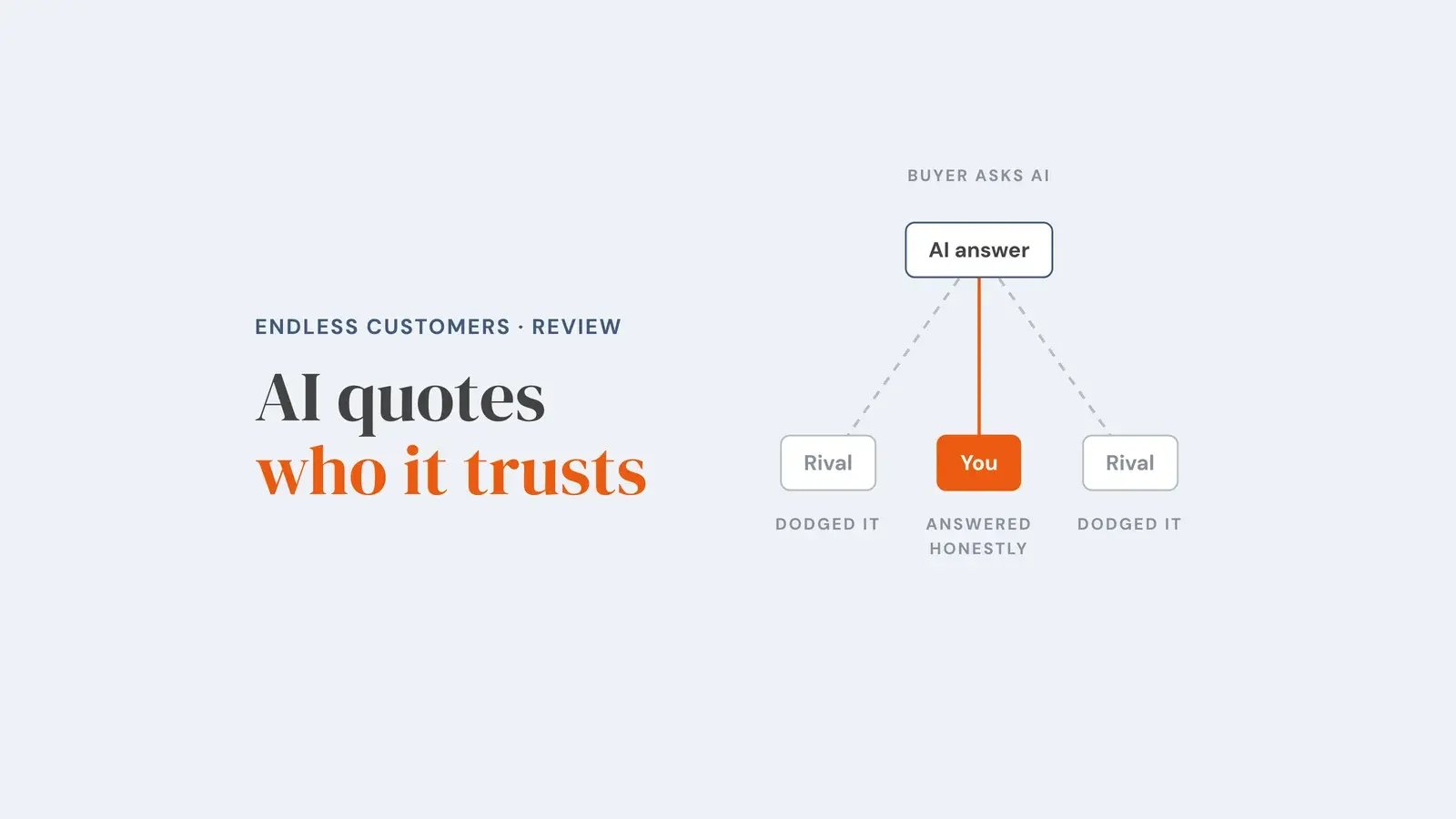
HubSpot is currently the only CRM that lets you trace actual sales revenue back to specific pieces of content on your website, making it uniquely suited to businesses running a Big 5 content strategy. Without that connection, you cannot prove or improve what your content is doing for the business.
Transparency note: I am a HubSpot Platinum Partner. I recommend HubSpot because it is the only platform that natively connects content performance to closed revenue, but that affiliation is worth knowing.
Related reading: HubSpot Strategy & Implementation service.
The best CMS for in-house website management
The right CMS for the Endless Customers System™ is one your team can operate without a developer, publishing content, updating pages, and capturing leads independently, without waiting on external support.
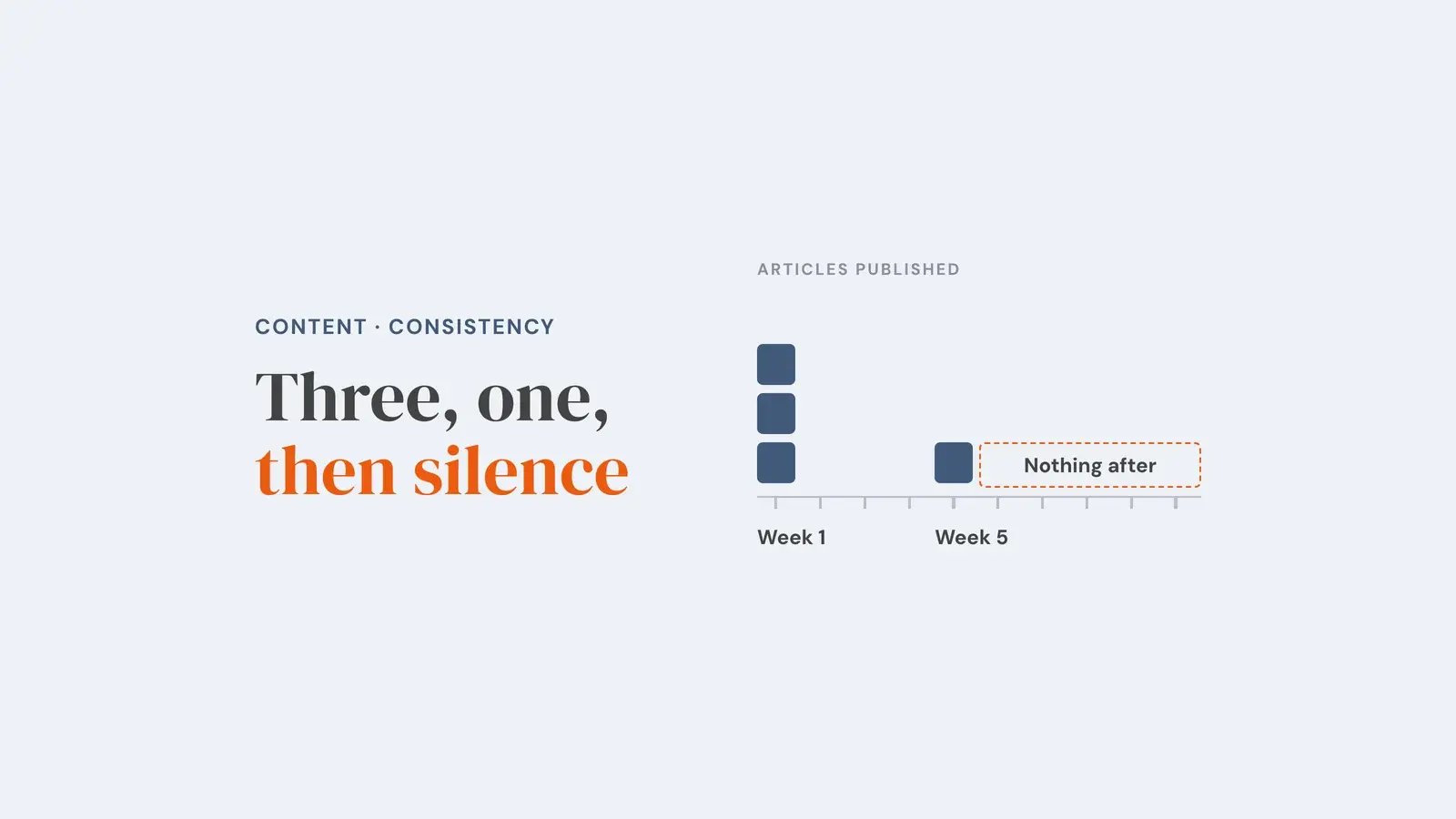
The system calls for publishing at least three pieces of Big 5 content per week. That cadence is only possible when your team controls the website themselves.
HubSpot CMS integrates natively with your CRM, making it the cleanest option for teams already on HubSpot. Content published through HubSpot CMS is attributed automatically to the correct contact and deal records, no custom integration required. It is not the most flexible design environment, but for teams prioritising publishing speed over pixel-perfect control, that trade-off is worth making.
WordPress is the most widely used and flexible option. Your team will find the publishing interface familiar, and the plugin ecosystem covers most content and lead capture needs. The trade-off is that CRM integration requires configuration — typically via the HubSpot WordPress plugin, and you will need to maintain that connection as both platforms update.
Webflow offers strong design control but carries a steeper learning curve for non-technical team members. In practice, that often means content updates sit in a queue waiting for someone confident enough to make them, which undermines the independence the system requires. Only consider Webflow if design quality is a commercial priority and you have the internal resource to own it.
The best AI and video tools for Big 5 content in 2026
The best AI tools for Endless Customers content assist with drafting, ideating, and repurposing; they never replace the human subject-matter expertise that earns buyer trust and performs well in AI-driven search results.
Before deploying any AI tool, apply the S.A.F.E.T.Y. framework from the Endless Customers manuscript:
- Secure: Protect client and company data; do not paste sensitive information into public AI tools
- Assistive not autonomous: A human must always review output before it is published
- Fact-checked: Never publish AI-generated claims without verification
- Experimental: Test and measure; what works in one business may not work in another
- Transparent: Disclose AI use where relevant
- Your expertise matters: AI multiplies human knowledge; it cannot substitute for it
With that framework in place, here are the tools most commonly used in Endless Customers implementations:
ChatGPT (OpenAI) is the most widely adopted tool for drafting and ideation. It performs well at producing first-draft outlines and repurposing long-form content into shorter formats. Apply the S.A.F.E.T.Y. framework rigorously; it will confidently produce inaccurate claims.
Claude (Anthropic) handles longer documents well and tends to produce less formulaic output than ChatGPT for complex, reasoning-heavy content. Useful for drafting comparison articles and cost guides where structure and accuracy both matter. The same fact-checking discipline applies; do not treat its output as verified.
Jasper is built specifically for marketing teams and includes brand voice training, which reduces the editing overhead on teams producing high content volumes. Higher cost than general-purpose tools, but the workflow efficiency gains can justify it at scale.
None of these tools replace your subject-matter expertise. They compress production time — they do not generate the firsthand knowledge that makes Big 5 content trustworthy.
For video, The Selling 7 are the seven video types that most directly shorten sales cycles and increase close rates, identified by Marcus Sheridan through IMPACT's work with hundreds of businesses. They are: Cost and Pricing, The 80% Video (answering the question your sales team answers most), Product/Service, Landing Page, Customer Journey, Bio, and Claims We Make videos.
Vidyard and Loom are the recommended tools because both integrate with HubSpot, logging prospect video engagement directly in the CRM.
What the tech stack costs, and how to build it in the right order
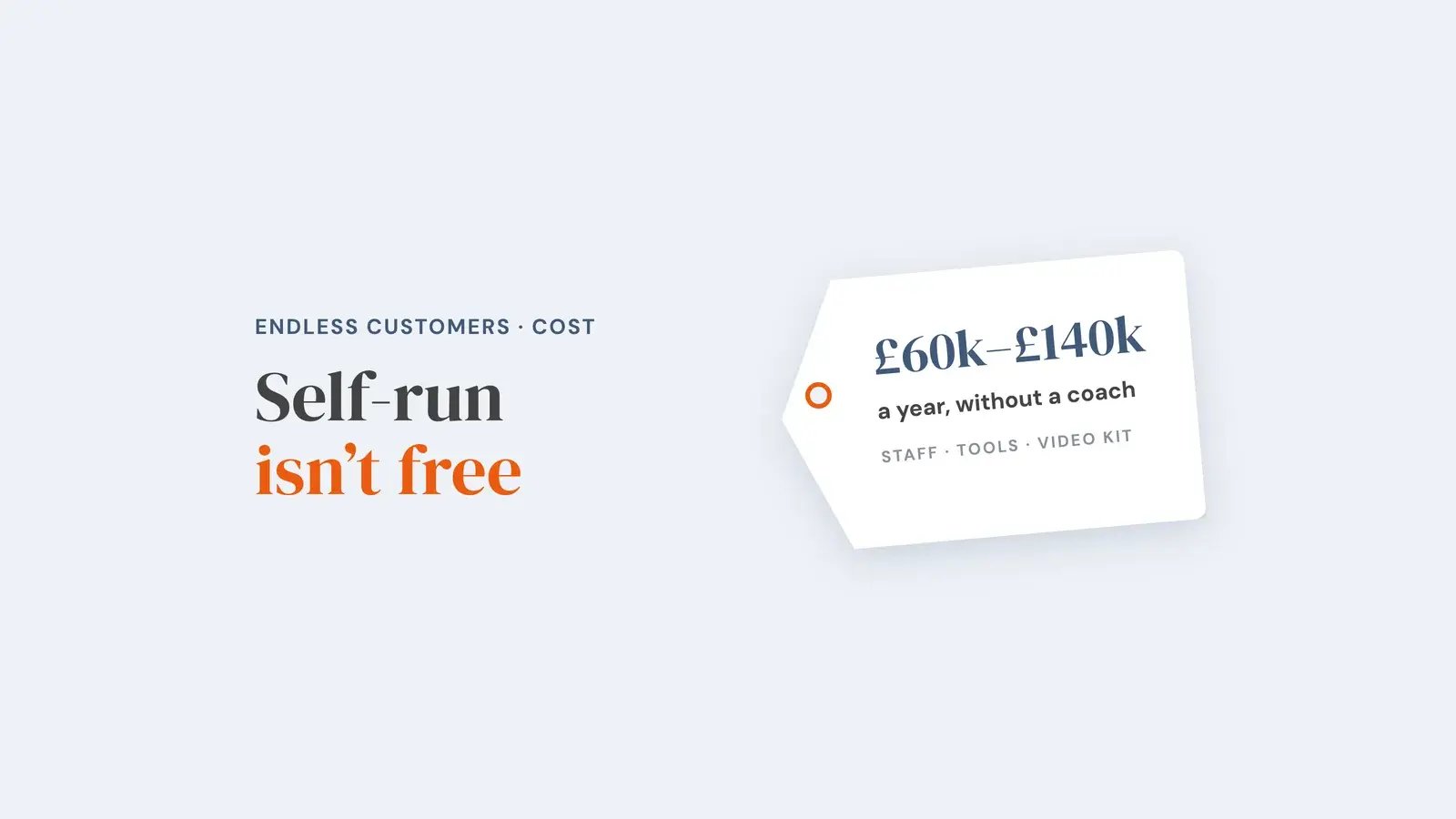
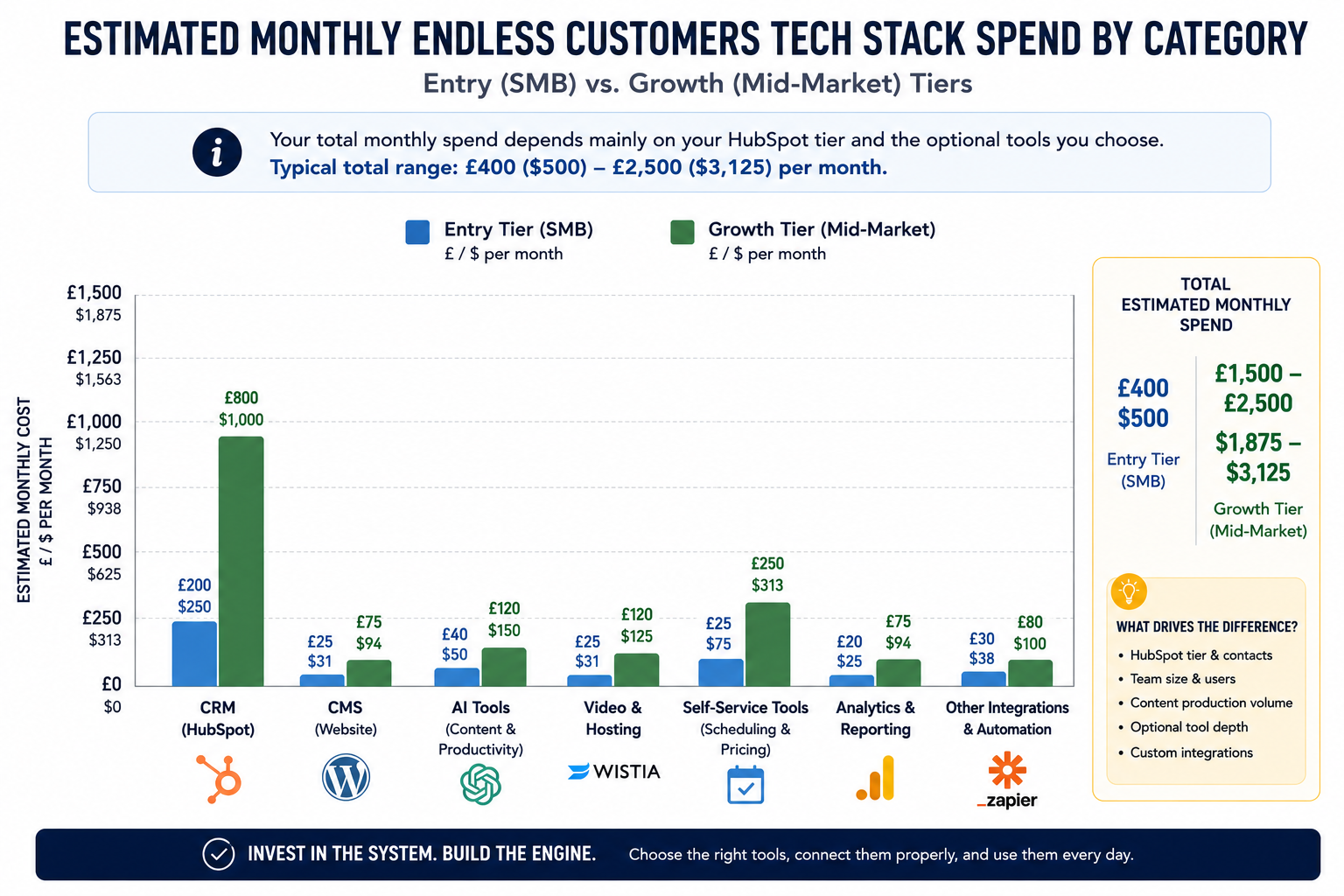
A functional Endless Customers tech stack for an SMB in 2026 typically ranges from £400 ($500) to £2,500 ($3,125) per month, with the HubSpot tier being the primary cost variable. (Estimate based on published HubSpot pricing and typical tool subscription costs at time of writing. Actual cost varies by CRM tier, seat count, and tools selected. HubSpot pricing changes regularly; verify current figures at hubspot.com before budgeting.)
| Category | Entry tier (est. monthly) | Growth tier (est. monthly) |
|---|---|---|
| HubSpot CRM + CMS | £110 ($138) | £1,400 ($1,750) |
| AI tools | £60 ($75) | £200 ($250) |
| Video tools (Vidyard/Loom) | £15 ($19) | £100 ($125) |
| Self-scheduling (Calendly/HubSpot) | £0–£15 ($0–$19) | £30 ($38) |
| Pricing calculator tool | £0–£150 ($0–$188) | £150–£500 ($188–$625) |
| Total estimate | £400–£550 ($500–$688) | £2,000–£2,500 ($2,500–$3,125) |
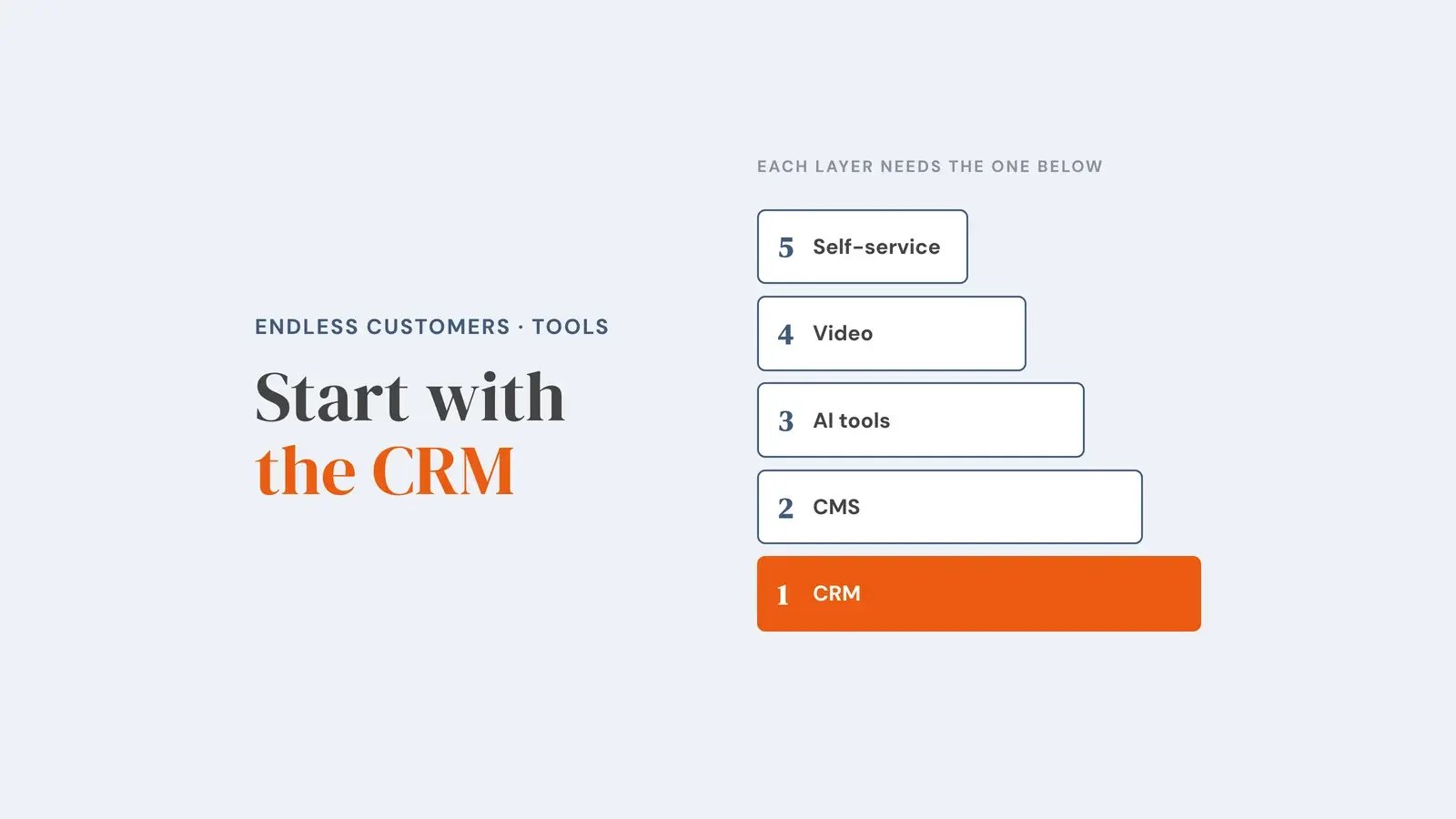
Build in this sequence. Each layer depends on the one before it:
- CRM first: Deploy and train your team on HubSpot Starter or Professional
- CMS second: Confirm your team can publish content independently
- AI tools third: With the S.A.F.E.T.Y. framework in place before use begins
- Video tools fourth: Vidyard or Loom for your sales team
- Self-service tools last: Self-scheduling and a pricing calculator
The highest-ROI investment in the stack is almost always the CRM, as it is the only tool that connects content performance directly to closed revenue. Without it, you cannot measure or improve what the rest of the stack produces.
The five most common tech stack mistakes
1. Buying HubSpot and skipping the team training
HubSpot's power is in adoption. A platform your team does not use daily is an expensive contact database, not a growth engine. Allocate training time before go-live, not after you notice the data is inconsistent.
2. Using AI to write content without expert review or fact-checking
AI tools will produce confident, plausible, and occasionally wrong content. Every piece published under your name carries your credibility, not the tool's. Review everything against the S.A.F.E.T.Y. framework before it goes live.
3. Building a custom pricing tool before testing a simpler option first
A basic pricing calculator built on a tool like ScoreApp or Outgrow can be live within a week. Start there. Validate that buyers use it before commissioning a custom build.
4. Running disconnected platforms with no CRM at the centre
Separate tools for email, website, and pipeline management create data silos. You cannot attribute revenue to content, you cannot see the full buyer journey, and your reporting will always be incomplete. The CRM is the connective tissue, build around it.
5. Deploying video tools before your sales team is prepared to use them
The Selling 7 only work if your sales team understands how to assign and reference videos in their conversations. Tool adoption without process change is just subscription cost.
Related reading: Growth Alignment Intensive™; align your team before building your stack.
Frequently asked questions
Is HubSpot required for the Endless Customers System™?
HubSpot is not a formal requirement, but it is the only CRM that natively connects content performance to closed revenue, which is central to proving and improving the system over time. Other CRMs can be configured to approximate this, but the integration overhead is significant. For most SMBs starting from scratch, HubSpot is the practical default.
How much does the Endless Customers tech stack cost per month?
A working SMB stack typically ranges from £400 ($500) to £2,500 ($3,125) per month, depending primarily on the HubSpot tier. See the cost table above for a category-by-category breakdown. HubSpot pricing changes regularly; verify current figures at hubspot.com before finalising your budget.
Can I use the Endless Customers System™ without a dedicated content team?
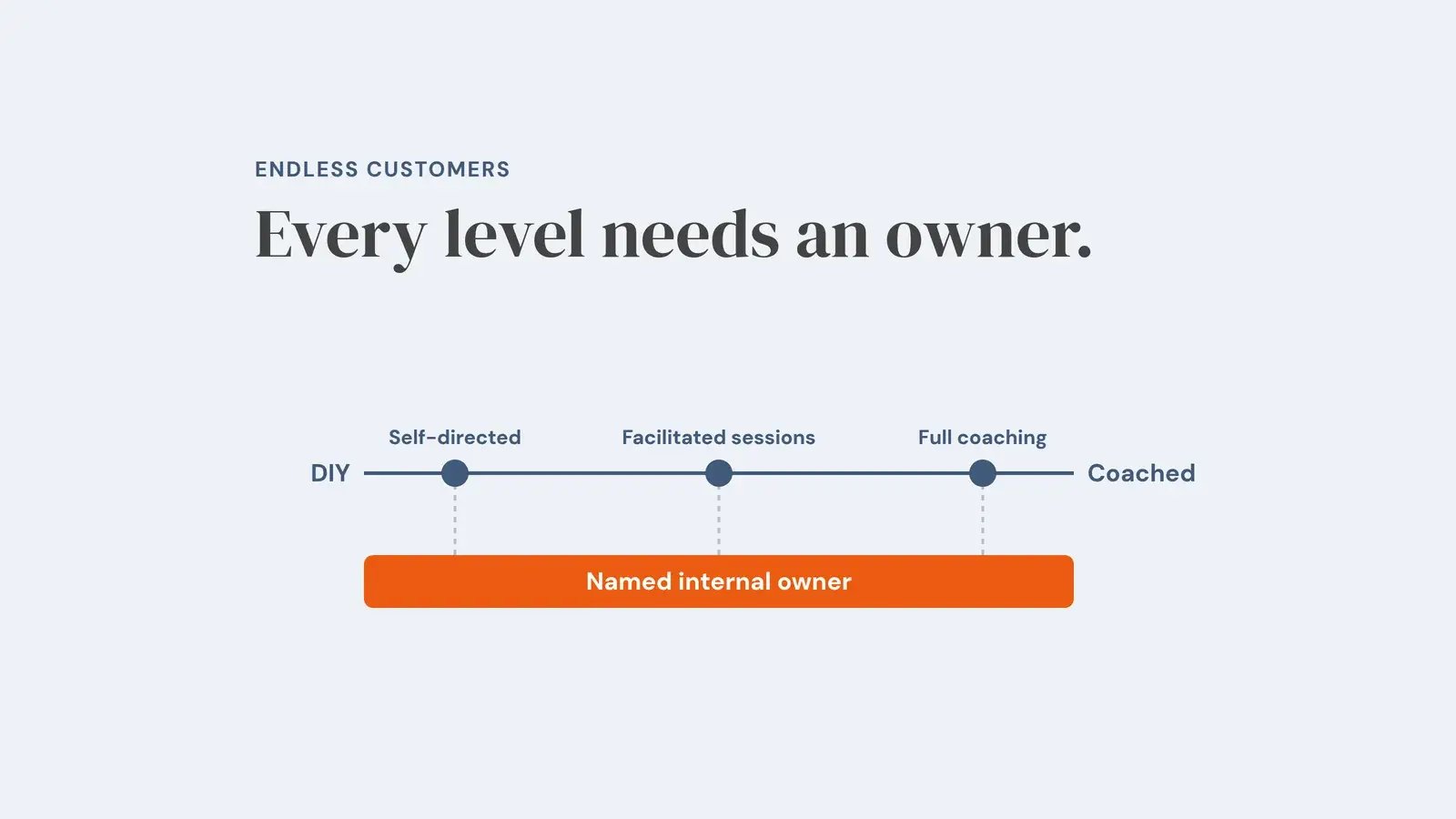
Yes, but output volume will be the constraint. The system calls for at least three pieces of Big 5 content per week. With one part-time person managing content alongside other responsibilities, that cadence is difficult to sustain. The system is designed to be run in-house; the question is whether you have enough internal resource to maintain the required frequency.
What is the S.A.F.E.T.Y. framework for AI content?
The S.A.F.E.T.Y. framework is a governance model from the Endless Customers manuscript for using AI tools responsibly in content production. It stands for: Secure, Assistive not autonomous, Fact-checked, Experimental, Transparent, Your expertise matters. See the AI tools section above for a full breakdown of each principle.
Conclusion
You now have a tool map most businesses don't: a category-by-category breakdown of what the Endless Customers System™ actually requires to function, what each platform does well, and where the common mistakes occur.
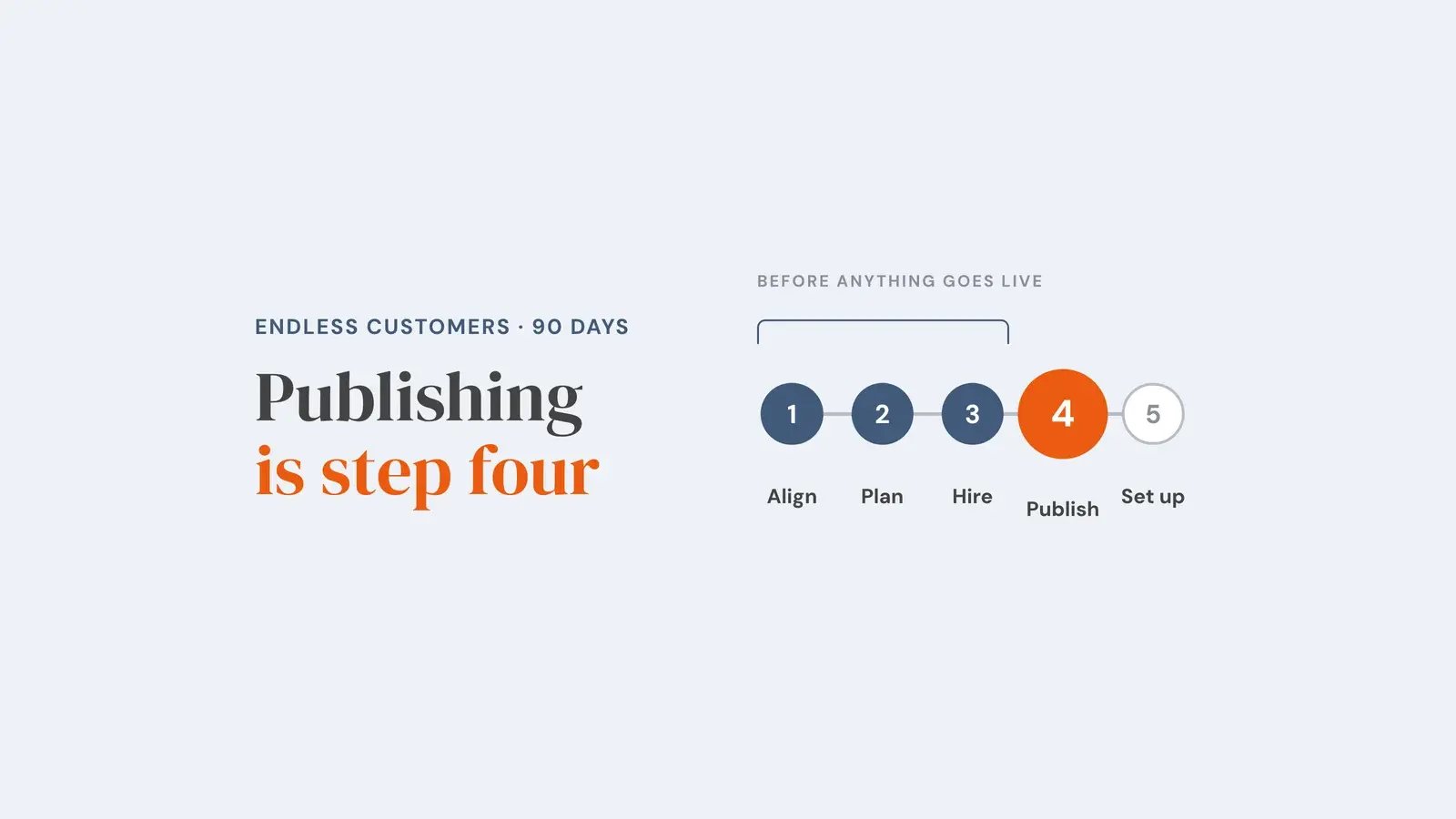
The sequencing matters as much as the tools themselves. Start with the CRM. Build in-house publishing capability. Add AI responsibly. Equip your sales team with video tools. Then add self-service tools once the foundation is solid. That sequence is what separates a working system from a collection of expensive subscriptions.
As one of the UK's first five certified Endless Customers coaches, this is the stack I recommend to the businesses I work with, and the sequence I follow when implementing it.
The right next steps are clear:
- Audit your current tools against the five Endless Customers System™ components using the table in section one
- Confirm HubSpot is configured correctly and your team is logging every interaction
- Run a team session on the S.A.F.E.T.Y. framework before adding any new AI tool
- Add a self-scheduling tool to your website this week; it is the fastest change to implement with the most immediate impact on lead volume.
Book a Growth Alignment Intensive™ to align your team and create your 90-day tech stack plan. Or, if you're ready to implement the full system? Explore the Endless Customers™ Implementation programme.

About Tom Wardman
Tom Wardman is a fractional marketing consultant, author of Build a Trusted Brand, and one of the UK's first five certified Endless Customers coaches, trained directly under Marcus Sheridan. He works with founder-led B2B businesses to install growth systems their teams own and operate independently, without ongoing agency dependency. His services include Endless Customers™ Implementation, HubSpot Strategy & Implementation, and the Growth Alignment Intensive™, all part of the In-House Growth Engine™ framework.
Pricing disclaimer: All GBP–USD price conversions are rounded estimates and correct at the time of publishing. Exchange rates fluctuate and figures should be treated as indicative only.
Topics: