


Key Takeaways
- Endless Customers is a buyer-centric methodology that helps businesses become the most known and trusted brand by answering every question prospects have with radical transparency
- Most businesses see noticeable results by 12 months, with full market dominance taking 18–24 months of consistent implementation
- Implementation requires at least one full-time person dedicated to content creation, representing a significant investment in salary and time
- The methodology doesn't work for businesses with short sales cycles where buyers make quick, impulse decisions
- Endless Customers is the evolution of They Ask, You Answer for an AI-first world where ChatGPT and zero-click searches have fundamentally changed buyer behaviour
If you're tired of flashy marketing fads that fail to deliver results, you're not alone. You may be wondering whether Endless Customers is just another overhyped system, or if it could actually help your business stand out in 2026's AI-dominated landscape.
In this article, I'll break down exactly what Endless Customers is, what it takes to implement, who it's right for, and whether it's truly worth the investment. You'll also get an honest look at the costs, limitations, and real-world results, so you can make a confident, informed decision about whether this approach fits your business.
What Is Endless Customers? Definition and why it matters in 2026
Endless Customers is a buyer-centric marketing and sales methodology that helps businesses become the most known and trusted brand in their market by answering every question prospects have before they're ready to buy.
At its core, it's built on radical transparency: addressing pricing, problems, comparisons, reviews, and best-in-class recommendations; The Big 5 topics that buyers research anyway, but most competitors refuse to discuss openly.
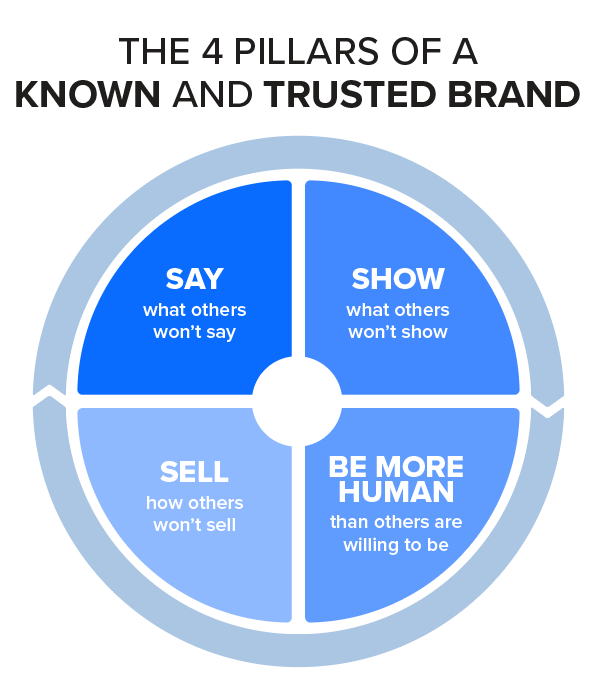
The methodology rests on four pillars:
- Say What Others Aren't Willing to Say: Address pricing, problems, and objections head-on
- Show What Others Aren't Willing to Show: Use video to demonstrate products and processes
- Sell in a Way Others Aren't Willing to Sell: Empower buyers with self-service tools and educational resources
- Be More Human Than Others Are Willing to Be: Build genuine connections through authentic content
These four pillars work together to create a trust-building engine that differentiates your business in ways competitors struggle to replicate.
Endless Customers cost breakdown: Salary, tools, and time investment
Most businesses implementing Endless Customers need at least one full-time person dedicated to content creation, typically a Content Manager and/or Videographer, representing a significant investment in both salary and time.
For companies with £750k–£3.75m ($937k–$4.7m) in revenue, expect one hybrid role costing £30k–£50k ($37.5k–$62.5k) annually. For those over £3.75m ($4.7m), a team of 3–5 specialists is typical, whilst under £750k ($937k) often means the business owner handles content themselves.
Beyond staffing, you'll need video equipment (£3k–£7.5k / $3.75k–$9.4k), website improvements (£2.25k–£7.5k+ / $2.8k–$9.4k+ annually), and content tools (£750–£3.75k / $937–$4.7k annually).
How long before you see results?
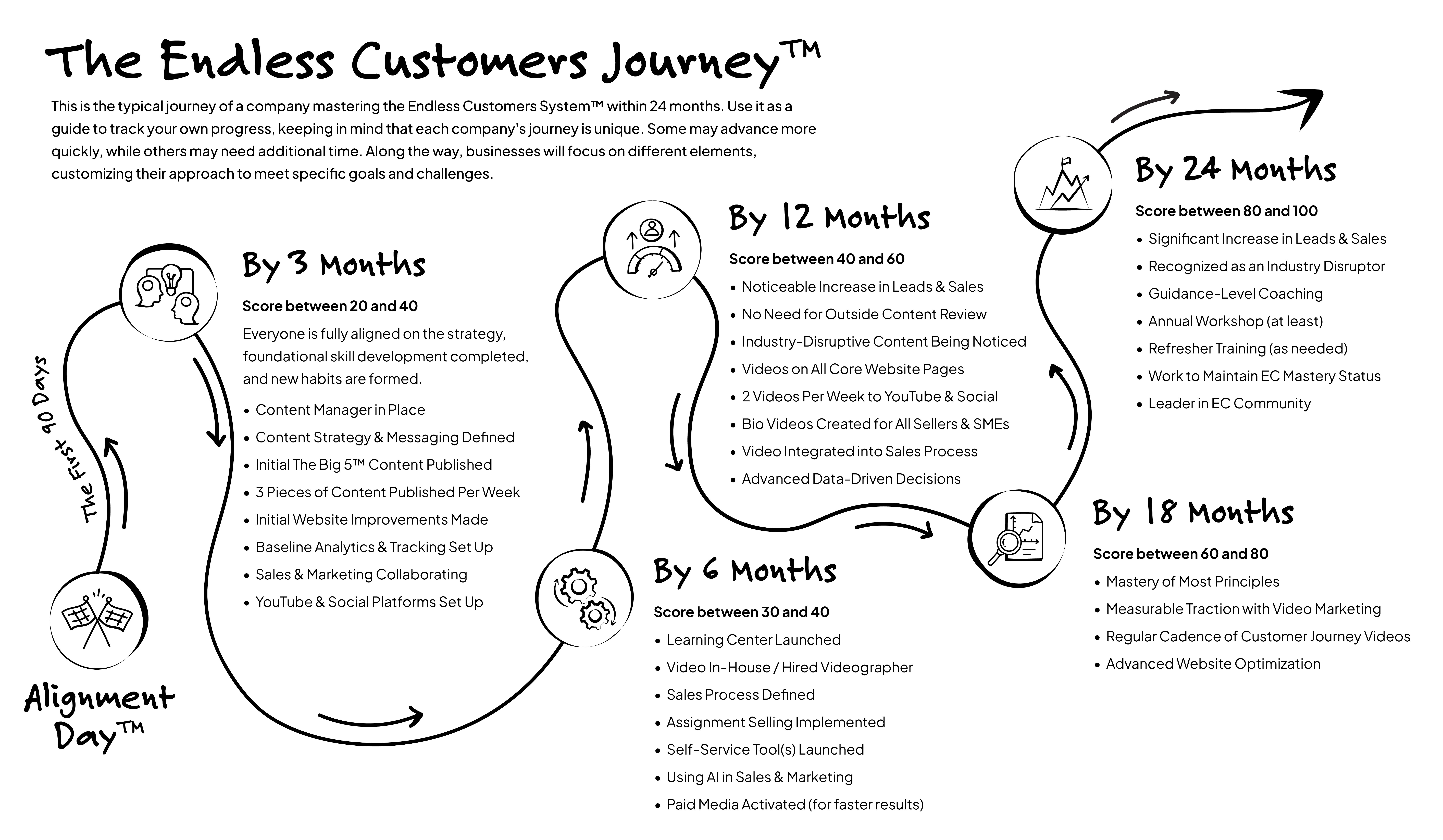
Most businesses see a noticeable increase in leads and sales by 12 months, with the typical timeline to becoming the most known and trusted brand taking 18–24 months of consistent implementation.
The first 90 days focus entirely on foundation-building, hiring content staff, defining strategy, and publishing initial Big 5 content, with measurable traction typically appearing between months 6 and 12.
By month 12, you'll have industry-disruptive content being noticed, videos integrated throughout your sales process, and a noticeable increase in qualified leads. By month 24, most committed businesses achieve significant revenue growth and recognition as market leaders.
Of course, no strategy is perfect. Before jumping in, it's critical to understand where Endless Customers may fall short.
The real problems and limitations of Endless Customers
Endless Customers doesn't work for every business, particularly those with short sales cycles where buyers make quick, impulse decisions without engaging deeply with educational content.
Industries like restaurants, convenience stores, and other low-consideration purchases typically see limited results because buyers aren't researching extensively before deciding.
Specific limitations include:
- Requires longer sales cycles and research-heavy buyers
- Demands significant resource commitment (3+ articles weekly)
- Takes 18–24 months for full results
- Requires company-wide cultural change
- Not suitable for businesses unwilling to be transparent about pricing or problems
Common challenges when implementing Endless Customers
The most common reason Endless Customers fails is organisational resistance, with teams defaulting to the 'we're different' mindset or 'this wouldn't work in our industry' rather than embracing the required radical transparency.
Additional barriers include loss aversion bias ('if it ain't broke, don't fix it'), organisational inertia ('this is how we've always done it'), and career risk aversion ('what if this fails and we look bad').
Overcoming these challenges requires visible leadership commitment and a willingness to confront internal discomfort before expecting external results.
Endless Customers vs. traditional marketing: An Honest Comparison
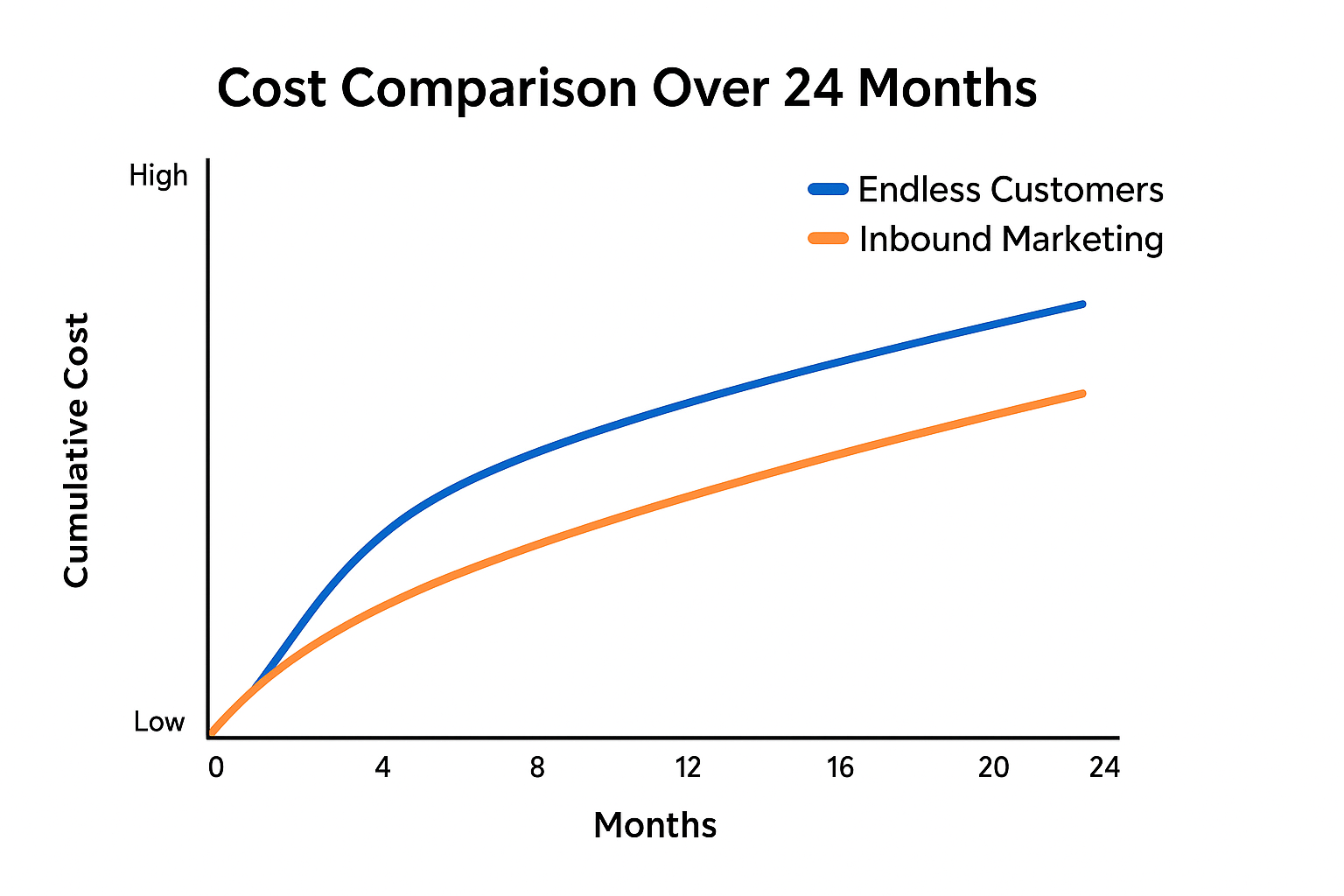
Unlike traditional marketing that prioritises brand messaging and top-of-funnel awareness, Endless Customers flips the strategy by creating content for actual buyers, people closest to purchasing, rather than casual browsers.
Where most agencies outsource content and avoid controversial topics, Endless Customers requires bringing content in-house and addressing the exact questions, fears, and objections competitors refuse to discuss.
The fundamental difference: traditional marketing asks "How do we promote ourselves?" whilst Endless Customers asks "What does our buyer need to know to make an informed decision?"
This shift from promotion to education is what makes the methodology so effective—and so difficult for competitors to copy.
Who Endless Customers works best for (and who should skip it)
Endless Customers delivers exceptional results for businesses where buyers conduct significant research and engage deeply with content before purchasing, particularly B2B services, construction, healthcare, home improvement, insurance, manufacturing, and real estate.
The methodology thrives in industries where trust is paramount, sales cycles are longer, and buyers need extensive education before feeling confident enough to decide.
Best fit: B2B services, construction, healthcare, home improvement, insurance, manufacturing, real estate, SaaS.
Poor fit: Restaurants, convenience retail, low-cost impulse purchases, emergency services.
The key determining factor: Does your customer spend time researching before buying? If yes, Endless Customers likely fits. If no, you'll struggle.
Real results: Case studies from businesses that actually did this
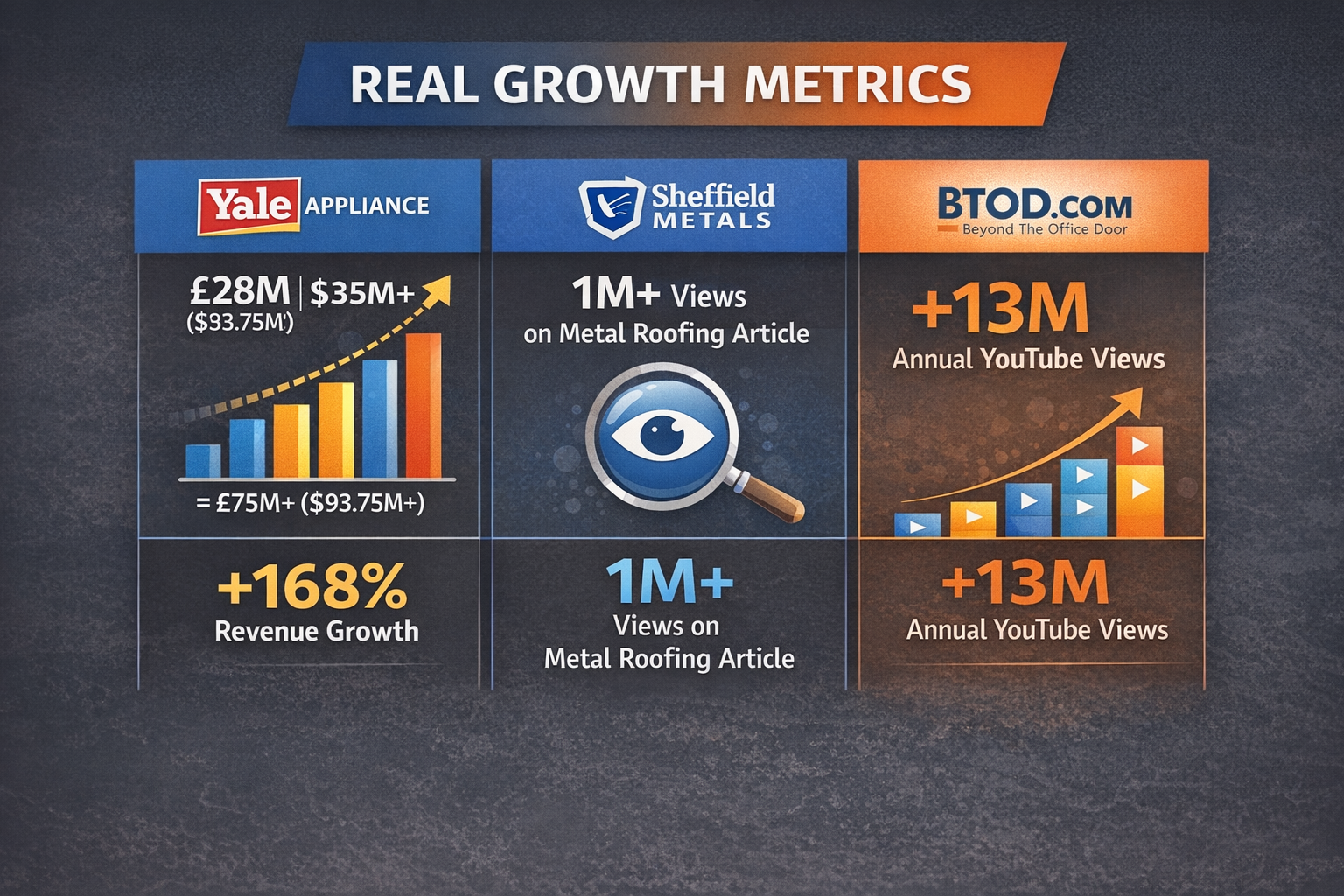
Yale Appliance transformed from a struggling local retailer to the most known and trusted brand in the home appliance space, growing from £28m ($35m) with one store to £75m+ ($93.75m+) with four stores.
Sheffield Metals' article addressing metal roofing problems has received over 1 million views. BTOD.com generates 13 million YouTube views annually after implementing the methodology. RetroFoam of Michigan built one of the most trusted insulation brands by openly discussing when their product isn't the best choice.
The common thread: obsessively answering buyer questions with radical transparency.
Is this just They Ask, You Answer rebranded? What changed and why
Endless Customers is the evolution of They Ask, You Answer, updated for an AI-first world where zero-click searches, ChatGPT recommendations, and AI-generated overviews have fundamentally changed how buyers discover businesses.
The core principles remain, radical transparency, The Big 5 topics, but the methodology now addresses how to get cited by AI systems and create brand signals rather than just driving website traffic.
The rebrand reflects reality: more than 50% of Google searches now end without a click. AI systems increasingly provide answers without users visiting websites. Where TAYA focused primarily on driving website traffic through search, Endless Customers accounts for a world where AI intermediaries like ChatGPT and Google's AI Overviews decide which brands get recommended, making trust signals and comprehensive content more critical than ever.
The Verdict: Is Endless Customers worth it in 2026 and beyond?
Endless Customers is not a marketing fad; it's a fundamental shift in how businesses build trust in an era where 80% of the buying process happens before prospects ever speak to sales.
If your business fits the profile (longer sales cycles, research-heavy buyers, trust-driven decisions), has leadership willing to commit to transparency, and can dedicate resources for 18–24 months, the methodology delivers measurable, sustainable competitive advantage.
Use this decision framework:
- Do your buyers research extensively before purchasing?
- Can you commit at least one full-time person to content creation?
- Is leadership willing to be radically transparent about pricing, problems, and comparisons?
- Do you have 18–24 months to invest before expecting full results?
If you answered yes to all four, Endless Customers represents one of the most effective long-term growth strategies available today.
FAQ: Your honest questions answered
Do I need to buy the book or hire IMPACT to make this work?
No, the book provides everything you need to implement Endless Customers yourself, though most businesses reach mastery faster when working with certified coaches who provide guidance and accountability.
IMPACT offers coaching, training, and community access, but self-implementation using the book and Endless Customers Companion Guide is entirely viable for committed teams.
Will addressing problems and pricing online hurt our sales?
The opposite happens, businesses that address pricing, problems, and concerns transparently build significantly more trust and see higher conversion rates because buyers feel educated and confident rather than manipulated.
Buyers will discover your 'elephants in the room' anyway. Addressing them first positions you as the honest advisor.
What if my competitors copy what we're doing?
Most competitors won't copy you because they lack the courage, commitment, and cultural buy-in required to be radically transparent, and even if they try, you've already established first-mover advantage.
Companies that succeed continuously innovate, creating competitive moats nearly impossible to replicate.
Can this work in regulated industries like finance or healthcare?
Yes, Endless Customers works in heavily regulated industries, businesses simply need to work within compliance boundaries whilst still being as transparent as legally and ethically possible.
Companies in insurance, healthcare, and financial services have successfully implemented the methodology by getting legal approval on content and focusing on education rather than specific recommendations that violate regulations.
Is this methodology still relevant with AI changing everything?
Endless Customers is more relevant than ever because AI systems like ChatGPT and Google's AI Overviews cite and recommend brands that comprehensively answer buyer questions with authoritative, transparent content, exactly what the methodology teaches.
The shift to zero-click searches and AI-driven recommendations actually rewards the core principle: say what others aren't willing to say and become the source that both humans and AI trust.
Conclusion
If you're struggling with long sales cycles, inconsistent leads, or a lack of buyer trust, you're not alone. These are the exact challenges that drive business owners to search for a better approach—and to wonder whether Endless Customers is the answer.
You've now got the honest truth about Endless Customers—what it is, what it costs, who it works for, and what results you can realistically expect.
The methodology isn't perfect, and it's not for everyone. But for businesses where buyers do significant research, where trust matters, and where leadership is willing to be genuinely transparent, it represents a proven path to market dominance. The question isn't whether the principles work—thousands of businesses worldwide have proven they do. The question is whether you're willing to commit to the cultural change required.
Most of your competitors won't. That's your opportunity. Start your journey by accessing the Companion Guide or scheduling your first Alignment Day.
How to take action Now
- Access the Endless Customers Companion Guide to start building your content strategy roadmap
- Complete an honest self-assessment using the four decision framework questions above
- Calculate your potential investment based on your revenue band
- Schedule an Alignment Day to align your leadership team and kickstart implementation
- Join the IMPACT+ community to connect with other businesses implementing the strategy
Related reading: Endless Customers Budget: First-Year Internal Implementation Costs
If you're serious about implementing Endless Customers but don't want to go it alone, my In-House Sales & Marketing Mastery programme can provide the expert support and training your team needs to succeed.

About the Author
I help business leaders and their teams build internal capabilities to generate endless customers and steady revenue growth. With experience working both in-house and within agencies, I've guided companies through the complete Endless Customers implementation journey—from initial alignment through achieving mastery status. My approach combines hands-on support, strategic guidance, and comprehensive training so you can end agency dependency and own your growth strategy completely.
Pricing Disclaimer: All GBP–USD price conversions are rounded estimates and correct at the time of publishing. Exchange rates fluctuate and figures should be treated as indicative only.
Topics: