
Key Takeaways
- The three implementation paths for Endless Customers are: working with a Certified Coach for full support, hiring consultants for strategic sessions like Alignment Days, or doing it yourself using the book and community resources.
- DIY implementation has the lowest financial cost but the highest time investment and risk of failure due to team resistance, lack of accountability, and the "prophet in your hometown" problem where familiar leaders struggle to create urgency.
- Companies working with Certified Coaches typically see measurable results by 12 months and reach Endless Customers scores of 40-60, while DIY paths take longer due to trial and error and potential wrong turns.
- The consulting middle-ground works best for businesses six months into their journey who need expert facilitation for Alignment Days and quarterly Planning Sessions but can handle day-to-day execution independently.
- You can start with one path and switch later—many companies begin DIY and bring in coaching support after realising they need help accelerating progress or getting unstuck.
You've decided to implement the Endless Customers System. Now comes the harder question: should you hire a Certified Coach, bring in a consultant for key moments, or do it yourself with the book and community resources?
Choose the wrong path and you risk wasting months of effort, burning through budget on an approach that doesn't fit your team, or watching momentum die as internal resistance wins out. Patrick Accounting tried DIY for six months before realising their sales and marketing teams were talking past each other, costing them half a year of potential progress.
This article gives you a clear framework for deciding which implementation path fits your team's capabilities, budget, and timeline. You'll understand the real costs, hidden challenges, and timeline differences between coaching, consulting, and DIY, so you can choose confidently and avoid costly mistakes.
What is the Endless Customers System?
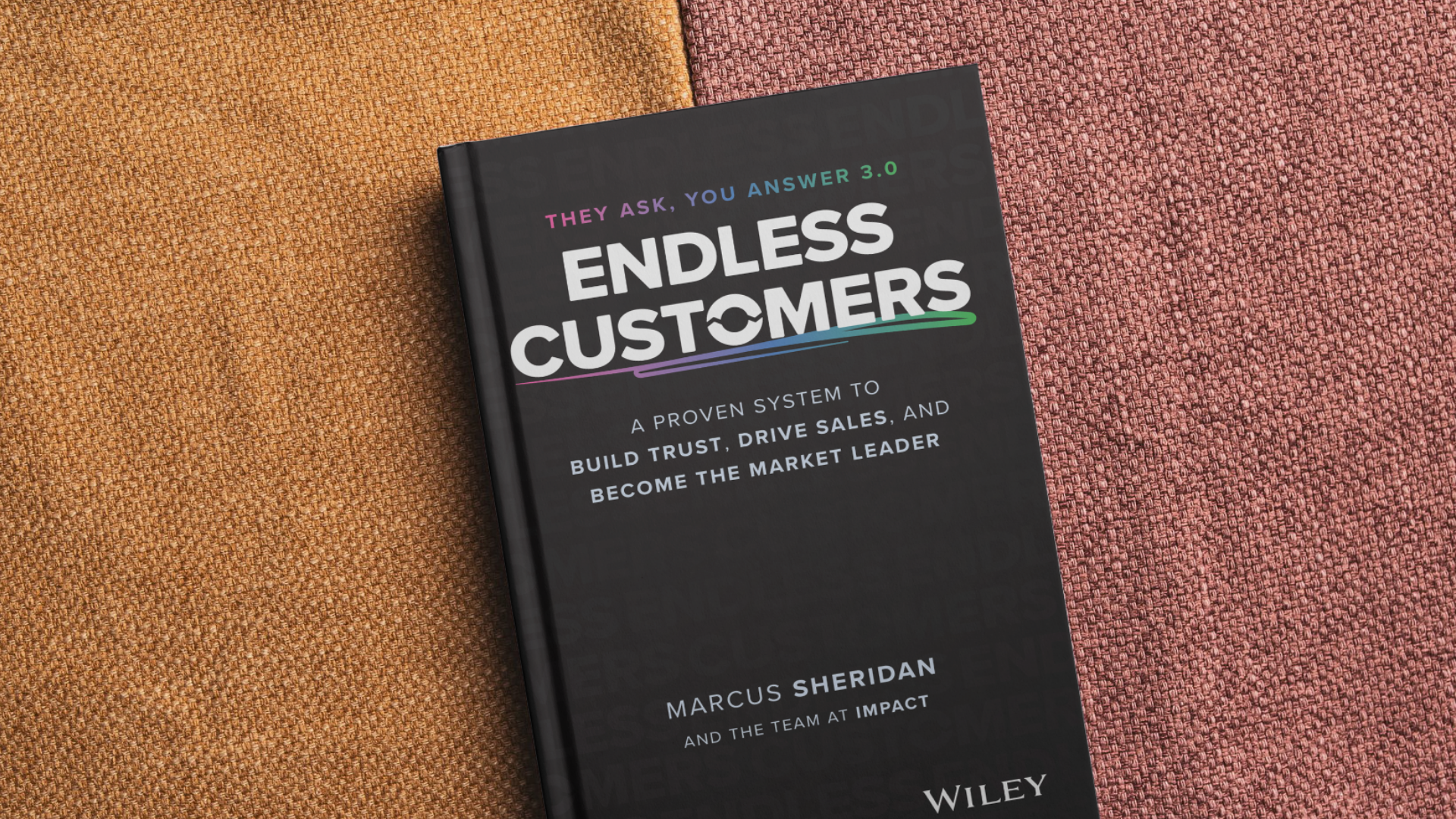
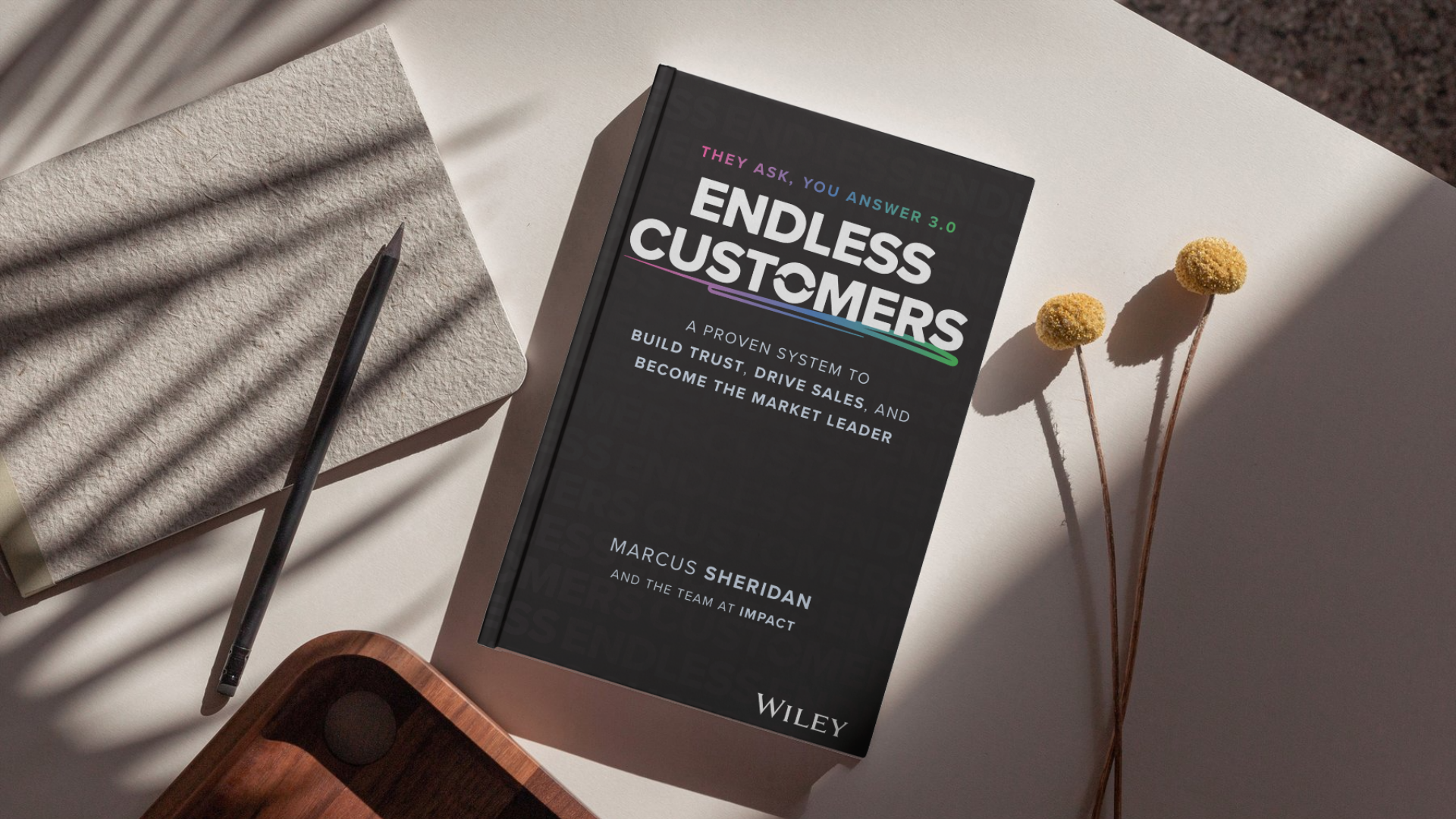
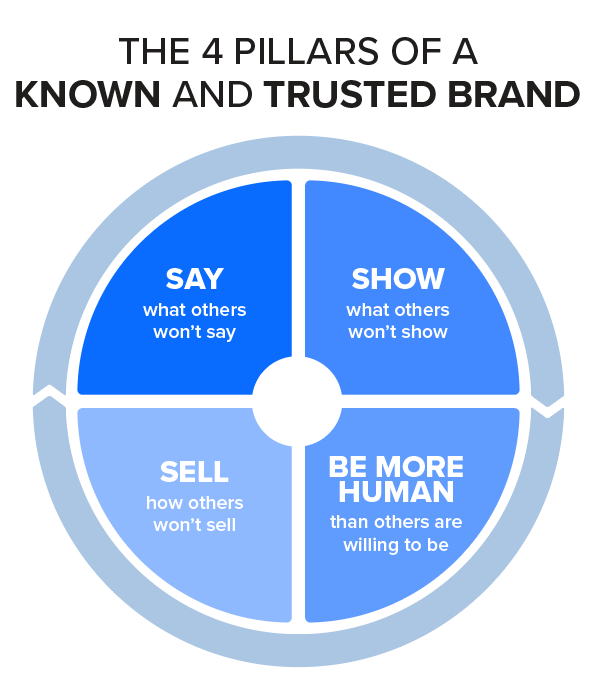
The Endless Customers System is a buyer-focused sales and marketing methodology designed to make your company the most known and trusted brand in your market. It's built on four pillars: saying what others won't say, showing what others won't show, selling in ways others won't sell, and being more human than others, combined with five key components for sustainable success:
- The Right Content: Trust-building articles and resources answering buyer questions
- The Right Website: Self-service tools, transparent messaging, and conversion-focused design
- The Right Sales Activities: Assignment Selling and content-driven conversations
- The Right Technology: CRM, automation, and AI tools that support the buyer journey
- The Right Culture: Leadership alignment, accountability, and continuous improvement
Originally developed from the They Ask, You Answer philosophy, the system focuses on addressing buyer questions transparently through content, while aligning sales and marketing teams around trust-building activities. The approach is most effective for businesses with £750,000–£75M ($937,500–$93.75M) in annual revenue operating in industries where buyers conduct significant research before purchasing.
Three implementation paths compared: Coaching, consulting, and DIY
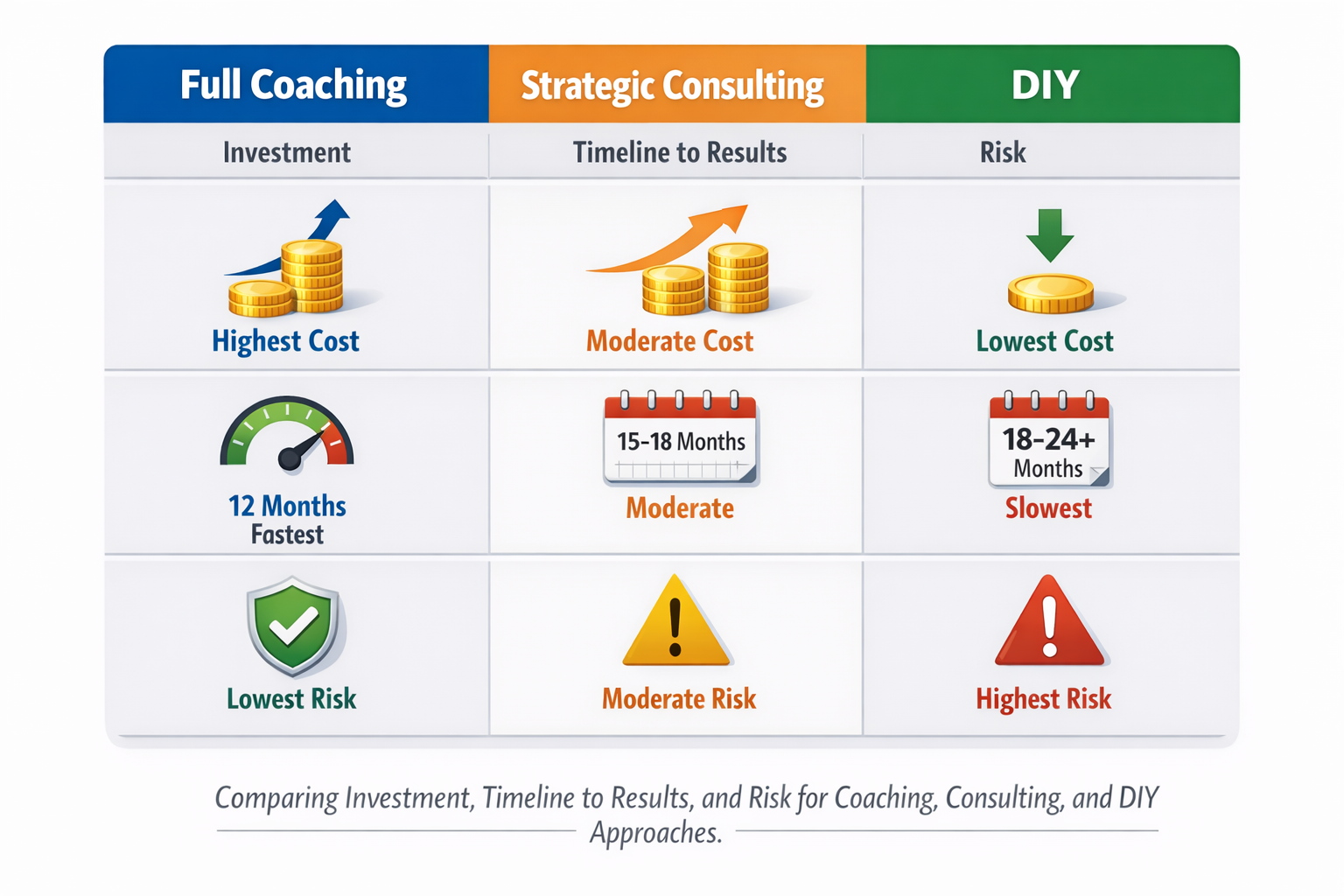
The three primary ways to implement the Endless Customers system are working with a Certified Coach for ongoing guidance, hiring consultants for specific strategic sessions, or doing it yourself using the book and community resources. Each approach offers different levels of support, time commitment, and investment.
Coaching provides full-service support with regular check-ins and accountability. Consulting offers targeted help for moments like Alignment Days and quarterly Planning Sessions. DIY relies on your internal team executing the strategy with guidance from the book and companion resources.
| Factor | Full Coaching | Strategic Consulting | DIY |
|---|---|---|---|
| Upfront Investment | Highest | Medium | Lowest |
| Time to Results | Fastest (12 months) | Medium (15-18 months) | Slowest (18-24+ months) |
| External Accountability | Consistent | Quarterly touchpoints | None |
| Risk of Failure | Lowest | Medium | Highest |
| Best For | Teams needing guidance | Capable teams needing strategic moments | Disciplined, experienced teams |
Endless Customers coaching: What you get and who it's for
Working with an Endless Customers Certified Coach means having an experienced guide who facilitates your Alignment Day, quarterly Planning Sessions, and provides ongoing support as your team masters the system. Coaches bring an outside perspective that cuts through internal resistance and helps leadership messages resonate differently with teams.
Some businesses engage coaches as a full support system from day one, while others use them strategically for key meetings like Alignment Days and quarterly reviews. The flexibility allows companies to scale coaching support based on their specific needs, team capabilities, and comfort level with independent execution.
My In-House Sales and Marketing Mastery programme provides this structured support over 18-24 months, combining monthly coaching sessions with practical training on content creation, sales enablement, and technology implementation.
Strategic consulting: When expert facilitation makes the difference
The consulting approach works best when your team is capable of executing the strategy independently but needs expert facilitation for moments like Alignment Days and Planning Sessions. This middle-ground option focuses on bringing in certified coaches for strategic inflection points while your internal team handles day-to-day implementation.
Companies that choose consulting are often six months or more into their journey and need help getting unstuck, realigning their teams, or ensuring they're not missing key opportunities. This approach costs less than full coaching but provides professional guidance at strategic moments when having an outside voice matters most.
My Company Alignment Workshop service provides exactly this, intensive facilitation to unite your entire team around the Endless Customers principles and set your 90-day action plan.
Pricing breakdown: What each implementation path really costs
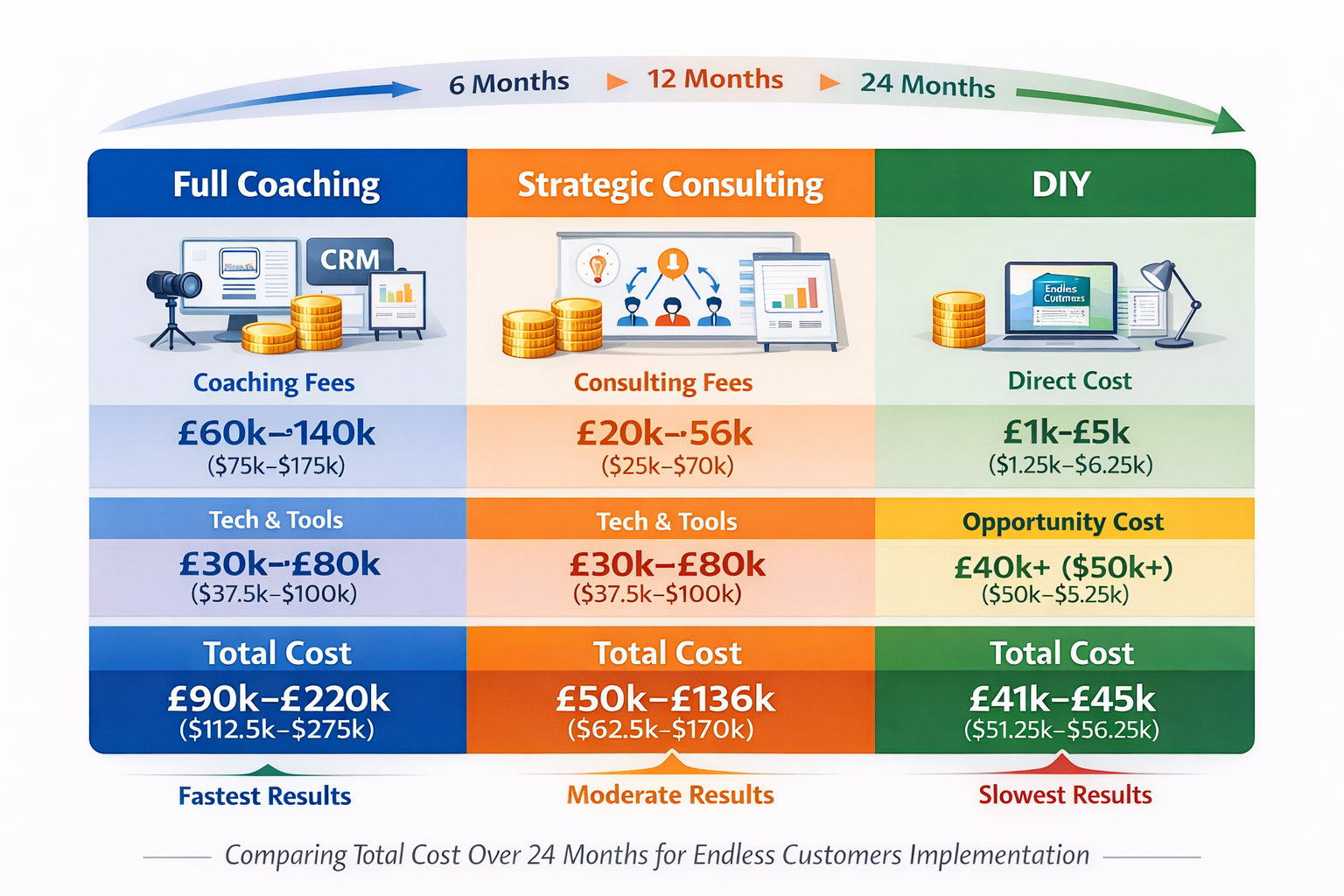
DIY implementation requires the lowest financial investment, primarily the cost of the book, companion guide access, and potential community membership, but demands the highest internal time investment from your leadership and team. Consulting services for facilitated Alignment Days and quarterly Planning Sessions typically represent a mid-tier investment, while full Certified Coach support involves the highest financial commitment but accelerates results and reduces implementation risks.
For transparency, my Company Alignment Workshop starts at £3,200 ($4,000) for virtual delivery or £4,000 ($5,000) plus travel for in-person sessions. The In-House Sales and Marketing Mastery programme is structured over 18-24 months with pricing dependent on your business size, current capabilities, and specific needs. Coaching fees typically fall at the higher end for businesses requiring more intensive support during the early months, or those with larger teams requiring additional facilitation.
Beyond direct coaching or consulting fees, all three approaches require investment in tools like a CRM, website platform, video equipment, and potentially self-service tools like pricing calculators. Most businesses spend £15,000–£40,000 ($18,750–$50,000) annually on these supporting technologies regardless of which implementation path they choose.
The real cost consideration isn't just money; it's the opportunity cost of slower implementation, potential missteps, and the risk of your team losing momentum without external accountability.
| Cost Factor | Full Coaching | Strategic Consulting | DIY |
|---|---|---|---|
| Coaching/Consulting Fees | £30,000–£60,000/year ($37,500–$75,000) | £8,000–£16,000/year ($10,000–$20,000) | £0 |
| Technology & Tools | £15,000–£40,000/year ($18,750–$50,000) | £15,000–£40,000/year ($18,750–$50,000) | £15,000–£40,000/year ($18,750–$50,000) |
| Internal Time Investment | Lower | Medium | Highest |
| Hidden Opportunity Cost | Lowest | Medium | Highest |
Note: Estimates are indicative ranges based on typical mid-market businesses implementing Endless Customers.
Problems and drawbacks: What can go wrong with each approach
Every implementation path comes with distinct challenges that can derail your success if you're not prepared.
DIY risks include team members resisting change because "we're different," leadership messages getting stale from over-familiarity (the "prophet in your hometown" problem), and teams working in silos without unified vision. Patrick Accounting experienced exactly this—their sales and marketing teams worked in silos, leading to miscommunication and frustration. When Matt Patrick and Mike Schaeffer realised they were stuck, they brought in Certified Coach Chris Duprey to facilitate their Alignment Day. "We went from talking past each other to truly collaborating," Matt Patrick shared. "If we hadn't done that Alignment Day, we'd still be spinning our wheels."
Coaching eliminates most execution risks but requires budget allocation that some companies struggle to justify.
Consulting can create gaps between strategic sessions when teams lose focus or drift from the plan.
Understanding these potential pitfalls before choosing your path helps you build safeguards and set realistic expectations.
Why DIY implementation fails: The human nature challenge
The biggest failure point for DIY implementation isn't lack of knowledge; it's the human nature challenge of teams dismissing new ideas from familiar leaders. As one client discovered after finally bringing in a coach: "They just said what I've been saying for months, and the team acted like it was brand new."
This "prophet in your hometown" problem means your message, no matter how correct, doesn't hit with the same impact when it comes from leadership your team hears from constantly. DIY teams also struggle with accountability, consistency, and knowing what to prioritise in their 90-day Focus Areas without external benchmarks. Without a coach to facilitate Alignment Day, sales and marketing teams often work in silos, leading to miscommunication that can take months to identify and correct.
Timeline to results: When will you see progress?
Working with a Certified Coach from the start typically produces measurable results fastest, with most companies seeing noticeable increases in leads and sales by the 12-month mark and reaching Endless Customers scores of 40-60. The structured 90-day planning cycles, expert guidance, and consistent accountability help teams avoid common pitfalls and maintain momentum.
DIY implementation generally takes longer because of trial and error, potential wrong turns, and the time required for leadership to build internal buy-in without external facilitation. Most DIY teams take 18-24+ months to reach the same milestones coached teams hit at 12-15 months.
Consulting falls in the middle, offering accelerated progress at key milestones while accepting slower progress between strategic sessions.
| Milestone | Full Coaching | Strategic Consulting | DIY |
|---|---|---|---|
| 6 Months | Score 30-40, content foundation established | Score 25-35, some content published | Score 20-30, planning underway |
| 12 Months | Score 40-60, noticeable lead increases | Score 35-50, moderate progress | Score 30-45, early traction |
| 18 Months | Score 60-80, mastery of most principles | Score 50-70, strong momentum | Score 40-60, steady improvement |
| 24 Months | Score 80-100, market leader status | Score 70-90, nearing mastery | Score 60-80, approaching mastery |
Who is (and isn't) a good fit for each path
Full coaching support is ideal for companies that want to accelerate results, have budget available, struggle with internal accountability, or have teams resistant to change from leadership. It's also the best choice for businesses in competitive markets where speed-to-market matters and the opportunity cost of slow implementation outweighs the coaching investment.
Coaching is not the best fit for companies with severe budget constraints, businesses not ready to commit to change, or teams that already have strong internal execution capabilities and just need occasional validation.
DIY works best for highly disciplined teams with strong leadership buy-in, limited budgets, companies comfortable with longer timelines, and organisations that already have experience with frameworks like EOS or strategic execution systems. These businesses typically have regular leadership rhythms, documented processes, and a track record of implementing new strategies successfully.
The consulting middle-ground suits companies that have started implementation but feel stuck, need help with specific strategic moments, or want expert validation they're on the right track. This path is perfect for businesses with capable teams who recognise the value of an outside voice at key decision points but don't need ongoing handholding.
How to decide: A framework for choosing your path
Start by honestly assessing three factors: your team's capacity and discipline for self-execution, your budget for external support, and your timeline for needing results. Companies running on systems like EOS, participating in Vistage or EO groups, and committed to continuous improvement often succeed with DIY, while those struggling with alignment or in urgent competitive situations benefit most from coaching.
Ask yourself:
- Does your team consistently execute strategic initiatives without external accountability?
- Do you have 18-24 months to see meaningful results, or do you need faster traction?
- Will your leadership messages about change resonate with your team, or do they tune you out?
- Can you afford £30,000–£60,000 ($37,500–$75,000) annually for coaching support?
- Are you in a competitive market where speed matters more than cost savings?
Consider starting with consulting for an Alignment Day even if you plan to go DIY; this single investment eliminates the most common failure point by getting your entire team unified and focused from the start. You can always scale up to full coaching support or scale down to pure DIY after you see how your first 90 days of execution perform.
The Endless Customers community: A resource for every path
The Endless Customers community serves as a behaviour change-maker and knowledge multiplier regardless of which implementation path you choose, offering shared experiences from businesses at every stage of the journey. Members access monthly video discussions, bi-annual conferences, comprehensive learning resources, courses, and certifications that accelerate mastery of the system.
Community membership is particularly valuable for DIY implementers who lack a coach, providing collective wisdom, peer feedback, and innovative solutions that help overcome challenges without reinventing the wheel. Even coached clients benefit from seeing how other industries apply the principles and from relationships built with like-minded business owners.
The community offers shared knowledge from businesses who've solved the problems you're facing, collaboration opportunities and peer support networks, access to courses, certifications, and comprehensive learning materials, monthly video discussions and bi-annual in-person conferences, and real examples and case studies across industries.
Frequently Asked Questions
Can we switch from DIY to coaching partway through our journey?
Absolutely—many companies start on their own and bring in a coach after six months when they realise they need help getting unstuck or accelerating progress. It's never too late to add coaching support if you find your team needs additional guidance or accountability.
How do we convince leadership to invest in coaching vs going DIY?
The most effective approach is having leaders read Endless Customers or attend an Endless Customers event where they can see the methodology firsthand and hear from other businesses achieving results. Let the system speak for itself rather than trying to pitch it internally.
What if we're in a regulated industry—will this system still work?
Yes, companies in regulated industries including insurance, healthcare, and financial services successfully implement Endless Customers by being transparent within their regulatory boundaries. The system adapts to your constraints while still allowing you to say, show, and sell differently than competitors.
Do we need to implement everything at once or can we phase it in?
The power of 90-day Planning Sessions is specifically to focus on 3-5 key priorities at a time rather than trying to do everything simultaneously. Successful implementation is about focused, consistent progress over 18-24 months, not trying to transform everything in the first quarter.
Your next step: From decision to action
You now understand the three implementation paths for Endless Customers: coaching for maximum speed and support, consulting for strategic guidance at key moments, or DIY for disciplined teams comfortable with longer timelines.
The decision comes down to honest assessment of your team's capabilities, your budget for external support, and how quickly you need results. Remember Patrick Accounting; they tried DIY, got stuck, and only saw real momentum after bringing in a coach to facilitate their Alignment Day. You don't have to make that same mistake.
Here's how to move forward:
- Benchmark where you are today by downloading the Endless Customers Scorecard
- Assess honestly whether your team has a track record of executing strategic initiatives without external accountability
- Consider an Alignment Day as your starting point, even if you plan DIY, this single investment eliminates the biggest failure point
Ready to discuss which implementation path fits your business? My Company Alignment Workshop can unite your team around the Endless Customers principles and set your 90-day action plan, whether you continue with coaching support or take it from there independently.

About the Author
I'm Tom Wardman, an Endless Customers Certified Coach helping UK businesses build in-house sales and marketing capabilities that end agency dependency. I've worked both in-house and within agencies, giving me a practical understanding of the real challenges teams face when implementing buyer-focused strategies. My Company Alignment Workshop and In-House Sales and Marketing Mastery programme are built on years of experience guiding businesses through the exact decisions outlined in this article, and I know firsthand that the right implementation path makes all the difference between struggling for years and seeing results within months.
Pricing Disclaimer: All GBP–USD price conversions are rounded estimates and correct at the time of publishing. Exchange rates fluctuate and figures should be treated as indicative only.
Topics: