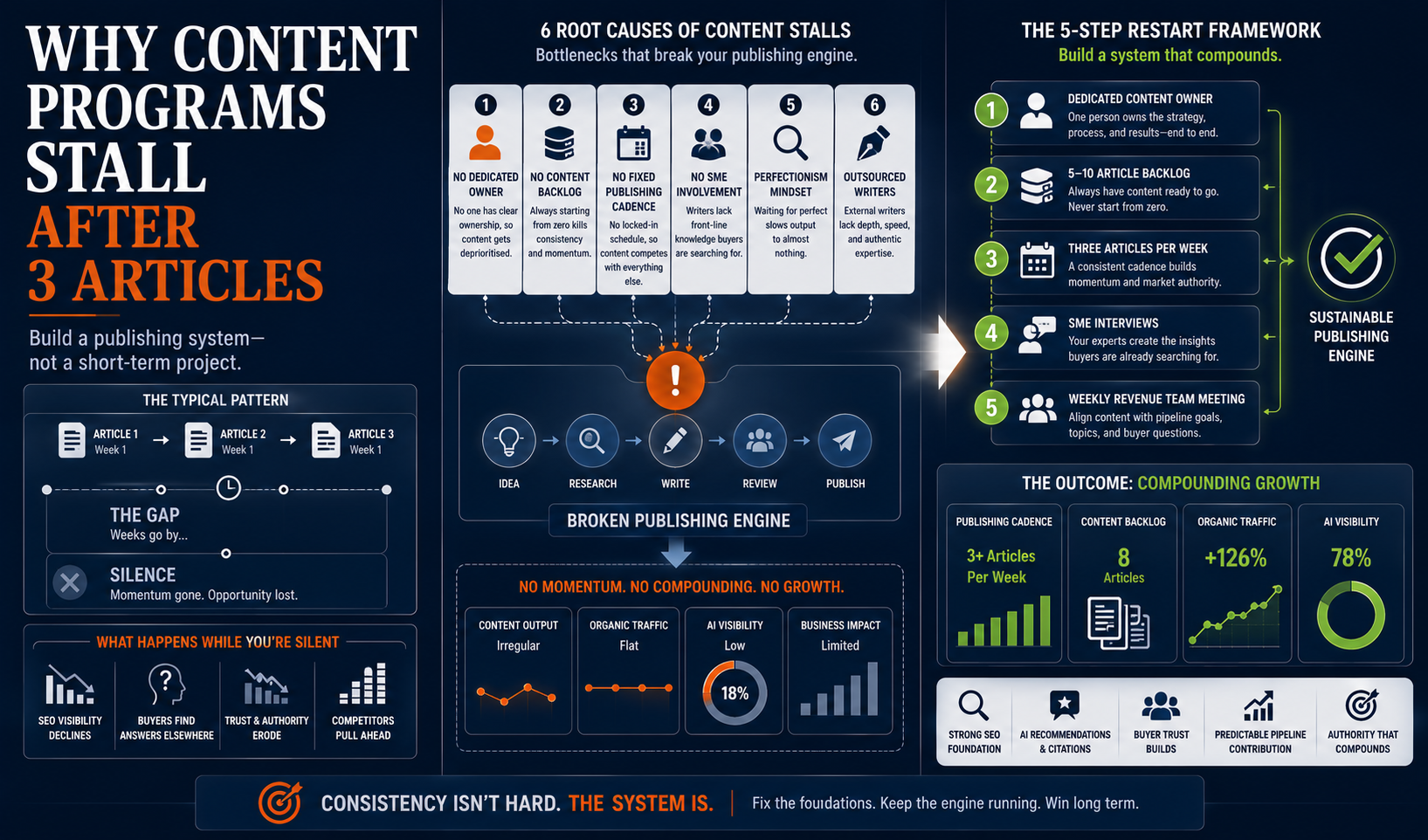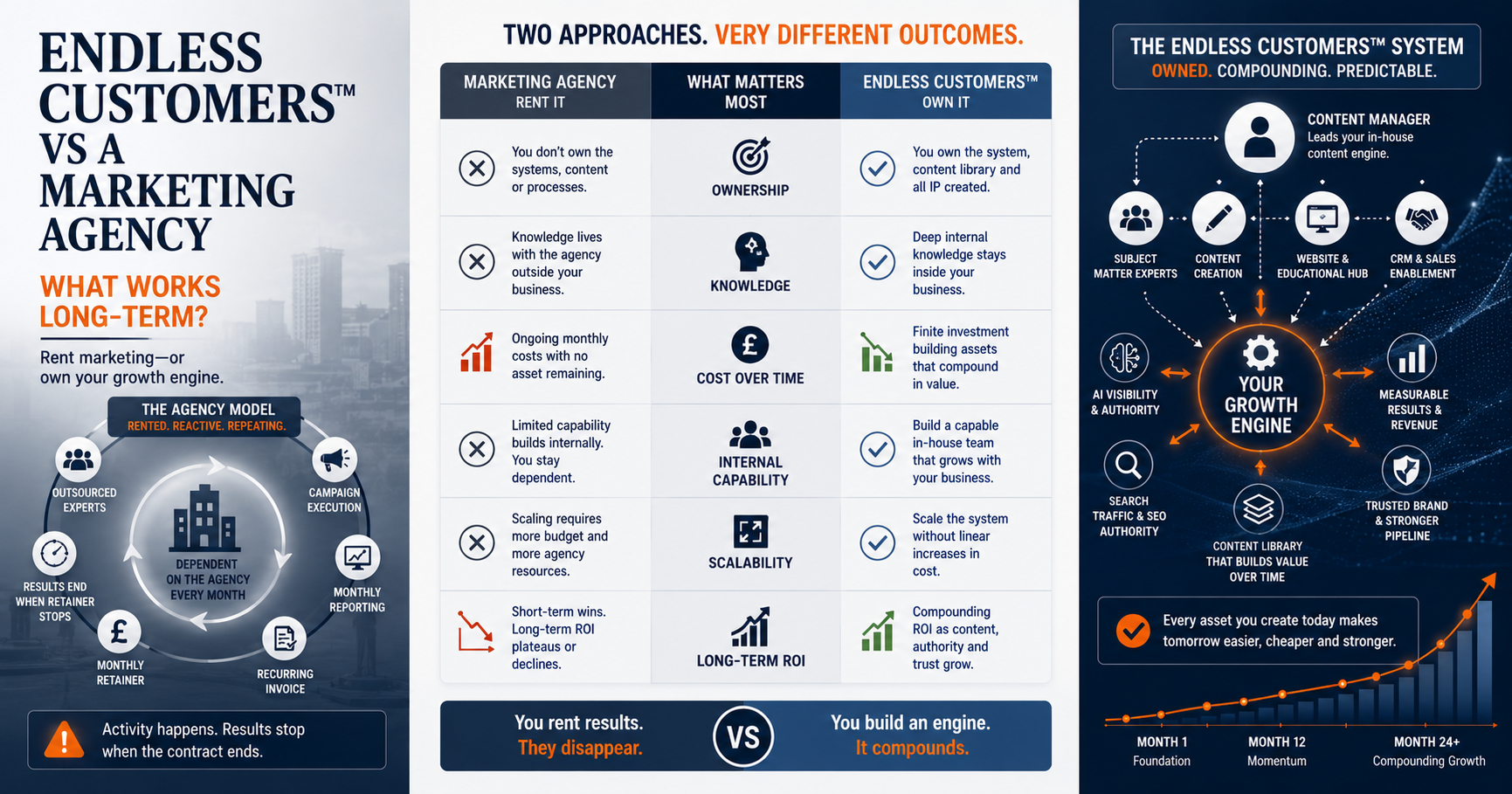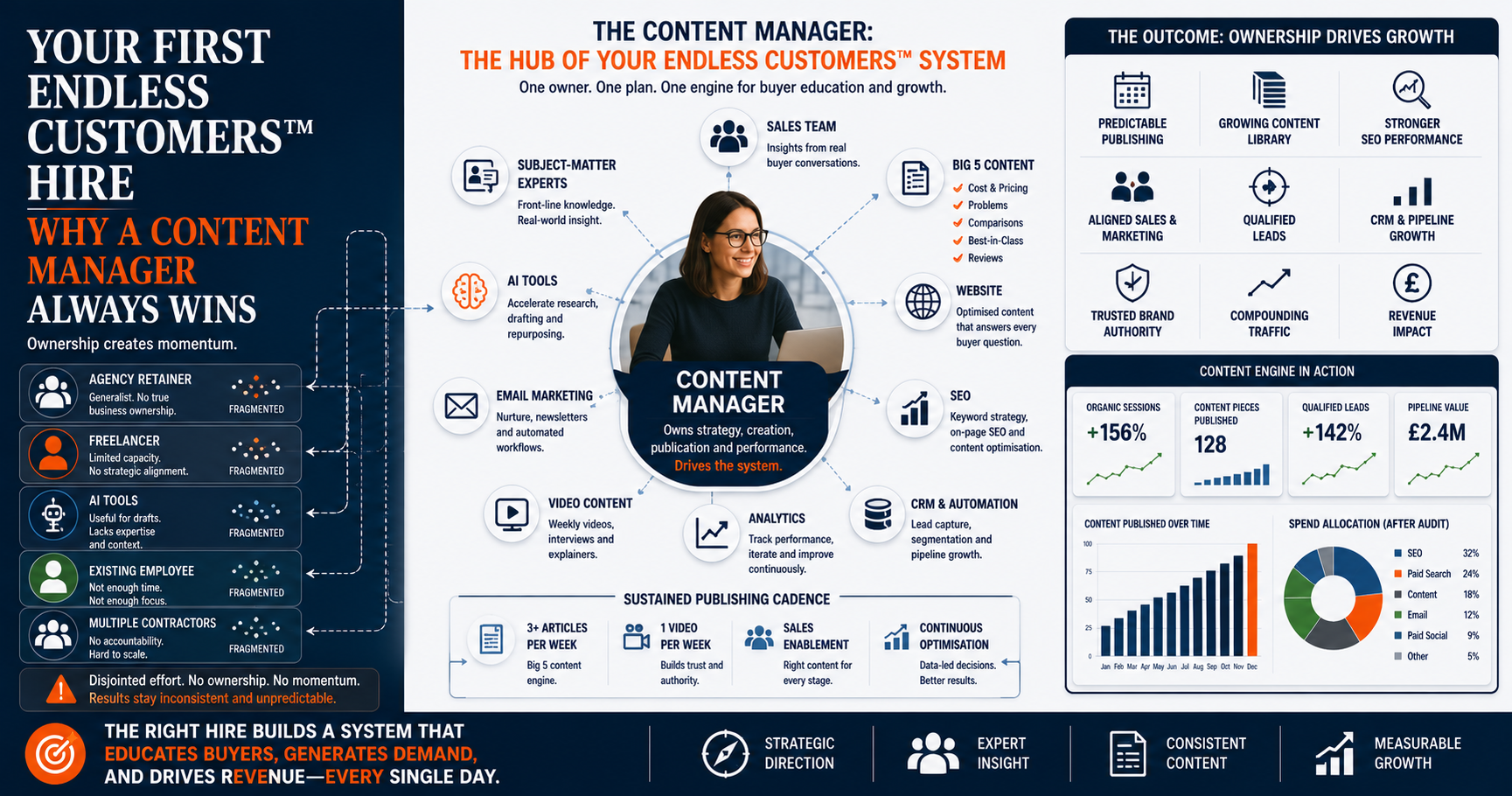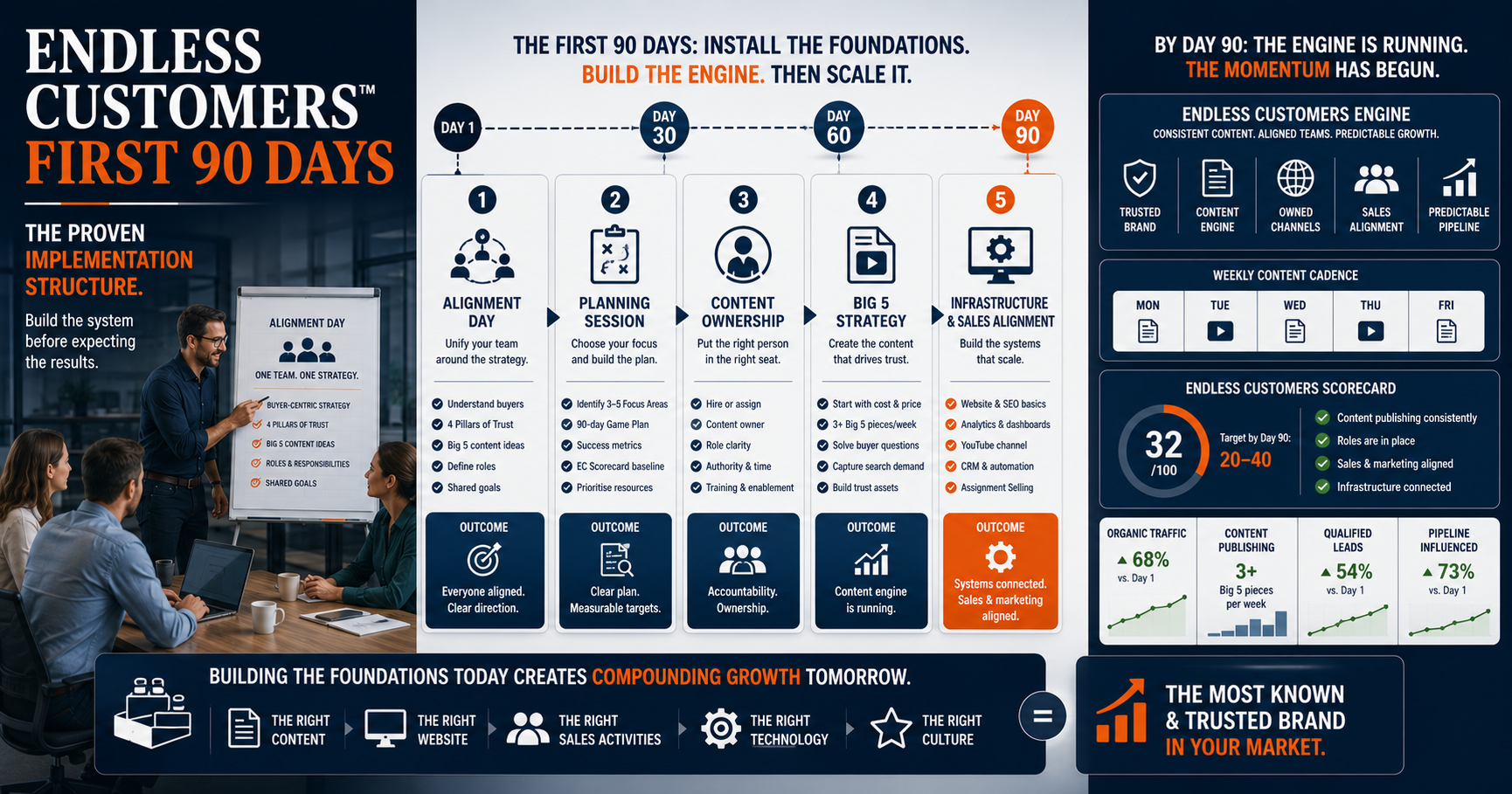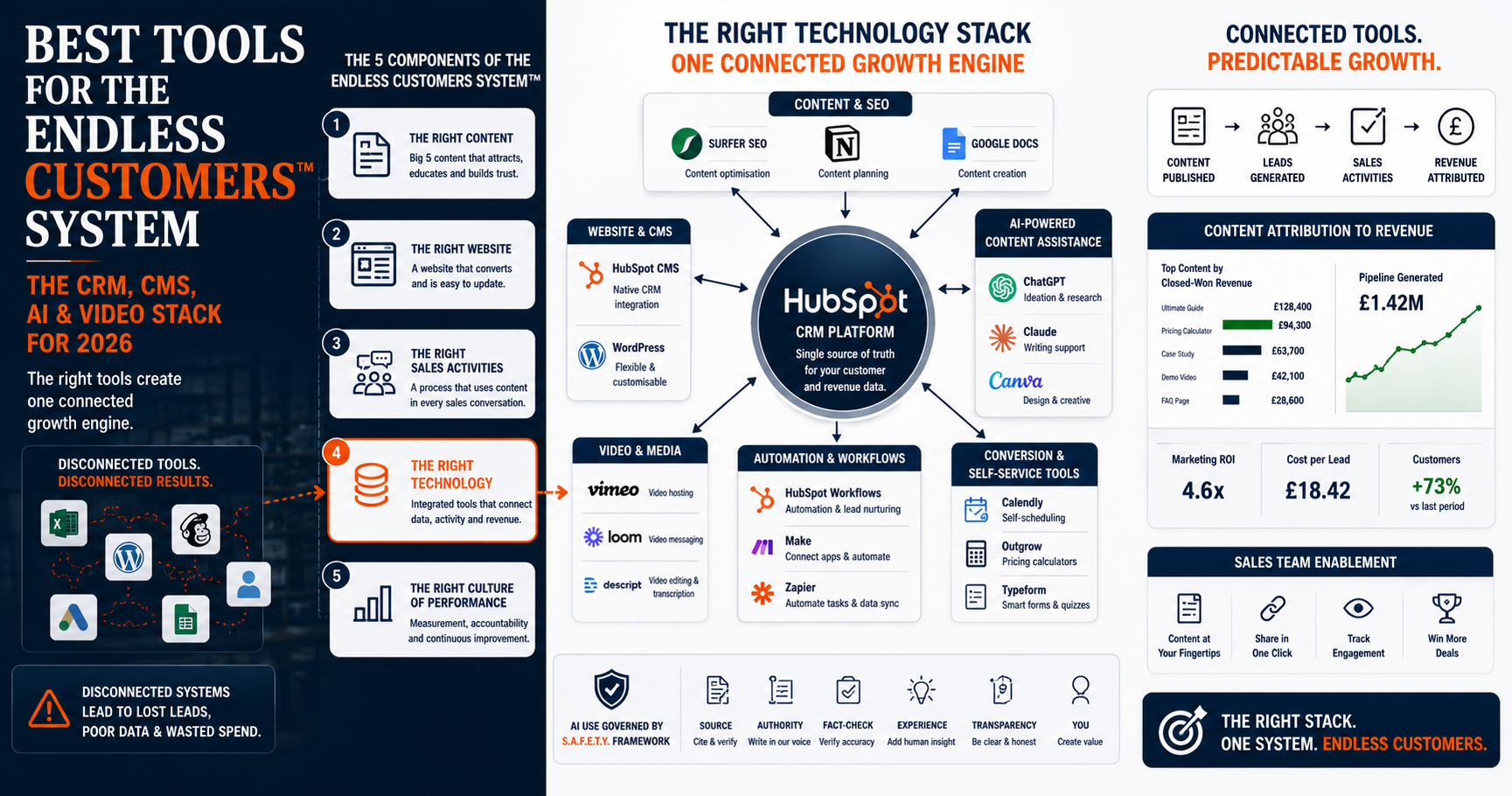

You're publishing content on schedule. The articles are solid. So why isn't your pipeline moving?
What if the problem has nothing to do with the content at all?
As a certified Endless Customers coach, I've run this exact diagnosis with founder-led businesses more times than I can count. This article is for business owners and marketing leads investing in a content framework, typically the Endless Customers System™ or a similar approach, who aren't seeing the results they expected. You'll understand exactly why alignment breakdown is the most likely culprit, how to diagnose it in your own business, and what to fix first.
Key takeaways
- Framework alignment breakdown occurs when sales, marketing, and leadership are not unified around one shared strategy, causing content output to produce no measurable growth.
- The most common mistake when a content framework underperforms is producing more content. The real problem is that existing content is not being created collaboratively or used in sales.
- Businesses with aligned sales and marketing teams close deals at 79%+, compared to around 25% for misaligned organisations.
- The fix is forming a Revenue Team and running a structured Alignment Day, not publishing more articles.
- CSI Accounting & Payroll saw a 39.7% increase in average sale price by Year 2 of aligned content and sales integration.
What is framework alignment breakdown?
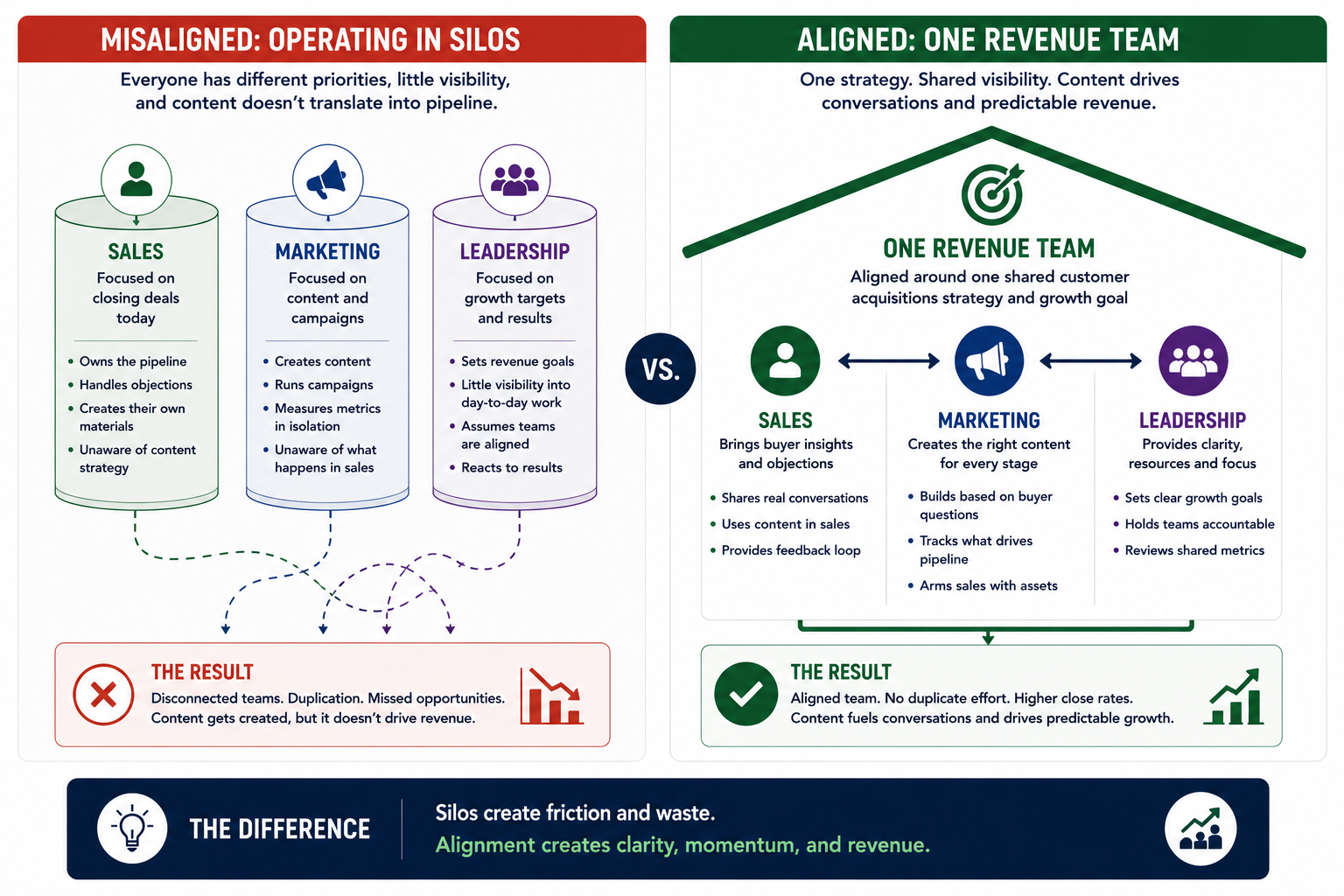
Framework alignment breakdown occurs when sales, marketing, and leadership are not unified around a single customer acquisition strategy, causing a content framework to stall despite steady output.
It's the primary reason businesses report their content strategy "isn't working," even when they're regularly publishing Big 5 content and following an established method like the Endless Customers System™.
Alignment isn't just good communication. It requires sales feeding real buyer questions to marketing, marketing building content around those questions, and leadership holding the team accountable to a shared 90-day plan. Without that structure, you're running a publishing schedule, not a framework.
Is "we just need to publish more content" the real problem?
The most common mistake businesses make when their content framework underperforms is producing more content, when the real problem is that sales and marketing are not collaborating or using what already exists.
-
Misconception: "The problem is content volume."
-
Reality: "Sales and marketing are still operating as separate islands."
Buyers today are typically 80% through their buying journey before they ever speak to your sales team. Most sales teams behave as if they still control the entire process. That gap is where alignment breaks down.
Publishing more content without fixing that structural gap means more articles that nobody in sales knows about, uses, or believes in.
What are the warning signs of alignment breakdown?
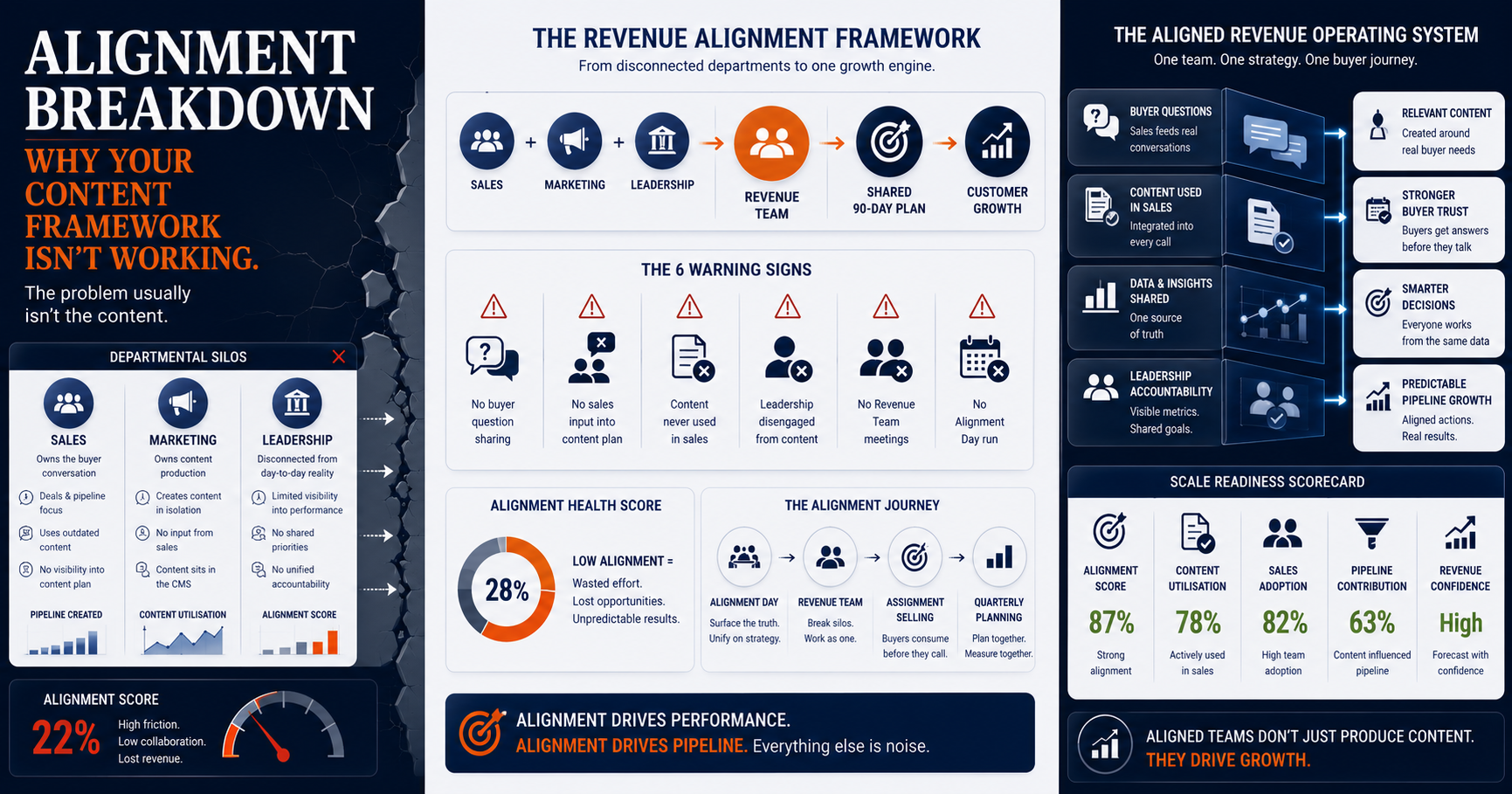
The clearest signs of framework alignment breakdown are sales and marketing operating as separate islands, each unaware of the other's priorities, published content, and performance.
6 warning signs to check:
- Sales never shares buyer questions or objections with marketing
- Marketing builds the editorial calendar with no sales input
- Published content sits in your CMS, unused in any sales conversation
- Leadership treats content strategy as a marketing-only initiative
- No Revenue Team meetings take place
- Alignment Day has never been run, or was quietly skipped
If three or more of these apply, your framework is broken at the foundation—not at the content level.
What are the 5 root causes of alignment breakdown?
Alignment breakdown stems from five root causes; most of them structural or psychological, not strategic.
Each one comes with a phrase you've probably heard in your own business:
- Organisational inertia: "This is how we've always done it."
- Leadership misalignment: "Marketing will handle that."
- Career risk aversion: "What if this fails and we look bad?"
- Siloed ownership of the buyer journey: "Our departments work fine separately."
- No structured collaboration rituals: "We'll get to the integration part later."
That last phrase is the most damaging. Every week without a functioning Revenue Team is a week your content investment delivers a fraction of what it should. For a wider view of how alignment problems escalate, see Sales and Marketing Alignment: 7 Best Practices That Work.
What is alignment breakdown actually costing you?
Businesses with alignment breakdown typically close deals at around 25%, compared to 79%+ for organisations where content is systematically integrated into every sales conversation.
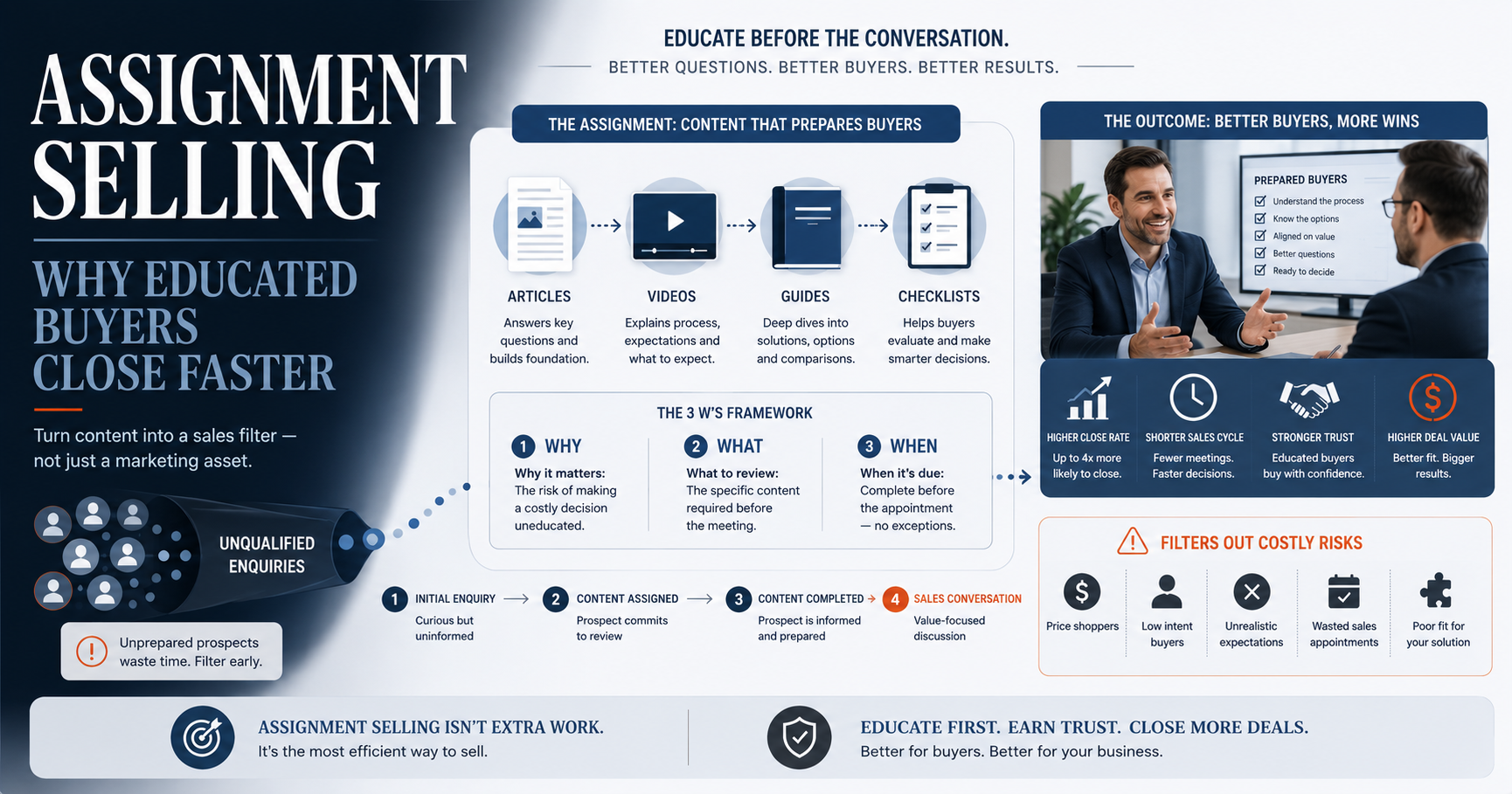
River Pools required prospects to consume specific educational content before any sales call (Assignment Selling) and moved from 75 pools sold in 250 appointments (30% close rate) to 95 pools in just 120 appointments (79% close rate) in a single year.
-Jul-23-2026-03-41-05-9875-PM.png?width=1536&height=1024&name=Generated%20image%201%20(2)-Jul-23-2026-03-41-05-9875-PM.png)
CSI Accounting & Payroll aligned their content with their sales process and embedded Assignment Selling. Average sale price rose 10.19% in Year 1 and 39.7% by Year 2.
Beyond close rates, the cost of misalignment shows up in wasted content production hours, longer deal cycles, and inconsistent messaging that slowly erodes buyer trust.
How do you fix alignment breakdown?
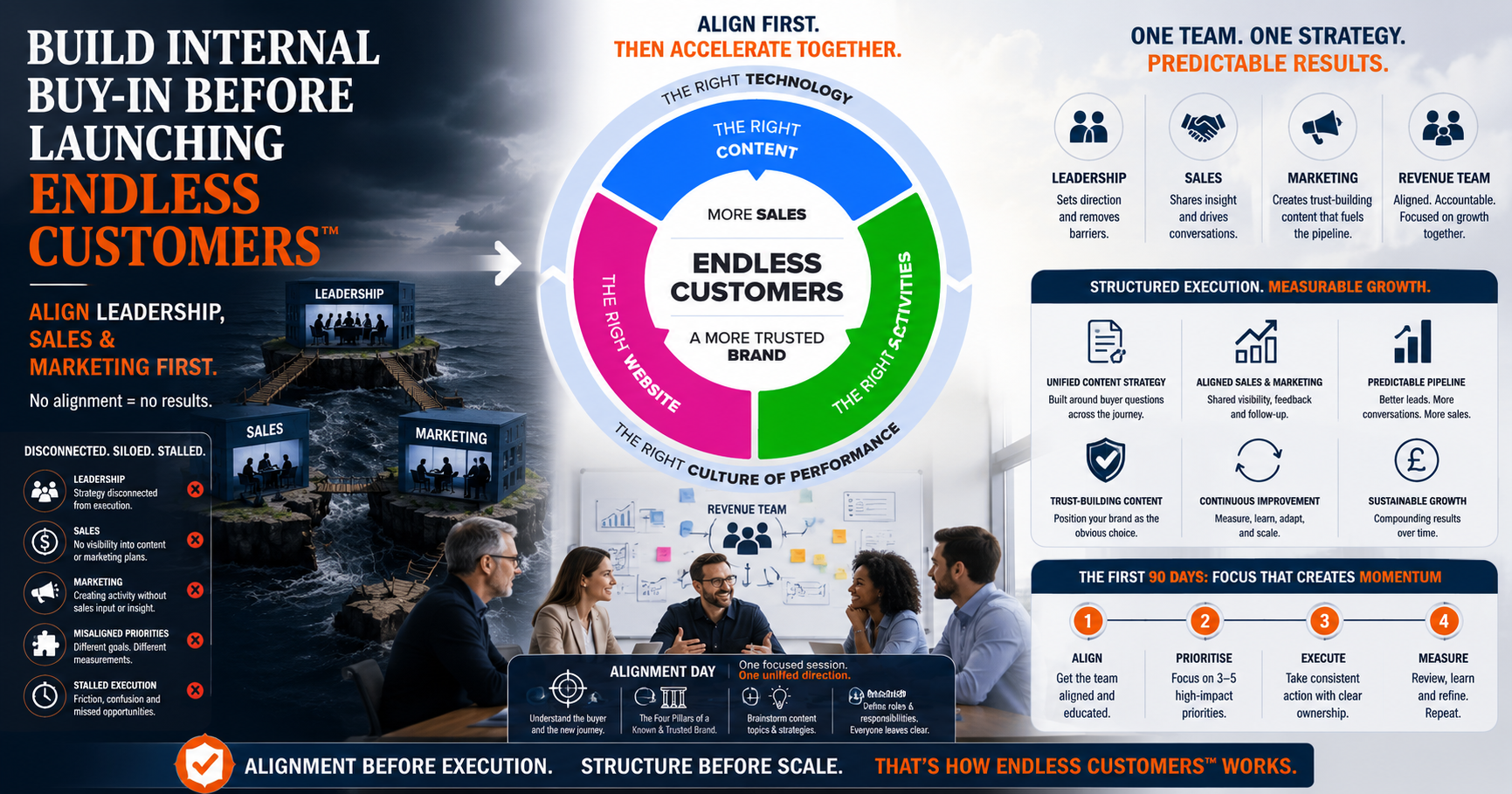
The fix for framework alignment breakdown is forming a Revenue Team and launching that unified structure through a facilitated Alignment Day.
Step 1: Form your Revenue Team
A Revenue Team brings sales, marketing, and leadership together under one shared mission. Every meeting must cover:
- Sales sharing current buyer questions and objections
- Editorial calendar planning and content assignments
- Review of recently published content
- Marketing sharing performance metrics
- Friction points and blockers addressed openly
Step 2: Run Alignment Day
Alignment Day is a focused three-hour session where every customer-facing team member aligns on the what, how, and why of the content strategy. Each person leaves with a defined role and a 90-day Game Plan covering 3–5 prioritised Focus Areas.
Full transparency: This is my own service. My Growth Alignment Intensive™ runs this session for your team, covering the Endless Customers System™, your first 90-day plan, and the scorecard you'll use to track progress throughout. It starts at £3,200 ($4,000) for a virtual session and £4,000 ($5,000) plus travel for in-person. Full details are on the Endless Customers™ Implementation service page.
-Jul-23-2026-03-39-32-6364-PM.png?width=1536&height=1024&name=Generated%20image%201%20(1)-Jul-23-2026-03-39-32-6364-PM.png)
What best practices fix alignment breakdown?
Organisations that overcome alignment breakdown share three non-negotiable practices: sales acting as subject matter experts in content creation, Assignment Selling embedded at every stage of the documented sales process, and Alignment Day repeated as an annual reset.
Top 5 practices:
- Sales serves as subject matter expert (SME): Sales shares real buyer questions; marketing builds content around them. Both own the outcome.
- Assignment Selling is mandatory, not optional: Prospects consume specific content before every call. Learn how in: Assignment Selling: What It Is, How It Works, and Why It Closes More Deals.
- 90-day planning cycles with defined Focus Areas: The team resets quarterly: retrospective, scorecard review, new plan.
- Every new hire is onboarded to the strategy from day one: Alignment is not a one-off workshop. It's how the business runs.
- Progress tracked against a shared scorecard: The Endless Customers Scorecard covers 10 prompts across 5 components, completed once per quarter as a team.
These organisations treat alignment as an ongoing structural commitment, not a workshop they did once. For a deeper breakdown of what Alignment Day covers, see Endless Customers Alignment Workshop: What It Is and How It Drives Execution.
Frequently asked questions
These are the most common questions business leaders ask once they identify that alignment breakdown, not content quality or volum, is the real reason their framework is stalling.
How long does it take to fix alignment breakdown?
Most organisations see early signals within the first 90 days, typically in how sales teams reference published content in calls. Full cultural alignment takes 12–18 months of consistent practice.
Can we run Alignment Day without an external facilitator?
Leadership can run it, but an external facilitator removes the political friction that tends to derail internal sessions. An outside perspective also holds leadership accountable in a way internal voices rarely can.
Can we fix alignment breakdown without full leadership buy-in?
No. Without leadership commitment, the Revenue Team model becomes optional—and it will be skipped when things get busy. Read more in: Why Endless Customers Fails Without Sales Buy-In (And How to Fix It).
What is the first measurable sign alignment is improving?
Salespeople start referencing published content in calls without being prompted. That single behaviour is the earliest indicator the framework is beginning to hold.
Conclusion
Where most businesses find themselves: publishing content on schedule, waiting for results, and wondering whether the framework itself is the problem.
Where you are now: the framework probably isn't broken. The structure around it is. Sales and marketing are not unified. Leadership is not actively driving the strategy. The Revenue Team doesn't exist yet.
Where to go next: fix the structure before adding more content. One Alignment Day, a functioning Revenue Team, and 90-day planning cycles will move results faster than the next 20 articles.
I've walked founder-led teams through exactly this reset, and the pattern holds every time: the content was never the problem.
How to take action now
- Audit your team against the 6 warning signs listed above
- Identify which of the 5 root causes is most active in your business
- Book a Growth Alignment Intensive™ to run a facilitated Alignment Day with your team
- Read Endless Customers First 90 Days: The Proven Implementation Structure to understand what follows Alignment Day

About the author
Tom Wardman is a certified Endless Customers coach and strategic marketing consultant working with founder-led businesses to install growth systems their teams can run independently. He specialises in sales-marketing alignment, content strategy, and the Endless Customers System™.
Pricing disclaimer: All GBP–USD price conversions are rounded estimates and correct at the time of publishing. Exchange rates fluctuate and figures should be treated as indicative only.
Topics: