

Are you spending on marketing but quietly wondering whether something is off?
Have you sat through reports without being able to answer one simple question: is this actually working?
Having worked with founder-led B2B businesses across the UK as one of the country's first certified Endless Customers coaches, I've seen this pattern more times than I'd like, capable businesses paying for marketing activity that isn't moving their pipeline.
This article is for founders and marketing leads who suspect their support might be misaligned, but haven't yet seen the obvious failure that would force the issue. By the end, you'll know the 7 early warning signs of wrong marketing support, what it's costing you in real terms, and how to run a structured audit before the situation gets expensive.
This article also points to where to go next if the audit confirms what you already suspect.
Key Takeaways
- Wrong marketing support is any agency, freelancer, or in-house arrangement that routinely fails to align strategy, execution, and communication with your actual business goals.
- Wrong support rarely announces itself through obvious failure; it hides behind activity, reports, and reasonable-looking outputs while your pipeline stagnates.
- The 7 most common early warning signs include strategy drift, reporting opacity, vanity metrics, and reactive-only communication, all of which appear months before visible breakdown.
- Businesses that wait 12–18 months before ending an underperforming marketing arrangement often accumulate losses far exceeding the original contract value, once indirect costs are included.
- A structured six-step audit can determine whether your current arrangement is fixable or whether a change is needed, before the situation deteriorates further.
What is 'wrong marketing support', and why is it so hard to spot?
Wrong marketing support is any marketing service, agency, freelancer, or in-house arrangement that routinely fails to align strategy, execution, or communication with your actual business goals.
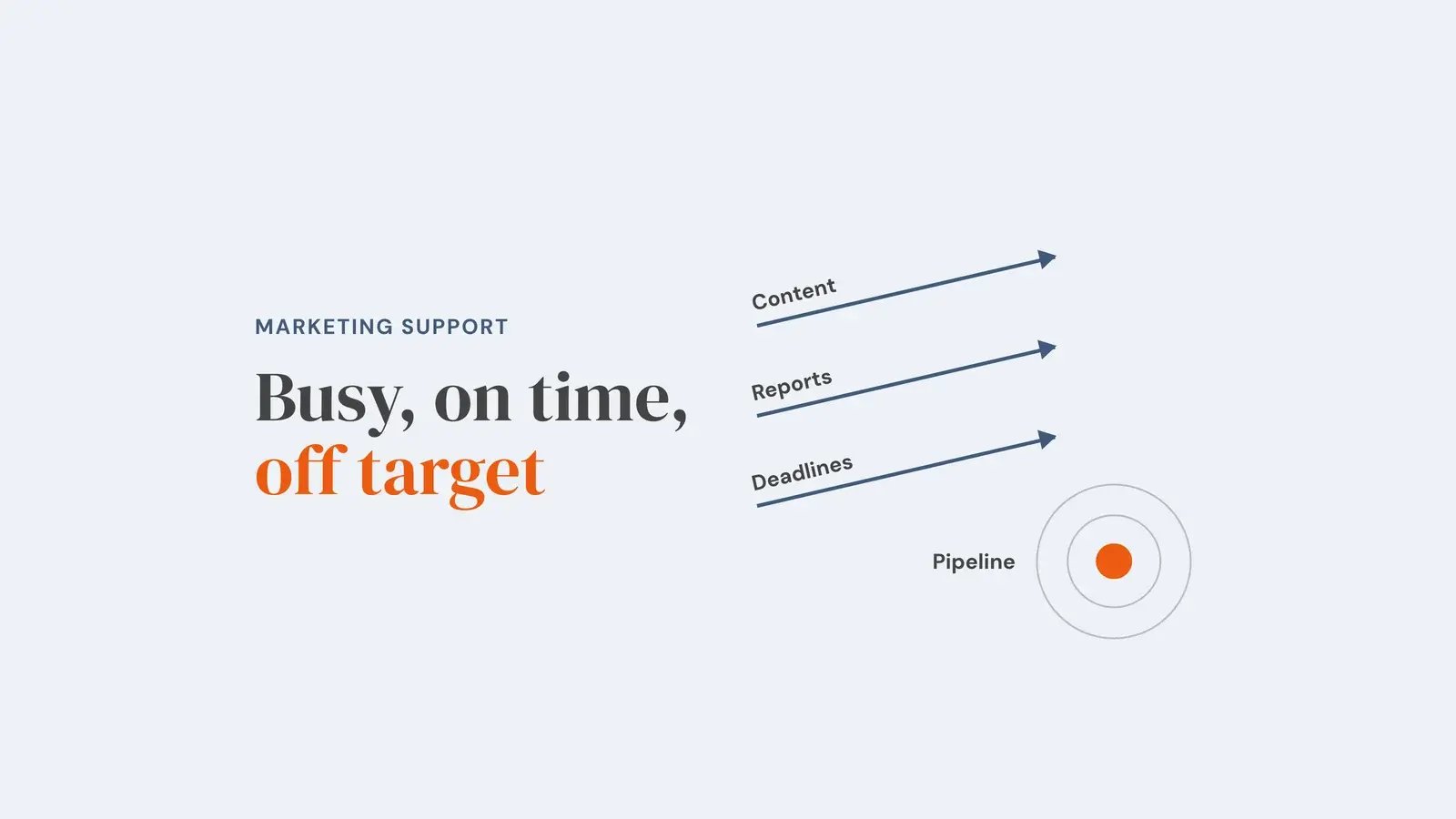
"Wrong" doesn't mean incompetent. It means misaligned. The people involved might be producing content, sending reports, and hitting deadlines, while still failing to move your pipeline.
Wrong marketing support typically takes one of three forms:
- A retained agency producing activity without strategic ownership
- A freelance specialist executing tasks without business context
- An in-house generalist working without clear goals or structure
The misalignment lives not in what's visible, but in what isn't; the pipeline that isn't growing, the sales cycles that haven't shortened, the revenue that hasn't responded.
Why don't most businesses spot wrong marketing support until it's too late?
The most common misconception is that wrong marketing support will announce itself through obvious failure, such as missed deadlines, dropped campaigns, or zero measurable results.
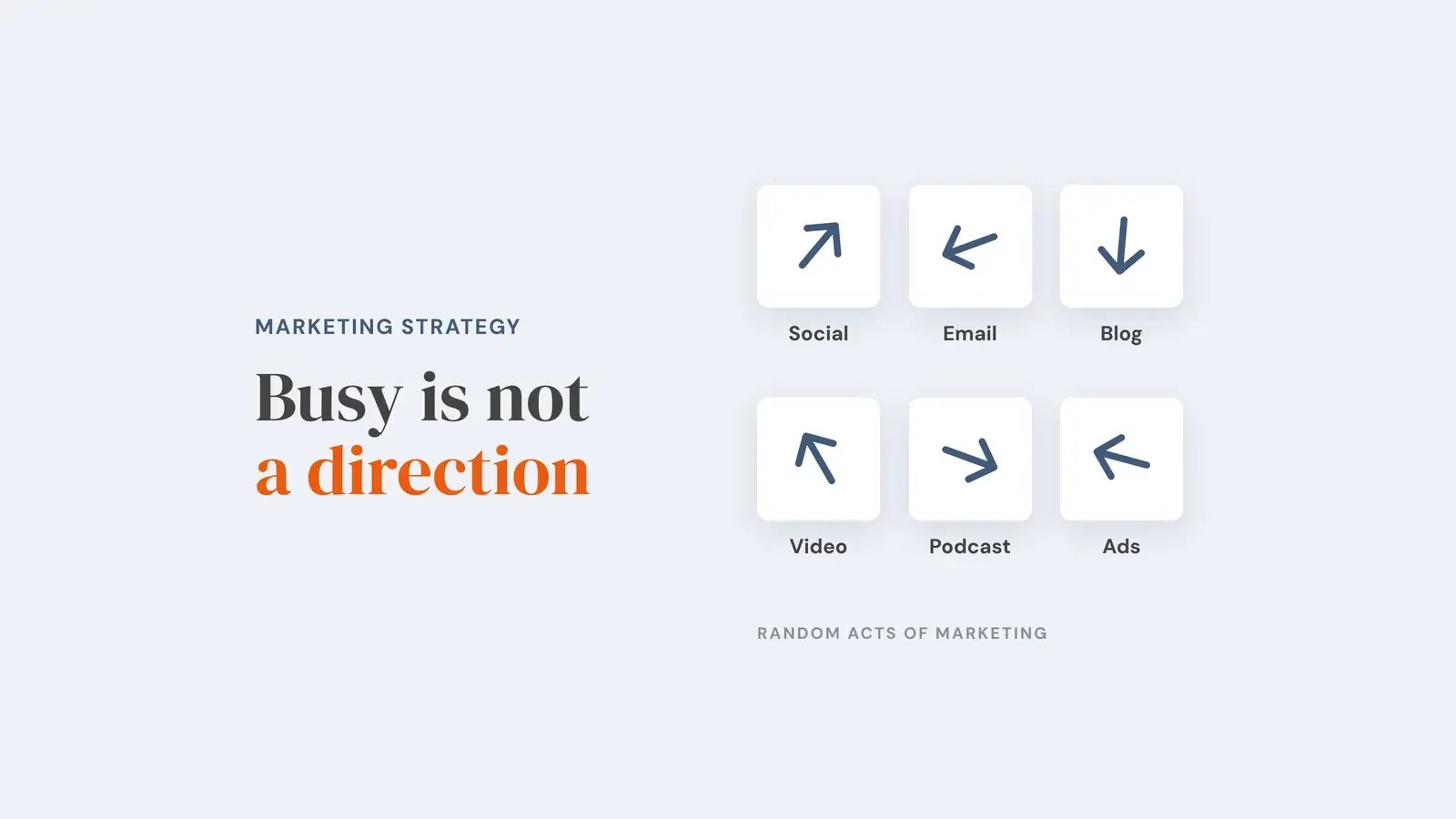
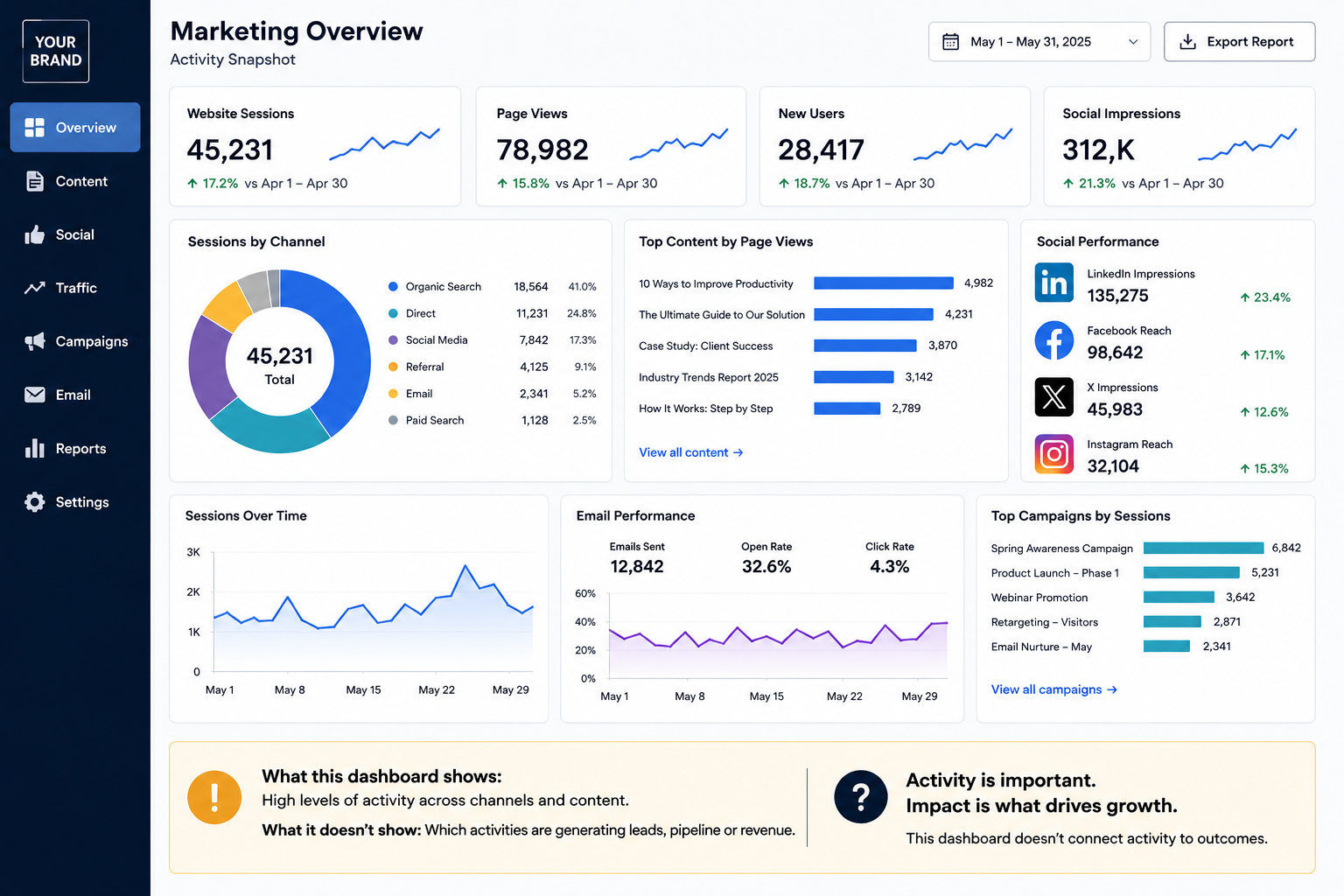
In reality, the warning signs are far subtler. They show up as gradual misalignment, vague reporting, and a growing sense that activity is happening but nothing is moving the needle.
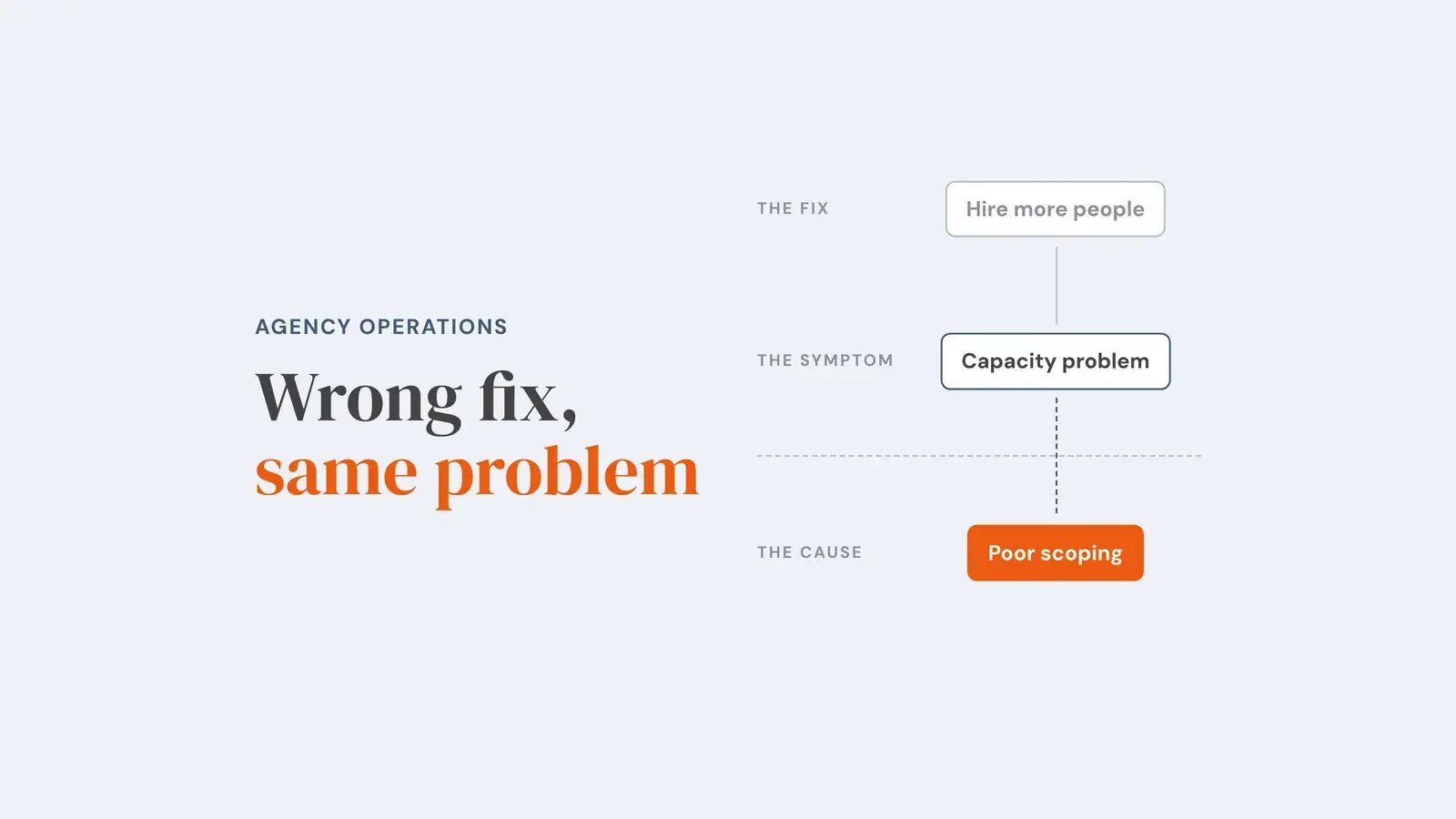
There's also an inertia problem. Changing marketing support feels disruptive, so most businesses give it more time than the results justify. They interpret slow progress as normal. They avoid the conversation.
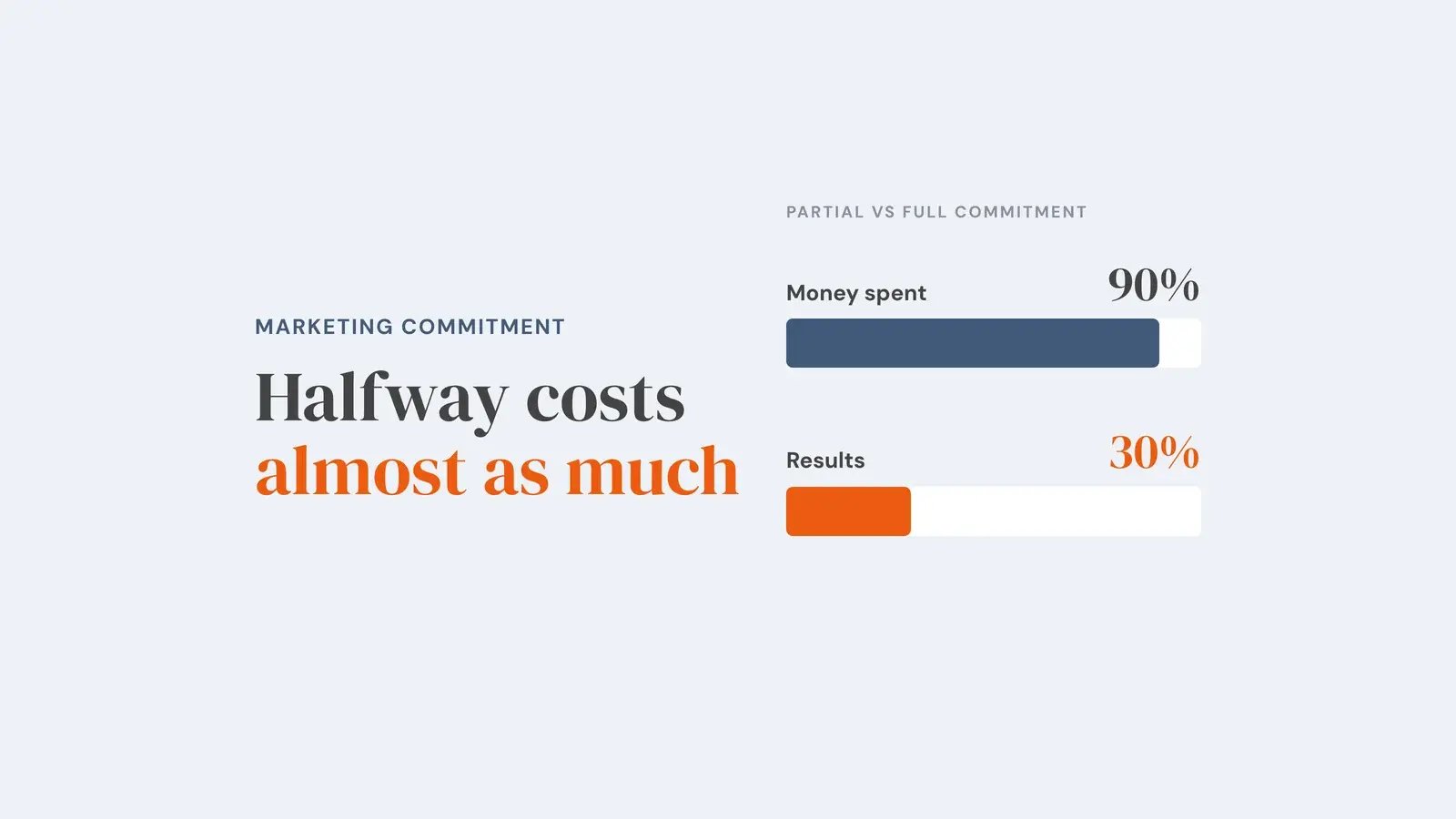
Businesses that wait 12–18 months before ending an underperforming marketing relationship, which is common, can accumulate losses far exceeding the original contract value, once retainer fees, wasted media spend, and internal management time are included.
(This figure is an estimate based on typical UK B2B retainer costs of £3,000–£5,000/month ($3,750–$6,250/month) and average internal time allocation; no single published study tracks this directly.)
What are the 7 warning signs your marketing support is wrong?
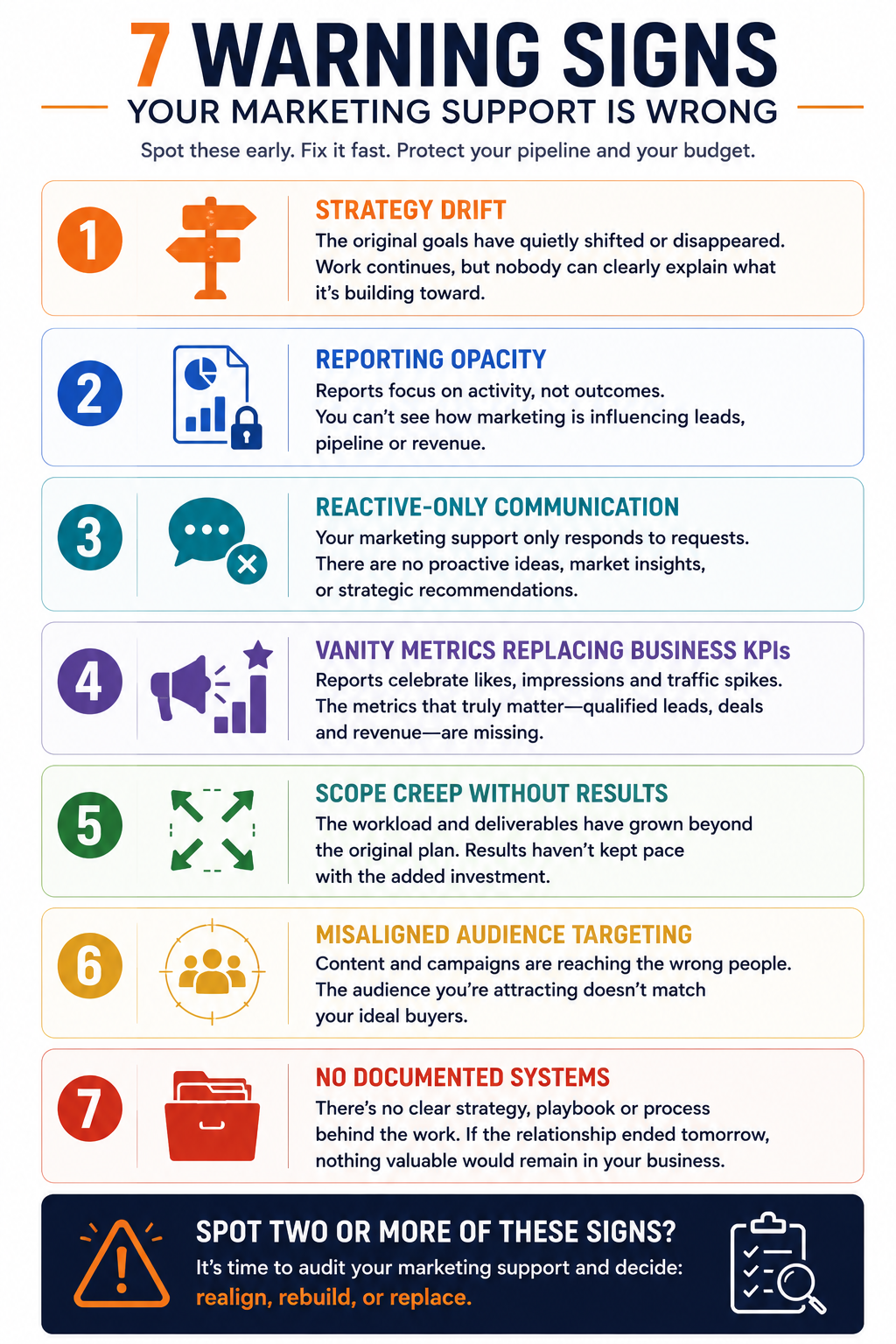
There are 7 early warning signs that your marketing support is heading toward failure, and most appear months before the relationship visibly breaks down.
- Strategy drift: The original goals have quietly shifted. Work continues, but nobody can clearly explain what it's building toward.
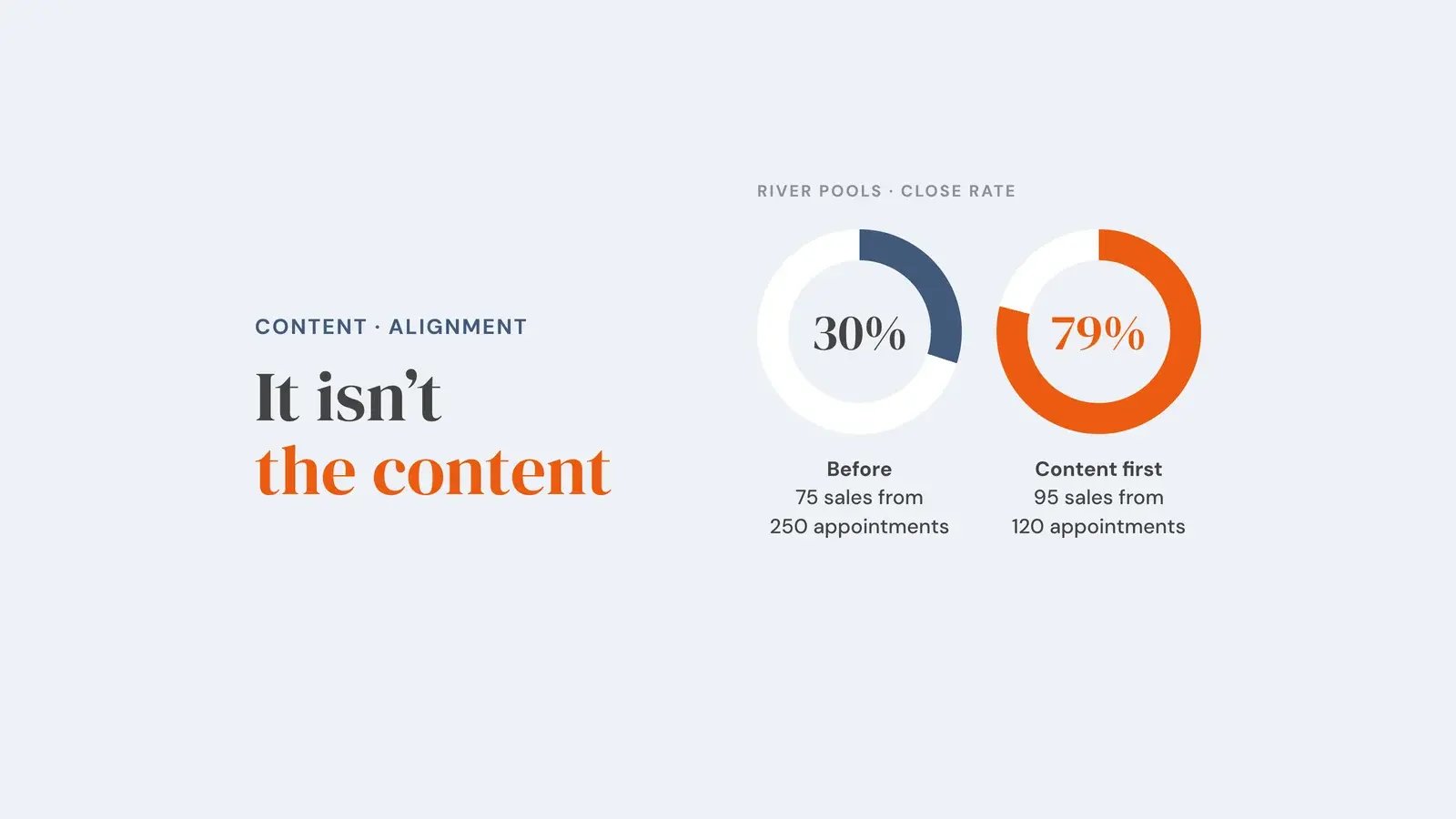
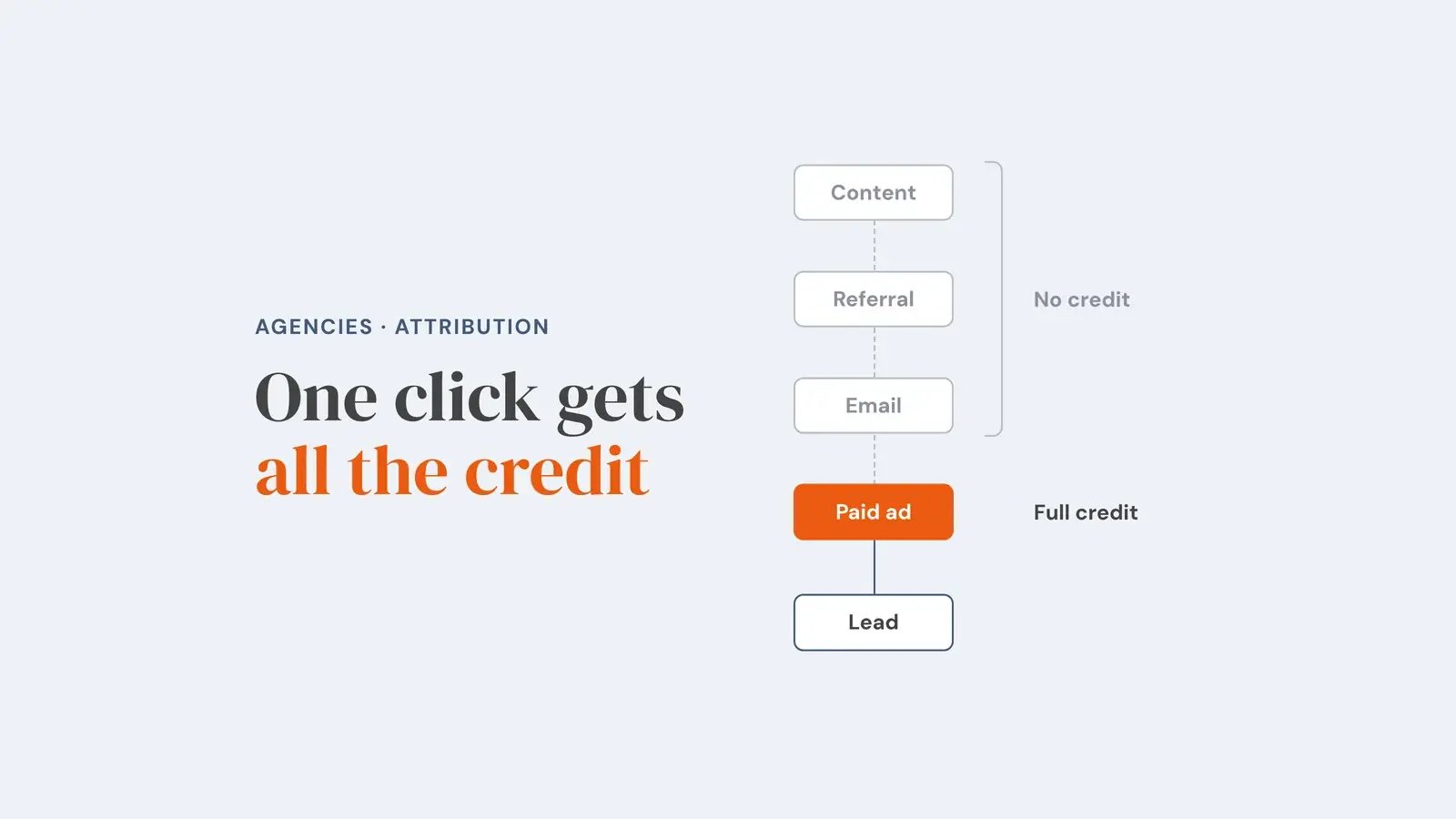
- Reporting opacity: Reports focus on activity (posts published, impressions, clicks) rather than outcomes (leads generated, pipeline influenced, revenue attributed).
- Reactive-only communication: Your marketing support only responds; it never initiates. There are no proactive suggestions, market observations, or strategic recommendations.
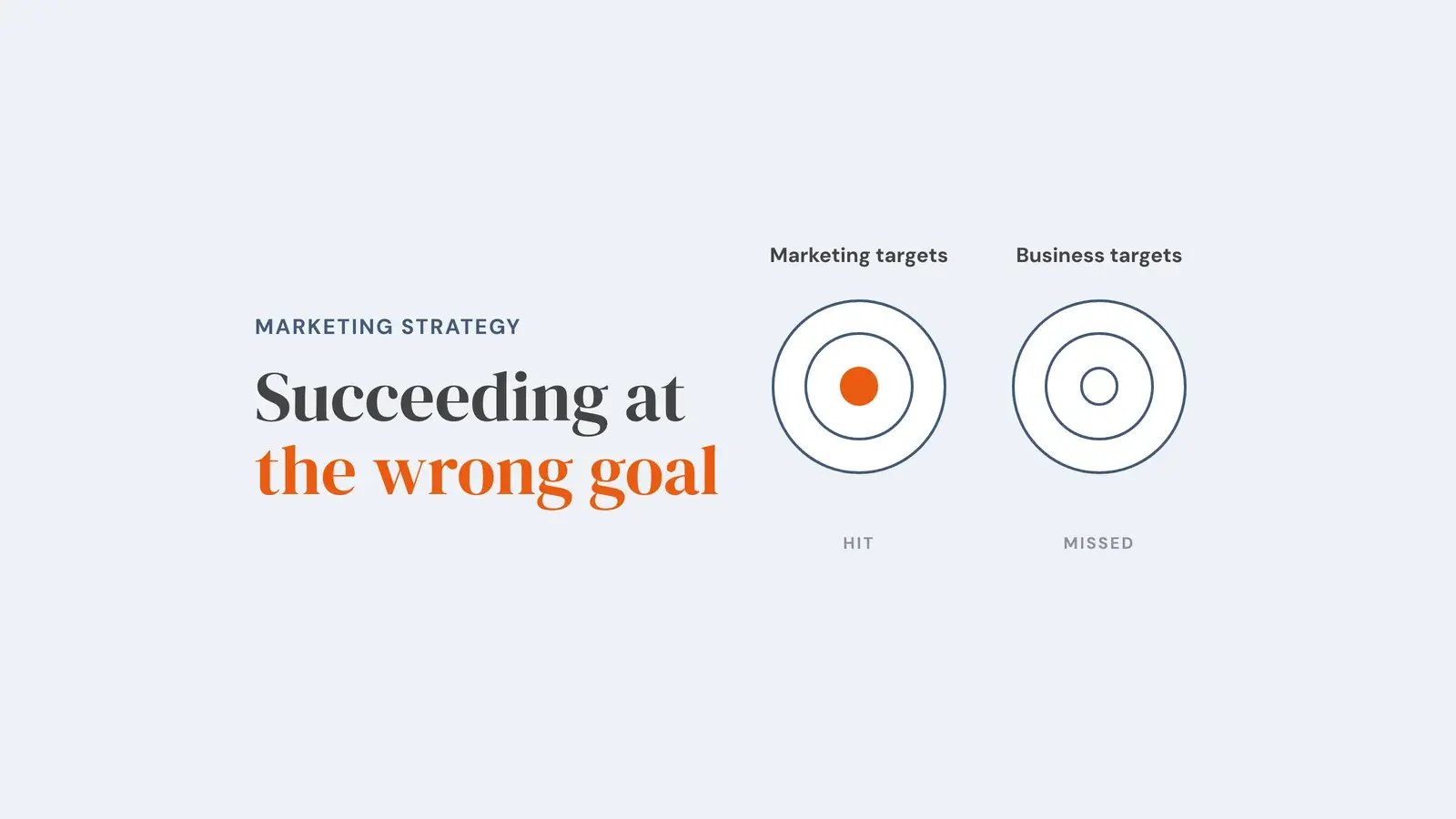
- Vanity metrics replacing business KPIs: Follower counts and traffic spikes appear in reports instead of qualified leads, sales conversations, or conversion rates.
- Scope creep without results: The workload has expanded beyond the original brief, but results haven't kept pace with the added investment.
- Misaligned audience targeting: Content and campaigns are reaching an audience that doesn't resemble your actual buyers.
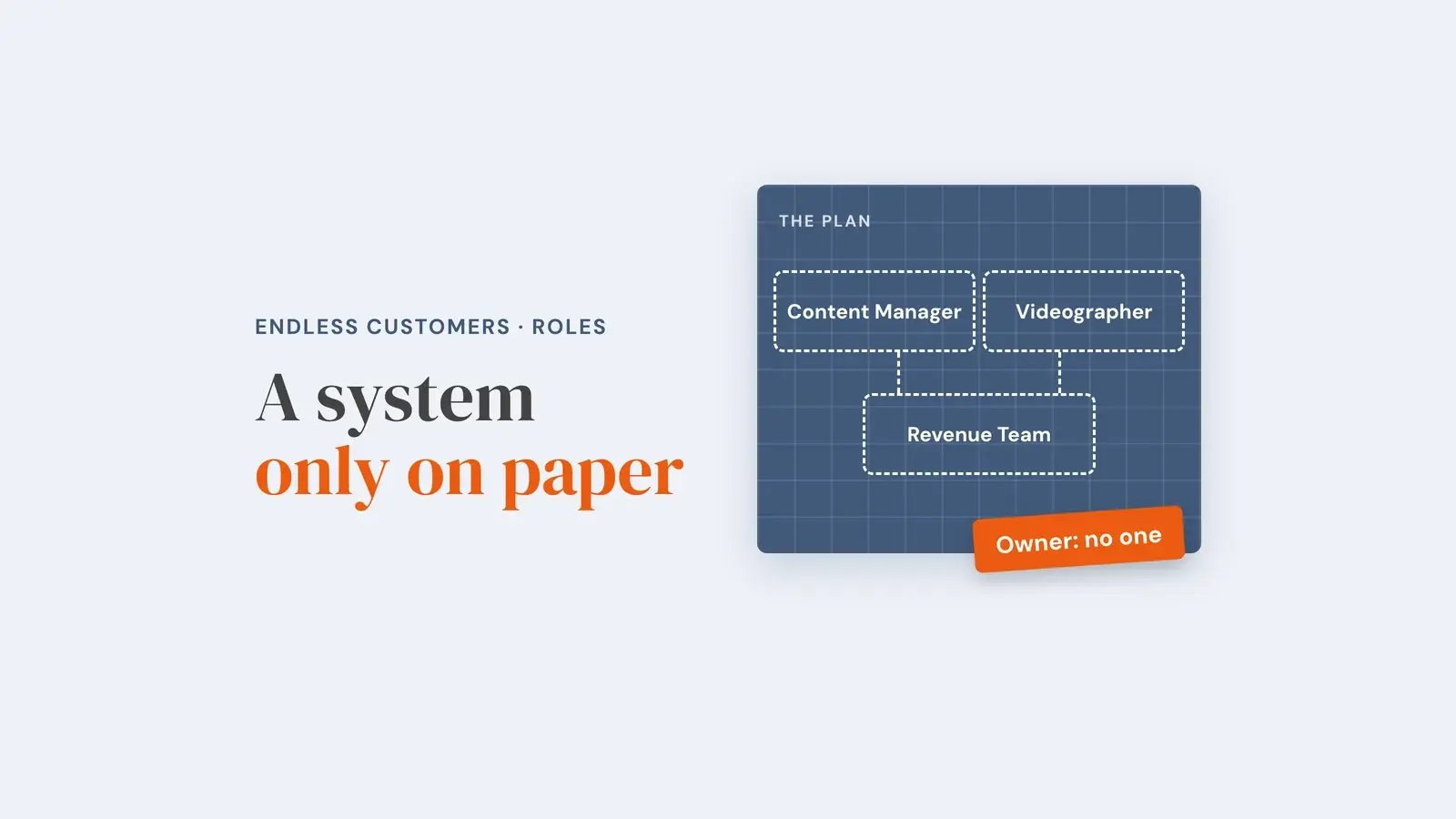
- No documented systems: If the relationship ended tomorrow, nothing your marketing support has built would remain inside your business.
Recognising two or more of these signs routinely is a strong signal the arrangement needs re-evaluation, not necessarily replacement, but review.
What does wrong marketing support actually cost you?
Wrong marketing support typically costs far more than the fee you are paying, once you factor in wasted ad spend, lost opportunity, internal management time, and the cost of switching providers.
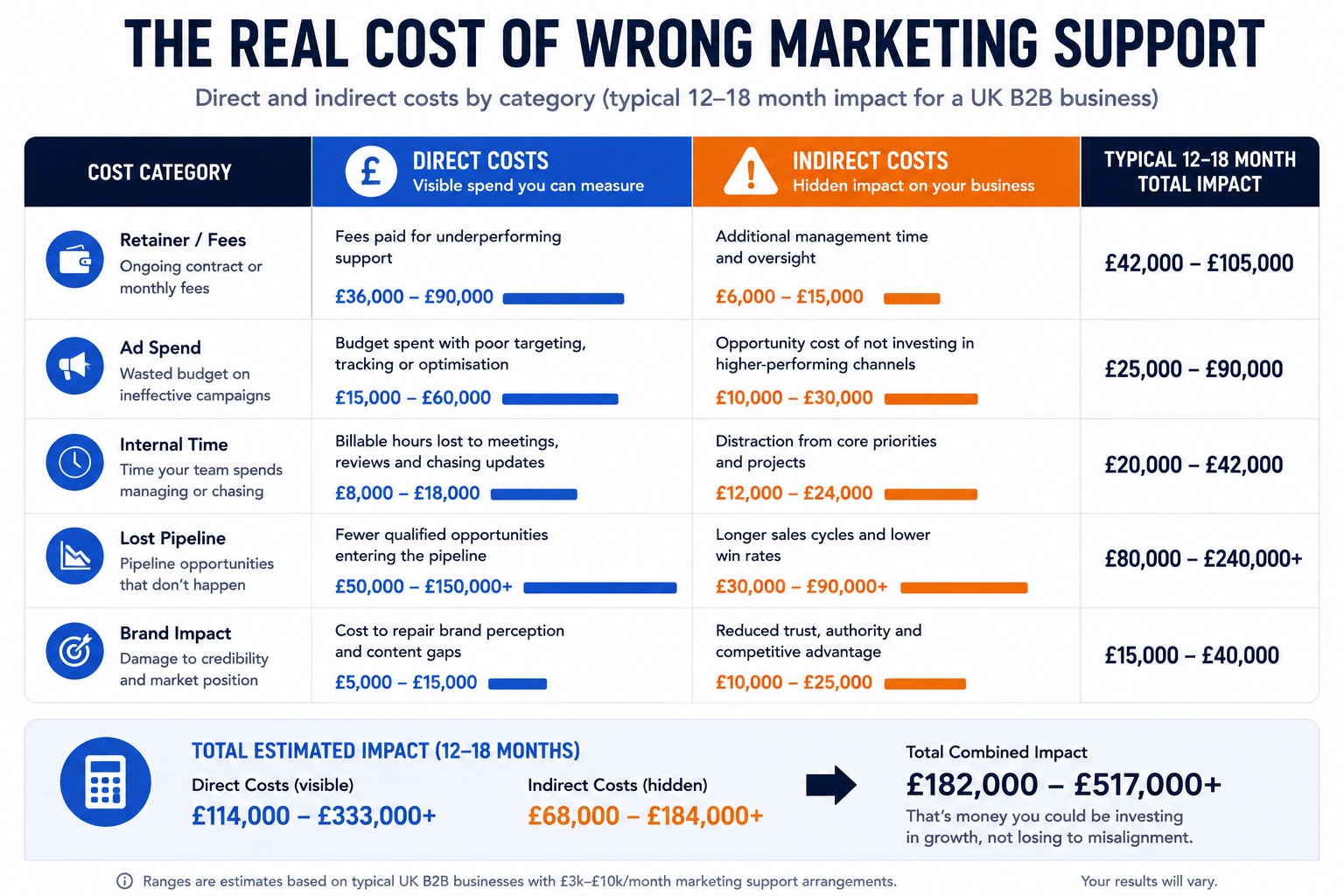
A simple way to estimate your own exposure: multiply your monthly retainer by the number of months you've had low confidence in results. That figure, before indirect costs, is your minimum loss.
Wrong vs. right marketing support: what's the actual difference?
The clearest difference between wrong and right marketing support is not the deliverables produced; it is the quality of strategic thinking, proactive communication, and measurable accountability behind them.
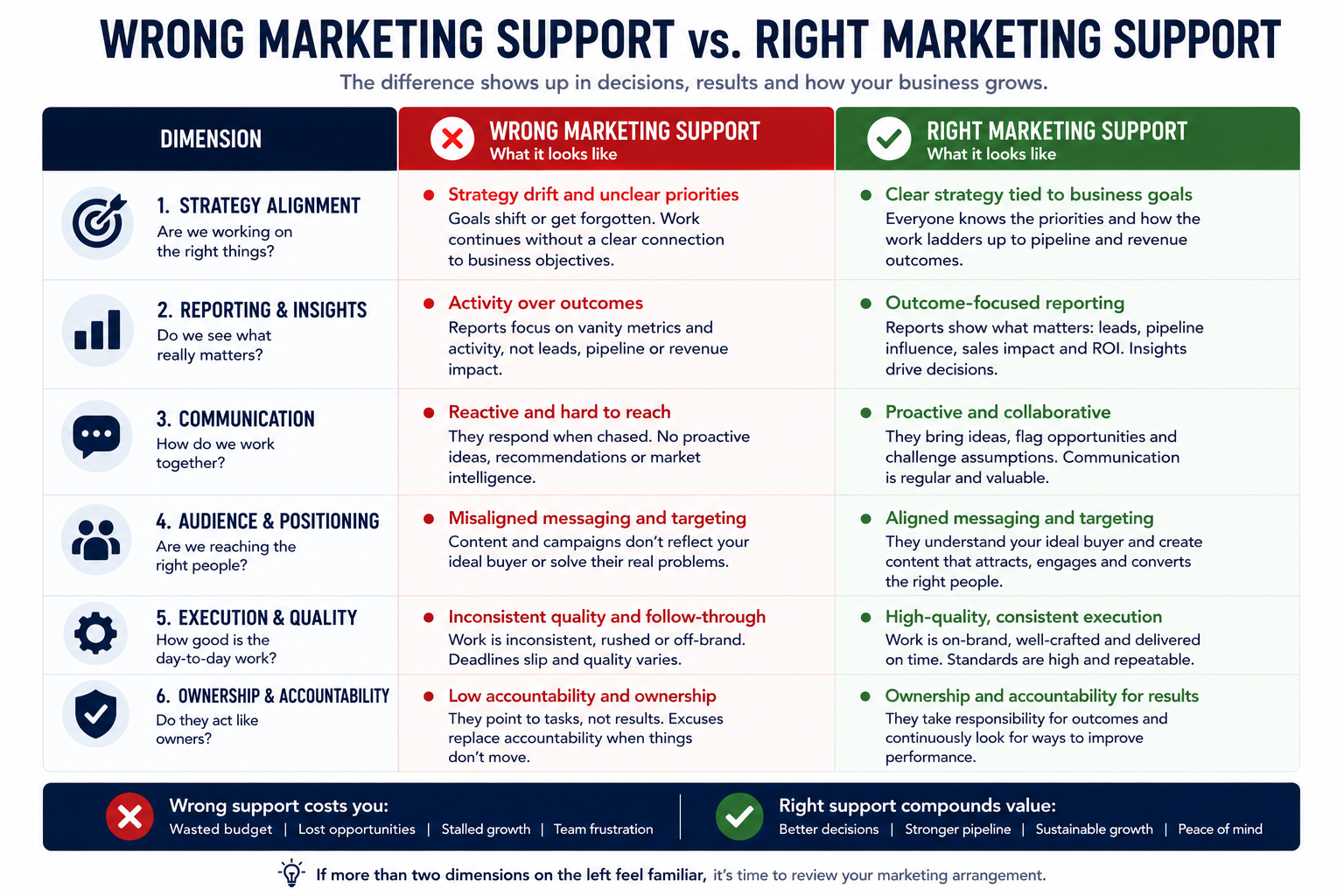
Right marketing support demonstrates clear progress against agreed business goals. Wrong support generates activity and outputs without connecting either to outcomes.
If your current arrangement falls short on three or more of these dimensions, a structural change is likely more efficient than a repair.
How do you audit your marketing support before it fails?
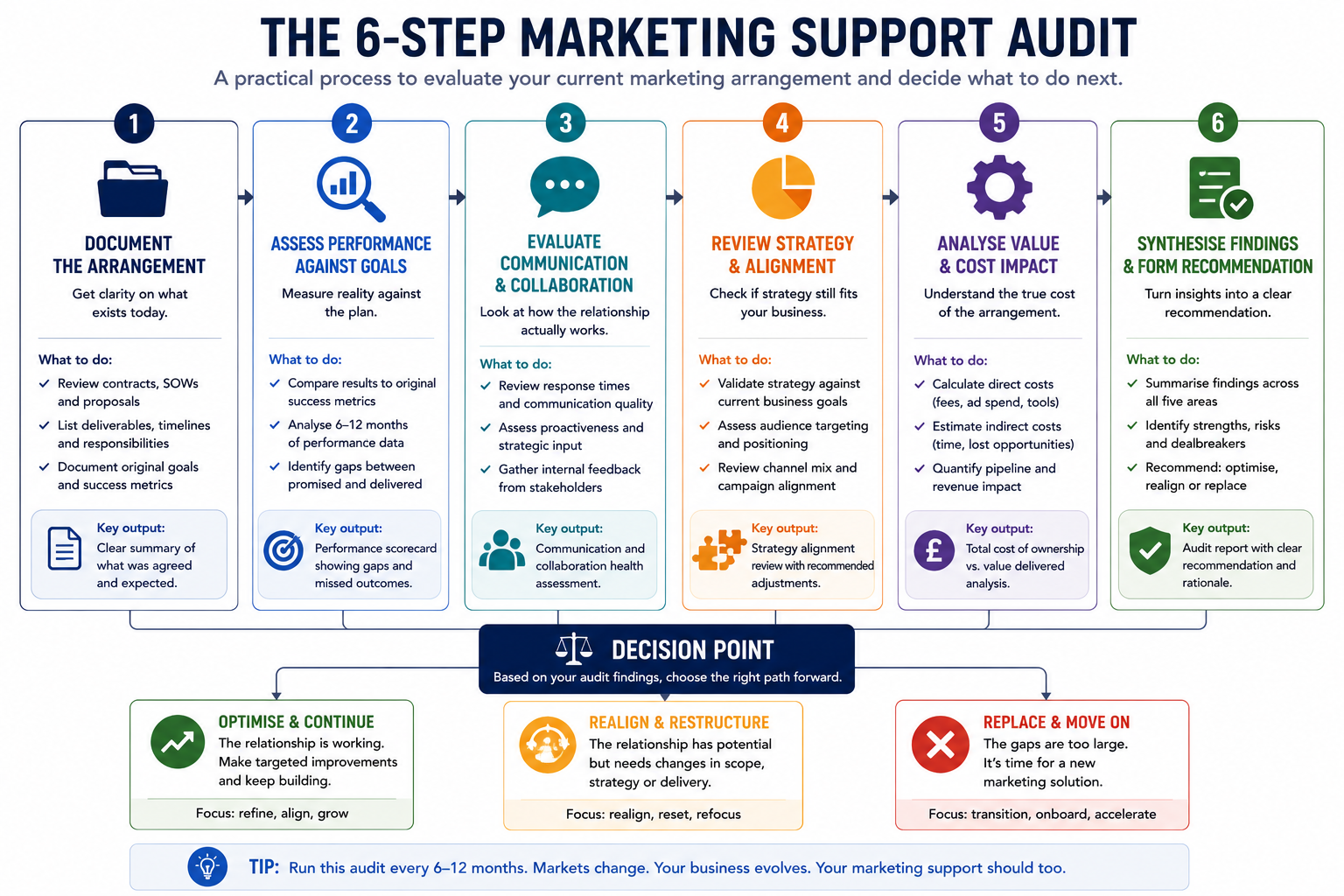
Auditing your marketing support before it fails involves a structured six-step review covering goals alignment, reporting quality, strategic input, budget efficiency, communication patterns, and results delivered.
This audit is a diagnostic tool, not a confrontation. Its purpose is to determine whether the issues you're experiencing are fixable within the current arrangement, or whether a change is needed.
- Document agreed goals vs. actual progress: Pull out the original brief or proposal. List what was promised. Score delivery honestly against each point.
- Review the last 3 reports for outcome language: How much is about activity, and how much connects work to a business result? Highlight every sentence that references pipeline, leads, or revenue.
- Map your communication history: Who initiates contact; you or them? Reactive-only communication is a structural warning sign.
- Calculate total cost including internal time: Add retainer fees, paid media, and an estimate of your time spent managing the relationship (hours × your effective day rate).
- Score against the 5 criteria for good support: Strategic clarity, outcome-focused reporting, relevant expertise, reliable responsiveness, and demonstrable ROI. Score each out of 10.
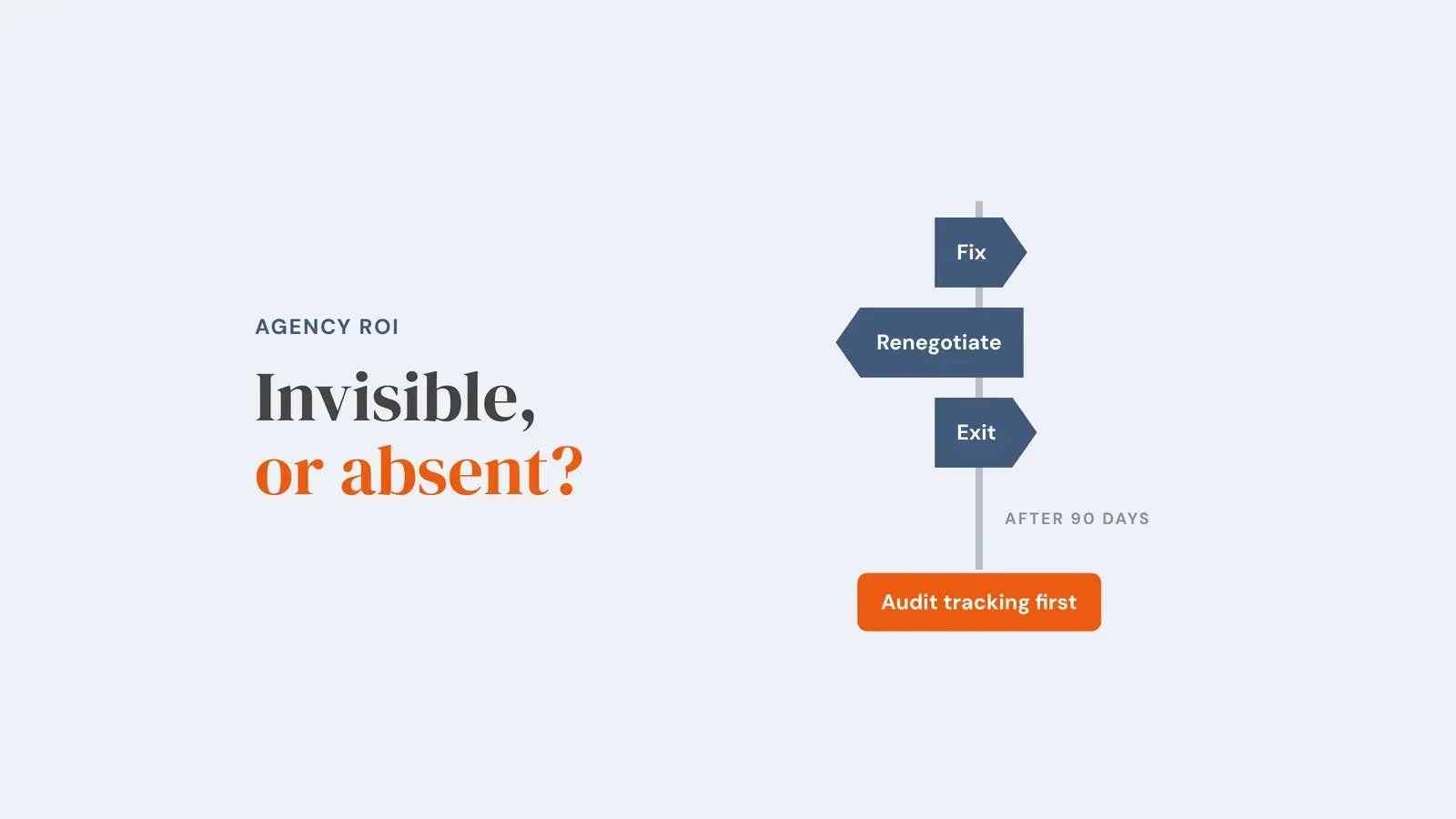
- Decide: fix, restructure, or exit: If two or fewer criteria score below 6, the relationship may be salvageable. If three or more remain low, a structural change is likely needed.
Frequently asked questions about wrong marketing support
The most frequently asked questions about wrong marketing support centre on timing, diagnosis, and whether the situation can be salvaged.
How long should I give marketing support before deciding it's wrong?
Most arrangements need 90 days to find their footing. After that, you should see clear directional progress against agreed goals. Six months in with no connection between activity and outcomes is a structural problem, not a timing one.
Can wrong marketing support be fixed, or does it always need replacing?
Often it can be fixed, if the core competency is there and misalignment is the primary issue. A direct conversation about goals and reporting can reset a relationship that has drifted. If the issue is strategic (wrong expertise, wrong channels, no systems), replacement is usually faster than repair.
What's the difference between a slow start and genuinely wrong support?
A slow start shows steady directional progress even if results are modest. Wrong support shows activity without direction, work that doesn't build toward anything measurable.
Should I run an audit even if results seem acceptable on the surface?
Yes. Surface-level results can mask structural dependency. If your marketing stopped tomorrow and your pipeline would stall within weeks, that fragility is worth examining regardless of current performance.
What to do now, and where to go next
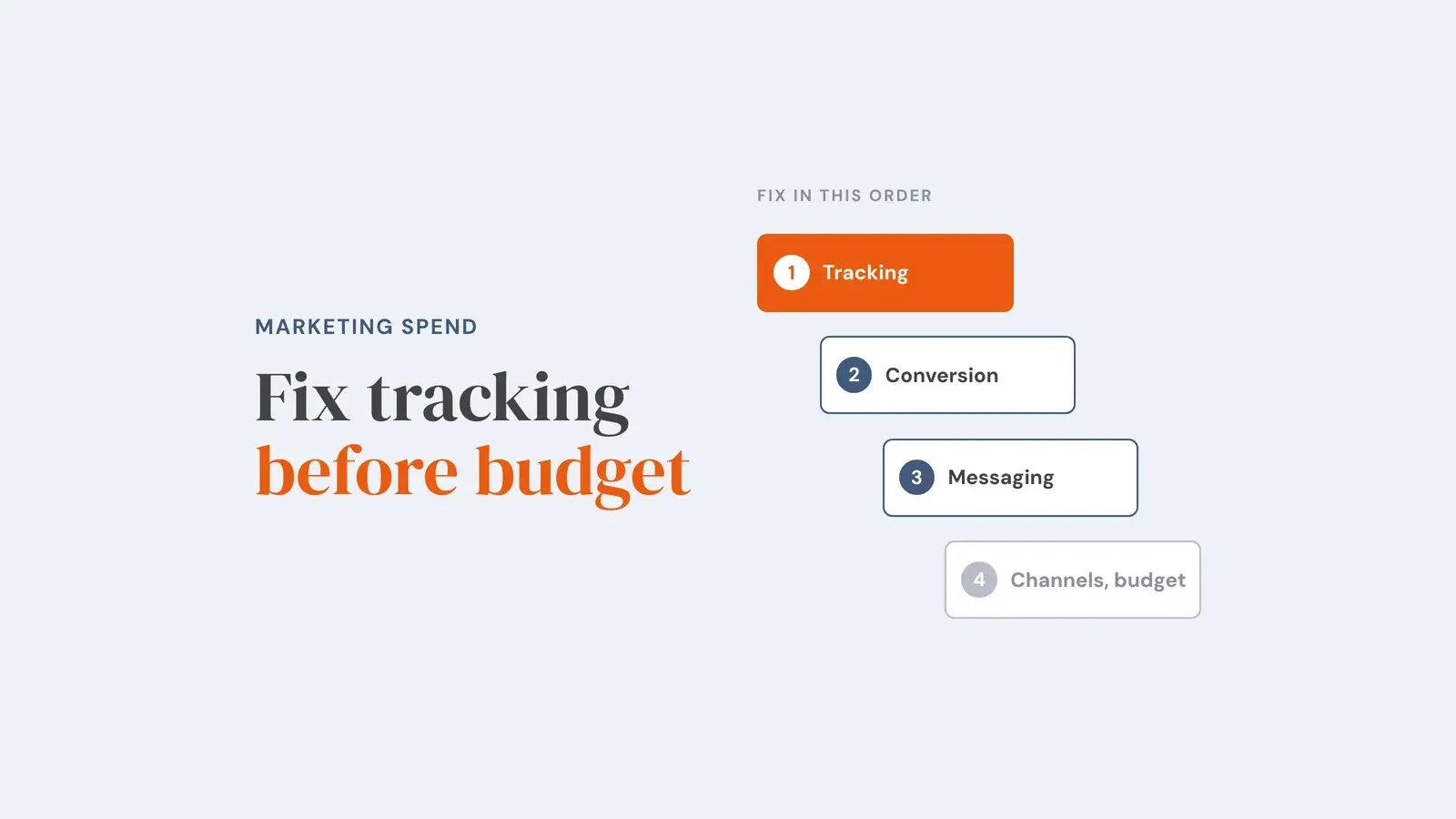
The 7 warning signs and 6-step audit give you a clear framework to determine whether your current arrangement is misaligned or simply past its useful life. Wrong support is rarely obvious, but it is diagnosable.
You came to this article with a quiet concern. Now you have a structured way to investigate it, rather than continuing to doubt while the cost accumulates.
Either conclusion is more useful than six more months of uncertainty.
Here is how to take action now:
- Run the 6-step audit on your current arrangement this week
- Score your support honestly against the 5 dimensions in the comparison table
- Take the Marketing Debt Scorecard to identify where structural gaps sit inside your business
- Book a 90-Minute Marketing Triage™, a structured diagnostic for an independent view before making any decisions (this is Stage 1 of my In-House Growth Engine™)
Related reading

About the author
Tom Wardman is a fractional marketing consultant and Growth Independence Architect™ who helps founder-led B2B businesses replace agency dependency with self-sufficient growth systems. As one of the UK's first five certified coaches in the Endless Customers methodology, trained directly under Marcus Sheridan, Tom works with businesses to install marketing architecture their teams own and operate permanently.
Pricing disclaimer: All GBP–USD price conversions use a fixed house rate of £1 = $1.25 and are correct at the time of publishing. Exchange rates fluctuate and figures should be treated as indicative only.