


Key Takeaways:
- The Endless Customers System requires companies with £800,000–£80 million ($1 million–$100 million) in annual revenue that sell products with longer sales cycles where buyers conduct significant research.
- Implementation demands at least one full-time person dedicated to content production, typically costing £30,000–£50,000 ($37,500–$62,500) annually, plus leadership commitment to long-term change.
- The system requires five core components: The Right Content, The Right Website, The Right Sales Activities, The Right Technology, and The Right Culture of Performance—miss one and the entire system weakens.
- Most companies see initial results within 3–6 months but require 18–24 months to reach mastery and become the most trusted brand in their market.
Are you tired of outsourcing your marketing, only to feel like you're getting templated content and minimal results?
What if your business could become the most trusted voice in your market, and never need an agency again?
In this article, you'll learn exactly what the Endless Customers System™ requires, what it costs, how long it takes, and whether your team is actually ready to implement it successfully. We'll break down the five core components you must build, the specific readiness benchmarks, and the pitfalls to avoid if you want to stop renting your marketing and start owning it.
What Is the Endless Customers System™?
The Endless Customers System™ is a sales and marketing framework that transforms your business into the most known and trusted brand in your market by producing transparent, buyer-focused content that builds trust before prospects contact your sales team.
Unlike traditional marketing that relies on agencies, Endless Customers requires you to become a media company, creating educational content in-house that answers every question your buyers have.
The system is built on four pillars:
- Say what others won't say
- Show what others won't show
- Sell differently
- Be more human.
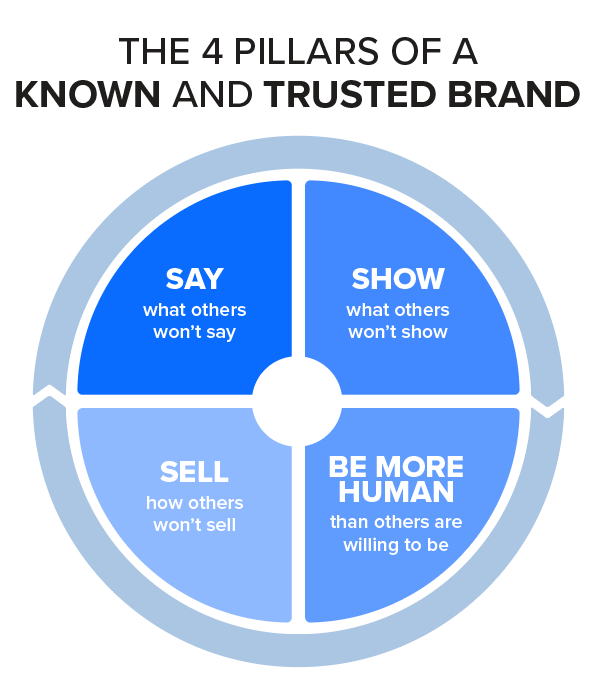
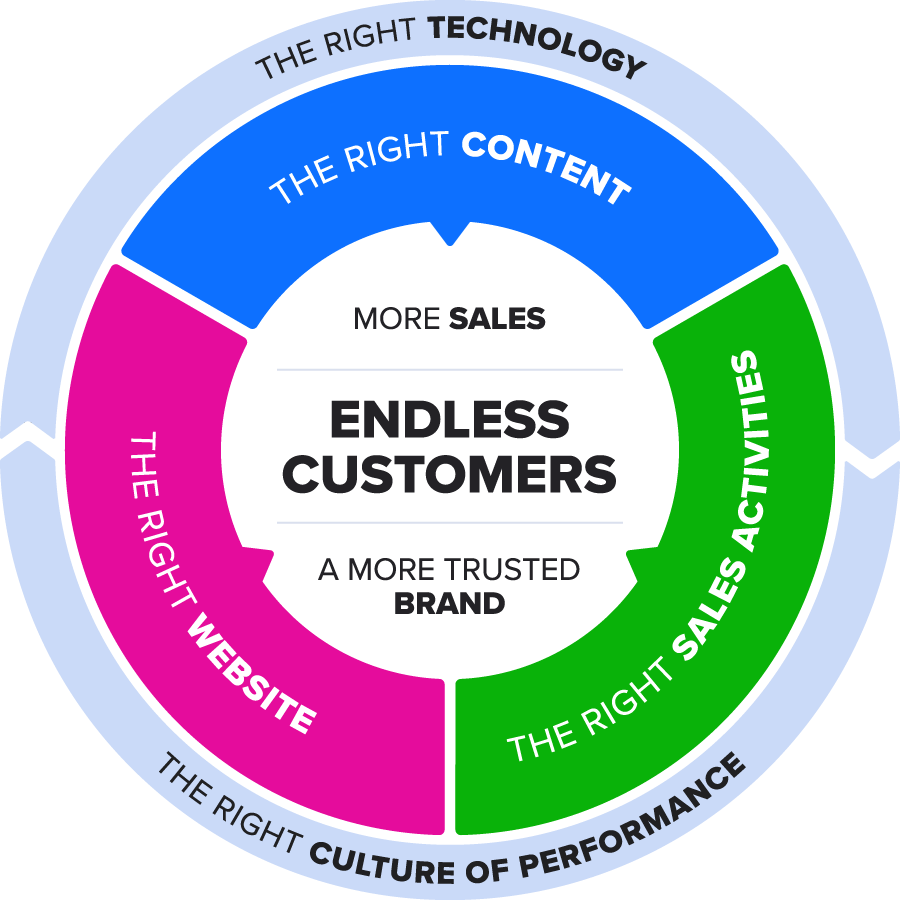
These pillars work through five operational components: The Right Content, The Right Website, The Right Sales Activities, The Right Technology, and The Right Culture of Performance. When all five work together, they create a flywheel effect driving sustainable growth.
Who Endless Customers is for, and who it's not
Endless Customers is best suited for companies with annual revenues between £800,000 and £80 million ($1 million–$100 million) that sell products or services with longer sales cycles where buyers conduct significant research before purchasing.
If you operate in an industry with short sales cycles or impulse purchases, like restaurants or convenience stores, this approach may not deliver the same results.
The system works best where trust is a major factor in the buying decision:
- Buyers spend weeks or months researching
- Purchasing decisions involve multiple stakeholders
- Products require education before purchase
- High-value transactions where reputation matters
Companies using EOS or participating in Vistage, EO, or YPO tend to thrive because these organisations emphasise systems, continuous improvement, and learning.
How much time, team, and budget you really need to succeed
Implementing Endless Customers requires at least one full-time person dedicated to content production, serving as a Content Manager, plus someone handling video production, though some companies start with one person wearing both hats.
Beyond personnel, you need leadership commitment to long-term strategy (not quick fixes), willingness to challenge industry norms, and readiness for transparency your competitors avoid.
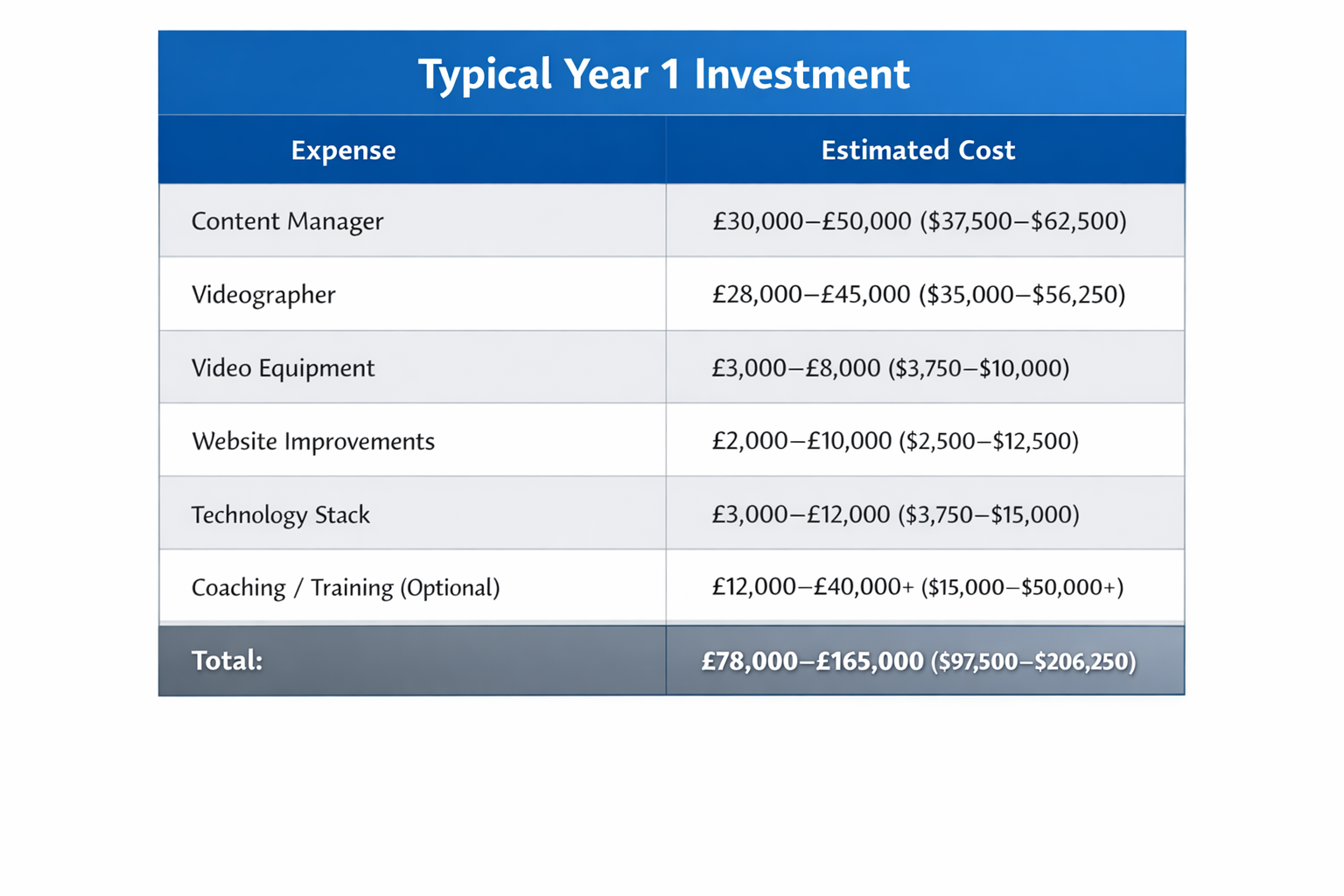
Typical year 1 investment:
- Content Manager: £30,000–£50,000 ($37,500–$62,500)
- Videographer: £28,000–£45,000 ($35,000–$56,250)
- Video equipment: £3,000–£8,000 ($3,750–$10,000)
- Website improvements: £2,000–£10,000 ($2,500–$12,500)
- Technology stack: £3,000–£12,000 ($3,750–$15,000)
- Coaching/training: £12,000–£40,000+ ($15,000–$50,000+) - optional
- Total: £78,000–£165,000 ($97,500–$206,250)
Most companies see lead increases within 3–6 months and significant revenue impact by 12–18 months.
5 components you need to win with Endless Customers
The Endless Customers System™ requires five core components working together: The Right Content, The Right Website, The Right Sales Activities, The Right Technology, and The Right Culture of Performance.
Think of these as a flywheel, when all five are dialled in, they spin your business towards sustainable growth. Miss one component, and you'll feel the gap.
Component 1: The Right Content
The Right Content means producing high-quality, transparent content addressing the Big 5 topics (Cost, Problems, Comparisons, Reviews, and Best Options) through dedicated in-house staff publishing multiple pieces weekly.
You must publish at least three written pieces and two videos per week. Outsourced content fails because external writers lack your team's expertise and authenticity—buyers want real-world insights from people behind your brand.
Why video matters
Video is non-negotiable. Modern buyers expect to see your team, facility, and processes before purchasing. Video humanises your brand in ways written content cannot.
The learning centre approach
Your content hub, the Learning Centre, organises all educational resources around buyer questions, not your products. This structure demonstrates you prioritise education over promotion.
Assignment Selling content
Content must integrate with your sales process. Sales teams send specific articles or videos to prospects between conversations, advancing deals through education rather than pressure.
Component 2: The Right Website
The Right Website functions as an educational hub with Learning Centres, self-service tools like pricing calculators, and content organised around buyer questions—managed and optimised in-house.
When 80% of buying happens before prospects contact sales, your website must do the heavy lifting. Your team must analyse performance data and refine messaging without agency gatekeepers.
Component 3: The Right Sales Activities
The Right Sales Activities means your sales team participates in content creation, follows a documented sales process, and uses Assignment Selling—sending prospects specific content that advances deals between conversations.
Companies using Assignment Selling see close rates increase from 25–30% to 70–80% because prospects arrive educated and ready to buy.
Component 4: The Right Technology
The Right Technology means managing your CRM and sales/marketing stack in-house with minimal external support, ensuring clean data that provides leadership with forecasts and insights for smart decisions.
Your CRM data must be clean, accessible, and fully owned by your team—not hidden behind an agency dashboard.
Your team should proactively experiment with AI and emerging tools, staying ahead of competitors in adopting technology that improves buyer experience.
Component 5: The Right Culture of Performance
The Right Culture requires organisation-wide alignment around Endless Customers principles, with leadership holding people accountable, measuring progress, and keeping strategy top of mind.
Without the right culture, the other four components collapse. You can have great content and perfect technology, but if leadership doesn't maintain focus and accountability, the strategy fails.
The most common reasons companies fail with Endless Customers
The biggest obstacle is the "we're different" mindset, reflexive resistance that leads teams to defend current approaches rather than embracing transparency and disruption.
Other challenges include failing to bring content in-house, insufficient long-term commitment, and inability to align sales and marketing teams.
Common pitfalls:
- "If it ain't broke, don't fix it" thinking preventing needed change
- "This is how we've always done it" organisational inertia
- People fearing they'll look bad if new approaches don't work immediately
- Half-hearted implementation—trying Endless Customers "part-time"
- Unwillingness to discuss pricing, problems, or comparisons openly
- Expecting overnight results from an 18-month strategy
Companies that succeed confront these through alignment workshops, clear frameworks, and leadership that makes failure safe whilst maintaining accountability.
Endless Customers vs. traditional marketing agencies
The fundamental difference is ownership: Endless Customers means taking control by building in-house capabilities, whilst traditional agencies keep you dependent without transferring knowledge or building your assets.
Whilst agencies promise leads and convenience, they fail to deliver the authenticity, expertise, and bold transparency modern buyers demand, content only your team can create.
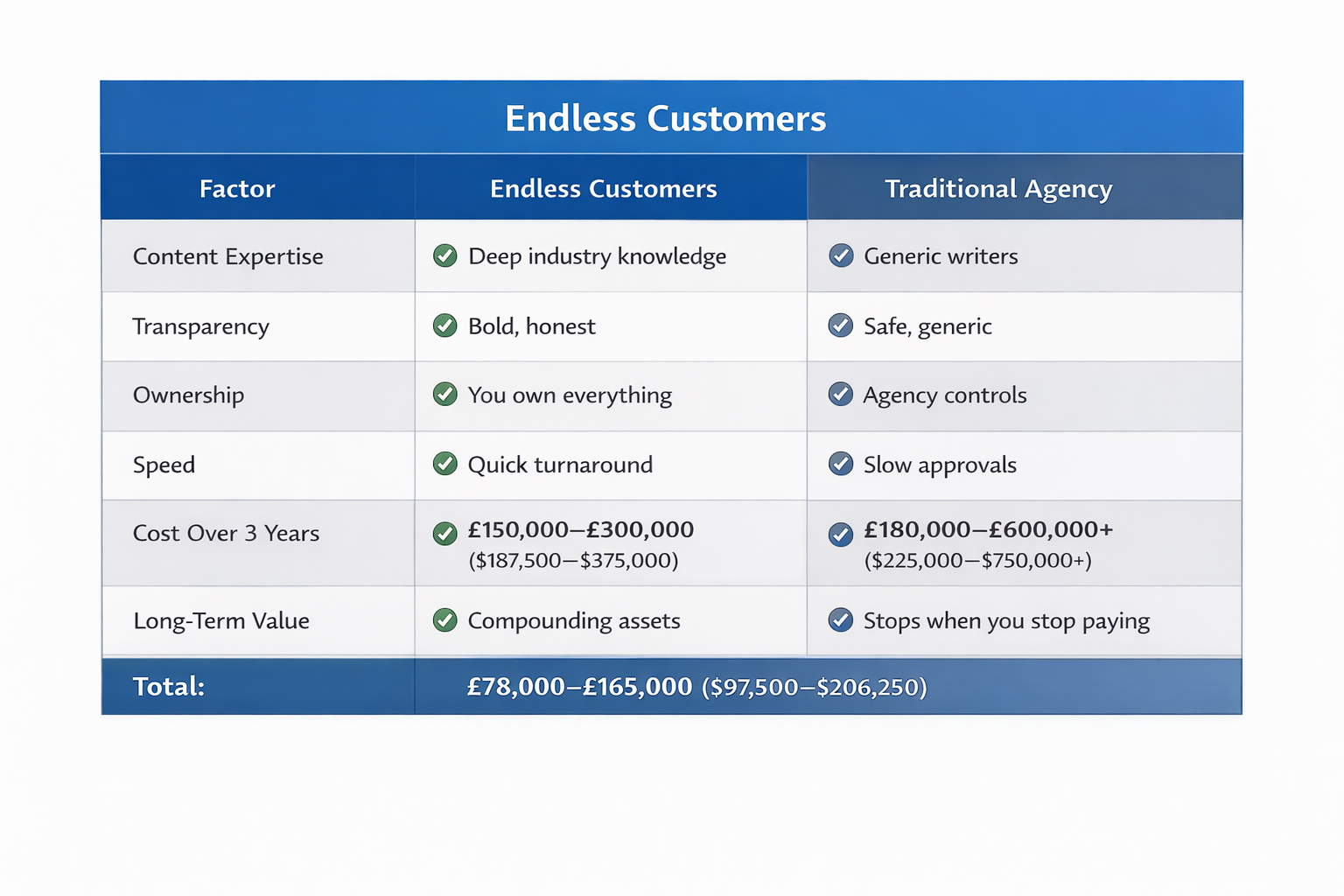
| Factor | Endless Customers | Traditional Agency |
|---|---|---|
| Content expertise | Deep industry knowledge | Generic writers |
| Transparency | Bold, honest | Safe, generic |
| Ownership | You own everything | Agency controls |
| Speed | Quick turnaround | Slow approvals |
| Cost over 3 years | £150,000–£300,000 ($187,500–$375,000) | £180,000–£600,000+ ($225,000–$750,000+) |
| Long-term value | Compounding assets | Stops when you stop paying |
Agencies cannot build your trusted brand. Only your team can.
How to assess if your business is truly ready
To determine readiness, evaluate whether leadership genuinely believes in becoming the most known and trusted brand and will invest resources required for long-term transformation rather than seeking quick fixes.
Companies using EOS or participating in Vistage, EO, or YPO tend to thrive because these organisations share focus on systems and continuous improvement.
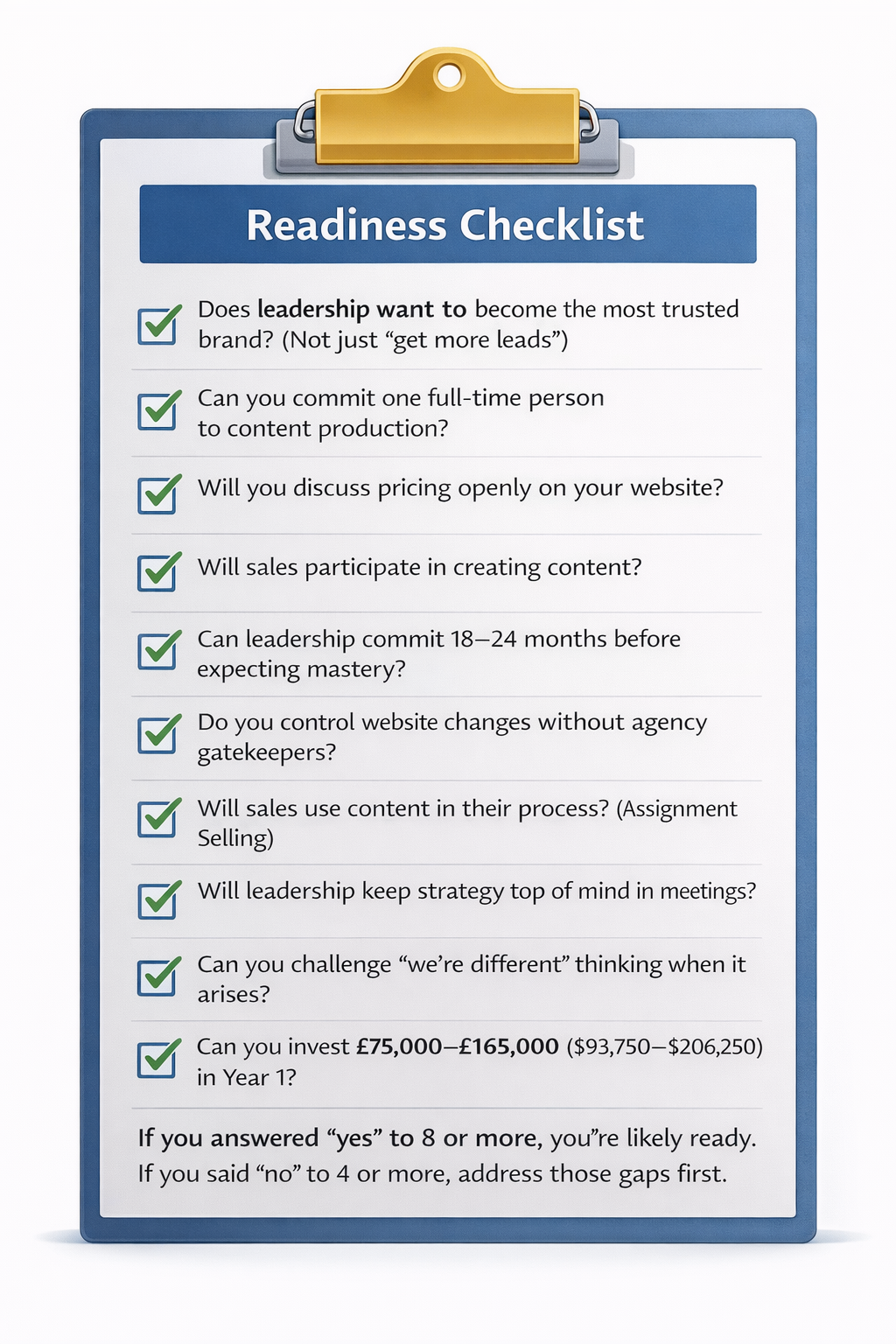
Readiness checklist:
- Does leadership want to become the most trusted brand? (Not just "get more leads")
- Can you commit one full-time person to content production?
- Will you discuss pricing openly on your website?
- Will sales participate in creating content?
- Can leadership commit 18–24 months before expecting mastery?
- Do you control website changes without agency gatekeepers?
- Will sales use content in their process? (Assignment Selling)
- Will leadership keep strategy top of mind in meetings?
- Can you challenge "we're different" thinking when it arises?
- Can you invest £75,000–£165,000 ($93,750–$206,250) in Year 1?
If you answered "yes" to 8 or more, you're likely ready. If you said "no" to 4 or more, address those gaps first.
10 readiness benchmarks: Where does your business stand?
Endless Customers provides a 10-point assessment evaluating your current state across all five components, with each scored 0–10 to determine where you stand.
Your total score determines readiness level—whether you're beginning, making progress, or approaching mastery.
The Scorecard (rate 0–10, where 0 = "we don't do this" and 10 = "we do this exceptionally well"):
The Right Content:
- Consistent in-house publication (three pieces weekly covering Big 5)
- Video content that outperforms anyone else in your market (two videos weekly, in-house)
The Right Website:
- Most trusted, best performing website in market (Learning Centre, self-service tools)
- Manage and optimise website in-house (no agency dependency)
The Right Sales Activities:
- Sales team integrated and supportive (creating and using content)
- Sales prepared and empowered (documented process with Assignment Selling)
The Right Technology:
- Optimally using CRM (managed in-house with clean data)
- Using AI better than competitors (proactive experimentation)
The Right Culture:
- Organisation aligned and trained on Endless Customers (leadership accountability)
- Maximising growth efforts (continuous learning, community engagement)
Score Interpretation:
- 0–19: Beginning, significant work needed
- 20–39: Getting there, frequent assistance required
- 40–59: Halfway, making progress
- 60–79: Significant traction, minimal assistance
- 80–100: Mastery, independent execution
Most businesses start below 20. After 18–24 months, most reach 80+.
Your first 90 days: What to do when you're ready
Once you've determined readiness, the first step is hosting an Alignment Day, a focused training session unifying your organisation around the Endless Customers strategy.
After Alignment Day, prioritise bringing content in-house by assigning Content Manager and Videographer roles, even if one person wears both hats initially.
Implementation roadmap:
Month 1: Alignment Day
- Company-wide training (entire leadership and sales teams mandatory)
- First quarterly planning and 90-day priorities
- Initial scorecard assessment
Months 1–3: Foundation
- Assign or hire Content Manager and Videographer
- Publish first Big 5 content
- Commit to three pieces weekly
- Launch sales/marketing collaboration
Months 4–6: Systems
- Launch Learning Centre
- Integrate self-service tools
- Document sales process
- Train Assignment Selling
Months 7–12: Optimisation
- Publish disruptive content
- Integrate video in sales
- See noticeable lead increases
By Month 12, expect scorecard 40–60 and measurable traction. By Month 18–24, reach 80+ and become the most trusted voice in your market.
When Endless Customers might not be the right fit
Endless Customers isn't right if you seek quick fixes, lack leadership commitment to long-term change, or operate where buyers make impulse decisions without research.
If you're unwilling to embrace transparency, particularly around pricing, problems, and comparisons—the system won't work, because trust-building through radical honesty is the foundation.
Other poor fits:
- Short sales cycles (convenience stores, fast food)
- Commodity products where price is the only differentiator
- Leadership not on board
- No budget for dedicated staff
- Refusing to bring capabilities in-house
- Wanting tactical "more leads" fixes without transformation
Be honest about these limitations. Attempting Endless Customers without necessary foundations wastes time and money.
Frequently asked questions
How long does it take to see results from Endless Customers?
Whilst tactical elements like pricing calculators can generate immediate results (some see 300%+ lead increases within weeks), building momentum with organic content typically takes 3–6 months before you see significant traffic and lead improvements.
Timeline: Months 1–3 (foundation, minimal results), Months 3–6 (first traction), Months 6–12 (noticeable improvements), Months 12–18 (measurable revenue impact), Months 18–24 (market leadership achieved).
Can we implement without hiring new people?
Some companies succeed by reassigning existing team members to content roles, but most successful implementations require at least one dedicated full-time person, because content demands consistent focus and can't be done effectively as a side responsibility.
Reassignment works only if you eliminate their other duties. For companies under £800,000 ($1 million) revenue, business owners often wear the content creator hat initially.
Do we need an Endless Customers Certified Coach?
Whilst you can implement independently using available resources, working with a Certified Coach accelerates results by helping avoid common detours and ensuring key sessions like Alignment Day are executed effectively.
I offer support through my In-House Sales & Marketing Mastery programme, which provides structured coaching through 90-day sprints over 18–24 months. Coaching investment: £12,000–£40,000+ ($15,000–$50,000+) annually depending on engagement level. Optional but proven to accelerate results.
What if competitors copy our content approach?
If competitors copy your approach, you've already won by being first to market as the trusted voice—imitators will always play catch-up.
Authentic content rooted in your team's expertise and personality cannot be truly replicated. Competitors can copy topics but not your unique perspectives, stories, and human connections. First-mover advantage in trust is massive.
How does Endless Customers work with paid advertising?
Endless Customers can work alongside paid advertising, but the system prioritises building owned media assets that compound in value over time rather than requiring continuous ad spend.
Many companies use paid advertising to amplify their best trust-building content, but content quality itself—not the ad budget—converts prospects.
Paid media works best when you have high-performing content to drive traffic to, using ads to amplify what already converts well organically.
Conclusion
You now understand exactly what Endless Customers requires; the investment, the components, the commitment, and the timeline. This system isn't about marketing hacks. It's a transformation in how your business earns trust and drives growth.
Complete the readiness scorecard, discuss with your leadership team, and book an Alignment Day. If you're serious about becoming the most trusted voice in your market, these are the actions that separate companies that succeed from those that stay stuck.
As a Certified Endless Customers Coach, I'm here to help you build sustainable in-house growth that lasts, not create dependency.
How to take action now
- Complete the 10-point readiness assessment and calculate your scorecard
- Share this with your leadership team and discuss commitment
- Evaluate budget for dedicated content roles
- Assess whether you can bring content and website management in-house
- Book a Company Alignment Workshop to unite your team
If you're ready to take control of your growth, my Company Alignment Workshop unites your entire team around this proven approach. We'll spend a focused session training your people, setting 90-day priorities, and completing your first scorecard.
My In-House Sales & Marketing Mastery programme then provides ongoing coaching through 90-day sprints until you reach independence. Let's talk about where you are and where you want to be.

About the Author
I'm Tom Wardman, a Certified Endless Customers Coach helping UK businesses end agency dependency and build in-house sales and marketing capabilities generating sustainable growth. Through my In-House Sales & Marketing Mastery programme and Company Alignment Workshops, I guide leadership teams through proven frameworks that transform companies into the most trusted choice in their markets. My approach is practical, structured, and focused on transferring knowledge—not creating dependency.
Pricing Disclaimer: All GBP–USD price conversions are rounded estimates and correct at the time of publishing. Exchange rates fluctuate and figures should be treated as indicative only.
Topics: