

Key Takeaways
- Not being ready to commit to a marketing method means you recognise its potential but face barriers like time, budget, or uncertainty that prevent full implementation right now.
- Partial commitment typically yields 20–40% of potential results while consuming 70–80% of the effort, and costs you 6–18 additional months to reach meaningful ROI.
- Even partial commitment—particularly focusing on Big 5 content topics—is almost always better than doing nothing, delivering 2–3x better lead quality than no action.
- The minimum viable commitment is one high-quality Big 5 article per week with full sales team alignment, requiring 6–8 hours weekly and producing measurable impact within 90–120 days.
- If you can't secure leadership buy-in, dedicate 5–10 hours weekly, and commit for 6–9 months, it's better to wait and fix those gaps first rather than launch a failed attempt.
Are you curious about Endless Customers but unsure you're ready? What happens if you only go halfway, or wait a bit longer?
The hidden cost of partial commitment is staggering: 6–18 months of wasted effort, £175,000 ($218,750) or more in lost revenue, and a team convinced that "this method doesn't work."
In this article, I'll show you what partial commitment really costs, and how to decide your best path forward. You'll learn the ROI difference between full, partial, and no commitment, what works (and fails) at each level, and the minimum viable approach that actually delivers results.
I've worked with dozens of businesses facing this exact decision point, and I'll share the real numbers, the common pitfalls, and the preparation steps that separate success from failure.
What does "not being ready" actually mean?
Not being ready to commit to a marketing method means you recognise its potential value but face barriers, whether time, budget, cultural resistance, or uncertainty, that prevent full implementation right now.
This hesitation is normal and affects approximately 60–70% of businesses first introduced to comprehensive content marketing frameworks like Endless Customers or inbound methodology (estimate based on typical conversion rates from awareness to implementation among mid-market B2B companies).
The 3 most common readiness barriers
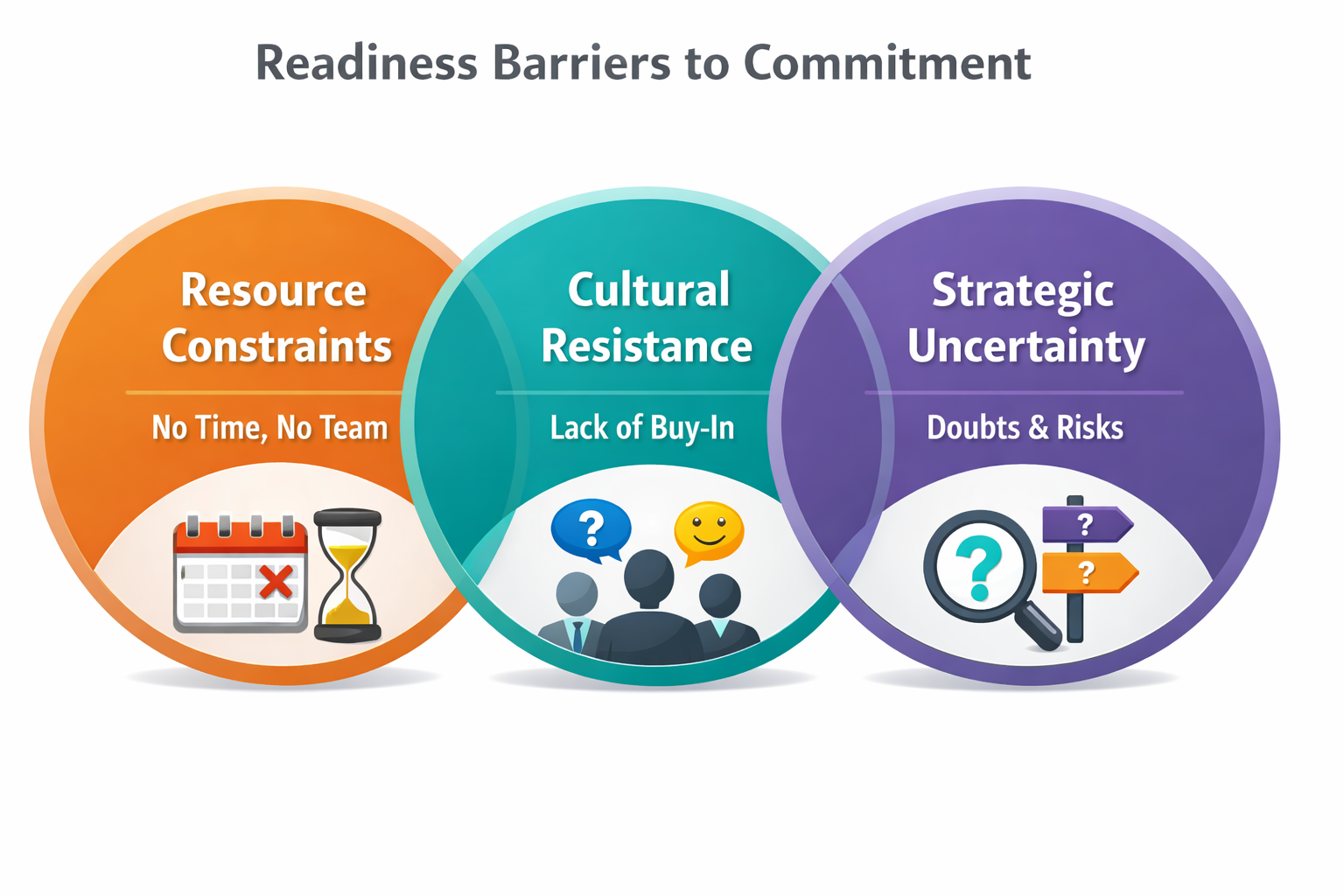
The barriers usually fall into three categories:
- Resource constraints: No dedicated content creator or insufficient weekly hours to produce quality content consistently.
- Cultural resistance: Sales doesn't trust marketing, or leadership wants proof before investing in a new approach.
- Strategic uncertainty: Unsure if this approach fits your market, buyer journey, or competitive landscape.
Why "not ready" doesn't mean it won't work
Being "not ready" doesn't mean the method won't work for you—it means you haven't yet built the internal conditions required for success. The methodology itself is proven; your organisation simply needs preparation before it can execute effectively.
What results can you expect from partial marketing commitment?
When you don't fully commit to a marketing method, you typically experience diluted results: slower traffic growth, inconsistent lead quality, longer time-to-ROI, and team confusion about priorities.
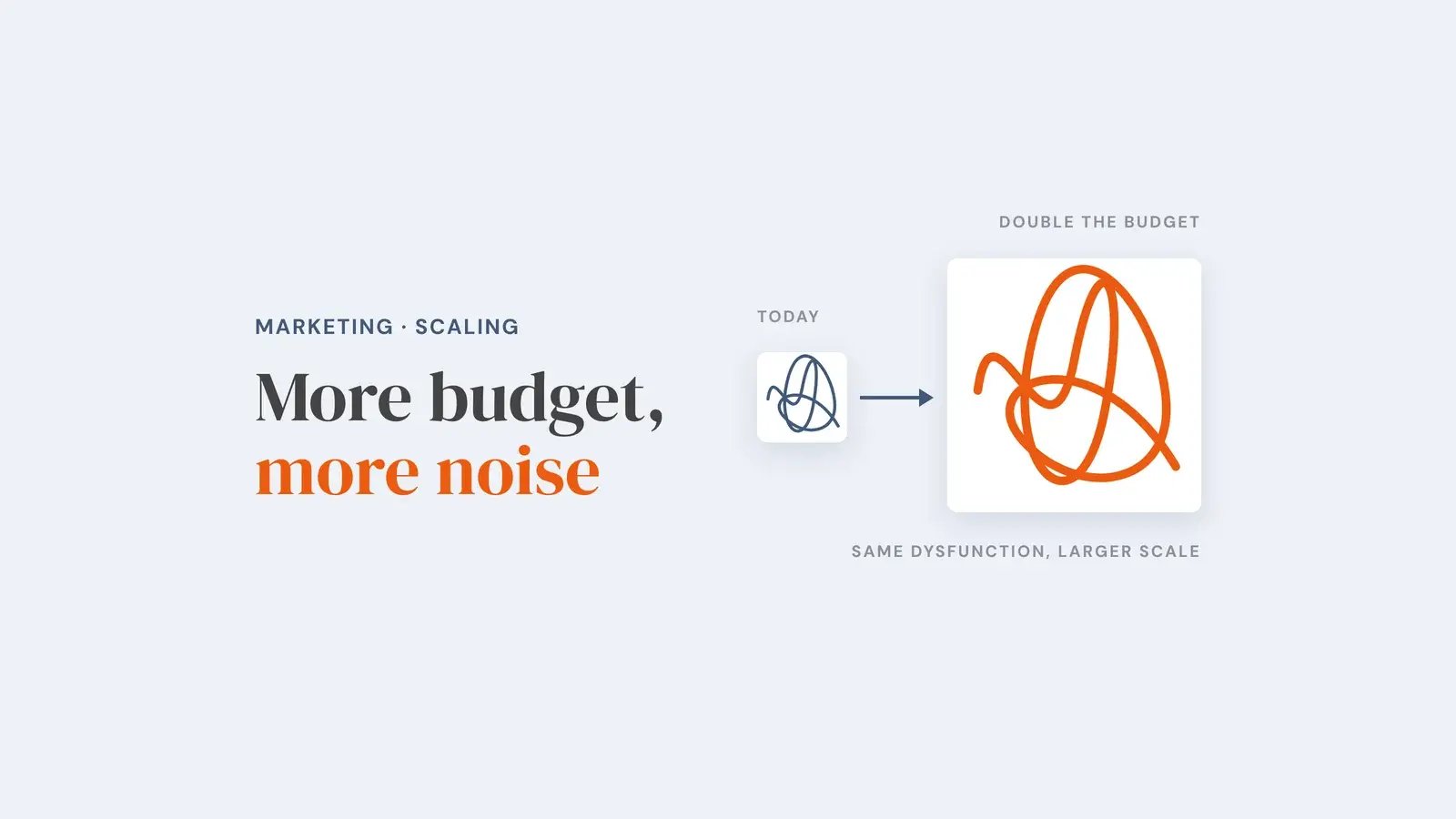
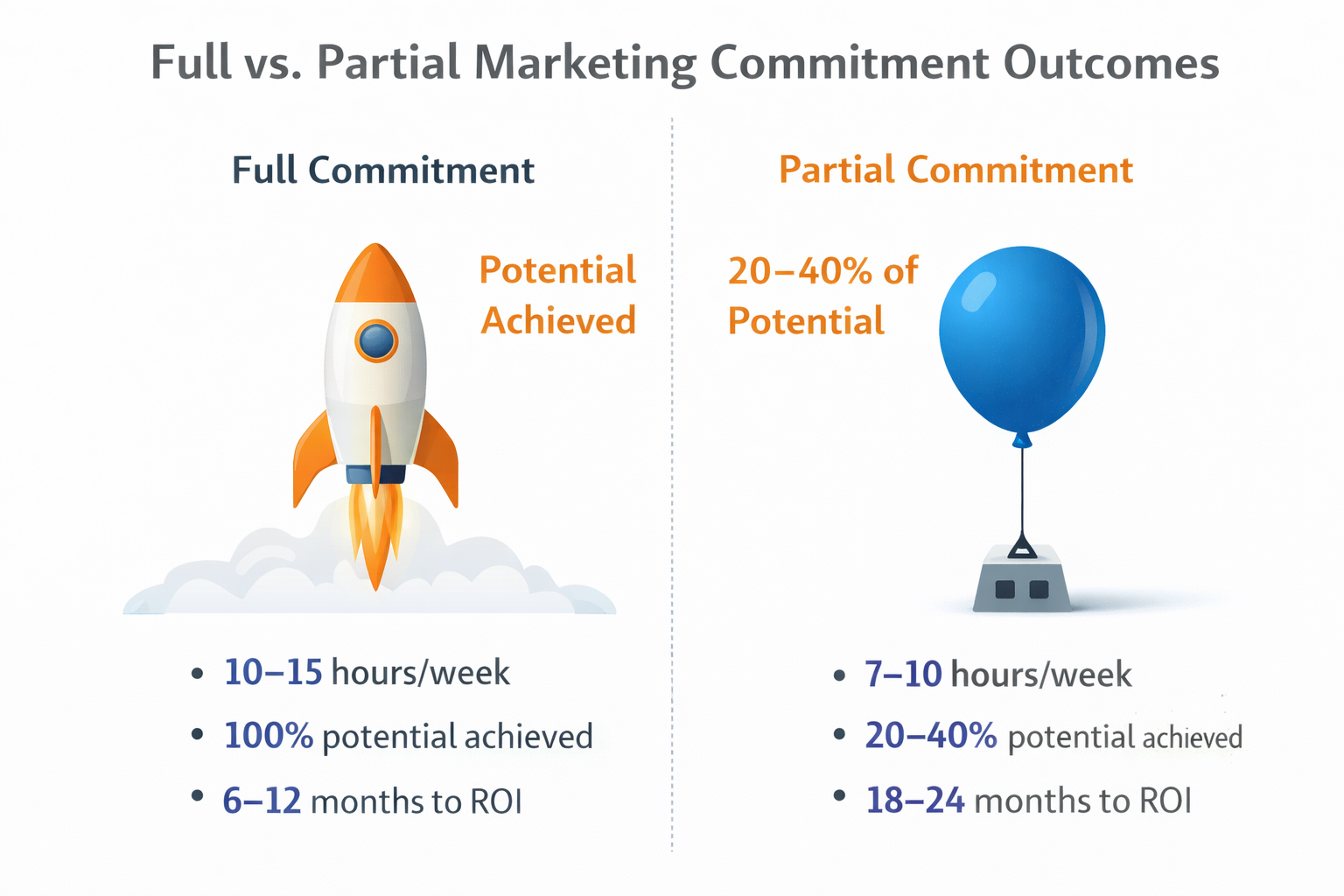
Partial implementation often yields 20–40% of the potential results, but takes 70–80% of the effort because you lack the systems, buy-in, and consistency that drive compounding returns.
Here's what partial commitment typically looks like:
- Publishing content sporadically (once every 2–3 weeks instead of weekly)
- Sales team ignores or doesn't read the content you create
- Leadership questions every piece instead of trusting the process
- You cherry-pick the "easy" content topics while avoiding the uncomfortable ones
- No clear tracking of which content influences actual deals
The most damaging outcome is that teams blame the methodology when results disappoint, rather than recognising incomplete execution as the real problem.
| Commitment Level | Effort Required | Typical Results | Time to ROI |
|---|---|---|---|
| Full (90–100%) | 10–15 hours/week | 100% potential achieved | 6–12 months |
| Partial (40–60%) | 7–10 hours/week | 20–40% potential achieved | 18–24 months |
| Minimal (<30%) | 3–5 hours/week | 5–15% potential achieved | 24+ months or never |
How much does partial commitment cost your business?
Partial commitment typically costs you 6–18 additional months to reach meaningful ROI, plus significant opportunity cost in lost leads and revenue.
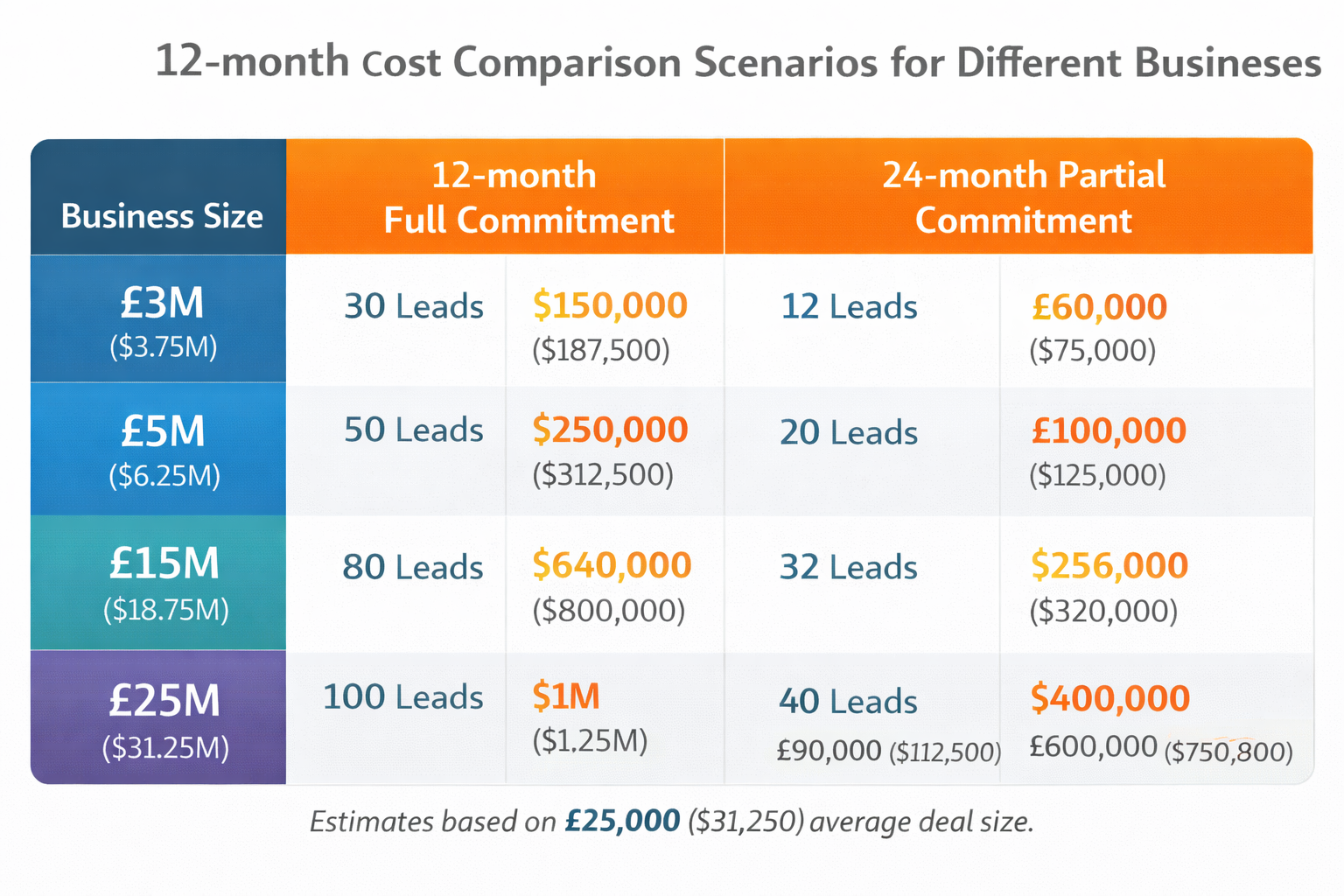
Let's look at a realistic example. A £5 million ($6,250,000) B2B services company with an average deal value of £25,000 ($31,250):
| Scenario | Leads | Close Rate | New Customers | Revenue Impact | Resource Cost |
|---|---|---|---|---|---|
| Full commitment (12 months) | 50 | 20% | 10 | £250,000 ($312,500) | £30,000 ($37,500) |
| Partial commitment (18 months) | 20 | 15% | 3 | £75,000 ($93,750) | £27,000 ($33,750) |
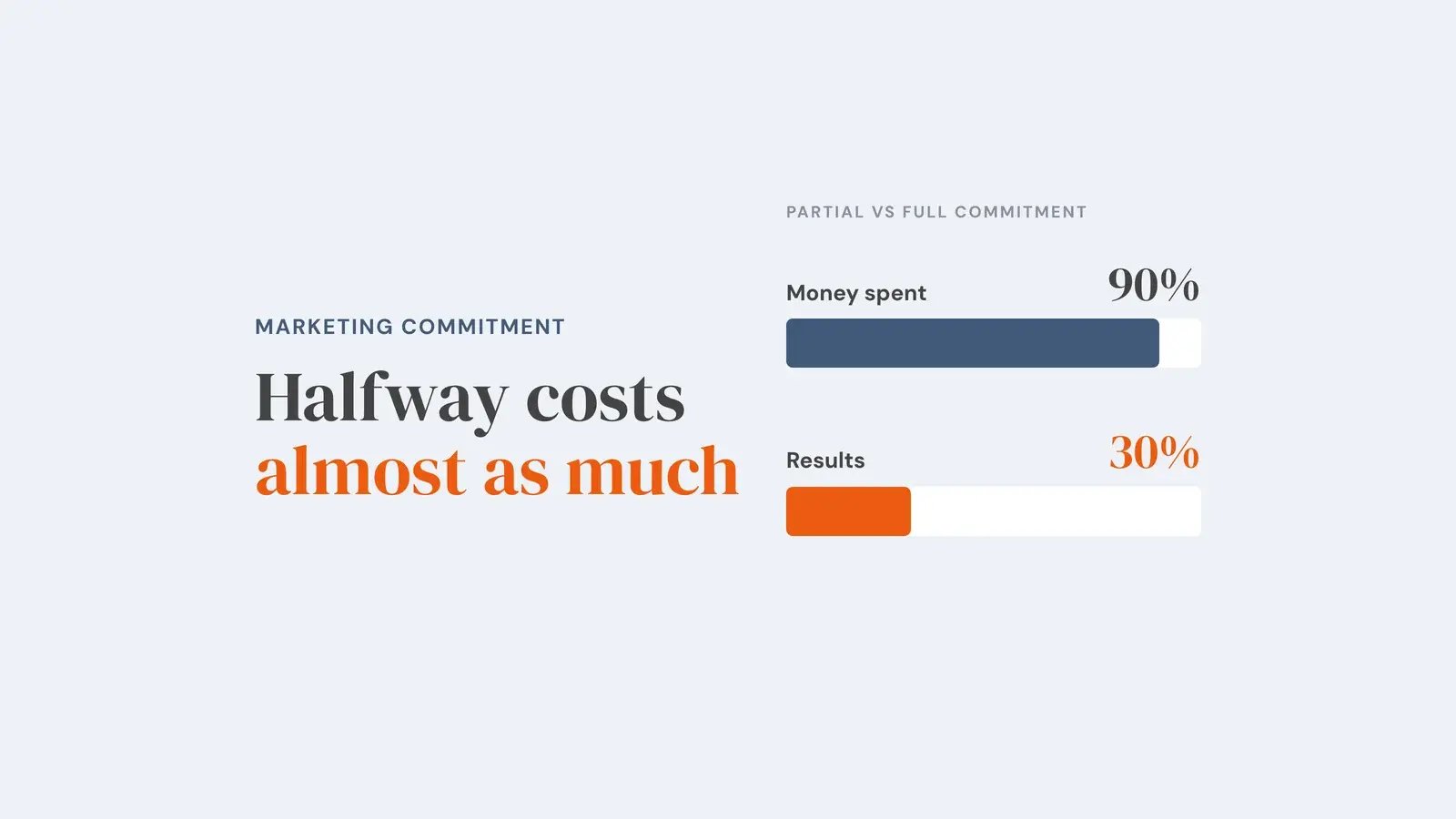
The opportunity cost is £175,000 ($218,750) in lost revenue for nearly the same effort. You spend 90% of the money to get 30% of the results—that's the hidden price of hesitation.
Does partial marketing commitment outperform doing nothing?
Yes, partial commitment is almost always better than doing nothing, especially if you focus on high-impact activities like addressing cost and problems content, which deliver disproportionate early returns.
Businesses that implement even 30–40% of a method, particularly the Big 5 content topics (cost, problems, comparisons, reviews, best-in-class), typically see 2–3x better lead quality and 15–25% shorter sales cycles compared to no change at all (estimate based on analysis of partial implementation case studies from Endless Customers practitioners).
The key is strategic selectivity. One brilliant cost article that your sales team uses in every single conversation is worth more than five mediocre blog posts that nobody reads.
Partial commitment works when you:
- Prioritise ruthlessly: Address the most urgent buyer questions first, not the easiest topics.
- Get sales using content immediately: Every piece should be in a salesperson's hands within 24 hours.
- Track which pieces influence deals: This creates proof points that justify expanding commitment later.
Partial commitment fails when you:
- Spread effort too thin: Covering too many topics without depth dilutes your impact.
- Disconnect content from sales: Creating pieces nobody on the sales team knows about or uses.
- Switch tactics prematurely: Changing direction before anything has time to compound.
6 reasons half-hearted marketing efforts fail
The biggest problems with half-hearted implementation are team demoralisation (when effort doesn't match results), wasted content that lacks strategic coherence, and the false conclusion that "this method doesn't work for us."
Leadership often blames the methodology rather than the incomplete execution, which prevents future investment and traps the company in ineffective marketing tactics indefinitely.
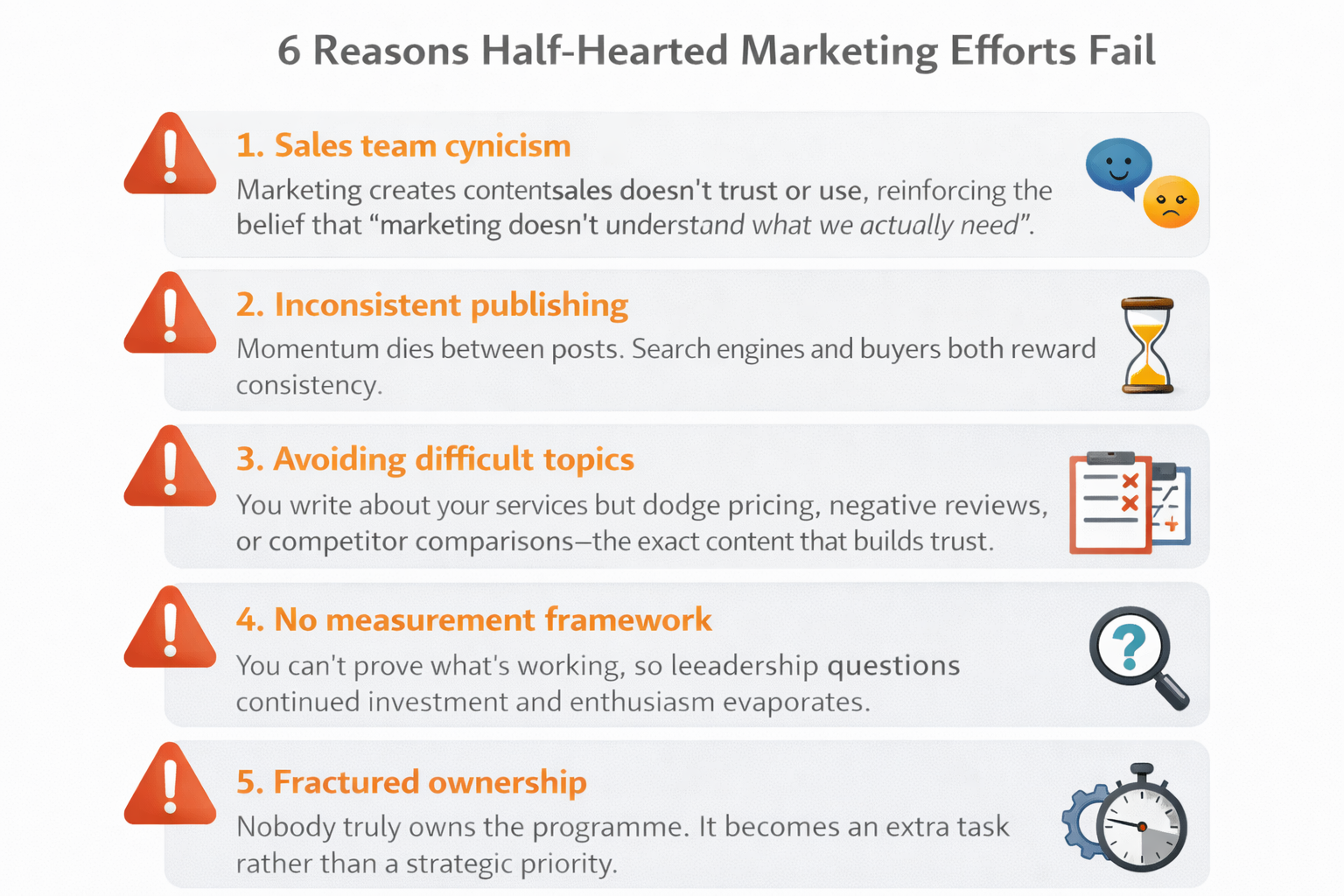
Here are the six most common pitfalls:
- Sales team cynicism: Marketing creates content sales doesn't trust or use, reinforcing the belief that "marketing doesn't understand what we actually need."
- Inconsistent publishing: Momentum dies between posts. Search engines and buyers both reward consistency, which you can't deliver without commitment.
- Avoiding difficult topics: You write about your services but dodge pricing, negative reviews, or competitor comparisons—the exact content that builds trust.
- No measurement framework: You can't prove what's working, so leadership questions continued investment and enthusiasm evaporates.
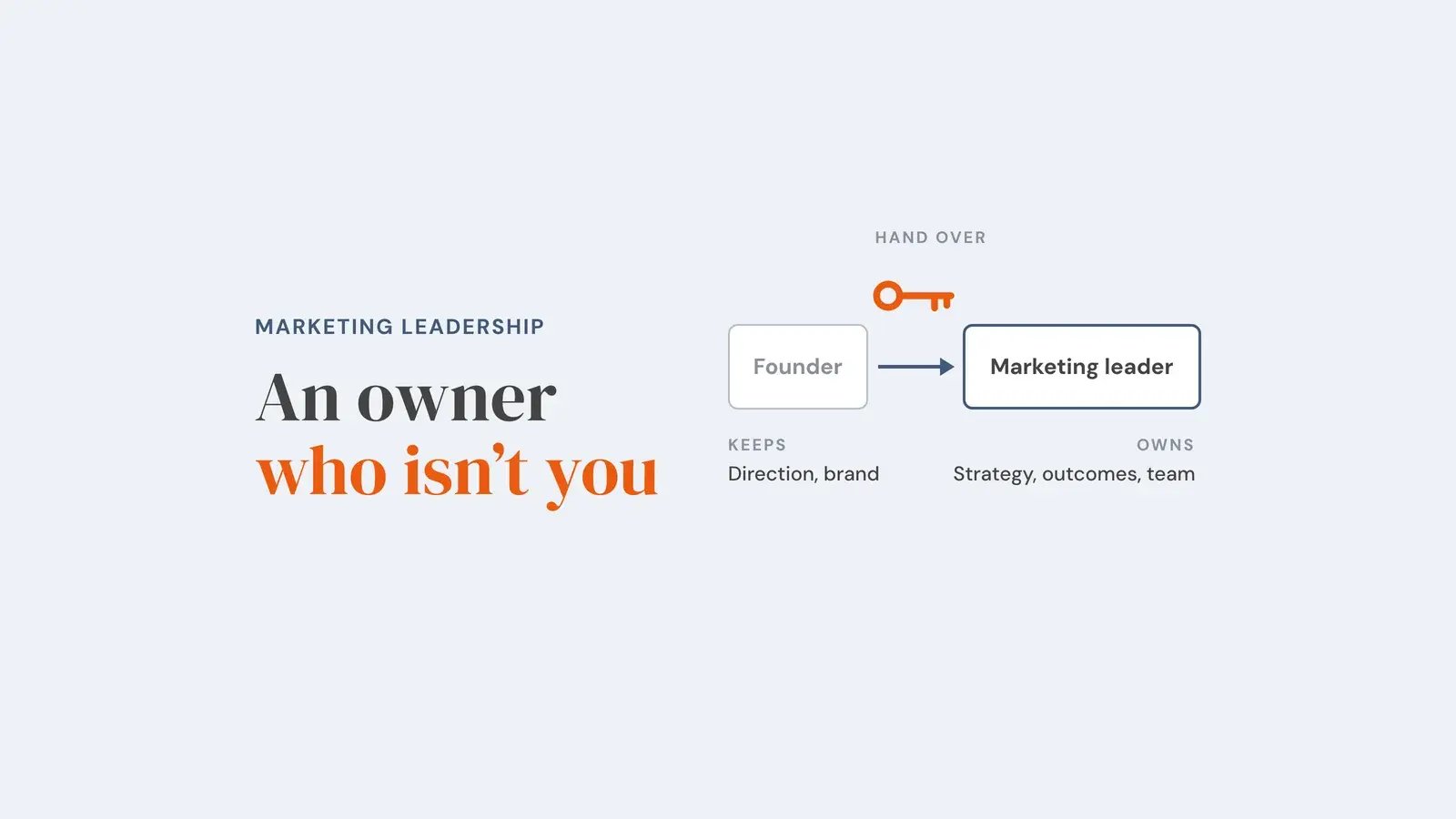
- Fractured ownership: Nobody truly owns the programme. It becomes an extra task rather than a strategic priority.
- Premature abandonment: You quit after three months because you haven't seen results, when the compounding returns typically appear at month 6–9.
How to know if you're ready to fully commit to Endless Customers
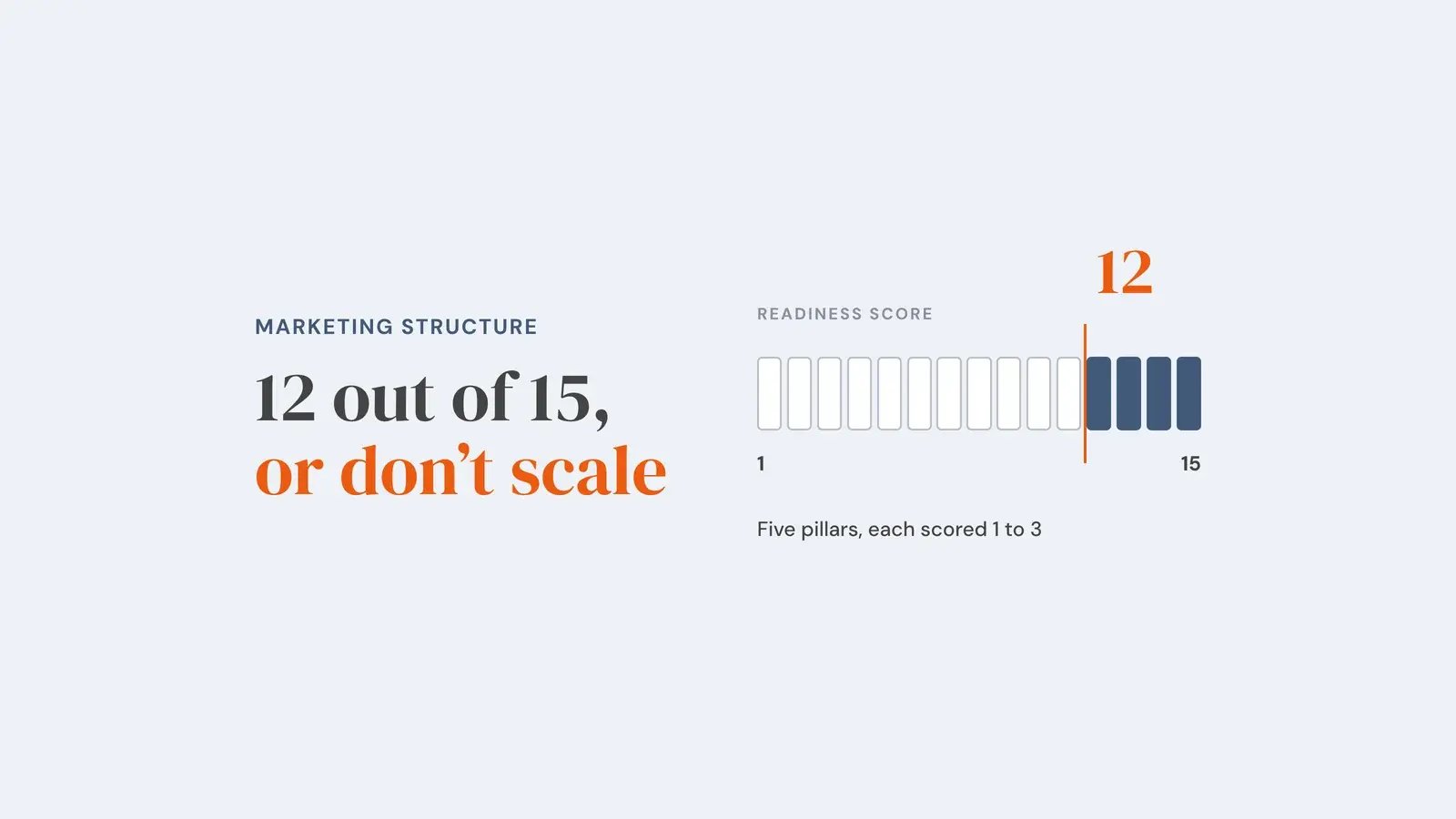
Decide based on three factors: your ability to secure leadership and sales buy-in, your capacity to dedicate consistent content creation resources (minimum 5–10 hours/week), and whether you can commit for at least 6–9 months.
If you can't meet all three, it's often better to wait and fix those gaps first, rather than launch a half-effort that breeds cynicism and poisons future attempts.
Use this decision matrix:
| Your Situation | Best Action | Why |
|---|---|---|
| Leadership supportive + resources available + 6+ month commitment | Full commitment | All conditions for success exist |
| Leadership cautious but open + limited resources (5–7 hours/week) | Strategic partial (Big 5 only) | Build proof points to justify expansion |
| Sales team hostile + no dedicated resource | Wait and prepare | You'll fail and damage future attempts |
| Budget exists but no internal buy-in | Wait and prepare | Money can't fix cultural resistance |
The worst decision is launching without sales alignment. I've seen this kill more programmes than any other factor. Content that sales won't use is wasted effort, regardless of quality.
What's the minimum viable marketing commitment that delivers results?
The minimum viable commitment is publishing one high-quality Big 5 article per week (cost, problems, comparisons, reviews, or best-in-class), ensuring your sales team reads and shares each piece, and tracking which content influences deals.
This minimum dose requires approximately 6–8 hours per week and typically produces measurable sales impact within 90–120 days if executed with consistency and sales alignment.
Here are the four non-negotiable requirements:
- One article per week, every week: Consistency matters more than volume. Miss a week and momentum dies.
- Sales team reads everything before it publishes: They provide input, approve the content, and commit to using it. This takes 30 minutes weekly per salesperson.
- Focus exclusively on Big 5 topics: Cost, problems, vs. competitors, reviews, and best-in-class. Ignore everything else for now.
- Track content influence: Use your CRM to tag which articles appear in deals. This proves value and directs future content.
This minimum approach works because it builds the two things partial efforts usually lack: sales trust and proof of impact. Once you prove these articles help close deals, expanding commitment becomes an easy decision.
[Insert checklist-style visual showing the four minimum requirements]
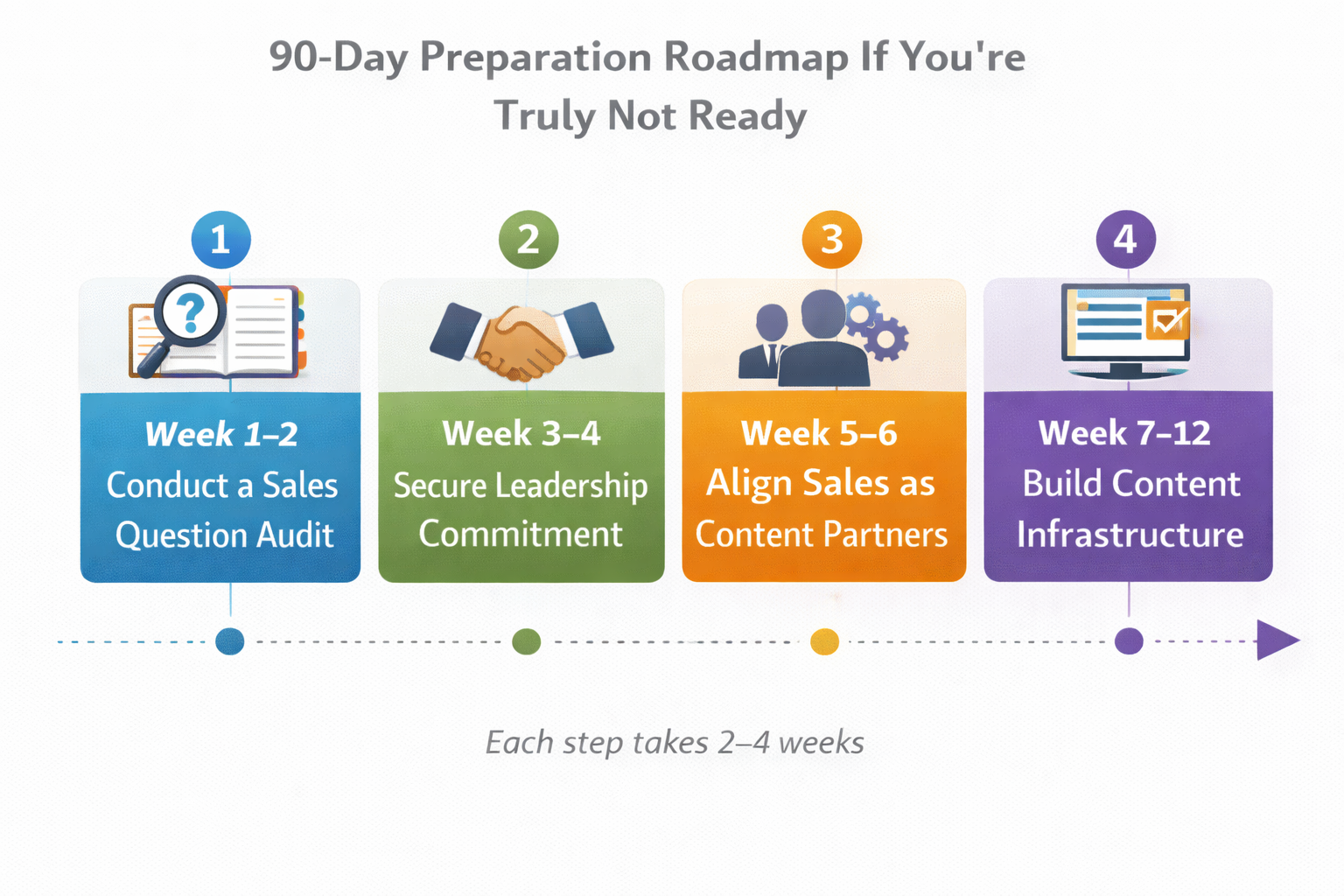
How to prepare in 90 days if you're not ready yet
If you're truly not ready, focus on building the prerequisites: secure executive sponsorship, audit your sales process to identify top buyer questions, and hire or train a content creator who can commit 10+ hours weekly.
Use a 60–90 day preparation period to create internal alignment and resource capacity, rather than launching prematurely and failing publicly.
Follow this four-step preparation plan:
- Conduct a sales question audit (Week 1–2): Interview your sales team. What questions do buyers ask repeatedly? What objections delay deals? What comparisons do they research? Document 20–30 specific questions.
- Secure leadership commitment (Week 3–4): Present the audit findings to leadership. Show them that buyers are asking questions your website doesn't answer. Get explicit commitment to a 6-month pilot with defined resources.
- Align sales as content partners (Week 5–6): Run a workshop with sales. Explain that marketing will answer the questions they're tired of answering. Get them to commit to reading and using the content. This partnership is non-negotiable.
- Build content infrastructure (Week 7–12): Hire or train a content creator. Set up publishing systems. Create content templates. Establish the tracking framework. Get HubSpot or your CRM configured properly.
At the end of 90 days, you're ready for real implementation,not just another false start.
Frequently asked questions about marketing method commitment
Below are the most common questions businesses ask when they're uncertain about committing to a new marketing methodology.
Can I test this method for just 30 days?
No, 30 days is too short to see meaningful results from content marketing. The minimum viable test period is 90 days of consistent weekly publishing with full sales alignment. Anything shorter tells you nothing useful about whether the method works.
Will partial commitment damage our brand or credibility?
Partial commitment itself won't damage your brand, but inconsistency might. If you publish sporadically or abandon the blog after two months, that signals unreliability. Better to publish one article monthly with perfect consistency than weekly for six weeks then disappear.
What if our competitors are already doing this?
Competitors doing this makes it more important, not less. If they're building trust with transparent content and you're not, you're losing deals before sales conversations even start. You can't afford to wait longer.
Can we outsource everything to avoid internal commitment?
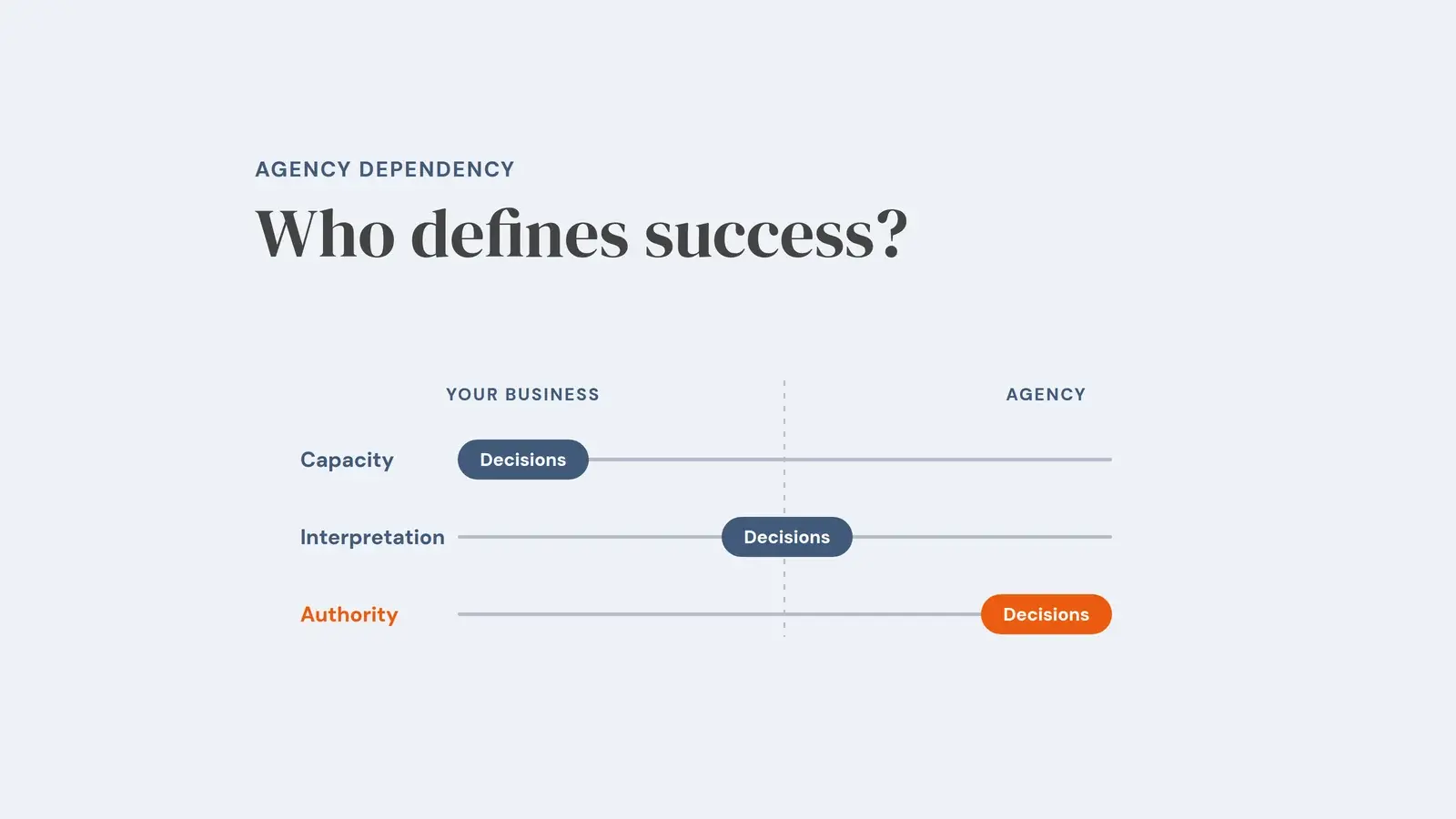
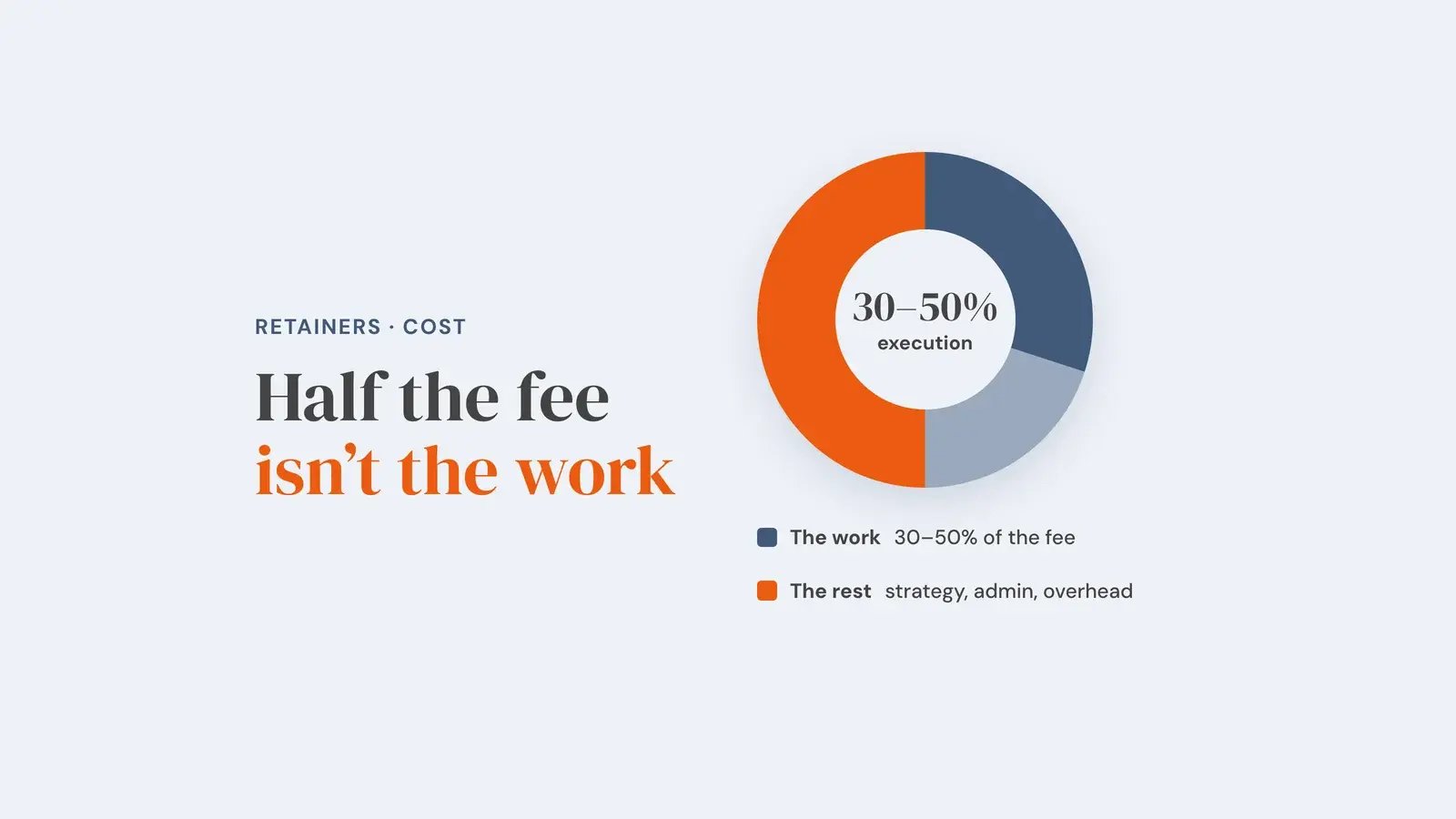
You can outsource content creation, but you can't outsource sales alignment or leadership commitment. Agencies can write articles, but your sales team still needs to read and use them. That internal cultural shift can't be purchased. My approach focuses on building internal capability you'll own, not dependency on external resources.
How do I know when we're actually ready?
You're ready when you have three things: a named person dedicating 8+ hours weekly to content, a sales leader who's genuinely enthusiastic (not just tolerant), and executive commitment to continue for at least six months regardless of early results. Without all three, you're not ready.
Conclusion
You started this article wondering what happens if you're not ready to fully commit to a marketing method. Now you understand the real costs, the minimum viable approach, and how to decide your best path forward.
Partial commitment can work, but only with ruthless focus on Big 5 topics, genuine sales alignment, and consistent execution over 90+ days. Half-hearted implementation usually wastes money and poisons future attempts. If you can't meet the minimum requirements, it's better to spend 60–90 days building internal readiness than launching prematurely.
The choice you're making isn't really about a marketing method. It's about whether you're ready to build genuine trust with your buyers through transparent, helpful content, or whether you'll keep relying on tactics that worked a decade ago but are failing you now.
How to take action now
- Audit your current readiness using the three-factor framework: leadership buy-in, dedicated resources (5–10 hours weekly), and 6+ month commitment capacity.
- If you have all three factors, start with the minimum viable commitment: one Big 5 article weekly with full sales alignment.
- If you're missing factors, use the 60–90 day preparation plan to build prerequisites before launching.
- Stop waiting for perfect conditions—they don't exist. Start with strategic partial commitment rather than analysis paralysis.
Not sure whether you're ready or how to start? I help businesses build the internal capability to generate endless customers through proven frameworks and hands-on support. Whether you need strategic guidance, training, or a marketing partner who builds independence rather than dependency, my approach ensures you own your growth engine.
Related article: What Does It Actually Cost to Implement the Endless Customers System™? Complete Price Breakdown

Pricing Disclaimer: All GBP–USD price conversions are rounded estimates and correct at the time of publishing. Exchange rates fluctuate and figures should be treated as indicative only.