

Most B2B founders either overspend on a launch that isn't ready, or under-invest on one that is, and both outcomes cost months of recovery time. The result is a launch that stalls, a pipeline that fails to fill, and a budget conversation nobody wants to have six months later.
I've worked with B2B businesses across the UK on go-to-market strategy, from early-stage product launches to multi-channel market entries. The cost ranges and frameworks below are drawn from that direct experience. They reflect B2B market rates and lean toward structured, capability-building execution models over pure agency spend, which means my perspective carries a bias worth naming upfront.
Here's what you'll walk away with:
- Realistic GTM cost ranges by business stage
- A six-category budget framework with indicative percentage splits
- A step-by-step method for anchoring budget to commercial outcomes
- The most common budgeting mistakes, and how to avoid them
What is a go-to-market strategy budget?
A go-to-market (GTM) strategy budget is the total planned investment required to bring a product or service to its target market, covering research, positioning, channel execution, sales enablement, technology, and measurement.
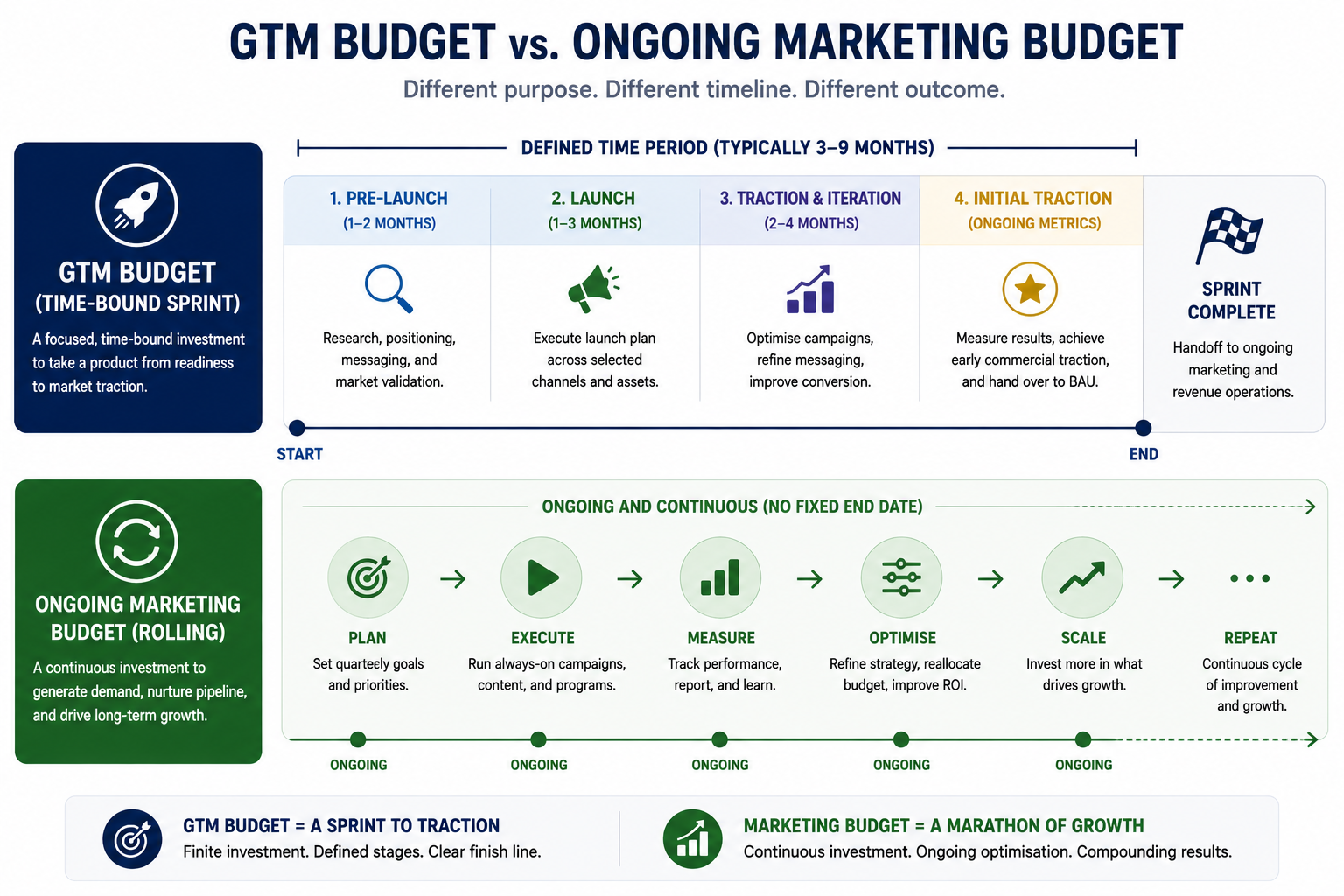
Unlike a general marketing budget, a GTM budget is time-bound and launch-focused. It funds every activity from pre-launch preparation through to achieving initial commercial traction, and it has a defined end point.
How much does a go-to-market strategy cost?
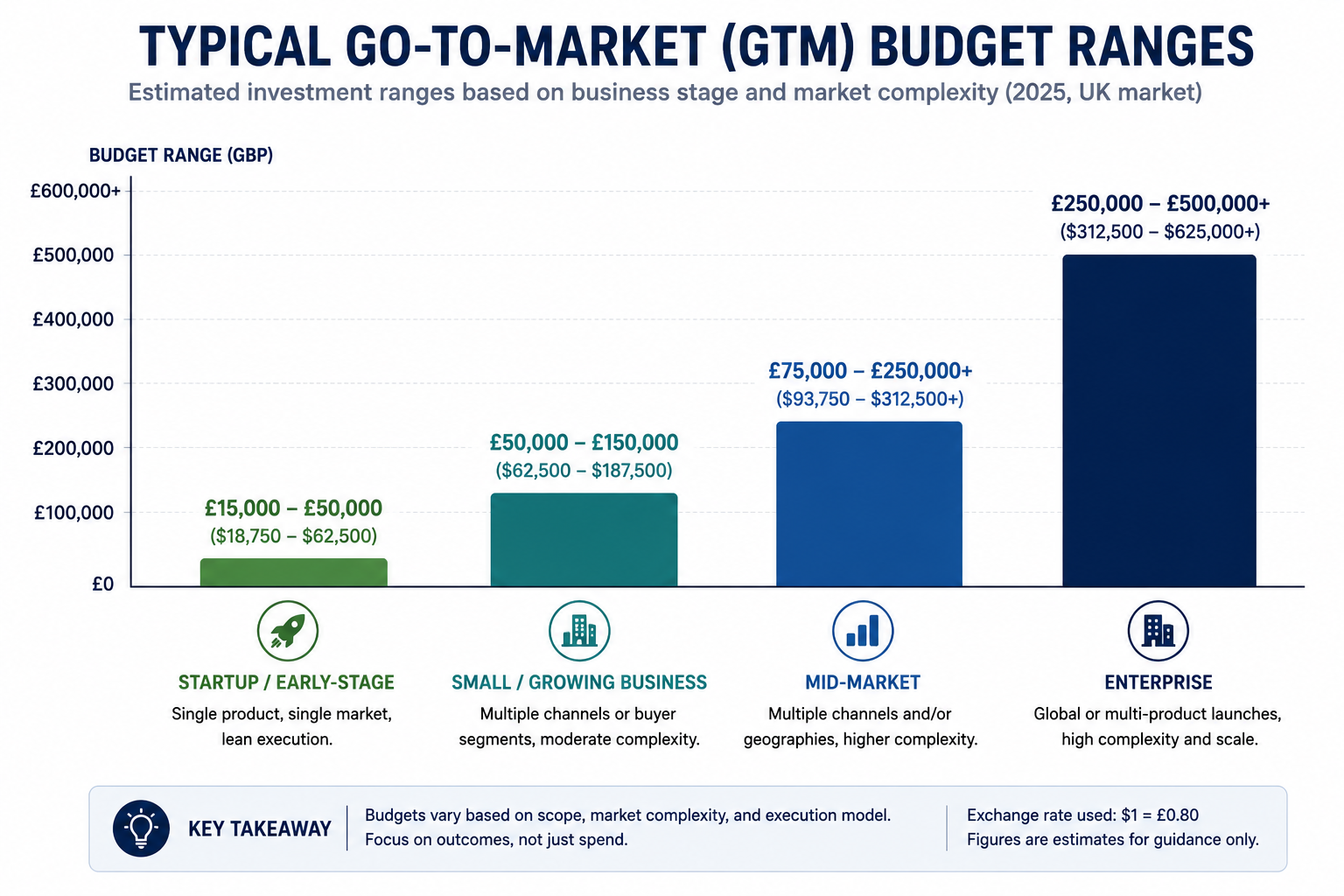
A go-to-market strategy typically costs between £15,000 ($18,750) and £500,000+ ($625,000+), depending on business size, market complexity, and execution model.
Early-stage businesses launching in a single market commonly invest £15,000–£50,000 ($18,750–$62,500). Mid-market businesses entering multiple channels or geographies regularly budget £75,000–£250,000 ($93,750–$312,500) or more.
These ranges are estimates based on typical UK market rates in 2025. Actual costs depend on sector, competitive intensity, and execution model.
Data and benchmarks
Gartner (2024) reports that B2B product companies spend 6–10% of company revenue on marketing; B2B services firms typically spend 3–7%.
A focused single-market B2B launch can be structured for as little as £15,000–£25,000 ($18,750–$31,250) if research and sales enablement are prioritised over broad-channel acquisition.
The first 90 days post-launch typically require 20–30% of the total GTM budget for iteration and optimisation. (Estimate based on typical client experience. No single published benchmark exists for this figure.)
Is there a minimum viable GTM budget?
For a B2B business launching a single product to a defined audience, £15,000 ($18,750) is approximately the floor for a structured GTM effort. Below that, it becomes difficult to fund research, positioning, meaningful content, and measurement without cutting something that materially affects the result.
What should a GTM budget include?
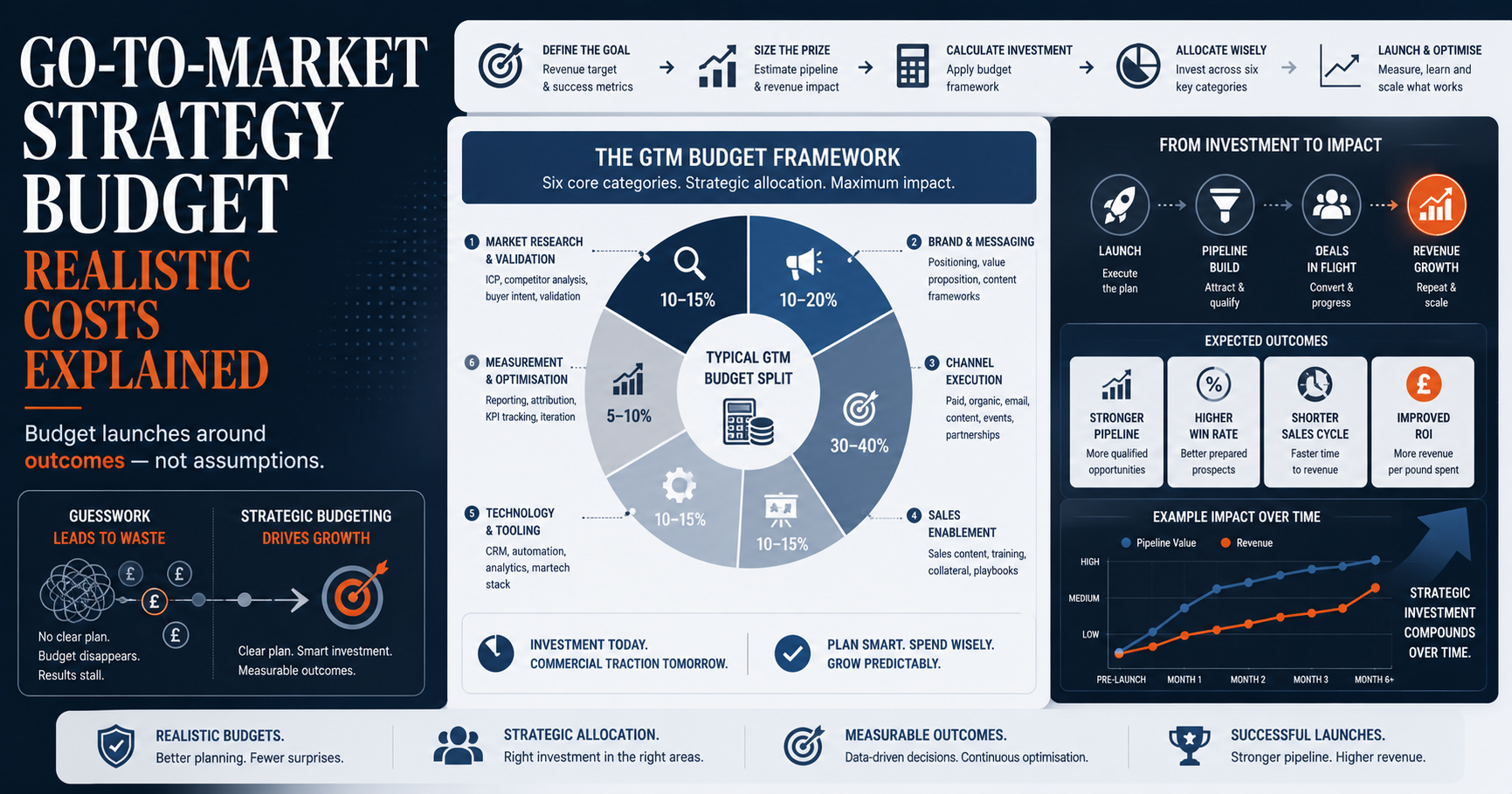
A complete GTM budget should cover six core categories: market research, brand and messaging, channel execution, sales enablement, technology, and measurement.
Skipping sales enablement or measurement is one of the most common reasons GTM launches underperform despite adequate top-level spend.
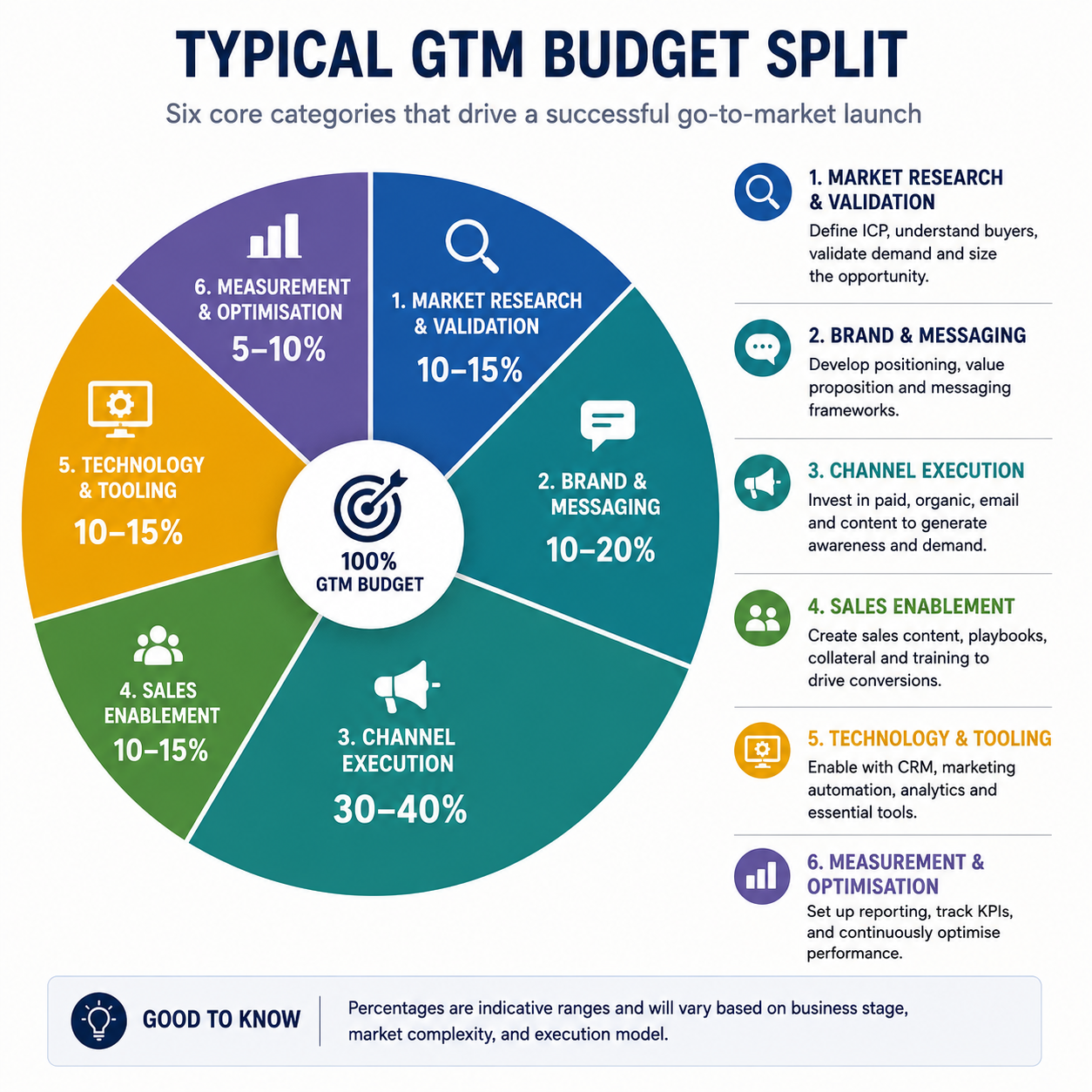
- Market research and validation: ICP definition, competitive analysis, buyer intent mapping. Typically 10–15% of total budget.
- Brand and messaging: Positioning, value proposition, content frameworks. Typically 10–20%.
- Channel execution: Paid, organic, email, content production. Typically 30–40%.
- Sales enablement: Sales content, training, collateral. Typically 10–15%.
- Technology and tooling: CRM, marketing automation, analytics. Typically 10–15%.
- Measurement: Reporting setup, attribution modelling, KPI tracking. Typically 5–10%.
In-house, agency, or consultant: which model costs less?
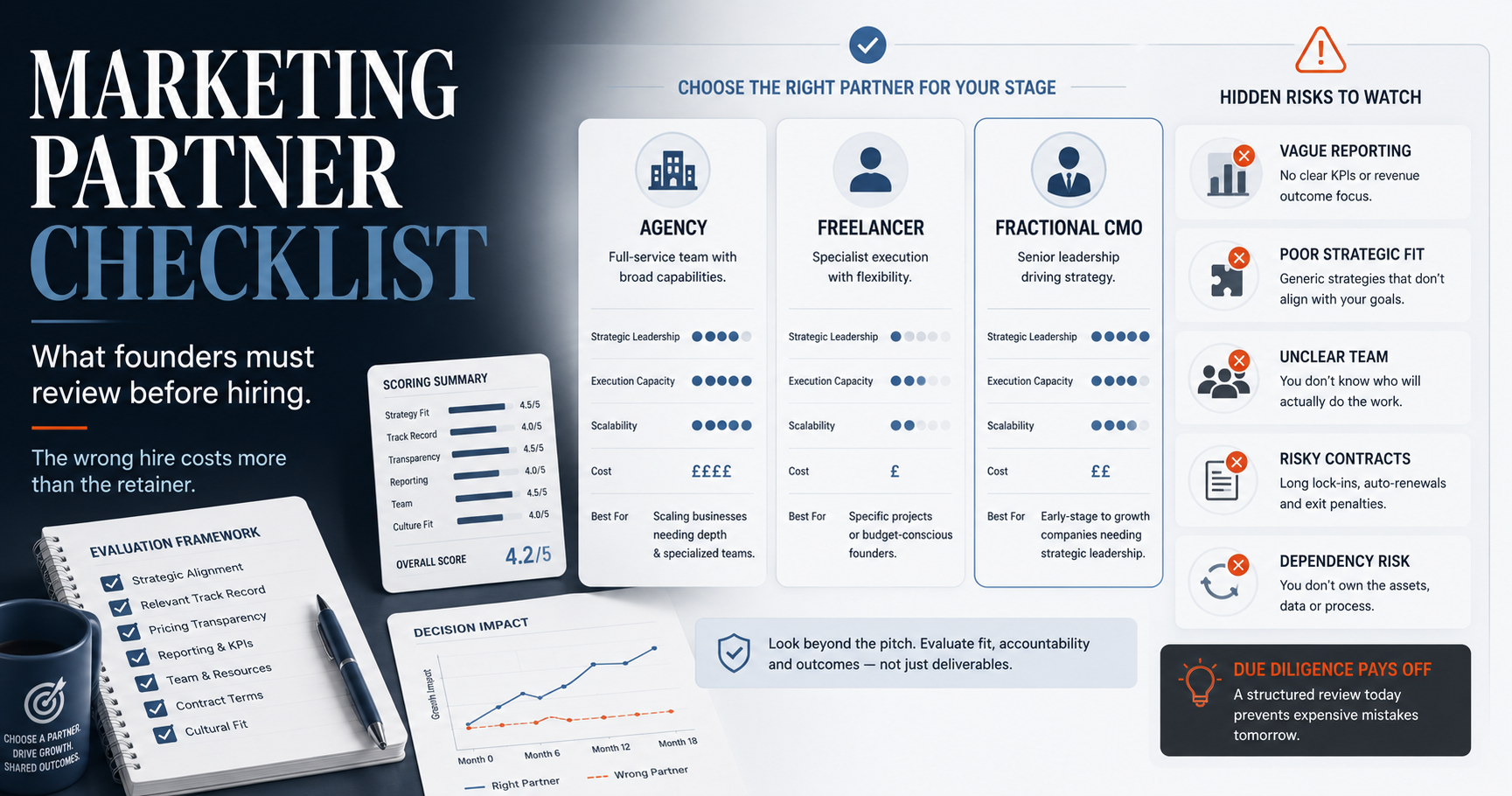
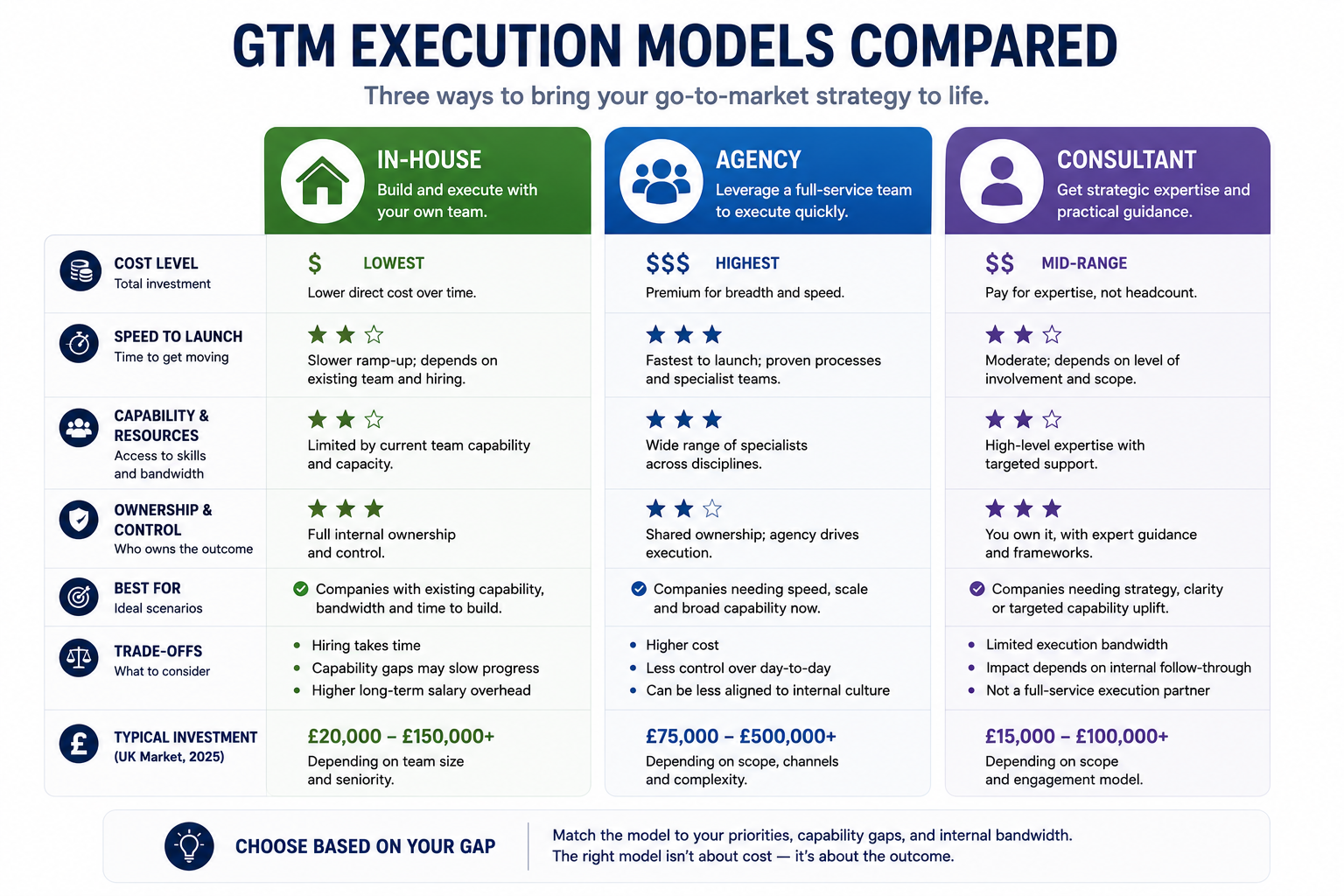
In-house GTM execution has the lowest direct cost but the highest capability risk; agencies offer speed and breadth at a premium; consultants provide strategic leverage at a mid-range investment.
The right model depends less on price and more on the gap between your current capabilities and what a successful launch requires.
The biggest GTM budgeting mistakes
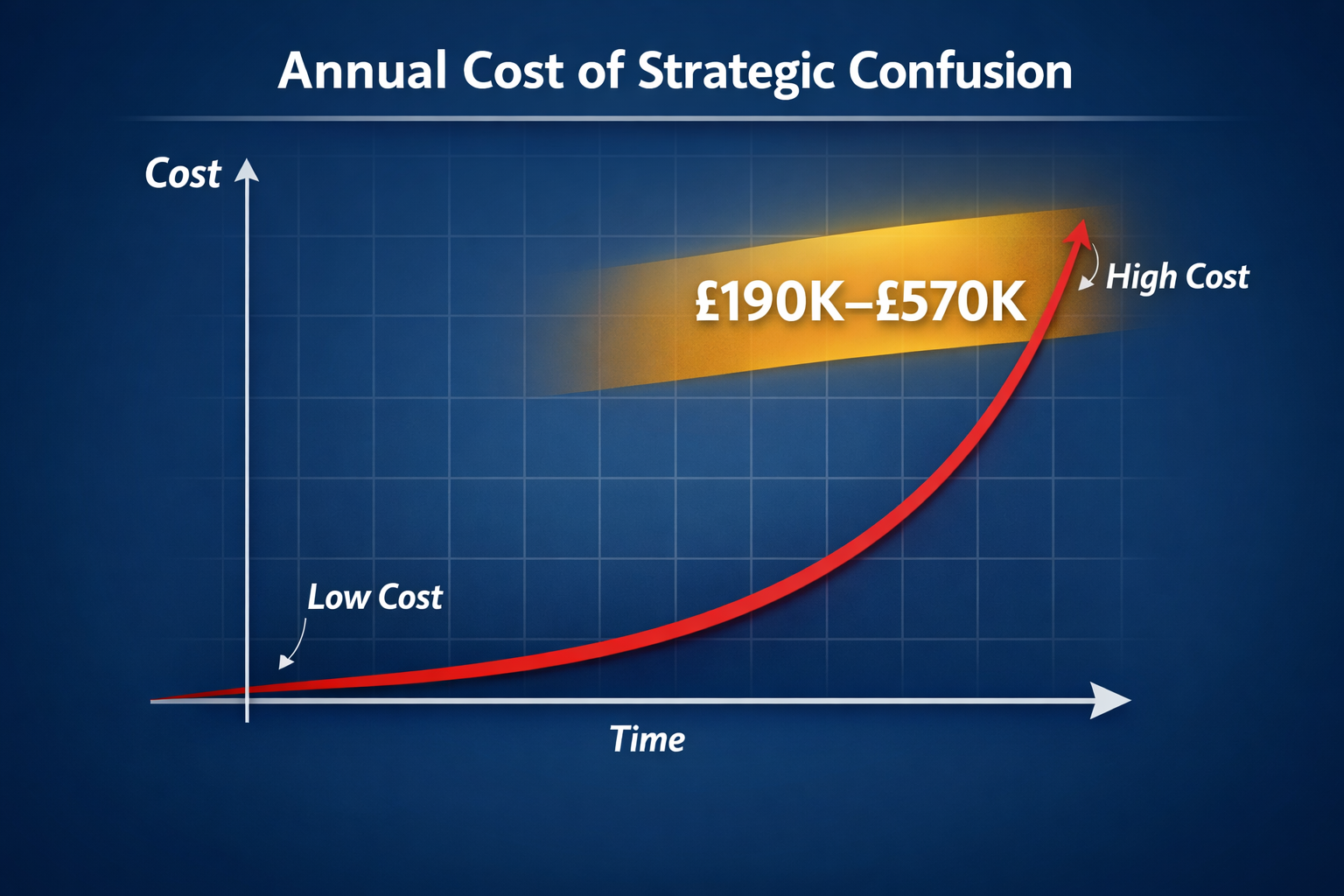
The most common GTM budgeting mistake is treating launch spend as a one-time cost, when the critical investment window extends three to six months beyond the initial launch date.
Other frequent errors you should plan around:
- Anchoring to a number before defining the goal: Set your revenue target first, then work backwards to the budget figure.
- Underfunding research: Skipping ICP validation produces messaging that does not reach the right buyers.
- Confusing brand awareness with demand generation. These serve different goals and require separate budget lines.
- Ignoring sales enablement. Marketing without sales alignment produces leads that do not convert.
- No iteration reserve. Hold back 10–15% of total budget for post-launch adjustment.
How to build your GTM budget: a step-by-step framework
Building a GTM budget starts with your revenue target, then works backwards to calculate the spend required to reach it.
This approach anchors your budget to commercial outcomes rather than arbitrary spend caps.
- Set your launch revenue goal: What does commercial traction look like at six months post-launch?
- Define conversion assumptions: How many leads, qualified conversations, and closed deals are needed?
- Map required activities: What content, campaigns, and enablement do those targets require?
- Cost each activity: Use day rates, supplier quotes, or internal time estimates.
- Allocate across the six categories above: Check your splits against the indicative percentages.
- Add 10–15% contingency for post-launch iteration.
- Sense-check against your business stage using the benchmark table.
Simple GTM budget formula
Estimated GTM budget = (pipeline target ÷ win rate) x cost per qualified lead + technology + overhead
Example: A business targeting £500,000 ($625,000) in new pipeline at a 20% win rate needs £2.5m ($3,125,000) in qualified pipeline. At a cost per qualified lead of £40 ($50), this quickly reframes whether broad paid acquisition or intent-led content is the more efficient channel for your business.
What a GTM budget looks like in practice
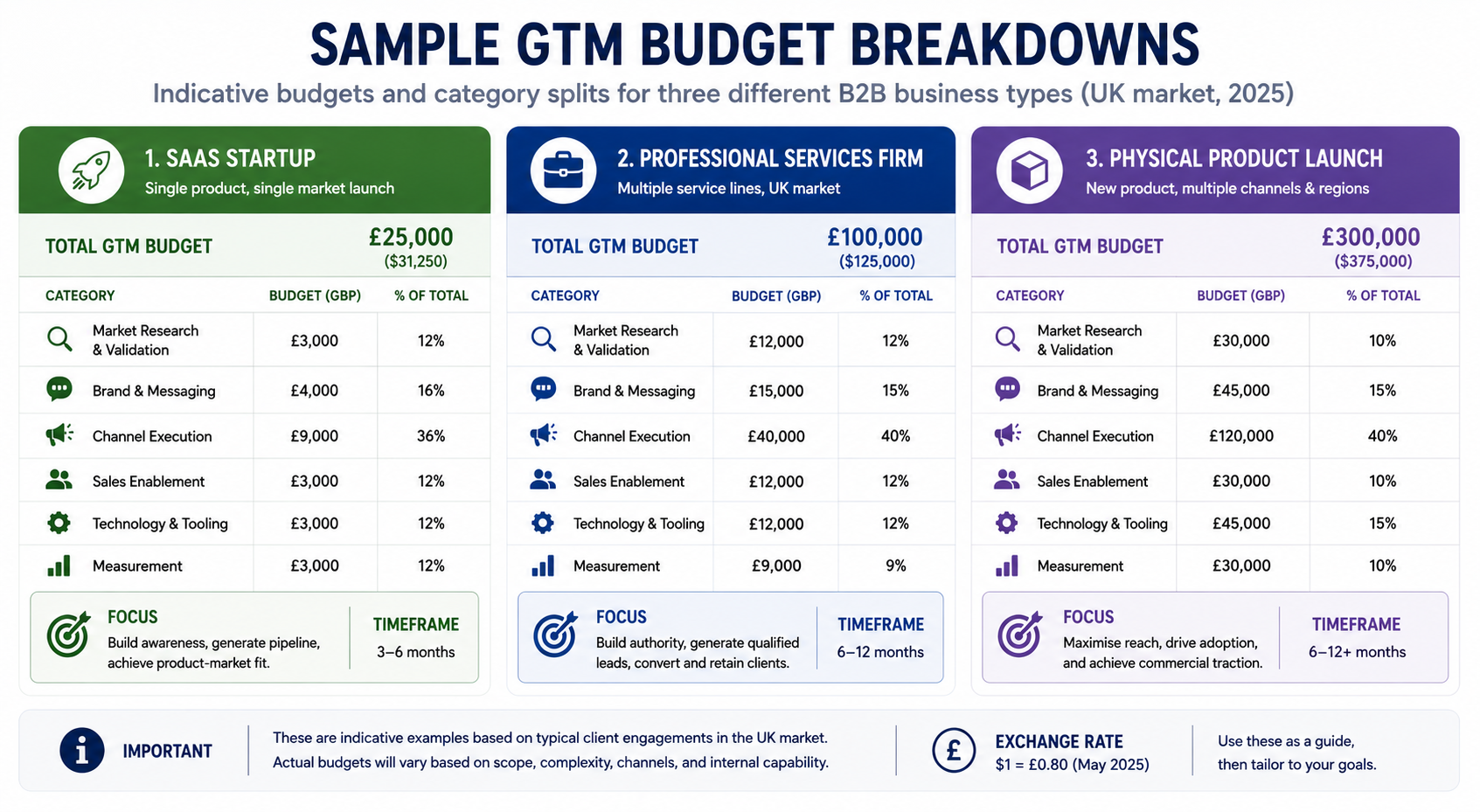
A B2B SaaS startup launching a single product to a defined ICP in the UK market might structure a £40,000 ($50,000) GTM budget as follows:
- Market research and validation: £4,000–£6,000 ($5,000–$7,500): ICP interviews, competitive analysis, buyer intent mapping.
- Brand and messaging: £6,000–£8,000 ($7,500–$10,000): positioning work, value proposition, core content framework.
- Channel execution: £12,000–£16,000 ($15,000–$20,000): content production, email sequences, organic and light paid distribution.
- Sales enablement: £4,000–£6,000 ($5,000–$7,500): proposal templates, sales decks, objection-handling guides.
- Technology and tooling: £4,000–£6,000 ($5,000–$7,500): CRM setup, marketing automation, basic analytics configuration.
- Measurement: £2,000–£4,000 ($2,500–$5,000): reporting framework, attribution model, KPI dashboard.
These proportions shift by business type. A professional services firm typically allocates more to sales enablement and content. A physical product launch typically weights more towards distribution and paid acquisition.
Conclusion
You arrived here without a clear spend structure, or with a budget figure you couldn't quite justify. That uncertainty is expensive: a GTM launch built on guesswork either overspends on the wrong activities or underfunds the ones that actually drive commercial traction.
You now have realistic cost ranges by business stage, a six-category spending framework, and a step-by-step method for anchoring your budget to a commercial goal rather than a guess.
The structure is here. Your next step is to put it to work against your specific launch, your ICP, your channels, and your timeline.
How to take action now
- Define your launch revenue target before setting any budget figure.
- Map your planned activities across the six GTM budget categories.
- Use the benchmark tables to check whether your total is realistic for your business stage.
- Reserve 10–15% of total budget for post-launch iteration.
- If your team needs strategic alignment before spend decisions are made, start with a structured diagnostic.
Your next step is to read Agency vs. In-House vs. Fractional: Which Marketing Model Wins on ROI?, because once your budget is set, the execution model decision is the one that determines whether you spend it efficiently.
I work with B2B founders and marketing leaders to install structured, in-house growth systems that make launches like this one repeatable. If your GTM plan needs structure before a single pound is committed to execution, my Growth Alignment Intensive™ and 90-Minute Marketing Triage™ are designed for exactly that starting point. Book a scoping call to find out which fits where you are now.

About the author
Tom Wardman is a fractional marketing consultant and Growth Independence Architect working with founder-led B2B businesses across the UK. He installs documented, in-house growth systems — from go-to-market strategy through to full capability transfer, so businesses replace agency dependency with growth they own. Tom is one of the UK's first certified Endless Customers coaches, trained directly under Marcus Sheridan, and the author of Build a Trusted Brand.
Pricing disclaimer: All GBP–USD price conversions are rounded estimates and correct at the time of publishing. Exchange rates fluctuate and figures should be treated as indicative only.
Topics: