



How do you know if a fractional hire is actually working?
What benchmarks are you supposed to use when no one agrees on what success looks like?
In this article, you'll learn why no standard exists for measuring fractional success, and what happens when companies and professionals make it up as they go. We'll show how this lack of clarity affects hiring decisions, pricing conversations, ROI discussions, and trust in the fractional economy as a whole.
Why fractional work has no clear benchmarks for success
Fractional work lacks standardised success metrics because the business model is too new and too varied for industry-wide benchmarks to have emerged organically.
Unlike traditional full-time roles with decades of performance data, fractional arrangements span wildly different scopes, time commitments, and value propositions across industries.
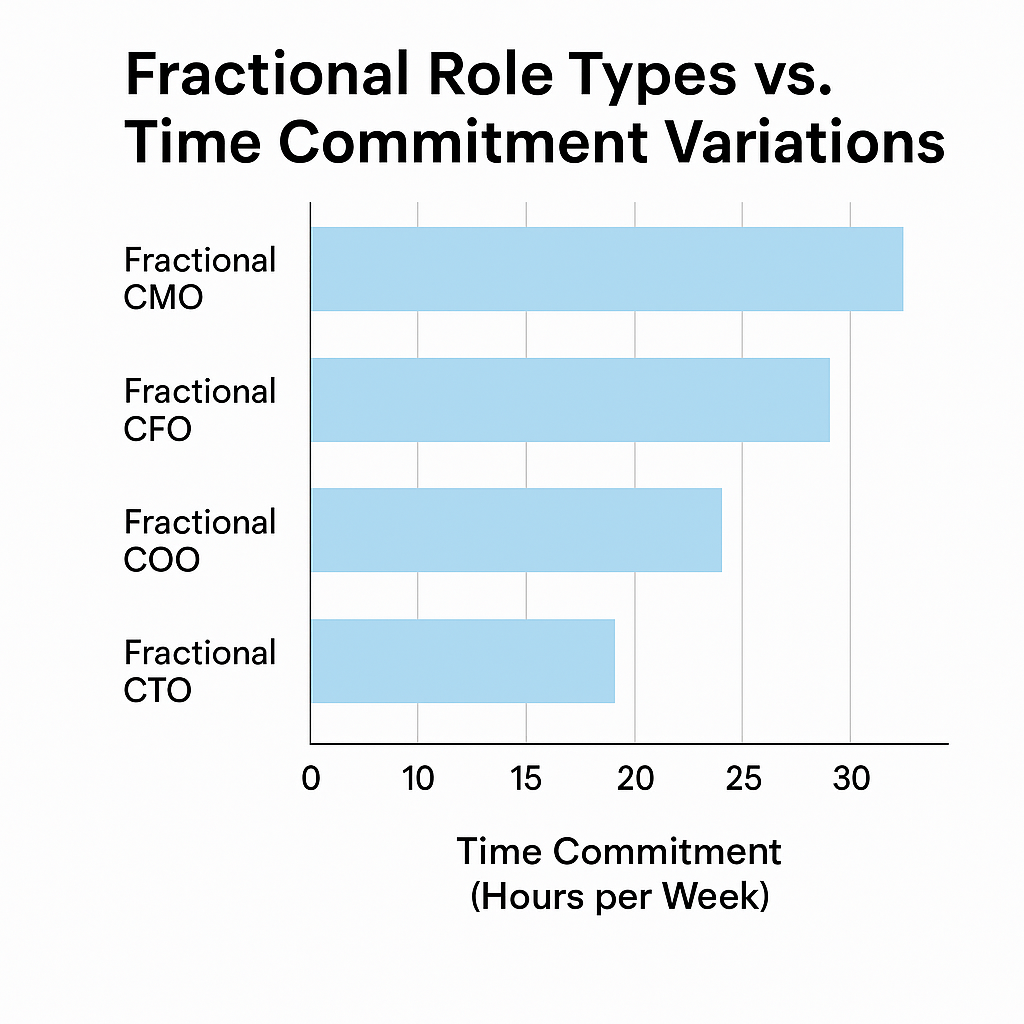
A fractional CFO working 10 hours per week operates nothing like a fractional marketing director on a 20-hour retainer. The variables are endless: industry context, company maturity, internal capabilities, problem complexity, and engagement duration all shape what success looks like.
No trade body has stepped in to create standards. No platform has aggregated enough data to establish norms. The fractional economy grew too fast for the infrastructure of measurement to keep pace.
What happens when companies can't measure fractional ROI
When companies can't measure fractional ROI, they default to subjective assessments that often undervalue the strategic work fractional professionals deliver.
This measurement gap creates friction during contract renewals, makes budget justification difficult, and leads to premature terminations of valuable arrangements.
Finance teams want hard numbers. They need to compare fractional costs against full-time equivalents, against opportunity costs, against doing nothing. Without benchmarks, these conversations become political rather than analytical.
Companies end up judging fractional professionals on the wrong metrics, like hours logged or meetings attended, because those are easy to count. The strategic value of preventing a bad hire, spotting a market shift early, or restructuring a broken process goes unrecognised.
The frustration cuts both ways. Companies feel uncertain about whether they're getting value. Fractional professionals sense their impact isn't properly understood.
Why it's hard for fractional CxOs to prove their value
Fractional professionals struggle without performance standards because they lack objective data to validate their pricing, demonstrate their impact, or negotiate contract terms confidently.
This ambiguity forces them into constant self-justification mode, spending valuable time defending their value rather than delivering it.
When a new client asks "What should I expect in month three?", there's no industry data to reference. Fractional professionals either overpromise to win the work or underpromise and risk looking unambitious compared to competitors.
Pricing becomes guesswork. Some fractional professionals charge based on their previous salary divided by hours. Others pick numbers that "feel right" or mirror what they've seen peers discuss in private forums. Without benchmarks, imposter syndrome and market confusion both flourish.
The lack of standards also makes it harder to spot genuine expertise. Anyone can claim fractional professional status and quote impressive-sounding outcomes with no way to verify whether those results are exceptional or ordinary.
How vague metrics create frustration and mistrust
Made-up metrics damage the fractional economy by creating unrealistic expectations that erode trust between clients and fractional professionals over time.
When everyone invents their own success criteria, the market becomes fragmented, price signals become meaningless, and legitimate practitioners get lumped in with underqualified competitors.
A fractional marketing professional might promise to "increase brand awareness" without defining what that means or how it connects to revenue. Three months later, the client's frustrated because website traffic is up but sales haven't moved.
The problem isn't the professional's capability; it's that both parties entered the arrangement with different invisible definitions of success. One thought brand awareness meant social media followers. The other assumed it meant qualified leads entering the sales pipeline.
These misalignments happen repeatedly across thousands of fractional arrangements, quietly building scepticism about the entire model. Companies become wary. Talented professionals get burnt out from constant battles over value.

What different stakeholders use as proxy measurements
Different stakeholders use vastly different proxy measurements, from hours logged and deliverables completed to revenue influenced and problems prevented.
The disconnect often happens within the same organisation:
| Stakeholder | Common Metrics Used | What They Miss |
|---|---|---|
| CFO | Cost per hour vs. FTE equivalent | Strategic value, speed to impact |
| Hiring Manager | Deliverables completed, tasks finished | Quality of work, downstream effects |
| CEO | Revenue change, customer acquisition | Attribution difficulty, lag time |
| Department Head | Team satisfaction, knowledge transfer | Long-term capability building |
CFOs typically focus on cost-per-outcome comparisons to full-time equivalents, treating fractional work as a pure cost-saving exercise. This misses entirely that fractional professionals often deliver faster results because they've solved similar problems dozens of times before.
Hiring managers often default to activity-based metrics, such as how many blog posts written, how many strategy documents produced. The problem is that these don't capture whether those outputs actually moved the business forward.
CEOs want to see revenue impact but struggle with attribution. When a fractional sales director restructures the CRM and pipeline velocity improves six months later, how much credit do they deserve versus the sales team executing better?
How the absence of benchmarks affects pricing and contracts
The absence of benchmarks affects pricing and contracts by forcing both parties into uncomfortable negotiations without market-rate anchors or performance precedents.
Fractional professionals either undercharge due to imposter syndrome or overcharge without justification, while companies struggle to budget appropriately or compare proposals objectively.
When someone proposes a £4,000 ($5,000) monthly retainer for fractional CMO services, is that reasonable? There's no reliable data to answer that question. The client might think it's expensive compared to hiring a junior marketer. The fractional CMO might think it's cheap compared to their previous £120,000 ($150,000) salary.
Contract terms become equally arbitrary. Should a fractional engagement last three months or twelve? When should performance reviews happen? What constitutes grounds for early termination? Traditional employment has answers to these questions, refined over decades. Fractional work is still making them up.
Payment structures vary wildly. Some fractional professionals charge hourly. Others use day rates, monthly retainers, project fees, or outcome-based pricing. Each approach has different implications for risk, scope creep, and relationship dynamics—but no clear best practice exists.
When improvised metrics lead to misaligned expectations
Improvised metrics lead to misaligned expectations when clients and fractional professionals enter arrangements with fundamentally different definitions of success.
These misalignments typically surface three to six months into an engagement, often too late to course-correct without damaging the relationship or project outcomes.
The pattern is predictable. Initial conversations focus on high-level goals: "grow revenue," "improve operations," "build brand." Both parties nod enthusiastically, assuming they're aligned.
The trouble starts when vague goals meet the reality of day-to-day work. The fractional professional focuses on foundational systems—proper CRM setup, documented processes, team training. The client expected immediate wins—more leads, faster sales cycles, visible market impact.
Neither party is wrong. They just never explicitly agreed on what success looks like in month one versus month six. Without industry benchmarks to guide those conversations, both sides rely on assumptions shaped by their previous experiences.
I've watched this play out repeatedly in my own work as a fractional marketing professional. Companies sometimes expect the impact of a full marketing team from 15 hours per week. Or they assume results appear in weeks when trust-building and strategic work take months to compound.
What this means for the future of fractional work
This benchmark vacuum means the fractional work model will struggle to achieve mainstream legitimacy until industry groups, platforms, or data aggregators establish credible standards.
The professionals and companies who proactively create transparent, outcome-focused measurement frameworks now will likely shape the standards that eventually emerge across the broader market.
Some encouraging signs are appearing. A handful of fractional work platforms are beginning to collect performance data. Professional associations for fractional executives are discussing standardised success indicators. Early-stage research is studying what separates successful fractional engagements from failed ones.
But the responsibility for measurement clarity can't wait for industry-wide solutions. Every fractional professional needs to define success criteria explicitly with each client before work begins. Every company hiring fractional talent needs to articulate what outcomes matter and how they'll track progress.
The fractional model offers real advantages: flexible expertise, faster time-to-value, lower commitment risk. Those benefits can't reach their full potential while success remains undefined.
Standards will come, but not before more talent, money, and trust are wasted unnecessarily.
Conclusion
At the end of the day, companies and fractional professionals are both struggling with one thing: a lack of shared success metrics.
You've seen how the absence of benchmarks creates confusion, misaligned expectations, and unnecessary friction in fractional arrangements. You now understand why both companies and fractional professionals struggle to define, measure, and agree on success.
The real issue isn't capability, but in fact misalignment. Your next step is to define success collaboratively, before the engagement begins. Define success explicitly before any fractional engagement starts. Choose metrics that reflect actual business outcomes, not just activity levels. Review and adjust those metrics as you learn what actually drives value.
I'm a fractional marketing director who's worked with dozens of companies to build clear, measurable success plans that avoid these exact issues. My approach combines hands-on execution with transparent outcomes and regular performance tracking, showing exactly how marketing builds trust and drives growth.
Topics: