



Are you investing in content that's supposed to drive sales, but instead drives prospects to your competitors?
Have you ever wondered why your content isn't converting, even though you're doing "all the right things"?
Most businesses pour time and money into content, only to watch prospects vanish into the research phase, never to return. They're frustrated, confused, and wondering what they're doing wrong.
As someone who has helped multiple companies implement the Endless Customers framework, I've seen these patterns repeat again and again. I've worked with businesses across industries to transform their content from a cost center into their most powerful sales tool. Through my In-House Sales and Marketing Mastery programme and Company Alignment Workshop, I've witnessed firsthand what works and what doesn't when it comes to creating content that actually drives revenue.
Here's my promise: In this article, I'll show you the 12 most common mistakes companies make when creating Endless Customers content, mistakes that cost you revenue and trust.
Here's what you'll learn: You'll not only discover what these mistakes are, but you'll also get clear action steps to fix each one so your content becomes your best sales tool instead of just another expense.
Why most companies fail at Endless Customers content from the start
Over 90% of companies creating content see little to no results because they're not talking about what buyers actually want to know.
Instead of addressing real buyer questions, fears, and concerns, most businesses create generic, self-serving content that drives prospects directly to competitors who will educate them.
The problem isn't that businesses don't understand the value of content. They do.
The problem is they're making fundamental mistakes that sabotage their efforts before they even begin. These mistakes waste resources, frustrate teams, and leave revenue on the table.
But when you fix these mistakes, everything changes. Your close rates improve. Your sales cycles shorten. Your team becomes more efficient. And most importantly, you become the most known and trusted brand in your market.
Mistake #1: Avoiding The Big 5 topics buyers desperately need answers to
The biggest mistake companies make is refusing to address The Big 5 topics—Cost, Problems, Versus/Comparisons, Reviews, and Best in Class—despite personally obsessing over these same topics when making their own purchases.
Think about your own buying behaviour. When you're researching a significant purchase, you want to know:
- Cost & Price: What will this cost me, and what drives the price up or down?
- Problems: What could go wrong? What are the drawbacks?
- Versus & Comparisons: How does this stack up against alternatives?
- Reviews: What do real users say—both good and bad?
- Best in Class: What's considered the best option in this category?
Yet when it comes to their own businesses, companies act like ostriches. They stick their heads in the sand and avoid these critical conversations until it's too late, essentially forcing potential customers to find answers from competitors instead.
When you fail to address The Big 5 online, you force buyers to look elsewhere—likely to one of your competitors.
Learn more about The Big 5 content pillars and how to implement them.
Why are companies afraid to publish pricing, and what happens when they don't?
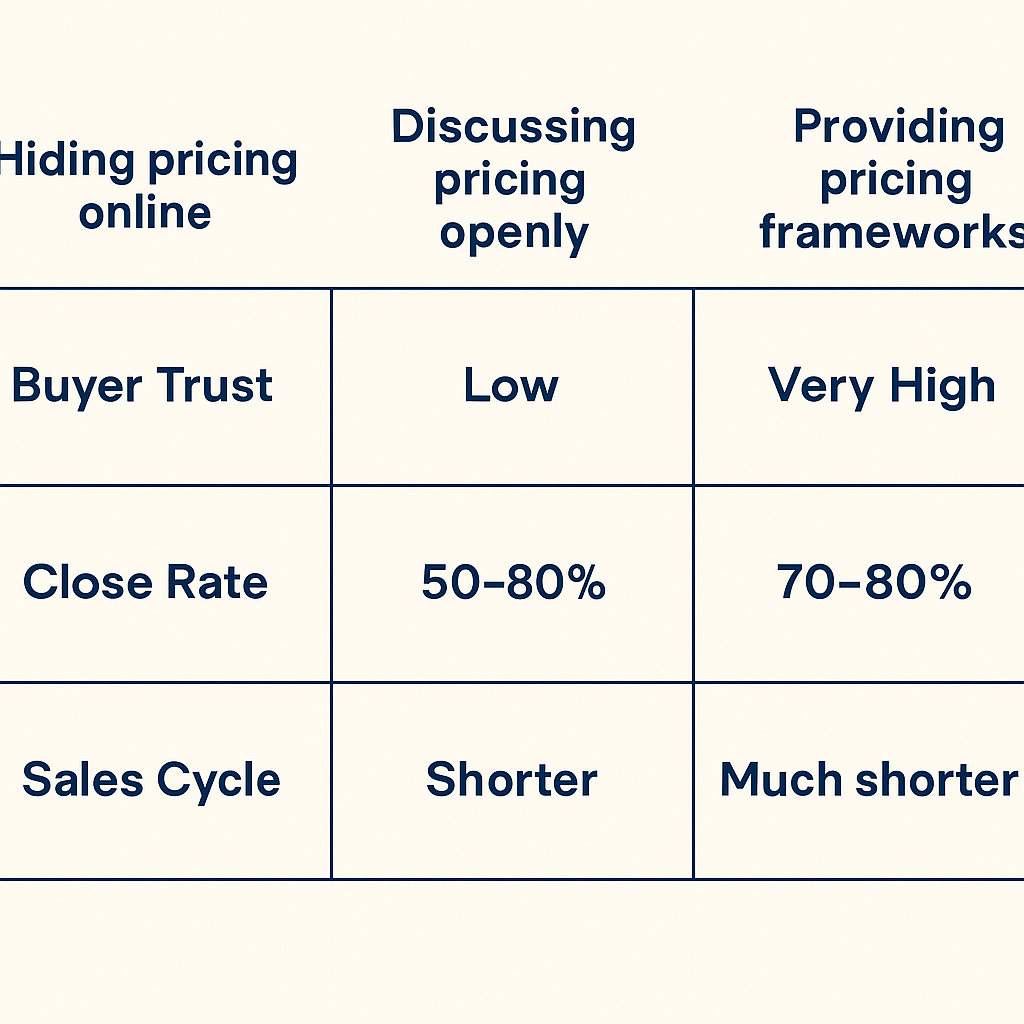
Companies hide pricing information claiming they're 'value-based businesses,' they don't sell direct, or they 'need room to negotiate', yet these are the exact excuses that commoditise their products and erode buyer trust.
The three most common excuses businesses give for hiding pricing:
"Every solution is complex. Our prices vary. It depends." Yet buyers already know prices vary—they just want a range or framework for understanding what drives costs.
"If we discuss pricing, our competitors will find out what we charge." Your sales team already knows what competitors charge, which means competitors know what you charge too. There are no secrets.
"We'll scare customers away." What actually scares buyers away isn't your pricing; it's your refusal to discuss it honestly.
When buyers can't find pricing on your website, they experience frustration—the 'F-word of the internet'. According to research from the Sales Lion, 80% of buyers will leave a website in less than 10 seconds if they can't find pricing information, moving on to find a competitor who will educate them.
Additionally, Gartner's B2B buying research shows that 77% of B2B buyers say their last purchase was very complex or difficult, and pricing transparency is one of the key factors that reduces this complexity.
| Pricing Approach | Buyer Trust | Close Rate | Sales Cycle |
|---|---|---|---|
| Hiding pricing online | Low | 25-30% | Longer |
| Discussing pricing openly | High | 50-80% | Shorter |
| Providing pricing frameworks | Very High | 70-85% | Much shorter |
Why creating content for non-buyers kills your sales pipeline
Most companies waste resources creating fluffy, top-of-funnel content for people who aren't even in the market yet, which takes much longer to yield results and doesn't drive the sales opportunities they need.
Content about "industry trends" and "thought leadership" might feel safe, but it won't close deals.
The right strategy flips this approach by creating content for actual buyers—people already in-market and closest to purchasing. Address their specific questions, worries, and objections head-on.
Your buyers don't need generic tips. They need answers to the specific questions keeping them from choosing you.
This means creating content like:
- "What it's like working with [your company]"
- "Common problems with [your product] and how to avoid them"
- "[Your product] vs [competitor product]: Which is right for you?"
- "Is [your service] worth the money? An honest review"
This is the content that drives actual sales. Everything else is just noise.
Why outsourcing content creation usually fails, and what to do instead
Outsourced content production consistently fails because it lacks the expertise, passion, and authenticity that only your internal team can provide.
After working with thousands of companies, the data is clear: businesses that bring content creation in-house outperform those that outsource by a significant margin.
Why? Because buyers want content reflecting real-world experience and insights from the people behind your brand—a level of trust and boldness that external teams simply cannot replicate.
Outsourced content typically:
- Lacks deep product knowledge
- Avoids controversial or difficult topics
- Sounds generic and forgettable
- Misses the nuances that resonate with your specific buyers
- Can't capture your authentic voice
Your best content comes from real people within your organisation who can share company stories, admit imperfections, and speak with the emotional nuance that establishes genuine trust.
Through my In-House Sales and Marketing Mastery programme, I help businesses build the internal capabilities to create this type of content consistently, without relying on agencies that don't truly understand your customers.
The mistake of having no clear ownership of content production
Without someone owning the content creation process from start to finish, content production stalls and buyers are left without the resources they need to make informed decisions.
Here's the reality: Content doesn't create itself. Without clear ownership, it becomes everyone's job, which means it's no one's priority.
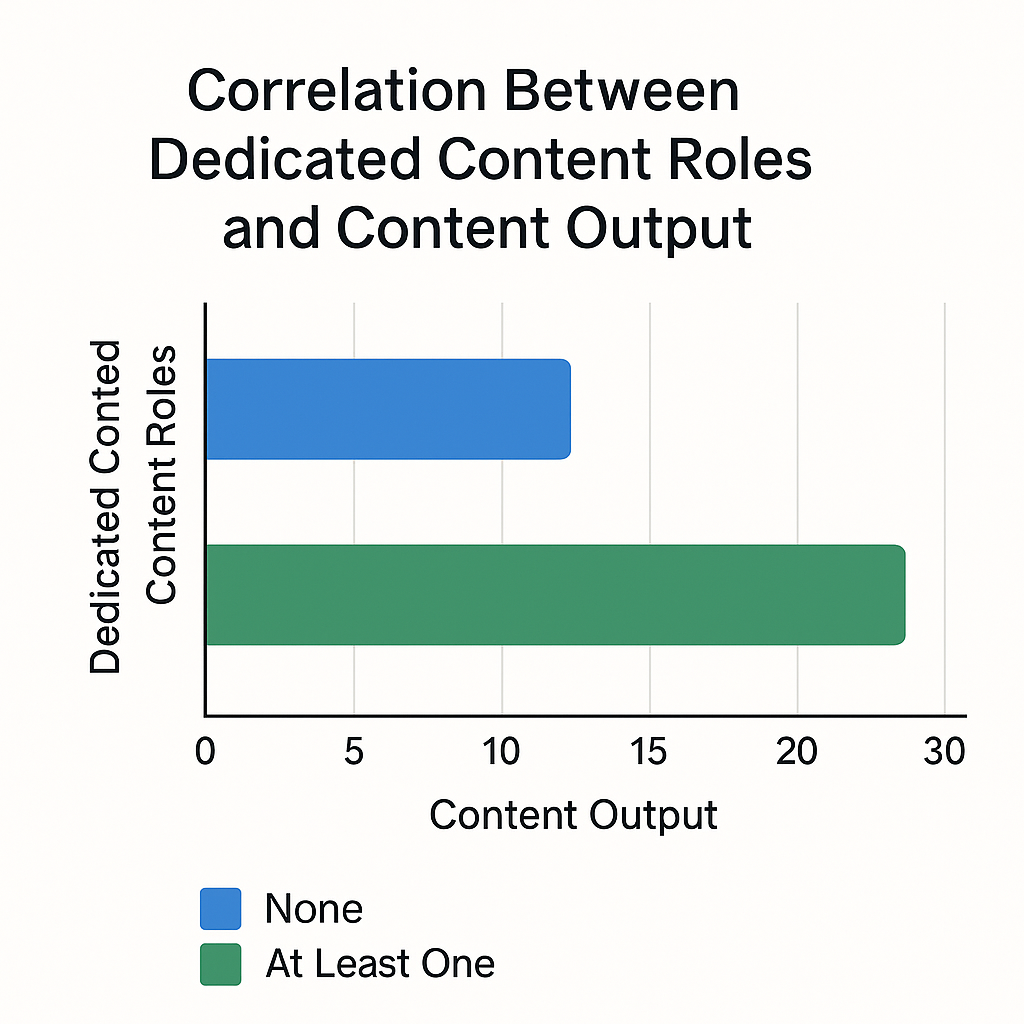
Companies need at minimum one full-time person dedicated to content production. Typically, this means:
- A Content Manager: Responsible for writing, publishing, and optimising content whilst overseeing the overall strategy
- A Videographer: Focused on producing video content for articles, social media, and YouTube
Without these dedicated roles, your content engine never gets built, and your Endless Customers strategy stalls before it starts.
This doesn't mean you need a massive team. It means someone must own this from start to finish, with clear accountability and the resources to succeed.
Publishing inconsistently (or not publishing enough content)
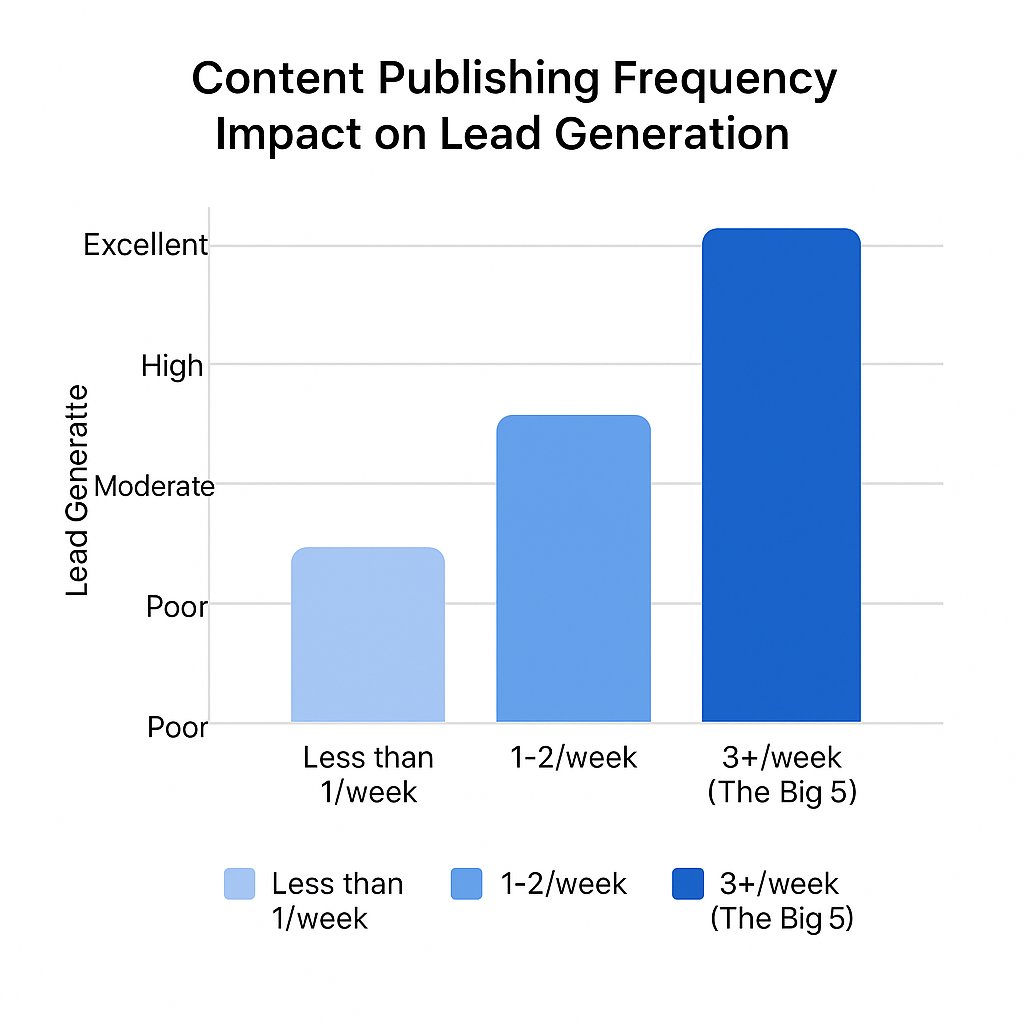
Companies that fail to publish at least three pieces of Big 5 content per week miss the critical frequency needed to signal AI tools and maintain buyer engagement.
After years of implementing Endless Customers across industries, there's a clear sweet spot: a minimum of three pieces of content per week. No less.
This frequency creates necessary signals for AI to continuously recommend your content. It also helps you maintain a steady stream of fresh content to educate prospects until they're ready to work with you.
But here's what many businesses miss: Consistency isn't just rewarded by algorithms; your audience comes to expect your content on schedule. Breaking that rhythm destroys the trust and momentum you've worked hard to build.
| Publishing Frequency | Algorithm Visibility | Audience Trust | Lead Generation |
|---|---|---|---|
| Less than 1/week | Poor | Low | Minimal |
| 1-2/week | Fair | Moderate | Inconsistent |
| 3+/week (The Big 5) | Excellent | High | Consistent |
Creating AI-generated content without human oversight and authenticity
AI should never be your sole content creator, yet many companies publish generic, soulless AI content that lacks authentic voice, personality, and the real human experiences buyers crave.
AI is a powerful tool for research, outlines, and efficiency. But it cannot replace the human element that builds trust.
The best content comes from real people within your organisation who can:
- Share genuine company stories
- Admit where you're not the best fit
- Speak with emotional nuance
- Use colloquialisms and personality
- Reference specific customer experiences
- Show vulnerability and authenticity
Every major piece of content should include at least one company, employee, or customer story. This requirement ensures your content has the human touch that AI simply cannot replicate.
When AI-generated content floods your website, buyers can sense it immediately. It feels hollow, generic, and untrustworthy, the opposite of what Endless Customers aims to achieve.
The sales and marketing divide that kills content effectiveness
Sales and marketing operating as separate islands is a losing strategy because it prevents the collaboration needed to create content that truly addresses buyer questions and closes deals.
Here's the truth: According to Forrester Research, 80% of the buying process happens before a prospect speaks to sales, which means marketing handles most of the buyer's journey. Yet many sales teams still believe they control the entire process.
When sales teams don't participate as subject matter experts in content creation, companies miss out on the front-line insights that make content practical, relatable, and actually usable in the sales process.
The solution? Create a Revenue Team.
A Revenue Team brings together marketing, sales, and leadership to work towards one mission: making your brand the most known and trusted in your market.
Regular Revenue Team meetings should cover:
- Sales sharing current buyer questions and objections
- Editorial calendar planning and assignments
- Review of recently published content
- Marketing sharing performance metrics
- Addressing challenges and friction points
When sales and marketing work as one unified force, content becomes exponentially more effective at driving revenue.
My Company Alignment Workshop helps businesses unite these teams in just one day, creating the foundation for collaboration that drives real results.
Failing to implement Assignment Selling with your content
The mistake isn't just creating great content—it's failing to strategically assign it to prospects at each stage of the sales process to pre-educate them and improve close rates.
Assignment Selling is the strategic practice of requiring prospects to consume specific educational content before sales conversations to improve close rates and reduce sales cycles.
The data from implementing this across thousands of companies is stunning: When prospects consume 30+ pieces of content before their first sales appointment, close rates can jump from 25% to 80%.
Companies that don't require prospects to consume specific educational content before sales conversations waste time answering basic questions instead of actually selling, dramatically reducing their effectiveness.
Assignment Selling allows you to spend less time educating and more time selling. Here's how it works:
- Create content that addresses questions at each stage of the buyer's journey
- Assign specific content based on where the prospect is in your sales process
- Require prospects to consume that content before moving forward
- Use sales conversations to discuss what they learned, not teach basics
When done properly, Assignment Selling means salespeople arrive at appointments with educated, qualified prospects ready to buy—not tire-kickers wasting everyone's time.
Discover the complete Assignment Selling framework and implementation guide.
Publishing content once and never optimising or updating it
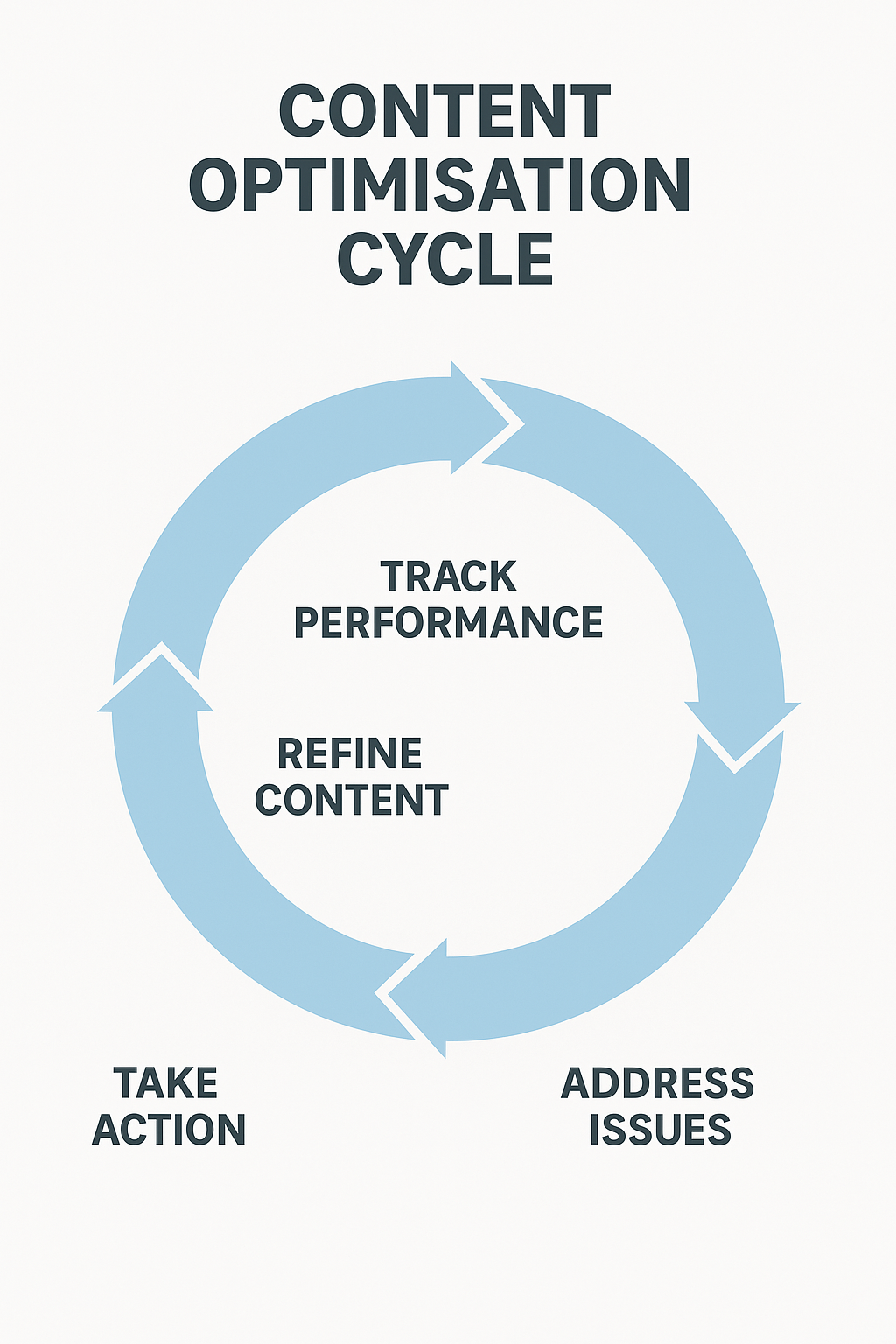
A website is never truly 'done,' yet many companies publish content and abandon it instead of continually tracking performance, refining messaging, and improving the buyer experience.
Publishing new content multiple times a week is important, but the real impact comes from tracking and optimising how that content performs.
Ask yourself:
- Are prospects engaging with this content?
- Where are they converting—or dropping off?
- Could refined messaging on this page improve the buyer's journey?
- Would adding a self-service tool make the experience more seamless?
- Are there technical issues hurting performance?
Just like top salespeople constantly review and adjust their pitch, your content demands monthly evaluation and optimisation to remain the most trusted and best-performing resource in your market.
Make it a priority to evaluate and take action every month. Every improvement brings your website closer to becoming the most trusted resource in your market.
The leadership commitment problem: treating Endless Customers as a marketing tactic
Endless Customers only works when leadership fully embraces it as a company-wide culture change, not just another marketing initiative delegated to a single department.
This is perhaps the most critical mistake companies make. They treat Endless Customers like a marketing campaign rather than a fundamental shift in how the business operates.
Without leadership willing to:
- Take risks and try things competitors won't
- Invest the right resources (people, time, budget)
- Hold people accountable for execution
- Celebrate wins publicly
- Regularly reinforce the principles
...the entire strategy stalls before it can gain the momentum needed for transformation.
Fear is the biggest reason leaders hold back. Fear of failure. Fear of rocking the boat. Fear of saying something competitors or customers might not like.
But that fear is the very thing keeping you stagnant. If you want to become the most known and trusted brand in your market, you have to overcome any fear standing in your way from taking bold action.
The tone is set at the top, and it's your responsibility to lead the charge.
How to fix these mistakes and start creating content that actually drives revenue
The path forward requires committing to The Big 5, bringing content in-house, publishing consistently, and creating a Revenue Team where sales and marketing work as one unified force.
Here's your action plan:
1. Commit to The Big 5
- Audit your content library. Have you addressed Cost, Problems, Versus, Reviews, and Best in Class for every product/service?
- Create a plan to fill the gaps within 90 days
- Start with pricing; it's the clearest example of saying what others won't say
2. Bring content production in-house
- Identify or hire a Content Manager and Videographer
- Give them clear ownership and accountability
- Invest in basic equipment and training
3. Publish consistently
- Commit to at least three pieces of Big 5 content per week
- Build a 5-10 piece content backlog
- Stick to your publishing schedule
4. Create a Revenue Team
- Schedule regular meetings between sales, marketing, and leadership
- Have sales participate as subject matter experts in content creation
- Share performance metrics openly
5. Implement Assignment Selling
- Map content to each stage of your sales process
- Require prospects to consume specific content before conversations
- Train your sales team to use content strategically
6. Optimise monthly
- Track content performance
- Refine messaging based on data
- Address technical issues promptly
7. Get leadership on board
- Read Endless Customers cover to cover
- Attend an Endless Customers event
- Make this a company-wide priority, not just a marketing initiative
Companies that embrace radical transparency, say what others won't say, and build systems around these principles become the most known and trusted brands in their markets—generating endless customers in the process.
Getting started with Endless Customers
Now you know the 12 mistakes that stop Endless Customers content from driving revenue, and exactly how to fix each one.
You've likely felt frustrated watching content fail to convert whilst competitors win your prospects. You've invested time and money only to see minimal results. You've wondered why your content isn't working despite doing "all the right things."
But here's where you are now: You have a clear roadmap. You understand what's broken and how to fix it.
Start by addressing one of these mistakes this week. Audit your content against The Big 5. Schedule your first Revenue Team meeting. Publish your first pricing article. Just start.
Because whilst your competitors continue making these same mistakes, you have the opportunity to become the most known and trusted brand in your market.
As someone who helps companies implement the Endless Customers framework every day, my team is here to coach you through it, whether you're just starting or scaling your in-house efforts. Ready to stop making these mistakes and start generating endless customers?
My In-House Sales and Marketing Mastery programme gives your team everything needed to implement the Endless Customers framework properly, without the trial and error that wastes time and money. Through regular coaching, hands-on training, and a clear roadmap, your team will master the skills that build trust with customers and drive reliable growth.
Get in touch to discuss this further.






.png?width=3872&height=2444&name=mockuper%20(3).png)
