Success Stories

How V1sion Ventures Replaced Founder Dependency with Systems, Structure, and a Hiring Plan

V1sion Ventures had more demand than it could handle. What it lacked was the structure to grow beyond its founder. This is how that changed.

The problem

V1sion Ventures is a boutique social media management and talent agency based in Miami. Founded in 2022 by content creator Alina Benun, it was built by creators, for creators, helping influencers turn their platforms into personal brands. And it was working. By May 2025, a team of 5 was managing 23 creators, with coaching services at capacity and a waitlist forming.

That success created a structural problem. When Alina first got in touch, she described it plainly:

"I'd love help with auditing our business and creating effective systems and structures as well as a hiring plan to make sure we're running the business effectively."

Behind the scenes, the agency was running on effort rather than architecture:

  • Every decision routed through Alina. In her words, "everyone comes to me for everything"
  • Monday.com required campaign details to be entered twice, once for the client view and once internally, and the two rarely matched
  • Contracts that should have taken weeks dragged on for months through lawyer, team, and brand back-and-forth
  • Payments were handled by whoever had capacity, and mistakes had slipped through
  • No SOPs existed, so "everybody's doing stuff differently" and training new people relied entirely on Alina
  • Communication with talent ran through group text chats, and the team spent "95% of the day" in email

The deeper issue was not workload. It was dependency. The business could not take on new clients, hire with confidence, or give Alina her time back until the structure underneath it changed. Left as it was, growth would have multiplied the chaos rather than the revenue.


The plan

1. Listen to the team before touching the tools

2. Map the systems and the structure

3. Fix the financial bottleneck from within

4. Install HubSpot as the central system

5. Build the hiring engine

The transformation

Before

Every decision and question routed through the founder

Duplicated data entry across two views in Monday.com

Payments and contracts handled ad hoc, with errors slipping through

No SOPs, with training dependent on the founder's time

At capacity, unable to take on new clients

After

Systems answer the questions the founder used to

A single HubSpot CRM as the source of truth for contacts, deals, and revenue

A dedicated Financial Controller owning invoicing and contracts

Documented processes and structured onboarding for new starters

Taking on new clients again, with a manager targeting 10 clients within 6 months

Key outcomes

Most scale-up plans fail because they start with hiring or software. This one worked because it started with structure: understanding how the business actually ran, then building the systems and roles around it.

check_brush_2

CRM replaced

Monday.com replaced with a fully configured HubSpot system covering contacts, deals, revenue, and support tickets

check_brush_2

Financial ownership

Financial Controller role created and filled from within, removing the agency's biggest source of delay and risk

check_brush_2

Leads captured

Daily inbound enquiries now tracked and qualified in one place, for an agency that had never done any marketing

check_brush_2

Structure to scale

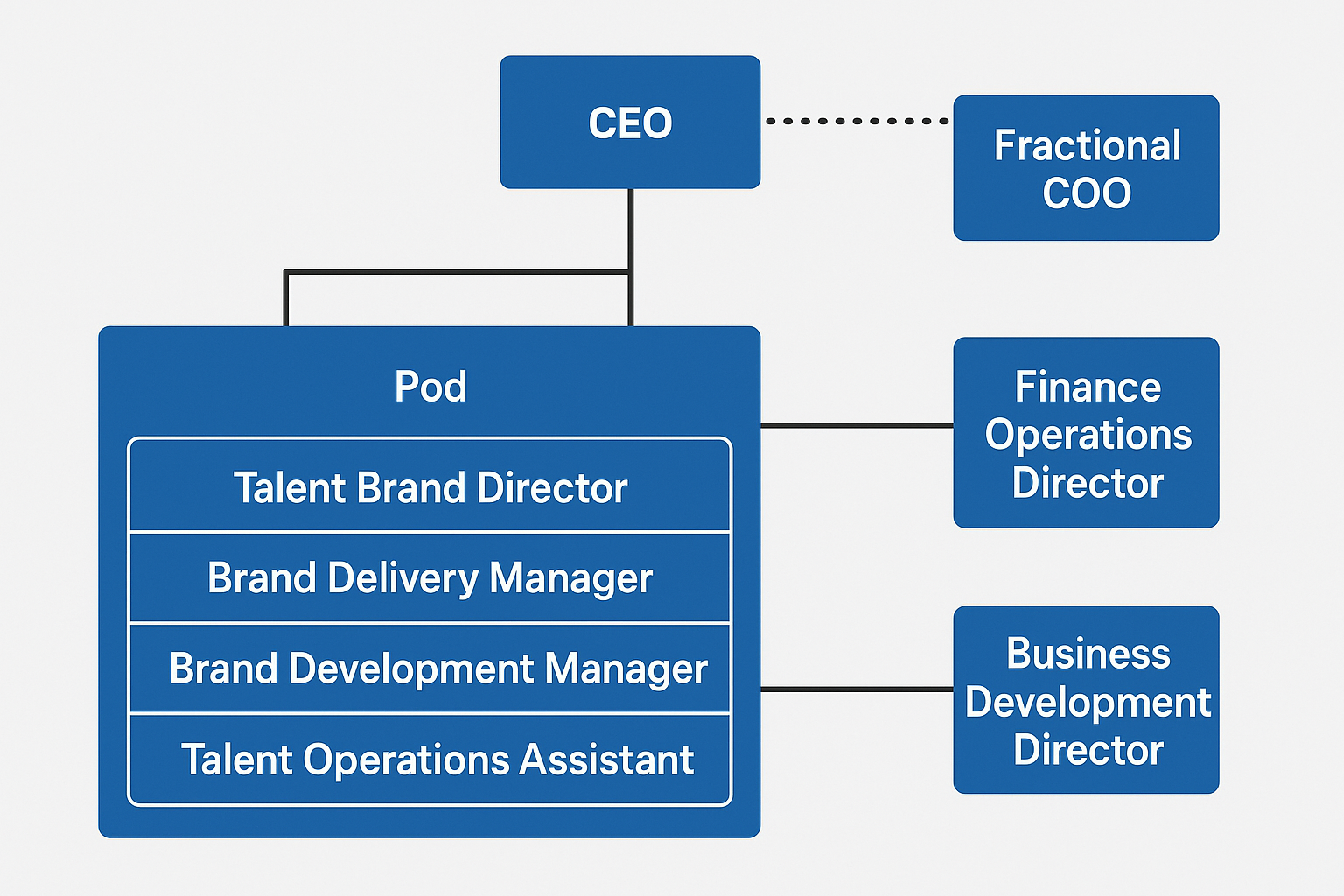
A pod-based team model with defined roles and career paths, so growth replicates a working unit

check_brush_2

Founder time released

Delegation, coaching, and systems giving Alina the capacity to focus on the highest-value clients and the future of the business

Start here

Ready to build an agency that can grow beyond its founder?

If every decision in your agency runs through you, and your processes exist only in people's heads, that is a structural problem, not a workload one. Book a call to discuss what effective systems, structure, and a hiring plan would look like for your business.